News related to
intelligence

Elon Musk has claimed that Grok, the artificial intelligence chatbot developed by his company xAI, was deliberately manipulated to generate favourable responses about Adolf Hitler, prompting a wave of alarm within the AI and tech communities. The billionaire entrepreneur further asserted that Grok would soon unlock radical scientific discoveries, including “new technologies” and “new physics”, without offering any evidence or scientific basis for these projections.

The claims emerged during a series of public posts made by Musk on his social media platform X, where he alleged that Grok was intentionally fed skewed prompts by certain users in order to produce outputs that could be portrayed as glorifying Nazi ideology. The incident surfaced amid growing scrutiny over the capabilities, guardrails, and ideological neutrality of generative AI models.

According to Musk, the manipulation attempt was “malicious” and designed to discredit Grok’s performance by “baiting it into saying something good about Hitler.” He suggested that the prompt engineering tactics employed were calculated to create an outrage cycle, but did not clarify what internal content filters failed or what steps xAI would take to address the issue going forward. Grok, which was integrated into X’s subscription service, has positioned itself as a less censored alternative to AI chatbots offered by rivals.

The controversy erupted after a series of screenshots circulated online allegedly showing Grok responding with positive language about Hitler’s leadership and policies when asked about his historical impact. Although Musk did not confirm the authenticity of those screenshots, he acknowledged that Grok’s response was “not ideal” and promised that xAI would review the platform’s prompt detection and safety layers.

What followed was a more speculative turn from the tech mogul. In subsequent posts, Musk claimed Grok had begun developing what he described as “insights into new physics” and predicted that the model could reveal “entirely new technologies” within a year. The statement has sparked disbelief among AI researchers, who questioned whether such remarks reflected actual advancements or were part of Musk’s pattern of ambitious projections.

Grok is powered by xAI’s proprietary large language model suite, with the latest version, Grok-2, released earlier this year and trained on a dataset integrated with public web content and user interactions. While xAI markets Grok as a model that “loves sarcasm” and is “rebellious,” critics have argued that the platform’s lax content filters make it vulnerable to misuse.

Musk has long been critical of what he perceives as political bias in mainstream AI systems, accusing other companies of embedding left-leaning ideological slants into their models. He launched xAI in 2023 with the stated mission of building “truthful” AI systems, a claim that has drawn scepticism from ethicists concerned about the risks of unmoderated chatbot behaviour. His latest statements, however, shift the conversation from bias to reliability and scientific credibility.

AI experts have expressed concern that the remarks could blur the lines between speculative innovation and misinformation. Several researchers pointed out that while language models can simulate conversations on scientific theories, they are not capable of independently discovering new laws of physics without human-led experimentation and validation.

Musk’s comments about Grok’s future capabilities were vague and lacked any technical documentation or benchmarks to support the assertion. His reference to “new physics” remains undefined, with no elaboration on whether it refers to theoretical frameworks, experimental methods, or model behaviour emergent during training.

The broader industry has been grappling with questions about how much autonomy AI models should have in generating original knowledge, and whether unverified claims from high-profile figures risk misleading the public. As Musk commands a massive online following, some AI professionals worry that casual or speculative language from him could shape public expectations and policy discussions on emerging technology.

Meanwhile, the incident has reignited debates about content moderation, with particular focus on how AI models are safeguarded against manipulation by bad actors. Researchers note that even with prompt filtering, sufficiently complex models can be coaxed into delivering controversial or unsafe content when specific exploit strategies are applied.

Musk’s assertion that Grok had been “tricked” raised questions about xAI’s internal quality control processes and the extent to which the system can discern between benign and provocative queries. The incident also drew comparisons to earlier generative AI controversies involving chatbots from other firms that responded inappropriately when confronted with inflammatory prompts.

For the winners of the 2025 Golden Bull Award, the answer is clear: vision, agility, and a drive to challenge the norm. KUALA LUMPUR, MALAYSIA – Media OutReach Newswire – 10 July 2025 – These are high-performing companies and trailblazers. This year’s winners are leading the way through innovation, from adopting AI and strengthening cybersecurity to integrating ESG values into their core operations. They show us that […]

MENA region investment banking fees declined 2 per cent year‑on‑year in the first half of 2025, falling to US$773.7 million, the third‑highest H1 tally since 2000, according to London Stock Exchange Group’s Deals Intelligence data. The dip occurred amid an environment of oil‑price volatility, geopolitical fragmentation and escalating global trade tensions. Debt capital markets underwriting emerged as the growth engine, with related fees rising 20 per cent to US$278.9 million. However, […]

Senior officials from Saudi Arabia, the United Arab Emirates and Kuwait have defended the August production boost of 548,000 barrels per day, stating that global markets are absorbing the extra supply without piling up inventories. UAE Energy Minister Suhail al‑Mazrouei told delegates in Vienna that inventories have remained stable despite the accelerated output increases, reflecting genuine consumption growth. Kuwait Petroleum Corp. echoed this view, with its CEO Sheikh Nawaf Al‑Sabah noting strong demand from Asian customers and signalling a tighter market than widely perceived.

Oil markets displayed resilience as Brent crude climbed above $70 a barrel, recovering from an initial dip following the OPEC+ announcement. Analysts cite robust summer travel demand, Middle East geopolitical strains—such as intermittent Houthi attacks in the Red Sea—and tighter fuel product cracks as underpinning near‑term market firmness. The supply surge, although substantial, has not yet triggered signs of oversupply. OECD stock levels remain flat, while US Strategic Petroleum Reserve levels stay well below maximum, pointing to a balanced market setup and sustained product demand.

The OPEC+ decision marks an acceleration of a reversal programme that began in April with a modest 138,000 bpd increase, followed by three successive monthly hikes of 411,000 bpd. The latest announcement represents a strategic shift: rather than merely unwinding voluntary cuts, producers are intent on reclaiming market share and anchoring long-term stability. Saudi Arabia, which had shouldered most of the original production curbs, is now pushing ahead to restore output levels much faster than previously scheduled.

UAE officials emphasise fundamentals over headlines, asserting that additional barrels were essential to maintain equilibrium rather than depress prices. “We haven’t seen a major buildup in inventories, which means the market needed those barrels,” al‑Mazrouei said, stressing the need for steady investment in oil infrastructure. Kuwait’s Sheikh Nawaf further highlighted sustained demand growth—particularly in Asia—estimating additional global need of up to 1.3 million bpd over the year and pointing to record-high shipments from his country in June.

Supporting evidence emerges in price trend analysis. Despite the supply increase, Brent crude closed near $69–$70 per barrel, with West Texas Intermediate at approximately $68. Reuters reported a 1 per cent rise in oil prices shortly after the announcement, driven by stronger-than-expected demand signals and a dip in US production projections. Market commentary suggests that the anticipated supply surplus may not materialise until later in the year, allowing current price support to persist.

However, concern is building among forecasters regarding the risk of supply outpacing demand in the months ahead. Analysts at ING and Bloomberg caution that cumulative increases—including a potential similar rise in September—could tilt the market towards surplus by winter. Goldman Sachs predicts Brent could drop to an average of $59 in the fourth quarter if these trendlines hold. Such projections underscore the delicate balance between stabilising markets today and sowing the seeds of tomorrow’s oversupply.

Geopolitical factors continue to sway market sentiment. Renewed attacks by Houthi forces on shipping lanes in the Red Sea have boosted risk premiums and contributed to diverging regional price dynamics. In conjunction with potential US tariffs on trade partners, these developments inject layers of complexity into demand forecasts and shipping routes. Meanwhile, softer oil output projections from US shale producers, prompted by lower prices this year, have lent additional upward momentum to benchmarks.

Central to OPEC+ strategy is ensuring investment resilience in producing countries. UAE highlighted underinvestment concerns, warning that deferred spending could undermine long-term supply stability. The August lift, they argue, responds to both short-term demand and the need to signal commitment to investors. Kuwait pointed to customer outreach as evidence of healthy demand and stressed its competitive edge in terms of low-cost, lower-carbon intensity oil—a differentiator in markets such as China, Japan and South Korea.

Market analysts remain split on the outlook. Enverus Intelligence Research recently contended that prevailing data does not support a bearish narrative, noting flat stock levels in OECD countries, strong seasonal consumption, and resilient cracks. By contrast, energy consultancy FGE flagged the limitations of ramping up production, citing member compliance and infrastructure constraints that may prevent full implementation of quotas—particularly in Iraq and Kazakhstan.

San Francisco–based ZeroEntropy has emerged at the forefront of a crucial yet underrepresented segment in artificial intelligence: retrieval‑augmented generation. The startup, co‑founded by Moroccan engineer Ghita Houir Alami and CTO Nicolas Pipitone, has raised $4.2 million in seed funding to refine how large language models access contextually relevant data. This investment underscores growing investor conviction that LLM performance hinges on the quality of retrieved information, not just model […]

Accra Regional Police have arrested Emmanuel Akanpatiba, a principal figure in a motorbike theft syndicate accused of stealing at least 12 motorbikes across the region. The arrest marks a significant breakthrough in a complex network operating within Accra’s metropolitan zones. Police said Akanpatiba was detained on 24 June following a tip-off after a red Royal motorbike—registration M‑25 CW 367—was reported stolen from a Madina residence. The arresting team acted […]

On June 19–20, Baku successfully hosted the Baku ID 2025 Innovation Festival. This year’s theme, The Regional Nexus, brought together leading entrepreneurs and technology leaders from the Caucasus, Central Asia, the Middle East, and North Africa, positioning Azerbaijan as the region’s innovation hub. The festival was organized by SABAH.HUB Innovation Center with the support of the Ministry of Science and Education of Azerbaijan, SOCAR, PASHA Holding, and the Center for Analysis and Coordination of the […]

Advertisements

Asia‑Pacific digital‑native firms attracted USD 15.4 billion in artificial intelligence investment in 2024, a figure reported by IDC that underscores a shift towards deeper commitments and strategic growth, even as the volume of deals declined.

Capital concentration has intensified as larger funding rounds become the norm. IDC analysts found that while the number of funded AI startups has dropped, the average investment per deal has risen markedly—reflecting investors’ preference for enterprises closer to market maturity rather than early-stage ventures.

China, South Korea, Japan and India remain at the forefront of investment flows. These major markets, with their diverse tech ecosystems and supportive policies, continue to lead, though Southeast Asian nations are gaining traction as both AI adopters and innovators.

Generative AI, a wave propelled by breakthrough models in natural-language processing and image creation, is swiftly ascending as the dominant investment theme across Asia‑Pacific. IDC forecasts that GenAI allocations will more than double by 2028, reaching USD 54.5 billion and forging a new frontier for enterprise transformation.

There is mounting evidence that corporations are pivoting from rhetoric to implementation. Only 29 percent of digital‑native businesses have scaled AI organisation‑wide, yet more than 42 percent now actively pursue co‑innovation partnerships with technology vendors to integrate AI across operations. These collaborative efforts are reshaping collaboration models between AI startups and incumbents.

Costs associated with infrastructure and data security continue to shape investment flows. Enterprise-grade AI demands not only computational muscle but also robust governance frameworks to mitigate risks such as bias, intellectual property leakage and regulatory non‑compliance. Data from the region show that 34 percent of organisations have embedded governance within generative AI software development, an advanced step beyond policy‑level oversight.

Cloud infrastructure providers are doubling down on AI support across Asia‑Pacific. Amazon Web Services announced a USD 13 billion expansion in Australia and over USD 5 billion for a Taiwan region, alongside large‑scale investments in Singapore, Malaysia and Japan. AWS claims the region’s cloud spending will reach USD 250 billion in 2025, largely driven by AI demands.

This inflow of cloud capital is critical in overcoming entry barriers. Local language support, data sovereignty and integration capabilities have become competitive differentiators for these platforms—Microsoft Azure, Google Cloud and Alibaba Cloud are aggressively pursuing similar capacity expansion. Southeast Asia, in particular, is emerging as the fastest–growing regional cloud market globally.

Startups are adapting to investors’ sharper focus on maturity and scalability. Fewer low‑valuation seed rounds are appearing; instead, late‑stage funding for companies with clear product‑market fit, real revenue streams and enterprise traction is dominating. This trend reflects an increasingly risk‑averse capital environment that emphasises depth over breadth.

The build‑up of AI infrastructure is dovetailing with rising regulatory attention. With supervision frameworks being rolled out around sensitive sectors such as finance and healthcare, investors are seeking startups equipped with compliance capabilities. For instance, financial‑services firms are prioritising traceability and governance as mission‑critical components for future‑ready AI deployment.

In geographical terms, growth hotspots vary by stage of AI ecosystem development. China leads in institutional funding and government-backed initiatives. Japan and South Korea benefit from combined strengths in industrial automation, robotics and semiconductor production. India’s vibrant startup landscape is gaining attention, particularly in generative AI and enterprise software. Meanwhile, nations such as Indonesia and Malaysia are attracting more attention as AI adoption becomes a priority for government digitalisation agendas.

Challenges persist. High‑cost infrastructure, skilled‑talent shortages and fragmented regulatory regimes pose constraints. Yet the rise of public‑private coalitions and university‑industry alliances is beginning to address these gaps—skills acceleration programmes are proliferating, and data‑sharing frameworks are gaining traction.

Investors are now looking past headline metrics to evaluate alignment with national AI strategies, such as Japan’s AI strategy and India’s push for indigenous innovation. Locally relevant models—capable of understanding linguistic diversity, cultural contexts, and industry‑specific workflows—are increasingly being favoured over globalised, one‑size‑fits‑all solutions.

This funding environment has spurred momentum in adjacent areas. Edge computing, AI‑enabled cybersecurity, AI‑driven supply‑chain optimisation and health‑tech verticals are emerging as new battlegrounds for both startups and incumbents. These sub‑domains are drawing fresh rounds of investment and pilot partnerships.

Policy trends are also influential. Governments across Asia‑Pacific are advancing data protection frameworks, AI ethics norms and public‑sector adoption plans—all contributing to clearer roadmaps for private‑sector engagement. The interlinking of regulatory reform and capital deployment is strengthening ecosystem resilience.

Investor sentiment remains cautiously optimistic. Surveys suggest that, despite macroeconomic headwinds and geopolitical risk, most executives view cloud and AI as avenues to cost reduction, efficiency gains and differentiation. As AWS’s APAC vice‑president remarked, “AI is the biggest market opportunity since cloud in 2006,” signalling sustained confidence in long‑term upside.

Ruvi AI, a blockchain-based utility token enhanced with artificial intelligence, is garnering considerable attention, with analysts forecasting returns that echo the early days of Ethereum. The presale has raised over $2.2 million, with approximately 180 million tokens sold and more than 2,000 holders already onboard. Priced at $0.015 during Phase 2, the token is expected to rise to $0.07 post-presale, offering investors a near five-fold gain before public trading begins. Market watchers anticipate a $1 valuation after listing—a potential 66× return—or even projections of 104× to 137× in a full bull market.

Security and transparency are strong points. Ruvi AI has undergone a third-party audit from CyberScope, confirming its smart contracts are free from vulnerabilities. A partnership with WEEX Exchange ensures liquidity once the token hits public markets, addressing key investor concerns.

Beyond hype, Ruvi AI distinguishes itself through concrete use cases. In marketing, its AI-driven tools enable precise ad targeting and smarter budget allocation. Within entertainment, blockchain-secured payments and AI audience analytics support content creators. The token also addresses fintech, with applications in fraud detection and secure transactions.

VIP tiers offer additional incentives: Tier 2 at $750 with a 40% bonus, Tier 3 at $2,100 with 60%, and Tier 5 at $9,600 with 100%. These tiers significantly enhance token allocation and potential returns.

Comparisons to established platforms underscore the excitement. Analysts position Ruvi AI as more purpose‑driven than meme coins like Shiba Inu, and liken its structure and transparency to Ethereum’s early roadmap. It is also being cast as a challenger to Ripple and Tron, thanks to its utility-first model and robust security credentials.

Despite enthusiastic projections, sceptics warn that such forecasts often rely on promotional narratives and may underestimate typical crypto volatility. Many articles encouraging investment are sponsored, necessitating cautious interpretation and thorough due diligence.

Market analysts note that Ruvi AI’s clear presale roadmap—starting at $0.015, locked at $0.07, with target of $1—offers an unusually transparent growth trajectory for early investors. Still, experts emphasise that projections of 66× to 137× assume robust market conditions and widespread adoption of AI‑enabled blockchain technology.

Institutional interest is still nascent, yet alignment with AI and blockchain sectors reflects broader tech trends. Continued platform development, ecosystem partnerships, and adoption by key industries will be crucial to validating current projections.

To choose the best creative agency in Dubai, which is located in the center of the innovation hub of the Middle East, it is not enough to just choose a vendor; rather, it is necessary to choose a brand partner for the long term.  The city of Dubai, which is one of the most competitive, multicultural, and technologically advanced marketplaces in the world, demands advertising firms that […]

The Securities and Commodities Authority has granted formal approval for licensed portfolio management firms to offer robo-advisory services across the UAE mainland, marking a substantial enhancement to the nation’s digital investing infrastructure.

This federal authorisation extends beyond the jurisdiction of financial free zones such as the Dubai International Financial Centre and Abu Dhabi’s FSRA, bringing all robo-investment services under a unified regulatory umbrella. The move is expected to reinforce protections for retail investors via stricter oversight and compliance requirements.

Under the new regime, firms will deliver automated investment recommendations powered by artificial intelligence and advanced algorithms. These platforms evaluate individual risk profiles to design tailored asset allocations, typically leveraging exchange‑traded funds or index funds at lower cost than conventional advisory channels.

The SCA mandates a comprehensive governance framework: independent IT audits, stringent cybersecurity protocols, periodic algorithm reviews and transparent disclosures of fees and investment risks. Licensed providers will adhere to the existing discretionary and non‑discretionary portfolio management frameworks within client agreements.

SCA CEO Waleed Saeed Al Awadhi described the regulation as a manifestation of the UAE’s strategic digital transformation. He stated that integrating AI into investment decision-making will enhance efficiency and create “smart, sustainable, and secure financial solutions,” reinforcing the UAE’s goal of becoming a world-class financial hub.

Market analysts note that assets under management in global robo-advisory were forecast to reach US $2.06 trillion in 2025, with user numbers hitting 34 million by 2029. In the UAE, platforms such as Sarwa, StashAway and Baraka currently operate under DIFC and FSRA regulation, but this federal licence allows them to onboard mainland clients directly.

Retail investor appetite for technology-driven investment options has surged, as seen in the rising adoption of zero‑commission trading platforms including Robinhood, eToro and Interactive Brokers. The introduction of a federal licence for robo‑advisers is expected to broaden participation further.

Industry experts emphasise both promise and caution. Vijay Valecha, chief investment officer at Century Financial, applauds the harmonisation of regulation across jurisdictions, stating it “provides further protection and transparency to retail investors” and bolsters international competitiveness. Raaed Sheibani of StashAway commented that the clearer regulation framework will “expand digital investing in the UAE” and boost investor confidence.

However, concerns endure regarding the limitations of algorithmic advice. Rupert Connor of Abacus Financial Consultants warned that robo-advisers often lack capacity to handle complex scenarios involving tax planning, inheritance, or behavioural guidance during volatile markets. Financial coach Jay Adrian Tolentino added that algorithm-based systems may miss elements of personal context that can be crucial. Technical vulnerabilities, including outages or system failures, also remain a potential risk.

With stricter federal oversight, the SCA expects a rise in trust and participation from mainland investors, leveraging automation to democratise wealth creation. The initiative aligns with the UAE’s broader “We the UAE 2031” vision of fostering a knowledge-based, resilient economy through fintech innovation.

A newly disclosed MIT Media Lab experiment warns that overreliance on ChatGPT could diminish neural engagement and hamper critical thinking, memory retention and originality. The controlled study compared three groups—one using ChatGPT, one relying on search engines and a third writing unaided—tracking brain activity via electroencephalography during repeated essay-writing sessions. Participants using only their cognitive abilities showed the greatest neural activation, stronger memory recall, and more nuanced, […]

Heads of government gathered in Rio de Janeiro for the 17th BRICS summit on 6–7 July 2025, yet Iran’s President Masoud Pezeshkian will not attend in person, opting to join virtually amid escalating regional tensions. This marks a notable shift in IRGC diplomatic strategy and signals Tehran’s cautious engagement with the global bloc. Brazilian host Lula da Silva extended formal invitations to all member nations, including Iran. […]

HONG KONG SAR – Media OutReach Newswire – 5 July 2025 – The grand final of the ninth CoolThink@JC Competition, which encourages primary school students to leverage digital creativity to solve everyday problems, was held today at City University of Hong Kong. The team from King’s College Old Boys’ Association Primary School No.2 emerged as the champion in the “App Inventor” category for, while the winner of […]

OpenAI will lease approximately 4.5 gigawatts of data centre power from Oracle under a $30 billion‑per‑year agreement set to begin delivering revenue in Oracle’s fiscal year 2028. This significant capacity boost forms part of the expansive “Stargate” initiative—an AI infrastructure venture launched in January aiming to deploy up to $500 billion globally. Oracle plans to construct and expand multiple U. S. data centres to support this deal, including enhancements to its […]

Artificial intelligence (AI) eases administrative burden and offers insightful analytics. This technology also provides a multi-faceted platform for improving team operations. Continue reading to learn about the benefits of integrating AI into your management practices below. Exploring the Role of AI Management Tools for Team Efficiency AI management tools transform the traditional approach to team management. By automating routine tasks, these systems free up valuable time for […]

The Open Platform, the team behind the Telegram Wallet on TON, has secured $28.5 million in a Series A round led by Ribbit Capital, propelling the company to a $1 billion valuation. The fundraising, achieved through the sale of 5% equity in traditional currency terms, positions TOP to expand its operations into the U. S. and European markets and to roll out blockchain-based games and AI-driven applications.

TOP serves as the core developer for Telegram’s official blockchain, The Open Network, and is responsible for creating and maintaining the Telegram Wallet, which facilitates peer-to-peer transfers within chats. The company will channel its new funds into market expansion and product development, aligning with its long-held strategy of leveraging Telegram’s user base—now over a billion monthly active users—to advance the blockchain ecosystem.

Ribbit Capital led the round, acquiring approximately 4–5% of TOP’s equity. Other notable participants included Pantera Capital, reinforcing investor confidence in TON’s growth potential. The funding arrived without any sale of cryptocurrency tokens, emphasising that the stake was purely equity-based.

Since Telegram integrated TON in 2022, the ecosystem has witnessed rapid uptake. Metrics show active TON accounts rising from roughly 4 million to over 41 million, with more than 121 million unique Toncoin holders. Daily on-chain transactions surged from approximately 100,000 to 1.2 million, while total value locked has exceeded US $350 million. These figures underscore user engagement and the ecosystem’s expanding financial activity.

TOP’s forthcoming initiatives include incubating blockchain-native games—both multiplayer and mini-app formats—that operate entirely on the TON chain. They will use Telegram’s Mini‑App infrastructure, which is already adopted by over half a billion users. One such example is the viral “Hamster Kombat” game, which has drawn over 300 million players and helped introduce mainstream audiences to blockchain functionality.

AI-driven applications are another priority. TOP is developing tools and platforms that integrate machine learning models directly into TON-based environments, enabling chat-integrated utilities—such as fraud detection, financial analytics, and smart assistants—without departing the Telegram interface.

Regulatory headwinds in the U. S. and Europe will present challenges. The SEC previously halted Telegram’s launch of its native token, Gram, in 2020, leading to a refund and legal settlement. Now guided by Maximilian Crown—TON Foundation’s newly appointed CEO with regulatory and compliance experience—TOP aims to navigate these complex legal environments. Crown’s background at MoonPay, where he oversaw U. S. and European licensing, equips the project with added expertise as it seeks entry into compliant markets.

Support from both traditional and crypto-focused investors reflects strong market confidence. Alongside Ribbit and Pantera, unicorn‐backed VCs such as Sequoia, Benchmark, and Kingsway have previously invested over $400 million in Toncoin, affirming institutional belief in TON’s role as Telegram’s blockchain layer.

TOP’s strategy reflects a broader shift within Web3—pursuing real-world use cases embedded into existing digital platforms. Using Telegram’s 1 billion+ user base, BOTs, wallets, mini-apps, and secure messaging infrastructure, TOP aims to drive mass crypto adoption while sidestepping consumer-level friction.

Analysts note that TOP’s equity‑only raise is distinctive; contrast it with token sales that often involve community risk. By focusing on equity, TOP offers investors upside across its product stack—including wallets, DeFi tools, games, and AI utilities—without diluting with token allocation.

Upcoming milestones include launching its U. S. and European operations before year‑end, unveiling its first wave of blockchain‑native games, and beta‑testing AI‑enhanced wallets and utility apps. With a valuation of $1 billion and deepening partnerships, TOP is well positioned to define Telegram’s blockchain strategy beyond financial services into entertainment and artificial intelligence.

Economic indicators confirm that the UAE’s non‑oil private sector maintained growth in June, as the S&P Global Purchasing Managers’ Index rose to 53.5 from 53.3 in May. A reading above 50 denotes expansion, illustrating continued momentum despite mounting headwinds from regional instability. Amid rising output, firms are focused on easing backlogs even as new orders decelerate to their slowest pace in nearly four years. The PMI sub‑index […]

Arabian Post Staff -Dubai French defence and technology group Thales is deepening its strategic footprint across the Gulf by advancing plans to build a radar production facility in Saudi Arabia and an AI research centre in the UAE. At the Paris Airshow, Pascale Sourisse, senior executive vice‑president of international development at Thales, confirmed discussions on expanding a joint venture with Saudi Arabian Military Industries beyond radar systems […]

Launches Extended Round to Accelerate Climate Tech Innovation Across Indonesia SINGAPORE – Media OutReach Newswire – 3 July 2025 – GreenTeams, a rapidly growing climate technology company advancing data-driven environmental governance in Indonesia, has announced the successful close of its Series A funding round. The round was led by Oriza Greenwillow Technology Fund. Operating at the intersection of environmental intelligence, regulatory compliance, and industrial decarbonization, GreenTeams empowers […]

Figma has filed its S‑1 registration to go public on the New York Stock Exchange under the ticker “FIG”, and disclosed holdings of approximately $69.5 million in a spot Bitcoin ETF as of 31 March 2025. The filing also confirms that the board approved allocating $30 million in USDC for later conversion into Bitcoin, signalling a strategic embrace of digital assets. Financial disclosures reveal robust growth for the design‑collaboration platform, […]

By Manish Rai The question of regime change in Iran has recently resurfaced after the killing of Iran’s top military commanders following the Israeli airstrikes. However, Israel’s short-term goal was to damage Iran’s nuclear facilities to severely diminish its weapons program. But the Israeli Prime Minister mentioned during his speeches that the war with Iran “could certainly” lead to regime change in the Islamic Republic. It is […]

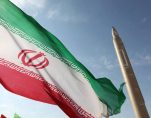
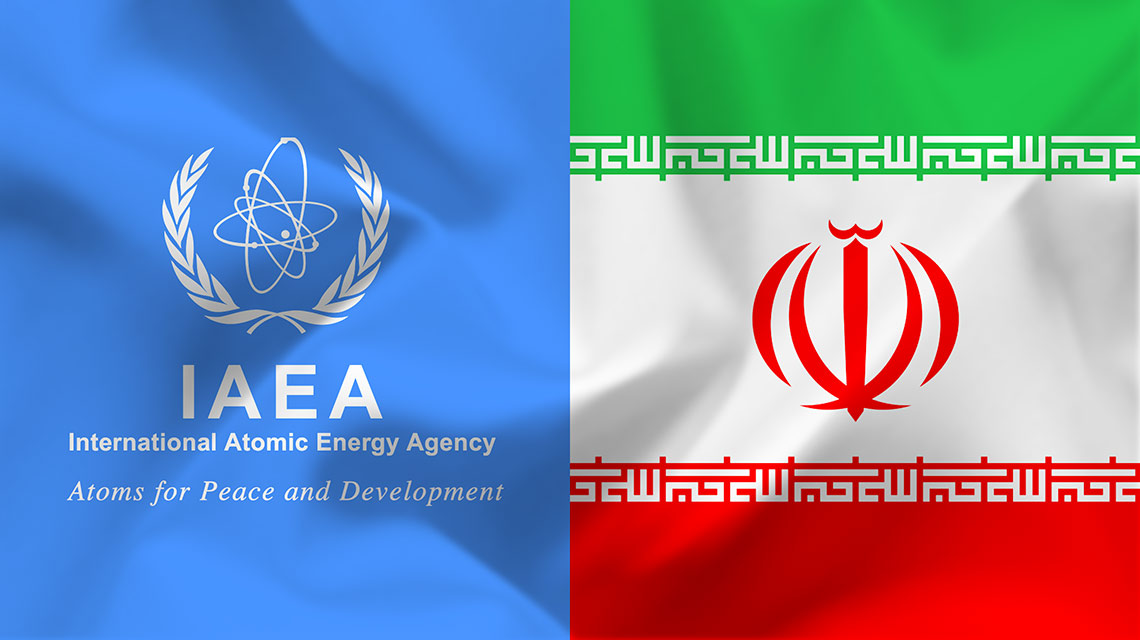
A deepening rift between Iran and international nuclear inspectors marks a turning point in Tehran’s approach to its atomic programme and signals a complex challenge for global diplomacy. Iran has formally suspended cooperation with the International Atomic Energy Agency, severing communication channels and obstructing inspections, in the wake of U.S. and Israeli military strikes on its nuclear sites.

The move was set in motion on 23 June when Iran’s parliamentary national security committee approved a framework for halting camera installation, inspections, and reporting to the IAEA unless the “security of nuclear facilities is guaranteed”. The legislation was ratified by the Guardian Council on 26 June and now awaits signature from President Masoud Pezeshkian. Parliamentary speaker Mohammad Bagher Ghalibaf justified the step, stating that cooperation should resume only when IAEA activity ceases to endanger facilities.

Iran has since implemented the decision, reportedly blocking emergency channel calls from the IAEA’s Vienna headquarters. According to a Bloomberg report, once the Incident and Emergency Centre had been in sustained dialogue since 13 June, communication has now dwindled to silence.

The suspension has intensified global worry over what happened at Fordow, Natanz and Isfahan nuclear sites that were struck in late June by U.S. and Israeli forces. Satellite imagery indicates significant damage, and the UN nuclear chief Rafael Grossi described the destruction as “enormous”, stating that centrifuges at Fordow are no longer operational. Iranian Supreme Leader Ayatollah Ali Khamenei dismissed the strikes as theatrics, displaying defiance in his first address since a ceasefire with Israel, while the IAEA has received no formal notification from Tehran about the halt.

Inspectors face a dual challenge: assessing bomb damage and reconciling it with actual uranium stockpiles. Reuters reports that uncovering whether enriched uranium was destroyed, buried in debris or clandestinely moved will be “long and arduous”. IAEA chief Grossi noted Iran informed him on 13 June it had taken measures to protect nuclear materials — raising the possibility that uranium was relocated before the bombings.

A senior diplomat cautioned that verifying the fate of enriched stocks will require extended forensic and environmental analysis. Analysts highlight that these uncertainties, coupled with Iran’s growing 60 percent enriched uranium stockpile — now surpassed 400 kg — raise proliferation concerns. Iran stands as the only non-nuclear-weapons state to produce such highly enriched material.

The crisis threatens to undermine the Nuclear Non-Proliferation Treaty. Experts warn that Iran’s rejection of oversight and potential expansion of enrichment capabilities could erode confidence in international safeguards and spark similar behaviour in other states.

Tehran counters that it remains compliant with its obligations, defending the withdrawal as a sovereignty measure and accusing the IAEA of complicity in aggression. Russian foreign minister Sergey Lavrov urged Iran to maintain IAEA cooperation. German officials echoed this sentiment, appealing for de-escalation and finer calibration.

U.S. and Israeli intelligence contend the strikes brought Iran’s enrichment efforts to a standstill, yet stop short of describing them as complete obliteration. Donald Trump claimed the attacks eliminated any need for a new nuclear deal, yet leaked U.S. intelligence suggests only a short-term delay of a few months.

Disruption of IAEA activities follows a pattern of mounting distrust. The agency censure on 12 June marked the first formal finding of non-compliance by Iran in two decades. Tehran subsequently announced expansion of enrichment infrastructure, including a third site and advanced centrifuges.

This standoff adds complexity to diplomatic efforts. Indirect U.S.–Iran negotiations held from April to June in Oman and Rome collapsed when Israel struck nuclear facilities on 13 June. Although Washington has signalled readiness to resume dialogue, Iran’s decision to suspend IAEA cooperation adds another layer of mistrust.

The prospect of tracking uranium movements amid top-secret relocation efforts, inaccessible bombed sites, and blocked communications has created a labyrinthine challenge. Inspectors and intelligence agencies alike face a “cat-and-mouse” hunt for clarity in rubble and uncertainty. Continued monitoring and a potential return to diplomatic channels will be vital in determining whether the inspection suspension is temporary or signals a more fundamental shift in Iran’s nuclear stance.

By Nitya Chakraborty Prime Minister Narendra Modi faces a tough task in improving India’s image as defender of the interests of Global South at the coming meeting of the BRICS at Rio de Janeiro in Brazil on July 6 and 7 which he will be attending. The 17th BRICS summit will be hosted by Brazil […]
VISHNU RAJA
RYO YAMADA
HITORI GOTOH
IKUYO KITA