News related to
intelligence

Dubai’s leadership has approved a landmark three-year fiscal plan totalling AED 302.7 billion in expenditure and AED 329.2 billion in projected revenues for the 2026-2028 period, marking the largest budget cycle in the emirate’s history. The approval came under Law No. 15 of 2025, signed off by His Highness Sheikh Mohammed bin Rashid Al Maktoum in his capacity as Vice-President and Prime Minister of the UAE and […]

Data executives in the United Arab Emirates are signalling serious alarm over the lack of transparency in how their artificial-intelligence systems make decisions, according to a fresh survey. About 94 per cent of data leaders in the country say they do not have full visibility of decision-making processes in their AI systems, pointing to deep governance vulnerabilities at a time when adoption is accelerating. This revelation emerges […]

Organizations are deploying artificial-intelligence-driven defences to counter increasingly sophisticated cyber threats as attackers harness the same technology to mount agile attacks. Leaders at major cybersecurity firms say the conflict between defenders and adversaries has entered a new phase, where speed, adaptability and automation are critical. The security firm Palo Alto Networks announced upgraded platforms designed to protect cloud assets and AI-based applications, citing the need to monitor […]

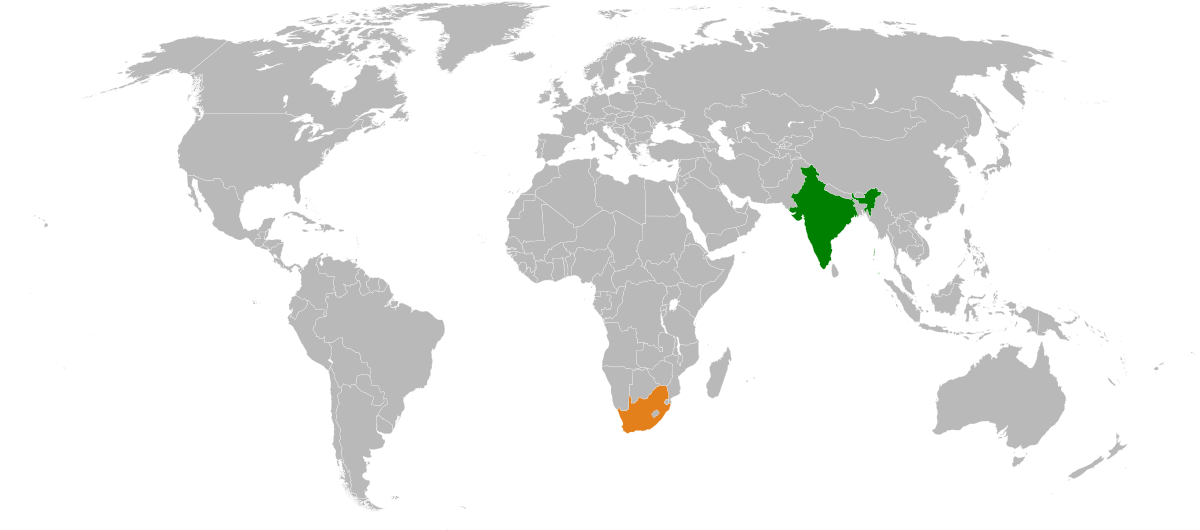
Leaders of India and South Africa affirmed a joint commitment to amplify the resonance of the Global South during a bilateral meeting on the margins of the G20 summit in Johannesburg. India’s Prime Minister met South African President Cyril Ramaphosa to review an expanding partnership that now encompasses trade, digital infrastructure and critical-minerals cooperation.

The leaders emphasised the historical foundation of bilateral ties, tracing back to shared anti-colonial struggles and longstanding people-to-people links. They identified emerging sectors of collaboration, including artificial intelligence and digital public platforms, as well as enhanced investment flows across innovation, infrastructure and mining sectors.

India expressed gratitude to South Africa for its role in relocating cheetahs to India and extended an invitation for South Africa to join the International Big Cat Alliance. At the G20 held in Johannesburg, which is the first summit of its kind hosted on African soil, South Africa has sought to spotlight issues of development, sustainability and Global South equity.

The two countries signalled their readiness to facilitate mutual investments, noting the growing footprint of Indian firms in South Africa and a shared interest in deepening bilateral ties in mining, start-ups, technology and infrastructure. They agreed to enhance support frameworks for these sectors.

In the domain of digital transformation, the meeting explored ways in which India’s Digital Public Infrastructure experience could be shared with South Africa, with the leaders discussing a roadmap for cooperation in those digital arenas that support transparency, inclusion and scalability.

On critical minerals—the backbone of technologies from electric vehicles to renewable energy systems—the dialogue underscored the strategic convergence of India’s growth ambitions and South Africa’s resource endowment. Both governments emphasised sustainable extraction, value-chain development and mutual investment as priorities.

The meeting also took place against the backdrop of global institutional reform debates, where developing countries increasingly seek to adjust frameworks such as the IMF and development banks. South Africa, as serving G20 chair, has framed its presidency around the themes of solidarity, equality and sustainability, particularly as representative of countries in the Global South.

While the two leaders concentrated on bilateral priorities, they also discussed multilateral coordination and collective platforms. They welcomed South Africa’s initiative to convene the IBSA leaders meeting and affirmed cooperation ahead of India’s upcoming chairship of BRICS in 2026.

Observers note that India–South Africa ties have evolved from traditional trade and diplomacy to a more strategic convergence around technology, investment, and global governance. According to experts, this shift reflects the changing priorities of middle powers in a multipolar world, where alignment on development and technological sovereignty is rising.

However, there remain practical challenges. For South Africa, translating resource-rich endowments into sustainable, inclusive growth has long been a domestic policy hurdle. For India, ensuring that digital partnerships respect both sovereignty and local capacity presents implementation risks. Critics argue that while high-level pledges are valuable, they must be matched by concrete mechanisms, regulatory clarity and project-level follow-through.

In trade terms, the two countries’ discussions come at a time when global supply-chain realignments and technology competition are raising the stakes for investment in emerging markets. Indian companies entering South Africa will need to navigate regulatory complexity, local participation requirements and the country’s infrastructure bottlenecks. South Africa, for its part, will have to ensure that its mining and start-up ecosystem attract and retain investment while meeting environmental and community benchmarks.

The diplomatic messaging also signals a broader orientation for both nations. India’s engagement with Africa has increasingly focused on capacity-building and infrastructure, while South Africa has positioned itself as a voice for Africa in global forums. Their joint push to amplify the Global South suggests an intention to influence agendas around debt relief, climate finance, digital equity and reform of global institutions.


Cloud-software giant Salesforce has announced that it is investigating unauthorised activity involving applications published by vendor Gainsight, which may have enabled access to customer data through the Salesforce platform. The firm said it revoked all active access and refresh tokens related to the Gainsight apps and temporarily removed those applications from its marketplace. It emphasised this incident does not stem from a vulnerability in the Salesforce core […]

Google’s top infrastructure executive has informed staff that the company must double its artificial-intelligence compute capacity every six months to keep pace with escalating demand. Amin Vahdat, vice-president of AI infrastructure at Google Cloud, stated that this rapid expansion is critical if the company is to achieve the next “1,000×” increase in compute over the next four to five years. Vahdat delivered the message during an all-hands […]

The U. S. Commerce Department has authorised the export of advanced artificial-intelligence semiconductors to two Middle Eastern firms, granting licences for each to procure up to 35,000 units of Nvidia’s Blackwell chips. The approvals apply to G42 of the United Arab Emirates and Humain of Saudi Arabia, representing a significant shift in America’s technology-export policy. The licences impose stringent conditions: both companies must adhere to rigorous security […]

Advertisements

Researchers unveiled at the The Union World Conference on Lung Health 2025 in Copenhagen a wave of artificial-intelligence tools designed to speed up detection, refine treatment and improve targeting of care for tuberculosis (TB). The disclosures spotlight novel machine-learning methods applied to breath analysis, cough audio and vulnerability mapping—each aiming to close critical gaps in diagnosis and follow-up for this longstanding infectious disease. One major innovation involves […]

Valetax marked a major milestone with a powerful presence at Jeddah Fintech Week 2025, held on 16 and 17 November at the Jeddah Hilton Hotel. As the Official Sponsor, the company delivered an impactful showcase that strengthened its relationships with traders, partners, and fintech professionals while reaffirming its long-term commitment to innovation, transparency, and partnership-driven growth across the MENA region.   This year’s edition of Jeddah Fintech […]

US-based artificial intelligence firm Luma AI has secured a $900 million Series C funding round led by Saudi-backed HUMAIN, the AI venture owned by the kingdom’s sovereign wealth fund, the Public Investment Fund. Participation also came from AMD Ventures and existing investors including Andreessen Horowitz, Amplify Partners and Matrix Partners. The funding is part of a broader strategy to advance multimodal artificial general intelligence capable of generating, interpreting and interacting with the physical world.

Luma AI’s valuation following the round is estimated at over $4 billion, underscoring the intense competition among frontier AI firms. The company specialises in “world models” that integrate video, audio, image and language to drive applications in robotics, simulation, advertising, gaming and personalised education. CEO Amit Jain described the aim as training systems on “a quadrillion tokens” of multimedia data to move beyond current large-language-model architectures.

HUMAIN, having positioned itself as a global full-stack AI player, will use the funding partnership to anchor its compute infrastructure ambitions. The joint roadmap includes the rollout of what HUMAIN terms “Project Halo” — a super-cluster targeting up to 2 gigawatts of AI compute capacity in the kingdom. Luma AI will become a key customer of this infrastructure.

The funding and infrastructure build-out reflect a strategic shift in Saudi Arabia’s economic diversification efforts. Under the leadership of Mohammed bin Salman, the PIF is deepening commitments to AI and high-performance computing as pillars of its wider Vision 2030 agenda. Luma AI’s partnership becomes a vehicle for exportable AI capabilities and for strengthening the kingdom’s position in the global tech ecosystem.

From Luma AI’s perspective, the capital infusion and access to sovereign-scale compute represent a strategic lever to accelerate development of next-generation models. In entertainment and creative industries the company already claims traction: its Ray3 reasoning video model has been embedded within major platforms. The new funding will allow expansion into simulation, robotics and immersive media. Jain asserted that only by integrating systems and infrastructure at scale can models “understand and simulate the universe”.

For HUMAIN the deal accomplishes several objectives: securing a marquee US AI partner, anchoring compute commitments, and beginning commercial deployments of its planned AI infrastructure. The first phase of the accompanying joint venture with Cisco Systems and AMD will deliver a 100-megawatt data-centre cluster in Saudi Arabia, fully subscribed by Luma AI, with construction scheduled to begin in 2026 and renewable energy powering the facility.

The global implications are significant. With Asia, Europe, India, the Middle East and Africa identified as target markets-worth an estimated 4.5 billion people-the infrastructure build-out promises to reshape the geography of AI training and inference. HUMAIN’s model seeks to challenge the dominance of US- and China-based AI supply chains.

Challenges remain. Developing multimodal AGI is widely acknowledged as highly complex, with technical risks, high compute costs and uncertain commercial timelines. Critics highlight concerns about geopolitical dependencies in AI infrastructure and the ethical implications of deploying models trained on vast multimedia datasets. The Saudi-US dimension adds further scrutiny given strategic sensitivities around data, export controls and digital sovereignty.

Dubai-based upstream operator Dragon Oil has announced a major new oil discovery offshore Egypt’s Gulf of Suez, a development that industry watchers say could underpin its ambition to boost production significantly by 2026. The company, a unit of Emirates National Oil Company, made the find at its North-East Ramadan Concession, reaching a total depth of 13,425 feet to intersect the Crystal NER-1X reservoir in the Honey Sand formation. Initial wireline logs confirmed a 224-foot hydrocarbon column, indicating meaningful commercial potential.

The well was drilled under the company’s commitment agreement in the NE Ramadan concession in partnership with Egypt’s Egyptian General Petroleum Corporation and the Gulf of Suez Petroleum Company. The pair of state-owned Egyptian entities jointly operate with Dragon Oil in the concession. The flow to production is projected at around 3,000 barrels per day once the well is tied into existing infrastructure. Final wireline logging, core sampling and reservoir evaluation are underway before full integration into the production grid scheduled for July.

The discovery supports Dragon Oil’s longer-term plan to raise output from its current base of more than 140,000 barrels of oil per day and achieve an aggregate target of roughly 300,000 barrels of oil equivalent per day by 2026, according to the company’s investor materials. The Gulf of Suez investment follows earlier gains from assets in Turkmenistan, Iraq and Algeria. Additionally, the firm signed a strategic memorandum of understanding with PETRONAS in late October to explore upstream growth opportunities in Asia-Pacific and other frontier regions, signalling a willingness to pursue both organic and acquisition-driven expansion.

In Turkmenistan, Dragon Oil expects production to rise to approximately 200,000 bopd by 2030, leveraging digital-technology programmes such as artificial-intelligence-enabled reservoir modelling and real-time monitoring. The company has invested more than US$11 billion in the country’s oil sector since the production-sharing agreement began in 1999 and has added more than 200 social-development projects in local regions. That upstream base remains a pillar of its global growth model.

Analysts say the Egyptian find is particularly significant because it taps an under-developed offshore domain using advanced Ocean-Bottom Node seismic technology that identified the Honey Sand formation. The drilling from the existing Al-Fanar platform avoided major new infrastructure investment, improving cost efficiency and time to tie-in. The fact that Dragon Oil already holds the working interest via its GUPCO joint venture means it can fast-track upstream investment and production.

Nevertheless, a number of risks remain. The Egyptian concession still requires commercial validation of reservoir behaviour and sustained flow testing; many wells encounter initial signs of hydrocarbons but fail to deliver long-term viability. The broader upstream industry is also under increasing pressure from the energy-transition agenda and environmental-regulation developments. Investors and stakeholders will watch closely how Dragon Oil balances growth ambitions with the demands of sustainability, given the global shift away from fossil fuels.

Company leadership emphasises that the teamwork between its Dubai and Cairo operations, together with EGPC and GUPCO partners, reflects a mature technical capability that bodes well for further exploration success. Chief Executive Abdulkarim Ahmed Al Maazmi said the technical result “demonstrates the strength of our technical partnership and underlines our vision to unlock new opportunities across our assets in Egypt.”

Regionally, the Gulf of Suez has been a mature producing basin, yet the new find suggests there remains untapped potential when combined with modern subsurface imaging and drilling techniques. Some energy-sector commentators believe the discovery could encourage other operators to revisit older fields or deeper formations, heightening competition.

HONG KONG SAR – Media OutReach Newswire – 19 November 2025 – The 2025 Hong Kong & Shenzhen Bi-City Biennale of Urbanism Architecture (UABBHK 2025) launched its curatorial direction under the theme TECHFORMANCE: Architecture as Performance in the Age of AI. Organised by The Hong Kong Institute of Architects Biennale Foundation, this year’s UABBHK is co-organised by The Hong Kong Institute of Architects, The Hong Kong Institute […]

Shares of Alphabet Inc., the parent company of Google, surged to record territory on Wednesday as investors responded to strong underlying business momentum and easing regulatory concerns. The company’s Class A share climbed above $300 for the first time in intraday trading, a notable milestone for the tech heavyweight. The push upward was driven in part by a standout quarter in which Alphabet reported revenues exceeding $100 […]

Abu Dhabi based investment firm Lunate has escalated its global ambitions after deploying roughly US$13.5 billion and signalling plans to raise even larger funds for 2026 launches. Founded in 2023 and backed by the emirate’s investment ecosystem, Lunate raised about US$17 billion in 2024 for its flagship funds and has invested around 80 per cent of that amount, according to individuals familiar with its operations. The firm […]

A new cyber-innovation centre has been unveiled to tackle evolving digital threats with advanced technology. The Vyuha Labs – Cyber Innovation Hub, launched through a partnership between International Institute of Information Technology, Hyderabad and the Telangana Cyber Security Bureau, will bring together academia, industry and law-enforcement to co-develop deep-tech tools aimed at strengthening cyber-security infrastructure. The facility spans more than 3,000 sq ft and is equipped with specialist infrastructure to prototype solutions for crime analytics, fraud detection and forensic processing.

The core mission of the hub is to convert early-stage research into deployable products that serve policing and digital safety needs. IIIT-H Director Prof Sandeep Shukla noted that simply publishing academic papers is not sufficient; the institution aims to hand over viable technologies to start-ups or third-party companies for implementation and scaling. TGCSB Director Shikha Goel emphasised that innovation-led solutions are the only effective route to stay ahead of threat actors, citing a decline in cyber-crime incidents within Telangana even as national levels have surged.

One of the flagship initiatives within the hub is an automatic processing system for distress-call data gathered via the 1930 helpline. Leveraging IIIT-H’s language-technology centre, the system converts voice calls into written transcripts, applies machine-learning algorithms to detect patterns and flags hotspots of criminal activity—shifting the approach from reactive logging to proactive intelligence generation. Another major effort focuses on financial-fraud analytics: mining citizen-complaint and transaction data to track investment-scam and cryptocurrency-fraud trends and to evaluate policing interventions for effectiveness. A third component addresses computer-vision based forensic tracking through camera-feed analysis and automated suspect-movement detection, part of a longer-term plan to enhance digital-evidence workflows.

The strategic positioning of Vyuha Labs reflects a broader shift in how cyber-crime is being addressed. Rather than centralised national agencies alone, regional hubs are emerging that bring together local police forces, technical research institutes and private-sector partners for agile innovation and deployment. TGCSB’s claim of an 11 per cent fall in cyber-crime within Telangana, even as 37 per cent growth was recorded nationally, is cited as evidence of the model’s early promise. The facility is housed within IIIT-H’s Cyber Manthan wing, signalling a formal institutional route from research through incubation to real-world solution delivery.

Start-ups and industry play a crucial role in this ecosystem. According to project chief executive Rajul Negi, the lab aims to hand off matured research to start-ups or established companies, thereby ensuring proper deployment, maintenance and scalability across multiple jurisdictions at lower cost than traditional agencies. For example, the language-tech solution being built for call-transcription is expected to be transferred to a young company that can manage ongoing updates, user-interface enhancements and multi-state rollout. Prof Shukla stated that the academic institution intends to remain focused on core research while leveraging partner entities for full product development.

Observers point to several challenges the initiative must overcome. Translating academic proof-of-concepts into field-ready tools often encounters issues of interoperability with existing police systems, budget constraints for rollout and the need for ongoing technical support and upgrades. The policing ecosystem may also need training and culture change to absorb deep-tech workflows rather than legacy manual processes. Moreover, while the state hub model can address local threats, coordination with national agencies and cross-border crime networks remains a complex demand.

India’s workforce is entering a critical phase as artificial intelligence reshapes job markets and industry demands, with upskilling emerging as a non-negotiable necessity for both individuals and organisations. According to a recent assessment of the Asia-Pacific region, India needs to scale up its skilling efforts rapidly to avoid falling behind in the global AI marathon. A report by Asian Development Bank and Google. org warns that without accessible AI-skilling initiatives, large segments of the workforce risk being left out of the transition.

The country already boasts one of the youngest and fastest-growing workforces in the world, offering a potential advantage in the AI era. Yet the report highlights a mismatch: numerous workers in labour-intensive sectors such as textiles, manufacturing and logistics perform roles with high automation risk — for example data-entry, scheduling and support functions — and these roles are disproportionately held by women and informal workers. With AI-driven automation advancing quickly, these groups could be among the hardest hit unless targeted training interventions are introduced.

Data published by NASSCOM indicates that India’s existing AI talent pool, estimated at around 600,000 today, must expand to more than 1.2 million by 2027 to fill expected demand—implying a shortfall of more than a million skilled professionals. This gap emerges despite the country producing hundreds of thousands of engineering graduates each year. Industry trackers indicate that more than half the workforce in technology services is already undergoing training in AI, machine learning and related domains, yet skills still lag employer expectations.

Business research from Microsoft found that across Indian organisations two-thirds of employees and four-fifths of leaders are now familiar with AI agents. Within the next 12-18 months more than half of these companies will place upskilling at the top of their agenda, and more than half expect AI training to become a core team responsibility within five years. These trends confirm that industry demand is ahead of the skill supply curve.

Beyond technical expertise, new job roles are emerging. Organisations are recruiting for “AI Workflow Designers”, “Software Operators” and multi-agent system builders. The most vulnerable workers are those in roles focused on infrastructure management, manual testing, and basic coding — positions that technology is already beginning to automate. This points to an imperative for current employees to acquire cross-functional, human-centric skills such as critical thinking, adaptability and collaboration with AI.

Educational institutions and vocational training providers are responding. For example, an initiative at Andhra University in partnership with NASSCOM integrates advanced skill modules into non-engineering streams and appoints department-wise coordinators to ensure student readiness. The move reflects recognition that skilling must extend beyond traditional tech fields to arts and sciences, and must address digital literacy gaps.

Nonetheless, major structural obstacles remain. A digital divide persists: only about one in five young adults in some South Asian regions has reliable internet access at home, limiting participation in online skilling programmes. Language barriers and low digital literacy further hamper effective engagement. Informal-sector workers, who often lack formal training and social protections, face a double risk of displacement without clear pathways into higher-value work.

The informal economy accounts for a large share of India’s employment, and workers in this segment are often overlooked in skill-development policies. Analysts warn that unless training programmes are redesigned for accessibility — offering tailored formats for women re-entering the workforce, rural populations and digitally disadvantaged groups — AI adoption may deepen existing inequalities.

Google has introduced Gemini 3 Pro, its next-generation multimodal artificial-intelligence model, marking a significant escalation in the company’s ambitions for large-language models. The new system, which expands multimodal integration across text, image and audio inputs, is being rolled out initially to enterprise and developer channels before wider availability. The model appears underpinned by a “1 million-token” context window—according to leak reports—enabling it to process extensive documents and […]

BEIJING, CHINA – Media OutReach Newswire – 18 November 2025 – On November 12, 2025, the thematic investment promotion event “Synergy Between Beijing and Hong Kong, Connecting the World – Towards a Brighter Future with Chaoyang” was successfully held at the Hong Kong Convention and Exhibition Centre. Jointly hosted by the Chaoyang District People’s Government and the Beijing Investment Promotion Service Center, and organized by the Chaoyang […]

Global stock markets continue to experience significant losses, with sharp declines across major indices in Asia and other regions. The ongoing sell-off in equities has been driven by a combination of factors, including rising fears surrounding the stability of the global economy and concerns over the sustainability of the recent surge in artificial intelligence investments. These developments have raised alarm among investors, who are now bracing for the potential consequences of an AI bubble burst. As shares in major companies tumble, analysts are warning that the broader market could face deeper turmoil if the situation continues to deteriorate.

The volatility began when shares in leading technology firms, particularly in the AI sector, showed signs of weakness. Companies such as Google, Microsoft, and NVIDIA, which have heavily invested in AI technologies, saw substantial declines in their stock prices. Google’s CEO, Sundar Pichai, joined the growing chorus of voices warning that no company, regardless of its size or industry, would be immune if the AI-driven bubble were to burst. His remarks have further heightened concerns about the potential risks associated with the rapid adoption of AI technologies in various sectors, from finance to healthcare and manufacturing.

The sell-off has not been limited to just tech stocks. Broader market indices have also suffered, with the MSCI Asia-Pacific Index recording steep losses. Investors are particularly focused on the outlook for interest rates, as central banks, especially the Federal Reserve, have indicated that they will continue their tightening policies to combat inflation. This uncertainty regarding monetary policy has contributed to the risk-off sentiment, leading many investors to retreat from stocks and other risk assets.

Compounding the situation, the price of bitcoin, a barometer for risk appetite, has fallen to a seven-month low, reflecting the broader pullback from riskier assets. The digital currency, which had seen impressive gains earlier in the year, has now become a symbol of the broader unease in global financial markets. Its drop has triggered additional concerns, with some market participants fearing that the crypto market’s downturn could further exacerbate the sell-off in traditional equities.

The economic uncertainty has been exacerbated by geopolitical tensions, including the ongoing trade disputes between major economies, rising energy prices, and concerns over global supply chains. These factors have combined to create a perfect storm for investors, who are now facing mounting pressure to reassess their portfolios and risk exposures.

Corporate earnings reports are also under scrutiny, with many firms expected to report weaker-than-expected results due to higher input costs and slowing demand. Companies that had previously benefited from the pandemic-driven digital transformation, such as e-commerce giants and cloud computing providers, are now seeing their growth rates slow down. This slowdown is further contributing to the negative sentiment surrounding the stock market.

As the stock market sell-off continues, experts are advising caution and suggesting that investors should prepare for continued volatility in the months ahead. Some are calling for a reassessment of the risk associated with high-growth sectors, particularly those heavily reliant on AI technologies, while others recommend diversification to protect against potential downturns.

Smart cities have emerged as a transformative vision for the future of urban life, integrating cutting-edge technologies to enhance living standards, boost sustainability, and improve service efficiency. However, as these cities evolve, they face growing concerns regarding cybersecurity. With vast amounts of sensitive data being collected, processed, and transmitted across networks, securing these data exchanges is paramount. The role of modern cryptographic solutions in safeguarding these environments […]

HANOI, VIETNAM – Media OutReach Newswire – 17 November 2025 – The VinFuture Foundation officially announces the 2025 VinFuture Sci-Tech Week agenda, taking place from December 2 to December 6, 2025, in Hanoi. Under the theme “Rising and Thriving,” this year’s annual international event continues to reaffirm VinFuture’s mission to connect global knowledge, catalyze meaningful contributions to humanity, and elevate Vietnam’s position as an emerging hub for […]

Cybersecurity breaches are becoming an increasingly costly issue for Indian enterprises, with nearly a quarter of organisations reporting losses exceeding $1 million over the past three years. This has prompted a sharp uptick in cybersecurity spending, especially in artificial intelligence and cloud security solutions, as businesses aim to protect themselves from sophisticated cyber threats. However, the sector still faces significant challenges, particularly in securing skilled talent to manage the growing complexity of cyber risks.

A recent report by PricewaterhouseCoopers highlights that 23% of Indian businesses have incurred losses of over $1 million due to cyber incidents, underscoring the severity of the issue. These breaches range from data theft and ransomware attacks to more advanced persistent threats targeting critical infrastructure. PwC’s findings suggest that the financial impact on Indian firms is only likely to rise as cybercriminals become more organised and capable, exploiting vulnerabilities in emerging technologies and systems.

The shift towards digital transformation and cloud adoption has undoubtedly exposed businesses to greater risk, with sensitive data being increasingly stored and accessed online. According to PwC, the cloud is now seen as both a critical business enabler and a potential vulnerability. As cloud infrastructures evolve, they are often targeted by cybercriminals seeking to exploit misconfigurations and inadequate security protocols.

In response, Indian businesses are ramping up their cybersecurity investments. Spending on AI-driven security solutions is one of the key focus areas. These technologies allow businesses to proactively identify and neutralise threats in real-time, enabling a faster response to evolving attack patterns. AI is particularly useful for detecting abnormal behaviour and potential risks that traditional security systems might miss. It is also being leveraged for predictive analytics to foresee potential vulnerabilities before they can be exploited by malicious actors.

However, despite the increased allocation of funds towards cybersecurity, the shortage of skilled professionals remains a significant roadblock. The demand for cybersecurity experts far outweighs the supply, with firms struggling to recruit individuals with the necessary expertise in areas such as AI, cloud security, and threat intelligence. The PwC report indicates that many organisations are forced to rely on third-party vendors to manage their cybersecurity needs, further driving up costs.

Experts suggest that to address the talent gap, Indian firms must invest in long-term solutions, such as upskilling existing employees and forging partnerships with educational institutions to nurture the next generation of cybersecurity professionals. The government has also been urged to play a more proactive role by fostering public-private collaborations to enhance the country’s overall cybersecurity ecosystem.

The rise of AI and cloud technologies has, however, brought additional complexities. While these tools can greatly improve security, they also introduce new attack vectors. Cloud environments, if not managed properly, can expose businesses to significant risks, including data breaches and unauthorised access. Moreover, the increased use of AI-driven solutions can create new challenges, such as ensuring the ethical deployment of AI and protecting against adversarial AI attacks.

Despite these hurdles, the Indian cybersecurity landscape is expected to see significant improvements over the coming years. As businesses continue to embrace AI and cloud technologies, security budgets are likely to increase, with a stronger emphasis on automated security measures and real-time threat detection. Additionally, as the global cyber threat landscape evolves, businesses are expected to collaborate more closely with government agencies and international organisations to stay ahead of cybercriminals.

AMD has secured a pivotal role in the U. S. government’s ambitions to bolster artificial intelligence and scientific research, with the announcement of its involvement in powering the next-generation supercomputer at Oak Ridge National Laboratory. The new system, named Discovery, will become one of the most advanced computational platforms in the world, supporting groundbreaking research in various scientific fields and accelerating the development of AI capabilities in […]

Airbus has forecasted a significant expansion in the Middle East’s aviation sector, predicting the need for 4,080 new passenger aircraft deliveries over the next two decades. This growth is expected to bring the region’s in-service fleet from 1,480 aircraft in 2024 to 3,700 by 2044, reflecting the region’s expanding demand for air travel. The Middle East has long been a key player in global aviation, and this […]

VISHNU RAJA
RYO YAMADA
HITORI GOTOH
IKUYO KITA