Washington has widened the corporate stakes around President Donald Trump’s China visit by inviting Elon Musk and Apple chief executive Tim Cook to join a business delegation accompanying him to Beijing for talks with President Xi Jinping. The trip, scheduled around high-level meetings on May 14 and 15, is being shaped as a test of whether the world’s two largest economies can stabilise a relationship strained by […]
Binance Bahrain has renewed its ISO/IEC 27001 and ISO/IEC 27701 certifications, strengthening its information security and privacy credentials as regulated crypto platforms face rising scrutiny over user protection, operational resilience and compliance standards across the Gulf. The Manama-based crypto asset platform said the renewed certifications cover its information security management and privacy information management systems. The development places data governance at the centre of its Bahrain operations, […]
Arabian Post Staff -Dubai Space42 has selected Skylo Technologies to provide standards-based direct-to-device connectivity through Thuraya-4, advancing plans to merge mobile satellite services with mainstream telecom networks across underserved land, sea and remote industrial zones. The Abu Dhabi-listed space technology company said the partnership will use Skylo’s 3GPP-compliant non-terrestrial network platform with Thuraya-4, Space42’s next-generation geostationary mobile communications satellite. The integration is designed to allow ordinary compatible […]
Nairobi became the centre of a sharper debate over Africa’s economic future on Monday as the Africa Forward Summit 2026 opened with agriculture emerging as a test of whether new Africa-France partnerships can move beyond diplomacy into measurable gains for producers. Co-hosted by President William Ruto and President Emmanuel Macron, the two-day gathering brings heads of state, multilateral lenders, business leaders, innovators and civil society groups to […]
Mubadala Investment Company and Tubacex Group have launched operations at their Abu Dhabi joint venture, bringing a specialised manufacturing platform for advanced Oil Country Tubular Goods into service as the UAE accelerates efforts to localise critical energy supply chains. The venture, operating under the TBX Nexxia brand, is focused on corrosion-resistant alloy tubular products used in demanding oil and gas infrastructure, particularly wells and production systems exposed […]
Alphabet has moved within striking distance of becoming the world’s most valuable company, as investor confidence in its artificial intelligence strategy reshapes Wall Street’s view of Google’s parent after years of concern that it had fallen behind rivals in the AI race. Shares of the company have surged this year, lifting its market value to about $4.86 trillion by the close of trading on May 8, 2026. […]
Arabian Post Staff -Dubai Ras Al Khaimah Economic Zone has signed two strategic agreements with MAGRABi Retail Group and Mighty Industrial Park, widening the emirate’s manufacturing base through projects covering retail fit-out production, metal recycling, refining and advanced industrial activity. The agreements were signed during the fifth edition of Make it in the Emirates at ADNEC Centre Abu Dhabi, in the presence of Sheikh Saud bin Saqr […]
Commercial artificial intelligence models helped an unidentified adversary plan and conduct a cyber intrusion against the operational technology environment of a water and drainage utility in Mexico, sharpening concern over how widely available AI systems can accelerate attacks on critical infrastructure. Industrial security specialists at Dragos said the campaign targeted a municipal utility serving the Monterrey metropolitan area after a wider compromise of Mexican government organisations between […]
Arabian Post Staff -Dubai Mastercard has launched a regional resilience programme for small and medium-sized enterprises across the Middle East, bringing together banks, government bodies and business networks to help companies manage cash-flow stress, supply-chain disruption and higher operating costs. The initiative, called Built Small. Moving Strong, is being positioned as a coordinated response to pressure on smaller businesses at a time when trade disruptions, logistics costs, […]
TON has moved to the front of the Layer-1 speed debate after a fresh comparison of blockchain finalisation times placed The Open Network ahead of major rivals on the time required for transactions to become irreversible. The assessment, conducted in April 2026, compared leading Layer-1 networks by finalisation time and put TON’s block finalisation at about 0.6 seconds, with total transaction finality under one second when […]
A second ADNOC-linked liquefied natural gas tanker has cleared the Strait of Hormuz, signalling that Abu Dhabi is cautiously restoring limited export movement through one of the world’s most sensitive energy chokepoints despite the war involving Iran. Ship-tracking data on Wednesday showed the LNG carrier Mraweh, managed by ADNOC Logistics & Services and chartered by ADNOC Gas, had reappeared loaded off Indonesia after losing its automatic identification […]
Dubai has moved closer to launching commercial air taxis after the vertiport serving Dubai International Airport reached technical completion, making it the first site in the emirate’s planned aerial mobility network ready to handle electric vertical take-off and landing aircraft. The facility, developed as part of Dubai’s Roads and Transport Authority’s air taxi programme with Skyports Infrastructure and Joby Aviation, is intended to serve as the flagship […]
Bengaluru-based Pixxel and Sarvam have set out plans to build Pathfinder, a 200 kg-class orbital data centre satellite that would test whether artificial intelligence workloads can be processed directly in space rather than routed first through terrestrial cloud systems.
The mission, announced on 4 May 2026, is scheduled to reach orbit as early as the fourth quarter of 2026. Pixxel will design, build, launch and operate the satellite, while Sarvam will provide the artificial intelligence stack needed for training and inference on board. The partners describe the project as India’s first orbital data centre satellite, placing it at the junction of three strategic races: sovereign AI, commercial space infrastructure and the search for lower-latency computing systems.
Pathfinder is intended to carry data centre-grade graphics processing units alongside Pixxel’s hyperspectral imaging camera. That combination would allow the satellite to capture high-fidelity Earth observation data and analyse it in orbit using foundation models, instead of sending large volumes of raw imagery to ground stations for processing. The aim is to transmit insights rather than just data, cutting the time between observation and decision-making.
The approach could be valuable for environmental monitoring, agriculture, mining, resource management, disaster response and critical infrastructure tracking. Hyperspectral imaging can detect patterns invisible to conventional cameras by reading hundreds of spectral bands, making it useful for identifying crop stress, pollution, mineral signatures, water conditions and changes in land use. Adding on-board AI would make such systems faster and potentially more autonomous.
Pathfinder also reflects the pressure building around AI infrastructure. Data centres have become increasingly constrained by energy demand, land availability, cooling requirements and regulation. AI-focused facilities are especially power-intensive because training and running large models depend on specialised chips. Industry forecasts point to data centre electricity use crossing 1,000 terawatt hours by 2030, with AI workloads accounting for a growing share of consumption.
Orbital computing is being explored as one answer to that problem, though it remains technically difficult and commercially unproven at scale. Satellites can draw continuous solar power in certain orbits and process space-generated data close to its source. Yet the model must overcome radiation exposure, heat dissipation, launch costs, repair limitations, chip reliability, bandwidth management and the challenge of operating high-performance hardware in an environment far harsher than a ground-based server hall.
For Pixxel, the project marks a move beyond Earth observation into space infrastructure. The company has built its position around hyperspectral satellites and already operates Firefly satellites capable of capturing detailed environmental data. Pathfinder would test whether those sensing systems can be paired with in-orbit computing to create a more responsive intelligence layer.
For Sarvam, the mission extends its sovereign AI pitch beyond ground infrastructure. The company has focused on building language models and platforms designed for deployment in local contexts, including multilingual use cases. Running its models aboard an India-built satellite would give the company a high-profile demonstration of how AI sovereignty can include hardware location, data control and infrastructure independence, not just model development.
The announcement comes as global technology groups examine space-based compute. Google’s Project Suncatcher has explored satellite constellations fitted with AI accelerators and optical links, with prototype missions planned with Planet. Elon Musk has also spoken publicly about the possibility of data centres in orbit within the wider SpaceX and Starlink ecosystem. These ideas remain at an early stage, but they show that AI infrastructure is beginning to stretch beyond conventional cloud regions.
Domestic activity is also widening. Agnikul Cosmos and NeevCloud have explored related orbital infrastructure concepts, indicating that private space and compute companies see a possible market in distributed cloud systems that span Earth and orbit. Defence, climate intelligence, telecommunications and sovereign data processing are likely to be among the first areas of interest if the technology matures.
Pathfinder’s immediate importance lies less in replacing terrestrial data centres and more in validating whether orbit can host meaningful AI workloads. The satellite is expected to test power management, thermal control, real-time inference, data processing and model performance under operational space conditions. Success would give Pixxel and Sarvam a foundation for more advanced orbital compute systems, while failure would expose the engineering and economic limits of the concept.
The project also fits a broader shift in satellite design. Spacecraft have traditionally acted mainly as sensors and transmitters, collecting data for later analysis on Earth. Pathfinder points towards satellites that can interpret what they observe, prioritise what should be sent down and support faster decisions for governments and commercial users.
Commercial adoption will depend on cost, reliability and demand. Ground-based cloud systems remain cheaper, easier to maintain and vastly more scalable. Orbital compute will need to prove that its advantages — lower latency for space data, resilience, solar access and sovereignty — justify the complexity of placing advanced AI hardware in space.
For now, Pathfinder gives the space and AI sectors a test case with wider implications. It places Pixxel and Sarvam among early movers trying to turn satellites from data collectors into active computing nodes, while testing whether the limits facing AI infrastructure on Earth can be partly addressed above it.
OpenAI plans to open its Trusted Access for Cyber programme to government cyber defenders across federal, state and local levels, marking a broader push to place advanced artificial intelligence tools in the hands of public agencies responsible for protecting critical systems. The expansion is aimed at agencies handling national security, emergency response, public health systems, benefits delivery, municipal infrastructure and other services that face rising digital threats. […]
Kenya is moving to keep more value from its minerals at home, signalling a sharper shift from raw exports towards processing, refining and manufacturing as global competition for critical minerals intensifies. President William Ruto set out the policy direction while opening the 2026 Kenya Mining Investment Conference and Expo in Nairobi, telling investors and government delegations that Kenya no longer wants to serve mainly as a supplier […]
Google has begun construction of a $15 billion artificial intelligence hub in Visakhapatnam, placing Andhra Pradesh at the centre of one of the largest digital infrastructure investments planned in India and sharpening the country’s bid to host high-intensity AI computing at global scale.
The Google Cloud India AI Hub, being developed with AdaniConneX and Nxtra by Airtel, is designed as a gigawatt-scale private cloud and data centre network across three campuses near the port city. The investment is planned over 2026-2030 and marks Google’s biggest infrastructure commitment in the country, combining hyperscale computing, subsea cable connectivity and clean-energy-linked operations.
Andhra Pradesh Chief Minister N. Chandrababu Naidu laid the foundation stone for the project on April 28, 2026, alongside Union electronics and IT minister Ashwini Vaishnaw, state IT and HRD minister Nara Lokesh, Google global infrastructure vice-president Bikash Koley and senior representatives of Adani and Bharti Airtel. The project follows Google’s October 2025 announcement that Visakhapatnam would host its first gigawatt-scale AI hub in the country.
The development is expected to occupy about 600 acres across locations including Tarluvada, Rambilli and Adavivaram. State officials have projected the facility’s operational launch around September 2028, though large data centre campuses of this scale typically move through phased commissioning as power, cooling, network and security systems are completed.
Google’s plan goes beyond a conventional cloud facility. The hub is intended to support AI workloads for services such as enterprise cloud computing, consumer applications, advanced model deployment and data-intensive digital platforms. Its location on the east coast gives Visakhapatnam a strategic role in subsea connectivity, with plans for international cable landings that can improve bandwidth, reduce latency and strengthen links between India, Southeast Asia and global cloud regions.
AdaniConneX, the joint venture between Adani Enterprises and EdgeConneX, is expected to lead major elements of data centre construction and power-linked infrastructure. Nxtra by Airtel will support data centre development, fibre connectivity and cable landing infrastructure. Airtel’s existing telecom backbone and Adani’s energy and infrastructure capabilities give the project domestic execution partners at a time when AI infrastructure is becoming capital-intensive and geopolitically sensitive.
The project also fits into a wider policy push to reduce dependence on overseas compute capacity. Demand for AI infrastructure has expanded rapidly as startups, banks, telecom operators, public agencies and manufacturing groups test generative AI, automation and data analytics. Large language models and AI inference services require dependable access to graphics processing units, high-density power systems, liquid cooling, resilient connectivity and local data storage.
Visakhapatnam’s selection reflects Andhra Pradesh’s attempt to position itself as a technology and logistics corridor after years of competition from established hubs such as Bengaluru, Hyderabad, Chennai, Pune and the National Capital Region. The port city already has an industrial base, naval presence, road and rail connectivity and a coastline suited to cable infrastructure. The state government is banking on the Google project to attract hardware suppliers, energy providers, construction contractors, cloud specialists and AI startups.
Employment claims around the project have been ambitious, with state leaders citing the possibility of hundreds of thousands of direct and indirect jobs through construction, operations, supply chains and associated services. The more immediate employment impact is likely to come from civil works, electrical systems, fibre deployment, facility management, security and engineering support. Higher-skilled roles in cloud architecture, AI operations and chip-level systems may depend on how quickly local training pipelines are aligned with industry needs.
Power and water use will be closely watched. Gigawatt-scale data centres require enormous electricity supply and sophisticated cooling systems, making renewable energy procurement, grid stability and water stewardship critical. Google has said the project will be tied to a long-term clean energy strategy and community programmes covering water, skills, maritime trade modernisation and women-led businesses. Delivering on those commitments will be essential for public acceptance, especially as data centres worldwide face scrutiny over their environmental footprint.
Beijing has moved from denunciation to direct legal defiance of US sanctions, ordering companies and financial institutions under its jurisdiction not to recognise or comply with American penalties imposed on five refiners accused of involvement in Iranian oil trade.
The order, issued by the Ministry of Commerce on 2 May, marks China’s first known use of a formal blocking mechanism against US sanctions on domestic companies. It targets measures against Hengli Petrochemical Refinery Co, Shandong Shouguang Luqing Petrochemical Co, Shandong Jincheng Petrochemical Group Co, Hebei Xinhai Chemical Group Co and Shandong Shengxing Chemical Co. The firms had been placed under US restrictions linked to alleged purchases or processing of Iranian crude, including asset freezes and transaction bans.
The move places banks, insurers, commodity traders and shipping intermediaries in a difficult position. Compliance with Washington’s restrictions may now expose them to legal risk in China, while compliance with Beijing’s order may expose them to penalties under the US sanctions regime. For large Chinese banks with international operations, the dilemma is particularly acute because access to dollar clearing, correspondent banking and global capital markets remains central to their business.
China has long rejected unilateral US sanctions as illegitimate, especially when they apply beyond American territory. Until now, however, Beijing had often allowed major financial institutions and state-linked enterprises to quietly reduce exposure to sanctioned entities to avoid jeopardising access to the US financial system. The latest order changes that balance by instructing domestic parties not to recognise, enforce or comply with the penalties.
The legal basis lies in China’s blocking rules against what Beijing describes as unjustified extraterritorial application of foreign laws. Those rules, introduced in 2021 and strengthened by additional countermeasure regulations, allow authorities to prohibit compliance with foreign restrictions that impair normal business with third countries. The 2 May order says the US measures against the refiners improperly restrict lawful trade and harm the rights of Chinese entities.
The immediate trigger is Washington’s renewed pressure on Iranian oil revenues. Hengli’s Dalian refinery, with capacity of about 400,000 barrels per day, is among the most prominent privately owned refining assets to be targeted. US authorities have accused it of buying large volumes of Iranian crude. Hengli’s parent has denied trading with Iran and said operations remain normal.
Other sanctioned firms are part of China’s independent refining sector, often described as “teapot” refiners, clustered mainly in Shandong and surrounding provinces. These companies have become central to China’s discounted crude imports, including oil from Iran and Russia, as state refiners have generally been more cautious in handling cargoes exposed to sanctions risk.
The financial implications extend beyond the refiners themselves. Banks processing payments, lenders providing working capital, insurers covering cargoes, shipowners transporting crude and brokers arranging trades could all face competing legal obligations. International banks are likely to adopt a more conservative stance, while smaller domestic institutions may come under pressure to maintain services to companies protected by Beijing’s order.
Hengli has already moved to limit operational disruption. Its Singapore trading unit was restructured after the US designation, with a majority stake transferred to a company linked to a local government entity in Dalian. The shift has not fully reassured counterparties, as brokers and financial institutions remain wary of dealing with entities connected to sanctioned operations.
The confrontation comes as energy markets are adjusting to tighter enforcement against Iranian crude flows. China remains Iran’s largest oil customer, with independent refiners attracted by discounted barrels at a time when domestic margins are under pressure. Traders have reported that cargoes are often routed through complex shipping arrangements, with documentation obscuring origin and payments settled through non-dollar channels.
For Beijing, the order is also a political signal. It asserts that China will not automatically absorb the costs of US secondary sanctions when strategic commodities, energy security and private industrial champions are involved. It also offers reassurance to domestic firms that the government is prepared to use legal instruments rather than limit itself to diplomatic protest.
For Washington, the step complicates enforcement. Sanctions work most effectively when banks and intermediaries avoid designated firms without needing direct prosecution. If China compels non-compliance at home, US authorities may have to decide whether to escalate against financial institutions that continue servicing the refiners, a move that could widen the dispute from energy trade into the banking system.
Chainlink has drawn fresh attention from digital-asset investors after a string of institutional tie-ups strengthened its claim to be a core infrastructure layer between traditional finance and blockchain-based markets. The latest push centres on the integration of market data from SIX Swiss Exchange and BME Exchange, bringing equities with a combined value of more than €2 trillion on-chain through Chainlink’s DataLink service. The move gives decentralised […]
By Saifur Rahman The total value of 139.55 million payments through UAE FTS and ICCS last year exceeded Dh25.9 trillion (US$7.06 trillion), according to the UAE Central Bank. This includes the processing of 23.78 million physical cheques valued at Dh1.5 trillion through the UAE Central Bank’s Image Cheque Clearing System (ICCS) in 2025. A large chunk of these payments are linked to sale and purchase transactions by […]
Arabian Post Staff -Dubai Abu Dhabi National Oil Company will award Dh200 billion worth of project contracts between 2026 and 2028, marking one of the largest new execution phases in the Gulf energy sector as Abu Dhabi moves to expand capacity, secure supply chains and deepen local manufacturing. The planned awards, equivalent to about $55 billion, form the first major tranche of ADNOC’s $150 billion capital expenditure […]
Apple’s March-quarter sales climbed sharply as demand for the iPhone 17 line helped the company deliver its strongest quarterly revenue growth in more than four years, easing investor anxiety over a slower consumer electronics market and its uneven progress in artificial intelligence. The Cupertino-based group reported revenue of $111.2 billion for the fiscal second quarter ended March 28, up 17 per cent from a year earlier. Diluted […]
NEW DELHI, INDIA – Media OutReach Newswire – 3 May 2026 – The Indo-Pacific region continues to be the focal point of global growth dynamics and strategic competition, and relations between Vietnam and India are facing new opportunities to develop in a deeper, more substantive, and more sustainable manner. Building on the Comprehensive Strategic Partnership established in 2016, cooperation in the fields of economy, science and technology, and environment has increasingly been identified by both sides as key pillars.
In 2024, the two sides adopted an Action Plan to implement the Comprehensive Strategic Partnership for the 2024-2028 period. This document not only consolidates traditional areas of cooperation but also expands into new domains such as science and technology, innovation, digital transformation, energy and sustainable development.
Economy continues to be a bright spot in bilateral cooperation
Over the past decade, Vietnam-India economic cooperation has recorded significant positive developments. Bilateral trade turnover has maintained steady growth, increasing from over USD 14 billion in 2023 to nearly USD 16.5 billion in 2025, reflecting the increasingly close integration between the two dynamic Asian economies.
The structure of two-way trade has increasingly demonstrated complementarity. Vietnam has strengthened its exports of electronics, machinery, processed agricultural products, wood, and seafood, while India serves as an important supplier of steel, pharmaceuticals, chemicals, and textiles to Vietnam.
Amid the ongoing restructuring of global supply chains, both Vietnam and India are intensifying efforts to diversify their partners and reduce dependency risks. This creates significant room for the two countries to promote supply chain linkages in areas such as processing and manufacturing industries, supporting industries, logistics, and high-tech agriculture. Vietnam, with its strategic location in Southeast Asia, can serve as a gateway for Indian enterprises to expand their presence deeper into ASEAN, while India represents a vast market with rapidly increasing consumer demand.
Science and technology: a new driver for deeper cooperation
Scientific and technological cooperation has seen remarkable development recently, gradually shifting from exchanges to more substantive collaboration, tied to specific products and developmental needs. Priority areas of cooperation include information technology, biotechnology, clean energy, and digital transformation.
Several representative projects, such as the Satellite Data Receiving Station and Satellite Image Processing Center, the Vietnam-India Nuclear Science Center (Da Lat), the Army Software Park (Nha Trang), and the Center of Excellence in Software Development and Training (CESDT), have been contributing to enhancing Vietnam’s technological capacity. Notably, the Indian Technical and Economic Cooperation (ITEC) program continues to be an effective channel for human resource training, helping Vietnamese officials and experts access modern management knowledge and experience.
Against the backdrop of the vigorous Fourth Industrial Revolution, the potential for cooperation between the two countries remains vast. The two sides can expand their cooperation into emerging areas such as Artificial Intelligence, semiconductors, cybersecurity, fintech, and biotechnology, aiming for the goals of co-development and co-innovation.
Environmental cooperation and sustainable development are gradually expanding
In the context of increasingly complex climate change, environmental cooperation between Vietnam and India is becoming an important component of the bilateral agenda. Areas such as renewable energy, water resource management, circular economy, and disaster-resilient infrastructure are receiving growing attention and promotion from both sides.
Cooperation agreements in marine science, along with Quick Impact Projects (QIPs) supporting communities, such as clean water supply, drought mitigation, and saline intrusion prevention in the Mekong Delta, have delivered practical results. Vietnam’s participation in the Coalition for Disaster Resilient Infrastructure (CDRI), initiated by India, also opens up opportunities to strengthen cooperation in sustainable infrastructure and climate change adaptation.
In the coming period, areas encompassing solar energy, energy storage, waste management, marine pollution monitoring, and early warning systems for natural disasters are considered promising directions for cooperation.
Prospects for cooperation
The prospects for cooperation in the coming period are assessed as positive. With the economic and scientific-technological complementarity, along with strong political will from both sides, Vietnam-India relations have many favorable conditions to grow more strongly, particularly in areas such as the digital economy, green economy, innovation.
Orientations for promoting cooperation in the coming period
With a foundation of excellent relations and significant room for cooperation, the two countries have the basis to elevate the Comprehensive Strategic Partnership to a new height, making it increasingly substantive and effective in the new phase, particularly in the context of the two countries heading towards new high-level engagements with the state visit of General Secretary and President To Lam to India in May 2026.
To effectively capitalize on opportunities, both sides need to continue maintaining high-level exchanges, intergovernmental mechanisms and specialized dialogues, and further translate strategic commitments into cooperation programs and projects with clear roadmaps and resources.
In the economic field, efforts should be intensified to remove trade barriers, improve logistics connectivity, and promote the review and upgrading of the ASEAN – India Trade in Goods Agreement (AITIGA); strengthen the development of large-scale investment projects in priority areas such as pharmaceuticals, the marine economy, renewable energy, and supporting industries.
In the field of science and technology, establishing joint research cooperation mechanisms, strengthening linkages between research institutes, universities, enterprises, as well as promoting expert exchanges, technology transfer, and human resource training will play an important role.
In the environmental field, efforts should be directed toward building a comprehensive green cooperation framework, focusing on water management, marine science, plastic pollution reduction, clean energy, and disaster-resilient infrastructure, while also effectively leveraging regional initiatives such as the CDRI.
Hashtag: #MAE
The issuer is solely responsible for the content of this announcement.
A publicly released exploit for a critical cPanel and WebHost Manager flaw has intensified pressure on hosting companies and website operators after monitoring groups reported tens of thousands of likely compromised internet-facing systems. The vulnerability, tracked as CVE-2026-41940, allows unauthenticated attackers to bypass login controls and obtain administrative access to affected cPanel & WHM environments. The weakness carries a CVSS severity score of 9.8, placing it among […]
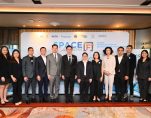
BANGKOK, THAILAND – Media OutReach Newswire – 1 May 2026 – Prof. Dr. Yodchanan Wongsawat, Deputy Prime Minister and Minister of Higher Education, Science, Research and Innovation (MHESI), led the National Innovation Agency (Public Organization) or NIA, along with Thai Union Group PCL, Mahidol University, and leading corporate partners including Thai Beverage PLC, Nestlé (Thai) Ltd., and new partner Foodland Ventures from Taiwan, to launch “SPACE-F Year 7”. This is Thailand’s first global foodtech startup incubator and accelerator program, continuing the success of solving food industry challenges through sustainable innovation.
SPACE-F Batch 7
Prof. Dr. Yodchanan spoke about elevating “SPACE-F Batch 7” to the policy level and building awareness, stating that MHESI aims to present food innovation products from the startups in this batch at the upcoming Cabinet meeting. This will allow the Prime Minister to taste them, raising awareness that FoodTech is the nation’s new future. The products will be presented to the Cabinet in the next two weeks.
Regarding the core concept of combining technology with “Thai taste,” Prof. Dr. Yodchanan emphasized that no matter how advanced the technology is, it must maintain the “Nice taste of Thailand.” He cited a “high-tech omelet” he previously tasted as an example, noting that there is still room for improvement to make it taste closer to an authentic Thai omelet so that the technology can truly win over consumers’ hearts.
The MHESI Minister continued that regarding food innovation under the Wellness Economy, this year focuses on using the Wellness Economy as a New Growth Engine. This is not limited strictly to food but includes AI, ICT, and software, aiming to push Thailand into a global Wellness Tourism Hub with support from the BOI in connecting investment opportunities.
Prof. Dr. Yodchanan further stated that regarding the use of biodiversity and quality ingredients (Biodiversity & GI), startups will be encouraged to utilize Thailand’s rich biodiversity and GI products as substitutes for imported raw materials. This will help reduce costs and create a unique identity.
“As for connecting the ‘Thinker’ with the ‘Doer,’ this program emphasizes linking startups with large industrial corporations and investors. This helps startups in the Accelerator group advance toward Series A or B funding, while helping the Incubator group learn business and pitching experiences from their seniors to cross the business ‘Death Valley.’ Furthermore, regarding food and nutrition security in the era of war: in the current global conditions facing wartime situations, Food Security and Nutrition Security are vital. This program is an opportunity for startups to create innovations that help solve problems for the whole world, with the government working closely with SPACE-F to create new services and products,” the MHESI Minister said.
However, “SPACE-F Batch 7” features 20 participating startups from 10 countries, focusing on the Proof of Concept (POC) strategy to ensure they can tangibly grow toward commercialization on an international scale.
Dr. Krithpaka Boonfueng, Executive Director of the National Innovation Agency (NIA), stated that NIA aims to strengthen the potential of startups and innovative entrepreneurs to overcome business crises and grow commercially in a tangible way. Over the past 6 years, the SPACE-F program has concretely reinforced its role as a regional food innovation hub by incubating and accelerating over 100 startups from 18 countries worldwide, generating a total funding value of over 5.1 billion THB. For the SPACE-F Year 7 program, it marks another major milestone of leapfrog growth, setting a new international record with an all-time high of 204 applicants, continuously increasing from 156 in Cohort 6 and 148 in Cohort 2, reflecting the confidence of global startups in the program’s potential. Concurrently, the program has significantly expanded its international reach, with applicants from 57 countries worldwide, up from 34 countries in the previous cohort, affirming that SPACE-F is a truly global platform connecting and driving world food innovation.
“The SPACE-F program is considered a vital mechanism in driving the development of a strong and comprehensive foodtech startup ecosystem by systematically connecting knowledge, technology, and the industrial sector together. Particularly, it provides opportunities for startups to co-develop and test real products (Proof of Concept: POC) with large corporate partners, as well as access expert networks and world-class infrastructure. This includes testing protein innovations focused on appearance, freshness, and taste with Thai Union; developing modern health and nutrition solutions with ThaiBev and Nestlé; utilizing deep-tech research laboratories from Mahidol University; and enhancing fundraising capabilities from Foodland Ventures, which plays a crucial role in reducing business risks and effectively increasing the chances of commercialization. For SPACE-F Year 7, it aims to elevate startup development through 2 main programs: the Incubator Program, which focuses on laying business foundations and developing prototypes into market-ready products, and the Accelerator Program, which focuses on accelerating business expansion through connections with strategic partners and investors. This covers 7 key areas of the food industry: 1) Personalized Nutrition, 2) Future Protein, 3) Circular Food Systems, 4) Smart Manufacturing, 5) Sustainable Production, 6) Food Safety, and 7) Novel Consumer Experience, to build high-potential startups capable of developing quality new products that directly meet market demands, ready to compete and grow sustainably on the global stage.”
Ms. Sirichit Jiraruangkiat, Senior Director – Group Innovation at Thai Union Group PCL, revealed, “As a co-founding partner of the SPACE-F program, Thai Union Group PCL continues to drive the development of Thailand’s foodtech startup ecosystem. We aim to support breakthrough growth by promoting the development and testing of innovations at the industrial level, particularly through the Proof of Concept (POC) process, to elevate the standards of future protein products to compete internationally. Thai Union prioritizes the application of modern food production and preservation technologies, covering everything from maintaining product quality and freshness and developing appealing appearances to sensory research to create textures and flavors that effectively meet the demands of global consumers. Simultaneously, the SPACE-F program remains committed to a ‘No Equity Taken’ approach, allowing startups to retain full ownership of their innovations, maintain business agility, and grow independently and sustainably in the long term.”
Assoc. Prof. Dr. Pasit Pakawatpanurut, Deputy Dean for Research and Innovation, Faculty of Science, Mahidol University, further added, “With expertise in food science, nutrition, biotechnology, and related fields, Mahidol University serves as an academic powerhouse and innovation infrastructure, providing startups with access to advanced laboratories, pilot plants, and modern research equipment. They also receive in-depth consultation from a team of expert researchers to successfully transition research into products that truly meet global market demands (Lab-to-Market). This collaboration is therefore a key mechanism in driving sustainable food innovation and enhancing Thailand’s competitiveness as a global foodtech hub. Mahidol University’s involvement in the SPACE-F program also plays a vital role in strengthening the country’s foodtech startup ecosystem in the long run.”
In addition, another key partner is Thai Beverage Public Company Limited, which places great importance on continuous research and development, believing it to be essential for startups. As a sponsor of the SPACE-F program, they are pleased to be part of an ecosystem that enhances the potential of foodtech startups and provides business and technological guidance to help startups discover solutions that truly meet the needs of the global food market.
Ms. Jenica Conde Cruz, Business Manager – Cereal Partners Worldwide & Incubator at Nestlé (Thai) Ltd., also stated, “Nestlé, a global leader in food and beverages, plays a vital role as a strategic partner of the SPACE-F program. We aim to elevate foodtech startups through the transfer of Research & Development (R&D) knowledge and product development experience under the ‘Good food, Good life’ concept. Nestlé also provides in-depth consultation to support the development of products that meet Nutrition, Health, and Wellness needs, while promoting the use of innovation to tackle global food industry challenges. In parallel, Nestlé also drives the development of innovations that align with sustainability goals by opening opportunities for startups to learn together with experts from our global research center network, in areas of food preservation technology, eco-friendly packaging, and responsible sourcing.”
Victor Chen, CEO of Foodland Ventures Co. closed with, “Foodland Ventures, a leading Venture Capital firm and Accelerator from Taiwan, has joined as a strategic partner in the SPACE-F program to push foodtech startups to expand their businesses into international markets. We aim to act as a bridge connecting innovation from Taiwan with food industry networks in Thailand and Southeast Asia. With expertise in key technologies such as Restaurant Automation, Alternative Protein, and Smart Supply Chain, Foodland Ventures is ready to support startups through access to the Taiwanese market and resources, providing investment and business strategy consultation, and connecting them with the industrial sector to test solutions in real-world environments. This collaboration marks a significant step in building a ‘FoodTech Corridor’ between Thailand and Taiwan to elevate startup potential and drive the food industry toward a sustainable global future.”
The “SPACE-F Year 7” program also introduced 20 startups from 10 countries worldwide: South Korea, Spain, Canada, USA/Argentina, Australia, Singapore, UK, Saudi Arabia, Taiwan, and Thailand, selected for this year’s program. All will have the opportunity to co-develop and test real innovations with leading industry partners, covering product development, industrial-level testing, and commercialization in the real market
Such collaboration is a key highlight of the program, providing startups the opportunity to test technology and innovations in real-world environments, reducing development limitations, and increasing the chances of creating business models that accurately meet market demands.
10 FoodTech Startups Joining the Accelerator Program
Terra Bioindustries Inc (Canada): Upcycles agricultural and food industry waste into high-value ingredients such as sugar, protein, and fiber for use in the food, biotech, and chemical industries.
Nucaps (Spain): Develops functional protein ingredients using microencapsulation technology to wrap active substances and probiotics, enhancing nutritional value, reducing costs, and improving taste to effectively promote consumer health.
BeNatureBioLab (South Korea): Develops functional ingredients using nano and microencapsulation technology from natural proteins to wrap active substances and probiotics, increasing the stability, absorption, and efficiency of substances in food, supplements, and health products.
Kinava (South Korea): Converts food waste into biofertilizer, biochar, and biogas within hours using HydroThermal Carbonization (HTC) technology, which reduces odor, energy use, and emissions.
ComexSoft (Spain): A near real-time market intelligence platform that collects and organizes retail data, matching similar products specifically developed for accurate decision-making.
PROTINOS (Thailand): High-protein noodles made from egg whites and soybeans containing complete essential amino acids, created using enzyme incubation techniques, serving as food to help care for and protect health.
SicPama (South Korea): A QR ordering and payment platform with a CRM system that links social media with actual service usage and repeat visits, helping restaurants measure returns and increase revenue.
Nourish Ingredients (Australia): High-performance animal-free fats created via precision fermentation to solve the taste and texture issues of plant-based alternative foods by mimicking the key fats found in meat and dairy products.
Kresko RNAtech (USA/Argentina): Nutrients from biological RNA found in natural foods, developed by AI and biotechnology to be more stable and better absorbed, for use in dietary supplements and health products.
Agrifreeze (Singapore): Develops freezing technology using Electromagnetic Fields (EMF) to control the formation of small ice crystals, reducing food damage and maintaining quality close to fresh products.
10 FoodTech Startups Joining the Incubator Program
Eatwellconcept (Thailand): An AI-powered personalized therapeutic diet platform for NCD patients, offering real-time nutritional guidance by dietitians to improve health and quality of life.
AmaranthLab (UK): Protein ingredients from amaranth for GLP-1 (Glucagon-Like Peptide-1) nutrition to control blood sugar levels and satiety, for use in various functional food products.
Openfarming (Saudi Arabia): An AI operating system for food distributors that converts orders from multiple channels into real-time data, enabling automated demand forecasting and dynamic inventory management without changing existing workflows.
Zuppar Reborn (Thailand): Biodegradable fruit and bakery stickers made from pineapple waste, replacing plastic labels with an alternative that can decompose into fertilizer.
VeriPura (Thailand/Singapore): An AI and Blockchain platform for automated document management and product traceability, making food exports to Europe easier and more compliant with regulations (EU).
YiXingYuan (Taiwan): A modular small-scale fruit processing factory (Factory-in-a-box) utilizing High Voltage Electric Field (HVEF) technology to process fruits directly at the source, preserving product quality while reducing energy use, costs, and spoilage.
JOLA (Thailand): Vitamin-infused jelly pet food that develops DIY treat products, such as jellies for dogs and cats, focusing on natural ingredients, good nutrition, and creating a shared experience between owners and pets.
UPLI (UK): A precision fermentation platform to create functional proteins with characteristics similar to human breast milk, used to increase nutritional value in food at an industrial scale.
Emerald Plast (Thailand): Biodegradable food materials and packaging made from starch and bioplastics to replace traditional plastics, reducing environmental impact and enhancing sustainability image.
Squizify (Thailand): A digital food safety platform integrating software and IoT devices to automatically track, monitor, and manage food business standards, complete with real-time data analysis.






 https://www.nia.or.th/




