News related to
processing

Anthropic has accused Moonshot AI of secretly sending customer requests meant for its Kimi chatbot to Anthropic’s Claude models, alleging that the Beijing-based company concealed the practice from users and presented Claude-generated answers as its own. The US artificial intelligence developer said on Thursday that it identified one ten-day period in which Moonshot routed almost 300,000 requests through a network of 5,380 fraudulent accounts, with much of […]

The third rebuild of Ramco’s platform in thirty years, moving enterprise software from a system of record towards a system of intelligence and action

KUALA LUMPUR, MALAYSIA – Media OutReach Newswire – 11 September 2026 – Ramco Systems, a global enterprise software company offering next-generation SaaS-enabled platform and products, celebrated three decades of powering enterprise transformation in Malaysia. To mark this milestone, Ramco hosted Ramco Now & Next, an event that traced its regional journey, showcased its vision for the future of enterprise software, and brought customers and industry leaders together for forward-looking discussions.

From left to right: Tarun Devasia, Chief Marketing Officer, Subbaraman Ramaswamy, Chief Customer Success Officer (Global Enterprise), Sandesh Bilagi, Chief Executive Officer, Rohit Mathur, Executive VP & SBU Head (Global Payroll & HR, Ramco Systems)

At the event, the company provided a preview of its upcoming AI-native enterprise platform, built to move enterprise software from a system of record to a system of intelligence, and ultimately a system of action. The first two shifts in Ramco’s platform changed how enterprise software was delivered; this one changes what the software is.

The new platform is designed to move away from software that people must log into and interpret, towards a system that surfaces what needs attention and drafts the resulting action for a human to approve. A walkthrough during the keynote showed how the platform would identify a projected stock shortfall across multiple warehouses and prepare the corresponding replenishment requests for approval.

Abinav Raja, Managing Director, Ramco Systems, said, “Nobody running a business today is short of information. They are short of the time to go and assemble it into something they can act on. What we are building is meant to do that assembly for them, and bring the next step with it, while leaving the judgement where it belongs.”

Payroll offers one example of what this looks like in practice: a monthly processing cycle gives way to continuous validation, with anomalies flagged as they arise rather than surfacing at the end of the period. The AI and Machine Learning technology carries out the processing while payroll teams retain the review and the sign-off.

Ramco has operated in Malaysia since 1996 and today processes payroll for more than 100,000 employees every month across more than 50 Malaysian organisations in over 15 industries. Kuala Lumpur serves as one of Ramco’s regional support hubs for HR and Global Payroll, with Singapore as its Asia headquarters.

Sandesh Bilagi, Chief Executive Officer, Ramco Systems, said, “We have spent thirty years in Malaysia solving problems our customers could not afford to get wrong. Some of the organisations we recognised today started with us decades ago. They have been part of our journey and been with us as our platform transformed and modernized over the years. Thirty years is not the achievement. Those relationships are.”

At the event, Ramco recognised its Malaysian clientele, including:

  • Valiram Group, the Kuala Lumpur headquartered luxury retail specialist with more than 600 stores across Southeast Asia and Oceania, was Ramco’s first retail customer in the region. Ramco provided an integrated solution that could replace the disparate HRIS systems in each country, which were working in silos.
  • Hitachi Energy used Ramco to build a unified payroll model spanning 20 countries and 8,000 employees. Ramco enabled Hitachi Energy to supplement and empower its retained payroll resources and amplify its expertise across countries.
  • Aurecon, an Asia Pacific engineering consultancy, went live on Ramco Payce this year, replacing legacy payroll processes across seven Asian markets, including Malaysia, with a single consolidated service. The service covers gross and net pay calculations, retroactive pay and increments, and payslip generation, alongside country-specific statutory compliance. The shift improved payroll accuracy and timeliness and delivered cost efficiencies across payroll and other teams.

Ramco expects the domain knowledge and experience built over three decades in Malaysia to reinforce how the new platform reaches customers across the region.
Hashtag: #RamcoSystems


The issuer is solely responsible for the content of this announcement.

Ramco Systems

Ramco Systems is a world-class enterprise software product/ platform provider disrupting the market with its multi-tenant cloud and mobile-based enterprise software, successfully driving innovation for over 30 years. Over the years, Ramco has maintained a consistent track record of serving 800+ customers globally with 2 million+ users, and delivering tangible business value in Global Payroll, Aviation, Aerospace & Defense, and ERP. Ramco’s key differentiator is its innovative approach to develop products through its revolutionary enterprise application assembly and delivery platform. On the innovation front, Ramco is leveraging cutting edge technologies around Artificial Intelligence, Machine Learning, RPA and Blockchain, amongst the others, to help organizations embrace digital transformation.

For more information, please visit

Follow Ramco on and stay tuned to

India is preparing to press BRICS partners to deepen the use of central bank digital currencies for cross-border payments while avoiding support for a single bloc-wide payments network that could be portrayed as an alternative to the dollar-dominated financial system.

The proposal is expected to feature at the BRICS leaders’ summit in New Delhi on September 12 and 13, where India, as this year’s chair, is seeking agreement on ways to lower the cost and speed up the settlement of trade, tourism and remittance payments among member states.

Reserve Bank of India Governor Sanjay Malhotra said last month that BRICS members were examining links between their fast-payment systems and central bank digital currencies, with a payments task force considering several options. He stressed that discussions remained at an exploratory stage and that no model had been agreed.

India’s preference is for interoperable national systems rather than either a common currency or centrally controlled BRICS payments architecture. Officials have framed the initiative around efficiency, cheaper transactions and use of sovereign currencies, distancing it from proposals that could be interpreted as an organised campaign to displace the US dollar.

That distinction has become politically important as BRICS members debate how far financial cooperation should go. Russia and some other members have advocated stronger alternatives to Western-dominated payment channels, while India has repeatedly ruled out backing a common BRICS currency and has resisted presenting financial initiatives as a de-dollarisation project.

The RBI earlier recommended that linking BRICS members’ digital currencies be placed on the summit agenda. Such an arrangement could allow transactions to be settled directly through participating central banks or financial institutions, reducing dependence on multiple correspondent banks and potentially cutting foreign-exchange and processing costs.

Central bank digital currencies are electronic forms of sovereign money issued by monetary authorities. Unlike privately issued stablecoins, their value and settlement are backed by central banks. India has been testing the digital rupee since 2022 and has added features including programmability and offline functionality as the RBI studies how it can complement payment methods.

Malhotra has said cross-border payments offer scope for lower costs, particularly in retail transactions. He has also said the RBI will continue efforts to promote greater international use of the rupee and encourage settlement in local currencies where commercially viable.

India is pursuing payment connectivity on a parallel track through the Unified Payments Interface, its instant retail payments platform. Prime Minister Narendra Modi this week called for UPI to be connected with payment systems in more countries. UPI is already available or linked with services in several overseas markets, including Singapore and the United Arab Emirates.

The BRICS discussions nevertheless extend beyond retail payment links. Officials have also been examining whether digital currencies issued by central banks can provide a secure settlement layer for transactions between member economies without requiring the creation of a shared currency or new supranational monetary authority.

Technical and policy obstacles remain. CBDC systems across BRICS countries are at different stages of development, and any cross-border arrangement would require agreement on interoperability, cybersecurity, data standards, foreign-exchange conversion, liquidity, governance and legal responsibility when transactions fail or disputes arise.

Trade imbalances pose another complication because a country receiving more of another member’s currency than it can use may be reluctant to accumulate balances. Policymakers have therefore also discussed mechanisms involving currency swaps and other settlement arrangements to deal with mismatches in bilateral trade.

The BRICS grouping now comprises 11 members, making consensus more difficult than when it consisted only of Brazil, Russia, India, China and South Africa. The expanded membership includes Egypt, Ethiopia, Iran, the United Arab Emirates and Indonesia, while Saudi Arabia has participated in BRICS meetings as its membership status has remained subject to clarification.

The Philippines has finalised a $34.4 billion artificial intelligence infrastructure masterplan targeting a thirtyfold increase in AI-ready data centre capacity to 1.5 gigawatts by 2033, while two US-headquartered hyperscalers assess potential sites in Luzon.

The Philippines AI+ Infrastructure Masterplan 2026-2033, launched by the Department of Information and Communications Technology on September 8, sets an initial goal of deploying about 400 megawatts by 2030 from a baseline of roughly 50 MW. The programme is designed to combine public infrastructure spending with substantially larger private investment in computing capacity, power, connectivity, water systems and workforce development.

Information and Communications Technology Secretary Henry Aguda said two unnamed US hyperscale cloud companies are conducting due diligence on locations within the Bataan-Clark and Batangas-Aurora corridors. Each is considering about 200 MW of capacity over five years, but officials have stressed that the figures represent projects under evaluation rather than committed investments.

Aguda said the corridor approach is intended to shorten a site-selection process that can take hyperscalers six to nine months by mapping available land, electricity, connectivity and other requirements before investors make final choices. He said the companies have so far focused on Luzon, and no timetable has been disclosed for investment decisions.

The masterplan estimates that $13.5 billion, or 39 per cent of total funding, would come from public sources and about $21 billion, or 61 per cent, from private capital. Government officials said roughly $18.2 billion is already linked to existing national programmes, mainly in connectivity and energy, leaving an additional requirement of about $16.3 billion. AI compute and data centres account for the largest component, estimated at about $14.6 billion. No project auction has started, and Aguda said the masterplan itself is not funded under the 2027 national budget, though enabling power and water infrastructure may already be covered by broader government programmes serving the grid.

Gemma Baysic, officer-in-charge director of the National ICT Planning, Policy and Standards Bureau, said the strategy is intended to enable the country to build, host, power and support a larger AI ecosystem rather than remain principally a consumer of the technology.

Energy supply is a central constraint. Department of Energy Undersecretary Maria Francesca Del Rosario said planners estimate the infrastructure could support about 152,000 graphics processing units. The department expects natural gas to meet immediate additional electricity needs while aiming for renewable sources, including solar and geothermal power, to provide 40 per cent of the energy used by AI infrastructure by 2033.

Officials said additional generation must be developed without diverting electricity from households. The government is also examining nuclear energy as a longer-term option under the Philippine National Nuclear Energy Safety Act, although no nuclear capacity has been committed specifically to the data centre programme.

The roadmap identifies Clark-Bataan as the primary anchor for large-scale AI infrastructure, with Batangas-Aurora serving as a strategic international gateway. Subic and Calabarzon are designated supporting hubs, while Cebu, Iloilo, Davao and Cagayan de Oro are listed as future regional nodes as capacity expands beyond Luzon.

The plan also links infrastructure investment to labour-market objectives. It calls for reskilling 1.3 million workers in the information technology and business process management sector for AI-enabled services. Government projections envisage more than 500,000 AI-related jobs and a further 175,000 positions associated with AI infrastructure projects by 2033.

Those employment and economic estimates remain targets rather than assured outcomes. The masterplan projects that AI-linked productivity gains and new digital services could increase gross domestic product by 10 to 12 per cent by 2033, dependent on investment, infrastructure delivery, workforce adaptation and wider adoption.

The Asian Development Bank supported preparation of the masterplan. Winfried Wicklein, an ADB director general, described AI infrastructure as a national competitiveness and productivity priority, while emphasising that the launch marks the start of implementation rather than completion of the programme.

Apple has unveiled the iPhone Duo, its first foldable smartphone, marking the company’s entry into a category and introducing the biggest physical redesign of the iPhone since the iPhone X. The book-style device was presented on Wednesday at Apple’s product event in Cupertino, California, alongside the iPhone 18 Pro and iPhone 18 Pro Max. The Duo folds into a passport-like form and opens into a larger display […]

China’s oil demand is expected to fall by 600,000 barrels a day, or 8.9%, in 2026, marking a third consecutive annual decline as high crude prices and faster electric-vehicle adoption curb fuel consumption, according to Sinopec Group’s research arm.

The Sinopec Economics & Development Research Institute said petrol and diesel would account for most of the reduction, with petrol demand projected to drop 8.7% from a year earlier to 149 million tonnes and diesel consumption to fall 11.4% to 164 million tonnes. Jet fuel demand, by contrast, is forecast to rise 1.3% to 41.55 million tonnes.

The forecast underscores a sharper structural shift in the world’s biggest crude importer, where transport electrification is steadily reducing dependence on petroleum fuels while the US-Iran war has pushed up energy prices and disrupted supplies through the Strait of Hormuz. The institute said the combination of high prices and changing transport patterns was weakening consumption across key refined products.

China’s oil demand has now declined for three straight years, according to the institute, strengthening evidence that growth in transport fuel use has peaked. The International Energy Agency has separately estimated that electric vehicles displaced about one million barrels a day of oil demand in China during 2025, roughly 15% of the road-transport demand that would otherwise have been required if the fleet had remained dominated by internal-combustion vehicles.

The IEA expects the displacement effect to deepen as the electric fleet expands, with electric vehicles in China projected to displace about 2.7 million barrels a day by 2030 under current policy settings. China already has the world’s largest stock of electric vehicles, and electrification is spreading beyond passenger cars into buses and heavy trucks, where diesel use has historically been substantial.

The IEA has said China’s transport oil consumption has flattened despite economic growth, as electric vehicles, gas-powered trucks and high-speed rail increasingly replace petroleum-based travel and freight.

The Sinopec research unit also lowered its outlook for crude processing, putting China’s 2026 refinery throughput at 697 million tonnes. Sinopec itself, the world’s largest refiner by capacity, has set a second-half oil throughput target of 113 million tonnes, broadly unchanged from the first half, according to its interim results.

Refining capacity is nevertheless expected to reach 952 million tonnes a year, equivalent to about 19.04 million barrels a day, in 2026. The research institute said tighter policy requirements and falling domestic demand would speed the closure of inefficient plants, particularly smaller and medium-sized refineries with limited product ranges.

It estimated that facilities representing 80 million to 100 million tonnes of annual refining capacity could leave the market. That would reduce national refining capacity to between 900 million and 910 million tonnes a year by the end of 2030, a contraction of as much as 5.5% from the 2026 level.

Weakness is also evident in petrochemicals. Although profits in China’s chemical industry rose by more than 50% year on year during the first seven months of 2026, the institute said apparent demand remained subdued. It forecast full-year ethylene-equivalent consumption to decline 8% because of high costs and inventory pressures.

The demand outlook has wider implications for global oil markets because China’s purchases have long been a major source of incremental consumption. Lower demand has helped restrain crude imports and limit price gains even as the conflict involving the United States and Iran has disrupted Gulf supply routes and tightened physical markets.

Brent crude climbed above $100 a barrel on Wednesday as renewed attacks raised fears of further supply losses. Yet weaker consumption in China remains an important counterweight to the supply shock, with traders weighing the effects of reduced imports against disruption across the Middle East.

Expanding satellite and hybrid IoT connectivity services across the Belt and Road Regions

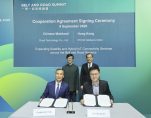
HONG KONG SAR – Media OutReach Newswire – 9 September 2026 – HKT (SEHK: 6823) – PCCW Global, the international telecommunications service provider under HKT, and Druid Technology Co., Ltd. (Druid Technology), a Chinese mainland provider of intelligent IoT solutions, today signed a Memorandum of Understanding (MoU) at the 11th Belt and Road Summit in Hong Kong. Under the MoU, the two companies plan to jointly deliver one-stop IoT solutions that combine satellite and hybrid connectivity in the Chinese Mainland, Hong Kong, Macao, and Belt and Road regions.

Frederick Chui, CEO, PCCW Global (left) and Li Guozheng, Founder and CEO, Druid Technology (right) signed an MoU at the Belt and Road Summit.

As a provider of intelligent IoT terminals and solutions, Druid Technology will leverage its expertise in device design, multi-network adaptation, data processing and platform integration, together with PCCW Global’s worldwide network services including roaming and cellular IoT to deliver one-stop, ready-to-deploy IoT solutions based on satellite and hybrid (satellite and cellular) connectivity. These solutions will support IoT applications such as remote tracking and monitoring for sectors including transportation, logistics, livestock farming and environmental management in remote locations and areas beyond the reach of conventional terrestrial networks.

Frederick Chui, CEO of PCCW Global, said: “PCCW Global is committed to delivering reliable connectivity and technology solutions through our extensive global network infrastructure. We are delighted to collaborate with Druid Technology and combine its expertise in intelligent IoT solutions with our own capabilities to strengthen our offering of one-stop IoT solutions for enterprise customers in both public and private sectors. Through this collaboration, we look forward to advancing the adoption of satellite and hybrid IoT solutions across Belt and Road markets, helping to meet the growing demand for reliable IoT connectivity and end-to-end solutions in remote and cross-border environments.”

Li Guozheng, Founder and CEO of Druid Technology, said: “We are pleased to become an integrated solutions provider for PCCW Global. By combining Druid Technology’s full-stack capabilities in intelligent IoT terminals, multi-system integration and physical world AI with PCCW Global’s leading global network infrastructure, we will provide customers with more comprehensive one-stop IoT solutions. We believe this collaboration will enable customers to deploy intelligent IoT applications more quickly and reliably, even in remote locations and other challenging environments.”

The solutions will cover terminal devices, network connectivity, data management and technical support. Leveraging its extensive global operational experience, PCCW Global will help accelerate the deployment of the solution across Chinese Mainland, Hong Kong, Macao, the Belt and Road regions and global markets.

Hashtag: #HKT #PCCWGlobal

The issuer is solely responsible for the content of this announcement.

About PCCW Global

PCCW Global is a leading digital infrastructure provider, empowering businesses with agile, scalable and secure connectivity solutions. By combining a best-in-class network with our award-winning on-demand platform Console Connect, we help businesses navigate the network complexities of the digital world with ease. With extensive reach across international markets, we make it simple to connect and move data between clouds, apps, data centres and devices. At the core of our business is a belief that automated, high-performance network infrastructure has the power to elevate business and society. For more information, visit www.pccwglobal.com.

Advertisements

Security researchers have disclosed a zero-click worm capable of hijacking WeChat accounts through incoming calls on both iPhones and Android phones, although the exploit has been mitigated before public release. California-based security firm Calif said its WeWorm demonstration exploited a memory-corruption flaw in WeChat’s voice-over-IP stack, allowing a compromised account to call another user and seize control of that account within seconds without the target answering or […]

Grindr has agreed to pay £26 million to resolve a UK group action brought by thousands of users who alleged the dating platform unlawfully processed sensitive personal information and misused private data before 2020. The settlement, reached on September 2 and disclosed in a filing with the US Securities and Exchange Commission, ends proceedings in the High Court of England and Wales without any finding or admission […]

SINGAPORE – Media OutReach Newswire – 8 September 2026 – Global digital business services leader TP (ex-Teleperformance) has been named Frost & Sullivan’s 2026 Asia-Pacific Company of the Year in Customer Experience Management Services, the analyst firm’s top honor recognizing the market participant that exemplifies visionary innovation, market-leading performance and customer care. TP was recognized for combining AI orchestration, operational discipline, and measurable customer impact across Asia-Pacific.

TP named Frost & Sullivan's 2026 Asia-Pacific Company of the Year in Customer Experience Management Services

Frost & Sullivan credited TP’s ability to move AI from experimentation into live operations, which Frost identified as one of the most urgent gaps in the industry. TP applies AI across the service delivery lifecycle to help teams become productive faster and improve service quality at scale. This starts with AI-enabled recruitment and onboarding, extends into simulation-based training that helps customer experts build proficiency before handling live interactions, and continues through workforce management and AI-assisted coaching. In quality assurance, TP now reviews every transaction rather than the small sample the industry has traditionally relied on, sharpening coaching precision, compliance visibility and operational learning.

“As AI becomes embedded into customer operations, enterprises need outcome-based models that orchestrate AI and human agents to improve productivity and deliver measurable business value,” said Dave Rizzo, President and CEO, APAC, TP. “TP designs workflows that use AI to elevate human work, while linking productivity gains to the business outcomes clients want to achieve. Being named Frost & Sullivan’s Asia-Pacific Company of the Year recognizes the progress we are making in delivering that transformation for clients across the region.”

Frost & Sullivan highlighted TP’s work with a major hospitality brand in Singapore as an example of this approach in practice. The engagement went beyond operational delivery to integrate technology across legacy and modern systems, while also implementing an AI-enabled knowledge platform that delivers trusted, context-aware answers to customer inquiries across multiple operational teams and lines of business. Together, these capabilities supported a broader redesign of the service infrastructure behind a high-touch, premium customer experience. Beyond individual client engagements, TP’s operations across Asia-Pacific play a dual role in TP’s strategy as both a delivery engine and a business development engine in a high-growth demand market. Frost & Sullivan noted that TP’s regional footprint enables it to respond to different language, regulatory, cultural, and operational requirements.

“The company’s centers of excellence in Asia-Pacific contribute to the development of solutions across AI, machine learning, natural language processing, analytics, and automation. This gives the region a role beyond labor delivery. It becomes a capability engine for global transformation,” said Krishna Baidya, Vice President, ICT Practice, Frost & Sullivan.

Frost & Sullivan also highlighted TP’s approach to reframing the traditional onshore-versus-offshore debate. Across Asia-Pacific, TP supports offshore, nearshore, onshore and hybrid delivery models, using technology and local market capabilities to balance cost efficiency, service quality, language requirements and regulatory needs. This flexibility allows TP to tailor delivery models to the realities of individual markets rather than relying on a single approach.

With operations in close to 100 countries and services spanning more than 170 markets, TP combines global scale with regional delivery depth, technology and human expertise. Across Asia-Pacific, this is translating into measurable outcomes, including an agentic triage use case that reduced referral-to-booking turnaround from approximately 24 hours to minutes while improving booking conversion. The recognition reflects how TP is evolving its digital business services for the next phase of AI-enabled transformation while keeping human oversight, empathy, judgment and relationships central to the service model.

Hashtag: #TP


The issuer is solely responsible for the content of this announcement.

AboutTP in SINGAPORE

TP in Singapore is part of the , a global leader in digital business services which consistently seeks to blend the best of advanced technology with human empathy to deliver enhanced customer care that is simpler, faster, and safer for the world’s biggest brands and their customers. The Group’s comprehensive, AI-powered service portfolio ranges from front office customer care to back-office functions, including high-value digital transformation services, collections and operations consulting. It also offers a range of specialized services such as interpreting and localization, visa and consular services, and recruitment process outsourcing services. The teams of multilingual, inspired, and passionate experts and advisors, spread in close to 100 countries, as well as the Group’s local presence allows it to be a force of good in supporting communities, clients, and the environment.

For more information: .

Arabian Post Staff -Dubai Saudi Arabia is preparing to give the International Atomic Energy Agency enhanced verification and monitoring powers over sensitive nuclear activities under its planned civil nuclear partnership with the United States, IAEA Director General Rafael Grossi said on Monday. Grossi said the arrangements being developed would not amount to Saudi Arabia formally adopting the IAEA Additional Protocol, the agency’s standard instrument for expanded inspections. […]

By Prosenjit Biswas, Head of Marketing at Masdar EOR How can a foreign company hire employees in the UAE without setting up its own local entity? This is a common situation for international companies entering the UAE. You may want to hire one employee, build a small team, mobilise people for a project, or simply test the UAE market before committing to establishing your own company. The […]

HONG KONG SAR – Media OutReach Newswire – 6 September 2026 – Shenzhen HQVT Technology Co., Ltd. (01392.HK), a prominent leader in China’s multispectral artificial intelligence sector, has published its interim financial results for the six months ended June 30, 2026. Marking the company’s inaugural operational scorecard following its listing on the Main Board of the Stock Exchange of Hong Kong on June 22, 2026, the interim report confirms accelerating commercial momentum across its core product lines. According to Frost & Sullivan data, HQVT ranks first in China’s overall multispectral AI industry and first in the multispectral AI large model services segment by revenue, reinforcing its established competitive moat across critical physical space safety scenarios. Further underscoring its market leadership, HQVT was recently recognized by LeadLeo Research as a top 10 benchmark vendor in China’s physical AI industry application practice.

Hong Kong Stock Connect Inclusion Set to Unlock Mainland Capital and Enhance Trading Liquidity

Hang Seng Indexes announced on August 21, 2026, that HQVT has been officially included in the Hang Seng Composite Index. The index change will be implemented after the market close on September 4, 2026, and will take effect on September 7, 2026. Upon this effective date, both the Shanghai and Shenzhen Stock Exchanges are expected to simultaneously add HQVT to the list of eligible stocks under the Stock Connect programs (Shanghai-Hong Kong Stock Connect and Shenzhen-Hong Kong Stock Connect). This will formally enable mainland Chinese investors to trade the stock through their Stock Connect accounts from September 7 onward.

The Stock Connect channel is expected to significantly broaden HQVT’s investor base by providing access to mainland China’s substantial retail and institutional capital pools. The influx of mainland investors via Stock Connect is poised to materially enhance trading liquidity.

Recent Financial Developments Of The Company

The financial results reflect a structural shift toward high-value software intelligence, with consolidated interim operating revenue reaching RMB 410.5 million, representing a strong year-over-year increase of 84.5%. The primary growth engine was multispectral AI foundation model services, which surged 382.5% year-over-year to RMB 320.0 million, elevating the segment’s revenue contribution. Excluding non-recurring listing expenses, adjusted net profit reached RMB 27.6 million, up 21.9% compared to the prior-year period, while net cash used in operating activities narrowed by 50.2% year-over-year to RMB 34.2 million, and cash and cash equivalents amounted to RMB 595.6 million as at 30 June 2026, keeping the financial position sound. To support long-term product differentiation, HQVT expanded its R&D expenditure by 125.3% year-over-year, maintaining an R&D headcount ratio of 43.1% and amassing a portfolio of 158 registered patents (including 101 invention patents) and 46 software copyrights.

Proprietary Multispectral Sensing Across Mission-Critical Infrastructure

HQVT’s technological foundation centers on its proprietary “Super Eye” perceptual platform, an integrated vision architecture that extends detection capabilities beyond visible light 380 nm – 780 nm into the ultraviolet 10 nm – 380 nm and thermal infrared 780 nm – 1 mm bands. Processing sensory inputs via the proprietary “Zhiyuan Origin Large Model”—which has completed dual filings with the Cyberspace Administration of China (CAC) and recently secured Shenzhen’s official model service provider qualification—the system detects micro-arcing, dielectric degradation, and localized thermal spikes long before physical combustion occurs. This capability is deployed through a three-tier collaborative defense matrix combining Tier-1 rack-level internal monitoring, Tier-2 room-level spatial sensing, and Tier-3 autonomous robotic patrol scanning.

This technological framework achieved significant commercial milestones across key industrial verticals during the first half of 2026. In the Internet Data Center (IDC) space, where high-velocity forced-air cooling systems often dilute smoke and hinder traditional detectors, HQVT secured large-scale AI foundation model deployment contracts from a prominent Shanghai state-owned enterprise and a Shenzhen-listed enterprise. Concurrently, in electrical power systems and new energy infrastructure, the company entered into a strategic collaboration agreement with Deep Robotics to integrate multispectral AI modules into quadruped robotic inspection platforms, enabling contact-free, online fault diagnostics across high-voltage substations, cable interlayers, and distributed battery energy storage installations.

Edge AI Breakthrough and Scalable Global SaaS Expansion

A major technical milestone during the interim period was the successful migration of HQVT’s foundation model architecture from centralized server clusters to compact Edge AI terminals powered by the NVIDIA Jetson AGX Orin platform. By removing the necessity for expensive on-premise compute servers and eliminating cloud-network latency, this on-device implementation drastically lowers initial capital expenditures while ensuring instantaneous safety responses. This edge breakthrough transforms HQVT’s commercial delivery model, facilitating product standardization and expanding the company’s addressable client base beyond large state-owned enterprises into the broader commercial market and small and medium-sized enterprises.

Soochow Securities, in its inaugural coverage report on HQVT dated July 31, 2026, assigns a “Buy” rating with a target price of HK$58.57 per share—implying approximately 113% upside from the Sept 04 closing price of HK$27.42. The broker’s valuation is anchored on 2027E revenue of RMB 1.31 billion at a 32x P/S multiple, citing the stock’s scarcity value as the only Hong Kong Main Board-listed multispectral physical AI pure-play, the industry’s 40%+ CAGR, and anticipated margin recovery as hardware costs are amortized across repeat projects. The report notes that the Edge AI breakthrough serves as the single largest near-term catalyst, with commercialization orders representing the critical verification point for investors.

Looking ahead, HQVT is directing its IPO capital toward expanding production capacity, advancing edge-model iterations, and executing an international go-to-market strategy. To penetrate overseas markets, the company has partnered with Singapore-based LINKWISE to accelerate deployments across Southeast Asian data centers and is actively preparing channel rollouts in the Middle East and Europe. By pairing standardized edge perception hardware with cloud-based Software-as-a-Service (SaaS) subscription tiers for analytics and diagnostic reporting, HQVT is positioning itself to build recurring, high-margin international revenue streams within the global physical AI safety sector. The interim results approval by the board on August 28, 2026, and the September 7 Stock Connect effective date represent the two immediate catalysts for investor attention.

Hashtag: #ShenzhenHQVTTechnology

The issuer is solely responsible for the content of this announcement.

Nepal has asked the Fund for Responding to Loss and Damage for emergency financing after the August 26 Bhote Koshi disaster, putting the fledgling global climate-aid mechanism under pressure before it has made its first funding awards. The government’s request, signed by Finance Minister Swarnim Wagle and Agriculture, Forests and Environment Minister Gita Chaudhary, says the scale of destruction exceeds Nepal’s domestic resources and immediate response capacity. […]

Tata Consultancy Services has committed with partners to invest up to ₹700 billion in a one-gigawatt artificial intelligence data centre campus in Hyderabad, marking one of the largest planned AI infrastructure projects in the country. The project will be developed by TCS subsidiary HyperVault AI Data Center Limited on 264 acres secured in Hyderabad, Telangana. TCS said the campus would be built in phases, with the pace […]

Used-car marketplace CARS24 has complained to cybercrime police that confidential information linked to about 3,100 customers was unlawfully taken and passed to a competing business and outside vehicle dealers, with individual sales leads allegedly offered for roughly ₹1,000 each. The company has estimated the resulting commercial loss at about ₹5.70 crore, according to details of the complaint. The figure is CARS24’s assessment of business damage and should […]

CoinRabbit has been named Best Crypto Lending Platform 2026 by International Business Magazine, adding an industry accolade to the crypto-backed lender as it expands beyond loans into broader digital-asset capital management. The Toronto-based company said the recognition covers a lending operation that has originated more than $1.45 billion in crypto-backed loans since its launch in 2020. International Business Magazine lists a 2026 awards programme and says its […]

Blockchain networks are moving from experimental infrastructure towards a broader role in digital finance as developers increasingly raise transaction capacity and institutions test tokenised settlement at scale. The shift is being driven by advances in layer-two networks, data-availability systems and higher-capacity base chains to overcome the congestion, cost and latency that have limited blockchain use beyond cryptocurrency trading. Ethereum is pursuing simultaneous expansion of its main network […]

Google has introduced Gemini 3.8 Flash, a general-availability artificial intelligence model aimed at long-horizon software engineering, autonomous agents and complex enterprise workflows. The model, released on September 2, is the latest version in Google’s Gemini 3 Flash family and is designed to combine stronger reasoning and coding performance with the lower latency and cost profile associated with the Flash tier. Google said Gemini 3.8 Flash is ready […]

ByteDance has secured a $29.6 billion syndicated loan from nearly 30 banks, as the TikTok owner steps up spending on artificial intelligence and overseas computing infrastructure, three people with direct knowledge of the financing said on Friday. The dollar-denominated facility is one of Asia’s largest loans this year and was expanded from an initial target of $20 billion after strong demand from lenders, the people said. Chinese […]

Arabian Post Staff -Dubai Dell Technologies and Armada have signed a memorandum of understanding to develop containerised mobile and edge data centre solutions across Saudi Arabia, targeting organisations that need computing and storage capacity close to operations. The agreement, announced on Friday after being signed during LEAP 2026 in Riyadh, sets a framework for combining Dell’s enterprise hardware and infrastructure stack with Armada’s specialised mobile, containerised data […]

Kenya’s President William Ruto has ordered Tata Chemicals to end its operations in the country and said two new companies would be brought in to replace it, escalating a dispute over the future of soda ash mining at Lake Magadi.

Ruto announced the decision during a visit to Kajiado County on Thursday, arguing that Tata Chemicals’ long presence in the area had delivered insufficient industrial development for local communities. He said any replacement investors would be expected to establish manufacturing operations in the county rather than simply extract and export raw materials.

The president said one of the incoming companies should develop a major glass manufacturing plant, while another would produce chemicals in Kajiado. His comments signalled a shift towards requiring more domestic processing of minerals and greater value addition around Lake Magadi, one of Kenya’s best-known mineral production centres.

“That TATA company… had that contract for 100 years. They have not built anything in Kajiado, they have not built any factory in Kajiado,” Ruto said. He questioned why Kenya should continue exporting soda ash while importing products such as glass that can be manufactured using the mineral.

Tata Chemicals said it respected the authority of Kenya’s government and remained committed to resolving outstanding issues through the appropriate legal and regulatory channels. The company said its Kenya unit had submitted a comprehensive response to matters raised by the Ministry of Mining, Blue Economy and Maritime Affairs, including information concerning compliance with applicable regulatory requirements.

The latest order follows a government directive that halted mining operations at Tata Chemicals Magadi Limited on July 28. The company had also been required to suspend exports of soda ash from its Magadi operation while the ministry reviewed regulatory concerns.

Tata Chemicals said on August 17 that it had provided all information, reports and documentation requested by the ministry and was awaiting further direction. At that stage, the company said it believed it had demonstrated compliance and was seeking a clear pathway to resume operations.

The company has disputed any suggestion that its activities have brought no benefit to the area. It said last month that about 500 employees and their families, as well as contractors, suppliers, transporters and local businesses, depended directly or indirectly on its Magadi operations. It also said about 30,000 people in the surrounding community benefited from its programmes in water, healthcare, education, infrastructure and community development.

Tata Chemicals Magadi describes itself as Africa’s leading producer of natural soda ash and one of Kenya’s leading exporters. The company says it exports more than 350,000 tonnes annually to markets in Southeast Asia, India, the Middle East and elsewhere in Africa.

Its financial performance in Kenya has weakened amid pressure on global soda ash prices. Tata Chemicals reported that the Magadi unit generated revenue of ₹5.86 billion in the financial year ended March 2026, down from ₹6.12 billion a year earlier. Earnings before interest, tax, depreciation and amortisation fell to ₹1.01 billion from ₹1.42 billion, while net profit declined to ₹480 million from ₹1.18 billion.

The company nevertheless recorded higher sales volumes in Kenya during the year and commissioned new equipment, including a five-megawatt solar plant, a solar pond and a 50,000-tonne electric calciner soda ash facility. Those investments were disclosed before the July suspension.

Ruto’s government is now tying future access to the Lake Magadi resource to industrial projects inside Kajiado. Kenya’s state news agency said the president indicated that a new investor would be required to establish glass and chemical processing facilities before receiving a licence to operate.

The change places the Magadi operation’s ownership, workforce and supply relationships under fresh uncertainty. Tata Chemicals said its immediate priorities remained the welfare of employees, the Magadi community and other stakeholders while it continued engagement with government authorities.

No timetable has been announced for the two prospective replacement companies to begin operations, and the government has not publicly identified them. Details of how existing mining rights, licences, assets or contractual obligations would be transferred have also not been disclosed.

The Federal Ministry of Solid Minerals Development is partnering with EnergyNet to deliver the first Nigeria NOW

ABUJA, Nigeria – EQS Newswire – 3 September 2026 – The Nigeria NOW! takes place on 19 and 20 November at the Bola Ahmed Tinubu International Conference Centre, under the patronage of the Honourable Minister of Solid Minerals Development, Dr Dele Alake. Between 500 and 600 delegates are expected across energy, infrastructure and mining.

The Federal Ministry of Solid Minerals Development is partnering with EnergyNet to deliver the first Nigeria NOW!, and has committed to remain involved through the preparatory period rather than at the event alone. The Ministry hosted the Abuja launch, secured the patronage of the Honourable Minister, and convened three further federal ministries as deliberate participants.

Speaking at the launch through Engr. Obadiah Simon Nkom, Director-General of the Mining Cadastre Office, Dr Alake set out why four ministries participate rather than one. Infrastructure, licensing, financing, technology, security and market access fall across several mandates, and no single ministry can answer an investor’s questions on all of them.

Why Nigeria

Nigeria now issues no mining licence without a plan for a local processing plant. The rule has been applied consistently and the investment following it includes a $1.3 billion partnership with the Africa Finance Corporation covering an alumina refinery, geological mapping and exploration support, a $600 million lithium processing plant near the Kaduna-Niger border, and a $200 million lithium refinery outside Abuja.

The first working demonstration is already running. A lithium plant at Endo in Nasarawa State, commissioned on 2 July, processes 6,000 tonnes of ore a day on around $250 million of investment. Sector revenue reached over 38 billion naira in 2024 against 6 billion the previous year. A memorandum signed with Türkiye in May covers exploration, technology transfer, digitalisation and training, and the Solid Minerals Development Fund began awarding exploration grants in July under its new EMERGE endowment.

Nigeria’s power sector is moving on the same principle of decentralised decision-making. Two years into the Electricity Act 2023, the Nigerian Electricity Regulatory Commission has transferred regulatory oversight to sixteen subnational commissions, giving states authority over their own electricity markets for the first time. The Nigerian Sovereign Investment Authority has put domestic capital behind distributed renewable energy, and industrial self-supply has reached 200MW, with a steel plant among the projects breaking ground against it.

Dr Alake’s own formulation is that the days of exporting raw minerals from pit to port are over.

What the Expo covers

Nigeria NOW! brings government, investors, project developers, financial institutions and development partners together around three sectors, energy, infrastructure and mining, with a focus on projects, capital and partnerships rather than announcements alone. The programme runs across two days at the Bola Ahmed Tinubu International Conference Centre in Abuja.

“This is the first Nigeria NOW! held in Nigeria, and the Ministry’s commitment to stay involved through the preparatory period is what makes it different from a conference that arrives and leaves,” said Abdoulaye Sylla, Portfolio Manager and Head of Corporate Development at EnergyNet. “We expect between 500 and 600 delegates, and the Ministry has asked that the Expo be judged on what is delivered after it closes.”

Partners

Nextier joins the Expo as Official Advisory Partner, providing strategic advisory and media support across the programme.

The Nigerian Indigenous Women in Mining and Natural Resources Organisation (NIWIMNRO) joins as Women in Mining Partner. The network was recognised at the Abuja launch with EnergyNet’s Leadership Award and a $25,000 grant, following a year in which it took its work with women artisanal miners from three states to all six of Nigeria’s geopolitical zones, adding protective equipment, mobile medical visits and cooperative registration to the training programme it began with.

Women in Mining joins as Women in Mining in Nigeria Partner; The Lagos State Ministry of Energy and Mineral Resources joins as Lagos State Sponsor; The Electricity Hub joins as Official Podcast Partner.

YES! Nigeria

The Youth Energy Summit runs alongside Nigeria NOW! on 20 November at the same venue, bringing young professionals and entrepreneurs into the same building as the investors and ministries. The Youth Sustainable Development Network joins as a partner for the Nigerian edition, alongside the University of Abuja’s Centre for Entrepreneurship Development and Students as YES! Supporting Partner.

Distributed by APO Group on behalf of EnergyNet Ltd.

Download Image (1): https://apo-opa.co/4gIB9gr (Four Nigerian ministries convene global investors in Abuja for the maiden Nigeria NOW! Launch (1))

Download Image (2): https://apo-opa.co/4x1g0o5 (Four Nigerian ministries convene global investors in Abuja for the maiden Nigeria NOW! Launch (2))

Download Image (3): https://apo-opa.co/4gV7u42 (Four Nigerian ministries convene global investors in Abuja for the maiden Nigeria NOW! launch (3))

Media and partnership enquiries:
Poliana Sperandio
Director
Marketing Strategy & Performance
EnergyNet
[email protected]
+44 (0) 207 384 8191

The issuer is solely responsible for the content of this announcement.

About EnergyNet

EnergyNet produces investment forums and digital dialogues across energy, mining and infrastructure in Africa, bringing governments, investors, developers and utilities together around investment, policy dialogue and project delivery. Best known for the Africa Energy Forum, EnergyNet has worked in Nigeria for fifteen years. EnergyNet owns and operates the Energy News Network, its independent editorial platform, and is part of Clarion Events.

Nvidia has agreed to acquire artificial intelligence developer platform Hugging Face in a transaction valued at $12.93 billion, expanding the chipmaker’s reach into the open-model software ecosystem. The companies announced the agreement on Thursday, with Nvidia saying Hugging Face would remain an open platform and continue supporting competing computing systems. The transaction is expected to close in the first half of 2027, subject to regulatory approvals and […]

VISHNU RAJA
RYO YAMADA
HITORI GOTOH
IKUYO KITA