News related to
processing

Despite 64% reporting revenue growth, 91% of merchants face payment friction HONG KONG SAR – Media OutReach Newswire – 16 December 2025 – Aspire, the all-in-one finance platform for modern businesses, today released its Hong Kong Ecommerce Pulse Check for 2025, revealing that while 100 Hong Kong merchants (with HKD 1–10 million annual business revenue) remain optimistic about growth even amid macroeconomic challenges, hidden financial friction is […]

Arabian Post Staff -Dubai GoPro has returned to the 360-degree camera segment with the Max 2, ending a six-year gap since the launch of its original Max and stepping back into a field that has evolved rapidly in its absence. The release comes at a time when rivals such as Insta360 and DJI have already iterated through multiple generations, raising questions about whether GoPro’s long-awaited update can […]

Advanced Micro Devices has reshaped its standing in the global semiconductor industry under chief executive Lisa Su, evolving from a company once associated mainly with cyclical PC demand into a diversified supplier central to the artificial intelligence build-out now reshaping data centres, cloud computing and high-performance workloads. AMD’s market capitalisation has hovered around the $200bn mark during 2024 and 2025, reflecting investor confidence that the company can […]

Warnings that Japanese companies face existential risks if supply chains linked to China are disrupted are sharpening the debate in Tokyo over economic security, diversification and the costs of geopolitical strain in East Asia. Hidetoshi Tashiro, chief economist at Infinity LLC and chief executive of Terra Nexus Project Management Services, said the most serious danger from worsening Japan–China relations lies not in tariffs or diplomacy but in […]

A wave of ambition is reshaping the technology landscape as leading entrepreneurs turn their attention to building artificial intelligence data centres in space. What began as scattered experiments in off-planet computing has matured into a competition among industry powerhouses seeking an edge in processing capacity, energy efficiency, and control over the infrastructure that will anchor next-generation AI systems. The pursuit is driven by the belief that Earth-based facilities are reaching fundamental limits, from land availability to cooling constraints, and that low-Earth orbit may provide the only environment capable of sustaining the exponential escalation in computational demand. Advocates frame this as an extension of a long-standing principle in engineering and exploration: to put human ingenuity to its fullest possible use, wherever the boundaries of science allow.

Several major technology leaders have stepped into this arena over the past two years. Their investments reflect a profound shift in strategy as companies realise that AI models cannot continue to scale using terrestrial infrastructure alone. The voracious energy requirements of large-scale training workloads challenge even the most advanced data-centre designs, pushing firms to explore solutions that draw on off-planet solar power and exploit the vacuum of space for passive cooling. Executives argue that orbiting facilities promise a cleaner energy profile, reduced environmental impact, and unprecedented independence from Earth’s physical constraints. As one aerospace investor remarked during a private industry event, the next digital revolution may be fuelled not by new algorithms but by new geography.

Engineering teams working on these orbital concepts often describe them as a convergence of satellite technology, chip innovation, and AI architecture. The logic is straightforward: satellites already operate reliably in extreme conditions with limited maintenance; AI systems increasingly require specialised compute hardware that benefits from consistent temperature conditions; and the economics of launch have changed dramatically due to reusable rockets. Once the cost of placing hardware into orbit falls to thresholds comparable to building premium facilities on Earth, the case for space-based computing strengthens considerably. What was once a speculative thought experiment has become a viable commercial target because access to space is no longer a privilege of governments alone.

However, the motivations driving this race are not solely technical. Strategic considerations weigh heavily. Ownership of orbital AI capacity promises unparalleled control over data sovereignty and computational independence. For executives wary of regulatory intervention or geopolitical risk, space offers a jurisdictional buffer that has become increasingly attractive. The ability to operate hardware outside traditional national borders gives corporations leverage at a moment when governments are tightening rules on data transfer, algorithmic transparency, and cloud-computing dependencies. Critics warn that this dynamic could set the stage for tension between public oversight and private ambition, particularly as orbital networks start to support commercial, defence, and financial applications simultaneously.

Security analysts have begun to examine the implications of off-planet AI infrastructure for global stability. On one hand, distributing critical systems across multiple orbital layers may reduce the vulnerability of communication and computing networks to terrestrial attacks or natural disasters. On the other, it introduces fresh risks, as high-value satellites could become targets in future disputes. Industry leaders tend to emphasise resilience and cooperation, arguing that shared standards and open coordination mechanisms can prevent escalation. Yet even in the early stages of development, commercial confidentiality and competitive pressure limit transparency, raising questions about how cooperative such a system can truly be.

Environmental considerations further complicate the picture. Proponents argue that orbital facilities will dramatically reduce the carbon footprint of data centres by tapping continuous solar energy and eliminating the need for extensive water-based cooling. They claim that redirecting computation to space will relieve pressure on overloaded terrestrial grids and free up land used for sprawling data-centre campuses. Environmental organisations counter that launching hundreds of tonnes of hardware into orbit will generate emissions during the construction phase and intensify concerns about space debris. Engineers involved in the projects acknowledge these issues but maintain that the long-term carbon savings outweigh the initial costs. Some firms have begun exploring closed-loop manufacturing cycles using recycled orbital material, a concept still in its infancy but increasingly part of corporate presentations.

The economic dimension of the space computing race has also attracted significant attention. Venture capital firms see orbital AI networks as a foundational platform similar in scale to the early internet, creating opportunities for startups focused on maintenance robotics, radiation-hardened chips, inter-satellite laser communication, and autonomous control systems. Government space agencies have shown interest too, recognising that private data-centre initiatives could stimulate broader commercial activity in orbit. Financial analysts caution that the capital intensity of these projects is immense and that many entrants may struggle to secure the funds required to move from prototype to full-scale deployment. But they also acknowledge that the firms leading the charge have histories of turning audacious concepts into viable industries.

One of the most compelling arguments for orbital AI centres revolves around scientific potential. Researchers emphasise that such facilities could support breakthroughs in materials engineering, climate modelling, pharmaceutical development, and astrophysics. Training models in microgravity environments may enable experiments that are impractical on Earth, and the isolation of orbital systems creates opportunities for secure high-performance computing dedicated to sensitive research. A prominent AI scientist recently noted at a conference that new frontiers in intelligence will be unlocked only when researchers have access to computational substrates as novel as the algorithms themselves, and that space may provide exactly that.

Despite enthusiasm, several fundamental questions remain unresolved. Energy transmission is one of them. While orbiting platforms can harness abundant solar power, efficiently transferring that energy to onboard compute clusters and ensuring stable operation during orbital night remains a challenge. Another issue concerns maintenance. Although robotic servicing is improving, most concepts still require periodic human intervention, raising questions about safety, reliability, and cost. Legal scholars are also wrestling with the future regulatory landscape, debating whether orbital AI nodes should be governed by space law, telecommunications frameworks, or entirely new agreements. These uncertainties highlight the complexity of forging infrastructure that defies conventional definitions.

Public perception is another area shaping the debate. The idea of billionaire-led initiatives expanding beyond Earth has drawn criticism from those who view it as a diversion of resources from urgent terrestrial needs. Advocates counter that technology has always advanced through bold exploration and that the benefits of space-based AI will eventually extend across society, from medical research to disaster forecasting. Several industry leaders have used narratives emphasising human progress and responsibility, suggesting that building orbital computing platforms represents a contribution to global knowledge rather than a retreat from Earth’s challenges.


A breakthrough in neural engineering is prompting wide debate over how far humans should push the boundaries between biological thought and digital computation. The unveiling of an ultra-thin implant known as BISC, designed to stream neural activity in real time through a high-bandwidth wireless interface, offers a glimpse of a future where the movement of a limb, the perception of an object, or the intent behind a […]

Google has rolled out a major update to its AI fashion experiment Doppl, introducing a “shoppable discovery feed” that blends virtual try-ons with direct-to-merchant shopping. The new feed displays AI-generated videos of real clothing items tailored to users’ style preferences, enabling a seamless path from browsing to purchase. This marks a distinct step from the original “virtual dressing room” concept: now shoppers can scroll, preview outfits virtually, […]

Advertisements

A token linked to the brand of popular creator-entrepreneur Jimmy Donaldson — known globally as MrBeast — saw price gains of nearly 900 per cent in 24 hours, reflecting growing investor speculation around the newly filed fintech trademark by his corporate group. The rally has thrust the unofficial memecoin spotlit by social-media buzz, despite clear warnings that the currency remains unauthorised and unconnected to any official launch.

The underlying spark appeared after his firm, Beast Holdings, submitted a trademark application in October 2025 for a brand called MrBeast Financial. The filing outlines services ranging from mobile banking, crypto payment processing, exchange and decentralized-trading tools to loans, credit cards and financial-education offerings.

Soon after media and investor attention picked up, the BEAST token’s trading volume soared — a pattern analysts attribute to a mix of hype, confusion with other meme coins referencing MrBeast, and overbought technical indicators that often precede sharp reversals.

Insiders at Beast Industries, including CEO Jeffrey Housenbold, have confirmed that financial-services expansion is part of a broader diversification strategy. At the summit event where the plan was publicly discussed, Housenbold said the company aims to package banking, fintech and creator economy functions under one umbrella — potentially offering fans access to financial services via a recognised brand.

Beast Industries’ market valuation has reportedly reached around US $5 billion. That, combined with MrBeast’s social-media reach, fuels investor optimism that “MrBeast Financial” — if realised — might attract millions of users instantly. This visibility helps explain why speculative investors clung to BEAST token amid the buzz.

Yet experts caution over regulatory and structural hurdles before any fintech project materialises. A US trademark filing does not equate to regulatory clearance; launching banking or crypto-exchange services would require compliance with complex licensing regimes, including money-transmitter permits, anti-money-laundering protocols and possibly oversight by financial authorities.

This is not the first time the MrBeast brand has floated multiple trademarks without launching full-fledged products. Past filings — ranging from burgers to gaming to snacks — have produced mixed results, with some evolving into real ventures and others quietly fading. That casts ambiguity over whether “MrBeast Financial” will ever become a functioning platform.

Despite that, investor appetite for BEAST appears to remain driven by two forces: the fear of missing out characteristic of crypto cycles, and hope that a fintech rollout tied to a globally recognised creator could upend traditional financial models. Until regulators weigh in or Beast Industries announces concrete partnerships, however, BEAST remains a speculative asset — its value tied more to branding buzz than fundamentals.

Botim Money and Binance have moved to broaden digital asset access for users across the UAE after signing a memorandum of understanding during Binance Blockchain Week in Dubai, signalling a push to integrate regulated crypto services into one of the region’s most widely used digital platforms. The agreement reflects a growing alignment between established fintech operators and global exchanges seeking to deepen their presence in a market that has positioned itself as a leader in digital-asset regulation and innovation.

Botim Money, the financial services arm of the UAE-based communications platform Botim, aims to use the partnership to explore compliant pathways for users to buy, sell and manage crypto assets from within its ecosystem. The platform, owned by Astra Tech, has expanded from a calling and messaging service into a broader super-app model, adding payments, remittance and e-commerce tools. Executives have argued that embedding secure crypto access is a natural progression as users increasingly seek unified financial services in trusted digital environments. The collaboration with Binance, one of the world’s largest crypto exchanges by trading volume, is expected to focus first on regulatory frameworks, technical integration and user-protection standards.

The signing of the agreement at Binance Blockchain Week placed the partnership in the spotlight as global industry participants gathered in Dubai. Officials from Binance highlighted that the UAE’s licensing landscape and digital economy strategy have created conditions where exchanges can build long-term infrastructure. Richard Teng, who heads Binance globally, has repeatedly emphasised that the Gulf region’s regulatory clarity has allowed the company to stabilise operations after addressing compliance concerns elsewhere. The MoU with Botim Money follows earlier moves by Binance to secure approvals through Dubai’s Virtual Assets Regulatory Authority, enabling it to develop a locally compliant exchange environment.

Senior figures at Botim Money pointed to the super-app’s large user base as a strategic advantage. With millions of active customers across the Middle East and South Asia, Botim has become a central payments and communications tool for expatriate workers. Astra Tech’s leadership said the partnership could help bridge the gap between conventional financial users and digital-asset platforms, allowing remittance senders, online shoppers and small businesses to access crypto payments or investment tools without transitioning to unfamiliar applications. Industry analysts noted that such integrations could accelerate mainstream adoption, provided that strong risk controls are embedded from the outset.

Dubai’s position as a global blockchain hub formed a central backdrop to the announcement. The emirate has attracted exchanges, tokenisation projects and Web3 developers with its tiered licensing system and emphasis on consumer safeguards. Officials have pitched Dubai as a base for companies seeking regulatory stability after volatility in global crypto markets. Binance Blockchain Week itself drew developers, institutional investors, compliance specialists and start-ups exploring tokenised assets, AI-driven trading tools and cross-border payment systems. The Botim Money–Binance collaboration stood out among the event’s business announcements for its potential to link a mass-market communications app with a globally recognised exchange.

The partnership arrives at a time when the UAE continues to refine rules governing custodial services, stablecoins and digital-asset marketing. Market participants say these developments have strengthened confidence among fintech companies looking to integrate virtual assets without jeopardising compliance obligations. Botim Money’s leadership has indicated that any crypto services made available through the platform would adhere to regulatory requirements on customer verification, anti-money laundering controls and risk disclosures. Binance has similarly stressed that its growth strategy in the UAE is tied to full regulatory alignment, following heightened scrutiny by authorities in Europe and North America earlier this year.

Observers viewed the agreement as part of a broader trend in which everyday digital platforms embed financial products to enhance user engagement. For Binance, the arrangement offers an opportunity to reach a large demographic that predominately uses mobile channels for financial activities. For Botim Money, it presents a pathway to diversify revenue streams and retain users within a single app environment, especially as competition intensifies among regional fintech operators seeking to offer remittances, payment processing, microfinance and merchant tools.

Sui’s token structure is drawing heightened attention as analysts warn that the network’s locked supply and insider concentration could influence market behaviour during the next phase of token distribution. A new assessment suggests that questions around the durability of Sui’s rally persist despite the project’s growing activity in decentralised applications and its positioning as an alternative to high-throughput chains. The concerns have surfaced as market participants look for signals on whether Sui could mirror the type of extended rally seen in Solana during its strong periods of expansion.

Sui’s token model includes a large quantity of locked tokens that are programmed to enter circulation according to a long-term schedule. Data compiled by blockchain monitoring platforms indicates that more than half of the total supply, around 50.57 per cent, remains locked. The release of these tokens is staggered, but analysts note that the size of the locked tranche means the market will continue to grapple with questions about absorption capacity and price impact. A cohort of early backers and core contributors holds about 15.3 per cent of the supply, a figure that has prompted market watchers to examine whether insider allocations could add to selling pressure once vesting windows open.

Developers behind the network emphasise that the emissions framework was designed to support long-term decentralisation and sustainable staking rewards. They argue that the programme aligns incentives for validators, node operators and builders working on the Layer-1 blockchain. However, the scale of the locked supply and the pace at which it is due to unlock have remained central to external evaluations, especially against the backdrop of aggressive capital rotation across digital asset markets.

Sui has promoted itself as a platform capable of handling high transaction throughput through its parallel execution model, distinguishing itself from chains that rely heavily on sequential processing. The project has advocated for its ability to support complex applications, with gaming, asset tokenisation and digital commerce cited as core areas of growth. Activity on the network has picked up over multiple trading cycles, with decentralised exchanges and gaming protocols playing a visible role in boosting usage. Even so, market analysts caution that network adoption alone cannot insulate the token from structural risks tied to large unlocks.

The comparison with Solana has intensified as traders search for the next high-growth ecosystem. Solana’s expansion was driven by rising developer activity, strong venture backing and an improving macro climate for risk assets, elements that contributed to a prolonged appreciation in its token price. Some traders argue that Sui possesses a similar mix of technical ambition and ecosystem investment. Others counter that Solana’s earlier supply dynamics were markedly different, with less pronounced unlocking over short intervals. These observers state that expectations of a parallel trajectory should be tempered until Sui demonstrates a firmer balance between token issuance and organic demand.

Several research desks have highlighted that tokenomics alone do not determine the long-term trajectory of a blockchain project but can exert considerable influence during early growth phases. Analysts tracking the project have pointed to previous unlock waves that resulted in more volatile trading sessions. They note that liquidity conditions matter significantly when large quantities of tokens transition from locked to tradable status, particularly during market downturns. Market participants monitoring derivatives markets also report that funding rates and open interest data reflect cautious positioning around major unlock dates.

The project’s foundation continues to emphasise builder incentives, community grants and ecosystem expansion. Grants directed towards game studios, consumer applications and infrastructure tools have created steady interest among developers seeking alternatives to more congested chains. Daily active accounts and transaction counts have shown periodic spikes, although interpreters of blockchain data stress that differentiating genuine usage from opportunistic activity remains essential when evaluating the long-term strength of an ecosystem.

A fully digital escrow service for vehicle ownership transfers has been introduced through a partnership between SlashData and the Integrated Transport Centre, marking a significant shift in how transactions between buyers and sellers are executed in the UAE. The rollout of the platform known as Shary signals an effort to reduce paperwork, lift administrative burdens, and strengthen confidence in a market where used-car transactions continue to expand. […]

A curious experiment in automated finance has produced a result that is raising questions about the limits of machine-driven markets. A trading tournament built to showcase the sophistication of competing AI systems has ended in a collective stumble, with every participating model posting losses. The outcome is fuelling debate over whether advanced algorithms are as market-ready as their creators claim, and whether any model can reliably navigate […]

Ika’s latest mainnet upgrade has widened its native cross-chain capabilities to cover Solana, Zcash, Cardano, Stellar, Near and several other ecosystems that depend on EdDSA signatures, marking a significant step in efforts to streamline secure multi-chain interoperability. The network, which positions itself as a high-performance parallel MPC infrastructure, said the development enables decentralised wallets on its platform to generate EdDSA signatures directly, removing a key barrier for users aiming to execute transactions across diverse blockchain environments without intermediaries.

Executives described the rollout as a fulfilment of a core commitment to allow seamless control of digital assets across multiple chains through native authentication mechanisms. Analysts tracking the sector noted that Ika’s move arrives at a moment when blockchain networks are intensifying competition to offer deeper interoperability, improved security guarantees and lower latency for institutional and retail users transacting across a dispersed ecosystem. The company’s upgrade introduces direct support for chains with distinct cryptographic architectures, giving developers a more unified environment for building decentralised applications that interact across networks with minimal friction.

EdDSA, a signature scheme valued for speed and resistance to certain attack vectors, has become a standard across several major chains. By integrating native support for it, Ika has aligned itself with a widening group of protocols that rely on this cryptographic approach. Engineers familiar with cross-chain bridging mechanisms said the enhancement reduces the need for external validators or proprietary signing modules, both of which have historically created vulnerabilities that attackers have exploited. The company’s emphasis on decentralised key generation and distributed signing is aimed at addressing those concerns, with the upgrade designed to ensure that no single node gains access to full private key material during any point of the transaction process.

Developers working on multi-chain tools have highlighted that Solana and Zcash pose demanding requirements given their divergent architectures, throughput characteristics and privacy frameworks. Solana’s focus on parallel transaction processing and Zcash’s shielded transaction system require precise signature handling. Ika’s engineers said the upgrade underwent extensive compatibility tests to ensure that signature validity, network confirmation times and verification methods aligned with native standards on each chain. Market observers added that Cardano’s adoption of Ed25519, Stellar’s reliance on simple yet robust distributed consensus, and Near’s sharded architecture also required tailored integration approaches that maintain performance targets while preserving decentralisation.

The extended coverage is expected to attract developers seeking infrastructure capable of delivering verifiable computations and secure multi-party controls without depending on centralised custodial layers. Industry analysts have reported a growing appetite for MPC-based solutions as institutional participants demand cryptographic guarantees that reduce counterparty risk and strengthen operational security. Ika’s parallel design allows multiple signing operations and computations to run simultaneously, a feature the company argues positions it for high-volume environments such as decentralised exchanges, cross-chain liquidity networks and tokenisation platforms.

Executives said the upgrade also lays groundwork for supporting additional ecosystems that may adopt or transition to EdDSA-based cryptography. While the company has not disclosed timelines for further integrations, the MPC network’s architecture is designed to accommodate expanded signature schemes without major reconfiguration. That adaptability has become an important differentiator for infrastructure providers aiming to keep pace with evolving cryptographic standards and the emergence of new blockchain protocols built around enhanced privacy or throughput.

Blockchain security specialists noted that the industry continues to grapple with vulnerabilities in cross-chain bridges, some of which have seen major exploits over the past two years due to weaknesses in multi-signature setups and validator coordination. Ika’s MPC-driven approach seeks to mitigate these risks by distributing trust and eliminating single-point signing authority. By enabling native EdDSA signatures within its distributed wallet environment, the company aims to reduce exposure to the types of exploits linked to compromised custodial keys or flawed verification mechanisms.

Seamless Access Across Time Zones with Preferential Brokerage Fee HONG KONG SAR – Media OutReach Newswire – 4 December 2025 – Dah Sing Bank, Limited (“the Bank”) announced the extension of its US stock trading service to 24 hours*, offering investors round-the-clock trading experience. The US equity market remains the largest globally by market capitalisation and continues to be a key focus for investors. In recent years, […]

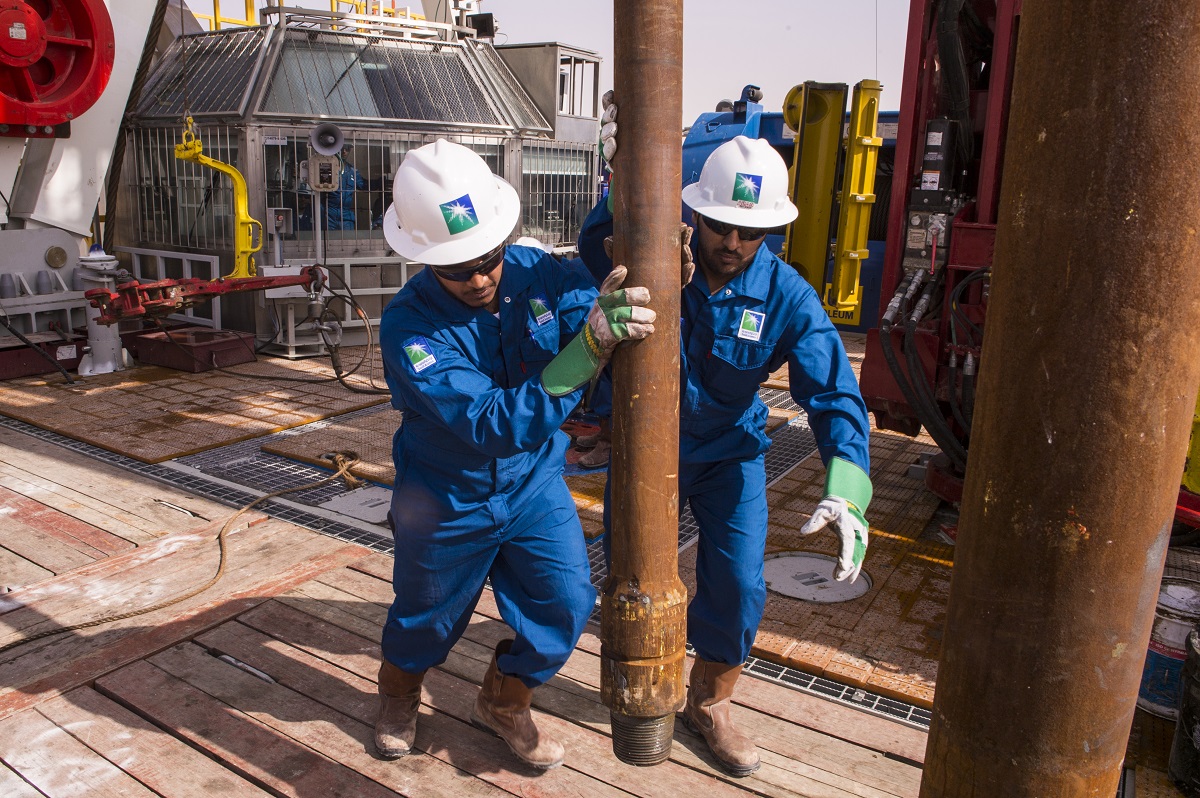
Saudi energy giant Saudi Aramco has begun output from the first phase of its vast Jafurah gas field, signalling a major milestone in the Kingdom’s shift toward natural gas. The project, valued at around $100 billion, has an initial production capacity of 450 million cubic feet per day, according to the Saudi Finance Ministry’s 2026 budget statement.

The field holds an estimated 229 trillion standard cubic feet of raw gas along with 75 billion stock tank barrels of condensate—making Jafurah the largest non-associated gas development in Saudi Arabia and among the largest shale-gas plays outside the United States.

Completion of the first development phase allows Aramco to begin supplying sales gas domestically. The company plans to ramp production gradually and aims to reach a sustainable output of 2 billion cubic feet per day by 2030.

To support its gas-processing infrastructure, Aramco earlier sealed an $11 billion lease-and-leaseback agreement with a consortium led by Global Infrastructure Partners, part of BlackRock. Under the deal, a newly formed subsidiary, Jafurah Midstream Gas Company, will lease the processing and fractionation facilities — which Aramco will then lease back for a 20-year period. Aramco retains majority ownership with a 51% stake, while the investor group holds 49%. The transaction is designed to inject capital without constraining production volumes.

Aramco’s move reflects a broader strategic shift. By ramping up gas production, the company aims to reduce domestic reliance on crude oil for power generation — thereby freeing more crude for export. Gas from Jafurah is expected not only to meet domestic power and utility needs but also to provide feedstock for petrochemicals, hydrogen, and potentially emerging sectors such as AI data-centres.

Analysts view Jafurah as a potential game-changer for both Saudi Arabia and global gas markets. With reserves comparable to major U. S. shale plays and a projected daily output of 2 bcf by 2030, the project could make Saudi Arabia a more prominent natural-gas exporter or LNG player — a significant rebalancing from its traditional role as an oil-dominated supplier.

Through this transformation, Aramco underlines its long-term aim of reinventing its energy portfolio — aligning with efforts to diversify the country’s economy and meet shifting global demand patterns.

Brooge Petroleum and Gas Investment Company, a subsidiary of shipping and logistics firm Gulf Navigation, has finalised an agreement to launch front-end engineering design for a new refinery in Fujairah aimed at producing Euro 5-grade gasoline from naphtha. The first phase of the project is expected to yield around 15,000 barrels per day. Under the agreement, BPGIC will work with PEG to steer the FEED stage — […]

European banking regulators are intensifying warnings that widespread use of artificial intelligence across the financial sector could expose the banking system to new, systemic vulnerabilities. The chair of supervision at the central bank of the Netherlands, Steven Maijoor, stated that the increasing reliance on AI tools supplied by non-European tech firms is creating a structural threat to financial stability. He urged swift action to reduce dependence on […]

A surge in hardware innovation has reshaped expectations for portable gaming, and the strongest performers of 2026 reflect that shift. The field has expanded beyond traditional performance leaders, drawing in machines engineered with desktop-class GPUs, advanced cooling architecture, and AI-enhanced optimisation layers that push mobile gaming to new thresholds. The landscape is defined by three broad categories: raw-power flagships that prioritise maximum performance, balanced contenders designed for […]

By Nantoo Banerjee It is encouraging to note that the government has decided to invest large sums of money in support of rare earth magnet manufacturing and substantially improve the country’s rare earth-based metals production to escape China’s global chokehold in this strategic sector. Presently, there are a few small Indian companies engaged in manufacturing […]

The article India’s Push For Self-Reliance In Rare Earth Magnet Making Is Laudable appeared first on Latest India news, analysis and reports on Newspack by India Press Agency).

FG Gold Limited has closed a US$330 million senior debt agreement with the Africa Finance Corporation and the African Export-Import Bank, unlocking financing for the development of the Baomahun Gold Project — set to become Sierra Leone’s first large-scale commercial gold mine. The facility was formalised during AFC’s investor forum in London, marking one of the most significant mining deals in the country’s history. The Baomahun project […]

Collabora Office has rolled out a brand-new desktop office suite compatible with Windows, macOS and Linux, offering a unified user experience across both online and offline environments. The suite inherits the user interface of Collabora Online — known for its clean, tabbed layout and streamlined tools — while retaining the powerful document compatibility and core engine of LibreOffice. The earlier enterprise-grade LibreOffice-based package has been rebranded as […]

Arabian Post Staff -Dubai Crown Prince Mohammed bin Salman arrived in Washington to meet U. S. President Donald Trump with a sweeping agenda spanning defence, technology and economic cooperation — signalling a clear recalibration of Saudi Arabia–United States relations. The meeting resulted in high-stakes commitments including a pledge of up to $1 trillion in Saudi investments and approval for advanced defence hardware, underscoring the kingdom’s ambition to […]

Greenlogue/AP Riyadh – Tanmiah Food Company, one of Saudi Arabia’s largest vertically integrated poultry and food producers, has signed three strategic memoranda of understanding and launched what it calls the region’s first geothermal-cooled poultry facility, marking a significant move in its sustainability and decarbonisation drive. The agreements were unveiled during the inaugural Saudi Agri‑Food Tech Alliance Forum at the headquarters of the Ministry of Environment, Water and […]

Starting a business in Dubai is one of the most exciting ventures you can undertake in 2026. The city’s dynamic economy, global connectivity, and investor-friendly policies make it an ideal destination for entrepreneurs and corporations alike. However, navigating government approvals, visa processing, and licensing can be time-consuming if you go it alone. That’s where PRO services in Dubai comes into the picture. These professional support services simplify […]

VISHNU RAJA
RYO YAMADA
HITORI GOTOH
IKUYO KITA