News related to
processing

PubMatic has taken legal action against Google, not merely to secure compensation but to affirm that bold vision for digital advertising’s open, idea-driven future depends on innovation and trust, not coercion. The company’s co-founder and chief executive, Rajeev Goel, emphasised that the industry’s direction should be determined by the strength of ideas and the trust earned—not by dominance or pressure, as articulated in its lawsuit filed on 8 September. This step comes in response to a US District Court decision earlier this year that found Google guilty of maintaining monopolistic control over ad exchanges and ad servers. PubMatic claims that Google’s “First Look” and “Last Look” mechanisms, along with unified pricing rules, have systematically disadvantaged competitors and undermined fair competition in the digital ad space.

The lawsuit seeks substantial damages—potentially amounting to billions of dollars—and aims to restore fairness and transparency across the advertising ecosystem. PubMatic assures that this legal pursuit will not disrupt its daily operations or affect its clients’ experience; instead, it is designed to establish a more equitable long-term operating environment. This strategic move aligns with PubMatic’s broader mission to champion an open internet, where publishers and advertisers can thrive on merit and innovation rather than power imbalances.

PubMatic’s broader response builds on its narrative that competition—not coercion—should shape industry evolution. Goel’s message is deliberate: bold vision for digital advertising’s open, idea-driven future must be realised through trust and ingenuity. The company underscores its investment in private cloud infrastructure across 12 data centres, processing billions of ad impressions daily, as a foundation for transparent, high-performance systems. It also highlights its growing suite of solutions—including OpenWrap, Identity Hub, and header-bidding technologies—aimed at supporting omnichannel monetisation across mobile, OTT, and connected TV environments, and enabling publishers to manage identity and addressability in a privacy-safe manner.

Goel contextualised the firm’s challenge and growth: despite doubling its market share—from 2 per cent to 4 per cent over five years—PubMatic has achieved this only in a market tilted by Google’s dominance. This underscores the urgency behind its legal strategy and its long-term vision: an ad tech ecosystem driven by ideas and innovation.

This development echoes broader industry shifts. The Department of Justice’s antitrust ruling earlier in 2025 laid legal groundwork, but did not provide avenues for redress to harmed parties. PubMatic’s lawsuit now fills this gap, seeking tangible accountability and a fairer competitive landscape. As digital advertising increasingly depends on AI-powered tools, independent supply-side platforms like PubMatic are positioning themselves to lead innovation—provided they can operate on a level playing field.

Dubai South has opened the Dubai South Business Hub, a digital-first free zone hub enabling entrepreneurs, SMEs and global firms to launch businesses online with same-day licensing, visa and compliance processing. The initiative combines end-to-end digital procedures, one-click services and personalised support to redefine company formation in Dubai. The platform enables business setup entirely through a secure portal, where founders can apply for licences, renew them, manage […]

As the morning light kisses the glazed curtain wall of the Burj Khalifa over the Persian Gulf, and the evening breeze of Doha whispers against the dome of the Museum of Islamic Art, a practice team named “Weihai Yangxing” from Weiyang College of Tsinghua University is measuring the lands of the Middle East with their footsteps and building bridges of cooperation through dialogue. From August 14 to 24, […]

China’s AI sector is accelerating beyond reliance on imported semiconductors, leaning into algorithmic ingenuity and open-source collaboration to offset hardware constraints and project growing soft power abroad. Chinese firms face significant barriers in securing the most advanced GPUs, due to U. S. export restrictions. Rather than compete on sheer processing capacity, companies such as DeepSeek have turned to architectural innovation. Its R1 large language model, released under […]

SHENZHEN, CHINA – Media OutReach Newswire – 5 September 2025 – On September 3, ASIA FRUIT LOGISTICA opened at AsiaWorld-Expo in Hong Kong. BGY Fruits, China’s leading fruit retail chain, participated alongside its subsidiary Jin Chengtai, continuing its annual presence at the event. Through consistent participation, BGY Fruits showcases its strengths in supply chain integration and brand development to global partners and potential clients—further advancing its strategy […]

Organisations across Africa, the United Kingdom, the Middle East and Brazil are accelerating a shift away from traditional payroll systems as cloud-native platforms transform how companies manage staff pay, compliance and workforce data. With remote and hybrid workforces now common, employers are under pressure to modernise systems that were built for office-bound staff and paper-based reporting. The payroll function, often overlooked, has emerged as a critical lever […]

Saudi Aramco is poised to issue U. S.‑dollar denominated sukuk within September in a bid to fortify its financial position amid subdued oil prices. The company aims to raise between $3 billion and $4 billion through Shariah‑compliant bonds, according to insiders familiar with the matter.

Aramco’s timing underscores a strategic response to heightened volatility in oil markets. The company’s dividend payouts remain intact—$21.1 billion in Q2 and still on track for an $85.4 billion annual total—demonstrating a commitment to returns despite pressure on profit margins. The sukuk issuance follows a $5 billion conventional bond sale in May, as indicated by Aramco’s sukuk prospectus filing with the London Stock Exchange on 30 May. That filing allows up to one year for issuance, signalling flexibility in debt deployment.

Despite the fall in crude prices, Aramco’s gearing remains among the lowest in the global oil industry—a point highlighted during the company’s August earnings call. That financial cushion gives it room to tap capital markets when conditions are favourable.

The sukuk issuance aligns with broader Kingdom‑level bond activity. Saudi Arabia has raised $5.5 billion through a dual‑tranche sukuk offering, comprising a $2.25 billion five‑year tranche and a $3.25 billion ten‑year tranche—sold at spreads of 65 bps and 75 bps over U. S. Treasuries respectively, substantially tighter than initial guidance. Investor demand exceeded $17 billion.

Aramco’s anticipated issuance would tap into the same deep liquidity pool, appealing to Islamic finance and ESG‑oriented investors while preserving fiscal discipline. This approach mirrors the Kingdom’s strategy to diversify its funding base and reduce reliance on hydrocarbons. The proceeds are likely to support refinancing, cost‑management efforts, and strategic asset redeployment.

In parallel, measures such as an $11 billion lease‑and‑leaseback deal for Jafurah gas processing assets with a BlackRock‑led consortium, reflect efforts to raise liquidity without reducing shareholder returns. CFO Ziad Al‑Murshed emphasised the aim to “redirect capital away from low‑return assets to core operations” during the earnings briefing.

This financial planning arrives at a time when Aramco continues to face earnings pressure—second‑quarter profit fell by 22 per cent—but the dividend pledge remains firm, maintaining investor confidence.

Advertisements

A colossal leap in infrastructure development is underway as OpenAI pursues the establishment of a data centre in India with a striking capacity of at least one gigawatt. The project, integral to its Stargate initiative, ushers in a new era of AI infrastructure expansion across Asia.

OpenAI is actively exploring partnerships with Indian firms to bring this gigawatt-scale facility to life, though the precise location and timeline remain unspecified. The effort aligns with its Stargate programme—an expansive, multibillion-dollar venture in collaboration with SoftBank, Oracle and MGX to develop next-generation AI infrastructure.

The planned facility stands among the largest of its kind in the region and may be formally introduced by OpenAI’s chief executive, Sam Altman, during his anticipated visit to India in September. OpenAI has already gained legal footing by registering as an entity in India and is gearing up to open its first office in New Delhi later in the year, reflecting the nation’s importance as the company’s second-largest market by user base.

Financial implications of such mega‑scale AI infrastructure are enormous. According to Jensen Huang, chief executive of Nvidia, constructing a singular gigawatt-class facility could cost around $50 billion—$35 billion directed towards Nvidia’s hardware and $15 billion for supplementary systems. OpenAI’s ambitions also include similar “AI super‑factories” in Abu Dhabi and across the United States, all under the banner of Stargate.

This enormous investment is forecast to have ripple effects across the global AI ecosystem. With Stargate estimated at up to $500 billion, it underscores OpenAI’s strategic ambition to lead in AI infrastructure and the mounting demand for AI-optimised processing capabilities. Nvidia, for example, projects AI infrastructure spending could soar to the $3‑4 trillion mark annually by 2030, bolstered by commitments like those under Stargate.

Locally, establishing such a facility in India can offer tangible advantages. A dedicated data centre promises to reduce latency for Indian users while satisfying regulatory demands for local data storage, a critical consideration for enterprise clients and government services. The endeavour complements OpenAI’s earlier move to enable local data residency for services such as ChatGPT Enterprise and its API offerings, aligning with India’s regulatory framework.

India’s data centre ecosystem is expanding rapidly. From an installed capacity of approximately 950 megawatts in 2024, projections currently estimate that figure to nearly double—approaching 2 gigawatts by 2026. However, even with such growth, the nation still accounts for just a fraction of global data centre capacity despite generating a significant portion of worldwide data streams. The arrival of a gigawatt-scale project like OpenAI’s would mark a profound increase in both capacity and technological capability.

Environmental sustainability and energy demands also emerge as critical considerations. Hyperscale data infrastructure requires vast power and cooling resources, raising pressing questions about energy sourcing, water usage, and ecological impact—matters India is progressively addressing through green data centre policies and incentives.

OpenAI’s move echoes broader trends among global tech giants expanding their Indian footprints. For instance, Reliance Industries is planning a three‑gigawatt data centre in Jamnagar; Microsoft, Amazon, and Google are investing heavily in cloud infrastructure; and India’s government continues to support initiatives through Digital India and localisation mandates.

Banque de Commerce et de Placements, the Swiss private bank based in Geneva, has elevated its presence in the Middle East by transforming its Dubai Representative Office into a fully operational branch under a Category 4 licence from the Dubai Financial Services Authority within the Dubai International Financial Centre. This development empowers BCP to offer comprehensive advisory services across the region. The move reflects BCP’s dedication to expanding […]

A new digital platform, the Flight Operations Centralised Unified System, has been unveiled by the General Civil Aviation Authority to drastically streamline how both foreign and national air operators seek operational approvals across the UAE. The system consolidates key regulatory links and information into a single, user‑friendly gateway, promising faster processing, greater transparency, and reduced bureaucracy. Saif Mohammed Al Suwaidi, Director‑General of the GCAA, described F. O. C. U. S. […]

WorldShards has revealed that its Token Generation Event will take place on 5 September 2025, aligned with its debut listing on Bybit’s Spot market. The collaboration has been formalised through a partnership with Bybit, the world’s second‑largest cryptocurrency exchange by trading volume, setting the stage for the $SHARDS token to embrace broader market accessibility.

The partnership entails a Bybit Megadrop promotion, offering participants opportunities to stake USDT or MNT and earn from a 60 million SHARDS prize pool. This initiative runs from 5 to 9 September and is intended to support early liquidity and user engagement.

WorldShards is a downloadable Web3 MMORPG developed by Lowkick Studio, rooted in a fantasy sandbox universe filled with crafting, exploration, and dynamic role‑playing. It blends blockchain elements such as NFT‑authenticated content into its interactive gameplay. The $SHARDS token adheres to a “fair launch” model, with no allocations reserved for the development team or early investors—enhancing perceived transparency and community ownership.

Ahead of its TGE, WorldShards will offer a 30‑day free access period to new players. Those who remain active for at least 25 days within that window will unlock full and permanent access to the game at no additional cost. This incentive is limited to new accounts and is designed to accelerate early engagement.

WorldShards operates on a fixed total supply model, capped at 5 billion tokens. Tokenomics are structured to distribute 60 percent for player rewards and 25 percent for ecosystem liquidity, with the remainder supporting broader community initiatives; remaining tokens are vested over six years to safeguard economic equilibrium.

Industry observers note that Bybit’s participation brings critical market exposure, offering access to its global user base—which exceeds 70 million accounts—and enhancing $SHARDS’ market liquidity and visibility. This positions $SHARDS amid the growing momentum of GameFi, where blockchain technology merges with immersive gaming economies.

While specific user metrics for WorldShards remain undisclosed, broader gaming industry data suggests a robust opportunity: in 2025, there are an estimated 3.43 billion active online gamers, with mobile gaming accounting for more than half of platform usage. Regions such as the Middle East, North Africa and Turkey have displayed notable growth in mobile gaming revenue, signalling favourable markets for adoption.

Lowkick Studio, the developer based in Abu Dhabi and founded in 2022, comprises industry veterans formerly involved in games such as World of Tanks and Allods Online. The studio’s trajectory includes partnerships with Abu Dhabi Gaming and OpenLoot, rapid community expansion exceeding half a million members, $8.6 million in NFT sales during 2024, and over 600,000 unique active wallets prior to TGE.

Within the WorldShards ecosystem, $SHARDS serves multiple functions—including item upgrades, rarity enhancements, rift processing, stat re‑rolling, and external trade—solidifying ties between in‑game progression and broader market dynamics.

Crypto casinos continue to outpace regulatory efforts, with regulatory frameworks lagging behind industry growth. Crypto gambling revenue soared past $81 billion in 2024, a more than fivefold increase since 2022, as players flocked to platforms such as Stake, Rollbit and Roobet—licensed in jurisdictions like Curaçao and Malta—despite restrictions in major markets including the UK, US and China. Widespread access through VPNs and affiliate marketing, combined with limited KYC […]

Lunate has unveiled a new thematic ETF offering, marking the first of its kind in the region, aimed squarely at quantum computing—a field rapidly reshaping sectors from pharmaceuticals to cybersecurity. The Boreas Solactive Quantum Computing UCITS ETF, developed under Lunate’s newly introduced Boreas range, is set to debut on the Abu Dhabi Securities Exchange on 22 September under the ticker QUANTM.

The fund traces the Solactive Developed Quantum Computing Index and encompasses 25 firms spanning pure-play quantum specialists like IonQ and Rigetti, alongside technology giants at the vanguard of quantum research such as Microsoft, Nvidia, and IBM. Lunate, acting through its regulated affiliate in Abu Dhabi, is spearheading the investor-facing programme, which integrates active thematic research with transparent, index‑based selection.

Geir Espeskog, an industry veteran, heads the specialist team behind the Boreas suite, reinforcing Lunate’s intensified investment in its ETF platform. Following the addition of this thematic ETF to its portfolio, Lunate will manage a total of 19 offerings, combining traditional and thematic strategies.

ADX’s Group Chief Executive, Abdulla Salem Alnuaimi, highlighted the significance of this launch, noting that QUANTM will serve as the 17th ETF listed on the exchange. He underscored its value in granting investors direct access to global leaders in quantum computing, including Alphabet and Amazon.

Solactive, the index provider, described the collaboration as a milestone both for itself and for thematic ETFs in the region. Its ARTIS® natural language processing power plays a central role in categorising companies across hardware, software & algorithms, and communication & sensing segments—applying a rank-weighted methodology that ensures balanced exposure within the index.

Market trends underpinning this launch are compelling. The global thematic fund arena has nearly doubled in size over five years, reaching roughly $562 billion. In the U. S. and Europe, thematic ETFs have also surged; by early 2025, the U. S. counted 473 listings, while Europe hosted 748, with assets concentrated in tech-heavy strategies such as AI and digital infrastructure.

Investors may subscribe to QUANTM between 10 and 16 September via six authorised participants or the ADX eIPO portal. The fund will carry a total expense ratio of 0.49 percent.

WhatsApp has rolled out an urgent update for its iOS and macOS apps after detecting a zero‑click exploit—one that required no user interaction—to deliver spyware to a small number of targeted users. The vulnerability allowed attackers to bypass authorisation checks when processing linked-device synchronization messages—specifically in WhatsApp for iOS before version 2.25.21.73, WhatsApp Business for iOS before version 2.25.21.78, and WhatsApp for Mac before version 2.25.21.78. This flaw was chained […]

The Ministry of Economy and Tourism has signed a Memorandum of Understanding with Dubai Science Park to reinforce legal and technical assistance for patent registration and intellectual property protection. The agreement is set to ease processing procedures and support businesses across TECOM Group’s business districts.

Support will extend to companies located in Dubai Science Park and other hubs such as Dubai Internet City, Dubai Media City, and Dubai International Academic City. The collaborative framework introduces expert guidance and streamlined mechanisms for innovators, aiming to enhance patent registration and commercialisation both locally and internationally.

Dr Abdulrahman Al Muaini, Assistant Undersecretary for the Intellectual Property Sector at the Ministry, emphasised a sustained commitment to fostering the national innovation ecosystem through partnerships that bolster IP protection capabilities. Marwan Abdulaziz Janahi, Senior Vice‑President of Dubai Science Park along with Dubai Knowledge Park and Dubai International Academic City, described the pact as a catalyst for accelerating research and innovation with global resonance.

Growth in patent activity underscores the impetus for such a partnership. From January to July 2025, the Ministry recorded 1,221 patents, up from 466 for the equivalent period in the prior year. Meanwhile, patent applications rose to 2,430 from 1,996 in the same timeframe. This solid year‑on‑year increase signals both institutional and societal recognition of the strategic importance of intellectual property.

Dubai Science Park serves as a key component of the UAE’s innovation infrastructure, hosting over 500 entities—including global firms such as AstraZeneca, BeiGene, and Pfizer—and facilitating the work of more than 6,500 professionals in the life sciences, energy and environmental sectors. Facilities include Grade‑A offices, LEED‑certified laboratories, and sophisticated logistics infrastructure.

The MoU also introduces outreach initiatives—for instance, workshops, training sessions, and awareness campaigns—designed to enhance IP literacy among business owners and innovators across TECOM’s network of districts.

This agreement aligns with the UAE’s long‑term strategy to transform into a knowledge‑based economy by 2031. It reflects a broader ambition to position the nation as a global centre for innovation and research by providing creators with robust protections for their intellectual property.

The new MoU follows earlier initiatives such as the Accelerated Patent Grant agreement with the United States Patent and Trademark Office, which aimed to speed up UAE patent approvals for inventions granted in the United States. Furthermore, the Ministry’s ‘Green IP Roadmap’ introduced accelerated registration for sustainable and eco‑friendly innovations—pushing to reduce registration timelines from 42 months to six and increasing patent numbers to 6,000 by 2026.

Ajman NuVentures Centre Free Zone has launched a representative office in Dubai, strategically expanding its investment reach. The facility, situated on the ninth floor of Aspin Tower on Sheikh Zayed Road, will serve as a local hub for entrepreneurs seeking seamless company registration in Ajman through a fully digital platform.

H. E. Sheikh Dr. Mohamed bin Abdullah Al Nuaimi, Chairman of ANCFZ, inaugurated the office and highlighted its role in enhancing Ajman’s position as a rising business hub. He described the move as a model of public–private collaboration and a strategic step in responding to global economic shifts.

Mr. Rishi Somaiya, CEO of ANCFZ, explained that the new office will not operate as a service outlet but as a platform for promoting ANCFZ services and supporting a growing base of investors. He noted that within just one year of its launch, ANCFZ has attracted investment interest from over 150 countries and secured more than AED 250 million in total investments.

A partnership agreement was signed alongside the office launch, marking a commitment to long-term institutional synergy between ANCFZ and its partner, FDI Zone. This agreement is intended to streamline investment processes, offer technical and legal support, and foster economic integration between public and private sectors.

ANCFZ offers several investor-friendly advantages, including two‑hour business licence issuance, 24‑hour visa processing, and a completely digital setup experience. These features have distinguished it from many other free zones in the UAE.

In July, ANCFZ introduced a flexible “Pay as You Go” package, enabling businesses to launch with minimal upfront costs and pay only for services as needed—covering visa processing, legal documentation, and office services. Somaiya described the offering as empowering entrepreneurs to scale at their own pace.

This Dubai expansion aligns with ANCFZ’s broader strategy to enhance accessibility and affordability while supporting Ajman Vision 2030. By establishing a physical presence in Dubai, the zone aims to attract a broader investor base and lower entry barriers.

Placing the office in Dubai, a global business nexus, grants investors direct access to face-to-face support and eases navigation of the digital registration platform. Investors can now initiate company setup in Ajman from within Dubai’s business ecosystem, benefiting from efficient processing, simplified legal support, and transparent digital systems.

Over its initial year, ANCFZ booked notable growth—attracting entrepreneurs from more than 150 countries and accumulating investments exceeding AED 250 million.

The Dubai office is poised to accelerate that trajectory by enhancing investor outreach and reinforcing ANCFZ’s reputation for efficiency, transparency, and innovation. Its aim is to support founders through every stage of setup, with streamlined licence procurement, visa facilitation, and administrative assistance—all delivered through a user-focused digital infrastructure.

SHENZHEN, CHINA – Media OutReach Neswire – 26 August 2025 – On August 26, 2025, Linklogis Inc. (09959.HK, “Linklogis”) released its interim results. In the first half of 2025, the total transaction volume processed by its technology solutions reached RMB 203.6 billion. The total revenue and income amounted to RMB 374.5 million. The number of anchor enterprise and financial institution customers for its supply chain finance technology […]

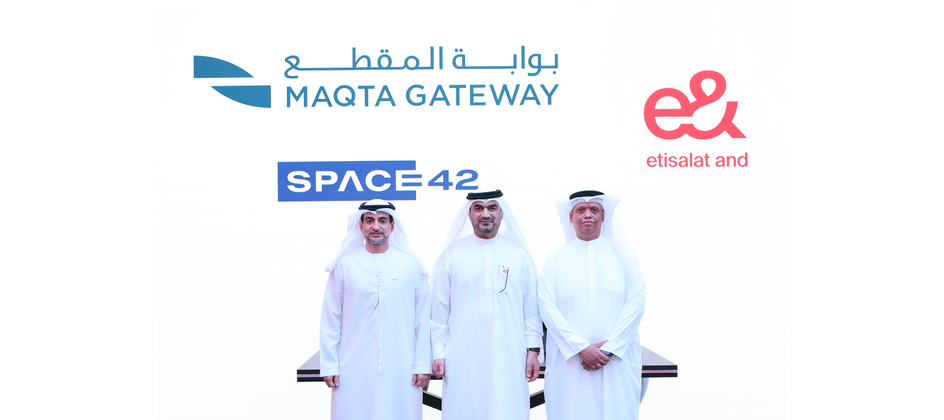
UAE-based Space42 has entered into a five-year memorandum of understanding with Microsoft and Esri to create the most comprehensive digital base map across Africa, aiming to serve more than 1.4 billion people and catalyse economic and infrastructural development. The “Map Africa Initiative” seeks to transform fragmented and outdated geospatial data into timely, accurate intelligence for governments, businesses and communities.

Under the agreement, Space42 will coordinate fundraising and project management, supply satellite data via its sovereign and commercial networks, devise AI-driven digital-twin models, and lead research and automation of map-production processes. Esri will handle the creation of the base maps using GeoAI and remote-sensing technologies while training regional teams to ensure long-term sustainability. Microsoft will provide Azure cloud infrastructure and AI capabilities to enable large-scale processing and secure data sharing.

Africa faces persistent challenges of unreliable and inaccessible mapping information, constraining infrastructure planning, investment decisions and service delivery. The Map Africa Initiative aims to address these by offering a uniform, high-resolution mapping platform, licensed to governments and updated locally by national mapping agencies. This platform is expected to foster a new commercial ecosystem, with African startups benefiting from access to essential geospatial intelligence. Data will be hosted in data centres managed by G42 and Microsoft across the continent.

The mapped data promises significant impact across multiple sectors. In logistics and ports, enhanced terrain mapping can facilitate route optimisation and reduce bottlenecks. Energy developers will gain more precise site-selection tools for solar and wind infrastructure. Governments will benefit from improved border monitoring, disaster preparedness and resource management. Urban planners and smart-city developers will gain foundational geospatial data critical for designing efficient public services and digital economies.

For Space42, the agreement deepens strategic partnerships with Microsoft and Esri, enlarges its African footprint, and opens pathways in analytics, licensing, and infrastructure. It positions Space42 as a trusted partner to governments in delivering scalable geospatial solutions. Peng Xiao, Chief Executive Officer of G42, stressed the broader goal: to close the “intelligence gap” by delivering AI-powered insights that enable smarter planning, sustainable development and inclusive innovation across the Global South.

Hasan Al Hosani, CEO of Smart Solutions at Space42, stated that partnership is integral to the UAE’s approach; this collaboration signals a strategic, not merely technical, advance. Jack Dangermond, President of Esri, emphasised the technical rigour required to convert satellite imagery into detailed, accurate base maps—a capability Esri brings to the initiative.

The initiative aligns closely with the broader UAE strategy. In 2024, the UAE was Africa’s largest investor, deploying around US $44 billion, nearly matching investment levels from the UK and China combined. Space42, as the UAE’s national space entity, serves as both a conduit for exporting data-driven development solutions and a facilitator of knowledge transfer between the UAE and Africa.

The United States government is considering reallocating up to $2 billion originally designated for semiconductor manufacturing under the CHIPS Act to fund initiatives related to mineral production. This potential move reflects a growing focus on securing critical minerals, particularly rare earth elements, that are vital to numerous industries, including technology and defence. The proposal has been met with mixed reactions from industry experts and lawmakers. On one […]

Google has made a significant move in the public sector AI landscape by offering its suite of artificial intelligence tools to US government agencies at a remarkably low price of $0.47 per user per year. This initiative, part of Google’s broader strategy to integrate AI into government operations, is poised to make advanced technology more accessible to public sector organisations and accelerate the adoption of AI within […]

Sam Altman, the CEO of OpenAI, has once again shifted the focus to the next evolution of artificial intelligence: GPT-6. With GPT-5 just beginning to take hold in various sectors, Altman is already laying the groundwork for what’s to come. Unlike the extended gaps between earlier versions, such as GPT-4 and GPT-5, the trajectory towards GPT-6 is expected to be significantly quicker. This fast-tracked development signals not […]

The U. S. has unveiled its largest immigrant detention centre, a facility designed to accommodate thousands of individuals awaiting deportation or asylum hearings. Located in the state of Texas, the new centre has sparked debates over the country’s immigration policies and its handling of detainees, especially amid ongoing concerns about the conditions of such facilities. Spanning over 1,500 acres, the facility is part of the U. S. […]

Ethiopia’s foreign direct investment reached $4 billion for the fiscal year ending July 2025, according to the country’s Investment Commission. This represents a modest 2.2% increase from the previous year, signalling a steady inflow of capital despite economic challenges. The rise in FDI comes as the country prepares for a major bond restructuring, which aims to alleviate its mounting debt burden. The FDI figure is particularly significant […]

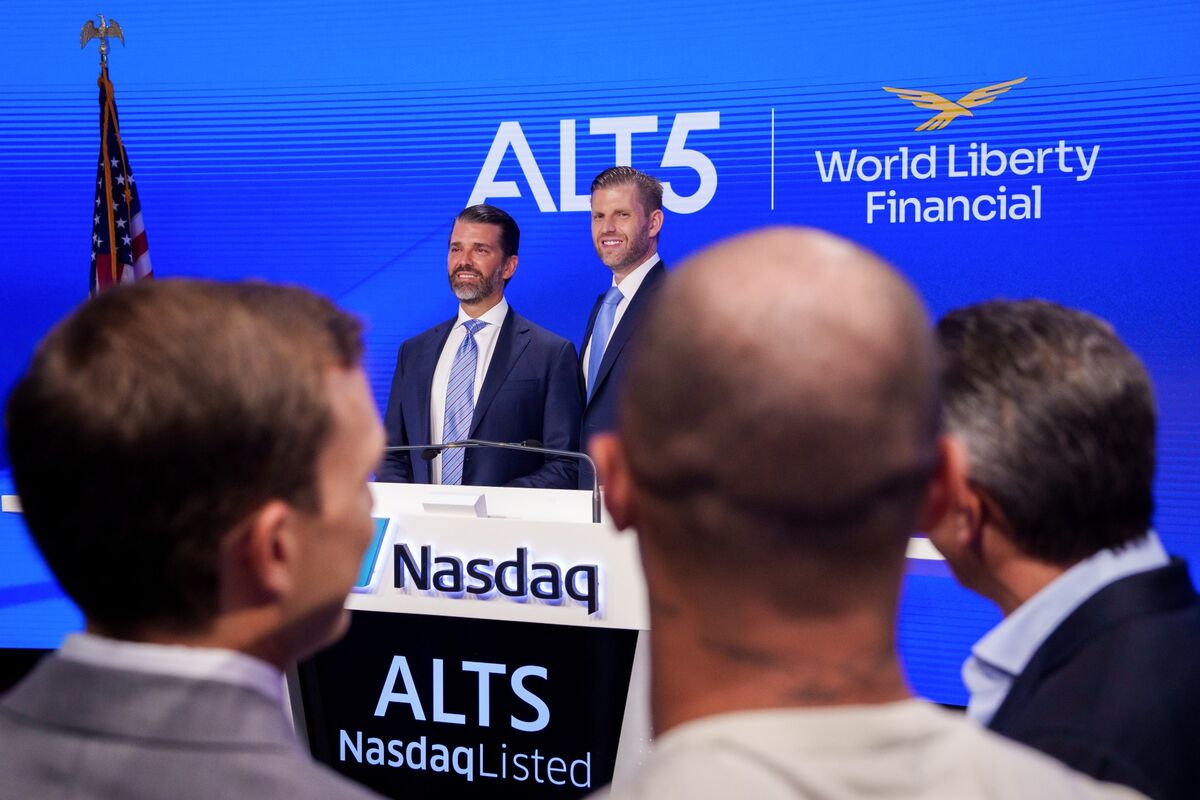
Eric Trump and Donald Trump Jr. marked a significant moment for the Trump family in the financial sector, ringing the Nasdaq opening bell as part of a high-profile $1.5 billion deal. The transaction involved the biotech-turned-crypto payments company Alt5 Sigma Corp. and the Trump-backed World Payment Network, a crypto firm under scrutiny due to its political affiliations. The deal has sparked interest among top financial firms, with Point72 Asset Management and ExodusPoint Capital Management both securing stakes in the venture.

Point72, a prominent hedge fund with a reputation for aggressive trading strategies, has previously invested in various tech-driven industries, but its entry into the crypto space marks a strategic pivot. The firm, led by billionaire Steve Cohen, has long been a major player in hedge funds, with a focus on alternative investments. ExodusPoint, a rising star in the hedge fund world, also moved to acquire a share, further solidifying its presence in the rapidly growing digital assets market.

Alt5 Sigma, originally founded as a biotech company, has undergone a dramatic transformation into a blockchain-powered payment network. With its backing from the Trump family’s business empire, the company has aimed to bridge the gap between cryptocurrency and traditional finance, particularly in the realm of payments processing. This shift has garnered attention from institutional investors and major financial players, eager to tap into the lucrative crypto market.

Both Point72 and ExodusPoint’s moves signal growing institutional interest in crypto-based financial products, which have garnered mixed reactions across the financial world. The cryptocurrency market, often volatile and speculative, remains a space that many traditional investors tread carefully within, though firms like Point72 and ExodusPoint see long-term growth potential.

The involvement of Trump-linked entities, particularly World Payment Network, has added a layer of political intrigue to the deal. World Payment Network, founded in connection with the Trump family’s business operations, has drawn attention for its ties to former President Donald Trump. Critics of the deal have raised concerns over potential conflicts of interest, pointing to the Trump family’s history of leveraging its brand for financial gain. Some worry that the high-profile nature of the Trump name could invite unwanted scrutiny from regulatory bodies, especially in a space already under heavy regulatory pressure.

Despite the controversy, the transaction illustrates the ongoing trend of high-profile figures and firms entering the crypto space, a market known for its innovation but also fraught with risks. In recent months, several hedge funds and institutional investors have increasingly allocated capital into digital assets as they look for high-return opportunities in the wake of traditional financial market fluctuations.

Point72’s foray into crypto comes as no surprise, as Cohen’s fund has long been known for diversifying into new and potentially high-reward areas. However, its involvement with a Trump-backed company adds an interesting layer of complexity, given the family’s polarizing influence on both the financial and political landscapes. ExodusPoint, on the other hand, is still a relatively new player in the hedge fund world, but its rapid growth and aggressive strategies have made it a name to watch. Its decision to back a Trump-linked crypto firm signals its willingness to embrace unconventional investment opportunities.

The crypto payments industry itself is growing rapidly, with companies such as Alt5 Sigma Corp. and World Payment Network at the forefront of bridging the gap between blockchain technology and traditional financial systems. The potential for global expansion and seamless cross-border payments has made blockchain an appealing solution for an industry looking for greater efficiency and security. However, the path forward remains uncertain. Regulatory challenges, particularly in the US, where authorities are seeking to increase oversight on crypto firms, could hamper the growth of companies like Alt5 Sigma.

At the same time, developments in blockchain technology continue to push the envelope for how financial transactions could be conducted in the future. If World Payment Network and its partners can navigate the regulatory hurdles and maintain a level of credibility amid political controversy, they may be well-positioned to capitalize on the growing demand for crypto-based financial services.

VISHNU RAJA
RYO YAMADA
HITORI GOTOH
IKUYO KITA