News related to
processing

Scale AI has locked down thousands of documents containing classified AI training protocols after contractors and experts sounded the alarm on major security oversights. Files tied to high‑profile projects from Meta, Google and xAI—some labelled “confidential” and even editable—were stored in public Google Docs accessible to anyone with the link. The fallout has been swift: core clients have halted work and paused agreements, raising urgent questions about governance […]

Claira, a New York–based deal intelligence platform, has closed a $7 million seed funding round co-led by Barclays and Citi, alongside Reimagine Tech Ventures. Additional backing came from Activant Capital, KDX and OPCO Ventures. Claira’s platform integrates domain-native artificial intelligence directly into deal workflows, enabling banks, private-credit funds and financial institutions to speed up due diligence, unlock historical deal insights and scale decision‑making processes. Founder and chief executive […]

Void, a Y Combinator‑backed, open‑source AI code editor, has entered beta testing, promising developers full control over their code and data while delivering advanced AI capabilities. Launched this month, it positions itself as a credible contender to proprietary rivals like Cursor and GitHub Copilot. Developers can now choose whether to host models locally via tools like Ollama and LM Studio, or connect directly to APIs for Claude, […]

Aflac detected a cyberattack on its U.S. network on 12 June and contained the intrusion within hours. The company has confirmed that the attack may have compromised sensitive personal data, including Social Security numbers, claims and health information belonging to customers, beneficiaries, employees and agents. Operations remain fully functional as experts investigate the full extent of the breach. The insurer’s SEC filing and subsequent statement referred to […]

ByteDance has unveiled “Dolphin”, an OCR model released under an MIT licence designed to revolutionise document processing by combining layout analysis and parsing in a unified workflow. This new tool is poised to enhance accuracy and adaptability across complex document types, marking a major advancement in optical character recognition. Dolphin operates by first analysing the document layout—identifying paragraphs, tables, figures and formulas—and then parsing each section in […]

An Estonian-based blockchain project is upending traditional cryptocurrency mining by enabling everyday mobile users to mine Bitcoin Solaris via a smartphone app. The Solaris Nova App, currently in its private beta, allows earning tokens through adaptive, low‑energy background processes—sidestepping the need for ASIC rigs and high electricity costs.

The platform combines conventional Proof‑of‑Work with Delegated Proof‑of‑Stake, boasting energy efficiency nearly 99.95% lower than Bitcoin yet capable of processing over 10,000 transactions per second with two‑second finality. It includes built‑in wallet features, real‑time analytics, gamified leaderboards and a marketplace for leasing computational power, aiming for a secure but user‑friendly experience.

Engagement has surged. Over 11,500 users have joined the presale, contributing more than $5 million, at an average price of $8 a token, with scheduled price increases to $9 ahead of a $20 launch value. Phase 7 is underway, confirming momentum as the project enters its final presale phase.

Independent audits from Cyberscope and Freshcoins, plus KYC verification, reinforce security credibility. Market analysts such as Ainvest note the platform’s one‑tap mining and liquid staking features as transformational for retail traders.

Bitcoin Solaris’s dual‑layer architecture merges SHA‑256 Proof‑of‑Work with a high-speed Delegated Proof‑of‑Stake layer. This enables smartphone‑based mining via the Nova App, steering the network’s validation duties to unused storage and CPU cycles—a model described as authentic on-chain participation rather than gamified simulation.

Device‑level mining accommodates Android, iOS, desktop and browser setups. It adjusts load according to hardware: simpler algorithmic backend for phones, scalable tasks for laptops. Energy consumption remains negligible compared to traditional setups. These advancements allow earning BTC‑S tokens immediately, even enabling leasing of computing capacity via smart contracts, and fostering deeper DeFi involvement through liquid staking.

Tokenomics emulate Bitcoin’s scarcity: 21 million total tokens, with 66.7% allocated to mining over 90 years, 20% set aside for presale, and 5% for liquidity. Early presale investors also access bonus slots—up to 10% in earlier phases—highlighting the company’s emphasis on accessible wealth-building.

Crypto commentators highlight its egalitarian potential. Coin World describes it as aimed at making mining accessible to average traders. Analytics Insight suggests mobile mining is generating a wave of new crypto millionaires. Observers such as Crypto Nitro, Crypto Infinity and Crypto Show emphasise its blend of energy efficiency with scalability and inclusivity.

Technical infrastructure rests on security measures, including zero‑knowledge proofs, rotating smart validator sets and continuous audits. Developers argue this permits afforded decentralisation without sacrificing speed or integrity.

Operationally, the project is on a tight timeline: the private beta is active, presale entering its final stage, and full exchange listing expected by July–August. Marketing strategies include referral bonuses, token rewards and daily spins, designed to sustain engagement as broader exposure looms.

Critics note that presale hype may inflate expectations and urge diligence. But Bitcoin Solaris counters with transparent audits, robust KYC, and smart contract evidence of functioning architecture. The simplicity of an app‑based mining system breaks from older models that few retail users can access profitably.

Industry significance could be profound. By transforming everyday devices into contributors to blockchain consensus, Bitcoin Solaris substantially lowers barriers. This may redefine early‑phase crypto wealth dynamics, where first movers historically held advantage via specialist mining investments.

As global attention turns to scalable, eco‑conscious blockchain models, Bitcoin Solaris positions itself at the intersection of accessibility and utility. With the Nova App reaching beta testers and node count rising, the platform is providing tangible participation alternatives for small investors.

New research from CloudMosa shows digital inclusion is shifting from CSR to a core business strategy – and telcos stand to gain if they move quickly Majority (97%) of telco leaders say digital inclusion is now central to their business strategy, driven primarily by the need to bridge the digital divide (71%) With 92% of respondents seeing a strong alignment with government affordability initiatives as a key […]

Advertisements

Israeli Finance Minister Bezalel Smotrich has ordered the cancellation of a decades‑long indemnity that shields Israeli banks when processing shekel transactions for Palestinian counterparts, a move poised to disrupt salaries, imports and basic services across the West Bank and Gaza.

The directive, issued on 10 June 2025, halts a waiver that permitted Israeli financial institutions to facilitate payments to the Palestinian Authority and local customers without fear of legal consequences. Analysts warn this could sever Palestinian banks’ vital access to the larger Israeli banking system.

Palestinian Monetary Authority officials cautioned that this severance would seriously impede operations such as payments for food, fuel, electricity and water. In 2023 alone, around 53 billion shekels—equivalent to $15.2 billion—passed through Palestinian banking corridors. The revocation of the indemnity risks plunging the territories into a fragile cash‑only system, heightening exposure to theft, fraud and illicit activity.

Smotrich’s decision follows sanctions by the UK, Canada, Australia, New Zealand and Norway imposing asset freezes and travel bans on him and National Security Minister Itamar Ben‑Gvir, citing their roles in incitement and human rights abuses in the West Bank and Gaza. Smotrich maintains the waiver withdrawal is a justified response to what he terms the Palestinian Authority’s “delegitimisation campaign” against Israel.

For decades, Palestinian banking operated without central‑bank autonomy or national currency. Reliance on Israeli shekels and correspondent banking agreements has been critical. International voices—including US Treasury Secretary Janet Yellen, G7 officials and the UN—have repeatedly warned that ending this arrangement could trigger a humanitarian crisis and violate international law.

Local analysts predict the measures will exacerbate an already deteriorating economic landscape. Kristin Ronzi of intelligence firm Rane Network said abolishing this financial collaboration will “impede the Palestinian Authority’s ability to import basic, essential goods such as food and fuel,” likely deepening economic hardship and undermining public sentiment.

The Palestinian banking system, which exceeds 100 % of GDP, is particularly vulnerable to spill‑over effects from Gaza into the West Bank, according to IMF data. The termination of the waiver is feared to amplify credit constraints on private and public sectors alike, risking reduced lending, increased borrowing costs, and even defaults.

International stakeholders, including the US and G7, had pressed for short‑term extensions of the indemnity. Those appeals often hinged on warnings that a collapse of Palestinian financial networks would destabilise trade, delay crucial services, and potentially fuel militant groups reliant on cash economies.

Smotrich is known for his hardline positions: he has previously withheld Israeli-tax clearance revenues and blocked aid in retaliation for moves supportive of Palestinian statehood. In May 2025, he warned publicly that Gaza “will be totally destroyed,” vowing to push Palestinians toward resettlement in other countries.

Within Israel, there is evident friction. Prime Minister Benjamin Netanyahu and some coalition members support Smotrich, but others fear political and economic backlash—particularly amid international outrage and concern over deepening the Gaza violence. The policy must still pass through Israel’s security cabinet before implementation begins.

Across Palestinian chambers in Ramallah and Gaza City, there is growing anxiety. Authorities are scrambling to negotiate with donors, international NGOs and Middle Eastern allies, in hopes of constructing contingency plans. Proposed measures include alternative cash corridors, increased use of digital currencies, and humanitarian exemptions—but none currently matches the scale of the existing system.

Economists warn the broader consequences of this rupture—the Palestinian economy has already lost billions amid conflict. Since October 2023, Gaza’s economy shrank by 61 %, the West Bank by 24 %, and joblessness soared to around 57 % across both territories. Analysts fear the banking clamp‑down could invert years of fragile recovery efforts, worsening poverty and political instability.

EdgeCortix has launched its SAKURA‑II M.2 AI accelerator for the Raspberry Pi 5 and other Arm‑based platforms, enabling high‑performance, energy‑efficient execution of generative AI at the device edge. With 60 TOPS and 30 TFLOPS performance within an 8–10 W power envelope, the SAKURA‑II module supports advanced models including Llama 2, Stable Diffusion, Vision Transformers and VLMs on compact, affordable hardware. Dr Sakyasingha Dasgupta, EdgeCortix founder and CEO, highlighted that the integration “opens […]

Ahmedabad authorities have recovered both black boxes from the wreckage of the Boeing 787 Dreamliner that crashed shortly after departure en route to London Gatwick, killing 241 of the 242 people aboard and dozens on the ground. Emphasis now is on analysing flight data and cockpit voice recordings to establish whether engine thrust, control surfaces or pilot actions led to the fatal descent. India’s Aircraft Accident Investigation Bureau is spearheading the probe, with support from UK, US and Boeing specialists.

Rescue and forensic teams continued sifting through the charred remains of buildings and aircraft debris in Ahmedabad’s densely populated medical college area. They are gathering fragments of flaps, landing gear, engines and fuel systems to reconstruct the sequence of events. Authorities have also collected dental records and DNA samples to identify victims whose remains were severely burned.

Preliminary scrutiny points to a sudden loss of thrust or possible flap misalignment during the initial climb. Flight-tracking data indicates the aircraft briefly ascended to about 625 feet before entering a steep descent, around 475 ft per minute, video footage shows abnormal wing-flap positioning and attempts at emergency corrective actions.

India’s Directorate General of Civil Aviation has issued an immediate directive for pre-departure technical checks across Air India’s 787-8 and 787-9 fleet, including engine-system diagnostics, cabin-air compressors, hydraulics and fuel-pressure systems. These measures are mandatory before the affected aircraft can resume service. GE Aerospace has pledged full cooperation with the inspections, while Boeing and US aviation regulators have dispatched technical teams to support the investigation.

Prime Minister Narendra Modi, shortly after arriving at the site, described the event as “heartbreaking beyond words” and met with the lone survivor, British national Viswashkumar Ramesh, who recalled escaping the fuselage through an exit door and was treated for minor injuries. The survivor’s account provides a rare eyewitness perspective amid the apex of data analysis in the coming days.

Air India’s reputation and “world-class airline” ambitions under Tata Group ownership are under intense international scrutiny. Experts warn the incident—Air India’s first fatal accident in decades and the first crash of a 787 Dreamliner—could severely undermine trust in the carrier’s safety oversight. The regulator’s maintenance order seeks to allay those concerns, but aviation analysts emphasise that rebuilding credibility will require transparent investigation and disciplined operational safeguards.

Families of victims remain in anguish, many having to wait for dental and DNA verification to identify the deceased. Hospital staff and forensic teams are painstakingly processing remains amidst anxious relatives at Ahmedabad Civil Hospital. Emotional distress is intensifying calls for accountability and answers as grieving relatives await official findings.

Experts caution aviation investigations can span several months, often involving layered analysis of mechanical faults, human errors, manufacturing quality and maintenance procedures. The cooperation of international agencies—including UK’s Air Accidents Investigation Branch, the US NTSB and FAA—forms the backbone of a thorough inquiry, especially given multiple jurisdictions involved.

Next steps hinge on decoding the black boxes, which are being analysed at a specialised laboratory in New Delhi. A clearer picture is expected to emerge once flight parameters, cockpit communications and mechanical readings are correlated with crash-site reconstructions.

The urgency around maintenance audits and global oversight has intensified as aviation authorities aim to prevent similar tragedies. Meanwhile, the carrier’s elderly 787 fleet—many delivered in 2014–15—remain grounded pending conclusive safety checks.

E‑commerce platform Shopify will launch a pilot in late June allowing select U.S. and European merchants to accept USDC stablecoin payments, marking its first native integration of crypto payments into the platform-wide setup. Developed in partnership with Coinbase and integrated through Stripe, the initiative leverages Coinbase’s Base blockchain and supports essential e‑commerce features, including refunds, chargebacks and delayed payment capture.

The opt‑out model means USDC acceptance will be enabled by default for participating merchants, who can also access up to 0.5 per cent cashback on USDC transactions. Shopify CEO Tobias Lütke, also a Coinbase board member, highlighted that the platform aspires to expand the pilot to all merchants across the U.S. and Europe by end‑2025.

Coinbase head of blockchain Jesse Pollak described the level of integration as “holy crap” compared to existing solutions, noting that the custom protocol built on Base addresses operational challenges previously unmet by third‑party crypto plug‑ins. Stripe’s role is central in embedding stablecoin functionality into Shopify Payments, enabling merchants to receive USDC or convert funds into local currency seamlessly.

Stablecoins such as USDC offer the stability of a dollar‑pegged asset while enabling near‑instant, low‑cost transactions via Layer‑2 networks like Base. Stripe cites a surge in monthly stablecoin payment volume from $2 billion to $6.3 billion over the past two years. Shopify’s integration now brings that rail within reach of over a million merchants based in 34 countries.

The e‑commerce industry’s attention to stablecoins has intensified, with major financial institutions and tech companies—including Visa, PayPal, JPMorgan, Deutsche Bank, Apple, Meta, Airbnb and Google—either building or experimenting with stablecoin infrastructure. Shopify’s entry at this scale signals a significant shift in digital commerce towards crypto‑native settlement methods.

Operationally, the rollout addresses common e‑commerce pain points. The bespoke smart contract protocol supports standard payment flows—authorisation, capture, refund, tax processing and inventory reservation—aligning cryptocurrency transactions with merchant back‑end operations.

Merchants can choose to receive USDC directly into their crypto wallets or automatically convert to local currency with zero foreign‑exchange fees. Additionally, U.S. customers will start receiving a 1 per cent cashback incentive on USDC payments later this year.

Industry analysts suggest that embedding stablecoin capability into mainstream platforms like Shopify could accelerate global digital currency adoption. It lowers technical barriers for merchants and broadens spending options for customers holding crypto assets.

While credit cards and traditional rails remain dominant, the integration demonstrates that stablecoin payments are maturing into a reliable option for commercial transactions. The pilot will effectively test merchant and consumer appetite for crypto payments on a large scale.

Pending successful outcomes, Shopify plans to roll out access to all merchants using Shopify Payments across the U.S. and Europe by the end of 2025, with potential further extension globally.

Sharjah achieved a total real estate trading value of AED 5.5 billion during May 2025, recording 8,415 transactions across the emirate. The total area traded reached 13.2 million square feet, underlining the emirate’s advancing market strength. Investors conducted 1,574 outright sales deals, accounting for roughly 18.7 per cent of activity, alongside 381 mortgage registrations totalling AED 1.1 billion—4.5 per cent of the transactions. Additionally, 1,486 initial sale contracts were signed, and 3,619 ownership certificates […]

Saudi Arabia will export about 47 million barrels of crude to China in July, marking a modest decline of one million barrels compared with June allocations. Despite the slight reduction, this remains the third consecutive month of elevated shipments to the world’s largest crude importer, underscoring Riyadh’s resurgence in securing market share. This shift follows a decision by OPEC+—a coalition of the Organisation of the Petroleum Exporting […]

Dubai’s Crown Prince Sheikh Mohammed bin Rashid Al Maktoum has marked the commencement of work on the long-planned Dubai Metro Blue Line, laying the foundation stone for its first station—an architectural masterpiece poised to become the world’s highest metro stop at 74 metres. The AED 56 billion project will see construction of a 30 km rail corridor featuring 14 stations and 15.5 km of tunnels. When completed in 2029, it will extend Dubai’s transit network to 131 km with 78 stations, serviced by 168 trains.

Laying out the design, Sheikh Mohammed described the station—named ‘Emaar Properties’—as an “architectural icon” that aligns with Dubai’s cultural landmarks. Designed by Skidmore, Owings & Merrill, the station spans approximately 11,000 m² and is expected to handle 160,000 passengers daily, rising to 70,000 by 2040. Built to bridge Dubai Creek via a 1.3 km viaduct, the alignment also encompasses advanced sustainable features and full Platinum-level green building certification.

The Blue Line will connect nine key districts, from Bur Dubai/Deira through Dubai Silicon Oasis to Academic City, also establishing interchanges with the existing Red and Green lines at Al Rashidiya and Al Jaddaf respectively. Travel time is expected to be between 10 and 25 minutes, with a projected ridership of 200,000 by 2030 and up to 320,000 by 2040.

Oversight for the project was awarded five months ago to a consortium led by Turkey’s MAPA and Limak, with China’s CRRC delivering rail systems. The contract, valued at AED 20.5 billion, follows an international tender detailed by the Roads and Transport Authority. Construction began in April under RTA supervision and is slated to complete by September 2029, coinciding with the Metro’s 20th anniversary.

The Blue Line is not only a transport project but also a key driver of Dubai’s broader economic and urban strategy, under the Dubai 2040 Urban Master Plan. Analysts predict it could deliver AED 2.60 in economic, social, and environmental benefits for every dirham invested by 2040, with potential reduction of road congestion by 20% and a 25% uplift in land values near stations.

At a ceremony held on June 9 2025, Sheikh Mohammed was accompanied by Mattar Al Tayer, RTA Director‑General, and representatives from the MAPA-Limak-CRRC group, as he laid the foundation stone for the Emaar Properties Station in Dubai Creek Harbour. The station’s design reflects a fusion of traditional stone, bronze, and glass to evoke a modern heritage, with natural lighting enhancing passenger experience.

Beyond the landmark station, the Blue Line includes Dubai’s largest underground interchange station at International City 1, covering 44,000 m² and capable of processing 350,000 passengers per day. The elevated–subterranean route is engineered for flexibility: a Y‑junction system allows trains to run directly from Academic City to either Creek or Centrepoint without passenger transfers.

An important feature of the new line is the metro’s first-ever bridge spanning Dubai Creek—a 1.3 km link set to provide scenic and efficient connectivity between the city’s burgeoning north‑east and the urban core.

Emaar Properties has secured naming rights for the iconic station under a ten-year agreement beginning at its 2029 inauguration. Similar agreements for other stations are expected to follow.

Since opening in 2009, the Dubai Metro has carried over 2.5 billion passengers, averaging 900,000 day-to-day users. With the Blue Line operational, that figure is projected to only grow—annual ridership is expected to surpass 300 million by 2026.

SOM’s involvement as design lead brings a legacy of landmark architecture—its portfolio includes global icons such as the Burj Khalifa, New York’s Olympic Tower, and Chicago’s Willis Tower. The firm’s concept of a “crossing gateway” symbolises Dubai’s ambition to blend aesthetics and connectivity in its infrastructural projects.

As Dubai develops rapidly under its 2040 plan, transport-oriented infrastructure such as the Blue Line serves multiple objectives: reducing road travel times, supporting high-density developments like Dubai Creek Harbour and Academic City, and promoting sustainable urban growth. Amenities across Blue Line stations will include bus bays, taxi ranks, bike and e-scooter zones, and full accessibility provisions tailored to ‘people of determination’.

The $5.6 billion deal for the Blue Line contract, confirmed by Reuters in December 2024, sets high expectations for the consortium’s delivery through to 2029. Monthly monitoring by the RTA forecasts a phased construction schedule that aligns with urban expansion milestones tied to Expo City Dubai and continuing population growth.

By 2040, the RTA projects that the Metro network will serve 320,000 riders per day on the Blue Line alone, integrated with over 80% of city services reachable within a 20-minute public transit ride—supporting the ‘20‑Minute City’ goal.

The Blue Line is expected to be a catalyst for new patterns of mobility, shaping development in under-served districts like Mirdif, Al Warqa, and Ras Al Khor, while reinforcing Dubai’s status as a testbed for smart and sustainable infrastructure. The combination of landmark design, intermodal connectivity, and environmental ambition positions the line as a model for future metro expansions globally.


Ethiopia has surged ahead to become Africa’s largest wheat producer, with output surpassing that of Egypt by a factor of three, according to Prime Minister Abiy Ahmed. This achievement marks a significant milestone in Ethiopia’s agricultural sector, underscoring its rising role in continental food security and economic development. Prime Minister Abiy announced this development during a national address, highlighting the government’s concerted efforts to boost domestic wheat […]

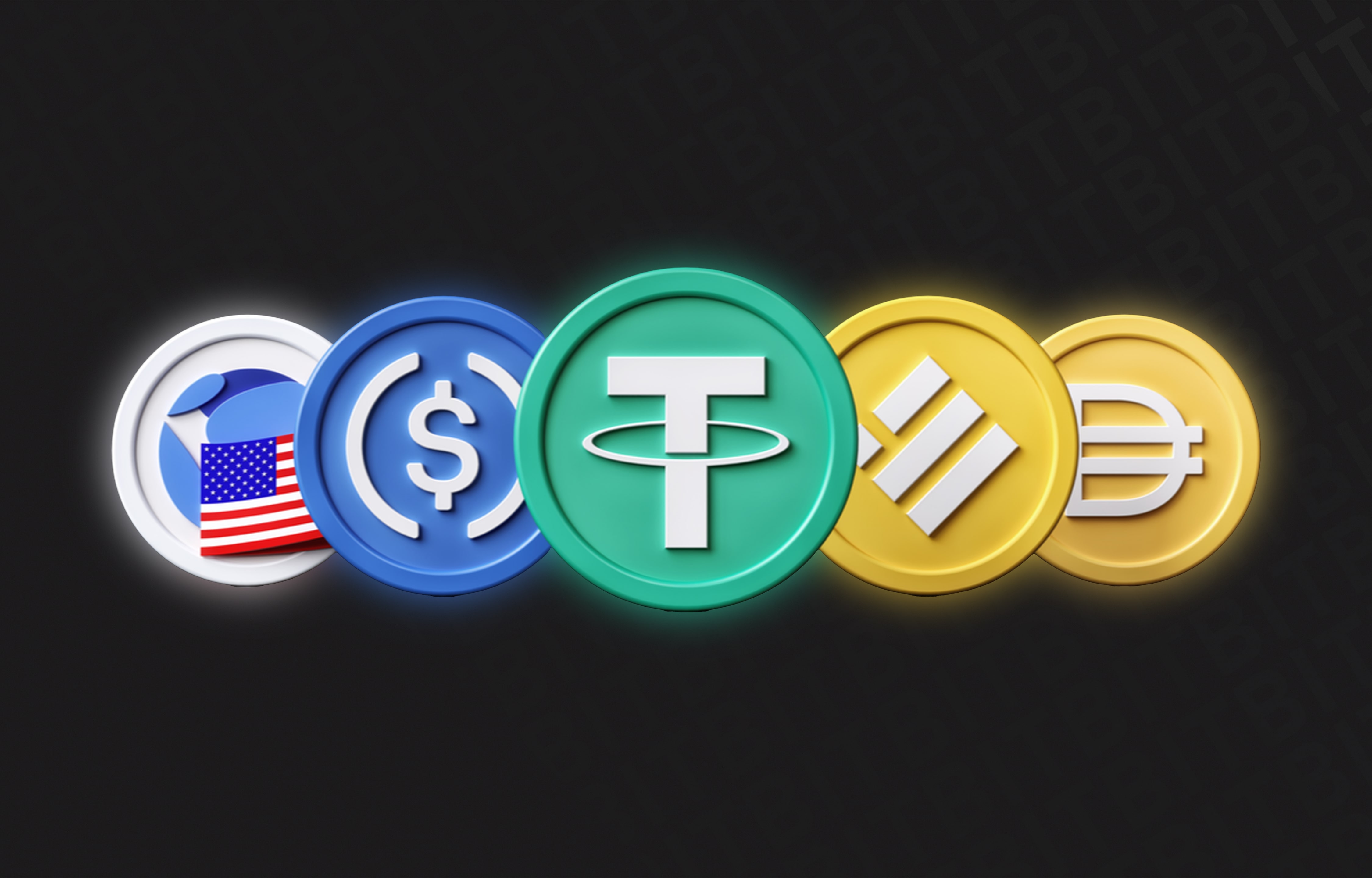
Stablecoins are processing roughly $33 trillion in yearly volume—around 20 times that of PayPal and three times Visa—while amassing $128 billion in U.S. Treasuries, placing these issuers among the top 20 holders of American debt and ahead of major nations such as Germany and Saudi Arabia.

Data from Andreessen Horowitz’s crypto arm shows that over 1 percent of the total U.S. dollar supply is now tokenised on blockchains. Major institutions, including Citi, project that by 2030 stablecoins could accumulate up to $3.7 trillion in Treasury holdings. While Ethereum and Tron currently underpin most of this infrastructure, emerging platforms such as Solana, Arbitrum and Base are gaining traction. Notably, on-chain data reveals that transactional activity in stablecoins appears largely decoupled from broader cryptocurrency trading volumes, indicative of growing real-world adoption. Today, these assets enable sub-second, sub-cent payments—positioning them as serious contenders to onboard the next billion users into the crypto economy.

Market analysts warn that growing stablecoin-backed Treasury holdings may shift demand dynamics for U.S. government debt. One study from academia found that by the end of the first quarter of 2025, Tether held roughly $98.5 billion in Treasury bills—equating to 1.6 percent of total outstanding bills. The research estimates that this level of demand has directly driven down one-month Treasury yields by approximately 24 basis points, indicating that stablecoin issuance is already influencing funding costs and potentially easing liquidity pressures.

Coinciding with this shift is a legislative push in Washington. A bill nearing Congressional approval would require issuers to fully back stablecoins with liquid assets, such as U.S. dollars and short-term Treasuries, and mandate monthly disclosures. Proponents suggest such regulation would reinforce investor trust, legitimize the sector and bolster U.S. debt demand. According to Reuters, Tether and Circle already hold a combined $166 billion in Treasuries—amounts that may increase further under binding legal frameworks.

Financial authorities have offered mixed views. Moody’s warns that large-scale liquidation driven by plunging confidence in stablecoin issuers could destabilise Treasury prices and spill over into broader fixed-income markets. Conversely, policymakers hope that expanded stablecoin activity could facilitate smoother funding for the Treasury, especially if issuers pivot toward demand for short-term debt like bills.

Macro strategies are duly noted. Vanguard’s rates chief suggests that sustained demand from digital currency custodians might spur the Treasury to favour issuing bills over long-term bonds, which could rebalance maturity profiles. Meanwhile, Bitwise’s investment head argues that this growing digital demand could reinforce the dollar’s position as the global reserve currency.

Infrastructure diversification within stablecoins is evolving. Ethereum and Tron continue to dominate, but high-throughput chains like Solana, Arbitrum and Google-backed Base are attracting developers and users aiming to benefit from faster, cheaper payments. The presence of real-world transactions—such as merchant and remittance use cases—underscores that stablecoins are transcending crypto-speculative flows, with sub-cent fees and near-instant settlement now commonplace features.

Emerging risks centre on financial-system vulnerability. The Treasury Borrowing Advisory Committee cautioned that a significant diversion of deposits into stablecoins could dampen demand for Treasuries and potentially curb lending by commercial banks. Money-market managers remain vigilant, with some estimating that stablecoins must scale further before triggering systemic instability.

Proponents counter that regulated stablecoins may alleviate pressures in the Treasury issuance process, with digital platforms absorbing demand in lieu of traditional buyers. Early legislative frameworks could incentivise these issuers to prefer bills over longer-duration instruments, helping to smooth fiscal financing.

Stablecoins are redefining the interface between digital currency networks and the time‑tested Treasury market, leaving policymakers to navigate a complex balance between innovation, stability and monetary control.

MOSCOW, RUSSIA – Media OutReach Newswire – 6 June 2025 – SIBUR, Russia’s largest producer of polymers and rubbers, has successfully concluded its five-year sustainability strategy and presented new targets for the next five-year period, 2025–2029. By 2030, the company aims to recycle at least 600,000 tonnes of plastic waste through its own and partner initiatives, including through the expansion of contract manufacturing for processing various types […]

Dubai’s tech and creative sectors are booming, and local startups and agencies are keen on tools that save time and cut costs. On one hand, Make (formerly Integromat) is a no‑code automation platform that lets non-technical teams link apps and automate workflows visually. On the other hand, Replit is an AI‑powered cloud IDE for building and deploying software, aimed at developers. Both promise “do more with less,” […]

Bell Canada has launched a major initiative to bolster the country’s artificial intelligence capabilities through the establishment of a nationwide network of high-performance, hydroelectric-powered data centres. Dubbed Bell AI Fabric, the project aims to provide 500 megawatts of AI computing capacity, marking a significant step in enhancing Canada’s sovereign AI infrastructure. The first facility, a 7-megawatt data centre in Kamloops, British Columbia, is set to commence operations […]

IOWA, US – Media OutReach Newswire – 3 June 2025 – A delegation of the Ministry of Agriculture and Environment of Vietnam led by Minister Do Duc Duy began a trade mission to the United States, with the first stop being Iowa. Welcoming and working with the delegation, on the side of the Iowa Department of Agriculture were Secretary Mike Naig and Deputy Secretary Grant Menke. Ministers […]

Purchasing a franchise appeals to many investors. You’re getting the name recognition that comes with the brand. This saves you the trouble of having to generate interest in a completely new company and coming up with your brand identity. The customer base is already in place. You must think about things like online payment processing, franchise owners, not to mention finding a suitable location for your brick-and-mortar […]

A major security breach has compromised the Cetus Protocol, a decentralised exchange operating on the Sui blockchain, resulting in the loss of approximately $260 million in digital assets. The exploit has raised serious concerns about the security of decentralised finance platforms and the robustness of blockchain-based trading systems. The breach was identified when users reported irregularities in transaction processing and unexpected asset movements within the Cetus ecosystem. […]

Solana’s cryptocurrency token has experienced a notable price surge, driven primarily by an inflow exceeding $1.1 billion to exchanges during May. This substantial movement of funds has attracted significant attention within the digital asset community, highlighting the growing interest in Solana amid an increasingly volatile market environment. The influx of tokens onto exchanges typically signals heightened trading activity, often preceding sharp price movements, and in Solana’s case, it appears to have been a catalyst for recent upward momentum.

The past weeks have seen a consolidation phase for Solana’s price, characterised by fluctuating trading volumes and cautious investor sentiment. However, May’s exchange inflow data reveals a sharp contrast, indicating a renewed wave of buying and selling pressure. This influx surpasses figures recorded in previous months, reflecting intensified activity from institutional players and retail investors alike. Analysts point out that such large-scale transfers to exchanges often suggest an intent to capitalise on price volatility, either through profit-taking or strategic accumulation.

Solana’s blockchain platform, known for its high throughput and fast transaction speeds, has gained traction beyond its original niche, appealing to a broader base of developers and users. Its ecosystem supports a wide range of decentralised applications, including DeFi protocols and NFTs, which have collectively contributed to increasing token demand. Industry experts attribute Solana’s recent price gains not only to market speculation but also to fundamental growth in network usage and ecosystem expansion.

Market participants closely monitor the inflow and outflow trends of tokens on exchanges as indicators of potential price directions. The reported $1.1 billion inflow represents tokens transferred from wallets to trading platforms, signalling that holders are preparing to trade. This can be interpreted in various ways: it may represent holders positioning themselves to sell and realise profits, or conversely, traders gearing up to buy or hedge positions amid market uncertainty.

Broader market conditions have influenced Solana’s trajectory as well. The cryptocurrency sector has witnessed uneven performance across different assets, with some coins consolidating while others rally sharply. Bitcoin’s fluctuating dominance and regulatory developments have introduced layers of complexity into trading decisions. Against this backdrop, Solana’s price action stands out due to the volume and scale of exchange inflows, setting it apart from many peers.

Further analysis of blockchain data confirms that the inflows were concentrated over several large transactions, often linked to known institutional wallets and prominent traders. This pattern contrasts with typical retail trading behaviour, which tends to be characterised by numerous smaller transfers. The presence of institutional activity points to growing confidence in Solana’s potential for medium-term gains, despite lingering concerns over market volatility and regulatory scrutiny.

Solana’s technological edge is often cited as a key factor supporting its valuation. The platform utilises a novel proof-of-history mechanism combined with proof-of-stake consensus, enabling it to process thousands of transactions per second with low fees. This scalability advantage is critical in sustaining the network’s appeal amid growing congestion issues faced by some competing blockchains. The surge in exchange inflows may partly reflect investor anticipation of further adoption driven by these technical strengths.

However, the rapid influx of tokens to exchanges also raises questions about market stability. Large sell-offs following such inflows could lead to increased price swings, challenging traders and investors to navigate the volatility carefully. Some market analysts warn that while the current price rise appears robust, it may be vulnerable to corrections if selling pressure intensifies or if broader market sentiment deteriorates.

Solana’s recent developments extend beyond price movements and token flows. The network has announced partnerships and upgrades aimed at enhancing security and interoperability, which could underpin longer-term growth. These initiatives include collaborations with major fintech firms and integration with cross-chain protocols, designed to broaden Solana’s accessibility and utility. Such advancements bolster the narrative that the project is moving beyond speculative trading into a more mature phase of ecosystem development.

The token’s growing use in decentralised finance applications adds an additional layer of interest for investors. DeFi platforms on Solana have attracted liquidity providers through competitive yields and efficient transaction processing, making them popular alternatives to Ethereum-based solutions burdened by higher fees. This trend has helped sustain demand for SOL tokens, supporting price levels despite wider market fluctuations.

Regulatory scrutiny remains an ongoing challenge for the cryptocurrency industry, including Solana. Various jurisdictions continue to debate rules concerning token classifications, trading practices, and investor protections. How regulators approach emerging blockchain technologies could significantly affect Solana’s market dynamics. Investors are closely watching for clarity that could either open new opportunities or impose restrictions affecting token liquidity and valuation.

Investor sentiment towards Solana reflects a balance of optimism and caution. While the large-scale exchange inflows and fundamental network growth signal promising prospects, market participants acknowledge the inherent risks posed by external economic factors, potential regulatory changes, and technological competition. The interplay of these forces will likely shape Solana’s price trajectory in the weeks ahead.

The US Marine Corps is advancing a comprehensive artificial intelligence strategy aimed at overhauling its operational, logistical, and decision-making frameworks. This initiative is designed to embed AI into the core of military functions, moving beyond isolated technological applications to a holistic transformation of processes and structures. A central element of this strategy is the deployment of Digital Transformation Teams across various commands. These cross-functional units are tasked […]

VISHNU RAJA
RYO YAMADA
HITORI GOTOH
IKUYO KITA