Investcorp has agreed to acquire a majority stake in Smart Managed Solutions, a London-based mechanical and electrical facilities management specialist, in a deal that deepens the Bahrain-based alternative investment firm’s exposure to resilient business services in the UK. The financial terms of the transaction were not disclosed. Smart’s co-founders, Lee Bainbridge and Alex Wilkin, will retain a meaningful minority holding, keeping the founders aligned with the company […]
Arabian Post Staff -Dubai Abu Dhabi-backed artificial intelligence investor MGX has explored a potential acquisition of Singapore-based data centre operator DayOne, a move that would deepen the emirate’s push into global digital infrastructure as demand for computing capacity accelerates across Asia, Europe and the United States. The discussions remain preliminary and may not lead to a transaction. DayOne has also been preparing for a possible public listing […]
Tokyo-listed game developer Gumi has moved to deepen its exposure to XRP, positioning the token at the centre of a broader restructuring that shifts the company further beyond mobile games and into blockchain-linked financial infrastructure. The Shinjuku-based company is consolidating digital asset operations under a “Neo Crypto Business” pillar, alongside its “Neo Media Entertainment Business”, as it seeks to become one of Japan’s most prominent corporate holders […]
Arabian Post Staff -Dubai Saudi Aramco is considering the sale of a stake in its sulphur business as the state-controlled energy group expands a wider drive to unlock cash from infrastructure assets and support Saudi Arabia’s investment-heavy economic transformation. The potential transaction, known internally as Project Yellowstone, could raise as much as $7 billion and would cover assets linked to sulphur storage and export terminals. Aramco invited […]
Arabian Post Staff -Dubai Abu Dhabi’s International Holding Company has begun an AED1.8 billion share repurchase, opening the first tranche of an approved AED5 billion buyback after a sharp rise in first-quarter profit and continued expansion across its investment portfolio. The initial purchase, launched on 12 June, represents 36 per cent of the total programme approved by shareholders at the company’s annual general assembly on 16 March […]
Shin-Etsu Chemical plans to build a new rare-earth refining facility in Fukui Prefecture as Japan accelerates efforts to protect critical mineral supply chains from disruption caused by China’s export controls.
The project marks the company’s first new rare-earth refining facility since 2008 and comes as demand for high-performance magnets rises across electric vehicles, hard disk drives, robotics, wind power systems, defence equipment and advanced electronics. The investment is expected to exceed ¥35 billion, with ¥17.5 billion to be covered by government subsidy support, although the final cost and production schedule have not yet been fixed.
The new facility is intended to reinforce supplies for Shin-Etsu’s rare-earth magnet business and strengthen access to raw materials used in neodymium-based magnets. Heavy rare earths such as dysprosium, terbium and yttrium are particularly important because they improve magnet performance in high-temperature and high-stress applications, including vehicle motors and precision industrial systems.
Shin-Etsu already operates rare-earth refining facilities in Japan and has long been one of the country’s most important producers in the sector. Its rare-earth operations are centred in Fukui Prefecture, where it smelts materials and manufactures magnets at its plant in Echizen. The company says it works from raw materials through production to provide stable quality and supply, while also pursuing recycling and resource diversification.
The planned expansion reflects a broader shift in Japan’s industrial policy after months of tightening access to critical minerals. Chinese shipments of several heavy rare earths and gallium to Japan have been severely restricted since late 2025, heightening concerns among manufacturers that depend on these materials for magnets, semiconductors and other precision components. China continues to dominate mining, separation and refining capacity across the rare-earth value chain, giving Beijing considerable leverage over downstream industries.
Japan remains the largest rare-earth magnet producer outside China, but its manufacturers are still exposed to bottlenecks in the supply of heavy rare earths. The country has built stockpiles, backed overseas projects and encouraged recycling since the 2010 rare-earth shock, when diplomatic tensions with China exposed the risk of overdependence on one supplier. Those measures have improved resilience, but they have not removed the vulnerability.
The latest project is significant because it targets refining and processing rather than simply raw-material procurement. Mining deposits alone do not solve the supply challenge; rare earths require complex separation, purification and alloy processing before they can be turned into magnets. China’s advantage lies not only in reserves but also in decades of accumulated processing capacity, cost efficiency and industrial integration.
Shin-Etsu’s move also fits into a wider network of partnerships being pursued by Japan with Australia, France and the United States. Tokyo has backed alternative producers, supported offtake arrangements and encouraged private-sector investment in midstream processing. Australia-based Lynas has become a key non-China supplier, but output of heavy rare earths remains far below the volumes needed to replace Chinese supply in full.
The pressure is not limited to Japan. Manufacturers in the United States and Europe have faced similar supply uncertainty as export licensing delays affect rare earths used in aerospace, defence, clean energy and electronics. Companies exposed to the restrictions are searching for alternative suppliers, but industry executives warn that rebuilding a fully independent supply chain will take years.
For Shin-Etsu, the business case rests on both security and demand. Permanent magnets are central to electrification and digital infrastructure. Electric vehicles require compact, powerful motors; data centres and hard disk drives depend on precision magnetic components; wind turbines need high-strength magnets to improve efficiency. Demand growth has made the magnet supply chain a strategic concern for governments as well as manufacturers.
The company’s project is unlikely to eliminate Japan’s reliance on imported feedstock, especially for heavy rare earths where global non-China supply remains thin. It could, however, give domestic manufacturers greater control over processing, quality assurance and emergency production planning. That matters for customers in sectors where delivery delays can disrupt production lines and where material specifications are tightly controlled.
The government subsidy underscores how rare earths have moved from a specialist materials issue to a national industrial priority. Public support reduces the financial burden on companies undertaking technically demanding projects with long payback periods. It also signals that Tokyo is prepared to use industrial policy to keep strategic capabilities onshore.
ADNOC is exploring investment opportunities in Canada’s upstream oil and liquefied natural gas sectors through XRG, its international energy investment arm, as Abu Dhabi intensifies its search for overseas assets aligned with long-term energy security and gas demand. Musabbeh Al Kaabi, ADNOC’s chief executive for upstream, said at the Global Energy Show in Calgary on Tuesday that the company was encouraged by Canada’s renewed emphasis on energy […]
Arabian Post Staff -Dubai Saudi Arabia’s Arabian Dyar has put its planned Tadawul initial public offering on hold, becoming the latest issuer to step back from the Kingdom’s listings pipeline as volatile trading conditions and weaker investor appetite complicate efforts to bring larger private companies to market. The real estate and construction company, formally known as Aldyar Alarabiya Real Estate Development Company, had faced a June deadline […]
CPX Holding has unveiled a refreshed brand identity in Abu Dhabi, positioning the G42 company for its next phase of growth as demand rises for AI-led cybersecurity, sovereign digital capability and stronger protection of critical infrastructure across the UAE. The new identity, built around the promise “Secure what’s next”, marks a shift in CPX’s public positioning from conventional cyber defence towards enablement, resilience and intelligence-led security. The […]
Arabian Post Staff -Dubai PIF and Talaat Moustafa Group Saudi for Real Estate Development have signed a memorandum of understanding to explore mixed-use real estate projects across Saudi Arabia, advancing the sovereign fund’s push to build liveable urban districts as part of its 2026-2030 strategy. The non-binding agreement covers potential co-operation at PIF-owned developments and projects across the kingdom, including residential, commercial, hospitality, retail and integrated urban […]
Arabian Post Staff -Dubai Etihad Airways is ordering more widebody aircraft as the Abu Dhabi carrier moves to restore momentum across long-haul markets and lift flying by about 8 per cent from year-earlier levels by 15 June. Chief executive Antonoaldo Neves said the airline was buying widebody planes in double digits, though he declined to identify the manufacturer, aircraft type or exact number. The remarks, made on […]
Thailand’s richest man Sarath Ratanavadi is preparing a 140 billion baht expansion through Gulf Development Pcl over five years, placing data centres, digital infrastructure and power supply at the centre of one of Southeast Asia’s most ambitious corporate bets on artificial intelligence demand.
The plan, worth about $4.3 billion, reflects a sharp turn by Gulf from its traditional base as a power producer into a broader infrastructure group linking electricity generation, telecommunications, cloud services and industrial logistics. The investment push comes as Thailand seeks to position itself as a regional data hub, helped by rising demand for cloud computing, artificial intelligence workloads and data-localisation capacity across Southeast Asia.
Gulf’s strategy is built around a simple commercial premise: AI facilities need vast, reliable and increasingly low-carbon electricity. Data centres are among the most power-intensive assets in the digital economy, and operators are under pressure to secure stable energy supply while meeting sustainability commitments from global technology clients. Gulf’s existing position in gas-fired power, renewable energy and utilities gives it an advantage that pure technology infrastructure firms may struggle to match.
Sarath, Gulf’s chief executive and controlling figure, has spent years reshaping the group from a conventional energy developer into a conglomerate with exposure to telecoms, satellites, digital platforms and cloud infrastructure. The merger of Gulf Energy Development and Intouch Holdings created a larger listed platform linked to Advanced Info Service, Thailand’s biggest mobile operator, and Thaicom, the satellite company. That structure gives Gulf access to telecom traffic, enterprise clients and digital distribution channels that can support its data-centre ambitions.
The investment programme is expected to support new data-centre capacity, related infrastructure and power projects needed to serve hyperscale and enterprise customers. Gulf has already moved into the sector through partnerships involving global technology names and regional operators, while its digital arm has explored cloud and AI services designed for corporate and government clients. The company’s first major data-centre project has become a reference point for its expansion into facilities that can host high-density computing workloads.
Thailand’s broader investment environment has also shifted in Gulf’s favour. Authorities have approved large-scale data infrastructure projects from global technology players, including server and data-processing investments across Bangkok, Samut Prakan and Chachoengsao. Google, Amazon Web Services, Microsoft and ByteDance-linked operations have all announced or pursued major commitments in the country, intensifying competition but also validating Thailand’s role in the regional digital economy.
For Gulf, the opportunity lies not only in renting data-centre capacity but also in selling bundled infrastructure: power, connectivity, cloud access and long-term operational reliability. That model could create recurring income and reduce dependence on regulated returns from power generation. It may also help Gulf deepen its relationship with large technology clients seeking local partners that understand land, energy approvals, grid constraints and domestic regulatory requirements.
The group’s financial position gives it room to move, though the scale of the programme will be closely watched by investors. Gulf reported strong first-quarter earnings for 2026, helped by its energy operations and profit contribution from Advanced Info Service. Revenue growth and core profit gains have strengthened confidence in its ability to finance new projects, but data centres require heavy upfront spending and returns can depend on utilisation rates, long-term contracts and energy costs.
The timing is also sensitive. Across Asia, governments are competing for data-centre investment while confronting pressure on power grids, water use and land availability. Singapore’s cautious approach to new data-centre capacity has encouraged developers to look at Malaysia, Thailand, Indonesia and Vietnam, but each market faces its own constraints. Thailand has industrial land, policy incentives and improving connectivity, yet grid readiness and clean-energy availability remain decisive issues for hyperscale clients.
Gulf’s renewable energy targets are likely to form part of its sales pitch. The company has set out plans to raise the share of renewables in its generation portfolio and reduce carbon intensity, while continuing to rely on gas as a stable baseload fuel. Its long-term LNG supply arrangements also point to a strategy that balances energy security with transition commitments, even as customers demand cleaner electricity for digital operations.
Sarath’s expansion plan underscores how AI is redrawing corporate strategy beyond Silicon Valley. Energy groups, telecom operators and infrastructure funds are increasingly competing for the physical assets behind the digital boom. Gulf’s bet is that Thailand’s AI economy will be shaped as much by power plants, fibre networks and industrial sites as by software models and cloud applications.
Over five years, nearly 9,000 teachers and students have participated in the Fair to drive youth engagement in innovation and technology
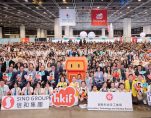
HONG KONG SAR – Media OutReach Newswire – 4 June 2026 – Organised by the Hong Kong Innovation Foundation (‘HKIF’), the Fifth Hong Kong Science Fair (‘Science Fair’) will take place from 27 to 28 June 2026 at the Hong Kong Convention and Exhibition Centre. The event will showcase around 120 shortlisted teams from primary and secondary schools across Hong Kong, presenting creative inventions that integrate artificial intelligence with a diverse range of technology applications. With Sino Group as Principal Patron, the Innovation, Technology and Industry Bureau of the HKSAR Government (ITIB) as the Supporting Bureau, and the Hong Kong Council for Testing and Certification (HKCTC) as Strategic Partner, HKIF is also honoured to have, for the first time, invited the Foundation for the Development of Science and Technology in China as an Advisory Organisation. Representatives from the Foundation will attend the award ceremony to witness the announcement of this year’s winning teams. Consistently a major draw for the community, the Science Fair is now open for online registration with free admission, and the public is warmly invited to attend in person.
Since its launch in 2021, the Science Fair has attracted participation from over 400 local schools, engaging nearly 9,000 students and teachers from Primary 4 to Secondary 6. To date, more than 2,200 creative invention submissions have been received, and the event has established itself as a key platform for youth I&T exchange.
Following Hong Kong’s first astronaut, Dr Lai Ka-ying, into space, the local innovation and technology ecosystem has attracted even greater attention. This year’s Science Fair has specially incorporated aerospace engineering elements, enabling the public to learn about the daily work and challenges of payload specialists, gain insight into the reality of aerospace research and development, and spark greater interest among young people in space exploration. Dr Lai launched aboard the Shenzhou-23 manned spacecraft and is expected to remain in space for approximately six months to conduct space science experiments and maintenance tasks. Visitors can express their support and encouragement by creating message cards for her. In addition, UBTECH Robotics, a globally leading enterprise in embodied AI robotics, will participate in the exhibition, showcasing multiple humanoid robots and offering visitors the opportunity to experience the appeal of embodied intelligence up close.
Professor Sun Dong, JP, Secretary for Innovation, Technology and Industry of the HKSAR Government, stated: ‘The Hong Kong SAR Government is fully committed to developing Hong Kong into an international innovation and technology (I&T) centre, with talent being a key driver of this growth. Now in its fifth edition, the Hong Kong Science Fair – organised by the Hong Kong Innovation Foundation – has become an annual flagship I&T education event. It offers students a valuable platform to turn their innovative ideas into practice, deepen their interest and confidence in I&T, and help bring I&T into schools and the wider community, thereby fostering a more innovation-friendly atmosphere. I look forward to seeing more young people unleash their potential through this platform, pursue careers in I&T, and contribute to the high-quality development of Hong Kong and our nation.’
Mr Daryl Ng, SBS, JP, Chairman of the Hong Kong Innovation Foundation and Chairman of Sino Group, said ‘Innovation and technology are key to Hong Kong’s long-term sustainable development and are integral to the country’s 15th Five-Year Plan. It is vital for Hong Kong to strengthen its I&T capabilities and actively contribute to national development, as underscored by the historic moment when Dr Lai Ka-ying became Hong Kong’s first astronaut. We are encouraged to see growing recognition of I&T opening up new opportunities for young people aspiring to pursue scientific research. As the Hong Kong Science Fair enters its fifth edition, its growth has been made possible by the support of the HKSAR Government, industry partners, tertiary institutions, research organisations, and our panels of judges. This year, we are grateful for the guidance and support of the Foundation for the Development of Science and Technology in China. Moving forward, the Science Fair will remain committed to nurturing talent from an early age, bringing together all sectors to promote I&T and inspire more young people to pursue careers in science and technology.’
Professor Anderson Shum, MH, Chairman of Judging Panel, Hong Kong Science Fair, President of The Hong Kong Young Academy of Sciences, said, ‘The Science Fair adopts the format of “integrating competition with exhibition,” enabling students to translate their learning into tangible and verifiable outcomes. This plays an important role in nurturing Hong Kong’s youth I&T ecosystem. I am delighted to have served as a judge for this major event over the years, witnessing students progressively enhance their presentation skills, build confidence, and broaden their horizons through exchanges with experts, participation in workshops and showcasing their work to the public. The standard of participating projects continues to improve each year, with increasing integration of artificial intelligence and diverse technological applications across different fields. Scientific research is a journey that demands passion and perseverance, and the growth of young scientists often begins with curiosity during their primary and secondary school years. Through these exchanges, we hope to leverage the role-model influence of young scientists, inspiring more students to pursue I&T as their lifelong career. I look forward to seeing our younger generation continue to grow and excel in scientific research and innovation, and officially join the community of scientists in the near future to jointly drive Hong Kong’s I&T development.’
Mr Michael Tam, Chief Brand Officer of UBTECH, said, ‘Humanoid robots are among the most promising real-world embodiments of artificial intelligence, reflecting a future in which intelligent systems are deeply integrated with the physical world. As a global pioneer in humanoid robotics, UBTECH has remained at the forefront of innovation for more than 14 years, with a long-standing commitment to I&T education. The company is dedicated to translating advanced technologies into practical, accessible educational resources. Through collaboration with like-minded partners such as the Hong Kong Innovation Foundation, we aim to inspire greater interest and engagement among both teachers and students in humanoid robotics and artificial intelligence. We are committed to supporting the development of Hong Kong’s I&T education ecosystem, helping to nurture future-ready talent and build a strong, sustainable foundation for long-term growth.’
Since its launch in 2021, the Science Fair has attracted participation from over 400 local schools, engaging nearly 9,000 Primary 4 to Secondary 6 students and their teachers. To date, more than 2,200 creative invention submissions have been received and total attendance has exceeded 120,000 visitors. The Science Fair has gradually established itself as a key platform for youth innovation and technology (‘I&T’) exchange and one of Hong Kong’s most representative I&T education initiatives. This year’s response has been enthusiastic, with over 500 project submissions received. Following preliminary judging, around 120 shortlisted teams took part in a series of workshops and mentorship sessions, and will present their projects at the exhibition in late June to compete for top awards. Gold award-winning teams from each category will have the opportunity to participate in the International Exhibition of Inventions Geneva in Switzerland, fostering idea exchange with global I&T talents.
The Hong Kong Science Fair draws tens of thousands of visitors each year. During the exhibition period, the venue will be transformed into a catalyst for city-wide I&T inspiration. In addition to student showcases, five interactive zones will offer hands-on experiences, including DIY bubble bath bomb workshops, freezer-free slushie making, themed games celebrating the Science Fair’s fifth anniversary, and modified remote-controlled cars made from upcycled household appliances, allowing visitors of all ages to explore science and innovation through engaging and enjoyable activities.
Bulu Bulu Bubble Factory: Blending science with sensory experiences, visitors can mix and mould from scratch to create a delightful ‘bathroom blind box’.
Shake Shake Ice Factory: Applying the principle of freezing point depression, participants will see how temperature can be rapidly lowered using only salt, ice and water to create personalised slushies — all without a freezer.
Scan2Play: Scan the QR Code on your phone to join the themed game celebrating the Hong Kong Science Fair’s Fifth Anniversary.
Racing Homey Kart 2.0: Showcasing the spirit of upcycling and upgrades, visitors can transform old, small household appliances into remote-controlled racing cars and compete on a dedicated track.
UBTECH Robotics Base: Featuring a wide range of robots, this zone provides a comprehensive showcase of the integration of artificial intelligence with mechanical engineering.
To celebrate the Science Fair’s fifth edition, various special experiences will be introduced. The venue will feature a hidden Science Fair character treasure hunt and check-in activity, through which visitors can redeem curated gifts upon completion. Limited-edition souvenirs, including the ‘HKSF-5 Metal Standee Collection’ and the ‘Special Edition Robo K’ blind boxes, will also be available in limited quantities. All proceeds from the HKSF Bazaar, with no deduction, will go directly to charity to support local community technology initiatives.
The Fifth Hong Kong Science Fair Details:
Date: 27 to 28 June 2026 (Saturday and Sunday)
Time: 10:00 am to 6:00 pm
Venue: Hong Kong Convention and Exhibition Centre, Hall 3FG
Admission: Free of Charge (Pre-registration online is required)
Arabian Post Staff -Dubai Al Ansari Exchange recorded a sharp rise in companies using its Wage Protection System platform on June 1, as private-sector employers across the UAE moved to meet tighter salary-payment rules that took effect at the start of the month. The UAE remittance and foreign exchange company said the number of companies processing salaries through its WPS platform rose by more than 151 per […]
Beijing’s new trade secret rules have taken effect, bringing data, algorithms, computer programs and source code explicitly within the country’s administrative protection system as China moves to curb technology leaks during a sharper contest with the United States over artificial intelligence, advanced computing and strategic know-how.
The Provisions on the Protection of Trade Secrets, issued by the State Administration for Market Regulation under Order No. 126, came into force on 1 June 2026 and replace rules first introduced in 1995. The overhaul gives regulators clearer authority to handle disputes involving digital assets that now sit at the centre of corporate value, from AI model architecture and training datasets to platform recommendation systems, software code and commercially valuable operational data.
The change marks a significant shift in China’s treatment of intangible technology assets. Earlier rules were drafted before cloud computing, AI systems and large-scale data operations became central to business competition. The new framework defines trade secrets as technical or business information that is not publicly known, has commercial value and has been subject to confidentiality measures by the rights holder. Technical information now expressly covers data, algorithms, computer programs and code, while business information can include management, sales, finance, planning, customer and operational data.
The timing gives the regulation wider strategic weight. China and the United States are locked in a prolonged technology rivalry involving semiconductor controls, restrictions on advanced computing hardware, limits on investment in sensitive sectors and scrutiny of cross-border technology transfers. Washington has tightened export controls on high-end chips and chipmaking equipment, while Beijing has expanded its own legal toolkit to protect critical technology, secure data flows and prevent overseas transfer of capabilities it regards as strategically important.
The new rules do not create a separate trade secret law, but provide more detailed administrative guidance under China’s Anti-Unfair Competition Law. They clarify how regulators should assess whether information is secret, whether it has commercial value, what counts as reasonable confidentiality measures and how infringement should be investigated. For companies, the central message is that protection will depend not only on the value of the information, but also on whether internal controls, access limits, confidentiality agreements, digital safeguards and evidence trails are in place.
The provisions also recognise that unsuccessful research can have commercial value. Stage-by-stage technical results, failed experimental data and development paths that save time or cost in future research may qualify for protection if they meet the legal conditions. That is especially relevant for AI labs, pharmaceutical developers, electric vehicle makers, chip design firms and advanced manufacturing groups, where failed trials can reveal important technical boundaries and prevent competitors from repeating expensive mistakes.
Regulators have been given practical enforcement tools, including powers to inspect business premises, question individuals, copy documents, examine electronic records and take action against materials linked to suspected infringement. Penalties can include orders to stop unlawful conduct, confiscation of illegal gains and fines that may reach CNY5 million in serious cases. The framework also covers improper acquisition, disclosure, use or permission to use trade secrets obtained through theft, bribery, fraud, coercion, electronic intrusion or breach of confidentiality obligations.
For multinational companies operating in China, the new rules create a mixed picture. Stronger protection could help firms defend proprietary data, software systems and industrial processes in a market where trade secret disputes have often been difficult to pursue. At the same time, wider protection for data and algorithms may increase compliance complexity, particularly in joint ventures, outsourced research, cloud services, employee mobility, cross-border collaboration and licensing arrangements.
Technology companies are likely to face tougher expectations over documentation. Firms seeking protection will need to show that the information was not easily accessible, carried economic value and was actively protected. Generic claims that an algorithm or dataset is confidential may not be enough. Companies will be expected to classify sensitive assets, restrict access by role, track downloads and transfers, maintain logs, use encryption or watermarking where appropriate, and ensure that employment and partnership contracts define confidentiality obligations with precision.
The rules also sit alongside China’s broader data and security regime, including laws on data security, personal information protection, cybersecurity and export control. That overlap could make enforcement more powerful but also more complicated. A dataset may be a trade secret, a regulated data asset and a cross-border transfer concern at the same time. Businesses handling AI training material, user behaviour data or industrial performance data will need to assess those obligations together rather than treating trade secret protection as a standalone issue.
Arabian Post Staff -Dubai Sobha Realty delivered about 3,000 residential units ahead of schedule and launched nearly 15,000 new homes during 2025, marking one of its strongest expansion phases in the UAE property market. The UAE-headquartered developer said at a media briefing that the year’s activity was driven by four major master developments across Dubai and Umm Al Quwain, reinforcing its shift from single-tower launches to larger […]
Millions of Ethiopians began voting on Monday in the country’s 7th General Election, a high-stakes parliamentary and regional contest expected to consolidate Prime Minister Abiy Ahmed’s ruling Prosperity Party while testing public confidence in the electoral process. More than 50 million people are registered to vote across Africa’s second most populous country, where polling stations opened after months of voter registration, candidate nominations, political campaigns, public debates […]
Arabian Post Staff -Dubai UAE real gross domestic product expanded 6.2 per cent in 2025 to AED1.9 trillion, underscoring the country’s strongest evidence yet that diversification is becoming the central driver of national output rather than a supporting pillar. The Federal Competitiveness and Statistics Centre said non-oil GDP rose 6.8 per cent to AED1.5 trillion, outpacing headline growth and reinforcing the shift towards trade, finance, construction, manufacturing, […]
Kuwait’s air defence systems intercepted hostile missiles and drones targeting its airspace early Thursday, triggering loud explosions across parts of the country but causing no casualties or damage, the army said, as Gulf states remained on high alert amid a volatile security environment. The General Staff of the Kuwaiti Army said air defence units detected multiple aerial threats attempting to enter national airspace and dealt with them […]
Ripple has filed new United States trademark applications covering prime brokerage, securities lending, clearing, treasury operations and investment services, marking a deeper push into institutional finance after its $1.25 billion purchase of Hidden Road. The applications, covering Ripple’s word mark and Triskelion design, point to a broader strategy that goes beyond cross-border payments and blockchain settlement. They list services linked to asset management, investment advisory, hedge fund […]
Donald Trump has urged Saudi Arabia and Qatar to move first in a renewed push to expand the Abraham Accords, linking wider recognition of Israel to US efforts to secure a deal with Iran and recast the Middle East diplomatic order. The US president said countries involved in the Iran negotiations should join the normalisation framework, naming Saudi Arabia, Qatar, Pakistan, Egypt, Turkey and Jordan among those […]
Bitcoin’s recovery attempt is losing momentum as equity markets push higher, leaving traders focused on whether the largest digital asset is forming another lower high after a two-week pullback. The token was trading near $77,000 on Tuesday, after falling about 7 per cent over two weeks and failing to regain the stronger technical posture it held earlier this month. Ether was near $2,120, still trapped in a […]
Pope Leo XIV has used the first encyclical of his papacy to call for tighter regulation, transparency and human oversight of artificial intelligence, warning that unchecked systems could intensify misinformation, deepen inequality and make war easier to wage. The document, Magnifica Humanitas, places AI at the centre of the new pontificate’s social agenda, treating the technology not as a narrow technical issue but as a test of […]
THIMPHU, BHUTAN – Media OutReach Newswire – 26 May 2026 – In a landmark collaboration between the Ministry of Education and Skills Development (MoESD) of Bhutan and the EtonHouse International Education Group, EtonHouse Bhutan International School will open its doors as the nation’s first international K–12 school in Academic Year 26/27, marking a milestone that underscores Bhutan’s commitment to building human capital for a rapidly evolving global economy.
Mr Ng Yi-Xian, Group CEO, EtonHouse International Education Group and Mr Tshewang Chophel Dorji, Secretary, Ministry of Education and Skills Development
Founded in Singapore over 30 years ago, EtonHouse today operates over 100 schools across eight countries, and is widely recognised for its inquiry-led approach to international education.
The partnership positions EtonHouse as a long-term education partner to Bhutan, focused on listening, learning, and co-creating a school experience that honours Bhutanese culture and strengthens capability within the region. Professional development and education conferences will support collaboration among educators across Bhutan, enabling professional exchange and high-quality practice, contributing to a strong, future-ready pedagogical landscape.
A shared vision for Bhutan’s future education landscape
EtonHouse Bhutan aligns with the Royal Government’s vision to nurture world-class talent through greater access to high-quality international education. The school is designed to develop globally competent learners rooted in Bhutan’s cultural heritage and the principles of Gross National Happiness. This partnership reflects Singapore’s enduring contribution to international education, sharing a model that harmonises academic rigour with Asian values, creativity and innovation, advancing Bhutan’s long-term educational aspirations.
The school will offer a seamless K–12 pathway for over 500 students. In the Early Years, children will experience the EtonHouse Inquire. Think. Learn curriculum inspired by the Reggio Emilia approach. Primary students will engage in the International Primary Curriculum alongside Singapore Mathematics and UK-aligned core subjects, progressing to the Cambridge Lower Secondary, IGCSE and International A Level qualifications from Cambridge. Bhutanese History and Dzongkha remain integral, complemented by a multilingual language programme offering English, Dzongkha and Mandarin, alongside a strong emphasis on STEM, sustainability and holistic wellbeing.
“The Ministry of Education and Skills Development has entered into a landmark partnership with EtonHouse International Education Group to establish an international school in Bhutan, a significant milestone in the nation’s ongoing education reform, guided by His Majesty’s vision for a future-ready and globally competitive education landscape.
The initiative will provide Bhutanese students with access to internationally benchmarked learning opportunities while ensuring the deep integration of local knowledge, culture, and values into the curriculum. It seeks to create a dynamic platform for young Bhutanese to experience world-class education within the country, reducing the need to pursue such opportunities abroad and thereby strengthening Bhutan’s human capital for the future.
Beyond enhancing access to quality education, the partnership aims to strengthen national education capacity and bolster Bhutan’s attractiveness to skilled professionals and international institutions, positioning the Kingdom as an emerging hub for world-class learning,” said Mr Tshewang C. Dorji, Secretary of the Ministry of Education & Skills Development.
“Establishing Bhutan’s first international school marks a defining moment for education in the Kingdom. As a global education group, we bring internationally recognised standards and access to a worldwide learning network that connects students and educators across countries. Through the EtonHouse Global Classroom, students engage with peers across our international network, gaining global perspectives through shared learning and cultural understanding. Our ambition is to build a globally engaged school in Bhutan that expands opportunities and contributes to long-term national development.” said Mr Ng Yi-Xian, Group CEO of the EtonHouse International Education Group.
Creating Opportunities for Students and Advancing Educator Excellence
A dedicated scholarship scheme will provide full tuition sponsorship to up to ten outstanding Bhutanese students, reinforcing the school’s commitment to accessibility and national talent development.
EtonHouse will leverage its membership in the Reggio Children International Network to provide preschool educators in Bhutan with access to internationally recognised Reggio Children expertise, professional learning and regional educator exchange, strengthening teaching practice across the region.
A campus that celebrates Bhutanese identity and global perspective
“The design and curriculum of EtonHouse Bhutan pay homage to Bhutan’s cultural roots while opening doors to the world. Every space has been conceived to inspire curiosity, reflection, and innovation, echoing the nation’s aspiration to educate its youth for both local contribution and global engagement.” saidEvelyn Tay, CEO of EtonHouse International Education Group, Singapore and EtonHouse Bhutan International School.
The purpose-built campus reflects a thoughtful fusion of traditional Bhutanese craftsmanship and contemporary collegiate design. Learning environments are designed in calm, neutral tones, reflecting the EtonHouse approach to inquiry-led, child-centered learning.
Students will have access to facilities including:
Research and Innovation Centre, integrating the Library, STEAM and ICT to support inquiry, experimentation and interdisciplinary learning
Dedicated Science Laboratories, designed for hands-on learning across Biology, Chemistry and Physics
Cultural Learning Spaces, honouring Bhutanese History and Dzongkha as integral parts of the curriculum
Multipurpose Sports Hall, supporting physical development, teamwork and wellbeing
Dedicated Performing Arts Studio, enabling expression through music, drama and movement
Reggio-inspired Ateliers, where children explore ideas through the hundred languages of expression, including light, sound, clay, mark-making and natural materials
Next steps
With enrolments opening for Nursery 1 to Year 5 (from 3 to 10 years) and plans to expand progressively to serve students aged up to 18 years, families interested in discovering more about EtonHouse Bhutan International School are warmly invited to attend our Experience Day on 30 May. This special event offers an opportunity to find out more and experience what defines the EtonHouse approach.
For more information, please visit etonhouse.edu.sg/bhutan.
The issuer is solely responsible for the content of this announcement.
About EtonHouse International Education Group
Founded in 1995 in Singapore, EtonHouse has grown into a global education group with more than 100 schools across eight countries. The Group offers a highly recognised international education pathway from infant care to high school, including the International Baccalaureate, Cambridge, and the Reggio Emilia-inspired approach, all designed to nurture inquiry, creativity, and intercultural understanding. Beyond schools, EtonHouse is deeply committed to community impact through teacher training, philanthropy, and purpose-driven educational initiatives.








 https://www.etonhouse.edu.sg/
 https://www.linkedin.com/company/etonhouse-international-education-group/
 https://twitter.com/EtonHouseGroup
 https://web.facebook.com/EtonHouseInternational/
 https://www.instagram.com/etonhouseinternational/
 https://www.youtube.com/user/EtonHouseEducation




