News related to
pursue

The UAE Ministry of Finance, acting as issuer with the Central Bank of the UAE as issuing and payment agent, has completed the September 2025 auction for dirham-denominated Islamic Treasury Sukuk, issuing AED1.1 billion in two tranches.

Investor appetite proved robust: total bids reached AED5.1 billion, representing an oversubscription rate of 4.6 times. The two tranches mature in August 2028 and May 2030. Yields to maturity were set at 3.64 percent for the 2028 tranche and 3.72 percent for the 2030 tranche, with spreads of up to 5 basis points over comparable US Treasuries. The new Sukuk are now listed under the UAE Treasury Islamic Sukuk Programme on Nasdaq Dubai, bolstering their tradability in secondary markets.

This issuance is part of the 2025 T-Sukuk programme designed to deepen the UAE’s domestic Islamic capital market and to help establish a dirham yield curve. Authorities view it as a tool for liquidity management and as a mechanism to broaden investment options for both regional and international investors participating in the UAE’s fixed-income markets.

Market observers note that the oversubscription signals confidence in the UAE’s fiscal credentials and its commitment to injecting dynamism into its debt capital markets. The tight pricing relative to US Treasuries is seen as competitive and attractive for institutional players seeking yield in the Gulf region.

In recent months, the UAE has steadily pursued domestic sovereign Islamic issuances as a complement to conventional instruments, seeking to accommodate demand from Islamic financial institutions as well as conventional banks’ Shariah-compliant units. The coordination between the Ministry of Finance and the Central Bank ensures that these issuances are integrated into broader monetary and financial stability objectives.

Across the Gulf, sovereign issuers have increasingly leaned into domestic currency Islamic instruments to reduce dependence on external funding, develop local capital markets, and provide alternative yield playbooks for investors. Within that context, the UAE’s T-Sukuk programme is gaining traction as a benchmark vehicle.

Primary dealers participating in the auction included eight banks, all mandated under the program to support both primary and secondary market activity. Their participation is key to maintaining liquidity and encouraging wider investor participation beyond the initial subscription.

New data centers and service centers designed to enhance infrastructure coverage and stay ahead of global growing demand for AI and Cloud services Full-stack AI and Cloud capabilities fuel innovations withglobalpartners and customers HANGZHOU, CHINA – Media OutReach Newswire – 24 September 2025 – Alibaba Cloud, the digital technology and intelligence backbone of Alibaba Group, today announced its latest strategic plans to launch its first data centers […]

By Nantoo Banerjee Few will disagree that India should keep investing substantially in both onshore and offshore oil search as the country is becoming increasingly dependent on the import of petroleum crude to meet its energy needs. Currently, almost 86 percent of India’s annual crude petroleum needs are being met through imports. During his recent […]

The article Higher GST Will Hurt Oil-Starved India’s Exploration Drills appeared first on Latest India news, analysis and reports on IPA Newspack.

Government officials in New Delhi have unveiled a secure integrated circuit solution, fully developed within India, designed to underpin future digital identity systems including e-passports. All intellectual property is said to reside domestically, marking a significant milestone in the nation’s tech self-sufficiency drive.

The secure IC is embedded with a “smart OS”, enabling secure authentication, encryption, and identity verification. It is intended for deployment in identity credentials issued by federal authorities. Verification features include tamper resistance, cryptographic protection of stored data, and interoperability with global identity verification standards. The OS is modular, allowing updates and extension of features such as biometric modules, NFC, and remote authentication.

The development is part of the broader India Semiconductor Mission and Semicon India Programme, with an investment outlay of ₹76,000 crore supporting chip fabrication, assembly, display fabs, and design projects. The pilot line for this secure chip is being hosted in Gujarat at an OSAT facility.

Sources indicate that ten semiconductor manufacturing projects have been approved across six states—Gujarat, Assam, Uttar Pradesh, Punjab, Odisha, and Andhra Pradesh—with total investment commitments exceeding ₹1.60 lakh crore. These projects include multiple fabs, ATMP/OSAT facilities, and chip design initiatives.

Among recent achievements is the development of Vikram-3201, a 32-bit space-grade processor by the ISRO Semiconductor Laboratory, presented to the Prime Minister at Semicon India 2025. It has been validated in the PSLV-C60 mission and is said to be robust under extreme launch-vehicle conditions. It was fabricated using a 180 nm CMOS process.

The secure IC is expected to be somewhat different in specifications from Vikram-3201: targeted more towards identity and citizen services rather than space applications. Performance metrics are likely less extreme, but security requirements—such as resistance to physical tampering, side-channel attack mitigation, secure boot, and cryptographic module certification—are being prioritised. Implementation of secure OS standards is underway.

In tandem with hardware development, the government has accelerated IP and design ecosystem support. Under the Design Linked Incentive scheme, 23 design projects have been approved to foster startups, MSMEs, and academic participation. Skill development in VLSI design, packaging, EDA tools, and fab-operations is being emphasised.

Policy observers note that global supply-chain disruptions and geopolitical shifts have provided a backdrop that intensifies India’s push for technological sovereignty. External partnerships—for example in materials, equipment, packaging technologies—are being pursued to fill gaps in the domestic ecosystem.

Challenges remain. Process node maturity is one area—while the 180 nm node is proven and reliable for many applications including space, more advanced nodes dominate consumer electronics and high-performance identity solutions globally. Also, certifications for security standards, supply of trusted materials, secure hardware lifecycle management, and scaling production to volumes needed for national identity issuance will test capacity. Ensuring interoperability with international identity verification frameworks will also be essential.

Prime Minister Narendra Modi turned 75 today amid widespread greetings and the launch of a two-week “Sewa Pakhwada” campaign aimed at welfare and outreach efforts across India. State and central leaders as well as ordinary citizens extolled his leadership, while a slate of new programs for women, children and tribal communities were rolled out, especially from Dhar in Madhya Pradesh.

President Droupadi Murmu hailed Modi as “an exemplar of hard work” who has inspired the nation to set and pursue large goals. She wished him health and joy, emphasising how his leadership has helped shape India’s progress globally. Union ministers including Rajnath Singh, Nitin Gadkari and BJP president J. P. Nadda echoed these sentiments, pointing to Modi’s role in promoting self-reliance, elevating India’s international stature, and executing reforms across sectors.

The “Sewa Pakhwada” initiative has been structured as a fortnight of activity ending on 2 October, coinciding with the birth anniversaries of Mahatma Gandhi and Lal Bahadur Shastri. Under the campaign, programmes such as health check-ups, cleanliness drives, blood donation camps, environmental awareness efforts, promotion of indigenous products, exhibitions, and sports events will take place. BJP youth wings are staging runs and community events in dozens of cities to mark the milestone.

From his birthplace town of Vadnagar in Gujarat to distant corners of the country, celebrations have taken on local flavour. In Madhya Pradesh’s Dhar district, special welfare initiatives for women, children and tribal populations were unveiled. Across India, schools and public spaces have hosted rangoli displays, devotional prayers, and cultural performances. Special Ganga Aarti ceremonies have been organised and major state capitals are seeing visual tributes such as large-scale posters and tricolours.

Political reaction has been overwhelmingly positive, with opposition voices largely restrained or offering measured praise. Chief ministers from various states, as well as senior figures within BJP and allies, emphasised continuity of governance and commitment to delivering public services. Some messages focused on Modi’s global diplomatic presence, while others lauded domestic schemes and grassroots infrastructure projects.

Analysts see the birthday observances and accompanying welfare push as both symbolic and strategic. The scale of the celebrations and outreach efforts suggests an aim to reinforce popular support ahead of upcoming elections. The use of service initiatives spans across regions and social groups; the focus on tribal welfare and women’s health is being viewed as an attempt to address longstanding development gaps. Modi’s third consecutive term as Prime Minister has already witnessed significant policy moves in defence, infrastructure, manufacturing, and digital governance, boosting India’s international profile even as challenges such as inflation, unemployment and rural distress persist.

Saudi entities Hassana Investment Company and AviLease have formed a joint venture to offer aircraft-leasing opportunities, signalling a major step in the Kingdom’s drive to build up its aviation financing infrastructure under its National Aviation Strategy. Hassana will own a majority of the new venture; AviLease—backed by the Public Investment Fund—will supply aircraft servicing.

The joint venture’s launch includes a deal to acquire a fleet of ten fuel-efficient, new-technology aircraft from AviLease, all currently leased to carriers based in Saudi Arabia. The portfolio reflects a shift towards greener, more sustainable aviation assets.

Hassana, which manages funds for the General Organization for Social Insurance, sees this as a chance to deepen exposure to resilient asset classes that generate long-term cash flows. Hani Al-Jeha­ni, Acting CEO and CIO of Hassana, emphasised the partnership aligns with its mandate to pursue investments that offer sustainable returns while supporting national aviation goals.

AviLease, established in 2022 as part of the sovereign wealth fund’s expanding portfolio, is expanding rapidly. The company has placed large orders for new Boeing and Airbus aircraft and completed a sizeable financing facility earlier this year. It manages a global portfolio worth several billion dollars. Edward O’Byrne, CEO of AviLease, described the joint venture as foundational to scaling up Saudi Arabia’s aviation ecosystem and creating a platform attractive to both domestic and international investors.

Fahad Al-Saif, Chairman of AviLease, noted that the partnership marks one of the first private-sector-led steps into the aviation financing domain within Saudi Arabia, reinforcing the role of investment institutions in strengthening the sector.

The move supports Saudi Arabia’s ambition to draw 150 million visitors annually by 2030, up from earlier targets, and to enhance the economic multiplier effects of tourism, trade, and transport infrastructure. Aviation financing is seen as a key enabler in achieving these goals, since airlines often face high capital costs.

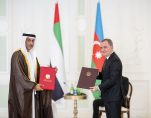
ADQ and Azerbaijan Investment Holding have signed a memorandum of understanding to pursue joint projects in the financial services sector, aiming to improve market connectivity and bolster the investment environment for sustainable economic growth.

The agreement follows their establishment of a joint investment platform in December 2023, under which both organisations committed equal capital to developing sectors such as agriculture, technology, pharmaceuticals and energy infrastructure across Azerbaijan, the UAE, and Central Asia—with possible expansion beyond those regions.

Mohamed Hassan Alsuwaidi, Managing Director and Group Chief Executive Officer of ADQ, said the deal exemplifies the strategy of deploying patient capital and leveraging investment know-how to stimulate economic diversification, foster industrial expansion, and enhance regional connectivity and competitiveness.

Ruslan Alikhanov, Chief Executive Officer of AIH, described the partnership as a key move to unlock new growth opportunities for Azerbaijan, emphasising that combining capital and expertise will support more diversified development and position Azerbaijan as a proactive actor in regional investment networks.

AIH, founded in 2020, manages strategic state-owned enterprises, enhancing governance, boosting operational efficiency and channeling investment into national priorities. ADQ is recognised for investing in critical infrastructure, global supply chains, and strategic sectors that align with broader national and regional economic transformation agendas.

Trade between the UAE and Azerbaijan has been strengthening, with non-oil trade rising 43 per cent year-on-year to reach about USD 2.4 billion in 2024. UAE investments into Azerbaijan have crossed USD 1 billion, reflecting the deepening economic partnership.

Advertisements

Washington and Doha are on the verge of agreeing a substantially upgraded defence cooperation treaty following an Israeli airstrike in Doha targeting Hamas leaders, sources say. The move signals a deepening strategic alignment as tensions in the region intensify. US diplomat Marco Rubio confirmed that both countries are “nearing finalisation” of an agreement that would strengthen joint military planning, basing, intelligence sharing and oversight of operations on […]

Beijing is preparing to roll out limited fiscal and monetary support as China faces weakening growth, dimming export demand and a fragile property sector. Analysts expect modest interest-rate cuts and additional spending, but size and scope will be constrained by a heavy debt burden and local government financing risks.

Official data shows industrial output rose 5.2% year-on-year in August, the slowest since August 2024, while retail sales grew just 3.4%, their weakest since November 2024. Fixed-asset investment across the first eight months of the year is up only 0.5%. Economic indicators like rising unemployment and falling home prices underscore growing domestic stress. Export demand, especially to the United States, has softened sharply.

Finance Minister Lan Fo’an has asserted that China’s debt remains at a “controllable and reasonable level,” while promising further fiscal reform to bolster consumption and investment. Hidden local government debt is being addressed, with over 60% of local government financing vehicles having mitigated their undisclosed obligations. Beijing has issued about 4 trillion yuan in special bonds out of a 6 trillion‐yuan quota allocated under its 2024-2026 framework.

Despite these assurances, fiscal options appear limited. Local governments, heavily dependent on land sales and property development for revenue, are seeing income dwindle amid the property slump. Many of them carry large off-balance-sheet debts, which limit their ability to borrow further without risking financial instability. Analysts warn that fiscal expansion beyond existing special bond quotas could trigger credit risk and undermine monetary policy transmission.

Monetary policy tools are seen as more flexible. The central bank is expected to pursue cuts in policy interest rates and perhaps reduced reserve requirement ratios for banks. Some targeted measures, such as support for housing and subsidised consumer loans, are under discussion. But reliance on monetary easing brings its own challenges—lower rates may offer limited stimulus when private sector demand is weak and households are wary of debt.

The property sector remains a key drag on growth. Unsold homes, delayed or incomplete projects, and tightly controlled borrowing rules for developers all erode confidence and investment. Local governments, deprived of revenue from land sales due to the real-estate slowdown, face pressures both to stabilize the housing market and to reduce their contingent liabilities.

An international team of climate scientists has assessed five leading polar geoengineering proposals and found them unworkable, dangerous, and likely to undermine efforts to cut greenhouse gas emissions. The study, published in Frontiers in Science, evaluated the methods’ viability across criteria including effectiveness, cost, scale, environmental risk, and governance. The five geoengineering ideas under scrutiny are: stratospheric aerosol injection; sea curtains or walls to block warm water […]

eToro Group Ltd is poised to pursue bolder acquisitions after securing a substantial liquidity base, according to one of its co-founders. At the Ambrosetti Forum in Cernobbio, Italy, Ronen Assia, executive director and co-founder, confirmed that the firm “has cash and cash equivalents of around $1.2 billion at the end of the first half of the year, with a cash position of $988 million, with no debt.” He added: “We’re looking to do more ambitious stuff involving acquisitions,” emphasising that eToro aims to broaden both asset classes and its geographic footprint.

eToro’s deliberate pivot into more aggressive mergers and acquisitions comes on the heels of its listing on Nasdaq in May 2025, where it raised $620 million in its initial public offering. The company’s robust cash war-chest endows it with flexibility to explore new verticals and markets in a dynamic fintech landscape.

Beyond financial strength, eToro is deepening its product offering. The platform recently rolled out tokenisation and artificial intelligence tools targeted at retail investors, along with expanding its global reach. Meanwhile, preliminary selected business metrics for July and August reveal continued operational momentum: assets under administration rose to $19.7 billion, funded accounts approached 3.69 million—both reflecting high year-on-year growth—while crypto trading volumes surged by nearly 50 percent.

The company’s healthy balance sheet is grounded in a successful IPO and product innovation. In Q1 2025, eToro reported $736 million in cash, cash equivalents, and short-term investments, alongside growth in user accounts and assets under administration. The firm also expanded its trading products, launching options in the UK and futures in Europe, while diversifying geographic access to include exchanges in Abu Dhabi and Hong Kong.

This marks a clear signal that bold acquisitions are on eToro’s horizon—a phrase that captures the firm’s evolving strategic ambition and its capacity to act decisively in a competitive market.

The timing of this announcement is significant. Mergers and acquisitions within fintech and crypto sectors have become tools for scale, innovation, and regulatory navigation. With its substantial liquidity and no leverage, eToro may look to acquire firms offering complementary capabilities—whether in tokenisation, AI-driven trading, wealth management, or regional expansion.

Ronen Assia’s stance highlights both intent and preparedness. The expressed goal to take on “more ambitious” deals indicates a readiness to move beyond smaller bolt-ins, aiming instead for transformative moves that could reshape the firm’s product and regional scope. The emphasis on adding asset classes and locales suggests potential targets might include firms with niche offerings or solid footprints in under-penetrated markets.

At a time when many fintech companies are consolidating or recalibrating amid macroeconomic shifts and evolving regulation, eToro’s proactive posture sets it apart. With backing of a strong balance sheet and public market credibility, the platform is well placed to capitalise on strategic M&A opportunities as they arise.

Egypt and Sudan insist that discussions surrounding the Grand Ethiopian Renaissance Dam must remain confined to the three riparian countries—rejecting calls to broaden the talks to include other Nile Basin nations. The two have signalled mounting concern over Ethiopia’s unilateral conduct, describing the situation as a “continuous threat to stability in the Eastern Nile Basin.” They warned that Ethiopia’s steps to fill and operate the dam could […]

African Rainbow Minerals has suspended all mining activity at its unprofitable Bokoni platinum mine while it refines a scaled-down development proposal. The decision comes amid sharply declining earnings and a substantial impairment charge, underscoring the mine’s failure to deliver expected returns. ARM announced a 2.2-billion-rand impairment for Bokoni, attributing the write-down to delays in ramping up operations and a shift in mining methodology. This loss dragged the […]

China has issued a bold action plan to propel its electronic information manufacturing industry through 2025 and 2026, targeting sustained growth in industrial output, revenue, and technological capability as it seeks to strengthen its position in the global technology arena.

The plan, jointly issued by the Ministry of Industry and Information Technology and the State Administration for Market Regulation, sets forth a target of roughly 7 per cent average annual growth in industrial output across major segments—including computer, communications, and electronic equipment manufacturing. Revenue growth across related sub-sectors such as lithium batteries, photovoltaics and components is projected to exceed 5 per cent per annum.

Authorities further anticipate that by the close of 2026, the electronic information manufacturing category will retain its status as the largest among China’s 41 key industrial sectors in both revenue and export share. Ambitious local targets aim to elevate five provinces to over 1 trillion yuan in annual manufacturing revenues, with the server industry aiming to surpass 400 billion yuan.

Beyond output and revenue, the plan calls for accelerated equipment modernisation and the development of high-end, intelligent, and eco-friendly production lines. Central to this strategy is the creation of internationally competitive industry bases and specialised clusters serving smaller enterprises.

This industrial blueprint emerges amid broader national efforts to invigorate advanced manufacturing. In August, authorities unveiled new financial guidelines, integrating structural monetary instruments and “green channels” for critical technology firms, aimed at spurring innovation and easing access to capital for integrated circuits, industrial software, medical equipment and advanced materials. Concurrently, China continues to pursue consolidation within its semiconductor sector—though merger negotiations have encountered obstacles, reflecting legal, valuation and fragmentation challenges.

Observers note that China’s renewed emphasis on domestic capability complements longer-standing ambitions under industrial strategies such as “Made in China 2025”, which have driven progress in robotics, solar technology, electric vehicles and rail systems, yet left persistent weaknesses in semiconductors and aerospace.

The current two-year action plan appears to reinforce this trajectory by tying industrial upgrading to environmental standards and smart manufacturing. Provincial authorities are being pressed to deliver on revenue milestones, while the focus on intelligent and eco-friendly production signals an effort to align with global sustainability trends and elevate manufacturing sophistication.

This approach also reflects the government’s response to external pressure, including export controls and trade friction, by targeting resilience and self-sufficiency. By prioritising hubs and clusters, China aims to decentralise innovation and drive inclusive industrial progress across regions, not just within flagship firms or coastal areas.

The twin objectives of maintaining international leadership and building more advanced, cleaner industrial capacity are central to this strategy. As China moves into the mid-2020s, its success will depend on execution—not just on paper targets, but on implementation, regional mobilisation, talent development, and the ability to absorb and apply new technologies at scale.

A pivotal online gathering on Sunday will determine whether the Organisation of the Petroleum Exporting Countries and its allies proceed with further oil production increases or hold current levels. The group has already rolled back its earlier cuts by 2.5 million barrels per day, equivalent to around 2.4 per cent of global demand, and is now assessing whether to unwind the next 1.65 million bpd tranche ahead of schedule.

Markets responded to the impending meeting with cautious anticipation. Brent crude fell modestly, trading near $67 a barrel, while U. S. West Texas Intermediate hovered around $63–$64. Analysts, including those at ANZ, flagged that any additional supply could deepen the surplus during a typically weak demand season. The softening outlook has already rippled through equity markets: major oil producers and service firms such as APA, Occidental, Halliburton and Schlumberger saw their shares slip between 3 and 5 per cent.

Since April, OPEC+ has pursued an aggressive unwind of output curbs. Initial increases began with modest tranches but have since accelerated: April saw the first rise, followed by consistent monthly boosts—from 411,000 bpd in May, June and July to 548,000 bpd for August and 547,000 bpd for September. These decisions reflect strategic moves to regain market share amidst growing competition, especially from U. S. shale producers, and external pressures, including public calls from the U. S. administration to increase global supply.

Despite these ramped-up supplies, prices have retained considerable strength—hovering around the $70 mark—bolstered by low inventory levels and geopolitical constraints, particularly sanctions on Russia and Iran. Analysts at the Commonwealth Bank of Australia observe that OPEC+ now appears comfortable with Brent trading in the $60–$65 range, a level that could pressure U. S. shale operations by narrowing profit margins.

Meanwhile, data from the American Petroleum Institute indicated an unexpected rise of 622,000 barrels in U. S. crude stocks, counter to forecasts, adding another layer of downward pressure on prices. The situation reflects a delicate balance: rising supply meets lukewarm demand, particularly as global economic growth shows signs of softening in key regions like China, India and Brazil.

Executive voices within OPEC+ remain tight-lipped. No official statements were forthcoming from Riyadh or other capitals prior to the weekend meeting. Analysts remain split: some believe the group will maintain its current stance through October, exercising caution amid market saturation concerns. Others argue that continued increases are part of a calculated strategy to defend or expand market share well into next year.

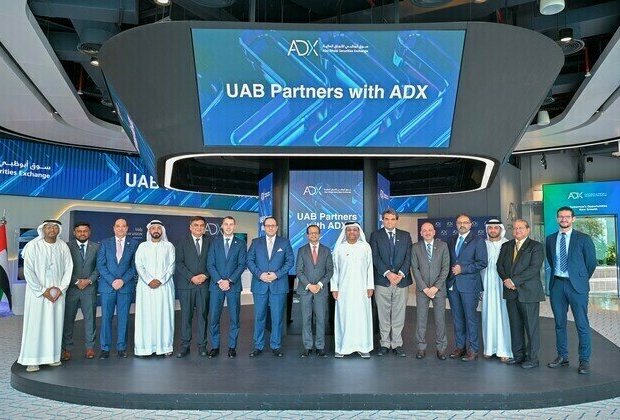
United Arab Bank has formed a strategic alliance with Abu Dhabi Securities Exchange to enable its customers to subscribe for upcoming IPOs through the bank’s digital channels or ADX’s eIPO Investor Portal. This arrangement aims to simplify the process of accessing capital markets, offering a secure and intuitive experience to investors.

At a ceremony held at ADX’s headquarters in Abu Dhabi, the agreement was formalised in the presence of Abdulla Salem Alnuaimi, Group Chief Executive Officer of ADX, and Shirish Bhide, Chief Executive Officer of UAB, alongside senior officials from both organisations.

This collaboration is designed to strengthen UAB’s wealth management proposition by embedding investment opportunities within its digital ecosystem. Customers will now be able to access IPO applications directly via UAB’s mobile application, replacing previously cumbersome procedures with streamlined, guided pathways that enhance transparency and usability.

According to Shirish Bhide, this partnership reflects the bank’s dedication to innovation and long-term value creation. By integrating investment services within UAB’s digital channels, customers gain more inclusive access to the UAE’s capital markets. Abdulla Salnuaimi added that this initiative reaffirms ADX’s aim to enhance the investor experience by collaborating with leading financial institutions and advancing digital solutions.

The move aligns with UAB’s broader digital transformation strategy, as demonstrated by prior efforts such as launching RegPRISM, an AI-powered regulatory intelligence platform developed with Smarbl to improve compliance and operational efficiency.

Further underpinning UAB’s financial robustness is its first-quarter 2025 performance. The bank reported a 49 per cent year-on-year increase in net profit—rising to AED 102 million—driven by growth in assets, loans, Islamic financing, and investments. Capital adequacy remains solid, with a CET1 ratio of 12.6 per cent and a total capital adequacy ratio of 17.1 per cent. Non-performing loans saw improvement from 4.8 per cent to 3.4 per cent, with coverage at 118 per cent.

These financial strengths were in part bolstered by a rights issue completed earlier, which raised around AED 1.03 billion and strengthened UAB’s capital position.

ADX, for its part, continues to pursue innovation in financial market infrastructure. In July, it collaborated with First Abu Dhabi Bank and HSBC to launch the Middle East’s first DLT-based digital bond, reinforcing its frontier role in tokenised finance.

Through this latest agreement, UAB and ADX are promoting a more integrated, accessible investment landscape—blending digital banking and capital markets participation in a manner that could redefine customer expectations and market engagement.

A succinct pledge to resolve their border differences and reinvigorate cooperation was exchanged between Chinese President Xi Jinping and Prime Minister Narendra Modi during a summit in Tianjin. The meeting, marking Modi’s first visit to China since the border clashes of 2020, signals a strategic effort to steady bilateral ties ahead of the meeting of regional leaders.

At the outset, Modi acknowledged that disengagement along the Line of Actual Control has created a peaceful environment, underlining that tranquility along the border is essential for bilateral development. He emphasised that relations have moved in “a meaningful direction” and stressed that both countries should pursue strategic autonomy without being viewed through the lens of a third country. Xi mirrored that sentiment, contending that border issues should not define China‑India relations. He urged a focus on economic growth and expressed a hope that their meeting would “further elevate” bilateral relations to a stable trajectory.

This diplomatic retreat from escalating tensions emerges amid broader geopolitical recalibrations. The summit, bringing together more than 20 non‑Western leaders, offered a stage for Xi to advocate a new global order more favourable to the Global South, challenging Western dominance. He proposed the creation of a SCO development bank, new financial mechanisms to reduce dependence on the US dollar, AI cooperation, and a lunar research partnership.

For his part, Putin welcomed the revival of “genuine multilateralism” through the SCO framework and lauded efforts toward building alternative Eurasian security structures. The visual solidarity among the three —occasionally dubbed the “anti‑Western bloc”— underscores their shared interest in countering US influence and economic pressure, including US‑imposed tariffs on India.

India’s engagement at Tianjin reflects a broader wave of diplomatic stepping stones: direct flights have resumed, the Kailash Mansarovar Yatra has been revived, and Indian pilgrims are again welcome in Tibet. These developments follow mutual agreements on border patrolling mechanisms and a gradual easing of visa and tourism restrictions.

While the tone between Xi and Modi was markedly conciliatory, analysts caution that underlying issues persist. The legacy of the 2020 deadly Galwan clash remains a psychological and strategic fault line. Mistrust endures, and there is no immediate indication of a comprehensive border settlement or legally binding roadmap toward de‑escalation.

The SCO’s Tianjin gathering is the largest of its kind in the organisation’s history, with Xi presiding and an array of Eurasian leaders in attendance. The event signifies a collective push toward regional cooperation and institutional alternatives to Western‑led institutions.

A colossal leap in infrastructure development is underway as OpenAI pursues the establishment of a data centre in India with a striking capacity of at least one gigawatt. The project, integral to its Stargate initiative, ushers in a new era of AI infrastructure expansion across Asia.

OpenAI is actively exploring partnerships with Indian firms to bring this gigawatt-scale facility to life, though the precise location and timeline remain unspecified. The effort aligns with its Stargate programme—an expansive, multibillion-dollar venture in collaboration with SoftBank, Oracle and MGX to develop next-generation AI infrastructure.

The planned facility stands among the largest of its kind in the region and may be formally introduced by OpenAI’s chief executive, Sam Altman, during his anticipated visit to India in September. OpenAI has already gained legal footing by registering as an entity in India and is gearing up to open its first office in New Delhi later in the year, reflecting the nation’s importance as the company’s second-largest market by user base.

Financial implications of such mega‑scale AI infrastructure are enormous. According to Jensen Huang, chief executive of Nvidia, constructing a singular gigawatt-class facility could cost around $50 billion—$35 billion directed towards Nvidia’s hardware and $15 billion for supplementary systems. OpenAI’s ambitions also include similar “AI super‑factories” in Abu Dhabi and across the United States, all under the banner of Stargate.

This enormous investment is forecast to have ripple effects across the global AI ecosystem. With Stargate estimated at up to $500 billion, it underscores OpenAI’s strategic ambition to lead in AI infrastructure and the mounting demand for AI-optimised processing capabilities. Nvidia, for example, projects AI infrastructure spending could soar to the $3‑4 trillion mark annually by 2030, bolstered by commitments like those under Stargate.

Locally, establishing such a facility in India can offer tangible advantages. A dedicated data centre promises to reduce latency for Indian users while satisfying regulatory demands for local data storage, a critical consideration for enterprise clients and government services. The endeavour complements OpenAI’s earlier move to enable local data residency for services such as ChatGPT Enterprise and its API offerings, aligning with India’s regulatory framework.

India’s data centre ecosystem is expanding rapidly. From an installed capacity of approximately 950 megawatts in 2024, projections currently estimate that figure to nearly double—approaching 2 gigawatts by 2026. However, even with such growth, the nation still accounts for just a fraction of global data centre capacity despite generating a significant portion of worldwide data streams. The arrival of a gigawatt-scale project like OpenAI’s would mark a profound increase in both capacity and technological capability.

Environmental sustainability and energy demands also emerge as critical considerations. Hyperscale data infrastructure requires vast power and cooling resources, raising pressing questions about energy sourcing, water usage, and ecological impact—matters India is progressively addressing through green data centre policies and incentives.

OpenAI’s move echoes broader trends among global tech giants expanding their Indian footprints. For instance, Reliance Industries is planning a three‑gigawatt data centre in Jamnagar; Microsoft, Amazon, and Google are investing heavily in cloud infrastructure; and India’s government continues to support initiatives through Digital India and localisation mandates.

Greenlogue/AP Veolia has moved to acquire the remaining 30 per cent stake in its Water Technologies and Solutions subsidiary from CDPQ, in a deal valued at around US$1.75 billion, positioning the company for greater strategic agility and cost-efficiency. The transaction is expected to bring about €90 million in run‑rate cost synergies by 2027, simplification of the group’s structure, and added value through streamlined decision‑making and integration. The move forms […]

The Amadea, a striking 106‑metre superyacht once valued at around $325 million, is slated for a sealed‑bid auction in the United States on 10 September 2025, yet mounting litigation and financial burdens cloud its prospects. Built by renowned German shipyard Lürssen and completed in 2017, the six‑deck vessel offers unparalleled opulence: spa, gym, helipad, swimming pool, cinema and marble‑clad interiors by François Zuretti, plus accommodation for 16 guests […]

A quarter of white‑collar professionals in the UAE express concern that artificial intelligence might one day replace their roles, yet more than half acknowledge that AI tools have made their work noticeably easier—presenting a complex picture of apprehension tempered by appreciation.

LinkedIn data shows that 80 per cent of professionals in the UAE now use AI tools “regularly,” a significant increase from 56 per cent in 2024. This puts the UAE second globally in AI adoption behind only India, where the figure stands at 85 per cent. Confidence in experimenting with AI is high, with 81 per cent of local professionals saying they enjoy exploring AI tools, and 73 per cent reporting more frequent and confident usage compared with the previous year. Many describe learning AI as “a second job.”

A survey by The National found that roughly 25 per cent of the 200 respondents worry about AI’s future impact on their jobs. Yet more than half affirm that AI has made their current tasks easier, and 7 per cent report that their roles have already been replaced—though they emphasise this is based on a small sample. Roles in media, advertising and marketing appear particularly vulnerable to automation. Nevertheless, David Mackenzie of recruitment firm Mackenzie Jones Middle East maintains that, at present, AI lacks the sophistication to supplant senior professionals in white‑collar roles.

Broader sentiment in the UAE workforce is largely optimistic. A Korn Ferry workforce report indicates that 82 per cent of employees in the UAE feel positive about AI’s potential—a stance mirrored in neighbouring Saudi Arabia. Moreover, a survey reveals only 7 per cent of UAE professionals would resist working alongside AI as a colleague, compared with 21 per cent globally. There is, however, cautious pragmatism: 35 per cent support limiting automation in sensitive sectors such as healthcare and education, and 61 per cent would endorse full automation only if accompanied by a universal basic income or welfare compensation, compared with 40 per cent worldwide.

These mixed perspectives take shape against a backdrop of national ambition and infrastructural investment. The UAE has broadened its Golden Visa programme to attract global talent in AI, climate technology and advanced digital industries—a strategic move to make itself a hub for technological innovation and sustainable growth. The country’s AI strategy also includes the establishment of dedicated institutions and leadership structures, such as the Ministry of State for Artificial Intelligence, Digital Economy and Remote Work Applications, led by Omar Sultan Al Olama, who was appointed in 2020 as the world’s first minister for artificial intelligence.

Academic insights reinforce the nuanced impact of AI across sectors. A recent study of creative professionals—including journalists and filmmakers—reveals that while AI enhances operational efficiency and reduces costs, it also raises concerns about authenticity, cultural integrity and skill erosion. The absence of sector‑specific guidelines leaves individuals to navigate AI adoption on their own.

On a global scale, developments are shaping discourse on AI’s real effects. A Stanford‑led study has documented a 16 per cent decline in employment among workers aged 22–25 in sectors vulnerable to automation, such as customer service and software development, between late 2022 and mid‑2025. Experienced workers remain comparatively shielded as AI takes over repetitive tasks. The report emphasises the importance of policies that favour human‑AI collaboration rather than outright replacement. Microsoft’s AI chief Mustafa Suleyman urges professionals not to fear job loss, but rather stagnation—championing reskilling, collaboration, and a growth mindset.

These threads converge as the UAE continues to pursue its goal of becoming an AI leader by 2031—anchored in education, infrastructure, investment and workforce transformation. Yet the responses of professionals remain varied: a blend of anxiety, adaptability and optimism defines the evolving relationship between AI and work in the UAE.

Paragraf has clinched a $55 million Series C financing round, anchored by a $35 million injection from Mubadala Investment Company—the sovereign wealth fund of Abu Dhabi—earning Mubadala a 12.8 per cent equity stake in the UK-based firm. The deal, formally approved under the National Security and Investment Act, will underpin Paragraf’s bid to scale up production of graphene-based semiconductors and pursue global expansion plans. Leading the company’s development, co‑founder […]

Kenya Airways has reported a pretax loss of 12.17 billion Kenyan shillings in the first half of 2025, marking a sharp reversal from the 634 million shilling profit earned in the same period last year. The slump is largely attributed to grounded aircraft—three Boeing 787-8 Dreamliners were sidelined for maintenance, constraining capacity and dragging down revenue to 74.5 billion shillings from 91.5 billion shillings previously. In response […]

HANAU, GERMANY – Newsaktuell – 26 August 2025 – VACUUMSCHMELZE (VAC), a global leader in the production of rare earth permanent magnets and Torngat Metals, a Quebec-based rare earths development company, have signed a non-binding Memorandum of Understanding (MOU) to pursue an offtake agreement for Torngat Metals to supply VAC with long-term security of fully traceable and responsibly produced separated rare earth oxides. The MOU was signed […]

VISHNU RAJA
RYO YAMADA
HITORI GOTOH
IKUYO KITA