
News related to
pursue

“All our dreams can come true, if we have the courage to pursue them.” – Walt Disney

HONG KONG SAR – Media OutReach Newswire – 24 September 2026 – Following the International Day of Charity on September 5 and ahead of World Tourism Day on September 27, Hong Kong Disneyland Resort (HKDL) announced a donation of HK$1.8 million to Po Leung Kuk to jointly nurture youth development in dance and performing arts in Hong Kong.

From a Disney stage to the Hong Kong Coliseum: Hong Kong Disneyland Donates HK$1.8 Million to Po Leung Kuk to Nurture Young Dance Talent

Through the initiative, more young people with a passion for dance will have opportunities to develop their talent and pursue their dreams, while injecting new momentum into Hong Kong’s cultural tourism development.

This collaboration reflects a shared commitment of HKDL and Po Leung Kuk to support youth development. The donation will support dance training program and enhance training facilities, creating more opportunities for young people to access professional training, unlock their potential, build confidence, and pursue their dreams through performing arts.

A Stage Where Young Dreams Take Flight

Hong Kong Disneyland’s Dance-Off program has provided young local dancers with a professional platform to perform and inspire one another. Rockz Elements, trained by Po Leung Kuk Fong Shu Fook Tong Children and Youth Development Centre, won the championship at last year’s “Hong Kong Disneyland Dance-Off Party” held on the Tomorrowland stage at Hong Kong Disneyland. The team’s success is a testament to what can happen when dreams meet opportunity.

From a community dance studio to the spotlight of a Hong Kong Disneyland stage, the team showcased its talent and passion before earning an invitation to perform at the Hong Kong Coliseum, bringing its dreams to an even bigger stage.

Member of Rockz Elements, River said, “The ‘Hong Kong Disneyland Dance-Off Party’ is not just a competition, but also a platform where we can be seen, challenge ourselves and pursue our dreams. Having the opportunity to perform on a professional stage reinforced my belief that dreams really can come true with hard work and perseverance. I hope this will inspire more young people with a passion for dance to pursue their dreams.”

Chris, tutor of Rockz Elements and project coordinator of Po Leung Kuk Fong Shu Fook Tong Children and Youth Development Centre, said, “To many young people, the most important thing is not the competition result itself, but having someone who believes in them and gives them an opportunity to shine.

Hong Kong Disneyland has provided young dancers with an encouraging and inspiring platform, helping them build confidence, broaden their horizons, and explore new pathways for their future. These experiences play an important role in their growth and development.”

Cultivating Talent Together, Empowering More Dreams

Anita Lai, vice president of Communications and Public Affairs, Hong Kong Disneyland Resort, said, “Every young person deserves the opportunity to pursue their dreams and shine. As Hong Kong’s leading tourism and entertainment brand, HKDL believes that culture, creativity and talent are powerful drivers of the city’s continuous development.

We are delighted to collaborate with Po Leung Kuk, leveraging HKDL’s unique stage, to support more young people to unleash their potential and pursue their dreams. When their stories are seen and their talents are cultivated, we are not only creating a brighter future for them, but also injecting more energy and possibilities into Hong Kong’s cultural landscape.”

Dr. Jenny Tam, chairman of Po Leung Kuk said: ” Po Leung Kuk and Hong Kong Disneyland share a common vision and a strong belief that every young person has limitless potential, and we are committed to creating more opportunities for youth to grow and thrive. We are sincerely grateful for Hong Kong Disneyland’s support, which not only provides valuable resources, but also leverages its inspiring stage to provide an opportunity for more young people to showcase their talents, build confidence, and pursue their dreams with courage.”

Helping More Dreams Be Seen

The donation will support Po Leung Kuk’s youth dance training program and enhance training facilities, providing an enhanced learning environment for youth to develop their talents.

Looking forward, HKDL will continue to join hands with Po Leung Kuk to foster youth development. HKDL will also continue to host the beloved “Hong Kong Disneyland Dance-Off Program”, providing a professional platform for young dancers to showcase their talents, inspire one another, and thrive through arts and culture.

Details about the next “Hong Kong Disneyland Dance-Off Program” will be announced later. Aspiring dancers can look forward to the future program to further develop their talents.

Hashtag: #HongKongDisneyland

The issuer is solely responsible for the content of this announcement.

By Dr. Gyan Pathak Two Election Commissioners of India, out of three, have put on record their objections against certain decisions of the Election Commission under the leadership of Chief Election Commissioner (CEC) Gyanesh Kumar Gupta, and labeled them even ‘illegal’ and ‘unauthorised.’ An Indian Express investigation has found that objections were raised at least […]

The article Accountability For CEC’s ‘Illegal’ And ‘Unauthorised’ Actions Lies With PM Modi appeared first on Latest India news, analysis and reports on Newspack by India Press Agency).

Chinese and US officials concluded a second day of economic talks in New York on Monday, focusing on artificial intelligence, investment and trade ahead of President Xi Jinping’s state visit to the United States this week. China’s Vice Finance Minister Liao Min said the Monday discussions concentrated on implementing understandings reached by the two sides’ lead negotiators. He spoke briefly outside JPMorgan Chase’s headquarters in Manhattan, where […]

Arabian Post Staff -Dubai New World Development Co. and Abu Dhabi Investment Authority are in talks with Singapore’s UOL Group Ltd. over a potential sale of the Hyatt Regency Hong Kong, Tsim Sha Tsui, in a transaction that could value the hotel at about HK$3 billion. New World is discussing the disposal of its 50% interest in the property, while Abu Dhabi Investment Authority, or ADIA, is […]

South Korea’s central bank began a pilot of a 24-hour won settlement network on Monday, advancing preparations to give overseas investors broader access to the country’s currency market from next year.

The Bank of Korea said the Bank of Korea Won International Wire Network started trial operations at 9am local time with KB Kookmin Bank, Woori Bank, Hana Bank and Shinhan Bank participating. Two of the banks completed transactions worth about 1.4 billion won during the initial test, according to the central bank.

Full operation is scheduled for January 2027, when foreign financial institutions are expected to gain wider access to the network. The system is designed to allow won payments and settlement during the business hours of major overseas financial centres rather than limiting activity to South Korea’s domestic banking day.

Under the planned framework, offshore investors will be able to trade the won with other foreign participants using accounts opened with Registered Foreign Institutions for KRW Business, known as RFI-Ks, in their home markets. This is intended to reduce the need for investors to open and operate separate accounts directly with financial institutions in South Korea.

The network will function continuously from 9am on each business day until 9am the following day, effectively providing round-the-clock settlement on weekdays. It will remain closed on weekends and public holidays. Foreign banks are also due to participate in the trial, although the Bank of Korea has not specified when they will enter the testing phase.

The central bank said it would monitor the pilot, refine operating arrangements and expand participation before the system moves into full service. It expects the new infrastructure to improve foreign investors’ access to won settlement and support wider international use of the currency.

The trial follows South Korea’s move in July to extend onshore dollar-won trading to a 24-hour schedule. That change removed the previous gap between Seoul trading hours and active periods in major centres such as London and New York, allowing transactions to continue through the global trading day.

Authorities have paired the longer trading window with changes to settlement arrangements because extended dealing hours alone do not remove operational barriers if investors cannot complete payments outside domestic banking hours. The new network is intended to address that mismatch by keeping settlement infrastructure available while overseas markets are active.

The initiative forms part of a broader programme to open South Korea’s foreign-exchange market and make local assets easier for global institutions to access. Seoul has also been seeking improvements in market infrastructure as it pursues developed-market classification for its equities from MSCI, whose accessibility assessments examine areas including foreign-exchange convertibility, investment flows and operational arrangements.

South Korea has already introduced the RFI framework to permit eligible overseas financial institutions to participate directly in the domestic foreign-exchange market. The settlement network extends that approach by enabling those institutions to hold and transfer won through designated accounts linked to the central bank’s payment infrastructure.

The Bank of Korea has also been modernising its core settlement systems. Its 2025 payment and settlement systems report, released last week, said operating hours for BOK-Wire+ were extended in March and that work continued on the international won network and the adoption of the ISO 20022 financial messaging standard.

The central bank has said the international network will use real-time gross settlement, a structure in which transactions are settled individually and continuously rather than being netted for later settlement. That approach is intended to limit credit risk during the payment process while supporting cross-border compatibility.

Preparations have included linked-system testing and business-continuity planning before the scheduled commercial launch. The authorities have also revised foreign-exchange regulations to accommodate the wider use of overseas won accounts and settlement channels.

Hong Kong has laid out a five-year programme to strengthen its established economic pillars while building new growth engines, with a gold-led commodity trading ecosystem among the centrepieces of its strategy through 2030.

Chief Executive John Lee’s 2026 Policy Address and the city’s first Five-Year Plan for Economic and Social Development set out measures covering finance, trade, shipping, aviation, innovation and technology, alongside efforts to attract capital, companies and skilled workers. The government said the programme is designed to reinforce Hong Kong’s international competitiveness and support longer-term economic development.

Gold will serve as the entry point for a broader commodity trading ecosystem. Hong Kong plans to formally launch its central clearing and settlement system for gold in the first quarter of 2027, following trial operations that began in July. The system is intended to support trading that meets international standards and strengthen links among clearing, settlement, storage and physical delivery.

Hong Kong Exchanges and Clearing will announce details this year of new renminbi-denominated, physically settled gold futures contracts. The government also plans to explore tax concessions for qualifying activities across the gold and commodity trading chain, with proposals expected to be put to the Legislative Council for consultation next year.

The Hong Kong Monetary Authority is studying whether the Exchange Fund should moderately increase its gold holdings and participate in local spot and futures markets. Existing physical gold inventories could gradually be transferred to designated vaults appointed by the Hong Kong Precious Metals Central Clearing Company.

Authorities also plan to expand storage and related infrastructure. Since the London Metal Exchange added Hong Kong to its global warehousing network in 2025, approved storage space has exceeded 60,000 square metres and inventories have risen above 20,000 tonnes of metal. More LME-approved warehouses are planned for the Northern Metropolis.

A half-rate tax concession for physical commodity trading is also being pursued to encourage traders to establish or enlarge operations in the city. A joint working group led by the Secretary for Financial Services and the Treasury will examine market opportunities and possible collaboration between exchanges.

The wider financial strategy seeks to strengthen Hong Kong’s role as an offshore renminbi business hub and an international centre for asset management and risk management. The government plans to deepen green and digital finance, widen financing channels for technology companies and strengthen trade finance, supply-chain finance, clearing, settlement and risk-management services.

A proposed Innovation and Technology Industry-Oriented Fund will receive HK$10 billion in government funding and is expected to reach at least HK$40 billion when market capital is included. Priority areas include life and health technology, artificial intelligence and robotics, semiconductors and smart devices, digitalisation, and sustainable development.

The five-year plan also calls for greater emphasis on high-value maritime services rather than relying mainly on traditional port logistics. Measures include reforms to ship registration, support for ship financing and marine insurance, and further development of maritime arbitration and other professional services.

Hong Kong also intends to build a broader aviation industry ecosystem. Plans include developing aircraft-parts processing and trading, participating in research and certification connected with domestically developed aircraft, and expanding sustainable aviation fuel supply chains across the Greater Bay Area. Authorities aim for sustainable aviation fuel to account for 1% to 3% of fuel used by departing flights at Hong Kong International Airport in 2030.

Trade policy will focus on digitalisation, diversification and higher-value supply-chain services. The government wants more companies to use Hong Kong for international orders, foreign-exchange transactions, treasury operations, trade finance and supply-chain management, while attracting regional and international headquarters.

The plan places innovation alongside the traditional pillars, with support directed towards artificial intelligence, robotics, life sciences, microelectronics and advanced manufacturing. It also identifies aerospace technology, marine technology, quantum technology and embodied intelligence as fields for longer-term development.

The European Union has urged the United States to reconsider its decision to deny visas to Palestinian President Mahmoud Abbas and other Palestinian officials seeking to attend the United Nations General Assembly in New York, intensifying diplomatic pressure on Washington before the gathering. Anouar El Anouni, a spokesman for the European External Action Service, said on Saturday that the bloc regretted the extension of the visa denial […]

Advertisements

Baniyas Jiu-Jitsu Club moved to the front on the opening day of Round 7 of the Khaled bin Mohamed bin Zayed Jiu-Jitsu Championship at Mubadala Arena in Abu Dhabi on Friday, with Al Jazira Jiu-Jitsu Club second and M. O. D UAE third. The first day of the three-day Gi round featured Under-18, Adults and Masters competitors, with results across the divisions contributing to club standings as […]

Arabian Post Staff -Dubai Cross-border investment in commercial property rose 56 per cent to $71.8 billion in the first half of 2026, with stronger activity in Asia and Europe helping international deals outpace the broader recovery in global real estate transactions. Data from property consultancy JLL showed overseas investment into Asian property quadrupled to $19.3 billion, while cross-border investment in Europe increased 31 per cent to $39.9 […]

Kerala Tourism has stepped up its outreach to Gulf travellers at Arabian Travel Market 2026 in Dubai, using the four-day trade fair to present the state’s backwaters, wellness products, culture, nature and adventure experiences to buyers and industry partners.

Tourism Minister P. C. Vishnunadh visited the Kerala pavilion at the Dubai World Trade Centre and met UAE Minister of Economy and Tourism Abdulla bin Touq Al Marri as the state sought to deepen engagement with one of its most important overseas visitor markets. He was accompanied by Tourism Secretary Biju K.

Vishnunadh said the Middle East remained significant for Kerala because of the state’s longstanding links with the UAE and the region’s importance to its tourism economy. He said Arabian Travel Market provided an opportunity for tourism businesses to understand changing demand, identify emerging opportunities and present packages designed for Gulf travellers.

Kerala Tourism said 26,255 visitors from the UAE travelled to the state in 2025, underlining the market’s value as it looks to expand international arrivals and strengthen demand beyond peak seasons.

The state’s 69-square-metre pavilion, carrying the theme “Green Peace – Yalla Kerala”, used imagery of hill stations and green landscapes alongside displays promoting established and emerging tourism products. The presentation placed emphasis on Kerala as a year-round destination, with Ayurveda and wellness, beaches, backwaters, cultural experiences and adventure travel forming key parts of the pitch.

Vishnunadh also met Sudhir Sreedharan, senior vice-president of flydubai, and officials of the Dubai Police Authority during his visit. The meetings came as Kerala Tourism used the event not only for destination promotion but also for business networking with airlines, tour operators and travel-sector partners.

Six tourism businesses from Kerala joined the pavilion as co-exhibitors: Kairali – The Ayurvedic Healing Village in Palakkad, The Elephant Court in Thekkady, Somatheeram Ayurveda Group, Intersight Tours and Travels, Santamonica Tours and Travels, and Gateway Malabar Holidays. Their participation gave buyers access to accommodation, wellness and tour products directly from operators.

Arabian Travel Market 2026, held from September 14 to 17, brought together tourism authorities, airlines, hospitality companies, tour operators and other travel businesses from the Middle East and overseas markets. Organisers positioned the 33rd edition as a platform for commercial partnerships, destination marketing and discussion of travel trends.

The UAE used ATM to launch “Visit UAE”, its first unified federal tourism identity, bringing the seven emirates under a single national tourism platform. Abdulla bin Touq said the initiative was intended to present the country as an integrated destination and support stronger cooperation across tourism.

Kerala’s Gulf-focused campaign extended beyond the exhibition floor. At a Kerala travel meet in Dubai built around the same “Green Peace – Yalla Kerala” theme, officials and private-sector participants held business-to-business meetings with UAE-based buyers.

Tourism Secretary Biju K presented Kerala’s destination portfolio and invited travel-industry representatives to Kerala Travel Mart 2026, while the state highlighted its appeal across leisure, wellness, culture and nature-based travel. The engagement was designed to convert destination visibility into business links with tour operators and distributors serving Gulf customers.

Kerala has been placing greater emphasis on the Arab market because demand from the region often overlaps with the state’s monsoon and shoulder seasons, when Ayurveda, wellness and nature-based travel can help spread visitor flows more evenly through the year.

That approach also reflects growing competition among destinations for Gulf travellers, who have access to extensive direct and one-stop air connectivity through Dubai, Abu Dhabi, Doha and other regional hubs. Kerala’s strategy at the fair focused on product differentiation rather than a single tourism segment, combining established attractions with experiential offerings.

The Maldives also maintained a presence at the Dubai event, with 165 industry representatives from 74 tourism companies participating alongside official tourism bodies. Its delegation used the fair to pursue airline partnerships and destination marketing agreements aimed at improving connectivity and widening market reach.

Westinghouse Electric is seeking a valuation above $50 billion for a planned US initial public offering, people familiar with the preparations said, as the nuclear technology group moves towards a potential public filing as early as October. The proposed valuation has not been announced by Westinghouse or its owners and could change as preparations advance. The number of shares to be sold, the price range and the […]

OpenAI has asked a federal judge in California to dismiss lawsuits brought by survivors and families affected by the Tumbler Ridge mass shooting, arguing that British Columbia is the appropriate forum for claims arising from the February attack. Motions filed in the US District Court for the Northern District of California invoke the doctrine of forum non conveniens, which allows a court to decline a case when […]

HONG KONG SAR – Media OutReach Newswire – 18 September 2026 – Hong Kong’s standing as a global financial centre is turning the city into a magnet for internationally minded business students. For Aashni Rungta, a second-year Integrated BBA student from India, that pull became a decision to study at The Chinese University of Hong Kong (CUHK), where finance and data analytics sit at the core of her degree. Her story shows how a rigorous curriculum and a diverse campus can turn an unfamiliar city into a second home.

Indian Student Aashni Rungta Pursues Business Excellence at CUHK

Hong Kong: A Gateway to Global Business

Aashni Rungta’s journey to The Chinese University of Hong Kong (CUHK) began with a clear vision: to study in the East’s most dynamic educational hubs. As a second-year Integrated BBA student from India, Aashni was drawn to Hong Kong’s unique position as a global financial centre. “I was always sure I wanted to study in the East—places like Hong Kong or Singapore,” she reflects. For Aashni, CUHK stood out not just for its academic reputation, but for its holistic approach to student development and its vibrant international community.

Balancing Academic Rigour with Personal Growth

Choosing CUHK meant embracing both comfort and challenge. Aashni found that the university’s environment pushed her beyond her comfort zone while providing the necessary support to thrive. Specialising in Finance and Data Analytics, she has quickly adapted to the rigorous curriculum. “CUHK has pushed me academically, but more than that, it has helped me grow as a person,” she notes. The transition from a close-knit family in India to independent life in Hong Kong was made easier by the supportive campus atmosphere, where every corner now carries a special memory of her first year.

Leading the International Student Community

Aashni’s impact extends far beyond the classroom. Recently elected as the President of the International Student Association (ISA), she has taken on a significant leadership role to give back to the community that welcomed her. “Being elected as the ISA President has been one of the most meaningful experiences,” Aashni shares. Through this role, she aims to foster a sense of belonging for international students, organizing events like BBQs and late-night campus walks that define the unique CUHK experience.

Building a Future in Finance and Analytics

Looking ahead, Aashni is eager to explore internship opportunities in Hong Kong’s thriving business and finance world. Her first year has already instilled a newfound sense of independence and confidence. “CUHK has made Hong Kong feel a little more like home,” she says. With a focus on finance and data analytics, she is well-positioned to contribute to the city’s tech-driven economy, carrying with her the friendships and challenges that have shaped her transformative first year.

Programme Details: CUHK’s Integrated BBA Programme

The Integrated BBA (IBBA) programme at CUHK is designed to equip students with a broad-based business education while allowing for deep specialisation. Key highlights include:

  • Flexible Curriculum: Students can choose from nine concentrations, including Finance, Data Analytics, and Marketing.
  • Global Recognition: Consistently ranked among the top business schools in Asia and the world.
  • Practical Training: Strong emphasis on internships, mentorship, and practical training with industry leaders.
  • Diverse Community: A vibrant international student body fostering global perspectives and networks.

For more information about CUHK’s Integrated BBA programme, visit: https://www.bschool.cuhk.edu.hk/programs/ibba/

Hashtag: #CUHK

The issuer is solely responsible for the content of this announcement.
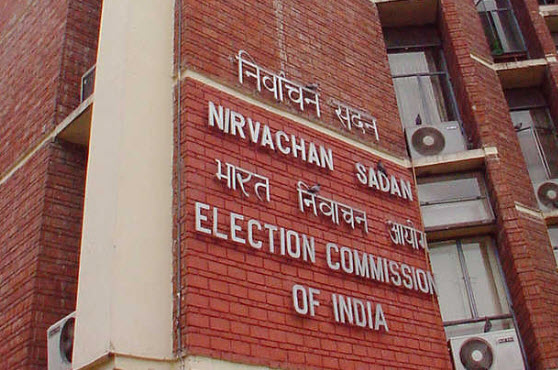
By Arun Srivastava It would be politically naive to look at the decision of Trinamool Congress chief Mamata Banerjee to stay out of the Nandigram by-poll purely as a calculated move to avoid a trap set by her opponents. Yet another significant move Mamata has made is of a tactical outreach by offering the Nandigram […]

The article Nandigram by-poll, Mamata Banerjee and West Bengal politics appeared first on Latest India news, analysis and reports on Newspack by India Press Agency).

OpenAI chief Sam Altman, Anthropic chief Dario Amodei and xAI owner Elon Musk have publicly backed a slower pace for frontier artificial intelligence development, an unusual alignment among fierce rivals as safety concerns intensify and Altman says OpenAI will not pursue a stock-market listing in 2026. The convergence followed an essay by Amodei calling for the industry to “pace the frontier” rather than continue scaling advanced models […]

Blockstream has refused to pay a ransom for nearly 600 bitcoin still controlled by the actors behind the $320 million exploit of its Liquid Network, saying it will pursue recovery through law enforcement, exchanges and forensic specialists if the funds are not returned. The Bitcoin infrastructure company said on September 11 that it had engaged with those responsible in an effort to recover user assets but would […]

Arabian Post Staff -Dubai Yemen’s Houthis claimed on Wednesday that they had shot down a Saudi F-15 fighter jet over Marib governorate, an assertion that would mark a significant escalation in the renewed fighting between the group and Saudi Arabia if independently confirmed. Houthi military spokesman Yahya Saree said the aircraft was hit while conducting operations over Marib and was brought down by what he described as […]

Payward, the parent company of cryptocurrency exchange Kraken, is pursuing a route to offer US traders perpetual futures linked to Hyperliquid’s HYPE token, but publicly available regulatory and Kraken product information indicates the proposed expansion has not yet been confirmed as a live US offering. The move would broaden Payward’s regulated derivatives business and give eligible American customers exposure to one of the crypto market’s most actively […]

Middle East supply disruptions are accelerating Africa’s drive to expand domestic refining and production as governments and companies seek to reduce exposure to volatile fuel costs and vulnerable shipping routes. Disruption around the Strait of Hormuz and Red Sea has pushed energy markets higher, raising import bills across a continent where most countries remain net buyers of crude or refined petroleum products. The African Development Bank says […]

China has pushed back against calls from leading US technology figures to slow frontier artificial intelligence development, sharpening differences over safety, access to advanced chips and technological competition before President Donald Trump and President Xi Jinping meet in Washington next week.

Foreign Ministry spokesman Guo Jiakun said on Monday that artificial intelligence was a consequential technology for humanity and should be developed openly and inclusively. Asked about calls from Dario Amodei, Sam Altman and Elon Musk for companies to slow frontier development, Guo warned that “fear-mongering, confrontation and vicious competition” would hinder sound global AI governance.

The response came as Washington’s debate over AI safety widened into a strategic argument about China. Anthropic chief executive Amodei has urged tougher safeguards for advanced systems and has argued that a Chinese lead in frontier AI could create national security risks for the United States. OpenAI chief executive Altman and Musk have also called for stronger precautions as systems become more capable.

Trump, however, has resisted proposals that could materially slow US development. He said this week that America already had tools to police the industry and stressed the importance of maintaining leadership over China. House Speaker Mike Johnson similarly rejected a moratorium, saying any pause could hand Beijing a competitive advantage and create national security risks.

The dispute places AI governance among the issues likely to shadow the Trump-Xi meeting scheduled for September 24 in Washington. The leaders are also expected to confront trade disputes, semiconductor restrictions and China’s controls on rare-earth exports, all of which affect the broader contest over computing capacity and advanced manufacturing.

Treasury Secretary Scott Bessent is due to meet Vice-Premier He Lifeng before the summit.

China has presented a different framework for AI governance, emphasising access, development and multilateral rules while opposing measures it regards as technological containment. At the BRICS summit this month, Xi proposed an open-source and inclusive AI initiative and said China would help establish a BRICS AI open-source community and digital ecosystem platform.

Beijing has nevertheless acknowledged the risks posed by increasingly powerful systems. Chinese officials have called for stronger global governance and risk awareness, while arguing that safety should not become a justification for blocking technological diffusion. The government has also supported the establishment of the World Artificial Intelligence Cooperation Organization, whose founding agreement was signed in Shanghai in July by 29 countries.

The argument over safety is closely linked to semiconductor controls. Washington has maintained restrictions on the export of advanced computing technology to China, although the Commerce Department in January shifted applications for Nvidia H200, AMD MI325X and comparable chips to case-by-case review under specified security conditions. Beijing has repeatedly criticised US technology restrictions as discriminatory and has threatened countermeasures when Chinese companies are targeted.

China’s Commerce Ministry last week also challenged a US cybersecurity advisory accusing China-based AI companies of using distillation campaigns against American models. The ministry said China was prepared for an intergovernmental AI dialogue with the United States but would respond if Washington used such allegations to suppress Chinese firms.

That exchange underscored the difficulty of separating AI safety from the strategic rivalry. US officials and technology executives increasingly frame advanced models as both commercial assets and national security capabilities, while China portrays broad restrictions as attempts to preserve US dominance.

There are areas of overlap. Both governments have said advanced AI presents risks requiring governance, and the two sides have agreed to launch an intergovernmental dialogue on the technology. Informal discussions among researchers and policy specialists have also continued, though official positions remain far apart on access to chips, model controls and the balance between safety and development.

The September 24 summit follows Trump’s May visit to China, when the two leaders agreed to pursue what the White House described as strategic stability and set up new bilateral trade and investment mechanisms. Artificial intelligence was not the centrepiece of those agreements, but it has since moved higher on the bilateral agenda as concerns over model capabilities, export controls and industrial competition have intensified.

Djibouti has joined the Artemis Accords, becoming the 72nd country and eighth African nation to endorse the US-led principles for peaceful, transparent and coordinated civil space exploration. Djibouti’s ambassador to the United States, Mohamed Siad Douale, signed the accords on behalf of his government at NASA Headquarters in Washington on Monday, September 14. NASA Deputy Administrator Matt Anderson hosted the ceremony, which was also attended by US […]

BRICS leaders have placed development priorities of emerging economies at the centre of their New Delhi agenda, endorsing stronger representation for the Global South while advancing cooperation on trade, technology, finance and sustainable growth.

Chinese President Xi Jinping used the 18th BRICS Summit to argue that countries should pursue development paths suited to their own national conditions, a message that overlapped with the summit’s broader emphasis on policy autonomy, inclusive growth and reform of global institutions.

Addressing the first leaders’ session on September 12, Xi marked 20 years of BRICS cooperation and said members had strengthened themselves through unity while preserving independence in choosing their economic and social models. He described BRICS as an increasingly important platform for emerging markets and developing countries.

The summit’s New Delhi Declaration gave that theme wider institutional form. Leaders called for a more representative international order, greater participation by developing countries in global decision-making and reforms to institutions including the United Nations, World Trade Organization and international financial architecture.

The declaration also reflected the diversity within the expanded grouping. Rather than prescribing a single model of development, BRICS leaders stressed national circumstances, differing capacities and the need for policy space, particularly in areas such as energy transition, industrialisation and climate action. That approach broadly matched Xi’s argument that development strategies should reflect domestic conditions rather than external templates.

Xi sought to extend the idea into technology policy. He proposed an initiative on artificial intelligence-enabled industrialisation, deeper cooperation in research and applications, and stronger industrial and supply-chain links. China also promoted open-source AI collaboration and international platforms intended to improve access to emerging technologies for developing economies.

Other leaders framed similar priorities through their own national perspectives. Prime Minister Narendra Modi emphasised resilience, innovation, cooperation and sustainability, the four themes of India’s 2026 BRICS chairship, and called for solutions developed within the grouping to serve a wider range of developing countries. He also urged members to translate summit commitments into practical programmes.

BRICS members agreed on measures spanning digital cooperation, food and energy security, health, trade facilitation and the use of local currencies in cross-border transactions. The declaration supported stronger payment connectivity while stopping short of endorsing a common BRICS currency.

The economic agenda also underlined the practical test facing the grouping. Members backed use of national currencies in trade and investment, stronger cooperation through the New Development Bank and efforts to improve financial resilience. Such measures are intended to widen financing options for developing economies without committing members to a single monetary framework or common currency.

The expanded bloc now brings together countries with sharply different political systems, strategic alignments and economic structures. That breadth gives BRICS a larger claim to represent developing-country concerns, but it also limits how far members can converge on detailed policy prescriptions. Analysts have noted differences over whether the group should remain primarily an economic and development forum or assume a stronger geopolitical role.

Those tensions were visible alongside the development agenda. Leaders opposed protectionism and unilateral economic measures, supported a stronger multilateral trading system and called for reforms that would increase the voice of developing countries. At the same time, members avoided turning the summit into a unified ideological platform, relying instead on consensus language broad enough to accommodate competing interests.

Xi’s second summit intervention on September 13 placed a “people-centred” development philosophy within a wider call for Global South cooperation. He urged progress on the UN Sustainable Development Goals, improvements to global climate governance and a consensus-based framework for governing artificial intelligence.

China’s approach also carries strategic implications. Beijing has increasingly used BRICS and other multilateral forums to promote its views on development, sovereignty and global governance. Some members share its criticism of unequal representation in international institutions, while others remain cautious about allowing BRICS to become identified with any single country’s geopolitical agenda.

US Senator Bernie Sanders and former Trump adviser Steve Bannon will appear at a Washington gathering on Tuesday, joining labour, religious and political figures calling for controls over advanced artificial intelligence. The Pro-Human Assembly, organised by the Future of Life Institute, is expected to bring together participants who rarely share a political platform but have converged around concerns that advancing AI could threaten jobs, autonomy, democratic institutions […]

Egypt and India have agreed to pursue concrete steps towards lifting bilateral trade to $12 billion, with President Abdel Fattah El-Sisi and Prime Minister Narendra Modi also discussing ways to expand investment ties during talks on the sidelines of the 18th BRICS Summit in New Delhi.

The leaders met on Sunday as Egypt pressed for faster progress on a trade goal first set during El-Sisi’s state visit to New Delhi in January 2023. Egypt’s presidency said the discussions covered measures to strengthen the strategic partnership, increase commerce and encourage more investment from India in sectors including manufacturing, technology, clean energy and the automotive industry.

El-Sisi stressed the importance of translating the economic relationship into projects and commercial flows capable of taking trade to the $12 billion target. The two sides also reviewed opportunities for companies from India to expand their presence in Egypt, which Cairo has promoted as a production and export base serving markets in Africa, the Middle East and Europe.

Bilateral merchandise trade stood at about $6.5 billion in the 2025-26 financial year, according to figures cited by India’s embassy in Cairo. That leaves the two countries seeking almost to double the current level if they are to reach the objective discussed by their leaders.

Investment formed a central part of the meeting. Egypt highlighted manufacturing, information technology, renewable and clean energy, and vehicle production as areas where it wants to attract additional capital. Cairo has also sought greater participation by overseas companies in the Suez Canal Economic Zone and other industrial centres as it works to raise exports and secure more foreign currency.

Modi and El-Sisi reviewed the broader strategic partnership and discussed cooperation in economic and commercial fields, along with regional and international developments. Their meeting came as New Delhi hosted the September 12-13 BRICS summit under the theme of resilience, innovation, cooperation and sustainability.

Egypt joined BRICS at the start of 2024 and has since used the grouping to widen economic links with major emerging economies. The New Delhi summit brought together an expanded bloc whose agenda included trade, finance, technology, energy, climate issues and greater use of national currencies in cross-border transactions.

The trade push also builds on institutional contacts between Cairo and New Delhi. Egypt’s Foreign Minister Badr Abdelatty said during BRICS ministerial meetings in May that the two countries wanted to raise bilateral trade to $12 billion over five years and strengthen cooperation in investment, technology and other economic sectors.

El-Sisi and Modi upgraded relations to a strategic partnership in 2023, creating a framework for closer coordination across trade, investment, defence, energy and political consultation. The latest talks focused more narrowly on turning the economic component of that partnership into measurable gains, particularly through private-sector investment and expanded market access.

Egypt has been courting manufacturers as it seeks to increase domestic production and exports, while companies from India already operate in industries including chemicals, textiles, food processing and manufacturing. Cairo’s investment campaign has emphasised projects that can supply the domestic market while using Egypt’s trade agreements and transport links to reach neighbouring regions.

The two leaders also discussed international and regional issues, according to Egypt’s presidency, without announcing a separate bilateral agreement during the meeting. Their talks were among a series of leader-level engagements held around the BRICS gathering as member states sought to advance economic cooperation alongside the summit’s wider diplomatic agenda.

For Egypt, the $12 billion goal provides a benchmark for a relationship that has expanded beyond traditional merchandise trade into investment-led cooperation. For India, stronger commercial ties with Egypt offer access to a major Arab and African market and to production locations close to the Suez Canal, one of the world’s principal shipping routes.

VISHNU RAJA
RYO YAMADA
HITORI GOTOH
IKUYO KITA