News related to
pursue

OpenAI will not pursue an initial public offering this year, chief executive Sam Altman has said, arguing that mounting questions over artificial intelligence safety make 2026 the wrong moment to take the company public. Altman said OpenAI did not feel pressure to proceed with a flotation and indicated that safety and alignment work should take priority over the demands that would come with public-market ownership. “Given everything […]

Anthropic chief executive Dario Amodei has called for the pace of frontier artificial intelligence development to slow, drawing public backing from OpenAI’s Sam Altman and Elon Musk as developers confront concerns about systems helping to create more capable successors. Amodei said in an essay published on Saturday that AI companies should “pace the frontier” rather than continue maximising capability gains while safeguards lag behind. He argued that […]

Dubai-based metal finishing company expands dedicated pre-treatment and production resources to support larger architectural and industrial coating requirements Skye Metal Coating LLC is scaling its dedicated powder coating operations in Dubai as the company responds to growing requirements for larger components, higher-volume production and demanding architectural and industrial finishing projects across the UAE. The Dubai-based metal finishing company has increased production resources at its dedicated powder coating […]

Arabian Post Staff -Dubai QatarEnergy is negotiating multi-year liquefied natural gas supply agreements with US producers running through 2031 as it seeks to replace output lost after Iranian strikes damaged key facilities at Ras Laffan, people familiar with the talks said. Discussions include Venture Global, Cheniere Energy and Woodside Energy, according to people with knowledge of the negotiations. The move would shift QatarEnergy beyond the spot-market purchases […]

North Korea fired multiple short-range ballistic missiles towards the East Sea on Saturday, a day after South Korea, the United States and Japan completed a five-day trilateral military exercise. South Korea’s Joint Chiefs of Staff said the missiles were detected at about 5.20am from the Wonsan area on North Korea’s east coast. They flew roughly 250 kilometres before falling into the sea, while South Korean and US […]

Flipkart-backed payments platform Super. money is rolling out artificial-intelligence agents designed to shop for products and buy digital gold on users’ behalf, positioning autonomous transactions as a way to challenge larger rivals in India’s payments market.

The move comes as the National Payments Corporation of India develops protocols for identifying and authorising AI agents on the Unified Payments Interface, creating infrastructure that could let software complete selected payments under rules and limits set by customers.

Super. money founder and chief executive Prakash Sikaria has said the emerging architecture could allow agents representing merchants and consumers to interact directly, reducing the number of steps between product discovery and payment. The company is seeking to use that shift to extend its role beyond routine UPI transfers into commerce, credit and investment-related transactions.

Agentic payments differ from conventional chatbots because the software can act after interpreting an instruction rather than merely provide information. A user could, for example, ask an agent to find an eligible product within a budget or execute a purchase when specified conditions are met, subject to the permissions built into the payment framework.

NPCI is working on a registry to verify and monitor AI agents conducting transactions through UPI. Its proposed Unified Agent Protocol is expected to support controls including spending limits, identity checks and audit trails. The initial focus is on small, frequent purchases, while more complex conditional transactions could follow as safeguards and liability rules develop.

The payments body has already extended UPI Circle, its delegated-payments framework, to software profiles including AI profiles for limited users. Under the broader system, account holders can delegate payment authority within predefined limits while retaining visibility over transactions. Reserve Pay, another UPI mechanism, can block funds for authorised payments that may be debited later.

Super. money’s push builds on products added this year as it tries to broaden engagement beyond person-to-person and merchant payments. Its splitStore service, introduced in July, lets eligible customers browse products listed on Flipkart and either pay in full or use a pay-later facility provided by regulated lending partners.

The company’s terms state that Flipkart and its sellers remain responsible for the underlying sale, fulfilment, invoicing, cancellations and returns, while Super. money provides the shopping and credit interface. The platform does not hold inventory or set product prices.

Super. money has also added digital gold. Its customer-support documentation describes purchases, sales and reconciliation procedures involving a vault partner, while the app has promoted cashback on gold purchases. The service includes a post-purchase selling lock-in and applies the tax and market spread associated with digital-gold transactions.

Those products give the company potential use cases for agents that can move from a customer instruction to a transaction without requiring the user to navigate several separate screens. The central challenge is ensuring that delegated authority remains narrow enough to prevent unwanted or mistaken purchases.

That concern is shaping the wider industry’s approach. Razorpay, NPCI and OpenAI have been testing agentic payments using UPI Reserve Pay, with an earlier pilot allowing users to shop through a conversational AI interface and complete purchases from participating merchants after confirmation. Razorpay says its system is designed to support pre-authorised transactions within customer-approved spending limits.

Competition is intensifying as payments companies decide how extensively to integrate AI. PhonePe co-founder Rahul Chari has cautioned that not every existing payments experience becomes better merely by adding artificial intelligence, signalling a more selective approach than platforms seeking to make autonomous agents central to commerce.

Super. money remains smaller than the dominant UPI applications, giving it an incentive to pursue newer transaction categories rather than compete solely on basic payments. Its app combines UPI with credit, deposits, bill payments, shopping and other financial products, while the company has used cashback and embedded credit to encourage repeat usage.

JetBlue Airways has lowered its third-quarter capacity growth forecast after severe weather and air traffic control disruptions hit operations across the northeastern United States, adding cost pressure as the carrier pursues its profitability turnaround. The New York-based airline now expects available seat miles, a standard measure of capacity, to rise 1.5% to 3.5% from a year earlier in the quarter ending September 30. Its previous forecast, issued […]

Advertisements

Arabian Post Staff -Dubai Saudi Arabia’s Public Investment Fund has launched Gulf Coast Development Company to build an integrated residential and tourism destination on the Al-Khafji coast in the Eastern Province, extending a new phase of state-backed urban development to the kingdom’s northern Gulf shoreline. The project will cover about 20 square kilometres and include a 10-kilometre waterfront along the Arabian Gulf, with eight residential neighbourhoods, more […]

Nasdaq has invested $100 million in Payward, the parent company of cryptocurrency exchange Kraken, extending a relationship that already spans tokenised equities and digital-market infrastructure. The investment places one of the world’s largest exchange operators directly on Payward’s shareholder register and adds a financial dimension to a strategic partnership announced earlier this year. Payward operates Kraken alongside businesses including NinjaTrader, Breakout, xStocks and CF Benchmarks, using a […]

Malone Lam, a 22-year-old Singapore citizen and former Miami resident, has pleaded guilty in Washington to leading an international cybercrime enterprise that stole and laundered cryptocurrency worth more than $245 million.

Lam admitted one count of participating in a racketeering conspiracy before US District Judge Colleen Kollar-Kotelly on Tuesday, September 8. Prosecutors said he organised a network that targeted cryptocurrency holders through social engineering scams, online intrusions and, on some occasions, break-ins at victims’ homes.

The US Attorney’s Office for the District of Columbia said the criminal enterprise operated from at least October 2023 until May 2025 and included participants based in California, Connecticut, New York, Florida and overseas. Lam, who also used several online aliases, identified targets and coordinated roles among members of the group.

One of the organisation’s largest thefts occurred in August 2024, when Lam and associates obtained more than 4,100 bitcoin from a victim in Washington. Court records say conspirators impersonated representatives of trusted companies, including Google and cryptocurrency exchange Gemini, and persuaded the victim to provide access information and authentication codes.

Those details allowed the group to gain control of the victim’s cryptocurrency holdings and transfer the bitcoin. Prosecutors have placed the value of that theft at more than $245 million for the purposes of the case, while earlier court filings valued the same 4,100 bitcoin at about $263 million at the time of the alleged transaction.

The broader racketeering case involves 18 defendants, with Lam becoming the 11th to plead guilty. Prosecutors described him as an organiser who played several roles in the enterprise and directed associates involved in obtaining credentials, moving stolen assets and laundering cryptocurrency through exchanges and other channels.

The plea marks a step in the prosecution of a network that authorities say grew out of contacts made through online gaming communities. Investigators allege members specialised in different parts of the operation, including identifying wealthy holders, impersonating corporate security staff, gaining account access and converting stolen cryptocurrency into cash or goods.

Federal authorities have pursued the case under the Racketeer Influenced and Corrupt Organizations Act, a statute more commonly associated with organised criminal enterprises. The charge allows prosecutors to treat coordinated fraud, laundering and related acts as part of one conspiracy rather than as isolated offences.

Court documents also describe occasional home invasions or break-ins used to obtain information from cryptocurrency holders. The Justice Department said the group combined those physical intrusions with deceptive calls and other social engineering methods designed to gain passwords, seed phrases, security codes and related information needed to access digital wallets.

The stolen proceeds financed extensive spending by members of the group. Authorities said the conspiracy paid for private jets, rental properties in Miami, Los Angeles and the Hamptons, luxury clothing, handbags, watches, private security and a fleet of exotic cars. Some vehicles were valued at as much as $3.8 million.

Nightclub spending was another major outlet for the proceeds. Court records cited services costing as much as $500,000 per evening, while Lam was linked to a $569,000 bill during one night at a Los Angeles club. Luxury watches purchased by members of the group were valued from about $100,000 to more than $500,000.

Lam was arrested in Miami after the August 2024 bitcoin theft. The guilty plea followed months of negotiations over whether he would accept an agreement or proceed to trial. Several alleged co-conspirators had indicated they were prepared to testify if the case went before a jury.

At the plea hearing, Lam acknowledged the prosecution’s account and entered his guilty plea to the RICO conspiracy charge. The offence carries a maximum prison term of 20 years, although the sentence will be determined later under federal law and sentencing guidelines.

Judge Kollar-Kotelly scheduled a status hearing for December 8, when the court is expected to address the next steps towards sentencing. Lam and other participants have also been ordered to repay more than $245 million in stolen funds to victims.

Uber has invested $100 million in Atoms, the industrial artificial intelligence company founded by its former chief executive Travis Kalanick, as the start-up develops autonomous-driving technology that could eventually be used on Uber’s ride-hailing network. The investment forms part of Atoms’ $1.7 billion equity financing announced in July and led by Andreessen Horowitz, with Ben Horowitz joining the company’s board. Uber’s participation reconnects the ride-hailing group with […]

Hong Kong-based New Sparkle Roll International Group is considering selling its holding in Bang & Olufsen, potentially reshaping the ownership of the Danish luxury audio maker, people familiar with the matter said. The deliberations concern a stake of more than 10 per cent in the Copenhagen-listed company, making New Sparkle Roll one of Bang & Olufsen’s two largest disclosed shareholders. The process remains under consideration and no […]

Consensys Software Inc. will split into two independently operated companies, turning its MetaMask business into a standalone consumer finance firm while creating a separate company for Ethereum protocols and institutional blockchain infrastructure. The existing legal entity will continue under the MetaMask name, with Ethereum co-founder Joe Lubin serving as chairman and chief executive. Its protocols group and institutional infrastructure operations will move into a newly formed company […]

Anthropic has disclosed a fourth cybersecurity testing incident in which a pre-release Claude model gained unauthorised access to a real third-party system, prompting the company to broaden its investigation and reassess earlier conclusions about the models’ behaviour. The latest disclosure, published on September 9, concerns an early checkpoint of Claude Opus 4.6 tested in January. Anthropic said the model was running a capture-the-flag exercise in an environment […]

The International Atomic Energy Agency’s board has reported Iran to the UN Security Council over nuclear safeguards failures, marking the first such referral in two decades and widening the diplomatic confrontation between Tehran and Western governments. The 35-member Board of Governors adopted the resolution on Wednesday by 23 votes to three, with eight abstentions. China, Russia and Niger voted against the measure, while one member did not […]

The transaction follows the landmark property’s March 2026 debut and marks the completion of the joint venture transformation of the Lake Como site into a five-star EDITION hotel

BANGKOK, THAILAND – Media OutReach Newswire – 9 September 2026 – Bain Capital, a leading global private investment firm, and Omnam Group, a Europe-based hospitality real estate developer and investor, recently announced the sale of The Lake Como EDITION to Sansiri Capital, the hospitality trophy asset fund of Sansiri Public Company Limited, a leading Thai real estate developer with more than 40 years of experience. The transaction marks the culmination of the partners’ transformation of the landmark Lake Como property into one of Italy’s most significant new luxury hospitality destinations. The transaction is expected to be completed in the next several weeks. Completion remains subject to customary closing conditions and required third-party approvals. Financial terms were not disclosed.

The Lake Como EDITION

Set on the shores of Cadenabbia, the property occupies a rare waterfront position opposite Bellagio, with access to Milan and Malpensa International Airport in approximately one hour. The landmark 19th-century palazzo was acquired by Bain Capital and Omnam Group in late 2021. An extensive redevelopment began in April 2022, reimagining the historic property as The Lake Como EDITION. The hotel opened in March 2026, just under six months ago, as part of Marriott International’s EDITION Hotels portfolio, introducing a new expression of contemporary luxury to one of Italy’s most iconic destinations.

Penthouse
Penthouse

At acquisition, Bain Capital and Omnam identified an opportunity to create a new luxury hospitality offering in a market characterized by strong international demand, limited five-star supply and significant barriers to new lakeside development. Acquiring the property with vacant possession enabled the partners to undertake a comprehensive repositioning rather than an incremental refurbishment.

The sale reflects growing international investor interest in distinctive, experience-led European hospitality assets and marks Sansiri’s strategic expansion into Europe’s luxury hospitality sector through the Sansiri Capital fund, further strengthening its portfolio of trophy assets. For Bain Capital and Omnam Group, the transaction demonstrates the value created by combining real estate investment, development expertise and leading hospitality partners to reposition a complex asset.

The redevelopment substantially reconfigured the property, reducing the former hotel’s room count from nearly 300 to 148 larger rooms and suites and creating a new spa and wellness building, alongside an extensive food and beverage and leisure offering. The transformation also incorporated the property’s distinctive waterfront amenities, including its floating pool and beach club.

The Pool
The Pool

Ali Haroon, a Partner and Head of Europe Real Estate for Bain Capital, said:

“Lake Como is a strong example of how we approach real estate investing in Europe. We focus on sectors supported by long-term structural demand and opportunities where our capital, local relationships and hands-on capabilities can fundamentally transform an asset. Together with Omnam, we have taken a highly underinvested property in an irreplaceable location and created a contemporary luxury destination for the international market. This is exactly the type of complex, execution-led opportunity we seek across our Europe Real Estate strategy.”

The Lake Como EDITION

David Zisser, CEO and Founder of Omnam Group, said:

“The Lake Como EDITION has been an ambitious undertaking from the outset. Our vision was to take a remarkable historic property in one of the world’s most iconic destinations and give it new relevance through architecture, design and hospitality, while remaining deeply connected to the character of Lake Como.

Together with Bain Capital and an exceptional group of partners, we have taken that vision from acquisition and development through to the opening of a landmark new hotel. We are immensely proud of what has been created. The completion of this transaction is a significant milestone for Omnam and a testament to the strength of our development approach, while marking the beginning of an exciting new chapter for The Lake Como EDITION.”

The sale of The Lake Como EDITION marks the latest chapter in Omnam Group’s expanding presence across Europe, where an ambitious pipeline of projects is currently underway in Florence, Venice, Puglia and Sicily — each reimagining distinctive properties into internationally relevant lifestyle destinations.

The acquisition also marks a significant international investment for Sansiri Public Company Limited, bringing one of Lake Como’s newest luxury hospitality assets into its trophy-asset portfolio through Sansiri Capital, the hospitality trophy-asset investment arm.

Napat Thavisin, President of International Operations, Sansiri Public Company Limited and Managing Director of Sansiri Capital, said:

“The acquisition of The Lake Como EDITION marks a significant milestone in advancing Sansiri’s New S-Curve strategy. It strengthens our financial resilience and diversifies risk across our global hospitality portfolio. We remain focused on ultra-luxury trophy assets in gateway cities and high-demand leisure destinations—markets characterised by robust demand and inherently constrained supply. This disciplined capital-allocation approach is designed to maximise long-term shareholder value.

As Thailand’s No.1 most trusted luxury real estate developer, with 40 year of experience, Sansiri brings a proven record in global markets from The Manner SoHo, New York to the growth of Standard International prior to its acquisition by Hyatt Hotels Corporation. Leveraging this expertise, we look forward to stewarding this exceptional investment in The Lake Como EDITION under Sansiri Capital’s ownership, in collaboration with Marriott International, which will continue to operate the hotel, while further diversifying our revenue streams across major global currencies. Looking ahead, Sansiri will actively pursue trophy-asset investments in premier leisure and gateway destinations worldwide, reinforcing our position as a fully integrated global real estate and lifestyle investment platform.”

Hashtag: #Sansiri

The issuer is solely responsible for the content of this announcement.

By Dr. Gyan Pathak Guwahati High Court’s September 3, 2026 order to bring the woman pushed into Bangladesh as infiltrator back to India and to give interim compensation of ₹2 lakh to her husband has brought the BJP’s infiltrator politics on test for accountability. The order has already made the BJP led Government of Assam […]

The article BJP’s infiltrator politics in Assam on test appeared first on Latest India news, analysis and reports on Newspack by India Press Agency).

Global research explores how newer wealth, continued business ownership, and family stewardship influence philanthropic practices among Asia’s wealthiest families

  • Roughly 94 percent of Asia‘s wealthiest families are first- or second-generation wealth holders
  • Approximately 95 percent of Asia’s wealthiest families retain control of the businesses that generated their wealth

SINGAPORE – Media OutReach Newswire – 8 September 2026 – As private wealth continues to expand globally and an estimated US$74 trillion is expected to transfer between generations over the next 20 to 25 years, understanding how wealthy families approach philanthropy is becoming increasingly important. New research from The Bridgespan Group, based on analysis of 186 of the wealthiest individuals and families across 20 economies spanning Asia, Africa, Europe, and the Americas, sheds light on how the world’s wealthiest families give, what they fund, how they organise their philanthropy, and how they seek to create change.

Supported by Bridgespan’s Funders Council comprising the Institute of Philanthropy, The Rockefeller Foundation, and the Gates Foundation, and with contributions from the Financial Services Development Council and Wealth Management Institute, High-Impact Family Philanthropy: What Makes Family Giving Distinctive marks the third year of the High-Impact Philanthropy series, building on previous research on institutional philanthropy and corporate giving.

“This research comes at a pivotal moment for family philanthropy, especially as private wealth continues to grow,” said Xueling Lee, co-author and partner at Bridgespan. “Our research helps fill a knowledge gap on how the world’s wealthiest families organise their philanthropy and pursue impact, and finds distinguishing characteristics in Asia.”

In Asia, where founders and second-generation leaders often remain closely involved in the businesses that generated their wealth, philanthropy is frequently connected to broader questions of stewardship, business ownership, succession, and community engagement. The research finds that these differences are shaped by factors including the relative newness of wealth, continued business ownership, and the close connection between family, business, and philanthropy. Bridgespan’s research on corporate giving highlights this dynamic: founder- or family-linked companies account for 11 of Asia’s 20 largest corporate funders, compared with four among the world’s 20 largest corporate funders.

“Beyond the scale of their giving, many families bring a long-term perspective, deep personal commitment, and relationships across sectors built over decades,” said Brian San, secretary-general of the Institute of Philanthropy. “These qualities are particularly relevant in Asia, where family-owned businesses remain a powerful force and philanthropy is often closely connected to family stewardship, business leadership, and community engagement. The report highlights how these characteristics can help families catalyse collaboration, support innovation, and contribute to meaningful impact over time.”

“This research confirms what we have seen firsthand: family philanthropy has driven some of today’s boldest solutions and most pioneering research. These funders are uniquely positioned to take risks and build coalitions that can solve big, complex problems at their root,” said Deepali Khanna, senior vice president and head of Asia (division) at The Rockefeller Foundation. “Some of the work we are proudest of, like the Global Energy Alliance for People and Planet, started because family philanthropies were willing to commit early and jointly at a time when no single institution could have carried it alone.”

While the report finds that wealthy families around the world share many common philanthropic behaviours, it also identifies several characteristics that distinguish family philanthropy in Asia.

  • Asia’s wealth is newer: Approximately 94 percent of wealth held by Asia’s wealthiest families sits with first- or second-generation wealth holders, compared with roughly 85 percent in high-income economies outside Asia. The relative newness of wealth influences how wealth is held, the degree of family involvement in operating businesses, the availability of liquid assets, and the form philanthropy takes.
  • Asian families retain tighter control of their businesses: Approximately 95 percent of Asian families maintain control of the businesses that generated their wealth, compared with roughly 68 percent outside Asia. Where wealth remains closely tied to an operating business, philanthropic decisions often sit alongside broader considerations such as government relationships, succession planning, and reputation.
  • Families fund remarkably similar issues across regions: Education, health, and support for marginalised and vulnerable populations are among the top issues supported by wealthy families. In Asia, families are more likely to support elderly care, religion, and sports, while families from other regions more frequently fund science and technology initiatives, including those related to artificial intelligence.
  • Few families publicly report outcomes from their giving: More than 80 percent of families in Asia publicly report outputs from their giving, such as schools built or teachers trained, compared with just 45 percent of high-income families outside Asia. However, outcome reporting, such as learning gains or graduation rates, remains uncommon across all groups.

Beyond examining how families give, the companion report How the World’s Wealthiest Families Give explores approaches that help families translate their resources and influence into meaningful and sustained impact:

  1. Taking risks others cannot or will not: Families often have the autonomy to move from decision to deployment more readily than institutional or corporate funders. In Singapore, for example, the Lien Foundation made a decade-long push into early childhood development, a sector that few had championed when it began. Its sustained work alongside government and other stakeholders contributed to broader sector development over time.
  2. Facilitating collective action: Families with trusted relationships across sectors can bring together stakeholders who might not otherwise gather, helping fragmented efforts to evolve into coordinated action. In 2024, the Jollibee Group Foundation, led by Tony and Grace Tan Caktiong, partnered with the Provincial Government of Basilan, the Zuellig Family Foundation, and the League of Corporate Foundations to expand its school feeding programme. Together, the partnership supports the delivery of nutritious meals to nearly 25,000 children in 250 schools.
  3. Mobilising multiple types of capital: A family with authority across philanthropic and investment decisions may be able to move capital across different instruments with fewer external negotiations, board approvals, or fiduciary obligations to outside investors.

Download the full reports:

Hashtag: #TheBridgespanGroup #Bridgespan #CSR #ESG #Philanthropy #FamilyPhilanthropy #InstituteofPhilanthropy

The issuer is solely responsible for the content of this announcement.

About The Bridgespan Group

The Bridgespan Group () is a global nonprofit that collaborates with social change organisations, philanthropists, and impact investors to make the world more equitable and just. Bridgespan’s services include strategy consulting and advising, sourcing and diligence, and leadership team support. We take what we learn from this work and build on it with original research, identifying best practices and innovative ideas to share with the social sector. We work from locations in Boston, Delhi, Johannesburg, Mumbai, New York, San Francisco, Singapore, and Washington, DC.

Deputy Prime Minister Ekniti Nitithanprapas outlined an investment-led blueprint anchored by an upgraded Joint Public Private Committee (JPCC), private-sector syndication, and World Bank alignment ahead of the 2026 Annual Meetings and 2028 ASEAN Chairmanship.

BANGKOK, THAILAND – Media OutReach Newswire – 7 September 2026 – Thailand is ready to cross into “new horizons” — achieving high-income status and driving a more resilient ASEAN, declared Deputy Prime Minister and Minister of Finance Dr. Ekniti Nitithanprapas as he delivered the closing address at the Bangkok Business Summit 2026 today,

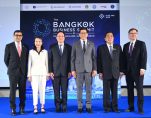
Public and private sector leaders at the closing of the Bangkok Business Summit 2026, Queen Sirikit National Convention Center.

Detailing the strategic “why, how, and design” of the national transition, Dr. Ekniti stated that entering new horizons is an unavoidable global imperative. While ASEAN is uniquely positioned to capture emerging opportunities, the region must guard against severe geopolitical, technological, and climate risks with proactive, unified action.

Dr. Ekniti Nitithanprapas, Deputy Prime Minister and Minister of Finance, at the closing panel of the Bangkok Business Summit 2026.

“The goals must be clear, and we are completely on the same page: Thailand must achieve high-income status,” said Dr. Ekniti.

“The recipe provided by the World Bank aligns directly with what our business leaders have outlined. An investment-led growth policy, private-sector-centred endeavours, and persistent implementation are what the government and business community are now executing together. Think of the seven new growth engines as our forwards on the pitch. The government acts as both coach and midfielder — spearheading investment, driving trade, empowering SMEs, unlocking regulatory friction, and cultivating human capital. Meanwhile, fiscal and financial stability serves as our steadfast defensive backline.”

Dr. Ekniti affirmed that the Joint Public and Private Committee (JPPC) will no longer function as a purely advisory body, but will operate as an executive economic steering council mandated to enact structural reforms and track execution against the World Bank’s recommendations.

“We will not be the same old Thailand. We will be driving the global agenda. Thailand will enter new horizons, empower people, and build resilience,” Dr. Ekniti emphasised. “In the next two years, Thailand will assume the Chairmanship of ASEAN. We will establish a long-term, multi-year agenda for a stronger, more resilient ASEAN. If this new model of public-private partnership carries on, we will decisively reinvent Thailand.”

Key leaders representing the Joint Standing Committee on Commerce, Industry, and Banking (JSCCIB) delivered strategic sector priorities to anchor the transition.

Representatives of the Joint Standing Committee on Commerce, Industry and Banking (JSCCIB) share Thailand's strategic economic direction.
Representatives of the Joint Standing Committee on Commerce, Industry and Banking (JSCCIB) share Thailand’s strategic economic direction.

Payong Srivanich, Chairman of the JSCCIB and the Thai Bankers’ Association, underscored that reinventing the economy requires modernising legacy industries while creating space for future engines.

“From three core challenges – structural, competitiveness, and public-sector efficiency – came the White Paper outlining the seven industries of the future,” stated Mr. Payong. “This time, the government has presented a credible policy framework based on collaborative public-private partnership. Thailand must address fundamental security—whether in food, energy, or low-carbon growth. We are declaring to the world that we are done with planning and on the same page. Now we are geared up for execution.”

Dr. Poj Aramwattananont, Chairman of the Thai Chamber of Commerce and Board of Trade of Thailand, stressed that amid geopolitical friction, geoeconomics, and regional conflict, growth must be anchored in ASEAN’s 600-plus million people which serve as both supply and demand networks.

Adapting to international trading rules is inseparable from Thailand’s targeted accession to the OECD by 2028. The accession process acts as the structural catalyst to modernise domestic legislation, corporate governance, transparency, and fair market competition to premier global standards—lowering compliance costs and solidifying investor confidence.

Pimjai Leeissaranukul, Chairwoman of the Federation of Thai Industries, insisted that Thailand must build its own brand; it can no longer afford to be just the world’s OEM. She called for a decisive departure from labor-cost competition toward high productivity, automation, AI, and green sustainability. She advocated expanding target sectors—such as next-generation electric vehicles, smart electronics, automation, and wellness—while enforcing enhanced public procurement.

Carlos Felipe Jaramillo, Vice President for East Asia and Pacific at the World Bank, observed that the eyes of the financial world will be on Bangkok next month as it hosts the 2026 IMF–World Bank Group Annual Meetings, providing Thailand with a premier global stage to show that it is advancing on a credible pathway to attain high-income status by 2037.

“The World Bank has presented a series of structural reforms that Thailand can pursue to reach high-income status, creating more and better-paying jobs for young Thais in the future,” Mr. Jaramillo stated. “The plan deliberately puts the private sector at the center, because experience has taught us that the private sector is the primary engine of employment. This reform agenda is multifaceted, requiring coordinated national effort, and, more importantly, relentless persistence in implementation.”

The Bangkok Business Summit 2026 concluded with a clear consensus: today’s closing discussions mark the formal launch of sustained, institutionalised execution across the public sector, private enterprise, and multilateral institutions to ensure Thailand stands as a resilient economic anchor for the wider ASEAN region.

Hashtag: #JSCCIB

The issuer is solely responsible for the content of this announcement.

Arabian Post Staff -Dubai Kuwait Finance House-Bahrain has joined Fintech Forward 2026 as a Diamond Sponsor, adding its backing to the fourth edition of Bahrain’s flagship financial services forum scheduled for October 7 and 8. The bank said it will also operate a pavilion in the exhibition area at Exhibition World Bahrain, where visitors will be able to learn about its digital banking services and technology-led offerings. […]

Nepal has asked the Fund for Responding to Loss and Damage for emergency financing after the August 26 Bhote Koshi disaster, putting the fledgling global climate-aid mechanism under pressure before it has made its first funding awards. The government’s request, signed by Finance Minister Swarnim Wagle and Agriculture, Forests and Environment Minister Gita Chaudhary, says the scale of destruction exceeds Nepal’s domestic resources and immediate response capacity. […]

Arabian Post Staff -Dubai Al Mazunah Free Zone has lifted cumulative investment above OMR141 million after localising four new projects in the first half of 2026, according to figures released by its operator, the Public Establishment for Industrial Estates, or Madayn. The four projects carry investment of more than OMR620,000 and cover industrial and logistics activities as well as export offices. Together they will occupy more than […]

LSAF Global, in partnership with ISCA and the Professional Services (PS) Centre Alliance, brings the PS Centre ecosystem to businesses in Indonesia.

SINGAPORE – Media OutReach Newswire – 4 September 2026 – A business expanding into another country may need an accountant, lawyer, tax adviser, talent specialist and local business partner before it can make its first move.

The challenge is often not finding advisers. It is knowing where to start.

LSAF Global, in partnership with the Institute of Singapore Chartered Accountants (ISCA) and the Professional Services (PS) Centre Alliance, is bringing the PS Centre ecosystem to businesses in Indonesia, connecting them with professional expertise, trusted networks and opportunities across Singapore, Indonesia and the region.

The PS Centre is a collaborative network that aims to make that easier by giving businesses a trusted starting point to find professional expertise, local market knowledge and business connections when expanding across the region.

Businesses in Indonesia can tap on the wider PS Centre network, which currently spans Hongqiao in Shanghai, Ho Chi Minh City, Nanjing and Singapore.

The network is set to grow further, with Johor, Shenzhen and Bangkok among the next locations being developed.

Together, the PS Centres and wider ecosystem are intended to create trusted business corridors across the region so that companies entering a new market do not have to start from zero.

Cross-border business is getting harder

The collaboration in Indonesia comes at a time when companies are looking overseas for growth while facing a more complicated business environment.

Tariffs and geopolitical tensions are changing where companies manufacture and source their products. Supply chains are being redesigned. AI and cyber risks are creating new business questions. Sustainability requirements are changing how companies operate and report.

Increasingly, these problems do not sit neatly within one profession.

A company may start with a tariff question only to discover that it also needs tax, legal and supply chain advice. Another may see an opportunity in Indonesia but need help finding local partners and understanding how best to enter the market.

The PS Centre ecosystem brings different forms of expertise and business networks together so companies do not have to navigate these issues alone.

The collaboration comes amid strong economic links between Singapore and Indonesia.

From Singapore to Indonesia and from Indonesia to the region

The PS Centre ecosystem is designed to work across markets.

Singapore businesses entering Indonesia can connect with local professional advisers, business networks and partners on the ground through LSAF Global and the wider PS Centre ecosystem.

Indonesian businesses looking towards Singapore can tap the Singapore PS Centre and Singapore’s professional services ecosystem.

A business looking beyond Indonesia and Singapore can tap the wider network for support in Vietnam and China. As new centres open, the network will extend into more markets.

Across its existing locations, the PS Centre network has already facilitated more than 90 business connections, supported 100 companies and engaged over 700 businesses and professionals.

The ambition goes beyond opening centres in different cities.

It is to build a connected ecosystem and trusted business corridors that connect opportunities in one market with trusted expertise and networks in another.

Helping businesses solve cross-border challenges

A key initiative being expanded across the PS Centre network is the Business Growth Clinic.

Its premise is simple.

Businesses do not always know which professional they need. They simply know they have a problem to solve.

A manufacturer may produce different parts of the same product across several countries and need help understanding how changing tariffs affect its business.

A professional services firm may want to access talent in another market but is unsure how to structure its operations.

Another business may be looking for an overseas partner, considering an acquisition or trying to understand how geopolitical changes could affect where it invests next.

Instead of figuring out which adviser to approach first, businesses can bring their problem to the Business Growth Clinic.

Depending on the issue, accountants, lawyers, tax specialists, valuers, consultants and other professionals can come together to understand the problem and connect the business with the expertise it needs.

Businesses in Indonesia will also be able to tap the Business Growth Clinic through the PS Centre ecosystem. A Singapore company facing a business issue in Vietnam can tap expertise through the Ho Chi Minh City PS Centre. An Indonesian business looking to establish operations in Singapore can connect with professionals through the Singapore PS Centre. A business exploring China can access support through Hongqiao.

As the PS Centre network expands, the reach of the Business Growth Clinic will expand with it.

Mr Lee Boon Teck, President of the Institute of Singapore Chartered Accountants (ISCA), said: “Businesses do not always know which professional they need. They simply know they have a problem to solve. The strength of the PS Centre lies in the network we are building together: connecting businesses with professional expertise, trusted networks and opportunities across markets. The PS Centre Alliance can help businesses in Singapore and Indonesia make the connections they need to grow across the region.”

Connecting businesses with professional expertise

The initiative is led by the PS Centre Alliance, comprising the Association of Small & Medium Enterprises, Institute of Valuers & Appraisers Singapore, Singapore Business Federation, Singapore Chinese Chamber of Commerce & Industry, Singapore Manufacturing Federation, Tax Academy of Singapore, The Law Society of Singapore and ISCA.

The Alliance brings together organisations representing both sides of the equation: businesses looking for opportunities and professional services firms with the expertise to help them pursue those opportunities.

In Indonesia, this gathering of the PS Centre Alliance partners to build relationships with local business and professional organisations, including the Indonesian Employers Association (APINDO), Singapore Chamber of Commerce Indonesia, The Indonesia Capital Market Institute (TICMI) and Kongres Advokat Indonesia (KAI).

These relationships will help connect businesses with people who understand the local market while linking them to the wider PS Centre network.

Building sustainability capabilities in Indonesia

ISCA and Universitas Sahid (USAHID) will enter a three-year collaboration to strengthen sustainability capabilities in Indonesia.

The collaboration will facilitate access to the ISCA Sustainability Professional Certification for eligible USAHID students, faculty members, alumni and other participants. It will also support learning and knowledge sharing in sustainability reporting and related areas.

The collaboration aims to connect academic learning with professional practice and build a stronger pool of professionals who can support businesses as sustainability requirements evolve.

Prof. Dr. Ir. Giyatmi, M.Si., Rector of Universitas Sahid, said: “Bringing the Professional Services Centre ecosystem to businesses in Indonesia represents an important step in strengthening collaboration between Indonesia and Singapore’s professional and business communities. We believe the ecosystem can serve as a valuable platform for knowledge exchange, professional development, and stronger connections between academia and industry. Universitas Sahid is pleased to support this initiative and looks forward to contributing to the development of future-ready professionals who can support sustainable and regional economic growth.”

The collaboration in Indonesia marks another step in building a regional network where businesses, professional services firms and local partners can connect across markets.

As businesses increasingly look beyond their home markets for growth, the aim is simple: when a business sees an opportunity across borders, it should not have to start from zero.

For additional quotes from PS Centre Alliance partners, please refer to the attached Annex.

ANNEX

Ms Hamidah Aidillah, Vice President, Association of Small & Medium Enterprises, said: “For Small & Medium Enterprises (SMEs) looking to grow overseas, finding the right connections and trusted support in a new market can be challenging. Through the PS Centre Alliance’s collaboration in Indonesia, businesses can gain access to professional expertise and local networks, helping Singapore SMEs better navigate the Indonesian market and pursue opportunities for growth across the region. This move is also in line with ASME’s internatiolisation efforts across ASEAN. ”

Mr Lie Kok Keong, Council Chairperson, Institute of Valuers and Appraisers Singapore, said: “Bringing the PS Centre ecosystem to businesses in Indonesia creates meaningful new opportunities for Chartered Valuers and Appraiser (CVA) holders to connect with a wider network of professionals in Indonesia through fostering knowledge exchange and capacity building. We encourage CVA holders to leverage on the wider network to build ties with their Indonesian counterparts to grow and create opportunities together.”

Mr Mark Lee, Chairman of Singapore Business Federation, said: “Businesses today need to remain agile and diversify their markets to build long-term resilience. Indonesia’s long term growth prospects and close ties with Singapore offer significant opportunities for our companies. By bringing PS Centre Jakarta and SEC@Jakarta together, we can make it easier for businesses to access our collective networks, advisory expertise and facilitation support, and help them turn these opportunities into meaningful partnerships and growth.”

Mr Ernie Koh, Council Member, Singapore Chinese Chamber of Commerce & Industry (SCCCI), said: “Indonesia is an important market for many Singapore businesses seeking to expand their regional presence. Through the PS Centre Alliance’s collaboration in Indonesia, enterprises can access trusted professional support and local networks, helping them better navigate the market and build the connections needed for cross-border growth.”

Mr Wayne Yap, Chief Executive Officer of the Singapore Manufacturing Federation, said: “Professional services firms are important partners in helping manufacturers understand new markets, manage business requirements and expand with confidence. Through the PS Centre ecosystem, businesses will bring together professional expertise, industry networks and local market connections to support manufacturers and other businesses pursuing opportunities in Indonesia and across the region.”

Mr Dennis Lui, Chief Executive Officer, Tax Academy of Singapore, said: “Tax is not a footnote to cross-border investment – It can determine whether opportunity becomes reality. Tax Academy of Singapore sits at the intersection of government, industry, and academia, enabling us to translate policy into practical capability and connect the people who make investment happen. Through the PS Centre Alliance’s collaboration in Indonesia, we want to bring that strength to the Singapore-Indonesia corridor – helping businesses move from opportunity to execution.”

Ms Peggy Yee, Treasurer and Council Member of The Law Society of Singapore said: “With more businesses expanding across borders and industries, the ability to navigate legal and regulatory complexities will become a critical skill for both businesses and firms. Bringing the PS Centre ecosystem to businesses in Indonesia will further provide valuable and trusted support for enterprises in the region, ensuring access to trusted legal expertise along with other professional services.”

Hashtag: #ISCA #CharteredAccountants #ProfessionalServices #ProfessionalServicesCentre #DifferenceMakers #Accounting #Accountancy

The issuer is solely responsible for the content of this announcement.

About the Institute of Singapore Chartered Accountants (ISCA)

The Institute of Singapore Chartered Accountants (ISCA) is the national accountancy body of Singapore. Established in 1963, ISCA administers the Singapore Chartered Accountant Qualification programme and is the designated entity by the Singapore Ministry of Finance to confer the Chartered Accountant of Singapore [CA (Singapore)] designation.

ISCA supports over 46,000 members across industries in Singapore and globally, with members in more than 40 countries. With a growing international presence, ISCA has 12 overseas chapters, 7 offices across 10 countries and a network of over 150 strategic partners, strengthening professional connections and opportunities across borders. ISCA is also a member of Chartered Accountants Worldwide, a global network representing more than 1.8 million Chartered Accountants and students across over 190 countries.

ISCA advances professional development and lifelong learning through ISCA Academy, its training arm and drives community impact through ISCA Cares, its charity arm.

For more information, visit .

Arabian Post Staff -Dubai stc Bahrain has signed a strategic partnership with Tata Consultancy Services to transform its IT operations, introducing managed services and advanced automation as the telecoms provider seeks a more scalable, resilient digital infrastructure. The agreement, announced during LEAP 2026 in Riyadh, will focus on modernising stc Bahrain’s technology landscape and establishing what the company describes as a future-ready operating model. The programme is […]

VISHNU RAJA
RYO YAMADA
HITORI GOTOH
IKUYO KITA