News related to
robot

Arabian Post Staff -Dubai UAE investors are moving faster than their peers almost anywhere in the world to bring artificial intelligence into investment decision-making, with a new global study by wealth-tech firm BridgeWise placing the country second overall in its AI optimism rankings and first on “momentum”, a measure of how strongly investors intend to replace traditional research methods with AI tools over the next year. The […]

Arabian Post Staff -Dubai Saudi Arabia’s Public Investment Fund has stepped up its backing of Lucid Group with a fresh $550 million investment through affiliate Ayar Third Investment Company, extending the sovereign wealth fund’s role as the electric vehicle maker’s financial anchor at a time when Lucid is trying to stabilise cash burn, repair operational strains and broaden its commercial reach. The commitment forms part of a […]

DUBAI, UAE — Red Rock Technology FZ-LLC has entered into an exclusive strategic agreement with Innobotics, securing sole rights to deploy and commercialize its robotics and automation technologies across the GCC, Africa and India. The agreement establishes a cross-regional infrastructure layer combining AI governance, automation and physical deployment systems, positioning Red Rock as a primary integrator in markets where food security, supply chain resilience and technological sovereignty […]

BEIJING, CHINA – Media OutReach Newswire – 14 April 2026 – The 2026 Beijing E-Town Half-Marathon and Humanoid Robot Half-Marathon is scheduled to kick off on April 19. To ensure better preparation for the event, the Beijing Economic-Technological Development Area (BDA), also known as Beijing E-Town, organized a full-process, all-element test run for the 2026 Humanoid Robot Half-Marathon from the night of April 11 to the early hours of April 12. The drill comprehensively simulated core scenarios such as track passage, process scheduling, equipment coordination, and emergency support, serving as a combat-ready exercise to safeguard the official race. Of the registered teams, more than 70 participated in this test, including four international teams, with both autonomous navigation and remote-controlled teams conducting night trials on the course together.

From the night of April 11 to the early hours of April 12, the full-process, all-element test event for the 2026 Beijing E-Town Humanoid Robot Half-Marathon was held in Beijing E-Town. Pictured is a robot running during the test.

As the world’s first humanoid robot marathon event brand, this competition has reached new heights in terms of scale, technological innovation, and organizational requirements. Therefore, the drill was conducted to drive a further upgrade in the quality of event preparations.

In terms of scale, the number of participating teams for this year has grown by nearly five times compared to last year, exceeding 100 teams. Covering two major categories—autonomous navigation and remote control—with autonomous teams accounting for nearly 40%, the number of participants, types of technology, and scope of testing have all reached historic highs. Consequently, full-process drills are required to solidify operational links, hone team coordination, and ensure the efficient operation of the event.

Regarding technological innovation, the first large-scale application of autonomous navigation technology has become a major highlight and challenge. In complex and changing environments, robots face difficulties in perceiving and making decisions within intricate surroundings, posing huge challenges to their computing power. At the same time, long-distance running places severe tests on the robots’ endurance, specifically examining their long-range stamina and energy management capabilities. Furthermore, dynamic balance and gait control capabilities are put to the test; robots must maintain dynamic balance at all times. Especially during high-speed running or sharp turns, the requirements for adaptive gait and millisecond-level posture correction are extremely high to prevent falls caused by shifts in the center of gravity.

In terms of regulations, this year’s event has also seen systematic upgrades in five areas: stricter rules on human intervention, more scientific start and movement protocols, clearer scoring and penalty criteria, more standardized supply and equipment management, and tighter safety and emergency procedures.

Facing these numerous challenges, the main purpose of this full-process, all-element test is to conduct technical validation, process refinement, risk prevention, and standard consolidation, ensuring the official race proceeds safely, smoothly, efficiently, and in an orderly manner. This drill, adhering to the standards of “full-process, all-scenarios, and all-elements,” followed the complete official race route of 21.0975 kilometers for the first time. It followed official race timelines, track rules, and support systems, covering two categories of teams (autonomous and remote-controlled), two types of scenarios (urban main roads and eco-parks), and two major segments (technical competition and service support). Through full-chain stress testing, the organizers carried out targeted breakthrough verifications to precisely identify potential issues and optimize procedural details.

The entire event involves a full chain of operations including start-line assembly, track control, battery swapping and resupply, finish-line diversion, emergency containment, vehicle dispatch, timing and judging, and security and medical services. All these must undergo practical drills to identify risks, optimize movement lines, and unify standards. This test comprehensively inspects the stability and reliability of humanoid robot technology, laying a solid foundation for the successful hosting of the official event.

During this test, team positioning was strictly verified and orderly arranged based on technical data submitted by each team, ensuring the process was open, standardized, fair, and orderly. As a realistic pre-race simulation drill, the test focused on process refinement, problem identification, and detail optimization. Test results were for reference only and did not count towards official rankings or race results. At the same time, speed performance and operational data of the teams during the test were within the scope of verification and do not represent their level in the official competition.

Currently, the short-distance speed of robots has improved significantly, and some teams predict that their half-marathon results may approach the level of elite human athletes. As a competition that serves as an extreme test of comprehensive performance and adaptability to complex terrain, the final results are worth looking forward to. On April 19, this human-robot co-running half-marathon will officially kick off, providing more impetus for the development of the robotics industry and accelerating the transition of humanoid robots from the laboratory to real-world applications.

Hashtag: #2026BeijingE-TownHalf-MarathonandHumanoidRobotHalf-Marathon

The issuer is solely responsible for the content of this announcement.

Tesla is developing a smaller, lower-cost electric sport utility vehicle in a move that could reopen its path into the mass market after years of focusing investor attention on autonomy, robotics and premium technology bets. People familiar with the plan told Reuters the company has approached suppliers in the past few weeks to discuss a compact SUV that would sit below its current line-up on size and […]

Amazon’s Sparrow robot is moving the company’s automation drive beyond lifting shelves and sorting parcels into one of warehouse robotics’ hardest jobs: selecting individual products of different shapes, sizes and surfaces from bins and placing them into totes for the next stage of fulfilment. Introduced as an AI-enabled picking arm, Sparrow marked a notable step in Amazon’s effort to automate item handling while keeping human workers in […]

Kuka is stepping up its push into the United States and Asia as its leadership warns that too many manufacturers in Europe are moving too slowly on artificial intelligence, creating an opening for competitors in markets where automation spending and industrial policy are advancing at a quicker pace. The shift, outlined by chief executive Christoph Schell, comes as the Augsburg-based robotics group tries to reposition itself around […]

Advertisements
Microsoft has unveiled a $10 billion investment plan for Japan running from 2026 to 2029, marking one of the company’s biggest artificial intelligence commitments in Asia and a major escalation from its earlier pledge in the country. The package, worth about 1.6 trillion yen, is aimed at expanding AI infrastructure, strengthening cyber defence cooperation with Tokyo and widening access to domestic cloud capacity for government agencies and businesses.

The announcement signals how sharply competition for AI infrastructure has intensified across Asia. Microsoft said the programme will focus on adding computing capacity inside Japan at a time when governments and corporations are demanding secure, local processing for sensitive workloads. Brad Smith, Microsoft’s vice-chair and president, disclosed the plan during a visit to Tokyo, where the company also set out training and security goals tied to the investment.

Under the plan, Microsoft intends to train one million engineers and developers by 2030, a figure that underlines the labour challenge facing Japan as it tries to scale AI use across the economy. The company is also expanding cybersecurity collaboration with the Japanese government, including work around threat intelligence and cybercrime prevention. Those elements give the package a dual purpose: commercial expansion for Microsoft and strategic support for a country that has made digital resilience and industrial competitiveness central to policy.

The new commitment builds on a smaller programme announced in April 2024, when Microsoft said it would invest $2.9 billion over two years to expand cloud and AI infrastructure in Japan, while also launching wider digital skilling efforts, opening its first Microsoft Research Asia lab in the country and deepening cooperation on cybersecurity. The latest package therefore appears less like a standalone move than the next stage of a longer campaign to lock in market share and policy relevance in one of Asia’s most advanced economies.

Japan offers Microsoft an attractive mix of high-value enterprise customers, a technologically sophisticated manufacturing base and a government that has been openly supportive of industrial uses for generative AI. Tokyo’s policy stance has increasingly favoured the deployment of advanced digital tools to lift productivity, offset labour shortages and bolster economic security. That political environment has made Japan a focal point for global technology groups seeking not just customers, but durable alignment with state priorities on data sovereignty and national resilience.

Market conditions also help explain the scale of the move. Reuters reported that around one-fifth of working-age people in Japan are now using generative AI tools, showing that adoption has advanced but remains well below leading global levels, leaving substantial room for growth. At the same time, labour projections point to a steep shortage of AI and robotics specialists by 2040, raising the stakes for corporate training programmes and local infrastructure investment. For Microsoft, that creates an opening to sell both computing capacity and the wider ecosystem needed to make AI usable at scale.

Partnerships with local players will be central to execution. Microsoft said it would work with firms including SoftBank and Sakura Internet to expand domestic AI computing capacity and provide more secure local access to Azure services. That matters in Japan, where demand from public institutions and regulated industries often hinges on where data is processed and how operational control is shared. Collaboration with established domestic groups may also help Microsoft navigate competitive pressure from rival cloud providers and home-grown digital infrastructure ambitions.

Dubai Taxi Company and Baidu’s Apollo Go have begun fully driverless commercial ride-hailing in Dubai, opening public bookings through the Apollo Go app in what Baidu said is the platform’s first international app deployment. The launch adds a new commercial channel for autonomous transport in the emirate and gives Dubai one of the clearest live tests yet of how driverless taxis can move from controlled trials into […]

Baidu’s Apollo Go robotaxi service suffered a sharp setback in Wuhan after a system failure caused more than 100 driverless taxis to stop on roads across the city late on March 31, stranding passengers, disrupting traffic and triggering a wave of police calls that has revived scrutiny of autonomous vehicle safety in China’s biggest testing grounds. Police said no injuries were reported, but the scale of the […]

Ingdan Posts Landmark Full-Year Results with 50.1% Revenue Growth, Backed by Robust AI Chip Demand and Expanding Proprietary Product Portfolio

Highlights of the Annual Results for the Year Ended December 31, 2025:

  • Robust Revenue Growth: Group revenue surged by 50.1% year-on-year to RMB15,206.7 million, driven by heightened demand for AI computing power and a strategic expansion into high-growth AI application markets.
  • Strong Profitability: Gross profit increased by 24.1% to RMB1,104.2 million. Net profit was approximately RMB310.2 million, up 13.4%; profit attributable to equity shareholders of the Company grew by a robust 13.1% to RMB214.8 million, demonstrating effective monetization of its platform and operational efficiency.
  • Building on the substantial investments made in large-scale AI computing power and proprietary products in 2025, the Company is confident that its revenue growth trajectory will accelerate in 2026.

HONG KONG SAR – Media OutReach Newswire – 1 April 2026 – Ingdan, Inc. (“Ingdan” or the “Company,” Stock Code: 400.HK; together with its subsidiaries, the “Group”), an innovative technology services platform group, today announced its audited consolidated results for the year ended December 31, 2025 (“2025” or “the Year”). The results reflect a landmark year of performance, further cementing the Company’s position at the core of the AI industry value chain. The Group serves as an ecosystem services platform anchored in AI chips, with a strategic focus on AI computing power centers and AI smart terminals. The Company is dedicated to building an AI industry connector with broad industrial linkages. Its core positioning is to bridge upstream AI chip technology with the needs of downstream innovation enterprises. The Group has established deep partnerships with world-leading chip manufacturers including NVIDIA, Xilinx, Intel, AMD, and SanDisk. Leveraging chip distribution as its gateway, the Group provides customers with an integrated, full-chain service covering technology solutions, supply chain services, technical training, and after-sales operation and maintenance — connecting the ecosystem service chain from chip supply to end-application deployment, and empowering the industrialization of AI technology.

2025 Full Year Financial Highlights

Benefiting from continued robust AI computing power demand and a significant uptick in chip requirements across AI technology-related industries, the Group’s revenue for the year reached approximately RMB15,206.7 million, comprising 62.6% from technology solutions, 37.0% from distribution business, and 0.4% from proprietary products — representing a year-on-year increase of approximately 50.1% from RMB10,129.1 million in 2024. The Group’s gross profit was approximately RMB1,104.2 million, up 24.1% year-on-year. Operating profit was approximately RMB532.4 million, up 24.4% year-on-year. Net profit after tax was approximately RMB310.2 million, up 13.4% year-on-year. Profit attributable to equity shareholders of the Company was approximately RMB214.8 million, up 13.1% year-on-year.

As at December 31, 2025, the Group’s cash and bank balances (including pledged deposits) amounted to RMB1,264.3 million, bank loans stood at RMB2,628.0 million. The total number of issued ordinary shares was 1,644,262,732 shares, with basic weighted average shares of 1,582,928,000 shares.

Deepening AI Computing Power Supply Chain: Comtech Continuously Empowering Industry Innovation

In the current strategic growth phase of the global semiconductor industry, the synergistic evolution of AI, cloud computing, and IoT technologies — combined with breakthroughs in humanoid robotics — is driving exponential growth in global computing power demand. This trend is not only spurring iterative demand for high-performance computing chips such as GPUs and ASICs, but also accelerating technological upgrades across the entire industry chain, including high-speed storage chips and intelligent networking equipment.

Against this backdrop, the Group’s core business unit, Comtech (“Comtech”) — a technology services platform for the chip industry — serves as a core supplier in the AI computing power supply chain, and is deeply engaged in the development of global computing power networks, with its service coverage spanning data centers, AI servers, AI switches, optical modules, and a wide range of AI application sectors. Comtech collaborates closely with leading global chip manufacturers, acting as an authorized distributor for over 80 core suppliers, including NVIDIA, Xilinx, Intel, AMD, and SanDisk, and many leading domestic chipmakers.

Leveraging years of deep market expertise, Comtech has accumulated extensive technical experience and industrial resources, enabling it to provide chip application solutions and supply chain management services to tens of thousands of downstream clients. Utilizing proprietary AI technologies, large language models (LLMs), and specialized knowledge bases, Comtech delivers intelligent and automated solutions in chip selection, hardware design, software development, and system integration, significantly enhancing product performance and reliability.

Comtech’s proprietary product line is entering a new era of AI acceleration. The Company holds multiple proprietary intellectual property rights in AI chip applications and intelligent supply chain, including an intelligent algorithm library, industry-specific large language models, an intelligent hardware design platform, an adaptive system architecture, and a broad portfolio of innovative technology patents. Its subsidiary, Kepler Lab, has successfully developed SOM-level proprietary products based on core chips including NVIDIA Jetson and Xilinx FPGA. Benchmarked against international advanced standards, these domestically developed AI edge computing products have achieved mass shipments to customers including customs authorities and banks, and are being actively expanded into emerging sectors such as robotics, medical devices, and autonomous driving. With high gross margins and a customer base that naturally overlaps with the Company’s traditional distribution business, this proprietary product line is poised to establish a second growth curve — marking the Company’s strategic transformation from a supply chain service provider to a technology value-added service provider, and opening compelling new possibilities for the Group’s long-term value creation.

As at December 31, 2025, Comtech’s adjusted distribution cost (“ADC”) inventory amounted to approximately RMB772.0 million. For the year ended December 31, 2025, ADC inventory turnover for Comtech was approximately 21 days.

Ingdan Technology Accelerates Strategic Positioning: AI Servers and Talent Development Advancing in Tandem

AI Computing Center Business: Precisely Capturing Domestic Computing Power Demand

In view of accelerating global AI technological advancement and sustained growth in domestic computing power demand, universities, medical schools, and research institutions have an increasingly urgent need for self-controllable, high-performance AI computing power. The Group’s intelligent computing power technology and services platform Ingdan Technology (“Ingdan Technology”), is capitalizing on the import-substitution opportunity by strategically deploying its AI server business and making large-scale investments in AIDC (AI Data Center) computing power center operations and proprietary product development.

Through deep collaboration with Huawei and leveraging the Ascend 910 chip, Ingdan Technology has launched the DeepSeek all-in-one workstation to precisely address the core computing power needs of scientific researchers. The DeepSeek all-in-one workstation features stable computing performance, robust data security, and full technological autonomy — achieving a distinctive competitive advantage through the combination of leading manufacturer endorsement and customized services.

Ingdan Academy: Talent Development Surges More Than Fourfold, Supporting National Semiconductor Strategy

Leveraging the Group’s extensive resources and technological expertise in the chip industry, Ingdan Academy introduces world-leading chip application technologies and is dedicated to developing talent in chip application and AI. To date, Ingdan Academy has cumulatively trained over 9,000 chip application engineers — surpassing the previous milestone of 2,000 by more than fourfold — serving over 1,200 enterprises and supplying a large number of high-quality professionals to the chip and AI industries. Through continuous talent training and technical support, Ingdan Academy is working to help Shenzhen become a global center for chip application and AI, contributing to the development of the nation’s semiconductor industry.

Chief Executive Officer’s Outlook

Mr. Jeffrey Kang, Chairmanand CEO of Ingdan, Inc., commented: “2025 has been a year of profound milestone significance in the Company’s development journey. Building on the substantial investments made in large-scale AI computing power and proprietary products throughout 2025, we are confident that our revenue growth trajectory will accelerate in 2026.The astonishing growth in AI computing power demand has fully validated the Group’s forward-looking strategic positioning across the AI chip application value chain.Looking ahead, we anticipate significant performance improvement driven by robust and sustained growth in demand for AI chips, GPUs, and storage networking chips. Supported by a robust bank financing framework, we expect sales to major customers to grow substantially — injecting powerful momentum into the Group’s exceptional performance growth in 2026 and laying a solid foundation.

We are full of confidence in the Group’s future development, and we extend our sincere gratitude to every shareholder, customer, and business partner for their continued trust and support.”

Cautionary Statement

The information contained herein has not been independently verified. No representation, warranty or undertaking, express or implied, is made as to, and no reliance should be placed on, the fairness, accuracy, completeness or correctness of the information or the opinions contained herein by the Company or any of its affiliates, advisers or representatives. The information contained herein should be considered in the context of the circumstances prevailing at the time and is subject to change without notice. The Company does not undertake to update the information contained herein to reflect events or circumstances occurring after the date hereof.

This document is not intended to provide, and you should not rely upon it for, a complete or comprehensive analysis of the Company’s financial or operating condition or prospects. Neither the Company nor any of its affiliates, advisers or representatives shall have any liability whatsoever (in negligence or otherwise) for any loss howsoever arising from any use of this document or its contents or otherwise arising in connection therewith.

This document may contain forward-looking statements that reflect the Company’s current intentions, beliefs and expectations regarding future events as of the dates indicated herein. Such forward-looking statements are not guarantees of future performance and are based on numerous assumptions regarding the Company’s present and future business strategies and the environment in which the Company will operate in the future, and are subject to significant risks and uncertainties. In light of these risks, uncertainties and assumptions, actual results may differ materially from those expressed or implied by such forward-looking statements. The Company and its affiliates, advisers and representatives undertake no obligation and make no commitment to update any forward-looking statements to reflect events or circumstances occurring after the relevant date.

Hashtag: #Comtech #Ingdan #AI #IC #Chips #humanoid #Intel #AMD #Sandisk #NVIDIA #Tech #RevenueGrowth #TechGrowth #AIInvestment #ProprietaryProducts #KeplerLab #Comtech #IngdanTechnology #IngdanAcademy #AIAcceleration #TechTransformation

The issuer is solely responsible for the content of this announcement.

About Ingdan, Inc.

Ingdan, Inc. (Stock Code: 400.HK) is an ecosystem services platform anchored in AI chips, with a strategic focus on AI computing power centers and AI smart terminals. The Company is dedicated to building an AI industry connector with broad industrial linkages. Its core positioning is to bridge upstream AI chip technology with the needs of downstream innovation enterprises. Leveraging chip distribution as its gateway, the Company provides customers with an integrated, full-chain service covering technology solutions, supply chain services, technical training, and after-sales operation and maintenance — connecting the ecosystem service chain from chip supply to end-application deployment, and empowering the industrialization of AI technology.

Headquartered in Shenzhen, the Group operates offices and branches across major cities in China, including Hong Kong, Shanghai, Beijing, Wuhan, Chengdu, Nanjing, Hangzhou, and Xi’an, as well as representative offices in Singapore and Japan. The Group’s core businesses are Comtech — a technology services platform for the chip industry; and Ingdan Technology — a platform providing intelligent computing power technology and services.

For further information, please refer to the Company’s website at www.ingdangroup.com

A China-Singapore youth dialogue in Singapore has closed with artificial intelligence, innovation and cross-border cooperation at the centre of discussions, as both countries seek to deepen people-to-people links alongside a broader push into advanced technology and digital governance. The two-day event was held on 24 and 25 March and brought together 12 young representatives from the two countries under the theme “Building Tomorrow: Youth Voices United”.

The gathering was co-organised by People’s Daily and Lianhe Zaobao, giving it a media-diplomacy character as well as a youth engagement role. Participants discussed how their generation is navigating technological change, cultural renewal and sustainable development, with one panel focused specifically on how young professionals in robotics, flying cars and data verification see the opportunities and risks of the AI era.

That emphasis matters beyond the symbolism of a youth exchange. Singapore has been working to position itself as a regional hub for trusted AI deployment, regulation and commercialisation, while China continues to expand its technological reach across sectors from advanced manufacturing to data-driven consumer platforms. Against that backdrop, a dialogue framed around youth voices and innovation also functions as a signal that bilateral engagement is moving beyond trade and official diplomacy into talent, technology and narrative influence.

Organisers said the technology segment featured participants working in frontier and emerging fields, including robotics, air mobility and digital verification. Those subjects reflect a wider regional agenda in which governments, universities and companies are trying to balance investment enthusiasm with concerns over safety, labour disruption, misinformation and the standards needed for responsible AI adoption. The inclusion of data verification in the discussion is especially notable at a time when synthetic media, manipulated content and trust in online information have become strategic concerns across Asia.

The event also extended beyond technology. Another strand of the dialogue focused on culture and identity, with participants in wood sculpture, paper arts, jewellery design and cultural reporting arguing that heritage does not have to be sidelined by digital change. That framing aligns with a broader trend in both China and Singapore, where policymakers and institutions increasingly present innovation and cultural continuity not as competing ideas but as parallel pillars of national development and soft power.

For Singapore, the dialogue fits neatly into its longer-standing strategy of maintaining practical, multi-layered ties with China while preserving its distinct regulatory and economic model. Youth exchanges, especially those tied to technology and entrepreneurship, can help widen those ties at a time when regional competition for skilled workers, capital and research partnerships is intensifying. Singapore’s universities and public institutions have also hosted multiple youth-oriented dialogues on China-related themes this year, pointing to a sustained effort to cultivate a new generation conversant in both policy and commercial realities.

For China, the event offered another platform to project openness and collaborative intent through younger voices rather than official communiqués. That matters at a moment when Beijing is trying to reassure partners in Southeast Asia that technological cooperation can advance without crowding out local priorities. Using youth representatives, entrepreneurs and cultural figures helps soften what might otherwise appear as a purely state-led message, while also reinforcing the idea that future bilateral ties will be shaped as much by personal networks and innovation ecosystems as by government ministries.

Still, such forums come with limits. Dialogues can build familiarity and create useful connections, but they do not by themselves resolve harder policy questions around data governance, platform regulation, research openness or strategic competition. Singapore has been careful to develop AI frameworks that stress accountability and trust, while China’s model is backed by a far larger domestic market and a different regulatory environment. That means cooperation may expand fastest in applied innovation, education, mobility and selected commercial fields rather than in fully harmonised digital rules.

SINGAPORE – Media OutReach Newswire – 29 March 2026 – The China-Singapore Youth Dialogue concluded in Singapore on March 25, bringing together young participants to exchange ideas on technology, culture and sustainability under the theme “Building Tomorrow: Youth Voices United.”

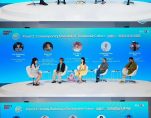
A total of 12 youth panelists from China and Singapore participate in three panel discussions at Asian Civilisations Museum in Singapore on March 25.(Photo: People’s Daily)

Co-organized by the People’s Daily and Lianhe Zaobao, the two-day event featured 12 young representatives who explored how their generation is shaping the future through innovation, cultural renewal and cross-border collaboration.

In the first panel, “Youth Driving Tech Innovation,” participants working in robotics, flying cars and data verification discussed both the opportunities and challenges of the AI era.

Tan Wei Hua, head of design at Singapore-based LionsBot International, addressed concerns over “AI anxiety” and its impact on jobs. “New jobs are going to be created. The next generation will be doing something entirely different,” he said, pointing to robotics as a growing field of opportunity.

Quah Zheng Wei, CEO and co-founder of Accredify, encouraged aspiring entrepreneurs to take the first step. With the tech industry evolving rapidly, he stressed that “nothing is holding you back.”

From an industry perspective, Michael Du, CFO and vice president of ARIDGE, said emerging technologies are expanding possibilities in everyday life. Meanwhile, Xu Huazhe, assistant professor at the Institute for Interdisciplinary Information Sciences at Tsinghua University, highlighted the strengths of younger generations: “With the correct taste, they will build the most meaningful things.”

The second panel, “Contemporary Renewal of Traditional Culture,” shifted focus from innovation to heritage. Artists and cultural practitioners in wood sculpture, paper art, jewelry design and journalism explored how tradition can be revitalized in modern contexts.

image-1.jpeg

Wood sculpture artist Deng Kun emphasized the importance of cultivating an eye for beauty, while Lianhe Zaobao arts and culture journalist Zhang Heyang described traditional culture as “a place of spiritual haven for today’s youth.”

Designer Longhong Ziwei, founder and art director of the accessory brand Soft Mountains, said engaging with Yi heritage has inspired her work and resonated with international audiences.

Singaporean paper and mixed media artist Koh Pei Li, drawing inspiration from everyday urban life, highlighted the value of noticing overlooked details. Through her work, she hopes to reconnect people with the subtle beauty around them.

In the final panel, “Jointly Building a Sustainable Future,” speakers from architecture, fashion, and marine conservation offered interdisciplinary perspectives on sustainability.

Chen Kan, principal architect of TAB Architecture and Design, spoke about the philosophy of “being-with” as a guiding principle. “We need a deeper capacity to coexist with others,” he said.

Goy Zhenru, principal architect of Goy Architects in Singapore, emphasized designing in harmony with nature. She highlighted the importance of connecting living spaces with natural elements such as breeze and sunlight to create comfort and environmental awareness.

Sam Shu Qin, co-founder of Our Singapore Reefs and Our Blue Spaces, who describes herself as “a gardener underwater,” expressed hope that younger generations will recognize their ability to give back to the ocean.

For fashion designer Chen Peng, founder of brand CHENPENG, sustainability is both cultural and practical. “It should be culture-based and do no harm to the earth. It’s not a choice, but a natural extension of philosophy,” he said.

The dialogue marked a step forward in media cooperation and people-to-people exchanges between China and Singapore. By amplifying youth perspectives, it showcased the innovative energy and collaborative potential of both countries, while helping to build a long-term platform for bilateral engagement and shared progress.

The issuer is solely responsible for the content of this announcement.

Blippo+ has arrived as one of the stranger releases to gain traction across independent gaming, presenting itself not as a conventional narrative title but as a faux television service from an alien world. Built around channel surfing, short-form live-action broadcasts and a deliberately warped retro aesthetic, the project has drawn attention for turning the language of late-20th-century television into an interactive spectacle that feels equal parts parody, […]

  Qatari billionaire Sheikh Hamad bin Jassim bin Jaber Al Thani has taken a stake in German robotics company Neura Robotics, adding Gulf capital to one of Europe’s biggest funding pushes in humanoid and cognitive machines. The investment places the former Qatari prime minister alongside Amazon in Neura’s latest financing, while corporate filings cited by Bloomberg show he became a shareholder through Prime Capital SA, a unit […]

Driving “Attract In” and “Go Global”, Accelerating Hong Kong’s Greentech Ecosystem Development

HONG KONG SAR – Media OutReach Newswire – 24 March 2026 – Hong Kong Science and Technology Parks Corporation (HKSTP) today hosted the “Green is Action: GreenTech Hub 1st Anniversary Showcase” at InnoCentre in Kowloon Tong, highlighting the achievements of Hong Kong’s leading hub for green innovation over the past year.

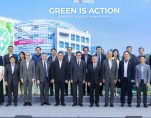
HKSTP held the “Green is Action: GreenTech Hub 1st Anniversary Showcase”, Professor Sun Dong, Secretary for Innovation, Technology and Industry, (middle, front row), Dr Sunny Chai Chairman of HKSTP (5th from Left), and Mr Terry Wong, CEO of HKST (5th from right), together with GreenTech Hub partners attended the celebration ceremony to mark the first anniversary of GreenTech Hub.

In its first year, GreenTech Hub expanded its partner network from 16 to 20 public-private organisations. By facilitating 360 business matching and hosting more than 100 greentech themed events, the GreenTech Hub is injecting new momentum into Hong Kong’s development as an international green technology and green finance centre.

The celebration ceremony for the 1st Anniversary Showcase was officiated by Professor Sun Dong, Secretary for Innovation, Technology and Industry, he said: “The anniversary of GreenTech Hub today is just the beginning. In collaboration with our three major I&T parks, the Government will continue to invest in I&T infrastructure and foster the development of strategic industries, with a view to enhancing the overall I&T ecosystem and promoting interactive development of the upstream, midstream and downstream sectors.”

Dr Sunny Chai, Chairman of HKSTP, remarked, “The first anniversary of GreenTech Hub proves that Hong Kong is where global green innovation converges and scales. We have attracted world-class R&D to the city while enabling homegrown greentech to be deployed worldwide for sustainable development. Through strategic partnerships, HKSTP is forging closer connections between research, industry, capital and real-world application scenarios, accelerating commercialisation and strengthening Hong Kong’s development into an international green technology and green finance hub.”

Leveraging Hong Kong’s Role as a Super-Connector to Bridge the Full Value Chain from R&D to Commercialisation

HKSTP announced the addition of four new partners to GreenTech Hub: CLP Holdings Limited, CTF Services Limited, Invest Hong Kong, and The Hong Kong and China Gas Company Limited, further strengthening Hong Kong’s green technology collaboration network. The GreenTech Hub brings together 20 partners spanning private enterprises, public bodies, universities, and industry associations. This collaborative ecosystem facilitates business opportunities, fosters knowledge exchange and best practices, and bridges financing gaps to expedite green technology development. Furthermore, leading local universities within the partner network offer talent training, testing facilities, and application scenarios for greentech solutions, speeding the journey from R&D to commercial impact.

HKSTP’s greentech ecosystem encompasses over 230 greentech companies, spanning new energy, green building, smart city solutions and green fintech. As the city’s leading collaborative platform for green innovation in the city, GreenTech Hub works closely with its partners to provide comprehensive support for park companies, fast-track the real-world application of green solutions, and further drive the synergistic development of green technology and green finance.

Global Expert Perspectives on Green Trends Alongside a Showcase of Breakthrough Technologies

The event featured a keynote address by Mr. Ethan N. Elkind, Director of the Climate Program at the Center for Law, Energy and the Environment (CLEE) at the University of California, Berkeley School of Law, who shared insights on global green development trends. Representatives from GreenTech Hub partners and park companies also shared their insights during two thematic panel sessions focusing on ecosystem collaboration and global expansion strategies.

To further elevate Hong Kong’s international profile and thought leadership in green technology, HKSTP plans to publish its first-ever research paper focusing on Hong Kong’s greentech ecosystem and energy storage technology in the fourth quarter of this year. GreenTech covers a broad range of areas, including new energy, energy storage and carbon trading, with battery and energy storage technology identified as one of our key focus areas. Given the strong growth potential of this sector, a dedicated research study would provide a more comprehensive review of the industry landscape and help identify the critical success factors needed to accelerate the commercialisation of battery and energy storage technologies.

As a two-way platform, GreenTech Hub has successfully attracted non-local greentech companies to establish a presence in Hong Kong while supporting local greentech ventures in expanding into international markets. Featured breakthrough technology solutions included:

Aurabeat — Award-winning energy-saving sonic air purification technology

Aurabeat has developed EcoSonic, a sonic air filtration technology combining AG+ silver-ion coating with sonic emitters, designed specifically for the commercial and industrial HVAC market. Its patented technology can reduce filter pressure drop by up to 70%, save up to 50% in energy, and improve indoor air quality. The solution has already been deployed in projects including the MTR, Hysan and Marina Bay Financial Centre in Singapore, demonstrating the strength of Hong Kong greentech in overseas markets.

Gotion High-tech — Globally leading new energy solutions

Gotion High-Tech is a world-leading provider of new energy batteries and green energy solutions. Its smart mobile energy storage charging unit, equipped with 209kWh large-capacity energy storage and 150kW high-power fast charging capability, supports a wide range of new energy transport and application scenarios, offering a breakthrough solution for EV charging infrastructure.

Harmony SkyTech — Drone systems, services and industrial application solutions

Harmony SkyTech showcased an electric vertical take-off and landing fixed-wing drone and related application solutions. These can be widely deployed in scenarios including power grid inspection, oil and gas pipeline inspection, surveying and mapping, logistics, and the transport of critical supplies, underscoring the immense potential of green low-altitude technologies.

Lihe Technology — Fully automated AI-powered water quality monitoring backed by national-level R&D

Lihe Technology specialises in environmental monitoring, water management and industrial automation. Its fully automated AI water quality monitoring system enables smart, highly efficient and precise monitoring. Through strategic collaboration with a GreenTech Hub partner, the company has established Hong Kong’s first branch of a National Engineering Research Centre of Advanced Technology and Equipment for Water Environmental Pollution Monitoring — Marine Eco-Tech Innovation Centre, driving the application and development of related technologies in Hong Kong.

One Energy — Electric motorcycles and the world’s first water-cooled fast-charging battery system

One Energy provides a one-stop e-mobility solution covering electric motorcycles, smart battery swapping stations and battery management systems. Its technology effectively shortens energy replenishment time, improves safety and enhances operational efficiency. The company has successfully expanded its footprint into Southeast Asia, Europe and Africa.

Hashtag: #HKSTP

The issuer is solely responsible for the content of this announcement.

Hong Kong Science and Technology Parks Corporation

Hong Kong Science and Technology Parks Corporation (HKSTP), established in 2001, has built a thriving innovation and technology (I&T) ecosystem in Hong Kong, supporting 12 unicorns, nurturing over 16,000 research talents, and hosting more than 2,400 technology companies from 24 countries and regions specializing in biomedicine, AI and robotics, fintech, and smart city development. HKSTP is dedicated to positioning Hong Kong as an international I&T hub.

To align with Hong Kong’s future development, HKSTP is committed to attracting and cultivating I&T talent, accelerating the commercialization of innovative outcomes, and providing comprehensive support for technology companies and professionals on their innovation journey. Its vibrant I&T ecosystem continues to grow, encompassing Hong Kong Science Park in Pak Shek Kok, InnoCentre in Kowloon Tong, and three InnoParks in Tai Po, Yuen Long, and Tseung Kwan O. These facilities drive advancements in applied technology, focusing on industries such as advanced manufacturing, micro- electronics, and biotechnology, steering Hong Kong toward new industrialization.

Hong Kong Science Park Shenzhen Branch, located in Futian, Shenzhen, leverages the strategic advantage of “support of the Motherland, connecting to the world.” It serves as a bridge for “bringing in and going global,” actively fostering cross-border I&T collaboration. The Shenzhen Branch supports global technology companies and professionals by providing research and collaboration spaces, with a focus on enterprises in seven key sectors: Medtech, big data and AI, robotics, new materials, microelectronics, fintech, and sustainable development.

HKSTP is dedicated to advancing Hong Kong’s I&T development by providing research infrastructure, startup and enterprise support services, professional investment and business expertise, fostering partnership networks, and attracting top talent. These efforts drive innovation as a new engine for economic growth for Hong Kong. More information about HKSTP is available at .

Elon Musk has unveiled a plan to integrate Tesla, SpaceX and xAI into a new semiconductor initiative in Texas, marking a deeper push into controlling the hardware underpinning artificial intelligence systems. The project, described internally as “Terafab”, aims to develop advanced chips tailored for AI training, robotics and space applications. The initiative reflects a broader shift among technology companies seeking to reduce dependence on external suppliers such […]

HONG KONG SAR – Media OutReach Newswire – 23 March 2026 – A principal dinner was held by the Government this evening (March 23), bringing together about 130 family office decision-makers from Asia, Europe, the Americas, Oceania, and Africa to set the stage for the fourth edition of the Wealth for Good in Hong Kong (WGHK) Summit themed “Building Lasting Legacies”, which will take place tomorrow (March 24).

The Chief Executive, Mr John Lee, speaks at the principal dinner of the Wealth for Good in Hong Kong Summit today (March 23).

“For many, the future may feel less certain, more complex, than it did when we were at this event a year ago. But rest assured: Hong Kong stands strong and unwavering – a city where capital, institutions and families can keep a firm footing, even as the world around them is shifting,” the Chief Executive, Mr John Lee, said in his welcome remarks. “More and more family offices are turning to Hong Kong. We are now home to over 3 380 single family offices – a 25 per cent increase in the past two years. More than half of them have second-generation members, or beyond, in leadership roles. This reflects the confidence that ultra-high-net-worth families have in Hong Kong as a base for wealth transfer between generations.”

The night was highlighted by a magnificent “human-robot lion dance” performance at the start, where traditional lion dancers performed alongside agile robot dogs, bringing the stage to life through vivid movements. The display was a seamless blend of cultural heritage and cutting-edge technology, embodying Hong Kong’s spirit of embracing both tradition and innovation, while echoing the Summit’s focus on frontier themes such as AI and robotics.

Set against a vibrant blend of heritage and innovation, attendees of the principal dinner had an enjoyable night filled with great food and lively exchanges. They were also impressed by the fascinating world-famous Hong Kong skyline, glamourised by photo spots decorated with neon light and retro Hong Kong vibes set up at an open area of the venue. The beautiful night scene created a more relaxing atmosphere for them to connect and share their ideas of bringing social impacts with their wealth.

Tomorrow, family office decision makers and successors from around the world will engage in thought leadership by speakers on three core themes – “Strategic Asset Management for Family Legacy”, “Cultural Value Foundation for a Thriving Market”, and “Smart Tech Innovation Driving Capital Appreciation”- as well as a fireside chat on “Sports and Philanthropy” at the WGHK Summit. These conversations aim to inspire participants in various ways towards building legacies, reinforcing Hong Kong’s status as the premier hub for global family offices for legacy planning and value creation.

Hashtag: #WGHK

The issuer is solely responsible for the content of this announcement.

Federal safety regulators have widened scrutiny of Tesla’s driver-assistance technology, focusing on how the company’s Full Self-Driving system performs in adverse conditions and the continued absence of LiDAR sensors in its design. The move by the National Highway Traffic Safety Administration signals mounting concern over whether camera-based systems can reliably interpret complex environments such as fog, heavy rain and low-light scenarios. Investigators are examining a growing body […]

HONG KONG SAR – Media OutReach Newswire – 16 March 2026 – The Hong Kong University of Science and Technology (HKUST) today officially launched its 35th Anniversary celebrations with a vibrant ceremony, bringing together distinguished government officials, industry leaders, and members of the university community to reflect on an extraordinary journey of excellence.

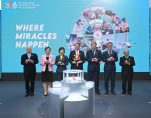
The Chief Secretary for Administration of the HKSAR Government Mr. CHAN Kwok-ki (middle), Deputy Director of LOCPG Mr. LUO Yonggang (third right), Secretary for Education of the HKSAR Government Dr. Christine CHOI Yuk-lin (third left) and members of the HKUST leadership team, including Pro-Chancellor Dr. John CHAN Cho-Chak (first right), Council Chairman Prof. Harry SHUM (second right), Court Chairman Dr. the Honorable Andrew LIAO Cheung-Sing (first left), and President Prof. Nancy IP (second left) inaugurate a series of commemorative initiatives for the HKUST 35th anniversary.

Themed “Where Miracles Happen,” the milestone event honors the pioneering spirit that has propelled generations of HKUST members to achieve remarkable feats. Officiating at the ceremony were Mr. CHAN Kwok-Ki, Chief Secretary for Administration of the HKSAR Government; Mr. LUO Yonggang, Deputy Director of the Liaison Office of the Central People’s Government in the HKSAR (LOCPG); and Dr. CHOI Yuk-Lin, Secretary for Education of the HKSAR Government. They were joined by HKUST Pro-Chancellor Dr. John CHAN Cho-Chak, Council Chairman Prof. Harry SHUM, Court Chairman Dr. the Honorable Andrew LIAO Cheung-Sing, and President Prof. Nancy IP to inaugurate a year of commemorative activities.

A Journey Forged with Vision and Purpose

In her welcome address, President Ip, who joined HKUST in 1993, offered a personal reflection on the University’s remarkable ascent. She witnessed its evolution into a world-class institution; a success built on academic excellence and a vibrant innovation ecosystem created from the ground up. She credited this profound transformation to the extraordinary foresight of the University’s Founding President, Prof. Chia-Wei Woo.

“From its very inception, HKUST was built on a bold and unprecedented vision: to become Hong Kong’s first research-intensive university,” President Ip shared. “Long before the Greater Bay Area concept existed, our founders, led by Prof. Woo, understood that Hong Kong’s future was inextricably linked with the region. This visionary courage saw them forge vital connections with the Chinese Mainland, laying the groundwork for what would become HKUST (Guangzhou) in 2022. Their courage, dedication, and tenacity built the unshakeable foundation on which we stand today.”

President Ip emphasized that the University’s success is measured not by rankings alone, but by its tangible impact on society. This founding DNA—to anticipate and meet societal needs with excellence—is now driving HKUST’s most ambitious chapter yet: the establishment of a new School of Medicine. “This is a transformative milestone, fulfilling a dream pursued for over three decades,” she stated. “We are deeply grateful to the HKSAR Government for its trust and partnership. Together, we will build a technologically advanced, humanistic medical school that ushers in a new era for healthcare in Hong Kong. Let us honor those who walked before us by carrying their courageous legacy into a new era of excellence.”

A Cornerstone of Hong Kong’s Global Leadership

Mr. Chan Kwok-Ki commended HKUST’s profound impact on Hong Kong’s development. “Over the past 35 years, HKUST has evolved from a bold new institution into a globally respected university, driven by visionary leadership, dedicated faculty, a continuing flow of talented students, and an enduring spirit of innovation. Its strong international rankings, vibrant start-up ecosystem, and diverse global student body demonstrate how research and education can deliver tangible societal impact,” he stated. “As Hong Kong advances its role as an international education hub, HKUST stands as a shining example of how universities can nurture global talent while supporting national development priorities. With strengths spanning artificial intelligence, science, and its planned School of Medicine, HKUST is exceptionally well-positioned to shape the future of innovation and talent development.”

Carrying a Pioneering Spirit into the Next Chapter

Prof. Harry Shum reflected on the University’s unique position. “Thirty-five years is a fascinating milestone. In human terms, it is the age of maturity, the point where youthful energy meets seasoned wisdom. And I see the same spirit alive in this institution. We still possess the curiosity and drive of our early years. But now we have the strength, the reputation, and the alumni network that only decades can build. The world is changing faster than ever before. If we are to serve the next generation as well as we have served the past, we must lead, we must innovate, and we must redefine what education can be. In this regard, HKUST is ready to open a new chapter.

“The HKSAR Government has appointed HKUST with the trust to build the third medical school in Hong Kong. We envision the University’s medical school that will bridge traditional medical curriculum with the latest technology and AI breakthroughs, will gradually revolutionize the entire medical spectrum—from diagnosis to treatment to recovery, prevention and personalized medicine. I am confident that this future-oriented medical school, which will admit its first cohort in 2028, will play an important role in educating and training a new generation of scientists and clinicians in the next 35 years and beyond.”

A Celebration of Innovation and Heritage

Reflecting the theme “Where Miracles Happen,” the ceremony showcased HKUST’s leadership in technology in a truly spectacular fashion. In a breathtaking fusion of tradition and innovation, the university’s Guangzhou campus team presented a robotic lion dance. This remarkable creation brought the classic folk art to life through advanced robotics, embodying the spirit of cultural heritage reimagined through cutting-edge engineering.

For the grand officiating ceremony, HKUST turned into an unexpected source of inspiration: humanity’s best friends. But there were no ordinary dogs. A team of robotic dogs—developed by Direct Drive Technology (an HKUST-nurtured startup), the Department of Civil and Environmental Engineering, and the Cheng Kar-Shun Robotics Institute—took center stage. Engineered to navigate complex, uneven terrain and perform dangerous industrial inspections, these four-legged helpers were given a far more meaningful mission for the day: carrying the ceremonial “Miracle Balls” to the officiating guests. As robotic dogs trotted majestically onto stage bearing their precious cargo, they symbolized the University’s commitment to channeling cutting-edge research into real-world applications—and its penchant for making miracles happen.

The ceremony reached its pinnacle with a dramatic display of innovation. In a symbolic gesture of bridging past and future, a drone—generously donated by distinguished alumnus Mr. WANG Tao, Founder of DJI—soared into the venue carrying the commemorative “35th Symbol Key.” As the drone gracefully descended to deliver the key to the officiating party on stage, it signaled the formal inauguration of the anniversary celebrations.

HKUST expressed its deep gratitude to Mr. Wang for his generous donation of two of the latest drone solutions to the university. These state-of-the-art drones will serve as an inspiration for faculty and students to explore and address new challenges in the rapidly evolving low-altitude economy.

The campus itself has been transformed with a “Circle of Time” visual theme, inspired by the iconic Sundial sculpture—a symbol of the University’s enduring legacy and its continuous measurement of progress in education, research, and knowledge transfer.

A Legacy of Excellence and National Trust

Since its founding in 1991, HKUST has risen to rank among the world’s top 50 universities. This commitment to excellence is underscored by the deep trust the nation has placed in the University. Following the reorganization of two existing State Key Laboratories, HKUST has secured approval from the Ministry of Science and Technology to establish a new one, further strengthening its role in advancing cutting-edge research critical to national development.

In a major national space endeavor, HKUST is developing a multi-functional robot for the historic Chang’E-8 lunar mission, designed to operate on the lunar surface and contribute to China’s advancing space exploration capabilities. The University is also leading the development of a high-precision, point-source greenhouse gas detection instrument. This groundbreaking project is set to make history as it will become HKSAR’s first payload to China’s Tiangong Space Station aboard the Tianzhou cargo spacecraft for research and application.

Celebratory Events

A full year of celebratory activities is planned, including co-hosting Asia Universities Summit with Times Higher Education, an AI Film Festival, and joint celebrations with HKUST (Guangzhou).

Global Thought Leadership

Following the symposium held earlier this year, where multiple Nobel laureates and world-leading scholars were invited to engage with HKUST faculty, students and alumni, the University will co-host the THE Asia Universities Summit 2026 with Times Higher Education (THE) this April. The event will draw university presidents and industry leaders from around the world to Hong Kong to explore Asia’s leadership role in driving global change. HKUST will also host the China Association of Higher Education’s flagship “World University Presidents Forum” for the first time in Hong Kong.

AI and Innovation Thematic Events

HKUST will organize a series of events focused on AI, technology governance and creative culture—including an AI Film Festival—to highlight the University’s leadership and societal impact in AI.

Building the HKUST Community

The University will host joint celebrations across its Clear Water Bay and Guangzhou campuses, including a year-long blood donation drive, a marathon, a “Mixed Reality x AI” art exhibition, and more, to foster closer interaction between faculty and students from the two campuses. HKUST will also organize a grand anniversary gala dinner to celebrate with faculty, students, alumni and community leaders, alongside a digital commemorative booklet that recounts the University’s 35 years of outstanding achievements with society.

Hashtag: #HKUST

The issuer is solely responsible for the content of this announcement.

About The Hong Kong University of Science and Technology

The Hong Kong University of Science and Technology (HKUST) () is a world-class university known for its innovative education, research excellence, and impactful knowledge transfer. With a holistic and interdisciplinary pedagogy approach, HKUST was ranked 6th in the QS Asia University Rankings 2026, 3rd in the Times Higher Education’s Young University Rankings 2024, and 19th globally and 1st in Hong Kong in the Times Higher Education’s Impact Rankings 2025. Thirteen HKUST subjects were ranked among the world’s top 50 in the QS World University Rankings by Subject 2025, with “Data Science and Artificial Intelligence” coming in 17th worldwide and first in Hong Kong. Our graduates are highly competitive, consistently ranking among the world’s top 30 most sought-after employees. In terms of research and entrepreneurship, over 80% of our work was rated “internationally excellent” or “world leading” in the Research Assessment Exercise 2020 of the Hong Kong’s University Grants Committee. As of January 2026, HKUST members have founded over 1,900 active start-ups, including 10 Unicorns and 21 exits (IPO or M&A).

Arabian Post Staff -Dubai Dubai Municipality has introduced an artificial intelligence-powered beach safety system combining aquatic rescue robots with aerial drones, marking a significant expansion of the city’s coastal safety infrastructure and reinforcing its strategy to integrate advanced technologies into public services. Officials said the new system links robotic lifeguards operating in the water with unmanned aerial vehicles capable of detecting distressed swimmers and delivering flotation devices […]

Featuring Over 40 Interactive and Game Booths Showcasing Engineering Innovation

HONG KONG SAR – Media OutReach Newswire – 14 March 2026 – To celebrate its 50th Anniversary, The Hong Kong Institution of Engineers (hereafter “the HKIE”) has organised “The HKIE ‘Together we RISE’ Carnival” (hereafter “the Carnival”) at High Lawn, Art Park, WestK. The opening ceremony took place today, officiated by Ms Bernadette LINN Hon Ho, JP, Secretary for Development of the HKSAR Government; Mr YE Shuiqiu, Deputy Director-General of the Department of Educational, Scientific and Technological Affairs of the Liaison Office of the Central People’s Government in the Hong Kong Special Administrative Region; Ir Ricky LAU Chun Kit, JP, Permanent Secretary for Development (Works); and Ir The Hon Aaron BOK Kwok Ming, Legislative Council Member (Functional Constituency – Engineering) cum Past President of the HKIE. They were joined by Ir Alice CHOW, President of the HKIE; Ir Prof Frank CHAN Fan, GBS, JP, Senior Vice President of the HKIE; Ir Rupert LEUNG Kwok Yiu, Vice President of the HKIE; Ir William LUK Wai Lam, Vice President of the HKIE and Ir Prof Alfred SIT Wing Hang, GBS, JP, Chief Executive and Secretary of the HKIE to kick off this two-day event.

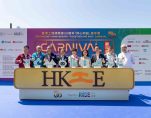
Group Photo of officiating guests at the Opening Ceremony, including Ms Bernadette LINN Hon Ho, JP, Secretary for Development(4th right); Mr YE Shuiqiu, Deputy Director-General of the Department of Educational, Scientific and Technological Affairs of the Liaison Office of the Central People's Government in the Hong Kong Special Administrative Region(4th left); Ir Ricky LAU Chun Kit, JP, Permanent Secretary for Development (Works) (3rd left); Ir The Hon Aaron BOK Kwok Ming, Legislative Council Member (Functional Constituency - Engineering) cum Past President of the HKIE(3rd right); Ir Alice CHOW, President of the HKIE(middle); Ir Prof Frank CHAN Fan, GBS, JP, Senior Vice President of the HKIE (2nd left); Ir Rupert LEUNG Kwok Yiu, Vice President of the HKIE(2nd right); Ir William LUK Wai Lam, Vice President of the HKIE(1st right); and Ir Prof Alfred SIT Wing Hang, GBS, JP, Chief Executive and Secretary of the HKIE(1st left).
Group Photo of officiating guests at the Opening Ceremony, including Ms Bernadette LINN Hon Ho, JP, Secretary for Development(4th right); Mr YE Shuiqiu, Deputy Director-General of the Department of Educational, Scientific and Technological Affairs of the Liaison Office of the Central People’s Government in the Hong Kong Special Administrative Region(4th left); Ir Ricky LAU Chun Kit, JP, Permanent Secretary for Development (Works) (3rd left); Ir The Hon Aaron BOK Kwok Ming, Legislative Council Member (Functional Constituency – Engineering) cum Past President of the HKIE(3rd right); Ir Alice CHOW, President of the HKIE(middle); Ir Prof Frank CHAN Fan, GBS, JP, Senior Vice President of the HKIE (2nd left); Ir Rupert LEUNG Kwok Yiu, Vice President of the HKIE(2nd right); Ir William LUK Wai Lam, Vice President of the HKIE(1st right); and Ir Prof Alfred SIT Wing Hang, GBS, JP, Chief Executive and Secretary of the HKIE(1st left).

With the theme “Together we RISE”, the Carnival aims to highlight the engineering profession’s outstanding contributions to social progress, technological innovation, and sustainable development. Running from 14-15 March, the Carnival features over 40 interactive booths and game zones designed by various organisations and HKIE divisions. The booths showcase exciting innovations including robot and robot dog demonstrations, model displays, VR experiences, UAV flight simulators, a water pumping robot, and more, offering enjoyable, hands-on exploration of the diversity and fun of engineering for the whole family over the weekend.

The Carnival also features a travelling exhibition, “Engineering Legacy: 50 Years of Excellence”, celebrating 19 excellent engineering projects honoured with The HKIE 50th Anniversary Legacy Award. The exhibition highlights the remarkable achievements and milestones that have shaped Hong Kong’s engineering landscape over the past five decades. In addition, the winning entries from the “Together we RISE” school competition held by the HKIE earlier will be showcased, reflecting the creativity and imagination of the younger generation in building sustainable and innovative cities.

Ir Alice CHOW, President of The Hong Kong Institution of Engineers, remarked, “The Hong Kong Institution of Engineers has grown alongside Hong Kong over the past 50 years, witnessing and contributing to many of the city’s landmark infrastructure and urban development projects. Through the Carnival, we hope the public can gain a deeper understanding of the vital role engineers play in society, while inspiring the younger generation’s interest and creativity in the engineering profession. ‘Together we RISE’ is not just a theme; it also expresses our commitment to fostering innovation, uniting the industry, and building the future, leveraging Hong Kong’s unique advantages of being ‘backed by our motherland and connected to the world’!”

The HKIE 50th Anniversary “Together we RISE” Carnival

Date and time: 14 March 2026 (Sat) 10am-6pm

15 March 2026 (Sun) 10am-6pm

Location: High Lawn, Art Park, WestK
Fee: Free of charge

Hashtag: #HKIE

The issuer is solely responsible for the content of this announcement.

About the HKIE

The Hong Kong Institution of Engineers (HKIE) – previously The Engineering Society of Hong Kong – was founded in 1947. In 1975, the HKIE was incorporated under The Hong Kong Institution of Engineers Ordinance, Chapter 1105 of the Laws of Hong Kong. Today the HKIE has over 32,000 members, of which around 17,000 are Corporate Members.

The Institution aims to bring together engineers of different disciplines for their common good. The HKIE is committed to upholding the quality of membership, and sets standards for the training and admission of engineers from 22 engineering disciplines. It also has strict rules governing members’ conduct and is dedicated to raising the ethical standards of professional engineers in Hong Kong. For more information about the HKIE, please visit

Authorities in Hong Kong have launched one of the most sweeping investigations into the territory’s financial industry in nearly a decade, placing hedge fund Infini Capital Management at the centre of a widening insider-trading probe that has rattled brokers, banks and investors across Asia’s leading financial hub.

The investigation, conducted jointly by the Securities and Futures Commission and the Independent Commission Against Corruption, has led to the arrest of eight people and the search of offices and residences across the city. The operation targeted suspected exchanges of confidential market information tied to share placements in Hong Kong-listed companies, a practice that authorities say may have generated illicit profits while undermining confidence in capital markets.

Sources familiar with the matter have identified Infini Capital Management, alongside brokerage operations linked to Citic Securities and Guotai Junan International, as among the firms caught up in the crackdown. The investigation centres on allegations that executives accepted more than HK$4 million in bribes in return for non-public information about equity placements before those transactions were disclosed to investors.

According to regulatory statements, the suspected information leaks allowed traders to establish short positions in companies whose share placements would later depress prices once announced publicly. Authorities estimate the strategy generated profits of roughly HK$315 million, underscoring the scale of the alleged misconduct.

Infini Capital has said its operations remain normal and that its investment management processes have not been disrupted by the investigation. The firm has pledged to comply fully with regulatory authorities while declining to comment on what it described as unverified reports circulating in the market.

Founded in 2015 by former investment banker Tony Chin, the hedge fund built a reputation for aggressive trading strategies and direct negotiations with companies seeking capital. Market participants say the firm sometimes approached share placement deals in ways that bypassed traditional investment bank intermediaries, a tactic that brought both attention and scrutiny within Hong Kong’s tightly interconnected financial community.

Chin, who previously worked at major global financial institutions before establishing the fund, has not responded publicly to requests for comment regarding the probe. Regulatory filings indicate that he stepped down as a responsible officer for Infini Capital at the end of 2025, meaning he no longer holds the licence required to oversee regulated asset management activities on behalf of the firm.

Developments surrounding the investigation have reverberated beyond the immediate targets of the raid. Several global banks, including JPMorgan and UBS, had already severed prime brokerage relationships with Infini Capital months before the probe became public, according to people familiar with the matter. The reasons behind the decisions were not disclosed, though the timing has drawn attention among market observers assessing the fund’s risk profile and compliance record.

Prime brokerage services play a critical role in hedge fund operations, providing financing, securities lending and trade execution support. Losing such relationships can constrain trading activity and signal broader concerns among financial institutions regarding counterparty risk.

The crackdown arrives at a moment when Hong Kong’s equity capital markets have been undergoing a revival following a prolonged downturn in listings. Fundraising through share offerings surged in the past year as Chinese technology and industrial companies turned to the territory for capital, helping restore the city’s position as one of the world’s busiest venues for initial public offerings.

Regulators have responded to that surge by intensifying scrutiny of investment banks and brokers responsible for underwriting and distributing share sales. Officials have warned repeatedly that lapses in due diligence or market conduct could undermine investor trust and the credibility of Hong Kong’s financial system.

Analysts say the case highlights the complex ecosystem that has developed around equity placements, where hedge funds, banks and corporate issuers interact in fast-moving transactions worth hundreds of millions of dollars. Such deals often involve limited groups of investors receiving shares at discounted prices, creating incentives for traders to speculate on how markets will react once the placements are disclosed.

Authorities believe that confidential information about several such deals was circulated before public announcements, allowing certain investors to position themselves advantageously. The resulting trades allegedly generated substantial profits when share prices fell following the disclosure of the placements.

Operation “Fuse”, the codename given to the joint investigation, involved searches at fourteen locations across Hong Kong, including corporate offices and private residences. The arrests included senior executives within financial firms, signalling that regulators are pursuing accountability at the highest levels of the industry.

Market participants are watching closely to see whether the probe expands further. Hong Kong’s regulators have historically pursued insider trading cases aggressively, but raids on multiple high-profile financial institutions simultaneously are comparatively rare.

Infini Capital had become an active participant in the city’s equity markets over the past several years, taking positions in a number of high-profile share placements linked to technology companies and other fast-growing sectors. The firm also forged financing partnerships with emerging robotics and artificial intelligence businesses seeking funding through Hong Kong’s capital markets.

Bosch SDS and NxtGen Datacenter & Cloud Technologies have unveiled plans to launch a sovereign artificial intelligence cloud platform designed to accelerate Industry 4.0 adoption across India’s manufacturing and industrial sectors. The initiative aims to give enterprises secure domestic infrastructure for deploying advanced AI applications, including predictive maintenance, asset optimisation and real-time industrial data orchestration from factory floors to cloud platforms.

The partnership brings together Bosch’s software and digital engineering capabilities with NxtGen’s hyperscale data-centre infrastructure and managed cloud services. Executives involved in the project say the platform is intended to address a growing demand among industrial companies for locally hosted AI environments that comply with national data sovereignty expectations while enabling modern digital manufacturing systems.

Manufacturers across sectors such as automotive, energy, logistics and heavy engineering are increasing investment in AI-driven automation as global supply chains shift toward greater efficiency and resilience. Analysts say many firms are seeking platforms capable of processing large volumes of machine data generated by connected sensors, robotics systems and industrial equipment. The Bosch–NxtGen cloud aims to provide such capabilities by linking edge computing devices installed on factory floors with secure domestic cloud infrastructure.

Industry 4.0 technologies depend heavily on real-time analytics and machine learning models trained on operational data from equipment and production lines. Engineers use these tools to forecast equipment failures, schedule maintenance more efficiently and optimise energy use in industrial facilities. Bosch SDS has developed software frameworks and digital twin technologies designed to model industrial processes, while NxtGen operates data centres capable of hosting high-performance computing and AI workloads.

Executives from both companies say the sovereign AI cloud will enable manufacturers to run advanced analytics while ensuring sensitive operational data remains within national boundaries. Data localisation requirements have become an important consideration for companies adopting AI technologies, particularly in sectors linked to critical infrastructure and strategic industries.

Industrial data orchestration represents a central component of the project. Factories typically generate vast amounts of information from sensors embedded in machines, assembly lines and supply-chain systems. The new platform aims to unify these streams into a single architecture that allows companies to analyse operational patterns and automate decision-making across production networks.

Predictive maintenance stands among the most prominent applications expected to benefit. Machine-learning models trained on historical equipment data can detect early warning signs of mechanical problems before breakdowns occur. Companies adopting such systems report improvements in production uptime and reductions in maintenance costs. Asset optimisation tools can also adjust equipment performance dynamically based on real-time operational conditions, helping plants operate more efficiently.

Bosch SDS, a digital engineering and IT services division of the Bosch Group, has built a strong presence in industrial software development, automotive electronics and embedded systems. The organisation provides engineering services to manufacturing clients globally and has increasingly expanded into artificial intelligence and Internet of Things technologies.

NxtGen Datacenter & Cloud Technologies operates hyperscale data-centre infrastructure in several metropolitan regions and provides cloud platforms designed for enterprise workloads requiring high performance and data security. The company has promoted the concept of sovereign cloud infrastructure as governments and corporations seek greater control over digital assets and regulatory compliance.

Demand for domestic cloud infrastructure has expanded as companies become more cautious about where critical data is stored and processed. Sovereign cloud environments typically guarantee that data remains within a country’s jurisdiction and that infrastructure operators comply with local legal frameworks. Such models have gained traction among governments and enterprises concerned about cross-border data transfer risks.

Industrial companies are also moving toward hybrid architectures combining edge computing and centralised cloud platforms. Edge devices located inside factories can process sensor data close to the source, enabling immediate operational responses, while cloud platforms provide the computing power required for large-scale analytics and machine-learning training. Integrating these environments allows enterprises to monitor production lines in real time while developing predictive insights from aggregated data.

Artificial intelligence adoption within manufacturing has accelerated as companies pursue automation and efficiency gains. Industrial AI applications include quality control using computer vision, supply-chain forecasting, energy-efficiency optimisation and autonomous robotics. Technology providers see manufacturing as one of the largest growth markets for AI deployments because factories generate extensive data suitable for machine-learning models.

Digital transformation initiatives in India’s industrial sector have gained momentum as manufacturers attempt to strengthen global competitiveness. Government-backed programmes promoting advanced manufacturing and smart factories have encouraged investment in automation, robotics and digital infrastructure. Large technology firms and industrial groups have launched multiple projects aimed at building domestic platforms capable of supporting AI-driven manufacturing systems.

Bosch and NxtGen executives say the sovereign AI cloud will provide enterprises with tools to modernise legacy manufacturing operations while maintaining strict security and governance standards. Industrial clients are expected to gain access to modular services including AI development environments, digital twin simulations and scalable computing resources tailored to industrial workloads.

Technology analysts note that partnerships combining industrial engineering expertise with specialised cloud infrastructure have become increasingly common as companies seek to accelerate digital transformation. Providers that can integrate operational technology systems with enterprise cloud platforms are viewed as well positioned to serve manufacturers adopting Industry 4.0 strategies.

VISHNU RAJA
RYO YAMADA
HITORI GOTOH
IKUYO KITA