Just in:
Oil and chip shares retreat after Democratic victories // Middle East governments assess Iran war after US vote // APT29-linked campaign exploits outdated Apple and Android software // Utilities pursue ₹1,992 cr in unpaid bills // Democrats capture Senate majority with seven Republican seats // Vance attributes Republican midterm defeats to Iran conflict // Emirates Group records AED 4.1 billion half-year profit // CR Longdation Aethereal Cybersecurity × Global Cybersecurity Alliance (GCSA) Join Hands to Establish the “AI and Cybersecurity Research Centre” // xCube Access Welcomes Entrust Capital Limited  Expanding Access to Professional Portfolio Management // Meraas showcases five residential zones at Dubai Design Week // Dubai boat show confirms international shipyard line-up for November // Burying Head In “India Made Poverty Reduction” Data Is Dangerous // OpenAI identifies 948 Linux privilege escalation flaws using AI // Ta’ziz finalises $1.39bn funding for Ruwais industrial facilities // U.S. Mid Term Result Is A Clear Verdict Against Trump’s Authoritarianism // Pinarayi faults UDF over mounting road crashes // Fast Just Got Fastest: STING Energy Boost™ Celebrates Kimi Antonelli’s Formula 1® World Championship and the Fan Energy Behind It // SC to examine students’ exam plea today // e-Crime Bureau Signs Cybersecurity Partnership With Smart Africa, Reinforcing Its Global Expansion // Hong Kong mandates crypto transaction disclosures to tax authorities //

News related to
robot

Debut of ASEAN and Qinghai Pavilions alongside four key themes spanning energy, technology, green cities and waste management

ECO Expo Asia 2026 – Connecting the World for a Sustainable Future

HONG KONG SAR – Media OutReach Newswire – 12 October 2026 – Eco Expo Asia 2026, jointly organised by the Hong Kong Trade Development Council (HKTDC) and Messe Frankfurt (HK) Ltd, co-organised by the Environment and Ecology Bureau of the Government of the Hong Kong Special Administrative Region (HKSAR), will be held from 26 to 29 October at AsiaWorld-Expo.

Eco Expo Asia 2026

HKTDC Associate Executive Director Silas Chu said: “Last month, the Hong Kong SAR Government unveiled the Policy Address and first Five-Year Plan, setting out a vision for building a green and liveable city. Across the region and beyond, China, the European Union and many ASEAN economies are actively pursuing carbon-neutrality or net-zero emission targets, and driving decarbonisation through regulations and industrial policies. Green transformation has shifted from policy aspiration to market rule. As global demand for ESG and green solutions continues to grow, Eco Expo Asia will bring together green technologies, innovative solutions, and global business opportunities to help enterprises capitalise on the new prospects emerging from this transition.”

He added, “This year’s Eco Expo Asia brings together over 340 exhibitors from 16 countries and regions, including first-time participants from Indonesia, Laos, Myanmar, the Philippines, Thailand, and Vietnam, highlighting the Expo’s growing international reach. Some 200 key officials and representatives of semi-official organisations from the Chinese Mainland, Hong Kong, Belt and Road countries, and ASEAN, will attend and tour the Expo, further promoting cross-regional cooperation and exchange.”

Speaking at the press conference, the Deputy Director of the Environmental Protection Department of the HKSAR Government, Dr Vanessa Au, expressed: “The 21st edition of Eco Expo Asia, held under the theme ‘Connecting the World for a Sustainable Future’, dovetails with the HKSAR Government’s First Five-Year Plan, and implements the Policy Address precisely aligning with the National 15th Five-Year Plan. It underscores our commitment to advancing Hong Kong’s green transformation, fostering green innovation, seizing the opportunities presented by the low-carbon economy, creating economic benefits and enhancing citizen well-being. Key highlights of this year’s expo include the HKSAR Government booth, the Environmental Campaign Committee Pavilion, the Hong Kong Pavilion and the newly established comprehensive experience zone for green technology. This year during the expo, the Environment and Ecology Bureau and the Ministry of Ecology and Environment of the People’s Republic of China will, for the first time, co-host the Belt and Road Green Innovation Conference in Hong Kong. In addition, the Environmental Protection Department, in association with the Belt and Road Initiative International Green Development Coalition and the Chinese Academy of Sciences, will jointly organise the second edition of the ‘Green Silk Road’ International Training Programme. This expo brings together stakeholders from all sectors, uniting our efforts to advance global carbon neutrality and sustainable development.”

Businesses show continued strong confidence in Hong Kong as an ESG business hub

The HKTDC has also released the “HKTDC ESG Index 2026”. The latest ESG Index stood at 67.3, up from 64.2 last year and well above the neutral threshold of 50, reflecting the continued strengthening of corporate confidence in Hong Kong’s role as an ESG hub. The survey also showed that 93% of respondents have integrated ESG into their overall business decision-making processes, while the share of businesses sourcing or selling ESG-related products and services rose from 29% in 2025 to 46% in 2026.

Silas said, “The rise in the ESG index reflects the continued strengthening of global businesses’ confidence in Hong Kong’s role as an ESG business hub. Results further demonstrate that ESG is increasingly being built into business decisions on investment, sourcing, and supply chain management, fuelling steady growth in demand for ESG products, services and solutions. ESG has evolved beyond a compliance requirement into a source of competitive advantage for companies.”

With strong demand for ESG solutions, Hong Kong is well positioned to unlock commercial opportunities across banking and finance, professional services, and innovation and technology. In terms of technological innovation, surveyed businesses identified the most impactful Hong Kong digital and ESG platforms for boosting performance as sustainable supply chain platforms (45%), AI analytics (37%), and cloud data reporting (30%). On supply chain management, respondents most valued Hong Kong’s ESG certification services (50%), followed by transparency and traceability tools (41%), and ESG audit and risk analysis solutions (36%).

Pavilion line-up expands with ASEAN and Qinghai Pavilion debuts

Eco Expo Asia brings together green innovations and technologies from around the world, offering the industry a platform to exchange ideas and explore new business opportunities. This year, the number of participating pavilions has risen to 18, covering a wider spread of regions. On the Chinese Mainland front, Qinghai Province makes its first appearance with a pavilion of its own, joined by the nine Chinese Mainland cities in the Greater Bay Area, Macao, Guangxi, Hunan, Shanghai, and Nanjing in Jiangsu Province.

Among the international group pavilions, the headline addition is a new ASEAN Pavilion, featuring 13 green technology companies from eight member countries, including Singapore, Laos, Malaysia, Myanmar, the Philippines, Indonesia, Thailand, and Vietnam. An ASEAN networking reception on the opening day will further strengthen business ties with the region. In addition, Korea Institute of Fusion Energy (KFE), bringing two companies, will showcase their marine environmental technologies and waste gas treatment equipment. The US State of Illinois returns after several years, while Canada, Italy, and the Netherlands maintain their regular presence.

Regarding Hong Kong exhibitors, the Hong Kong Science and Technology Parks Corporation once again leads 11 start-ups to the Expo to showcase local green innovation achievements. The Hong Kong Pavilion, supported by the Environmental Protection Department and coordinated by the Federation of Hong Kong Industries, is back with 19 local exhibitors presenting a diverse range of eco-friendly products, technologies and solutions. Rounding off the home-grown line-up, the HKSAR Government booth, featuring 11 bureaux and departments including the Environment and Ecology Bureau, and the Environmental Campaign Committee Pavilion, will highlight the city’s latest work in environmental protection and green development.

As a member of the HKSAR Government’s GoGlobal Task Force, the HKTDC will set up a GoGlobal Connect Zone, helping Chinese Mainland environmental enterprises tap international markets through Hong Kong’s professional services. A seminar on going global rounds out the programme, sharing practical experiences in expanding overseas.

Four thematic areas spotlight green innovation

Aligned with global trends and policy directions, this year’s Expo centres on four areas: Green Energy in Motion, Frontier Green Tech, Building for a Greener City and From Waste to Worth, showcasing the latest innovative green technologies, products, and solutions.

Under”Green Energy in Motion“, the Expo features green energy solutions spanning the maritime, land transport and aviation sectors. Echoing the call in the Policy Address and Hong Kong’s First Five-Year Plan to build a Sustainable Aviation Fuel (SAF) industry chain, EcoCeres Ltd. (Booth: 3-F30), a global leading SAF producer, makes its Expo debut with its advanced renewable SAF made from waste materials, alongside Hydrotreated Vegetable Oil (HVO). The Hong Kong Science and Technology Parks Pavilion (Booth: 3-E02) will also focus on energy, with start-ups presenting innovations such as EV chargers and modular EV conversion technology.

Under the “Frontier Green Tech” theme, around 30 start-ups and university spin-offs will show how research achievements have been transformed into practical environmental applications. Among them, first-time exhibitor Stellerus Technology Limited (Booth: 6-D27) will display the Multi‑Spectral Imaging Carbon Observatory (MUSICO), the world’s first lightweight, high‑resolution, high‑precision synergistic greenhouse gases observatory, which has already been deployed on China’s Tiangong space station. MUSICO monitors greenhouse gas emissions, supporting enterprises in formulating emission-reduction measures and supplying precise data to green finance institutions.

In keeping with the “building a green and liveable city” policy direction under Hong Kong’s Five-Year Plan, the “Building for a Greener City” theme gathers a host of innovations now in real-world use. Green Vigor Limited (Booth: 3-E02) will exhibit a modular hydropower system that converts wasted hydraulic resources from water tanks and cooling systems in buildings into electricity, a solution already in use in local shopping malls, commercial buildings and schools. AEC GreenTech Innovations Limited (Booth: 3-C20) brings a robot designed for plastering and paint spraying, which works at least five times faster than manual labour while halving material use, delivering environmental benefits. The technology has been adopted in local construction projects.

The fourth area, “From Waste to Worth“, assembles a number of leading Chinese Mainland enterprises in the waste management sector, including Chongqing Sanfeng Environment Group (Booth: 3-E30), named among Top 50 Environmental Enterprises in China and the Top 10 Influential Enterprises in China’s Solid Waste Industry, as well as listed environmental companies Dynagreen Environmental Protection Group (Booth: 3-B30) and Beijing Enterprises Environment Group (Booth: 3-D30), showcasing their waste management and resource circular solutions. Hong Kong-based Green AI Technology Limited (Booth: 3-E26) will launch REV, its new generation of the unmanned recycling station at the Expo, demonstrating how AI and automation can be applied to recycling.

Over 30 key events to gather experts from government, industry, academia and research

More than 30 forums and seminars will be held during the Expo, bringing together over 80 government officials, industry leaders and business representatives from the Chinese Mainland, Australia, Malaysia, Thailand, and other Belt and Road countries to share insights on green opportunities, success stories and forward-looking strategies.

The annual flagship event, Eco Asia Conference, will also feature a series of seminars centred on four key themes, with industry and academic experts presenting the latest developments. On 26 October, Professor Su Hui, Chair Professor in the Department of Civil and Environmental Engineering at HKUST, who spearheaded the development of MUSICO, will join Professor Kenneth Leung, Director of the State Key Laboratory of Marine Environmental Health at CityUHK, to discuss technologies for monitoring extreme weather and explore Hong Kong’s role as a regional green innovation hub. On 27 October, representatives from the Construction Industry Council and China State Construction Engineering (Hong Kong) Ltd will examine green building development from the perspectives of policy, certification and practice.

On 28 October, Avinash Persaud, Special Advisor on Climate Change to the President of the Inter-American Development Bank (IDB) and a member of the High-Level Expert Group on Climate Finance for the COP26, 27 and 28 Presidencies, will take to the stage. Drawing on his extensive experience spanning international finance, public policy, and climate finance, he will analyse emerging global trends in the field.

Public Dayinvites everyone to embrace green lifestyles

The final day of the Expo (29 October) will be Public Day, with free admission for the public, aiming to raise awareness of environmental protection and sustainability and to encourage the adoption of green lifestyles. A series of seminars on climate, environmental protection and food waste upcycling will be held that day. Speakers include representatives from the Hong Kong Observatory, Hong Kong meteorologist and former Assistant Director of the Hong Kong Observatory Leung Wing Mo, and guests from Ways Out HK, a local social enterprise that turns food waste into jewellery. Visitors can also take part in interactive workshops, including a recycled paper making workshop, green cleaners making workshop and green mini games, enabling participants to learn hands-on how to put resource recycling and green living into practice.

Register now : https://tinyurl.com/33s7wf64

Hashtag: #HKTDC #EcoExpoAsia #ESG #Sustainability


The issuer is solely responsible for the content of this announcement.

Elon Musk has said Tesla and SpaceX could eventually manufacture semiconductors better than established producers, arguing that their experience designing specialised industrial equipment could give their planned Terafab factory an advantage. Speaking by livestream at Saturday’s X Takeover gathering outside Tesla’s Gigafactory in Austin, Texas, Musk acknowledged that semiconductor production would be exceptionally difficult and offered no timetable for achieving his ambition. “I think it is accurate […]

Arabian Post Staff -Dubai SoftBank Group chief executive Masayoshi Son is seeking up to $100 billion from Gulf investors for a proposed fund that would acquire businesses and transform their operations using artificial intelligence. The fundraising discussions are at an early stage, with senior figures in the United Arab Emirates among those approached. No commitments or final agreements have been announced, and there is no assurance that […]

China’s DEEP Robotics has tested waterproof humanoid robots at busy intersections in Hangzhou, deploying machines to direct traffic, identify road violations and assist tourists during persistent rainfall. The trials, conducted during the National Day holiday in early October, involved several DR02 humanoid robots operating across Xihu District in eastern China’s Zhejiang province. The company said the exercise examined whether autonomous machines could undertake routine roadside duties while […]

BANGKOK, THAILAND – Media OutReach Newswire – 5 October 2026 – The Long-Term Resident (LTR) visa has attracted 12,010 high-potential foreigners to Thailand in four years, generating approximately USD 1.28 billion (THB 43 billion) in economic value, according to the Board of Investment (BOI). The visa is a key mechanism for attracting executives and highly skilled personnel for future industries while increasing purchasing power and stimulating domestic spending and economic activity. A new online system now links services from four government agencies in an integrated process.

Mr. Narit Therdsteerasukdi, Secretary General of the Thailand Board of Investment (BOI)

Introduced in September 2022 to attract high-potential foreigners to reside and conduct economic activities in Thailand, the LTR visa program has generated an average economic value of more than USD 107,000 (THB 3.6 million) per recipient, according to BOI data. The calculation covers visa fees, spending in Thailand by visa holders, direct investment, and tax revenue from highly skilled professionals.

Amid intensifying global competition for highly skilled personnel, the LTR visa is an important mechanism for bringing global talent into Thailand. This is particularly relevant as the country prepares for a new wave of investment in advanced-technology industries, including semiconductors and advanced electronics, digital technology and AI, humanoid robotics, aviation, and biotechnology.

“The LTR visa is a strategic pillar to attract global talent as Thailand absorbs a new wave of advanced technology investments,” said Narit Therdsteerasukdi, Secretary General of the Board of Investment. “Drawing top-tier executives and technical specialists from around the world is vital to strengthening our national competitiveness and securing technology transfers from international partners.”

Approved LTR visa recipients primarily come from leading economies. The United States accounts for the largest group, with more than 2,400 approvals, followed by Japan with more than 1,300 and the United Kingdom with more than 1,000. Japanese nationals comprise a notable share of the specialist bracket, aligning with Japan’s heavy footprint in Thailand’s automotive and precision-electronics supply networks.

The 12,010 approved LTR visa recipients fall into five categories: 1,779 Highly-Skilled Professionals; 1,043 Work-from-Thailand Professionals, who work from Thailand for overseas employers; 737 Wealthy Global Citizens; 4,561 Wealthy Pensioners; and 3,891 Dependents of recipients in the first four categories.

Among recipients in the Highly-Skilled Professionals and Work-from-Thailand Professionals categories, 54% hold executive-level positions and 36% are professionals in various fields; the remainder are at the technical level. Applicants in each category must meet specific criteria, such as requirements relating to assets, income, investment evidence, work experience, and health insurance, and undergo rigorous checks by the relevant agencies.

To handle rising application volumes and remove long-standing administrative bottlenecks, the BOI rolled out an integrated digital processing portal in September 2026. The platform centralizes review procedures across four primary state bodies: the Department of Consular Affairs, the Immigration Bureau, the Department of Employment, and the Revenue Department.

Complementing the portal, the Thailand Investment and Expat Services Center (TIESC), a one-stop service center, is located on floors 6-7 of the Parade Zone at One Bangkok. “The center is intended to strengthen Thailand’s competitiveness in continuously attracting high-potential talent from around the world,” said Mr. Narit.

In addition to attracting foreign talent through the LTR visa, BOI also facilitates visas and work permits for executives and personnel working in BOI-promoted businesses through the BOI Visa, and offers the Smart Visa for startups. BOI also supports the skills development of Thai personnel through the Skill Bridge measure, and helps Thai entrepreneurs adopt modern technology to enhance their competitiveness through the Business Transformation measure. These measures work hand in hand to attract international experts, develop Thai personnel, and upgrade Thai businesses, strengthening Thailand’s readiness for the transition to a new economy driven by technology and innovation.


Note: Currency conversions are based on the Bank of Thailand’s average selling rate of approximately 1 USD = 33.6 THB.

Hashtag: #Thailandboardofinvestment #BOI #FDI #Investment

The issuer is solely responsible for the content of this announcement.
Thailand Board of Investment (BOI)

Established in 1966, the Office of the Board of Investment (BOI) has played an important role for more than 60 years in promoting value-creating investment by both foreign and Thai investors, strengthening competitiveness and supporting Thailand’s sustainable economic restructuring toward the new economy.

Limassol, Cyprus, September 29th, 2026.- Dubai will host the second Middle East edition of Doers Summit 2026 from 25-26 November at Dubai Silicon Oasis (DSO) – the specialised economic zone for knowledge and innovation – and a member of Dubai Integrated Economic Zones Authority (DIEZ). The summit aims to bring together founders, scaleups, investors, corporates and ecosystem leaders from around the world to unlock new business connections, […]

Arabian Post Staff -Dubai Abu Dhabi-based Shorooq and Presight have invested in Maven Robotics as part of the US industrial robotics company’s $100 million Series A financing round. The investment was made through the Presight–Shorooq AI and Bedaya funds managed by Shorooq, the companies said. RoboStrategy, LocalGlobe, Vine Ventures and XTX Ventures also participated in the financing, which Maven announced earlier this month. The individual commitments from […]

Advertisements
DÜSSELDORF, GERMANY – Media OutReach Newswire – 26 September 2026 – QUORRA X5, a micro-mobility robot, has made its global debut at REHACARE International 2026 – International Trade Fair for Rehabilitation and Care, which opened in Düsseldorf, Germany on 23 September and runs until 26 September. As the world’s leading trade fair for rehabilitation, prevention, inclusion and care, REHACARE serves as a key international platform for industry exchange and product showcase.

QUORRA is a global physical AI company focused on Door-to-Door (D2D) mobility scenarios and dedicated to developing micro-mobility robots. Its first mass-produced model, the QUORRA X5, reimagines the form factor of conventional mobility aids. Equipped with five LiDAR sensors and front- and rear-facing cameras, it uses fused LiDAR-vision perception and on-board AI for real-time, 360-degree awareness of its surroundings. On detecting pedestrians, obstacles, steps or uneven ground, it decelerates and brakes within milliseconds, steers around obstacles and passes through narrow passages, and stops safely when the path ahead is impassable. Drop-off protection applies smooth braking on detecting a change in ground level. Smart Cruise, being demonstrated live at the show, holds a set speed while avoiding obstacles without constant joystick input; pulling the joystick back exits the mode.

A 5-inch display shows real-time system status and key operating parameters, with one-tap switching between “Sport” and “Comfort” driving modes. Over-the-air updates enable continuous improvement, while a rear-view camera and reversing collision-avoidance system bring the robot to a smooth, controlled stop. The high-end variant supports autonomous return-to-charge.

Through the iQUORRA app, users can check battery level, online status and real-time location, and operate the robot via Bluetooth remote control within effective range. Caregiver authorization and “Safe Zone” (geofencing) let caregivers define safe activity areas, with instant alerts if the robot leaves preset boundaries.

The QUORRA X5 has won two prestigious international design awards — the Red Dot Award: Design Concept and the International Design Excellence Awards (IDEA®) presented by the Industrial Designers Society of America (IDSA). Retaining a stable four-wheel chassis and joystick control, it adopts a foldable body and wraparound cockpit, shedding the clinical look of traditional mobility aids for consumer-electronics styling.

The QUORRA X5 holds CE marking for the European Union and UKCA marking for the United Kingdom, meeting the safety and technical standards of global markets.

The issuer is solely responsible for the content of this announcement.

NANNING, CHINA – Media OutReach Newswire – 20 September 2026 – On September 16, as an international science and technology exchange platform included in the list of cooperation initiatives for the series of leaders’ meetings on East Asia cooperation, the Fourth Forum on China-ASEAN Artificial Intelligence Cooperation was successfully held in Nanning, Guangxi. With the theme of “AI for Industries, Digitalization for Shared Future”, this forum was co-hosted by the China-ASEAN Technology Transfer Center, the China-ASEAN Innovation Cooperation Center for Artificial Intelligence, the Department of Science and Technology of Guangxi Zhuang Autonomous Region, and the Guangxi Institute of Industrial Technology. More than 700 government representatives, research scholars, tech entrepreneurs, and venture capital representatives from China and ASEAN countries gathered on site, focusing on three major directions, namely embodied intelligence, AI finance, and data circulation, discussing collaborative technological innovation, jointly pursuing industrial digital transformation, and comprehensively deepening pragmatic cooperation between China and ASEAN in the field of artificial intelligence.

Fourth Forum on China-ASEAN Artificial Intelligence Cooperation Successfully Held in Nanning, Drawing Over 700 Delegates

Coinciding with the historic milestone of the Pinglu Canal being completed and navigable, a canal opens up a physical trade corridor between China and ASEAN, opening a new chapter of digital economy collaboration. “Goods Flow Across Rivers and Seas, Digital Intelligence Connects ASEAN” has become the most distinctive symbol of the era at this forum. The forum closely follows the differentiated development path of “R&D in Beijing, Shanghai, and Guangzhou + Integration in Guangxi + Application in ASEAN”, solving problems through technological breakthroughs, gathering momentum through industry-finance linkage, and promoting effectiveness through scenario implementation, to deepen and solidify China-ASEAN AI cooperation.

Technology empowers the opening, creating a new paradigm of human-machine collaboration

The forum kicked off with Guangxi’s classic ethnic song “Folk Songs like the Spring River”, where human dancers, dancing robots, accompaniment robots, and a digital crowd performing the folk song collaborated across disciplines to perform group collaborations. Relying on millisecond-level cluster scheduling technology, ethnic culture and embodied intelligence were deeply integrated to create an immersive technological audiovisual feast. This forum innovatively adopted a three-party collaborative hosting model of “human host + digital human avatar + intelligent robot”. Yang Yanqing, Professor of ShanghaiTech University, coordinated with her digital human avatar and AGIBOT Lingxi X2 to jointly host the forum, empowering the forum scene through technology, which became a major highlight of the event.

Dr. Padapxay SAYAKHOT, Director-General, Institute of Information and Communication Technology, Ministry of Technology and Communications, Lao PDR, Sun Ruijun, Director-General, China-ASEAN Technology Transfer Center, Secretary of the Party Leadership Group and Director-General, Department of Science and Technology of Guangxi Zhuang Autonomous Region, Secretary of the Party Committee, Guangxi Institute of Industrial Technology, delivered speeches in succession. Both sides stated that they will use this forum as a link to deepen the connection of scientific research and innovation, the implementation of industrial scenarios, and the coordination of policies and mechanisms, gather synergy for digital and intelligent development, and serve the building of a closer China-ASEAN community with a shared future.

Industry authorities gather, anchoring regional AI development directions

The speakers at the forum combined international breadth and professional depth, bringing together industry experts, academic and cutting-edge research forces, industrial technology, and cross-border implementation capabilities from ASEAN countries, forming a core high ground for intellectual exchange and gathering top intellectuals for China-ASEAN AI innovation and development.

Industry experts from ASEAN countries: Dr. Wasan Pattara-atikom, Vice President, National Science and Technology Development Agency, Thailand; Li Haizhou, Fellow of the Academy of Engineering, Singapore (SAEng), Dean of the School of Artificial Intelligence, the Chinese University of Hong Kong, Shenzhen; YAP Hwa Jen, Professor of Universiti Malaya, Managing Director of the UPUM Sdn. Bhd.;

Academic and cutting-edge research forces: Yang Chao, Professor of Peking University, Founder and Chief Scientist of Beijing 1011 Technology Co., Ltd.; Cui Peng, Professor of Tsinghua University and Chief Scientist of Stable AI (Xiong’an) Technology Co., Ltd.; Wang Shisong, Professor of Guangzhou University, Co-founder of Abelian (a quantum-resistant blockchain infrastructure);

Industry technology and cross-border implementation forces: Li Nan, Founder, Chairman, and CEO of Maimai Technology Group; Yao Yuan, Vice President of the Middle East Asia-Pacific Region Division, AGIBOT Innovation (Shanghai) Technology Co., Ltd.; Lyu Jun, Chief Scientist of Shanghai Noematrix Technology Co., Ltd.; Liu Liqi, General Manager of Data Strategy Department, X Square Robot Technology (Shenzhen) Co., Ltd.

The guests focused on three major directions, namely embodied intelligence, AI finance, and data circulation, exploring feasible paths for technological breakthroughs, ecosystem co-construction, and joint innovation. They covered the key stages of artificial intelligence from source research and development and technology transfer to industrial implementation and cross-border cooperation, achieving a two-way dialogue between cutting-edge academic theories and practical industry needs, and providing diverse perspectives and action ideas to bridge the regional digital divide and unlock the inclusive value of AI.

Five achievements released, strengthening the solid foundation for digital intelligence cooperation

At the forum, five scientific and technological innovation achievements were released together, constructing an AI innovation supply system oriented toward ASEAN from multiple dimensions including technology products, platform carriers, talent systems, and decision-making support.

1. The China-ASEAN Cross-Border Industrial Large Language Model: It covers multilingual capabilities and industry knowledge graph for ASEAN, integrates six major agents to collaboratively analyze business scenarios, and serves as a professional intelligent partner for Chinese enterprises to expand into the ASEAN market.

2. Achievements in AI Talent Development for ASEAN: Relying on the Guangxi Academy of Artificial Intelligence, a talent training model of “a dual-mentor system, dual-integrated teaching, dual training tracks, and an integrated master-doctoral program” has been created, achieving an international education pattern of enrolling at one university, earning credits from multiple universities, gaining practical experience in multiple countries, and strengthening talent support for cross-border AI cooperation.

3. “Guikerong” Sci-Tech Finance Digital-Intelligent Foundation Platform: Developed under the guidance of the Department of Science and Technology of Guangxi Zhuang Autonomous Region, it uses data-driven technology credit evaluation to open the value transformation chain of “technology, industry, and finance”, supporting the innovative development of technology-based enterprises.

4. Lao-Language Large Language Model (LLM) for the Energy and Power Sector: China’s first AI overseas project in the power industry, implemented on Electricite du Laos, exploring a new model of “Retaining Computing Power in Guangxi, Exporting Services Globally” for compliant token going global, providing a practical example for cross-border services in the energy sector.

5. “2026 China-ASEAN Artificial Intelligence Industry Development Study Report”: A panoramic overview of regional industrial policy environment, market scale, and application patterns, analyzing core industry development trends, and providing decision-making references for China-ASEAN AI industry cooperation.

Exhibition and negotiation are working together to build a pragmatic platform for exchange and cooperation

The forum adheres to the principles of “promoting research through exhibitions, cooperation through meetings, and implementation through business matchmaking”, simultaneously hosting the Special Session on AI: Bank-Enterprise Matchmaking and the Industry Supply-Demand Matchmaking and Technology Achievement Exhibition, achieving precise coordination between exhibition displays and business negotiations, and building a cross-border cooperation ecosystem deeply integrating industry, academia, research, and application.

The Technology Achievement Exhibition showcased high-tech products such as the General Embodied Intelligent Robot, Fingertip 3D Force Sensors, Integrated Land-Sea-Air Inspection Equipment, Smart Wall-Climbing Industrial Robot, and AI + Embodied Intelligence Teaching and Experiment Platform, covering key tracks like humanoid robots, industrial intelligent equipment, and education and training, demonstrating the innovative strength of domestic AI technology adaptation to ASEAN scenarios.

The venue also set up an immersive AI experience zone, where interactive projects such as coffee-making robots, agile robotic arms, AI customized cultural products, and unmanned retail attracted attendees to stop and experience the vivid effects of AI empowering people’s services up close, highlighting the development philosophy of technology for good and digital intelligence benefiting the people.

Focusing on collaborative win-win cooperation to jointly build a new pattern of regional development

As an international platform for scientific and technological exchange aimed at ASEAN, the Forum on China-ASEAN Artificial Intelligence Cooperation has been held consecutively for four sessions, bringing together more than 4,300 guests from China, foreign government, industry, academia, and research, facilitating the connection of over a hundred industrial projects, and becoming an important platform for the exchange of ideas, interconnection of technologies, and mutual industrial support between China and ASEAN in the field of artificial intelligence.

Looking to the future, China and ASEAN will continue to deepen cross-border joint innovation, promote the orderly flow of AI innovation elements, cultivate a vibrant and inclusive regional digital innovation ecosystem, facilitate digital intelligence benefiting regional industrial upgrading and livelihood development, and jointly build a new mutually beneficial and win-win pattern of China-ASEAN digital economy.

This forum was supported by the Ministry of Technology and Communications of Laos and the ASEAN Secretariat, and co-hosted by Guangzhou University, Guangxi Beibu Gulf Bank, Guangxi Academy of Artificial Intelligence, and Computer Academy of Guangxi.

The issuer is solely responsible for the content of this announcement.

Hong Kong has laid out a five-year programme to strengthen its established economic pillars while building new growth engines, with a gold-led commodity trading ecosystem among the centrepieces of its strategy through 2030.

Chief Executive John Lee’s 2026 Policy Address and the city’s first Five-Year Plan for Economic and Social Development set out measures covering finance, trade, shipping, aviation, innovation and technology, alongside efforts to attract capital, companies and skilled workers. The government said the programme is designed to reinforce Hong Kong’s international competitiveness and support longer-term economic development.

Gold will serve as the entry point for a broader commodity trading ecosystem. Hong Kong plans to formally launch its central clearing and settlement system for gold in the first quarter of 2027, following trial operations that began in July. The system is intended to support trading that meets international standards and strengthen links among clearing, settlement, storage and physical delivery.

Hong Kong Exchanges and Clearing will announce details this year of new renminbi-denominated, physically settled gold futures contracts. The government also plans to explore tax concessions for qualifying activities across the gold and commodity trading chain, with proposals expected to be put to the Legislative Council for consultation next year.

The Hong Kong Monetary Authority is studying whether the Exchange Fund should moderately increase its gold holdings and participate in local spot and futures markets. Existing physical gold inventories could gradually be transferred to designated vaults appointed by the Hong Kong Precious Metals Central Clearing Company.

Authorities also plan to expand storage and related infrastructure. Since the London Metal Exchange added Hong Kong to its global warehousing network in 2025, approved storage space has exceeded 60,000 square metres and inventories have risen above 20,000 tonnes of metal. More LME-approved warehouses are planned for the Northern Metropolis.

A half-rate tax concession for physical commodity trading is also being pursued to encourage traders to establish or enlarge operations in the city. A joint working group led by the Secretary for Financial Services and the Treasury will examine market opportunities and possible collaboration between exchanges.

The wider financial strategy seeks to strengthen Hong Kong’s role as an offshore renminbi business hub and an international centre for asset management and risk management. The government plans to deepen green and digital finance, widen financing channels for technology companies and strengthen trade finance, supply-chain finance, clearing, settlement and risk-management services.

A proposed Innovation and Technology Industry-Oriented Fund will receive HK$10 billion in government funding and is expected to reach at least HK$40 billion when market capital is included. Priority areas include life and health technology, artificial intelligence and robotics, semiconductors and smart devices, digitalisation, and sustainable development.

The five-year plan also calls for greater emphasis on high-value maritime services rather than relying mainly on traditional port logistics. Measures include reforms to ship registration, support for ship financing and marine insurance, and further development of maritime arbitration and other professional services.

Hong Kong also intends to build a broader aviation industry ecosystem. Plans include developing aircraft-parts processing and trading, participating in research and certification connected with domestically developed aircraft, and expanding sustainable aviation fuel supply chains across the Greater Bay Area. Authorities aim for sustainable aviation fuel to account for 1% to 3% of fuel used by departing flights at Hong Kong International Airport in 2030.

Trade policy will focus on digitalisation, diversification and higher-value supply-chain services. The government wants more companies to use Hong Kong for international orders, foreign-exchange transactions, treasury operations, trade finance and supply-chain management, while attracting regional and international headquarters.

The plan places innovation alongside the traditional pillars, with support directed towards artificial intelligence, robotics, life sciences, microelectronics and advanced manufacturing. It also identifies aerospace technology, marine technology, quantum technology and embodied intelligence as fields for longer-term development.

HONG KONG SAR – Media OutReach Newswire – 19 September 2026 – Hong Kong’s Chief Executive John Lee rolled out various measures to develop Hong Kong’s key economic centres when he unveiled the First Five-Year Plan for Economic and Social Development of the Hong Kong Special Administrative Region (HKSAR) (2026-2030) and his fifth Policy Address on September 16.

Under Hong Kong’s First Five-Year Plan, Hong Kong will focus on strengthening the four centres, developing the hub for high-calibre talent, consolidating and enhancing its competitive edge as an international city.

Hong Kong’s status as world-renowned international financial, maritime and trade centres as well as an international aviation hub underpin the city’s high-quality development and provide a firm foundation for the city’s long-term stability and prosperity.

“We will consolidate and enhance Hong Kong’s status as an international financial centre, and stay committed to our global positioning,” Mr Lee said. “Hong Kong will deepen the development of its global offshore Renminbi business and capital market, develop an international asset and wealth management centre and international risk management centre, enhance the securities market and expand fixed income and commodity trading.”

Hong Kong has become the world’s largest cross‑boundary wealth management centre this year, and the HKSAR Government will continue to develop a more attractive asset and wealth management ecosystem, Mr Lee said.

Hong Kong will develop a commodity trading ecosystem with gold as an entry point by driving the development of the clearing system, storage, supply, and infrastructure related to gold trading. The city’s central clearing and settlement system for gold will be officially launched in the first quarter of 2027.

“The significance of the First Five-Year Plan for Hong Kong lies in a mindset shift; we must plan Hong Kong’s financial development with a longer-term vision and broader perspective to adapt with flexibility and diversity,” said Christopher Hui, Hong Kong’s Secretary for Financial Services and the Treasury. “Each of our initiatives centres around one objective, which is to elevate Hong Kong from a ‘corridor of capital’ to a ‘destination of choice’.”

Hong Kong was ranked the world’s fifth‑largest entity in merchandise trade in 2025. The HKSAR Government announced plans to consolidate and enhance Hong Kong’s status as an international trade centre, playing a greater role in the high‑level opening up of the Chinese Mainland.

Since the Task Force on Supporting Mainland Enterprises in Going Global was established last October, it has provided assistance, including listing and raising capital in Hong Kong, aligning with overseas standards, acquiring industry certifications and fulfilling compliance requirements for more than 340 Mainland enterprises.

The Task Force will strengthen collaboration with professional organisations to train talent for the GoGlobal initiative and enhance professional services, among other areas.

“In alignment with the National 15th Five-Year Plan’s call to advocate and practise true multilateralism, the First Five-Year Plan proposes to continue expanding international economic and trade network,” said Algernon Yau, Hong Kong’s Secretary for Commerce and Economic Development.

“We will actively forge free trade agreements and investment agreements with economies that are of development potential or strategic locations. Meanwhile, we will expand our network of overseas offices, and leverage the combined networks of our overseas Economic and Trade Offices, InvestHK, and the Hong Kong Trade Development Council offices globally to deepen overseas ties and step up trade and investment promotion.”

As an international maritime centre, Hong Kong has ranked fourth globally in maritime comprehensive strength for seven consecutive years. The Five-Year Plan will drive a “volume to value” transformation of the Hong Kong Port, capitalising on its strengths in high value‑added maritime services, to develop Hong Kong into a “Global Maritime Capital”.

To promote high value-added services, the industry will develop “Finance + Shipping”.

Taking advantage of the city’s well‑established maritime finance, insurance and maritime arbitration under common law, Hong Kong will build an integrated ecosystem under which Hong Kong‑invested enterprises adopt Hong Kong law, take out Hong Kong insurance and choose for arbitration to be seated in Hong Kong.

Regarding aviation, Hong Kong’s passenger throughput recorded a year‑on‑year increase of 15% last year, to 61 million, with flights to over 220 destinations. The city’s air cargo throughput reached 5.07 million tonnes, making its airport the world’s busiest cargo airport for the 15th year since 2010.

To strengthen development as international aviation hub, Hong Kong will expand its aviation network, and diversify business opportunities.

The HKSAR Government will continue to take the initiative to visit South America, Africa, Central Asia, the Middle East and the Caucasus to expedite the conclusion of new air services agreements and the expansion of traffic rights, thereby assisting the industry in exploring new passenger and cargo sources.

As for building Hong Kong as an international innovation and technology centre, the HKSAR Government will step up its efforts to promote artificial intelligence (AI) applications across various trades, and continue to strike a balance between encouraging innovation and protecting security, thereby enhancing Hong Kong’s international competitiveness in AI development.

In alignment with the national strategic technology areas, Hong Kong will focus on core technologies such as life and health, AI and robotics, microelectronics, new energy, advanced manufacturing and new materials. It will also continue to raise the ratio of Total Domestic Expenditure on Innovation Activities to Gross Domestic Product, striving to reach 3% after 2030.


Hashtag: #HongKong#PolicyAddress#First5YearPlan#FourCentres


The issuer is solely responsible for the content of this announcement.

Waymo will launch a fully autonomous ride-hailing service in Singapore in 2028, making the city-state its first Southeast Asian market as the Alphabet-owned company accelerates its international expansion.

The company said an initial fleet of all-electric Jaguar I-PACE vehicles will arrive in Singapore over the coming months, with preparations beginning before a phased testing programme in 2027. Trained autonomous specialists will initially drive the vehicles manually while Waymo maps roads and adapts its self-driving system to local conditions.

The programme will expose the Waymo Driver to Singapore’s road geometry, dense traffic environment and monsoon weather patterns before the company seeks to move towards autonomous operation. Commercial rides are scheduled to be offered through the Waymo app in 2028, subject to regulatory approvals.

Initial operations are expected to focus on western Singapore, including the Labrador and HarbourFront area, before any broader passenger rollout is considered locally.

Singapore’s Land Transport Authority said Waymo would become the country’s newest autonomous vehicle operator, joining ComfortDelGro and Grab. The authority said it would work closely with the company to ensure deployments meet safety and regulatory requirements and help build public confidence in autonomous vehicles.

Waymo is entering a market where autonomous transport is already moving from trials towards limited passenger services. Public rides on autonomous shuttle services began in Punggol in April, while operators including Grab, WeRide, ComfortDelGro and Pony. ai are expanding deployments and testing additional routes.

Waymo’s arrival therefore adds a major US developer to a field that already includes regional and China-based autonomous driving companies. Singapore has sought to attract multiple operators as it develops a competitive autonomous mobility sector and evaluates how driverless vehicles could supplement existing public transport.

Transport Minister Jeffrey Siow said Waymo would bring technology and operational expertise while supporting Singapore’s goal of creating additional transport options. Authorities have also stressed that autonomous vehicle deployment will not be allowed to move faster than measures to retrain and support drivers whose jobs could be affected.

The government announced a manpower transition package in July aimed at helping drivers acquire new skills and, where appropriate, move into jobs created by the autonomous vehicle sector. The issue has become more prominent as testing expands from controlled trials towards services carrying members of the public.

Singapore’s regulatory framework requires autonomous vehicles to clear technical and operational assessments before carrying passengers and progressing towards driverless operation. The Land Transport Authority assesses performance on authorised routes, including whether vehicles can cover sufficient distance without intervention and handle a range of traffic situations within their approved operating areas.

The Ministry of Transport also opened a public consultation this year on a broader legislative framework covering autonomous vehicles, including responsibility, licensing, insurance, liability and enforcement. Existing rules already require authorisation for autonomous vehicle trials and use on public roads.

Waymo said its Singapore expansion would follow the phased approach it has used elsewhere. The company has completed more than 20 million fully autonomous passenger rides and more than 300 million autonomous kilometres, according to company figures, giving it one of the largest operating datasets among commercial robotaxi developers.

Its overseas push is gathering pace. Waymo is preparing for commercial autonomous services in Tokyo and has also announced plans involving London and Munich, as it seeks to extend technology developed largely on US roads to markets with different driving environments, regulations and weather conditions.

Singapore offers a compact but demanding testing ground. Heavy rainfall, complex urban traffic, motorcycles, cyclists and dense interactions around public transport infrastructure create operating conditions that differ from many of Waymo’s established US service areas.

The company says its vehicles use lidar, radar and cameras to maintain a 360-degree view of their surroundings. The Singapore fleet will initially use Jaguar I-PACE sport utility vehicles, although Waymo has not disclosed how many vehicles will be deployed at launch or the eventual size of its commercial fleet.

A large-scale study of surgical video intelligence has found that models trained to predict motion and structure from specialist operating footage can outperform broader visual systems across multiple surgical understanding tasks, strengthening the case for domain-specific foundations in future robotic assistance. Researchers behind SurgMotion, a video-native foundation model, trained the system on 3,658 hours of surgical video drawn from 50 sources and spanning 13 anatomical regions. The […]

Dubai is set to gain a mixed-use development where robots are planned to handle reception, security, cleaning, deliveries, coffee service and selected wellness functions, as Fakhruddin Properties advances a Dh700 million project in Dubai Land Residence Complex. The development, called Tréppan Vision, was unveiled at IPS 2026 and is scheduled for completion in the fourth quarter of 2029. Fakhruddin Properties says the scheme is designed to extend […]

SINGAPORE – Media OutReach Newswire – 16 September 2026 – VX Logistics Development Group Co., Ltd. (“VX Logistics” or the “Company”), Asia’s leading cold chain logistics network operator, transforms the supply chain operation of fresh fruit and vegetables industry through applying AI technology and sophisticated automation and leveraging the world-first robot for metro delivery self-developed by the Company.

Emma Wu (Wu Beiwen) Chairperson, VX Logistics Emma Wu currently serves as the chairperson of VX Logistics. As an active practitioner of China's supply chain globalisation, she focuses on cold chain, fresh produce supply chain, logistics infrastructure, and industrial synergy. Under her leadership, VX Logistics has become an industry-leading integrated multi-temperature logistics service provider, with its cold chain capacity firmly leading in Asia and among the top tier globally.
Emma Wu (Wu Beiwen) Chairperson, VX Logistics Emma Wu currently serves as the chairperson of VX Logistics. As an active practitioner of China’s supply chain globalisation, she focuses on cold chain, fresh produce supply chain, logistics infrastructure, and industrial synergy. Under her leadership, VX Logistics has become an industry-leading integrated multi-temperature logistics service provider, with its cold chain capacity firmly leading in Asia and among the top tier globally.

The world-first robot designed for deliveries to metro-station retailers is self-developed by VX Logistics. The robot functions as an actual “on-duty” employee in VX Logistics’ day-to-day operations. It has been rolled out at 61 Shenzhen metro stations, handling replenishment and delivery tasks for on-site retailers.
Within VX Logistics’ business operations, these intelligent devices are working in tandem with the Company’s proprietary OTWB end-to-end management system and digital platforms such as IoT-based cold-chain temperature control. VX Logistics’ smart operation offers an efficient solution to every link of the supply chain.
“Each of these technologies is powerful on its own, but their true value emerges when they work together — data flows from the point of origin to end customer, and quality becomes predictable and controllable,” said Emma Wu (Wu Beiwen), chairperson of VX Logistics, adding that this is not merely an enhancement at any single stage of logistics services, but it represents a transformation in the very way the industry functions.

The value of technology goes beyond efficiency. Emma Wu noticed that a large number of overseas fresh fruit brands are stepping up their presence in China, while many domestic brands are showing a strong desire to go global. Emma Wu remarked: “A growing number of international brands are now registering Chinese brand names, setting up dedicated consumer brand teams, and increasing their investment at the retail end. The essence of branding lies in brand owners extending their quality commitment to the end consumer. This, in turn, requires them to maintain effective control of product condition at every link of the domestic supply chain. The same applies to Chinese brands going global.”

In the past, once imported fruit arrived at port, quality essentially entered a “black box” — brand owners had no visibility over key metrics like arrival temperature, handling status, or outbound records across the supply chain.

Emma Wu added that AI is transforming the fresh fruit and vegetables industry from one that “runs on experience” to one that “makes decisions with data.” In sorting and quality inspection, AI vision technology can assess coloration, size, and defects within a second — with greater accuracy and consistency than the human eye. In warehousing, automated equipment is taking over repetitive tasks such as material handling and palletizing. In transportation, IoT sensors track the temperature and location of every load in real time, and could raise the alarm before any issue arises.

Built around the unique characteristics of berry products, VX Logistics has customized a comprehensive end-to-end solution encompassing precision temperature and humidity management as well as rapid in-warehouse throughput — supporting the annual market launch of close to 200 million boxes of berries for Driscoll’s.

Zespri has been a partner of VX Logistics for over a decade. VX Logistics has built a full end-to-end system for Zespri in China – covering warehousing, quality inspection, ripening, automated sorting, and packaging.

“Cold-chain logistics is not a cost center — it is a value center.” She further pointed out that cold-chain logistics today is no longer merely a cost item for warehousing and transportation. It is a provider of supply chain solutions for brand clients. Both expanding overseas and deepening presence in China demand stable temperature and humidity control and quality assurance. The technological nature and professional reliability of cold-chain operations make cold-chain logistics an “added value” that safeguards product quality and reduces loss.

After 13 years of dedicated development, VX Logistics’ cold-chain scale now ranks first in Asia and stands firmly among the global top tier. As the supply chain service provider behind renowned fruit brands such as Zespri, Driscoll’s, Envy Apples, and Rockit, VX Logistics’ core competitive edge lies in its technology-driven supply chain services.
Hashtag: #VXLogistics

The issuer is solely responsible for the content of this announcement.

HONG KONG SAR – Media OutReach Newswire – 15 September 2026 – The Hong Kong University of Science and Technology (HKUST) welcomed H.E. Mr. Abdulla Nigmatovich ARIPOV, Prime Minister of the Republic of Uzbekistan, for an official campus visit on September 10, 2026, making HKUST the sole university included in his Hong Kong itinerary. The high-level visit underscored the growing partnership between Uzbekistan and HKUST, with a particular focus on advancing collaboration in higher education, research, innovation, and talent development.

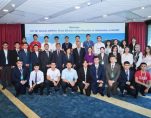
H.E. Mr. Abdulla Nigmatovich ARIPOV, Prime Minister of the Republic of Uzbekistan (seventh right, middle row); Dr. CHOI Yuk-Lin, Secretary for Education of the HKSAR Government (seventh left, middle row); Prof. Harry SHUM, Council Chairman of HKUST (sixth left, middle row); and Prof. Nancy IP, President of HKUST (sixth right, middle row), pose for a photo with students from Uzbekistan during the Prime Minister's official visit to HKUST.
H.E. Mr. Abdulla Nigmatovich ARIPOV, Prime Minister of the Republic of Uzbekistan (seventh right, middle row); Dr. CHOI Yuk-Lin, Secretary for Education of the HKSAR Government (seventh left, middle row); Prof. Harry SHUM, Council Chairman of HKUST (sixth left, middle row); and Prof. Nancy IP, President of HKUST (sixth right, middle row), pose for a photo with students from Uzbekistan during the Prime Minister’s official visit to HKUST.

The Uzbek delegation of 24 members was warmly received by Dr. CHOI Yuk-Lin, Secretary for Education of the HKSAR Government; Prof. Harry SHUM, Council Chairman of HKUST; Prof. Nancy IP, President of HKUST, and senior university leaders.

In a high-level meeting with the University’s leadership, Prime Minister Aripov engaged in in-depth discussions on higher education development, artificial intelligence (AI), technological innovation, talent cultivation, research commercialization, and opportunities for closer collaboration between Uzbekistan and HKUST. The exchange also explored pathways for strengthening academic partnerships, expanding student and faculty mobility, and supporting Uzbekistan’s ambitions in developing a knowledge-based economy and emerging technology sectors.

Prime Minister Aripov said, “We are deeply impressed by HKUST’s achievements and its ability to translate cutting-edge research and innovation into practical industrial applications. With over 7,000 Uzbek students pursuing higher education across China, we see tremendous potential to strengthen our academic ties with Hong Kong and prioritize HKUST as a key destination for our students. As both Uzbekistan and HKUST mark their 35th anniversaries, establishing this partnership presents a symbolic and meaningful opportunity to expand educational excellence and global reach together.”

Prof. Shum said, “We are deeply honored to welcome Prime Minister Aripov and the distinguished Uzbek delegation to HKUST during the Belt and Road Summit. As a young, globally minded university celebrating our 35th anniversary, HKUST serves as a vital super-connector—bringing together diverse talent from over 80 nationalities. Building on our foundation with the El-Yurt Umidi Foundation, this visit marks a pivotal step in deepening ties between Hong Kong and Central Asia, opening up new horizons for collaborative growth and youth development along the Belt and Road.”

President Ip added, “We were delighted to engage in a highly productive and forward-looking dialogue with Prime Minister Aripov and his delegation. Uzbekistan’s strategic priorities in AI, robotics, fintech, and cybersecurity align closely with HKUST’s research strengths and advanced facilities. AI and medical science, in particular, offer promising areas for collaboration and could serve as important starting points for future joint initiatives. Beyond educational exchanges, we see tremendous opportunities to deepen cooperation in research, innovation, talent development, and knowledge transfer. We look forward to visiting Uzbekistan and working closely with our partners to co-create impactful solutions, nurture future-ready talent, and contribute to sustainable economic and technological development.”

HKUST also signed a Memorandum of Understanding (MOU) with the Ministry of Higher Education, Science and Innovation of the Republic of Uzbekistan. The agreement establishes a framework for educational collaboration and promotes excellence and innovation in teaching, learning, and research. Witnessed by Prime Minister Aripov, Dr. Choi, and Prof. Shum, the MOU was signed by President Ip and Mr. Salomov Uktam RAHIMOVICH, Deputy Minister of Higher Education, Science and Innovation of the Republic of Uzbekistan.

The Prime Minister and his delegation toured the HKUST Von Neumann Institute, where they learned about the University’s world-leading research and innovation capabilities in AI. The delegation was introduced to HKUST’s latest advancements in next-generation multimodal AI systems, robotic intelligence technologies, AI-driven 3D understanding and generation, and large-scale healthcare models, as well as their potential applications in addressing societal and industrial challenges. During the visit, the delegation met with 31 Uzbek students studying in Hong Kong, including 14 undergraduates currently enrolled at HKUST, to learn about their academic experiences and life in the city.

Hashtag: #HKUST

The issuer is solely responsible for the content of this announcement.

About The Hong Kong University of Science and Technology

The Hong Kong University of Science and Technology (HKUST) () is a world-class university renowned for its innovative education, research excellence, and impactful knowledge transfer. Adopting a holistic and interdisciplinary approach to education, HKUST was ranked 33rd globally and 6th in Asia in the QS World University Rankings 2027 and QS Asia University Rankings 2026, respectively. It was also ranked 20th worldwide in the Times Higher Education Sustainability Impact Ratings 2026, placing first among universities in Hong Kong and the Chinese Mainland for the third consecutive year. Eleven HKUST subjects were ranked among the world’s top 50 in the QS World University Rankings by Subject 2026. In addition, HKUST’s Computer Science discipline, which encompasses areas such as artificial intelligence and machine learning, was ranked No. 1 in Hong Kong for the tenth consecutive year in the Times Higher Education World University Rankings by Subject 2026. Its graduates are highly competitive, consistently ranking among the world’s top 30 most sought-after employees. In research and entrepreneurship, more than 80% of HKUST’s research was rated “world-leading” or “internationally excellent” in the University Grants Committee’s Research Assessment Exercise 2020. As of July 2026, HKUST members had founded more than 2,000 active start-ups, including 11 unicorns and 22 successful exits through initial public offerings (IPOs) or mergers and acquisitions (M&A).

China has showcased a fish-shaped autonomous underwater robot in Beijing, demonstrating biomimetic navigation technology that could support inspection, environmental monitoring, search operations and defence-related missions.

The BG-5 Golden Dragon Fish was demonstrated at the 2026 China International Fair for Trade in Services, held at Shougang Park from September 9 to 13. Developed by Boyagongdao Marine Technology Group, the robot is designed to resemble a golden arowana and propel itself through water with a flexible, multi-joint tail rather than a conventional propeller.

The machine can detect obstacles and adjust its route autonomously instead of following only a fixed, pre-programmed path, according to information released by the developer and statements made at the exhibition. Its fish-like movement is intended to improve manoeuvrability while giving the platform a less conspicuous profile than many conventional underwater vehicles.

Boyagongdao lists the BG-5 as a 640-millimetre-long robot weighing about 3 kilograms. The published specifications give it a maximum operating depth of 5 metres and a top speed of 0.6 metres per second. The company says infrared recognition supports autonomous obstacle avoidance, while wireless communications allow online debugging and control.

The manufacturer also offers a BG-5V configuration that combines the robotic fish with a software platform for more advanced experiments. The listed capabilities include global and local path planning, task allocation, formation control, cooperative transport and coordinated operations involving multiple robots.

Those functions broaden the possible uses beyond a single demonstration unit. Groups of small robotic fish could, in principle, divide an underwater area for inspection or monitoring, maintain formations and coordinate tasks in locations where larger vehicles would be harder to deploy. The company presents the platform for research and teaching as well as operational fields including search and salvage, hydropower, safety and rescue and national defence.

Claims that the robot has been formally deployed as an underwater surveillance system have not been substantiated by publicly available official information. The specifications and the developer’s stated defence-related work show that reconnaissance or monitoring applications are technically plausible, but the model displayed at CIFTIS was presented as a biomimetic robotic platform rather than as an announced military deployment.

Boyagongdao says its bionic robot series draws on more than a decade of research associated with Peking University’s College of Engineering. The systems use high-speed biomimetic drive mechanisms and central pattern generator control algorithms intended to reproduce the smooth, rhythmic movement of aquatic animals.

The company has also disclosed work on defence-oriented underwater technology. Its website says technologies developed for military-related directions have been adapted for higher education products, and company material from earlier exhibitions describes unmanned and intelligent underwater equipment as an area of military development. It has separately publicised the ROBO-SHARK, a larger shark-inspired underwater robot developed with a military unit.

The BG-5 itself is not a newly created model. Boyagongdao had displayed the robotic fish before this month’s services trade fair and promoted it earlier this year at Beijing technology events. The latest CIFTIS appearance nevertheless drew renewed attention because of the machine’s autonomous obstacle avoidance and increasingly realistic biomimetic movement.

China’s work on underwater robotics extends well beyond fish-shaped machines. Universities, research institutes and commercial groups are developing autonomous systems for coral monitoring, infrastructure inspection, marine ranching, emergency rescue and deep-sea research. Some platforms are designed to carry cameras, sonar or environmental sensors, while others use robotic arms for intervention tasks.

A separate ecological-monitoring deployment in Hangzhou has used biomimetic robotic fish to patrol West Lake, measuring indicators including water temperature and pH, detecting invasive species and transmitting data to monitoring centres. Other Chinese underwater robots have been used for reef observation and for identifying and removing crown-of-thorns starfish.

The BG-5 demonstration at CIFTIS focused on embodied intelligence underwater, where navigation software, sensing and propulsion are integrated into a machine that moves more like a living animal than a standard remotely operated vehicle.

Arabian Post Staff -Dubai Dubai will host the third Quantum Innovation Summit from September 28 to 30, bringing government bodies, researchers, technology companies and investors together as the UAE expands work on quantum computing, secure communications and post-quantum cybersecurity. The event will be held at the Grand Hyatt Dubai Conference & Exhibition Centre and is hosted by the UAE Cyber Security Council for a second consecutive year, […]

China’s National Data Administration plans to accelerate standards for embodied artificial intelligence and direct local authorities on implementation, targeting one of the biggest bottlenecks in the fast-growing robotics sector: access to high-quality, diverse and large-scale training data.

The regulator said the work will focus on creating clearer rules for datasets used by embodied AI systems, which combine artificial intelligence with physical machines such as humanoid robots. The effort is intended to support more consistent data collection, processing, evaluation and use as companies race to improve machines that must perceive, reason and act in real-world environments.

China has already moved to build a broader standards framework around the sector. National standards published on August 27 cover the quality of real-world embodied-intelligence data and technical requirements for data-generation platforms, while several additional specifications remain under development.

Among projects overseen by the National Data Administration are proposed standards covering the sources and constituent elements of high-quality embodied-intelligence datasets, simulated synthetic-data generation and processing, and specifications for data collection and model training at training bases. The projects are being developed under the National Data Standardisation Technical Committee.

One draft programme, registered in April, sets a 12-month timetable for a standard on data collection and model training at embodied-intelligence training bases. Its drafting group includes the China Electronics Standardization Institute, Beijing Institute of Technology, the Institute of Software at the Chinese Academy of Sciences and robotics companies.

A separate draft addresses synthetic data, which is becoming increasingly important because collecting enough physical-world robot interactions can be expensive, slow and difficult to reproduce. China’s policy framework encourages the use of simulation and synthetic techniques to expand supply where genuine operating data are scarce or costly to obtain.

The National Data Administration has made high-quality datasets a central part of its wider artificial-intelligence strategy. An implementation plan issued in June called for faster construction of datasets in strategic and emerging fields including embodied intelligence, intelligent driving and the low-altitude economy. It also called for data covering physical interaction, environmental perception and motion control in key scenarios.

The plan directs authorities and industry participants to improve data cleaning, enhancement, labelling, alignment and quality inspection, while developing national standards covering formats, categories, annotation and quality assessment. The regulator said such work should produce datasets that are structurally complete, diverse, accurately labelled and suitable for model development.

China’s push reflects the distinct data demands of robots operating in the physical world. Unlike text-based systems trained largely on digital information, embodied AI requires large volumes of multimodal material that can include video, images, sensor readings, point clouds, movement trajectories and feedback from physical interaction.

Data supply has therefore emerged as a competitive constraint for developers seeking to train machines to perform long sequences of actions reliably across changing environments. The National Data Development Research Institute has said embodied intelligence and world models are driving sharply higher demand for three-dimensional, video and other multimodal data, while also raising requirements for collection and annotation quality.

The government has also been expanding the underlying pool of AI-ready datasets. At a national data industry event in Guiyang in August, the National Data Administration said more than 126,000 high-quality datasets had been built across China, with a combined volume exceeding 1,815 petabytes.

Officials described a system combining a national dataset management platform, an open-source community and a data-labelling network with sector-specific pilot programmes. The framework includes 106 leading organisations and 140 pilot tasks, with regional authorities encouraged to develop projects suited to local industrial strengths.

Embodied intelligence has featured in those pilots alongside other emerging fields. The administration has promoted cooperation among robotics companies, universities, research institutes and public bodies to increase the quantity and usefulness of machine-training data while testing standards before wider application.

Cochin International Airport Limited has deployed a passenger assistance robot at Kochi airport, offering travellers real-time flight information, directions to boarding gates and details about Kerala’s traditional arts.

The robot has begun operating at Kalangan, the art museum inside the Domestic Security Hold Area, marking the first phase of a wider plan to introduce robotic assistance across the airport. CIAL Managing Director S. Suhas inaugurated the service, which is intended to give passengers access to travel information while they move through the terminal.

Passengers can interact with the robot to check flight schedules, gate numbers and CIAL services. It can provide directions to boarding gates and other airport facilities, helping travellers locate destinations without having to rely solely on static signs or information counters.

CIAL has also given the robot a cultural role. At Kalangan, it can explain Kerala art forms including Kathakali and Ottanthullal and provide information about sculptures and artworks displayed in the museum. The robot can guide passengers towards relevant exhibits, linking travel assistance with the airport’s cultural displays.

The airport operator said passenger assistance robots will be deployed in check-in halls during the next phase of the programme. CIAL is also examining the use of delivery robots capable of carrying food and other products directly to passengers waiting inside the terminal, though no timetable has been announced for that service.

Pune-based Kinetics Robotics developed the passenger assistance robot for CIAL. Executive Director Santhosh Poovattil, Head of Commercial Manoj P. Joseph and Kinetics Robotics representative Jignesh Nair were among those present when the service was launched.

The project adds another automated passenger-facing service to CIAL’s broader digital upgrade. The airport last year outlined a Rs 200-crore digital transformation programme, CIAL 2.0, covering operational systems, artificial intelligence, automation and cybersecurity. That programme included upgraded flight information and announcement systems, common-use passenger processing infrastructure and other technology intended to improve airport operations and passenger convenience.

CIAL 2.0 also identified facial-recognition check-in, artificial intelligence-based baggage tracking, lost-item tracking, prepaid cab booking kiosks and DigiYatra integration among its digital services. The passenger assistance robot extends that technology drive into a visible, interactive role inside the terminal rather than keeping automation largely behind the scenes.

For passengers, the robot’s main practical value is immediate access to frequently requested information. Flight updates and gate directions can change during the course of a journey, and an interactive unit positioned within the secure area can supplement display boards and staffed help points. Its deployment at Kalangan also allows CIAL to test passenger interaction with the technology in a controlled setting before placing more robots in busier check-in areas.

The cultural information function gives the device a second purpose beyond navigation. Travellers passing through the museum can request explanations of traditional performances and displayed works rather than using the robot only for airport queries. CIAL has presented that combination as part of its effort to improve passenger convenience while drawing attention to Kerala’s cultural heritage.

The first deployment remains limited to the domestic security hold area, and CIAL has not disclosed how many passenger assistance robots will be added in the next stage. The airport operator has also not announced technical details such as supported languages, operating hours, mobility range or whether future units will have additional functions.

Kalangan serves as the initial location because it combines passenger circulation with exhibits that require both directional and informational support. The robot can therefore handle airport questions while directing visitors towards artworks and explaining selected cultural forms.

CIAL’s move comes as airports increasingly use self-service and automated systems for routine passenger interactions, particularly for check-in, baggage processing, navigation and information delivery. At Kochi, the next expansion will move the assistance robots from the museum setting into check-in halls, where passenger volumes and the range of queries are likely to be greater.

HANOI, VIETNAM – Media OutReach Newswire – 12 September 2026 – VinFast and GSM today officially announced new leadership appointments, succeeding Mr. Pham Nhat Vuong and Ms. Pham Thu Huong in senior global leadership roles. Accordingly, Mr. Pham Nhat Quan Anh, currently Chairman of VinFast Global, will concurrently assume the position of CEO of VinFast Global, succeeding Mr. Pham Nhat Vuong, while also taking on the roles of Chairman and CEO of VinFast Vietnam. Mr. Nguyen Quoc Tuan will assume the position of Chairman of GSM Global, succeeding Ms. Pham Thu Huong, while Mr. Pham Nhat Minh Hoang will become CEO of GSM Global and concurrently CEO of GSM Vietnam.

Mr. Pham Nhat Quan Anh, Chairman and CEO of VinFast Global, and Chairman and CEO of VinFast Vietnam.

The strengthening of the senior leadership teams at VinFast and GSM comes as Vingroup and companies across its ecosystem accelerate the training and development of in-house talent and transition leadership responsibilities to a younger generation of leaders, in line with the needs and growth trajectory of the system. In particular, both VinFast and GSM are entering a period of strong and decisive growth on a global scale.

Prior to assuming the position of Chief Executive Officer of VinFast Global from Mr. Pham Nhat Vuong, Mr. Pham Nhat Quan Anh was appointed Chairman of VinFast Global in May 2026. With his official assumption of the positions of Chairman and Chief Executive Officer of VinFast Global, as well as Chairman and Chief Executive Officer of VinFast Vietnam, Mr. Pham Nhat Quan Anh will hold ultimate and comprehensive responsibility for all of VinFast’s operations as the company enters a new phase of growth.

Following his official appointment, Mr. Pham Nhat Quan Anh commented: “I am deeply honored by the Board of Directors’ trust and confidence in entrusting me with the additional responsibility. Built on a strong foundation established over the years and supported by the growing confidence of customers across our markets, VinFast is well positioned to seize the significant opportunities ahead and further strengthen its role in advancing the global transition to sustainable mobility. I am committed to working closely with our talented team to uphold VinFast’s core values and continue delivering world-class products and the highest standards of service to customers around the world.”

Born in 1993, Mr. Pham Nhat Quan Anh holds a Bachelor’s degree from Singapore Management University and has held several key leadership positions at VinFast and other companies within the Vingroup ecosystem before being appointed Chairman of the Board of Directors of VinFast Auto Ltd. in May 2026. With extensive cross-sector management experience and a strategic operational mindset, he has made significant contributions to VinFast’s development, from building its foundation in the domestic market to expanding its presence internationally.

In addition to his senior leadership responsibilities at VinFast, Mr. Pham Nhat Quan Anh will continue to serve as Chief Executive Officer of VinMetal Trading and Production JSC, a high-quality steel manufacturer within the Vingroup ecosystem.

At GSM, Mr. Nguyen Quoc Tuan, currently Chief Executive Officer of GSM Global, has been appointed Chairman of GSM Global, succeeding Ms. Pham Thu Huong. Mr. Pham Nhat Minh Hoang will succeed Mr. Tuan as Chief Executive Officer of GSM Global and concurrently assume the position of Chief Executive Officer of GSM Vietnam.

Mr. Pham Nhat Minh Hoang, CEO of GSM Global and CEO of GSM Vietnam.

Born in 2000, Mr. Pham Nhat Minh Hoang has held senior leadership positions at VinFast, Green Future, VinSmart Future, GSM and other companies. In addition to his management responsibilities, he has directly invested in and serves as a major shareholder of several industrial, technology, energy and infrastructure companies within the Vingroup ecosystem, including VinSpeed, VinEnergo, VinMetal, VinVentures and robotics companies.

VinFast currently has a presence in 16 countries worldwide, including key markets such as Vietnam, India, Indonesia, the Philippines, Europe, the Middle East and North America. VinFast electric cars and electric motorcycles are currently manufactured at four facilities across three countries: Vietnam, Indonesia and India.

Alongside VinFast, GSM operates its green mobility brand, Green SM. The company currently operates in seven countries, including Vietnam, Laos, Indonesia, the Philippines, India, Kazakhstan and Denmark, and plans to expand into at least three additional markets within this year. GSM is also targeting a transition into a globally scaled public company with its shares listed on an international stock exchange.

The appointment of senior leadership is of particular importance, not only in addressing the more demanding requirements of the companies’ next phase of development, but also reflecting positive expectations for the future of VinFast and GSM as they continue their expansion into international markets.

Hashtag: #VinFast #GSM

The issuer is solely responsible for the content of this announcement.

BERLIN, GERMANY – Media OutReach Newswire – 11 September 2026 – As IFA 2026 officially kicks off, the highly anticipated Tech Festival has made its grand debut at Booth H17 220 in Hall 17. Centered around immersive, user-centric lifestyle technology experiences, the event brings together four renowned brands—DJI, Bosch, Roborock, and UMAY—to showcase a range of innovative consumer products designed to elevate modern smart daily living.

IFA 2026 Tech Festival

The core highlight of the event is an exclusive, live on-site exhibition tour hosted by world-renowned creator Pamela. During the live stream, Pamela visited the booths to experience several flagship products firsthand. Sharing her genuine personal impressions, she effectively communicated the key features and advantages of each product to a global audience. This livestreaming seamlessly bridged the physical exhibition with online digital communities, significantly boosting the exposure and global impact of the Tech Festival.

The exhibition features four major categories of technology products, covering image creation, home cooking, smart cleaning, and home fitness. DJI presents its portable, intelligent pocket imaging devices, leveraging advanced sensor technology and AI-optimized algorithms to deliver stable, high-quality footage for everyday content creation. Bosch showcases its upgraded dual-chamber air fryer, optimizing the home cooking experience with a healthier, more efficient, and user-friendly solution. Roborock introduces its high-end flagship robotic vacuum, equipped with precise smart navigation and all-scenario adaptive cleaning capabilities to effortlessly achieve whole-house smart cleaning. Meanwhile, UMAY exhibits its ergonomically designed, smart-connected fitness equipment, lowering the barrier to entry for long-term, professional home workouts.

Driven by its youthful, scenario-based, and experiential exhibition format, the Tech Festival has emerged as one of the most popular and iconic experiential highlights of IFA 2026. It vividly illustrates the emerging trend of how lifestyle technology empowers and elevates the quality of everyday life.

Hashtag: #TechFestival

The issuer is solely responsible for the content of this announcement.
Uber has invested $100 million in Atoms, the industrial artificial intelligence company founded by its former chief executive Travis Kalanick, as the start-up develops autonomous-driving technology that could eventually be used on Uber’s ride-hailing network. The investment forms part of Atoms’ $1.7 billion equity financing announced in July and led by Andreessen Horowitz, with Ben Horowitz joining the company’s board. Uber’s participation reconnects the ride-hailing group with […]

Uber and Wayve have begun offering supervised autonomous rides to London passengers, deploying 15 electric vehicles in the first public robotaxi service of its kind in the UK. The service, launched on September 3, allows customers booking UberX, Uber Electric or Uber Comfort to be matched with a Ford Mustang Mach-E fitted with Wayve’s autonomous-driving system. A trained, Transport for London-licensed private hire driver remains behind the […]

VISHNU RAJA
RYO YAMADA
HITORI GOTOH
IKUYO KITA