Just in:
Meraas showcases five residential zones at Dubai Design Week // The “1st Greater Bay Area Health and Longevity Summit & Awards Ceremony” concludes successfully in Macao // OpenAI introduces GPT-6 Cyber with restricted security access // Private varsities bill all set to face the axe // CR Longdation Aethereal Cybersecurity × Global Cybersecurity Alliance (GCSA) Join Hands to Establish the “AI and Cybersecurity Research Centre” // Ousted top Kochi cop gets IG post // OpenAI abandons secrecy agreements for future data centres // Dubai boat show confirms international shipyard line-up for November // Ningbo Consensus on Collaborative Development released at 2026 Global Mayors Dialogue · Ningbo // Dubai details five-year visa benefits for returning visitors // Trump’s Iran War Has A Share Of Contribution To His Midterm Debacle // e-Crime Bureau Signs Cybersecurity Partnership With Smart Africa, Reinforcing Its Global Expansion // Beyond the exhibition floor: How robots, AI and networks are moving into the real world // Geely’s i-HEV Intelligent Hybrid Technology Offers a New Direction for Gasoline-Powered Vehicles // Geely’s i-HEV Intelligent Hybrid Technology Offers a New Direction Vision for Gasoline-Powered Vehicles // Miss Universe Hong Kong Jen Zhou Departs for Puerto Rico to Compete in the 75th Miss Universe World Final // Emaar approves Development buyout ahead of planned delisting // Emirates Group records AED 4.1 billion half-year profit // Oil and chip shares retreat after Democratic victories // UK air traffic outage inflicted £33m financial losses //

News related to
robot

Investment to expand robotics research and development, strengthen production readiness, and advance Primech Holdings’ facilities management operations

SINGAPORE – Media OutReach Newswire – 8 January 2026 – Primech Holdings Ltd. (Nasdaq: PMEC), a technology-driven facilities services and robotics company, today announced a $4.0 million strategic investment from WELLE Environmental Group Co., Ltd. (SZSE: 300190), reinforcing Primech’s acceleration into autonomous robotics, AI-powered cleaning systems, and scaled global facilities operations.

The investment highlights growing market confidence in Primech Holdings’ long-term growth strategy and its expanding role at the intersection of autonomous robotics and technology-enabled facilities services. Leveraging the deep operational expertise of its facilities services subsidiary, Primech A&P Pte. Ltd., alongside its robotics subsidiary, Primech AI Pte. Ltd., the capital will support accelerated robotics development, enhanced production capabilities, and the continued commercialization of Hytron, Primech’s flagship autonomous restroom cleaning robot.

“This investment validates the momentum we are building across autonomous robotics and intelligent facilities operations,” said Ken Ho, Chairman and Chief Executive Officer of Primech Holdings. “Partnering with WELLE strengthens our ability to scale faster, deploy more broadly, and execute on the growing demand for AI-powered automation in real-world environments. We are entering 2026 with a clear strategy, strong execution capabilities, and the capital to accelerate growth across international markets.”

Proceeds from the investment are expected to be deployed to expand robotics research, development, and production capacity, strengthen operational and manufacturing readiness, and support broader deployment of Hytron across commercial environments. The investment will also bolster working capital to support the continued expansion of Primech Holdings’ core facilities management business.

The transaction further deepens the strategic alignment between Primech Holdings and WELLE, building on their previously announced cooperation initiatives in robotics and intelligent operations. By combining Primech’s autonomous robotics platform and facilities expertise with WELLE’s environmental technology footprint and operational scale, the collaboration is positioned to accelerate intelligent automation and sustainable infrastructure solutions across industrial and commercial markets.

Additional details regarding the investment are included in Primech Holdings’ Form 6-K filed with the U.S. Securities and Exchange Commission on January 6, 2026.

Hashtag: #Primech

The issuer is solely responsible for the content of this announcement.

About WELLE Environmental Group Co., Ltd.

WELLE Environmental Group Co., Ltd. (300190.SZ) is a technologically advanced enterprise specializing in energy conservation and environmental protection. With strong core technical capabilities and continuous innovation, WELLE operates across environmental governance and bioenergy sectors, including food waste and kitchen waste resource utilization, high-concentration wastewater treatment, biogas and biomethane development, and biofuel production. With extensive project experience and diversified application scenarios, WELLE is committed to promoting energy efficiency, carbon reduction, and circular resource utilization.

About Primech AI

Primech AI is a leading robotics company dedicated to pushing the boundaries of innovation in technology. With a team of passionate individuals and a commitment to collaboration, Primech AI is poised to revolutionize the robotics industry with groundbreaking solutions that make a meaningful impact on society. For more information, visit .

About Primech Holdings Limited

Headquartered in Singapore, Primech Holdings Limited (Nasdaq: PMEC) is a leading provider of comprehensive technology-driven facilities services, predominantly serving both public and private sectors throughout Singapore. Primech Holdings offers an extensive range of services tailored to meet the complex demands of its diverse clientele. Services include advanced general facility maintenance services, specialized cleaning solutions such as marble polishing and facade cleaning, meticulous stewarding services, and targeted cleaning services for offices and homes. Known for its commitment to sustainability and cutting-edge technology, Primech Holdings integrates eco-friendly practices and smart technology solutions to enhance operational efficiency and client satisfaction. This strategic approach positions Primech Holdings as a leader in the industry and a proactive contributor to advancing industry standards and practices in Singapore and beyond. For more information, visit .

Forward-Looking Statements
Certain statements in this announcement are forward-looking statements, including, for example, statements about completing the acquisition, anticipated revenues, growth, and expansion. These forward-looking statements involve known and unknown risks and uncertainties and are based on the Company’s current expectations and projections about future events that the Company believes may affect its financial condition, results of operations, business strategy, and financial needs. These forward-looking statements are also based on assumptions regarding the Company’s present and future business strategies and the environment in which the Company will operate in the future. Investors can find many (but not all) of these statements by the use of words such as “may,” “will,” “expect,” “anticipate,” “aim,” “estimate,” “intend,” “plan,” “believe,” “likely to” or other similar expressions. The Company undertakes no obligation to update or revise publicly any forward-looking statements to reflect subsequent occurring events or circumstances or changes in its expectations, except as may be required by law. Although the Company believes that the expectations expressed in these forward-looking statements are reasonable, it cannot assure that such expectations will be correct. The Company cautions investors that actual results may differ materially from the anticipated results and encourages investors to review other factors that may affect its future results in the Company’s registration statement and other filings with the SEC.

Arabian Post Staff -Dubai Las Vegas — Yarbo used CES 2026 to sharpen its pitch that outdoor maintenance can be handled by a single, adaptable robot rather than a shed full of specialised machines. The company presented updates to its modular “yard robot system”, arguing that advances in onboard intelligence, perception and autonomy are bringing the category closer to everyday household use rather than niche early adopters. […]

Record-breaking Hong Kong Tech Pavilion showcases three award-winning innovative technologies, highlighting the city’s leading role as an International I&T Hub

HONG KONG SAR – Media OutReach Newswire – 8 January 2026 – Hong Kong Science and Technology Parks Corporation (HKSTP) and Hong Kong Trade Development Council (HKTDC), supported by the Hong Kong Electronic Industries Association (HKEIA), led the largest ever delegation of 61 Hong Kong tech companies to the annual Consumer Electronics Show (CES) in Las Vegas from January 6-9. In just the first two days, the Hong Kong Tech Pavilion drew visits from dozens of international brands, industry leaders and investors to explore the latest innovations, and potential collaboration opportunities. The participation enables local tech firms to access markets overseas, and by showcasing their strengths in R&D, underscores the city’s role as a leading international innovation and technology (I&T) hub.

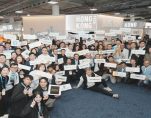
The largest-ever Hong Kong Tech Pavilion featured 61 tech companies at CES 2026.

The Hong Kong Tech Pavilion featured innovations spanning across areas in advanced materials & sustainable technology, AI & data, digital transformation, electronics & robotics, and life & health. Meanwhile three of the city’s rising stars were recognised at the prestigious annual CES Innovation Awards 2026, with Widemount Dynamics Tech leading the way with its Smart Firefighting Robot named as the Best of Innovation for Product in Support of Human Security for All with its. Meanwhile, Eieling and PointFit were honored under the Digital Health category, with the world’s first intelligence-driven compact fatty liver diagnostic device FattaLab® and patented ultra-thin biomarkers tracking wearable PF-Sweat Patch.

Terry Wong, CEO of HKSTP, said: “We believe in catalysing tomorrow’s world and this celebration of Hong Kong’s I&T via the global platform like CES demonstrates our city’s unique convergence of cutting-edge R&D, global talent and capital, and enablers such as HKSTP is connecting innovators with resources, markets and opportunities, propelling their success to the world stage.”

Vivian Chan, Associate Director of Business Development, Exhibitions and Digital Business of HKTDC pinpointed that, “Having participated in CES for over 40 years, HKTDC is committed to facilitating more technology-driven, cross-border business deals and investments riding on our global network with over 50 offices, reinforcing Hong Kong’s position as a regional and global innovation hub.”

The Hong Kong Tech delegation continues to leverage the growing global innovation momentum from CES, to engage in talent traction, encourage investments, and explore market opportunities to support the mission of entrepreneurs to go global, while demonstrating the pivotal role of Hong Kong in connecting the region, and contributing to the global tech landscape.
Hashtag: #HKSTP #HKTDC

The issuer is solely responsible for the content of this announcement.

HKSTP

More information about HKSTP is available at .

LAS VEGAS, UNITED STATES – Media OutReach Newswire – 7 January 2026 – Amidst a CES 2026 landscape dominated by AI headlines and humanoid robots, a quiet corner of the Lens Technology booth has unexpectedly become a focal point for commercial space analysts.

There are no flashy RGB lighting effects here, only a sheet of glass as thin as a cicada’s wing, being repeatedly rolled and unrolled like a tape measure. This is the public debut of Lens Technology’s aerospace-grade UTG (Ultra-Thin Glass) photovoltaic encapsulation solution. This technology marks the official entry of the manufacturing titan—best known as a giant in the Apple supply chain—transferring its precision manufacturing capabilities from consumer electronics to humanity’s next trillion-dollar market: space infrastructure.

As leading global satellite companies begin the mass deployment of third-generation (V3) satellites, the Low Earth Orbit (LEO) internet race is entering a “second half” defined by heavy payloads, long lifespans, and low costs. Lens Technology’s entry aims to untie the knot that has long plagued the aerospace industry: the trade-off between flexibility and durability.

Farewell to the “Plastic Feel”: The Material Battle in Space

At the Lens Technology booth, engineers demonstrated the core contradiction to the audience: Traditional aerospace solar cell covers are either heavy Cerium-doped Glass (CMG) or expensive Fused Silica, typically ranging from 100μm to 500μm in thickness. They are robust, but too heavy and impossible to bend.

To adapt to the massive power demands of next-generation satellites (such as those supporting direct-to-cell services), solar wing designs are rapidly evolving from rigid panels to Roll-Out Solar Arrays (ROSA-like structures). This shift forced designers to temporarily turn to polymer materials like transparent Polyimide (CPI).

“However, polymers have a fatal weakness in space,” explained a Lens Technology on-site technical lead. “The LEO environment is filled with high-energy Atomic Oxygen (AO) and strong UV radiation. Under long-term exposure, polymer molecular chains break, causing the material to yellow, become brittle, and suffer a drastic drop in light transmission. This efficiency decay was tolerable for early satellites with 5-7 year lifespans, but for the new generation of mega-constellations pursuing higher commercial returns, it is unacceptable.”

Lens Technology’s answer is Aerospace-Grade UTG. As an inorganic material, glass possesses innate “immunity” to Atomic Oxygen and UV aging, ensuring high light transmission throughout the satellite’s lifecycle. More importantly, its dense structure provides an effective barrier against water vapor and micrometeoroids, offering physical protection for delicate ultra-thin HJT or future Perovskite batteries.

The 30-Micron “Moat”: A Perfect Match for Next-Gen Satellites

In the demo area, a piece of glass only 30μm-50μm thick is bent to an astonishing radius of R1.5mm. This level of flexibility drew gasps from the audience.

This is exactly the characteristic most coveted by top global satellite companies today. To reduce the cost per launch, next-generation mega-satellites must be stowed with origami-like efficiency inside the rocket fairing. Lens Technology’s UTG solution allows solar wings to be tightly wound like a tape measure during launch, and instantly recover to a flat state upon orbital deployment.

However, making glass thin is the first step; keeping it from shattering during the violent vibration of a rocket launch is the real challenge.

Analysts point out that Lens Technology’s core competitiveness lies in its proprietary chemical strengthening processes and laser/diamond wire cutting technologies. Glass fractures often originate from micro-cracks invisible to the naked eye. Leveraging processes honed on foldable smartphones, Lens has significantly reduced the density of micro-defects on the glass edges and surfaces. This means that even under immense tension and vibration, this “glass skin” remains tough and resilient.

Dimensional Strike: Reshaping Aerospace Costs with “Consumer-Grade” Capacity

If technical specifications are the ticket to entry, then capacity and cost control are Lens Technology’s ultimate weapons.

“The logic of commercial space has changed; it is now the era of industrial mass production,” commented an industry analyst at the scene. Compared to the small-batch, lab-grade customization model of traditional aerospace glass manufacturers, Lens Technology brings the scale of consumer electronics manufacturing.

Facing the grand ambition of global satellite leaders planning to launch tens of thousands of satellites annually, supply chain elasticity is critical. Lens Technology stated that it has the capability to rapidly expand existing pilot lines or flexibly retrofit mass production lines. This potential for “ten-thousand-satellite scale” delivery and yield control can significantly lower the BOM (Bill of Materials) cost per satellite—addressing the most sensitive pain point for commercial space giants today.

Outlook: The New Cornerstone of Next-Gen Space Energy

At CES, Lens Technology also “spoiled” its future technology roadmap.

As Perovskite/Silicon tandem cells are viewed as the mainstream for future satellite power, UTG will serve not just as a cover, but as an encapsulation substrate. Lens Technology revealed it is developing next-generation composite UTG integrated with Anti-Static (ESD) coatings and Selective Radiation coatings, which will not only protect chips from electrostatic discharge damage but also assist in regulating battery temperature.

Although this business currently accounts for a tiny fraction of Lens Technology’s massive revenue and is in a period of intensive validation with global top-tier photovoltaic component manufacturers (Tier 2) and top commercial space clients (Tier 1), its signal significance cannot be ignored.

From smartphone screens to satellite wings, Lens Technology is proving that in the era of scaled expansion for space infrastructure, ground-based industrial giants possessing extreme craftsmanship and mass manufacturing capabilities will be indispensable “pavers” for the interstellar journey.

Hashtag: #LensTechnology

The issuer is solely responsible for the content of this announcement.

Researchers at the City University of Hong Kong have developed an artificial skin that mimics key functions of the human nervous system, marking a step towards robots that can feel touch, detect injury and react instinctively to harmful contact. The neuromorphic “e-skin”, created by a team led by materials scientist Yuyu Gao, converts physical pressure into electrical signals resembling neural pulses, allowing machines to distinguish between gentle […]

Footage of a Tesla humanoid robot losing balance and falling during a controlled demonstration has reignited debate over the pace and credibility of Elon Musk’s ambitions in robotics, exposing the gap between promised timelines and the realities of building general-purpose machines that can operate safely among people. The incident occurred during a late-2025 demonstration of Optimus, Tesla’s bipedal robot unveiled as a future cornerstone of the company’s […]

Competition between Tesla and Waymo is reshaping the trajectory of autonomous transport, with contrasting technical philosophies, regulatory strategies and deployment timelines sharpening the pace of innovation across the robotaxi market. Waymo holds a tangible lead in fully driverless commercial operations. Its vehicles, packed with lidar, radar and high-resolution cameras, have logged millions of autonomous miles without a human safety driver across multiple US cities. In places such […]

Advertisements

Largest-ever Hong Kong Tech Pavilion features 3 Innovation Award-winning game-changers showcasing immense potential to scale

LAS VEGAS, US – Media OutReach Newswire – 2 January 2026 – Hong Kong Science and Technology Parks Corporation (HKSTP) and Hong Kong Trade Development Council (HKTDC) will join hands in spearheading the largest-ever Hong Kong Tech Pavilion to the annual Consumer Electronics Show (CES) in Las Vegas from January 6-9 (Tue-Fri). The showcase features 61 tech companies in a dynamic mix of early-stage and mature companies in AI, robotics, healthtech, and sustainability, to signify Hong Kong’s fast-rising technology advancements and the ability to empower innovators in and out of the city to scale imagination to global impact.

Taking centre stage this year, Hong Kong Tech Pavilion stars with several CES Innovation Award winning solutions, as well as world-firsts, in a display of technology strength across the Eureka Park and Global Pavilion that includes companies less than five years old and more established ventures. Highlights include:

  • Widemount Dynamics Tech: named Best of Innovation for Product in Support of Human Security for All, their Smart Firefighting Robot is designed to detect fires, navigate smoke-filled environments, provide real-time mapping, and determine the best extinguishing agent to minimize costs and risks for losses of life and asset.
  • PointFit: honored under the Digital Health category, the PF-Sweat Patch is an ultra-thin wearable built with patented biomarkers tracking technology, it offers a non-invasive alternative with continuous monitoring of vitals and performance for athletes and wellbeing enthusiasts.
  • Eieling Technology: honored under the Digital Health category, FattaLab® is the world’s first intelligence-driven compact fatty liver diagnostic device, delivering assessment results with medical-grade accuracy in just 30 seconds. The high level of convenience promotes early treatment to those who suffer from the disease, enabling immediate preventive care, and potentially boosts longevity.

Happenings such as announcement, product launches and briefings, and conversations to business-match at the Pavilions are lining up. That includes an introduction of GumAI, a smart oral healthcare solution developed by Dentomi, sharing more on the “Dentist coming in handy” approach; a demonstration of how DRESIO puts forth its “AI Physiotherapy for Everyone” solution; the launch of “wuBiee & wuBiee wrap” that moftBODY integrates neuroscience into smart textile onto daily shapewear, and more awaits at the Pavilions. Click here for the full line-up at Hong Kong Tech Pavilion, and schedule your visit now.

In addition, a Hong Kong Tech Networking Reception will be held on Day 2, welcoming all interested parties to engage in conversations of potential partnerships, and explore on business opportunities with Hong Kong tech companies. Registration is now open with details of the Reception as follows:

  • Date: 7 January 2026
  • Time: 5:30 – 7:30 pm
  • Venue: Mercato Della Pescheria, The Venetian

Appendix: List of 61 tech companies at Hong Kong Tech Pavilion, including 47 within the HKSTP ecosystem (in alphabetical order)

No. Company Name Booth Location
1 0x Limited Eureka Park
2 AIeveR Robotics Limited Global Pavilion
3 Airoma AI Limited Eureka Park
4 AniMed Technology Limited Eureka Park
5 AP Infosense Limited Global Pavilion
6 Aporion Technology Limited Eureka Park
7 BuyHive Limited Eureka Park
8 Cartesius Robotics Limited Global Pavilion
9 Cresento Limited Eureka Park
10 Cyanse Smart Energy Tech Limited Global Pavilion
11 Dealer Send Logistics Limited Global Pavilion
12 Decennium Platforms Limited Eureka Park
13 Dentomi Limited Eureka Park
14 DRESIO Limited Global Pavilion
15 Eieling Technology Limited Global Pavilion
16 Entoptica Limited Eureka Park
17 Ezygreenpak Limited Global Pavilion
18 Feelings Group Limited Eureka Park
19 Firefilm Group Limited Global Pavilion
20 FreightAmigo Services Limited Global Pavilion
21 Gembody Limited Eureka Park
22 Glassdio Scientific Company Limited Eureka Park
23 GoGoChart Technology Limited Global Pavilion
24 Green Vigor Limited Eureka Park
25 Greenbulb Trading Limited Global Pavilion
26 Hay-koze Limited Eureka Park
27 Haylo Tech Limited Eureka Park
28 HKSTP x ARROW HARDWARE LAB Global Pavilion
29 Hong Kong Aozhen Technology Co., Limited Global Pavilion
30 iCombo Tech Company Limited Eureka Park
31 ImageVector MedTech Limited Eureka Park
32 Immune Materials Limited Eureka Park
33 Innobound Limited Eureka Park
34 Loongrise Avionics (HK) Co., Limited Global Pavilion
35 Mangdang Technology Co., Limited Eureka Park
36 MedVision Limited Eureka Park
37 Meridian Innovation Limited Global Pavilion
38 MintMind Limited Global Pavilion
39 Mirror Caring Limited Eureka Park
40 MMSTAR Technologies Limited Eureka Park
41 moftBODY Limited Eureka Park
42 Multiply Studio & Technologies Limited Eureka Park
43 Novautek Autonomous Driving Limited Global Pavilion
44 Nuvatech Limited Eureka Park
45 On-Skin Wearable Technology Limited Eureka Park
46 Plasticvore Chain Limited Eureka Park
47 Point Fit Technology Limited Eureka Park
48 ReSaTech Limited Global Pavilion
49 Robocore Technology Limited Global Pavilion
50 Shannon & Turing Technology Limited Eureka Park
51 Solos Technology Limited Global Pavilion
52 TG0 Limited Global Pavilion
53 The Hong Kong Polytechnic University Global Pavilion
54 UbiquiTech Innovations Limited Eureka Park
55 Vcare Vision Technology Limited Global Pavilion
56 Vista Innotech Limited Global Pavilion
57 Webuild Tech Limited Eureka Park
58 WeWealth Electronic Innotech Limited Global Pavilion
59 Widemount Dynamics Tech Limited Eureka Park
60 Xeroptix Technology Limited Eureka Park
61 XOXO Beverages Limited Global Pavilion


Remarks:

  • The Hong Kong Tech Pavilion is located across Eureka Park (booth #63200, Hall G) and Global Pavilion (booth #50732, Hall A-D) at The Venetian Expo.

Hashtag: #HKSTP

The issuer is solely responsible for the content of this announcement.

HKSTP

More information about HKSTP is available at .

The United Arab Emirates reinforced its position as a centre for advanced technology and space sciences through 2025, recording a sequence of policy, industrial and scientific advances that underscored a broader shift towards an innovation-led, knowledge-based economy. Government agencies, research centres and private firms aligned capital spending with skills development, deepening international cooperation while scaling domestic capabilities across satellite manufacturing, Earth observation and deep-space research. At the […]

Security researchers have demonstrated how widely deployed service robots can be commandeered without physical contact, raising concerns about safety, surveillance and supply-chain exposure as robots spread across factories, warehouses and public spaces. The findings were showcased at a major hacking conference in Shanghai, where white-hat teams revealed that certain commercial robots could be hijacked through low-cost attacks using voice commands or short-range wireless links. At the event, […]

Schaeffler Group has moved to strengthen Europe’s position in humanoid robotics by unveiling what it describes as a production-ready universal actuator designed to be deployed across multiple robot joints, a step the company says could narrow the scale and cost advantages held by Chinese manufacturers. The Frankfurt-based industrial and automotive supplier plans to present the new planetary gear actuator at CES 2026 in Las Vegas early next […]

Unitree Robotics’ G1 humanoid robots have stepped into the spotlight of China’s live entertainment scene, performing as synchronised backup dancers during a Wang Leehom concert that drew about 18,000 people, marking a striking crossover between advanced robotics and mainstream pop culture.

The performance unfolded as the pop star launched into a high-energy segment of his show, with several G1 units emerging alongside human dancers. The robots executed coordinated flips, spins and arm movements in time with the music, mirroring choreography designed for human performers. Large screens magnified the spectacle, prompting audible reactions from the crowd as the machines kept pace under concert lighting and sound conditions.

The appearance was not framed as a technical demonstration but as a fully integrated part of the show, underscoring how humanoid robots are moving beyond laboratories and industrial floors into public-facing roles. For Unitree, a Hangzhou-based robotics firm known for its quadruped robots and growing humanoid portfolio, the concert offered a high-visibility platform to display balance control, motion planning and real-time coordination in an unpredictable environment.

Wang Leehom, a globally recognised figure in Mandarin pop with a career spanning more than two decades, has long embraced technology-driven stagecraft. His decision to feature humanoid robots aligns with a broader trend in China’s entertainment industry, where concerts increasingly rely on immersive visuals, augmented reality and sophisticated stage automation to differentiate live experiences.

The G1 robots, which stand roughly human height and are designed for agility and interaction, performed without visible safety tethers, suggesting confidence in their stability systems. Industry observers noted that executing flips and rapid directional changes in close proximity to human dancers requires precise sensing and control to avoid collisions, highlighting advances in perception and actuation.

Beyond the spectacle, the performance has reignited debate over the role of automation in creative industries. Some performers and choreographers have voiced concern that robots could displace human dancers in certain settings, particularly for repetitive or physically demanding routines. Others argue that such technology will function as a complement rather than a replacement, opening new creative possibilities and reducing costs for large-scale productions.

Producers familiar with concert logistics point out that hiring and training large dance troupes can be expensive, especially for tours spanning multiple cities. Robots, once acquired, can be programmed for consistent performances and reused across shows, potentially lowering long-term costs. At the same time, upfront investment, maintenance, transport and technical support remain significant considerations.

China’s push into humanoid robotics provides important context for the performance. The sector has been identified as a strategic growth area, with companies racing to develop machines capable of operating in human environments. Demonstrations in factories, warehouses and research centres have been joined by public showcases designed to familiarise audiences with humanoid forms and capabilities.

Academic researchers note that public acceptance is a critical factor in the deployment of service robots, particularly those designed to interact closely with people. High-profile cultural events can soften perceptions and shift robots from abstract technological concepts to tangible participants in everyday life.

Social media reaction to the concert was swift, with clips of the robots’ dance routines circulating widely on Chinese platforms. Commentators praised the novelty and technical polish, while others questioned whether audiences were witnessing a glimpse of entertainment’s future or a carefully staged publicity exercise. The buzz itself has amplified Unitree’s brand visibility at a time when competition among domestic robotics firms is intensifying.

Matein Khalid 2025 was the year I was convinced that silver would outperform gold in a classic late cycle acceleration trade that is a recurrent theme in full throttle precious metal bull markets. This means, silver has a tendency to lag gold’s ascent until an inflection point at which prices breakout and then accelerate sharply on the upside. This inflection point was $36 an ounce in spot […]

On December 11, at W Dubai – The Palm, Entrepreneur Middle East hosted the Leadership Awards 2025 — one of the region’s key business events recognizing outstanding entrepreneurs and industry leaders whose work is shaping the economic and technological landscape of the Middle East. In the Fintech Leader of the Year category, the award was presented to Alexander Lozben, founder of INTERHASH and one of the notable […]

Chinese autonomous driving companies are accelerating plans to deploy self-driving taxi fleets across the Middle East, betting on strong government backing, advanced urban infrastructure and public openness to new mobility technologies to turn pilot projects into commercial services. Dubai has emerged as a key entry point. The Roads and Transport Authority issued its first autonomous driving trial permits in September, allowing Pony. ai, WeRide and Baidu’s Apollo […]

Dubai has taken a decisive step toward autonomous urban transport with the launch of a pilot public robotaxi service on the Uber app, allowing selected users to book self-driving rides within designated zones of the emirate. The initiative, rolled out by the Roads and Transport Authority in partnership with autonomous technology firm WeRide and Uber Technologies, marks the first time such a service has been made available […]

A wave of ambition is reshaping the technology landscape as leading entrepreneurs turn their attention to building artificial intelligence data centres in space. What began as scattered experiments in off-planet computing has matured into a competition among industry powerhouses seeking an edge in processing capacity, energy efficiency, and control over the infrastructure that will anchor next-generation AI systems. The pursuit is driven by the belief that Earth-based facilities are reaching fundamental limits, from land availability to cooling constraints, and that low-Earth orbit may provide the only environment capable of sustaining the exponential escalation in computational demand. Advocates frame this as an extension of a long-standing principle in engineering and exploration: to put human ingenuity to its fullest possible use, wherever the boundaries of science allow.

Several major technology leaders have stepped into this arena over the past two years. Their investments reflect a profound shift in strategy as companies realise that AI models cannot continue to scale using terrestrial infrastructure alone. The voracious energy requirements of large-scale training workloads challenge even the most advanced data-centre designs, pushing firms to explore solutions that draw on off-planet solar power and exploit the vacuum of space for passive cooling. Executives argue that orbiting facilities promise a cleaner energy profile, reduced environmental impact, and unprecedented independence from Earth’s physical constraints. As one aerospace investor remarked during a private industry event, the next digital revolution may be fuelled not by new algorithms but by new geography.

Engineering teams working on these orbital concepts often describe them as a convergence of satellite technology, chip innovation, and AI architecture. The logic is straightforward: satellites already operate reliably in extreme conditions with limited maintenance; AI systems increasingly require specialised compute hardware that benefits from consistent temperature conditions; and the economics of launch have changed dramatically due to reusable rockets. Once the cost of placing hardware into orbit falls to thresholds comparable to building premium facilities on Earth, the case for space-based computing strengthens considerably. What was once a speculative thought experiment has become a viable commercial target because access to space is no longer a privilege of governments alone.

However, the motivations driving this race are not solely technical. Strategic considerations weigh heavily. Ownership of orbital AI capacity promises unparalleled control over data sovereignty and computational independence. For executives wary of regulatory intervention or geopolitical risk, space offers a jurisdictional buffer that has become increasingly attractive. The ability to operate hardware outside traditional national borders gives corporations leverage at a moment when governments are tightening rules on data transfer, algorithmic transparency, and cloud-computing dependencies. Critics warn that this dynamic could set the stage for tension between public oversight and private ambition, particularly as orbital networks start to support commercial, defence, and financial applications simultaneously.

Security analysts have begun to examine the implications of off-planet AI infrastructure for global stability. On one hand, distributing critical systems across multiple orbital layers may reduce the vulnerability of communication and computing networks to terrestrial attacks or natural disasters. On the other, it introduces fresh risks, as high-value satellites could become targets in future disputes. Industry leaders tend to emphasise resilience and cooperation, arguing that shared standards and open coordination mechanisms can prevent escalation. Yet even in the early stages of development, commercial confidentiality and competitive pressure limit transparency, raising questions about how cooperative such a system can truly be.

Environmental considerations further complicate the picture. Proponents argue that orbital facilities will dramatically reduce the carbon footprint of data centres by tapping continuous solar energy and eliminating the need for extensive water-based cooling. They claim that redirecting computation to space will relieve pressure on overloaded terrestrial grids and free up land used for sprawling data-centre campuses. Environmental organisations counter that launching hundreds of tonnes of hardware into orbit will generate emissions during the construction phase and intensify concerns about space debris. Engineers involved in the projects acknowledge these issues but maintain that the long-term carbon savings outweigh the initial costs. Some firms have begun exploring closed-loop manufacturing cycles using recycled orbital material, a concept still in its infancy but increasingly part of corporate presentations.

The economic dimension of the space computing race has also attracted significant attention. Venture capital firms see orbital AI networks as a foundational platform similar in scale to the early internet, creating opportunities for startups focused on maintenance robotics, radiation-hardened chips, inter-satellite laser communication, and autonomous control systems. Government space agencies have shown interest too, recognising that private data-centre initiatives could stimulate broader commercial activity in orbit. Financial analysts caution that the capital intensity of these projects is immense and that many entrants may struggle to secure the funds required to move from prototype to full-scale deployment. But they also acknowledge that the firms leading the charge have histories of turning audacious concepts into viable industries.

One of the most compelling arguments for orbital AI centres revolves around scientific potential. Researchers emphasise that such facilities could support breakthroughs in materials engineering, climate modelling, pharmaceutical development, and astrophysics. Training models in microgravity environments may enable experiments that are impractical on Earth, and the isolation of orbital systems creates opportunities for secure high-performance computing dedicated to sensitive research. A prominent AI scientist recently noted at a conference that new frontiers in intelligence will be unlocked only when researchers have access to computational substrates as novel as the algorithms themselves, and that space may provide exactly that.

Despite enthusiasm, several fundamental questions remain unresolved. Energy transmission is one of them. While orbiting platforms can harness abundant solar power, efficiently transferring that energy to onboard compute clusters and ensuring stable operation during orbital night remains a challenge. Another issue concerns maintenance. Although robotic servicing is improving, most concepts still require periodic human intervention, raising questions about safety, reliability, and cost. Legal scholars are also wrestling with the future regulatory landscape, debating whether orbital AI nodes should be governed by space law, telecommunications frameworks, or entirely new agreements. These uncertainties highlight the complexity of forging infrastructure that defies conventional definitions.

Public perception is another area shaping the debate. The idea of billionaire-led initiatives expanding beyond Earth has drawn criticism from those who view it as a diversion of resources from urgent terrestrial needs. Advocates counter that technology has always advanced through bold exploration and that the benefits of space-based AI will eventually extend across society, from medical research to disaster forecasting. Several industry leaders have used narratives emphasising human progress and responsibility, suggesting that building orbital computing platforms represents a contribution to global knowledge rather than a retreat from Earth’s challenges.

A breakthrough in neural engineering is prompting wide debate over how far humans should push the boundaries between biological thought and digital computation. The unveiling of an ultra-thin implant known as BISC, designed to stream neural activity in real time through a high-bandwidth wireless interface, offers a glimpse of a future where the movement of a limb, the perception of an object, or the intent behind a […]

Japan is intensifying its economic engagement with Gulf partners as policymakers and corporate leaders seek to counter global uncertainty and reduce exposure to shifting geopolitical priorities under evolving US policy. The recalibration marks a notable acceleration in Tokyo’s outreach to the Middle East’s major sovereign investors, energy exporters, and technology funds, reflecting a sense within government and industry that the country must widen access to capital and secure strategic partnerships as global supply chains face persistent strain.

A growing number of senior officials and executives have argued that Japan’s longstanding reliance on the US as an anchor for both economic and security stability now requires broader support. Their stance reflects concerns generated by the more transactional orientation of the US under the America First framework, which has amplified debates in Tokyo on the need for diversified alliances. That reassessment has coincided with unprecedented liquidity flows across the Gulf, where sovereign wealth funds are expanding global portfolios in sectors ranging from clean energy and advanced manufacturing to semiconductors, logistics and emerging technologies.

Prime Minister Fumio Kishida’s government has moved to strengthen ties with the region’s largest investment authorities, including Abu Dhabi’s Mubadala Investment Company and Saudi Arabia’s Public Investment Fund. Japanese ministries have encouraged joint projects that align with national priorities such as chip resilience, hydrogen supply chains, carbon management, and infrastructure modernisation. Officials familiar with the discussions say the focus extends beyond energy security to long-term industrial cooperation, with Tokyo exploring ways to integrate Middle Eastern capital into Japan’s domestic renewal.

Several major companies have already positioned themselves to capture the shift. Trading houses such as Mitsui & Co. and Mitsubishi Corp. have expanded partnerships in clean fuels and petrochemicals, while Japan’s leading automakers are examining opportunities linked to Gulf diversification strategies, particularly in battery supply, autonomous mobility, and advanced materials. Banks including MUFG and SMBC are increasing their presence in the region to support outbound investment, project finance, and corporate advisory mandates requested by Gulf entities looking to deploy capital in Asia.

Analysts observe that the evolving dynamic is not one-sided. Middle Eastern investors have signalled interest in stable, technologically advanced economies as part of their long-term diversification plans. Japan’s strong intellectual property base, advanced industrial ecosystem, and predictable regulatory environment have become increasingly attractive to funds seeking alternatives to higher-risk markets. Executives have also pointed to the convergence of strategic priorities, including shared urgency around food security, energy transition, and digital infrastructure development.

The country’s semiconductor revival has emerged as a key area of alignment. As Japan attempts to rebuild its chip manufacturing footprint with government-backed projects involving firms such as Rapidus and partnerships with global foundries, Gulf investors have explored opportunities to participate in upstream and downstream components of the supply chain. Officials tracking the conversations describe growing interest from Middle Eastern funds in Japan’s materials science know-how and next-generation fabrication technologies, which they view as long-term assets capable of supporting their broader industrial programmes.

Energy cooperation remains central to the relationship. Japan continues to depend heavily on the Gulf for crude oil and liquefied natural gas, but the nature of that relationship is shifting toward co-investment in renewable energy, hydrogen production, and carbon capture projects. Tokyo’s efforts to secure stable supplies of blue and green hydrogen align closely with the decarbonisation roadmaps of Saudi Arabia and the United Arab Emirates, which are positioning themselves as future exporters of low-carbon fuels. Japanese companies have signed multiple memoranda with Gulf partners to test supply chains that could support both nations’ energy transition targets.

Technology collaboration is also gathering momentum. Gulf sovereign funds have expanded their allocations to late-stage venture investments and tech infrastructure, creating new openings for Japanese firms in fields such as robotics, clean-tech, mobility software, and advanced manufacturing systems. Executives from several technology conglomerates have confirmed that discussions are under way to establish joint R&D facilities, venture co-investment platforms, and industrial clusters that could operate across Asia and the Middle East.

Diplomatic signalling has reinforced the economic shift. Visits by senior Japanese officials to Riyadh, Abu Dhabi, Doha and Manama have highlighted Tokyo’s intent to deepen ties not only through energy partnerships but also through digital transformation initiatives, defence industrial cooperation, and food-supply agreements. These engagements complement Japan’s broader Indo-Pacific strategy, which emphasises stability, open trade routes, and resilience in critical sectors.

Shareholders of Tesla, Inc. have backed what may become the largest pay-out ever awarded to a corporate chief executive. On 6 November 2025, more than 75 per cent of voters approved a compensation package for Elon Musk — structured around 12 tranches of restricted stock — that could yield up to $1 trillion over the next decade, contingent on an array of steep performance and valuation targets. […]

Trailblazed Hong Kong-EU opportunities across AI, life and health, and smart city technologies HONG KONG SAR – Media OutReach Newswire – 8 December 2025 – Hong Kong Science and Technology Parks Corporation (HKSTP) showcased a dynamic presence at the “Think Business, Think Hong Kong” (TBTHK) symposium organised by the Hong Kong Trade Development Council (HKTDC) held in Milan on 27 November 2025, spotlighting Hong Kong’s strategic role […]

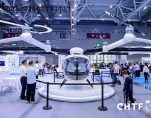
SHENZHEN, CHINA – Media OutReach Newswire – 5 December 2025 – On November 16, 2025, the three-day 27th China Hi-Tech Fair (CHTF) successfully concluded at Hall 16 of the Shenzhen World Exhibition & Convention Center (Bao’an District). As a major industrial event aligned with national strategic goals, this year’s fair closely followed the guidance outlined in the 15th Five-Year Plan, which calls for “accelerating the development of […]

Hyundai Motor Group has unveiled its first mass-produced mobility robot platform, named MobED, at iREX 2025 in Tokyo. The compact, four-wheeled robot combines automotive-grade engineering with AI-driven autonomy to cater to a wide range of industrial and everyday applications. MobED incorporates a hardware architecture built around an “eccentric control mechanism,” allowing it to adjust posture and height dynamically across varied surfaces. This ensures stable navigation over uneven […]

Manchester City and Etihad Airways unveiled a new immersive content piece, “Lights Out”, which places players Erling Haaland, Rayan Aït-Nouri and Nico O’Reilly inside a virtual version of the Yas Marina Circuit, blending advanced augmented-reality highlights and player-tracking data to re-imagine key moments from Manchester City’s season. The launch coincides with heightened interest in the 2025 Etihad Airways Abu Dhabi Grand Prix, adding a fresh digital spectacle to build fan excitement ahead of one of motorsport’s biggest weekends.

This marks the latest collaboration between the club and airline following their “Beyond Borders” campaign earlier this year, which first brought match highlights into stylised virtual worlds tied to Etihad’s expanding global destinations — notably highlighting new routes including Krabi, Hanoi and Sumatra. The “Lights Out” video replicates defining plays and celebrations from the 2024/25 campaign such as deft finishes and memorable goals, now reframed within the futuristic circuit environment of Yas Marina.

Beyond just replaying match footage, the content integrates virtual storytelling features. Fans witness Haaland’s trademark celebration as a robotic animation, while Aït-Nouri appears to race through Hanoi’s iconic Train Street — a nod to Etihad’s global network and its commitment to linking sport with travel experiences. This blend of sport and travel marketing reflects a broader trend among major clubs and sponsors seeking to expand engagement beyond traditional media into immersive digital formats.

For supporters of the Abu Dhabi Grand Prix, the timing amplifies the atmosphere surrounding the 2025 season finale. Organisers say this edition will be the largest yet, with enhanced fan experiences, expanded cultural access and expected turnout surpassing past years. The convergence of a high-stakes motorsport finale and a high-tech football release highlights how sports entities are increasingly cross-pollinating content across disciplines to tap into global fan bases.

VISHNU RAJA
RYO YAMADA
HITORI GOTOH
IKUYO KITA