News related to
robot

HONG KONG SAR – Media OutReach Newswire – 6 September 2026 – Shenzhen HQVT Technology Co., Ltd. (01392.HK), a prominent leader in China’s multispectral artificial intelligence sector, has published its interim financial results for the six months ended June 30, 2026. Marking the company’s inaugural operational scorecard following its listing on the Main Board of the Stock Exchange of Hong Kong on June 22, 2026, the interim report confirms accelerating commercial momentum across its core product lines. According to Frost & Sullivan data, HQVT ranks first in China’s overall multispectral AI industry and first in the multispectral AI large model services segment by revenue, reinforcing its established competitive moat across critical physical space safety scenarios. Further underscoring its market leadership, HQVT was recently recognized by LeadLeo Research as a top 10 benchmark vendor in China’s physical AI industry application practice.

Hong Kong Stock Connect Inclusion Set to Unlock Mainland Capital and Enhance Trading Liquidity

Hang Seng Indexes announced on August 21, 2026, that HQVT has been officially included in the Hang Seng Composite Index. The index change will be implemented after the market close on September 4, 2026, and will take effect on September 7, 2026. Upon this effective date, both the Shanghai and Shenzhen Stock Exchanges are expected to simultaneously add HQVT to the list of eligible stocks under the Stock Connect programs (Shanghai-Hong Kong Stock Connect and Shenzhen-Hong Kong Stock Connect). This will formally enable mainland Chinese investors to trade the stock through their Stock Connect accounts from September 7 onward.

The Stock Connect channel is expected to significantly broaden HQVT’s investor base by providing access to mainland China’s substantial retail and institutional capital pools. The influx of mainland investors via Stock Connect is poised to materially enhance trading liquidity.

Recent Financial Developments Of The Company

The financial results reflect a structural shift toward high-value software intelligence, with consolidated interim operating revenue reaching RMB 410.5 million, representing a strong year-over-year increase of 84.5%. The primary growth engine was multispectral AI foundation model services, which surged 382.5% year-over-year to RMB 320.0 million, elevating the segment’s revenue contribution. Excluding non-recurring listing expenses, adjusted net profit reached RMB 27.6 million, up 21.9% compared to the prior-year period, while net cash used in operating activities narrowed by 50.2% year-over-year to RMB 34.2 million, and cash and cash equivalents amounted to RMB 595.6 million as at 30 June 2026, keeping the financial position sound. To support long-term product differentiation, HQVT expanded its R&D expenditure by 125.3% year-over-year, maintaining an R&D headcount ratio of 43.1% and amassing a portfolio of 158 registered patents (including 101 invention patents) and 46 software copyrights.

Proprietary Multispectral Sensing Across Mission-Critical Infrastructure

HQVT’s technological foundation centers on its proprietary “Super Eye” perceptual platform, an integrated vision architecture that extends detection capabilities beyond visible light 380 nm – 780 nm into the ultraviolet 10 nm – 380 nm and thermal infrared 780 nm – 1 mm bands. Processing sensory inputs via the proprietary “Zhiyuan Origin Large Model”—which has completed dual filings with the Cyberspace Administration of China (CAC) and recently secured Shenzhen’s official model service provider qualification—the system detects micro-arcing, dielectric degradation, and localized thermal spikes long before physical combustion occurs. This capability is deployed through a three-tier collaborative defense matrix combining Tier-1 rack-level internal monitoring, Tier-2 room-level spatial sensing, and Tier-3 autonomous robotic patrol scanning.

This technological framework achieved significant commercial milestones across key industrial verticals during the first half of 2026. In the Internet Data Center (IDC) space, where high-velocity forced-air cooling systems often dilute smoke and hinder traditional detectors, HQVT secured large-scale AI foundation model deployment contracts from a prominent Shanghai state-owned enterprise and a Shenzhen-listed enterprise. Concurrently, in electrical power systems and new energy infrastructure, the company entered into a strategic collaboration agreement with Deep Robotics to integrate multispectral AI modules into quadruped robotic inspection platforms, enabling contact-free, online fault diagnostics across high-voltage substations, cable interlayers, and distributed battery energy storage installations.

Edge AI Breakthrough and Scalable Global SaaS Expansion

A major technical milestone during the interim period was the successful migration of HQVT’s foundation model architecture from centralized server clusters to compact Edge AI terminals powered by the NVIDIA Jetson AGX Orin platform. By removing the necessity for expensive on-premise compute servers and eliminating cloud-network latency, this on-device implementation drastically lowers initial capital expenditures while ensuring instantaneous safety responses. This edge breakthrough transforms HQVT’s commercial delivery model, facilitating product standardization and expanding the company’s addressable client base beyond large state-owned enterprises into the broader commercial market and small and medium-sized enterprises.

Soochow Securities, in its inaugural coverage report on HQVT dated July 31, 2026, assigns a “Buy” rating with a target price of HK$58.57 per share—implying approximately 113% upside from the Sept 04 closing price of HK$27.42. The broker’s valuation is anchored on 2027E revenue of RMB 1.31 billion at a 32x P/S multiple, citing the stock’s scarcity value as the only Hong Kong Main Board-listed multispectral physical AI pure-play, the industry’s 40%+ CAGR, and anticipated margin recovery as hardware costs are amortized across repeat projects. The report notes that the Edge AI breakthrough serves as the single largest near-term catalyst, with commercialization orders representing the critical verification point for investors.

Looking ahead, HQVT is directing its IPO capital toward expanding production capacity, advancing edge-model iterations, and executing an international go-to-market strategy. To penetrate overseas markets, the company has partnered with Singapore-based LINKWISE to accelerate deployments across Southeast Asian data centers and is actively preparing channel rollouts in the Middle East and Europe. By pairing standardized edge perception hardware with cloud-based Software-as-a-Service (SaaS) subscription tiers for analytics and diagnostic reporting, HQVT is positioning itself to build recurring, high-margin international revenue streams within the global physical AI safety sector. The interim results approval by the board on August 28, 2026, and the September 7 Stock Connect effective date represent the two immediate catalysts for investor attention.

Hashtag: #ShenzhenHQVTTechnology

The issuer is solely responsible for the content of this announcement.

Maharashtra Chief Minister Devendra Fadnavis has laid the foundation stone for Bajaj Finserv’s planned technology-led corporate campus in Pune, a 7.2-million-square-foot development the company says will become the country’s largest single-location financial services office.

The campus at Koregaon Park Annexe is being designed around artificial intelligence and Internet of Things systems that will monitor environmental conditions, occupancy and infrastructure and adjust building operations in real time. Bajaj Finserv describes the project as its first “sentient” corporate campus.

Fadnavis unveiled a commemorative plaque at the September 4 ceremony, which was attended by Deputy Chief Minister Sunetra Pawar, Pune Mayor Manjusha Nagpure, Bajaj Finserv Chairman and Managing Director Sanjiv Bajaj and other officials.

The company said the project would consolidate its diversified financial services businesses at a common address for the first time, bringing together operations spanning lending, deposits, payments, insurance and investments. The complex is also planned to include what Bajaj Finserv says will be Pune’s tallest steel tower.

Fadnavis said Bajaj Finserv had built a significant position in the state’s fintech ecosystem by using technology to widen access to loans, insurance and other financial services. He said the new campus would strengthen Pune’s role as a financial-technology centre and described the project as a major addition to Maharashtra’s business infrastructure.

The development is intended to use AI and IoT systems across energy management, water consumption, air quality, crowd density, movement and safety. Sensors and analytics are expected to help the campus respond to changes in weather and occupancy, while predictive maintenance systems will monitor critical infrastructure. Automation and robotics are also planned for some campus operations.

Bajaj Finserv said sustainability, environmental design and employee wellbeing would be the three main design pillars. The buildings are being planned to global LEED and Indian Green Building Council standards, with renewable energy intended to power the campus.

The company has set a target of recycling 80 per cent of water used at the site, alongside rainwater harvesting and zero-waste measures. Those features form part of Bajaj Finserv’s stated goal of achieving carbon neutrality for Scope 1 and Scope 2 emissions by the 2031-32 financial year.

Sanjiv Bajaj said the project was intended to combine environmental responsibility with the group’s financial inclusion goals. He said the campus would use eco-efficient and biophilic design, AI-driven systems and renewable energy while placing employee health and wellbeing at the centre of the workplace plan.

Green zones are expected to include Ayurvedic gardens, Miyawaki forests and replanted native forests, with species from Maharashtra selected to support biodiversity. The design will seek to increase natural daylight and ventilation and reduce cooling requirements, according to the company.

Indoor environmental monitoring is planned at floor and cluster level, covering air quality and temperature. Employees are also expected to use an integrated Bajaj One application for services such as navigation, parking and facility bookings.

The project includes plans for a medical centre with telemedicine and emergency-response facilities as well as dedicated wellness support. Bajaj Finserv said these services would be integrated with the wider digital infrastructure of the campus.

The company also plans to incorporate art, craft and heritage traditions from across the country into the development, including lesser-known and lost art forms. Elements of Bajaj Finserv’s corporate social responsibility programmes and work produced by programme beneficiaries are expected to feature within the campus design.

Fadnavis used the ceremony to highlight the Bajaj group’s long association with Maharashtra and its role in the state’s industrial development. He also referred to the legacy of Jamnalal Bajaj, the industrialist and freedom movement figure associated with the group’s early history.

Bajaj Finserv already has several corporate and group offices in Pune. The new site is intended to serve as the company’s principal corporate office and create a single large workplace for businesses that are now spread across different locations.

Arabian Post Staff -Dubai stc Bahrain has signed a strategic partnership with Tata Consultancy Services to transform its IT operations, introducing managed services and advanced automation as the telecoms provider seeks a more scalable, resilient digital infrastructure. The agreement, announced during LEAP 2026 in Riyadh, will focus on modernising stc Bahrain’s technology landscape and establishing what the company describes as a future-ready operating model. The programme is […]

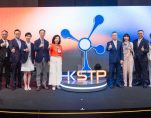
HONG KONG SAR – Media OutReach Newswire – 1 September 2026 – Hong Kong Science and Technology Parks Corporation (HKSTP), in collaboration with the Innovation and Technology Commission, successfully hosted the launch ceremony for the third InnoHK research cluster (SEAM@InnoHK) at Hong Kong Science Park today. Focusing on emerging domains such as sustainable development, energy, advanced manufacturing, and materials, SEAM@InnoHK is jointly led by top local and international academic and research institutions. The platform demonstrates Hong Kong’s robust R&D capabilities and global collaboration networks while promising tangible societal benefits, further solidifying Hong Kong’s role as an international I&T hub.

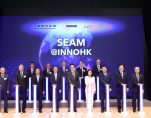
Officiating guests at the Launch Ceremony included Professor Sun Dong, Secretary for Innovation, Technology and Industry (front row, centre); Ms Cordelia Chung, Chairman of HKSTP (front row, 4th from right); Mr Kelvin Choi, Permanent Secretary for Innovation, Technology and Industry (front row, 4th from left); Mr Lyu Feng, Deputy Director-General of the Economic and Financial Department II of the Liaison Office of the Central People's Government in the HKSAR (front row, 3th from right); Mr Ivan Lee, Commissioner for Innovation and Technology (front row, 3th from left); and Mr Terry Wong, Chief Executive Officer of HKSTP (front row, 1st from right).
Officiating guests at the Launch Ceremony included Professor Sun Dong, Secretary for Innovation, Technology and Industry (front row, centre); Ms Cordelia Chung, Chairman of HKSTP (front row, 4th from right); Mr Kelvin Choi, Permanent Secretary for Innovation, Technology and Industry (front row, 4th from left); Mr Lyu Feng, Deputy Director-General of the Economic and Financial Department II of the Liaison Office of the Central People’s Government in the HKSAR (front row, 3th from right); Mr Ivan Lee, Commissioner for Innovation and Technology (front row, 3th from left); and Mr Terry Wong, Chief Executive Officer of HKSTP (front row, 1st from right).

The launch ceremony was officiated by key guests including Professor Sun Dong, Secretary for Innovation, Technology and Industry; Ms Cordelia Chung, Chairman of HKSTP; Mr Kelvin Choi, Permanent Secretary for Innovation, Technology and Industry; Mr Lyu Feng, Deputy Director-General of the Economic and Financial Department II of the Liaison Office of the Central People’s Government in the HKSAR; Mr Ivan Lee, Commissioner for Innovation and Technology; and Mr Terry Wong, Chief Executive Officer of HKSTP. They were joined by representatives and scholars from local and overseas universities, international research organizations, R&D centres, and industry partners to witness the launch of SEAM@InnoHK and explore its R&D roadmap and industrial application prospects.

Building a Flourishing Ecosystem to Empower R&D Commercialisation

As the largest I&T ecosystem in Hong Kong, HKSTP provides comprehensive professional support and resources to the R&D centres under SEAM@InnoHK. This encompasses world-class R&D infrastructure, seamless connections with academic institutions, talent pools, and investor networks, as well as matchmaking with funding and industry partners—empowering teams to transform breakthrough research into scalable, high-impact commercial solutions.

Ms Cordelia Chung, Chairman of HKSTP, said: “InnoHK has been with the Science Park for 5 years and this is the start of the second 5-year period. What we can see is that InnoHK has demonstrated the power of collaboration amongst world eminent scholars, researchers, and global partners. The first two clusters, Health@InnoHK and AIR@InnoHK have delivered world-class achievements. We commit to provide all the support we can to the InnoHK teams, as your success will add to the heartbeat of the ecosystem—not only for HKSTP, but for Hong Kong’s entire innovation landscape.”

Gathering Global Scientific Excellence to Drive Breakthroughs

The eight R&D centres under SEAM@InnoHK have brought together over 30 top global universities and research institutions, including the University of Cambridge, École Polytechnique Fédérale de Lausanne (EPFL), Nagoya University, National University of Singapore, Tsinghua University, and Peking University.

Notably, three R&D centres feature collaborations with Nobel Laureates: Professor Ben L. Feringa from the University of Groningen (2016 Nobel Laureate in Chemistry), who participates in the research at the InnoHK Centre of Functional Materials for Energy and Sustainability (CFMES); Sir Konstantin Novoselov, renowned as the “Father of Graphene” from the National University of Singapore (2010 Nobel Laureate in Physics), who serves as principle investigator for the Inno Centre for Heterogeneous Integration and Production (CHIP); and Professor Hiroshi Amano from Nagoya University (2014 Nobel Laureate in Physics), who participates in research at InnoHK Power Semiconductors and Applications Center (PowerSAC). This stellar international scientific lineup highlights Hong Kong’s unique advantages in assembling world-class research talent, fostering cross-border collaboration, and driving technological innovation, further consolidating its status as a global hub for research cooperation.

InnoHK is a flagship I&T initiative of the HKSAR Government aimed at developing Hong Kong into a global hub for scientific research cooperation. It encourages world-leading universities and research institutes to conduct collaborative research with local institutions by establishing R&D centres in Hong Kong. Together with “Health@InnoHK”, focusing on healthcare technologies and “AIR@InnoHK”, focusing on AI and robotics technologies, the three InnoHK research clusters will further enrich Hong Kong’s world-class scientific landscape, accelerating technology transfer, startup incubation, and the growth of the I&T industry.

Introduction to the Eight SEAM@InnoHK R&D Centres (For details, please refer to the Appendix):

  • InnoHK Centre for Advanced and Smart Manufacturing (CASM): Lead global manufacturing toward Industry 5.0 by fusing AI, advanced materials, additive manufacturing and digital twins to create smart, sustainable, and human-centered solutions.
  • InnoHK Centre of Functional Materials for Energy and Sustainability (CFMES): Advance breakthrough discoveries in functional materials to address bottleneck challenges related to energy and sustainability.
  • InnoHK Centre for Heterogeneous Integration and Production (CHIP): Advance next-generation electronics through innovations in semiconductor equipment and material processing, with a focus on advancing heterogeneous integration technologies.
  • InnoHK Centre for Space Manufacturing Technology (CSMT): Establish a world-class hub for international research collaboration in space manufacturing, integrating cutting-edge R&D in advanced materials and additive processes with demonstration and applied innovation in Hong Kong.
  • InnoHK Hong Kong Center for Renewable Energy and Storage (HKCRES): Develop and integrate high-performance perovskite photovoltaics, green hydrogen systems, and next-generation batteries via an end-to-end innovation framework in Hong Kong.
  • InnoHK Power Semiconductors and Applications Center (PowerSAC): Develop advanced power semiconductors, intelligent chips and system technologies for more efficient, compact and reliable power conversion.
  • InnoHK Research Centre for Intelligent GRID and Energy Technologies (I-GET): Develop intelligent, green and transformative grid and energy technologies for resilient, efficient and carbon-neutral cities.
  • InnoHK Sustainable Materials & Advanced Renewable Technologies (SMART Centre): Leverage artificial intelligence and smart automation technologies to accelerate materials discovery for circular waste upcycling, repurposing, and next-generation clean energy technologies.

Hashtag: #HKSTP

The issuer is solely responsible for the content of this announcement.
About Hong Kong Science and Technology Parks Corporation

Hong Kong Science and Technology Parks Corporation (HKSTP) was established in 2001 and has built a proven foundation as Hong Kong’s leading innovation and technology (I&T) ecosystem. Established for 25 years, HKSTP is supporting 14 unicorns, has nurtured more than 17,000 research professionals and built a community of over 2,400 technology companies from 26 countries and regions across four strategic technology clusters: Life and Health Technology, AI and Data Science, Micro-electronics, and New Energy and Green Technology.

As an ecosystem orchestrator, HKSTP provides end-to-end support to attract and nurture talent, accelerate commercialisation and help technology ventures scale. Its innovation infrastructure spans over 240 hectares covering Hong Kong Science Park in Pak Shek Kok, InnoCentre in Kowloon Tong, and three modern InnoParks in Tai Po, Tseung Kwan O and Yuen Long, advancing Hong Kong’s vision for new industrialisation and smart manufacturing.

Hong Kong Science Park Shenzhen Branch in Futian, Shenzhen, strengthens cross-border collaboration by connecting Hong Kong, the Chinese Mainland and global innovation networks and propels Chinese innovators onto the world stage, while also delivering comprehensive GBA landing support to accelerate cross-border success for local and international ventures.

As HKSTP enters its next chapter with strong foundations, it continues to deepen impact, elevate quality and create value for innovators. As an ecosystem built to lead change, HKSTP is empowering Hong Kong to define what comes next in innovation, growth and opportunity.

More information about HKSTP is available at .

Highlights of the Interim Results for the Six Months Ended June 30, 2026:

  • Benefiting from sustained strong chip demand across the AI data center (“AIDC”), storage and robotics sectors, the Group’s revenue increased by approximately 98.4% year-on-year to approximately RMB13,249.2 million;
  • The Group recorded gross profit of approximately RMB799.7 million and net profit of approximately RMB373.0 million. Profit attributable to equity shareholders of the Company amounted to approximately RMB278.9 million, representing a year-on-year increase of approximately 111.1%;
  • The Group has strategically upgraded from an “AI hardware distributor” into a “Token computing power operator”, opening up a second growth curve; and
  • The Group has formally entered into Token computing power services contracts worth more than US$1 billion, with delivery expected to commence in the fourth quarter of 2026.

HONG KONG SAR – Media OutReach Newswire – 31 August 2026 – Ingdan, Inc. (“Ingdan” or the “Company”; Stock Code: 400.HK, together with its subsidiaries, the “Group”), an ecosystem services platform anchored in artificial intelligence (“AI”) chips and principally engaged in the businesses of “Comtech” and “Ingdan” today announced its unaudited interim results for the six months ended June 30, 2026 (the “First Half of 2026” or the “Period”).

Financial Highlights for the First Half of 2026

During the Period, benefiting from sustained strong chip demand across the AIDC, storage and robotics sectors, the Group recorded revenue of approximately RMB13,249.2 million, representing an increase of approximately 98.4% from approximately RMB6,676.5 million for the corresponding period in 2025.

The Group’s gross profit amounted to approximately RMB799.7 million, representing a year-on-year increase of approximately 36.5%. Operating profit was approximately RMB517.2 million, representing a year-on-year increase of approximately 87.7%. Net profit after tax amounted to approximately RMB373.0 million, representing a year-on-year increase of approximately 96.3%.

Business Review

Strategic Upgrade Milestone: Token Factory Order Formally Secured, Opening Up a Second Growth Curve

During the First Half of 2026, the Group achieved a landmark breakthrough in its AI-driven strategic upgrade. The previously disclosed intent service orders exceeding US$1 billion have now been formalized into services contracts. Delivery is expected to commence in the fourth quarter of 2026, with the contracts expected to generate aggregate service revenue of more than US$1 billion over the next five years. This milestone signifies a fundamental evolution in the Group’s growth model—from “selling chips” to “selling computing power”—and its formal upgrade into an “Token computing power operator”, presenting a compelling new value proposition to the capital markets.

Three Growth Drivers for Rapid Expansion

The Group’s performance growth is supported by three core drivers:

  • AI computing power: The accelerating development of global data centers continues to drive strong demand for GPUs and CPUs. The Group provides full-stack computing power support, from chips to application solutions, and is deeply involved in the development of cloud-based intelligent computing centers;
  • Storage cycle: Surging demand for AI foundation model training and inference is driving expansion in the memory chip market. Leveraging the resources of leading global suppliers, the Group ensures a reliable supply of memory chips and complementary solutions; and
  • Embodied intelligence and robotics: As humanoid robots enter the mass-production stage, the Group is strengthening its full-stack deployment, from edge AI computing solutions built around platforms such as NVIDIA Jetson to enterprise-level computing clusters.

Full-Chain Technology Services Platform

As a technology services platform based on AI chips, the Group connects upstream AI chip technologies with the needs of downstream innovative enterprises. Leveraging the resources of leading global chip manufacturers, including NVIDIA, Intel, AMD and SanDisk, the Group has established a comprehensive product portfolio covering GPUs, CPUs, FPGAs, ASICs, memory chips and software ecosystems. With chip distribution serving as its entry point, the Group provides customers with integrated, full-chain services encompassing technology solutions, supply chain management, technical training, and after-sales operation and maintenance. Its services cover a broad range of application scenarios, including cloud-based intelligent computing centers, edge AI, robotics, drones and enterprise-level computing power services.

Global Computing Power Network Deployment

To support the large-scale delivery of its Token factory business, the Group is accelerating the development of a global computing power network. In the near term, it plans to expand its computing centers footprint into multiple Asian countries, with total planned computing capacity exceeding 100 megawatts. Through its proprietary Token computing power scheduling platform, the Group provides one-stop services encompassing computing power scheduling, cluster operation and maintenance, and Token computing power services. Its customers include leading internet cloud service providers and market-leading enterprises in vertical robotics segments, demonstrating the commercial viability of the Group’s business model.

Outlook

Mr. Jeffrey Kang, Chairmanand CEO of Ingdan, Inc., commented: “As demand across AIDC, storage, robotics and AI Token services continue to grow, the Group’s strategic positioning as a ‘Token computing power operator’ has been further strengthened. We expect robust customer demand in the second half of the year, while the AI Token factory business is expected to become the Group’s second growth curve. This will further enhance the capital market’s recognition of the visibility of the Company’s growth and its long-term development potential.”

Cautionary Statement

The information contained in this document has not been independently verified. Neither the Company nor any of its affiliates, advisers or representatives makes any express or implied representation, undertaking or warranty as to the fairness, accuracy, completeness or correctness of the information or opinions presented or contained herein. No person should rely on this document as a basis for any decision.

The information contained in this document should be considered in the context of the circumstances prevailing at the relevant time and is subject to change without notice. The Company undertakes no obligation to update the information contained herein to reflect any developments occurring after the date of this document. This document is not intended to provide, and should not be relied upon as providing, a complete or comprehensive analysis of the Company or its financial or operating condition or prospects. Neither the Company nor any of its affiliates, advisers or representatives shall have any obligation or accept any liability, whether in negligence or otherwise, for any loss arising from any use of this document or its contents or otherwise arising in connection with this document.

This document may contain statements reflecting the Company’s current intentions, beliefs and expectations regarding the future as of the relevant dates indicated herein. Such forward-looking statements do not constitute guarantees of future performance. They are based on certain assumptions concerning the Company’s operations and on factors beyond the Company’s control, and are subject to significant risks and uncertainties. Accordingly, actual results may differ materially from those described in such forward-looking statements. Neither the Company nor any of its affiliates, advisers or representatives has any obligation or undertakes to update any forward-looking statement to reflect events or unforeseen circumstances arising after the relevant date.

Hashtag: #Comtech #Ingdan #AI #AIDC #TokenFactory #IC #Chips #humanoid #Intel #AMD #Sandisk #NVIDIA #Tech #RevenueGrowth #TechGrowth #AIInvestment #ProprietaryProducts #KeplerLab #Comtech #IngdanTechnology #IngdanAcademy #AIAcceleration #TechTransformation

The issuer is solely responsible for the content of this announcement.

Ingdan, Inc.

Ingdan, Inc. (Stock Code: 400.HK) is an ecosystem services platform anchored in artificial intelligence (“AI”) chips. The Group captures the rapidly growing demand across numerous industries, from AI computing centers to AI-powered intelligent terminals, by converting AI chip resources into a broad range of rapidly deployable application solutions that provide the core driving force for customers’ intelligent upgrade. Through its proprietary AI technologies, large models and specialized industry knowledge bases, the Group provides customers with advanced chip application technology solutions and efficient supply chain management services.

Headquartered in Shenzhen, the Group operates offices and branches across major cities in China, including Hong Kong, Beijing, Shanghai, Guangzhou, Hangzhou , Suzhou, Wuhan and Chengdu, as well as operations in Singapore and Japan. The Group’s core businesses are Comtech — a technology services platform for the chip industry; and Ingdan — a platform providing Artificial Intelligence of Things (“AIoT”) technology and services.

For further information, please refer to the Company’s website at

Partnered with CB Insights to unveil Hong Kong leads Asia and ranks fifth globally for high-potential start-ups, orchestrating the next era of global tech innovation

Key Takeaways:

  • HKSTP’s 25th Anniversary Prelude theme, “Innovation. Next by Nature.”, brings together great minds and bold ideas to inspire what comes next for Hong Kong’s innovation ecosystem.
  • The CB Insights-HKSTP white paper ranks Hong Kong first in Asia and fifth globally, with a Mosaic score of 370 — a key indicator of high-potential ventures and future unicorns.
  • The research highlights Chinese Mainland’s lead in Asia’s physical AI wave, as the region powers global growth in robotics and AI funding.

HONG KONG SAR – Media OutReach Newswire – 31 August 2026 – The Hong Kong Science and Technology Parks Corporation (HKSTP) today officially kicked off its year-long 25th anniversary celebration with a landmark event “Together to NEXT”, bringing together Innovation and Technology Partners, Park Companies, industry leaders, academia and startups to mark a quarter-century of transforming bold ideas into global impact.

HKSTP's 25th Anniversary Prelude theme, "Innovation. Next by Nature.", brings together great minds and bold ideas to inspire what comes next for Hong Kong's innovation ecosystem. Ms Cordelia Chung, Chairman of HKSTP (6th from left), Mr Terry Wong, CEO at HKSTP (6th from right), Mr Aldous Mak, Chief Financial Officer of HKSTP (5th from left), Ms Hilda Chan, Chief Marketing Officer, HKSTP (5th from right), Ms Filla Mak, Chief Property and Asset Officer, HKSTP (4th from left), Mr Eric Or, Chief Ecosystem Development Officer, HKSTP (4th from right), Ms Fanny Wong, Chief Talent Officer, HKSTP (3rd from right), Mr Oscar Wong, Acting Chief Business Development Officer, HKSTP (2nd from right) and members from the management team officiate the event.
HKSTP’s 25th Anniversary Prelude theme, “Innovation. Next by Nature.”, brings together great minds and bold ideas to inspire what comes next for Hong Kong’s innovation ecosystem. Ms Cordelia Chung, Chairman of HKSTP (6th from left), Mr Terry Wong, CEO at HKSTP (6th from right), Mr Aldous Mak, Chief Financial Officer of HKSTP (5th from left), Ms Hilda Chan, Chief Marketing Officer, HKSTP (5th from right), Ms Filla Mak, Chief Property and Asset Officer, HKSTP (4th from left), Mr Eric Or, Chief Ecosystem Development Officer, HKSTP (4th from right), Ms Fanny Wong, Chief Talent Officer, HKSTP (3rd from right), Mr Oscar Wong, Acting Chief Business Development Officer, HKSTP (2nd from right) and members from the management team officiate the event.

To commemorate this milestone, HKSTP unveiled its anniversary theme, “Innovation. Next by Nature.”, a vision that signals its evolution from ecosystem enabler to orchestrator of the next era of global innovation. HKSTP also announced the findings of a landmark study, “Inside Asia’s Fast-Track to Global Tech Scale,” conducted in partnership with the leading technology market intelligence firm CB Insights, revealing Hong Kong ranks first in Asia and fifth globally, with a Mosaic score of 370. Mosaic score is CB Insight’s proprietary and industry-recognised indicator of high-potential ventures and future unicorns, evaluating momentum, financing, market opportunity and leadership quality. Hong Kong’s top ranking among Asian markets reflects a concentrated pool of scale-ready ventures and highly-investable innovation.

Ms Cordelia Chung, Chairman of HKSTP, said: “For 25 years, HKSTP has driven I&T as Hong Kong’s economic engine. Across our 240-hectare infrastructure and service ecosystem—comprising Science Park, InnoCentre, three InnoParks, and our Shenzhen Park—we turn research into real-world impact. Looking ahead, our ‘What’s Next’ vision is built on four dimensions, ‘Broad and Deep, Far Yet Near’: Broad means building a diverse talent ecosystem where human minds leverage technology; Deep involves advancing tech-industry convergence; Far entails expanding our global footprint; and Near focuses on drawing the future nearer with immediate action. Our community is our heartbeat. Together, we must strengthen, enhance, and collaborate, harnessing Hong Kong’s unique advantages to shape a better future for all.”

To kick off this next era, HKSTP has partnered with CB Insights to launch a white paper titled “Inside Asia‘s Fast-Track to Global Tech Scale.“ The report shows how Asia is reshaping the global innovation playbook with a network of specialist clusters, each optimised for a different stage of the innovation journey and built for today’s multipolar market landscape. CB Insights is a global tech intelligence leader and predictive data platform trusted by Fortune 500 companies.

Mr Terry Wong, CEO at HKSTP, said: “Asia’s rising innovation power is rewriting the global innovation map. While Silicon Valley grew as a single, all-in-one hub, Asia, with the Chinese Mainland as a key technology engine, is evolving an accelerated and more specialised network for global innovation. Hong Kong’s role as a super connector and value-adder has never been more important as Asia sets a new benchmark for start-up ecosystems. As HKSTP steps up as an ecosystem orchestrator, we are connecting innovators with capital, talent, deep Mainland China links and trusted pathways to global markets.”

Other Key Report Findings:

  • Chinese Mainland drives physical AI takeover
    Asia’s AI investment exploding as physical AI leads the way with robotics raising US$26.1B and AI infrastructure hit US$21.4 billion in 2025, outpacing generative AI and fintech. China dominates region with close to 100% of deals in emerging segments: robot/industrial humanoid robot foundation models, vision language and autonomous driving models.
  • Asia‘s specialist hubs as accelerators of growth across innovation lifecycle
  • Asia vies for global R&D lead to complement established manufacturing and consumer power
    The region’s global R&D expenditure surge from 24% in 2007 to 45% in 2024, according to WIPO, while already the dominant region for global manufacturing as well as driving global consumption with growing purchasing power with Asia’s GDP reaching 48.6 percent in 2025, according to Boao Forum for Asia (BFA).


HKSTP: Global
I&T Ecosystem Orchestrator and Innovation Accelerator

HKSTP’s 25th anniversary signals a renewed mission to make Hong Kong the global heartbeat of what’s next in innovation and technology (I&T). As HKSTP approaches its 25th anniversary, the new brand theme, “Innovation. Next by Nature.”, positions HKSTP as inherently built to lead the change. The year-long celebrative campaign “25 to NEXT” starts from August 2026 to July 2027 with 25 high-impact activations and cultural moments.

Anchored by three core goals — The Next Habitat (cultivating an innovation culture by connecting ecosystem stakeholders with signature events), The Next Horizon (broadening perspectives through industry-guiding insights, including the landmark study in partnership with CB Insights and 25 KOL collaborations), and The Next Pinnacle (developing overseas delegations and platforms across international markets). The campaign positions HKSTP as a more connected engine and forward-oriented convener of talent, capital, infrastructure and partnerships across sectors and borders.

Since its establishment, HKSTP has grown into Hong Kong’s largest I&T ecosystem, driving breakthroughs across Life and Health Technology, AI and Data Science, Microelectronics and Advanced Manufacturing, and GreenTech and New Energy. As the ecosystem orchestrator, HKSTP is committed to powering Hong Kong’s rise as the international I&T hub, underpinned by leading critical partnerships across Hong Kong and beyond, attracting talent, engaging stakeholders, and building a connected, forward-looking I&T community for the next era of global innovation.
Hashtag: #HongKongScienceandTechnologyParksCorporation #HKSTP

The issuer is solely responsible for the content of this announcement.

About Hong Kong Science and Technology Parks Corporation

Hong Kong Science and Technology Parks Corporation (HKSTP) was established in 2001 and has built a proven foundation as Hong Kong’s leading innovation and technology (I&T) ecosystem. Established for 25 years, HKSTP is supporting 14 unicorns, has nurtured more than 17,000 research professionals and built a community of over 2,600 technology companies from 26 countries and regions across four strategic technology clusters: Life and Health Technology, AI and Data Science, Micro-electronics, and New Energy and Green Technology.

As an ecosystem orchestrator, HKSTP provides end-to-end support to attract and nurture talent, accelerate commercialisation and help technology ventures scale. Its innovation infrastructure spans over 240 hectares covering Hong Kong Science Park in Pak Shek Kok, InnoCentre in Kowloon Tong, and three modern InnoParks in Tai Po, Tseung Kwan O and Yuen Long, advancing Hong Kong’s vision for new industrialisation and smart manufacturing.

Hong Kong Science Park Shenzhen Branch in Futian, Shenzhen, strengthens cross-border collaboration by connecting Hong Kong, the Chinese Mainland and global innovation networks and propels Chinese innovators onto the world stage, while also delivering comprehensive GBA landing support to accelerate cross-border success for local and international ventures.

As HKSTP enters its next chapter with strong foundations, it continues to deepen impact, elevate quality and create value for innovators. As an ecosystem built to lead change, HKSTP is empowering Hong Kong to define what comes next in innovation, growth and opportunity.

More information about HKSTP is available at .

By Nantoo Banerjee The Indian Space Research Organisation (ISRO) is going great guns. The country’s national space agency plans to launch its own independent orbital outpost, named the Bharatiya Antariksha Station (BAS) by 2035. If it succeeds, India will be the only country after China to have an independent space station. Neither the US nor Russia […]

The article India plans own orbital space outpost, second after China appeared first on Latest India news, analysis and reports on Newspack by India Press Agency).

Advertisements
A Japanese industry consortium has begun full operations at a shared humanoid-robot training facility in Chiba Prefecture, pooling costly equipment, staff and industrial data to accelerate factory and logistics automation.

J-HRTI, short for Japan Humanoid Robot Training & Implementation, opened its Kanto Data Factory in Narashino on August 26 with 35 humanoid robots across about 1,400 square metres. The centre can expand to 40 machines and is designed to generate, label and test the physical data needed to train robots for practical industrial work.

The consortium says the facility is Japan’s first physical-AI and robot data factory operated by a group composed solely of private companies. Its model is intended to reduce the cost and duplication involved when manufacturers try to build large robot-training systems independently, while allowing participating businesses to share common training data and testing infrastructure.

Operators telecontrol the humanoids to create imitation-learning data from tasks such as gripping, moving and handling objects. Cameras mounted on the robots record movements while motor parameters are also collected. Specialist staff then annotate the footage and motion information so AI systems can distinguish actions, errors and acceptable performance before the robots are tested in environments designed to resemble participating companies’ workplaces.

J-HRTI says members divide the cost of equipment and data generation while contributing real-world tasks from their own operations. Common datasets can be reused across companies, reducing the thousands or tens of thousands of training repetitions that an individual business might otherwise need to undertake from scratch. Sensitive company-specific work can be handled separately in a secure area, where information is not shared with other members.

That approach could widen access to humanoid development beyond the largest manufacturers, although J-HRTI has not published membership fees or a standard deployment price for factories. Claims that the system makes humanoids broadly affordable for mid-sized manufacturers therefore remain difficult to quantify. What is established is that participating companies can spread investment and technical risk rather than financing a dedicated data facility alone.

The operating group includes machinery trader Yamazen, pharmaceutical manufacturer Tsumura, direct-mail and logistics company DMS and Fuyo General Lease, alongside another participant that was not publicly identified in the August 26 announcement. INSOL-HIGH serves as the consortium secretariat and operates the data platform and overall system design.

J-HRTI’s programme is aimed initially at straightforward industrial duties. The group plans to place humanoids into workplaces for tasks such as material transport during the 2026 financial year, which ends in March 2027. It then intends to broaden the range of tasks and improve autonomy as more operational data becomes available.

The consortium is also developing a physical-AI foundation model using data collected at the Chiba site. Several thousand datasets had already been accumulated and annotated by the time full operations began, according to INSOL-HIGH officials. Participating companies are expected to use the model and return additional operating data and feedback, creating a cycle in which the shared training resource is continually updated.

Plans call for the data-factory network to expand to 10 locations nationwide during the 2027 financial year. The Chiba facility is intended to serve as the first “mother” site, with future centres positioned closer to industries that can supply specialised tasks and operational conditions. J-HRTI has said those regional facilities could also support maintenance after robots are deployed.

By the 2028 financial year, the group aims to provide foundation models specialised for sectors including manufacturing and logistics. The timetable remains a target rather than a guaranteed commercial rollout, and performance will depend on whether robots trained in controlled environments can operate safely and reliably in varied workplaces.

US Immigration and Customs Enforcement is preparing to spend as much as $2 million on robotic dogs, extending a technology push accompanying the Trump administration’s drive to sharply increase immigration arrests and deportations. Federal procurement records show ICE is seeking Boston Dynamics’ four-legged Spot robots and accessories for law-enforcement and public-safety operations. The planned purchase has an estimated value of between $1 million and $2 million. The […]

Forest City Special Financial Zone has clarified that its incentive for qualifying fintech and technology-enabled financial services is a 5% corporate tax rate rather than a blanket tax exemption, drawing a distinction between the Johor-based programme and Malaysia’s separate national digital incentives.

The clarification sets out the eligibility framework for companies considering operations in Pulau 1 of Forest City, where qualifying fintech businesses, Financial Global Business Services operations and foreign-owned payment system operators can apply for the special rate. The incentive runs for 10 consecutive years of assessment and may be extended for another 10 years if the company continues to meet the stipulated conditions.

Malaysia Digital Economy Corporation, or MDEC, is the government agency appointed to process applications, while approvals are subject to the national investment assessment framework. Eligibility does not arise simply from locating a technology business within Forest City.

Qualifying activities must incorporate at least one designated technology enabler. These include artificial intelligence or big data analytics, the Internet of Things, cybersecurity, cloud computing, blockchain, creative media technology, robotics or automation, and advanced network connectivity or telecommunications technology.

The framework therefore covers AI where the technology supports an eligible financial or business-service activity. A general AI developer or technology company does not automatically qualify for the Forest City incentive merely because it uses artificial intelligence.

Applicants must be companies incorporated under Malaysia’s Companies Act and resident in the country, with minimum paid-up capital of RM50,000. The qualifying business must be conducted in Pulau 1, Forest City. Companies must also comply with requirements covering employment, knowledge workers, operating expenditure, economic substance, environmental, social and governance commitments and any regulatory approvals applicable to their activities.

The Forest City incentive is separate from Malaysia Digital Status and the Malaysia Digital tax incentive administered by MDEC. Companies do not need Malaysia Digital Status to apply for the Forest City programme, and an applicant generally cannot receive another tax incentive for the same qualifying activity.

That distinction has become important because the national Malaysia Digital scheme includes figures of up to 100%, potentially creating confusion over whether technology and AI businesses can obtain complete corporate tax exemption in Forest City.

Under the Malaysia Digital tax incentive, companies making new investments can apply for a zero per cent reduced tax rate on qualifying intellectual-property income, subject to the applicable intellectual-property nexus rules. Qualifying non-IP income may receive a 5% or 10% reduced rate for up to 10 years, depending on whether the relevant conditions are met.

Alternatively, eligible new investments can choose an investment tax allowance of 60% or 100% of qualifying capital expenditure, which can be set against up to 100% of statutory income for a period of up to five years. The 100% figure refers to the investment tax allowance and does not constitute a general declaration that all income earned by an eligible company is tax-free.

Companies undertaking qualifying expansion investments face a different structure. The national digital programme provides a 15% reduced tax rate on qualifying IP and non-IP income for up to five years, or an investment tax allowance of 30% or 60% of qualifying capital expenditure, subject to the conditions attached to the scheme.

Applications for the Malaysia Digital tax incentive remain open until December 31, 2027. Applicants for that programme must first secure Malaysia Digital Status. Forest City’s programme has a longer application window, running to December 31, 2034 under the existing guidelines.

Forest City’s financial-zone incentives were formally unveiled by the government in September 2024 as part of an effort to establish Johor as a competitive financial and services hub close to Singapore. The package also includes separate arrangements for single family offices and knowledge workers.

Qualifying single family office vehicles operating under the Forest City framework can obtain a zero per cent tax rate on chargeable income from approved holding and investment activities, subject to Securities Commission Malaysia requirements. That concession is distinct from the 5% regime covering fintech, Financial Global Business Services and foreign payment system operators.

Forest City also sits within the wider Johor-Singapore Special Economic Zone, strengthening its role in Malaysia’s strategy to attract cross-border investment, advanced financial services and digital businesses. Johor has emerged as a major destination for digital infrastructure and technology investment, supported by its proximity to Singapore, expanding data-centre capacity and improving regional connectivity.

Andreessen Horowitz has raised $1.1 billion for a new fund dedicated to the physical infrastructure underpinning artificial intelligence, marking a major expansion of the Silicon Valley venture capital firm’s push beyond software into chips, data centres, robotics and advanced computing systems. The fund, called the Machine Age Fund, will invest across processors, memory, networking, storage and other technologies required to sustain the rapidly increasing computational demands of […]

Nvidia has agreed to acquire Hugging Face for a reported $12.9 billion, moving to take control of one of the artificial intelligence industry’s most important open-model platforms after the startup explored a sale at valuations above $13 billion. The transaction, which has not been publicly detailed by either company, would rank among Nvidia’s largest acquisitions and deepen its expansion beyond the graphics processors that underpin much of […]

LiDAR and camera vision in place of the buried wire and the RTK antenna — Booth CCBB-154, 4-8 September

BELIN, GERMANY – Media OutReach Newswire – 29 August 2026 – Xcanbot arrives at IFA Berlin 2026 with two machines on Booth CCBB-154: the XcanMow Mix 2000 robot mower, making its European debut, and the Mate X seated mobility robot. Demonstrations run daily, 4-8 September, at Messe Berlin.

Where robot mowers fail is rarely the open lawn. It is the narrow passage beside the house, the corner under a tree where satellite reception dies, the front garden the machine cannot reach. Wire-guided mowers need a cable buried around the whole plot. RTK mowers lose their fix under canopies and beside walls.

The Mix 2000 does without both. Its XcanSense system fuses LiDAR with camera vision to map the garden automatically on the first run, with no wire, no antenna, no base station and no boundary walk, and holds roughly 2 cm positioning accuracy in shade, beside walls and after dark.

It passes through gaps as narrow as 55 cm, climbs 25-degree slopes, clears 5 cm obstacles and covers up to 2,000 m² at around 180 m² per hour. Cutting height runs from 30 to 60 mm. It works at 61 dB, carries an IPX6-rated body, and ships with 4G, GPS, a rain sensor, a swappable battery and multi-zone mapping as standard.

“Every robot mower is advertised on the same flat, open lawn,” said Zhanbin Li, founder and CEO of Xcanbot. “We built the Mix 2000 for the garden with a narrow gate, a slope and a big tree. That is most gardens.”

The Mate X shares the stand: a seated mobility robot sold as consumer technology, driving itself to a chosen destination while watching 180 degrees ahead. It appears next at REHACARE International 2026, Düsseldorf, 23-26 September, Booth 1A57-3.

The Mix 2000 launches on Kickstarter later this year. Sign up at launch.xcanmow.com for launch notice and an early discount.

Hashtag: #Xcanbot

The issuer is solely responsible for the content of this announcement.

About Xcanbot

Xcanbot develops consumer robotics for everyday life, including the Mate X smart mobility companion robot and the XcanMow Mix 2000 robot lawn mower.

Forest City SFZ sets out who may qualify for its 5% special corporate tax rate, how the separate Malaysia Digital tax incentive works, and which activities and conditions apply to each scheme.

JOHOR, MALAYSIA – Media OutReach Newswire – 29 August 2026 – Forest City has, over the past decade, built a recognised track record in green-building and sustainability credentials. Since the Malaysian Government announced the Forest City Special Financial Zone (“SFZ”) incentive package on 20 September 2024, the development has added a financial-services and digital-economy dimension. The Forest City Special Financial Zone (“FC-SFZ”) Tax Incentive offers a 5% special corporate tax rate for 10 consecutive years of assessment, extendable for a second 10-year period, to eligible companies undertaking qualifying fintech, Financial Global Business Services (“FGBS”) or Foreign Payment System Operator (“FPSO”) activities in Pulau 1, Forest City. Malaysia Digital Economy Corporation (“MDEC”) is the appointed government agency to process applications, which are assessed by the National Committee on Investment (“NCI”).

Forest City at night, looking across the Strait of Johor towards Singapore. Forest City lies approximately 2 km from Singapore at its nearest point.

The FC-SFZ Tax Incentive is separate from Malaysia Digital (“MD”) Status and the MD Tax Incentive. A company does not need MD Status to qualify for the FC-SFZ Tax Incentive. Under MDEC’s current rules, an FC-SFZ applicant must also not have been granted another tax incentive for the same qualifying activity. Eligible MD Status companies may separately apply for the MD Tax Incentive, subject to the applicable criteria and approval process.

Key Incentives at a Glance

Forest City’s first decade was defined in part by its green-building and sustainability record. Forest City reports nearly 40 international awards and certifications as at August 2026, including LEED for Core and Shell (“LEED-CS”) Gold pre-certification and GreenRE Gold ratings. On 20 September 2024, the Malaysian Government announced the Forest City SFZ incentive package, adding a financial-services and digital-economy dimension to the development.

The current incentive landscape has four main components:

  • Forest City SFZ corporate tax rate: Eligible companies undertaking qualifying fintech, FGBS or FPSO activities in Pulau 1 may receive a 5% special corporate tax rate for 10 consecutive years of assessment, extendable for a second 10-year period, subject to approval and continued compliance. The qualifying activity must use at least one promoted technology enabler specified by MDEC.
  • Single Family Office (“SFO”) Scheme: A qualifying Single Family Office Vehicle (“SFOV”) may receive a 0% tax rate on chargeable income from its qualifying holding and investment activities for an initial 10 years, with a possible extension for a further 10 years, subject to the Securities Commission Malaysia (“SC”) requirements.
  • Knowledge workers: Eligible knowledge workers working within the Johor-Singapore Special Economic Zone (“JS-SEZ”), which includes Forest City as a designated flagship area, may qualify for a special 15% personal income tax rate for 10 years, subject to the applicable conditions.
  • Malaysia Digital tax incentive: This is a separate national incentive administered by MDEC. For New Investment, eligible companies may choose between a reduced tax rate — 0% on qualifying intellectual-property (“IP”) income, subject to the modified nexus approach, and 5% or 10% on qualifying non-IP income for up to 10 years — or an Investment Tax Allowance (“ITA”) of 60% or 100% of qualifying capital expenditure for up to five years. Different rates apply to the Expansion Incentive. Applications are open until 31 December 2027.

Taken together, these measures position Forest City SFZ as a potential regional base for qualifying financial-services and technology-enabled businesses assessing Malaysia’s tax framework, proximity to Singapore and access to ASEAN markets. However, the schemes are separate and should not be treated as automatically cumulative.

Forest City Tax Framework for Fintech and Technology-Enabled Financial Services

The FC-SFZ Tax Incentive is not a blanket 100% tax exemption for fintech, AI or technology companies. It is a 5% special corporate tax rate for qualifying activities under the FC-SFZ framework. MDEC is the appointed agency to process applications, while applications are assessed by the NCI.

The 5% rate applies to qualifying fintech activities, FGBS and FPSO activities carried out in Pulau 1, Forest City. The qualifying activity must utilise at least one promoted technology enabler: artificial intelligence (“AI”) or big data analytics (“BDA”); Internet of Things (“IoT”); cybersecurity; cloud; blockchain; creative media technology, including extended reality (“XR”) or mixed reality (“MR”); robotics or automation; or advanced network connectivity or telecommunications technology. Eligibility is not automatic based on location alone; companies must also satisfy the applicable corporate, activity, substance, regulatory and compliance conditions.

The “up to 100%” figure sometimes cited in relation to Malaysia Digital refers to the ITA available under the MD New Investment Incentive. It is an allowance on qualifying capital expenditure, not a 100% income tax holiday. The MD Tax Incentive is also separate from the FC-SFZ Tax Incentive and should not be assumed to stack with it for the same qualifying activity.

Comparison table:

Scheme What it covers Headline rate / benefit Authority & key note
Forest City SFZ — fintech / FGBS / FPSO incentive Qualifying fintech, FGBS and FPSO activities in Pulau 1 using at least one promoted technology enabler 5% special corporate tax rate for 10 consecutive years of assessment; extendable for a second 10-year period MDEC processes applications; NCI assessment. Applications open 1 Sep 2024–31 Dec 2034.
Forest City SFZ — Single Family Office Qualifying SFOV holding and investment activities 0% tax rate for an initial 10 years; possible extension for a further 10 years Securities Commission Malaysia; SFO tax rules gazetted on 3 Oct 2025.
JS-SEZ — eligible knowledge workers Eligible knowledge workers working within the JS-SEZ, including qualifying roles in Forest City 15% personal income tax rate for 10 years Ministry of Finance / JS-SEZ incentive package; subject to eligibility conditions.
Malaysia Digital Tax Incentive — New Investment Eligible MD Status companies undertaking qualifying Malaysia Digital Activities 0% on qualifying IP income and 5% or 10% on qualifying non-IP income for up to 10 years; OR 60% or 100% ITA for up to 5 years MDEC; MD Status required before tax-incentive application. Applications open until 31 Dec 2027.
Malaysia Digital Tax Incentive — Expansion Eligible MD/MSC Malaysia Status companies undertaking qualifying new or expansion activities 15% reduced tax rate for up to 5 years; OR 30% or 60% ITA for up to 5 years MDEC; subject to the Expansion Incentive criteria. Applications open until 31 Dec 2027.
Malaysia standard corporate rate Companies not qualifying for a lower or special rate 24% headline corporate income tax rate Inland Revenue Board of Malaysia (LHDN); lower tiered rates may apply to qualifying SMEs.

For accurate and current policy information, companies should refer directly to official sources, including:

Malaysia Digital Status and Tax Incentive: A Separate National Framework

MD Status is granted nationally by MDEC. An MD Status company may then be eligible to apply separately for the MD Tax Incentive, subject to the relevant criteria. Under MDEC’s current framework, qualifying Malaysia Digital Activities comprise the research, development or commercialisation of solutions, or the provision of services, using promoted technology enablers such as AI or BDA, IoT, cybersecurity, cloud, blockchain, drone technology, creative media technology, integrated-circuit design with embedded software, robotics or automation, and advanced network connectivity or telecommunications technology.

Under the current MD Tax Incentive, the available options differ between New Investment and Expansion:

  • New Investment: A 0% reduced tax rate on qualifying IP income, subject to the modified nexus approach, and a 5% or 10% reduced tax rate on qualifying non-IP income, for up to 10 years; or an ITA of 60% or 100% of qualifying capital expenditure against up to 100% of statutory income, for up to five years.
  • Expansion: A 15% reduced tax rate on qualifying IP income, subject to the modified nexus approach, and non-IP income, for up to five years; or an ITA of 30% or 60% of qualifying capital expenditure against up to 100% of statutory income, for up to five years.

The “100%” figure therefore refers to the ITA rate under the New Investment Incentive. It does not mean that all company income is tax-free.

The MD Tax Incentive is open for applications until 31 December 2027. A company must first obtain MD Status before submitting an application for the MD Tax Incentive.

MD Status also provides access to non-tax benefits under the MD Bill of Guarantees, including the ability to apply for foreign knowledge-worker quotas and passes, subject to the relevant immigration requirements. MDEC’s Expats Service Centre administers the related Foreign Knowledge Worker processes for eligible companies.

Eligibility Summary: Entities, Sectors and Permitted Activities

Forest City SFZ 5% rate

  • Activity-based: Qualifying services are limited to fintech-related activities, FGBS and FPSO activities.
  • Technology condition: The qualifying activity must utilise at least one promoted technology enabler specified by MDEC, including AI or BDA, IoT, cybersecurity, cloud, blockchain, creative media technology, robotics or automation, or advanced network connectivity or telecommunications technology.
  • Location condition: The qualifying activity must be carried out in Pulau 1, Forest City.
  • Substance and compliance conditions: Approved companies must meet the conditions set out in their approval letter, including commitments relating to full-time employees, knowledge workers, annual operating expenditure, ESG requirements, relevant regulatory approvals or licences, and annual compliance reporting verified by an independent auditor.

Malaysia Digital (MD) Status and MD Tax Incentive

  • Activity-based: MD eligibility is tied to Malaysia Digital Activities that use the promoted technology enablers specified by MDEC. Merely operating an AI, cloud, fintech or digital business does not automatically confer tax-incentive eligibility.
  • Status and tax-incentive process: MD Status is granted by MDEC. The MD Tax Incentive is a separate application available to eligible MD or MSC Malaysia Status companies, depending on the relevant incentive category.
  • Geographic scope: MD Status is a national programme and does not require a company to be located in Forest City.
  • No automatic stacking: MDEC states that an FC-SFZ Tax Incentive applicant must not already have been granted a tax incentive for the same qualifying activity. MDEC also confirms that MD Status is not required to apply for the FC-SFZ Tax Incentive.

Accordingly, companies should assess the FC-SFZ and MD frameworks separately. Any proposed structure involving different activities, income streams or incentive programmes should be verified with MDEC and qualified tax advisers before any combined tax outcome is assumed.

Strategic Rationale: Proximity, Talent Incentives and Regional Access

Forest City’s location proposition is based on three interlocking factors: proximity to Singapore, targeted talent incentives and early investor interest.

  • Proximity as operational leverage: Forest City lies approximately 2 km from Singapore at its nearest point, placing qualifying operations close to one of Asia’s major financial and technology hubs. The Johor Bahru-Singapore RTS Link will connect Bukit Chagar in central Johor Bahru with Woodlands North in Singapore. MRT Corp has stated that service is targeted to commence on 31 December 2026. The RTS Link does not serve Forest City directly, so onward road transport between Forest City and central Johor Bahru will still be required.
  • Talent as a bundled enabler: Eligible knowledge workers in the JS-SEZ may qualify for a special 15% personal income tax rate for 10 years, while eligible MD Status companies may apply for foreign knowledge-worker quotas and passes through MDEC’s expatriate facilitation framework. These are separate benefits with their own eligibility and approval requirements.

By June 2026, Invest Johor reported that the Forest City SFZ had recorded 260 cumulative investor enquiries through the Invest Malaysia Facilitation Centre-Johor, against an RM2 billion investment target. Separately, the SC reported in October 2025 that six families had received conditional approval under the SFO Incentive Scheme, with indicative assets under management close to RM400 million.

This incentive framework sits alongside Johor’s rapid emergence as a major Malaysian data-centre market. JLL has highlighted strong data-centre expansion in Johor and the wider JS-SEZ, supported by major hyperscale investments and infrastructure development. This broader digital-economy momentum strengthens the regional technology narrative, but it should not be presented as a direct operating benefit or guaranteed outcome for individual Forest City SFZ companies.

Decision Framework: Two Pathways and a Diligence Caveat

The incentive structure is best assessed through two distinct pathways, with a separate due-diligence lens for investors and advisers.

  • Pathway A – FC-SFZ presence on Pulau 1: This is relevant to eligible fintech companies, FGBS providers and FPSO businesses that can satisfy the physical-location, activity, substance and compliance requirements. The 5% special corporate tax rate is available for 10 consecutive years of assessment and may be extended for a second 10-year period, subject to continued compliance and approval.

This route may suit businesses that value proximity to Singapore while maintaining qualifying operations in Pulau 1. The RTS Link is expected to improve connectivity between central Johor Bahru and Singapore, but it does not remove the requirement for companies to maintain the approved substance and qualifying activities in Forest City.

  • Pathway B – MD Status and MD Tax Incentive nationwide: This pathway may be relevant to eligible digital companies operating elsewhere in Malaysia. MD Status is granted nationally by MDEC, and eligible companies may subsequently apply for the MD Tax Incentive. The applicable reduced tax rate or ITA depends on whether the company applies under the New Investment or Expansion category and on the conditions it meets.

Investors and advisers should note that headline rates are not the same as effective tax rates. The outcome for any entity depends on qualifying activities and income, approved commitments, substance conditions and the specific incentive secured. Groups with annual consolidated revenue of EUR750 million or more may also be subject to Malaysia’s domestic top-up tax rules where the relevant effective tax rate falls below 15%. Tax outcomes should therefore be modelled only after verification against current primary sources and professional advice.

The Verdict

Forest City’s proposition to fintech and technology-enabled financial-services companies is specific and condition-based: a 5% special corporate tax rate for qualifying fintech, FGBS and FPSO activities carried out in Pulau 1 using promoted technology enablers. The incentive runs for 10 consecutive years of assessment and may be extended for a second 10-year period, subject to compliance and approval. It is neither a blanket 5% rate for all AI or technology companies nor a 100% income tax exemption.

Alongside this are the separate SFO Incentive Scheme, which may provide a 0% tax rate for up to 20 years subject to SC requirements; the JS-SEZ’s special 15% personal income tax rate for eligible knowledge workers for 10 years; and the national MD Tax Incentive, which offers different reduced tax rates or ITA options depending on whether an applicant qualifies under the New Investment or Expansion category. Applications for the MD Tax Incentive are open until 31 December 2027.

Reported traction includes 260 cumulative investor enquiries recorded by Invest Johor by June 2026 and six families granted conditional approval under the SFO Incentive Scheme, with indicative assets under management close to RM400 million as reported by the SC in October 2025. Forest City also benefits from proximity to Singapore, while the RTS Link is targeted to commence service on 31 December 2026 between central Johor Bahru and Woodlands North.

For companies and investors, the key question is not simply whether these incentives exist, but whether their exact activities, income streams, location, substance commitments and corporate structure satisfy the conditions required to access them in practice. Current official guidance and qualified tax advice should be obtained before any investment or structuringHashtag: #ForestCity

The issuer is solely responsible for the content of this announcement.

HONG KONG SAR – Media OutReach Newswire – 28 August 2026 – Cyberport’s flagship annual event, the Digital Entertainment Leadership Forum 2026 (DELF 2026), opened today at Cyberport. The opening ceremony was officiated by Prof Sun Dong, Secretary for Innovation, Technology and Industry, and Mr Simon Chan, Chairman of Cyberport.

Under the theme “The Dreamatic Circus”, DELF 2026 explores how artificial intelligence (AI), immersive technologies, and other innovations are transforming the cultural and creative industries while creating new opportunities for digital entertainment and smart living. Running for three days, the event features four themed experience zones: Digital Entertainment, Culture and Arts, Smart Living and Business, and Robotics and Drones, showcasing more than 35 technology exhibits and interactive experiences.

Highlights include the immersive art exhibition of Hong Kong animation IP Another World, AI-powered fashion innovations, combat robots, drone performances, screenings, workshops, and competitions, offering visitors first-hand experience of emerging technologies.

DELF 2026 brings together more than 60 industry leaders, creators, academics, experts, and investors from Hong Kong, the Mainland, and overseas. The programme includes keynote speeches and panel discussions on AI collaboration, intellectual property development, the creative economy, smart living, film, gaming, animation, and immersive technologies.

On the first day, Cyberport signed memoranda of understanding respectively with Alibaba Cloud, The Hong Kong Academy for Performing Arts, and Hong Kong Shue Yan University. The partnerships will promote AI innovation, art-tech development, entrepreneurship, skills training, and talent cultivation, further strengthening collaboration among industry, academia, and research sectors.

Over the next two days, DELF 2026 will continue with eVTOL flight demonstrations, esports experiences, AI creative learning programmes, and showcases of AI-assisted animation and film projects. A special “Play to Earn” campaign will also allow visitors to complete missions, collect rewards, and win exclusive Another World merchandise.

For more information, visit: https://delf.cyberport.hk/tc/index

Please click here to download high-resolution press photos.

Photo 1: Digital Entertainment Leadership Forum 2026 opens today.
Photo 2: Prof Sun Dong, Secretary for Innovation, Technology and Industry, delivers remarks at the opening ceremony.
Photo 3: Mr Simon Chan, Chairman of Cyberport, delivers welcome remarks.
Photo 4: Cyberport and Alibaba Cloud sign an MoU.
Photo 5: Cyberport and The Hong Kong Academy for Performing Arts sign an MoU.
Photo 6: Cyberport and Hong Kong Shue Yan University sign an MoU
Photo 7 to 10: Prof Sun Dong visits the various innovative solutions in the DELF 2026 experience zone.

Hashtag: #DELF

The issuer is solely responsible for the content of this announcement.

Challenger brand introduces autonomous, powered, completely mechanical cleaners built around a fundamentally different approach to hard-surface cleaning.

BERLIN, GERMANY – Media OutReach Newswire – 28 August 2026 – The vacuum cleaner has dominated hard-surface cleaning centuries. Today Hizero is bringing that era to an end.

At IFA 2026, challenger cleaning brand is unveiling a full portfolio of No-Suction™ hard-surface cleaners that clean without conventional suction, vacuum motors, or high-speed airflow.

Rather than making vacuum cleaners more powerful, Hizero is taking the opposite approach: removing the vacuum altogether.

The company’s patented No Suction Technology replaces conventional airflow-based cleaning with bionic materials, direct-contact cleaning, water absorption, and mechanical waste separation.

At IFA, Hizero is demonstrating how far the concept can go with two new products: GLIDE, a no-suction robot cleaner, and EAZY, a fully mechanical cleaner that requires no battery, charging, or electronic motor.

Together with Hizero’s existing hard-surface cleaning products, they represent the company’s ambition to establish No-Suction as a new category of cleaning.

The Vacuum Era Is Ending

For generations, the basic principle of floor cleaning has remained unchanged: use suction to lift, transport and collect dirt.

Even today’s wet-and-dry cleaners continue to rely on the same architecture, combining a powerful motor, high-speed airflow and a roller or wiping system.

Hizero challenges that assumption.

Its No-Suction approach is based on a simple proposition: hard surfaces can be cleaned without needing a vacuum.

At the heart of the system is Hizero’s proprietary bionic polymer Multi Roller. Rather than relying on suction to pull debris from the surface, the roller makes direct contact with the floor, capturing solid debris while absorbing liquid.

As it moves, the roller is continuously refreshed with clean water. An integrated scraper removes dirty water, while the cleaning system separates different types of waste.

The result is a fundamentally different cleaning architecture:

  • No suction.
  • No vacuum motor.
  • No conventional exhaust airflow.

Instead, Hizero uses material science and mechanical engineering to do the work traditionally assigned to a vacuum motor.

No-Suction™ Goes Autonomous: Meet GLIDE

The Hizero GLIDE takes No-Suction technology to robot floor cleaning.

GLIDE combines app-directed navigation with Hizero’s No Suction Technology, allowing it to clean hard floors without relying on conventional vacuum suction.

Its polymer Multi Roller captures dry debris and absorbs liquid while being continuously rinsed during operation.

GLIDE also incorporates Triple Auto Waste Separation, which separates solid debris, liquid waste, and hair inside the machine.

That means the cleaning process is not simply about moving dirt into a container. The machine actively manages multiple waste streams as it cleans.

For consumers, GLIDE provides hard-floor cleaning with a smartphone tap.

For the appliance industry, its significance is more fundamental:

GLIDE is a robotic cleaner that eliminates the need for vacuuming.

No-Suction™ Without Power: Meet EAZY

At the opposite end of the technology spectrum is Hizero EAZY — demonstrating that No-Suction™ cleaning does not necessarily require any technology at all.

EAZY operates without a battery, charging system, or electronic motor.

A simple push-pull motion drives the cleaning process. A squeeze trigger dispenses clean water onto the polymer roller, which captures debris and absorbs liquid as it moves across the surface.

The internal mechanism separates solid waste from dirty water.

In a single continuous action, EAZY is designed to sweep, wash, and wipe hard surfaces.

  • There is no motor to charge.
  • No battery to replace.
  • No vacuum to power.

Just mechanical cleaning.

The result is a remarkably simple approach with applications ranging from kitchens, patios and homes to commercial environments.

One Technology. A Growing No-Suction™ Ecosystem.

GLIDE and EAZY are not standalone experiments. The company’s portfolio now spans autonomous floor care, powered hard-surface cleaning, handheld applications, and purely mechanical cleaning.

Hizero’s bionic technology has also been evolved for applications beyond floors, including countertops, windows, mirrors, and other hard surfaces, with opportunities across residential, hospitality, and commercial environments.

Rather than competing to build the most powerful vacuum, Hizero is challenging the industry to consider whether a vacuum is even necessary.

Challenging the Cleaning Status Quo

“For more than a century, the industry has focused on making vacuum cleaning better,” said Sam Li, Founder and CEO of Hizero. “We decided to challenge the assumption behind it. What if you don’t need the vacuum at all? No-Suction™ is our answer. We believe hard-surface cleaning is ready for a fundamentally different approach.”

At IFA 2026, Hizero is inviting the appliance industry — and consumers — to look beyond suction.

Because the next generation of hard-surface cleaning may not be about more suction, more noisy power, or more complexity.

“We welcome people and businesses to a new future of no suction cleaning, which heralds the end of vacuuming as we know it,” says Sam Li.

Hashtag: #Hizero

The issuer is solely responsible for the content of this announcement.

HONG KONG SAR – Media OutReach Newswire – 26 August 2026 – SenseTime Group Inc. (“SenseTime” or the “Company”; Stock Code: 0020.HK) today announced its results for the first half of 2026. During the Reporting Period, the Group recorded total revenue of RMB2.91 billion, representing a year‑on‑year (“YoY”) increase of 23.4%, and gross profit of RMB1.21 billion, up 32.9% YoY. Gross profit margin reached 41.4%, an increase of 2.9 percentage points YoY. The Group also introduced recurring revenue (“RR”) for the first time, which totaled RMB1.14 billion and accounted for 39.3% of total revenue. The Group recorded a net profit of RMB620 million under International Financial Reporting Standards (“IFRS”), marking its first IFRS profit since its public listing. Generative AI revenue reached RMB2.33 billion, representing nearly 80% of the Group’s total revenue, while overseas business revenue increased 127% YoY, significantly outpacing the Group’s overall growth rate. While delivering healthy growth in revenue and gross profit, the Group continued to improve operating efficiency, with core operating losses narrowing significantly. Non‑IFRS adjusted net loss was RMB390 million, narrowing by 67.3% YoY.

The Group continued to accelerate the large‑scale commercial deployment of its AI capabilities, building system‑level AI capabilities around the framework of “one model system, one Token Factory, and one Agent Harness” to advance AI from intelligence generation toward end‑to‑end task execution and transform these capabilities into scalable commercial value.

Dr. Xu Li, Chairman of the Board and CEO of SenseTime, said: “SenseTime’s three-pillar core capability framework, built around ‘one model system, one Token Factory, and one Agent Harness’, uses a unified model system to continuously push the boundaries of intelligence, leverages infrastructure and optimization capabilities to reduce Token costs and strengthen cost‑based pricing power, and deploys agents deeply integrated into enterprise and individual workflows to deliver complete task execution capabilities. This framework enables SenseTime to move beyond pure price competition and create sustainable commercial value through differentiated technologies and services. At the same time, it allows us to expand our user base, drive recurring revenue growth, and lay a solid foundation for the Group’s high‑quality development.”

One Model System: Advancing Native Multimodal Intelligence and Long‑Horizon Agents with Global Leading Performance

In 2026, SenseTime released a series of models at a rapid pace, spanning native multimodal unification, visual perception and reasoning, controllable generation, long‑horizon agents, spatial intelligence, and physical world models. These included the NEO‑Unify architecture; SenseNova U1, U1.5 and U1.5‑Lite; SenseNova Vision; the office‑focused multimodal agent SenseNova 6.8‑Flash‑Lite; the content creation model SenseNova U1‑Pro; the spatial intelligence model SenseNova SI‑8B; and the Kairos 3.1 world model co‑developed with Ace Robotics. Across multiple core benchmarks, these models matched or outperformed leading international models, including Gemini, GPT, and DeepSeek. Less than four months after the U1 series was open‑sourced, the three projects had collectively garnered more than 11,000 stars on GitHub.

SenseTime is advancing from digital intelligence toward physical AGI through the closed‑loop framework of “architectural innovation, system capabilities, and high‑value delivery,” continuously translating technological breakthroughs into real-world applications and commercial value.

Token Factory: Upgrading from Compute Provisioning to Scaled Intelligence Production

SenseTime’s SenseCore is evolving into a production‑oriented Token Factory. Through integrated model and infrastructure optimization, as well as capabilities in model adaptation, inference optimization, heterogeneous scheduling, energy management and global service delivery, the Token Factory not only expands Token output and lowers unit costs, but also continuously enhances the reasoning, understanding, generation, and execution capabilities embedded in each Token.

In July 2026, SenseCore delivered an average daily Token service volume of 2.4 trillion, representing a YoY increase of approximately 22 times. As of the date of this announcement, the Group’s total deployed computing power had reached 48,000 Petaflops (P).

The Token Factory provides strong support for SenseTime in advancing the performance boundaries of its foundation models and scaling their commercial deployment. It has tripled the training speed for long‑context Agent models, increased image and video generation efficiency sixfold, improved reinforcement learning training efficiency, and shortened the cycle from model R&D validation to large‑scale deployment to just one week. In addition to supporting the SenseNova foundation model, the Token Factory now serves four external foundation model providers, establishing differentiated capabilities across high‑complexity computing domains, including AI for Science (“AI4S”), video generation, embodied intelligence, world models, and city‑level intelligent applications.

In addition, the Group remains committed to advancing the domestic compute ecosystem, increasing the MFU (Model Floating‑Point Utilization) of mainstream domestic chips by up to 2.5 times compared with the baseline levels established by chip manufacturers. SenseNova U1 has achieved Day 0 adaptation across more than ten domestic chip platforms.

Through compute‑energy synergy, the Company continues to reduce the unit cost of intelligence. During the Reporting Period, its Compute‑Energy Synergy Agent achieved load forecasting accuracy of 96% and generated cumulative electricity cost savings of more than RMB12 million. For every 10,000P of computing power, annual carbon emissions were reduced by 24,000 tons.

Agents Accelerate Adoption Across Enterprise and Consumer Markets, Delivering Value Through Workflow Integration and Enhanced Everyday Experiences

Building on its model and Token capabilities, SenseTime connects models, knowledge, tools, and workflows through a unified Agent Harness, transforming underlying AI capabilities into end-to-end task delivery solutions for enterprise and individual users.

The Group’s agents are rapidly expanding across both enterprise and personal workflows. During the Reporting Period, they served more than 1,000 enterprise customers across over 20 key industries, including education, government, marketing, logistics, banking, and insurance. The Office Agent, Raccoon, has served major enterprises including Lenovo, Ping An Technology, China’s three major telecommunications operators, JD.com, and Kylin Software. Total users increased more than fivefold YoY, enterprise users grew more than sixfold, and monthly active users on the cloud platform increased nearly tenfold. In addition, the video‑generation agent Seko reached a daily video production volume of 10,000 minutes. Content created on the platform has amassed an estimated 1.5+ billion views across short‑video platforms, including 10 short-form dramas that have each surpassed 100 million views. AI productivity solutions are also expanding beyond large organizations to serve smaller teams and One‑Person Companies (OPCs). In the consumer market, the Kapi series of agents, covering use cases such as health, finance, and content creation, has surpassed 45 million cumulative users.

Computer Vision remains a strategic gateway for the Group’s expansion into industry verticals and overseas markets. During the Reporting Period, revenue from the business reached RMB500 million, accounting for approximately 17% of the Group’s total revenue. The business extended across more than 20 countries and regions and served more than 4,500 customers worldwide, with recurring customers contributing 67% of revenue.

Bridging Digital and Physical Intelligence, Unlocking Ecosystem Value

SenseTime continued to invest in frontier areas, including world models and embodied intelligence, intelligent terminals, smart healthcare, and chips. The increase in the valuation of certain AI ecosystem investments generated fair‑value gains, contributing to the Group’s first‑ever IFRS profit and reflecting the gradual realization of financial value from our ecosystem assets. Beyond short‑term investment returns, the more significant long‑term value of these ecosystem investments lies in enabling the Group gain early access to frontier domains, continuously acquire real‑world tasks, data, and feedback, and further strengthen SenseTime’s unified multimodal models and system‑level delivery capabilities.

SenseTime is deepening its “Three-pillar Framework”: one model system to raise the ceiling of intelligence and expand agents’ ability to handle complex tasks; one Token Factory to improve quality and efficiency, reduce costs, and enhance global delivery capabilities; and one Agent Harness to integrate multimodal models with the Token Factory, enabling AI to complete end‑to‑end tasks in real-world scenarios.

Looking ahead, SenseTime will continue to advance the iteration of multimodal agents, driving the evolution of the Token Factory from pricing based on Token volume to pricing based on task outcomes. The Group will also deepen the application of multi‑agent collaboration across enterprise, individual, and OPC workflows, delivering efficient and reliable productivity solutions to users.

Hashtag: #SenseTime

The issuer is solely responsible for the content of this announcement.

About SenseTime

Founded in 2014, SenseTime is a leading artificial intelligence (AI) software company, committed to its mission of “creating a better AI-empowered future through original innovation”. The Company continues to lead cutting-edge AI research while accelerating the large-scale commercialization of AI technologies.

Leveraging deep academic expertise and strong in-house innovation capabilities, SenseTime continues to enhance its industry-leading multimodal, multi-task general AI capabilities, while fostering a vibrant developer ecosystem through structured open-source initiatives.

SenseTime’s business spans Generative AI, Vision AI, and emerging innovation-driven segments. Underpinned by SenseCore, its next-generation AI infrastructure, the Company integrates computing power, algorithms, and platforms to enable scalable AI deployment. Building on this foundation, SenseTime has developed the SenseNova foundation model series, delivering cost-efficient capabilities across a wide range of general AI tasks. SenseTime continues to lead the global Vision AI market, ranking No.1 worldwide by market share. Its SenseFoundry platform integrates years of accumulated computer vision expertise with advanced multimodal foundation models, providing stable and efficient Vision AI solutions to industries worldwide.

SenseTime is listed on The Stock Exchange of Hong Kong, with operations spanning more than a dozen countries and regions.

BEIJING, CHINA– Media OutReach Newswire – 24 August 2026 – The 2nd World Humanoid Robot Games opened yesterday at Beijing’s National Speed Skating Oval, also known as the “Ice Ribbon.” As another real-world validation of 5G Capital in robotics and embodied AI, China Unicom Beijing and Huawei have built an integrated digital foundation powered by a 5G-A GigaUplink network, supporting intelligent event operations, robot competition, and spectator experiences. The deployment also lays a connectivity foundation for humanoid robots to move beyond the arena and into everyday life. Across Beijing, 5G Capital’s region-wide GigaUplink network is providing ubiquitous, secure, and reliable connectivity for a growing range of cultural tourism, embodied AI, and Mobile AI applications and events.

China Unicom Beijing and Huawei Power the 2nd World Humanoid Robot Games with 5G-A GigaUplink

This year’s Games feature major upgrades in both scale and competition design. A total of 1,301 competitions across 51 events will see 2,056 humanoid robots from 666 teams worldwide take part. The number of events has nearly doubled from 26 in the inaugural Games to 51 this year, with new high-intensity head-to-head events such as table tennis and kickboxing. Scenario-based competitions have also expanded into real-world settings including industrial production, hotels, homes, and logistics, while dance events place greater emphasis on synchronized movement across multiple robots. More autonomous competition formats and significantly higher task complexity are placing stringent demands on networks for high-capacity uplink, millisecond-level responsiveness, and high reliability, supporting real-time robot telemetry, precise control signaling, and multi-robot coordination.

To meet these requirements, China Unicom Beijing and Huawei deployed a dedicated 100 MHz network, complemented by a 300 MHz LampSite ultra-wideband indoor network, to support real-time robot telemetry and precise signaling exchange. A dedicated 5QI 7 slice combined with carrier isolation keeps end-to-end latency for humanoid robots within 30 milliseconds, supporting millisecond-level decision-making and response while helping ensure the precision of multi-robot coordination, obstacle avoidance, and fine-motion control.

By further integrating the dedicated network with BeiDou RTK (Real-Time Kinematic) positioning, the solution delivers decimeter- to sub-decimeter-level positioning accuracy, supporting autonomous navigation, agile obstacle avoidance, and precision racing in complex environments. On-site tests recorded a peak uplink speed of 1 Gbps, with average latency below 30 milliseconds.

While safeguarding mission-critical connectivity for the robots, China Unicom has also made the network experience of on-site spectators a priority. To address the high-density, heavy-traffic demands of large crowds, network resources and service assurance policies are dynamically adjusted according to different phases and areas of the event, including admission, waiting, competition, and departure. Core services such as instant messaging, ticket inquiries, QR-code admission, and mobile payments are prioritized for stable access, while the network also accommodates data-intensive services such as photo uploads, short-video sharing, and live streaming. This allows spectators to stay connected, interact seamlessly, and share highlights in real time even during peak traffic periods.

On the operations side, China Unicom has also developed China’s first embodied AI robot management platform designed for event scenarios. Through a unique network ID assigned to each robot, event staff can monitor its location within the venue, competition status, and operational metrics in real time, creating a closed-loop operations and management system.

China Unicom and Huawei Together Advancing the 5G Capital initiative

Yang Lifan, Deputy General Manager of China Unicom Beijing, said: “This network deployment is not only a real-world test of China Unicom’s network capabilities; it will also help us accumulate valuable network assurance experience for the large-scale deployment of embodied AI. China Unicom will continue to build on the experience gained through the 5G Capital initiative and turn technological innovation into tangible and replicable network capabilities for the Mobile AI era. In doing so, we aim to support industrial innovation and help bring Chinese solutions to the world with China Unicom’s expertise.”

David Li, President of Huawei’s Wireless TDD Product Line, said: “The 2nd World Humanoid Robot Games have provided a compelling real-world validation of the 5G-A 100 MHz GigaUplink network based on 3.5 GHz 2CC + 2.1 GHz SUL for embodied AI scenarios. Looking ahead, Huawei will continue to work with China Unicom Beijing to strengthen uplink capabilities and advance spectrum coordination, building multidimensional network capabilities with tiered and differentiated service assurance for multimodal device-to-cloud transmission. This will enable real-time interaction and precise control across a wide range of embodied AI scenarios.

“Networks are about more than speed. Low latency, high reliability, and ubiquitous coverage are equally important. Building on these capabilities, we will further advance the 5G Capital initiative, continue to expand the boundaries of network performance, and lay a solid foundation for the Mobile AI era, working with industry partners to enable an intelligent future.”

Hashtag: #Huawei #WorldHumanoidRobotGames

The issuer is solely responsible for the content of this announcement.

New Meenakshi Eco Park campus supports a more than 600% increase in TDCX’s India headcount over three years, reinforcing the country’s role in serving global technology and digital economy clients

HYDERABAD, INDIA – Media OutReach Newswire – 21 August 2026 – TDCX, a leading global customer experience solutions firm, today opened its second campus in India at Meenakshi Eco Park in Hyderabad. The new site reinforces India’s position as the company’s fourth-largest operations base and follows a more than 600% increase in TDCX’s India headcount over the past three years.

TDCX Founder and CEO Laurent Junique (center) cuts the ribbon at the company's second Hyderabad campus at Meenakshi Eco Park, joined by Group CIO and EVP Byron Fernandez and India Country Director Ananth Premkumar, August 20, 2026.
TDCX Founder and CEO Laurent Junique (center) cuts the ribbon at the company’s second Hyderabad campus at Meenakshi Eco Park, joined by Group CIO and EVP Byron Fernandez and India Country Director Ananth Premkumar, August 20, 2026.

Hyderabad is one of TDCX’s fastest-growing locations, supported by the city’s strong technology ecosystem, deep talent pool, and growing reputation as a center for customer experience, sales, digital support, and technology-enabled services.

The India Business Process Outsourcing services market, valued at approximately US$18.7 billion in 2024, is projected to reach US$51 billion by 2035 (Market Research Future, India Business Process Outsourcing Services Market, April 2026). TDCX has outpaced this market as global clients consolidate complex customer, sales, and technology workflows with fewer, more capable partners.

Byron Fernandez, Group Chief Information Officer and EVP, TDCX, with executive oversight of the company’s India operations, said: “India has moved well past the cost arbitrage conversation. When clients choose Hyderabad for customer experience, sales, or technology support, they are choosing access to skilled, ambitious talent that can run complex workflows at scale. Our expansion here reflects how seriously global clients now take India as a primary delivery market, rather than a secondary one.”

A campus built for scale and speed
Located within the 6 million sq. ft. Meenakshi Eco Park, one of Hyderabad’s key technology corridors, the new campus is designed to support TDCX’s continued expansion in India while giving employees a workplace built around learning, collaboration, and performance.

TDCX India supports leading global brands across digital advertising, e-commerce, fintech and technology, delivering omnichannel support for clients across Australia, New Zealand, the United Kingdom, Ireland, and North America. TDCX India has achieved strong customer and business outcomes for global clients, achieving high customer satisfaction scores while supporting complex workstreams across multiple markets reflecting the strength of its delivery model and the quality of talent in the market.

Ananth Premkumar, Country Director, TDCX India, said: “Hyderabad has emerged as one of India’s leading hubs for technology, innovation, and customer experience delivery. As our clients expand across global markets, they need partners who can quickly build high-quality teams at scale. For one of our technology clients, we are able to make agents production-ready in under six weeks, helping them accelerate their go-to-market timelines. This combination of skilled talent, speed, and operational excellence is what makes Hyderabad such a strategic location for TDCX.”

Recognized as a Great Place to Work for four consecutive years, TDCX India continues to build its reputation as both a strong delivery hub and an employer of choice.

Hashtag: #TDCX #CX #Outsourcing #EnableTheFuture

The issuer is solely responsible for the content of this announcement.

About TDCX

Singapore-headquartered TDCX is a leading global customer experience solutions firm that provides customer experience solutions, sales and digital marketing services, and content moderation for clients across industries including digital advertising and social media, e-commerce, fintech, gaming, healthtech, media, technology, and travel and hospitality.
With a focus on helping companies enable the future, TDCX’s smart, scalable approach, driven by innovation and operational precision, positions it as a key partner for companies targeting tangible outcomes. With more than 20,000 employees across 37 locations worldwide, TDCX provides clients with comprehensive coverage in Asia, Europe, and the Americas.

For more information, please visit .

HONG KONG SAR – Media OutReach Newswire – 19 August 2026 – The annual Digital Entertainment Leadership Forum 2026 (DELF 2026), organised by Cyberport, will be held from 28 to 30 August 2026 at Cyberport. Under the theme “The Dreamatic Circus” DELF 2026 brings together creators, experts and industry leaders to explore how artificial intelligence (AI) is unleashing boundless creativity and redefining digital entertainment and content creation experiences.

Over the three-day event, more than 60 distinguished leaders and professionals from the technology, entertainment and creative sectors in Hong Kong, the Chinese Mainland and around the world will discuss how AI, immersive technologies and cutting-edge innovations are reshaping content creation and entertainment experiences. As AI continues to lower the barriers to creation, the content industry is rapidly evolving from content production toward the development of the IP economy. This year’s forum will focus on how AI empowers creators and enterprises to build globally competitive original intellectual properties (IPs), while examining how Cyberport’s AI infrastructure, innovation ecosystem and international network can help transform innovative ideas into commercialised products, brands and globally recognised IPs, further strengthening Hong Kong’s position as a leading digital entertainment and IP innovation hub in Asia.

Dr Rocky Cheng, Chief Executive Officer of Cyberport, said: “Artificial intelligence is reshaping the cultural and creative industries, opening up unprecedented opportunities for creators, businesses and society. DELF 2026 brings together technology, creativity and business to foster cross-sector collaboration, advance original content creation, support IP incubation and accelerate commercial applications. Leveraging its AI infrastructure, industry ecosystem and global partnership network, Cyberport will continue to support innovative enterprises and original IP creators in seizing the opportunities of the AI era and expanding into international markets.”

Today, Cyberport also hosted a special panel discussion titled “From AI Creation to Global IP: New Opportunities for the Entertainment Industry,” bringing together industry experts to explore emerging opportunities in content creation, IP incubation and commercialisation in the age of AI. Moderated by Ir Eric Chan, Chief Public Mission Officer of Cyberport, the discussion featured Mr Frankie Tam, Creative Director of Ultra Instinct Limited; Ms Polly Yeung, Chief Executive Officer of Gudo Inc.; and Ms Louie Cheng, Director of AI Education and OPC Entrepreneurship Incubation at FizzDragon. Panellists agreed that AI is not only significantly enhancing content creation efficiency but is also accelerating the transition of the content industry into the era of the IP economy, creating broader commercial and international development opportunities for Hong Kong’s original IPs.

Ir Eric Chan, Chief Public Mission Officer of Cyberport, said: “AI is unlocking unprecedented creative possibilities and injecting fresh momentum into Hong Kong’s cultural and creative industries. As the industry enters a new phase of transformation, our focus should go beyond encouraging the creation of original content. We must also help promising IP develop long-term value, progressing from creative ideas to practical applications, and from individual works to recognised brands. Cyberport will continue to advance its public mission by connecting technology, creativity, talent and industry resources, empowering more local creators and enterprises to harness AI and turn Hong Kong’s creativity into market-ready outcomes with international potential.”

Over the three days, the forum will feature discussions on a wide range of topics, including AI collaboration, IP ecosystem development, the cultural and creative economy, smart cities, and future living. Speakers and representatives from organisations such as the University of Southern California (USC), The Hong Kong Academy for Performing Arts, TVB Plus, GGWP, Mei Ah Entertainment, and Xi’an XR Film Industry Base will share insights on how AI is driving innovation, commercialisation and globalisation across the creative industries.

In addition, the interactive experience zone will feature four themed areas and more than 35 experiential activities, showcasing diverse digital entertainment and smart living scenarios powered by AI, immersive technologies and other advanced innovations.

The four themed zones include:

  • Arts & Culture – featuring the immersive interactive art exhibition Another World: RADIANCE, Cyberport’s original immersive cultural exhibition The Reveries of Ancient Egypt, Hong Kong’s first XR 6D experience Harbour Dreams: Hong Kong XR Adventure, and the complete VR experience Versailles: The Lost Gardens of the Sun King VR experience.
  • Digital Entertainment – showcasing innovative projects including Nikopicto’s interactive skateboard experience SkateAway Circus, TVB Music Money Monster System, and the FizzDragon AI Short Drama Creation Platform.
  • Smart Living & Business – featuring products such as Genesis One’s 3D & AI Smart Fashion Platform, allowing visitors to experience how technology is transforming everyday life.
  • Robotics & Drones – presenting consumer robotics innovations such as combat robots and AI interactive smart vehicles developed by Jin Technology, alongside the “Charting the Future: eVTOL Inaugural Test Flight,” highlighting the latest developments in interactive technology, the low-altitude economy and smart mobility.

To encourage visitors to explore the diverse digital entertainment experiences, DELF 2026 will launch a special “Play-to-Earn” campaign that combines gamification and rewards. Participants can collect stamps by completing designated tasks across the four themed zones and redeem gifts, while those who complete all challenges will have a chance to receive limited-edition merchandise from the Hong Kong original animation IP Another Worlds.

The event will also feature AI interactive workshops under the Cyberport Academy: DELF 2026 – AI Cultural & Creative Micro-Academy, where participants can learn creative skills such as concept art design and video production. In addition, the event will feature a special movie screening programme showcasing a Mars-themed AIGC sci-fi short drama from Singapore, selected works from the 3rd AI-assisted animation production support scheme, and 2nd HKUST AI Film Festival. Complemented by a live performance from popular K-pop band XODIAC and an indoor drone cirque, the programme will deliver an immersive experience that brings together artificial intelligence, digital entertainment and creative technology.

For more information about DELF 2026 and the speaker lineup, please visit: https://delf.cyberport.hk.

Please click HERE to download the high-resolution press photos.

Photo 1: Dr Rocky Cheng, Chief Executive Officer of Cyberport (centre); Ir Eric Chan, Chief Public Mission Officer of Cyberport (third from right); Mr Terence Leung, Curator of the Digital Entertainment Leadership Forum at Cyberport (second from left); Mr Frankie Tam, Creative Director of Ultra Instinct Limited (second from right); Ms Polly Yeung, Chief Executive Officer of Gudo Inc. (first from right); and Ms Louie Cheng, Director of AI Education and OPC Entrepreneurship Incubation at FizzDragon (first from left), posed for a group photo at the DELF 2026 press conference, previewing the forum to be held at Cyberport from 28 to 30 August and highlighting a series of exciting upcoming programmes and activities.
Photo 2: Dr Rocky Cheng, Chief Executive Officer of Cyberport, said that AI is reshaping the cultural and creative industries, opening up unprecedented opportunities for creators, businesses and society. Leveraging its AI infrastructure, industry ecosystem and global partnership network, Cyberport will continue to support innovative enterprises and original IP creators in seizing the opportunities of the AI era and expanding into international markets.
Photo 3: Ir Eric Chan, Chief Public Mission Officer of Cyberport (first from left), moderates the panel discussion “From AI Creation to Global IP: New Opportunities for the Entertainment Industry,” joined by Mr Frankie Tam, Creative Director of Ultra Instinct Limited (second from left); Ms Polly Yeung, CEO of Gudo Inc. (second from right); and Ms Louie Cheng, Director of AI Education and OPC Entrepreneurship Incubation at FizzDragon (first from right), discussing how AI is reshaping content creation and driving the growth of the IP economy.
Photo 4: Mr Terence Leung, Project Curator, Digital Entertainment Leadership Forum,

Cyberport, introduces the key highlights of DELF 2026 to the media.

Photo 5: Mr Terence Leung, Curator of the Digital Entertainment Leadership Forum at Cyberport (second from left); Mr Frankie Tam, Creative Director of Ultra Instinct Limited (first from right); Ms Polly Yeung, Chief Executive Officer of Gudo Inc. (first from left); and Ms Louie Cheng, Director of AI Education and OPC Entrepreneurship Incubation at FizzDragon (second from right), posed for a group photo with “Gudo” (centre), a character from Another World, at the DELF 2026 press conference.
Photo 6 – 11: Multiple booths on display at the DELF 2026 press conference, including Genesis ONE (photo 6), HTC HK Limited (photo 7), Jin Technology Limited (photo 8), Gudo Inc (photo 9), FizzDragon (photo 10) and Hong Kong Blind Union (photo 11).

Hashtag: #DELF #Cyberport

The issuer is solely responsible for the content of this announcement.

About Hong Kong Cyberport

Wholly owned by the Hong Kong Special Administrative Region (HKSAR) Government, Cyberport is Hong Kong’s digital tech hub and AI accelerator, with a vision to empower industry digitalisation and intelligent transformation, to promote digital economy and AI development, and to foster Hong Kong to be an international AI, innovation and technology (I&T) hub. Cyberport gathers over 2,400 companies, including 29 listed companies and 10 unicorns. One-third of onsite companies’ founders come from 28 countries and regions, while Cyberport companies have expanded to over 35 global markets.

Cyberport, with Hong Kong’s largest AI Supercomputing Centre and AI Lab as the engine, has been building the AI ecosystem with industry-leading AI companies and over 500 AI and data science start-ups. Through development of tech clusters, namely AI, data science, blockchain and cybersecurity, Cyberport empowers industries across smart city and government, banking and finance, digital entertainment, culture and tourism, healthcare, education and training, property management, construction, transportation and logistics, green environment and more, while hosting Hong Kong’s largest FinTech community. Commissioned by the HKSAR Government, Cyberport has implemented proof-of-concept and sandbox schemes, subsidisation for digital tech adoption, industry tech training and start-up incubation, to drive technology R&D, translation and commercialisation, thus propelling digital transformation and intelligent upgrade across industry and society.

Also as “State-level Scientific and Technological Enterprise Incubator” and Hong Kong’s key incubator, Cyberport supports entrepreneurs with funding and office space, extensive networks of enterprises, investors, technology corporations and professional services for business growth and expansion to Chinese Mainland and overseas markets, all-round facilitation for landing in Hong Kong, talent attraction and cultivation, ready as a launchpad to take start-ups in any stages of development to the next level.

For more information, please visit .

Firebird has opened a large-scale artificial intelligence computing facility in Armenia, launching an ambitious expansion that is expected to deploy more than 70,000 NVIDIA Blackwell and Rubin GPUs by the end of 2027. The facility at Hrazdan marks the operational debut of Firebird’s international AI infrastructure platform. The company plans to expand the Armenia operation to 300 megawatts of computing capacity through a three-phase programme, potentially establishing […]

Anthropic is negotiating a possible $6 billion acquisition of artificial intelligence infrastructure company Decart AI, a transaction that could become the Claude developer’s largest takeover and strengthen its ability to reduce the soaring cost of running advanced AI models. The discussions remain unfinished and could still collapse. The proposed deal centres less on expanding Anthropic’s consumer product portfolio than on improving the economics of computing. Decart develops […]

North Korea-linked hackers exploited a previously unknown Windows vulnerability to gain the highest level of system privileges while targeting defence, aerospace and aviation organisations across several countries. The flaw, tracked as CVE-2026-68820, affects the Windows Ancillary Function Driver for WinSock, known as AFD. sys. Microsoft patched the vulnerability on August 11 after it was found being actively exploited as part of the long-running Operation Dream Job cyber-espionage […]

Elon Musk has predicted that Starlink connectivity will eventually become standard across cars worldwide, extending SpaceX’s satellite broadband ambitions into an automotive market increasingly dependent on permanent, high-bandwidth data links. “All cars will have Starlink in the future,” Musk said in a post on X, adding that satellite connectivity was the only practical way to deliver very high bandwidth to billions of vehicles. The statement sets out […]

VISHNU RAJA
RYO YAMADA
HITORI GOTOH
IKUYO KITA