News related to
robot

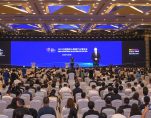
GUIYANG, CHINA – Media OutReach Newswire – 29 August 2025 – On August 28, the 2025 China International Big Data Industry Expo opened in Guiyang, Guizhou Province. Launched in 2015, it has become the world’s premier platform for the development of big data industry. Opening ceremony venue of the 2025 China International Big Data Industry Expo During the opening ceremony, head of the National Data Administration of […]

HONG KONG SAR – Media OutReach Newswire – 25 August 2025 – On August 25, 2025, Lens Technology (300433.SZ, 06613.HK) released its 2025 half-year financial report, highlighting robust growth driven by advancements in AI terminals, smart vehicles, humanoid robots, and an accelerated global expansion strategy. Through continuous innovation and expanded production capabilities, the company is well-positioned to seize opportunities in emerging markets while delivering sustained value to […]

Leveraging B2C and B2B Synergies to Capitalize on the Global K-Beauty Boom Results Highlights Revenue rose by 49.3% to US$243.93 million. Operating profit increased by 31.9% to US$18.68 million. Net profit grew by 26.7% to US$14.08 million. Business-to-Customer (B2C) YesStyle Platforms recorded revenue of US$164.86 million, up 31.7%, contributing 67.6% of the Group’s total revenue. Revenue of Business-to-Business (B2B) platform AsianBeautyWholesale surged by 110.9% to US$77.94 million, […]

Foxconn Technology Group has committed to investing $30 million in Robocore, a robotics firm specialising in medical and elderly care solutions. This move marks the company’s strategic push into the rapidly growing healthcare robotics sector, a field poised to revolutionise the care of ageing populations globally. Robocore, based in Taiwan, develops advanced robotic systems designed to assist elderly people with daily activities, enhancing their mobility, independence, and […]

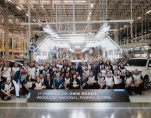
Iracemápolis, São Paulo – Media OutReach Newswire – 16 August 2025 – In the early hours of August 16 (Beijing time), GWM’s Brazil plant officially commenced operations, marked by a grand ceremony for the rollout of its first vehicle, the HAVAL H6 GT. The plant, located in Iracemápolis, São Paulo, was acquired from Daimler Group and has since been upgraded into an intelligent manufacturing base. As GWM’s […]

Samsung Electronics has secured a significant contract with Tesla, valued at $16.5 billion, to produce the electric vehicle manufacturer’s next-generation AI6 chips. The chips will be manufactured at Samsung’s advanced fabrication facility in Taylor, Texas, marking a pivotal development in both companies’ strategic plans.

The eight-year agreement, confirmed by Tesla CEO Elon Musk, is set to commence in 2025 and extend through 2033. This deal represents a substantial commitment from Tesla to Samsung’s foundry capabilities, particularly as the semiconductor industry faces increasing demand for advanced chips.

The AI6 chips are designed to power Tesla’s Full Self-Driving systems, the Optimus humanoid robot, and future robotaxi fleets. This move follows Tesla’s decision to discontinue its in-house Dojo supercomputer project, redirecting focus towards optimized chip design and external partnerships for AI infrastructure.

Samsung’s Taylor facility, supported by $6.4 billion in U. S. CHIPS Act funding, will utilize the company’s 2-nanometer process technology to manufacture the AI6 chips. This collaboration aims to enhance Samsung’s foundry business, which has faced challenges in recent years, and to position the company as a competitive player in the advanced semiconductor market.

While the deal is a strategic win for Samsung, it also presents challenges. The production of 2nm chips is complex, and achieving high yield rates is critical. Additionally, the financial terms of the contract suggest that Samsung may initially operate at a loss, viewing the deal as an investment in long-term growth and industry positioning.

The partnership with Tesla is expected to bolster Samsung’s position in the global semiconductor industry, particularly in competition with Taiwan’s TSMC, a dominant player in the foundry market. The success of this venture will depend on the effective scaling of production capabilities and the ability to meet Tesla’s stringent performance requirements.

BAODING, CHINA – Media OutReach Newswire – 12 August 2025 – Great Wall Motor (GWM) has combined sport, technology, and industrial pride in a landmark event—the 2025 GWM Smart Factory Half Marathon—held inside its Xushui Smart Factory in Baoding, Hebei Province. Over 10,000 runners raced through stamping, welding, and assembly workshops, surrounded by a living showcase of China’s cutting-edge automotive manufacturing. From the rhythmic movements of robotic […]

Advertisements

Information technology expenditure across the Middle East and North Africa region is poised to climb to $169 billion by 2026, reflecting a notable 8.9 percent growth from 2025, according to projections from Gartner. The surge in IT spending underscores a region-wide shift towards digital transformation, fuelled by the increasing reliance on artificial intelligence, intelligent automation, and AI-optimised infrastructure enhancements. This rise in spending is taking place against […]

Humanoid robots, once viewed as the pinnacle of artificial intelligence and automation, continue to struggle with one basic task: folding a t-shirt. Despite extraordinary advances in AI and machine learning, the physical limitations of robot bodies have created a bottleneck in their progress, even as the brains behind them grow ever more sophisticated. Though AI systems now power these machines with remarkable computational capability, they remain far […]

HITEK AI, a leading provider of AI-driven solutions based in the Middle East, has launched a cutting-edge ‘Robot-as-a-Service’ initiative in partnership with SoftBank Robotics UK. The collaboration combines SoftBank Robotics’ state-of-the-art robotic cleaning technologies with HITEK AI’s smart facilities management platform, offering a fully integrated solution designed to streamline operations in commercial and residential settings. The new offering aims to enhance the efficiency of cleaning operations by […]

Perplexity, a growing artificial intelligence company, has been repeatedly crawling websites against the wishes of content owners, prompting a wave of concern over digital ethics and user privacy. Despite multiple requests for the company to halt its web scraping activities, Perplexity continues to disregard these refusals, highlighting tensions between AI innovation and data ownership. AI-driven companies have long been at the forefront of technological development, but their […]

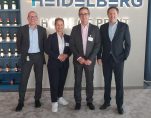
HEIDELBERG moves into defense industry VINCORION Advanced Systems GmbH specializes in power systems for safety-critical applications HEIDELBERG impresses with high vertical range of manufacture and industrialization expertise System partnership with VINCORION marks start of strategic collaboration HEIDELBERG, GERMANY – Newsaktuell – 29 July 2025 – Heidelberger Druckmaschinen AG (HEIDELBERG) is positioning itself in the defense sector with its first concrete project and is entering into a strategic […]

Tesla has accelerated its plans for the launch of its highly anticipated Robotaxi service in San Francisco, with the service potentially set to begin as early as this Friday. The announcement comes after the company moved up its timeline, reflecting confidence in its self-driving technology and its ability to meet regulatory requirements. Some Tesla owners have already been notified that they will have the opportunity to participate […]

HONG KONG SAR – Media OutReach Newswire – 25 July 2025 – MicroPort Scientific Corporation (Stock Code: 00853.HK, “MicroPort”) announced that Shanghai Healthcare M&A Fund (“SHMAF”), a fund managed by SIIC Capital, a subsidiary of SIIC Group, has entered into a share purchase agreement to acquire 135,335,204 shares in MicroPort held by Otsuka Medical Devices Co., Ltd. Through this transaction, SHMAF will become a strategic shareholder in […]

HONG KONG SAR – Media OutReach Newswire – 23 July 2025 – The Faculty of Engineering at The Chinese University of Hong Kong (CUHK) continues to strengthen its position in global engineering education and research, with notable achievements across multiple engineering disciplines including Computer Science, Information Engineering, Electronic Engineering, Biomedical Engineering, Mechanical and Automation Engineering, Systems Engineering and Engineering Management. Recent rankings highlight the Faculty’s research excellence, […]

We’re at an all-time high for the S&P 500 right at the beginning of earnings season. If we can get through this earnings season with not too many major failures, this upward current momentum that we have in the market, is likely to continue. It’s tempting to call this a pause for breath—but make no mistake, what follows could determine whether bulls stay in control. With 59 S&P 500 […]

dnata has introduced six autonomous electric baggage tractors at Dubai World Central – Al Maktoum International Airport, marking a pioneering shift in airport ground operations. The EZTow tractors, designed by TractEasy, tow up to four baggage containers at speeds near 15 km/h, operating at Level 3 autonomy under limited human oversight. By early 2026 the system is set to upgrade to Level 4 self-driving capability. The AED 6 million rollout seeks to enhance […]

Rania Gule The USD/JPY pair is rising, driven by renewed momentum supported by the ongoing divergence in monetary policies between the Federal Reserve and the Bank of Japan. Yield differentials between the two economies remain a key factor in explaining the pair’s price action. The dollar gained additional support following the release of U.S. retail sales data, which significantly exceeded expectations, thereby weakening the likelihood of a […]

Doubled from last year with 87% entering the Hong Kong startup competition from overseas HONG KONG SAR – Media OutReach Newswire – 17 July 2025 – EPIC 2025, organised by Hong Kong Science and Technology Parks Corporation (HKSTP), has reached new heights with the 9th edition saw an influx of global applications hitting close to 1,200, entering from more than 70 economies, setting a record for the […]

Uber Technologies and Baidu Inc. have confirmed a multi‑year strategic alliance to bring Baidu’s Apollo Go autonomous robotaxis to markets beyond the U. S. and mainland China, initiating the programme later this year in select cities across Asia and the Middle East. The new service, integrated into the Uber app, will offer riders the option to choose fully driver‑free vehicles powered by Apollo Go’s advanced AI systems.

Apollo Go currently operates the world’s largest driverless ride‑hailing network, with more than 1,000 fully autonomous vehicles deployed across 15 cities—including Dubai and Abu Dhabi—and over 11 million rides completed as of May 2025. The expansion, announced on 15 July 2025, marks a significant move by Uber as it intensifies its foray into autonomous vehicles, supplementing existing partnerships with other AV developers such as Waymo, Pony AI, WeRide, May Mobility, Volkswagen and Avride.

Uber CEO Dara Khosrowshahi described the venture as a decisive milestone: “This partnership brings together two of the world’s most iconic technology companies to help shape the future of mobility. As the world’s largest platform of its kind, spanning mobility, delivery, and freight, Uber is uniquely positioned to help AV leaders like Baidu bring their autonomous technology to the world.” Baidu’s co‑founder and CEO Robin Li added that integrating Baidu’s autonomous driving technology with Uber’s network represents “a major milestone in deploying our technology on a global scale,” aimed at delivering safe, efficient and cost‑effective transport to a wider audience.

Market response to the announcement has been positive: Uber’s shares rose more than 1 % in pre‑market trading in the U. S., while Baidu’s U. S.‑listed stocks surged almost 5 %, reflecting investor confidence in the deal’s potential to accelerate autonomous mobility adoption worldwide.

The initial deployment targets key cities in Asia—potentially including Singapore and Malaysia where Baidu plans to launch Apollo Go this year—and in the Gulf region, where regulatory environments are favourable and infrastructure is supportive. Recent reports highlight that Gulf countries such as the UAE and Saudi Arabia aim to have at least 25 % of transport in major cities autonomous by 2030‑2040, presenting a promising opportunity for robotaxi services.

Analysts view the Uber‑Baidu partnership as a pivotal step in global AV expansion. By entering markets outside its core regions, Baidu leverages an “asset‑light” international strategy driven by collaboration instead of proprietary platforms. Uber gains immediate access to a proven self‑driving fleet without the development time and costs associated with in‑house technology, bolstering its competitiveness in the robotaxi space, particularly against rivals like Lyft and Waymo.

Safety and regulatory scrutiny remain top concerns. Apollo Go’s record of over 11 million rides with a robust safety profile strengthens public and regulatory confidence. Still, each market’s regulatory readiness varies, requiring phased live testing and strong oversight to meet local licensing standards.

Financially, the deal promises dividend benefits. By significantly increasing supply of robotaxis through Uber’s platform, Baidu stands to accelerate revenue from its autonomous segment, potentially addressing investor concerns over its core advertising business. Uber, which has seen its stock climb 56 % this year, reinforces its diversification into autonomous and freight services ahead of its Q2 earnings report scheduled for 6 August.

Competition is heating up. The Gulf region already hosts partnerships between Uber and Chinese AV firms such as Pony AI and WeRide, both of which are conducting trials or planning roll‑outs in Dubai and Abu Dhabi. Baidu’s entry into this competitive space joins a growing group of Chinese robotaxi operators—such as Pony AI, AutoX, DiDi and WeRide—vying for global market share.

While the United States and mainland China remain outside the deal’s scope—due to complex regulatory frameworks and entrenched competition—Uber and Baidu have hinted at future expansions into Europe and Oceania, suggesting a long‑term global vision. Baidu’s ongoing engagement with European regulators, including Switzerland and Turkey, supports predictions for expanded rollout later this year.

HEFEI, CHINA – Media OutReach Newswire – 11 July 2025 – On July 10, Anhui officially released the teaser for the upcoming 2025 World Manufacturing Convention, setting the stage for this premier gathering of the global manufacturing community. Under the theme “Intelligent Manufacturing, Better Future,” the teaser opens with a creative invitation addressed to an AI robot, symbolizing Anhui’s ambitions to build itself into a leading manufacturing […]

Matein Khalid I had flagged Nvidia in this platform as a must own chip stock on the eve of the AI revolution just before its historic Q2 earnings call in May 2023. Fast forward two years and Nvidia earnings are up 10X while its share price is up 8X since my post as it flirts with a $4 trillion market cap that awaits if the shares trade at […]

Asia‑Pacific digital‑native firms attracted USD 15.4 billion in artificial intelligence investment in 2024, a figure reported by IDC that underscores a shift towards deeper commitments and strategic growth, even as the volume of deals declined.

Capital concentration has intensified as larger funding rounds become the norm. IDC analysts found that while the number of funded AI startups has dropped, the average investment per deal has risen markedly—reflecting investors’ preference for enterprises closer to market maturity rather than early-stage ventures.

China, South Korea, Japan and India remain at the forefront of investment flows. These major markets, with their diverse tech ecosystems and supportive policies, continue to lead, though Southeast Asian nations are gaining traction as both AI adopters and innovators.

Generative AI, a wave propelled by breakthrough models in natural-language processing and image creation, is swiftly ascending as the dominant investment theme across Asia‑Pacific. IDC forecasts that GenAI allocations will more than double by 2028, reaching USD 54.5 billion and forging a new frontier for enterprise transformation.

There is mounting evidence that corporations are pivoting from rhetoric to implementation. Only 29 percent of digital‑native businesses have scaled AI organisation‑wide, yet more than 42 percent now actively pursue co‑innovation partnerships with technology vendors to integrate AI across operations. These collaborative efforts are reshaping collaboration models between AI startups and incumbents.

Costs associated with infrastructure and data security continue to shape investment flows. Enterprise-grade AI demands not only computational muscle but also robust governance frameworks to mitigate risks such as bias, intellectual property leakage and regulatory non‑compliance. Data from the region show that 34 percent of organisations have embedded governance within generative AI software development, an advanced step beyond policy‑level oversight.

Cloud infrastructure providers are doubling down on AI support across Asia‑Pacific. Amazon Web Services announced a USD 13 billion expansion in Australia and over USD 5 billion for a Taiwan region, alongside large‑scale investments in Singapore, Malaysia and Japan. AWS claims the region’s cloud spending will reach USD 250 billion in 2025, largely driven by AI demands.

This inflow of cloud capital is critical in overcoming entry barriers. Local language support, data sovereignty and integration capabilities have become competitive differentiators for these platforms—Microsoft Azure, Google Cloud and Alibaba Cloud are aggressively pursuing similar capacity expansion. Southeast Asia, in particular, is emerging as the fastest–growing regional cloud market globally.

Startups are adapting to investors’ sharper focus on maturity and scalability. Fewer low‑valuation seed rounds are appearing; instead, late‑stage funding for companies with clear product‑market fit, real revenue streams and enterprise traction is dominating. This trend reflects an increasingly risk‑averse capital environment that emphasises depth over breadth.

The build‑up of AI infrastructure is dovetailing with rising regulatory attention. With supervision frameworks being rolled out around sensitive sectors such as finance and healthcare, investors are seeking startups equipped with compliance capabilities. For instance, financial‑services firms are prioritising traceability and governance as mission‑critical components for future‑ready AI deployment.

In geographical terms, growth hotspots vary by stage of AI ecosystem development. China leads in institutional funding and government-backed initiatives. Japan and South Korea benefit from combined strengths in industrial automation, robotics and semiconductor production. India’s vibrant startup landscape is gaining attention, particularly in generative AI and enterprise software. Meanwhile, nations such as Indonesia and Malaysia are attracting more attention as AI adoption becomes a priority for government digitalisation agendas.

Challenges persist. High‑cost infrastructure, skilled‑talent shortages and fragmented regulatory regimes pose constraints. Yet the rise of public‑private coalitions and university‑industry alliances is beginning to address these gaps—skills acceleration programmes are proliferating, and data‑sharing frameworks are gaining traction.

Investors are now looking past headline metrics to evaluate alignment with national AI strategies, such as Japan’s AI strategy and India’s push for indigenous innovation. Locally relevant models—capable of understanding linguistic diversity, cultural contexts, and industry‑specific workflows—are increasingly being favoured over globalised, one‑size‑fits‑all solutions.

This funding environment has spurred momentum in adjacent areas. Edge computing, AI‑enabled cybersecurity, AI‑driven supply‑chain optimisation and health‑tech verticals are emerging as new battlegrounds for both startups and incumbents. These sub‑domains are drawing fresh rounds of investment and pilot partnerships.

Policy trends are also influential. Governments across Asia‑Pacific are advancing data protection frameworks, AI ethics norms and public‑sector adoption plans—all contributing to clearer roadmaps for private‑sector engagement. The interlinking of regulatory reform and capital deployment is strengthening ecosystem resilience.

Investor sentiment remains cautiously optimistic. Surveys suggest that, despite macroeconomic headwinds and geopolitical risk, most executives view cloud and AI as avenues to cost reduction, efficiency gains and differentiation. As AWS’s APAC vice‑president remarked, “AI is the biggest market opportunity since cloud in 2006,” signalling sustained confidence in long‑term upside.


SHENZHEN, CHINA – Media OutReach Newswire – 8 July 2025 – Smart home innovator Proscenic is kicking off Prime Day 2025 with one of its biggest sales yet, offering up to 40% off its top-rated vacuums on Amazon from July 8–11 (CEST). With prices starting at just €89, customers can upgrade their summer cleaning routine with powerful, easy-to-use devices designed for every home. In addition to the […]

VISHNU RAJA
RYO YAMADA
HITORI GOTOH
IKUYO KITA