Just in:
Oil and chip shares retreat after Democratic victories // Ousted top Kochi cop gets IG post // Ta’ziz finalises $1.39bn funding for Ruwais industrial facilities // Asia Left Behind: Ten international companies have yet to report delivering on their cage-free egg pledges across the region // e-Crime Bureau Signs Cybersecurity Partnership With Smart Africa, Reinforcing Its Global Expansion // Private varsities bill all set to face the axe // Trump’s Iran War Has A Share Of Contribution To His Midterm Debacle // SC to examine students’ exam plea today // Hong Kong mandates crypto transaction disclosures to tax authorities // TVM –Mangaluru Vande Bharat claims top spot // Dubai boat show confirms international shipyard line-up for November // After Reaching 7 Million Users in the Philippines, Skyro Launches Transparent Cash Loans in Malaysia // APT29-linked campaign exploits outdated Apple and Android software // Vance attributes Republican midterm defeats to Iran conflict // Cyberport Venture & Capital Forum 2026 Grand Opening // CR Longdation Aethereal Cybersecurity × Global Cybersecurity Alliance (GCSA) Join Hands to Establish the “AI and Cybersecurity Research Centre” // Cloudflare unveils Zero Wire vulnerability intelligence service // Miss Universe Hong Kong Jen Zhou Departs for Puerto Rico to Compete in the 75th Miss Universe World Final // Meraas showcases five residential zones at Dubai Design Week // The “1st Greater Bay Area Health and Longevity Summit & Awards Ceremony” concludes successfully in Macao //

News related to
robot

JAKARTA, INDONESIA – Media OutReach Newswire – 21 October 2025 – SCG participated in the Forbes Global CEO Conference 2025: THE WORLD PIVOTS in Jakarta, Indonesia, which was organized under the theme “Sustainable Philanthropy.” The conference brought together business leaders from around the world to exchange visions on driving sustainable business practices amid the changing global economic, technological, and environmental landscape. Photo credit: Forbes Global CEO Conference […]

Greenlogue/AP The agricultural industry is undergoing a transformation, driven by the rise of green automation. As the global demand for food increases, farmers and tech innovators are turning to advanced technologies to increase productivity while maintaining sustainable practices. Green automation encompasses a wide range of smart tools—from autonomous robots and drones to sensors and artificial intelligence—designed to optimise farming processes, reduce environmental impact, and promote resource efficiency. […]

Scientists at the Swiss start-up FinalSpark have succeeded in running rudimentary computations through lab-grown human brain organoids — millimetre-scale clumps of neurons — offering a new frontier in low-energy “wetware” computing. The organoids, once fed with nutrients and electrically stimulated, exhibit signals that researchers hope could one day rival traditional silicon chips. FinalSpark begins by reprogramming donor skin cells into induced pluripotent stem cells, then guiding them […]

Space42 has inked a memorandum of understanding with e& UAE to co-develop Vehicle-to-Everything systems that will underpin autonomous mobility and smart city infrastructure across the UAE. The pact seeks to marry Space42’s Sovereign Mobility Cloud and autonomous vehicle expertise with e& UAE’s 5.5G connectivity, edge computing and secure communications, forming a foundation for 6G-era applications. The collaboration will see both firms launch pilot projects, help shape regulatory […]

SINGAPORE – Media OutReach Newswire – 16 October 2025 – Primech Holdings Ltd. (“Primech” or the “Company”), a leader in AI-powered hygienic robotics, today announced the signing of a strategic Memorandum of Understanding with GAIB, the economic layer for AI infrastructure. The partnership establishes a framework to tokenize Primech’s HYTRON autonomous cleaning robots and enable next-generation AI Robotics-as-a-Service (ARaaS) business models that open new capital pathways and […]

Dubai’s GITEX GLOBAL 2025 is turning the spotlight on East Africa as a rising force in the artificial intelligence landscape, with regional governments and private players leveraging the event to signal ambition across infrastructure, AI research and startup ecosystems. More than 6,800 tech enterprises and 2,000 startups from 180 countries will convene in Dubai from 13 to 17 October under the GITEX banner, showcasing breakthroughs in biotech, […]

Qualcomm has confirmed its acquisition of Arduino, the Italian open-source electronic prototyping platform used by more than 33 million developers worldwide, in a move intended to deepen the chipmaker’s stake in edge computing and AI development. Under terms not disclosed publicly, Arduino will retain its brand, tools and mission, while joining Qualcomm’s broader technology and development ecosystem. As part of the deal, the two firms unveiled the […]

Advertisements

India is dispatching over 450 technology firms and startups to GITEX Global 2025 in Dubai, anchoring the India Pavilion under the aegis of ESC. The pavilion will span multiple halls and spotlight more than 100 Indian enterprises across sectors such as AI, cybersecurity, cloud computing, IoT, smart mobility, fintech and digital infrastructure. Organisations will also engage in high-stakes networking, investor roundtables and B2B matchmaking.

GITEX Global 2025, running from 13 to 17 October at the Dubai World Trade Centre, draws more than 6,800 tech companies and some 2,000 startups from about 180 countries. It is expected to be the largest edition to date, integrating themes such as physical AI, quantum computing, biomedicine and semiconductor innovation. Across the co-located Expand North Star event, over 1,200 investors managing assets exceeding US$1.1 trillion will scout opportunities among scale-ups and unicorns.

The India Pavilion marks a concerted push to convert India–UAE strategic frameworks into tangible tech commerce. With the India–UAE Comprehensive Economic Partnership Agreement and the Local Currency Settlement System operational, cross-border ICT trade has surged. Bilateral trade crossed US$100 billion during fiscal year 2024–25, and electronics exports alone reached US$3.7 billion, positioning the UAE as a key destination for Indian hardware shipments.

At a preparatory briefing, Kamal Vachani, ESC’s regional director for Dubai, described the pavilion as more than a display — “a living showcase of India’s tech prowess and growing synergy with the UAE.” ESC’s CEO, Gurmeet Singh, noted that many participating companies are MSMEs or first-time exporters, and that the pavilion aligns with India’s ambition to emerge as a global electronics hub.

India’s strategy at GITEX goes beyond sheer numbers. Firms are bringing solutions purpose-built for global markets — from smart city platforms to blockchain-enabled supply chains. The pavilion will host curated sessions on cross-border compliance, regulatory alignment, and scalable deployment across Middle Eastern and African markets.

For the UAE, the event reinforces its vision of acting as a global nexus for innovation and capital. Major corporate names such as G42, e&, IBM, AMD, Huawei, Microsoft, Oracle and Amazon Web Services will anchor the exhibitions. New entrants including Cerebras, Tata Electronics, Qualcomm and Tenstorrent will attempt to break in. The show also emphasises future-critical infrastructure: hyperscale data centres, quantum systems, and semiconductor roadmaps are front and centre.

Globally, one of the event’s linchpin themes is the maturation of AI into domain-specific systems. The AI Semicon track will address sovereign technology imperatives in chip design, while the Quantum Expo will present fault-tolerant architectures. At the intersection of AI and healthcare, companies like Mammoth Biosciences and Paradromics will illustrate how gene-editing and neurotech are being reimagined. Robotics firms will showcase humanoid prototypes and autonomous “robocars,” underscoring the pivot to “physical AI.”

Strategic partnerships form a parallel narrative. India and the UAE are finalising memorandum exchanges via the UAE-India Business Council to deepen collaboration across fintech, logistics, digital infrastructure and state-level investment. The CEPA Start-up Series launched earlier this year in New Delhi underscores a joint intent to foster innovation-led cross-border growth.


Lyft Inc. has entered into a partnership with the autonomous vehicle company Tensor Auto Inc. to introduce a fleet of robotaxis across North America and Europe by 2027. The companies aim to reshape the transportation landscape, focusing on the future of urban mobility. Lyft’s venture into the robotaxi market signals a significant step towards embracing fully autonomous driving technologies, which could revolutionise urban transport systems globally.

Under the terms of the agreement, Tensor Auto will provide the necessary technology to power the autonomous vehicles, while Lyft will manage the operations, including fleet logistics, ride-hailing services, and customer-facing platforms. The collaboration is set to leverage Lyft’s extensive experience in the ride-hailing industry, which already covers a wide range of urban markets in both regions. This partnership marks a key milestone in the journey towards making driverless cars a reality, aiming to deliver more efficient and eco-friendly transportation alternatives.

Lyft’s move into robotaxis comes as the autonomous vehicle market is experiencing a rapid surge in interest, with several major players such as Tesla, Google’s Waymo, and others investing heavily in the technology. These vehicles are designed to operate without human intervention, using a combination of sensors, cameras, and advanced artificial intelligence to navigate city streets. By eliminating the need for drivers, robotaxis promise to cut costs, reduce congestion, and lower emissions, aligning with the growing demand for greener urban transport solutions.

The rollout of robotaxis is expected to be gradual, with Lyft planning to initially deploy a limited number of vehicles in select cities. The fleet will be integrated with Lyft’s existing app, allowing customers to book rides as they would with traditional cars. While the service will begin with a small fleet of vehicles, Lyft and Tensor Auto anticipate expanding the network as regulatory frameworks for autonomous vehicles evolve and urban infrastructure adapts to accommodate driverless cars.

Lyft’s decision to enter the autonomous ride-sharing market comes at a time when the company is looking to diversify its services beyond traditional ride-hailing. The potential of robotaxis could be a game changer in terms of profitability and service efficiency. As the global shift towards sustainability grows stronger, self-driving electric vehicles like these offer a promising solution to reduce carbon emissions and dependence on fossil fuels.

Tensor Auto, a leader in autonomous driving technology, has been a key player in the development of self-driving solutions for both private and commercial transportation. The company has been refining its autonomous system, focusing on the safety, reliability, and efficiency of its vehicles. Tensor Auto’s vehicles are equipped with state-of-the-art sensors and machine learning algorithms designed to enable smooth navigation in complex urban environments. These innovations are expected to be central to the success of the Lyft robotaxi initiative.

While many of the logistics regarding the fleet’s operation remain in development, key challenges will include regulatory approvals, vehicle safety standards, and ensuring that autonomous systems can navigate the dynamic nature of urban environments. Several regions, including parts of Europe and North America, have already started the process of revising their traffic laws to accommodate self-driving vehicles, with pilot programs and test sites being established in cities like San Francisco and London.

Experts suggest that the integration of robotaxis could lead to significant shifts in how people approach urban mobility. With the promise of safer, more reliable, and more affordable transportation, the expansion of driverless cars could be particularly beneficial in densely populated cities, where congestion and pollution are persistent challenges. Lyft and Tensor Auto’s collaboration could set a new benchmark for the future of transportation, one that is driven by sustainability and technological advancement.

Nvidia Corporation has officially reached a market valuation exceeding $4.75 trillion, marking a significant milestone for the company and the broader technology sector. The chipmaker, renowned for its innovations in graphics processing units and AI technologies, has seen a rapid surge in stock value, bolstered by growing demand in areas such as gaming, data centres, and artificial intelligence.

The company’s market cap, now placing it among the most valuable companies globally, reflects its strategic positioning at the centre of critical technological trends. Nvidia’s GPU technology has become indispensable in fields ranging from gaming to machine learning and data analytics. Its leadership in AI applications, particularly in areas like autonomous driving and generative AI, has been a key driver behind its expanding market reach.

The surge in Nvidia’s market cap follows impressive quarterly earnings, which showed a substantial increase in revenue, particularly driven by its data centre segment. Analysts attribute the company’s growth to its cutting-edge products, including the A100 and H100 GPUs, which have cemented Nvidia’s reputation as the leading provider of AI computing hardware. These advancements are now crucial to many sectors, including cloud computing, gaming, and large-scale enterprise solutions.

Nvidia’s ability to capitalise on the increasing integration of AI into business processes and consumer products has been pivotal to its success. The company’s GPUs power most of the leading AI platforms, including those used in cloud data centres, where the demand for advanced computational power continues to soar. Moreover, Nvidia’s partnerships with tech giants and startups alike have positioned it as an essential player in the development of AI tools and infrastructure.

In addition to its AI-driven growth, Nvidia has capitalised on the gaming industry, where its GPUs remain a cornerstone for high-performance graphics. The booming popularity of esports and virtual reality, as well as the continual advancement of gaming hardware, has kept Nvidia in a dominant position within this sector. Its GPUs power not only personal gaming rigs but also high-end consoles and cloud-based gaming services, further amplifying its market presence.

The company’s stock performance has consistently outpaced the broader technology sector, with a remarkable acceleration in share prices following its strategic shift towards AI and machine learning. Investors have been particularly bullish on Nvidia, with many analysts forecasting continued growth driven by the company’s investments in next-generation technologies and its expanding footprint in emerging markets like AI-driven healthcare, robotics, and digital content creation.

Nvidia’s market success has also been underpinned by its robust financial health. The company’s ability to generate strong cash flows has allowed it to reinvest in cutting-edge R&D, securing its competitive edge. Nvidia has consistently delivered on innovation, with the launch of new products and the expansion of its software ecosystem, which includes AI development tools, simulation platforms, and enterprise solutions.

The market has recognised Nvidia’s potential beyond traditional GPU applications. Its recent moves into high-performance computing and the automotive sector, particularly with self-driving car technologies, have diversified its portfolio and unlocked new revenue streams. As Nvidia continues to push the boundaries of what its technology can achieve, its influence on the global tech landscape is only expected to grow.

Japanese farmers have turned to cutting-edge technology in an attempt to safeguard their poultry from increasingly frequent predation by wild animals. The innovative solution: automated laser drones. These high-tech devices, which combine the precision of laser technology with aerial autonomy, are designed to deter predators like foxes and hawks from attacking chickens.

The rise in wildlife predation on farms has become a growing concern for Japan’s agricultural sector. Predators, often driven by habitat loss or changes in the environment, have been encroaching upon farming areas. The damage caused by these animals is not only costly but can also severely impact food production. With their farms under siege, poultry farmers have sought more advanced methods of protection, beyond traditional fences or scarecrows, that would be both efficient and sustainable.

The solution has come in the form of drones equipped with advanced sensors and lasers that track and identify predators. These drones are programmed to autonomously patrol the skies, scanning the ground for movement. Upon detecting a potential threat, the drones deploy targeted laser beams designed to startle and deter the animal without causing harm. This non-lethal approach ensures that the predator is frightened off but unharmed, which is crucial for maintaining ecological balance while protecting the farm’s livelihood.

This approach also benefits from its efficiency. Unlike human workers who might be limited by time and resources, drones can patrol vast areas continuously and autonomously, ensuring 24/7 protection. The lasers used by the drones are highly focused and can be calibrated to avoid affecting the animals’ surroundings, such as the chickens they are protecting. By using this method, farmers can ensure that their birds remain safe from predators without resorting to harmful chemicals or traps.

The drones are part of a larger trend in Japan, where technology is increasingly being employed to address agricultural challenges. The country has long been at the forefront of adopting technological solutions for its agricultural sector. With a rapidly aging farming population and declining rural populations, the need for automation and innovation in farming practices has never been greater. Japan’s agricultural sector has embraced everything from robotic harvesters to artificial intelligence systems that help optimise crop production.

The laser drone initiative reflects a growing trend in agricultural innovation, particularly as it relates to sustainability. As concerns over the environmental impact of traditional farming practices intensify, more farmers are turning to technology as a way to enhance efficiency while reducing the ecological footprint. The laser drones are a prime example of how technology can provide solutions that not only protect farmers’ assets but also preserve the integrity of local wildlife populations.

While the drones’ use in Japan is still in the pilot phase, the potential for their broader application is clear. With the technology continuing to evolve, it is expected that these drones will become more widespread, not just in Japan, but potentially in other countries facing similar challenges with wildlife. Other regions, such as parts of the United States and Europe, have seen similar problems with predators attacking livestock, making the laser drone solution an attractive option for international markets.

However, the introduction of these advanced technologies is not without its challenges. Critics argue that there could be unintended consequences in the broader ecosystem. For instance, the laser drones’ targeting systems may unintentionally affect non-predatory animals, or the very technology designed to protect could be misused. Some environmentalists express concern about the potential for increased reliance on high-tech solutions that could further disrupt the delicate balance of rural ecosystems.

Abu Dhabi’s Department of Health will present a portfolio of artificial intelligence–based healthcare solutions at the upcoming GITEX Global 2025 event in Dubai. The showcase is intended to reinforce the emirate’s ambitions to lead in digital health transformation and embed AI into clinical and public health systems.

DoH plans to display tools ranging from predictive diagnostics to personalised wellness platforms, emphasising preventive care and data-driven interventions. H. E. Dr Noura Khamis Al Ghaithi, Undersecretary of DoH, stated that leveraging AI is central to “reshaping how care is delivered” and enabling people to “live healthier, longer lives.”

The Abu Dhabi delegation will also highlight the emirate’s efforts to integrate AI across healthcare infrastructure, including hospital systems and community services. As part of the pitch, DoH intends to advance models that predict health risks, flag early disease onset, and streamline patient journeys from diagnosis to treatment.

The timing of this unveiling aligns with Abu Dhabi’s broader push into AI research and high-tech partnerships. In September 2025, Nvidia and Abu Dhabi’s Technology Innovation Institute launched a joint lab focusing on robotics and advanced AI models, including deployment of Nvidia’s “Thor” chip for robotic applications. That initiative is part of the UAE’s wider effort to become a global AI player.

At GITEX Global—a technology exhibition scheduled from 13 to 17 October at the Dubai World Trade Centre—the DigiHealth & Biotech track is expected to draw startups, tech firms and health ministries showcasing innovations across genomics, diagnostics, telemedicine and biotech. The exhibition emphasises frontier domains: physical AI, quantum computing, semiconductors and data-centre infrastructure.

Abu Dhabi is also seeking to signal that its AI investments are more than pilot projects. Through collaborations with private technology firms, academic institutions and regional health authorities, DoH aims to build a scalable, interoperable health data ecosystem. Under its strategy, AI modules would be deployed not just in tertiary hospitals, but in primary care, clinics, remote monitoring and wellness programmes.

Critics point to challenges ahead, including data privacy, algorithmic bias, regulatory oversight and integration with legacy systems. Effective AI deployment in health requires robust patient consent frameworks, transparent models and continuous validation across diverse populations. Observers note that many AI health systems falter when scaled beyond controlled environments.

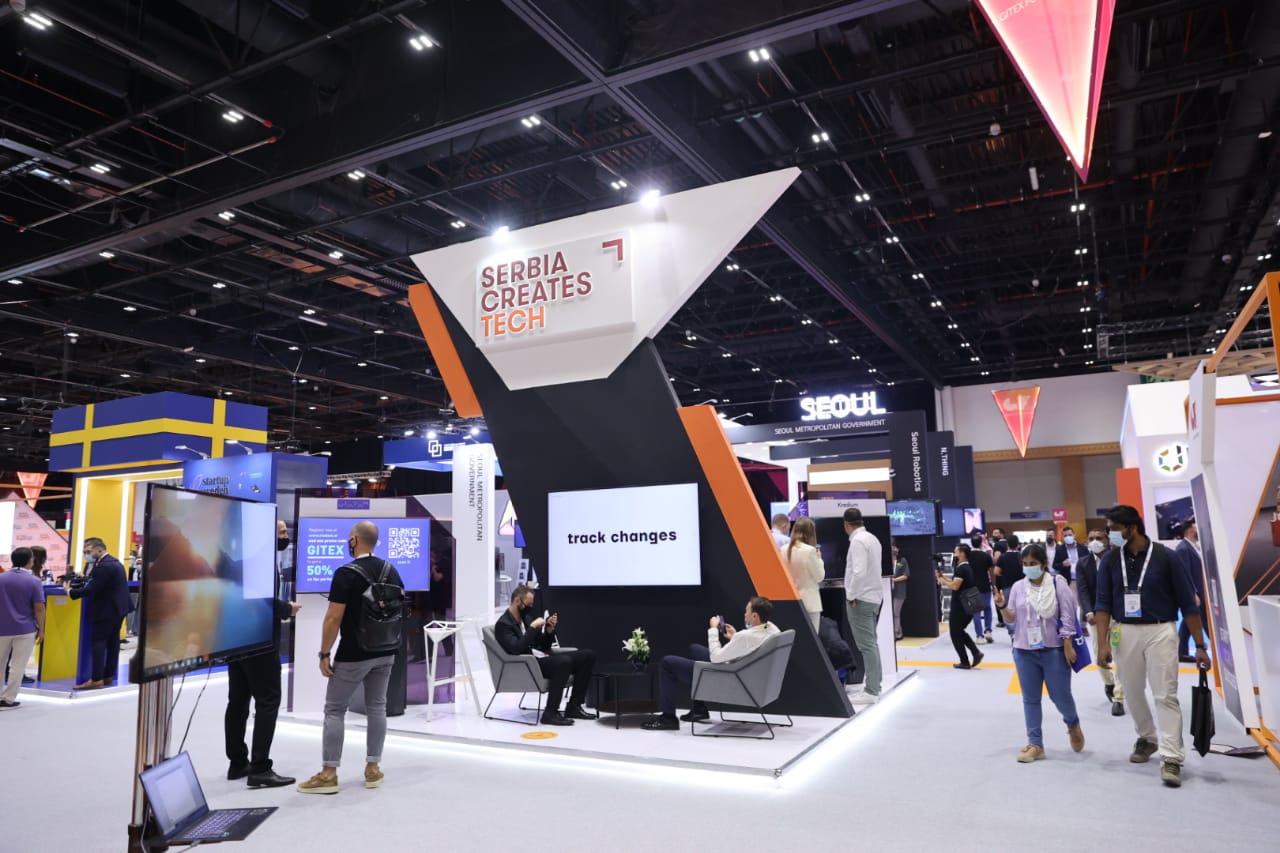
Serbia will serve as the Future Digital Economy Partner Country at GITEX Global 2025 in Dubai, becoming the first European nation accorded that role. The designation foregrounds Serbia’s ambitions to reposition itself from outsourcing hub to innovator in global tech markets.

Serbia’s IT exports crossed €3.5 billion in 2023, and the sector has maintained close to 20 percent year-on-year growth. The number of IT firms now exceeds 4,000, with many branching into domains such as fintech, health tech, AI and gaming. The Chamber of Commerce and Industry of Serbia, which leads the national delegation, views the GITEX platform as an opportunity to elevate the country’s narrative beyond cost-competitiveness to creative capacity.

Marko Čadež, president of CCIS, said Serbian firms are now pitching themselves as long-term transformation partners rather than simple vendors. He emphasised that enterprises increasingly expect strategic collaboration, not just software delivery. Meanwhile, analysts point to Serbia’s strong foundations—high math and engineering education standards, English proficiency, and relatively affordable costs—as a competitive edge in Eastern Europe.

Yet Serbia confronts headwinds. Talent retention is an ongoing challenge: many trained professionals migrate to Western Europe or the U. S. Infrastructure remains uneven, with rural areas lagging behind Belgrade in connectivity. In addition, venture capital inflows to the Balkans are smaller compared to Western Europe, constraining the ability of startups to scale aggressively.

Serbia is attempting to counterbalance those constraints through targeted programmes. The Chamber of Commerce has launched “Start 2,” a support scheme for scale-up firms, which includes mentoring and market access, and will be showcased at GITEX Europe in Berlin. The programme focuses on Serbian companies already achieving revenues above €250,000 and aims to open doors into German and EU markets.

At GITEX Global 2025, Serbia will present a showcase of startups and products under “North Star,” highlighting innovations in AI, e-commerce, predictive analytics, and diagnostics tools. Its delegation will also include outsourcing firms pitching upscaled offerings—product co-development, R&D support, and domain expertise in sectors such as telecom and healthcare.

GITEX organisers themselves have underscored Serbia’s place among rising tech nations: the 2025 edition includes 6,800 tech enterprises, 2,000 startups, and participant countries from 180 nations. Serbia joins Brazil and Pakistan as Country Partners this year—a reflection of the broader intention to diversify the event’s global footprint. The spotlight on AI, biotech, semiconductors, data infrastructure, and robotics offers Serbia a chance to align its exposure with the global themes defining tech agendas.

ASUS has confirmed that it will spotlight a broad suite of AI-enabled products and infrastructure at GITEX Global 2025, framing its participation around the theme “Ubiquitous AI. Incredible Possibilities.” The corporation aims to demonstrate how artificial intelligence can permeate devices, enterprise systems and urban environments.

The company’s exhibit will cover four core domains: AI-first design, cloud integration, sustainability and education technology. On the hardware front, ASUS plans to showcase the B5405 ergonomic laptop, the P5405 with a 47 TOPS NPU, and the B9403 weighing under 1 kg with all-day battery life. Chromebook models such as the CX5403 Plus and Windows devices like the BR1204 will cater to education users.

In its infrastructure tier, ASUS will highlight its AI POD, HGX servers and the Ascent GX10 platform powered by the NVIDIA GB10 Grace Blackwell superchip. Workspace innovation will include compact offerings such as the NUC 15 Pro and NUC 14 Pro AI. On the edge side, embedded systems for smart cities and autonomous systems—such as the PE2200U, PE6000G, and PE2100N—are also in the lineup.

ASUS emphasises the role of partnership in its vision. It plans to accentuate cooperation with NVIDIA via its “Enterprise AI Factory” programme, which supports AI-ready racks and POD designs tuned for large language models and immersive workloads. The company will also underline measures in security, durability and ease of maintenance across its product line.

Tolga Özdil, Regional SYS Commercial Director for META at ASUS, remarked that the Middle East is positioned at a digital inflection point, with AI shaping institutional and economic evolution. He framed GITEX as a platform to bring the company’s latest innovations into conversation with regional stakeholders. ASUS’s Regional Director for Middle East & Africa, Senic Chiu, added that the event offers opportunity to show how intelligent tools can reshape industries and daily life.

ASUS’s timing comes against the backdrop of an intensifying global push for AI infrastructure. GITEX 2025 is expected to draw more than 6,800 tech firms and 2,000 startups from 180 countries. Key event themes include advancements in quantum, biotech, data centres and robotics.

Beyond individual exhibitors, the show underscores the rapid expansion of the global AI economy. According to organisers, investment in data centres alone is forecast to surpass US$500 billion in 2025. Meanwhile, GITEX’s startup track, Expand North Star, will run in parallel and feature over 1,200 investors managing US$1.1 trillion in assets.

ASUS’s introduction of its AI roadmap at this scale signals that device manufacturers are no longer content to remain at the periphery of the AI stack. As more process layers—from silicon to application—are exposed to AI optimisation, hardware firms are positioning themselves to own more of the value chain. However, challenges remain: power efficiency, thermal constraints, ethical AI integration and data security are frontlines ASUS must navigate.

Perplexity now offers its AI-enabled browser Comet free to users worldwide, removing its earlier US$200/month subscription restriction. The company also launched Comet Plus, a paid tier offering curated news content and revenue sharing with publishers. Comet integrates Perplexity’s AI directly into the browsing experience, combining the firm’s answer-engine with an assistant that can summarise pages, complete tasks, and guide users across tabs. It was first released in […]

Google has chosen Saudi startup Lahint for inclusion in its Growth Academy: AI for GovTech 2025 cohort, positioning the company among 24 global government-technology innovators supported by Google. The move aims to strengthen Lahint’s capacity to deliver AI-enabled public services and further Saudi Arabia’s push for digital transformation under Vision 2030.

Lahint, established in 2023 by Ahmed Saber and Mohamed Ibrahim, secured a $1 million pre-seed investment earlier this year to scale its AI and automation offerings in government services. The platform currently manages more than 60 digital government services and serves over 200 businesses, integrating robotic process automation and AI to streamline licensing, permits and administrative workflows.

By integrating Lahint into its accelerator, Google pledges technical support, mentorship and access to cloud infrastructure—tools that could accelerate Lahint’s roadmap to full automation of priority public services. Lahint has already earned multiple ISO certifications and is accredited by the Saudi Data & AI Authority with a Waee badge for AI ethics compliance.

Lahint has advanced its internal timeline for key automation milestones. The company is now targeting completion of its GovTech automation program by early 2026, a shift from an earlier 2027 target. This acceleration comes alongside newly signed partnerships with government entities to deploy real-time status reporting and predictive compliance tools covering domain areas such as licensing, taxation and corporate registration.

Saudi Arabia’s broader AI landscape is scaling rapidly. In 2025, the kingdom announced over $14.9 billion in investments at LEAP and pursued MoUs under SDAIA to reinforce its data and AI infrastructure. The establishment of HUMAIN, a state-backed AI company under the Public Investment Fund, is central to that strategy. HUMAIN, launched in May 2025, has already inked collaboration agreements with Nvidia, AMD and Qualcomm to develop AI factories and Arabic large language models.

Google’s AI programme in Saudi Arabia is part of a wider arrangement. A $10 billion joint investment by Google Cloud and the Public Investment Fund backs a national AI hub to reinforce the local ecosystem and serve regional demand.

The Ai Everything Global Supernova Challenge concluded in Dubai with Pulsar. ml crowned champion among 30 startups from 15 nations vying for a USD 60,000 prize pool. The event drew over 150 global investors representing some USD 50 billion in assets under management, who watched founders pitch AI solutions across sectors including robotics, fintech, e-commerce and healthcare. Pulsar. ml, based in Canada and led by founder Mohamed […]

Valetax, a leading global provider of trading services, is proud to announce its participation as an Elite Sponsor at Forex Expo Dubai 2025, one of the world’s most prestigious financial events. The expo will take place on 6–7 October 2025 at the Dubai World Trade Centre, drawing traders, partners, and industry experts from across the globe. As an Elite Sponsor, Valetax is set to make a remarkable […]

A newly devised artificial intelligence system dubbed Diag2Diag is poised to reshape how physicists observe and control the seething plasma inside fusion reactors. The tool generates synthetic diagnostic data to compensate for gaps left by conventional sensors, particularly at the plasma’s elusive edge, enhancing stability control and reducing hardware demands. Diag2Diag emerges from a cross-institutional effort led by Princeton University and the Princeton Plasma Physics Laboratory, with […]

Elon Musk has become the first individual in recorded history to attain a net worth of $500 billion, according to the latest Forbes billionaire index. His estimated fortune stood at $499.5 billion as of October 1, driven by sharp gains in Tesla shares and upward revaluations of his other ventures. Tesla’s stock climbed nearly 4 per cent on that day, contributing over $7 billion to Musk’s wealth, […]

HONG KONG SAR – Media OutReach Newswire – 1 October 2025 – Aluminium Products Company (ALUPCO), an aluminum extrusion producer in Saudi Arabia and Asia Aluminum Group (AAG), a leading Hong Kong aluminum extrusion manufacturer with a production base in Mainland China, signed an agreement on September 29 in Hong Kong. The partnership will form three joint ventures, including AAG member companies AluHouse and MacMetal, With a […]

Hong Kong startups and business leaders join renowned entrepreneur on his first Asia tour to explore the mindset behind successful founders HONG KONG SAR – Media OutReach Newswire – 30 September 2025 – Hong Kong Science and Technology Parks Corporation (HKSTP) and Tatler called on the innovation community to “Keep Up with Steven Bartlett”, at an exclusive breakfast dialogue with the world-renowned entrepreneur and host of the […]

By Anjan Roy Donald Trump’s high fees for H1B visas are a serious headache for India, not just for the sake of its impact on India’s IT sector and services exports to USA. This is a huge worry for the overall security environment and strategic- diplomatic scenario for India. Among others, if China is able […]


The article China Is Making Every Effort To Attract Talent Thrown Out By America appeared first on Latest India news, analysis and reports on Newspack by India Press Agency).

Washington’s plan to sharply raise the cost of H-1B visas—the key route for skilled overseas professionals into the United States—has consequences far beyond immigration policy. It signals a potential reallocation of talent, capital and innovation that could redefine where the next wave of technology growth takes place. If the US prices out the world’s top engineers, data scientists and entrepreneurs, those individuals will gravitate toward regions offering […]

VISHNU RAJA
RYO YAMADA
HITORI GOTOH
IKUYO KITA
Just in:
Dubai boat show confirms international shipyard line-up for November // Kochi police detain two actors over bid to honey trap doctor // Hong Kong mandates crypto transaction disclosures to tax authorities // Emirates Group records AED 4.1 billion half-year profit // Vance attributes Republican midterm defeats to Iran conflict // Private varsities bill all set to face the axe // Geely’s i-HEV Intelligent Hybrid Technology Offers a New Direction for Gasoline-Powered Vehicles // Middle East governments assess Iran war after US vote // Xi Jinping Preparing For A Trilateral Summit With Trump And Putin At APEC Summit On Nov 18-19 // Meraas showcases five residential zones at Dubai Design Week // CR Longdation Aethereal Cybersecurity × Global Cybersecurity Alliance (GCSA) Join Hands to Establish the “AI and Cybersecurity Research Centre” // Trump’s Iran War Has A Share Of Contribution To His Midterm Debacle // The “1st Greater Bay Area Health and Longevity Summit & Awards Ceremony” concludes successfully in Macao // Cloudflare unveils Zero Wire vulnerability intelligence service // e-Crime Bureau Signs Cybersecurity Partnership With Smart Africa, Reinforcing Its Global Expansion // TVM –Mangaluru Vande Bharat claims top spot // Asia Left Behind: Ten international companies have yet to report delivering on their cage-free egg pledges across the region // Oil and chip shares retreat after Democratic victories // Cyberport Venture & Capital Forum 2026 Grand Opening // After Reaching 7 Million Users in the Philippines, Skyro Launches Transparent Cash Loans in Malaysia //