News related to
robot

In the digital age, the way people live in cities is evolving rapidly. While some people are seeking suburban retreats, many Asians are drawn to the convenience and vibrancy of urban life. This preference is fueled by the emergence of mega-complexes like Vinhomes’ projects, which offer a comprehensive range of amenities within the heart of bustling cities. These developments are designed to meet the diverse needs of […]

BEIJING, CHINA – Media OutReach Newswire – 25 October 2024 – As night falls, the outdoor theater at the south gate of Beijing Olympic Green dazzles with vibrant colors, quietly unveiling a feast of light and shadow. On the night of October 18, the 2024 Beijing Chaoyang International Light Festival officially kicked off, offering residents and visitors a fantastical journey through light and shadow with a series […]

SINGAPORE – Media OutReach Newswire – 25 October 2024 – AIMX Singapore (AIMX SG) will return for its second edition at the Singapore Week of Innovation & Technology (SWITCH) 2024. The 3-day conference and exhibition will take place from 28-30 October at the Sands Expo and Convention Centre, and convene a global audience of AI practitioners, business leaders, Chief Technology Officers (CTOs), and the broader tech community […]

At GITEX Global 2024, Huawei showcased an extensive array of industrial digital and intelligent transformation solutions, emphasizing its commitment to driving technological advancements across multiple sectors. The company hosted the Industrial Digital and Intelligent Transformation Summit, bringing together industry leaders and partners to discuss the future of digital solutions in various fields. Huawei’s strategy focuses on empowering industries through cutting-edge technology, with an emphasis on collaboration and […]

SINGAPORE – Media OutReach Newswire – 16 October 2024 – Homegrown air conditioning specialists, Newway SG, demonstrates a strong commitment to managing the impacts of indoor air quality (IAQ) on health and productivity, with the launch of a new environmental research and testing facility under the brand “Newway Laboratories”. Newway SG New Indoor Environmental Quality (IEQ) Laboratory Addressing Critical Air Quality Concerns The initiative aims to provide […]

A wave of technological innovation is transforming how blue-collar workers are recruited, trained, and compensated. Employers are increasingly relying on digital platforms and AI-driven systems to streamline the recruitment process, ensuring greater transparency in job requirements, fairer wage practices, and opportunities for skills development. This shift is being driven by several factors, including the rise of automation, artificial intelligence (AI), and the growing gig economy.

Automation is having a profound impact on industries that traditionally employ blue-collar workers. Sectors such as manufacturing, logistics, and construction are seeing a growing reliance on robots and machine learning systems to complete tasks that were once performed manually. While this raises concerns about job displacement, it also opens up opportunities for workers to retrain and upskill to fill new roles that are emerging as a result of this technological evolution.

A significant aspect of this transition is the increased focus on transparency in hiring practices. With platforms that utilize AI to match workers with jobs based on their skills and experience, companies are able to provide clear, detailed information about job expectations, wages, and work conditions. This reduces the risk of exploitation and ensures that workers are fairly compensated for their labor. Moreover, these platforms often incorporate review systems that allow employees to rate their employers, fostering a more transparent and accountable work environment.

The tech-driven changes in the recruitment landscape are also influencing how blue-collar workers are compensated. Traditionally, wages in blue-collar industries have been subject to regional disparities and opaque practices. However, with the rise of digital platforms that track and compare wages across regions and industries, workers are better equipped to negotiate fair wages. This is particularly important as labor shortages in sectors like construction and logistics are forcing employers to compete for skilled workers.

Tech companies are now offering innovative upskilling opportunities for workers. Platforms that combine online training with practical, on-the-job experience are becoming more widespread. These platforms are helping workers acquire the skills needed to operate advanced machinery, understand AI-driven processes, or take on supervisory roles in increasingly automated workplaces. For example, companies like Generation have already helped thousands of workers transition into new roles through targeted training programs that align with market demand.

However, challenges remain. While technology is making the hiring process more efficient, it has also raised concerns about the gig economy’s impact on workers’ rights and job security. Gig platforms often classify workers as independent contractors, leaving them without access to benefits like healthcare and job protection. As the blue-collar sector continues to adopt gig-like models of work, these concerns are likely to become more pressing.

The implementation of these technologies is not uniform across regions. In countries such as the United States and parts of Europe, large companies are at the forefront of adopting AI-driven recruitment and upskilling systems. However, in other regions, especially in developing economies, the pace of technological adoption in blue-collar recruitment remains slower. This could potentially widen the gap between workers in different parts of the world, both in terms of wages and access to job opportunities.

Tesla’s unveiling of its Optimus humanoid robot during its latest event showcased significant advancements, positioning it as a leading contender in the robotics space. While the much-anticipated robotaxi, now branded as the “Cybercab,” generated considerable buzz, Optimus captured the spotlight with its potential to perform a wide range of tasks, emphasizing Tesla’s ambition to merge artificial intelligence with practical applications in everyday life. Elon Musk, the CEO […]

Advertisements

Tesla CEO Elon Musk presented the Optimus AI robot at a Tesla event, showcasing its capability to perform everyday tasks. The event, which was aimed at demonstrating the potential of advanced robotics, included a significant focus on AI-driven automation. Optimus, Tesla’s humanoid robot, performed several activities, including bartending, serving drinks to attendees. This public display marks a new milestone in Tesla’s pursuit of humanoid robots that can […]

A new study by Accenture highlights that companies embracing artificial intelligence (AI) and automation are experiencing notable performance advantages over their peers. The research indicates that 74% of firms reported their investments in automation and generative AI achieving or exceeding their expectations, with 63% planning to enhance these capabilities further by 2026. This comprehensive survey included insights from approximately 2,000 executives across various sectors. The findings underscore […]

Dow Jones futures dipped early Friday, mirroring a slight pullback in the S&P 500 and Nasdaq futures following a mixed market response to key economic indicators. While the latest inflation data from the Consumer Price Index (CPI) hinted at potential adjustments in Federal Reserve interest rate policies, major tech players like Nvidia continued to demonstrate resilience in the face of market fluctuations. Notably, Tesla’s ambitious unveiling at its robotaxi event, led by CEO Elon Musk, did not meet the heightened anticipations of investors.

During the Thursday evening event, Musk presented two new models: the two-seat Cybercab and a larger Robovan. Both vehicles are designed to capitalize on Tesla’s foray into autonomous ride-hailing services, but the absence of detailed production timelines left many analysts and enthusiasts underwhelmed. Musk reiterated his vision for fully autonomous driving capabilities by next year in select states, including California and Texas. However, his previous predictions regarding self-driving timelines have often fallen short, leading to skepticism among stakeholders.

Tesla’s stock fell approximately 6% in premarket trading following the event, indicating investor disappointment. The company’s plans for an affordable electric vehicle (EV), expected to enter production by mid-2025, were notably absent from the showcase, further contributing to concerns about Tesla’s capacity to maintain market momentum. In contrast, ride-hailing rivals like Uber Technologies experienced a surge in their stock prices, capitalizing on Tesla’s perceived setbacks.

In the banking sector, JPMorgan Chase kickstarted the earnings season with a strong performance, buoyed by increased net interest income. The financial giant’s earnings report surpassed expectations, reflecting a robust investment banking landscape. JPMorgan added $1 billion to its net reserves for credit losses, suggesting a proactive approach to potential economic headwinds. The stock’s positive trajectory came even as concerns about broader market conditions lingered.

Amidst these developments, the stock market as a whole exhibited modest fluctuations, with the Dow Jones Industrial Average dipping 0.1%, and the S&P 500 and Nasdaq slightly lower. Investors are closely monitoring inflation indicators and Federal Reserve signals, particularly after Atlanta Fed President Raphael Bostic suggested a possible “pause” on interest rate cuts, which could impact market dynamics moving forward.

Crude oil prices also played a significant role in the market landscape, experiencing a decline of 1% amid mixed trading sentiments. This adjustment in oil futures reflects the ongoing volatility in energy markets, influenced by geopolitical developments and shifts in consumer demand.

The CPI report indicated hotter inflation than expected, igniting discussions about the potential for the Fed to maintain current interest rates in the near term. Market analysts are evaluating the implications of these economic signals, particularly as they relate to investment strategies and asset allocation.

On the technology front, Nvidia has reaffirmed its status as a market leader, with stocks rising 1.6% amid strong demand for its AI chips. Analysts noted that Nvidia’s production of next-generation Blackwell AI processors is in full swing, with sales reportedly sold out for the next year. This surge underscores the growing reliance on AI technologies across various sectors, positioning Nvidia favorably against competitors.

Advanced Micro Devices (AMD), on the other hand, unveiled its upcoming Blackwell rival at a recent event, but the stock faced a setback, dropping 4% amidst competitive pressures from Nvidia. AMD’s CEO expressed optimism regarding the future of AI accelerators, projecting a market worth $500 billion by 2028. However, immediate investor sentiment appears to favor Nvidia, which has firmly established itself in the AI landscape.

The mixed performance of small-cap stocks also drew attention, with the Russell 2000 index declining 0.55% as investors weigh growth prospects against economic uncertainties. Stocks in the AI and cybersecurity sectors, such as Palo Alto Networks and Fortinet, demonstrated positive movements, reflecting ongoing interest in technology-driven solutions.

Market analysts are advising caution amid the current environment, encouraging investors to stay engaged with their portfolios and to capitalize on incremental buying opportunities. Ongoing evaluations of leading stocks and sectors will be crucial for navigating the complexities of this financial landscape, particularly as inflationary pressures persist.


Elon Musk has once again captured global attention with the unveiling of Tesla’s new robotaxi concept, dubbed the Cybercab. During an event that generated significant interest among tech and automotive enthusiasts, Musk announced that the vehicle is expected to hit production by 2026. With an estimated price tag below $30,000, the Cybercab is positioned to be a disruptive force in the burgeoning autonomous transportation sector. The prototype […]

推动全球数字健康生态圈发展 HONG KONG SAR – Media OutReach Newswire – 10 October 2024 – Hong Kong Science and Technology Parks Corporation (HKSTP) today organised a signing ceremony with 12 strategic partners from the digital health and development sectors. This collaboration aims to collectively drive the growth of the international digital health ecosystem. This partnership will unlock the digital potential for R&D purpose, advance the city’s R&D capabilities in […]

HONG KONG SAR – EQS Newswire – 7 October 2024 – Novautek Autonomous Driving Limited (“Novautek“), specializing in artificial intelligence and autonomous driving technology innovation, showcased a series of autonomous intelligent robot products addressing five key application scenarios at the fourth Inno4life – Creative Culture and Technology Innovation Exhibition for three consecutive days, during 4-6 October 2024. Photo 1: Dr. Chan Pak Li, Bernard, the Under Secretary […]

Hong Kong is set to become a major hub for artificial intelligence (AI) and big data, as Financial Secretary Paul Chan Mo-po announced a significant wave of companies preparing to establish or expand their operations in the city. This move underscores Hong Kong’s strategic efforts to solidify its position as a global technology hub, leveraging its business-friendly environment, proximity to mainland China, and extensive financial infrastructure. Over half of the 10 major firms expected to expand operations in the coming months are concentrated on AI and big data technologies, reflecting a growing trend of high-tech industries converging in the city.

The companies set to arrive range from established players in robotics and AI-driven healthcare to emerging startups specializing in machine learning, facial recognition, and digital finance. These firms are expected to bring substantial investments and innovation to Hong Kong’s tech ecosystem, particularly in AI, which has become a major focus for policymakers and industry leaders alike. Government initiatives aimed at enhancing the city’s technological capabilities, such as the Hong Kong Science and Technology Parks Corporation (HKSTP), are poised to play a key role in nurturing this expanding sector.

Among the standout names set to deepen their presence in Hong Kong is Hanson Robotics, the company behind the famous humanoid robot Sophia. Hanson has long been at the forefront of AI development, with its robotics often hailed for their advanced AI capabilities in human-robot interaction. The company’s decision to expand further into Hong Kong reinforces the city’s importance as a regional AI hub. Hanson is part of a growing wave of firms attracted by Hong Kong’s business opportunities and collaborative environment, particularly in industries where AI can be integrated into various services, from education to customer service.

Another notable company eyeing expansion in Hong Kong is Insight Robotics. Known for its innovative risk management solutions using AI-driven technology, the company has made significant strides in wildfire detection and aerial surveying, particularly in the forestry sector. Insight’s systems, powered by machine learning algorithms and thermal sensors, can detect fires early, helping to mitigate damage and improve response times. Its presence in Hong Kong is expected to contribute not only to the city’s tech ecosystem but also to sectors like environmental conservation and disaster management, both of which are becoming increasingly reliant on AI.

Startups are also making a substantial impact, with firms like Trend Lab and Find Solution Ai making Hong Kong a base for their operations. Trend Lab, which operates in stealth mode, is looking to dominate the Asia-Pacific AI financial services market, while Find Solution Ai focuses on the education and healthcare sectors. The latter has gained attention for its ‘4 Little Trees’ platform, an AI-powered educational tool that personalizes learning by analyzing students’ emotional states and performance data. This application is already in use in several Hong Kong schools, and the company’s further expansion in the city signals growing confidence in the local market’s potential.

The trend of AI firms expanding into Hong Kong coincides with increasing global demand for AI applications in everyday life. From facial recognition and augmented reality tools to predictive algorithms used in financial markets and healthcare, AI has emerged as a transformative force across industries. Hong Kong’s proximity to China’s tech powerhouse cities like Shenzhen has also been a critical factor in attracting these AI companies. The city acts as a bridge between the East and West, offering unique opportunities for international firms to collaborate with Chinese tech giants and access a broader market in Asia.

Banuba, a Hong Kong-based startup specializing in facial recognition and augmented reality, is another firm that has attracted significant attention. The company has developed cutting-edge AI tools used in a wide range of applications, including biometric verification, behavioral analytics, and personalized advertising. Banuba’s growth highlights the increasing importance of AI in sectors that rely heavily on machine vision and image processing technologies.

These AI-focused expansions reflect a broader global shift towards integrating AI across various economic sectors, and Hong Kong is positioning itself as a key player in this transformation. The government has also recognized the importance of investing in AI research and development, with targeted funding and policies designed to attract more high-tech firms. Initiatives like the “AI and Robotics Technologies Cluster” under the Hong Kong Science Park offer specialized infrastructure, incubation services, and financial support to startups and established companies alike. These efforts are not only fostering innovation but also attracting top talent to the city, ensuring that Hong Kong remains competitive in the fast-evolving global tech landscape.

Hong Kong’s established financial services sector is set to benefit from the influx of AI expertise. Fintech applications, in particular, are expected to see rapid development, with AI-driven technologies such as algorithmic trading, risk assessment, and fraud detection being deployed by local firms. The rise of AI-focused companies will also complement Hong Kong’s push towards digital transformation, especially as the city aims to enhance its competitiveness in global financial markets.

RNTrust is gearing up to present its groundbreaking advancements in artificial intelligence and hyperautomation at the 2024 edition of GITEX Global in Dubai. The company’s updated SPITrust Coopera platform, set to be unveiled at the Novotel DWTC, is designed to reshape the digital transformation landscape for businesses by offering a comprehensive solution for business orchestration, automation, and enterprise content management (ECM). This new version of Coopera is […]

Engage with global policymakers, thought leaders, and innovators at Asia’s premier cybersecurity event SINGAPORE – Media OutReach Newswire – 3 October 2024 – The GovWare Conference and Exhibition 2024 will take place from 15 to 17 October 2024 at the Sands Expo and Convention Centre Singapore, gathering over 12,000 policy makers, cyber and corporate leaders, practitioners, and academia worldwide to address modern security issues, rebuild trust, and […]

Apple is preparing to enter the smart home market with a significant push, beginning with the launch of a new operating system called “homeOS.” This platform will power the company’s forthcoming smart home devices, signaling Apple’s increasing focus on home automation. Reports indicate that Apple plans to release two key products under this initiative: a next-generation HomePod featuring a touchscreen display and a smart home device equipped […]

Through a combination of technological innovation and a commitment to social responsibility, Vingroup is setting new standards for corporate sustainability in Southeast Asia. HANOI, VIETNAM – Media OutReach Newswire – 27 September 2024 – The role of big corporations in the shift to a sustainable future is a topic widely discussed by many. Vingroup is demonstrating how large corporations can play a pivotal role in creating a […]

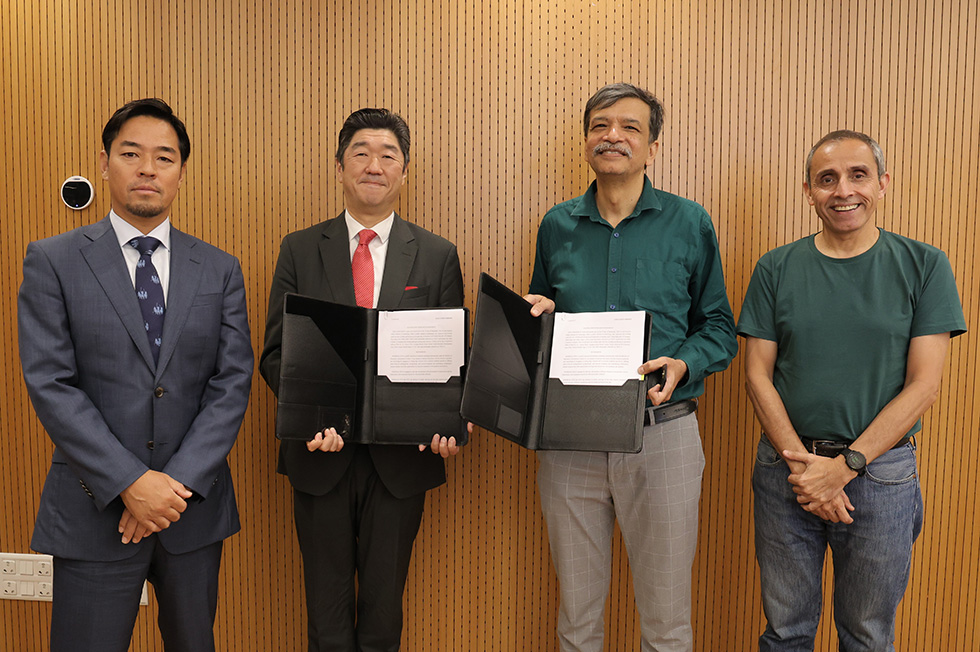
A significant collaboration between the Indian Institute of Technology Delhi (IIT Delhi) and Honda Cars India Ltd. (HCIL) is poised to reshape the future of mobility in India. The two entities have entered into a Memorandum of Understanding (MoU) aimed at advancing cooperative intelligence (CI) technologies that could pave the way for safer, more efficient transport systems. This partnership underscores the growing trend of academia-industry collaboration in the rapidly evolving field of intelligent transportation systems.

The MoU brings together the expertise of IIT Delhi’s researchers and Honda’s engineers, particularly those from HCIL and Honda R&D Co., Ltd., a subsidiary focused on research and development. The goal is to conduct joint research on CI technologies that can potentially reduce traffic collisions, enhance road safety, and enable automated driving systems. With India’s road safety record being a significant concern, such efforts to reduce human errors in driving are considered crucial for the future.

India has long struggled with high rates of traffic accidents, largely attributed to human error. The collaboration between IIT Delhi and Honda aims to address these issues through the development of advanced driver-assistance systems (ADAS) and other mobility solutions. ADAS, which involves technologies like adaptive cruise control, lane-keeping assistance, and collision avoidance systems, has the potential to significantly lower the risk of accidents and make roads safer for all users.

While Honda has been a key player in automotive innovation, this partnership marks a significant step in its efforts to explore more complex applications of artificial intelligence (AI) in driving. Honda’s engineers will work closely with IIT Delhi’s faculty and students to explore new algorithms, machine learning models, and data analytics techniques that can improve vehicle decision-making in real-time. The research will also focus on leveraging big data and connectivity technologies to anticipate traffic conditions, respond to sudden changes on the road, and ensure safer driving experiences.

IIT Delhi’s role in this collaboration is equally significant, given its strong reputation for cutting-edge research in artificial intelligence, robotics, and transportation systems. The institution’s researchers are expected to bring advanced expertise in areas like machine learning, sensor technologies, and networked vehicles. This collaboration provides a platform for academic researchers to apply theoretical knowledge to practical challenges faced by the automotive industry.

Through this MoU, both parties are set to explore the concept of cooperative intelligence, which involves enabling communication between vehicles, infrastructure, and other road users to create an interconnected transportation network. The aim is to develop intelligent transport systems that can predict traffic patterns, communicate with surrounding vehicles, and make autonomous decisions that enhance overall road safety. As automated and connected vehicles gain momentum globally, these technologies will play an essential role in the future of mobility.

Cooperative intelligence, as a concept, goes beyond traditional vehicle automation. It focuses on creating systems where vehicles not only respond to their environment but also interact with other vehicles and infrastructure to optimize the flow of traffic and prevent accidents. This vision aligns with Honda’s global initiative to develop “Safety for Everyone” technologies, which seek to eliminate road fatalities by utilizing AI and machine learning tools.

While the research aims to contribute to global advancements in automated driving, there is a particular focus on addressing India-specific challenges. Road conditions in India vary widely, with congested urban streets, rural roads, and highways posing distinct challenges for vehicles. The CI technologies developed under this MoU will need to adapt to these diverse environments. The hope is that future vehicles equipped with CI technologies will not only improve safety on India’s roads but also enhance overall driving comfort and reduce the stress associated with navigating through heavy traffic.

The collaboration also opens doors for students and researchers at IIT Delhi to gain hands-on experience working with real-world automotive challenges. By partnering with Honda, they will have the opportunity to apply their knowledge to cutting-edge projects that could have significant implications for the future of mobility. This real-world experience is expected to help prepare a new generation of engineers and researchers who can contribute to the development of safer and smarter transportation systems, both in India and globally.

As part of the agreement, IIT Delhi and Honda will jointly work on research projects and share intellectual resources. The partnership also allows for the testing and evaluation of prototypes developed as part of the research. This will ensure that the solutions developed are practical, effective, and can be scaled up for real-world application.

The MoU signifies Honda’s commitment to India, a market where it has a strong presence but faces increasing competition from both global and domestic automakers. As the automotive industry shifts towards electric vehicles (EVs) and autonomous driving technologies, partnerships like this one with IIT Delhi are crucial for staying competitive in a rapidly changing landscape. By collaborating with leading academic institutions, Honda aims to maintain its edge in innovation while contributing to the advancement of mobility technologies that are not only relevant to India but also to global markets.

HANGZHOU, CHINA – Media OutReach Newswire – 26 September 2024 – The third Global Digital Trade Expo (GDTE) unveiled its curtain in Hangzhou, capital of Zhejiang province, on September 25, providing significant opportunities for bolstering the growth of digital trade and injecting strong impetus into the high-quality development of the digital economy. With “Digital Trade, Global Access” as its permanent theme, the 5-day expo strives to establish […]

Universal Robots has announced a significant enhancement to its collaborative robots, the UR20 and UR30, by increasing their payload capacities. This upgrade allows the UR20 to handle a maximum payload of 25 kilograms and the UR30 to manage up to 35 kilograms. The improvements come at no additional cost to customers and are set to enhance the robots’ efficiency, particularly in palletizing applications. The announcement highlights Universal […]

 Symbiosis International (Deemed University), one of India’s most esteemed academic institutions, has successfully launched its first international campus in Dubai, officially licensed by the UAE Ministry of Education (MOE) and Knowledge and Human Development Authority (KHDA). 

All the academic programmes are accredited by the Commission for Academic Accreditation under the Ministry of Education UAE.

With over 50 years of academic excellence and a legacy rooted in global education, Symbiosis is bringing world-class education to the UAE, strengthening bilateral ties between India and the UAE.

With its Vedic principle, Vasudhaiva Kutumbakam—’The’World is One’Family’—Symbiosis has bridged global cultures and promoted inclusive education. Now, with the Dubai campus already in operation after officially commencing classes in the first week of September, Symbiosis is ready to make its mark on one of the world’s most dynamic cities.

The academic programmes include BBA in Accounting and Finance; MBA, BCA in AI and ML, Cloud Computing, Data Science and Data Analytics; BA in Media and Communication  with Digital marketing, Public Relations, Advertising and Corporate communications. 

Symbiosis’ establishment in Dubai strengthens the partnership between India and the UAE, contributing to both nations’ strategic goals. The move aligns with the UAE’s D33  Economic Agenda, which focuses on doubling the economy by 2033, with a strong emphasis on education and talent development. It also reinforces the Comprehensive Economic Partnership Agreement (CEPA) between India and the UAE, promoting educational and economic ties.

Uber has announced a strategic partnership with WeRide, a self-driving technology company based in China, to introduce autonomous vehicles to Abu Dhabi. This collaboration is expected to roll out later this year, marking a significant step forward in autonomous mobility in the region. Under the deal, a fleet of WeRide’s robotaxis will be made available through the Uber app, initially serving specific areas in the UAE capital.

The pilot program will target key locations in Abu Dhabi, such as Yas Island and Saadiyat Island, with expansion plans on the horizon. Passengers will have the option to select a self-driving vehicle for their trips when available, offering a futuristic alternative to traditional rideshare options. Uber’s CEO, Dara Khosrowshahi, emphasized that this initiative aligns with the company’s vision of a future where transportation is electric, shared, and autonomous.

WeRide, founded in 2017 and headquartered in Guangzhou, has been rapidly advancing in the autonomous driving industry. Its technology, known for its reliability and scalability, is already operational in several cities in China, where the company conducts various pilot programs. By partnering with Uber, WeRide aims to gain a foothold in the Middle Eastern market, building on its experience in deploying robotaxis in urban settings.

World Robotics 2024 Report by International Federation of Robotics released FRANKFURT, GERMANY – Newsaktuell – 24 September 2024 – The new World Robotics report recorded 4,281,585 units operating in factories worldwide – an increase of 10%. Annual installations exceeded half a million units for the third consecutive year. By region, 70% of all newly deployed robots 2023 were installed in Asia, 17% in Europe and 10% in […]

VISHNU RAJA
RYO YAMADA
HITORI GOTOH
IKUYO KITA