News related to
robot

Google has released the variable-font typeface Google Sans Flex under an open-source licence, making the typeface used across many Google products available for free download and use in any project. The font is now hosted on Google Fonts and licensed under the SIL Open Font License, removing the proprietary restrictions that previously kept it exclusive to Google’s internal design ecosystem. Google Sans Flex is described by its […]

AI’s most celebrated breakthroughs have lived almost entirely behind glass. Models generate words, sketches and synthetic universes, but the physical world remains stubbornly uninterpreted and largely untouched by this computational flourish. As companies push toward systems that move, react and collaborate like autonomous agents, a quieter truth is settling in across California’s innovation core: intelligence can no longer remain suspended inside screens. The next era is about […]

BANGKOK, THAILAND – Media OutReach Newswire – 27 November 2025 – SCG is advancing its “Regional Optimization” strategy by positioning Vietnam as a key production base to support domestic consumption and exports to global markets. The company is showcasing the strengths of Long Son Petrochemicals (LSP), Vietnam’s first fully integrated petrochemical complex, and Binh Minh Plastics (BMP), the country’s leading manufacturer of premium plastic pipes and fittings. […]

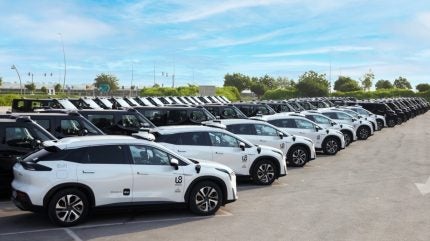
Abu Dhabi now offers public rides in fully driverless robotaxis operated jointly by WeRide and Uber, marking the first deployment of such services on the Uber platform outside the United States. Passengers can hail an autonomous vehicle on Yas Island using the Uber app — either through UberX or Uber Comfort — or select the newly added “Autonomous” ride option for a dedicated robotaxi.

The launch follows grant of a city-level commercial permit for Level 4 autonomous driving, issued in late October to WeRide, allowing the company to operate robotaxis without a safety driver on board. Local transport authorities approved the licence after WeRide demonstrated its technology and safety protocols through extensive testing over several months. This regulatory clearance and licensing represent a breakthrough in public acceptance of self-driving mobility in the region.

Initial operations are restricted to the tourist and leisure enclave of Yas Island, home to the Formula 1 Grand Prix circuit, where road traffic and infrastructure are relatively controlled. WeRide and Uber plan to expand coverage into central Abu Dhabi by the end of the year, aiming to broaden the footprint beyond the initial zone. The fleet — managed in collaboration with local operator Tawasul Transport — includes GXR-class robotaxi vehicles equipped with multiple sensors and cameras to navigate urban streets autonomously.

WeRide retains what it describes as a four-year first-mover advantage in deploying robotaxis in Abu Dhabi, having operated test and pilot robotaxi services since 2021. The company’s broader Middle East fleet already includes more than 100 robotaxis, with ambitions to scale into thousands over the coming years. This launch fits into Uber’s global vision for autonomous mobility, which aims to expand driverless operations to at least 10 cities by the end of next year.

Ride-hailing firms and autonomous-vehicle companies have long eyed the Middle East as a favourable terrain for self-driving deployment, thanks to relatively predictable urban layouts, supportive regulators, and growing appetite for smart mobility solutions. For Uber and WeRide, the Abu Dhabi rollout demonstrates that regulatory, technological and commercial challenges can be addressed in unison.

City officials from the Integrated Transport Centre have emphasised that the licensing process required rigorous review of safety standards and compliance steps before granting commercial operator status. WeRide had earlier secured a national-level licence for self-driving vehicles in 2023, and the new city-level permit is among the first of its kind outside the United States. That dual-licence history helped accelerate trust among authorities and the public.

Drivers and ride-hailing staff will still be involved behind the scenes — Uber, through Tawasul Transport, will handle fleet maintenance, cleaning, charging and vehicle readiness, while WeRide retains responsibility for sensor calibration, software updates and compliance. That model reflects a hybrid approach aimed at balancing technology, operations and safety.

Passengers have reacted with cautious optimism. Some early users welcomed the novelty and convenience of driverless rides, especially in a region with extreme weather and limited public transport options. Others raised concerns over reliability, data privacy, and how the autonomous system would respond to unpredictable road events such as pedestrians or errant drivers.

US-based artificial intelligence firm Luma AI has secured a $900 million Series C funding round led by Saudi-backed HUMAIN, the AI venture owned by the kingdom’s sovereign wealth fund, the Public Investment Fund. Participation also came from AMD Ventures and existing investors including Andreessen Horowitz, Amplify Partners and Matrix Partners. The funding is part of a broader strategy to advance multimodal artificial general intelligence capable of generating, interpreting and interacting with the physical world.

Luma AI’s valuation following the round is estimated at over $4 billion, underscoring the intense competition among frontier AI firms. The company specialises in “world models” that integrate video, audio, image and language to drive applications in robotics, simulation, advertising, gaming and personalised education. CEO Amit Jain described the aim as training systems on “a quadrillion tokens” of multimedia data to move beyond current large-language-model architectures.

HUMAIN, having positioned itself as a global full-stack AI player, will use the funding partnership to anchor its compute infrastructure ambitions. The joint roadmap includes the rollout of what HUMAIN terms “Project Halo” — a super-cluster targeting up to 2 gigawatts of AI compute capacity in the kingdom. Luma AI will become a key customer of this infrastructure.

The funding and infrastructure build-out reflect a strategic shift in Saudi Arabia’s economic diversification efforts. Under the leadership of Mohammed bin Salman, the PIF is deepening commitments to AI and high-performance computing as pillars of its wider Vision 2030 agenda. Luma AI’s partnership becomes a vehicle for exportable AI capabilities and for strengthening the kingdom’s position in the global tech ecosystem.

From Luma AI’s perspective, the capital infusion and access to sovereign-scale compute represent a strategic lever to accelerate development of next-generation models. In entertainment and creative industries the company already claims traction: its Ray3 reasoning video model has been embedded within major platforms. The new funding will allow expansion into simulation, robotics and immersive media. Jain asserted that only by integrating systems and infrastructure at scale can models “understand and simulate the universe”.

For HUMAIN the deal accomplishes several objectives: securing a marquee US AI partner, anchoring compute commitments, and beginning commercial deployments of its planned AI infrastructure. The first phase of the accompanying joint venture with Cisco Systems and AMD will deliver a 100-megawatt data-centre cluster in Saudi Arabia, fully subscribed by Luma AI, with construction scheduled to begin in 2026 and renewable energy powering the facility.

The global implications are significant. With Asia, Europe, India, the Middle East and Africa identified as target markets-worth an estimated 4.5 billion people-the infrastructure build-out promises to reshape the geography of AI training and inference. HUMAIN’s model seeks to challenge the dominance of US- and China-based AI supply chains.

Challenges remain. Developing multimodal AGI is widely acknowledged as highly complex, with technical risks, high compute costs and uncertain commercial timelines. Critics highlight concerns about geopolitical dependencies in AI infrastructure and the ethical implications of deploying models trained on vast multimedia datasets. The Saudi-US dimension adds further scrutiny given strategic sensitivities around data, export controls and digital sovereignty.

HONG KONG SAR – Media OutReach Newswire – 19 November 2025 – The 2025 Hong Kong & Shenzhen Bi-City Biennale of Urbanism Architecture (UABBHK 2025) launched its curatorial direction under the theme TECHFORMANCE: Architecture as Performance in the Age of AI. Organised by The Hong Kong Institute of Architects Biennale Foundation, this year’s UABBHK is co-organised by The Hong Kong Institute of Architects, The Hong Kong Institute […]

HANOI, VIETNAM – Media OutReach Newswire – 17 November 2025 – The VinFuture Foundation officially announces the 2025 VinFuture Sci-Tech Week agenda, taking place from December 2 to December 6, 2025, in Hanoi. Under the theme “Rising and Thriving,” this year’s annual international event continues to reaffirm VinFuture’s mission to connect global knowledge, catalyze meaningful contributions to humanity, and elevate Vietnam’s position as an emerging hub for […]

Advertisements

Samsung has announced a transformative investment strategy, committing $310 billion over the next five years to accelerate its artificial intelligence and technology development. This ambitious move is designed to meet the soaring demand for AI-driven innovations and strengthen Samsung’s position at the forefront of global tech advancements. The investment will be channelled primarily into developing cutting-edge AI technologies, next-generation semiconductors, and other advanced tech products. Samsung’s strategy […]

Elon Musk has shared his bold vision for the future of Tesla’s humanoid robot, Optimus, claiming it has the potential to revolutionise the global economy by eradicating poverty and providing universal high incomes. Speaking at a recent event, Musk presented an ambitious outlook for the robot, which is being developed by Tesla to perform a variety of tasks, ranging from mundane chores to complex industrial processes. Optimus, […]

Actively Promote the “Bringing in and Going Global” Strategy to Empower I&T Companies to Expand into the GBA and Overseas Markets HKSTP leads 13 park companies to CHTF 2025, “China’s No. 1 Technology Exhibition”, presenting breakthroughs across AI, robotics, new energy, semiconductors, smart manufacturing, biotech, fintech, and more The Hong Kong Pavilion features end-to-end innovation from R&D to application, with live demos and business matching for global […]

The Philippines and Norway have partnered to develop an electric hybrid propulsion ferry, marking a significant step towards advancing sustainable maritime transport in the Philippines. This collaboration aims to foster the growth of the electric ferry sector, with a focus on environmental impact and aligning with global sustainability goals.

This initiative was unveiled during the first Philippines-Norway Electric Ferries Conference, organised by the Royal Norwegian Embassy in Manila, the Philippine Ports Authority, and several key stakeholders, including Innovation Norway, the Philippines-Norway Business Council, and Maritime Cleantech. The event also garnered support from the European Union’s Horizon2020 programme, which backs innovation and sustainability projects across Europe.

The highlight of the conference was the signing of a Memorandum of Understanding between the Philippines Association of Coastal and Inland Water Ferries Inc., IMP Shipyard and Port Services Inc., and ZEM. The agreement formalises plans to create a prototype electric hybrid propulsion ferry, a significant milestone in the country’s maritime transition towards greener technologies.

One of the key goals of this project is to align with the United Nations’ Sustainable Development Goals, particularly in the areas of sustainable energy and climate action. Additionally, the project aims to enhance the European Union’s innovation, competitiveness, and economic growth by showcasing how electric ferries can reshape the maritime sector. Norway, a leader in electric ferry technology, is playing a central role in this effort, drawing on its successful track record in electrifying its ferry fleet.

Norwegian Ambassador to the Philippines, Christian Lyster, emphasised that the future of maritime transport will depend on a blend of alternative fuels, energy efficiency improvements, and shore power systems—especially when powered by renewable energy. He pointed to Norway’s success, where 111 ferry routes are currently operated with about 180 electric ferries. Lyster highlighted that the shift to electric ferries is both feasible and highly effective, demonstrating the viability of zero-emission technology on a large scale.

Norway’s pioneering role in electric ferry development is further underscored by its history of innovation in the sector. The first fully electric commuter ferry, MS Ampere, entered service in 2015, followed by the launch of the high-speed electric ferry MS Medstraum in 2022. These ferries have set a benchmark for electrification in maritime transport, showcasing the potential for sustainable alternatives in global shipping networks.

At the conference, various Norwegian companies shared insights into their contributions to the electric ferry industry. Hyke, for instance, is working on urban electric ferry designs, while Zinus focuses on developing innovative charging solutions. Zeabuz is advancing autonomous passenger ferry technology, and Kongsberg International is involved in integrated maritime solutions. Other contributors include Kongsberg Norcontrol, which provides digital solutions for safer maritime operations, and Maritime Robotics, which is advancing autonomous surface and subsea operations. ZEM, a key player in maritime electrification, is also involved in the initiative.

The collaboration between the Philippines and Norway presents an opportunity to transform the maritime industry in Southeast Asia, a region with vast inter-island ferry networks. The Philippine Inter-Island Shipping Association also participated in the discussions, offering insights into how electric ferries could be integrated into the country’s extensive network of island transport. The initiative is seen as an important step towards reducing carbon emissions from the Philippines’ ferry industry, which has long relied on diesel-powered vessels.

This development comes on the heels of the Department of Transportation’s recent launch of the first fully electric passenger ferry in the Philippines, M/B Dalaray. The ferry, which operates on the Pasig River, stops at 13 locations across Pasig, Makati, Mandaluyong, Manila, and Taguig. The project aims to showcase the potential for electric ferries in urban environments, paving the way for more sustainable public transport solutions in the country.


HONG KONG SAR – Media OutReach Newswire – 10 November 2025 – The Hong Kong Productivity Council (HKPC) today officially opened the “GBA International Artificial Intelligence and Robotics Summit 2025,” themed “Empowering Resilient Industries through Embodied AI,” bringing together top experts from the Chinese Mainland, Switzerland, Germany, Italy, Japan, Korea and Hong Kong to explore the industrialisation of artificial intelligence (AI) and robotics. Professor Dong SUN, JP, […]

The central processing unit has long stood as the cornerstone of computing, from powering individual computers to driving large-scale data centres that underpin the digital world. However, as artificial intelligence has surged in importance, there is a significant shift occurring in the hardware landscape. The increasing complexity and computational demands of AI tasks, such as machine learning, deep learning, and data analytics, have pushed companies to develop […]

Shareholders of Tesla, Inc. approved a compensation package for Chief Executive Officer Elon Musk that could deliver up to US $1 trillion in stock over the next decade, with more than 75 per cent of votes cast in favour at the company’s annual meeting in Austin, Texas. The package, contingent on a string of ambitious performance targets, is described by the board and supporters as essential to retain Musk’s leadership and drive the firm’s pivot towards artificial intelligence and robotics.

The award hinges on milestones including delivering 20 million vehicles, deploying 1 million robotaxis, selling 1 million humanoid robots and reaching a market valuation of US $8.5 trillion. If all targets are met, Musk stands to earn shares representing up to 12 per cent of Tesla’s stock, though the net value is estimated at around US $878 billion after accounting for share price and vesting conditions. The package’s approval ends months of debate among institutional investors and proxy advisers who raised concerns about scope, governance and dilution.

The approval signals confidence among many investors in Musk’s capacity to steer Tesla into a future beyond electric vehicles, emphasising his role at the centre of the company’s strategy. Musk, who holds approximately 15 per cent of Tesla shares, made clear on stage that his focus is not merely on compensation but on maintaining influence over the company’s direction, particularly as Tesla deepens its involvement in robotics and chip manufacturing. “What we are about to embark upon is not merely a new chapter of the future of Tesla, but a whole new book,” he said following the vote.

Critics, however, warn that the structure grants Musk exceptional power and exposes shareholders to significant risk. Among those voting against the package was Norges Bank Investment Management, manager of the world’s largest sovereign wealth fund, which cited the award’s sheer size, potential dilution for other investors and the concentration of decision-making authority in a single individual as key objections. Proxy advisory firms such as Institutional Shareholder Services and Glass Lewis had also advised against the plan on similar grounds.

Tesla’s board chair Robyn Denholm had issued a letter urging shareholders to support the proposal, warning that rejection could risk losing Musk’s time, talent and vision at a pivotal moment for the firm. The board has defended the compensation plan as milestone-based and aligned with shareholder interests because the payout only occurs if Tesla meets rigorous performance thresholds. Supporters argue that Musk’s vision—extending Tesla’s footprint into autonomous mobility, humanoid robotics and AI infrastructure—requires long-term incentives that align his interests with the company’s breakthrough goals.

Even as investors backed the package, many emphasised that achieving the required targets remains a tall order. Tesla’s current market capitalisation sits well below the US $8.5 trillion target, and its robot- and self-driving ambitions face regulatory, technical and competitive headwinds. Some analysts regard the pledge to deliver millions of humanoid robots and robotaxis as speculative, pointing out that Tesla has yet to mass-produce such products. Others observe that Musk’s prior promises—including fully autonomous cars and rapid ramp-ups of production—have been met with delays and regulatory challenges, prompting scepticism among governance watchers.

The vote also underscores Musk’s increasingly prominent role across multiple business ventures including xAI and SpaceX, and the extent to which Tesla’s governance is intertwined with his broader ambitions. The compensation plan’s structure gives Musk additional voting control tied to his share stake, a move applauded by advocates who say it ensures continuity of leadership, and criticised by opponents who say it entangles corporate oversight and creates “key-person risk”.

Shareholders of Tesla, Inc. approved a landmark compensation package for CEO Elon Musk that could ultimately be worth as much as $1 trillion, should the firm hit a series of ambitious milestones over the coming decade. Over 75 % of shares were cast in favour of the plan during the company’s annual meeting in Austin, Texas, signalling continued investor faith in Musk’s leadership. The package ties Musk’s […]

California-based Archer Aviation has signalled accelerated ambition in the electric air taxi sector with its CEO, Adam Goldstein, stating the company anticipates its first commercial flights within the next year across major city corridors. The objective is underpinned by a surge in interest, key contracts and strategic partnerships that could shape the future of urban air mobility.

Goldstein outlined that Archer’s inaugural production-model aircraft — dubbed Midnight — is scheduled to operate “in and around several big urban cities” by June next year, a milestone he described as achievable given current progress. He emphasised the dual track of domestic and international strategy, with particular emphasis on collaboration in the Gulf region. The company confirmed it is working with the UAE government and other global partners as part of its launch ecosystem.

Financially, Archer has bolstered its resources to support certification, manufacturing and ecosystem rollout. In its latest funding round, the firm raised some $300 million backed by institutional investors including BlackRock, bringing total liquidity to roughly $1 billion. These funds are earmarked for critical capabilities such as composites and batteries, underscoring the high cost of advancing from prototype to commercial launch.

Partnerships have emerged as a central pillar of Archer’s strategy. Late last year Archer acquired the patent portfolio of another eVTOL developer, allying further with global manufacturing partner Stellantis and with operators such as Jetex in the Gulf region. Specifically, Archer and Jetex signed a memorandum focused on leveraging Jetex’s network of fixed-base operator terminals—launching in Abu Dhabi and potentially expanding across 30 countries.

At the 2025 Paris Air Show Goldstein reaffirmed Archer’s interest in the UK and Europe as early-adopter markets, noting that regulatory frameworks and infrastructure development would be key determinants of where deployment regulatory certification is achieved first. He also addressed scepticism over the speed of robotic aircraft progress, dismissing a critical short-seller report by saying that “we prove everything by action … we have started our flight campaign, which is going really well, so we will continue to prove by showing not talking.”

The regulatory environment is evolving. The US federal government has elevated advanced air mobility as an industry priority, paving pathways for certification and integration of eVTOL aircraft into air-traffic systems. Nested within this push is the recognition that infrastructure — vertiports, charging systems, air-traffic management — remains the linchpin for commercial viability. Archer’s operations already envisage a dual business model: direct-to-consumer urban air rides and the sale of aircraft to operators.

Despite the momentum, significant challenges persist. Certification of a new aircraft category remains uncharted territory for many stakeholders; technological hurdles persist around battery energy density, noise reduction and charging turnaround. Market pricing models are under scrutiny as well; as early as 2024 industry analysts highlighted that selling an eVTOL aircraft at around US$5 million may be inconsistent with the aim of widespread, affordable urban service. Goldstein and his team must also build out manufacturing capacity: Archer’s planned Georgia manufacturing site, intended to ultimately produce up to 650 aircraft per year, is still under construction.

The Middle East remains a focal region for Archer’s first service launch. High-temperature performance testing of the Midnight aircraft is already underway in Abu Dhabi, where the company is collaborating with local civil-aviation authorities. Simultaneously, the company has signed on for major transport-network projects — notably serving as the official air-taxi provider for the 2028 Los Angeles Olympics, in which flights of 10-20 minutes between key venues are planned.

Abu Dhabi-based energy major Abu Dhabi National Oil Company has sealed three new agreements with US-based robotics specialist Gecko Robotics aimed at embedding artificial intelligence and robotics into its operations while accelerating the development of local skills for nationals. The accords were signed at the ENACT Majlis forum in Abu Dhabi and span a multi-year deployment for ADNOC Gas, a collaboration with the group’s training arm ADNOC […]

Matein Khalid Critical minerals have become a national security priority for GCC states as China has weaponised its dominance over supply chains, refining capacity and magnet production. These materials, including lithium, nickel, cobalt, tin, tungsten, vanadium and germanium, are essential for defence systems such as Lockheed’s F-35 stealth fighters, Raytheon’s hypersonic missiles and General Dynamics’ Virginia-class submarines, as well as civilian applications in advanced semiconductors, electric vehicles, […]

Engineering firm ABB India has announced a 25 per cent increase in the production capacity of variable speed drives at its Peenya facility in Bengaluru. The expansion involves a newly installed production line equipped with advanced automation and sensor-based monitoring, and is aimed at boosting local manufacturing, reducing lead times and supporting domestic industry sectors such as buildings, data centres, water, cement and metal processing.

The new manufacturing line is reported to slash lead-times by up to 40 per cent while enabling more customer-specific configuration of high-power drives. According to AR Madhusudan, Business Line Manager, Drive Products at ABB India, “As we mark two decades of drives production in India, this expansion reinforces our strong commitment to advancing local production capabilities and delivering energy-efficient technologies for India’s industries.” The upgrade is said to align with the country’s wider ‘Atmanirbhar Bharat’ and ‘Make in India’ initiatives and reflect the Group’s deployment of Industry 4.0-style automation.

The enhanced line integrates robotics for the assembly of key components and digital monitoring tools for real-time visibility of operations, designed to boost productivity while reducing manual handling and improving safety. Tuomo Hoysniemi, Division President for Drive Products in ABB Motion, stated the move supports the firm’s global push to help industries become leaner and cleaner by localising production and strengthening ecosystem proximity to customers.

Driven market demand for energy-efficient drives has been growing rapidly, as industries seek to reduce electricity consumption and enhance operational performance. VSDs allow electric motors to adjust speed to match demand, which in turn lowers energy use and improves process control. ABB’s upgrade adds capacity for large-power-rated drives to meet higher performance needs in key industry verticals.

The decision to bolster local manufacturing forms part of ABB’s broader global strategy. The firm has previously stated it aims to achieve over 90 per cent local production in key markets including India, to mitigate supply-chain risk and respond more nimbly to demand. Outside India, ABB has increased investment in the U. S. and Europe to expand local production capacity for electrification equipment and industrial automation.

Industry analysts note that with growing pressure on carbon emissions as well as rising electricity costs, the demand for high-efficiency drives is set to rise steadily. Manufacturing localisation also delivers benefits such as reduced logistics cost, faster service and improved customisation, especially when the line can deliver “made-to-order” drives to match client specifications.

In India, the upgrade is also timed with the global celebrations by ABB of 50 years of innovation in drives and two decades of drives production in India. The move is expected to strengthen ABB India’s position among competitors in the domestic automation market, in which other firms are also investing in local ecosystem capabilities and digital manufacturing.

However, challenges remain. While localisation reduces lead times and improves responsiveness, it also requires ongoing investment in workforce skills, digital infrastructure and supply-chain resilience. The extent to which the upgraded line will translate into significantly higher market share for ABB India or broader cost advantages remains to be seen. Similarly, customer uptake may depend on the long-term savings delivered by the drives and the availability of after-sales support in the regions targeted.

Households may soon welcome a new occupant. Robotics firm 1X Technologies has opened pre-orders for its humanoid home assistant model, NEO, signalling a push into consumer domestic robots. The Palo Alto and Norway-based company lists the unit at about US$20,000, with deliveries slated to begin in 2026. The robot is pitched to perform household chores such as folding laundry, organising shelves, fetching items and greeting guests. 1X […]

TOKYO, JAPAN – Media OutReach Newswire – 29 October 2025 – Creww Inc. (Japan Office: Shibuya-ku, Tokyo, Representative: Sorato Ijichi, hereinafter “Creww”), Japan’s leading open innovation platform provider, and Real Madrid Next are pleased to announce the selection of 6 startups for the “Real Madrid Next Accelerator for Asia” Batch 2. About “Real Madrid Next Accelerator for Asia” Batch 2 “Real Madrid Next Accelerator for Asia” Batch […]

The manufacturing sector in the United Arab Emirates, accounting for 15 per cent of gross domestic product, is set to become the main engine of the country’s next economic phase, according to entrepreneur Mohamed Alabbar, founder of Emaar Properties and Noon. com and chairman of Eagle Hills. Speaking at the eighth Sharjah Investment Forum–World Investment Conference 2025, he emphasised that while real estate contributes around 12 per […]

The Chief Executive of Tesla, Inc., Elon Musk, stands to become the first individual ever to reach a personal net worth of US$1 trillion if he fulfils the company’s newly unveiled incentive package that ties his compensation to the firm achieving an $8.5 trillion valuation. Tesla’s latest proxy filing reveals that Musk could be awarded up to 423.7 million shares, or roughly 12% of the company, if the […]

JAKARTA, INDONESIA – Media OutReach Newswire – 21 October 2025 – SCG participated in the Forbes Global CEO Conference 2025: THE WORLD PIVOTS in Jakarta, Indonesia, which was organized under the theme “Sustainable Philanthropy.” The conference brought together business leaders from around the world to exchange visions on driving sustainable business practices amid the changing global economic, technological, and environmental landscape. Photo credit: Forbes Global CEO Conference […]

VISHNU RAJA
RYO YAMADA
HITORI GOTOH
IKUYO KITA