Take-Two Interactive has moved to quiet speculation over another Grand Theft Auto VI delay, reaffirming that Rockstar Games’ blockbuster open-world title remains scheduled for release on 19 November 2026. The confirmation, issued alongside Take-Two’s fiscal 2026 results, places the game at the centre of the company’s next financial year and signals that management is still planning around one of the most consequential launches in entertainment. Chief executive […]
Singapore business leader Teo Siong Seng has been accused by US prosecutors of taking part in a multi-year conspiracy to restrict output and fix prices of standard dry shipping containers, a case that places one of the city-state’s most prominent maritime figures at the centre of a major antitrust action. The indictment names four container manufacturing companies and seven executives in an alleged scheme that prosecutors say […]
SpaceX is pitching its planned public listing as a bet on artificial intelligence as much as rockets, telling prospective investors that AI services could open a $26.5 trillion market opportunity and transform the company from a launch-and-satellite operator into a global computing platform. The shift marks a striking turn for Elon Musk’s space company as it prepares for what could become the largest stock-market debut on record. […]
Samsung Electronics is preparing one of the largest employee bonus packages in the global technology sector after a last-minute wage agreement with unions averted a threatened strike at its South Korean chip operations, where soaring demand for artificial intelligence memory has transformed the company’s earnings outlook. The tentative deal could channel about 40 trillion won, or roughly $26.6 billion, to semiconductor employees this year, implying an average […]
Shares of Parle Industries hit their 5 per cent upper circuit on the BSE after a viral exchange between Prime Minister Narendra Modi and Italy’s Prime Minister Giorgia Meloni triggered a wave of retail interest in a company with no link to the sweet at the centre of the episode.
The stock rose to ₹5.25 on Wednesday as traders reacted to online chatter around Modi gifting Meloni a packet of Melody toffees during his visit to Rome. The moment spread quickly after Meloni posted a video thanking him for the gift, with the two leaders smiling as the confectionery was shown to the camera. Meloni called it a “very, very good toffee”, feeding a social-media burst around the long-running “Melodi” meme built from the two leaders’ surnames.
The market reaction, however, appeared to rest on a misunderstanding. Melody is made by Parle Products, the privately held consumer goods company behind brands such as Parle-G, Monaco, Hide & Seek and Mango Bite. Parle Industries, the BSE-listed penny stock that rallied, is a separate entity and is not connected to the toffee brand.
Trading volumes reflected the intensity of the speculative move. More than 8 lakh shares changed hands, sharply above the stock’s one-week average of about 2 lakh shares and its one-month average of about 3 lakh shares. The counter’s low price and limited liquidity made it particularly vulnerable to abrupt moves driven by social-media narratives rather than company fundamentals.
Parle Industries was formerly known as Parle Software and was incorporated in 1983. The company changed its name to Parle Industries in 2019 and has been associated with infrastructure, real estate and paper-related activities after earlier links to technology services. Its business profile bears little resemblance to Parle Products, which remains privately owned and is not available for direct stock-market investment.
The episode underlined a recurring weakness in retail trading behaviour, especially in penny and small-cap counters. Brand-name familiarity, partial information and fast-moving online trends can combine to create price action detached from corporate reality. Similar cases have occurred in global markets when investors bought shares of companies with names resembling better-known brands, digital assets or takeover targets.
The Modi-Meloni exchange took place during the Prime Minister’s visit to Italy, where bilateral talks covered political, economic and strategic cooperation. The confectionery moment, however, overshadowed the formal agenda online, with users recirculating earlier “Melodi” memes that gained popularity after previous public appearances by the two leaders.
For Parle Products, the viral clip amounted to unpaid visibility for one of its best-known confectionery labels. Melody has long been associated with the advertising line built around the question of why the toffee is so chocolaty, making the brand instantly recognisable to consumers across the country. The company did not need to be listed for the publicity to become a market event; traders simply found a listed company carrying the Parle name and pushed it to the exchange limit.
Market participants said the movement showed how quickly meme-driven attention can spill into thinly traded stocks. In such counters, even modest buying can produce exaggerated percentage gains because of narrow order books and daily circuit filters. The 5 per cent upper circuit capped the day’s rise, preventing the stock from moving higher during that session.
The rally also raised questions about investor due diligence at a time when retail participation in equity markets remains elevated. Millions of new demat accounts have entered the market over the past few years, with many first-time investors using mobile platforms, social-media tips and short-form videos as part of their trading decisions. While this has widened market access, it has also increased exposure to rumour-led activity.
Washington regulators are preparing a major shift in digital-asset oversight that could allow tokenised versions of stocks to trade on crypto platforms, opening a new front in the contest between blockchain firms and traditional exchanges. The U. S. Securities and Exchange Commission is expected to unveil an “innovation exemption” during the week of 18 May, giving selected market participants limited relief from existing securities rules while they […]
AI Financial has warned that it may not remain viable over the next year after a steep fall in the value of its World Liberty Financial token holdings exposed the fragility of a balance sheet built around a volatile crypto treasury. The Nasdaq-listed company, formerly known as ALT5 Sigma, disclosed that it held 7,283,585,650 WLFI tokens at the end of its first quarter, carrying them at a […]
Japan’s government bond market has become the centre of a global debt selloff as higher oil prices, stubborn inflation and expectations of tighter monetary policy push borrowing costs across major economies to levels not seen for years.
The sharpest pressure has fallen on long-dated Japanese government bonds, where the 30-year yield has climbed above 4 per cent, reaching a record since the maturity was introduced in 1999. The 10-year yield has also risen to around 2.8 per cent, its highest level in nearly three decades, marking a decisive break from the low-yield era that defined Japan’s markets for much of the post-deflation period.
The selloff has rippled across global debt markets. US Treasury yields have moved higher, with the 30-year yield testing levels above 5 per cent, while Germany’s benchmark bonds and UK gilts have also weakened. Bond prices move inversely to yields, meaning the surge in yields reflects heavy selling by investors who are demanding greater compensation for inflation, fiscal risk and uncertain central bank policy.
Rising oil prices are the immediate catalyst. Brent crude has moved above $100 a barrel as geopolitical tensions in the Middle East disrupt energy flows and heighten concerns over import costs for major economies. For Japan, which relies heavily on imported energy, the oil shock carries a particularly direct inflationary threat. A weaker yen has amplified the impact, increasing the local-currency cost of fuel, food and other imported goods.
Japan’s inflation backdrop has become more difficult for policymakers. Consumer prices have remained above the Bank of Japan’s 2 per cent target for an extended period, while corporate goods prices have shown persistent pressure from energy, raw materials and logistics costs. Investors are now pricing in a greater chance that the central bank will raise interest rates again, possibly as early as its next policy meetings, after years of extraordinary accommodation.
Fiscal concerns are adding to the strain. Tokyo is preparing additional spending to cushion households and businesses from rising fuel and utility costs, but fresh borrowing could worsen concerns over debt sustainability. Japan’s public debt is already among the highest in the developed world, making long-term bond investors more sensitive to any increase in issuance. The prospect of larger supply has hit demand for longer maturities, where insurers, pension funds and banks traditionally played a stabilising role.
The Bank of Japan faces a delicate balance. Raising rates too quickly could unsettle growth and worsen losses in bond portfolios held by financial institutions. Moving too slowly could allow inflation expectations to become entrenched and place further pressure on the yen. The central bank has already scaled back its dominance of the bond market compared with the period of yield-curve control, leaving prices more exposed to market forces.
Global investors are also reassessing the role of government bonds as a safe asset. During earlier market shocks, US Treasuries, German Bunds and Japanese government bonds often rallied as investors sought protection. The current episode is different because the shock is inflationary rather than deflationary. Higher energy prices reduce household purchasing power, raise business costs and complicate the task of central banks that had hoped to cut rates or keep policy steady.
The selloff has implications beyond financial markets. Higher sovereign yields raise funding costs for governments already facing pressure from defence spending, ageing populations, energy subsidies and climate-related investment. They also affect mortgage rates, corporate borrowing and equity valuations. Technology shares and other growth-sensitive assets tend to come under pressure when long-term yields climb, because future earnings are discounted more heavily.
Japan’s shift is especially important because its low yields long encouraged domestic investors to buy overseas bonds. As yields rise at home, insurers and pension funds have less incentive to take currency risk abroad, potentially reducing demand for US and European debt. That repatriation effect could intensify volatility in global markets if Japanese institutions continue to rebalance portfolios.
Seoul’s benchmark Kospi crossed 8,000 for the first time on Friday, powered by a surge in artificial intelligence-linked shares that has turned South Korea into one of the world’s strongest equity markets this year.
The Korea Composite Stock Price Index touched 8,001.40 in early trade at about 9.15am, extending a rally that has accelerated since early May as investors crowded into semiconductor, memory-chip and data-centre supply chain stocks. The move marked another symbolic milestone for a market that only passed 7,000 seven trading sessions earlier, reflecting the speed with which capital has moved into companies expected to benefit from the AI infrastructure boom.
Traders at Hana Bank’s dealing room in Seoul marked the 8,000-point breakthrough with a ceremony, underscoring the psychological importance of the level for domestic investors. Yet the celebration was tempered by sharp volatility later in the session, as profit-taking and foreign selling hit several of the same technology and auto counters that had led the advance.
Samsung Electronics and SK Hynix remain at the centre of the rally. The two chipmakers have benefited from global demand for high-bandwidth memory, advanced storage and server components used in artificial intelligence training and inference. SK Hynix has strengthened its position in high-bandwidth memory supplied to leading AI chip platforms, while Samsung has drawn renewed investor attention as it pushes to close the gap in next-generation memory products and expand foundry capacity.
The broader appeal of South Korean equities has also been reinforced by expectations that the country’s corporate governance reforms will improve shareholder returns. Measures aimed at narrowing the long-standing valuation discount on local shares, including stronger pressure for dividends, buybacks and more transparent capital allocation, have encouraged investors to look beyond chipmakers into financials, industrials and holding companies.
Market participants said the scale of the advance has created a difficult balance for policymakers and investors. Strong earnings momentum and the AI investment cycle provide support for valuations, but the pace of gains has left the Kospi vulnerable to sudden reversals whenever global technology sentiment weakens. Concerns over crowded positioning, high expectations for AI-related revenue and the concentration of gains in a small group of heavyweight stocks have grown more visible as the index moved through successive records.
The Kospi’s rise has unfolded against a favourable global backdrop. Wall Street’s major indices advanced overnight, led by technology shares, while investor confidence was helped by signs of diplomatic engagement between Washington and Beijing. South Korea’s export-driven economy remains closely tied to global electronics demand, making its equity market highly sensitive to sentiment around chips, cloud computing, smartphones and consumer electronics.
Foreign flows have played a decisive role. Overseas investors have treated Seoul as a liquid way to gain exposure to AI infrastructure without relying solely on US-listed software and chip-design companies. That has lifted trading volumes and strengthened the won at times, although the currency remains exposed to shifts in US interest-rate expectations and geopolitical risks in the Middle East.
Domestic retail investors have also returned to the market in force. The rapid climb has revived comparisons with earlier speculative cycles, but the current rally is more closely tied to corporate earnings upgrades in semiconductors and technology hardware. Brokerages have raised target prices for key chip stocks, citing memory pricing, AI server demand and stronger capital expenditure by global technology companies.
Still, risks are building. A sharp fall after the 8,000-point breach showed how quickly sentiment can turn when valuations look stretched. Heavy foreign selling, particularly in technology and auto shares, pointed to caution after months of gains. Analysts have warned that any slowdown in AI spending, weaker guidance from major US technology firms or delays in high-bandwidth memory certification could trigger further volatility.
Arabian Post Staff -Dubai Etihad Airways has signed a codeshare agreement with Uzbekistan Airways, opening eight destinations across Uzbekistan to its global passengers and giving travellers from Tashkent access to Abu Dhabi through a single-ticket arrangement. The agreement takes effect from 15 May 2026 and is designed to connect Etihad’s international network with Uzbekistan Airways’ domestic reach through Tashkent, the largest city in Central Asia. Bookings are […]
Iran-linked cyber-espionage operators have used trusted, digitally signed software components to breach organisations across four continents, widening concerns over state-backed campaigns that hide inside legitimate enterprise tools. Seedworm, also tracked as MuddyWater, Temp Zagros, Static Kitten and Mango Sandstorm, has been linked to intrusions affecting at least nine organisations in early 2026. The victims included a major South Korean electronics manufacturer, public-sector bodies, an international airport in […]
By Nitya Chakraborty The developments in eastern and north eastern parts of India are getting increasing attention from Washington in the context of China’s planned moves to expand its control in Bangladesh and Myanmar, the two countries bordering the Indian states.US President Donald Trump’s unusual message sent to the Indian Prime Minister Narendra Modi on […]
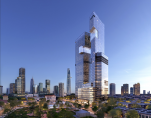
Set opposite Ben Thanh Market, One Central Saigon is a landmark mixed-use destination where luxury living, hospitality, retail and business converge at the centre of Ho Chi Minh City. The project also marks The Ritz-Carlton hotel brand’s debut in Vietnam, alongside The Ritz-Carlton Residences, Saigon, Grade A+ offices, curated retail, services and fine dining.
HO CHI MINH CITY, VIETNAM – Media OutReach Newswire – 13 May 2026 – Masterise Homes, a member of Masterise Group, has officially launched One Central Saigon, Vietnam’s first mixed-use landmark destination, marking the arrival of a new address where international standards of living, hospitality, retail, business and services come together in Ho Chi Minh City.
One Central Saigon brings together The Ritz-Carlton, Saigon, The Ritz-Carlton Residences, Saigon, Grade A+ offices, curated retail, dining and lifestyle experiences in central Ho Chi Minh City.
The launch event was attended by representatives of Ho Chi Minh City government authorities, senior leaders from Masterise Group, Masterise Homes and Marriott International, as well as leading experts in real estate, economics and tourism.
Over the past decade, the centre of gravity of the global economy has shifted decisively towards Asia, with Vietnam emerging as one of the region’s most compelling growth stories. Ho Chi Minh City, the country’s economic engine, is entering a new phase of development as a dynamic, deeply connected metropolis.
Around the world, certain developments have helped shape how cities are recognised internationally, from Hong Kong’s IFC and Singapore’s Marina Bay Sands to Kuala Lumpur’s Petronas Twin Towers and Dubai’s Burj Khalifa. These projects did more than create striking skylines. They helped shape how the world sees their cities and countries. One Central Saigon is positioned within this tradition of city-shaping developments, with a vision that combines international standards, Vietnamese identity and long-term urban value.
“We believe Vietnam has reached the moment where it is ready for a development of the calibre of One Central Saigon,” said Ms Nguyen Thi Minh Phuong, Managing Director, Southern Region, Masterise Group. “The project has been present in Ho Chi Minh City for some time and has passed through several phases of development. Today, it is being introduced with a clearer vision. With a sense of responsibility to contribute to the nation’s development journey in a new era, Masterise Group aspires to continue building an iconic landmark where the world’s highest experiential standards converge with the identity, energy and ambition of the city. This is also how we contribute to projecting the image of a modern, confident and culturally rich Vietnam onto the international stage.”
A rare address in the city’s historic core For more than a century, Ben Thanh Market has been one of Ho Chi Minh City’s great urban constants: a place of trade, arrival and encounter, and one of the few landmarks instantly recognised across Vietnam and beyond.
Its clock tower, market halls and surrounding streets are woven into the city’s daily rhythm and public memory, giving the area a significance that extends far beyond location. Set directly opposite the market, with four rare frontages along Pham Ngu Lao, Calmette, Le Thi Hong Gam and Pho Duc Chinh streets in the former District 1, One Central Saigon holds one of the city’s most strategic locations and shares a unique connection with Ho Chi Minh City’s historic urban core.
One Central Saigon will rise as two towers above a retail and commercial podium on an 8,537 sqm site, with 19,990 sqm of commercial space across seven above-ground levels and six basement floors. The retail centre is envisioned as a destination for luxury retail, curated services and fine dining, with brands and experiences selected for both international appeal and the evolving needs of Vietnamese customers. Its basement levels will connect directly to Ben Thanh Metro Station via an underground link, integrating the project with the city’s public transit network.
Together with Grade A+ offices, The Ritz-Carlton, Saigon and The Ritz-Carlton Residences, Saigon, the development forms a seamless mixed-use ecosystem for luxury living, hospitality, retail, business, services and lifestyle experiences at the centre of Ho Chi Minh City.
Song Long Ngậm Ngọc: Vietnamese symbolism, global expertise The architecture of One Central Saigon is inspired by Song Long Ngậm Ngọc, or Twin Dragons Playing with a Pearl, a Vietnamese cultural motif associated with strength, prosperity and wisdom. The two towers rise and converge around a central point, creating a contemporary architectural expression of Vietnamese identity within the Ben Thanh district.
Among the tallest twin towers in Vietnam and the region, One Central Saigon is a structurally complex undertaking that requires significant investment, precision, and attention at every stage of execution. The project brings together an international design and construction team, including Arquitectonica as design architect, HBA for interior design, B+H, a member of Surbana Jurong Group, as executive architect, and Turner for project management.
International operational standards add another defining layer of value to One Central Saigon. With more than a century of heritage in luxury hospitality, The Ritz-Carlton brings refinement, attention to detail, privacy and highly personalised service to the project’s ultra-luxury positioning.
The Ritz-Carlton Residences, Saigon opens a new chapter in ultra-luxury living, while The Ritz-Carlton, Saigon marks the hotel brand’s debut in Vietnam, reflecting Ho Chi Minh City’s growing appeal to international travellers, investors, entrepreneurs and high-net-worth individuals.
The Grade A+ office component is designed for global corporations and forward-thinking business leaders seeking a workplace within a 5-star international ecosystem. Vietnam’s luxury momentum accelerates The launch comes as Vietnam continues to attract global capital, international brands and a rising generation of high-net-worth consumers. Official data showed real GDP growth of 8.02% in 2025, up from 7.09%, while foreign direct investment reached a record US$27.62 billion.
Tourism is adding further momentum. Vietnam welcomed nearly 21.2 million international visitors in 2025, its strongest year for inbound tourism, while Ho Chi Minh City received nearly 8.6 million international visitors, up 40.3% year on year.
Branded residences are following the same trajectory. Savills reports that branded residences in Asia Pacific increased by 55% over the past five years, while C9 Hotelworks’ Asia Branded Residences Market Review 2025 points to Vietnam as one of the region’s most important future supply markets.
For Masterise Group, One Central Saigon extends an international branded real estate portfolio that includes Grand Marina, Saigon, featuring Marriott and JW Marriott-branded residences, and The Ritz-Carlton Residences, Hanoi at The Grand. It also gives Vietnam’s ultra-luxury real estate growth story tangible form beside one of Ho Chi Minh City’s most prized historical sites.
As the city enters a new phase of development, expanding in both scale and quality, thoughtfully planned and professionally operated integrated developments such as One Central Saigon are expected to enrich the city’s tourism, services and urban experience ecosystem. The project is positioned to create lasting value for the community and elevate the standing of Ho Chi Minh City and Vietnam on the international stage. Hashtag: #MasteriseGroup
The issuer is solely responsible for the content of this announcement.
About Masterise Group
Masterise Group is an international real estate development group, pioneering a comprehensive ecosystem spanning residential and hospitality developments, as well as urban infrastructure and logistics. Founded in 2007 as Thao Dien Investment and officially rebranded as Masterise Group in 2019, Masterise Group sees real estate as more than buildings; it is the foundation for a nation’s future, providing infrastructure for connection, momentum for progress, elevated living and generational legacy. With a long-term vision, Masterise Group continuously pushes boundaries, creates sustainable value, elevates quality of life and contributes to strengthening Vietnam’s new era of growth and global ambition.
Masterise Homes is a member of Masterise Group and manages and develops all of the group’s residential real estate brands. As Vietnam’s pioneer in branded real estate development, Masterise Homes’ mission goes beyond delivering architectural landmarks with refined design and integrated amenities. Masterise Homes strives to craft comprehensive living spaces where residents experience a standard of living that goes beyond the basic function of a home.
Circle’s first-quarter results have sharpened investor focus on whether its planned Arc network can turn USDC’s growing scale into a broader valuation story beyond reserve income. The stablecoin issuer reported total revenue and reserve income of $694 million for the first quarter of 2026, up 20 per cent from a year earlier, while USDC in circulation reached $77 billion at quarter-end. The operating picture, however, was more […]
Ondo Finance has opened a new route for tokenised US stocks and exchange-traded funds to move onto Hyperliquid, using LayerZero’s interoperability infrastructure to connect assets from Ethereum and BNB Chain to Hyperliquid’s HyperEVM environment. The move gives eligible users a way to transfer Ondo’s tokenised equity products through the Ondo Bridge and deploy them within one of decentralised finance’s most active trading ecosystems. The initial rollout covers […]
UAE property developers are expected to keep construction programmes moving and meet debt obligations over the next 12 months, as strong cash reserves and positive operating cash flow provide a buffer against softer sales, wider payment plans and geopolitical uncertainty. Moody’s assessment points to a market under pressure but not in distress. Sales momentum has cooled as conflict across the Middle East unsettles investor sentiment, yet there […]
Arabian Post Staff -Dubai Dubai Holding has become the largest shareholder in Emaar Properties after Investment Corporation of Dubai transferred its entire 22.2723 per cent stake in the Burj Khalifa developer to Emirates Power Investment, a wholly owned Dubai Holding subsidiary. The transaction lifts Dubai Holding’s total ownership in Emaar to 29.73 per cent, giving the group a commanding position in one of the emirate’s most […]
Reliance Jio Platforms has reshaped its planned Mumbai stock market debut into a fresh-share issue, dropping an earlier structure that would have allowed existing investors to sell part of their holdings and turning the offer into a direct capital-raising exercise for the digital and telecom business.
The revised plan would involve the sale of a 2.5 per cent stake through new shares, with the proceeds flowing to Jio Platforms rather than to shareholders seeking exits. The change marks a significant adjustment in what is expected to be one of the largest public offerings in the country’s capital markets, and places long-term growth funding ahead of partial monetisation by early backers.
Jio Platforms, controlled by Mukesh Ambani’s Reliance Industries, owns Reliance Jio Infocomm and houses a broad portfolio of digital services spanning telecom, broadband, cloud, media, payments and consumer technology platforms. Its shareholder base includes Meta, Google, Vista Equity Partners, KKR, Mubadala, Abu Dhabi Investment Authority and Saudi Arabia’s Public Investment Fund, many of which entered the company during the 2020 fundraising cycle.
Earlier discussions had explored an offer-for-sale structure under which foreign investors could have sold about 8 per cent of their individual holdings, amounting to roughly 2.5 per cent of Jio Platforms. That approach has now been set aside, with investors opting to remain exposed to the business rather than reduce stakes at the listing stage.
The decision strengthens Reliance’s control over the IPO narrative. A fresh issue allows the company to present the listing as a growth-financing event instead of an exit window for private investors. It also limits the risk that the market interprets selling by marquee shareholders as a signal of valuation caution, particularly at a time when global technology listings are being judged closely on profitability, cash generation and regulatory exposure.
Jio Platforms is widely seen as the centrepiece of Reliance Industries’ transition from an energy-heavy conglomerate to a broader consumer, digital and technology group. The telecom arm has become one of the world’s largest mobile operators by users, while its digital ecosystem has helped Reliance build links across retail, entertainment, finance and enterprise services.
The company’s operating performance has supported expectations of a high-profile listing. Jio Platforms reported strong profit growth for the quarter ended March 2026, helped by tariff-led gains, subscriber additions, higher data consumption and expansion in home broadband. Average revenue per user rose to ₹214, reflecting improved monetisation after tariff increases and a better customer mix.
The proposed IPO has been closely watched since Ambani told shareholders that Jio Platforms was being readied for a market debut in the first half of 2026. Preparations gathered pace after listing rules were adjusted to make it easier for very large companies to float a smaller portion of equity while still meeting public-shareholding requirements over time.
A 2.5 per cent offering would keep public float modest at the start, but even that limited stake could translate into a multibillion-dollar transaction if the company commands a valuation close to estimates that have placed Jio Platforms around $180 billion. At that level, the IPO could rank among the largest listings ever seen on domestic exchanges.
The timing remains sensitive. Equity markets have been volatile as investors weigh interest-rate expectations, geopolitical risks, technology valuations and capital flows into emerging markets. Several large companies have adjusted listing timetables as issuers and bankers test demand from institutional and retail investors.
Reliance has assembled a large banking syndicate for the transaction, underlining the scale and complexity of the planned sale. The deal will require careful pricing to balance investor appetite, Reliance’s valuation expectations and the interests of existing shareholders who invested at a premium during the digital fundraising boom.
For Meta and Google, continued ownership preserves access to one of the world’s largest digital consumer markets through partnerships linked to messaging, cloud services, devices and online commerce. For sovereign wealth funds and private equity investors, remaining invested offers exposure to a mature telecom platform with rising cash flows and expanding digital adjacencies.
The IPO will also have implications for Reliance Industries’ own market valuation. Investors have long debated whether separate listings of Jio Platforms and Reliance Retail could unlock value trapped inside the conglomerate structure. A successful Jio debut may narrow the holding-company discount, while a weak listing would raise questions over the pace and pricing of Reliance’s broader demerger and monetisation strategy.
Alphabet has moved within striking distance of becoming the world’s most valuable company, as investor confidence in its artificial intelligence strategy reshapes Wall Street’s view of Google’s parent after years of concern that it had fallen behind rivals in the AI race. Shares of the company have surged this year, lifting its market value to about $4.86 trillion by the close of trading on May 8, 2026. […]
Bitcoin’s April rally lifted the broader digital-asset market, with the Coinbase 50 Index advancing 11.05 per cent for the month as investors moved back into major tokens and higher-risk pockets such as memecoins. The rebound marked a sharp shift from the pressure seen earlier in 2026, though the market remains well below the speculative peaks that defined the previous cycle. COIN50, a benchmark tracking 50 of the […]
Commercial artificial intelligence models helped an unidentified adversary plan and conduct a cyber intrusion against the operational technology environment of a water and drainage utility in Mexico, sharpening concern over how widely available AI systems can accelerate attacks on critical infrastructure. Industrial security specialists at Dragos said the campaign targeted a municipal utility serving the Monterrey metropolitan area after a wider compromise of Mexican government organisations between […]
Wall Street’s biggest financial groups are expanding digital-asset hiring, signalling that blockchain, tokenisation and crypto-linked trading are moving deeper into mainstream finance after years of caution. BlackRock, JPMorgan Chase and Morgan Stanley have advertised a fresh batch of roles tied to digital assets, blockchain engineering, tokenised products, risk controls and wealth-management infrastructure. The openings span senior product posts, software engineering, fraud-risk oversight, programme management and operations strategy, […]
Dubai’s property market has absorbed a sharp geopolitical jolt without sliding into a systemic downturn, with transaction data pointing to a bruised but functioning sector after two months of regional conflict. The market entered 2026 with exceptional momentum. January produced AED104.1 billion in transactions, marking a historic high and reinforcing Dubai’s position as one of the world’s most active property investment destinations. That pace was disrupted when […]
Malaysia’s political pressure over alleged “corporate mafia” links inside the country’s anti-graft machinery has intensified after Digital Minister Gobind Singh Deo urged the national police chief to clarify the status of investigations into claims that businessmen colluded with enforcement officials to force corporate executives out of targeted companies.
Gobind, who is also national chairman of the Democratic Action Party and MP for Damansara, called on Inspector-General of Police Khalid Ismail to state whether individuals and companies cited in the allegations had been questioned, and to outline the next steps in the investigation. His intervention has kept public scrutiny on the Malaysian Anti-Corruption Commission at a sensitive moment, with the agency preparing for a leadership change and facing questions over institutional independence.
The allegations centre on claims that a network of businessmen worked with MACC officials to pressure company executives, including through raids and investigations, in order to influence ownership and control of businesses. MACC and outgoing chief commissioner Azam Baki have denied wrongdoing, describing the claims as unfounded. Police have said they have so far found no evidence of MACC involvement, while investigations ordered by the government remain under public watch.
Gobind said transparency was essential because the allegations were specific and involved named individuals, companies and officials. He said the probe must extend to every person, entity and officer implicated in the complaints, adding that the matter touched directly on market integrity and trust in national institutions. He also said the Securities Commission should explain whether it had examined any possible market manipulation, particularly if force or pressure was allegedly used to transfer shares in companies.
The issue has drawn wider political attention because DAP is a key component of Prime Minister Anwar Ibrahim’s unity government. Party leaders have argued that a denial by MACC is not enough to settle the controversy and have backed calls for a Royal Commission of Inquiry with powers to compel evidence and testimony. That position has placed pressure on the administration, which came to power promising institutional reform and stronger action against corruption.
Azam’s tenure has been marked by both high-profile enforcement action and repeated scrutiny. He has led MACC since March 2020 and continued beyond the usual retirement age through contract extensions in 2023, 2024 and 2025. His current term ends on May 12. The government has appointed former High Court judge Abdul Halim Aman as the next MACC chief commissioner from May 13, after the King assented to the appointment on the advice of the prime minister.
The appointment came ahead of a planned Kuala Lumpur rally demanding Azam’s removal and broader reforms at MACC. Activist groups behind the campaign have called for a Royal Commission of Inquiry into controversies surrounding the agency’s leadership, a parliamentary mechanism to vet future chief commissioners, fixed tenure for the top post and stronger safeguards to ensure MACC is accountable to Parliament rather than the executive.
The controversy has revived long-running concerns about the structure of Malaysia’s anti-corruption framework. MACC is a central enforcement body in the country’s governance system, but critics have argued that its leadership appointment process leaves room for political pressure. Supporters of reform say the agency’s credibility depends not only on pursuing graft cases but also on being seen to operate independently when allegations touch its own officers or senior leadership.
Anwar’s government has made anti-corruption enforcement a major plank of its reform agenda. Since taking office in 2022, his administration has overseen investigations involving former senior officials, political figures, military procurement and state-linked financial matters. The approach has won praise from some governance advocates, but it has also faced claims of selective enforcement from opponents and unease among allies when politically sensitive cases remain unresolved or unpublished.
The “corporate mafia” allegations carry additional weight because they involve not only possible misconduct by public officers but also the risk of abuse in the corporate sector. If executives were pressured to sell shares or surrender control of businesses through investigations or enforcement threats, the case would raise questions about investor protection, corporate governance and the ability of regulators to shield markets from coercive conduct.



 https://masterisegroup.com/en





