News related to
shares

By Nantoo Banerjee There is little to be excited about the defence ministry’s latest clearance for the acquisition of 114 Rafale fighter jets from France at a huge cost of Rs.3.25 lakh crore (nearly $40 billion), branded as ‘mother of all defence deals’. It is a matter of major concern that even 78 years after […]

The article India’s Reliance On Imported Arms For Defence Is A Concern appeared first on Latest India news, analysis and reports on Newspack by India Press Agency).

Metaplanet has reported a dramatic acceleration in earnings, posting a 738 per cent year-on-year rise in revenue and a 1,700 per cent jump in operating profit, underscoring the impact of its aggressive digital asset strategy and restructuring drive. The Tokyo-listed company, which has repositioned itself as a corporate holder of bitcoin, disclosed the figures in its latest financial update, signalling a sharp turnaround from its earlier years […]

Harvard Management Company has reduced its exposure to bitcoin-linked holdings by about 20 per cent while initiating a new position tied to ether, signalling a recalibration of its digital asset strategy amid shifting market dynamics and valuation pressures. Regulatory filings show that the endowment’s investment arm pared back its stake in BlackRock’s iShares Bitcoin Trust during the latest reporting period, cutting the value of its holding from […]

Strategy has said it could withstand a collapse in bitcoin’s price to $8,000 and still service its roughly $6 billion in net debt, outlining contingency plans that include converting portions of its borrowings into equity if market conditions deteriorate sharply. The Virginia-based software company, formerly known as MicroStrategy, has become one of the largest corporate holders of bitcoin under executive chairman Michael Saylor. Its balance sheet is […]

BEIJING, CHINA – Media OutReach Newswire – 14 February 2026 – The People’s Daily has launched two seasons of the documentary My China Story, featuring 10 foreigners who have pursued their careers in China. Season one features tech entrepreneur Nikk Mitchell, US zoologist Kevin Messenger, US ceramist Matt Watterson and Argentinian motorcycle designer Rodrigo Álvarez. The newly released season two of the series puts the spotlight on Neil Schmid, a US expert on Buddhist studies and Dunhuang; US martial arts lover and Taoist Jake Pinnick; French spelunker Jean Bottazzi and Russian vlogger Anton Butov, all of whom have shared their distinctive life paths in China.

image-1.jpeg

My China Story gives the world a window into foreign residents who have lived across different regions with a wide range of career choices. This documentary series has gained a significant number of overseas viewers on a variety of social media platforms, including Youtube, Tiktok and X. Among all the episodes, the viewers have shown the most interest in Pinnick, who was born in the 1990s in the US, and came to China following an obsession with Chinese martial arts and Taoism studies. This contrasting background has made viewers more eager to learn why and how he lived in China ‘s Wudang Mountains for over a decade.

2025 marked a remarkable year for Pinnick. In April, he received China’s Foreign Permanent Resident ID Card — the “Five-Star Card” — and in May, he was named an Honorary Citizen of Shiyan City at an inaugural ceremony. These honors stand as powerful testaments to his decade-and-a-half journey of cultural immersion.

Pinnick’s story began in 2010 when, inspired by kung fu movies, the then-20-year-old arrived at the foot of the Wudang Mountains with zero martial arts experience and no knowledge of the Chinese language. He carried only a dictionary and a handwritten note that read, “I want to go to the Wudang Mountains.” Emerging from the morning mist, he found his purpose the moment he saw a master leading disciples in practice.

The path from novice to master has been paved with rigorous discipline. Pinnick mastered Tai Chi and various weapon techniques. Beyond the physical movements, he delved into the spiritual heart of China, studying the Tao Te Ching and learned to play Taoist music. During his toughest moments of exhaustion and homesickness, it was his “kung fu family” that gave him the strength to persevere.

Over the past 16 years, Pinnick has not only transformed personally but also witnessed China’s rapid development. He vividly remembers that reaching Wudang once required a slow train to Yibin; today, the journey is defined by high-speed rail and an expanding airport now welcoming international travelers.

Today, Pinnick serves as a vital cultural bridge. Through social media and live performances, he shares the wisdom of Wudang with a global audience. “I originally came for martial arts,” Pinnick reflects, “but I stayed for the culture and history.” Guided by his master’s philosophy that “Kung fu knows no borders,” Pinnick continues to demonstrate that martial arts is not about conflict, but about inclusivity and connecting a diverse world.

The issuer is solely responsible for the content of this announcement.

Arabian Post Staff -Dubai Saudi Arabia is accelerating a transformation of Mecca’s property market, opening parts of the holy city to foreign investment as lower oil prices strain state finances and flagship mega projects such as Neom undergo recalibration. Cranes line new promenades leading towards the Grand Mosque, where swathes of older neighbourhoods have been cleared to make way for high-rise hotels and mixed-use towers designed to […]

Truth Social Funds, the investment arm linked to Trump Media & Technology Group, has filed registration statements with the U. S. Securities and Exchange Commission for two exchange-traded funds focused on major cryptocurrency assets. The proposed products, if approved, would give investors exposure to Bitcoin and Ether in one fund and to Cronos in a second fund that also seeks to generate yield through network staking rewards. […]

Advertisements

Blackstone’s private equity fund tailored for wealthy investors registered a hefty net 20 per cent return last year, propelled by strategic investments tied to artificial intelligence platforms and infrastructure, according to financial industry figures. The performance marks one of the strongest showings across alternative asset strategies targeting individual high-net-worth portfolios amid a broader industry push to deliver private markets access beyond institutional clients. The Blackstone Private Equity […]

China’s Z. ai has propelled its artificial intelligence ambitions into the global spotlight with the launch of GLM-5, a 744-billion-parameter open-source large language model that stands toe-to-toe with leading Western counterparts and underscores Beijing’s drive for technological self-sufficiency. Released on 11 February by the company formerly known as Zhipu AI, GLM-5 combines advanced architecture with broad hardware compatibility and permissive licensing, signalling a shift in the global AI landscape.

The GLM-5 model, built on a mixture-of-experts framework and trained on an expanded dataset of roughly 28.5 trillion tokens, is designed for multifaceted tasks including coding, reasoning and agentic operations. Z. ai reports that the model’s performance on internal benchmarks approaches that of leading proprietary systems such as Anthropic’s Claude Opus 4.5, and on certain tests it outperforms Google’s Gemini 3 Pro. Its permissive MIT licence allows unrestricted commercial use and adaptation, making GLM-5 one of the most accessible frontier AI models available to developers and enterprises worldwide.

A standout feature of GLM-5 is its independence from American semiconductor technology. Trained and deployable on domestic Chinese chips from manufacturers like Huawei Ascend, Moore Threads, Cambricon and Kunlunxin, the model sidesteps reliance on high-end Nvidia GPUs that are constrained under US export controls. Z. ai’s use of the MindSpore AI framework further embeds the model within a Chinese software ecosystem, emphasising self-reliant technological development. This strategy exemplifies a broader push within China’s AI sector to mitigate the impact of external trade restrictions and build robust, locally supported infrastructures.

Market reception underscored the impact of GLM-5’s launch: Z. ai’s shares surged nearly 29 per cent on the Hong Kong Stock Exchange following the announcement, reflecting investor optimism about the company’s competitiveness and growth prospects. Industry analysts note that GLM-5’s arrival comes amid an acceleration of model releases and chip optimisation efforts by several Chinese AI firms, signalling more intense competition on both domestic and international fronts.

Benchmarks published by Z. ai highlight GLM-5’s strengths and limitations. On software engineering evaluations, the model achieved a score of 77.8 per cent on the widely referenced SWE-bench Verified suite, trailing slightly behind Claude Opus 4.5’s 80.9 per cent but outperforming other notable systems in agentic and multitask contexts. The architecture’s efficient handling of long-context sequences—up to 200 000 tokens—positions GLM-5 for applications requiring extensive reasoning over lengthy inputs.

GLM-5’s low cost of deployment also enhances its appeal. Analyses of pricing data suggest inference can cost around US $1 per million tokens, a fraction of the fees charged by some proprietary APIs, potentially lowering barriers for startups and research teams seeking cutting-edge language modelling without prohibitive expenditure. The MIT licence further expands this accessibility by granting broad rights to adapt and deploy the underlying model weights in commercial and research settings.

Despite its technical achievements and open licensing, experts caution against over-interpretation of benchmark results as definitive proof of superiority. Performance under controlled test conditions does not always translate to uniformly strong real-world applications, particularly in generative and reasoning tasks where robustness and safety remain critical hurdles. Some observers also warn that differences between self-reported evaluations and independent assessments could emerge as the model is adopted more widely.

GLM-5’s emergence reflects broader trends within China’s AI ecosystem, where domestic firms and chipmakers are increasingly synchronised in advancing cutting-edge technologies. Industry developments suggest that model and hardware optimisation efforts are happening in near tandem, with architecture adaptations and inference support enabling faster incorporation of new Chinese semiconductor products. These developments sit against a backdrop of regulatory frameworks that increasingly emphasise the alignment of AI systems with government objectives, including content governance and cybersecurity considerations.

Coinbase reported fourth-quarter earnings that fell short of market expectations after transaction revenue dropped below the $1 billion mark, underscoring the pressure on retail trading volumes as digital asset prices cooled towards the end of the year. The largest US-listed cryptocurrency exchange said total revenue declined from the previous quarter as trading activity moderated across its retail and institutional platforms. Transaction revenue, which remains the core driver […]

Tokyo set a fresh milestone on Thursday as the Nikkei 225 Index briefly breached the 58,000 mark, propelled by confidence in a bold economic agenda from Prime Minister Sanae Takaichi’s government. Yet while equities and the yen have rallied, a sharper debate is unfolding across Japan’s financial markets over the sustainability of fiscal policy amid expansive spending commitments and tax relief measures that lack clearly defined funding sources.

Equity markets have responded robustly since Takaichi’s emphatic landslide in the general election on 8 February, with domestic shares climbing sharply on expectations of pro-growth fiscal measures aimed at bolstering consumption and strategic sector investment. The broader Topix index also advanced, and the yen strengthened against the dollar, reflecting a sense of reduced political risk now that the ruling Liberal Democratic Party holds a commanding super-majority in the lower house of parliament. Despite these gains, bond markets have registered heightened volatility, with Japanese Government Bond yields spiking at various maturities, signalling investor unease over Japan’s already elevated public debt levels and the scale of planned fiscal support.

Takaichi’s policy blueprint encompasses an array of measures long favoured by fiscal conservatives and economic nationalists alike, including a two-year suspension of the 8 per cent consumption tax on food items and expanded public investment across sectors such as semiconductors, artificial intelligence and defence. The Prime Minister frames these interventions as critical to ending what she terms “chronic underinvestment” and galvanising growth after decades of modest performance. Economists note that this approach echoes aspects of previous reflationary strategies such as “Abenomics”, with an emphasis on proactive government involvement in crisis-management and targeted growth stimulation.

While equities have responded positively, fixed-income markets have told a more cautious story. Yields on both short- and long-dated JGBs have climbed, reflecting market pricing in potential increases in government borrowing and inflation expectations should growth accelerate faster than anticipated. Some market participants fear that expansive fiscal operations without clear revenue offsets could elevate Japan’s risk premium, potentially triggering fresh volatility or sell-offs in debt markets should confidence ebb.

The so-called “Takaichi trade” has been a defining narrative across markets, capturing the dual dynamic of optimism in equity performance and trepidation around sovereign debt issuance and currency movements. Investors have been closely monitoring the Bank of Japan’s posture, as monetary authorities navigate between maintaining ultra-low interest rates to support economic activity and addressing inflationary pressures that can be exacerbated by a weaker yen. Signals from central bankers and government advisors suggest that rate adjustments could be considered to counter imported inflation, even as policy remains broadly accommodative.

Currency markets have mirrored these conflicting forces. The yen, which initially weakened against the dollar on expectations of aggressive fiscal support and prolonged monetary easing, has later shown episodes of strengthening as risk sentiment and intervention concerns have ebbed and flowed. Japan’s top currency diplomat has emphasised that authorities remain vigilant to exchange-rate volatility and are in close communication with international counterparts, reinforcing that the policy stance is not shifting toward overt market manipulation.

Analysts and investors are also paying attention to cross-border implications. The government faces pressure to deliver on substantial trans-Pacific investment pledges, which hinge on significant capital flows and corporate involvement in overseas projects. Japanese firms have expressed both interest and caution, as logistical and regulatory complexities weigh on decision-making. These external commitments add another layer of scrutiny to Takaichi’s broader economic narrative, which seeks to balance growth ambitions with geopolitical and fiscal credibility.

Within Japan, views on Takaichi’s approach are sharply divided. Supporters argue that decisive action is necessary to break longstanding cycles of low growth and demographic headwinds, positing that strategic tax relief and investment can catalyse domestic demand and technological competitiveness. Critics caution that without robust revenue strategies and prudent debt management, the fiscal trajectory may amplify structural risks rather than alleviate them. Central to this debate is the question of policy coordination: how fiscal expansion will align with monetary oversight and long-term debt sustainability while maintaining investor confidence and macroeconomic stability. New Zealand][7])

MACAU SAR – Media OutReach Newswire – 12 February 2026 – Melco Resorts & Entertainment proudly announces it has achieved historic leadership position in the newly published 2026 Forbes Travel Guide (FTG) by garnering 19 Five-Star Awards, topping the competition as the world’s integrated resort operator with the most FTG Five-Star Awards and reinforcing its position as the region’s premier luxury hospitality provider. The achievement is anchored by the attainment of 107 FTG Stars across the Company’s Hotel, Restaurant and Spa categories for properties including City of Dreams, Studio City, Altira Macau, and City of Dreams Manila.

Melco attains world’s most Forbes Travel Guide Five-Star Awards in 2026 for any integrated resort operator

Mr. Lawrence Ho, Chairman & CEO, Melco, said, “We are deeply honored to have Melco recognized as the world’s leading integrated resort company by Forbes Travel Guide in 2026. Attaining the most Five-Star awards globally among integrated resort operators is a testament to our team’s unwavering commitment to excellence. We are thankful to our Colleagues as such achievements would not be possible without their incredible efforts. These results highlight our dedication to operating world-class integrated resorts that offer superlative design and guest experiences. We look forward to welcoming guests to our properties and further strengthening our portfolio of luxury hospitality and entertainment offerings.”

The 19 Five-Star awards presented to Melco properties and facilities in 2026 FTG are listed below:

Hotels Restaurants Spas
Morpheus, City of Dreams Macau Alain Ducasse at Morpheus, Morpheus, City of Dreams Macau Morpheus Spa, City of Dreams Macau
Nüwa, City of Dreams Macau Yí, Morpheus, City of Dreams Macau Nüwa Spa, City of Dreams Macau
Star Tower, Studio City Jade Dragon, Nüwa, City of Dreams Macau The Spa at Epic Tower, Studio City
Epic Tower, Studio City Pearl Dragon, Studio City Zensa Spa, Studio City
Altira Macau Aurora, Altira Macau Altira Spa, Altira Macau
Nüwa, City of Dreams Manila Tenmasa, Altira Macau Nüwa Spa, City of Dreams Manila
Ying, Altira Macau

Hashtag: #melco #forbes #forbestravelguide #cityofdreamsmacau #studiocity #altiramacau #cityofdreamsmanila


Wechat: 新濠博亚娱乐

The issuer is solely responsible for the content of this announcement.

About Melco Resorts & Entertainment Limited

Melco, with its American depositary shares listed on the Nasdaq Global Select Market (Nasdaq: MLCO), is a developer, owner and operator of integrated resort facilities in Asia and Europe. The Company currently operates City of Dreams () and Altira Macau (), integrated resorts located in Cotai and Taipa, Macau, respectively. In addition, the Company operates Studio City (), a cinematically-themed integrated resort in Cotai, Macau. In the Philippines, the Company operates and manages City of Dreams Manila (), an integrated resort in the Entertainment City complex in Manila. In Europe, the Company operates City of Dreams Mediterranean, an integrated resort in Limassol, in the Republic of Cyprus (). In South Asia, the Company manages the Nüwa hotel at City of Dreams Sri Lanka (), an integrated resort in Colombo, Sri Lanka. For more information about the Company, please visit.

Melco is majority owned by Melco International Development Limited, a company listed on the Main Board of The Stock Exchange of Hong Kong Limited, which is in turn majority owned and led by Mr. Lawrence Ho, who is the Chairman, Executive Director and Chief Executive Officer of the Company.

HONG KONG SAR – Media OutReach Newswire – 12 February 2026 – As real‑world asset (RWA) tokenization shifts from niche pilots to core infrastructure for institutional wealth management, it is redefining how capital flows across borders, asset classes, and generations. On February 9, 2026, FutureOne MENA (“FOM”), a pioneering enterprise focused on connecting family offices with future technology, with a particular emphasis on tokenization and RWAs, enabling them to access, structure, and invest in next-generation finance, and the Dubai Multi Commodities Centre (“DMCC”), a Government of Dubai authority and the region’s leading global business hub, signed a Memorandum of Understanding (MOU) during an exclusive family office dinner themed “The Future of Tokenizing Wealth” at Rosewood Hong Kong.

The partnership will create a strategic wealth corridor between Dubai and Hong Kong, enabling institutional‑grade RWA tokenization that connects Middle Eastern capital with Asia‑Pacific opportunities. By combining FOM’s AI‑driven investment intelligence and family‑office expertise with DMCC’s regulated, commodity‑rich ecosystem, the collaboration aims to unlock fractional, cross‑border ownership of high‑value assets, enhance liquidity for traditionally illiquid holdings, and accelerate the adoption of compliant, on‑chain wealth solutions for ultra‑high‑net‑worth investors and family offices.

The event, hosted by FOM with the support of InvestHK, convened over 100 high‑profile representatives from global family offices and institutional investors, including notable participants from Sunwah Group, CT Bright (CP Group), Keyestone Group, Lee Kum Kee Group, MindWorks Capital, Park Capital Group, E Fund Asset Management Hong Kong, K. Wah, and many others.

Dr. Anina Ho, Founder & CEO, FOM, stated “Today we formalize our collaboration on cross-border digital asset and RWA initiatives between Dubai and Hong Kong. This partnership bridges two of Asia’s leading financial hubs, creating institutional-grade solutions for family offices navigating digital wealth transformation.”

Belal Jassoma, Senior Director of Tech Ecosystems, DMCC, added, “This partnership reflects the next phase of digital asset adoption – moving beyond experimentation to institutional‑grade infrastructure. By connecting Dubai and Hong Kong as twin hubs for regulated real‑world asset tokenization, we are strengthening the framework through which family offices and institutional players can operate with confidence. Through DMCC’s Crypto Centre, Wealth Hub and other ecosystems and Dubai’s regulatory frameworks, combined with FOM’s strong family offices network, this collaboration establishes a practical wealth corridor that enhances cross‑border collaboration, transparency, and long‑term business expansion across two of the world’s most dynamic trade centers.”

Key value propositions

1. Establishing a powerful UAE-HK wealth corridor

Under the MOU, FOM and DMCC will collaborate to integrate the Middle East and Hong Kong financial ecosystems, leveraging DMCC’s specialized licensing, corporate structuring capabilities, and free‑trade zone advantages alongside FOM’s cutting‑edge digital asset solutions and connectivity to Hong Kong. This strategic alliance is poised to help family offices and high‑net‑worth individuals (HNWIs) in Dubai and Hong Kong capture the surging demand for compliant, institutional‑grade digital asset and alternative investment solutions, while maintaining strong governance and operational efficiency.

The initiative positions Dubai and Hong Kong as twin hubs for regulated RWA tokenization, connecting Middle Eastern capital with Asia‑Pacific opportunities through secure, transparent, and institutionally robust digital asset infrastructure. For family offices, this means greater diversification, improved risk‑adjusted returns, and streamlined access to global opportunities without compromising regulatory compliance.

2. Enhancing digital asset ecosystem

Through the strategic partnership, FOM and DMCC will develop robust frameworks for tokenizing RWAs including real estate, commodities, and other institutional-grade assets, thereby establishing standards for asset custody, settlement, compliance, and cross-border tokenization operations. This UAE-Hong Kong wealth corridor will not only facilitate capital flows but also provide a transparent and compliant environment for digital asset issuance, trading, and reporting, empowering family offices and institutional investors with confidence and clarity in private‑market deal‑making and public‑market participation.

Shaping the future of RWA tokenization

Following the MOU signing, the event featured insightful panel discussions titled “Turning Real‑World Assets into Digital Wealth” and “Everyday Digital Wealth: Stablecoins, Payments and Tokenized Income,” along with a fireside chat on “The Future of Digital Asset Platforms.” These discussions examined how Dubai and Hong Kong can collaboratively advance regulated structures, stable‑wealth solutions, and real‑world applications for institutional and family capital.

Distinguished panelists and speakers included Dr. Anina Ho, Founder & CEO, FOM; Mr. Belal Jassoma, Senior Director of Tech Ecosystems, DMCC; Mr. Ben Zhou, Co-Founder & CEO, Bybit; Mr. Bernard Charnwut Chan, GBM, GBS, JP; Ms. Denise Zhou, Chief Strategy Officer, FOM; Mr. Henri Arslanian, Co‑Founder, Nine Blocks Capital; Mr. Jesse Guild, Vice President, Product Management, Crypto & Digital Assets, Mastercard; Mr. Lennix Lai, Chief Commercial Officer, OKX; Ms. Lingling Jiang, Partner, DWF Labs; and Mr. Yat Siu, Co‑Founder & Executive Chairman, Animoca Brands. Together, these leaders exchanged insights on how emerging technologies, including blockchain, AI, and quantum computing are reshaping asset management and cross‑border investment frameworks. The event showcased the powerful synergy between Hong Kong’s innovation ecosystem and Dubai’s regulatory excellence, creating the foundation for global RWA leadership.

The strategic partnership between FOM and DMCC unites cutting-edge technology with world-class regulatory framework to establish a UAE-Hong Kong wealth corridor, connecting cross-border capital flows, enabling compliant digital transformation, and powering institutional-grade RWA opportunities for family offices and institutional investors.

Photos and photo captions:
https://drive.google.com/drive/folders/1FfQLNGYvDLKEoHWqKNxKyIK64tGU0aAC?usp=sharing

  1. Belal Jassoma (left), Senior Director of Tech Ecosystems, DMCC and Dr. Anina Ho (right), Founder & CEO, FOM sign a MOU during an exclusive family office dinner themed “The Future of Tokenizing Wealth” on February 9, 2026.
  2. Belal Jassoma (left), Senior Director of Tech Ecosystems, DMCC and Dr. Anina Ho (right), Founder & CEO, FOM shake hands after the MOU signing.
  3. Dr. Anina Ho, Founder & CEO, FOM delivers welcome remarks and introduces the event theme “From Theory to Real Use Cases in Tokenizing Wealth Between Dubai and Hong Kong.”
  4. Belal Jassoma, Senior Director of Tech Ecosystems, DMCC shares insights on “Bridging Physical Commodities & Digital Assets as a Global Trade Hub.”
  5. During the panel discussion titled “Turning Real World Assets into Digital Wealth,” moderated by Ms. Denise Zhou (left), Chief Strategy Officer, FOM, Mr. Lennix Lai (center), Chief Commercial Officer, OKX, and Mr. Belal Jassoma (right), Senior Director of Tech Ecosystems, DMCC share their insights on how tokenization is transforming traditional asset ownership and access.
  6. During the panel discussion titled “Everyday Digital Wealth: Stablecoins, Payments and Tokenized Income,” moderated by Mr. Henri Arslanian (first from the left), Co‑Founder, Nine Blocks Capital, Mr. Jesse Guild (second from the left), Vice President, Product Management, Crypto & Digital Assets, Mastercard, Ms. Lingling Jiang (second from the right), Partner, DWF Labs, and Mr. Yat Siu (first from the right), Co‑Founder & Executive Chairman, Animoca Brands explore how digital assets and tokenized products are taking shape in everyday finance.
  7. During the fireside chat moderated by Ms. Denise Zhou (left), Chief Strategy Officer, FOM, Mr. Ben Zhou (right), Co-Founder & CEO, Bybit shares insights on the future of digital asset platforms.

General Disclaimer
The press release is distributed solely as a corporate announcement of a strategic partnership and event recap, and not as an offer or solicitation to acquire any specific investment product, token, fund, or securities.

The information herein is based on sources believed reliable but not guaranteed as to accuracy or completeness. Recipients should conduct their own due diligence and consult qualified advisors before investing. No liability is accepted for decisions based on this material.

Hashtag: #FOM

The issuer is solely responsible for the content of this announcement.

About FutureOne MENA

FutureOne MENA (“FOM”) is a pioneering consultancy firm focused on connecting family offices with future technology, with a particular emphasis on tokenization and RWAs, enabling them to access, structure, and invest in next-generation finance. FOM integrates comprehensive market analysis with proprietary multi-agent AI systems to deliver actionable insights across technology, political, economic, financial, and security dimensions. As the cornerstone of the AFFLUENCE Integrated Ecosystem, FOM connects QonBay (digital payments), FutureOne MENA (family office network), FutureOne Bloom (ESG finance), FutureOne Capital (asset management & RWA), and FutureRyse (quantum AI optimization), empowering investors with intelligent tools for portfolio optimization, deal analysis, and strategic engagement with tokenized assets. For more information, please visit .

About DMCC

Dubai Multi Commodities Centre (“DMCC”) is a leading international business district that drives the flow of global trade through Dubai. We make it easier for our members to do business, helping them access the world’s fastest growing markets from a dynamic district that offers everything they need to thrive. This approach is why we are the preferred location for over 26,000 top multinationals and high-impact startups, contributing significantly to Dubai’s position as a global hub for trade and innovation. DMCC is where the world does business. For more information, please visit .

Activist investor Ancora Holdings Group has called on the board of Warner Bros. Discovery to reject Netflix’s proposed takeover and re-engage with a rival approach from Paramount Skydance, intensifying a high-stakes battle over the future of one of Hollywood’s largest studios and streaming operators. In a letter to directors, Ancora argued that Netflix’s agreed transaction, valued at about $82.7 billion on an enterprise basis, undervalues Warner Bros. […]

Papio, a global industrial analytics and AI company, has announced the establishment of its Qatari subsidiary and is now officially registered in Qatar under QFC. Steven Jansen, CEO and founder of Papio, shares insights on the company’s global expansion and long-term commitment to supporting industrial organisations with digital transformation initiatives, serving customers better across Qatar and the wider Gulf, while building its footprint in the region. “The Middle East […]

Bitcoin has surrendered all the gains it notched after Donald Trump’s return to the White House, sliding amid thin liquidity and shifting expectations over US monetary policy, a move that has unsettled broader digital asset markets and revived questions about the sector’s resilience in a tightening financial environment. The world’s largest cryptocurrency fell below $61,000 during the week, a level last seen before Trump’s election victory, before […]

Amazon delivered a jolt to markets with a strategic and financial update that re-framed how investors assess the company’s growth engine, profit profile and long-term ambition, prompting analysts to rethink assumptions that had weighed on the stock for much of the past year. The announcement combined a sharp improvement in operating leverage with a clearer articulation of where capital and management attention will be concentrated, signalling a […]

The B2B cross-border trade payment market is immense, yet remain highly underserved

HONG KONG SAR – Media OutReach Newswire – 9 February 2026 – According to the World Bank, SMEs account for approximately 90% the world’s businesses and contribute 65% of the global cross-border trade. SMEs play a pivotal rolein most economies, particularly in emerging markets. Estimates from the World Trade Organization (WTO) and the Organization for Economic Co-operation and Development (OECD) suggest that B2B cross-border trade payment market for SMEs is worth approximately $20 trillion.

However, traditional commercial banks have been facing multiple challenges in serving SMEs, including strict compliance and risk control requirements, lower profit generating, and license limitations, resulting in a large unmet demand through formal financial systems.

XTransfer’s field research in emerging markets indicates that many SMEs resort to illicit settlement channels like underground banks out of necessity. In fact, the trade volume processed through these unofficial avenues could be 2 to 5 times larger than the official import and export figures.

Compared to other segments, B2B cross-border payment presents vast opportunities

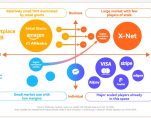
In the cross-border payment industry, services can be categorised into four segments based on money flows:

Four segments in cross-border payment industry.

Marketplace 2B
These businesses provide payment processing services for sellers on e-commerce platforms. Risk control is primarily based on e-commerce platform’s integrated of data streams (e.g., merchant details, logistics, transaction history). With relatively low technical barriers and compliance capabilities, the industry is highly saturated.

B2B
Focused on traditional cross-border trade enterprises, this segment has huge potential but features high risk control complexity and high barriers. Payment service providers must individually verify the entire information flow pertaining to each transaction (including buyer/seller details, orders, logistics, contracts, etc.), which results in many companies attempting to enter, but few succeed.

C2C
This primarily covers cross-border remittances between individuals. The overall market scale is relatively small, with limited use cases.

C2B
This is the most well-established segment, dominated by cross-border payment giants such as Visa, Mastercard, PayPal, and Stripe. The market is saturated with intense competition.

As a reference, the C2B cross-border payment industry has evolved dramatically over the last five decades, especially in the past ten years. Mobile wallet providers in China, the U.S. and Europe drove the mobile payment revolution, establishing a well-established cross-border settlement and risk control platform dominated by card schemes and wallets like PayPal. The system features significant advantages, including efficient transaction processes and unified risk control standards.

In contrast, B2B cross-border payments still primarily rely on traditional bank transfers. The sector as a whole is still on the cusp of the “mobile payment revolution” and has not yet formed a unified clearing mechanism or a standardized risk control system.

The payment sector need a new platform.

However, this development gap also points to a huge market opportunity. The B2B cross-border settlement market for SMEs desperately needs a shake-up. Service providers that possess a deep understanding of global customer needs and are equipped with technological and compliance capabilities will unleash vast growth potential in this space.

Beyond Borders: XTransfer Insights is a thought-leadership series that shares XTransfer’s perspectives on the forces shaping global trade and financial services. Through research-driven insights and real-world observations, it highlights emerging trends, key challenges, and opportunities across international markets.
Hashtag: #XTransfer #Crossborder #Payment #SMEs #whitepaper


The issuer is solely responsible for the content of this announcement.

SpiceJet has expanded its international network with the launch of direct services linking Sharjah with key cities, adding fresh capacity to one of the Gulf’s busiest short-haul corridors and reinforcing Sharjah Airport’s position as a major gateway for travellers between the UAE and the subcontinent.

The new services mark SpiceJet’s return to Sharjah after a prolonged period of network consolidation, coming as demand for point-to-point travel continues to rise among expatriate workers, small businesses and leisure passengers. Airline executives said the route selection reflects sustained passenger flows and a preference for nonstop connections that reduce travel time and reliance on larger hub airports.

Sharjah Airport Authority confirmed that the additional frequencies strengthen the airport’s connectivity with South Asia, which remains among its most significant source markets for both inbound and outbound travel. Passenger traffic on these routes is underpinned by labour mobility, family visits, education links and growing trade ties, particularly in manufacturing, retail and services. Airport officials have previously indicated that traffic volumes on South Asia routes have shown steady recovery and expansion following the disruption of earlier years.

SpiceJet’s Sharjah operations are being introduced at a time when the carrier is gradually rebuilding its international footprint. The airline has focused on deploying narrow-body aircraft on high-density, short-haul sectors where cost discipline and quick turnarounds are critical. Industry analysts note that Gulf routes, especially those linking secondary airports, offer relatively stable yields due to consistent demand and limited seasonality.

The Sharjah services place SpiceJet in direct competition with established operators that already serve the corridor, including full-service and low-cost carriers. Competition on pricing and schedules is expected to intensify, benefiting passengers through wider choice and more flexible travel options. Aviation consultants say Sharjah’s appeal lies in lower operating costs compared with larger hubs, as well as its proximity to northern emirates with sizable expatriate populations.

Sharjah Airport has pursued a strategy of attracting airlines that focus on value-driven travel rather than purely premium traffic. The airport’s ongoing infrastructure upgrades, including terminal enhancements and airside capacity improvements, have been designed to handle rising passenger volumes while maintaining quick processing times. Officials have highlighted that improved facilities support airlines seeking efficient operations without the congestion associated with mega hubs.

For SpiceJet, the move also aligns with broader efforts to stabilise operations and restore market confidence. The airline has worked to address fleet availability and financial pressures, while selectively adding routes that promise strong load factors. Aviation sector observers say disciplined network growth is essential for carriers operating in a competitive low-cost environment, particularly as fuel prices, leasing costs and currency movements continue to influence margins.

Travel industry executives point out that Sharjah’s catchment area extends well beyond the emirate itself, drawing passengers from neighbouring regions who prefer a less crowded airport experience. This has helped Sharjah maintain its relevance despite intense competition from Dubai and Abu Dhabi. The addition of SpiceJet flights is expected to further diversify the airport’s airline mix and strengthen its role as a regional connector.

The launch also reflects a wider trend of carriers re-evaluating secondary Gulf airports as viable alternatives for international expansion. With bilateral air service agreements allowing incremental capacity growth, airlines are increasingly targeting routes that balance volume with operational efficiency. Analysts say this approach is particularly attractive for carriers seeking to rebuild international revenues without overextending resources.

Marvel at the Whimsical Gallop of Horses Adorned in Embroidered Artistry, Alongside an AI Fai Chun Photo Booth and Joyful New Year Rewards

HONG KONG SAR – Media OutReach Newswire – 6 February 2026 – This Chinese New Year, Pacific Place and Starstreet Precinct invite you to take a joyful gallop into the Year of the Horse with ‘Whimsical Gallop’ — a celebration that blends artistry, imagination and auspicious cheer. From 5 February to 3 March 2026, the mall is transformed into a contemporary Chinese garden awash in soft, nature-inspired pink hues. Leading the way is a striking 3.5-metre-tall embroidered horse in Park Court, alongside three other beautifully adorned horses brought to life by Hong Kong embroidery atelier YLYstudio. Together, this quartet of horses brings luck and fortune to all.

Spring Bloom Gallop Pavilion

Beyond the installations, the festivities continue with thoughtful and playful experiences. Create your own personalised blessings at the ‘Splendid Blessings’ AI Fai Chun Photo Booth, and enjoy ‘Galloping Joy’ New Year Shopping Rewards with festive ‘Blooming Splendour’ Lai See packets and exclusive shopping treats. The celebration culminates with lively jazz tap dance performances and a lion dance parade, bringing heritage and modern festivity together for everyone to enjoy.

A Garden Where Embroidery Meets Imagination

Across the mall and into Starstreet Precinct, visitors are immersed in a fantastical Chinese landscape of embroidered ornaments, blooming florals, lanterns and gazebos. YLYstudio dedicated over 1,000 hours to handcrafting more than 590 ornaments featuring eight auspicious motifs — feathers, birds, pomegranates, coins, flowers, four-leaf clovers, ladybirds, and clouds — using over 80 types of sequins, threads, and ribbons. These motifs are showcased on the four horses, spreading good fortune while enriching the festive landscape with depth and artistry.

Spring Bloom Gallop Pavilion

Location: Garden Court, Level LG1, Pacific Place

Three embroidered horses stand in quiet splendour — each a symbol of good luck, harmony and prosperity. Rising above them, a five‑metre‑tall gazebo becomes a sanctuary of artistry, where the eight auspicious motifs conceived by YLYstudio are revealed in delicate detail. Each work conveys multicultural blessings, all rendered with exquisite craftsmanship.
Blossoms of Imagination

Location: Level L1 (near lululemon), Pacific Place

Amid peach blossoms, a pastel pavilion shelters two young horses at rest. The scene evokes New Year anticipation, filled with hope and the promise of spring.

‘Splendid Blessings‘ AI Fai Chun Photo Booth

Blending tradition with technology, the ‘Splendid Blessings’ AI Fai Chun Photo Booth invites visitors to create personalised New Year blessings with a contemporary twist.

By registering as an above member and spending HK$300 on the same day via electronic payment, shoppers can select an auspicious message, capture full-body photos, and receive both printed and animated digital versions to take home and share with loved ones.

Date: 5 February – 3 March 2026
Time: 10am – 10pm

Magical Blessings

Location: Level L1 (near Lane Crawford), Pacific Place

Energetic mini horses line both sides of the pathway, accompanied by floral arrangements and whimsical plants that create a festive corridor of movement and charm. An abundance of mini horses extends the blessings along the way, embodying prosperity and joy in every step.
Poised in Bloom

Location: Park Court, Level L1, Pacific Place

At the heart of Park Court, a 3.5‑metre‑tall

giant horse is poised in mid‑gallop — a graceful emblem of blossoming fortune. Flanked by peach blossoms, it moves forward to usher in a more prosperous year ahead.

Lanterns of Serenity

Location: Outside Three Pacific Place on Wing Fung Street and Star Street

Lanterns sway and blossoms bloom in this outdoor extension of the celebration. Set against the urban backdrop of Starstreet Precinct, the installation carries the festive spirit beyond the mall — inviting passersby to pause, smile and soak in the new year fantasy.

Poised in Bloom
Poised in Bloom

‘Blooming Splendour‘ Lai See Packets – Celebrate the Year of the Horse with Flourishing Flowers

The ‘Blooming Splendour’ Lai See packets are inspired by the elegance of embroidery. They feature delicate floral motifs rendered with painterly precision, blending layers of red, pink, and orange threads to create a sense of graceful movement. At the heart of the design, a sculpted floral emblem evokes abundance, beauty, and new beginnings, enriched with pearl-like accents recalling couture embroidery techniques, where beads, sequins and threads are meticulously layered.

Each set includes 10 Lai See packets in two harmonious colourways, accompanied by a velvet pouch in either soft pink, adorned with a pomegranate charm, or rich green, accented with a lucky four-leaf clover charm. These detachable embroidered charms are thoughtfully designed to be worn or styled long after the festive season, carrying the spirit of prosperity and good fortune throughout the year.

‘Galloping Joy‘ – Elevate Your Experience with Exclusive Shopping Rewards

From 5 to 16 February 2026, shoppers can enjoy festive privileges designed to usher in a prosperous year, including exclusive ‘Blooming Splendour’ Lai See packets, movie ticket exchange coupons, Pacific Place shopping e-vouchers and gourmet treats.

Accumulated Same-day
Electronic Spending
Shopping Rewards*
HK$3,800 – HK$8,799

One Set of
‘Blooming Splendour’
Lai See Packets
+
Two MOViE MOViE
Pacific Place
Ticket Exchange Coupons (valued at HK$260)

—
HK$8,800 – HK$17,999 HK$300 Pacific Place
Shopping e-Voucher
HK$18,000 – HK$37,999 HK$600 Pacific Place
Shopping e-Voucher
+ The Grand Sicilian Pistachio Puff
(valued at HK$128)
HK$38,000 – HK$87,999 HK$1,400 Pacific Place
Shopping e-Voucher
+ The Grand Sicilian Pistachio Puff
(valued at HK$128)
HK$88,000

or above

HK$2,400 Pacific Place
Shopping e-Voucher
+ COVA Nutty Duo Cookie Gift Box
(valued at HK$198)

*Shoppers are required to join the Pacific Place Loyalty Programme – above and meet the accumulated same-day spending requirement by electronic payment during the Promotion Period in order to be entitled to redeem Shopping Rewards. The Rewards are limited in quantity and are available on a first-come, first-served basis while stocks last. Other Terms and Conditions apply.

Redemption Period: 5 – 16 February 2026
Redemption Location: Gift Redemption Counter, Level L1 (near Theory)
Redemption Hours: 11am – 10pm

Where Hooves Move to the Rhythm

The Year of the Horse arrives in a dance of joy. Step Out Studio and fellow tap dancers will be tapping out the heartbeat of the season, their rhythms galloping alongside the soaring notes of Jazz Band led by Nate Wong. Together, they will conjure a celebration where artistry and vitality run free. After the lions are awakened in an eye‑dotting ritual, our lion dance parade will unfurl like a living tapestry of tradition — spreading fortune, unity and exuberance throughout the mall, and inviting everyone to stride boldly into the year ahead.

Tap and Jazz into the New Season Let your feet and heart gallop with joy as Step Out Studio and fellow tap dancers bring tap to life, echoing the energy of racing hooves. Accompanied by keyboard, bass, and saxophone from Nate Wong’s Jazz Band, the performance blends percussive footwork with swinging jazz, creating a lively celebration of the Year of the Horse.

Dates:

  • 14 February 2026 – Performers: Cal (Step Out Studio), Zoe Chan, Jazz Band led by Nate Wong
  • 21 February 2026 – Performers: Cal (Step Out Studio), Natalie Hung, Jazz Band led by Nate Wong

Time: 3:30pm

Location: Level L1 (near Shiro), Pacific Place

Roaring into Prosperity: Eye-dotting Ceremony & Lion Dance Parade Stride into the excitement of the Chinese New Year at Pacific Place! After bringing the lions to life in a traditional eye-dotting ceremony, the lion dance parade will wind its way through the mall, spreading energy, luck, and prosperity for the year ahead.

Date: 23 February 2026 (Monday, 7th day of Chinese New Year)

Time: 1pm

Location: Park Court, Level L1, Pacific Place

Join the ‘Whimsical Gallop’at Pacific Place and Starstreet Precinct this Chinese New Year — where embroidered artistry, festive celebrations, and joyful rewards come together to welcome a year filled with good fortune and blooming possibilities.

Hashtag: #WhimsicalGallop #HorseInBloom #GallopingJoyAtPP

The issuer is solely responsible for the content of this announcement.

About YLYstudio

YLYstudio is a Hong Kong-based embroidery atelier celebrated for blending traditional craftsmanship with contemporary design. Founded by Lilian Tsang Lai Yu and Matt Hui Yip Long, the studio brings decades of global fashion experience and artistry to every creation.

Lilian Tsang previously served as chief designer for a Hong Kong fashion label and honed her craft at LECOLE LESAGE, the prestigious haute couture embroidery school owned by the Chanel Group in Paris. She also interned at Elisabeth Gasbarre Rousseau Haute Couture Studio in Lyon, France. With a deep passion for teaching, Lilian now shares her embroidery expertise in Hong Kong, inspiring a new generation of artisans.

Matt Hui is a Hong Kong-based fashion designer graduated from the Royal College of Art in 2013. Passionate about the creative process and fine workmanship, he has collaborated on stage costumes for renowned singers including Panther Chan and Bondy Chiu. Since 2024, Matt has also ventured into the film industry as a custom tailor, contributing to international productions such as Ballad of a Small Player and Emmanuelle.

About Pacific Place

Located in the heart of Admiralty, Pacific Place is the destination for exceptional service and unique experiences. As a pioneer of innovative retail concepts in Hong Kong, Pacific Place continues to transform the retail scene by delighting visitors with an array of curated experiences through diversified offerings. Since its inception in 1988, Pacific Place has established itself as Hong Kong’s premier lifestyle hub, a mixed-use development that continues to evolve and grow as the ultimate destination to shop, dine, work, stay, relax and play. It houses one of Hong Kong’s largest collections of luxury brands and diverse dining offerings, making every visit a memorable one. In addition to being a prime transportation hub, Pacific Place is home to five Grade-A office towers, 268 serviced apartments, and four five-star hotels: The Conrad, Island Shangri-La, JW Marriott and Upper House Hong Kong.

Customer enquiry hotline: (852) 2844 8988 Website: www.pacificplace.com.hk
Facebook: @Pacific Place Hong Kong Instagram: @pacificplacehk
WeChat: @PacificPlaceHK XiaoHongShu: @Pacific Place HK

About Starstreet Precinct

Starstreet Precinct is a vibrant destination in Wan Chai, comprised mainly of Wing Fung Street, Star Street, Moon Street, Sun Street, and St. Francis Yard. Over the years, the neighbourhood has evolved from a quaint, historic landmark, into an eclectic hangout hotspot for those with a unique sense of style and character. Filled with cosy cafés, restaurants, bars, boutique shops with the most coveted fashion selections, galleries and interior design stores, the precinct offers an array of day-to-night experiences. With a focus on community and a passion to foster a sustainable lifestyle for all, Starstreet Precinct and its tenants are collectively working to build a better future together. Connected to Pacific Place and Admiralty station through the Three Pacific Place underground link, the neighbourhood is a hidden gem in the heart of Hong Kong.

Website: www.starstreet.com.hk Instagram: @starstreethk
Facebook: Starstreet Precinct #starstreethk

Arabian Post Staff -Dubai   Bitcoin fell sharply on Friday, sliding to a 16-month low and briefly testing the psychologically important $60,000 level as a broad sell-off in technology shares spilled into risk-sensitive assets, intensifying volatility across global markets. The world’s largest cryptocurrency touched an intraday low close to $60,000 before rebounding, trading modestly higher later in the session at around $64,000 as buyers stepped in. The […]

Bitcoin slid to its weakest level since Donald Trump’s election victory, underscoring how fragile sentiment has become across digital-asset markets as tighter financial conditions, regulatory uncertainty and profit-taking converge. The world’s largest cryptocurrency fell sharply in volatile trading, extending a multi-week decline that has erased a large portion of gains built up earlier in the cycle. Prices moved to levels last seen shortly after Trump secured the […]

Kyocera Corp. has outlined plans to repurchase up to ¥500 billion of its own shares over fiscal 2027 and fiscal 2028, signalling a deeper commitment to capital efficiency as Japanese corporates face mounting pressure to lift returns and sharpen balance sheets. The programme, one of the largest contemplated by the Kyoto-based manufacturer, places the group among a widening cohort of listed companies using buybacks to address investor concerns over cash utilisation and valuation gaps.

The company said the planned repurchase ceiling reflects a multi-year approach rather than a one-off market intervention, with execution paced according to market conditions, cash flows and strategic priorities. Kyocera has historically favoured conservative capital management, retaining substantial cash buffers to support long investment cycles across components, electronics, materials and energy-related businesses. The proposed scale marks a notable recalibration, suggesting management is prepared to return excess capital while maintaining flexibility for growth spending.

Market participants view the move against a backdrop of sustained corporate governance reform in Japan, where stock exchange guidance and investor activism have encouraged companies to justify capital allocation choices more explicitly. Share buybacks have become a visible response, particularly among firms trading below book value or carrying large cash balances. Kyocera’s announcement fits that pattern, though the delayed start in fiscal 2027 underlines a preference for orderly execution tied to medium-term planning.

The group has spent the past year reviewing portfolio efficiency and profitability across segments, including fine ceramics, semiconductor components, electronic devices and document solutions. Management commentary has emphasised stable cash generation and disciplined investment, with returns assessed against cost of capital. By signalling a sizeable buyback window in advance, Kyocera appears to be seeking to anchor investor expectations around capital returns while avoiding short-term distortions to operating strategy.

Analysts note that Japanese companies have increasingly used multi-year buyback frameworks to balance shareholder returns with industrial policy considerations and long-term employment commitments. Unlike ad-hoc repurchases, extended programmes can be scaled up or down without signalling distress, and they reduce the risk of buying shares at cyclical peaks. For Kyocera, whose earnings are exposed to swings in global electronics demand, that flexibility is likely to be central.

The announcement also highlights intensifying competition for capital among Japanese industrial groups. With domestic interest rates edging higher after years of ultra-loose monetary policy, holding large idle cash positions has become more visibly costly. At the same time, foreign investors have pressed boards to articulate clearer return targets, often favouring buybacks over dividends for their tax efficiency and balance-sheet impact. Kyocera’s plan reflects these cross-currents, even as it preserves room for dividends and strategic investments.

Industry specialists point out that Kyocera’s diversified structure complicates capital allocation decisions. The company spans mature businesses with steady cash flows and growth areas requiring sustained investment, including advanced materials and energy-related technologies. A pre-announced repurchase cap allows management to adjust deployment as segment performance evolves, rather than locking in rigid payout ratios.

From a governance perspective, the move reinforces a broader shift in boardroom priorities. Japanese regulators and exchanges have encouraged companies to engage more directly with shareholders, explain valuation discounts and set measurable improvement goals. Buybacks have emerged as a tangible mechanism to demonstrate responsiveness, particularly when accompanied by operational reforms. Kyocera has indicated that capital efficiency measures will run alongside cost controls, portfolio reviews and selective expansion.

Investor reaction has focused on the signal rather than immediate financial impact, given the programme’s future timeframe. Portfolio managers tracking Japan’s equity market say such announcements contribute to a narrative of structural change, even if execution remains years away. For long-term holders, the clarity around potential capital returns can support valuation, especially when paired with stable operating performance.

HCMC, VIETNAM – Media OutReach Newswire – 2 February 2026 – The Ho Chi Minh City Development Joint Stock Commercial Bank (HDBank, ticker: HDB) recorded pre-tax profit of over VND21.3 trillion (US$820.5 million) in 2025, up 27.4% year-on-year and exceeding its target.

HDBank delivers robust 2025 results with profit up 27.4%.

Profitability and core indicators remained among the strongest in the banking sector, reflecting the Bank’s sustainable growth quality.

In the fourth quarter alone, HDBank posted profit of over VND6.5 trillion (US$250.3 million), a 60% increase compared to Q4 2024.

As of the end of 2025, consolidated total assets reached VND931 trillion (US$35.8 billion), up 33.5% year-on-year. Total funding mobilisation stood at VND832 trillion (US$32 billion), with customer deposits rising 28.2%.

Outstanding loans increased 34.3% to VND588 trillion (US$22.6 billion), with credit focused on sectors featuring reasonable risk profiles and long-term growth potential, including SMEs, supply chains, production and business, exports and green projects. This strategy enabled the Bank to maintain high growth while effectively managing risk.

Total operating income rose 25.4% to VND42.7 trillion (US$1.6 billion) driven by strong growth in non-interest income, which rose 2.5 times year-on-year and accounted for 18.6% of the total.

Return on equity reached 25.3%, among the highest in the sector, while return on assets stood at 2.1%. During the year, HDBank paid stock dividends and issued bonus shares with a combined ratio of nearly 30%, reaffirming its commitment to shareholders.

The non-performing loan ratio remained low at 1.66%.The capital adequacy ratio under Basel II reached 16.7%, among the highest in the industry, providing ample room for credit growth and scale expansion without immediate pressure for capital increases.

2025 also marked a strategic milestone in HDBank’s long-term strategy with the completion of the receipt of DongA Bank subsequently rebranded as Vikki Digital Bank, a new-generation digital bank. In its first year of operation, Vikki recorded more than 2.1 million app downloads, highlighting strong growth potential in digital and retail banking.

Meanwhile, HD SAISON, a subsidiary of HDBank, posted profit of over VND1.39 trillion (US$53.5 million) with ROE of 22.5%.

HDBank now serves more than 25 million customers, with 94% of individual transactions conducted via digital channels.

Moody’s upgrade of HDBank’s credit rating to the top tier among Vietnamese banks in 2025 further strengthened investor confidence in the Bank’s financial strength and long-term growth prospects.

Hashtag: #HDBank

The issuer is solely responsible for the content of this announcement.

VISHNU RAJA
RYO YAMADA
HITORI GOTOH
IKUYO KITA