News related to
shares

Bit Digital has raised a total of $162.9 million through an underwritten public share offering, signalling its strategic pivot from Bitcoin mining into building a substantial Ethereum treasury. Underwriters fully exercised their over‑allotment option on 1 July 2025, expanding the issuance to 86.25 million ordinary shares and boosting net proceeds to the disclosed sum.

The capital infusion positions the Nasdaq‑listed miner to sharply reduce its focus on Bitcoin operations and allocate the funds towards acquiring Ethereum—a shift that aligns with broader trends among institutional investors favouring Ether. The company already manages 24,434 ETH, valued at approximately $59.8 million, and plans to convert around 417.6 BTC—worth roughly $44.9 million—into ETH, further bolstering its holdings.

Bit Digital’s decision emerges at a pivotal moment for Ethereum, which continues to draw momentum from its network upgrades and growing appeal in decentralised finance and staking arenas. Industry analysts interpret this move as institutional endorsement of Ethereum’s utility and long‑term integrity.

The offering was executed under a shelf registration declared effective on 20 June 2025, with B. Riley Securities acting as sole bookrunner and Clear Street, Craig‑Hallum, and Northland Capital Markets serving as co‑managers.

This marked exit from Bitcoin mining investments reflects a growing recognition of proof‑of‑stake ecosystems, such as Ethereum’s, as lower‑carbon and increasingly profitable ventures relative to energy‑intensive Bitcoin operations. Bit Digital’s move mirrors strategic shifts by other firms seeking to diversify within the crypto landscape.

By converting a significant portion of its Bitcoin holdings into Ethereum, the company is betting on the upside potential of ETH staking rewards. Ethereum’s transition to proof‑of‑stake has positioned it as a credible alternative revenue stream for firms with digital asset treasuries, moving beyond merely holding and mining cryptocurrencies.

The structural implications for investors are multifaceted. While diluting existing shareholders through the share issuance, the company now holds a stronger, more liquid position in Ethereum. Analysts suggest that institutional confidence in Ether is rising, as evidenced by the flurry of allocations into ETH‑focused treasuries, staking projects, and exchange‑traded funds.

Investor reactions have been mixed. Some view the dilution as manageable given the scale of capital and the clear strategic direction. Others question how successfully Bit Digital will deploy its ETH assets, including whether it will stake holdings and manage risk across its newly acquired portfolio.

Industry observers emphasise that successful execution will require transparent operation of staking protocols, disciplined treasury management, and risk mitigation strategies to protect against Ether’s price volatility. Questions also remain over how quickly the BTC-to-ETH conversion will be completed and whether the Ethereum market can absorb such large inflows without destabilising prices.

Bit Digital’s acquisition comes on the heels of growing institutional inflows into Ethereum, including predictions of multi‑billion dollar inflows into ETH‑based ETFs in 2025, suggesting a wave of mainstream financial participation.


Figma has filed its S‑1 registration to go public on the New York Stock Exchange under the ticker “FIG”, and disclosed holdings of approximately $69.5 million in a spot Bitcoin ETF as of 31 March 2025. The filing also confirms that the board approved allocating $30 million in USDC for later conversion into Bitcoin, signalling a strategic embrace of digital assets. Financial disclosures reveal robust growth for the design‑collaboration platform, […]

The Securities and Exchange Commission is developing a standardised framework that would allow token-based exchange-traded funds to list directly on exchanges, without requiring individual Rule 19b‑4 filings. The initiative, still in early stages, would set eligibility criteria—such as specific thresholds for market capitalisation, trading volume and liquidity—to determine which tokens qualify for streamlined launches.

This approach echoes previous SEC moves: in 2016, actively managed ETFs gained generic listing access under Rule 19b‑4, bypassing lengthy approval processes. Exchanges such as NYSE, Nasdaq and Cboe laid the groundwork by integrating uniform listing standards for index-based and active ETFs, paving the way for this token-focused evolution.

In May, Nasdaq formally proposed Rule 5703 to facilitate generic listing of multi-class ETFs, provided they align with Rule 6c‑11 and relevant exemption orders—allowing shares to debut without SEC review per fund. Similarly, Cboe sought generic listing permission for commodity-based ETFs to enable immediate options trading once criteria are met. The current SEC effort extends that logic to the burgeoning field of digital asset tokens.

Nasdaq has suggested the SEC adopt consistent standards for spot crypto ETPs under the 1933 Act, arguing that futures-based equivalents have already benefited from generic listing systems. This dovetails with mounting interest in regulated spot token funds, evidenced by amendments to listings such as Solana ETFs by issuers including 21Shares and Bitwise.

Under the envisaged standard, exchanges would apply objective, measurable thresholds—minimum market cap, daily volume and liquidity—to lists of token ETPs. Meeting these thresholds would allow issuers to bypass the full Rule 19b‑4 paperwork and associated months-long wait. Exchanges would retain responsibility for ongoing surveillance, as required by Section 19b‑4, ensuring investor protection and market integrity.

Stakeholders believe the move could vastly reduce time-to-market and cut legal and administrative costs. Industry analysts have highlighted that current Rule 19b‑4 reviews often delay ETF launches by months, even years. Exchanges argue that objectively defined generic standards provide predictability and efficiency—benefits that appear essential in digital asset markets known for rapid innovation.

Critics caution, however, that token assets may present unique compliance and market-risk considerations. Spot crypto markets, for instance, remain vulnerable to manipulation, price fragmentation and regulatory uncertainty. Ensuring adequate surveillance and governance, they warn, is material to the standard’s success.

To address this, exchanges plan to build in monitoring mechanisms, adaptation of surveillance regimes, and safeguards to delist or suspend tokens that fail to maintain standards. Similar models have been applied to options on commodity ETFs and multi-class ETF shares, suggesting a tested regulatory infrastructure.

The SEC’s token-ETF framework is likely to include consultation with market participants and exchanges, incorporating feedback from recent proposals such as Nasdaq’s push for spot crypto ETP generic listing. Legal advisors emphasise the importance of clear, data-driven criteria to withstand Rule 19b‑4’s statutory requirement for investor protection.

Key players expected to benefit include token issuers, established asset managers entering crypto, and intermediaries seeking to offer exchange-traded token exposure. Streamlined listing could also encourage institutional investors to enter the token market with confidence, potentially increasing adoption and liquidity.

Within the regulatory community, observers note that the SEC is mindful of its 2024 approval of spot Ether ETFs via individual 19b‑4 forms; a broader listing standard could expand this success to a wider array of digital assets. Meanwhile, pending amendments relating to token staking in ETFs—such as those Cboe filed in March—underscore the growing diversity within crypto-linked products.

As deliberations progress, industry and legal experts are analysing possible criteria thresholds, surveillance protocols, and whether the framework will initially apply only to spot token ETPs or extend to futures and hybrid products. Exchanges appear to favour a phased approach, beginning with established tokens that already meet basic listing requirements.

After discovering institutional inefficiencies in traditional finance, this young CFA is helping investors access opportunities previously reserved for Wall Street. The mahogany-paneled conference room fell silent. On the 47th floor of one of Wall Street’s most prestigious firms, Tan Gera stared at his computer screen in disbelief. The evidence of systematic insider trading was not only shocking—it was the final piece of a puzzle he’d been putting […]

In a world where careers often follow straight lines, Lea M. Jabre Fayad’s journey has been anything but conventional. What began with a love for reading and writing evolved into a lifelong mission to use words as a tool for awareness, healing, and empowerment. Lea first discovered her passion for storytelling during her academic years, which eventually led her to intern at a publication house between her […]

Kraken has launched xStocks, a platform enabling users outside the United States to trade 60 tokenised U.S. stocks and ETFs around the clock, five days a week. Accessible through the Kraken app, these equities are issued on the Solana blockchain and are fully backed one‑for‑one by genuine shares held via Backed and Dinari, offering both price parity and economic rights.

The new service opens over 60 blue‑chip names—including Apple, Tesla, Nvidia and Amazon—to non‑U.S. investors, granting fractional ownership starting at just US$1, with no purchase fee in USD or Kraken’s native USDG. Trading is available 24/5 via the exchange, while withdrawal to self‑custodial wallets allows for 24/7 on‑chain usage, such as collateral in DeFi.

Kraken’s co‑chief executive Arjun Sethi described xStocks as a “foundational” shift in investment accessibility, emphasising seamless, permissionless ownership without intermediaries or geo‑barriers. The tokens are structured as SPL assets on Solana, chosen for its speed and efficiency, and dividends are auto‑reinvested into additional tokens, though users forfeit direct voting rights.

Kraken has imposed geo‑restrictions, excluding U.S. persons as well as residents in Canada, EU, UK and Australia during the initial rollout—but plans to expand to more than 185 countries in the coming weeks and eventually extend to multiple blockchains. The exchange emphasizes adherence to regulatory frameworks, supported by its partnerships with Swiss issuer Backed and U.S. SEC‑registered transfer agent Dinari.

The advent of tokenised stocks follows earlier, less‑successful attempts by Binance in 2021, which encountered regulatory pushback in multiple jurisdictions. Coincidentally, Bybit unveiled access to the same xStocks pool two hours after Kraken, signalling an intensifying push within the crypto sector. Bybit’s version supports both Solana and Ethereum versions, aimed at users seeking a bridge between traditional finance and crypto.

The global tokenisation of equities is attracting attention across the industry. Robinhood has launched tokenised stock trading in the EU in partnership with Arbitrum, enabling EU residents to trade over 200 U.S. equities 24/5. Coinbase is also pursuing approval from the U.S. Securities and Exchange Commission to offer tokenised equities domestically, pending regulatory clearance. Several firms recognise tokenisation’s potential to reduce costs, improve settlement times, and introduce continuous trading, though they acknowledge challenges surrounding liquidity and regulatory harmonisation.

Market watchers suggest tokenised equities could reshape global finance. The linkage to blockchain allows cross‑border access, seamless custody and composability in DeFi ecosystems. Critics note limitations, such as absence of voting rights and uncertain secondary‑market liquidity. The World Economic Forum and legal analysts have underlined the need for clearer disclosure standards and global regulatory coordination.

Kraken’s move appears calibrated to capitalise on a regulatory shift favouring tokenisation. It actively engages with international regulators, avoiding pitfalls that stymied predecessors. Its strategy builds on existing infrastructure—such as its listing of more than 11,000 traditional U.S. securities to U.S. clients—melding established market access with on‑chain innovation.

The launch of xStocks marks a pivotal moment in mainstreaming tokenised finance. By undercutting geographical limitations, slashing fees and uniting traditional equities with crypto rails, Kraken and peers are edging global capital markets closer to seamless, inclusive accessibility. As the ecosystem evolves, attention will turn to how regulatory authorities respond and whether liquidity deepens to support this new asset class.

BitMine Immersion Technologies has unveiled a $250 million private placement of common stock to underwrite an ambitious Ethereum treasury initiative, alongside a high-profile board shift. CEO Jonathan Bates and newly appointed Chairman Thomas Lee, the Fundstrat founder, revealed that the move will dramatically reshape the company’s balance sheet and strategic direction.

This offering encompasses 55.6 million shares at $4.50 each, the proceeds earmarked for acquiring Ether as BitMine’s principal reserve asset. Supported by leading crypto firms including FalconX, Kraken, Galaxy Digital and custody providers BitGo and Fidelity Digital, the strategy seeks to transform BitMine into one of the largest publicly traded holders of Ethereum.

Driven by MOZAYYX with participation from Founders Fund, Pantera Capital, Republic Digital, DCG and others, the placement is scheduled to close around July 3, pending approval from the NYSE American. ThinkEquity acted as placement agent, and Cantor Fitzgerald advised the lead investor.

Thomas Lee emphasised that this marks “the rapid and continued convergence of traditional financial services and crypto,” noting that Ethereum’s dominance in stablecoin transactions makes it an optimal treasury asset. He described stablecoins as “the ‘chatGPT’ of crypto,” underlining Ethereum’s strategic importance.

BitMine’s pivot offers direct access to Ethereum’s protocol-level capabilities—staking and participation in decentralised finance mechanisms—shifting the firm beyond its origins as a pure-play miner.

Market reaction has been enthusiastic: BitMine’s stock surged over 200% in pre-market trading, carefully erasing what had been a roughly 45% year-to‑date decline. Investing.com reports volatility in its share price over recent months and warns that gross margins remain subdued, hovering at approximately 16.4%.

BitMine has already embarked on its crypto treasury plan, acquiring 100 BTC on 9 June and bringing its total bitcoin holdings to about 154.17 BTC purchased via a previous share issue. The Ethereum tranche will amplify crypto exposure—treasury levels are expected to multiply by over 16 times.

The firm aims to introduce ETH‑per‑share as a new key performance metric, aligning shareholder value directly with crypto asset holdings. The strategy reflects a belief in Ethereum’s broader technology utility—particularly through stablecoins, tokenised assets and smart contracts that underpin DeFi activities.

Officials caution that this strategy brings heightened volatility and regulatory risk. However, BitMine’s leadership sees this as a strategic diversification from Bitcoin‑centric holdings, moving towards programmable blockchain exposure. Their operational footprint—in Trinidad, Texas and Silverton—continues, but the treasury pivot signals a profound evolution.

The closing of this placement, conditional on standard regulatory approvals, will signal BitMine’s entry into a new class of hybrid crypto‑traditional finance entities. With institutional backing and strategic leadership in boardroom and treasury, the company is redefining its public profile.

Advertisements

Easou Technology Holdings Ltd surged as much as 69 per cent to HK$7 before settling at HK$5.88, responding to a strategic 10‑year agreement with a Hong Kong tech firm to co‑develop real‑world‑asset tokenisation and digital asset products. The agreement, coupled with a letter of intent to invest up to HK$3 billion in data centre acquisitions, signals a significant pivot for the Shenzhen‑headquartered digital technology group.

The 10‑year development pact positions Easou at the forefront of a booming tokenisation trend. With the global RWA tokenisation market now valued at US$24 billion — private credit representing over half that sum — the timing gives Easou a chance to capitalise on institutional and retail appetite for immutable, on‑chain asset exposure.

Under the agreement, Easou’s partner in Hong Kong will provide technological infrastructure and regulatory insight. Together they will craft tokenised products spanning private credit, real estate and commodities, tapping into growing investor demand for fractionalised, programmable yield instruments. Analysts expect such collaboration to drive Easou’s AI‑powered content, recommendation engine, and blockchain capabilities to new heights.

Market watchers also note that Ethereum remains dominant in tokenisation — hosting about US$7.5 billion of RWA tokens — but newer blockchains such as Solana, Aptos and Avalanche are gaining ground in niche sectors. Easou’s decade‑long commitment may allow it to adapt across multiple ledger protocols and regulatory frameworks.

The announcement arrived amid a flurry of capital‑raising activity for Easou: on 20 June it placed 57.33 million shares at HK$3.20 each for gross proceeds of around HK$183.5 million, primarily earmarked for deepening its AI‑driven content ecosystem — including short drama, online gaming, content ad tech, and overseas expansion. Chairman Wang Xi also agreed to a 75‑day lock‑up on his shareholding, a gesture insurers interpret as a show of confidence.

Wang Xi described the tokenisation initiative as “a pivotal step” in building an AI‑and‑content synergy, while the capital placement strengthens Easou’s balance sheet, allowing it to invest across new domains without diluting core content investments.

Turning attention to its second headline move, Easou signed a letter of intent to deploy up to HK$3 billion towards acquiring data centres in key Asian markets, including Hong Kong, Japan or Southeast Asia. Industry sources suggest the facilities will support the computing demands of tokenisation platforms and AI workloads — marrying robust infrastructure with financial innovation.

Easou’s stock performance reflects the market’s enthusiasm. The share price rose over 8 per cent earlier in the week to HK$3.51 following the share placement announcement. The near‑tripling to HK$7 on tokenisation news demonstrates confidence in the long‑term vision and revenue potential of its dual strategy.

Still, investors caution about execution risks. Developing tokenised products requires navigating evolving global regulations, particularly in Asia. Hong Kong’s Securities and Futures Commission has signalled willingness to regulate stablecoins, custodians and tokenised offerings as part of its digital‑asset hub initiative, which includes new licensing regimes and frameworks for RWAs. Easou and its partner will need consistent compliance and adaptive governance structures over the decade‑long horizon.

Capital deployment into data infrastructure is capital intensive and faces competitive pressures from established cloud providers. Achieving scale and operational efficiency will be crucial if Easou’s data‑centre investments are to complement its tokenisation ambitions rather than become a costly diversion.

Easou’s strategy illustrates several emerging trends: the convergence of AI‑content and blockchain infrastructure; the pivot to tokenised finance underpinned by robust tech stacks; and Asia‑based companies aligning with local regulatory expansions. By investing in both digital asset innovation and foundational infrastructure, Easou aims to move beyond its role as an AI recommendation engine provider into a multi‑vector technology aggregator.

Star Entertainment is confronting a fresh financial crisis as its partners in the Brisbane Queen’s Wharf development have formally sought to cancel the sale of the casino operator’s 50 per cent interest in the integrated precinct. This blow lands just days after shareholders approved a $300 million rescue package that was expected to stabilise the business. The termination notice, issued by Hong Kong-based Far East Consortium and Chow Tai Fook […]

Dubai has welcomed 8.68 million international visitors between 1 January and 31 May 2025, reflecting a 7 per cent increase compared with the 8.12 million who arrived during the same period in 2024, according to the Tourism Performance Report from the Dubai Department of Economy and Tourism. In May alone, the city hosted 1.53 million international tourists.

Western Europe emerged as the largest source market, supplying approximately 1.917 million visitors—or 22 per cent of the total. Trailing behind were Russia, the Commonwealth of Independent States and Eastern Europe with around 1.396 million tourists. South Asia contributed 1.242 million visitors, while the Gulf Cooperation Council countries accounted for 1.275 million. The Middle East and North Africa numbers reached 989,000, with Southeast and Northeast Asia, the Americas, Africa and Australia following with 9 per cent, 7 per cent, 4 per cent and 2 per cent shares respectively.

Hotel inventory expanded slightly, reaching 825 establishments with 153,356 rooms by the end of May, up from 822 hotels offering 150,202 rooms a year earlier. Occupancy averaged 83 per cent across the five-month span, climbing two percentage points from 81 per cent in 2024. Total occupied room nights reached 19.09 million, a 4 per cent increase over the previous year’s 18.34 million.

Average visitor stays remained steady at 3.8 nights—even as room rates climbed. The average daily rate rose to AED 620, while revenue per available room increased to AED 513, marking a 7 per cent improvement.

These figures follow a landmark 2024 for Dubai, which attracted a record 18.72 million international overnight visitors—an increase of 9 per cent compared to 17.15 million in 2023. At the close of 2024, hotel capacity stood at 832 properties with 154,016 rooms, confirming the city’s commitment to expanding hospitality infrastructure.

Analysts attribute this growth to strengthened global connectivity, robust destination marketing campaigns and a curated events calendar. In Q1 2025, Dubai recorded a 3 per cent year‑on‑year rise in visitor numbers from 5.31 million in the first quarter of last year. Regional data from the same period finds Western Europe contributing 22 per cent, CIS and Eastern Europe 17 per cent, and GCC countries 15 per cent.

Commenting at the Arabian Travel Market expo, Issam Kazim, CEO of Dubai Corporation for Tourism and Commerce Marketing, underlined the role of tourism as a gateway for inward investment, talent and trade. He highlighted new partnerships with Amadeus, Premier Inn Middle East and Hyatt, plus training collaborations between the Dubai College of Tourism and Marriott, aimed at enhancing Emirati workforce participation.

Industry observers note that average daily rates in the hospitality sector climbed to AED 647 in Q1, underpinned by stronger ADR and occupancy figures. Sustainable tourism initiatives also gained traction; over 150 hotels have since earned the Dubai Sustainable Tourism Stamp—a 118 per cent year‑on‑year increase.

Dubai’s appeal spans an array of demographics. While Western Europe remains the single largest source market, growth from South Asia, the GCC, CIS countries, and Southeast Asia reflects diversified outreach efforts. Leisure, business travel and high-profile events are all contributing factors.

Capacity expansion has run in parallel with evolving demand. Investments continue not just in hotel rooms but in broadening the tourism ecosystem—spanning cultural attractions, entertainment venues and transport links. Airport infrastructure upgrades and added flight routes further bolster access for key markets.

Despite the sustained momentum, the industry faces challenges including seasonal weather variations, geopolitical volatility and budget competition from other destinations. However, Dubai’s consistently high ADR and RevPAR metrics suggest healthy pricing power across its hospitality sector.

The emirate’s strategy emphasises quality over quantity, focusing on richer, high-yield tourism segments including luxury experiences, MICE, health tourism and eco‑conscious travel. This is aligned with the broader economic vision outlined under the Dubai Economic Agenda, aiming to double the size of the economy by 2033.

Continued collaboration between government bodies, private-sector operators and international partners is central to sustaining this trajectory. As global travel rebounds from pandemic-era disruption, Dubai is leveraging its infrastructure depth, event portfolio and marketing muscle to strengthen its position in the upper echelons of global tourist destinations.

Economic projections for 2025 remain positive. With visitor numbers tracking ahead of last year’s pace and average daily rates increasing, tourism is projected to deliver significant contributions to GDP and related sectors such as transport, retail, entertainment, F&B and real estate.

Polymarket, the world’s largest blockchain-based prediction market platform, is on the verge of completing a funding round exceeding $200 million that would value the company at over $1 billion. The strategic investment reflects growing investor confidence in forecasting platforms as tools for real-time insights and market intelligence.

The company, founded in 2020 by Shayne Coplan and headquartered in New York, has previously secured $70 million across Series A and B rounds led by General Catalyst, Founders Fund, alongside participation from Ethereum co-founder Vitalik Buterin. That capital helped Polymarket scale its operations offshore, particularly following regulatory setbacks in the United States, where it withdrew services under pressure from the Commodity Futures Trading Commission.

Sources indicate the new investment round will build on these foundations, raising upwards of $200 million and propelling Polymarket into unicorn status with a valuation north of $1 billion. Those close to the transaction describe a diverse syndicate of venture capital firms, strategic investors and high-profile figures from the crypto and financial sectors, though official names are yet to be disclosed.

Polymarket’s appeal lies in its novel combination of decentralised finance, crowd-sourced wisdom and smart contract automation. The platform allows participants to trade on real-world events—ranging from elections and policy outcomes to entertainment and economic indicators—by buying and selling shares reflective of outcome probabilities. Transactions occur using USDC on Polygon, ensuring on-chain settlement and transparency.

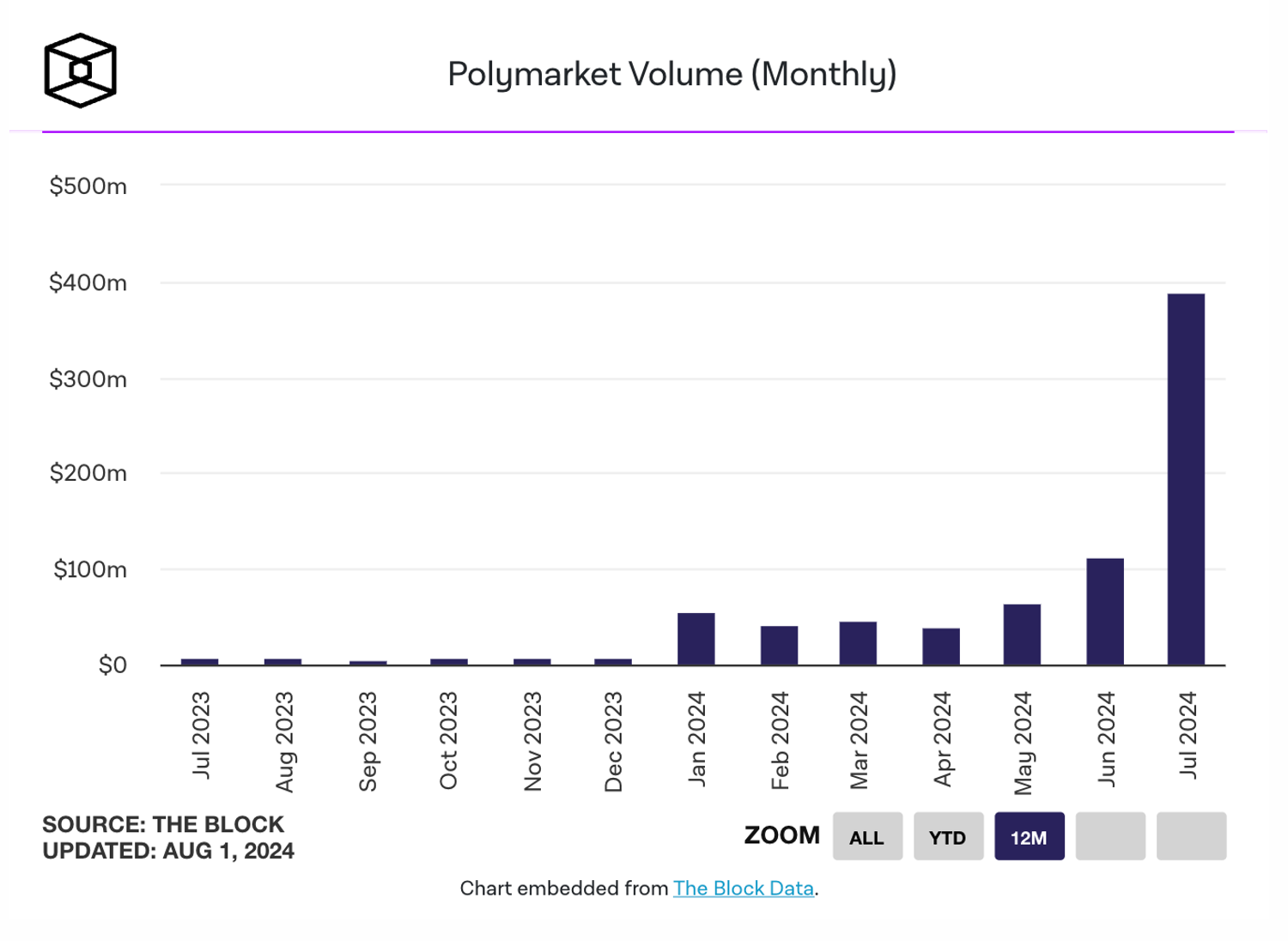
Trading volumes attest to the platform’s influence. In August 2024 alone, Polymarket processed approximately $472 million in trades, with political markets—especially those related to the US presidential election—accounting for nearly $1 billion in wagers by November 2024. Peter Thiel’s Founders Fund highlighted its trust in Polymarket’s market intelligence: “checking Polymarket when breaking news happens has become a habit”.

That compelling performance comes amid regulatory headwinds. Polymarket has barred US users since reaching a settlement with the CFTC in early 2022, which included a US$1.4 million fine and the appointment of former CFTC chairman J. Christopher Giancarlo to its advisory board. These changes aimed to address compliance concerns as the platform expanded internationally. More recently, the FBI reportedly raided Coplan’s home in autumn 2024 as part of an investigation into whether US-based activity violated these agreements.

Despite these challenges, Polymarket has continued to deepen its appeal. Ethereum co-founder Vitalik Buterin has publicly supported the broader application of prediction markets, terming them pioneers in “Info Finance,” an area he believes can enhance journalism, governance and scientific transparency. Polymarket’s data is now cited within Bloomberg’s Terminal services, offering institutional investors fresh analytical layers based on global betting dynamics.

The potential $200 million funding round is expected to include an allocation of token warrants enabling investors to participate in a future token issuance by Polymarket. Earlier reporting by CoinDesk and The Defiant in late 2024 highlighted a $50 million interim funding plan tied to a utility token offering, intended to integrate with or supplant the UMA oracle dispute-resolution system. That mechanism would allow users—or token holders—to validate market outcomes, an evolution that could expand Polymarket’s governance and on-chain autonomy.

Market observers view this token strategy as a logical advancement. Rising volumes and user engagement on election forecasts have revealed limitations in relying solely on external oracles; introducing a native token could decentralise verification and cement Polymarket’s position in the governance of its own markets.

Emerging trends suggest Polymarket is transitioning from an insurgent, crypto-native prediction exchange to a mainstream information infrastructure. Its user base now spans political analysts, financial professionals and retail traders. The recent partnership with X integrates Polymarket’s probabilistic feeds into social media dynamics, allowing users to access market sentiment in real-time alongside breaking news.

Yet questions over regulatory alignment remain. The CFTC is reportedly examining off-shore platforms that permit US bettor access, and lawmakers are considering broader prohibitions on event-based derivatives. The fallout from the 2024 FBI inquiry adds a layer of legal uncertainty, even as Polymarket navigates regulatory environments in Europe and Asia, where its platform has faced access restrictions from gambling regulators in Belgium, Poland, Singapore and France.

As Polymarket nears completion of its landmark funding round, it stands at a crossroads defined by opportunity and scrutiny. A valuation exceeding $1 billion would underscore investor conviction in its model, but unlocking the full potential of prediction markets may depend as much on regulatory clarity as on capital infusion.

Aflac detected a cyberattack on its U.S. network on 12 June and contained the intrusion within hours. The company has confirmed that the attack may have compromised sensitive personal data, including Social Security numbers, claims and health information belonging to customers, beneficiaries, employees and agents. Operations remain fully functional as experts investigate the full extent of the breach. The insurer’s SEC filing and subsequent statement referred to […]

Markets surged as President Donald Trump announced a ceasefire agreement between Israel and Iran on Monday, calming fears of a broader Middle Eastern conflict and triggering a sharp drop in oil prices. With Brent crude falling nearly 5% in Asian trading and U.S. West Texas Intermediate declining by around 3%, investors responded swiftly to the prospect of restored supply and reduced geopolitical risk. At the same time, […]

KUALA LUMPUR, MALAYSIA – Media OutReach Newswire – 21 June 2025 – Crude oil, which is arguably the world’s most important commodity, is on everybody’s mind right now. The flared up conflict in the Middle East is increasing risks of a major oil supply shock, potentially pushing the price of ‘black gold’ into the stratosphere and completely derailing the global economy. In this article, Octa, a global […]

Niger’s military-led government announced on 19 June 2025 that it is nationalising the Somair uranium joint venture, formerly dominated by French nuclear fuel company Orano. The announcement, aired on national television, declared that the State will now hold full ownership and management of the mine, citing inappropriate and inequitable conduct by Orano. Authorities assert that the 63 per cent stake held by Orano—alongside the remaining 37 per cent via state firm […]

Experience the legendary ‘Plácido Domingo’ live in Thailand for the first time—alongside an Indian epic, dazzling Chinese ballet, operas, and jaw-dropping acrobatics Tickets Now Available! BANGKOK, THAILAND – Media OutReach Newswire – 20 June 2025 – Get ready for a world-class spectacle like no other—right here in Thailand. Bangkok’s 27th International Festival of Dance & Music is making a grand comeback, bringing 14 stunning performances from over […]

Santos Ltd’s board of directors has endorsed a US $18.7 billion cash offer from an Abu Dhabi-led consortium, pledging immediate relief for stretched gas markets but plunging Australia into a high-stakes national interest conflict. The bid, sponsored by ADNOC’s investment arm XRG alongside ADQ and Carlyle, offers A$8.89 per share—a 28 per cent premium to Santos’s market value—while assuming A$36.4 billion in enterprise debt. It marks the largest all‑cash takeover ever in […]

Google’s array of AI‑powered services—Search, Ads, Play, Maps, YouTube and Gemini—delivered a Dhs21.8 billion uplift to the UAE’s economy in 2024, fueling digital transformation, consumer value and job creation.

Search and Ads alone generated Dhs20.2 billion by enabling thousands of local companies to reach new customers and expand operations. Gemini, Google’s AI assistant, has seen 63 per cent of UAE adults using it, with nine in ten users reporting gains in productivity and 71 per cent praising its Arabic‑language ease of use. Other tools, including Maps, Waze and mobile wallets, further enhanced daily routines.

The Google Maharat Min Google skilling initiative has equipped more than 430,000 people in the UAE with digital and AI competencies since 2018. Meanwhile, the Android and Google Play ecosystem supported around 30,000 jobs and generated approximately Dhs455 million in revenue for UAE‑based app developers in 2024.

Survey data from March 2025, with responses from over 1,100 consumers and nearly 400 business leaders, indicates that Google’s services offer an estimated average monthly benefit of Dhs683 per user. Half of adults describe Search as essential to their routine, 89 per cent rely on Maps or Waze for navigation, and 90 per cent use mobile payment platforms like GPay or GWallet to streamline transactions.

Adoption of AI tools among UAE businesses is nearing ubiquity, with 91 per cent reporting use of at least one AI product in workflows, while 97 per cent of public‑sector respondents confirm boosted productivity from Google’s AI solutions. Consumer engagement is likewise robust: 94 per cent use Search monthly to compare prices, 86 per cent check reviews before visiting venues, 80 per cent use mapping apps to locate businesses, and 73 per cent of 18–24‑year‑olds browse or shop via Search weekly.

Google’s platforms have also strengthened the creative and developer landscape: over 600 UAE‑based YouTube channels surpassed one million subscribers—a 15 per cent annual rise—and the Google News Initiative has trained more than 20,000 journalists and journalism students across the MENA region, including the UAE.

Anthony Nakache, Google’s Managing Director for the Middle East and North Africa, emphasised that the firm’s “investment in accelerating the country’s ambitious journey towards a diversified, AI‑powered economy” is reflected in the findings. He highlighted how local partnerships, AI‑driven tools and continuous skilling programmes contribute to “substantial economic value” and empower individuals, enterprises and communities within the UAE.

Public First’s Economic Impact Report, published mid‑June, is based on econometric modelling, consumer and business polling, case studies and secondary data. Survey responses were weighted to reflect the UAE’s national demographics.

Scientists have observed that under intense environmental pressure, nematode worms assemble into towering collective structures to disperse by hitching rides on passing insects. This phenomenon, documented in decaying orchard fruit in Germany, represents the first natural evidence of cooperative “towering” behaviour among nematodes. Field researchers from the Max Planck Institute of Animal Behavior and the University of Konstanz spent months scanning fallen apples and pears with digital […]

Zurich-based 21Shares AG has extended its reach in the Nordic financial market by adding five cryptocurrency exchange-traded products to Nasdaq Stockholm, taking its total offerings on the Swedish exchange to ten. The newly cross-listed products—Uniswap, Avalanche, Bitcoin Gold, Solana Core Staking and Ethereum Core —join the firm’s existing Bitcoin, Ethereum, Solana, XRP and Bitcoin Core ETPs.

This move reflects mounting interest among both retail and institutional investors in regulated access to a broader range of digital assets via established trading venues. With the latest additions, 21Shares reinforces its position as a leading provider of physically backed, transparent crypto investment products in Europe.

Mandy Chiu, Head of Financial Product Development at 21Shares, highlighted that the expansion enables investors to craft more bespoke portfolios. “By offering a broader selection of single‑asset and thematic crypto ETPs, we’re empowering investors to build more customised and resilient portfolios through a familiar exchange environment,” she said. Nasdaq’s European ETF & ETP head, Helena Wedin, welcomed the new suite, noting such innovation as shaping the future of capital markets.

The newly listed ETPs offer exposure to distinct niches within the crypto ecosystem. AUNI provides a stake in Uniswap, the leading decentralised exchange. AVAX tracks Avalanche, a platform noted for its scalability. BOLD focuses on Bitcoin Gold—a fork designed to democratise mining. CSOL delivers both Solana price exposure and staking yield, while ETHC covers Ethereum’s core asset. These additions allow investors to target specific segments, from DeFi protocols to next‑generation blockchains and staking-enabled assets.

All 21Shares ETPs are physically collateralised and traded under regulated frameworks, removing the burden of wallet management and key custody. Fees range from 0.21% to 2.50% annually, offering a competitive alternative to direct crypto exchange transactions. The firm’s products are also listed on Euronext Paris, Amsterdam, London and SIX Swiss Exchange, contributing to a diversified pan-European presence.

This latest development comes as Europe prepares for implementation of the Markets in Crypto‑Assets Regulation, aimed at standardising crypto oversight. More listings on regulated exchanges help issuers align with the evolving regulatory landscape.

21Shares’ strategy compares with best-in-class players in traditional finance pushing crypto integration. From Bitcoin and Ethereum to platforms like Solana and Avalanche, the firm’s growing suite meets demand both for mainstream exposure and thematic investment strategies.

Despite these advances, some challenges persist. Liquidity conditions for less‑traded tokens such as Bitcoin Gold can be thin, and tracking discrepancies may emerge between product performance and spot prices. Fees, while competitive, can vary significantly: niche products may carry noticeably higher rates, impacting returns.

Nevertheless, for investors seeking regulated and familiar vehicles, the benefits are tangible. ETPs provide access through existing brokerages, transparency under established compliance standards and relief from the technical complexity of self-custody.

This expansion also underscores Nasdaq Stockholm’s evolving role as a hub for crypto‑linked financial instruments. Stockholm’s regulatory environment and market infrastructure make it attractive for issuers and investors alike. The increased product diversity enhances its appeal to both domestic and regional markets.

Beyond booming local interest, 21Shares continues to push forward globally. In the US, the firm is pursuing approvals for a suite of spot crypto exchange-traded funds—including for Solana, XRP, Dogecoin, Polkadot, and Sui—as it seeks to replicate its European success. Additionally, its ARK 21Shares Bitcoin ETF underwent a 3‑for‑1 stock split on 16 June to enhance accessibility.

Since launching the first physically backed crypto ETP in 2018, 21Shares has built a track record of innovation and adaptation. Backed by deep market expertise and proprietary custody systems, the company now manages approximately US $9.15 billion in assets under management. Leadership changes—including new CEO Russell Barlow—reflect an evolving operational structure focused on scalability.

Donald Trump’s family has quietly reduced its stake in World Liberty Financial, the crypto venture closely tied to his business and political interests, trimming its holding from 60 per cent to 40 per cent after June 8. The move marks a significant shift in the family’s involvement in the blockchain sector.

The reduction in equity coincided with a rising valuation for WLF, which earlier sold US$550 million in its native $WLFI tokens and has attracted substantial foreign investments, including a US$2 billion infusion from a UAE-backed entity using its stablecoin USD1 for Binance transactions. Analysts estimate the 20 per cent stake sale could have fetched around US$190 million, with approximately US$135 million potentially going to Donald Trump personally.

World Liberty Financial, launched during the 2024 election cycle, has been a central hub of the Trump family’s crypto strategy. The firm is a decentralised finance protocol that aggressively markets its connection to Trump, listing him as “chief crypto advocate” and involving his sons in senior Web3 roles. Under its structure, Trump-linked entities capture 60 per cent of ownership and 75 per cent of token sale revenues.

The firm’s high-profile stablecoin USD1, launched in March 2025, swiftly became one of the top five global stablecoins, with a circulating supply exceeding US$2 billion by April. In May, the WLF stablecoin was chosen by an Abu Dhabi investment fund to purchase US$2 billion in Binance shares—a deal criticised for merging private enterprise and diplomatic influence.

Critics have raised concerns that the share reduction, lacking any formal announcement, typifies the project’s secretive nature and the family’s opaque handling of crypto profits. DT Marks DEFI LLC—an entity renamed from DT Tower II LLC in 2024 and fully owned by Trump family—holds the WLF stake. Ownership structure has branched out to include Don Jr., Eric, and Barron Trump, each holding minor positions alongside their father within the DEFI entity.

The lack of disclosure prompted scrutiny, and no official response has emerged from the Trump Organisation or WLF regarding the transaction. This latest move mirrors an earlier reduction in January 2025, when the family lowered its control from 75 per cent to 60 per cent.

The pivot comes amid intensifying criticism of World Liberty’s entanglement with state and family interests. Steve Witkoff—Trump’s Middle East envoy—is linked to key dealmaking, with his son Zach co-founding WLF. Their collaborative efforts to court foreign investment from UAE and Pakistan have sparked concern over potential conflicts between diplomatic roles and private profit. Legal experts and ethicists question the blending of public service and personal gain in a venture that funnels income to the Trump and Witkoff families while concurrently lifting Trump administration deregulatory actions on digital assets.

The share reduction enters a broader regulatory moment. The US Senate recently passed stablecoin legislation that may reshape legal frameworks around such assets, while Circle, a peer stablecoin issuer, saw its valuation spike—heightening investor comparisons with WLF. With global crypto markets in flux and the Trump-linked coin ecosystem expanding, the timing of the sale aligns with strategic portfolio recalibration.

World Liberty continues to promote itself as the “official” Trump crypto brand, prompting its legal team to issue cease-and-desist directives against unauthorised token imitations. There is no indication that the stake reduction signals a retreat; rather, it appears to be a calculated liquidity event amid heightened scrutiny and shifting valuations.

Saudi Arabia’s budget carrier Flynas debuted on the Tadawul at SAR 80, raising SAR 4.1 billion, but shares closed at SAR 77.30—down over 3 %—despite an opening high of SAR 84.10 and a low of SAR 69.90. Investors responded nervously to heightened regional instability following military activity between Iran and Israel. Across Gulf markets, risk aversion sharply impacted airline stocks: Flynas dropped roughly 3.4 % on debut, ACWA Power slipped 3.3 %, and […]

U.S. President Donald Trump has appealed directly to the House of Representatives to pass the GENIUS Act—a bipartisan stablecoin regulation bill cleared by the Senate—without any amendments or delays, stressing that it will position the country as the “undisputed leader” in digital assets.

The Senate passed the bill on 17 June with a decisive 68‑30 vote, supported by senators from both parties. It introduces stringent rules for stablecoin issuance, including full backing of coins with liquid reserves and monthly disclosures of reserve compositions, alongside audit and Treasury oversight provisions. Trump openly praised the legislation, calling it “pure genius” and urging House Republicans to advance a “clean” version so it reaches his desk before Congress breaks for its August recess.

Major market players reacted positively. The approval spurred significant gains in related equities: shares of Circle Internet, issuer of the USDC stablecoin, surged between 16% and 27%, reflecting investor optimism for regulatory clarity and mainstream token adoption.

The GENIUS Act’s framework mandates that only permitted issuers—such as banks or federally approved payment companies—may issue stablecoins for U.S. users. It requires a one‑to‑one reserve ratio in U.S. dollars or Treasuries and monthly public disclosures about reserve composition. Additionally, it introduces safeguards for consumer protection and bankruptcy protocols prioritising stablecoin holders. Large issuers will have to undergo annual audits, and the bill prohibits stabilecoin ownership by Congress members, though it excludes the President and Vice President.

While Trump’s endorsement reflects his broader pro-crypto pivot—underscored by investments like Bitcoin, policy appointments, and support from his digital-assets advisory council—critics have flagged potential conflicts of interest. Trump and his family hold substantial stakes in crypto ventures including World Liberty Financial and its USD1 stablecoin, having earned tens of millions in 2024. Critics stress that exemption of the President from the bill’s conflict-of-interest ban leaves a loophole that some fear could be exploited.

Senators on both sides celebrated the bill. Republican sponsor Bill Hagerty described it as a “paradigm-shifting development” that moves the U.S. toward global leadership in crypto. Senate Banking Chair Tim Scott described it as “the most significant digital assets legislation ever to pass the U.S. Senate”. Treasury Secretary Scott Bessent projected that the bill could expand the stablecoin market to $3 trillion‑plus by decade’s end.

Nonetheless, the path ahead is not without hurdles. Some Democrats, including Elizabeth Warren, Jeff Merkley and others, raised objections during Senate negotiations, warning the bill could grant a “super‑highway for corruption” and fails to curtail potential for big tech firms entering the stablecoin market. Senate negotiators incorporated numerous amendments to secure support, but key concerns remain unresolved.

Saudi Arabia’s Capital Market Authority has greenlit three initial public offerings on the Tadawul Parallel Market, signalling sustained investor interest and broadening of the kingdom’s capital markets. The regulator authorised offerings for Zahr Al Khuzama Aluminium Company, Quality Education Company and Sahat Almajd Company Trading on 18 June 2025. The combined volume of shares to be sold stands at approximately 6.175 million, constituting stakes ranging from 11 […]

VISHNU RAJA
RYO YAMADA
HITORI GOTOH
IKUYO KITA