News related to
shares

e& has reported an impressive net profit of AED 3.5 billion for the second quarter of 2025, up 9.7 per cent year‑on‑year, driven by a substantial rise in its global subscriber base. The company’s performance outstripped the average analyst forecast of AED 2.84 billion, underlining robust execution in a competitive market. Consolidated revenue for Q2 rose 28.1 per cent to AED 18.0 billion, while earnings before interest, tax, depreciation and amortisation increased by approximately 22.2 per […]

Dubai, UAE. In Dubai’s real estate market, new expectations are changing recruitment. New brokerages, often promoting appealing commission splits, open every week. This is making experienced agents consider more than just percentages. They are now looking for brokerages that offer high earnings along with strong support systems, organized operations, and a performance-driven culture. Phoenix Homes, a leading real estate agency in Dubai, offers an 80% commission on […]

Matein Khalid While Marjan Island day trips with Amore mio Donna Farah hardly makes me nostalgic for my singleton era visits to Vegas and college boy trips to the odious Trump Plaza/Taj Mahal casinos in Atlantic City, I have no problem taking a flutter on Wynn when it traded at 12X earnings since the free cash flow yield is a more reliable proxy for a money making […]

The Abu Dhabi Investment Authority, a prominent sovereign wealth fund, has bolstered its investment in India with the acquisition of a 1.17% stake in the National Securities Depository Limited, the country’s oldest central depository. This move comes as part of NSDL’s initial public offering, which has garnered significant attention within the Indian financial sector.

The deal positions ADIA as one of the key anchor investors in NSDL’s IPO, valued at ₹40.12 billion. The IPO officially opened for subscription today, marking a critical phase for both the company and the broader investment landscape. ADIA’s involvement is seen as a strong endorsement of NSDL’s role within the Indian financial ecosystem and reflects the UAE-based fund’s growing confidence in India’s capital markets.

ADIA has acquired 174,996 equity shares in NSDL at ₹800 per share, amounting to an investment of ₹140 million. This participation places ADIA among the notable institutional investors backing the public offering, signalling the strategic importance of NSDL in India’s burgeoning financial sector. The sovereign wealth fund’s move is likely to strengthen its position in the Indian market, where it has been increasing its footprint over the past several years.

The IPO has attracted substantial attention from institutional investors, with the Life Insurance Corporation of India securing the largest anchor allotment. LIC holds an 11.99% stake, underscoring its significant role in India’s financial services landscape. Following closely is the Smallcap World Fund, which has committed to an 8.33% stake, further highlighting the appeal of NSDL as a viable investment proposition for large-scale financial institutions.

NSDL, which plays a pivotal role in the clearing, settlement, and dematerialisation of securities in India, has been integral to the functioning of the Indian stock markets since its inception in 1996. The company provides critical infrastructure that supports the trading of securities and facilitates the electronic transfer of ownership. Its IPO is seen as a major milestone, not only for the company but for the broader development of the Indian financial market.

As the oldest depository in the country, NSDL has witnessed the rapid expansion of India’s financial markets over the past few decades. The company’s role in streamlining the trading of securities has been a key enabler of the country’s financial growth, positioning it as a leader in the sector. The funds raised through the IPO will be used to further enhance its technological infrastructure and expand its range of services, including the digitalisation of securities.

The growing interest from global institutional investors, such as ADIA, underscores the attractiveness of India’s financial market. Despite global economic uncertainty, India’s stock exchanges continue to attract significant foreign investments, bolstered by the country’s large consumer base, robust economic growth, and ongoing reforms aimed at improving market liquidity and transparency.

ADIA, which has been active in the Indian market for several years, has diversified its portfolio across various sectors, including infrastructure, real estate, and technology. The sovereign wealth fund has shown a particular interest in India’s financial services sector, making strategic investments in leading financial institutions and companies with strong growth potential.

NSDL’s IPO marks a significant step in the company’s journey, with the funds raised providing a boost to its expansion and digitalisation efforts. For ADIA, this investment represents a continuation of its strategy to capitalise on India’s growing financial sector and enhance its portfolio through carefully selected high-potential opportunities.

CoinShares has introduced an exchange-traded product designed to offer investors exposure to the SEI token, with a unique value proposition: zero management fees and staking rewards. The ETP, set to launch across multiple European markets, aims to attract both retail and institutional investors who are keen to participate in the burgeoning sector of digital assets.

The SEI ETP is being heralded as a groundbreaking development within the cryptocurrency investment space, as it lowers the barriers to entry for investors looking to capitalise on the SEI token. By eliminating management fees, CoinShares has created a highly competitive product that promises higher returns for investors. Moreover, the staking rewards component adds a unique dimension to the offering, allowing investors to earn additional yield from their SEI holdings, further enhancing the attractiveness of the ETP.

This launch comes at a time when cryptocurrency investment products are experiencing increasing demand across Europe. With growing interest from institutional investors, particularly in the wake of global market fluctuations and economic uncertainty, innovative financial products like the SEI ETP are gaining significant traction. The move by CoinShares is a response to this rising demand, reflecting the company’s commitment to making digital asset investments more accessible and cost-effective.

CoinShares has long been a prominent player in the digital asset investment space. Known for its strong track record in launching exchange-traded products, the company has consistently pushed the boundaries of what is possible in terms of product innovation. The SEI ETP is part of the firm’s broader strategy to expand its range of offerings, catering to a diverse array of investors, including those who are new to the world of digital assets.

The SEI token, the underlying asset of the new ETP, is a relatively new entrant to the cryptocurrency market. However, it has been gaining momentum due to its strong fundamentals and the innovative approach behind its creation. The staking rewards aspect is particularly appealing, as it provides investors with an additional income stream beyond the typical price appreciation of the token.

Europe’s regulatory environment for cryptocurrencies has played a pivotal role in enabling the successful launch of such products. With the European Union’s comprehensive framework for digital assets gaining momentum, including the MiCA regulation, investors have greater confidence in the safety and legitimacy of cryptocurrency investment products. CoinShares, leveraging its expertise and reputation, is well-positioned to navigate this complex regulatory landscape, providing assurance to investors.

The ETP will be listed on major European exchanges, making it easily accessible to a broad spectrum of investors. The zero-fee structure makes it highly appealing to those looking to reduce the cost of investment, while the staking rewards make it an attractive option for those seeking passive income opportunities in the digital asset space. Furthermore, the ETP is designed to cater to both institutional and retail investors, broadening its potential market reach.

While the SEI ETP promises to be an attractive product for a wide range of investors, some industry experts caution that investors should remain mindful of the volatility that typically accompanies cryptocurrency markets. Although the SEI token has shown promising growth potential, like all digital assets, it is subject to significant price fluctuations. Staking rewards, while appealing, also come with their own set of risks, particularly if the underlying asset’s value decreases.

Despite these risks, the growing demand for innovative, low-cost cryptocurrency products remains a driving force in the market. CoinShares’ zero-fee SEI ETP is expected to capture a significant share of the market, particularly as investors look for new ways to participate in the digital asset space without incurring high management fees. By offering a product that aligns with investor desires for yield and low-cost access, CoinShares has further cemented its position as a leader in the digital asset investment space.

HONG KONG SAR – Media OutReach Newswire – 25 July 2025 – MicroPort Scientific Corporation (Stock Code: 00853.HK, “MicroPort”) announced that Shanghai Healthcare M&A Fund (“SHMAF”), a fund managed by SIIC Capital, a subsidiary of SIIC Group, has entered into a share purchase agreement to acquire 135,335,204 shares in MicroPort held by Otsuka Medical Devices Co., Ltd. Through this transaction, SHMAF will become a strategic shareholder in […]

HONG KONG SAR – Media OutReach Newswire – 23 July 2025 – The Faculty of Engineering at The Chinese University of Hong Kong (CUHK) continues to strengthen its position in global engineering education and research, with notable achievements across multiple engineering disciplines including Computer Science, Information Engineering, Electronic Engineering, Biomedical Engineering, Mechanical and Automation Engineering, Systems Engineering and Engineering Management. Recent rankings highlight the Faculty’s research excellence, […]

Advertisements

Highlights 39% underlying earnings growth Increased contributions from associates, Health & Beauty and Food Health & Beauty delivered strong like-for-like (LFL) sales growth of 4% Portfolio simplification continues with the announced divestment of Singapore Food business and sale of minority stake in Robinsons Retail Proceeds from Yonghui and Robinsons Retail divestments strengthen balance sheet to a net cash position of US$442 million Raised full-year underlying profit guidance […]

Al‑Futtaim Retail has agreed to acquire a 49.95 per cent stake in Cenomi Retail from major shareholders for about SAR 2.52 billion, signalling a major strategic shift in Saudi Arabia’s retail sector. The agreement, unveiled through a statement on Tadawul today, July 20, 2025, also includes a conditional shareholder loan to boost Cenomi’s balance sheet.

Under the share purchase agreement signed on July 18, Al‑Futtaim would purchase approximately 57.33 million shares from the Alhokair family, Saudi FAS Holding and FAS Real Estate at SAR 44 per share. Completion hinges on regulatory clearance and execution of a parallel SAR 1.3 billion loan agreement aimed at shoring up working capital.

Al‑Futtaim, a UAE conglomerate with a broad portfolio spanning franchising, automotive, real estate and financial services, brings deep retail expertise and a strong track record with global brands. Its investment is expected to stabilise Cenomi’s liquidity, support operational continuity and bolster its capacity for expansion.

Cenomi Retail, part of Fawaz Abdulaziz Alhokair Co., has navigated a challenging turnaround. It holds the largest brand portfolio in Saudi Arabia, operating over 800 stores across eight countries and managing more than 85 international brands, including Zara under a long-term agreement with Inditex. The firm successfully launched a landmark Zara concept store in Riyadh in December 2024, integrating digital and physical retail channels.

Despite these strengths, Cenomi has suffered persistent financial strain. It reported a SAR 1.1 billion net loss in 2023 amid deteriorating margins, asset write-downs and weakening equity. Total assets collapsed by 36 per cent to SAR 4.6 billion by end‑2024, while shareholder equity turned negative – warning signs that triggered restructuring efforts in 2024.

In response, Cenomi embarked on an aggressive restructuring: disposing of non-core brands and outlets, offloading 16 franchises in early 2024, divesting five further brands with 121 stores to Abdullah Al Othaim Fashion Co. in October, and appointing Salim Fakhouri as CEO. The divestments, totalling SAR 2 billion, aimed to streamline operations around “champion” brands like Zara. By mid‑2024, losses had mounted to SAR 1.5 billion.

Earlier this month, Cenomi confirmed it was in talks to bring in a strategic investor for nearly half its capital, accompanied by a shareholder loan. Today’s announcement reveals that investor as Al‑Futtaim, although final terms on the loan are still under discussion.

The deal aligns with broader growth trends in Saudi Arabia’s retail sector, which is projected to expand at roughly 7.1 per cent CAGR through 2029. Economic diversification under Vision 2030, expanding consumer spending and rising tourism are driving omnichannel retail innovation. Cenomi’s launch of cenomi. com and its O2O model position it to capitalise on these trends, though profitability remains a concern.

Analysts have flagged Cenomi as a high-risk, high-reward prospect. With a forward P/E of around 14.3x and a weak operating margin, its distressed balance sheet raises concerns over equity dilution. However, sustained operational cash generation—SAR 1.3–1.4 billion annually—suggests underlying business viability.

Al‑Futtaim’s entry provides a critical capital injection that could stabilise Cenomi’s finances and underpin its digital expansion. Industry observers note that Majid Al Futtaim and Emaar have successfully executed omni-channel models in the region; Al‑Futtaim’s deep supply chain know-how and brand partnerships could replicate that success in Saudi markets.

Following deal closure, which remains subject to approvals, Al‑Futtaim will command nearly half of Cenomi’s share capital and will have extended a substantial shareholder loan. The injecting of both capital and expertise is expected to bolster Cenomi’s capability to restore profitability and reclaim market leadership.

Matein Khalid Morgan Stanley has evolved into one of the world’s preeminent wealth management franchises and dramatically reduced its exposure to volatile securities trading in a major strategy shift under its former CEO James Gorman. His acquisitions of E-Trade, Eaton Vance and the Smith Barney brokerage platform from Citigroup have enabled its client assets to grow to a colossal $6.5 trillion and provide the anchor for secular […]

Uber Technologies and Baidu Inc. have confirmed a multi‑year strategic alliance to bring Baidu’s Apollo Go autonomous robotaxis to markets beyond the U. S. and mainland China, initiating the programme later this year in select cities across Asia and the Middle East. The new service, integrated into the Uber app, will offer riders the option to choose fully driver‑free vehicles powered by Apollo Go’s advanced AI systems.

Apollo Go currently operates the world’s largest driverless ride‑hailing network, with more than 1,000 fully autonomous vehicles deployed across 15 cities—including Dubai and Abu Dhabi—and over 11 million rides completed as of May 2025. The expansion, announced on 15 July 2025, marks a significant move by Uber as it intensifies its foray into autonomous vehicles, supplementing existing partnerships with other AV developers such as Waymo, Pony AI, WeRide, May Mobility, Volkswagen and Avride.

Uber CEO Dara Khosrowshahi described the venture as a decisive milestone: “This partnership brings together two of the world’s most iconic technology companies to help shape the future of mobility. As the world’s largest platform of its kind, spanning mobility, delivery, and freight, Uber is uniquely positioned to help AV leaders like Baidu bring their autonomous technology to the world.” Baidu’s co‑founder and CEO Robin Li added that integrating Baidu’s autonomous driving technology with Uber’s network represents “a major milestone in deploying our technology on a global scale,” aimed at delivering safe, efficient and cost‑effective transport to a wider audience.

Market response to the announcement has been positive: Uber’s shares rose more than 1 % in pre‑market trading in the U. S., while Baidu’s U. S.‑listed stocks surged almost 5 %, reflecting investor confidence in the deal’s potential to accelerate autonomous mobility adoption worldwide.

The initial deployment targets key cities in Asia—potentially including Singapore and Malaysia where Baidu plans to launch Apollo Go this year—and in the Gulf region, where regulatory environments are favourable and infrastructure is supportive. Recent reports highlight that Gulf countries such as the UAE and Saudi Arabia aim to have at least 25 % of transport in major cities autonomous by 2030‑2040, presenting a promising opportunity for robotaxi services.

Analysts view the Uber‑Baidu partnership as a pivotal step in global AV expansion. By entering markets outside its core regions, Baidu leverages an “asset‑light” international strategy driven by collaboration instead of proprietary platforms. Uber gains immediate access to a proven self‑driving fleet without the development time and costs associated with in‑house technology, bolstering its competitiveness in the robotaxi space, particularly against rivals like Lyft and Waymo.

Safety and regulatory scrutiny remain top concerns. Apollo Go’s record of over 11 million rides with a robust safety profile strengthens public and regulatory confidence. Still, each market’s regulatory readiness varies, requiring phased live testing and strong oversight to meet local licensing standards.

Financially, the deal promises dividend benefits. By significantly increasing supply of robotaxis through Uber’s platform, Baidu stands to accelerate revenue from its autonomous segment, potentially addressing investor concerns over its core advertising business. Uber, which has seen its stock climb 56 % this year, reinforces its diversification into autonomous and freight services ahead of its Q2 earnings report scheduled for 6 August.

Competition is heating up. The Gulf region already hosts partnerships between Uber and Chinese AV firms such as Pony AI and WeRide, both of which are conducting trials or planning roll‑outs in Dubai and Abu Dhabi. Baidu’s entry into this competitive space joins a growing group of Chinese robotaxi operators—such as Pony AI, AutoX, DiDi and WeRide—vying for global market share.

While the United States and mainland China remain outside the deal’s scope—due to complex regulatory frameworks and entrenched competition—Uber and Baidu have hinted at future expansions into Europe and Oceania, suggesting a long‑term global vision. Baidu’s ongoing engagement with European regulators, including Switzerland and Turkey, supports predictions for expanded rollout later this year.

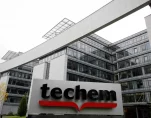
Abu Dhabi’s Mubadala Investment Company, Partners Group, GIC and TPG Rise Climate have agreed a €6.7 billion deal to acquire Techem, the Frankfurt-based energy‑efficiency firm, in a strategic move poised to reinforce digital-first submetering and sustainability in European real estate.

The transaction—set to conclude in the second half of 2025, pending regulatory approvals—will see Partners Group’s infrastructure arm retain a controlling stake, while Mubadala, GIC and TPG Rise Climate take minority positions alongside, marking a rotation in ownership strategy. The sale ends the tenure of the prior consortium including La Caisse and Ontario Teachers’ Pension Plan, which supported Techem since 2018.

Techem, founded in 1952 and based in Eschborn, operates in 18 countries and serves more than 440,000 customers with over 13 million dwellings under its care. Approximately 62 million devices are currently installed across its footprint.

Under Partners Group’s 2018 private equity-led acquisition, Techem grew its sales beyond €1 billion and increased EBITDA by nearly 50%. This expansion solidified its role as a leading provider of submetering services—a crucial component in the decarbonisation of real estate, a sector responsible for around 40% of global CO₂ emissions.

The new ownership strategy aims to deepen digital integration, expand offerings to include smart meters, and capitalise on evolving regulations, rising energy prices and corporate net-zero commitments. “Techem is at the forefront of energy services and is uniquely positioned to drive energy efficiency within the real estate sector,” noted Boon Chin Hau, CIO of GIC Infrastructure, underscoring the group’s confidence in Techem’s strategic outlook.

Abdulla Mohamed Shadid, Head of Energy and Sustainability at Mubadala’s private equity platform, emphasised the importance of helping find solutions to global challenges, reflecting the company’s ongoing shift toward purpose-driven capital deployment. Implementation will include further digitalisation of operations and service expansions tailored to improve building efficiency.

This deal, valued at €6.7 billion, ranks among the year’s largest private‑market transactions globally.

Techem’s technology deploys submetering for heating and water, enabling accurate billing and encouraging lower consumption. Their low‑investment, non‑invasive approach aligns well with landlords and property owners seeking cost-effective energy solutions. Trends in European regulation and growing pressure on emissions reduction give the firm a favourable market tailwind—a factor the new consortium appears ready to exploit.

Despite an earlier attempt by TPG to buy out Techem independently in October 2024, that bid fell through after EU antitrust scrutiny. The current agreement reflects a more collaborative structure that shares risk and maintains continuity under infrastructure stewardship.

Commenting on continuity, Techem’s CEO Matthias Hartmann stated that the company’s strategic direction would remain unchanged, emphasising a steady course under the incoming partners.

The transaction parallels broader investment patterns in smart‑energy firms. Over the past year, GIC has partnered with investors such as EQT to acquire UK smart‑meter provider Calisen—a sign of growing interest in climate‑aligned infrastructure.

With assets under management spanning global private markets, Partners Group leads the infrastructure side with over US$27 billion, while Mubadala and GIC bring sovereign-backed financial clout, and TPG Rise Climate adds dedicated impact‑investment expertise; together they form a powerful alliance geared towards scaling energy efficiency across European real estate.

Meta Platforms’ chief executive, Mark Zuckerberg, has announced a staggering commitment: the firm will dedicate hundreds of billions of dollars to construct multiple gigawatt‑scale data centres aimed at advancing superintelligent AI. The first of these massive hubs, named Prometheus, is slated to become operational in 2026, followed by Hyperion, which is expected to scale up to 5 GW in power consumption in the years ahead. These clusters are […]

BitMine Immersion Technologies has amassed 163,142 ETH, valued at roughly $500 million, marking the culmination of a newly launched treasury-driven strategy centred on Ethereum. The company raised $250 million via a private placement on July 9 and swiftly deployed the funds, achieving the milestone just five days later. The announcement triggered a surge in its share price—up by more than 40%, erasing prior losses linked to a stock offering.

Tom Lee of Fundstrat, newly appointed chairman, likens the approach to MicroStrategy’s bitcoin strategy, suggesting large Ethereum reserves could confer a “Wall Street put” by accumulating a noticeable slice of supply. At $3,072.67 per ETH, the treasury is positioned to generate upside from both price appreciation and staking rewards.

BitMine’s shift from Bitcoin mining to a dual treasury model hinges on three levers: reinvestment of operational cash flow, capital-market activities, and staking yield. CEO Jonathan Bates emphasises that ETH-per-share will be a key performance metric as the firm expands its treasury holdings.

The broader commercial embrace of Ethereum as a treasury asset is gaining momentum, with decentralised organisations and listed companies now collectively holding around 1.5 million ETH. BitMine is among the heaviest publicly traded Ether holders, joining peers such as Coinbase, SharpLink Gaming, and Bit Digital in staking Ethereum as a productive asset.

Market reaction has been volatile. BitMine shares shot up 3,000% over five trading days by early July following the raise, though the stock later retraced approximately 25% after a market dip. Its market valuation now stands near US$2.4 billion—reflecting a speculative premium on its treasury profile.

Ethereum’s value proposition as a central hub for smart contracts, DeFi applications and stablecoins underpins the strategy. BitMine positions itself as capitalising on the infrastructure layer beneath an expanding $250 billion-plus stablecoin market. Staking offers a yield-generating mechanism that differentiates Ether from Bitcoin, allowing the firm to extract returns while holding the asset.

However, the approach carries risks. Ethereum remains volatile—down roughly 9% year-to-date—raising concerns over treasury valuation swings. Regulatory scrutiny of large crypto holdings also looms, and the firm’s reliance on a single digital asset exposes it to concentration risk.

BitMine operates mining facilities in Trinidad, Texas and Las Vegas, but its identity is now steering towards being an institutional Ethereum treasury vehicle. Analysts note that staking infrastructure providers, such as Galaxy Digital and Alluvia, are launching yield-based products tailored for corporate crypto treasuries.

Investor interest appears to reflect a broader shift. Companies with regulatory barriers to direct crypto holdings are gaining exposure by investing in treasury-oriented businesses. That convergence of traditional finance and decentralised assets is central to BitMine’s narrative as it targets more ETH accumulation per share.

Overview – Asia Pacific’s Wealth Boom Accelerates HONG KONG SAR – Media OutReach Newswire – 14 July 2025 – The sixth edition of the Julius Baer Global Wealth and Lifestyle Report confirms the ongoing shift from material consumption towards experiences. Jen-Ai Chua, Research Analyst, Asia, Julius Baer, commented: “Asia Pacific remains one of the fastest-growing regions globally. Real GDP grew 4.5 per cent year on year in […]

Abu Dhabi—The Central Bank of the UAE has revoked the licence of Al Khazna Insurance Company P. S. C under Article 33 of Federal Decree Law No. 48 of 2023 governing insurance activities, after the firm failed to meet mandatory licensing requirements during a suspension period.

The central bank’s investigations uncovered persistent non-compliance with both the Insurance Law and additional CBUAE regulations throughout the suspension, leading to decisive regulatory action. The move underscores the regulator’s commitment to maintaining the integrity and transparency of the UAE’s insurance sector and broader financial system.

Al Khazna, based in Abu Dhabi, saw its licence suspended earlier in line with provisions introduced under the 2023 law. As part of this suspension, insurers are required to resolve any compliance gaps before licence reinstatement. However, the CBUAE found that Al Khazna failed to correct these deficiencies during that period.

Regulatory scrutiny appears to have intensified since the Insurance Law came into effect, as authorities aim to bolster trust in financial markets. The central bank, acting through its supervisory mandate, has intensified examinations across insurance entities to ensure adherence to legal and regulatory standards.

Industry analysts note that the revocation itself does not automatically trigger an exit cascade, but it sends a stern warning. “Companies that fail to meet minimum capital, solvency or operational standards risk losing their licences outright,” said an insurance consultant based in Dubai. The loss of licence bars Al Khazna from conducting any further insurance operations in the UAE unless formally reinstated under strict new terms.

Under the Insurance Law, the CBUAE is mandated to revoke licences if, during suspension, firms fail to comply with corrective actions, including capital adequacy, governance, risk management and statutory reporting. The central bank’s review team reportedly flagged multiple gaps, though details of specific breaches have not been made public.

The CBUAE’s zero-tolerance approach signals broader regulatory tightening across financial services. Since March, the central bank has levied fines totaling over AED 2.6 million against certain insurance firms and banking institutions for breach of tax compliance, antimoney‑laundering and other framework violations.

Following Al Khazna’s licence revocation, policyholders may face claims uncertainty. The CBUAE has provided guidelines to insurers under licence suspension, recommending them to continue servicing in-force policies and settle outstanding claims under regulatory oversight. It is expected that the regulator will enforce a similar approach for Al Khazna to safeguard consumer interests. Discussions are reportedly underway with other operators to absorb liability where needed, according to industry insiders.

Market reaction has been muted so far. Shares of listed insurers remained steady, while privately held peers are reviewing their own compliance procedures. “This clearly demonstrates that regulatory grace periods must be matched with swift corrective action and transparency,” said the insurance consultant in Dubai.

Al Khazna joined a wave of sector-wide transformation last year when the Insurance Law was introduced. Designed to implement international best practices, the legislation set new capital thresholds, risk frameworks and governance structures for all insurers its jurisdiction. Experts say the law’s strict enforcement marks a seminal shift towards a more robust and risk-aware sector.

A spokesperson for the CBUAE emphasised that regulatory enforcement will continue. “The decision affirms our mandate to uphold the stability and integrity of the UAE’s financial system,” the spokesman said at a press briefing in Abu Dhabi. “All insurance firms must adhere fully to the legal and regulatory standards or face similar consequences.”

Al Khazna’s licence revocation now places it among a small but growing list of financial firms that have failed to align swiftly with enhanced regulatory norms. It remains unclear whether the firm will pursue a licence reinstatement by dissolving all compliance breaches or whether it will exit the market. Sources within the firm declined to provide comment on next steps.

Following Al Khazna’s licence revocation, the central bank may step up its inspection frequency across the sector. Regulators are expected to issue fresh guidance to insurers on enhancing risk management, capital planning and governance practices. Analysts believe this incident will encourage all players to accelerate internal audits and compliance enhancements.

The CBUAE has also emphasised its openness to collaboration. It continues to engage with industry stakeholders via working groups and technical committees to align regulatory expectations with market realities while protecting policyholders.


Matein Khalid I had flagged Nvidia in this platform as a must own chip stock on the eve of the AI revolution just before its historic Q2 earnings call in May 2023. Fast forward two years and Nvidia earnings are up 10X while its share price is up 8X since my post as it flirts with a $4 trillion market cap that awaits if the shares trade at […]

Shares of Nissan Motor Co. dropped sharply following the firm’s decision to increase its convertible bond issuance to ¥200 billion, up from the initially announced ¥150 billion. The company cited strong investor demand during the book-building process as justification for the upsized deal, though market reaction suggests heightened concerns over shareholder dilution. This convertible debt forms a key part of Nissan’s broader funding strategy, which includes a planned $4 billion […]

U. S. President Donald Trump has announced a sweeping 50 % tariff on copper imports, jolting commodity markets and triggering sharp moves across financial sectors. Copper futures in the United States surged to record highs, while international benchmarks in London and Shanghai retreated under mounting uncertainty surrounding shipment logistics and timing. At a Cabinet meeting, Trump confirmed the unprecedented levy, citing national security and a desire to bolster […]

Kuwait Investment Authority, the sovereign wealth fund managing over US $1 trillion in assets, has divested a US $3.1 billion stake in Bank of America, according to sources familiar with the unregistered block trade. The shares were sold at US $47.95 each—at the bottom of Goldman Sachs’s marketed range—underscoring a strategic move to liquidate a long-held position. The sale marks a notable shift from the fund’s crisis-era backing of Merrill Lynch. In […]

Matein Khalid Sri Lanka is one of the most fascinating and drop-dead gorgeous countries I have ever visited, the island once known as Serendip by ancient Umayyad Arab sailors/ruby merchants and Ceylon by the colonial Dutch and British who once ruled the island, an emerald tear drop in the Indian Ocean. I have a special bond with Sri Lanka because my late mother, an artist, used to […]

Elon Musk has announced the formation of the “America Party”, marking a definitive rupture with Donald Trump. The billionaire declared the project via a post on X, stating the party is “formed to give you back your freedom” and emerged in response to overwhelming support—by a two‑to‑one margin—expressed through a poll on his platform. This move comes after Musk condemned Trump’s “One Big Beautiful Bill”—a sweeping $3.3 trillion […]

Finance ministers from the BRICS nations have pressed the International Monetary Fund to adopt sweeping reforms that would recalibrate its governance and better represent developing economies. They jointly advocated for a modernised quota formula, increased voting power for emerging and low-income countries, and the installation of a merit-based leadership system, rather than the customary European-led management. Meeting in Rio de Janeiro ahead of the BRICS summit, ministers […]

BlackRock’s iShares Bitcoin Trust has overtaken its flagship S&P 500 ETF, IVV, in annual fee revenue, marking a significant shift in investor interest. IBIT now generates approximately $187.2 million a year, edging ahead of IVV’s $187.1 million—remarkable given IBIT’s substantially smaller asset base and higher fees.

Since launching in January 2024, IBIT has attracted roughly $52 billion in net inflows—nearly 96% of all capital entering U.S. spot Bitcoin ETFs—and now accounts for more than 55% of the category’s assets. Its success has propelled assets under management to around $72–75 billion, with the fund achieving the fastest-ever climb to $70 billion in just 341 trading days.

The rapid accumulation reflects shifting institutional sentiment. Analysts note that investors are increasingly willing to pay premium fees—IBIT charges 0.25% versus IVV’s mere 0.03%—for access to Bitcoin exposure within trusted regulated vehicles. Nate Geraci, president of the ETF Store, said the milestone “reflects both surging investor demand for Bitcoin and significant fee compression in core equity exposure”.

While fee revenue for IBIT now tops IVV, critics caution that underlying volatility in Bitcoin has diminished, bringing it closer to traditional equity benchmarks. ETF analyst Eric Balchunas noted that IBIT’s volatility—once over five times that of equities—has softened significantly, attributing this partly to institutional scale and maturing market dynamics.

IBIT is also directing the vast majority of new capital entering spot Bitcoin ETFs. Over the past 15 trading days, U.S. spot Bitcoin ETFs have drawn nearly $5 billion in inflows; IBIT alone captured more than 80% of this flow, including $112 million on the final trading day of June. Its individual inflow streak totalled $3.8 billion before plateauing.

Despite its dominance, IBIT has not been immune to market fluctuations. Bitcoin-related ETFs experienced a $342 million outflow in a single day, ending a 15-day positive run. That pause included IBIT seeing no inflows that day, although analysts like Valentin Fournier at BRN Lead Research cautioned it may reflect a temporary cooldown rather than a shift in sentiment.

BlackRock’s success with IBIT is emblematic of broader trends identified by financial research. According to S&P Global, appetite for digitally‑focused funds remains robust, particularly where institutional frameworks offer clarity and accessibility. The Financial Times highlighted that active ETFs—especially crypto and options‑focused products—are capturing disproportionate fee income relative to passive counterparts, driven by higher demand and pricing flexibility.

Regulatory stability since January 2024 has facilitated IBIT’s ascent, making it easier for large-scale investors to allocate to cryptocurrency via mainstream platforms. This institutional flow has, in turn, helped reduce price volatility in Bitcoin itself, narrowing the gap with traditional ETFs.

Yet questions persist about longevity. IBIT’s future depends on sustaining investor interest amid macroeconomic shifts and evolving competition. Emerging Bitcoin ETFs from competitors like Fidelity’s FBTC and Ark Invest’s ARKB are gaining attention, though they trail IBIT significantly. Institutional scrutiny also remains vigilant, focused on fund liquidity, asset custody, and regulatory compliance.

BlackRock is expanding its digital asset strategy beyond the U.S., with plans to introduce a bitcoin ETF in Europe, potentially domiciled in Switzerland, contingent on MiCA framework compliance.

BlackRock’s benchmark S&P 500 ETF, IVV, retains its massive $600+ billion in assets. Though still the industry cornerstone, its fee income has been outstripped for the first time—by a product founded on the dynamic, historically volatile Bitcoin market. The shift underscores a pivotal moment in ETF evolution, as Bitcoin transitions from niche digital asset to mainstream portfolio inclusion.

VISHNU RAJA
RYO YAMADA
HITORI GOTOH
IKUYO KITA