News related to
shares

Solana has witnessed significant whale activity, with large investors moving substantial amounts of the cryptocurrency off exchanges, indicating potential bullish momentum. In the past week, a prominent Solana whale accumulated 257,599 SOL, valued at approximately $54 million, suggesting renewed confidence among major investors.

This accumulation aligns with a broader trend of increased whale activity within the Solana ecosystem. Notably, another whale unstaked 2.16 million SOL, worth around $128 million, transferring 1.3 million SOL out, with 312,868 SOL deposited to major exchanges like Binance and Kraken. Despite these movements, the whale retains a substantial holding of 863,000 SOL in their wallet and 9.86 million SOL in staking, reflecting ongoing engagement with the network.

These developments have coincided with a notable price increase for SOL. The cryptocurrency has experienced a 34% rise over the past week, surpassing the $200 mark for the first time since April. This surge is attributed to significant whale accumulation, which has reignited bullish momentum for Solana’s native token.

Technical indicators further support this positive outlook. The Relative Vigor Index has climbed above the signal line, indicating increased buying pressure. Additionally, the On-Balance-Volume has risen from $64.8 million to $71.6 million over the past month, suggesting heightened trading activity and investor interest.

Institutional investors have also shown increased interest in Solana. According to a CoinShares report, institutional funds flowing into Solana have surpassed investments in rival layer 1 tokens such as Ethereum and Avalanche. This trend underscores growing confidence in Solana’s scalability and performance features, attracting substantial capital from institutional investors.

The decentralized exchange activity on Solana has also been robust, with high trading volumes highlighting the platform’s active ecosystem and cost-effective transaction model. This efficiency in facilitating decentralized trading has garnered significant attention, particularly from users seeking airdrops, underscoring Solana’s competitive edge in providing seamless trading experiences.

However, not all whale activities have been bullish. On November 4, a significant sale occurred when a whale offloaded 265,070 SOL on Binance, netting approximately $44 million. Despite this sale, the whale still holds a considerable amount of SOL, indicating ongoing interest in the asset.

KUALA LUMPUR, MALAYSIA – Media OutReach Newswire – 12 February 2025 – Coming into 2025, the cryptocurrency market is on the upswing. Bitcoin has reached another all-time high (ATH), surpassing $109,000 on 20 January 2025, ahead of Donald Trump’s inauguration. The overall market growth is driven by institutional investors‘ crypto adoption, a change in regulatory sentiments, and general interest in digital assets, retail investors included. Considering this, […]

PINGTUNG, TAIWAN – Media OutReach Newswire – 10 February 2025 – “Taiwan is a great travel choice!” The Pingtung County Government promotes tourism with an innovative approach, launching eight unique themed travel routes that have attracted international attention and are dedicated to becoming a dream destination for Southeast Asian travelers. These itineraries are now available on well-known international e-commerce platforms such as KKDAY and Tripadvisor, featuring real […]

Private equity firm Turn/River Capital has announced an agreement to acquire SolarWinds, a leading provider of IT management and observability software, in an all-cash transaction valued at $4.4 billion. The deal prices SolarWinds shares at $18.50 each, representing a 35% premium over the company’s average closing price over the past 90 days. The acquisition has received unanimous approval from SolarWinds’ board of directors and is anticipated to close in the second quarter of 2025, pending regulatory approvals and customary closing conditions. Upon completion, SolarWinds will transition to a privately held company, with its stock delisted from the New York Stock Exchange.

Sudhakar Ramakrishna, SolarWinds’ president and CEO, expressed optimism about the partnership, stating, “We have built a great track record of helping customers accelerate business transformations through simple, powerful, secure solutions designed for hybrid and multi-cloud environments. We now look forward to partnering with Turn/River to deliver operational resilience solutions for our customers on our SolarWinds Platform.” He emphasized that the transaction reflects the dedication of SolarWinds’ employees to customer success and expressed confidence that Turn/River’s expertise will drive further innovation and value for customers and stakeholders.

Dominic Ang, founder and managing partner of Turn/River Capital, highlighted SolarWinds’ position in the industry, noting, “SolarWinds is a global leader in software that helps businesses securely manage and optimize their IT systems, networks, and infrastructure. Their commitment to customer success and their proven track record of innovation have made them an ideal partner for us. We are excited to leverage our team’s expertise in software operations and growth to accelerate SolarWinds’ development and further its mission.”

This acquisition comes as SolarWinds continues to expand its portfolio of observability, monitoring, and service desk solutions. The company has been focusing on delivering simple, powerful, and secure solutions tailored for hybrid and multi-cloud environments, aiming to assist customers in accelerating their business transformations.

In 2020, SolarWinds faced a significant challenge when its Orion network monitoring platform was compromised in a targeted supply chain attack. Malicious code was injected into Orion between March and June 2020, allowing hackers, believed to be associated with Russian intelligence agency APT29, to breach systems at several U.S. government departments, including Defense, State, Treasury, Homeland Security, and Commerce, as well as private sector organizations. In response, the U.S. Cybersecurity and Infrastructure Security Agency directed all federal civilian agencies to shut down SolarWinds Orion products until all compromised accounts and identified persistent threats were eliminated.

Despite this setback, SolarWinds has worked to rebuild its reputation and strengthen its security measures. The partnership with Turn/River Capital is expected to provide the company with the resources and support needed to continue its growth trajectory and enhance its offerings in the IT management and observability space.

Turn/River Capital, based in San Francisco, specializes in software investments and has a history of partnering with technology companies to drive growth and operational efficiency. The firm focuses on providing flexible capital and operational expertise to help software companies scale and achieve their strategic objectives.

The acquisition of SolarWinds aligns with Turn/River’s strategy of investing in established software companies with strong market positions and potential for accelerated growth. By leveraging its operational expertise and resources, Turn/River aims to support SolarWinds in delivering enhanced solutions to its global customer base.

BlackRock Inc., the world’s largest asset manager, is preparing to launch a Bitcoin Exchange-Traded Product in Europe, with plans to domicile the fund in Switzerland. The company could begin marketing the ETP as early as this month, according to sources familiar with the matter. This initiative marks BlackRock’s first crypto-linked ETP outside the United States.

The move comes in response to growing demand from both institutional and retail investors seeking exposure to digital assets. BlackRock’s U.S.-based iShares Bitcoin ETF , launched in January 2024, has accumulated nearly $60 billion in assets under management, reflecting significant investor interest in cryptocurrency-linked investment products.

In anticipation of this European expansion, BlackRock has established a Zurich-based entity, iShares Digital Assets AG, to focus on digital asset offerings. This strategic decision underscores the firm’s commitment to meeting the evolving needs of investors in the digital asset space.

However, the European market presents distinct regulatory challenges. The forthcoming Markets in Crypto-Assets Regulation in the European Union is set to introduce stringent requirements for crypto businesses, potentially making operations more complex compared to the U.S. market. Despite these hurdles, BlackRock’s decision to proceed indicates confidence in navigating the regulatory landscape and capitalizing on the growing appetite for cryptocurrency investments in Europe.

Industry analysts note that BlackRock’s entry into the European crypto ETP market could intensify competition among providers. Existing firms have already begun implementing measures such as fee waivers to attract investors. The fee structure of BlackRock’s new ETP remains undisclosed, but it is expected to play a crucial role in the product’s competitiveness and appeal to investors.

The success of BlackRock’s U.S. Bitcoin ETF has been attributed to increased participation from institutional investors, including sovereign wealth funds. Larry Fink, BlackRock’s CEO, has highlighted the potential for Bitcoin’s value to rise substantially if large-scale institutional investments continue. He suggests that even a modest allocation of 2% to 5% of assets by these investors could drive Bitcoin’s price significantly higher.

HONG KONG SAR – Media OutReach Newswire – 10 February 2025 – DFI Retail Group (‘the Group’) today announced the appointment of Yoep Man (Yoep) as Chief Executive Officer for 7-Eleven for South China, Hong Kong, Macau and Singapore, effective immediately. In his new role, Yoep will lead the strategic direction and operations of the convenience retail business across these markets, driving innovation and growth to meet […]

The Gulf Cooperation Council equity markets have observed a downturn in net foreign investor inflows, with January figures decreasing to $939 million from December’s $1.04 billion, marking a significant 41% drop compared to November’s numbers. This trend is highlighted in the ‘Foreign Flow Analysis’ study by Iridium Advisors, a Dubai-based management consulting firm. CEO Oliver Schutzmann interprets this as foreign investors becoming “more selective in their allocations.” […]

Advertisements

The Gulf Cooperation Council nations are confronting potential economic challenges following U.S. President Donald Trump’s imposition of tariffs on imports from Canada, Mexico, and China. These measures, which include a 25% tariff on steel and aluminum, have raised concerns about escalating inflation and the possibility of increased interest rates within the GCC region.

Global markets have already exhibited signs of distress in response to the tariffs. Asian shares displayed hesitation, and the U.S. dollar strengthened as investors anticipated the economic repercussions of the new trade barriers. Analysts suggest that the tariffs could lead to higher inflation in the United States, potentially limiting the Federal Reserve’s ability to implement rate cuts. This scenario may have a cascading effect on global markets, including those in the GCC.

In the Gulf region, stock markets have mirrored global trends, experiencing declines attributed to fears of a trade war. Saudi Arabia’s benchmark index, for instance, fell by 0.3%, influenced by drops in major companies such as ACWA Power Company and Saudi Awwal Bank. Similarly, the Qatari index decreased by 0.6%, primarily due to a significant profit drop in Industries Qatar.

Economists warn that the tariffs may disrupt global supply chains, leading to increased costs for imported goods. For the GCC countries, which rely heavily on imports for various sectors, this could translate into higher consumer prices, thereby fueling inflation. The potential rise in inflation may prompt central banks in the region to consider adjusting interest rates to maintain economic stability.

The automotive industry is one sector that could be significantly impacted. Vehicles imported from the affected countries may become more expensive, leading to higher costs for consumers in the GCC. Additionally, industries such as construction and manufacturing, which depend on imported raw materials, might face increased production costs, further contributing to inflationary pressures.

HONG KONG SAR – Media OutReach Newswire – 6 February 2025 – Heinbro Consulting (Heinbro), a leading provider of legal compliance, immigration, recruitment, company secretarial, and business services, is excited to announce a strategic alliance with Financial Accounting Services (FAS) Limited, a prominent player in specialised support services for fund managers. This alliance aims to create a one-stop-shop for compliance, specialised accounting and support services offered to […]

SINGAPORE – Media OutReach Newswire – 5 February 2025 – Coopers Hill, an international consultancy specialising in landscape architecture, urban design and masterplanning, today announced its acquisition of Scape Design UK, Europe’s premier hospitality and luxury lifestyle landscape architects. With its new London studio, Coopers Hill establishes its first European office marking the firm’s seventh international office following its Dubai opening in 2023. With a 40-year legacy […]

Gold prices have reached unprecedented levels, with spot gold climbing to $2,858.12 per ounce. This surge is attributed to escalating trade tensions between the United States and China, following Beijing’s imposition of tariffs on U.S. imports in retaliation to new U.S. duties on Chinese goods. The heightened trade conflict has led investors to seek refuge in safe-haven assets like gold. Ilya Spivak, head of global macro at […]

IMAX Box Office in China’s Peak Moviegoing Period up +57% over Previous Best; Animated Blockbuster “Ne Zha 2” Leads the Way with $36 Million and Counting NEW YORK, US and SHANGHAI, CHINA – Media OutReach Newswire – 5 February 2025 – IMAX Corporation (NYSE: IMAX) shattered its box office record for Chinese New Year, delivering $53 million during the 7-day holiday period concluded February 4. The busiest […]

Umm Al Qura for Development and Construction has announced plans to launch an initial public offering on the Saudi Exchange, aiming to raise capital for the MASAR Destination project, a significant redevelopment initiative in Mecca valued at 100 billion riyals . The company intends to offer 130.8 million new shares, representing 9.09% of its post-capital increase, with the proceeds earmarked for infrastructure development, land settlements, and project […]

Matein Khalid In a week where Nasdaq’s fabled AI trade was slammed by the emergence of Chinese startup DeepSeek and the vision of a much lower cost efficient and less intensive energy usage performance models, it is ironic that Microsoft (MSFT) shares have traded down to 413 on its Azure stumble even though the world’s preeminent software franchise will be the prime winner from lower cost AI […]

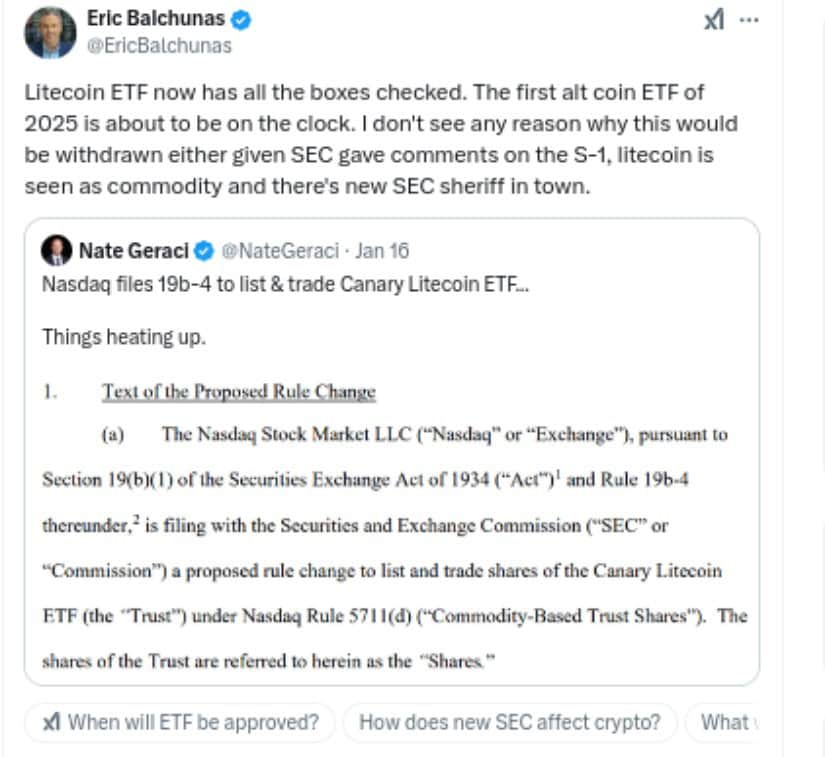
Nasdaq has officially filed a 19b-4 form with the U.S. Securities and Exchange Commission in support of the Canary Litecoin ETF proposal, marking a significant step towards the launch of a new cryptocurrency-focused exchange-traded fund . This move follows earlier discussions with the SEC, which had requested Canary Capital to amend its S-1 filing for the proposed ETF.

The Canary Litecoin ETF, first introduced by Canary Capital in October 2024, aims to provide investors with direct exposure to Litecoin , one of the top cryptocurrencies by market capitalization. Unlike traditional ETFs, which typically track stocks or commodities, the Litecoin ETF would provide a structured way to invest in the digital currency, bringing the asset class closer to mainstream financial markets.

The filing of the 19b-4 form with the SEC is a crucial step in the approval process for the ETF. This form is used by exchanges to propose rule changes related to the listing and trading of securities. By submitting the form, Nasdaq is seeking approval to list the Canary Litecoin ETF on its exchange, a move that could open the door for broader institutional and retail investor participation in the Litecoin market.

The SEC’s role in the process is central to the success of the proposal. The regulatory body has long been cautious about approving cryptocurrency-based ETFs, primarily due to concerns about market volatility, liquidity, and potential manipulation. However, recent developments, including the approval of Bitcoin ETFs, have sparked renewed optimism that Litecoin, as a leading cryptocurrency, may also be considered for ETF approval.

Nasdaq’s filing comes after the SEC’s request for amendments to the S-1 form, which is required for the registration of the proposed ETF. The amendments were aimed at clarifying certain aspects of the ETF’s structure and compliance with SEC regulations. Canary Capital responded to the SEC’s concerns and has now moved forward with the 19b-4 filing, signaling confidence in the proposal’s approval.

If approved, the Canary Litecoin ETF would be the first of its kind to offer exposure to Litecoin, allowing investors to buy shares in the fund without needing to directly hold or manage the cryptocurrency. This would simplify the process for those looking to invest in Litecoin while also providing the regulatory oversight that traditional ETFs enjoy. It could also have a significant impact on the adoption of Litecoin as an asset class, especially among institutional investors who may have been hesitant to invest in digital currencies without a regulated investment vehicle.

The move aligns with a broader trend in the cryptocurrency industry, where more companies are attempting to bridge the gap between traditional finance and digital assets. Bitcoin ETFs, which track the price of Bitcoin, have gained traction in the past few years, prompting a reassessment of how other major cryptocurrencies could also be packaged in a similar way for investors. Litecoin, which was created in 2011 by Charlie Lee as a “lighter” alternative to Bitcoin, has gained substantial traction in the crypto space and is often considered one of the more stable digital assets, making it a prime candidate for an ETF product.

The filing also comes amid growing interest in alternative investment products, especially in the wake of a year marked by significant price volatility in traditional financial markets. Investors are increasingly turning to cryptocurrencies as a hedge against inflation and economic uncertainty, and an ETF could provide a more accessible route for them to gain exposure to the digital asset class.

Despite the excitement surrounding the potential approval of a Litecoin ETF, the SEC’s cautious stance on cryptocurrency products means the approval process is unlikely to be straightforward. The regulatory body has previously expressed concerns about the potential for market manipulation in the cryptocurrency space, and the Canary Litecoin ETF will likely face intense scrutiny. However, the SEC’s approval of Bitcoin ETFs has created a more favorable environment for other digital assets, and many market participants are hopeful that the SEC will ultimately grant approval for the Litecoin ETF as well.

For Nasdaq, the filing represents a key strategic move in solidifying its position as a leader in the growing cryptocurrency market. As more institutional investors seek regulated ways to engage with cryptocurrencies, exchanges like Nasdaq are well-positioned to capitalize on the trend by offering products like the Canary Litecoin ETF.

The approval of a Litecoin ETF would not only provide a new investment opportunity for retail and institutional investors but also send a strong signal to the broader financial markets that digital currencies are becoming increasingly integrated into traditional investment frameworks. It would also mark another milestone in the ongoing evolution of the cryptocurrency market, which continues to attract the attention of both investors and regulators.

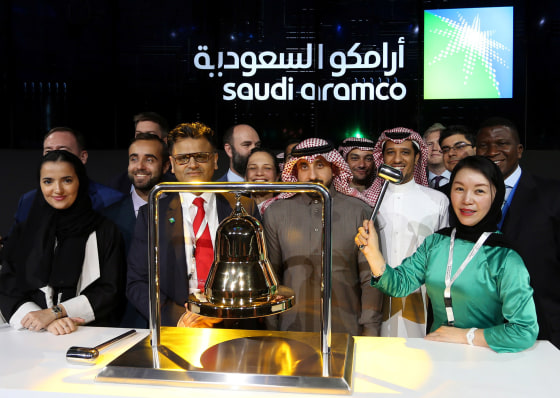
Nice One, a rising star in Saudi Arabia’s beauty and e-commerce sectors, made a remarkable debut on the Riyadh stock exchange this January, reflecting the ongoing boom in IPO activity across multiple industries in the Kingdom. The IPO raised an impressive $320 million, a significant milestone for the company, which saw its stock price soar by 30% on its first trading day—the maximum allowed by the exchange.

Shares of Nice One were initially priced at 35 riyals per unit, marking a strong start for the company. As the market opened, the price quickly rose to a high of SAR 64.50, before stabilizing at SAR 55.70 by the close of Wednesday’s trading session. This surge not only underscored investor confidence in the company but also highlighted the growing demand for opportunities in the region’s burgeoning beauty and e-commerce markets.

For the broader Saudi economy, Nice One’s IPO serves as a testament to the Kingdom’s strategic push to diversify its economy away from oil dependency and build up other sectors such as technology, retail, and digital services. This wave of IPOs, particularly in non-energy sectors, aligns with Saudi Vision 2030, an ambitious plan to reshape the country’s economic landscape and foster growth in new industries.

Nice One’s debut has caught the attention of investors and analysts alike, with many viewing it as a potential model for other startups within the beauty and e-commerce space. The company’s rapid rise, spurred by the increasing popularity of online retail in the Kingdom, highlights the shifting consumer behavior in Saudi Arabia, particularly among younger generations who are eager to embrace digital and mobile-first shopping experiences.

The beauty and e-commerce sectors have experienced significant growth in recent years, particularly as digital transformation has accelerated across the region. Online shopping platforms, like Nice One, have become increasingly popular as consumers seek convenience, variety, and competitive pricing. This shift in buying habits has been particularly pronounced during the COVID-19 pandemic, which further propelled the growth of e-commerce, with many consumers opting for home delivery and digital shopping solutions.

Nice One’s success also reflects the growing appeal of online beauty products in the Saudi market. The beauty industry in the region has become a major player in the global market, driven by an increasingly affluent and brand-conscious population. Saudi Arabia is home to a young, tech-savvy demographic, with high disposable incomes and a keen interest in beauty and wellness products. This has created an attractive market for local and international brands looking to expand their presence in the Middle East.

The company’s strong performance is expected to encourage other players in the e-commerce and beauty sectors to follow suit. Analysts predict that as Saudi Arabia’s stock market continues to liberalize and attract international investment, more companies within high-growth industries will consider IPOs as a means to raise capital and gain exposure on a regional or global scale.

It’s worth noting that the success of Nice One’s IPO is also closely tied to Saudi Arabia’s wider push to strengthen its capital markets. The Tadawul exchange, the largest in the Arab world, has become a focal point for IPO activity. As part of its ongoing reforms, the government has introduced initiatives designed to make the stock market more attractive to both local and international investors, including new regulations and incentives for IPO listings.

Beyond the financial impact, Nice One’s IPO also holds significance for the future of the Saudi retail and digital landscape. The company’s strong debut is a clear indicator that there is substantial growth potential in Saudi Arabia’s beauty and e-commerce markets, which have gained increasing traction both within the Kingdom and across the wider Middle East region. This sets the stage for further investment and innovation, as more companies within these sectors look to scale and capture a larger share of the market.

With a price jump of 30% on its debut, Nice One’s IPO is being seen as a benchmark for other companies that are eyeing expansion in the highly competitive beauty and e-commerce space. It serves as a signal to the market that there is a strong appetite for well-positioned companies in high-growth industries. The success of Nice One could pave the way for more consumer-focused businesses to consider listing on Tadawul, further diversifying the Kingdom’s economy.

Looking forward, the focus will be on how Nice One navigates its post-IPO growth phase. While the early performance of its stock has been promising, the company will need to demonstrate its ability to scale and maintain investor confidence. This will require continued innovation, strategic expansion, and effective management of the rapidly evolving beauty and e-commerce landscape.

Kingdom Holding Company (KHC), the investment firm led by Saudi Arabian Prince Alwaleed Bin Talal, has indicated a willingness to invest in TikTok should the platform be acquired by Elon Musk or another party. This development emerges as TikTok’s parent company, ByteDance, faces mounting pressure to divest its U.S. operations to avert a potential ban. KHC’s CEO, Talal Ibrahim al-Maiman, stated that the firm would consider investing […]

Accelerating Growth in AI and AI Compute HONG KONG SAR – Media OutReach Newswire – 22 January 2025 – Yeebo (International Holdings) Limited (“Yeebo” or the “Company”, stock code: 259, which together with its subsidiaries is referred to as the “Group”) announced that the board of directors of the Company (the “Board”) resolved to declare a special dividend of HKD1.8 per share today. The Board declared a […]

President Donald Trump’s declaration of a national energy emergency can be expected to spark seismic shifts in global markets and create a wave of opportunities for investors, predicts the CEO of one of the world’s largest independent financial advisory and asset management organizations. deVere Group’s Nigel Green’s comments come as the new administration’s focus will be on ramping up domestic energy production, particularly in Alaska, and rolling back […]

By Anjan Roy Controversial equity research firm, Hindenburg, has closed down, all of a sudden. Disbanding the operations, the firm’s founder and short-seller said that this “was only chapter of his life” not the only one. The news of Hindenburg closure immediately had a political twist in India. While, the ruling BJP had suggested that […]
A significant legal dispute has emerged between Abu Dhabi’s Mubadala Investment Company and Getir’s founders, centering on control of the Turkish rapid delivery service. Founder Nazım Salur has announced plans to pursue legal action against Mubadala, accusing the investment firm of breaching a June 2024 restructuring agreement. Salur alleges that Mubadala is attempting an “illegal coup” to seize the founders’ shares.

In response, Mubadala asserts that its actions aim to ensure Getir’s financial stability and protect employment for over 18,000 Turkish employees. The company claims that its proposed plan has been unanimously approved by Getir’s independent directors and is set to be presented to shareholders for approval at an upcoming extraordinary general meeting.

This dispute follows a significant restructuring in June 2024, when Getir secured a $250 million investment from Mubadala. The restructuring involved splitting the company into two entities: one focusing on food and grocery delivery operations in Turkey, managed by Mubadala, and the other handling e-commerce, finance, and mobility services, led by Salur and the other founders.

HONG KONG SAR – Media OutReach Newswire – 16 January 2025 – The Transport Department of the HKSAR Government recently announced an increase in the daily processing capacity for “Northbound Travel for Hong Kong Vehicles”, raising the limit from 400 to 500 applications per working day, reflecting a growing demand in the market. Automotive Platforms and Application Systems (APAS) R&D Centre has been actively working with professional […]

HONG KONG SAR – Media OutReach Newswire – 15 January 2025 – This news release is made by Johnson Electric Holdings Limited (“Johnson Electric” or the “Company” and together with its subsidiaries, the “Group”) for the business operations and selected unaudited financial information of the Group for the nine months ended 31 December 2024. The Group’s sales for the nine months ended 31 December 2024 were US$2,730 […]

Kuwait’s Warba Bank has entered into a significant agreement to acquire a nearly 33% stake in Gulf Bank, marking a major development in the country’s banking sector. The move is seen as part of Warba’s strategy to enhance its market position and diversify its portfolio in an increasingly competitive financial environment.

Under the terms of the deal, Warba Bank will purchase a substantial portion of Gulf Bank’s shares, subject to regulatory approval. The acquisition is expected to provide Warba with increased influence over Gulf Bank’s operations, while also bolstering its financial strength and expanding its customer base.

The decision to acquire a stake in Gulf Bank is part of a broader trend in the Gulf Cooperation Council (GCC) region, where financial institutions are increasingly consolidating and forming strategic alliances to strengthen their market presence. Kuwait’s banking sector, in particular, has witnessed a series of mergers and acquisitions in recent years as institutions seek to increase efficiency and adaptability amidst changing economic conditions.

Gulf Bank, established in 1960, has long been one of the prominent players in Kuwait’s banking landscape. It has earned a reputation for its diverse range of services, which include retail banking, corporate banking, and investment solutions. The bank’s solid financial standing and track record of growth make it an attractive partner for Warba, which has been aggressively pursuing expansion opportunities since its establishment in 2010.

For Warba Bank, the acquisition represents a significant step toward achieving its long-term growth objectives. The bank has positioned itself as a major player in Kuwait’s financial sector, with a focus on innovation and digital banking solutions. Warba’s leadership sees the Gulf Bank acquisition as a key opportunity to expand its footprint and increase its market share, particularly in the retail and corporate banking segments.

Experts in the financial sector have pointed out that this acquisition will likely create a more formidable competitor within Kuwait’s banking market. Warba Bank, which has steadily gained market recognition for its commitment to technology and customer service, stands to benefit from Gulf Bank’s established brand and network. Additionally, Gulf Bank’s extensive branch network will provide Warba with access to new customer segments, particularly in the corporate banking sector, where Gulf Bank has a strong presence.

The merger is also seen as a response to the evolving economic climate in the Gulf region. As the region continues to recover from the effects of the global pandemic and fluctuating oil prices, financial institutions are seeking to solidify their positions by strengthening their balance sheets and diversifying their service offerings. This strategic acquisition allows Warba to better position itself to weather future economic uncertainties while capitalizing on new growth opportunities.

While the acquisition is expected to be beneficial for both banks, it does not come without challenges. One of the primary hurdles will be aligning the corporate cultures and operational frameworks of Warba and Gulf Bank, both of which have distinct organizational structures. Integrating the two institutions will require careful management, particularly in terms of consolidating resources, aligning business strategies, and retaining key talent from both sides.

Regulatory approval will also play a crucial role in determining the success of the acquisition. The Kuwait Central Bank (CBK) will need to assess the potential impact of the merger on competition in the local market, as well as ensure that both banks comply with the relevant financial regulations. Given the size and significance of the deal, industry observers expect a thorough review process before the deal can proceed.

The acquisition is expected to be a positive move for Kuwait’s banking sector overall, signaling confidence in the country’s financial stability and the resilience of its banking institutions. Analysts believe that this deal could pave the way for further consolidation within the sector, as other banks look for opportunities to enhance their competitive edge in the face of an evolving market landscape.

Warba Bank’s decision to acquire a stake in Gulf Bank also highlights the growing importance of strategic partnerships in the GCC’s banking industry. In a region where banks are increasingly focusing on digital transformation and the expansion of financial services, partnerships and acquisitions allow institutions to rapidly scale and access new technologies and markets.

The broader implications of the deal could extend beyond Kuwait, with the possibility of similar acquisitions and partnerships taking place across the GCC region. As Gulf economies continue to diversify away from oil dependency, financial institutions are expected to play a key role in supporting the development of new industries and sectors. For Warba Bank, the acquisition of Gulf Bank provides an opportunity to be at the forefront of this shift, positioning itself as a leading financial institution in a rapidly changing economic environment.

VISHNU RAJA
RYO YAMADA
HITORI GOTOH
IKUYO KITA