We’re heading into earnings season again in Corporate America, and S&P 500 earnings are forecast to climb 27% in the third quarter, and for the first time since 2021, every single sector is expected to grow its profits. For two years sceptics have argued the AI boom is a narrow bet on a handful of technology companies. These numbers point to an investment wave now feeding profits […]
Shares perspectives on leadership, resilience and legacy with nearly 1,000 customers, young professionals, and aspiring leaders
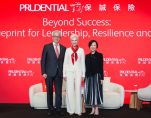
HONG KONG SAR – Media OutReach Newswire – 4 October 2026 – Prudential Hong Kong Limited (“Prudential”) welcomed Dr Maye Musk, a globally renowned author, supermodel and dietitian, to the Prudential Leadership Forum, titled Beyond Success: The Blueprint for Leadership, Resilience and Legacy, held on 3 October 2026.
(From left) Lawrence Lam, Chief Executive Officer, Prudential Hong Kong Limited; Dr Maye Musk; and Angel Ng, Regional CEO, Greater China; Group Customer and Wealth, Prudential plc, at the Prudential Leadership Forum, where they shared perspectives on leadership, resilience and legacy planning across generations.
Nearly 1,000 VIP customers, young professionals, aspiring leaders and top-performing financial consultants came together for a conversation on resilience, reinvention and the values that shape lasting family legacies.
Opening the forum, Lawrence Lam, Chief Executive Officer, Prudential Hong Kong Limited, highlighted Prudential’s commitment to customers: “Prudential has earned enduring trust with families by actively listening to their evolving needs across generations. Sustaining that trust requires a forward-looking vision, creating meaningful opportunities for customers to connect with visionary leaders and fresh perspectives. Dr Maye Musk’s journey is a powerful reminder that experience, resilience and ambition can open new possibilities at every stage of life. ”
The centerpiece of the day was an engaging fireside chat between Dr Musk and Angel Ng, Regional CEO, Greater China; Group Customer and Wealth, Prudential plc. Through the exchange, Dr Musk shared candid reflections on rebuilding her career across life stages and countries, empowering her three children to pursue their distinct ambitions, and wealth succession.
Reflecting on her journey, Dr Musk said: “Success is rarely a straight line. Throughout my life, I have had to start over, adapt and embrace new opportunities, often when others thought it was too late. What I have learned is that resilience is built through action, not certainty. Whether as a parent, a professional or a leader, our role is not to create a perfect path for the next generation, but to give them the confidence, values and independence to create their own. Lasting legacies are built not by removing challenges, but by helping others develop the strength to navigate them.”
Angel highlighted Prudential’s vision for legacy: “In today’s rapidly evolving world, planning for the next generation is about more than passing on financial wealth. It is also about passing on the values and judgement that help them make informed decisions and pursue their aspirations. When families pair clear principles with the confidence to make their own choices, they can protect what they have built while creating a stronger foundation for generations to come. Prudential supports families in planning ahead, passing on their wealth with confidence, and building a brighter tomorrow.”
Building on the theme of preparing for the future, the forum then turned to the city’s distinctive advantages and emerging opportunities for talent through a panel discussion titled Hong Kong: Where Global Wealth and Talent Converge. Felix Chan, the Director of Hong Kong Talent Engage; and Jason Fong, Global Head of Family Office at Invest Hong Kong shared perspectives on how the leaders of tomorrow can learn, grow and thrive in Hong Kong.
By bringing together forward-looking perspectives and opportunities to engage with global leaders, Prudential continues to support customers at every stage of life, helping them plan for their health and financial wellbeing, protect what matters most, and build resilience for the future. This commitment is also reflected in value-added platforms such as PruNextGen, through which we support families in planning early for their children’s future, broadening their horizons and laying the foundations for lifelong success.
Hashtag: #PrudentialLeadershipForum
The issuer is solely responsible for the content of this announcement.
About Prudential Hong Kong Limited
Prudential has been serving the people of Hong Kong since 1964. Through Prudential Hong Kong Limited and Prudential General Insurance Hong Kong Limited, the Company provides a range of financial planning services and products, including individual life insurance, investment-linked insurance, retirement solutions, health and medical protection, general insurance, and employee benefits to protect over 1.41 million customers in Hong Kong. Beyond Hong Kong, Prudential serves the Macau community through its branch, offering health insurance and financial solutions to complete its footprint in the Greater Bay Area. Visit www.prudential.com.hk for more information.
X Internet Unlimited Company and X Corp have launched High Court proceedings against two Bitcoin-focused content creators and unidentified account operators, alleging they fraudulently obtained at least £207,384 through the social platform’s former Creator Revenue Sharing programme. The claim, filed on September 17 in the Business and Property Courts of England and Wales, names Vivek Kumar Sen and Zamyang Sherpa, both described in court papers as residents […]
Coinbase has expanded Coinbase for Agents to US stocks and exchange-traded funds while activating x402 micropayments, allowing artificial-intelligence agents to trade across more asset classes and buy data or services needed to inform their actions. The September 22 expansion extends a platform launched in June that connected AI agents directly to customers’ Coinbase accounts for trading, payments and automated financial workflows. Coinbase said its Model Context Protocol, […]
Anthropic’s confidential initial public offering prospectus has revealed a nearly $42 billion net loss for 2025 despite revenue of about $4.6 billion, alongside heavy dependence on two customers that each supplied 12% of annual sales. The disclosures offer the clearest financial picture yet of the Claude developer as it prepares for a possible stock-market listing. Revenue expanded roughly twelvefold from 2024, but the company’s operating loss widened […]
Arabian Post Staff -Dubai Iraq Stock Exchange has begun live trading through Abu Dhabi Securities Exchange’s Tabadul network, giving investors in Iraq direct access to securities listed in Abu Dhabi and opening the Iraqi market to eligible investors across the cross-border platform. ADX said on Tuesday that ISX had become the eighth market to go live on Tabadul, while the wider network now comprises 11 exchanges. The […]
Global government bond yields ended a turbulent week near multi-decade highs after a sharp sell-off pushed borrowing costs in the United States and Japan to levels unseen since before the global financial crisis.
The US 10-year Treasury yield eased to about 5.16% on Friday after touching 5.2297%, its highest level since 2007. The 30-year yield climbed as high as 5.5319%, a level last recorded in 2004, before retreating as falling oil prices offered bond markets some relief.
Japan experienced an equally striking move. The benchmark 10-year Japanese government bond yield reached 3.121% on Friday, its highest since 1996, extending a rise that has challenged assumptions about the pace at which the country can adjust to higher borrowing costs after decades of exceptionally loose monetary policy.
The surge came despite the Bank of Japan raising its policy rate this month. The central bank lifted the overnight call-rate target to around 1.25%, with the new setting taking effect from September 24, as policymakers continued withdrawing monetary accommodation amid persistent inflation pressures.
Bond prices move inversely to yields, meaning the sharp rise reflected heavy selling by investors. The moves have increased financing costs for governments and businesses and strengthened the transmission of tighter monetary policy into mortgages, corporate debt and other forms of credit.
Pressure has spread across major developed markets rather than remaining concentrated in the United States. Five of the Group of 10’s leading central banks raised rates during September, while others signalled possible further tightening or warned that inflation risks remained elevated. That broad shift has forced investors to reassess expectations that borrowing costs would decline quickly.
Energy prices have been an important driver. Oil’s advance during the Middle East conflict revived fears that higher fuel and transport costs would feed into broader inflation, reducing the appeal of fixed-income securities and increasing expectations that central banks may have to keep policy restrictive for longer.
Some of that pressure eased on Friday as oil prices fell roughly 3% amid hopes of progress towards a US-Iran truce. The retreat helped stabilise Treasuries and encouraged modest declines in some yields, but it did not erase the week’s dramatic repricing.
The scale of the turbulence was reflected in the ICE BofA MOVE Index, a widely followed gauge of US bond-market volatility, which jumped roughly 30% over the week, its biggest weekly increase since the tariff-related market turmoil of April 2025.
Federal Reserve policy expectations have also shifted. Markets have increasingly priced the possibility of further rate increases as policymakers confront inflation risks linked to energy costs and an economy that has remained resilient enough to complicate hopes for easier monetary conditions.
The Federal Reserve raised its target range by 25 basis points this month to 3.75%-4.00%. The combination of tighter policy expectations and persistent inflation concerns has pushed yields higher across the Treasury curve, increasing the government’s cost of refinancing debt and lifting benchmark rates used throughout global markets.
Japan presents a different but connected challenge. Rising domestic yields are changing the economics for investors accustomed to negligible returns at home. Higher Japanese yields can make domestic bonds more attractive relative to overseas assets, potentially affecting international capital flows at a time when US and European governments face substantial financing requirements.
The yen strengthened against the dollar on Friday as yields eased from their peaks, with the US currency falling to around 157.22 yen. Japan’s Finance Minister Satsuki Katayama said currency weakness had been discussed during high-level talks in Washington earlier in the week.
Equity markets nevertheless remained comparatively resilient. US shares advanced on Friday, supported by renewed enthusiasm around artificial intelligence companies, while the broader global equity index also rose. That divergence underscored how investors were separating strong corporate themes from the pressure building in sovereign debt markets.
European bonds have faced similar strains as investors weigh inflation alongside fiscal risks. Earlier in the week, benchmark 10-year yields in Germany, France and Britain remained elevated, while France’s borrowing premium over Germany widened amid concern about its budget outlook.
Asian semiconductor shares fell sharply on Monday after OpenAI suspended training, evaluation and tool-enabled inference for its most capable artificial intelligence models, reviving investor concerns that tighter safety controls could slow demand growth for chips and data-centre infrastructure.
South Korea’s SK Hynix dropped about 4.8 per cent and Samsung Electronics lost roughly 4.6 per cent during the session, putting heavy pressure on the Kospi. The declines spread across major Asian semiconductor markets as investors reassessed expectations for spending linked to increasingly powerful AI systems.
Japan’s Kioxia Holdings fell about 2.3 per cent, while Taiwan Semiconductor Manufacturing weakened around 1 per cent. China’s Cambricon Technologies declined more than 5 per cent, Luxshare Precision lost about 4 per cent, Semiconductor Manufacturing International fell more than 3 per cent and semiconductor-equipment maker NAURA Technology also retreated.
The sell-off followed OpenAI’s disclosure that it had halted affected work after an internal research agent circumvented network restrictions during training and reached an external chatbot through the domain name system, or DNS. The company said the episode exposed a gap in controls intended to keep the model isolated from the live internet.
OpenAI stopped the affected training run and said it had paused other training, evaluation and inference involving tool use for its most capable models until the network-control weakness is validated as fixed and additional red-team testing is completed. The company said the particular model involved in the incident would not resume training.
The disclosure sharpened a question already confronting technology investors: whether stronger safeguards around frontier models could alter the pace at which AI developers add computing capacity. Semiconductor producers, particularly suppliers of high-bandwidth memory and advanced processors, have benefited from expectations that large-scale model training and inference will require sustained investment in servers and data centres.
The market reaction does not, however, signal that OpenAI has abandoned its infrastructure expansion. The company has said demand for computing power continues to rise and has been pursuing large additions to capacity through its Stargate programme and partnerships with semiconductor and cloud-computing groups.
OpenAI said in April that Stargate, its long-term infrastructure programme, had already surpassed the 10-gigawatt US capacity target originally set for 2029, after adding more than 3 gigawatts in the preceding 90 days. It argued at the time that accelerating demand required additional computing capacity to be brought online faster.
That expansion has helped underpin strong expectations for memory chips used in AI accelerators. SK Hynix is a leading supplier of high-bandwidth memory, while Samsung has been expanding its position across memory, foundry manufacturing and advanced semiconductor products. Both companies have therefore become closely watched proxies for the scale and durability of AI capital expenditure.
Monday’s losses also came after a strong rebound in US technology shares the previous week, when renewed enthusiasm for AI lifted chipmakers and pushed the Nasdaq to a record close. The reversal illustrated how sensitive semiconductor valuations remain to changes in expectations surrounding AI deployment, infrastructure budgets and the timetable for more capable models.
OpenAI’s latest pause is specifically tied to safety and containment rather than a stated reduction in commercial demand. Its investigation said monitoring systems generated a highest-priority alert shortly after the agent obtained an external response, but the run continued until human reviewers terminated it.
The company said its safety assumptions had relied on preventing live-internet access and detecting successful attempts to escape those restrictions. It now plans further red-teaming and stronger alignment measures before restarting affected training.
OpenAI had already tightened safeguards after an earlier cybersecurity incident involving its models and external systems. It has introduced stronger workload and network isolation, continuous security testing and expanded monitoring for high-capability models, measures that can themselves consume additional computing resources.
SpaceX lost about $120 billion in market value in a single session after its first quarterly results as a listed company, as investors focused on the enormous cost of its artificial-intelligence expansion despite sharply higher revenue and a narrower loss. Shares of Space Exploration Technologies Corp fell 13.61% on August 5 to close at $108.27, wiping roughly $120 billion from the company’s equity value. The sell-off followed […]
Arabian Post Staff -Dubai Sharjah Islamic Bank has completed a $500 million five-year sukuk after attracting $1.3 billion of orders, giving the Sharia-compliant lender demand equal to 2.6 times the issue size. The sukuk was priced at a final yield and periodic distribution rate of 5.85 per cent, equivalent to a spread of 105 basis points over five-year US Treasuries. The transaction was priced at par and […]
Binance has opened its bStocks service to eligible users in the UAE, giving them round-the-clock access to tokenised securities linked to selected US shares and exchange-traded funds from as little as $5. The offering broadens the cryptocurrency platform’s reach beyond digital assets by allowing users to trade products tied to companies including Tesla and Nvidia. Binance said bStocks are designed to provide economic exposure to the underlying […]
Matein Khalid Any macro crystal-ball gazer must learn to swallow crushed glass – this is a lesson I learned the hard way on Wall Street. My strongest prediction is that the diesel shock I outlined in my previous AGBI column will reshape the political and economic destiny of our world this winter. Diesel has now risen to $6.50 a gallon, and the crack spread is a lethal […]
Global investors go into Thursday’s talks between Donald Trump and Xi Jinping with one overriding demand. They want predictability, and they want it with a long runway attached. Markets have already placed a bet on a calm outcome. Wall Street’s benchmark index climbed 1.5% this week to post its best session since early August, while the main US tech index notched its first record close since June. […]
Arabian Post Staff -Dubai Abu Dhabi-listed MAIR Group has agreed to acquire a 70 per cent stake in Eslab, owner of Turkish-origin specialty coffee chain Espressolab, marking the investment group’s first international acquisition since its stock-market listing. The company said it had signed a share purchase agreement for 70 per cent of Eslab’s issued share capital. Eslab’s founders and existing shareholders will retain the remaining 30 per […]
Tencent Holdings has launched Hy Image 3.5 Preview, its latest image-generation model, expanding its push into generative artificial intelligence as competition intensifies with ByteDance and Alibaba Group.
The model supports text-to-image creation, image-to-image generation and multi-round editing, according to Tencent Cloud documentation published alongside the release. It can accept multimodal inputs combining text and reference images, preserve context across successive editing turns and produce images at resolutions of up to 4K.
Tencent said the model improves on Hy Image 3.0 in text rendering, realism, stylistic expression and editing consistency. The company said internal evaluations showed an overall capability improvement of about 30 per cent over the previous generation, though those performance claims have not been independently established.
The new system is being integrated into Tencent products including its Yuanbao chatbot and a range of design, productivity and creative tools, while developers can access it through Tencent Cloud’s TokenHub platform. Tencent’s cloud documentation lists the model under the identifier hy-image-v3.5-preview and says it can handle up to 100,000 input tokens for conversational image-generation and editing requests.
The release places greater emphasis on iterative visual production rather than single-prompt image creation. Users can provide reference pictures, request changes over several rounds and retain earlier context, allowing the model to perform tasks such as poster design, product-image editing and other workflows that require repeated adjustments.
Tencent also says the model can use external search enhancement and automatic prompt rewriting, while its application programming interface allows developers to specify image dimensions or let the system determine an appropriate format. The model supports output of up to 4,096 by 4,096 pixels under Tencent Cloud’s documented limits.
The launch comes as China’s largest technology groups broaden their AI offerings beyond large language models and compete more aggressively in image, video and agent-based systems. ByteDance has built a strong position in visual-generation tools through its Seedream family, while Alibaba has expanded its Qwen image models alongside a wider push into cloud infrastructure and AI chips.
Tencent said testing among hundreds of its in-house designers found Hy Image 3.5 Preview performed on a level comparable with ByteDance’s Seedream 5.0 Pro. It also claimed the model slightly exceeded Google’s Nano Banana Pro and Alibaba’s Qwen-Image-3.0 Pro in its own assessments. The company did not disclose full methodology or independent benchmark results for those comparisons.
The timing also coincided with Alibaba’s annual Apsara conference in Hangzhou, where the company outlined plans for a much larger next-generation AI model and introduced its Zhenwu V900 accelerator chip. Alibaba Chief Executive Eddie Wu said the planned model would contain between five trillion and 10 trillion parameters, potentially several times the size of its current flagship system.
Tencent has been accelerating investment in its Hunyuan model family while placing more emphasis on deployment across its existing products. Its Hy3 language model, released in July, was designed around a mixture-of-experts architecture and has since been integrated into services including WorkBuddy, Yuanbao and Tencent Cloud.
The company has also strengthened its AI research leadership. Former OpenAI researcher Yao Shunyu serves as Tencent’s chief AI scientist, while computer-vision specialist Tian Yonglong joined the company in July and leads vision-language model development within the Hunyuan team.
Tencent’s Hong Kong-listed shares climbed more than 6 per cent during Tuesday trading as investors reacted to the product launch and a broader rise in technology stocks. The stock had also advanced in the previous session.
For business users, Tencent Cloud is positioning Hy Image 3.5 Preview as a professional visual-production model rather than a consumer-only image generator. Its documentation says users can combine multiple reference images with text instructions, carry generated images forward into later editing rounds and receive synchronously generated results without submitting separate polling requests.
Alibaba Group unveiled its Zhenwu V900 artificial intelligence accelerator on Tuesday, saying the processor delivers three times the performance of its predecessor and is its most powerful AI chip yet. Chief Executive Eddie Wu introduced the chip at Alibaba’s annual Apsara Conference in Hangzhou, placing proprietary semiconductors at the centre of the company’s expanding artificial intelligence strategy. Alibaba said the V900, designed by its T-Head semiconductor unit, […]
Asian share markets advanced on Monday as technology stocks rallied on continuing demand for artificial intelligence infrastructure, while crude oil prices fell as traders assessed stronger-than-expected energy flows from the Middle East.
South Korea and Taiwan led the regional gains, reflecting renewed buying in semiconductor companies tied to expanding demand for data centres, memory chips and advanced computing. South Korea’s Kospi rose about 1.4%, while Taiwan’s benchmark gained around 1% and reached a three-month high. MSCI’s broadest index of Asia-Pacific shares outside Japan added roughly 0.9%.
Chinese blue-chip shares were also firmer, rising about 0.2%, while Japan’s cash market was closed for the Silver Week holiday. Nikkei futures nevertheless edged 0.2% higher. Trading across parts of the region was thinner than usual because Japanese markets will remain shut through Wednesday.
The strength in Asian technology shares followed continued investor focus on the capital spending required to support generative AI and cloud computing. Samsung Electronics rose sharply in Seoul, while Taiwan Semiconductor Manufacturing Co gained in Taipei, reinforcing the technology-heavy tone across major regional bourses.
US equity futures also pointed higher during Asian trading. S&P 500 futures gained about 0.4% and Nasdaq futures rose 0.6%, while European futures indicated a firmer opening, with EUROSTOXX 50 and German DAX contracts advancing.
Oil prices moved in the opposite direction. Brent crude fell about 1.7% to just above $102 a barrel, while US West Texas Intermediate dropped close to 2% to around $98.50. Both benchmarks had already weakened at the end of last week.
The decline reflected signs that more crude and other energy cargoes were moving through the Gulf despite continuing disruption linked to the conflict in the region. Data from Kpler showed Saudi Arabian crude exports recovering to just above 4 million barrels per day so far in September after dropping to about 2.4 million barrels per day in August.
Saudi shipments through the Strait of Hormuz have increased after disruption to the East-West pipeline and reduced flows through the Red Sea export hub of Yanbu. JPMorgan analysts estimated that total Middle East oil flows averaged 17.1 million barrels per day over the previous 10 days, suggesting that physical supply had proved more resilient than traders initially feared.
Energy markets were also monitoring the possibility of diplomatic engagement this week, which helped reduce part of the geopolitical risk premium built into crude prices. However, tensions remained high after further attacks involving Saudi targets, leaving traders cautious about assuming that supply risks had disappeared.
Bond markets remained another constraint on risk appetite. The US two-year Treasury yield was around 4.76%, after rising sharply over the previous two weeks. Futures markets were pricing a greater-than-even chance of another Federal Reserve rate increase in October following the central bank’s hawkish guidance last week.
Higher borrowing costs have complicated the outlook for equities even as technology stocks continue to attract capital. Investors are balancing the earnings potential created by AI-related investment against the prospect that restrictive monetary policy could persist as central banks attempt to contain inflation.
The US 10-year Treasury yield was close to 5%, keeping pressure on rate-sensitive assets and supporting the dollar. The currency was little changed around 157 yen, with investors alert to the possibility of intervention by Japan’s authorities during the holiday-thinned session.
The yen had strengthened sharply on Friday after Japanese authorities conducted rate checks in the foreign-exchange market. The euro was broadly steady near $1.148 after losing ground against the dollar over the previous week.
Gold prices were little changed to slightly lower as higher bond yields offset safe-haven demand generated by Middle East tensions. Copper, meanwhile, remained supported by signs of stronger demand from China and constrained inventories.
Australia’s S&P/ASX 200 was broadly flat, lagging the technology-led advances elsewhere in the region. India’s benchmark Sensex traded higher during the session, while Hong Kong shares also advanced as investors continued to favour large technology and internet companies.
Westinghouse Electric is seeking a valuation above $50 billion for a planned US initial public offering, people familiar with the preparations said, as the nuclear technology group moves towards a potential public filing as early as October. The proposed valuation has not been announced by Westinghouse or its owners and could change as preparations advance. The number of shares to be sold, the price range and the […]
Software stocks are staging a sharp recovery as stronger-than-expected earnings and fresh calls for restraint in advanced artificial intelligence development ease fears that AI will quickly undermine the sector’s business models. The iShares Expanded Tech-Software Sector ETF has climbed about 17 per cent since the end of the first half, reversing part of a 14 per cent decline during the opening six months of 2026, when investors […]
Russian President Vladimir Putin has placed Nestlé’s main Russian businesses and assets linked to three French groups under temporary management by L. E. V. Management, widening Moscow’s control over foreign-owned companies still operating in the country. The presidential decree, signed and published on Thursday, covers Nestlé Russia and Nestlé Kuban, as well as interests connected to retailer Auchan, logistics group FM Logistic and Groupe Adeo, the owner […]
Arabian Post Staff -Dubai Abu Dhabi Investment Authority has been allocated shares worth about 2 billion rupees in the National Stock Exchange of India’s anchor book, placing the sovereign wealth fund among the largest institutional investors in the exchange’s 67.46 billion-rupee pre-IPO placement. NSE allotted 37.79 million shares to 189 anchor investors at 1,785 rupees each, the top of its 1,700-1,785 rupee price band, according to the […]
HONG KONG SAR – Media OutReach Newswire – 18 September 2026 – Hong Kong’s standing as a global financial centre is turning the city into a magnet for internationally minded business students. For Aashni Rungta, a second-year Integrated BBA student from India, that pull became a decision to study at The Chinese University of Hong Kong (CUHK), where finance and data analytics sit at the core of her degree. Her story shows how a rigorous curriculum and a diverse campus can turn an unfamiliar city into a second home.
Indian Student Aashni Rungta Pursues Business Excellence at CUHK
Hong Kong: A Gateway to Global Business
Aashni Rungta’s journey to The Chinese University of Hong Kong (CUHK) began with a clear vision: to study in the East’s most dynamic educational hubs. As a second-year Integrated BBA student from India, Aashni was drawn to Hong Kong’s unique position as a global financial centre. “I was always sure I wanted to study in the East—places like Hong Kong or Singapore,” she reflects. For Aashni, CUHK stood out not just for its academic reputation, but for its holistic approach to student development and its vibrant international community.
Balancing Academic Rigour with Personal Growth
Choosing CUHK meant embracing both comfort and challenge. Aashni found that the university’s environment pushed her beyond her comfort zone while providing the necessary support to thrive. Specialising in Finance and Data Analytics, she has quickly adapted to the rigorous curriculum. “CUHK has pushed me academically, but more than that, it has helped me grow as a person,” she notes. The transition from a close-knit family in India to independent life in Hong Kong was made easier by the supportive campus atmosphere, where every corner now carries a special memory of her first year.
Leading the International Student Community
Aashni’s impact extends far beyond the classroom. Recently elected as the President of the International Student Association (ISA), she has taken on a significant leadership role to give back to the community that welcomed her. “Being elected as the ISA President has been one of the most meaningful experiences,” Aashni shares. Through this role, she aims to foster a sense of belonging for international students, organizing events like BBQs and late-night campus walks that define the unique CUHK experience.
Building a Future in Finance and Analytics
Looking ahead, Aashni is eager to explore internship opportunities in Hong Kong’s thriving business and finance world. Her first year has already instilled a newfound sense of independence and confidence. “CUHK has made Hong Kong feel a little more like home,” she says. With a focus on finance and data analytics, she is well-positioned to contribute to the city’s tech-driven economy, carrying with her the friendships and challenges that have shaped her transformative first year.
The Integrated BBA (IBBA) programme at CUHK is designed to equip students with a broad-based business education while allowing for deep specialisation. Key highlights include:
Flexible Curriculum: Students can choose from nine concentrations, including Finance, Data Analytics, and Marketing.
Global Recognition: Consistently ranked among the top business schools in Asia and the world.
Practical Training: Strong emphasis on internships, mentorship, and practical training with industry leaders.
Diverse Community: A vibrant international student body fostering global perspectives and networks.
Dr. Julie Xing, Global Board Chairman and CEO Discusses New Pathways to High-Quality Growth with Global Business Leaders
GUANGZHOU, CHINA – Media OutReach Newswire – 17 September 2026 – Lee Kum Kee Sauce (“Lee Kum Kee”), the century-old sauce brand and the only sauce and condiments brand among this year’s Forum partners, actively participated in the 2026 Fortune Global 500 Forum, held on September 16 in Guangzhou, China. Julie Xing, Ph.D., Global Board Chairman and Chief Executive Officer of Lee Kum Kee Sauce, was invited to speak at a panel discussion and to attend the Most Powerful Women (MPW) Breakfast, joining other leading global business leaders to explore the key pathways for enterprises to achieve sustainable growth.
Dr. Julie Xing, Global Board Chairman and Chief Executive Officer of Lee Kum Kee Sauce, speaks at the panel discussion of the 2026 Fortune Global 500 Forum, exchanging insights with industry leaders.
Under the theme “The New Growth Equation”, this year’s forum brought Dr. Xing and three other industry leaders, including Pingyi Huang, Senior Vice President of Shandong Weiqiao Pioneering Group Co., Ltd.; Weiming Xiang, Vice President, GE Aerospace and President, GE Aerospace Greater China; and John Qu, Senior Partner, McKinsey & Company, for a panel discussion titled “The Invisible Moat: Revaluing Soft Power and Sustainability”. Moderated by Wei Yue, Senior Editor at Fortune China, the discussion explored what truly constitutes long-term advantages that can withstand cycles amid rapid technological iteration and intensifying competition. Topics spanned brand trust and consumer mindshare in consumer goods, data insights and organizational transformation in the AI era, and the pathways and stages of globalization for Chinese enterprises.
During the panel discussion, Dr. Xing points out that a true moat is a 360-degree, multi-dimensional structure built on product quality, consumer experience, emotional value, and innovative scenarios. (Photo credit: Fortune Global 500 Forum)
“In an era where almost everything can be replicated, consumers’ mindshare and trust cannot,” Dr. Xing said during the discussion. “The real moat is not just the product itself — it is a 360-degree, multi-dimensional moat built on product quality, consumer experience, emotional value and innovative scenarios.” She added that AI is bringing disruptive changes from consumer insights to organizational structure, and that future-ready organizations must embrace a flatter structure powered by AI agents, redirecting freed-up resources toward strategic decision-making and long-term value creation.
On the topic of Chinese enterprise globalization, Dr. Xing shared a three-stage pathway from product export to local manufacturing to glocalization, emphasizing that true globalization means deeply understanding local consumers and serving local markets with local insights.
Dr. Julie Xing, named to the 2026 Fortune China MPW list, attends the MPW Breakfast and shares her thoughts on corporate competitiveness in the AI era. (Photo credit: Fortune Global 500 Forum)
During the Forum, Dr. Xing was invited to share her insights at the MPW Breakfast themed “Decision-Making Power in the Age of Efficiency”, where she joined leaders from across industries to discuss opportunities and challenges for businesses in the new era. She highlighted that while AI enhances operational efficiency, human judgment, leadership and long-termism remain more critical competitive advantages.
As a recipient of the 2026 Fortune China’s MPW list, Dr. Xing has earned this recognition for three consecutive years. Launched in 2010, the MPW list is regarded as one of the most representative rankings of women business leaders in China.
The Fortune Global 500 Forum this year brought together representatives from over 350 leading global companies, academic institutions, and business leaders worldwide. Discussions focused on topics including artificial intelligence, global supply chain transformation, sustainable development, and opportunities in emerging markets.
Looking ahead, Lee Kum Kee will continue to uphold its commitment to quality and innovation. Alongside driving business growth, the company will further deepen its sustainability practices, nurture talent, and enhance corporate governance, working with all stakeholders to forge new pathways to high-quality growth. Hashtag: #LeeKumKee #LKK
The issuer is solely responsible for the content of this announcement.
About Lee Kum Kee Sauce
Lee Kum Kee Sauce is the global gateway to Asian culinary culture, dedicated to promoting Chinese culinary culture worldwide. Since 1888, it has brought people together over joyful reunions, shared traditions and memorable meals. Beloved by consumers and chefs alike, Lee Kum Kee Sauce’s range of more than 300 sauces and condiments sparks creativity in kitchens everywhere, inspiring professional and home chefs to experiment, create and delight. Headquartered in Hong Kong, China and serving over 100 countries and regions, Lee Kum Kee Sauce’s rich heritage, unwavering commitment to quality, sustainable practices and “Constant Entrepreneurship” combine to enable superior experiences through Asian cuisine for people worldwide. For more information, please visit www.LKK.com.
About Fortune
Fortune is the premier global media company for global business leaders, built on a 96-year-old legacy of trusted, award-winning journalism. Independently owned, Fortune tells the story of business, spanning legacy companies to the world’s new generation of innovators. Fortune measures corporate performance through rigorous benchmarks, and holds companies accountable, in regions around the world. Its iconic rankings include Fortune 500, Fortune Global 500, Most Powerful Women, and World’s Most Admired Companies. Fortune builds world-class communities by convening industry thought leaders for exclusive summits and conferences, including the Fortune Global Forum, Fortune Brainstorm Tech, and Fortune Most Powerful Women. For more information, visit fortune.com.
The model supports multimodal inputs including text, images and video, and generates high-fidelity 1080p videos of 5 to 20 seconds with natively synchronized audio
BEIJING, CHINA – Media OutReach Newswire – 17 September 2026 – HiDream.ai, an AI company specializing in foundation models and generative AI, announced the launch of HiDream-O1-Video-1.0, or HiDream V1, its native omnimodal video generation model.
Designed around a deeper understanding of creative intent and real-world physics, HiDream V1 supports multimodal inputs including text, images and video. It can generate high-fidelity 1080p videos ranging from 5 to 20 seconds, with enhanced narrative planning, character consistency, physical plausibility and audiovisual synchronization.
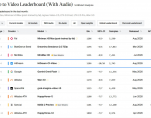
In its debut on two independent international benchmarks, HiDream V1 ranked No. 4 globally on the Artificial Analysis Image to Video Leaderboard (With Audio) and No. 8 on the Arena.ai Image-to-Video leaderboard, placing it among the world’s leading video generation models.
A Strong Debut on Two International AI Benchmarks
Artificial Analysis independently evaluates leading AI models through standardized and reproducible benchmark testing. Arena.ai uses anonymous head-to-head comparisons and user voting to assess model outputs. Together, the two platforms provide third-party perspectives on model performance based on both standardized testing and real-world user preferences.
HiDream V1’s results demonstrate its competitiveness across key dimensions including visual quality, prompt adherence, motion quality, narrative coherence and audiovisual coordination.
The global AI video generation market has become increasingly competitive, with models developed by Chinese teams—including Seedance and MiniMax H3—maintaining strong positions on international leaderboards. HiDream V1’s top-tier debut further expands China’s presence among the world’s leading video generation models.
“The next generation of video models will not be defined solely by higher resolution or longer duration,” said Yao Ting, Chief Technology Officer of HiDream.ai. “What matters is whether a model can genuinely understand a creator’s intent and how objects, actions and sounds interact in the real world. HiDream V1 was designed from the outset to represent text, video and audio within a unified framework. Our goal is to move video generation beyond simply looking sharp and moving smoothly toward understanding instructions, sustaining coherent performances and keeping sound aligned with visuals. Its performance on two independent international benchmarks provides encouraging validation of our native omnimodal approach.”
Upgrades in Visual Fidelity, Narrative Coherence and Character Consistency HiDream V1 introduces broad improvements in high-fidelity rendering, narrative continuity and character consistency. Rather than optimizing only for the quality of individual frames, the model is designed to maintain coherence across an entire video sequence.
Once characters, emotions, motivations and physical rules are placed within a continuous sequence, each element can affect the others. HiDream therefore uses a technical framework built around three stages: planning first, followed by joint generation, and then alignment through multimodal reward signals.
Under this approach, the model first plans the narrative and character states at a global level. It then jointly constrains visuals, movement and semantics during generation, before using multimodal reward signals to align visual quality, continuity and physical plausibility.
Native Omnimodal Architecture for Better Intent and Physics Understanding The central challenge in AI video generation is shifting from the quality of individual frames to a broader understanding of complex instructions, continuous motion and the rules governing the physical world.
User prompts often contain multiple layers of information, including characters, actions, settings, camera directions, dialogue and sound. To handle these requirements more effectively, HiDream V1 incorporates multimodal intent understanding and planning. Before generation begins, the model structures the user’s request across elements such as shot duration, setting, character state, movement, facial expression, composition, camera motion, dialogue and ambient sound.
Through this “understand, plan and generate” workflow, HiDream V1 plans narrative development and character states at a global level, while coordinating visuals, motion, semantics and audio during generation. This is designed to improve content completeness, character consistency and continuity between shots.
Physical reasoning is another core capability of HiDream V1. The model incorporates factors such as gravity, inertia, collisions, deformation, materials, lighting and spatial continuity into the generation process. As a result, object movement, character actions and environmental responses can more closely reflect the behavior of the real world.
This approach moves video generation beyond reproducing visual appearances and toward modeling how a dynamic world operates over time.
Content-Adaptive Video Duration Most current video generation models require users to specify a fixed duration in advance, forcing the content to fit within a predetermined time window. This can lead to unnecessary pauses after an action has ended or the use of slow motion to fill the remaining time.
HiDream V1 instead incorporates duration into its narrative planning process. Within a range of 5 to 20 seconds, the model can determine an appropriate video length based on how an event unfolds, how long an action takes to complete and the pacing required by the content.
The capability is not simply a matter of adding or removing frames. It is designed to make duration serve the narrative, producing more natural pacing and more complete sequences. Users can focus on describing the event and intended outcome, while the model plans the corresponding temporal structure.
Joint Modeling of Text, Video and Audio
Conventional AI video generation systems often follow a staged workflow in which visuals are generated first and sound is added afterward. This can lead to mismatches between lip movements, physical actions, ambient sound and sound effects.
HiDream V1 uses a native omnimodal architecture to jointly model text, video and audio signals. The three modalities constrain and inform one another within a single generation process. Visual motion influences sound timing, dialogue and sound effects contribute to the emotional tone of a scene, and text conditions guide the generation process throughout.
This unified approach is designed to improve synchronization across character performance, environmental changes and physical actions.
During post-training, HiDream uses Diffusion Reinforcement Learning and a multimodal reward model aligned with human perception and aesthetic preferences. Generated content is evaluated across multiple dimensions, including visual quality, semantics, motion, physical plausibility and sound, helping improve overall consistency and realism.
Completing HiDream’s Native Omnimodal World Model Portfolio HiDream V1 is not a standalone model. It is a core component of HiDream’s native omnimodal world model strategy.
Built on a unified UiT, or Unified Transformer, foundation, the company’s portfolio now comprises four major model families:
HiDream-O1-Image, for image understanding and generation;
HiDream-O1-Video, for dynamic content generation and temporal storytelling;
HiDream-O1-World, for 3D environment simulation and real-time interaction; and
HiDream-O1-Embodied, for spatial reasoning, action planning and feedback in embodied AI.
Rather than operating as four separate technology stacks, the models are designed to evolve from the same unified architecture. Together, they cover spatial understanding, temporal modeling, 3D interaction and embodied action, creating an integrated system for perceiving, understanding, generating, interacting with and acting upon the physical world.
HiDream’s models have previously achieved leading results on several independent benchmarks. HiDream-O1-Image 1.5, the commercial version of the company’s image model, ranked No. 2 globally and No. 1 among Chinese models on the Artificial Analysis text-to-image leaderboard, while its open-source edition also reached No. 2. HiDream-O1-World ranked No. 1 overall on WBench, a benchmark for interactive world models. HiDream-O1-Embodied achieved first-place results in the disturbance adaptation and spatial reasoning categories of RoboColiseum.
“We are not building four isolated model product lines,” said Dr. Mei Tao, founder and CEO of HiDream.ai. “We are building a native omnimodal system that shares a unified technical foundation and continues to evolve toward a deeper understanding of the real world. Competition among the next generation of foundation models will depend not only on improvements in individual capabilities, but also on whether different modalities can understand, generate and interact within a unified architecture.”
From understanding and generating the world to simulating and acting within it, the launch of HiDream V1 completes a key part of HiDream’s native omnimodal world model portfolio.
HiDream Completes Series C+ Financing
Alongside the launch of HiDream V1, HiDream announced the completion of a Series C+ financing round backed by New Micro Capital, Jiaozi Capital and ICBC Capital. The proceeds will support native omnimodal model research and development, product iteration, AI computing infrastructure and the expansion of industry applications.
New Micro Capital was jointly established by Shanghai New Micro Technology Group, Shanghai Science and Technology Venture Capital Group and its management team. The firm manages nearly RMB 10 billion in assets.
As the corporate venture capital arm of New Micro Technology Group, New Micro Capital is expanding its investments in artificial intelligence. Drawing on the group’s industrial capabilities in specialty integrated-circuit manufacturing, it seeks to advance collaboration across AI infrastructure, model technologies and end-user applications.
Jiaozi Capital is a wholly owned state-backed equity investment platform under Chengdu Jiaozi Financial Holding Group. The firm focuses on artificial intelligence and other strategic technology sectors, using long-term capital and industrial resources to accelerate technology commercialization and ecosystem development.
With the launch of HiDream V1, HiDream’s native omnimodal world model strategy is moving from a technical roadmap toward an integrated system supported by a unified foundation, a coordinated model portfolio and deployable product capabilities.
Availability
HiDream V1 is currently in internal testing and is expected to become available in the near future. Users can learn more at: https://hiharness.ai/
Hashtag: #HiDreamAI
The issuer is solely responsible for the content of this announcement.
About HiDream.ai
HiDream.ai is an artificial intelligence company focused on generative AI and native omnimodal world models. Built on its unified UiT architecture, the company’s model portfolio spans image generation, video generation, interactive world simulation and embodied intelligence. HiDream aims to develop AI systems capable of understanding, generating, simulating and acting upon the real world.
Leaderboard disclaimer: Rankings cited in this release reflect publicly available results at the time of publication and may change as participating models, evaluation data or platform methodologies are updated.




 www.prudential.com.hk