Spinneys will raise its ownership of its Saudi Arabian subsidiary to 70 per cent by acquiring an additional 20 per cent stake from Abdul Mohsen AbdulAziz Al Hokair Holding Group for SAR18 million. The Dubai-listed premium grocery retailer said the transaction covers shares in Al-Ma’kulat Al-Fakhirah for Food Products, known as Spinneys KSA. Completion remains subject to regulatory approvals, including clearance from Saudi Arabia’s General Authority for […]
Roblox reported fewer daily active users than Wall Street expected in the second quarter, as stricter child-safety controls and changes to content recommendations disrupted engagement and spending across its gaming platform. Average daily active users reached 123 million during the three months ended June, up 10% from a year earlier but down 7% from the first quarter. The sequential decline was sharper than investors had anticipated and […]
Major cryptocurrencies traded within narrow ranges on Thursday as Asian semiconductor shares stabilised after Samsung Electronics reported a dramatic rise in chip earnings, easing pressure across technology-linked risk assets. Bitcoin hovered near $64,100, while Ether changed hands around $1,905. XRP traded at about $1.07, Solana near $74 and BNB around $572. Tron was little changed at roughly $0.33, while Hyperliquid’s HYPE token slipped towards $54. Trading activity […]
Robinhood Markets shares dropped about 4% in extended trading after the brokerage reported stronger-than-expected quarterly earnings, as investors focused on falling cryptocurrency revenue and higher operating costs. The trading platform generated $100 million from cryptocurrency transactions during the second quarter, down 38% from a year earlier. The decline was offset by sharp gains in options, equities and prediction markets, helping total net revenue rise 32% to a […]
Arabian Post Staff -Dubai Saudi billionaire Prince Alwaleed bin Talal has acquired a 5 per cent stake in Lucid Group, investing about $129.5 million as the electric vehicle maker battles heavy losses, weak demand and concerns over its funding needs. A regulatory disclosure showed that Prince Alwaleed beneficially owns roughly 19.5 million Lucid shares. The investment is separate from the controlling interest held by Saudi Arabia’s Public […]
SK Hynix just posted one of the best quarters in its history, and the market punished it anyway. Operating profit surged 557% year-on-year to 60.5 trillion won, a number that would have been unthinkable two years ago. Yet because it fell short of the 64 trillion won analysts expected, the stock fell as much as 20% in Seoul before closing down 9.6%, and its US-listed shares dropped […]
Tokyo’s Nikkei 225 fell sharply on Wednesday as investors cut exposure to semiconductor and artificial intelligence-linked shares, extending a technology sell-off that swept through major Asian markets.
The benchmark closed at 61,434.19, down 930.73 points, or 1.49%, after briefly dropping to 60,448.90. The index moved through a range of almost 2,700 points, having reached a session high of 63,138.04 during early trading.
The intraday slide from the high exceeded 1,700 points, reflecting unusually volatile trading rather than a fall of that size from Tuesday’s closing level. The index had ended the previous session at 62,364.92 after losing more than 2,500 points.
Semiconductor companies led the decline as investors questioned whether the vast sums being invested in AI infrastructure would generate returns quickly enough to justify elevated technology valuations. The selling was amplified by weakness in South Korea and Taiwan, whose markets contain some of the world’s largest memory-chip and contract-manufacturing companies.
Asian chipmakers had benefited from expectations that spending on data centres, advanced processors and high-bandwidth memory would continue expanding. Those assumptions are now facing closer scrutiny as capital expenditure rises, borrowing costs remain high and earnings expectations become more difficult to exceed.
The shift was visible in South Korea, where the Kospi suffered another severe fall and chip heavyweights came under sustained pressure. Taiwan’s benchmark also declined as investors sold shares exposed to the global semiconductor supply chain.
Tokyo-listed equipment makers and chip-related companies were caught in the same retreat. Their large influence on the price-weighted Nikkei magnified the index’s movements, leaving the broader market vulnerable to concentrated selling in a small group of expensive stocks.
Investors were also awaiting quarterly results from major US technology companies, including businesses whose spending plans have become central to demand forecasts for advanced chips. Any indication that data-centre expenditure is slowing could deepen concerns about the durability of the AI investment cycle.
The Nikkei’s decline followed a powerful rally that had carried the benchmark above 70,000 earlier in July. Despite the pullback, the index remained substantially higher than a year earlier, showing how quickly valuations had expanded during the AI-driven advance.
Currency movements added another layer of uncertainty. The yen remained near its weakest level against the dollar in about four decades, despite gaining slightly during Wednesday’s trading. A weaker currency generally supports exporters by increasing the yen value of overseas earnings, but an extreme decline raises import costs and complicates monetary policy.
Japan depends heavily on imported energy and raw materials. The yen’s depreciation, combined with higher oil prices, threatens to intensify inflation and squeeze household spending. It has also increased speculation that authorities may intervene in foreign-exchange markets.
Markets are watching for any disruption to the yen carry trade, in which investors borrow cheaply in Japan and direct the funds towards assets offering higher returns elsewhere. A sudden strengthening of the yen can force traders to unwind those positions, producing rapid declines across equities, bonds and currencies.
The Bank of Japan begins a two-day policy meeting on Thursday. Traders are assessing whether persistent currency weakness and rising energy costs could push officials towards tighter policy, even as instability in equity markets increases the risks surrounding another rate move.
Oil prices climbed more than 3% as conflict in the Middle East threatened shipping and energy supplies. Higher crude prices added to inflation concerns ahead of the US Federal Reserve’s policy announcement and reduced investors’ willingness to hold high-valuation growth stocks.
The dollar remained supported near a one-month high as traders considered whether the Federal Reserve could maintain a restrictive policy stance. Higher US yields tend to pressure technology valuations by reducing the present value of expected future earnings.
The following announcement was issued today to a Regulatory Information Service approved by the Financial Conduct Authority in the United Kingdom.
DFI RETAIL GROUP HOLDINGS LIMITED
HALF-YEAR RESULTS FOR THE SIX MONTHS ENDED 30 JUNE 2026
Highlights
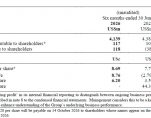
Underlying profit from continuing businesses1 grew 44% to US$117 million
Reported profit was US$118 million, compared to a US$38 million loss in the prior year period
Like-for-like (LFL) subsidiary sales growth from continuing businesses2 improved to 3%
Health & Beauty sustained strong LFL sales; Convenience and Home Furnishings returned to growth
E-commerce and DFIQ Media contributed to approximately 35% of sales growth
Return on capital employed improved to 12%, up from 9% as of December 2025
Interim dividend of US¢6.20 per share, up 77% year-on-year. Maintain full-year dividend payout of 70%
Raised full-year organic revenue3 growth guidance to be between 3.0% and 4.0%, and underlying profit to be between US$285 million and US$305 million
Announced 100% interest acquisition of Cody Hong Kong (Cody HK), one of the leading outdoor advertising solution providers in Hong Kong
HONG KONG SAR – Media OutReach Newswire – 28 July 2026 – “Our first-half performance, with underlying profit1 growth of 44% and a consistently improving LFL subsidiary sales trend, reflects the strength of our strategy in action – a sharper value for customers, a strong focus on returns and execution with discipline. This was supported by sustained momentum in Health & Beauty, as well as strong recovery in Convenience and Home Furnishings segments. Our acquisition of Cody HK’s extensive outdoor media portfolio, together with its experienced leadership team, strengthens our capability to deliver full-funnel, omnichannel advertising solutions while accelerating the growth of DFIQ Media. As we continue to deepen customer engagement and build new profit pools through the DFI Omni Platform, we are well-positioned to deliver sustainable long-term value with greater earnings resilience.”
Scott Price
Group Chief Executive
DFI RETAIL GROUP HOLDINGS LIMITED
HALF-YEAR RESULTS FOR THE SIX MONTHS ENDED 30 JUNE 2026
OVERVIEW
The Group delivered strong performance in an evolving macroeconomic climate, underpinned by disciplined execution and a focus on driving higher returns. A portfolio built on everyday essentials, combined with a strong value proposition with convenience, continues to resonate with customers against the backdrop of oil price volatility. For the first half of 2026, subsidiary LFL sales growth from continuing businesses4 further improved to 3%. This was driven by sustained strong momentum in the Health & Beauty segment, as well as a return to growth in both the Convenience and Home Furnishings businesses. Price reinvestment, supported by a reset in sourcing strategy, drove Food volume growth with Wellcome’s basket price now trading at a discount relative to the Greater Bay Area5, compared to a premium in the prior year.
The Group’s commitment to retail excellence, a lean overhead structure and expanded omnichannel touchpoints enables us to serve our customers with better pricing and better experience. The DFI Omni Platform further strengthens this by seamlessly integrating our extensive store network with digital capabilities, delivering greater convenience and personalisation while unlocking new value pools through rich, cross-format data insights. Developing and scaling high-margin revenue streams, including retail media (DFIQ Media) and insights monetisation (DFIQ Insights), will diversify our profit base and support long-term value creation.
To enhance operational efficiency and improve productivity of team members, the Group introduced GenAI-powered tools in the first half of 2026, with plans to scale deployment across operating markets in the coming months. In parallel, AI capabilities are increasingly embedded across core retail functions, including assortment optimisation, promotion planning and demand forecasting, to drive better, more data-driven decisions.
The Group undertook a thorough review of the cost structure with the aim of driving sustainable savings and improving long-term cost efficiency. This has led to a reallocation of resources and costs toward format-level operations, driving greater agility and responsiveness to evolving market conditions, while continuing to reduce central selling, general and administrative (SG&A) costs through overhead optimisation. Combined with improving digital economics, underlying operating profit from continuing businesses6 grew 14% year-on-year in the first half of 2026. Improved operating performance and lower financing costs contributed to an 11% increase in underlying profit attributable to shareholders, or 44% from continuing businesses7 only.
The Group maintained a healthy balance sheet with a net debt position of US$22 million as of 30 June 2026. Return on capital employed further improved to 12%, up from 9% as of December 2025.
The Group declared an interim dividend of US¢6.20 per share, representing a significant increase of 77% compared to the same period last year. This enhanced interim dividend distribution underscored the Board’s confidence in the Group’s underlying business momentum and strong cash flow generation, while ensuring sufficient capital for future growth in line with our 70% payout policy.
OPERATING PERFORMANCE
Overall For the first half of 2026, underlying subsidiary revenue from continuing businesses6 was US$4.1 billion, up 4% year-on-year and 3% on a LFL basis. The growth was driven by strong performance in the Health & Beauty division, as well as a return to growth in the Convenience and Home Furnishings segments. Total revenue, including Maxim’s, was US$5.6 billion. Excluding divestments7, total revenue increased by approximately 4%.
Overall underlying profit attributable to shareholders from continuing businesses7 grew 44% year-on-year to US$117 million, primarily driven by improved operating profit and lower financing costs.
Underlying subsidiary profit from continuing businesses6 was US$101 million, reflecting a 49% year-on-year increase, primarily driven by earnings recovery in the Home Furnishings and Food segment with lower SG&A expenses as a result of overhead reduction.
Underlying profit from associates was US$16 million, down from US$30 million in the prior comparable period, which included share of profits from Robinsons Retail ahead of its disposal. Excluding this, profit contribution from associates was up 22% year-on-year due to robust sales growth and effective cost optimisation at Maxim’s.
The Group reported operating cash flow after lease payments of US$178 million, 16% higher than the prior year period, driven by underlying operating profit growth. Free cash flow for the period was a net inflow of US$85 million, down 5% year-on-year, due to increased capex investment in priorities that will further strengthen the Group’s competitive position while driving long-term value for shareholders.
Digital Capturing a significant share of daily essential customer missions in Hong Kong, the DFI Omni Platform – powered by yuu – enables deeper customer engagement across offline and online touchpoints, maximises data capture and unlocks incremental margin opportunities beyond core retail through DFIQ Media and DFIQ Insights. Overall digital turned profitable, with e-commerce and DFIQ Media contributing to approximately 35% of total revenue growth in the first half of 2026. This was supported by improved underlying e-commerce economics, a rising online sales penetration8 to 6.9% and 3 times in DFIQ Media revenue compared to first half of 2025. As of June 2026, more than 10,000 digital media-ready screens were available across DFI outlets.
Subsidiaries Sales for the Health & Beauty division were US$1.4 billion, up 8% year-on-year from continuing businesses9, 7% in constant currency, or 6% on a LFL basis, with continued market share gains across key operating markets. Mannings and Guardian deepened their leadership as the trusted advisors for wellness through an enhanced, wellness-focused assortment and continued roll-out of skin and scalp assessment services across a wider store network. The recently announced exclusive distribution partnership with Holland & Barrett, a leading UK health and wellness retailer, will further expand customer access to trusted wellness solutions in Hong Kong and Singapore, followed by a broader rollout across selected Asia markets in the coming years. In Hong Kong and Macau, Mannings delivered 5% LFL sales growth, driven by increased basket size and robust tourist store sales amid higher visitor arrivals. In Southeast Asia, Guardian achieved strong LFL sales growth of 9%, supported by higher basket sizes and improved promotional efficiency, with Indonesia and Vietnam delivering close to 20% LFL growth. Excluding the impact of cost reallocation and closure of Mannings China offline stores, divisional profit increased moderately by 2% to US$109 million. Margin declined primarily due to increased strategic promotions to drive stronger sales and market share in Southeast Asia, particularly in Malaysia where health & beauty retailers did not benefit from the SARA Cash Aid Programme.
Total Convenience sales were US$1.2 billion, up 4% year-on-year or 2% on a LFL basis, as continued growth in higher-margin categories, including ready-to-eat (RTE) and exclusive collectibles, more than offset the decline in lower-margin cigarette volumes. Hong Kong LFL sales returned to growth in the second quarter following ten consecutive quarters of decline, supported by RTE and an expanded non-food assortment, including limited-edition collectibles and K-pop merchandise. Excluding cigarettes, LFL sales were up 3% for the period. In Singapore, effective promotional campaigns and collectible product launches drove strong LFL sales growth of 8%. In South China, continued store network expansion through a capex-light franchise model – including a net addition of 112 stores since June 2025 to nearly 1,980 locations – contributed to 12% sales growth year-on-year or 6% on constant currency basis. LFL sales were 1% higher compared to the prior year period, driven by the successful launch of Own Brand in key categories of frozen products and packaged drinks. The team remains focused on driving footfall and sales through further expansion of the RTE offering across both offline and online channels. This includes a broader rollout of the Food Bar to 453 stores as of June 2026, up from 325 at year-end 2025, and strong overall online sales growth of more than 35%. Excluding cost reallocation impact, profit for the division increased by 2% to reach US$37 million.
Reported sales for the Food division from continuing businesses10 were US$1.1 billion, up 1% year-on-year. LFL sales returned to positive growth of 0.5% in the second quarter of 2026. In Hong Kong, investment in reduced pricing on core basket items, a stronger fresh proposition, and Own Brand offering drove 2% increase in total volume and 0.5% LFL sales growth in the first half of 2026. As of June 2026, Wellcome’s “Everyday Value” range has expanded to nearly 500 items, offering savings of up to 40%, bringing its basket price down from a premium to a discount relative to the Greater Bay Area. The team also accelerated omnichannel growth with more than 35% growth in online order volume. In Cambodia, Lucky reported strong double-digit sales growth, with profit more than doubling year-on-year. The plan to open 50 new stores over the next few years remains on track. Macau Food sales remained challenging as a result of cross-border grocery shopping. Excluding the impact of cost reallocation and the divestment of Singapore Food, overall divisional profit increased by 27% year-on-year to US$17 million.
The Home Furnishings division delivered strong recovery in performance during the first half of 2026, with LFL sales growth of 4%, compared to a decline of 6% in the prior year period. Price reinvestment in core value SKUs, a stronger focus on locally relevant ranges and IKEA Food innovation drove increased footfall and items per baskets, resulting in a 3% LFL sales growth in Hong Kong and 5% in Taiwan. IKEA Food remains a critical traffic and revenue driver, accounting for 15% of total sales. In Indonesia, while offline sales momentum remained soft, LFL sales trend improved on a strengthening IKEA’s omnichannel proposition with online sales penetration reaching 24%. Sales recovery and effective cost optimisation measures contributed to 85% growth in overall divisional profit, excluding cost reallocation impact.
Associates The Group’s share of Maxim’s underlying profits was US$16 million for the first half of 2026, up 15% year-on-year, underpinned by continued cost optimisation and operational efficiency measures. Sales for the period increased by 4%, driven by strong restaurant performance in Southeast Asia and a return to growth in the Chinese mainland, partially offset by weaker sales in Hong Kong.
RECENT BUSINESS DEVELOPMENTS
On 30 June 2026, the Group announced the acquisition of 100% interest in Cody Hong Kong (Cody HK), one of the leading outdoor advertising solution providers in Hong Kong, for a cash consideration of HK$30.2 million (approximately US$3.8 million) from ARN Media Network Limited (ASX: A1N), subject to customary adjustments.
The acquisition advances DFI’s strategy to build a full-funnel advertising solution in Hong Kong through DFIQ Media. By integrating Cody HK’s strategic assets – including multi-year exclusive advertising rights with Kowloon Motor Bus (KMB) and Hong Kong Tramways (HKT) – with DFI’s extensive store network, growing online user base, and closed-loop measurement capabilities, DFIQ Media strengthens its ability to deliver high-impact advertising solutions to a broader advertiser base across online, in-store, and outdoor channels.
Subject to satisfaction of third-party consents, the transaction is expected to complete in the second half of 2026.
PEOPLE
On 6 July 2026, the Group announced four senior leadership appointments effective from 1 August 2026. These moves reflect the Group’s continued focus on strengthening its leadership pipeline and driving the next phase of growth with experienced, proven leaders.
Andrew Wong will be appointed Chief Executive Officer, DFI IKEA. Formerly CEO of Health & Beauty, Andrew brings extensive experience in driving customer-led growth, operational discipline and in-store digitalisation across multiple markets. His earlier leadership of franchise operations at Jardine Restaurant Group positions him well to lead the IKEA business into its next phase of development.
Curtis Liu, having most recently served as Chief Executive Officer of Food, will be appointed Chief Executive Officer, Health & Beauty. His proven leadership in driving customer value repositioning in Hong Kong, combined with deep operational retail knowledge and digital experience at JD.com, positions him well to drive continued momentum and omnichannel growth in Health & Beauty.
Tom van der Lee will be appointed Chief Executive Officer, Food. Tom has played an instrumental role as Group Chief Financial Officer, driving financial discipline and supporting key strategic decisions across the Group. His prior experience at FrieslandCampina, a global food company, and his broad financial leadership across DFI banners in Southeast Asia supported his strong commercial grounding to lead the Food business.
Kaizhi Wu will succeed Tom as Group Chief Financial Officer. Kaizhi currently serves as Group Finance Director, Planning & Reporting, based in Hong Kong. Prior to joining DFI, he served as Executive Vice President and Chief Financial Officer of Yonghui Superstores Co., and earlier held senior roles at Jardine Matheson, Fosun Group and PwC in London. Kaizhi will join the Group’s Management Committee upon assuming his new role.
OUTLOOK
The Group remains confident in our ability to navigate the evolving trading environment, supported by sharpened business priorities, a strong balance sheet and low-cost operating model. Financial outlook outlined at the Investor Day in December 2025 remains intact as DFI continues to execute our multi-year strategic initiatives that are critical to driving sustainable revenue and earnings growth. These initiatives include strengthening our value proposition, strategically expanding store network, enhancing omnichannel capabilities and accelerating digital asset monetisation through data-driven insights. In particular, the growing DFI Omni Platform will deepen our customer engagement, further reinforce our core retail strength and enhance overall earnings resilience in the long term.
Despite an elevated oil price outlook for the remainder of the year, the Group expects to deliver stronger profitability supported by enhanced operational efficiency. As a result, the Group revises up its full-year organic revenue growth11 outlook to be between 3.0% and 4.0% (up from previously 2.0% to 3.0%), and underlying profit attributable to shareholders to be between US$285 million and US$305 million (up from previously US$270 million and US$300 million).
Scott Price Group Chief Executive
—————– 1 Excluding impacts of divestment of Singapore Food business, closure of Mannings China and disposal of minority stake of Robinsons Retail 2 Excluding impacts of divestment of Singapore Food business and closure of Mannings China 3 Excluding Singapore Food and Mannings China 4 Excluding impacts of divestment of Singapore Food business and closure of Mannings China 5 Based on a third-party assured price comparison of a 200-item comparable basket between DFI and Shenzhen 6 Excluding impacts of divestment of Singapore Food business and closure of Mannings China 7 Excluding impacts of divestment of Singapore Food business, closure of Mannings China and disposal of minority stake of Robinsons Retail 8 Excluding cigarettes under Convenience and IKEA Food 9 Excluding Mannings China 10 Excluding Singapore Food business 11 Excluding Singapore Food and Mannings China Hashtag: #DFIRetailGroup #Mannings #Guardian #7-Eleven #Wellcome #MarketPlace #IKEA #yuu #Maxim’s
The issuer is solely responsible for the content of this announcement.
DFI Retail Group
DFI Retail Group (the Group) is a leading Asian retailer, driven by its purpose to ‘Sustainably Serve Asia for Generations with Everyday Moments’.
At 30 June 2026, the Group and its associates operated 7,659 outlets across 12 markets, of which 5,593 stores were operated by subsidiaries. The Group, together with its associates, employed over 81,000 people, with more than 43,000 people employed by subsidiaries. The Group had reported revenue of US$8.9 billion in 2025.
The Group is committed to delivering quality, value and service to consumers across the region through trusted brands, strong local market positions, and a broad retail ecosystem supported by extensive store networks, digital capabilities and efficient supply chains.
The Group and its associates operate a portfolio of well-known brands across five key divisions. The principal brands are:
Health and Beauty
Mannings in Hong Kong and Macau S.A.R.; Guardian in Brunei, Indonesia, Malaysia, Singapore and Vietnam.
Convenience
7-Eleven in Hong Kong and Macau S.A.R., Singapore and Southern China.
Food
Wellcome and Market Place in Hong Kong S.A.R.; San Miu in Macau S.A.R.; Lucky in Cambodia.
Home Furnishings
IKEA in Hong Kong and Macau S.A.R., Indonesia and Taiwan.
Restaurants
Hong Kong Maxim’s group on the Chinese mainland, Hong Kong and Macau S.A.R., Cambodia, Laos, Malaysia, Singapore, Thailand and Vietnam.
The Group’s parent company, DFI Retail Group Holdings Limited, is incorporated in Bermuda and has a primary listing in the equity shares (transition) category of the London Stock Exchange, with secondary listings in Bermuda and Singapore. The Group’s businesses are managed from Hong Kong. DFI Retail Group is a member of the Jardine Matheson group.
Singapore’s central bank has warned that any sharp pullback in artificial intelligence investment could weaken global growth, disrupt semiconductor demand and trigger turbulence across financial markets.
The Monetary Authority of Singapore said uncertainty over whether companies can sustain vast spending on data centres, advanced chips and computing infrastructure has become a significant risk to the economic outlook. The warning reflects growing scrutiny of whether revenue generated by AI services can justify the scale of capital committed by technology groups.
MAS Managing Director Chia Der Jiun said the global economy should continue to benefit from AI-related expenditure in the near term, but the longer-term impact remains difficult to assess. A sudden reduction in investment could affect manufacturing, trade and financial asset prices, particularly in economies closely linked to electronics supply chains.
The assessment carries particular significance for Singapore, where technology-related production has driven much of the economic expansion this year. The economy grew by about 6 per cent during the first half of 2026, while AI-linked electronics accounted for more than 70 per cent of export growth. Semiconductor production, data-centre equipment and related services have helped offset pressure from trade restrictions, higher energy costs and geopolitical instability.
MAS expects economic activity to remain firm during the second half of the year, supported by technology, construction and financial services. However, it cautioned that tighter global financing conditions or a reversal in AI expenditure could undermine the durability of that growth and ease inflation more rapidly than expected.
The warning comes as the world’s largest technology companies raise spending on processors, servers, power systems and data centres. Capital expenditure by major AI-linked companies is projected to rise by more than 75 per cent to around $700 billion in 2026. Large technology groups are also turning increasingly to debt markets to finance the buildout, strengthening the connection between AI investment, credit conditions and the wider economy.
Fitch Ratings has identified an AI market correction as an emerging global credit risk, citing elevated valuations, concentrated investment and uncertainty over future returns. Amazon and Alphabet are among companies whose combined bond issuance has reached about $182 billion, underlining the growing role of borrowed funds in supporting infrastructure spending.
Supporters of the investment surge argue that generative AI could raise productivity, reduce costs and create new markets comparable to earlier technological transformations. Demand for advanced chips and cloud capacity remains strong, while business investment data continue to show momentum. US orders for core capital goods rose 0.9 per cent in June, and shipments increased 1.9 per cent, their strongest gain in four and a half years, helped by spending on computers and electronic equipment.
Questions persist over how quickly that spending will generate sustainable profits. Data centres require large quantities of electricity, specialised chips and cooling infrastructure, while rapid improvements in computing equipment can shorten replacement cycles. Companies may face pressure to keep investing even before earlier projects achieve their expected returns.
Academic research indicates that the AI boom combines strong technological foundations with pockets of speculative vulnerability. Enterprise adoption, revenue growth and productivity improvements support parts of the valuation expansion, but investment has outpaced monetisation in some segments. Private-market valuations are also concentrated among a limited number of companies, increasing the risk that a reassessment of growth expectations could spread rapidly.
Global equity markets are already showing greater sensitivity to concerns about returns from AI spending. Semiconductor shares have faced selling pressure, while technology indices have retreated from earlier peaks. Investors are closely examining earnings from leading cloud and chip companies for evidence that demand remains strong enough to support infrastructure budgets.
Singapore is vulnerable to such shifts because of its position in global electronics, finance and trade networks. A decline in chip orders could affect factory output and exports, while a fall in technology valuations could weaken investment sentiment and household wealth. Financial institutions could also face losses through corporate lending, bond holdings and market exposure.
MAS has separately highlighted cybersecurity threats arising from AI and quantum-computing advances. AI tools can improve fraud detection and network monitoring, but they can also make phishing, impersonation and hacking attempts more convincing. The authority has established an industry task force to help financial institutions strengthen their defences as technology-driven risks become more sophisticated.
SoftBank Group’s $40 billion bridge loan linked to its expanding investment in OpenAI has attracted 21 additional lenders, widening the financing’s risk distribution as banks increase their exposure to the capital-intensive artificial intelligence sector. The new participants joined during a broader syndication phase for the one-year facility, which was initially arranged by JPMorgan Chase, Goldman Sachs, Mizuho Bank, Sumitomo Mitsui Banking Corporation and MUFG Bank. The loan […]
Europe’s tougher digital-asset rules are creating conditions for a new wave of mergers and acquisitions as crypto companies seek licences, compliance expertise, customers and stronger links with established banks. The European Union’s Markets in Crypto-Assets regulation, known as MiCA, entered a decisive phase on July 1, when the final transitional arrangements expired across the bloc. Crypto exchanges, custodians and other service providers can no longer rely on […]
China has imposed penalties totalling 5.18 billion yuan on Trip. com Group after finding that the country’s largest online travel platform abused its market dominance and restricted competition among hotel-booking services. The State Administration for Market Regulation said Trip. com had used exclusive arrangements, preferential traffic allocation and price-control requirements to strengthen its position in the online accommodation market. The practices affected hotels operating on rival platforms […]
Cryptocurrency markets face renewed volatility as an Ethereum developer warns that expectations surrounding the United States’ CLARITY Act could trigger a deeper sell-off if lawmakers fail to deliver the regulatory breakthrough already anticipated by traders. Econar, a long-time Ethereum builder and commentator, said digital assets could stage only a limited rise as speculation about the legislation intensifies. Failure to pass the bill could then push prices below […]
Dangote Cement Plc is favouring London over Dubai for a planned international listing, arguing that the UK market offers a faster route to investors and better suits the group’s expanding cement business. Mariya Dangote, a board member and executive director responsible for the group’s cement and food businesses, said the company had considered a secondary listing in Dubai but concluded that completing the process there could take […]
Mirae Asset Group has completed its acquisition of Korbit, placing South Korea’s first cryptocurrency exchange under the control of one of the country’s largest financial conglomerates and accelerating the convergence of traditional finance and digital assets. Mirae Asset Consulting became Korbit’s largest shareholder after completing regulatory and transaction procedures. The deal gives the group control of more than 90 per cent of the exchange, following an agreement […]
Saudia and Garuda Indonesia have agreed to pursue a joint business partnership aimed at expanding passenger connectivity between Southeast Asia, Saudi Arabia and destinations across Europe, Africa and the Middle East.
The airlines signed a memorandum of understanding that establishes a framework for negotiating a future joint business agreement. The proposed arrangement would deepen their existing codeshare relationship and could allow closer coordination across schedules, sales, network planning and passenger services.
The partnership is expected to explore single-ticket journeys across the two carriers’ combined networks. Garuda Indonesia passengers could gain easier access to Saudia-operated destinations in the Middle East, Europe and Africa, while Saudia customers could connect through Garuda’s domestic network and services to Australia.
The carriers will examine coordinating flight schedules between Saudi Arabia and Indonesia to improve connection times and reduce lengthy transfers. They will also assess joint sales, marketing and distribution initiatives in markets where both airlines see opportunities for traffic growth.
Cooperation could extend to frequent-flyer programmes, airport services, technology systems and customer handling. The memorandum also places particular emphasis on services for Umrah and Hajj passengers travelling from Indonesia, one of the world’s largest markets for pilgrimage-related air travel.
Saudia Chief Commercial Officer Arved von zur Muehlen and Garuda Indonesia Director of Transformation Neil Raymond Mills signed the agreement. The ceremony was attended by Saudia Group Director General Ibrahim Al-Omar and Garuda Indonesia Vice President Director Thomas Sugiarto Oentoro.
Von zur Muehlen said the agreement reflected Saudia’s strategy of building commercial partnerships that strengthen its international network. He said the proposed cooperation would offer passengers greater flexibility between Indonesia, Australia and destinations served by Saudia across three regions.
Mills said the partnership carried strategic value beyond expanding flight networks. Improved access to the Middle East, Europe and Africa would support pilgrimage travel, family and community movement, business links and wider economic cooperation.
A joint business agreement would represent a deeper form of cooperation than a conventional codeshare. Codeshares allow airlines to sell seats on flights operated by a partner, while joint business structures can involve coordinated scheduling, pricing, sales and capacity planning, subject to regulatory approval.
Such arrangements allow airlines to extend their market reach without immediately adding aircraft or launching a large number of new routes. They can also improve aircraft utilisation and feed passenger traffic through major hubs. Regulators, however, generally examine these partnerships to ensure that closer coordination does not weaken competition or limit consumer choice.
The proposed partnership builds on the airlines’ membership of the SkyTeam alliance. Saudia joined SkyTeam in 2012, while Garuda Indonesia became a member in 2014. Alliance membership already supports shared passenger benefits, lounge access, priority services and frequent-flyer recognition across participating carriers.
Saudia operates from hubs including Jeddah, Riyadh, Dammam and Medina, connecting Saudi Arabia with destinations across Asia, Africa, Europe and North America. Its Jeddah hub is particularly important for religious travel because of its proximity to Makkah and its role as a gateway for pilgrims.
Garuda Indonesia’s network is centred on Jakarta and Bali, with domestic services covering major commercial centres and tourism destinations across the archipelago. Its international operations connect Indonesia with markets in Asia, the Middle East and Australia.
The agreement comes as Garuda expands commercial cooperation with overseas airlines during its continuing operational and financial restructuring. The carrier launched a codeshare partnership with Scandinavian Airlines in June, offering connections between Indonesia and Copenhagen, Stockholm and Oslo through hubs including Amsterdam and Tokyo.
Greater cooperation with Saudia could strengthen Garuda’s access to markets that are difficult to serve economically with direct flights. The arrangement could also help generate connecting traffic for domestic destinations beyond Jakarta, including cities that supply significant numbers of Umrah and Hajj travellers.
Indonesia and Saudi Arabia have sought to expand economic and transport ties alongside their strong religious and cultural links. Agreements between companies from the two countries valued at about $27 billion were announced in 2025 across sectors including clean energy, petrochemicals and aviation fuel services.
US President Donald Trump’s phased tariff plan for imported generic medicines has given drugmakers two years to strengthen American manufacturing while raising questions over costs, supply security and the future competitiveness of India’s pharmaceutical exports.
Trump announced that generic drugs entering the United States would remain free of import duties until August 1, 2028. A tariff of 100% would then apply for one year, followed by a 200% levy from August 2029. The proposed schedule extends Washington’s pharmaceutical reshoring campaign beyond patented and branded medicines, which were targeted earlier.
India faces the greatest exposure because the United States is its largest pharmaceutical export market. Drug exports to the country were valued at about $9.7 billion in 2025, representing roughly 38% of total pharmaceutical shipments worth $25.8 billion.
The policy nevertheless does not automatically remove the price advantage enjoyed by manufacturers such as Sun Pharmaceutical Industries, Dr Reddy’s Laboratories, Aurobindo Pharma, Cipla, Lupin and Zydus Lifesciences. Many generic medicines produced in India are priced seven to 10 times below branded alternatives, leaving room for some products to remain competitive even after steep duties.
A medicine imported for $10 would cost $30 after a 200% tariff, excluding distribution and retail charges. It could still undercut a branded equivalent priced at $70 or $100. The calculation is less favourable for commodity generics, where several manufacturers compete on narrow margins and buyers demand the lowest possible price.
Generic medicines account for more than 90% of prescriptions dispensed in the United States but less than 13% of prescription-drug spending. That imbalance reflects their importance to American healthcare as well as the pressure placed on manufacturers by pharmacy chains, wholesalers, insurers and purchasing organisations.
The United States imported pharmaceutical products valued at about $213 billion in 2025. Finished medicines sold in retail packaging, including generic products, accounted for about $94.1 billion. Replacing those imports would require extensive investment, specialised workers, regulatory approvals and dependable supplies of active pharmaceutical ingredients.
Building a pharmaceutical plant can take several years. Companies must install production lines, validate manufacturing processes and secure approval from the US Food and Drug Administration before commercial sales begin. Each medicine may also require separate technical submissions and inspections, complicating attempts to shift large portfolios within the two-year exemption period.
Several major drugmakers have already established manufacturing or research operations in the United States, providing limited protection against future tariffs. Companies may expand those facilities, acquire local plants or transfer selected high-volume products while continuing to manufacture lower-margin medicines overseas.
The tariff could affect businesses unevenly. Manufacturers with specialised generics, injectable drugs, inhalers and complex formulations may have greater pricing power. Producers dependent on crowded categories such as basic tablets and capsules could face heavier pressure because customers can switch suppliers more easily.
Shares of leading pharmaceutical companies fell after the announcement, with some declining by more than 3% during Wednesday’s trading. The reaction reflected concern over long-term earnings rather than an immediate change in export conditions, as the duty-free window remains open for two years.
Implementation is also uncertain. Trump disclosed the schedule through a social-media statement, but no detailed executive order or customs framework had been issued. The administration must still clarify whether exemptions will be available for companies building factories, medicines facing shortages, critical hospital products or imports from countries covered by trade agreements.
Industry participants are expected to seek exclusions for essential medicines, arguing that tariffs could raise treatment costs and deepen shortages. The American generic-drug market has already faced supply disruptions linked to plant closures, quality failures and unsustainable pricing. Higher import costs could encourage some manufacturers to withdraw products rather than invest in additional capacity.
Washington’s strategy also faces a supply-chain constraint beyond finished medicines. A large portion of the active ingredients and chemical intermediates used by global manufacturers originates in China. Moving final production to the United States without diversifying those inputs would provide only partial protection against overseas disruption.
Drugmakers in India now have until August 2028 to adjust their production networks, negotiate with customers and identify medicines capable of absorbing higher duties. Expansion into Europe, Africa, Latin America and other regulated markets could reduce dependence on the United States, although none offers comparable scale.
London Stock Exchange is preparing to open a near-continuous weekday trading venue designed for algorithmic systems and AI-enabled trading, extending access to its markets across Asian, European and American time zones. The new platform, London Stock Exchange 24, or LSE 24, is scheduled to enter client testing by the end of 2026. Exchange-traded products will become its first asset class during the first half of 2027, subject […]
Craneware has disclosed a cyberattack that allowed an unauthorised party to extract employee information and records linked to customers and business partners, raising fresh concerns about technology supply-chain risks across the US healthcare sector. The Edinburgh-based healthcare software provider said attackers gained access to a limited section of its data environment. A significant volume of file names was viewed and removed, while an unspecified proportion of employee […]
SpaceX is approaching its first major post-listing share release, with stock worth about $116 billion becoming eligible for sale after the rocket and satellite group publishes its maiden quarterly results as a public company. The release could sharply expand the number of SpaceX shares available to investors and test demand following a volatile first month on the Nasdaq. Employees and some early shareholders will be permitted to […]
Arabian Post Staff -Dubai Dubai Police has launched a Young Journalist course to equip school students with journalism skills, media awareness and a stronger understanding of responsible communication. The course forms part of the Dubai Police Summer Student Programme 2026, which is bringing together about 1,400 pupils from 130 public and private schools. Participants represent 31 nationalities, reflecting the broad social mix of Dubai’s student population. The […]
US stocks rose on Monday as chipmakers recovered from last week’s sell-off, reassuring investors that artificial intelligence remains perfectly capable of generating profits, provided nobody asks where the profits are. The S&P 500 gained about 0.6%, while the technology-heavy Nasdaq Composite advanced roughly 0.9%. The Dow Jones Industrial Average posted a smaller rise as traders concentrated on semiconductor shares, corporate earnings and the comforting possibility that another […]
Arabian Post Staff -Dubai Dubai Future District Fund has expanded its portfolio to 30 investments, confirming that the future is now sufficiently diversified to survive several pitch decks, two market corrections and at least one founder describing an ordinary payment service as “transformational infrastructure”. The fund made eight new investment commitments during 2025, including five venture capital funds and three high-growth companies. Its portfolio now consists of […]
Sultan Ahmed Bin Sulayem has taken direct charge of MMC Port Holdings following the immediate departure of group chief executive Azman Shah Mohd Yusof, placing Malaysia’s largest port operator under the control of its Emirati executive chairman. An internal company memorandum dated July 12 instructed employees to direct matters previously handled by the group chief executive to Bin Sulayem’s office. It did not explain Azman Shah’s departure […]