Arabian Post Staff -Dubai US President Donald Trump has temporarily halted Washington’s ship-escort operation through the Strait of Hormuz, saying talks with Tehran have made “great progress” toward a wider settlement after weeks of disruption to one of the world’s most critical energy corridors. The pause, announced on Tuesday, came only hours after Secretary of State Marco Rubio detailed a US effort that began on Monday […]
Microsoft has warned of a large-scale credential theft operation that used fake workplace compliance emails to target more than 35,000 users across over 13,000 organisations in 26 countries, underscoring how cybercriminals are refining corporate-style social engineering to bypass both human caution and automated defences. The campaign, observed between April 14 and 16, 2026, relied on emails that appeared to come from internal human resources, regulatory or conduct […]
OpenAI plans to open its Trusted Access for Cyber programme to government cyber defenders across federal, state and local levels, marking a broader push to place advanced artificial intelligence tools in the hands of public agencies responsible for protecting critical systems. The expansion is aimed at agencies handling national security, emergency response, public health systems, benefits delivery, municipal infrastructure and other services that face rising digital threats. […]
Malaysia’s political pressure over alleged “corporate mafia” links inside the country’s anti-graft machinery has intensified after Digital Minister Gobind Singh Deo urged the national police chief to clarify the status of investigations into claims that businessmen colluded with enforcement officials to force corporate executives out of targeted companies.
Gobind, who is also national chairman of the Democratic Action Party and MP for Damansara, called on Inspector-General of Police Khalid Ismail to state whether individuals and companies cited in the allegations had been questioned, and to outline the next steps in the investigation. His intervention has kept public scrutiny on the Malaysian Anti-Corruption Commission at a sensitive moment, with the agency preparing for a leadership change and facing questions over institutional independence.
The allegations centre on claims that a network of businessmen worked with MACC officials to pressure company executives, including through raids and investigations, in order to influence ownership and control of businesses. MACC and outgoing chief commissioner Azam Baki have denied wrongdoing, describing the claims as unfounded. Police have said they have so far found no evidence of MACC involvement, while investigations ordered by the government remain under public watch.
Gobind said transparency was essential because the allegations were specific and involved named individuals, companies and officials. He said the probe must extend to every person, entity and officer implicated in the complaints, adding that the matter touched directly on market integrity and trust in national institutions. He also said the Securities Commission should explain whether it had examined any possible market manipulation, particularly if force or pressure was allegedly used to transfer shares in companies.
The issue has drawn wider political attention because DAP is a key component of Prime Minister Anwar Ibrahim’s unity government. Party leaders have argued that a denial by MACC is not enough to settle the controversy and have backed calls for a Royal Commission of Inquiry with powers to compel evidence and testimony. That position has placed pressure on the administration, which came to power promising institutional reform and stronger action against corruption.
Azam’s tenure has been marked by both high-profile enforcement action and repeated scrutiny. He has led MACC since March 2020 and continued beyond the usual retirement age through contract extensions in 2023, 2024 and 2025. His current term ends on May 12. The government has appointed former High Court judge Abdul Halim Aman as the next MACC chief commissioner from May 13, after the King assented to the appointment on the advice of the prime minister.
The appointment came ahead of a planned Kuala Lumpur rally demanding Azam’s removal and broader reforms at MACC. Activist groups behind the campaign have called for a Royal Commission of Inquiry into controversies surrounding the agency’s leadership, a parliamentary mechanism to vet future chief commissioners, fixed tenure for the top post and stronger safeguards to ensure MACC is accountable to Parliament rather than the executive.
The controversy has revived long-running concerns about the structure of Malaysia’s anti-corruption framework. MACC is a central enforcement body in the country’s governance system, but critics have argued that its leadership appointment process leaves room for political pressure. Supporters of reform say the agency’s credibility depends not only on pursuing graft cases but also on being seen to operate independently when allegations touch its own officers or senior leadership.
Anwar’s government has made anti-corruption enforcement a major plank of its reform agenda. Since taking office in 2022, his administration has overseen investigations involving former senior officials, political figures, military procurement and state-linked financial matters. The approach has won praise from some governance advocates, but it has also faced claims of selective enforcement from opponents and unease among allies when politically sensitive cases remain unresolved or unpublished.
The “corporate mafia” allegations carry additional weight because they involve not only possible misconduct by public officers but also the risk of abuse in the corporate sector. If executives were pressured to sell shares or surrender control of businesses through investigations or enforcement threats, the case would raise questions about investor protection, corporate governance and the ability of regulators to shield markets from coercive conduct.
Danish shipping group A. P. Moller–Maersk has confirmed that its US-flagged vehicle carrier Alliance Fairfax has left the Arabian Gulf through the Strait of Hormuz under US military escort, giving Washington’s effort to reopen one of the world’s most important maritime chokepoints its most visible commercial test so far. The vessel, operated by Maersk’s Farrell Lines subsidiary, completed the passage on May 4 accompanied by US military […]
Arabian Post Staff -Dubai UAE authorities condemned a wave of missile and drone attacks on civilian sites after national air defence systems intercepted 12 ballistic missiles, three cruise missiles and four unmanned aerial vehicles on May 4, preventing wider damage in an escalation that has sharpened security concerns across the Gulf. Three people suffered moderate injuries and were taken to hospital, with officials identifying them as […]
Microsoft detected about 8.3 billion email-based phishing threats in the first quarter of 2026, exposing a sharp shift in attacker behaviour as criminal groups moved deeper into QR codes, fake CAPTCHA pages, phishing-as-a-service kits and file-based payloads to bypass conventional email defences. The volume eased from about 2.9 billion threats in January to 2.6 billion in March, but the decline in headline numbers masked a more […]
Attackers are shifting credential theft campaigns towards QR codes, fake CAPTCHA pages and ClickFix-style prompts, turning familiar security checks into tools for large-scale account compromise. Fresh threat telemetry for the first quarter of 2026 shows email-based phishing remains vast in scale, with about 8.3 billion threats detected between January and March. Although monthly volumes eased from 2.9 billion in January to 2.6 billion in March, the composition […]
MCP’s rapid rise as the preferred bridge between AI assistants and external tools is running into a harder test inside production software teams: whether convenience justifies the security, reliability and governance risks now surfacing around the protocol. Model Context Protocol, introduced by Anthropic in November 2024 and later moved into broader open governance under the Linux Foundation’s Agentic AI Foundation, was designed to solve a real engineering […]
Arabian Post Staff -Dubai US President Donald Trump urged Iran to “get smart soon” and agree to a deal as Washington weighed a longer blockade of Iranian ports, raising the stakes in a confrontation that has already unsettled energy markets, shipping routes and diplomacy across the Gulf. Trump’s message on Truth Social followed several days of stalled contacts aimed at ending the conflict and securing restrictions on […]
A fake video meeting can now be enough to breach a Web3 company, with North Korea-linked BlueNoroff hackers using bogus Zoom calls, clipboard tricks and fileless PowerShell malware to steal credentials from cryptocurrency targets across multiple countries. The campaign marks a sharper turn in social engineering against the digital assets sector, where attackers are no longer relying only on malicious attachments or crude phishing pages. Instead, they […]
Justice Department lawyers have asked a federal judge to dismiss a lawsuit blocking parts of President Donald Trump’s planned White House ballroom, using language that legal critics say closely mirrors the president’s combative social media style and marks a striking departure from the department’s traditional courtroom tone. A motion filed in federal court argues that the National Trust for Historic Preservation, which brought the case, has no […]
US Energy Secretary Chris Wright has said ships could resume passage through the Strait of Hormuz without every mine being removed, raising hopes of a faster reopening of one of the world’s most important energy corridors while leaving unresolved questions over risk, insurance and maritime security. Wright said a workable channel could be created for vessels moving in and out of the Gulf, rather than waiting for […]
Japan has set up a financial-sector task force to assess risks from advanced artificial intelligence systems capable of discovering software flaws at a speed that could outpace existing cyber defences, deepening official concern over the resilience of banks, exchanges and payment infrastructure.
The move follows high-level talks involving the Financial Services Agency, the Bank of Japan, national cyber security officials, Mitsubishi UFJ Financial Group, Sumitomo Mitsui Financial Group, Mizuho Financial Group and Japan Exchange Group. The focus is Anthropic’s Mythos, a powerful AI model developed for defensive cyber security work but now regarded by regulators as a potential systemic risk if similar capabilities reach hostile actors.
Finance Minister Satsuki Katayama has framed the issue as an urgent challenge for core financial institutions, warning that Japan’s highly connected financial system could face cascading disruption if attackers used AI to identify and exploit weaknesses before institutions could repair them. No breach linked to Mythos has been reported, but officials are pressing banks to examine incident response plans, software exposure, vendor dependencies and market-continuity arrangements.
Japan tightens bank defences over Mythos as regulators confront a new cyber security problem: an AI tool built to strengthen software security may also demonstrate how fast the balance between defenders and attackers is shifting. Anthropic has said its Mythos Preview found thousands of high-severity vulnerabilities, including flaws affecting every major operating system and web browser. The company has placed the model under restricted access through Project Glasswing, an effort to use frontier AI for defensive discovery before equivalent capabilities spread more widely.
Security specialists see the financial sector as particularly exposed because banks rely on layered infrastructure that includes legacy systems, cloud services, trading platforms, third-party vendors and customer-facing applications. A vulnerability in one component may not remain isolated. Settlement systems, payment networks and securities markets depend on trust, synchronised data and rapid processing, leaving little tolerance for prolonged outages or uncertainty.
Japan’s top lenders have spent heavily on cyber resilience after a series of global incidents involving ransomware, software supply-chain attacks and attacks on critical infrastructure. Yet regulators remain concerned that AI-enabled vulnerability discovery could compress the time between flaw identification and exploitation. Traditional patch cycles often take days or weeks, while advanced models may help attackers generate working exploit paths far faster.
The task force is expected to coordinate technical assessments, information sharing and emergency procedures across the financial sector. Officials are also likely to examine how institutions verify third-party software, monitor anomalous activity and isolate critical operations during a cyber event. For exchanges and clearing systems, the priority will be maintaining orderly trading and settlement even if parts of the technology stack come under pressure.
The concern extends beyond Japan. Regulators in Asia, Europe and the United States have been urging banks to review their cyber controls as AI systems become more capable of code analysis, vulnerability chaining and automated exploitation. The issue has moved from a narrow technology debate into the domain of financial stability, because a successful attack on a major bank or exchange could quickly affect liquidity, confidence and cross-border transactions.
Anthropic has presented Mythos as a controlled defensive tool rather than a public product. The company says the model is intended to help responsible institutions find and fix vulnerabilities before they are misused. That defence has not removed policy concerns. The same capability that enables security teams to uncover hidden bugs can also lower the barrier for sophisticated offensive activity if access controls fail or comparable models emerge elsewhere.
Japan’s response reflects a broader shift in cyber regulation. Authorities are moving away from treating cyber security as a compliance checklist and towards stress-testing how institutions would cope with fast-moving, AI-assisted threats. Banks may face pressure to shorten patching timelines, improve software inventories and strengthen board-level oversight of technology risk.
For Japan, the issue also intersects with its ambition to modernise finance while promoting digital innovation. The country is expanding fintech services, digital payments and AI adoption across corporate operations, but regulators are signalling that innovation must be matched by stronger safeguards. Financial institutions are being asked to prepare for a threat environment in which attackers may use tools that can scan, reason and adapt at machine speed.
The immediate test for the task force will be whether it can turn concern into operational readiness. That means clear reporting channels, shared technical indicators, realistic crisis drills and faster coordination between banks, regulators, exchanges and cyber agencies. Japan’s financial authorities are seeking to prevent an AI-driven security breakthrough from becoming a market-disrupting event.
Cyber-attacks on higher and further education institutions jumped 63 per cent over a year, exposing universities and colleges to a sharper wave of ransomware, data theft, hacktivism and state-linked intrusion as digital learning systems become central to academic life. The findings point to 425 recorded incidents across 67 countries in the latest 12-month assessment period, compared with 260 in the preceding year. The rise reflects not only […]
Washington’s push for renewed face-to-face talks with Tehran has slowed as President Donald Trump’s combative social media messages and continuing naval blockade of Iranian ports deepen distrust around a fragile ceasefire. Officials familiar with the negotiations say the tone of Trump’s Truth Social posts, combined with military pressure in and around the Strait of Hormuz, has complicated efforts by Pakistan and other intermediaries to bring the […]
HONG KONG SAR – Media OutReach Newswire – 23 April 2026 – Hong Kong’s small businesses delivered their strongest performance in a decade in 2025, while confidence in the year ahead has climbed to a record high, according to CPA Australia’s latest Asia‑Pacific Small Business Survey 2025–26.
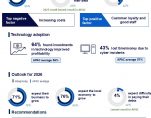
The survey shows that 68 per cent of Hong Kong SMEs recorded growth in 2025, up from 65 per cent in 2024 and marking the highest result on record. This positive momentum is expected to continue this year, with 71 per cent of SMEs expecting their businesses to grow and 76 per cent anticipating growth in the local economy — both at record highs. Customer loyalty and a strong workforce were identified as key drivers behind SMEs’ solid performance last year.
Mr Cliff Ip, Councillor of CPA Australia’s Greater China Divisional Council, said Hong Kong’s improving business environment played a critical role in supporting SME growth. “Hong Kong’s business confidence and economic growth strengthened last year, supported by robust capital markets, a recovery in tourism and consumption, and signs of stabilisation in the property market,” said Mr Ip. “Against this stable and supportive backdrop, small businesses not only benefited from increased business activity, but were also able to expand in a healthy and sustainable manner.”
Looking ahead, Mr Ip noted that while global geopolitical tensions and external uncertainties pose rising challenges, Hong Kong’s underlying strengths remain a key advantage for SMEs. “Rising geopolitical risks are likely to create headwinds for many sectors such as trade and logistics through higher fuel costs and supply chain disruptions. However, I remain confident about Hong Kong’s overall business outlook this year,” he said. “As many regions become more unpredictable or less secure, Hong Kong’s stable and consistent business environment, together with supportive policy settings including the city’s low and simple tax regime stand out as important advantages in attracting international companies and investors.”
Mr Ip added that these developments also present new opportunities for local SMEs, particularly as increased international interest creates scope to build partnerships, expand networks and tap into new markets. “This environment also creates favourable conditions for younger entrepreneurs to explore emerging markets and pursue new business opportunities,” he said.
Improved business performance has strengthened the solvency of many local SMEs. The share of businesses reporting difficulty paying debts fell sharply from 22 per cent in 2024 to just 3 per cent in 2025, while only 4 per cent expect to face difficulties this year, down markedly from 26 per cent previously. As a result, Hong Kong small businesses are now the least likely among the surveyed businesses to report solvency concerns.
Mr Ip said, “The solvency of many SMEs has notably improved, driven by stronger cash flow from improved business growth, a robust capital market and a recovering property market over the past year. This healthier cashflow has both supported easier access to external finance and reduced the need for such finance.”
Hong Kong SMEs have also strengthened their capability to invest in technology that delivers rapid improvements in profitability. In 2025, 64 per cent of SMEs reported that their technology investment in that year helped improve profitability, up from 59 per cent in 2024. Two in five Hong Kong SMEs invested in artificial intelligence (AI) last year, making it the leading technology investment among local SMEs, followed by customer relationship management (CRM) software.
At the same time, cyber protection has improved, with the share of Hong Kong businesses reporting losses from cyber incidents falling sharply from 72 per cent in 2024 to 43 per cent in 2025. However, as digitalisation accelerates, cyber risks remain elevated, with nearly three in five SMEs expecting to face cyber threats this year, above the survey average 42 per cent.
Mr Davy Leung, Deputy Chairperson of CPA Australia’s SME and Entrepreneurship Committee of Greater China, said the growing maturity and availability of AI tools is helping SMEs enhance productivity, reduce operating costs and improve customer experience.
(Left) Mr Davy Leung, Deputy Chairperson of SME and Entrepreneurship Committee 2026 from CPA Australia (Right) Mr Cliff Ip Greater China Divisional Councillor 2025 from CPA Australia
“However, rising digital fraud, wider AI adoption and SMEs’ increasing reliance on digital banking have prompted the Hong Kong Government to significantly strengthen banking security and cybersecurity resilience over the past year. This includes the rollout of low-cost and practical initiatives such as the Cybersec One Programme and the continued implementation of the ‘9+5’ SME support measures. The decline of cyberattack-related losses reported in the survey in part reflects the effectiveness of these measures.
“As cybersecurity threats and digital fraud risks continue to escalate, SMEs should make better use of these available resources, including free website risk assessments and vulnerability identification services, to strengthen their defence capabilities and safeguard business operations.”
Mr Leung also suggested that the Government consider revamping the Technology Voucher Programme to support broader digitalisation efforts, including the adoption of both AI and non-AI technologies. He added that enhanced training support would help SMEs identify and implement modern tools to drive innovation, improve efficiency and strengthen long-term competitiveness.
Rising costs remain a key challenge for Hong Kong SMEs in 2025, with 29 per cent reporting it having a negative impact on their business. However, this was the second‑lowest level among all surveyed markets, underscoring Hong Kong’s relatively low inflationary environment last year. Notably, the share of SMEs citing staff costs as a negative factor rose from 35 per cent to 42 per cent, making it the most significant cost pressure for Hong Kong businesses in 2025. This increase may help explain why the proportion of SMEs hiring additional staff declined from 42 per cent to 38 per cent last year.
Mr Leung said, “Increasing costs remain a significant barrier for many SMEs across Asia‑Pacific region, but Hong Kong’s relatively low inflation has helped cushion the impact on local small businesses,” Mr Leung said.
Mr Leung added that while headcount growth has moderated, overall staff costs have continued to rise as businesses invest in higher‑value talent. “Greater digitalisation and automation have helped ease labour constraints in Hong Kong. When SMEs do add staff, they are increasingly recruiting employees with digital and AI capabilities, or creating new roles to support business transformation. These positions typically command higher salaries, which has contributed to higher overall staff costs despite slower hiring growth.”
The annual survey collected the views of 4,166 small businesses across 11 Asia-Pacific markets, including Singapore, the Chinese Mainland, and Australia, with 305 respondents from Hong Kong. Hashtag: #CPAAustralia
The issuer is solely responsible for the content of this announcement.
About CPA Australia
CPA Australia is Australia’s leading professional accounting body and one of the largest in the world. We have more than 176,000 members in over 100 countries and regions. Our core services include education, training, technical support and advocacy. CPA Australia provides thought leadership on local, national and international issues affecting the accounting profession and public interest. We engage with governments, regulators and industries to advocate policies that stimulate sustainable economic growth and have positive business and public outcomes. A CPA is a Certified Practising Accountant. More at cpaaustralia.com.au
By K Raveendran Oil’s refusal to break decisively towards $100 a barrel, despite a tense geopolitical backdrop and repeated threats tied to the Strait of Hormuz, says something important about how markets are reading the balance between rhetoric and reality. At one level, the price action looks counterintuitive. A blockade or even a serious disruption […]
Philippine lawmakers widened their impeachment inquiry into Vice President Sara Duterte on Tuesday by pulling her Statements of Assets, Liabilities and Net Worth, bank-related records and other financial documents into a deeper examination of whether her declared wealth and reported transactions match what public officials are required to disclose. The move sharpens one of the most politically charged cases in the country, with the House justice committee […]
Two fully laden Iranian tankers have slipped out of the Persian Gulf with their tracking signals muted, underscoring how Tehran’s oil trade is adapting to a tightening US-led maritime squeeze even as warships, seizures and threats of interception raise the stakes across one of the world’s most critical energy corridors. Reports circulating on Wednesday said the vessels were part of a broader flotilla that has moved millions […]
Unchecked AI agents are triggering cybersecurity incidents across a broad swathe of companies, with data exposure, disrupted operations and direct financial damage now emerging as common consequences of a fast-moving corporate shift towards autonomous software. A new industry survey found that 65% of organisations suffered at least one AI agent-related incident over the past 12 months, while 82% said they had discovered previously unknown AI agents operating […]
Cyber criminals are using a tampered Android app to steal payment card data and PINs in a campaign that marks a more aggressive phase in near-field communication fraud, with the latest NGate malware variant targeting users in Brazil and enabling both unauthorised payments and cash withdrawals at contactless ATMs. The newly identified strain hides inside a doctored version of HandyPay, a legitimate NFC relay application, and appears […]
Hedge funds and other large money managers are stepping up bets against the dollar, using options and other derivatives to position for further weakness as demand for traditional safe-haven assets eases and investors look beyond the shocks that had briefly lifted the US currency. The shift reflects a market mood that has turned more sceptical about the dollar’s ability to hold its defensive premium. After climbing sharply […]
StarLink opened its 2026 roadshow in Riyadh on 19 April, pitching a vision of cyber defence in which autonomous systems are used not only to detect threats but to counter AI-enabled attacks at machine speed, as companies across the Middle East weigh how far they can trust software agents with critical security decisions. The event series, branded “The Silent War of AI vs AI”, is scheduled to […]








 cpaaustralia.com.au




