Just in:
Ukraine faces $32.6 billion financing gap amid legislative delays // Mangroves Documentary Premieres, Exploring How Cities and Wetlands Coexist // Over 360 electricity distribution professionals meet in Seoul for CIRED’s first major event in the Asia-Pacific region // Galaxy Resort Presents: “Plácido Domingo & José Carreras: The Legends United Opera Gala” // Dubai airport passenger traffic drops 28.1% amid conflict // Kochi police arrest man over pitbull attack on wife after quarrel // EU levies definitive duties on five steel suppliers // Broermann Medical Innovation Award 2026: Three Pioneers of Modern Obesity and Diabetes Therapies Honored // Ramayana triggers high tourist traffic to Jatayu rock centre // ASEAN adopts binding pact on regional digital commerce // Google identifies autonomous AI systems conducting vulnerability attacks // Daughter resumes father’s eatery after fatal crash // UK privacy regulator flags GTA 6 phishing threats // Bora Group 3Q26: Revenue and Net Income Expansion Continues U.S. Manufacturing and Biologics Footprint Complete; Margin Expansion to Follow as Utilization Improves // Microsoft restores cloud services after gateway software failure // First Abu Dhabi Bank proposes AED15 billion share sale // Kodiyeri in-law attacks Vijayan, Govindan over leadership style // Hong Kong International Airport Online Shop Winter Festive Offer // Ayara Kamala Reveals a Refreshed Vision for Wellness in Phuket // Govt offers talks to protesting teachers after CM signal //

News related to
unit

Al Ansari Financial Services has disclosed that on Saturday 5 July, its subsidiary Al Ansar Exchange encountered a technical anomaly that resulted in the unintentional transfer of funds to a small number of customer accounts. The company said that their teams acted swiftly to locate and recover “the vast majority” of the erroneously transferred amounts. The incident did not interrupt the company’s routine operations, and Al Ansari stated that daily transactions proceeded […]

Continues to see strong growth in traditional powerhouse sectors such as automotive, technology and e-commerce Sees new opportunities in Malaysia for growth in life sciences and healthcare as well as new energy DHL is well-positioned to support Malaysia’s trade and logistics ambitions with expanded investments and capabilities KUALA LUMPUR, MALAYSIA – Media OutReach Newswire – 9 July 2025 – DHL, the world’s leading logistics provider, has reaffirmed […]

Federal Authority for Identity, Citizenship, Customs and Port Security has issued a strong and authoritative rebuttal to claims circulating that the United Arab Emirates is offering lifetime Golden Visas to certain nationalities. In its statement on 8 July, ICP emphasised that Golden Visa eligibility is strictly governed by existing laws, ministerial decisions, and official regulations. Applications are processed only via UAE government channels—no consultancy firm, internal or external, has legitimate authority to promise visa grants under simplified conditions.

The statement was prompted by alleged press releases from a foreign consultancy office claiming applicants could secure lifetime Golden Visas for all categories from abroad. ICP characterised these claims as legally baseless and made without coordination with UAE authorities. Following these claims, several Indian and UAE-based outlets reportedly published the information before the ICP clarified its position.

While ICP refrains from naming the specific consultancy, it has warned of impending legal action against entities using false promises to extract money from individuals seeking long-term residency in the UAE. “Entities spreading such false information [are] exploiting [people’s] hopes for a dignified life,” the authority stated. It urged the public to verify procedures through official sources, including its website and app, or by contacting the designated call centre at 600522222.

The ICP insisted that the Golden Visa framework remains unchanged: eligibility criteria, procedural regulations, and visa categories continue to be defined by UAE law and ministerial orders alone. The visa remains accessible only to those meeting these statutory provisions, and all processes must follow the established, government-operated digital platforms.

This response comes amid a broader pattern of misinformation regarding Golden Visa eligibility. Earlier this month, another wave of misleading reports claimed investors in digital currencies—particularly in Toncoin—had qualified for a ten-year Golden Visa by staking cryptocurrency. In response, ICP, alongside the Securities and Commodities Authority and the Virtual Assets Regulatory Authority, issued a joint statement rejecting those claims and reminded the public that cryptocurrency investment is not a recognised category for Golden Visa issuance.

Under the official programme, Golden Visa eligibility remains targeted to specific categories: real-estate investors, entrepreneurs, exceptional talents, qualified professionals, scientists and researchers, high-performing graduates and students, frontline workers, humanitarian pioneers, and notable maritime asset holders. The ICP reaffirmed that these criteria are set in accordance with legal frameworks and are unchanged by the rumours.

Despite the cross-border spread of misinformation, UAE authorities appear resolute in their commitment to transparency, integrity, and regulatory enforcement. The ICP has stated that all application processes must occur through official digital services, and only those platforms bear the authority to collect fees or accept documentation. Third-party entities claiming to facilitate visa applications risk legal consequences.

Experts underscore the potential fallout from such false claims. “Misleading promises fuel public confusion and pose reputational risks for the UAE’s visa systems,” noted one legal analyst based in Dubai, requesting anonymity. Misinformation casts doubt on the authenticity of the Golden Visa programme and could encourage fraud. UAE authorities increasingly rely on legal measures and public advisories to counteract false narratives.

The timing of this clarification aligns with heightened international interest in UAE residency schemes. In early July, news emerged that the UAE was piloting a streamlined lifetime Golden Visa pathway for Indian nationals under the UAE‑India Comprehensive Economic Partnership Agreement. Under the pilot, eligible Indian applicants could receive life-long residency without property investment, upon nomination and the payment of AED 100,000. This development appears to have driven a surge in media attention and consultation requests aimed at service providers.

While the ICP has not confirmed or elaborated on a pilot programme specific to any nationality, it advised the public to seek information strictly through official platforms. Interested parties are encouraged to consult the ICP website or app for updates on visa categories, including any new arrangements introduced under international agreements.

Signals from the UAE government reflect a dual strategy: expanding its talent- and investment-focused Golden Visa system, while firmly safeguarding procedural integrity. Through legislative collaboration, digital transformation, and cross-border trade agreements, the UAE continues to enhance its residency framework. However, officials remain vigilant against exploitation and fraudulent intermediaries.

As the visa environment evolves, clarity from ICP and associated authorities remains vital. Their recent intervention serves to remind the public that any deviations from established criteria are unauthorised and legally questionable. For those pursuing Golden Visa status, due diligence and reliance on official channels are indispensable.


U. S. former President Donald Trump has warned that any nations aligning with the BRICS bloc’s efforts to challenge the U. S. dollar will face a 10 % tariff, set to take effect by 1 August unless a deal is struck. Speaking at a Cabinet meeting and in a post on his Truth Social platform, Trump characterised BRICS’ currency ambitions as tantamount to “destroying the dollar,” likening such […]

SINGAPORE – Media OutReach Newswire – 8 July 2025 – The Institute of Singapore Chartered Accountants (ISCA) and the Shanghai Institute of Certified Public Accountants (SHICPA) have signed a Memorandum of Understanding (MOU) today to advance the international development of the accountancy profession and foster deeper collaboration between the accounting communities of Singapore and China. Through this collaboration, ISCA and SHICPA aim to promote the development of […]

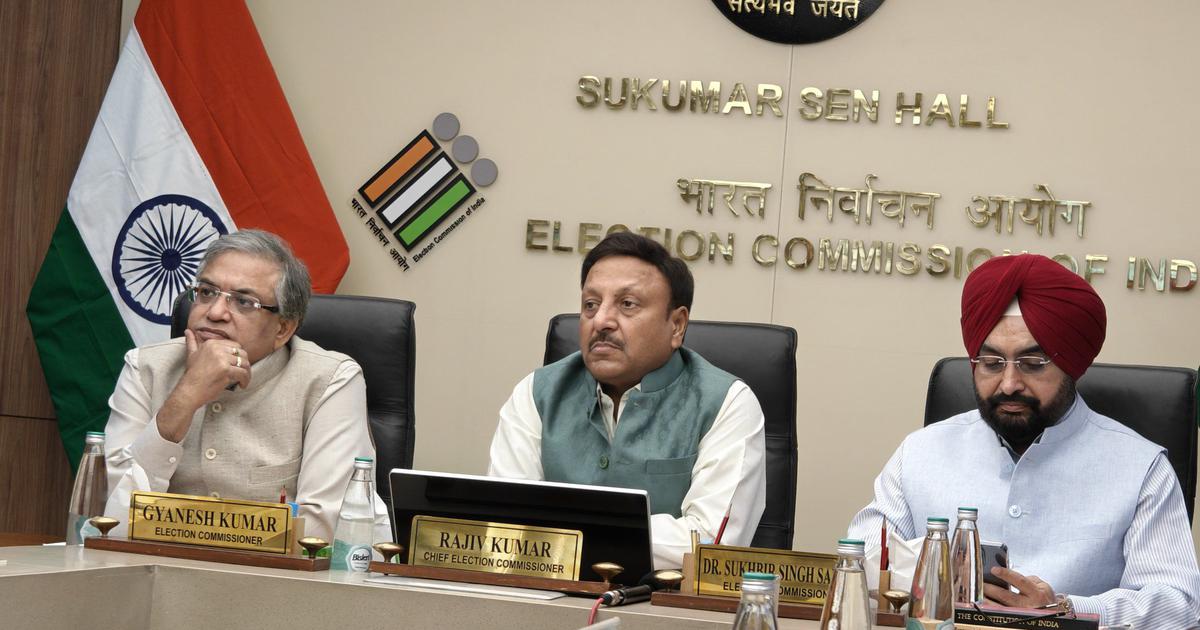
By Dr. Gyan Pathak Election Commission of India’s order of June 24, 2025 for conducting Special Intensive Revision of Electoral Rolls in Bihar violates its core constitutional responsibility, and is contrary to the well-defined protocol and procedure, and hence whimsical. In the note explaining the process of annual revision/updation of electoral rolls, the ECI has […]


Circular textiles at industrial scale: Looper Textile Co. collects, sorts and processes up to 150 million garments annually for reuse and recycling. Digital coordination by Rhenus 4PL: A customized 4PL Control Tower ensures full visibility and efficiency across the logistics chain. Strong partnership for sustainability: The joint venture by REMONDIS and H&M Group relies on innovative logistics within the Rethmann Group. SINGAPORE – Media OutReach Newswire – […]

Advertisements

String.com, launched this week by the Pipedream team, allows users to describe in plain English the AI agent they want, and the platform instantly crafts, tests and deploys fully functional agents without the need for manual coding. This marks a milestone in automation and agentic AI, combining natural language input with backend integration to accelerate deployment of intelligent workflows. The platform’s creator, Tod Sacerdoti, explained that String […]

Google has released Gemini CLI, a terminal‑based interface that brings the Gemini 2.5 Pro model directly into developers’ shell environments, offering a powerful AI‑driven coding assistant alongside content generation and research capabilities. Sign‑in with a personal Google account grants users a free Gemini Code Assist licence, entitling them to an industry‑leading free tier of 60 model requests per minute and up to 1,000 requests per day—previously priced around $200/month for equivalent access […]

Sterling’s recent rally has little to do with the UK economy suddenly outperforming expectations. It has everything to do with the dollar falling out of favour. When the pound hit $1.365 this week—its strongest level since early 2022—it was a flashing red signal that international investors are losing faith in the greenback. Let’s not pretend this is about interest rates. The Federal Reserve is still holding firm, […]

TikTok is preparing a standalone version of its app for U. S. users, slated for launch on 5 September 2025, as part of its strategy to comply with the U. S. law mandating a sale or ban of its American operations. The current app will remain functional until March 2026, although officials say this date is subject to change. Under the Protecting Americans from Foreign Adversary Controlled […]

Bitcoin Core developer Jon Atack was briefly arrested in El Salvador this weekend after his neighbour lodged a complaint stemming from a heated dispute over property boundaries. Police detained Atack under a statute protecting women from violence, but released him about an hour later, returning his phone and passport. He described the officers as “professional and friendly”, emphasising the incident was unrelated to his work in cryptocurrency.

Atack, a long‑time contributor to Bitcoin Core and a United States citizen, said the altercation began when he and a neighbour argued over perceived encroachment on property lines. During the exchange, he allegedly used insulting language, prompting the neighbour to report him for “violence against women”—an offence under El Salvador’s Special Comprehensive Law for a Life Free of Violence for Women, introduced in 2012.

Law enforcement briefly held Atack. He posted on X that officers confiscated his phone and passport, which he said cut him off from communication. The neighbour’s allegation triggered the arrest, which could have led to imprisonment according to the law invoked. However, no charges were formally pressed, and he was released within the hour.

Atack explained the conversation escalated when he referred to the neighbour as “stupid”, a comment she perceived as aggressive. Under local defamation statutes, such insults can carry severe legal consequences, including up to eight years in prison.

Communication from the Bitcoin community amplified concern over Atack’s detainment. Prominent developers expressed support on social media, viewing the suspension of his civil liberties—even temporarily—as disproportionate to the circumstances. One post highlighted that the law in question is often criticised for its broad and punitive scope.

The incident has reignited debate in the crypto ecosystem regarding legal vulnerability when community figures travel abroad. Advocates argue that Atack’s detainment underscores the importance of cultural and legal awareness for global actors, particularly in jurisdictions known for rigorous enforcement of social protection measures.

El Salvador’s government has actively positioned the country as a beacon for Bitcoin regulation since adopting the cryptocurrency as legal tender in 2021. Yet critics have argued that reliance on strict social legislation could introduce uncertainty for international visitors, investors and developers. Atack’s predicament brought this into stark focus, especially as he noted the incident was rooted in personal disagreement rather than political or financial motivations.

During the brief detention, Atack described the authorities as courteous, with one officer telling him he “might have to stay in jail”, but ultimately releasing him after confirmation that no threats had been made. He said he was relieved and treated fairly, though the experience left him shaken.

Atack is now back with his belongings and resuming his work, having reaffirmed his gratitude online. He wrote: “This was the first time I’ve been in cuffs and God willing also the last time.”

Legal experts in El Salvador note that the LEIV law was intended to address a persistent issue of gender‑based violence. However, its application to verbal altercations—including insults—has drawn criticism as overly broad. The law’s defenders argue that it safeguards women’s dignity, while detractors claim it grants excessive prosecutorial discretion over matters that could be resolved civilly.

The crypto community is watching closely as this story unfolds. For developers and investors engaged in global travel, Atack’s experience serves as a cautionary tale about how social and legal norms interact with professional mobility. While El Salvador markets itself as a forward‑looking nation for digital assets, Atack’s case suggests that everyday disputes can escalate swiftly under local statutes.

Atack has no ongoing legal proceeding and intends to remain in the country. He said his focus remains on his Bitcoin Core contributions, and he expressed hope that the episode would spur discussion over legal clarity for international tech practitioners operating under unfamiliar jurisdictions.

Observers stress that Atack’s swift release and the respectful treatment he received may reflect positively on the impartiality of Salvadoran law enforcement. Yet, they also warn that the preventive seizure of personal documents and potential for detention highlight essential areas for legal and diplomatic safeguards to protect visiting professionals.

Elon Musk stated that his newly formed America Party will officially support Bitcoin, branding traditional fiat currency as “hopeless.” He responded succinctly on X to a user asking whether his party would embrace the flagship cryptocurrency: “Fiat is hopeless, so yes.” Musk’s announcement aligns with the party’s broader platform of fiscal conservatism, deficit reduction and modernisation of government, which is packaged alongside calls for balanced budgets and […]

TAIPEI, TAIWAN – Media OutReach Newswire – 7 July 2025 – National Taiwan Normal University (NTNU), one of Taiwan’s most prestigious public universities, has announced a call for public nominations for its 15th President. The nomination period runs from July 7 to August 11, 2025. NTNU has announced a call for public nominations for its 15th President. The nomination period runs from July 7 to August 11, […]

KUALA LUMPUR, MALAYSIA – Media OutReach Newswire – 7 July 2025 – Kenanga Investment Bank Berhad (“Kenanga Group” or “The Group“), Malaysia’s no. 1 issuer of structured warrants, proudly announces the launch of its first-ever Hang Seng China Enterprises Index (“HSCEI“) structured warrants – HSCEI-CAA and HSCEI-HBA – and Hang Seng TECH Index (“HSTECH“) structured warrants – HSTECH-C30 and HSTECH-H27 – under its flagship brand, NagaWarrants by […]

Dubai’s Roads and Transport Authority has formalised a Memorandum of Understanding with Pony. ai to commence pilot trials of self‑driving vehicles across the emirate later this year, laying the foundation for a fully driverless commercial service by 2026. The agreement marks a pivotal milestone in Dubai’s Smart Self‑Driving Transport Strategy, which aims to convert a quarter of the city’s journey volume into autonomous mobility by 2030. Senior […]

KUALA LUMPUR, MALAYSIA – Media OutReach Newswire – 7 July 2025 – For many traders, one of the main concerns when choosing a financial broker is the risk of falling victim to various shady tricks. The experts at Octa, a globally regulated and trusted broker since 2011, explain some of the questionable practices that traders must look out for when planning their journey in the markets. Trading […]

President Vladimir Putin has asserted that Russia provided crucial support to the American colonists during their fight against Great Britain, claiming it supplied weapons and financial assistance to back their independence struggle. Speaking in a phone conversation with former President Donald Trump, Putin described Russia’s involvement as part of an “actual” effort to help the fledgling United States. Putin’s declaration places the spotlight on historical narratives amid […]

Toncoin has unveiled a trailblazing ten-year Golden Visa programme in collaboration with the United Arab Emirates, allowing high-net-worth crypto investors to secure long-term residency by staking TON tokens. Applicants must commit US $100,000 worth of TON for a fixed period of three years and pay a one-time processing fee of US $35,000. The staked assets remain under holders’ control in a decentralised smart contract and may be withdrawn in full at the end of the lock‑in term.

Approved applicants are expected to obtain a ten-year residency permit within approximately seven weeks, considerably faster and more cost-effective than traditional real estate investment routes that often require more than US $500,000. Visa privileges extend to spouses, children and parents, subject to standard government charges. During the lock‑in period, investors can benefit from annualised returns estimated between 3–4 per cent.

This marks the UAE’s first blockchain‑native residency initiative, reflecting a strategic shift towards attracting high‑calibre digital‑asset investors. By tying long‑term staking of TON to visa access, the initiative aims to fortify the TON network via sustained investment while reinforcing the UAE’s reputation as an innovative, crypto‑friendly jurisdiction.

Experts suggest this move may herald a new model of residency-by-investment, linking public policy with decentralised finance. It could prompt other nations to pursue blockchain‑based residency pathways, reshaping global strategies in investment migration.

The programme addresses legal and regulatory concerns: staking occurs through a decentralised smart contract verifiable on the TON blockchain, and all application and staking procedures take place exclusively via Toncoin’s official website to protect against fraud.

For participants, the appeal lies in combining stable residency with liquidity and yield. Unlike property‑based Golden Visas—which demand large capital and tie up assets—the TON pathway offers asset flexibility. Investors retain control of their tokens, receive modest returns, and avoid holding illiquid real estate.

The partnership arrives at a critical stage for both parties. The TON network is actively seeking to expand its user base and institutional credibility, while the UAE continues to promote itself as a global hub for digital asset innovation. Leveraging the visa incentive may draw both high‑net‑worth individuals and entrepreneurial crypto talent to contribute to the local blockchain ecosystem.

Initial market response has been positive. TON’s price reportedly rose by around 5 per cent following news of the partnership, signalling investor optimism about both demand for TON and confidence in the UAE’s adoption strategy. Trading volume also spiked, indicating intensified market activity around the token.

Analysts caution, however, that crypto‑volatility could affect returns. The estimated 3–4 per cent APY depends on token price stability during the staking period. A significant market downturn could erode incentive value, potentially discouraging participants.

Long‑term credibility will hinge on seamless visa processing and continued operational transparency. While seven‑week approval is promising, execution must consistently match the timeline. The emphasis on official platforms and smart‑contract security aims to build user trust, but the unknown remains whether demand will justify sustained asset flow into staking.

Backers of the initiative view it as a strategic alliance between public sector and crypto innovation. The UAE gains by attracting financial and intellectual capital; TON benefits from enhanced staking support and elevated legitimacy. The broader blockchain community may see this as a template for combining financial incentives with regulatory alignment.

Dubai and Abu Dhabi have emerged as epicentres of a pioneering surge in electric air taxi trials, with two leading US firms—Joby Aviation and Archer Aviation—making significant strides toward establishing urban air mobility networks in the Emirates. Both pilots mark landmark achievements in eVTOL technology, underscoring the UAE’s ambition to lead the field by the mid-2020s.

Joby Aviation achieved a milestone in Dubai by completing its first manned transition flights. The aircraft executed full vertical take‑off, horizontal cruising and vertical landing sequences, signalling readiness for commercial operations as early as 2026. With a range reaching 160 km and cruise speeds up to 320 km/h, these flights demonstrate capability to transform journeys such as those between Dubai International Airport and Palm Jumeirah—cutting travel time from 45 minutes by road to around 12 minutes by air. Joby’s entry follows a six-year exclusivity agreement with Dubai’s Roads and Transport Authority, aligned with infrastructure build-out including a vertiport at DXB.

Almost simultaneously in Abu Dhabi, Archer Aviation conducted its inaugural test flight of the Midnight eVTOL at Al Bateen Executive Airport. The design, a carbon‑fibre‑skinned craft powered by multiple independent motors and battery packs, was evaluated under extreme climate conditions—high temperatures, humidity and dust—to validate UAE‑specific operational readiness. Emirati authorities, including personnel from the General Civil Aviation Authority, Abu Dhabi Investment Office and Abu Dhabi Airports, observed the flight, reinforcing the regulatory support behind the project.

Archer is impressively backed by institutional investors and strategic partnerships, having raised nearly US$2 billion, including funding from Stellantis, United Airlines and Abu Dhabi’s 2 Point Zero, positioning it well to deploy a “Launch Edition” fleet of air taxis in Abu Dhabi in early 2026. Its Midnight aircraft can accommodate one pilot and four passengers, reach speeds of up to 240 km/h, and recharge rapidly between Flights.

Dubai and Abu Dhabi’s dual-hosting of these test flights underscores a competitive yet complementary approach to cultivating the UAE as a global urban air mobility hub. Joby holds exclusive Dubai rights, while Archer has pledged infrastructure investment in Abu Dhabi, including converting facilities like the Cruise Terminal helipad into dual-use vertiports. Both firms enjoy the government‑backed Smart and Autonomous Systems Council and its SAVI cluster as key enablers.

Challenges persist: both operations require final regulatory approvals, sustainable vertiport rollout, and demonstration of consistent performance under harsh environmental conditions. Financial markets have already factored in execution risks; for example, Morgan Stanley moderated its price target for Joby amid aerospace supply-chain pressures. Yet ambitions remain bold. Joby is advancing FAA certification and aims to launch in other global markets, such as New York and Los Angeles, once Dubai begins operations. Meanwhile, Archer is linking global playbooks, forming networks with United Airlines and gearing for Olympic deployment in Los Angeles.

As both eVTOL manufacturers drive testing deeper into summer, UAE regulators are working in parallel to issue flight clearances. Joby’s vertiport in Dubai is set for Q1 2026 completion, while Aviation Authorities in both emirates coordinate type certifications.

The nation’s progressive embrace of air taxis represents a strategic leap in sustainable urban transit. Quiet, electric, zero-emission profiles align with broader UAE clean‑tech objectives. With ambitions to integrate these vehicles into daily commutes, airport shuttles and even rescue missions, policymakers are betting on airborne mobility becoming a normalised, accessible element of future transport regimes.

Finance ministers from the BRICS nations have pressed the International Monetary Fund to adopt sweeping reforms that would recalibrate its governance and better represent developing economies. They jointly advocated for a modernised quota formula, increased voting power for emerging and low-income countries, and the installation of a merit-based leadership system, rather than the customary European-led management. Meeting in Rio de Janeiro ahead of the BRICS summit, ministers […]

A landmark regulation issued by the UAE General Civil Aviation Authority introduces the world’s first official framework enabling electric Vertical Take-Off and Landing aircraft and conventional helicopters to operate interchangeably using the same infrastructure. This innovation positions the nation at the forefront of the global Advanced Air Mobility revolution, merging cutting-edge technology with established aviation systems. At the heart of this framework lies the decision to permit […]

Abu Dhabi Securities Exchange has opened the pricing stage for the first blockchain-based digital bond in the Middle East and North Africa, issued by First Abu Dhabi Bank and powered by HSBC Orion, marking a significant leap in regional capital market innovation. Global investors will be able to participate through accounts at the Central Moneymarkets Unit in Hong Kong, Euroclear, Clearstream or via HSBC Orion, either directly or through […]

Abu Dhabi, Dubai – The United Arab Emirates has climbed to second place in the 2025 VisaGuide Digital Nomad Visa Index, surpassing established destinations such as the Bahamas, Hungary, and Montenegro, and trailing only Spain. This ascent reflects the UAE’s strategic pivot from an oil-driven economy to a digital-first global destination, underpinned by technological infrastructure, favourable tax regimes, and quality of life enhancements.

With a score of 4.48 out of 5, the UAE trails Spain’s top score of 5.00 on the index. VisaGuide’s assessment considered six key factors: cost of living, visa income thresholds, taxation policies, internet connectivity, healthcare provisions, and tourism appeal. Among these, the UAE excels particularly in internet speed—the highest among index participants—and its zero income tax environment.

Industry experts highlight the UAE’s Virtual Working Programme as central to its success. The visa requires applicants to demonstrate a monthly income of at least USD 5,000, but offers long-term stability with a one-year renewable visa and a pathway to tax residency after 183 days of occupancy. As a result, the nation is increasingly perceived as a strategic location for professionals seeking financial efficiency and high-speed connectivity.

Beyond the index metrics, the UAE has invested heavily in public–private partnerships aimed at improving urban liveability. Smart city initiatives in Dubai and Abu Dhabi have brought upgrades to healthcare, public transport, cultural amenities, and green spaces—features that cater to both expatriates and nomads. Local business leaders report rising demand for flexible work hubs, with coworking operators expanding operations across the emirates to accommodate this new demographic.

At the same time, the nation’s positioning as a global events centre—hosting high-profile conventions, sporting events and art exhibitions—has enhanced its appeal. The UAE now markets itself as a lifestyle destination which balances professional infrastructure and cultural vibrancy.

Global digital nomad trends further bolster the UAE’s rise. Industry reports suggest there are now between 40 and 80 million digital nomads worldwide, with significant proportions working in full-time remote positions. The majority are aged between 25 and 44, well-educated, and drawn to locations offering work–life synergies, cost-efficiency and mobility—all areas where the UAE measures strongly.

Nevertheless, some critique remains. The USD 5,000 income requirement places the UAE out of reach for lower-earning nomads, in contrast to more accessible programmes in Eastern Europe or Latin America. That said, proponents argue the premium threshold aligns with the UAE’s higher cost of living and positions the country as a destination for highly skilled professionals capable of contributing to its Vision 2030 economic diversification goals.

VisaGuide’s shift in ranking—from fourth place in 2023 to second in 2025—signals a rapidly evolving policy landscape. Since launching the Virtual Working Programme in mid-2021, the government has continued refining visa issuance processes, digitising applications, and exploring expanded visa durations and multi-entry permits. Such developments are likely to reinforce the UAE’s standing as a top-tier remote-work hub as demand continues to grow.

Looking ahead, rising competition from Spain and Montenegro—which offer lower income thresholds and EU access—suggests the UAE must maintain its digital edge. Experts recommend continued investment in affordable living solutions, broadband enhancements, and nomad-focused community services. The introduction of satellite cities and regional hubs is also under consideration to spread digital infrastructure beyond the emirate centres.

For aspiring nomads plotting their next move, the UAE’s rapid climb sends a clear message: remote work is no longer tethered to temperate climates or journey-to-work simplicity. With its borderless toolkit—tax freedom, connectivity, modern urbanism—it has repositioned itself as a compelling alternative to traditional European destinations.

VISHNU RAJA
RYO YAMADA
HITORI GOTOH
IKUYO KITA