News related to
unit

Arabian Post Staff -Dubai Ajman Real Estate Investment Exhibition 2026 recorded 344 property transactions worth AED226 million on its third day, as visitor numbers reached 6,936 at Emirates Hospitality Hall. The figures were announced as the fourth edition of the exhibition continued in Ajman on Wednesday, with the Ajman Land and Real Estate Regulation Department citing strong participation from investors, developers and property specialists. The event had […]

Arabian Post Staff -Dubai The UAE has ranked first in a new global tax optimisation index assessing 48 jurisdictions for internationally mobile individuals, driven by its lack of personal income, wealth and inheritance taxes and a 5 per cent value-added tax. The study by Global Citizen Solutions’ Global Intelligence Unit gave the UAE a composite score of 82.7 out of 100, narrowly ahead of Antigua and Barbuda […]

Arabian Post Staff -Dubai Yemen’s Houthis claimed on Wednesday that they had shot down a Saudi F-15 fighter jet over Marib governorate, an assertion that would mark a significant escalation in the renewed fighting between the group and Saudi Arabia if independently confirmed. Houthi military spokesman Yahya Saree said the aircraft was hit while conducting operations over Marib and was brought down by what he described as […]

Huawei Technologies has laid out plans to launch two new artificial intelligence processors in 2027, strengthening its push to supply the computing power China needs as US export controls restrict access to Nvidia’s most advanced chips.

Rotating chairman David Wang said at Huawei Connect 2026 in Shanghai on Thursday that the company plans to release the 960DT in the first quarter of 2027 and the Ascend 960PR in the third quarter. The roadmap places Huawei’s next generation of accelerators at the centre of its effort to build domestic alternatives for training and running increasingly demanding AI models.

Huawei also unveiled the Ascend 960 SuperPoD and an upgraded version of its UnifiedBus interconnect technology, designed to link large numbers of processors so they can function as one computing system. The company said a combination of UnifiedBus and its Hi-ONE optical system could connect as many as 4,000 processors within a SuperPoD, extending high-speed optical links deeper into the machine.

The strategy reflects a broader shift towards system-level performance rather than relying solely on the capability of individual chips. Advanced AI workloads require thousands of processors to exchange data rapidly, making networking bandwidth, memory access and cluster efficiency increasingly important alongside raw chip performance.

Wang said Huawei has developed 11 semiconductors based on UnifiedBus technology for use across its large computing systems. Its biggest planned superclusters will be able to support up to one million AI processors, he said, while the company has already shipped more than 1,000 smaller supernodes to more than 370 customers.

Huawei did not identify those customers or give a detailed breakdown of shipments. It also did not provide independently verified benchmarks directly comparing the new 960-series chips with Nvidia’s leading accelerators, leaving questions over single-chip performance, software compatibility and manufacturing scale.

The company had previously said the Ascend 960 would offer twice the computing power, memory capacity, memory bandwidth and interconnect ports of the Ascend 950 generation. Huawei has also been developing the Atlas 960 SuperPoD and SuperCluster, with the larger system intended to combine more than one million neural processing units when it reaches the market.

Huawei’s current product roadmap also includes the Ascend 950DT, due in the fourth quarter of 2026. The company has said that processor will use its HiZQ 2.0 high-bandwidth memory, providing 144 GB of capacity and 4 terabytes per second of bandwidth. Those specifications are intended to support both model training and the decode stage of inference workloads.

US restrictions have limited China’s access to cutting-edge Nvidia processors and advanced semiconductor manufacturing equipment, giving domestic suppliers greater room to expand. Huawei has emerged as the most prominent of those suppliers, but Nvidia retains a major advantage through its CUDA software ecosystem and a broad global developer base.

Chinese AI developers have increasingly turned to domestic accelerators for inference, where trained models generate responses, even as many frontier laboratories continue to depend on Nvidia hardware for the most demanding training jobs. That split has made Huawei’s ability to improve both hardware and software a critical test of whether China can reduce its dependence on foreign computing infrastructure.

Huawei is also contending with shortages of high-bandwidth memory, a key component in AI accelerators. The company has designed memory for some newer Ascend products, but supply constraints across the industry have increased costs and complicated efforts to scale production quickly enough to meet demand.

The group is seeking to offset those limitations through architectural changes, advanced packaging, optical networking and tighter integration between chips, systems and software. Its SuperPoD approach is intended to compensate for weaker performance from individual processors by allowing much larger numbers of chips to work together with lower latency.

Houthi forces in Yemen are experimenting with advanced maritime weapons, including possible “loitering torpedoes”, as evidence points to efforts to expand their arsenal and reduce dependence on imported systems. Conflict Armament Research said investigators had identified navigation modules and propellers that could be used in such torpedoes, technology it has not documented in the possession of any other armed group. The organisation said the components could allow […]

Salesforce has launched AIforce, a new interface layer designed to let workers and artificial intelligence agents use live customer relationship management data, workflows and permissions from tools including Claude, Slack and Amazon Quick without opening the Salesforce application. Unveiled at Dreamforce 2026, AIforce exposes Salesforce data, business logic, semantic context, actions and governance through open interfaces while retaining the access controls already configured by customers. Salesforce said […]

A US federal judge has ordered Elon Musk’s X Corp and SpaceXAI to disclose any agreement behind their resolution of antitrust claims against Apple, even as the companies press ahead with the same lawsuit against OpenAI. Judge Mark Pittman of the US District Court for the Northern District of Texas directed X and SpaceXAI to provide the court with any agreement or combination of agreements with Apple […]

Advertisements

Arabian Post Staff -Dubai Oil prices fell on Wednesday after Saudi Arabia offered additional crude cargoes to Asian refiners through Oman, easing fears that Middle East disruptions would remove more barrels from the market. Brent crude settled $2.92, or 2.7 per cent, lower at $105.83 a barrel, while US West Texas Intermediate dropped $3.40, or 3.2 per cent, to $102.43. The decline followed a rally driven by […]

BERLIN, GERMANY – Media OutReach Newswire – 17 September 2026 – At IFA 2026, Midea’s Fabric and Floor Care division presented its latest innovations in laundry and floor-cleaning technologies themed at “Zoned Care, Omni Clean”.

Midea Builds on IFA 2026 Momentum with Wider Vision for Home Care

With the Omni Trio washing machine and AT8 Ultra wet-and-dry floor cleaner as key highlights, the showcase addressed a wide range of everyday home-care challenges, including separate laundry care, noise and vibration reduction, stubborn stain removal and the cleaning of tangled hair from floors.

During the exhibition, the products drew attention from German technology and smart-home media and also received recognition from industry bodies. The showcase innovations were honoured with the YD Best Design Award, while the Omni Trio received VDE A-10% low-noise certification, highlighting Midea’s continued strengths in both industrial design and product engineering.

Two Products, One Home-Care Direction

The Omni Trio brings a different approach to laundry separation. Its three independently operated drums—a 10 kg main drum and two 0.5 kg smaller drums—allow different loads to be washed separately at the same time. Everyday clothing, baby garments, socks and underwear can be handled without waiting for one cycle to finish before starting another.

Independent water inlets and Auto Dose systems, Foam & Flow DualSpray technology and low-noise performance support the same objective: making categorized laundry care easier to integrate into daily routines.

For floor care, the AT8 Ultra addresses another set of frequent cleaning tasks. Its technologies include Easy Foam cleaning, 60°C hot water on demand, a mechanical arm for improved water pickup, anti-tangle technology, and automated roller cleaning and drying. Each targets a practical issue, whether it is a stubborn stain, residual water or hair wrapped around the roller.

Together, Omni Trio and AT8 Ultra demonstrate how “Zoned Care, Omni Clean” extends beyond individual product features. Different cleaning tasks call for different solutions, and Midea FFC is applying its experience across laundry care and floor cleaning to address these needs with greater precision.

From European Needs to Global Development

IFA 2026 also provided Midea with an opportunity to observe how these innovations respond to expectations in the European market, where quieter operation, efficiency, flexibility and ease of use remain key considerations for home appliances.

These local insights also contribute into Midea FFC’s global product development. Learnings from different markets help shape technologies that can be adapted to diverse homes, daily routines and cleaning habits.

For the home-care category, the next stage of innovation is not simply adding more functions. It is about enabling appliances to better understand and handling specific household tasks, with greater automation and less effort from the user. For Midea FFC, the response at IFA 2026 offers a valuable reference point as the company continues to develop home-care technologies for markets around the world.

Hashtag: #Midea #OmniTrio #AT8Ultra

The issuer is solely responsible for the content of this announcement.

ABOUT MIDEA & MIDEA GROUP

Midea is a global technology company specializing in smart home appliances, climate solutions and floor-care technologies, with a focus on user-centric design, energy efficiency and sustainable innovation.

Nigeria’s fixed-income market appears to be crossing an important threshold. For much of the past two years, yields were principally shaped by a familiar combination of aggressive government borrowing, restrictive monetary policy and investors demanding substantial compensation for inflation and currency risk. That hierarchy is changing. AAG Capital argues that liquidity is becoming the more powerful force behind pricing, potentially pushing government yields lower even while fiscal […]

Greenlogue/AP Aldar Properties and Mubadala Investment Company have jointly acquired Masdar City Square for Dh918 million, expanding their income-generating real estate portfolio in Abu Dhabi’s Masdar City to Dh4.7 billion. The acquisition was completed through the real estate joint venture established by the two Abu Dhabi groups in 2024. Masdar City Square comprises more than 47,000 square metres of net leasable space across seven office buildings and […]

Washington’s rare purchase of Japanese yen has put currency intervention, US Treasury stability and global risk appetite into the same market equation, with implications extending to bitcoin and other digital assets. The US Treasury joined Japan on July 31 in buying yen to counter what Tokyo described as excessive volatility and disorderly moves in the currency. Japan’s Ministry of Finance confirmed the coordinated operation on August 3, […]

Publicly listed Bitcoin miners fell below cash breakeven as a group in the second quarter, with their weighted average pre-tax production cost reaching about $75,500 per coin against Bitcoin’s quarter-end price of $58,400. The gap of roughly $17,100, or 29%, marked a sharp deterioration in industry economics during the three months to June, according to a new sector review by digital-asset investment group CoinShares. The report said […]

Protests over surging fuel costs widened across several countries on Wednesday as crude oil remained above $100 a barrel, pushing diesel and petrol prices higher and forcing governments to confront growing public anger over the economic fallout from the Middle East conflict. French fishermen blocked the Frontignan fuel depot near Sète, a day after a similar action at Fos-sur-Mer near Marseille, demanding relief from fuel costs and […]

Saudi warplanes struck Houthi positions across Yemen on Wednesday as the Iran-aligned movement pressed territorial gains along the Red Sea coast and widened attacks on Saudi targets, intensifying a new front in the Middle East war. Houthi military spokesman Yahya Saree said Saudi aircraft had carried out as many as 450 strikes during the week. Officials from Yemen’s internationally recognised government acknowledged that their forces and Saudi […]

More than 11.6 million cryptocurrency tokens stopped trading in 2025, an unprecedented annual total that accounted for 86.3% of all failures recorded by CoinGecko’s GeckoTerminal dataset between mid-2021 and the end of last year. The figure marks a steep acceleration from 2024, when 1,382,010 projects were classified as failed, and highlights the fragile economics of a market flooded with easily created tokens, particularly meme coins. CoinGecko counted […]

HONG KONG SAR – Media OutReach Newswire – 16 September 2026 – Hong Kong’s Chief Executive, John Lee, today (September 16) announced his fifth Policy Address, putting forward a series of measures to create development opportunities and enhance the well-being of the people.

image-1.jpeg

“This year marks the opening year of the National 15th Five-Year Plan. In the thick of accelerating global changes not seen in a century, the vibrant momentum driven by our country’s robust strength, enormous market and high-quality development presents Hong Kong with boundless opportunities. We will better develop our economy and boost social well-being, starting a bright new chapter for Hong Kong,” Mr Lee said.

Entitled “A Strategic Vision for a Bright New Era, Driving Reform and Boosting Development, Unleashing Opportunities and Enhancing Livelihood”, the Policy Address takes the First Five-Year Plan for Economic and Social Development of the Hong Kong Special Administrative Region (2026-2030) (Hong Kong’s First Five-Year Plan) as its blueprint, and proposes numerous key measures focusing on five major development opportunities to advance high-quality development.

To attract and retain high-calibre talent, the Hong Kong Special Administrative Region (HKSAR) Government will expedite the development of the Northern Metropolis University Town to strengthen the city’s position as an international education hub. The HKSAR Government will also increase the research postgraduate places by around 30 per cent and the quota for government scholarships by 200, and establish five new major academies for training international talent: the International Clinical Trial Academy, Maritime Academy, Hong Kong International Legal Talents Training Academy, Hong Kong Intellectual Property Academy and Hong Kong International Academy of Policing.

To promote industry development, the Policy Address proposes to accelerate development of an international gold trading market and to explore a proposal to provide tax concessions for qualifying activities within the gold and commodity trading ecosystem. The HKSAR Government will also announce details of the new Renminbi-denominated and physically settled gold futures contracts; explore the possibility of increasing the Exchange Fund’s gold holdings, and gradually transfer its physical gold holdings to designated vaults appointed by the Hong Kong Precious Metals Central Clearing Company Limited.

A number of policies are proposed to promote industry development, including introducing specialty insurance (e.g. commodity, commercial aerospace, etc.); injecting funding into the Artificial Intelligence Subsidy Scheme to support the development of the intelligent computing industry; accelerating the adoption of medical innovation and industry chain development to enable the public to benefit from better and newer drugs; and fostering a new economic landscape for the low-altitude and emerging industries, such as commercial aerospace.

The Government is developing six special industry parks, including the Loop Hong Kong Park, San Tin Technopole, Hung Shui Kiu Industry Park, Sandy Ridge Data Facility Cluster and Hung Shui Kiu/Ha Tsuen modern logistics cluster. Land is also earmarked for building an advanced construction industry park to increase investment opportunities for enterprises.

To attract enterprises to establish a foothold in Hong Kong, tax concessions will be granted on the basis of the value brought by enterprises, instead of solely considering the industry sector. The Government will introduce an amendment bill this year, providing preferential tax rates of 5 per cent, or half-rate, for selected enterprises operating in key sectors such as finance, advanced manufacturing, innovation and technology, as well as research and development, headquarters activities and logistics and supply chain management.

The HKSAR Government will fully support the work of the International Organization for Mediation headquartered in Hong Kong, and build a global capital of mediation. It will also drive the establishment of the International Institute for the Unification of Private Law in Hong Kong, support the Judiciary to advance the development of the International Commercial Court, and establish the “Strategy Committee on Intellectual Property Trading Development” to assist the Government in formulating strategies and support measures for the promotion of intellectual property trading.

Regarding international co-operation, two United Nations (UN) organisations, the centre of excellence on global advanced manufacturing and the Office on Drugs and Crime’s GlobE Network Asia Pacific Regional Bureau, will establish their presence in Hong Kong respectively. Elsewhere, the new WestK Performing Arts Centre, scheduled to open next year, will feature four performance venues built to the highest international theatre standards, while Asian and international sports associations will be encouraged to establish a presence in Hong Kong.

“Today, Hong Kong is at a critical juncture in advancing from stability to prosperity. We are fully aware that formulating a comprehensive, strategic roadmap is integral to our long-term development. The Government has been persistent in mapping our way by driving development through reform. The primary goal of our policies is to enable economic development that can benefit the people of Hong Kong, and meet their aspirations for a better life,” Mr Lee said.

Please visit www.policyaddress.gov.hk for the details and key points of the Policy Address.


Hashtag: #HongKong #PolicyAddress #Strategic #Vision #NewEra


The issuer is solely responsible for the content of this announcement.

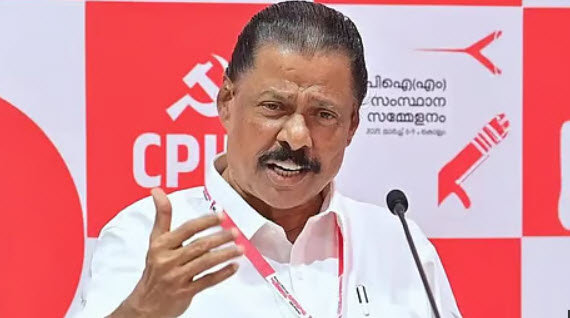
By P. Sreekumaran THIRUVANANTHAPURAM: A big salute to the CPI(M)’s lower-level leaders and the party cadres. For, it was their bold, open and trenchant criticism of the leadership which forced the party to go for a change for the better. The party’s central leadership, ably led by general secretary M. A. Baby, also deserves full […]

The article Kerala CPI-M in self-critical, corrective mode at three-day conclave appeared first on Latest India news, analysis and reports on Newspack by India Press Agency).

Yemen’s Houthi movement said on Wednesday that it had shot down a Royal Saudi Air Force F-15 fighter jet over Marib province, a claim that Saudi authorities had not confirmed and that could not immediately be independently verified. Houthi military spokesman Yahya Saree said the aircraft was brought down with a locally manufactured surface-to-air missile while conducting what he described as hostile operations over Marib. He gave […]

Payward, the parent company of cryptocurrency exchange Kraken, is pursuing a route to offer US traders perpetual futures linked to Hyperliquid’s HYPE token, but publicly available regulatory and Kraken product information indicates the proposed expansion has not yet been confirmed as a live US offering. The move would broaden Payward’s regulated derivatives business and give eligible American customers exposure to one of the crypto market’s most actively […]

HONG KONG SAR – Media OutReach Newswire – 16 September 2026 –

Response by KK Chiu, International Director, Chief Executive, Greater China, Cushman & Wakefield:

Optimising the Housing Ladder and Improving Living Conditions

We welcome the Government’s commitment to increase housing supply, shorten the Composite Waiting Time for public rental housing and further strengthen the housing ladder. The adoption of a long-term housing supply framework comprising 40% public rental housing, 30% subsidised sale housing and 30% private housing, together with the delivery of approximately 196,000 public housing units over the next five years, will provide a clearer housing and homeownership pathway for different income groups.

We believe that increasing the supply of subsidised sale housing and enhancing the housing ladder will help more public housing tenants progress towards homeownership, accelerate housing mobility and enable families with genuine housing needs to gain access to public housing more quickly.

We support the Government’s efforts to increase public housing supply, continue the Light Public Housing programme and implement the Basic Housing Units regime in an orderly manner to phase out substandard subdivided units. This approach is consistent with our long-held view that increasing housing supply is the fundamental solution to improving inadequate housing conditions. With the Government targeting the resolution of substandard subdivided units in domestic buildings by 2030, we expect living conditions for grassroots households to improve progressively.

Urban Renewal Incentives

We support the Government’s more flexible approach to urban renewal, including transferable plot ratio arrangements and measures to unlock redevelopment potential. These initiatives will help enhance market participation, accelerate renewal in areas with pressing redevelopment needs and contribute to overall housing supply growth. We recommend the Government provide clearer guidance on application requirements and further streamline cross-departmental approval procedures to facilitate implementation.

Advancing the Yacht Economy

We welcome the Government’s continued efforts to promote the yacht economy. Beyond increasing marina berth supply and enhancing supporting infrastructure, we believe it is equally important to further facilitate cross-boundary initiatives, allowing greater mobility of yachts within the Greater Bay Area and fostering regional collaboration.

As more superyachts and high-net-worth visitors arrive in Hong Kong, demand is expected to rise across luxury tourism, hospitality, food and beverage, retail, marine services and waterfront commercial facilities, helping unlock the economic potential of Hong Kong’s coastline and island resources. At the same time, Hong Kong has the potential to develop a more comprehensive marine industry ecosystem encompassing yacht repair and maintenance, refitting services and specialised professional services. The development of a holistic marine services value chain will further strengthen Hong Kong’s competitiveness as a regional and international yachting hub.

Response by John Siu, Managing Director, Hong Kong, Cushman & Wakefield:

Planning Ahead for AI and Data Centre Infrastructure

We welcome the Government’s commitment to accelerate the development of the Sandy Ridge Data Facility Cluster, which is expected to provide computing power equivalent to 36 times Hong Kong’s current capacity by 2032, alongside a HK$1 billion injection into the Artificial Intelligence Subsidy Scheme. These initiatives will provide important support for the development of Hong Kong’s artificial intelligence and data centre sectors, further strengthening the city’s position as a regional digital and innovation hub.

However, with rapid advancements in artificial intelligence, large language models and cloud computing, demand for computing power is expected to grow significantly in the coming years. We believe that, in addition to planning data centre sites, the Government should proactively review long-term requirements for power supply, electricity grid capacity and related infrastructure. As AI adoption becomes more widespread, access to reliable power and supporting infrastructure will be a key factor in maintaining Hong Kong’s competitiveness as a technology and data centre hub.

We support the Government’s stated direction of pursuing “high-efficiency computing power, stable electricity supply and low-carbon transition”. Looking ahead, we recommend that the Government regularly review future demand for land, power supply and supporting infrastructure arising from the growth of artificial intelligence and data centre activities, particularly within the Northern Metropolis and other strategic development areas. A coordinated approach to computing, energy and digital infrastructure planning will help attract more data centre operators and technology companies to Hong Kong, while supporting the city’s long-term development as a regional hub for data and artificial intelligence.

Response to the Budget 2026/2027 by Rosanna Tang,Deputy Managing Director, Head of Research, Hong Kong, Cushman & Wakefield:

Clear Industry Positioning for the University Towns

We welcome the Government’s efforts under Hong Kong’s First Five-Year Plan to further define the positioning of the three university towns in the Northern Metropolis University Town, and are encouraged by its strategy to promote synergy among the university towns, the San Tin Technopole and surrounding industry parks. As the only city in the world with five universities ranked among the global top 100, Hong Kong possesses a strong foundation in higher education and research. At the same time, the San Tin Technopole is set to become a key innovation and technology hub. The complementary strengths of these two pillars, both geographically and strategically, provide a solid foundation for building a globally competitive innovation ecosystem in Hong Kong.

We are particularly encouraged by the Government’s emphasis on integrated industry-academia-research collaboration. The university towns should not be viewed merely as educational developments, but as strategic platforms for research commercialisation, international talent attraction and the cultivation of emerging industries. Closer collaboration among universities, research institutes, innovation and technology enterprises and industry parks will help establish a complete innovation value chain covering talent development, scientific research, technology transfer and industrial implementation.

In addition, the Plan proposes approximately 300 hectares of educational facilities as the core of the university towns, connected with adjacent strategic industry areas, distinctive conservation areas, sports and cultural facilities, and surrounding communities, bringing the overall development footprint to more than 1,000 hectares. Such a large-scale integrated education and industry development model is rare in Hong Kong’s urban planning history and clearly demonstrates the Government’s long-term vision of creating a knowledge-based city cluster and an international education hub in the Northern Metropolis.

Attracting Signature Industry Projects and Anchor Institutions to Enhance the Northern Metropolis’ Global Appeal

We welcome the Government’s efforts to establish differentiated industry positioning through the three university towns, while integrating key development nodes such as the San Tin Technopole, the Hong Kong Park of the Hetao Shenzhen-Hong Kong Science and Technology Innovation Co-operation Zone, the Hung Shui Kiu Industry Park and Ta Kwu Ling. This provides a clearer direction for industrial development in the Northern Metropolis and helps address long-standing market concerns regarding overlapping functions and unclear district positioning.

As highlighted in our previous research, we believe the next critical stage for the Northern Metropolis will be its ability to attract influential anchor institutions and leading enterprises. By bringing together universities, research institutes and industry leaders, Hong Kong can foster the clustering of businesses, talent and capital, gradually forming industry clusters with scale and international competitiveness. Hong Kong should also capitalise on its common law system, international financial centre status, intellectual property protection framework and global talent network by focusing on high value-added segments such as research and testing, intellectual property management, fundraising and listing activities, and international accreditation services. This will help Hong Kong establish an irreplaceable role within the Greater Bay Area industrial value chain.

Beyond strategic industries, we believe the Northern Metropolis could also explore internationally recognised and iconic industry projects to further enhance its global profile and attractiveness. For example, the Government may consider developing initiatives around new energy vehicles, smart mobility and advanced technologies, while exploring the feasibility of internationally recognised racing events, testing facilities or technology R&D platforms, such as those associated with Formula One. By leveraging motorsport-related economic activities and innovation-led development, Hong Kong could attract international automotive manufacturers, mobility technology companies and research institutions to establish regional headquarters, R&D centres or testing facilities in the city. This would in turn support the growth of engineering, intelligent transport, advanced manufacturing, tourism, hospitality, retail and convention and exhibition industries, further enriching the Northern Metropolis industrial ecosystem.

Accelerating Land Supply While Advancing Industries and Infrastructure in Parallel

We note that Hong Kong’s First Five-Year Plan proposes a significant acceleration in land and housing supply within the Northern Metropolis. Residential completions are expected to increase substantially from approximately 11,000 units during 2021/22 to 2025/26 to around 70,000 units during 2026/27 to 2030/31. Over the same period, the supply of “spade-ready sites” will rise from approximately 120 hectares to around 900 hectares, representing an increase of around 7.5 times. These figures demonstrate that the Northern Metropolis is transitioning from a planning and land formation phase to a new stage characterised by large-scale development, industrial implementation and population intake.

However, we believe the success of the Northern Metropolis should not be measured solely by the volume of land or housing delivered. As substantial residential, innovation and technology, and industrial sites come on stream, the focus should gradually shift from land supply to city-building. The Government should ensure the coordinated delivery of railway and cross-boundary infrastructure networks, industry parks, commercial facilities, public services and community amenities, while accelerating the introduction of leading enterprises and strategic industries to create sufficient, high-quality employment opportunities and achieve a genuine jobs-housing balance.

In particular, we believe the Northern Metropolis should be driven by industry-led development, with the San Tin Technopole, the Hetao Shenzhen-Hong Kong Science and Technology Innovation Co-operation Zone, the university towns and major industry parks serving as key growth engines. This would create a virtuous cycle in which industry attracts population, population supports consumption, and consumption drives urban development. Only through the coordinated growth of industry, talent, infrastructure and communities can the Northern Metropolis evolve from a large-scale land development project into a modern metropolitan district integrating industry, education, living and international exchange.

Response by Tom Ko, Executive Director, Head of Capital Markets, Hong Kong of Cushman & Wakefield:

New Opportunities for Student Accommodation Market

We welcome the Government’s initiatives to deepen Hong Kong’s development as an international hub for post-secondary education through the “Hong Kong: Your World-class Campus” campaign, expanded global student recruitment efforts and the extension of the Immigration Arrangements for Non-local Graduates pilot arrangement to graduates from Greater Bay Area campuses of Hong Kong universities. These initiatives will further enhance Hong Kong’s attractiveness to overseas students and talent while reinforcing the “Study in Hong Kong” brand.

We are encouraged by the continued progress of the Hostels in the City Scheme. The scheme has already received 41 confirmed applications, providing approximately 10,800 bed spaces and demonstrating strong market confidence in the long-term growth of Hong Kong’s education sector.

The scheme has opened up a new supply channel for converting commercial buildings into student accommodation. At a time when hotel conversion opportunities are becoming more limited as tourism continues to recover, it provides an alternative pathway for investors while helping unlock the value of underutilised commercial assets and meet rising demand for student housing. As the Government prepares to tender the first dedicated student hostel site, we believe purpose-built student accommodation will gradually emerge as a distinct and scalable asset class within Hong Kong’s real estate market.

To further increase supply, we recommend that the Government continue reviewing and refining approval procedures for student hostel conversions. Greater flexibility and streamlined processes, while maintaining appropriate safety and operating standards, would encourage wider market participation and support Hong Kong’s ambition to become a leading international education destination.

(Click here for high-res pictures)

Hashtag: #Cushman&Wakefield

The issuer is solely responsible for the content of this announcement.

About Cushman & Wakefield

Cushman & Wakefield (NYSE: CWK) is a leading global commercial real estate services firm for occupiers and investors with approximately 53,000 employees in over 350 offices and nearly 60 countries. In Greater China, a network of 23 offices serves local markets across the region. In 2025, the firm reported revenue of $10.3 billion across its core services of Valuation, Consulting, Project & Development Services, Capital Markets, Project & Occupier Services, Industrial & Logistics, Retail, and others. Built around the belief that Better never settles, the firm receives numerous industry and business accolades for its award-winning culture. For additional information, visit or follow us on LinkedIn ().

South Korea will not slow its artificial intelligence drive, Deputy Prime Minister and Science and ICT Minister Bae Kyung-hoon said on Wednesday, arguing that the country must pair rapid development with stronger safeguards rather than curb the technology’s advance.

Bae said South Korea was still trying to close the gap with leading AI powers while creating new markets, making its position different from countries or companies at the technological frontier. “We cannot afford to slow down AI right now,” he wrote on social media, describing the government’s approach as one of “speed responsibility” rather than speed control.

His remarks place Seoul firmly on the acceleration side of a widening debate over whether developers should moderate the pace of capable AI systems. Anthropic chief executive Dario Amodei has called for a slowdown in frontier model development to allow more time for safety work, while OpenAI chief executive Sam Altman and other technology leaders have voiced support for stronger precautions as capabilities advance.

Bae said South Korea should continue expanding research, industrial adoption and home-grown model development while strengthening protections against deepfakes, cyber threats and privacy violations. Faster progress, he said, required safety and trust measures to move at the same pace rather than follow after deployment.

The minister pointed to a broader technology agenda that includes sovereign foundation models, systems capable of processing vision and language, and models able to interact with physical environments. He said the country also needed to prepare for AI becoming deeply embedded across industries and everyday life.

The government has made domestic foundation-model development a central part of its ambition to place South Korea among the world’s top three AI powers. The Ministry of Science and ICT has been running a sovereign AI foundation model programme intended to improve domestic capabilities and reduce dependence on foreign technology.

Three teams led by Upstage, SK Telecom and LG AI Research advanced after the programme’s second-stage evaluation this year. The ministry has said models developed under the initiative were built with comparatively limited resources but were released as open source as part of an effort to expand the domestic AI ecosystem.

Bae indicated that further details on the next phase of the foundation-model programme would be announced after ongoing reviews. His comments also referenced government work on security-focused AI models and frontier systems, alongside an “AI for All” initiative intended to spread adoption across the economy.

The policy push is being developed alongside South Korea’s AI Basic Act, which establishes rules covering both the development of artificial intelligence and the creation of a framework for trust. The law’s stated purpose includes protecting rights and human dignity while supporting quality of life and national competitiveness.

That legal structure gives Seoul a basis for pursuing faster adoption without presenting safety as a separate objective. Bae said competitiveness and sustainability were linked, arguing that development speed and safeguards should advance together.

The global dispute has intensified as leading executives and policymakers weigh the economic benefits of faster AI deployment against concerns over misuse and loss of control. Amodei has proposed independent safety evaluators, coordination among major laboratories and greater international cooperation, while Nvidia chief executive Jensen Huang has argued against slowing technological progress and favours advancing safety alongside innovation.

European Commission President Ursula von der Leyen on Wednesday backed calls for greater caution and said frontier AI laboratories would be invited for talks on managing risks. Meta chief executive Mark Zuckerberg, by contrast, said AI companies already had strong incentives to build systems safely and did not require an industry-wide slowdown.

Bae’s intervention highlights the competitive pressures facing countries outside the United States and China, where most frontier AI investment and model development remains concentrated. South Korea has strong semiconductor and technology industries, but its government has acknowledged the need to strengthen domestic models, computing capacity and commercial adoption to narrow the gap.

US midterm elections are emerging as a fresh policy risk for artificial intelligence-linked stocks as President Donald Trump defends rapid AI development while candidates from both parties respond to widening voter resistance to data centres and calls for tighter safeguards. The political pressure intensified this week after Trump rejected demands for a slowdown in advanced AI development and argued that existing laws and enforcement powers were sufficient […]

India summoned Pakistan’s top diplomat in New Delhi on Wednesday after naval vessels from the two countries collided in international waters of the northern Arabian Sea, escalating friction more than a year after their last military confrontation.

The Ministry of External Affairs said Pakistan’s Charge d’Affaires was called in and a strong protest lodged over what it described as “unacceptable and unprofessional conduct” by Pakistani naval units. The ministry said the conduct led to a collision with a unit of the Indian Navy and urged Pakistan’s authorities to ensure that military units exercise due care and observe existing bilateral agreements.

The collision occurred on Tuesday while a frontline warship from India was conducting what officials described as a routine surveillance mission. Officials from India said a Pakistan Navy vessel approached at high speed before the vessels collided. No major damage was reported, and there was no immediate public statement from Pakistan’s government or military responding to New Delhi’s account.

India also instructed its top diplomat in Islamabad to lodge a similar protest with Pakistan’s Foreign Ministry. The exchange elevated what could otherwise have remained a maritime safety incident into a formal diplomatic dispute between two nuclear-armed neighbours whose military contacts are governed by a series of confidence-building arrangements.

New Delhi said the episode breached a 1991 bilateral agreement covering military exercises, manoeuvres and troop movements. Under that agreement, naval ships and submarines of the two countries are required to remain at least three nautical miles apart in international waters to reduce the risk of accidents. India’s foreign ministry said the Charge d’Affaires had been asked to convey the need for all military units to respect those provisions and prevent a recurrence.

Pakistan had not, as of Wednesday afternoon, issued its own description of the encounter, leaving key operational details — including the precise movements of the vessels before impact — based on India’s official account. No ship names, casualty reports or detailed damage assessments were released publicly by either side.

The incident is the clearest publicly acknowledged military encounter between the neighbours since four days of hostilities in May 2025. That fighting followed an April 22 attack on tourists in Pahalgam, in Jammu and Kashmir, that killed 26 people. India blamed Pakistan for supporting cross-border terrorism, an allegation Islamabad rejected, and the crisis developed into missile, drone and artillery exchanges before both sides announced an understanding to halt the fighting.

Relations have remained strained since then despite the cessation of large-scale hostilities. Diplomatic ties had already been downgraded in 2019 amid disagreements over Kashmir, and neither country currently posts an ambassador in the other’s capital, with missions headed by Charges d’Affaires.

The latest protest focused narrowly on maritime conduct rather than broader political disputes. India’s statement did not announce retaliatory military measures or new diplomatic restrictions, and it called instead for compliance with the bilateral framework designed to prevent accidents between armed forces operating near one another.

The northern Arabian Sea is routinely used by both navies for patrols, exercises and surveillance. The 1991 agreement was intended to create practical safeguards at times of tension, alongside notification procedures for certain military activities. Its distance requirement gives commanders a defined separation standard when vessels or submarines from the two countries encounter each other beyond territorial waters.

The military relationship remains sensitive because both countries maintain forces across the Line of Control in Kashmir and continue to accuse each other of hostile activity. Their 2025 confrontation demonstrated how quickly a security incident can widen across domains, although neither government indicated on Wednesday that the naval collision had triggered wider force movements or changes in military posture.

Tuesday’s collision did not produce the kind of damage that would normally force a ship out of service, according to India’s account. The absence of reported casualties limited the immediate operational consequences, but the diplomatic summons ensured the episode received attention at the highest working level between the two foreign ministries.

VISHNU RAJA
RYO YAMADA
HITORI GOTOH
IKUYO KITA