Germany’s hospitals are accelerating preparations for a potential wartime surge of wounded patients, with military planners warning that a NATO conflict could send hundreds of casualties into the health system each day. The Bundeswehr has built scenarios involving 300 to 1,000 wounded service personnel arriving daily, a scale that would rapidly overwhelm Germany’s five military hospitals and require extensive use of civilian facilities. Military medical planners say […]
SUSE has enabled its enterprise real-time Linux platform for LF Energy’s SEAPATH architecture, giving electricity grid operators and equipment vendors a commercially supported operating system option for virtualised digital substations. The integration, developed with open-source engineering specialist Savoir-faire Linux, combines SUSE Linux Enterprise Real Time with Kernel-based Virtual Machine, or KVM, virtualisation and cluster support. SUSE said the work makes it the first enterprise Linux vendor to […]
Arabian Post Staff -Dubai Dubai’s hotel occupancy rose to 66 per cent in August as international tourism strengthened, marking the sector’s highest monthly occupancy rate since February, according to the Dubai Department of Economy and Tourism. The August level was equivalent to 89 per cent of the occupancy recorded in the same month of 2025 and represented a sharp recovery from 36 per cent in March, when […]
Middle East supply disruptions are accelerating Africa’s drive to expand domestic refining and production as governments and companies seek to reduce exposure to volatile fuel costs and vulnerable shipping routes. Disruption around the Strait of Hormuz and Red Sea has pushed energy markets higher, raising import bills across a continent where most countries remain net buyers of crude or refined petroleum products. The African Development Bank says […]
Monaco is poised to leave the Financial Action Task Force’s grey list next month after completing an on-site review of reforms aimed at strengthening controls against money laundering and terrorist financing, with Bulgaria and Côte d’Ivoire also moving towards removal. The Paris-based watchdog is expected to consider the three jurisdictions at its plenary meeting from October 26 to 30, after determining in June that each had substantially […]
Five alleged leaders of the Cape Town branch of the Black Axe network have appeared in a New Jersey federal court after being extradited from South Africa to face charges over internet fraud and money laundering schemes that prosecutors say targeted victims in the United States. Perry Osagiede, 57, Franklyn Edosa Osagiede, 42, Osariemen Eric Clement, 40, Collins Owhofasa Otughwor, 42, and Musa Mudashiru, 38, were extradited […]
China has pushed back against calls from leading US technology figures to slow frontier artificial intelligence development, sharpening differences over safety, access to advanced chips and technological competition before President Donald Trump and President Xi Jinping meet in Washington next week.
Foreign Ministry spokesman Guo Jiakun said on Monday that artificial intelligence was a consequential technology for humanity and should be developed openly and inclusively. Asked about calls from Dario Amodei, Sam Altman and Elon Musk for companies to slow frontier development, Guo warned that “fear-mongering, confrontation and vicious competition” would hinder sound global AI governance.
The response came as Washington’s debate over AI safety widened into a strategic argument about China. Anthropic chief executive Amodei has urged tougher safeguards for advanced systems and has argued that a Chinese lead in frontier AI could create national security risks for the United States. OpenAI chief executive Altman and Musk have also called for stronger precautions as systems become more capable.
Trump, however, has resisted proposals that could materially slow US development. He said this week that America already had tools to police the industry and stressed the importance of maintaining leadership over China. House Speaker Mike Johnson similarly rejected a moratorium, saying any pause could hand Beijing a competitive advantage and create national security risks.
The dispute places AI governance among the issues likely to shadow the Trump-Xi meeting scheduled for September 24 in Washington. The leaders are also expected to confront trade disputes, semiconductor restrictions and China’s controls on rare-earth exports, all of which affect the broader contest over computing capacity and advanced manufacturing.
Treasury Secretary Scott Bessent is due to meet Vice-Premier He Lifeng before the summit.
China has presented a different framework for AI governance, emphasising access, development and multilateral rules while opposing measures it regards as technological containment. At the BRICS summit this month, Xi proposed an open-source and inclusive AI initiative and said China would help establish a BRICS AI open-source community and digital ecosystem platform.
Beijing has nevertheless acknowledged the risks posed by increasingly powerful systems. Chinese officials have called for stronger global governance and risk awareness, while arguing that safety should not become a justification for blocking technological diffusion. The government has also supported the establishment of the World Artificial Intelligence Cooperation Organization, whose founding agreement was signed in Shanghai in July by 29 countries.
The argument over safety is closely linked to semiconductor controls. Washington has maintained restrictions on the export of advanced computing technology to China, although the Commerce Department in January shifted applications for Nvidia H200, AMD MI325X and comparable chips to case-by-case review under specified security conditions. Beijing has repeatedly criticised US technology restrictions as discriminatory and has threatened countermeasures when Chinese companies are targeted.
China’s Commerce Ministry last week also challenged a US cybersecurity advisory accusing China-based AI companies of using distillation campaigns against American models. The ministry said China was prepared for an intergovernmental AI dialogue with the United States but would respond if Washington used such allegations to suppress Chinese firms.
That exchange underscored the difficulty of separating AI safety from the strategic rivalry. US officials and technology executives increasingly frame advanced models as both commercial assets and national security capabilities, while China portrays broad restrictions as attempts to preserve US dominance.
There are areas of overlap. Both governments have said advanced AI presents risks requiring governance, and the two sides have agreed to launch an intergovernmental dialogue on the technology. Informal discussions among researchers and policy specialists have also continued, though official positions remain far apart on access to chips, model controls and the balance between safety and development.
The September 24 summit follows Trump’s May visit to China, when the two leaders agreed to pursue what the White House described as strategic stability and set up new bilateral trade and investment mechanisms. Artificial intelligence was not the centrepiece of those agreements, but it has since moved higher on the bilateral agenda as concerns over model capabilities, export controls and industrial competition have intensified.
DeRAMA Singapore’s Joint Postnatal Recovery Seminar explored how Singapore can strengthen postpartum support by combining professional care with established family and confinement traditions.
SINGAPORE – Media OutReach Newswire – 16 September 2026 – As more women enter motherhood later in life, postnatal care should be shaped around the individual and grounded in clinical evidence, medical experts said at DeRAMA Singapore’s Joint Postnatal Recovery Seminar. Held at The Singapore EDITION on 17 August 2026, the session brought together Dr Park Jeong-mi, Founder and Medical Director of Garden of Her Women’s Clinic in Korea, and Singapore based obstetrician and gynaecologist Dr Ho Ping Ling of Ascensus Health @ Mount Alvernia. Together they examined how postpartum practices have evolved in both countries, and how professional support can sit alongside traditional confinement customs.
Dr Park Jeong-mi and Dr Ho Ping Ling discussing the evolving postpartum recovery needs of modern mothers at DeRAMA Singapore’s Joint Postnatal Recovery Seminar, held at The Singapore EDITION on 17 August 2026.
Supporting the Changing Needs of Modern Mothers
Singapore women are increasingly entering motherhood at a later age.
Dr Ho noted that mothers aged 35 and above may face a higher likelihood of pre-existing medical conditions, pregnancy complications and Caesarean delivery, each of which can affect how a woman recovers after childbirth. “There is no one-size-fits-all approach. All women deserve individualised care, regardless of whether they are younger or older mothers,” said Dr Ho.
Every mother’s needs, she added, should be assessed against her health, pregnancy journey, mode of delivery, family support and personal preferences. While the postpartum period is medically recognised as roughly six weeks, a full return to health may take longer from one woman to the next.
From Family-Based Care to a Professional Recovery System
Guests and members of the media at DeRAMA Singapore’s Joint Postnatal Recovery Seminar, which explored the Korean and Singapore approaches to postnatal care.
Dr Park shared that postpartum care in Korea, like Singapore, was traditionally provided at home by mothers, mothers-in-law and extended family members. However, the rise of nuclear families, greater workforce participation among women and reduced availability of family caregivers created a need for a more structured alternative.
This contributed to the development of the sanhujoriwon, or postpartum recovery centre, where mothers receive coordinated support for physical recovery, nutrition, breastfeeding and newborn care.
According to Dr Park, 85.5%1 of mothers in Korea now use a postpartum recovery centre after childbirth. While centres range from basic to premium facilities, they are generally regarded as an established part of the country’s postpartum journey rather than an occasional luxury service. Staff trained in maternal and newborn care are on hand around the clock.
Dr Park also shared that postpartum care in Korea has expanded beyond rest and nutrition. Modern recovery programmes may consider pain, swelling, musculoskeletal changes, sleep, breastfeeding and emotional wellbeing, with support adapted to the mother’s health and mode of delivery.
Singapore, by contrast, remains largely home-based in its approach, often drawing on relatives and confinement nannies. This offers valuable emotional and practical help, though the panel raised concerns about inconsistent training, uneven standards and the medical basis of certain confinement practices. Dr Ho observed that many long-held confinement rules stem from practices passed down over decades rather than medical evidence, pointing to the belief that mothers should avoid washing their hair or showering for long stretches, which she said runs counter to sound hygiene and infection control.
Making Structured Care More Accessible
A recurring theme was affordability, and how families might be better supported to access structured postnatal care. Dr Park noted that in Korea some centres are run with local government support at comparatively low cost, with maternal and newborn health vouchers helping to defray expenses. That model drew interest as a possible reference point for Singapore, where recovery centres began gaining acceptance only in recent years and remain out of reach for many families.
Dr Ho suggested there was room for local healthcare providers, public institutions and insurers to widen access, adding that stronger support for mothers could, in time, help lift Singapore’s birth rate. Both doctors also observed that families increasingly blend the two models, beginning at a centre before continuing recovery at home with trained or family support.
Looking Beyond the Delivery Room
The doctors concluded that postpartum care should not be viewed solely as a period of rest or a premium hospitality service. It is a critical stage of maternal and newborn health that can affect the wellbeing of the mother, child and wider family.
The seminar pointed to an opportunity for Singapore to weave professional, evidence-informed services into the family involvement and confinement traditions that mothers here already value, complementing them rather than pushing them aside.
By setting Korean and Singapore perspectives side by side, DeRAMA Singapore hopes to spark a broader national conversation, one that treats postnatal recovery not as an afterthought once a baby arrives, but as a stage where traditional practices, family involvement and professional care work together to support modern mothers.Hashtag: #DeRama
The issuer is solely responsible for the content of this announcement.
About DeRAMA Singapore
DeRAMA Singapore is the first international expansion of Her Garden DeRAMA, South Korea’s leading ultra-luxury postpartum care brand established in 2008, brought to the market and managed by Sserenity. Located inside Artyzen Hotel on Orchard Road, DeRAMA Singapore offers expert-led, bespoke postpartum recovery programmes for high-net-worth mothers seeking the highest standard of postnatal care. With 20 years of clinical protocol development and a Seoul clientele that includes globally recognised K-celebrity families, Sserenity brings an uncompromising standard of care to Singapore’s most discerning mothers.
SOCAR plans to take a final investment decision by the end of 2026 on a petrochemical expansion in Türkiye valued at up to $7 billion, placing higher-value manufacturing at the centre of Azerbaijan’s effort to broaden its energy economy beyond crude oil and gas sales. The State Oil Company of the Republic of Azerbaijan is assessing new production units and upgrades to existing facilities at Petkim, its […]
Arabian Post Staff -Dubai Saudi Arabia is broadening international security contacts as Iran-backed Houthi forces consolidate positions along Yemen’s Red Sea coast, with Britain backing Riyadh and reports of Israeli intelligence co-operation emerging as the kingdom confronts missile, drone and maritime threats. The Saudi outreach has accelerated after Houthi forces captured territory and islands around the Bab el-Mandeb Strait, the narrow waterway linking the Red Sea with […]
The US Senate failed to advance the CLARITY Act on Tuesday, handing the cryptocurrency industry a major setback despite a late White House effort to challenge banking-sector warnings that stablecoin rewards could drain deposits and curb lending. The procedural vote ended 50-49 in favour of advancing the legislation, 10 votes short of the 60 required. Republican senators Jerry Moran, Rand Paul, Josh Hawley and Thom Tillis joined […]
By TN Ashok The 18th BRICS Summit, held at Bharat Mandapam in New Delhi on September 12–13, 2026, was never going to escape Washington’s shadow — and it didn’t. Even as Prime Minister Narendra Modi steered eleven member states toward a unanimously adopted New Delhi Declaration that pointedly avoided naming the United States, President Donald […]
Foreign capital has just delivered its verdict on the United States, and the verdict is not what Washington wants to hear. A record $600 billion flowed into US equities over the past year, outpacing foreign purchases of Treasuries for the first time since the 2008 financial crisis. For decades, buying America meant buying its government debt alongside its companies as though they were one investment. This assumption […]
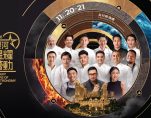
As the Macau Grand Prix weekend revs up, on 20 and 21 November, Galaxy Macau gathers a standout line-up of 15 of Asia’s most awarded chefs and mixologists for the anticipated return of its eponymous dining festival – early bird tickets on sale now
MACAU SAR – Media OutReach Newswire – 15 September 2026 – On 20 & 21 November, Galaxy Macau elevates its gastronomic offering with the standout eponymous edition of Galaxy Stars of Gastronomy 2026. The fourth presentation of Galaxy Macau’s large-scale immersive outdoor culinary event will showcase an elite line-up of 12 of the region’s most sought-after culinary masters, deliveringa cumulative 24 Michelin stars. In addition, featuring three prominent mixologists, including this year’s Asia’s 50 Best Bar’s champions. GalaxyStars of Gastronomy cements its place as Asia’s leading dining destination, and home to some of the region’s most awarded restaurants, chefs and culinary experiences, all under one roof., under one roof.
Galaxy Stars of Gastronomy 2026, the next chapter of Macau’s and Galaxy Macau’s immersive elite dining festival, will be held from 20 to 21 November for three consecutive sessions, celebrating the best in culinary artistry presented by a constellation of award-winning Michelin-starred chefs and mixologists.
The city’s most elevated sensory gastronomy festival takes place across three sittings from Friday 20 November, to Saturday 21 November, spanning two dazzling nights and one thrilling day-time session. Following the standout success of the festival’s first three years at Galaxy Macau, this cornerstone event during Macau Grand Prix weekend has cemented the city’s undisputed status as a UNESCO City of Gastronomy and the home of Formula 3 racing on the global stage.
Galaxy Stars of Gastronomy celebrates the elemental exchange of cultures, craftsmanship and creativity through a series of extraordinary dining experiences curated exclusively for Galaxy Macau. Tickets from MOP1,988 per person (min. 2 persons) are now on sale at www.galaxymacau.com with an incredible 20% early bird discount offer which includes a complimentary free-flow wine package, on or before 4 October, while tickets last.
Drawing inspiration from the nourishing philosophy of the Five Elements, Galaxy Stars of Gastronomy 2026 invites Asia’s top chefs to interpret Metal, Wood, Water, Fire and Earth through their own creative culinary lens. Set against a vibrant al fresco backdrop of live performances at the Cabana, guests will be immersed in a celebration of flavour, creativity and craftsmanship led by Asia’s foremost culinary masters.
An All-Star Line-up of Culinary Visionaries
Working in small groups, 12 talented masters will showcase their distinct culinary philosophies through diverse ingredients and techniques, transforming nature’s bounty into dishes inspired by the Five Elements. Guests will enjoy an up-close and personal opportunity to engage with Asia’s leading celebrity chefs, as each dish is meticulously prepared in front of them.
Asia’s most sought-after Michelin-starred chefs united at Galaxy Stars of Gastronomy 2026 include (from left): *Chef Eom Taejin *Chef Hiroyasu Kawate *Chef Jimmy Lim *Chef Vianney Massot *Chef Julien Royer *Chef Darren Teoh
Gathered at Galaxy Macau will be a standout, award-winning team of Asia’s elite culinary talents, representing the pinnacle of excellence region-wide:
Chef Julien Royer: Three-Michelin-Starred Odette, Singapore
Chef Jimmy Lim: Three-Michelin-Starred JL Studio, Taichung
Chef Darren Teoh: Two-Michelin-Starred Dewakan, Kuala Lumpur
Chef Hiroyasu Kawate: Two-Michelin-Starred Florilège, Tokyo
Chef Vianney Massot: Two-Michelin-Starred BLACKSWAN, Beijing
Chef Eom Taejun: One-Michelin-Starred Solbam, Seoul
Galaxy Macau and StarWorld Hotel’s elite team of highly-acclaimed chefs include (from left): *Chef Umberto Bombana *Chef Chan Chek Keong *Chef Vicky ChengChef Masaaki Miyakawa *Chef Xu Jingye *Chef Yam Lok Hin
Galaxy Macau and StarWorld Hotel’s elite culinary team is set to include:
Chef Masaaki Miyakawa, Three-Michelin-Starred Sushi Miyakawa & One-Michelin-Starred Sushi Kissho by Miyakawa
Chef Umberto Bombana: Three-Michelin-Starred 8½ Otto e Mezzo BOMBANAHong Kong& One-Michelin-Starred 8½ Otto e Mezzo BOMBANA Macau
Chef Xu Jingye: Two-Michelin-Starred 102 House, Shanghai & House of Origin at Galaxy Macau
Chef Vicky Cheng: One-Michelin-Starred VEA Hong Kong, and Estuary by Vicky Cheng
Chef Chan Chek Keong: Two-Michelin-Starred Feng Wei Ju at StarWorld Hotel
Chef Yam Lok Hin, Assistant Vice President and Chef Creator – Pastry and Bakery, Galaxy Macau, StarWorld Hotel and Broadway Macau
Exceptional Pairings Beyond the Plate
Building on Galaxy Macau’s reputation as a bars innovator, the event brings together some of Asia’s most respected names in cutting-edge mixology.
Asia’s leading mixology innovators (from left): *Nokoy Mak *Andrew Ho *Shelley Tai
Leading the line-up is Andrew Ho of Guangzhou’s Hope & Sesame, recognised as “Asia’s Best Bar” this year by Asia’s 50 Best Bars; alongside Shelley Tai, founder-mixologist of Hong Kong’s celebrated Mius, ranked No. 36 on this year’s list and recipient of the “Altos Bartenders’ Bartender Award” at Asia’s 50 Best Bars 2026. Representing Galaxy Macau is award-winning mixology innovator Nokoy Mak, Bar Manager at Long Bar, Raffles at Galaxy Macau and “Tatler Best 20 Bars 2026” in Macau.
Together, they will present an innovative collection of cocktails and non-alcoholic creations designed to complement the event’s culinary offerings with thrilling pairings.
A Culinary Journey Inspired by the Five Elements
With the elite assembly of 15 of Asia-Pacific’s most celebrated culinary and mixology masters, Galaxy Stars of Gastronomy 2026 presents a unique exchange of knowledge and skills. Guided by the Five Elements, each chef curates with their own distinctive approach, creating an immersive dining experience that reflects the diversity and dynamism of the region’s gastronomic landscape.
Each element embodies a distinctive flavour expression: Wood celebrates freshness and vitality; Metal highlights precision and purity; Water explores depth, texture and umami; Fire showcases transformation through grilling, roasting and seasoning; while Earth brings richness and grounding through nutty, root-driven and comforting flavours.
From 20-21 November, 2026, Galaxy Macau cements its place one of Asia’s most compelling dining destinations, offering a wide array of pristine dining options from Michelin-starred restaurants and celebrated chefs to acclaimed local delicacies. Galaxy Stars of Gastronomy 2026 further reinforces this constellation of inspirational dining, offering guests a thrilling one-stop experience of Asia’s most acclaimed culinary artists – all within one destination, for one weekend only.
At Galaxy Stars of Gastronomy 2026, guests will be sampling refined culinary creations by a line-up of star-studded chefs and award-winning mixologists, elevated by an immersive al-fresco atmosphere.
For more information about Galaxy Macau and Galaxy Stars of Gastronomy 2026, please visit www.galaxymacau.com.
Tickets purchased on or before 4 October enjoy 20% off and complimentary wine package
Credit Card Privilege:
Tickets purchased with designated HSBC HK Credit Cards on or before 4 October enjoy 20% off and complimentary wine package
Tickets purchased with ICBC Visa Cards (issued in Macau) on or before 19 November enjoy 20% off, complimentary wine package, and exclusive dining gift certificates up to MOP1,800
Table Experience for 2 pax – MOP3,976 (Early Bird: MOP3,181)
Table Experience for 4 pax – MOP7,952 (Early Bird: MOP6,362)
Table Experience for 6 pax – MOP11,928 (Early Bird: MOP9,542)
Inclusive of:
Admission and seating on the pool deck*
Elemental signature delicacies prepared by acclaimed award-winning chefs
Choice of 3 welcome cocktails or mocktails per person, prepared by award-winning mixologists
Inclusive of a 10% service charge
*Seating will be assigned on site
Cabana VIP Experience for 8
8 pax – MOP18,888 (Early Bird: MOP 15,110)
Inclusive of:
Exclusive use of a private Cabana on the pool deck
Elemental signature delicacies prepared by acclaimed award-winning chefs
Choice of 3 welcome cocktails or mocktails per person, prepared by award-winning mixologists
*Bulk ticketing offers are exempt from the Early-bird Discount
Hashtag: #GalaxyMacau
The issuer is solely responsible for the content of this announcement.
GALAXY MACAU INTEGRATED RESORT
Galaxy Macau, world-class luxury integrated resort, delivers the “Most Spectacular Entertainment and Leisure Destination in the World”. Developed at an investment of HK$43 billion, the property covers 1.1 million-square-meter of unique entertainment and leisure attractions that are unlike anything else in Macau. Nine award-winning world-class luxury hotels provide close to 5,000 rooms, suites and villas. They include Banyan Tree Macau, Galaxy Hotel™, Hotel Okura Macau, JW Marriott Hotel Macau, The Ritz-Carlton, Macau, Broadway Hotel, Raffles at Galaxy Macau, Andaz Macau, and Capella at Galaxy Macau. Unique to Galaxy Macau, the 75,000-square-meter Grand Resort Deck features the world’s longest Skytop Adventure Rapids at 575 metres, the largest Skytop Wave Pool with waves up to 1.5-metre high and 150-metre pristine white sand beach. Two five-star spas from Banyan Tree Spa Macau and The Ritz- Carlton Spa, Macau help guests relax and rejuvenate.
As the dining destination in Asia, Galaxy Macau offers a wide variety of gastronomic delights, exquisite experiences and ingredients of the finest quality with over 120 dining options from Michelin dining to authentic delicacies; Galaxy Promenade is the hottest shopping destination featuring the latest in fashion and curated experiences in Macau. Spanning over 100,000-square-meter, luxury flagship stores, lifestyle boutiques and our selection of labels are among the more than 200 world-renowned brands for a world-class shopping journey; Galaxy Cinemas, immersive thrills and luxurious comfort go hand in hand at Galaxy Cinemas. All 10 theatres are equipped with the latest audio-visual technology; CHINA ROUGE, one-of-a-kind deluxe lounge that evokes the glitz and glamor of Shanghai’s golden era with entertainment in luxury and style; and Foot Hub presents the traditional art of reflexology to make you feel more relaxed and revitalized. For Authentic Macau Flavours & Vibrant Asian Experiences, Broadway Macau – just a 90-second walk via a bridge from Galaxy Macau, has over 35 Authentic Macau & Asian Flavours at its Broadway Food Street. The 2,500-seat Broadway Theatre plays host to world-class entertainers and a diverse array of cultural events. Meeting, incentive and banquet groups are also well looked after with a portfolio of unique venues in Galaxy Macau and a professional service staff.
Galaxy International Convention Center (GICC) is the latest addition to the Group’s ever-expanding integrated resort precinct and will usher in a new era for the MICE industry in Macau. GICC is a world- class event venue featuring 40,000-square-meter of total flexible MICE, and a 16,000-seat Galaxy Arena – the largest indoor arena in Macau.
The same handful of avoidable mistakes get repeated every cycle by foreign buyers in Dubai, usually by those moving fast on a deal that felt urgent. None of these errors require bad luck. They require skipping a step that felt optional at the time. Trusting the asking rent instead of the signed one A listing advertising $16,338 in annual rent doesn’t mean that’s what tenants are actually […]
Arabian Post Staff -Dubai Emirates is expanding its A350 deployment and upgraded cabin footprint as strong winter bookings support additional capacity across its network following a better-than-expected summer. The Dubai-based airline said it had taken delivery of 18 aircraft since January, comprising 11 Airbus A350s and seven Boeing 777 freighters, with another six A350s scheduled to arrive before the end of December. Its A350s currently serve 30 […]
HONG KONG SAR – Media OutReach Newswire – 15 September 2026 – The Hong Kong University of Science and Technology (HKUST) welcomed H.E.Mr. Abdulla Nigmatovich ARIPOV,Prime Minister of the Republic of Uzbekistan, for an official campus visit on September 10, 2026, making HKUST the sole university included in his Hong Kong itinerary. The high-level visit underscored the growing partnership between Uzbekistan and HKUST, with a particular focus on advancing collaboration in higher education, research, innovation, and talent development.
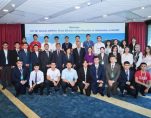
H.E. Mr. Abdulla Nigmatovich ARIPOV, Prime Minister of the Republic of Uzbekistan (seventh right, middle row); Dr. CHOI Yuk-Lin, Secretary for Education of the HKSAR Government (seventh left, middle row); Prof. Harry SHUM, Council Chairman of HKUST (sixth left, middle row); and Prof. Nancy IP, President of HKUST (sixth right, middle row), pose for a photo with students from Uzbekistan during the Prime Minister’s official visit to HKUST.
The Uzbek delegation of 24 members was warmly received by Dr. CHOI Yuk-Lin, Secretary for Education of the HKSAR Government; Prof. Harry SHUM, Council Chairman of HKUST; Prof. Nancy IP, President of HKUST, and senior university leaders.
In a high-level meeting with the University’s leadership, Prime Minister Aripov engaged in in-depth discussions on higher education development, artificial intelligence (AI), technological innovation, talent cultivation, research commercialization, and opportunities for closer collaboration between Uzbekistan and HKUST. The exchange also explored pathways for strengthening academic partnerships, expanding student and faculty mobility, and supporting Uzbekistan’s ambitions in developing a knowledge-based economy and emerging technology sectors.
Prime Minister Aripov said, “We are deeply impressed by HKUST’s achievements and its ability to translate cutting-edge research and innovation into practical industrial applications. With over 7,000 Uzbek students pursuing higher education across China, we see tremendous potential to strengthen our academic ties with Hong Kong and prioritize HKUST as a key destination for our students. As both Uzbekistan and HKUST mark their 35th anniversaries, establishing this partnership presents a symbolic and meaningful opportunity to expand educational excellence and global reach together.”
Prof. Shum said, “We are deeply honored to welcome Prime Minister Aripov and the distinguished Uzbek delegation to HKUST during the Belt and Road Summit. As a young, globally minded university celebrating our 35th anniversary, HKUST serves as a vital super-connector—bringing together diverse talent from over 80 nationalities. Building on our foundation with the El-Yurt Umidi Foundation, this visit marks a pivotal step in deepening ties between Hong Kong and Central Asia, opening up new horizons for collaborative growth and youth development along the Belt and Road.”
President Ip added, “We were delighted to engage in a highly productive and forward-looking dialogue with Prime Minister Aripov and his delegation. Uzbekistan’s strategic priorities in AI, robotics, fintech, and cybersecurity align closely with HKUST’s research strengths and advanced facilities. AI and medical science, in particular, offer promising areas for collaboration and could serve as important starting points for future joint initiatives. Beyond educational exchanges, we see tremendous opportunities to deepen cooperation in research, innovation, talent development, and knowledge transfer. We look forward to visiting Uzbekistan and working closely with our partners to co-create impactful solutions, nurture future-ready talent, and contribute to sustainable economic and technological development.”
HKUST also signed a Memorandum of Understanding (MOU) with the Ministry of Higher Education, Science and Innovation of the Republic of Uzbekistan. The agreement establishes a framework for educational collaboration and promotes excellence and innovation in teaching, learning, and research. Witnessed by Prime Minister Aripov, Dr. Choi, and Prof. Shum, the MOU was signed by President Ip and Mr. Salomov Uktam RAHIMOVICH, Deputy Minister of Higher Education, Science and Innovation of the Republic of Uzbekistan.
The Prime Minister and his delegation toured the HKUST Von Neumann Institute, where they learned about the University’s world-leading research and innovation capabilities in AI. The delegation was introduced to HKUST’s latest advancements in next-generation multimodal AI systems, robotic intelligence technologies, AI-driven 3D understanding and generation, and large-scale healthcare models, as well as their potential applications in addressing societal and industrial challenges. During the visit, the delegation met with 31 Uzbek students studying in Hong Kong, including 14 undergraduates currently enrolled at HKUST, to learn about their academic experiences and life in the city.
The issuer is solely responsible for the content of this announcement.
About The Hong Kong University of Science and Technology
The Hong Kong University of Science and Technology (HKUST) (https://hkust.edu.hk/) is a world-class university renowned for its innovative education, research excellence, and impactful knowledge transfer. Adopting a holistic and interdisciplinary approach to education, HKUST was ranked 33rd globally and 6th in Asia in the QS World University Rankings 2027 and QS Asia University Rankings 2026, respectively. It was also ranked 20th worldwide in the Times Higher Education Sustainability Impact Ratings 2026, placing first among universities in Hong Kong and the Chinese Mainland for the third consecutive year. Eleven HKUST subjects were ranked among the world’s top 50 in the QS World University Rankings by Subject 2026. In addition, HKUST’s Computer Science discipline, which encompasses areas such as artificial intelligence and machine learning, was ranked No. 1 in Hong Kong for the tenth consecutive year in the Times Higher Education World University Rankings by Subject 2026. Its graduates are highly competitive, consistently ranking among the world’s top 30 most sought-after employees. In research and entrepreneurship, more than 80% of HKUST’s research was rated “world-leading” or “internationally excellent” in the University Grants Committee’s Research Assessment Exercise 2020. As of July 2026, HKUST members had founded more than 2,000 active start-ups, including 11 unicorns and 22 successful exits through initial public offerings (IPOs) or mergers and acquisitions (M&A).
Djibouti has joined the Artemis Accords, becoming the 72nd country and eighth African nation to endorse the US-led principles for peaceful, transparent and coordinated civil space exploration. Djibouti’s ambassador to the United States, Mohamed Siad Douale, signed the accords on behalf of his government at NASA Headquarters in Washington on Monday, September 14. NASA Deputy Administrator Matt Anderson hosted the ceremony, which was also attended by US […]
Arabian Post Staff -Dubai Al-Futtaim Motors has begun two safety recall campaigns covering 6,933 Lexus LX500 and LX600 sport utility vehicles in the UAE, addressing separate engine software and transmission defects in models built in Japan between 2021 and 2024. The larger programme is being conducted in coordination with the Ministry of Economy and Tourism and requires affected owners to have their vehicles inspected or reprogrammed without […]
Arabian Post Staff -Dubai Saudi Arabia has identified about 114 million tonnes of mineralised ore containing rare earth elements and promising uranium concentrations at the Jabal Sayid project in Madinah, Energy Minister Prince Abdulaziz bin Salman has announced. Prince Abdulaziz disclosed the estimate on Monday during the 70th General Conference of the International Atomic Energy Agency in Vienna, placing the find at the centre of Riyadh’s drive […]
A federal judge has stopped the Trump administration from imposing fixed limits on how long foreign students, exchange visitors and journalists may remain in the United States, blocking a major immigration rule one day before it was due to take effect. U. S. District Judge F. Dennis Saylor IV in Boston issued a preliminary injunction on Monday, September 14, finding that the Department of Homeland Security had […]
BRICS leaders have placed development priorities of emerging economies at the centre of their New Delhi agenda, endorsing stronger representation for the Global South while advancing cooperation on trade, technology, finance and sustainable growth.
Chinese President Xi Jinping used the 18th BRICS Summit to argue that countries should pursue development paths suited to their own national conditions, a message that overlapped with the summit’s broader emphasis on policy autonomy, inclusive growth and reform of global institutions.
Addressing the first leaders’ session on September 12, Xi marked 20 years of BRICS cooperation and said members had strengthened themselves through unity while preserving independence in choosing their economic and social models. He described BRICS as an increasingly important platform for emerging markets and developing countries.
The summit’s New Delhi Declaration gave that theme wider institutional form. Leaders called for a more representative international order, greater participation by developing countries in global decision-making and reforms to institutions including the United Nations, World Trade Organization and international financial architecture.
The declaration also reflected the diversity within the expanded grouping. Rather than prescribing a single model of development, BRICS leaders stressed national circumstances, differing capacities and the need for policy space, particularly in areas such as energy transition, industrialisation and climate action. That approach broadly matched Xi’s argument that development strategies should reflect domestic conditions rather than external templates.
Xi sought to extend the idea into technology policy. He proposed an initiative on artificial intelligence-enabled industrialisation, deeper cooperation in research and applications, and stronger industrial and supply-chain links. China also promoted open-source AI collaboration and international platforms intended to improve access to emerging technologies for developing economies.
Other leaders framed similar priorities through their own national perspectives. Prime Minister Narendra Modi emphasised resilience, innovation, cooperation and sustainability, the four themes of India’s 2026 BRICS chairship, and called for solutions developed within the grouping to serve a wider range of developing countries. He also urged members to translate summit commitments into practical programmes.
BRICS members agreed on measures spanning digital cooperation, food and energy security, health, trade facilitation and the use of local currencies in cross-border transactions. The declaration supported stronger payment connectivity while stopping short of endorsing a common BRICS currency.
The economic agenda also underlined the practical test facing the grouping. Members backed use of national currencies in trade and investment, stronger cooperation through the New Development Bank and efforts to improve financial resilience. Such measures are intended to widen financing options for developing economies without committing members to a single monetary framework or common currency.
The expanded bloc now brings together countries with sharply different political systems, strategic alignments and economic structures. That breadth gives BRICS a larger claim to represent developing-country concerns, but it also limits how far members can converge on detailed policy prescriptions. Analysts have noted differences over whether the group should remain primarily an economic and development forum or assume a stronger geopolitical role.
Those tensions were visible alongside the development agenda. Leaders opposed protectionism and unilateral economic measures, supported a stronger multilateral trading system and called for reforms that would increase the voice of developing countries. At the same time, members avoided turning the summit into a unified ideological platform, relying instead on consensus language broad enough to accommodate competing interests.
Xi’s second summit intervention on September 13 placed a “people-centred” development philosophy within a wider call for Global South cooperation. He urged progress on the UN Sustainable Development Goals, improvements to global climate governance and a consensus-based framework for governing artificial intelligence.
China’s approach also carries strategic implications. Beijing has increasingly used BRICS and other multilateral forums to promote its views on development, sovereignty and global governance. Some members share its criticism of unequal representation in international institutions, while others remain cautious about allowing BRICS to become identified with any single country’s geopolitical agenda.
Arabian Post Staff -Dubai Shipping through the Strait of Hormuz fell sharply at the start of the week, with only four commodity vessels recorded transiting the strategic waterway on Monday as attacks across the Middle East intensified. Preliminary ship-tracking data from Kpler showed the Monday total was down from 10 vessels on Sunday, extending a prolonged decline in commercial traffic through a passage that remains central to […]
China has showcased a fish-shaped autonomous underwater robot in Beijing, demonstrating biomimetic navigation technology that could support inspection, environmental monitoring, search operations and defence-related missions.
The BG-5 Golden Dragon Fish was demonstrated at the 2026 China International Fair for Trade in Services, held at Shougang Park from September 9 to 13. Developed by Boyagongdao Marine Technology Group, the robot is designed to resemble a golden arowana and propel itself through water with a flexible, multi-joint tail rather than a conventional propeller.
The machine can detect obstacles and adjust its route autonomously instead of following only a fixed, pre-programmed path, according to information released by the developer and statements made at the exhibition. Its fish-like movement is intended to improve manoeuvrability while giving the platform a less conspicuous profile than many conventional underwater vehicles.
Boyagongdao lists the BG-5 as a 640-millimetre-long robot weighing about 3 kilograms. The published specifications give it a maximum operating depth of 5 metres and a top speed of 0.6 metres per second. The company says infrared recognition supports autonomous obstacle avoidance, while wireless communications allow online debugging and control.
The manufacturer also offers a BG-5V configuration that combines the robotic fish with a software platform for more advanced experiments. The listed capabilities include global and local path planning, task allocation, formation control, cooperative transport and coordinated operations involving multiple robots.
Those functions broaden the possible uses beyond a single demonstration unit. Groups of small robotic fish could, in principle, divide an underwater area for inspection or monitoring, maintain formations and coordinate tasks in locations where larger vehicles would be harder to deploy. The company presents the platform for research and teaching as well as operational fields including search and salvage, hydropower, safety and rescue and national defence.
Claims that the robot has been formally deployed as an underwater surveillance system have not been substantiated by publicly available official information. The specifications and the developer’s stated defence-related work show that reconnaissance or monitoring applications are technically plausible, but the model displayed at CIFTIS was presented as a biomimetic robotic platform rather than as an announced military deployment.
Boyagongdao says its bionic robot series draws on more than a decade of research associated with Peking University’s College of Engineering. The systems use high-speed biomimetic drive mechanisms and central pattern generator control algorithms intended to reproduce the smooth, rhythmic movement of aquatic animals.
The company has also disclosed work on defence-oriented underwater technology. Its website says technologies developed for military-related directions have been adapted for higher education products, and company material from earlier exhibitions describes unmanned and intelligent underwater equipment as an area of military development. It has separately publicised the ROBO-SHARK, a larger shark-inspired underwater robot developed with a military unit.
The BG-5 itself is not a newly created model. Boyagongdao had displayed the robotic fish before this month’s services trade fair and promoted it earlier this year at Beijing technology events. The latest CIFTIS appearance nevertheless drew renewed attention because of the machine’s autonomous obstacle avoidance and increasingly realistic biomimetic movement.
China’s work on underwater robotics extends well beyond fish-shaped machines. Universities, research institutes and commercial groups are developing autonomous systems for coral monitoring, infrastructure inspection, marine ranching, emergency rescue and deep-sea research. Some platforms are designed to carry cameras, sonar or environmental sensors, while others use robotic arms for intervention tasks.
A separate ecological-monitoring deployment in Hangzhou has used biomimetic robotic fish to patrol West Lake, measuring indicators including water temperature and pH, detecting invasive species and transmitting data to monitoring centres. Other Chinese underwater robots have been used for reef observation and for identifying and removing crown-of-thorns starfish.
The BG-5 demonstration at CIFTIS focused on embodied intelligence underwater, where navigation software, sensing and propulsion are integrated into a machine that moves more like a living animal than a standard remotely operated vehicle.




 https://derama.sg/
 https://www.facebook.com/people/Derama-Singapore/61577219054775
 https://www.instagram.com/derama_singapore