News related to
unit

China’s National Data Administration plans to accelerate standards for embodied artificial intelligence and direct local authorities on implementation, targeting one of the biggest bottlenecks in the fast-growing robotics sector: access to high-quality, diverse and large-scale training data.

The regulator said the work will focus on creating clearer rules for datasets used by embodied AI systems, which combine artificial intelligence with physical machines such as humanoid robots. The effort is intended to support more consistent data collection, processing, evaluation and use as companies race to improve machines that must perceive, reason and act in real-world environments.

China has already moved to build a broader standards framework around the sector. National standards published on August 27 cover the quality of real-world embodied-intelligence data and technical requirements for data-generation platforms, while several additional specifications remain under development.

Among projects overseen by the National Data Administration are proposed standards covering the sources and constituent elements of high-quality embodied-intelligence datasets, simulated synthetic-data generation and processing, and specifications for data collection and model training at training bases. The projects are being developed under the National Data Standardisation Technical Committee.

One draft programme, registered in April, sets a 12-month timetable for a standard on data collection and model training at embodied-intelligence training bases. Its drafting group includes the China Electronics Standardization Institute, Beijing Institute of Technology, the Institute of Software at the Chinese Academy of Sciences and robotics companies.

A separate draft addresses synthetic data, which is becoming increasingly important because collecting enough physical-world robot interactions can be expensive, slow and difficult to reproduce. China’s policy framework encourages the use of simulation and synthetic techniques to expand supply where genuine operating data are scarce or costly to obtain.

The National Data Administration has made high-quality datasets a central part of its wider artificial-intelligence strategy. An implementation plan issued in June called for faster construction of datasets in strategic and emerging fields including embodied intelligence, intelligent driving and the low-altitude economy. It also called for data covering physical interaction, environmental perception and motion control in key scenarios.

The plan directs authorities and industry participants to improve data cleaning, enhancement, labelling, alignment and quality inspection, while developing national standards covering formats, categories, annotation and quality assessment. The regulator said such work should produce datasets that are structurally complete, diverse, accurately labelled and suitable for model development.

China’s push reflects the distinct data demands of robots operating in the physical world. Unlike text-based systems trained largely on digital information, embodied AI requires large volumes of multimodal material that can include video, images, sensor readings, point clouds, movement trajectories and feedback from physical interaction.

Data supply has therefore emerged as a competitive constraint for developers seeking to train machines to perform long sequences of actions reliably across changing environments. The National Data Development Research Institute has said embodied intelligence and world models are driving sharply higher demand for three-dimensional, video and other multimodal data, while also raising requirements for collection and annotation quality.

The government has also been expanding the underlying pool of AI-ready datasets. At a national data industry event in Guiyang in August, the National Data Administration said more than 126,000 high-quality datasets had been built across China, with a combined volume exceeding 1,815 petabytes.

Officials described a system combining a national dataset management platform, an open-source community and a data-labelling network with sector-specific pilot programmes. The framework includes 106 leading organisations and 140 pilot tasks, with regional authorities encouraged to develop projects suited to local industrial strengths.

Embodied intelligence has featured in those pilots alongside other emerging fields. The administration has promoted cooperation among robotics companies, universities, research institutes and public bodies to increase the quantity and usefulness of machine-training data while testing standards before wider application.
Nepal has put the reconstruction requirement from the devastating August 26 floods at about $4.78 billion, sharply exceeding the government’s initial estimate of direct physical damage and economic losses. The Ministry of Foreign Affairs said the figure came from a Rapid Damage and Needs Assessment prepared after floods tore through northern river valleys, destroying homes, transport links, hydropower facilities and other critical infrastructure. The assessment estimated direct […]

METRO MANILA, PHILIPPINES – Media OutReach Newswire – 13 September 2026 – Green GSM Philippines will host the Green GSM Platform Driver Partner Festival from September 12-14, 2026, expected to bring together up to 5,000 current and prospective Driver Partners, with the handover of 1,000 electric vehicles to Green Driver Partners as the centerpiece of the event at The Tent in Las Piñas City and Green GSM’s depots. The event aims to meet the growing demand for the green transition among Driver Partners and the public transport community, while marking a new step in the expansion of Green GSM’s service ecosystem in the Philippines.

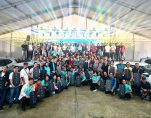
Green GSM Philippines and Driver Partner community at the Green GSM Platform Driver Partner Day.

One of the highlights of the event is the handover of the first 1,000 electric vehicles to Green GSM Platform Driver Partners, expanding their business options and giving the driver community access to more suitable and efficient operating models. The addition of more vehicles will also help Green GSM strengthen its service capacity and better meet customers’ growing mobility needs, while contributing to the transition to green transportation in the Philippines.

Building on the cooperation between VinFast and Green GSM, the event will further introduce the vehicle rental model designed for Driver Partners, with an initial investment starting from just PHP 5,000, opening up additional business options and reducing barriers for drivers to participate in electric vehicle operations. The program reflects Green GSM’s “5 Green Promises” commitment, with a focus on providing better vehicles, suitable operating models, and sustainable livelihood opportunities for the Driver Partner community.

Under this partnership model, eligible Driver Partners can choose from VinFast electric vehicles such as the 4-seater Herio Green/VF 5 and the 7-seater Limo Green. These all-electric models are designed to meet the needs of service operations, offering smooth performance, ease of use, and optimized energy, maintenance, and servicing costs compared with gasoline vehicles in the same segment. Through support programs for pioneering partners, including free charging and VinFast warranty coverage of up to 7 years/160,000 km for the Limo Green and the VF 5/Herio Green, drivers can significantly reduce operating costs, improve business efficiency, and increase their long-term earnings.

As part of the event series, Green GSM continues to reaffirm its long-term commitment to the Green Driver Partner community in the Philippines, with a focus on enhancing service quality, professionalism, and community engagement through the launch of the Global Green GSM Driver Partner Community in the Philippines. The Community serves as a platform to connect and support Driver Partners, while strengthening engagement across the broader Green GSM ecosystem.

Through the Community, members will be able to share and learn from one another’s experiences in operating electric vehicles and providing mobility services, stay updated on the latest information and policies, and work together to build an increasingly professional, connected, and sustainable Driver Partner community.

Through the “Green GSM Platform Driver Partner Festival,” Green GSM is committed to supporting the sustainable development of the driver community in the Philippines, raising awareness and encouraging the green transition, while expanding livelihood opportunities for drivers to increase their income. At the event, Driver Partners will have the opportunity to test-drive VinFast electric vehicles, receive answers from Green GSM regarding electric vehicles, learn about relevant policies and benefits, and receive prompt assistance in completing the registration procedures required to transition to providing services with electric vehicles.

The event forms part of Green GSM’s development plan to strengthen its ability to meet market demand, with the goal of providing more vehicles, faster service, and progressively higher service quality in line with five-star standards, delivering a more satisfying experience for customers on every green journey.

Ms. Le Thi Thu Trang, CEO of Green GSM Philippines, said: “Through the Green GSM Platform Driver Partner Festival and Car Handover Week, Green GSM aims to accompany the driver community in its development and expansion while enhancing both quality and professionalism. We seek to create more livelihood opportunities for drivers to access optimized and efficient operating models that can significantly increase their earnings. At the same time, we expect the event to inspire and help lay the foundation for the next phase of green mobility development in the Philippines.”

Green GSM currently operates electric taxi services in key urban areas across the Philippines, including Metro Manila in Luzon, Central Visayas, and Mindanao. Its two service offerings – Green GSM Car and Green GSM Limo, a 7-seater Premium Taxi – cater to customers’ diverse mobility needs.

In addition to its direct operations, Green GSM is expanding partnerships with local taxi operators to accelerate the green transition through diverse, flexible, and cost-efficient partnership programs.

Going forward, Green GSM will continue improving service quality and expanding its network, consistent with its “5 Green Promises” commitment, with the aim of raising service standards and contributing to greener urban mobility in the Philippines./.

Hashtag: #GreenSM

The issuer is solely responsible for the content of this announcement.

Arabian Post Staff -Dubai Ajman Municipality and Planning Department has secured four honours at the 2026 Middle East & North Africa Stevie Awards, recognising work spanning government management, the circular economy, smart-city transformation and digital public services. The awards were presented at the programme’s seventh annual gala in Istanbul on Friday, September 11, after winners from across the region were selected through an international judging process. The […]

Cochin International Airport Limited has deployed a passenger assistance robot at Kochi airport, offering travellers real-time flight information, directions to boarding gates and details about Kerala’s traditional arts.

The robot has begun operating at Kalangan, the art museum inside the Domestic Security Hold Area, marking the first phase of a wider plan to introduce robotic assistance across the airport. CIAL Managing Director S. Suhas inaugurated the service, which is intended to give passengers access to travel information while they move through the terminal.

Passengers can interact with the robot to check flight schedules, gate numbers and CIAL services. It can provide directions to boarding gates and other airport facilities, helping travellers locate destinations without having to rely solely on static signs or information counters.

CIAL has also given the robot a cultural role. At Kalangan, it can explain Kerala art forms including Kathakali and Ottanthullal and provide information about sculptures and artworks displayed in the museum. The robot can guide passengers towards relevant exhibits, linking travel assistance with the airport’s cultural displays.

The airport operator said passenger assistance robots will be deployed in check-in halls during the next phase of the programme. CIAL is also examining the use of delivery robots capable of carrying food and other products directly to passengers waiting inside the terminal, though no timetable has been announced for that service.

Pune-based Kinetics Robotics developed the passenger assistance robot for CIAL. Executive Director Santhosh Poovattil, Head of Commercial Manoj P. Joseph and Kinetics Robotics representative Jignesh Nair were among those present when the service was launched.

The project adds another automated passenger-facing service to CIAL’s broader digital upgrade. The airport last year outlined a Rs 200-crore digital transformation programme, CIAL 2.0, covering operational systems, artificial intelligence, automation and cybersecurity. That programme included upgraded flight information and announcement systems, common-use passenger processing infrastructure and other technology intended to improve airport operations and passenger convenience.

CIAL 2.0 also identified facial-recognition check-in, artificial intelligence-based baggage tracking, lost-item tracking, prepaid cab booking kiosks and DigiYatra integration among its digital services. The passenger assistance robot extends that technology drive into a visible, interactive role inside the terminal rather than keeping automation largely behind the scenes.

For passengers, the robot’s main practical value is immediate access to frequently requested information. Flight updates and gate directions can change during the course of a journey, and an interactive unit positioned within the secure area can supplement display boards and staffed help points. Its deployment at Kalangan also allows CIAL to test passenger interaction with the technology in a controlled setting before placing more robots in busier check-in areas.

The cultural information function gives the device a second purpose beyond navigation. Travellers passing through the museum can request explanations of traditional performances and displayed works rather than using the robot only for airport queries. CIAL has presented that combination as part of its effort to improve passenger convenience while drawing attention to Kerala’s cultural heritage.

The first deployment remains limited to the domestic security hold area, and CIAL has not disclosed how many passenger assistance robots will be added in the next stage. The airport operator has also not announced technical details such as supported languages, operating hours, mobility range or whether future units will have additional functions.

Kalangan serves as the initial location because it combines passenger circulation with exhibits that require both directional and informational support. The robot can therefore handle airport questions while directing visitors towards artworks and explaining selected cultural forms.

CIAL’s move comes as airports increasingly use self-service and automated systems for routine passenger interactions, particularly for check-in, baggage processing, navigation and information delivery. At Kochi, the next expansion will move the assistance robots from the museum setting into check-in halls, where passenger volumes and the range of queries are likely to be greater.

Commerce and Industry Minister Piyush Goyal has urged BRICS members and partner countries to link payment systems, expand local-currency trade and open markets more widely as India presses for stronger economic integration across the grouping.

Addressing the BRICS Business Forum in New Delhi, Goyal said greater connectivity between national payment networks, including systems modelled on India’s Unified Payments Interface, could lower friction in cross-border commerce while supporting wider use of members’ own currencies.

His proposals were aligned with the economic agenda carried into the BRICS summit, where leaders backed further work on facilitating trade and investment settlements in local currencies and improving interoperability between payment systems. The approach stops short of creating a common BRICS currency and instead focuses on practical links between existing financial infrastructures.

BRICS leaders encouraged the New Development Bank to expand local-currency financing and diversify its funding base, complementing efforts to make cross-border payments faster, cheaper and safer. Officials have stressed that the objective is not a single currency, but greater use of national currencies where commercially practical and mutually agreed.

Goyal said UPI now handles more than 250 billion transactions annually and is accepted in 11 countries. He urged BRICS economies to explore linking their payment networks, promote trade in each other’s currencies and expand digital commerce alongside cooperation in emerging technologies.

The minister coupled the payments proposal with a call for easier market access. He said BRICS economies should open their markets to one another’s products, including raw materials and critical minerals, while simplifying regulatory procedures and accelerating the clearance of consignments.

Goyal argued that resilient supply chains required two-way trade rather than dependence on one-sided flows. He said non-tariff measures impose higher export costs than tariffs in 88 per cent of countries, making regulatory obstacles and customs delays a central concern for companies seeking to trade across BRICS markets.

The push comes as intra-BRICS commerce has expanded sharply. Commerce Secretary Rajesh Agrawal said trade among BRICS countries rose from $84 billion in 2003 to nearly $1.2 trillion in 2024, underscoring both the scale of the bloc’s market and the potential gains from reducing transaction and financing costs.

Agrawal also highlighted the global trade-finance gap, estimated at about $2.5 trillion, and said BRICS should improve access to affordable working capital for exporters. The Jaipur Consensus, agreed by BRICS trade ministers in August, provides a basis for examining a common mechanism to help smaller businesses obtain finance against confirmed orders and reliable payment records.

Trade ministers have also advanced a 2026-2030 action plan on global value chains, including BRICS Connect, business-to-business partnerships, digital trade documentation and possible platforms for strategic supply chains and investment promotion. These measures form part of a broader effort to make trade flows more diversified and less vulnerable to disruption.

Goyal identified agriculture, pharmaceuticals, engineering, electronics, automobiles, auto components and services as sectors with scope for deeper cooperation. He called for closer links between startup ecosystems and urged agri-tech companies to work jointly on solutions for farmers and food security.

Services trade was another priority. Goyal said BRICS members should make it easier for professionals to move across borders and work towards greater recognition of professional qualifications, arguing that services markets needed to become more genuinely accessible.

External Affairs Minister S. Jaishankar, speaking at the same forum, said supply-chain connectivity, trade facilitation and innovation had become central to BRICS cooperation. He also pointed to digital public infrastructure, artificial intelligence, financial technology and advanced manufacturing as areas offering opportunities alongside questions of standards, security and trust.

Russia’s Economic Development Minister Maxim Reshetnikov separately supported stronger alternative payment arrangements, saying the share of Russia’s export settlements conducted in dollars and euros had fallen sharply over the past three years. He also promoted work on a proposed BRICS grain exchange and closer cooperation among special economic zones.

BRICS leaders have adopted a joint declaration expressing deep concern over escalating tensions in the Middle East and urging maximum restraint, securing consensus among members including Iran, Saudi Arabia and the United Arab Emirates. The New Delhi Declaration, approved on Saturday at the 18th BRICS Summit, called on all sides to avoid actions that could further aggravate the situation and reaffirmed support for resolving international disputes through […]

Advertisements
Chinese President Xi Jinping and Prime Minister Narendra Modi agreed to strengthen economic, transport and people-to-people links while preserving peace along their disputed frontier, using Xi’s first visit to India in seven years to push forward a cautious repair of bilateral relations.

The two leaders met on Saturday on the sidelines of the BRICS summit in New Delhi and welcomed what the Prime Minister’s Office described as steady progress in ties since their meeting in Tianjin in August 2025. They agreed that relations should be approached from a strategic and long-term perspective and that differences should not be allowed to become disputes.

Modi said peace and tranquillity in border areas remained an essential basis for further development of the relationship. He called for both sides to observe existing agreements and understandings on frontier issues and said engagement should be guided by “mutual respect, mutual sensitivity and mutual interest”.

Both leaders committed themselves to seeking a fair, reasonable and mutually acceptable settlement of the boundary question, while expanding cooperation in areas where their interests converge. They also backed stronger cultural exchanges, business links and mobility, alongside efforts to resolve economic frictions.

Trade featured prominently in the discussions. The two sides agreed on the need to address concerns over the structural trade imbalance, supply-chain issues and access to each other’s markets. Bilateral trade reached a record $155.6 billion in 2025, while India’s imports from China were about $132 billion, leaving a large deficit that New Delhi has repeatedly sought to narrow.

The meeting marked Xi’s first trip to India since 2019, when he travelled to Tamil Nadu for an informal summit with Modi. Relations deteriorated sharply after the 2020 military confrontation in eastern Ladakh, including the Galwan Valley clash that killed 20 soldiers from India and four from China.

A disengagement agreement reached in October 2024 helped end key points of the military standoff and opened the way for higher-level political contacts. Modi and Xi then held a substantive bilateral meeting during the BRICS summit in Kazan that month, followed by another meeting in Tianjin in August 2025.

Diplomatic and military mechanisms have since been revived. At the 25th round of Special Representatives’ talks in Beijing on August 25, National Security Adviser Ajit Doval and China’s Wang Yi agreed on eight measures covering border management, military communication, boundary negotiations, trade routes, pilgrimage arrangements and cooperation on trans-border rivers.

Among those steps were two additional channels for military hotlines in the eastern and middle sectors and two additional meeting points for senior commanders. The two sides also agreed to continue work towards a framework for settling the boundary dispute and to use existing diplomatic and military channels to deal promptly with incidents along the Line of Actual Control.

Practical links have also begun returning. Direct passenger flights have resumed, business visa processing has improved and the Kailash Mansarovar pilgrimage has restarted, while three traditional border trading points have reopened. Those measures have not removed the deeper trust deficit, but they have restored channels that were largely frozen after 2020. Officials on both sides have indicated that further easing will depend on predictable border management and progress on commercial concerns over the coming months.

Despite the thaw, major differences remain. Large troop deployments continue along sections of the Himalayan frontier, and the boundary itself has not been settled. Economic engagement is also constrained by investment screening, regulatory barriers, visa delays and security concerns affecting sectors considered sensitive by either government.

Xi’s visit nevertheless gave both governments an opportunity to demonstrate that political contacts are becoming more regular after years of strained relations. Beijing has repeatedly said the two countries should view each other as partners rather than rivals, while New Delhi has maintained that normal relations require durable peace at the border.

Blockstream has rejected a demand to surrender part of the bitcoin still held after the $320 million Liquid Network exploit, saying it will not pay a ransom and will pursue lawful recovery of the remaining funds. The company said on September 11 that taking assets without authorisation and withholding their return constituted theft rather than responsible security disclosure. It warned that, unless the outstanding bitcoin was returned, […]

Anthropic says its safety systems blocked a scientist’s request for Claude to help write a grant application for research that could have made the chikungunya virus more transmissible and better able to evade immunity, prompting a wider investigation into potentially dangerous biological work linked to military and state-backed institutions. The artificial intelligence company disclosed the case in a September threat-intelligence report describing five instances in which researchers […]

Ripple is targeting corporate treasury flows as a major growth avenue for its RLUSD stablecoin, with executive Jack McDonald pointing to customers of its treasury platform that process about $13 trillion in payments annually. McDonald, Ripple’s senior vice-president of stablecoins, said the company sees an opportunity to place RLUSD more deeply into the day-to-day movement of corporate cash, including cross-border transfers, transactions between subsidiaries and domestic payments. […]

PALEMBANG, INDONESIA – Media OutReach Newswire – 12 September 2026 – Green SM has officially launched its electric taxi service in Palembang, making it the second city in Sumatra, after Bandar Lampung, to welcome the service. The expansion further affirms Green SM’s mission of bringing green mobility closer to the people of Indonesia while offering local residents a modern, comfortable, and zero-emission transportation experience.

Green SM officially launches all-electric taxi service in Palembang, expanding its presence across Sumatra, Indonesia.

To mark its official launch in Palembang, Green SM has also introduced the “Green Your Move, Refresh Your City” campaign, in support of initiatives led by the Ministry of Environment/Environmental Control Agency (KLH/BPLH) under the theme “Ecosystem & Air Protection” (Perlindungan Ekosistem & Udara).

The campaign encourages citizens to embrace more environmentally friendly modes of transportation, highlighting how every green journey in daily life can contribute to better air quality and a healthier urban environment.

Powered by a 100% electric vehicle fleet, Green SM is committed to delivering a 5-star mobility experience through its professional drivers, transparent pricing, and consistent service quality. By combining technology, service excellence, and sustainable mobility solutions, Green SM aims to set new standards for modern urban transportation.

Green SM’s presence in Palembang continues its journey of advancing green mobility in Indonesia, following its expansion into Jakarta, Makassar, Surabaya, Bali, and Bandar Lampung. This milestone also reaffirms the company’s long-term commitment to delivering reliable and sustainable mobility solutions to an increasing number of Indonesians.

As one of Sumatra’s largest hubs for trade and services, with a population of more than 1.8 million people, Palembang continues to see dynamic economic growth and rising demand for mobility. The city’s commitment to sustainable development and smart city initiatives also provides a strong foundation for advancing green, modern, and environmentally friendly transportation solutions that contribute to improving residents’ quality of life.

Mr. Pham Nhat Minh Hoang, Global CEO of Green SM, said: “I am delighted that Green SM has another opportunity to bring the positive values of green mobility to even more people across Indonesia. We believe that through our consistent service quality, professional drivers, and the outstanding benefits that green mobility offers, Green SM will become a trusted companion for the people of Palembang in their daily journeys, while contributing to ecosystem protection and cleaner air in Indonesia.”

To mark its launch in Palembang, Green SM is rolling out a series of special promotions. Riders can enjoy a 100% discount of up to Rp50,000 from September 12 to 16, 2026, followed by a 50% discount of up to Rp50,000 from September 17 to 25, and a 35% discount of up to Rp50,000 from September 26 to October 2, 2026. Green SM will continue introducing programs and offers designed to make travel more comfortable and affordable, while encouraging more residents of Palembang to make the switch to greener mobility.

Alongside providing all-electric transportation services, Green SM is committed to building a sustainable green mobility ecosystem through job creation, local talent development, and collaboration with stakeholders. As the company continues expanding across Indonesia, Green SM aims to improve access to modern mobility solutions while creating positive value for communities, the environment, and local economies.

Over the course of its global expansion, Green SM has completed approximately 850 million trips covering nearly 6 billion kilometers, helping reduce more than 800,000 tons of CO₂ emissions, equivalent to the carbon absorption capacity of approximately 36 million trees.

Hashtag: #GreenSM

The issuer is solely responsible for the content of this announcement.

By R Suryamurthy The latest BRICS financial agenda is ambitious enough to suggest that the grouping is no longer content merely to complain about the inequities of the global economic order; it wants to build pieces of an alternative. But ambition, particularly in a grouping as diverse as BRICS, is cheap. The harder question is […]

The article Brics has a financial roadmap: The hard part is making it work appeared first on Latest India news, analysis and reports on Newspack by India Press Agency).

The Pan-African Payment and Settlement System is shifting from network-building to large-scale adoption, targeting faster transaction growth as its reach extends across more than 30 African countries. PAPSS chief executive Mike Ogbalu III said the system’s next strategic phase, beginning in 2027, will focus on activating its expanding network, widening use among banks, fintechs and businesses, and developing high-volume payment corridors. The platform now connects 24 national […]

HANOI, VIETNAM – Media OutReach Newswire – 12 September 2026 – VinFast and GSM today officially announced new leadership appointments, succeeding Mr. Pham Nhat Vuong and Ms. Pham Thu Huong in senior global leadership roles. Accordingly, Mr. Pham Nhat Quan Anh, currently Chairman of VinFast Global, will concurrently assume the position of CEO of VinFast Global, succeeding Mr. Pham Nhat Vuong, while also taking on the roles of Chairman and CEO of VinFast Vietnam. Mr. Nguyen Quoc Tuan will assume the position of Chairman of GSM Global, succeeding Ms. Pham Thu Huong, while Mr. Pham Nhat Minh Hoang will become CEO of GSM Global and concurrently CEO of GSM Vietnam.

Mr. Pham Nhat Quan Anh, Chairman and CEO of VinFast Global, and Chairman and CEO of VinFast Vietnam.

The strengthening of the senior leadership teams at VinFast and GSM comes as Vingroup and companies across its ecosystem accelerate the training and development of in-house talent and transition leadership responsibilities to a younger generation of leaders, in line with the needs and growth trajectory of the system. In particular, both VinFast and GSM are entering a period of strong and decisive growth on a global scale.

Prior to assuming the position of Chief Executive Officer of VinFast Global from Mr. Pham Nhat Vuong, Mr. Pham Nhat Quan Anh was appointed Chairman of VinFast Global in May 2026. With his official assumption of the positions of Chairman and Chief Executive Officer of VinFast Global, as well as Chairman and Chief Executive Officer of VinFast Vietnam, Mr. Pham Nhat Quan Anh will hold ultimate and comprehensive responsibility for all of VinFast’s operations as the company enters a new phase of growth.

Following his official appointment, Mr. Pham Nhat Quan Anh commented: “I am deeply honored by the Board of Directors’ trust and confidence in entrusting me with the additional responsibility. Built on a strong foundation established over the years and supported by the growing confidence of customers across our markets, VinFast is well positioned to seize the significant opportunities ahead and further strengthen its role in advancing the global transition to sustainable mobility. I am committed to working closely with our talented team to uphold VinFast’s core values and continue delivering world-class products and the highest standards of service to customers around the world.”

Born in 1993, Mr. Pham Nhat Quan Anh holds a Bachelor’s degree from Singapore Management University and has held several key leadership positions at VinFast and other companies within the Vingroup ecosystem before being appointed Chairman of the Board of Directors of VinFast Auto Ltd. in May 2026. With extensive cross-sector management experience and a strategic operational mindset, he has made significant contributions to VinFast’s development, from building its foundation in the domestic market to expanding its presence internationally.

In addition to his senior leadership responsibilities at VinFast, Mr. Pham Nhat Quan Anh will continue to serve as Chief Executive Officer of VinMetal Trading and Production JSC, a high-quality steel manufacturer within the Vingroup ecosystem.

At GSM, Mr. Nguyen Quoc Tuan, currently Chief Executive Officer of GSM Global, has been appointed Chairman of GSM Global, succeeding Ms. Pham Thu Huong. Mr. Pham Nhat Minh Hoang will succeed Mr. Tuan as Chief Executive Officer of GSM Global and concurrently assume the position of Chief Executive Officer of GSM Vietnam.

Mr. Pham Nhat Minh Hoang, CEO of GSM Global and CEO of GSM Vietnam.

Born in 2000, Mr. Pham Nhat Minh Hoang has held senior leadership positions at VinFast, Green Future, VinSmart Future, GSM and other companies. In addition to his management responsibilities, he has directly invested in and serves as a major shareholder of several industrial, technology, energy and infrastructure companies within the Vingroup ecosystem, including VinSpeed, VinEnergo, VinMetal, VinVentures and robotics companies.

VinFast currently has a presence in 16 countries worldwide, including key markets such as Vietnam, India, Indonesia, the Philippines, Europe, the Middle East and North America. VinFast electric cars and electric motorcycles are currently manufactured at four facilities across three countries: Vietnam, Indonesia and India.

Alongside VinFast, GSM operates its green mobility brand, Green SM. The company currently operates in seven countries, including Vietnam, Laos, Indonesia, the Philippines, India, Kazakhstan and Denmark, and plans to expand into at least three additional markets within this year. GSM is also targeting a transition into a globally scaled public company with its shares listed on an international stock exchange.

The appointment of senior leadership is of particular importance, not only in addressing the more demanding requirements of the companies’ next phase of development, but also reflecting positive expectations for the future of VinFast and GSM as they continue their expansion into international markets.

Hashtag: #VinFast #GSM

The issuer is solely responsible for the content of this announcement.

VinFast has signed memoranda of understanding with 13 dealer groups to develop 27 new showrooms across the Philippines, advancing a plan to build a 60-dealership network in the country during 2026.

The Vietnamese electric-vehicle maker said the proposed outlets would span Luzon, Visayas and Mindanao, extending its reach beyond major centres such as Metro Manila and Cebu into markets including Cagayan de Oro, Tacloban and Subic Bay. The sites are expected to combine vehicle display, customer consultations, sales and after-sales services under VinFast’s global showroom standards.

The agreements, announced on September 11, bring together Elite North Auto Cars Inc., MG Gateway Mantrade Corp., Grand Canyon Multi Holdings Inc., Britannica United Motors Incorporated, VF Auto Sto Tomas Inc., GR8 Marketing Motors Inc., ARCMA Motors Corporation, Autonomics Motor Corp., Gershom Car Trading Corp., Areza Motor Sales Inc., Central Auto Resources Inc., Autolink Global Motors Inc. and Greenport Mobility Inc.

VinFast said the partners’ distribution experience and regional networks would help accelerate expansion and improve access to its electric cars and support services. The company did not disclose investment values, opening dates for individual locations or how many of the 27 sites would provide full workshop facilities.

Antonio Zara, chief executive of VinFast Southeast Asia, said the Philippines remained a key market in the company’s longer-term regional and global plans. He said VinFast was seeking to develop not only its retail footprint but also products, services, infrastructure and the wider electric-vehicle ecosystem, working with local partners to make battery-powered mobility more accessible.

The latest dealer push builds on a network expansion already under way. VinFast said in April 2025 that it had reached agreements with six Philippine dealers to establish more than 60 new showrooms, including planned locations in Metro Manila, Quezon City and other urban centres. Its third-quarter 2025 financial disclosure later said the company had nine showrooms operating nationwide, underscoring the gap between announced development plans and sites actually opened.

That distinction remains important for the new programme: the 27 outlets are covered by memoranda of understanding and are expected to be developed, rather than being newly opened locations. VinFast’s stated target is to develop a total network of 60 dealerships in the Philippines in 2026.

The company has also been adding after-sales and charging capacity as it seeks to reduce practical barriers to electric-vehicle ownership. VinFast previously signed an agreement with Motech aimed at bringing up to 63 service workshops into its authorised repair, warranty and maintenance network. It has also worked with other service partners and has promoted charging infrastructure through V-Green, the charging-network business associated with the wider Vingroup ecosystem.

VinFast entered the Philippine passenger-vehicle market with a battery-electric range that has included the VF 3, VF 5, VF 6, VF 7 and VF 9. At the Philippine International Motor Show in June 2026, the company displayed its broader mobility offering and highlighted programmes combining vehicle access, charging and transport services.

Its expansion comes as carmakers compete for position in a Philippine electric-vehicle market supported by government measures intended to encourage cleaner transport. The Electric Vehicle Industry Development Act established a national policy framework for EV adoption, charging infrastructure and industry development, while tariff measures have lowered import costs for qualifying electric vehicles and components.

Dealer coverage is a central challenge for newer entrants because buyers expect servicing, spare parts and warranty support alongside vehicle sales. VinFast has increasingly used local dealer partnerships across Southeast Asia and other markets rather than relying solely on company-owned retail outlets, allowing it to add sales points faster while drawing on established operators’ local knowledge.

The 13 new partners are expected to help VinFast reach customers across several island groups, where distribution and after-sales logistics can be more complicated than in a single contiguous market. VinFast has separately worked with logistics providers in the Philippines to support vehicle inspection, distribution and servicing as its product range expands.

Vice-President JD Vance has emerged from the Republican midterm convention in Dallas with his standing as a potential 2028 presidential contender enhanced, after a keynote speech drew chants from delegates and fresh praise from President Donald Trump. Vance used Thursday night’s address to present himself as a defender of Trump’s political movement while urging Republicans to stay united ahead of the November midterm elections. Delegates repeatedly chanted […]

Modi pressed Iranian President Masoud Pezeshkian to support freedom of navigation, uninterrupted commerce and the safety of seafarers as the two leaders met in New Delhi on Friday amid continuing conflict and shipping disruption across West Asia.

The talks, held on the sidelines of the BRICS summit, focused on bilateral relations and the regional security situation. India’s Prime Minister reiterated that disputes should be resolved through dialogue and diplomacy and called for sustained efforts to secure lasting peace and stability, according to an official statement issued after the meeting.

Modi specifically highlighted the need to safeguard freedom of navigation and commerce and the safety and well-being of seafarers. The issue has become a central concern for New Delhi as attacks on commercial vessels and disruption to maritime routes in the region have affected trade and put crews at risk.

The meeting was Modi and Pezeshkian’s second in less than two weeks. They had met on August 31 on the sidelines of the Shanghai Cooperation Organisation summit in Bishkek, where Modi also raised the protection of commercial shipping and seafarers and urged a diplomatic approach to the West Asia conflict.

Friday’s discussion came as the conflict involving Iran, the United States and Israel continued to place pressure on strategic waterways and supply routes. India has sought to maintain working relations with Iran while also preserving close ties with Israel and Arab states, making maritime security and regional stability important economic as well as diplomatic priorities.

At least 10 nationals of India have been killed in attacks on vessels transiting the region during the conflict. New Delhi has condemned attacks affecting Gulf countries, energy infrastructure and commercial shipping, while repeatedly calling for de-escalation and protection of civilians and maritime workers.

The maritime threat has sharpened concerns over energy shipments through Gulf waters that remain critical to India’s oil and gas imports.

Modi reinforced the same message earlier on Friday at the BRICS Business Forum, saying global trade could advance only when sea lanes were secure, supply routes remained open and seafarers were safe. He described India as a firm supporter of freedom of navigation and the safety of maritime crews.

Pezeshkian, who was making his first visit to India as president, used his participation in BRICS meetings to press for stronger economic cooperation among members and protection of legitimate trade from political and military pressure. He argued that the grouping’s strength would be demonstrated by converting economic capacity into functioning networks for trade, investment and joint financing.

The Iranian president also called for greater use of national currencies in trade among BRICS members and said Tehran was prepared to work as a strategic partner in energy and transport supply chains. His remarks reflected Iran’s effort to reduce exposure to sanctions and other constraints on cross-border commerce.

During the bilateral meeting, Modi thanked Iran for maintaining high-level participation in BRICS-related meetings despite difficult circumstances. He said the grouping could strengthen resilience, innovation, cooperation and sustainability among countries of the Global South.

The two leaders also reviewed broader bilateral ties and cooperation in multilateral organisations. Modi welcomed continuing coordination on issues of mutual interest within BRICS, where Iran is a full member alongside Brazil, Russia, India, China, South Africa and other states that have joined the expanded grouping.

The talks followed Pezeshkian’s participation in the Leaders’ Session of the BRICS Business Forum. Modi thanked him for attending and said engagement between the two countries should continue across bilateral and multilateral channels.

The New Delhi meeting also built on the August 31 discussions in Bishkek, when Pezeshkian told Modi that Tehran favoured a negotiated solution to its confrontation with the United States. Modi at that meeting expressed concern over escalating tensions and said civilians, civilian infrastructure, commercial shipping and seafarers should not be harmed.

Arabian Post Staff -Dubai Dubai International Airport has handled 1.5 billion passengers since opening in 1960, marking a new milestone as the city prepares to shift its aviation growth to the much larger Al Maktoum International Airport. The cumulative figure was disclosed during a Government of Dubai Media Office briefing with Dubai Airports chief executive Paul Griffiths, who said DXB’s rebound in passenger traffic was gathering pace […]

Arabian Post Staff -Dubai UAE President Sheikh Mohamed bin Zayed Al Nahyan has called for stronger private-sector cooperation with Germany after attending a major business forum in Munich where companies from the two countries signed 30 agreements and commercial partnerships worth about €9.66 billion. Sheikh Mohamed told executives and investors at the Germany-UAE Business Forum on Friday that businesses would play a vital role in advancing the […]

Prime Minister Narendra Modi is hosting the BRICS summit in New Delhi with Russia and China displaying a closer strategic alignment, adding pressure to India’s effort to preserve strong ties with Moscow while managing a cautious thaw with Beijing and maintaining partnerships with the West. Russian President Vladimir Putin met Modi on Friday, a day before the leaders’ summit, and the two reviewed cooperation spanning trade, defence, […]

Security researchers have mapped a pay-per-install malware operation using YouTube gaming channels and poisoned search results to distribute more than 10,000 distinct samples of a custom loader, exposing a cybercrime delivery network operating at substantial scale. Palo Alto Networks’ Unit 42 said the activity, tracked as CL-CRI-1171, funnels victims through two main routes: gaming-related YouTube content and search-engine optimisation poisoning that steers users towards trojanised software downloads. […]

GitLab has issued emergency security updates for self-managed installations after fixing two critical vulnerabilities, including a maximum-severity flaw now listed by US authorities as actively exploited. The company released GitLab Community Edition and Enterprise Edition versions 19.3.2, 19.2.6 and 19.1.8 on September 10, urging administrators running affected versions to upgrade immediately. GitLab. com is already operating the patched release, while GitLab Dedicated customers do not need to […]

Iran is allowing exporters and importers greater use of cryptocurrencies, including Tether’s USDT and Bitcoin, for cross-border settlements as tighter US sanctions intensify pressure on trade and foreign-currency flows. The policy shift gives businesses more flexibility to repatriate export earnings outside the central bank’s official foreign-exchange platform and use those proceeds directly to pay for imports. Crypto transactions have become one route for moving value across borders […]

VISHNU RAJA
RYO YAMADA
HITORI GOTOH
IKUYO KITA