News related to
wikipedia

New York City agencies are mobilising emergency flood response as a coastal storm is expected to bring a brief snow-to-rain transition early Tuesday, likely creating slick roads and risks of localised flooding. The forecast from the National Weather Service shows any snow in the city at sunrise will quickly turn to rain, with the bulk of snowfall shifting to inland regions such as the Hudson Valley, northern […]

Coupang has admitted that unauthorised access exposed the personal information of 33.7 million customer accounts, marking the worst data leak in South Korean history. The leaked data includes names, email addresses, phone numbers, delivery addresses and some order histories, while payment credentials and login details are said to remain secure. The breach first began on 24 June and remained undetected until 18 November, when the company discovered suspicious access affecting about 4,500 accounts — a figure swiftly revised upward as investigators uncovered the full scale of the leak.

Police investigators are analysing server logs and have identified the IP address used in the attack, triggering efforts to trace the suspect. Authorities have not confirmed the nationality of the person under suspicion, though local media have pointed to a former employee of Chinese origin. Coupang filed a formal complaint on 25 November under legislation covering unauthorised access and data theft, and the probe has since turned into a full-fledged criminal investigation.

In response to mounting public concern, the Ministry of Science and ICT convened an emergency meeting to examine whether Coupang violated national data-protection laws. The government has warned that the exposed information — though not financial in nature — could easily be used for phishing, identity theft or other scams, particularly given the extent of the leak and the volume of personal data involved.

Coupang says it blocked the breach route as soon as the intrusion was confirmed and has engaged external cybersecurity experts to strengthen internal monitoring. The firm also issued a public apology through its chief executive, pledging full cooperation with law enforcement and regulatory bodies.

A new study led by researchers at Stanford demonstrates that social media polarisation can be eased through modest adjustments to content ranking rather than content removal or heavy moderation. The team developed a browser-based tool that reorders users’ feeds on X to push down posts containing extreme partisan hostility, calls for political violence or antidemocratic rhetoric. When applied in a field experiment during the 2024 US election, […]

Dubai Duty Free registered its highest-ever monthly sales with AED 876.56 million in November, marking a major breakthrough in the retailer’s 42-year history. By mid-November the operation had already surpassed the US$2 billion threshold for the year, underscoring a powerful run of commercial momentum across its global travel-retail network.

Sales surged by 16.8 per cent compared with the same month last year, pushing average daily revenue to ~AED 29.21 million, compared with AED 26.51 million in December 2024. High-value purchases — defined as transactions above AED 500 — have accelerated, growing 15.2 per cent in count and 20.5 per cent in value over prior-year levels, forming roughly three-quarters of total spend.

Luxury and lifestyle categories remain the backbone of this growth. Perfumes again led the charts with AED 160.6 million in sales, followed by liquor at AED 103.6 million. Gold sales rose sharply to AED 87.7 million, reflecting strong demand for jewellery and precious metals among departing travellers. Confectionery recorded a striking 42.9 per cent increase, with the retailer’s “Dubai Chocolate” brand alone contributing AED 35.7 million — equivalent to over 80 tonnes of product across multiple luxury brands.

Electronics posted robust gains as well, with AED 67.2 million in sales, fuelled by a standout performance for new smartphone launches. The luxury fashion segment saw its strongest month of the year: brands such as Louis Vuitton, Dior, Chanel, Gucci and Cartier — along with the pre-owned luxury concept store REKLAIM — witnessed a 40 per cent plus rise in sales. Notable transactions included a high-end watch priced over AED 200,000 and multiple Hermès handbags.

The growth was broad-based across concourses and markets. Concourse A led with a 38 per cent jump in sales, while arrivals stores rose 14 per cent despite intensified competition from other retail outlets. Regional spending grew across the board, with Europe up 23.6 per cent, Russia 27.6 per cent, and Africa 16.5 per cent. The Indian subcontinent contributed modestly with a 6.3 per cent uptick.

Tracking year-to-date performance, Dubai Duty Free’s cumulative sales reached AED 7.75 billion, up nearly 9.6 per cent compared with the same period last year. Management credits this growth to strategic expansion of luxury offerings, optimized retail footprint at Dubai International Airport and Al Maktoum International Airport, and enhanced engagement with travellers from emerging and traditional markets.

ADVERTISEMENT

Japan’s 10-year government bond yield jumped to 1.84 percent, marking its highest level since 2008, sending ripples across global financial markets. Equities and risk assets came under pressure while investors reassessed portfolios built on cheap Japanese funding.

The surge reflects an abrupt shift away from decades of near-zero rates in Japan, transforming the dynamics of global capital flows. Long considered a foundation of stability, Japanese government bonds are now drawing fresh interest, prompting capital repatriation as investors seek higher yields at home. This shift threatens to unwind the entrenched “yen carry trade,” where investors borrowed yen cheaply to pour money into higher-yielding markets abroad — including equities and cryptocurrencies. With yen-denominated debt now offering compelling returns, such cross-border funding strategies are losing appeal.

As liquidity conditions tighten, markets for risk assets are being reshaped. Cryptocurrencies and tech stocks, once buoyed by easy global credit, have borne the brunt of investor risk aversion. Traders point out that this yield shock was partly triggered by a shift in market expectations around the Bank of Japan, which has signalled the possibility of further rate increases in its upcoming policy review. That, combined with concerns over Japan’s sizeable fiscal obligations and growing government borrowing, is pushing bond yields across the maturity curve higher — including 20-, 30- and 40-year maturities that recently recorded historic highs.

For global investors, the implications are stark. Funds and hedge-fund managers that relied on yen-funded carry trades now face rising funding costs and diminishing returns. Emerging markets and growth-oriented sectors that thrived on abundant liquidity may see capital outflows as investors retreat to safer, yield-bearing bonds. Currency markets have already reacted: the yen has strengthened sharply, adding pressure on exporters and raising the cost of dollar-denominated investments for Japan-based holders.

Analysts note that this yield shock does not necessarily spell widespread collapse — but signals a structural recalibration. Portfolios will need to adapt to a world where Japanese bonds are no longer a funding tool, but a competing asset class in their own right. For risk assets to recover, markets will need fresh capital inflows rather than the easy money of the past.

Abu Dhabi is on track to deliver roughly 8,000 new residential units by the end of 2025, driven by a wave of strong demand and buoyant off-plan sales across the city’s housing market. Real-estate consultancy Cavendish Maxwell reports that developers completed around 2,700 apartments, villas and townhouses during the first nine months of the year, and have lined up an additional 12,800 units for handover in 2026. […]

Abu Dhabi is preparing to host what organisers describe as the world’s largest debut media and entertainment gathering, with the BRIDGE Summit 2025 scheduled to run from 8–10 December at the Abu Dhabi National Exhibition Centre. The summit is expected to draw more than 60,000 participants from around the globe and bring together over 400 speakers and 300 exhibitors under a single roof.

Organisers envisage BRIDGE as an immersive platform that merges content, technology, culture, and commerce, structured across seven thematic tracks: Media; Creator Economy; Music; Gaming; Tech & AI; Marketing; and Picture — the latter covering film, streaming, and visual storytelling. The schedule includes more than 300 activities: roughly 200 panels, 50 workshops and interactive showcases, masterclasses and matchmaking zones designed to connect creators, investors, policymakers and media platforms.

Participation confirmed by high-profile figures signals the summit’s global ambition. International actor, filmmaker and DJ Idris Elba will join the line-up, bringing his cross-sector experience in entertainment and advocacy to the Summit’s discussions. Alongside traditional media heavyweights and cultural leaders, the Summit aims to spotlight emerging voices in the digital creator economy. The Creator Economy track alone is slated to feature more than 80 global contributors across 50 sessions investigating how influence, ownership and monetisation are reshaping creative industries worldwide.

Central to the Summit’s narrative is the challenge facing modern media: trust, credibility and sustainability. As traditional broadcast gives way to streaming and social platforms, and as generative AI reshapes production, issues of editorial independence, content verification, audience dynamics and revenue stability are moving to the forefront. The Media track is expected to convene over 100 global editors, founders, policymakers and investors to discuss funding models, algorithmic distribution, content integrity and the very ethics of influence in media today. The Summit’s ambition is to provoke debate and propose frameworks that can guide media’s future in an era of rapid technological disruption.

Beyond content and discussion, BRIDGE is designed as a marketplace for partnerships — blending culture, commerce and policy. Conversations already under way include cross-sector collaborations between media companies, tech firms, venture capital, and energy and infrastructure players. For example, recent talks involving global tech leadership have highlighted an alignment of media innovation with digital infrastructure capacity and clean energy, reflecting how foundational resources are becoming integral to media’s next frontier.

For countries and organisations navigating the tension between creative independence, monetisation and regulatory frameworks, the Summit offers a testbed. Delegates include creators seeking sustainable revenue, investors eyeing cultural-sector returns, technology firms exploring policy-driven AI integration, and governments looking to harness media’s influence in soft power projection. That diversity suggests the Summit could influence not just entertainment and content markets, but regulatory norms, global standards, and potentially the geopolitics of information dissemination.

Attendance projections and speaker rosters aside, the Summit’s scale poses logistical and structural challenges. Managing 60,000 attendees across multiple tracks, workshops and networking zones demands rigorous coordination. Questions around equitable representation — of global South artists, independent creators and regional media voices versus established global brands — remain. Observers are watching whether BRIDGE can balance commercial ambition with inclusivity and whether media integrity and creative freedom will be genuine priorities.

If execution aligns with vision, BRIDGE Summit 2025 could mark a turning point for the media and entertainment industry — reimagining how content, community, technology and commerce converge in the coming decade.

Advertisements
ADVERTISEMENT

Arabian Post Staff -Dubai Airlines worldwide mobilised to install a mandatory software update on jets in the Airbus A320 family after a software flaw linked to intense solar radiation threatened critical flight-control systems. The issue came to light after an aircraft operated by JetBlue experienced a sudden, uncommanded drop in altitude while cruising in October, prompting a global safety alert issued by the manufacturer Airbus SE and […]

FG Gold Limited has closed a US$330 million senior debt agreement with the Africa Finance Corporation and the African Export-Import Bank, unlocking financing for the development of the Baomahun Gold Project — set to become Sierra Leone’s first large-scale commercial gold mine. The facility was formalised during AFC’s investor forum in London, marking one of the most significant mining deals in the country’s history. The Baomahun project […]

Kenya’s total exports during the second quarter of 2025 rose by 1.7 per cent to reach KSh 280.0 billion, while imports grew more sharply, pushing up the overall merchandise trade deficit. That dynamic contributed to a wider current account shortfall and signalled that economic headwinds could complicate the country’s external balance even as growth picks up. Export strength this quarter was driven largely by gains in coffee, […]

ADVERTISEMENT

JPMorgan Chase & Co has upgraded its recommendation on China’s stock market to “overweight,” arguing that potential gains in the coming year now outweigh the risks of sharp losses. Strategists at the firm, including Rajiv Batra, explained that China’s market has already surrendered much of its outperformance this year, creating what they describe as an attractive entry point. They highlighted a combination of factors poised to support equities — widespread adoption of artificial intelligence, renewed consumption measures, and expectations of governance reforms. The performance setback appears to have reset valuations and left positioning relatively light, paving the way for what JPMorgan analysts see as potentially strong upside ahead.

The shift follows a quarter in which the MSCI China Index dropped around 6.2 percent even as broader regional indices in Asia-Pacific posted modest gains. JPMorgan noted that the Chinese equity market remains in the early stages of recovering from a downcycle that began in late 2020. With valuations now seen as acceptable and investor sentiment subdued, the bank anticipates room for rally once supportive catalysts take hold.

Analysts argue that companies tied to technology and AI stand to benefit most from upcoming tailwinds. Firms previously weighed under regulatory and macroeconomic uncertainty may now attract renewed investor interest, especially where corporate governance improvements and capital discipline have strengthened balance sheets. Entities with exposure to domestic consumption, industrial automation, electric vehicles, and energy storage are viewed as especially well positioned.

Some investors remain cautious, citing lingering macroeconomic headwinds, weak property prices, deflationary pressures and subdued consumer sentiment that have dampened retail participation in equity markets. But for long-term investors with a willingness to absorb volatility, JPMorgan’s call marks a turning point: the market’s immediate downside appears limited while its upside — if China’s growth impulses and structural reforms materialise — could be substantial.

JPMorgan also sees potential gains for Asian equities more broadly. With China, Hong Kong, South Korea and India judged as overweight, and Taiwan as neutral, the bank expects the MSCI Asia ex-Japan Index could rise roughly 15 percent from current levels if global liquidity remains supportive. Regional equities, they argue, may benefit from a reorientation of capital flows away from developed markets towards Asia’s current valuations.

At the same time, the bank’s optimism contrasts with more cautious forecasts from some rivals, which warn earnings uncertainty and high valuations could trigger consolidation rather than a sustained rally. That divergence underscores the highly bifurcated nature of the market: selective positioning may offer rewards, but indiscriminate exposure could remain risky.

A massive fire tore through the Wang Fuk Court housing estate in the Tai Po district of Hong Kong, killing at least 55 people and leaving around 279 unaccounted for, according to officials on Thursday. Flames ripped through seven high-rise residential blocks surrounded by bamboo scaffolding and green construction mesh, with one of the dead identified as a firefighter who had been battling the blaze. Over 60 […]

Luxury housing continues to dominate the residential real estate market across India’s major cities, with luxury and ultra-luxury segments driving a marked rise in overall transaction value even as unit sales taper. Data from a leading national consultancy shows that although the number of homes sold in the top seven cities dropped by 9 percent year-on-year in Q3 2025, the total value of transactions surged 14 percent. That divergence underscores how costlier, higher-end homes are reshaping demand dynamics.

Results from the period reveal average residential prices across these cities climbed by 9 percent to roughly ₹9,105 per square foot, compared with ₹8,390 per square foot a year earlier. Among the seven-city group, the region surrounding the national capital registered the steepest price rise at 24 percent, followed by the technology hub city which posted a 10 percent increase.

The shift towards premium properties appears structural rather than cyclical. In the financial year 2025, approximately 4.22 lakh residences were sold across the top cities, with aggregate sales value reaching ₹5.59 lakh crore. Developers and analysts foresee FY26 sales value climbing to around ₹6.65 lakh crore, representing nearly a 20 percent increase over the previous year — even if volume growth remains constrained.

Market segmentation by price reveals where the momentum lies. Homes priced in the luxury and ultra-luxury bracket accounted for the largest share of new supply in Q2 2025 at 27 percent, signalling a deliberate tilt by developers toward high-end inventory. This contrasts sharply with affordable housing, which is witnessing comparatively modest demand and shrinking market share.

Affordability pressures and shifting buyer preferences explain part of this trend. Slower demand for lower-cost units has pushed developers to prioritise mid-income to luxury segments, where margins remain attractive and buyers appear increasingly willing — and able — to pay a premium for space, amenities and perceived investment value.

Regional markets display distinct characteristics. The national capital region stands out for highest price gains, reflecting sustained demand from corporate professionals drawn to well-located urban residences. The technology-driven city registers steady growth, supported by IT professionals and expatriate buyers seeking quality housing. The metropolitan coastal region remains the nation’s most expensive housing market, with baseline prices significantly above the national average — a reflection of limited land availability, redevelopment activity and interest from non-resident buyers.

Banks and insurers across South Africa are being confronted with a shifting regulatory landscape as the Financial Sector Conduct Authority and the South African Reserve Bank, through its Prudential Authority, move to formalise oversight of artificial intelligence across the financial sector. Their inaugural report on the topic reveals a growing, though still tentative, embrace of AI — and flags significant risks around data governance, transparency, and systemic […]

ADVERTISEMENT

Abu Dhabi’s Modon Holding has taken a strategic equity stake in Wellington Lifestyle Partners, signalling its first foray into a high-end equestrian and real estate development project in the United States. The investment is slated to support the expansion of Wellington International showgrounds in Florida and underpin an ambitious ultra-luxury development that blends horse sport, upscale residences, hospitality and leisure amenities. The funding will go toward completing […]

Amazon has launched a feature called Alexa Home Theater that lets owners of its latest Echo speakers transform their living-room setup into a full surround-sound system, linking up to five speakers plus an optional subwoofer for cinematic audio. Supporting devices include the updated Echo Studio and the newly released Echo Dot Max, both of which are engineered to deliver powerful spatial audio and deep bass while automatically […]

Bahrain has lowered the minimum real estate investment needed to secure its 10-year Golden Residency visa from BD 200,000 to BD 130,000. The adjustment by the Ministry of Interior’s Nationality, Passports and Residence Affairs is expected to boost interest in premium properties and make the residency scheme more accessible to a wider group of investors.

Under the revised threshold, people purchasing property worth at least BD 130,000 now qualify for long-term residence. Previously this benefit was available only to those investing BD 200,000 or more. The Golden Residency programme — launched in 2022 — offers a 10-year renewable permit that allows holders to work, sponsor family members, and enter and exit the kingdom freely. Those migrating under the scheme need not tie their status to an employer or lock in property ownership permanently.

The change may prove timely given growing competition in Gulf real-estate markets. Experts point out that the lower entry cost could reshape demand patterns, especially among mid-to-high net-worth expatriates seeking a base in the Gulf without committing the higher investment required by rival regional programmes. Real estate brokers report a noticeable uptick in enquiries from foreign nationals since the announcement — many exploring apartments and villas that now meet the updated investment threshold.

The authorities emphasised that despite the relaxed investment criteria, the high standards of the Golden Residency system remain intact. Investors must meet all documentation and qualification processes managed by the Ministry of Interior. Other pathways to qualify — including employment of a certain tenure and salary, retirement income or official recognition of exceptional talents — remain unaffected.

For property developers and brokers, the revised threshold may translate into renewed velocity in Bahrain’s high-end property segment. Several luxury residential projects are now being re-marketed, stressing that units previously deemed beyond reach now fall within qualification range. This could lead to increased sales volume, stronger investor inflows, and potentially an uptick in real-estate pricing.

Gulf-region expatriates assessing residency options have long compared the Kingdom’s Golden Residency with similar visas in neighbouring states. The reduced investment bar adds appeal to Bahrain’s model — with its combination of long-term residency, flexibility of employment, opportunity for family sponsorship and comparatively modest financial commitment.

ADVERTISEMENT

Dubai’s leadership has endorsed a comprehensive architectural identity for the emirate’s road network, signalling a major shift in how transport infrastructure is designed and experienced. Sheikh Hamdan bin Mohammed bin Rashid Al Maktoum, in his capacity as Chairman of the Executive Council of Dubai, approved the framework that aligns with the city’s broader ambition to deliver integrated, sustainable and visually coherent urban environments. The initiative, overseen by […]

City streets that normally teem with early-morning traffic transformed into vast running lanes as the seventh edition of the event drew a record turnout. More than 307,000 participants took part in the event, surpassing the previous year’s figure of 278,000. The highly inclusive free event offers both 5 km and 10 km distances and is open to people of all ages and fitness levels. The race commenced […]

Authorities in Kerala have issued widespread weather warnings as a strengthening atmospheric circulation over the southeast Arabian Sea intensifies rainfall across multiple districts. The India Meteorological Department has placed seven districts—Thiruvananthapuram, Kollam, Pathanamthitta, Alappuzha, Kottayam, Idukki and Ernakulam—under a yellow alert, signifying expected rainfall between 64.5 mm and 115.5 mm in a 24-hour period. The advisory also highlights the possibility of thunderstorms, lightning and gusty winds reaching up to 40 km/h.

The underlying weather trigger is a low-pressure system that formed over the Strait of Malacca and adjoining Andaman Sea around 22 November, and is forecast to develop into a depression over the southeast Bay of Bengal by 24 November. This system is expected to bring moisture-laden winds into the region, maintaining wet conditions over the coming days.

Forecasters report that isolated areas in Kerala may receive 7–11 cm of rainfall in a 24-hour window between 22 and 26 November, with similar conditions flagged for the nearby Lakshadweep archipelago. Fisherfolk along coastal waters have been advised to refrain from venturing out due to rough sea conditions and winds of 35–55 km/h.

The yellow alert classifications carry significant implications for life and infrastructure. Local officials note heightened risk of waterlogging on roads, reduced visibility in hill-tracks and potential disruption of the ongoing Sabarimala pilgrimage season. Devotees travelling between Sannidanam, Pampa and Nilakkal are being urged to adjust plans and monitor weather updates.

On the marine front, maritime authorities have warned deep-sea vessels to return to the nearest harbour by Tuesday and advised fishermen along the Kerala and Lakshadweep coasts to suspend operations. Similar advisories extend to the coast of south Tamil Nadu and the Gulf of Mannar up to Wednesday as the system may increase wave activity further.

Looking at district-specific schedules, the IMD indicates that on 24 November, yellow warnings will shift to Palakkad and Malappuram alongside the core list of districts; on 25 and 26 November, the alert is expected to persist in the earlier-listed seven districts.

While yellow alerts are not the most severe classification, the extended duration of the weather system and its broad geographic footprint warrant strong preparedness. Infrastructure officials are monitoring river and dam levels, road-maintenance crews are on standby for landslide-prone zones in the Western Ghats, and local governments have begun messaging on minimizing non-essential travel.

Kerala has faced heavy rainfall challenges in past years, including major landslides in 2024 and 2018 that underlined the vulnerability of hill-terrain regions. That history adds urgency to current warnings and reinforces the need for preventive action.

As the state transitions into the winter season, this spell of sustained rainfall poses a dual risk of flooding and landslides, especially where hillside stability has been compromised by prior weather events. Hydrology experts emphasise monitoring of water-storage levels in reservoirs, the drainage readiness of urban areas and the real-time condition of key pilgrimage routes and forest paths.

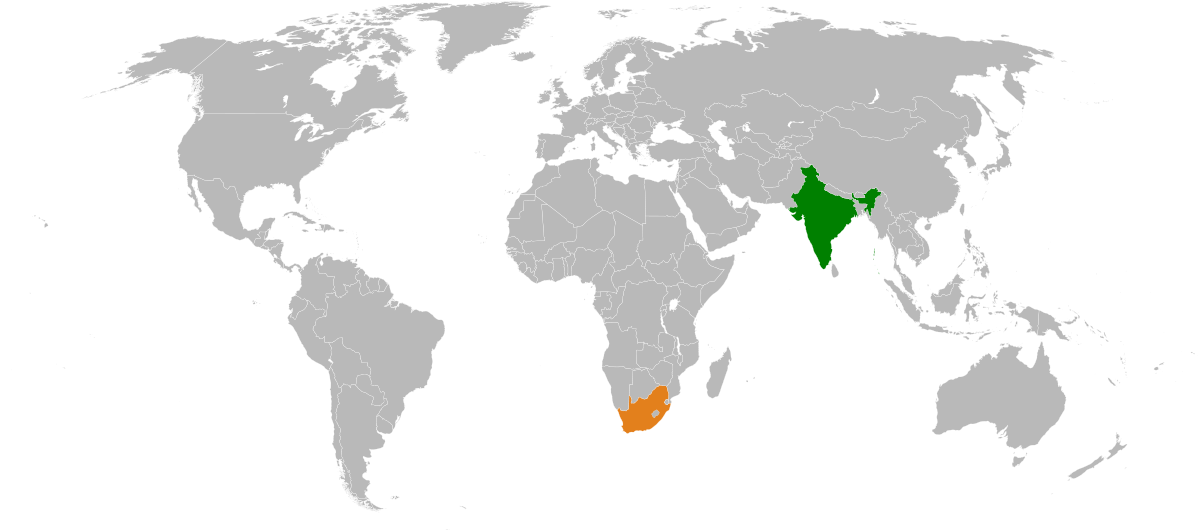
Leaders of India and South Africa affirmed a joint commitment to amplify the resonance of the Global South during a bilateral meeting on the margins of the G20 summit in Johannesburg. India’s Prime Minister met South African President Cyril Ramaphosa to review an expanding partnership that now encompasses trade, digital infrastructure and critical-minerals cooperation.

The leaders emphasised the historical foundation of bilateral ties, tracing back to shared anti-colonial struggles and longstanding people-to-people links. They identified emerging sectors of collaboration, including artificial intelligence and digital public platforms, as well as enhanced investment flows across innovation, infrastructure and mining sectors.

India expressed gratitude to South Africa for its role in relocating cheetahs to India and extended an invitation for South Africa to join the International Big Cat Alliance. At the G20 held in Johannesburg, which is the first summit of its kind hosted on African soil, South Africa has sought to spotlight issues of development, sustainability and Global South equity.

The two countries signalled their readiness to facilitate mutual investments, noting the growing footprint of Indian firms in South Africa and a shared interest in deepening bilateral ties in mining, start-ups, technology and infrastructure. They agreed to enhance support frameworks for these sectors.

In the domain of digital transformation, the meeting explored ways in which India’s Digital Public Infrastructure experience could be shared with South Africa, with the leaders discussing a roadmap for cooperation in those digital arenas that support transparency, inclusion and scalability.

On critical minerals—the backbone of technologies from electric vehicles to renewable energy systems—the dialogue underscored the strategic convergence of India’s growth ambitions and South Africa’s resource endowment. Both governments emphasised sustainable extraction, value-chain development and mutual investment as priorities.

The meeting also took place against the backdrop of global institutional reform debates, where developing countries increasingly seek to adjust frameworks such as the IMF and development banks. South Africa, as serving G20 chair, has framed its presidency around the themes of solidarity, equality and sustainability, particularly as representative of countries in the Global South.

While the two leaders concentrated on bilateral priorities, they also discussed multilateral coordination and collective platforms. They welcomed South Africa’s initiative to convene the IBSA leaders meeting and affirmed cooperation ahead of India’s upcoming chairship of BRICS in 2026.

Observers note that India–South Africa ties have evolved from traditional trade and diplomacy to a more strategic convergence around technology, investment, and global governance. According to experts, this shift reflects the changing priorities of middle powers in a multipolar world, where alignment on development and technological sovereignty is rising.

However, there remain practical challenges. For South Africa, translating resource-rich endowments into sustainable, inclusive growth has long been a domestic policy hurdle. For India, ensuring that digital partnerships respect both sovereignty and local capacity presents implementation risks. Critics argue that while high-level pledges are valuable, they must be matched by concrete mechanisms, regulatory clarity and project-level follow-through.

In trade terms, the two countries’ discussions come at a time when global supply-chain realignments and technology competition are raising the stakes for investment in emerging markets. Indian companies entering South Africa will need to navigate regulatory complexity, local participation requirements and the country’s infrastructure bottlenecks. South Africa, for its part, will have to ensure that its mining and start-up ecosystem attract and retain investment while meeting environmental and community benchmarks.

The diplomatic messaging also signals a broader orientation for both nations. India’s engagement with Africa has increasingly focused on capacity-building and infrastructure, while South Africa has positioned itself as a voice for Africa in global forums. Their joint push to amplify the Global South suggests an intention to influence agendas around debt relief, climate finance, digital equity and reform of global institutions.


A first-of-its-kind facility has begun operations in Fukuoka, Japan, tapping the natural movement of water between freshwater and seawater to generate electricity around the clock. The plant, developed by the Fukuoka District Waterworks Agency and inaugurated on 5 August 2025, is the first commercial-scale osmotic power facility in Asia and only the second in the world. It is designed to produce approximately 880,000 kWh annually—enough to power […]

Authorities in Washington have set new measures that could render nearly 48 million barrels of Russian crude oil stranded aboard tankers still at sea, disrupting key export flows and shaking global trade routes. The sanctions, targeting major producers Rosneft PJSC and Lukoil PJSC, take effect on 21 November and mark the most aggressive action yet under the current administration. Data from analytics provider Kpler suggest around 50 […]

Abu Dhabi’s infrastructure expansion enters an ambitious phase with the Abu Dhabi Projects and Infrastructure Centre announcing a capital-projects pipeline valued at US$54 billion over the next five years, and ambitions to double the size of this programme by 2040. Officials described the initiative as a broad invitation to overseas and regional contractors to engage in major new developments spanning housing and social infrastructure. During a road-show […]

VISHNU RAJA
RYO YAMADA
HITORI GOTOH
IKUYO KITA
Social Media Auto Publish Powered By : XYZScripts.com