Just in:
Binzhou’s Leap from Manufacturing to Intelligent Manufacturing // PRHK 2026 Benchmark Report highlights how Hong Kong’s IPO revival, AI, and the GBA are reshaping the SAR’s PR industry // Alibaba Cloud gains edge in agentic AI race // Afogreen Build Highlights Growing Adoption of Building Performance Modelling in Australia’s Sustainability-Driven Construction Sector // Save the Children Hong Kong’s Play to Thrive: Prioritising Personal Growth Over Competitive Success // Masdar starts Kazakh wind power push // Hawaii tests plastic waste in roads // Cheap RAT spreads through Telegram channels // Bid To Rebuild Bengal To Its Old Glory Is Welcome, Though Difficult // Where Minds Meet to Launch Space Economy Association Off the Ground // France and Oman press toll-free Hormuz passage // Anthropic reopens Mythos 5 for cyber defenders // Abu Dhabi starts new Saadiyat arts landmark // Beijing widens Japan curbs as Takaichi row deepens // Construction Management Awards 2026 – Now open for nomination Introduction of the Inaugural “Excellent Construction Safety Culture Award” Guides the Construction Industry Toward a New Milestone in Safety // China’s digital hub Hangzhou hosts conference on AI, OPC // CG Capital, the Leader in Branded Residences in Thailand, Marks Milestone Success for InterContinental Residences Bangkok Asoke Amid Global Economic Uncertainty // Dubai advances Gold Line contractor race // OpenAI limits Sol launch amid cyber risks // Ras Tanura crash kills Aramco personnel //

News related to
wikipedia

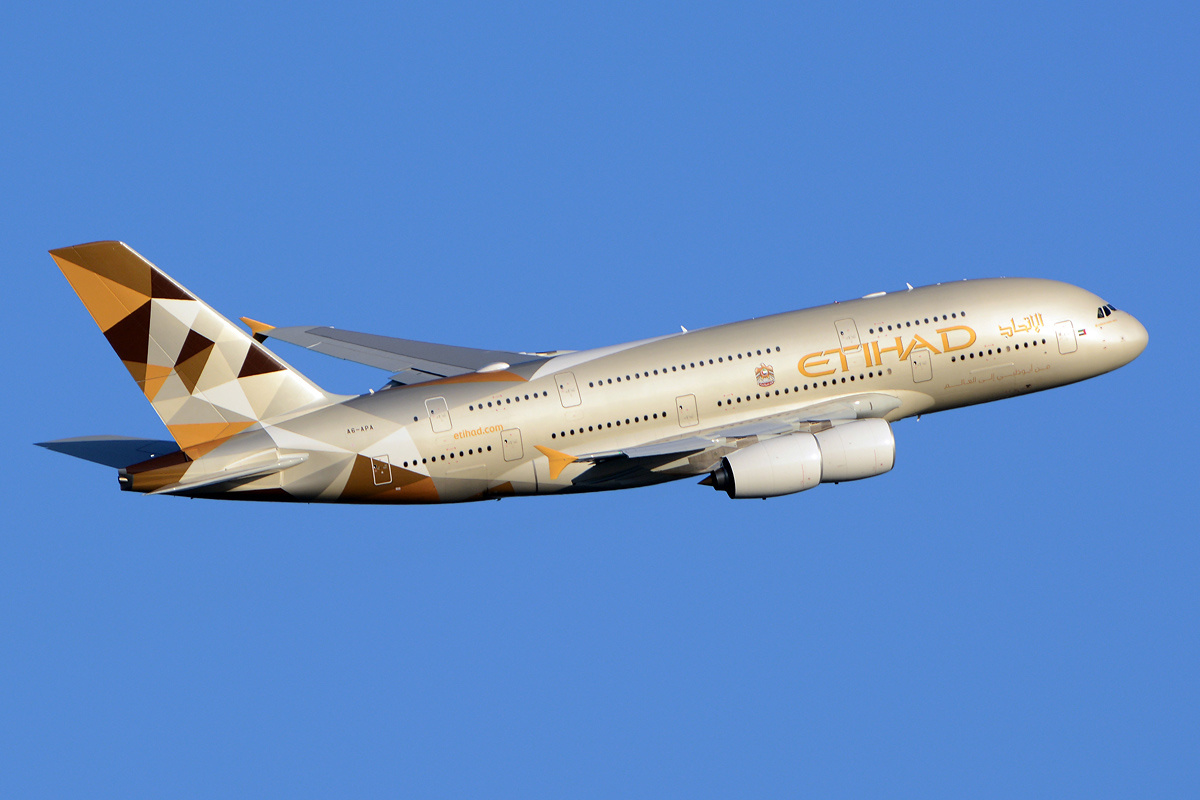
Etihad Airways has unveiled four new routes from its Abu Dhabi hub, linking the UAE capital with networks in North Africa and Asia in a major push to cement its global connectivity. The airline announced flights to Tunis, Hanoi, Chiang Mai and Hong Kong, opening up additional access across Africa and Asia. According to the carrier, these launches account for nearly 45 per cent of the UAE’s aviation growth this year.

The new North African route to Tunis flies three times a week starting 1 November, while the Vietnamese capital Hanoi will receive six weekly flights from 2 November. Chiang Mai in northern Thailand is added with four weekly services from 3 November, and Hong Kong is re-connected via five weekly flights also from 3 November under a renewed codeshare with Hong Kong Airlines. The carrier now serves more than 85 destinations globally.

Chief Executive Officer Antonoaldo Neves described the destinations as “each adding their own character” to the network, underscoring the airline’s aim to diversify its route map and bolster Abu Dhabi’s role as a travel and trade gateway. The move is timed to support the emirate’s broader economic pivot, complementing efforts in tourism, business and infrastructure.

The four-route addition forms part of Etihad’s strategic expansion alongside investments in both fleet and operational capabilities. The carrier has been ramping up use of its long-range Airbus A321LR and Boeing 787 aircraft, enabling direct links to previously unserved or underserved markets. The Tunis launch marks an enhanced North African footprint from Abu Dhabi, while Vietnam and Thailand reflect deeper penetration into Southeast Asia’s growing outbound travel markets. The Hong Kong entry is particularly significant given its status as a major financial and regional hub.

For travellers and partners the implications extend beyond new city-pairs. The enhanced network encourages greater inbound tourism into the UAE and provides domestic and international travellers increased flexibility via the Abu Dhabi hub. Industry analysts say the expansion underscores the carrier’s growing ambition to rival other Gulf-based airlines in forging east-west connectivity. It also aligns with Abu Dhabi’s Vision 2030 agenda, which includes boosting the emirate’s role as a global gateway.

Commercially, the airline’s published figures indicate that it expects the four new routes to contribute thousands of new seats in its system, aiding load-factor optimisation and revenue growth. The timing of launches over consecutive days signals a deliberate push to generate momentum across the network rather than incremental additions. Stakeholders within the regional aviation ecosystem view the move as one that may stimulate competitive responses from other carriers operating in similar markets.

While the expansion has drawn praise for its scale and ambition, there are strategic and operational considerations. Rapid rollout of new routes requires careful yield management, cost containment on long-haul sectors, and the calibration of frequency to ensure sustainable load factors. The North African route to Tunis, for example, hinges on demand that may fluctuate with seasonal tourism and business activity. Similarly, competition in the Thailand and Vietnam sectors remains intense with regional low-cost and full-service carriers vying for market share. The Hong Kong route will need to navigate the evolving regional regulatory and air-freight environment, especially given Hong Kong’s role in both tourism and cargo flows.

A significant security breach involving the open-source extension registry Open VSX Registry and maintained by Eclipse Foundation has exposed a vulnerability in the software-supply-chain ecosystem. Developer tokens that grant publish permissions were unintentionally made public, enabling threat actors to upload malicious extensions and target developers using the platform. Security researchers from Wiz flagged more than 550 exposed secrets within public repositories, among which tokens belonging to Open […]

Nasdaq has issued a formal letter of reprimand to TON Strategy, citing a breach of listing rules after the company raised equity and used nearly half its privately raised funds to acquire a large holding in Toncoin without obtaining required shareholder approval. According to the regulatory filing, the company’s issuance of new common stock and warrants during a private investment in public equity transaction in August exceeded the 20 per cent threshold of outstanding shares that triggers an approval requirement.

The issuer, formerly known as Verb Technology and re-branded earlier this year to become a listed vehicle focused on digital asset treasury strategy, announced a $558 million PIPE closed on 7 August. The company disclosed that approximately 48.78 per cent of those proceeds were used to purchase Toncoin.

Nasdaq’s notice pointed out the omission of shareholder approval, which is required when share issuances exceed thresholds designed to protect existing investors and maintain transparency. The exchange concluded that while the misstep was a violation, it did not appear to reflect intentional avoidance of rules and therefore did not recommend delisting the company’s securities.

Toncoin’s market price reacted sharply, declining more than 5 per cent to around $2.165 following the notice, and trading volumes surged, which analysts interpreted as heightened investor concern about governance risks in crypto-linked public-company structures.

In a briefing, TON Strategy CEO Veronika Kapustina had warned that the nascent model of publicly traded cryptocurrency treasury firms could be showing “early indications of a bubble”, pointing to rising valuation and risk of complacency in transparency.

The leadership change within TON Strategy also drew attention: on the closing date of the PIPE, the firm appointed Manuel Stotz, former president of the TON Foundation, as Executive Chairman. The combination of leadership transition, major token purchase, and share issuance without vote has raised questions around alignment of interests and governance framework.

Market observers say the incident underscores a broader trend where public companies are adapting treasury models that hold large cryptocurrency positions, creating novel intersections of asset-class risk, corporate finance and regulatory oversight. Each of these linkages raises fresh scrutiny as traditional exchanges apply inspection regimes developed for conventional equity markets. One analyst commented that “crypto treasury firms now face the same listing rigour as any industrial company, but with far less precedent to guide them”.

For TON Strategy and its shareholders, immediate focus will be on how the company responds within the 45-day window typically afforded by Nasdaq to submit a corrective plan. The notice does not affect the company’s listing status so long as it meets other requirements, but revisions may include retroactive shareholder approval or altered future financing protocols.

Abu Dhabi-based energy major Abu Dhabi National Oil Company has sealed three new agreements with US-based robotics specialist Gecko Robotics aimed at embedding artificial intelligence and robotics into its operations while accelerating the development of local skills for nationals. The accords were signed at the ENACT Majlis forum in Abu Dhabi and span a multi-year deployment for ADNOC Gas, a collaboration with the group’s training arm ADNOC […]

ADVERTISEMENT

A sophisticated phishing campaign has enabled attackers to compromise a maintainer account within the npm ecosystem, triggering one of the largest software-supply-chain breaches recorded. On 8 September 2025 the attacker gained access to the account of developer Josh Junon, and proceeded to publish malicious updates to widely used packages including “chalk” and “debug”. The versions laced with crypto-theft malware reached libraries that collectively recorded over 2 billion […]

Dubai is preparing to host one of the region’s largest music festivals when the event runs from 6–9 November at the sprawling Dubai Parks and Resorts complex. Organisers expect over 250,000 attendees and plan more than 100 global artists performing across five stages designed to cover genres from EDM and techno to hip-hop and world music. The move to Dubai Parks and Resorts marks a major expansion […]

Major banks in Nigeria posted solid earnings in the quarter ending September 30 as elevated interest rates and assets repricing lifted income streams, though underlying risks linger. Leading the pack, United Bank for Africa Plc recorded a profit after tax of ₦537.53 billion, up 2.3 per cent from the same period last year. Gross earnings rose 3.0 per cent to ₦2.469 trillion while net interest income climbed […]

Advertisements
ADVERTISEMENT

Tokyo-based digital forwarder Shippio has secured fresh capital to accelerate its transformation of international trade logistics, signalling a push to capture a major share of cargo flows into and out of Japan and beyond. The company, founded in 2016, has raised a total of approximately ¥3.24 billion in its Series C round, comprising ¥1.87 billion in equity and ¥1.37 billion in debt financing, bringing its lifetime funding to roughly ¥7 billion overall.

Key investors in this round include DNX Ventures as lead investor, along with Suzuyo, New Commerce Ventures and YMFG Capital in the equity portion, and a consortium of financial institutions—such as Shoko Chukin Bank, Japan Finance Corporation, Mizuho Bank, Mitsubishi UFJ Bank and Resona Bank—providing the debt portion. The funds will support Shippio’s goal of capturing a 30 per cent share of Japan’s total cargo volume through product development, customer expansion and mergers and acquisitions.

Japan, as an island economy heavily dependent on imports and exports, has seen a dramatic up-surge in e-commerce and cross-border trade: customs clearance permits have reportedly increased eight-fold between 2016 and 2024. Despite this, many logistics operations remain mired in analog workflows and manual documentation. Shippio aims to plug that gap by deploying a digital platform that offers shipment tracking, cost analysis, invoice management and customs processing. The founder and co-CEO, Takanori Sato, has remarked that the company is building a multi-sided network for importers/exporters and freight forwarders, with an eye on becoming the leading digital forwarder in Asia.

Shippio’s growth trajectory is evident: industry data indicates the company achieved approximately US$1.8 million in revenue in 2024, up from roughly US$590 000 in 2023, representing year-on-year growth of more than 200 per cent. Though earlier funding profiles remain opaque, publicly available records state Shippio underwent a Seed round of ¥190 million in December 2018 and has proceeded through Series A and Series B stages.

The logistics industry in Japan presents both a compelling opportunity and formidable challenge. On one hand, the market is highly fragmented, low margin, and hard-to-digitise—qualities that deter many investors. On the other, digital disruption in freight forwarding is overdue and ripe for those who can execute. In an interview with a logistics-industry podcast, Sato acknowledged the complexity of the space, noting that legacy practices have persisted for decades, and that the challenge lies not simply in building technology but in shifting enterprise behaviour and workflows.

Shippio now aims to expand its platform coverage beyond freight forwarding into wider supply-chain orchestration, including customs brokerage, trucking and warehousing. The company has already opened an office in Ho Chi Minh City to establish a Southeast Asia footprint, recognising that Vietnam and other manufacturing-heavy nations will be key origins for cargo flowing to Japan and other Asian markets. Its ambition to gain 30 per cent share implies a very steep climb: the total Japanese import-export market for logistics services is large, and incumbent players have entrenched relationships.

Industry analysts observe that Shippio’s dual-capital structure—equity plus debt—reflects a hybrid growth model where the company needs forward-looking product development as well as stable working-capital to service logistics networks. The inclusion of major banks suggests confidence in Shippio’s revenue model and risk profile. However, some caution that scaling in freight forwarding entails managing international customs regimes, myriad carriers, modal shifts and often low visibility in cost structures and margins. How well Shippio executes integration of its digital platform with real-world assets and operations will determine whether it can move beyond a niche player into a regional logistics heavyweight.

BYD Co. has reported another significant dip in its quarterly profit, a trend that highlights growing challenges for the Chinese electric vehicle manufacturer. The company’s financial struggles are attributed to increasing domestic competition and intensified scrutiny within the rapidly expanding electric vehicle market.

The latest figures reveal a sharp drop in profit, signalling a tough period for BYD as it grapples with shifting market dynamics. The EV giant, which has long been a leader in China’s electric car market, is now confronting a series of pressures that have raised questions about its ability to maintain its leading position in the industry.

BYD’s financial results for the latest quarter show a marked decline compared to previous years. While the company has seen significant sales growth, the rapid expansion of competitors and the tightening regulatory environment have severely impacted its profitability. Analysts point to these factors as the key contributors to the company’s poor performance, with increasing competition from both domestic and international manufacturers.

Several key rivals in the Chinese market have ramped up their EV production, offering more affordable models and aggressively targeting a broader consumer base. This surge in competition has intensified the pressure on BYD, forcing it to lower prices and increase marketing efforts to retain market share. However, such strategies have led to reduced margins, contributing to the company’s profitability issues.

Meanwhile, the regulatory landscape for EV manufacturers in China has become more stringent. The government has introduced new policies aimed at tightening emissions standards and ensuring greater transparency in the EV supply chain. These regulations, while necessary for the long-term sustainability of the sector, have added another layer of complexity for companies like BYD, which are already grappling with increasing competition.

Despite these challenges, BYD has maintained its status as one of China’s largest producers of electric vehicles. The company’s leadership has made efforts to pivot and adapt to changing conditions by focusing on new technology and improving vehicle quality. However, analysts suggest that its ability to sustain growth at its current pace may be compromised unless it can effectively manage both competition and regulatory pressures in the coming months.

The company’s performance also highlights a broader trend in the Chinese EV market, where competition is becoming fiercer as both established players and new entrants seek to capitalise on the booming demand for electric cars. International brands are also increasing their presence in the market, further intensifying the competitive pressure on domestic companies like BYD.

The global economic environment is adding to the uncertainty, as supply chain disruptions and fluctuating material costs affect car manufacturers worldwide. For BYD, the cost of raw materials, including lithium, a crucial component for batteries, has surged, further eroding its profitability.

BYD’s management is reportedly focusing on cutting operational costs, improving manufacturing efficiency, and exploring new international markets to counter the pressure it faces at home. The company has already made moves to expand its footprint in Europe, where demand for electric vehicles is steadily increasing. However, this shift to international markets will require significant investment in infrastructure and brand development, which may take time to yield results.

Dubai-based global terminal operator DP World has pledged an additional $5 billion in investment to strengthen India’s maritime infrastructure, furthering its long-term commitment to the country. The announcement was made during India Maritime Week 2025, marking a significant boost to the nation’s integrated supply chain network that facilitates both exports and domestic trade. This latest financial commitment follows the signing of five Memoranda of Understanding with prominent […]

ADVERTISEMENT

The DFA Design for Asia Awards 2025 has opened its submission window for entries, signalling a heightened push to elevate Asian-led design onto the global stage. Organised by the Hong Kong Design Centre in partnership with the Cultural and Creative Industries Development Agency of the Hong Kong Special Administrative Region, the awards target projects that demonstrate innovation, social impact and cross-border relevance. The entry period runs from 1 April to 7 July 2025, allowing participants to apply across six design disciplines and 30 diverse categories.

The competition spans Communication Design, Digital & Motion Design, Fashion & Accessory Design, Product & Industrial Design, Service & Experience Design, and Spatial Design. Eligibility is specified for projects launched in one or more Asian markets between 1 January 2023 and 31 May 2025, signalling a forward-looking emphasis on design influenced by the region’s evolving markets. A 50 per cent early-bird discount on the entry fee is offered for submissions by 30 April, roughly halving the cost to HKD 1,100 from the standard HKD 2,200 per entry.

The competition’s organising body emphasises that submitted projects should go beyond aesthetic appeal to reflect cultural values, social responsibility and human-centred innovation. The awards platform is positioned as a launchpad for designers and companies to gain international recognition, network globally and exhibit work in both online and physical showcases. The judging panel comprises design professionals from across the world, applying rigorous assessment criteria including creativity, usability, sustainability, aesthetic quality, and impact in Asia.

Key strategic shifts in this edition include an extended submission deadline and an expanded suite of benefits for winners, which include trophies, certificates, inclusion in an awards publication, eligibility for exhibitions and an online gallery, as well as invitations to high-profile events such as the Business of Design Week. This broadening of value-added rewards underscores the awards’ intent to deepen its role not merely as a recognition mechanism but as an accelerator of design careers and commercial opportunities.

Emerging design hubs across Asia stand to gain elevated visibility through this platform. Analysts observe that as demand grows for design solutions rooted in local culture yet globally scalable, events like these help bridge creativity with market viability. One jury member from a previous edition noted that a winning spatial design in Hong Kong “interprets what a library should be architecturally” and “brings the outdoor space indoor,” illustrating how design can engage both aesthetic and functional concerns.

Challenges persist for participants, particularly in meeting the criteria of “impact in Asia” while maintaining global relevance. Designers must navigate a competitive field: in the 2024 edition, 215 awardees were recognised across Grand, Gold, Silver, Bronze and Merit levels. The ability to demonstrate both commercial success and societal benefit is increasingly important, underscoring the awards’ focus on real-world outcomes rather than purely conceptual achievements.

Corporate and design-studio entrants will need to align submissions with multiple review dimensions: geographical market launch, human-centred innovation, sustainability credentials, and cultural resonance. A deeper trend is evident in how the awards reflect the evolving design ecosystem in Asia: beyond Hong Kong and major capitals, secondary cities and cross-border design collaborations are gaining traction. The judging criteria explicitly reward cross-market impact and innovation that resonates beyond local boundaries.

For the design industry, participation offers strategic advantages. Winning projects receive global exposure through awards publications and exhibitions, enabling both established studios and emerging talent to secure business leads and partnerships. The inclusion of the online showcase platform ensures that award-winning work reaches a wider audience beyond the physical event footprint. Observers suggest that for design firms seeking to expand internationally, a credential from this awards programme adds credibility in a crowded market.

Financially, the fee structure and early-bird promotion lower barriers to entry, but entrants must commit to a publication and promotion fee if selected as winners. This consideration means designers must evaluate the return on investment in terms of exposure and business potential. The awards’ transparency around deliverables and eligibility criteria signals a mature stage in its evolution since its launch in 2003.

Organisers have emphasised that the awards welcome designs with “deep Asian cultural roots” yet global aspirations, underscoring a dual objective of cultural preservation and market expansion. As the platform attracts entries from across the Asia-Pacific region, this edition could reveal emerging trends in spatial design, sustainable product systems, inclusive services and motion design. The overarching theme is that design is not simply aesthetic but a tool for transformation—economically, socially and culturally. Entrants are therefore expected to present work that balances form and function, local context and global relevance.


The Washington-based media outlet Radio Free Asia announced that it will suspend all editorial content production from Friday, citing critical funding shortfalls triggered by the federal government shutdown and delays in appropriations. The decision marks the first full shutdown of its news services since the broadcaster’s founding in 1996.

Chief Executive Bay Fang explained that the organisation is “forced to suspend all remaining news content production … for the first time in its 29 years of existence” and that operations in several overseas bureaus across Asia will close while staff are formally laid off and severance paid. The organisation reported that many employees have been on unpaid leave since March owing to previous funding cuts.

Analysts say the board’s move underscores a precarious moment for U. S.-backed international broadcasting. Radio Free Asia, which has delivered news in Mandarin, Burmese, Khmer, Korean, Vietnamese and Uyghur since the mid-1990s, has come under mounting pressure from a combination of political directives and fiscal constraints. In March the United States Agency for Global Media terminated its grant under a presidential executive order, prompting legal challenges. Over the following months the service slashed language operations, placed staff on extended leave and shrank its footprint.

The trigger for the complete pause is the failure of Congress to pass a full-year funding resolution, resulting in the federal shutdown beginning October 1 and the impasse over the 2026 fiscal year budget. The shutdown left USAGM unable to disburse new funding, forcing Radio Free Asia to exhaust reserves. The suspension leaves fewer than 30 employees in place, according to internal documents.

Supporters of the broadcaster warn that the shutdown of its services will leave a significant information gap in parts of Asia where independent media are scarce and press freedom is under threat. The outlet has been credited with investigative reporting on China’s Uyghur population, coverage of North Korean defectors and analysis of the 2021 Myanmar coup. Its multilingual services have made it one of the few external voices operating inside closed societies.

Critics of U. S. international broadcasting say that the funding model, which ties outlets to federal grants, is inherently unstable when funding is politicised. They argue that the reliance on appropriations makes such organisations vulnerable to shifts in administration priorities and partisan standoffs. The halt in operations at Radio Free Asia has already been welcomed by governments it has criticised, including Cambodia and China, which view the move as a blow to U. S. soft-power broadcasting efforts.

Industry observers note that other USAGM-funded broadcasters are also under strain. The Radio Free Europe/Radio Liberty has retained legal protection via a court injunction but still faces cash-flow challenges. The broader trend suggests that U. S. international media assets may have thoroughly entered a phase of retreat just as global information competition—particularly from China and Russia—is intensifying.

The implications of the suspension extend beyond media-industry metrics. Some Asian governments that had viewed the broadcaster’s presence as adversarial are already reclaiming influence. Beijing had added state-run radio frequencies in regions formerly served by Radio Free Asia’s Mandarin service, and Phnom Penh’s leadership publicly thanked Washington in March for the cuts, calling them “a major contribution to eliminating fake news” in the region.

Tech giant Google has announced a $2.85 million funding package to support artificial-intelligence skills development, education, online safety and cybersecurity in South Africa. The funding was disclosed at the AI Expo Africa event in Johannesburg and forms part of Google’s broader continental strategy to cultivate an AI-ready workforce and digital ecosystem. The funding will be channelled through Google. org, the company’s philanthropic arm, and it builds upon […]

Dubai-listed developer Emaar Properties is sharpening its global expansion strategy by placing a stronger emphasis on India while exercising caution over entry into China’s troubled housing market, according to chief executive and founder Mohamed Alabbar.

Alabbar told the Future Investment Initiative conference in Riyadh that India would be “our next big step,” citing two decades of operations in the country and significant growth potential. He emphasised that, while Emaar remains “very interested in China,” it is holding off until the market shows clear signs of recovery, noting that “it is a different world. Let them recover.”

The directive comes after Emaar posted strong financial results: net profit jumped 25 per cent to AED 18.9 billion last year and rose a further 34 per cent in the first half of 2025, conditions that Alabbar says position the firm to target large market acquisitions rather than start-ups abroad. Emaar’s land-bank footprint already spans more than 1.87 billion sq ft globally, including a 122 million sq ft stake in India and around 175 million sq ft outside the UAE.

In India the driver is rising urbanisation, youthful demographics and a housing deficit that Emaar believes it is well placed to address. Alabbar signalled that the company is pursuing joint-venture partnerships with local groups rather than divesting its Indian operations, dismissing reports of a sale to one of the country’s major conglomerates. By contrast, China presents multiple headwinds including a pronounced housing market slump: new-home prices in 63 out of 70 major Chinese cities fell in September, reflecting a 0.4 per cent month-on-month drop and a 2.2 per cent year-on-year fall.

Analysts say Emaar’s bifurcated strategy makes sense in the context of broader market dynamics. India’s economy is forecast to grow about 6.7 per cent in fiscal 2025-26, according to a Reuters poll, while China is projected to expand by roughly 4.8 per cent amid real-estate weakness. Alabbar noted that the company sees China’s environment as “still suffering with their housing problem, but they’ll come up with it,” stating that Emaar wants to be ready rather than reactive.

Emaar’s preferred mode of overseas expansion appears to be acquiring significant stakes in existing developers, upgrading business models and rolling out its integrated real-estate offering rather than green-field launches. “Maybe you go and buy a majority stake in a developer and then change the way they do business … or maybe they already do good business and we learn from them,” Alabbar explained. That approach aligns with Emaar’s low net debt, elevated cash position and willingness to invest in large markets such as the US, Europe and China.

Critics caution that while India holds promise, foreign developers often face regulatory, land-title and partner-alignment risks. Emaar’s long-standing Indian venture, launched in 2005, endured partner disputes and execution delays, a history that Alabbar acknowledged when he said “we’ve been there 20 years. That’s big for us.” He further noted that successful growth in India depends on selecting the proper location and product mix. Meanwhile, China’s structural property problems are deep-rooted: unsold inventory and falling valuations continue to impair home­buyer confidence, raising questions about the timing of any major developer expansion into the market.

ADVERTISEMENT

President Paul Biya has been declared the victor of Cameroon’s presidential election with 53.66 per cent of the vote, according to the country’s Constitutional Council. The announcement deepens political tension after opposition leader Issa Tchiroma Bakary claimed he had won the vote and alleged gunfire targeting civilians outside his home in Garoua. At 92 years old, Biya is now positioned to serve another seven-year term, extending his […]

A high-level delegation from China plans to meet officials in Brussels this month to discuss tightening restrictions on rare earths and other critical minerals after the bloc flagged the controls as a threat to its key industrial sectors. The European Union has increased pressure on Beijing to restore stable access to materials essential for electric vehicles, semiconductors and defence capabilities while also advancing its own diversification plan […]

Saudi Arabia’s flagship New Murabba project is poised to become a major investment hub, with plans to attract capital in technology, real estate, and construction sectors. Michael Dyke, the CEO of New Murabba, announced the initiative at the Fortune Global Forum in Riyadh, marking a significant step forward in the kingdom’s diversification strategy.

Launched in 2023 by Crown Prince Mohammed bin Salman, the New Murabba project is part of Saudi Arabia’s broader Vision 2030, aimed at reducing the nation’s reliance on oil revenues by fostering new industries and boosting economic growth. The initiative aims to transform the heart of Riyadh into a sprawling mixed-use urban area, poised to redefine the cityscape with a mix of residential, commercial, and entertainment offerings.

The project will cover an area of 19 square kilometres, positioning it as one of the largest urban developments globally. Its scale is unprecedented, making it one of the most ambitious projects in Saudi Arabia’s recent history. The new district is expected to accommodate over 100,000 residents and create hundreds of thousands of jobs in various sectors, significantly contributing to Riyadh’s economic development.

One of the key areas that Dyke highlighted during his speech at the forum is the focus on technology. The New Murabba project aims to integrate cutting-edge technological innovations into its design and infrastructure. The development will feature smart city technologies, including AI-driven systems for traffic management, energy conservation, and public services. Moreover, the project is expected to foster a thriving ecosystem for tech startups and established companies, making it an attractive destination for both domestic and international tech investors.

The project’s real estate and construction sectors will also play a pivotal role. With residential spaces, luxury hotels, office towers, and retail outlets planned, the project is designed to meet the needs of a diverse range of residents, businesses, and tourists. This focus on mixed-use developments aims to create a self-sustaining urban area, with a heavy emphasis on sustainability and green architecture. Additionally, the construction phase alone is expected to generate significant economic activity, providing a substantial number of jobs in the kingdom’s building sector.

New Murabba’s strategic location within Riyadh further boosts its potential as a central business and cultural district. It will be positioned in close proximity to key landmarks, including the King Abdulaziz Historical Centre and the King Saud University, enhancing its accessibility and making it a focal point for both locals and visitors. The project’s proximity to the King Khalid International Airport is also expected to make it a prime location for international businesses, especially in the tech and tourism industries.

The Saudi government’s backing of the New Murabba initiative signals a strong commitment to its diversification efforts. As part of the Vision 2030 programme, the kingdom is looking to foster a more sustainable and diversified economy, moving away from its dependence on oil exports. This development aligns with broader trends in urbanisation across the Middle East, where large-scale projects are shaping the future of cities and driving economic change.

The investment opportunities presented by New Murabba are expected to attract a wide range of investors from various sectors. For real estate developers, the sheer scale of the project represents an unparalleled opportunity. For technology firms, the integration of smart city technologies offers a unique environment in which to develop and test innovative solutions. Meanwhile, the construction sector stands to benefit greatly from the demand for infrastructure and buildings, with the long-term potential for growth in both residential and commercial spaces.

With the Saudi government’s push for private sector involvement, the New Murabba project is expected to be a catalyst for further investments in the kingdom. The involvement of international investors and companies will be crucial to its success, with the project acting as a gateway to other opportunities within Saudi Arabia’s growing economy.

ADVERTISEMENT

Greenlogue/AP Schneider Electric is charting a new course in the realm of energy and automation by positioning artificial intelligence -integrated data centres as central to the sustainability of digital infrastructures. The company unveiled its latest vision for these AI-driven hubs at its Global Innovation Summit in Copenhagen, marking a pivotal moment in its commitment to driving the global digital energy transition. During the summit, CEO Olivier Blum […]

A flurry of strategic manoeuvres has placed Warner Bros. Discovery at the heart of one of the media industry’s most consequential displacement moves, as multiple major technology and entertainment companies evaluate possible acquisition bids. The company said it has opened a formal review of strategic alternatives after receiving unsolicited interest for its full or partial business, setting the stage for what may become a landmark consolidation. Executives […]

US-based data-centre specialist Crusoe Energy Systems LLC has secured approximately $1.38 billion in a Series E funding round, raising its valuation to more than $10 billion underlining the intensity of demand for artificial-intelligence infrastructure. The equity fundraising was co-led by Mubadala Capital and Valor Equity Partners, and attracted backing from major investors including Nvidia Corporation, Fidelity Management & Research Company and Founders Fund. Crusoe, founded in 2018, […]

Gulf states are emerging as influential players in digital assets, with governments across the region intensifying efforts to regulate cryptocurrencies, tokenisation and Web3 innovations. A growing number of jurisdictions are introducing licensing frameworks for virtual asset service providers, stablecoin regimes and asset-tokenisation structures, signalling a shift in strategy from reactive oversight to proactive design.

The Central Bank of the United Arab Emirates has introduced a Payment Token Services Regulation that obliges issuers, distributors and custodians of payment tokens to maintain full reserve backing, undergo mandatory licensing and meet robust anti-money-laundering and cybersecurity standards, thereby positioning the UAE as a regulatory pioneer in the region. Across the region, countries such as Bahrain and Saudi Arabia have developed layered digital-asset frameworks, with Bahrain’s central bank among the earliest movers and Saudi launching fintech sandboxes and pilot token-asset schemes under its Vision 2030 plan.

Market data underline these developments. Analysis shows that between July 2023 and June 2024 the Middle East and North Africa region handled some US$338.7 billion in on-chain crypto value, accounting for approximately 7.5 per cent of global transaction volume. Institutional flows dominate: about 93 per cent of value transferred in the region came in amounts of US$10,000 or more.

Several regional platforms have obtained new licences under this regulatory push. The region’s first licensed crypto-asset service provider, Rain Financial Inc., has expanded its services under licence from both Bahrain’s regulator and Abu Dhabi’s ADGM-FSRA. In Bahrain, over 50 firms including nearly half focused on digital-assets are in discussions to establish operations under the Central Bank’s regime.

The tokenisation of real-world assets is gaining traction, with banks and global institutions exploring issuance of token-backed bonds, real estate and commodity-linked tokens. According to consultancy research, tokenisation could add as much as US$230 billion annually to MENA-region GDP. Major international exchanges and asset-managers are establishing footholds: for instance, the global exchange Binance uses the UAE as its regional base and has obtained a licence under Dubai’s Virtual Assets Regulatory Authority.

Despite this momentum, the region faces challenges. Implementation remains uneven: regulatory capacity across jurisdictions varies, local consumer-protection rules are still emerging and cybersecurity vulnerabilities in wallet providers and exchanges pose material risk. Energy-use and environmental impacts of crypto-mining have also drawn regulatory scrutiny: in one Gulf city, electricity consumption fell by over fifty per cent after enforcement of mining curbs.

Taxation and corporate-governance issues are also under development. In Saudi Arabia individuals currently pay no capital-gains tax on crypto, though businesses may face up to 15 per cent tax with corporate income taxed at 20 per cent plus a 2.5 per cent zakat levy. Given the youth-skewed demographics of Gulf markets and high smartphone penetration, regulators see digital-assets as both a diversification lever and a conduit to broader fintech innovation.

For global crypto and Web3 players the Gulf region offers a combination of clear regulation, large capital pools and government-driven ambition. However firms must navigate rigorous licensing conditions, reserve-backing rules, AML frameworks and evolving governance standards. The regulatory focus on stability and consumer protection underscores that the region expects digital-asset innovation to be embedded in mainstream finance rather than existing outside it.

Emirates National Oil Company and Amazon UAE have signed a memorandum of understanding to broaden customer access and enhance shopping experiences across the country by combining ENOC’s extensive retail footprint with Amazon’s advanced logistics and digital-retail technologies. The agreement allows Amazon to leverage ENOC’s fuel-station and convenience-store network, converting selected locations into quick-fulfilment hubs aimed at shortening last-mile delivery times and reducing urban traffic congestion. Amazon also […]

The kingdom is committing multibillion-dollar investments into artificial intelligence, high-tech manufacturing and gaming as it repositions its economy away from a flagship megacity project. Officials have indicated that the NEOM venture will receive a smaller share of funding as more capital flows into next-generation industries. The move reflects a pivot by policymakers toward technology-driven growth sectors. Top-level figures including the Public Investment Fund highlight that the ecosystem […]

Global oil prices climbed sharply following new sanctions targeting Russia’s major producers, underscoring how geopolitical risk is once again reshaping the energy sector. The United States moved to impose measures against Rosneft and Lukoil, companies that together account for roughly half of Russia’s oil production. The measures froze U. S. assets of the companies, barred American business dealings and threatened secondary penalties for third-party entities dealing with them.

The immediate market reaction was decisive. Brent crude rose by about 5.7 per cent after the announcement, while U. S. futures recorded their most significant one-day jump in over four months. Supply concerns and uncertainty around the disruption of Russian flows have added a new premium to oil prices. Some analysts describe this as the return of the “geopolitical risk premium” that had subsided earlier this year.

Key dynamics are emerging in the global energy landscape. One of them is the pressure on refineries in China and India that have heavily relied on Russian crude. With sanctions threatening secondary penalties, buyers are reconsidering their linkages. The ramifications extend beyond immediate flows: Russia’s ability to route crude via its so-called ‘shadow fleet’ of tankers and opaque trading chains may be challenged further, complicating its export capacity.

From the Russian side, President Vladimir Putin described the U. S. move as “unfriendly” and warned it could backfire by pushing up global oil costs. However, Moscow also signalled that production would continue, and previous sanctions have not immediately led to a collapse in output, suggesting resilience and adaptation persist in the Russian energy sector.

For the buyer nations, the calculus is shifting. Indian and Chinese refineries, which have depended on discounted Russian grades, now face the risk of being cut off from Western-dollar financing, insurance and shipping links if they flout U. S. rules. The potential loss of Russian supply at discount could create a scramble for alternative sources. Meanwhile, Russia may turn more aggressively towards friendly states or deepen barter trade, but such shifts would likely come with higher costs and logistical complexity. Analysts argue that the global spare capacity outside OPEC is already thin, so any reduction in Russian supply could tighten the market further.

In financial markets the impact is tangible. Energy stocks in Europe rose alongside oil prices, while Russian stock indices registered losses on the back of sanction pressure. Firms in the Asia-Pacific region with exposure to Russian crude may face heightened risk premiums or supply disruptions. The confluence of sanctions and market reactions underscores how inter-linked energy flows, geopolitics and financial exposure have become.

On the structural front, situation highlights the ongoing challenge of sanction enforcement. The U. S. Treasury and allied agencies are increasingly focusing not just on Russia’s producers but the broader ecosystem: shipping, insurance, finance. The effectiveness of these measures depends upon the willingness of non-U. S. players to comply and the ability of Russia to create work-arounds through alternative trade routes. The efficiency of existing infrastructure, the cost of shipping to farther markets, and the reliability of insurance all factor into how quickly Russian production or exports may come under strain.

VISHNU RAJA
RYO YAMADA
HITORI GOTOH
IKUYO KITA
Social Media Auto Publish Powered By : XYZScripts.com
Just in:
Ras Tanura crash kills Aramco personnel // CG Capital, the Leader in Branded Residences in Thailand, Marks Milestone Success for InterContinental Residences Bangkok Asoke Amid Global Economic Uncertainty // This summer will never stop us from our wellness routine // Beijing widens Japan curbs as Takaichi row deepens // Dubai advances Gold Line contractor race // China’s digital hub Hangzhou hosts conference on AI, OPC // Save the Children Hong Kong’s Play to Thrive: Prioritising Personal Growth Over Competitive Success // Construction Management Awards 2026 – Now open for nomination Introduction of the Inaugural “Excellent Construction Safety Culture Award” Guides the Construction Industry Toward a New Milestone in Safety // Masdar starts Kazakh wind power push // France and Oman press toll-free Hormuz passage // Where Minds Meet to Launch Space Economy Association Off the Ground // Binzhou’s Leap from Manufacturing to Intelligent Manufacturing // PlayStation sales hit May low // PRHK 2026 Benchmark Report highlights how Hong Kong’s IPO revival, AI, and the GBA are reshaping the SAR’s PR industry // Bid To Rebuild Bengal To Its Old Glory Is Welcome, Though Difficult // Abu Dhabi starts new Saadiyat arts landmark // Hawaii tests plastic waste in roads // Afogreen Build Highlights Growing Adoption of Building Performance Modelling in Australia’s Sustainability-Driven Construction Sector // Oil gains as Gulf truce faces strain // Anthropic reopens Mythos 5 for cyber defenders //