News related to
work

Major powers are expanding sensor investment across land, air, sea, cyber and space as platforms grow faster, stealthier and more autonomous. Aerospace advances such as reusable launch vehicles, hypersonic flight and satellite mega-constellations depend on dense networks of precision sensors to operate safely and effectively. In military settings, those same tools are redefining early warning, targeting and defence. One of the most consequential shifts has been in […]

Arabian Post Staff -Dubai Saudi Arabia has moved to formalise real-world asset tokenisation with the launch of the Kingdom’s first dedicated Centre of Excellence, as Open World announced an in-Kingdom operating entity designed to support compliant digital-asset innovation aligned with Vision 2030 goals. The initiative positions Saudi Arabia to accelerate the tokenisation of physical and financial assets such as real estate, commodities, infrastructure receivables and private credit […]

Global internet traffic surged to unprecedented levels during 2025, underlining how live sport, high-definition streaming and expanding artificial intelligence workloads are reshaping the world’s digital infrastructure. Network operators and exchange operators recorded sharp spikes during major live events, with a Champions League match night in December emerging as one of the heaviest traffic moments ever observed on public internet exchanges. Data collated from large internet exchange platforms […]

Pressure is building on developers and corporate users of generative AI as “hallucinations” — confident statements that are wrong — continue to surface in customer service chats, legal filings, coding assistants and financial research notes, exposing organisations to reputational harm, regulatory scrutiny and operational risk. The problem has become harder to dismiss as adoption accelerates, because the errors often arrive wrapped in fluent prose, invented citations and […]

YouTube is preparing to allow creators to appear in Shorts through AI-generated likenesses, a move that expands the platform’s generative toolkit while sharpening its rules against deception, spam and misuse. The initiative, aimed at short-form video makers, will let creators blend real footage with synthetic representations of themselves, opening new ways to scale production and localise content without physically filming every clip. The plan centres on authorised […]

Greenlogue/AP The UAE Research Program for Rain Enhancement Science has named the recipients of its sixth cycle of grants, committing up to US$1.5 million to each selected project over three years as the country sharpens its focus on applied climate research and water security. The awards, announced by the UAE Research Program for Rain Enhancement Science, come with a ceiling of US$550,000 per year for each project […]

Walmart and Unity have rolled out a new immersive commerce software-development kit that allows game creators to embed real-world shopping experiences directly within Unity-built titles and apps, marking a shift in how physical retail intersects with interactive entertainment. The free SDK empowers developers to integrate Walmart’s commerce systems, catalogue and checkout functionality into gameplay without forcing players to exit the virtual environment, unlocking fresh monetisation routes for […]

Advertisements

Arabian Post Staff -Dubai Source of Fate, a luxury real estate developer operating under the Wheel of Fate Group, has begun construction on Miraggio, a $707 million waterfront development on Al Marjan Island in Ras Al Khaimah, marking one of the largest private luxury residential investments announced on the northern emirate’s coastline. The ground-breaking ceremony on the reclaimed island signals the company’s formal entry into the upper […]

XRP slipped to around $1.93 in early trading, extending a mild pullback even as short-term indicators began to suggest a possible technical rebound. The move unfolded without a fresh headline catalyst, leaving traders to focus on positioning, liquidity conditions and well-watched chart levels rather than new developments tied to the token’s broader narrative. Price action through the past several sessions has been narrow, marked by brief rallies […]

Dogecoin extended losses on Tuesday as liquidation pressure rippled through the meme-coin segment, reinforcing a market tone defined by selling into rallies rather than chasing rebounds. The token fell about 2% on the day, underperforming parts of the broader crypto complex as traders trimmed exposure amid persistent resistance overhead and thinning liquidity during intraday bounces. Price action showed repeated failures near a well-watched resistance band between $0.126 […]

BARCELONA, SPAIN – Media OutReach Newswire – 21 January 2026 – The 450 MHz spectrum is becoming a key driver in smart grids due to its unique advantages. Once seen as a traditional frequency band, it has seen revitalization for industrial digitalization.

At HUAWEI CONNECT 2025, Jason Li, President of Global Marketing & Solutions from Huawei’s Electric Power Digitalization Business Unit, gave a statement.

“In the power industry, there are three key trends on the distribution side. Firstly, a massive amount of new energy will be integrated into the grid. Taking China as an example, by 2030, the installed capacity of distributed PV will reach approximately 1,000 GW. Secondly, the adoption of electric vehicles (EVs) is expected to grow rapidly, with around 110 million EVs and approximately 55 million charging piles projected by 2030. This poses significant challenges for power distribution. Thirdly, digitalization is accelerating. AI has gone from a ‘nice-to-have’ to a ‘must-have.’ Power systems cannot achieve effective protection, automation, or digitization without high-quality data and reliable communication. In medium-voltage grids, we rely on private wireless networks to achieve reliable backhaul and support endpoint control. I believe 450 MHz is the optimal solution. As the lowest band within 3GPP standards, it offers wide coverage, supports vast amounts of connections, and provides highly reliable network performance, all at a low cost. Moreover, it benefits from a mature ecosystem. This makes it perhaps the best solution for power companies undergoing digital transformation.”

At Mobile World Congress 2026 in Barcelona, Huawei will showcase more success stories in private wireless networks and 450 MHz applications, along with innovative solutions for intelligent power distribution, substations, and power plant inspections. To explore successful digital transformation in the power sector, visit the Huawei booth at stand 1H50, Fira Gran Via Hall 1. For more information, please visit https://e.huawei.com/en/industries/grid.

Hashtag: #Huawei #intelligentdistribution #electric #grid #powersystem #powerwireless

The issuer is solely responsible for the content of this announcement.

HONG KONG SAR – Media OutReach Newswire – 23 January 2026 – As stablecoins, AI, and automated systems increasingly enter real-world finance and payments, digital asset infrastructure is approaching a critical inflection point. Enterprise blockchain infrastructure provider Cregis has announced it will participate in Consensus Hong Kong 2026, taking place February 10–12, where it will engage with industry peers on the evolving role of stablecoins, enterprise asset management, and emerging technologies in financial systems.

Attendees can visit Booth 1808 at the Hong Kong Convention and Exhibition Centre to explore Cregis’ infrastructure offerings, including its crypto payment engine, self-custody MPC wallet infrastructure, and enterprise-grade self-custody solutions. According to the team, the event represents not just an industry appearance, but an opportunity to observe and contribute to a deeper question: how crypto assets can meaningfully integrate into real financial systems.

Digital Assets Enter Business Operations

Over the past few years, much of the industry conversation has centered on issuance and trading. But as institutional participation accelerates, the focus is shifting toward a more complex challenge: how digital assets are operated in secure, compliant, and efficient ways.

As financial institutions and payment companies begin using on-chain assets in real business workflows, asset management is no longer just about private key security. It becomes a system-level problem involving multi-party coordination, permission design, auditability, and risk governance.

Against this backdrop, Cregis plans to focus on:

  • The security and coordination requirements of enterprise asset management in stablecoin and payment use cases
  • How permissions, accountability, and auditability should function across multi-team, multi-system operations
  • How automation and intelligent systems are redefining the requirements for underlying asset infrastructure


Stablecoins Move to the Center of Financial Infrastructure

Consensus Hong Kong 2026’s agenda reflects a broader industry shift. Compared with previous years, stablecoin-related discussions have expanded significantly, with the focus moving from whether stablecoins are viable to how they scale.

Topics around cross-border payments, settlement efficiency, liquidity movement, and regulatory frameworks are increasingly seen as the connective layer between crypto-native systems and traditional finance. For many industry participants, this marks a transition: crypto assets are no longer viewed primarily as speculative instruments, but as emerging components of financial circulation infrastructure.

AI, Automation, and Crypto Enter the Execution Phase

Beyond stablecoins, the convergence of AI, robotics, and crypto has emerged as another defining theme at Consensus 2026. Rather than focusing on conceptual narratives, industry discussions are now centered on execution. Attention has shifted toward ensuring asset security as AI agents operate autonomously, clarifying responsibility and authority when automated systems participate in economic activity, and rethinking how financial infrastructure must evolve as enterprise systems themselves become economic actors.

Together, these discussions reflect a broader industry shift: technological convergence is moving decisively toward real-world deployment, marking a transition from storytelling to implementation.

The Debate Has Shifted

Disagreements around the future of crypto adoption remain. But the nature of the debate has changed. At Consensus Hong Kong 2026, the discussion is less about whether crypto will be adopted, and more about:

  • What form adoption will take
  • Whether infrastructure will become invisible to end users
  • Who bears systemic risk, and who defines operational rules

In this context, the maturity of infrastructure is emerging as a key determinant of where the industry goes next.

Observing and Participating in an Inflection Point

The industry is transitioning from “exploring possibilities” to “building durable systems.” The evolving themes at Consensus Hong Kong 2026 are a clear signal of that shift.

As stablecoins, digital assets, and intelligent systems move deeper into real financial and commercial environments, the resilience, controllability, and compliance-readiness of infrastructure will determine how far adoption can go. During the event, Cregis will engage with participants across payments, financial institutions, and Web3, while continuing to focus on the evolution of enterprise digital finance infrastructure.

Cregis aims to provide enterprises with end-to-end digital asset management and operational infrastructure. By building security-first, flexible, and compliance-oriented systems, the company seeks to abstract complex onchain operations into standardized solutions that enterprises can easily integrate and manage — helping institutional clients navigate this industry transition with confidence.
Hashtag: #consensus2026 #cregis #Stablecoins


The issuer is solely responsible for the content of this announcement.

About Cregis

is a global provider of enterprise-grade digital asset infrastructure, delivering secure, scalable, and compliant solutions for institutional clients.

Its core offerings—MPC-based self-custody wallets, Wallet-as-a-Service, and a robust Payment Engine—help exchanges, fintech platforms, and Web3 businesses manage digital assets with confidence.

With over 3,500 businesses served globally, Cregis empowers businesses to accelerate their Web3 transformation and unlock new digital asset opportunities.


3,500 Companies Recognized; Support for Working Caregivers Emerges as New Benchmark for Friendly Workplaces

HONG KONG SAR – Media OutReach Newswire – 22 January 2026 – 22 January 2026 – The Hong Kong Council of Social Service (HKCSS) held the 2024/25 Caring Company Scheme Recognition Ceremony today at the Hong Kong Convention and Exhibition Centre. Mr. Chris SUN Yuk-han, JP, Secretary for Labour and Welfare of the Hong Kong Special Administrative Region, attended as the Guest of Honour. This year, a total of 3,500 caring companies and organisations were recognised.

The Caring Company Scheme Recognition Ceremony cum Release of the Caring Business Achievements Overiview concluded successfully today, Mr. Chris SUN, JP, Secretary for Labour and Welfare (centre), joined HKCSS management for a group photo.From left:Hon Grace CHAN Man-yee, Chief Executive Of HKCSSMr. CHAN Tsz Ming, Director, Analysts at Level 1, Department of Social Affairs, Liaison Office of the Central People's Government in the HKSARMr. Chris SUN, JP, Secretary for Labour and WelfareRevd Canon Hon Peter Douglas KOON Ho Ming, SBS, JP, Chairperson of HKCSSMr. CHAN Charnwut, Bernard, GBM, GBS, JP, Vice-chairperson of HKCSSMs. CHAK Tung Ching, Yvonne, Vice-chairperson of HKCSS
The Caring Company Scheme Recognition Ceremony cum Release of the Caring Business Achievements Overiview concluded successfully today, Mr. Chris SUN, JP, Secretary for Labour and Welfare (centre), joined HKCSS management for a group photo.
From left:Hon Grace CHAN Man-yee, Chief Executive Of HKCSS
Mr. CHAN Tsz Ming, Director, Analysts at Level 1, Department of Social Affairs, Liaison Office of the Central People’s Government in the HKSAR
Mr. Chris SUN, JP, Secretary for Labour and Welfare
Revd Canon Hon Peter Douglas KOON Ho Ming, SBS, JP, Chairperson of HKCSS
Mr. CHAN Charnwut, Bernard, GBM, GBS, JP, Vice-chairperson of HKCSS
Ms. CHAK Tung Ching, Yvonne, Vice-chairperson of HKCSS

For the first time, HKCSS released the major findings from the Caring Business Achievements Overview, providing an in-depth look at corporate trends in addressing social issues such as population ageing, workforce challenges, and climate change across four key pillars: Partnership, Social, Economic, and Environmental Sustainability.

Mr. Chris SUN Yuk-han, JP, Secretary for Labour and Welfare of the Hong Kong Special Administrative Region, congratulated the businesses and organizations recognized by the Caring Company Scheme. He emphasized that building a compassionate society requires collaboration with the business community, which plays a vital role alongside government and non-governmental efforts. By prioritizing employee welfare, employers not only uplift families but also drive growth, attract talent, and foster mutual benefits. Mr. SUN called upon the business sector to engage more proactively in this initiative, fostering a collective commitment to building a more caring society for all.

3,500 companies were commended today; top performers were awarded logos representing leading levels of performance.

24 Years of Deep-Rooted Partnership: 28% of Collaborations Last 10 Years or More

The Caring Company Scheme has been running for 24 years. The Revd Canon the Hon. Peter Douglas KOON, SBS, JP, Chairman of HKCSS, stated in his speech: “The Scheme underwent a significant revamp recently to localise international sustainability frameworks. Through our inaugural data analysis, we can observe the business sector’s overall performance in tackling challenges like population ageing and climate change. We hope these trends will guide companies to transform a culture of care into concrete business decisions.”

Data indicates that business-social partnerships have built a solid foundation. Over 70% of companies have maintained partnerships with community partners for three years or more, while 28% have sustained collaborations for over a decade, reflecting a commitment to long-term stability in cross-sectoral collaboration.

104 companies were recognised as Caregiver-Friendly for their outstanding support measures.

New Frontier in the Workplace: Support for Working Caregivers Emerges as a Key Focus

Corporate performance in supporting caregivers has become a focal point. Data reveals that over 80% of companiess have popularised flexible work arrangements, and 104 companies received special “Caregiver-Friendly” commendations for their outstanding support measures this year.

Hon Grace CHAN Man-yee, Chief Executive of HKCSS, observed several innovative cases: “Some companies have implemented eight weeks of fully paid adoption leave, five days of leave for only-child caregivers, and even ‘Grandchild Leave’. Others provide patient companion service. Supporting caregivers does not necessarily require massive financial investment; as long as it starts from the employees’ needs, the possibilities for caring business are endless.”

Five Key Recommendations: From “Ad Hoc Actions” to “Policy Integration”

While companies excel in charitable donations and active participation, there is room for improvement in environmental data tracking (currently at approximately 30%) and workplace diversity. Consequently, HKCSS proposes five key recommendations:

  1. Deepen Caring Standards: Treat the Caring Company Scheme indicators as operational benchmarks to establish a systematic socially responsible business model.
  2. Promote Professional Sharing and Responsible Procurement: Encourage management to join NGO boards as volunteers to provide professional support and integrate NGO products into corporate procurement supply chains.
  3. Build Diverse and Inclusive Workplaces: Actively employ disadvantaged groups to tap into new talent pools and implement flexible work to support working caregivers.
  4. Sustain Investment in Talent Development: Recognize talent as a driver of economic growth, enhance staff training, and strengthen mental health support.
  5. Initiate Data-Driven Management: We recommend that companies immediately start tracking data related to sustainability performance to ensure that social initiatives are measurable and sustainable.

In 2024/25, the Caring Company Scheme received over 4,300 applications. Ultimately, 3,500 companies and organisations were recognised the Caring Company and Caring Organisation logos, comprising large corporations (42%), SMEs (51%), and organisations (7%). HKCSS emphasised that the data release aims to establish a long-term mechanism to guide the business sector in finding room for improvement and addressing future social challenges through collaboration.

Hashtag: #TheHongKongCouncilofSocialService #HKCSS #theCaringCompanyScheme #Caregiver-Friendly

The issuer is solely responsible for the content of this announcement.

SHANGHAI, CHINA – Media OutReach Newswire – 22 January 2026 – DHL Global Forwarding, the air and ocean freight specialist of DHL Group, has recently launched TRUCKAIR, a new cost-efficient multimodal service designed to support large-volume and bulky shipments moving between China and Europe. This new service meets the growing demand for flexible and reliable logistics amid evolving global trade dynamics.

Connecting China and Europe-DHL’s TRUCKAIR offers speed and cost efficiency

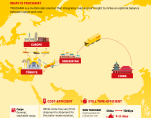
The TRUCKAIR solution integrates road and air freight to strike an optimal balance between cost and speed. Following inland pickup in China, the goods are transported via truck to Tashkent, Uzbekistan, where they are transferred via air freight for onward delivery to Istanbul, and thereafter onwards to other European destinations via various modes of transport. While costs may vary from shipment to shipment for this tailor-made solution, customers have reported six-digit figures in savings over the two months of adopting TRUCKAIR multimodal solution over airfreight solution. Additionally, with the TRUCKAIR multimodal service, the total transit time from China to Türkiye is approximately 9 to 11 days, only 4 to 5 days longer than usual transit time of 4 to 7 days by only air freight, making this service a prime choice for companies seeking a reliable and cost-effective solution for high-volume shipments.

“Demand for agile and cost-efficient logistics solutions continues to rise, backed by sustained growth in China–Europe and broader Asia–Europe trade. DHL’s latest market update points to tight capacity and rate increases into Chinese New Year, with a demand peak expected in early February 2026; TRUCKAIR helps customers avoid short term volatility while maintaining predictable lead times. China’s total imports and exports of goods grew 3.6% in the first eleven months of 2025, signaling a steady recovery in trade momentum. The European Union was also China’s second-largest trading partner in 2025, with bilateral trade up 5.4% year-on-year to RMB 5.37 trillion,” said Aditi Rasquinha, CEO of DHL Global Forwarding Greater China. “TRUCKAIR was developed to meet this growing demand for greater flexibility and predictability in cross-border shipments, enabling businesses to control costs without compromising speed.”

Designed for high-volume, general cargo shipments, the TRUCKAIR solution offers customers a cost-effective alternative to traditional air freight while maintaining delivery timelines suitable for retail and other time-sensitive and high-volume industries. Customers may also integrate TRUCKAIR with DHL’s broader portfolio of forwarding services to build customized, end-to-end supply chain solutions.

“The strategic design of the TRUCKAIR route reflects China’s pivotal role as a global trade hub,” Aditi added. “With its vast network, well-developed logistics infrastructure and rapid adoption of smart technologies and automation, the country is uniquely positioned to maintain strong connectivity with international markets. Leveraging these strengths, TRUCKAIR helps businesses to navigate supply chain challenges amid evolving global trade patterns and serves as a gateway for other Asia-Pacific markets to access Europe efficiently.

Hashtag: #DHL

The issuer is solely responsible for the content of this announcement.

DHL – The logistics company for the world


DHL
is the leading global brand in the logistics industry. Our DHL divisions offer an unrivalled portfolio of logistics services ranging from national and international parcel delivery, e-commerce shipping and fulfillment solutions, international express, road, air and ocean transport to industrial supply chain management. With approximately 400,000 employees in more than 220 countries and territories worldwide, DHL connects people and businesses securely and reliably, enabling global sustainable trade flows. With specialized solutions for growth markets and industries including technology, life sciences and healthcare, engineering, manufacturing & energy, auto-mobility and retail, DHL is decisively positioned as “The logistics company for the world”.

DHL is part of DHL Group. The Group generated revenues of approximately 84.2 billion euros in 2024. With sustainable business practices and a commitment to society and the environment, the Group makes a positive contribution to the world. DHL Group aims to achieve net-zero emissions logistics by 2050.

For many expats, family law in Dubai becomes relevant not because it was carefully planned, but because life circumstances change. Divorce, child-related matters, or financial arrangements often arise at a moment when emotions are already running high. On top of that, uncertainty appears because the local legal system works differently from what people are used to in their home countries. That is why the first and most […]

Cybersecurity firm Rubrik has rolled out a sovereign version of its Rubrik Security Cloud, positioning the offering as a response to mounting pressure from governments and regulated industries to keep sensitive data under national control and outside the reach of foreign jurisdictions. Rubrik said the sovereign capability is designed to ensure that customer data, encryption keys, operations and support remain confined within specific countries or regions, aligning […]

Policy makers and technology leaders are pressing ahead with a governance-by-design approach to artificial intelligence as deployment accelerates across public services, finance, manufacturing and health care, even as scepticism around generative systems keeps trust, data ethics and measurable returns at the centre of decision-making.

Momentum has gathered through a series of policy signals that place safeguards alongside scale. Draft frameworks circulated by NITI Aayog and implementation roadmaps led by Ministry of Electronics and Information Technology have reinforced principles around responsible data use, model transparency and accountability for outcomes, while stopping short of prescribing one-size-fits-all rules that could chill innovation. Officials involved in consultations say the intent is to embed risk controls early—covering bias, explainability and security—rather than bolting them on after systems are deployed.

Enterprise adoption has followed a similar trajectory. Banks, insurers and large manufacturers are prioritising AI programmes that demonstrate near-term productivity gains and compliance readiness, favouring narrowly scoped applications over open-ended generative tools. Executives interviewed across sectors point to fraud detection, demand forecasting and maintenance optimisation as areas where benefits can be quantified and audited. By contrast, unrestricted text and image generation remains subject to tighter internal review, particularly where customer-facing outputs could expose firms to reputational or regulatory risk.

Scepticism has not slowed investment, but it has reshaped it. Venture funding has tilted towards platforms that promise governance controls by default—model cards, audit trails and data lineage—alongside performance. Start-ups building on foundation models increasingly highlight enterprise-grade safeguards as differentiators, responding to procurement teams that now treat ethics and security as commercial requirements rather than public-relations add-ons. Industry analysts note that this shift mirrors global buyer behaviour, but localised rules on data residency and consent amplify its importance.

Public-sector pilots underscore the same pattern. State administrations experimenting with AI for grievance redressal, traffic management and land records have emphasised human oversight and explainability, often keeping decision authority with officials while using algorithms to triage or recommend. Procurement documents reviewed by this publication show explicit clauses on dataset provenance and bias testing, reflecting lessons from earlier digital programmes where opaque automation triggered legal challenges.

At the national level, interoperability with global standards remains a priority. Engagements with multilateral bodies and peer regulators have sought alignment with emerging norms on risk classification and model evaluation, while retaining flexibility for domestic conditions. Officials argue that a principles-based stance will allow rapid adaptation as technology evolves, avoiding the lock-in that can follow prescriptive rules. Critics, however, warn that voluntary compliance may prove uneven without clear enforcement pathways.

Talent development forms another pillar of the blueprint. Universities and skilling platforms are expanding curricula that combine machine learning with ethics, law and product management, aiming to produce practitioners who can translate policy into code. Industry groups say demand is strongest for professionals able to design systems that pass audits and deliver return on investment, rather than purely experimental research. This has influenced hiring, with firms rewarding cross-disciplinary expertise.

Cloud providers and chipmakers are also recalibrating offerings for a market that prizes trust. Secure enclaves, confidential computing and on-premise deployment options are being pitched to enterprises wary of exposing sensitive data. Partnerships between domestic integrators and global technology companies have focused on localisation—language support, regulatory reporting and sector-specific controls—over raw model size.

GameStop is preparing to shut down nearly 30 outlets across New York State, a move that underscores the videogame retailer’s deepening retreat from bricks-and-mortar locations as it retools its business for a market reshaped by digital distribution and tighter consumer spending. The closures span dense urban neighbourhoods and smaller regional centres, signalling a broad reassessment rather than a targeted pullback. In New York City, multiple stores across […]

Amazon is facing renewed questions over its marketplace safeguards after a cluster of high-value graphics card orders went wrong, leaving some buyers unexpectedly enriched while others were left short-changed. The incidents, shared widely across online forums and technology communities, centre on next-generation Nvidia graphics cards sold and shipped by Amazon, and point to weaknesses in returns handling at a time when demand for premium hardware remains intense. […]

US immigration authorities began enforcing a new round of visa suspensions on Monday, implementing a policy that affects travellers from a broad set of countries spanning South Asia, the Middle East, Africa and Latin America. The measures, announced earlier by the United States government, apply from the start of the business day and immediately alter entry conditions for thousands of prospective visitors, students and temporary workers. Officials […]

A $50 million initiative bringing together the Bill & Melinda Gates Foundation and OpenAI is being positioned as a practical push to embed artificial intelligence into public health delivery across multiple African countries, with backers arguing the effort could help overstretched systems do more with limited resources while raising questions about data governance and long-term capacity. The collaboration, branded Horizon1000, is designed to fund pilots and scale-ups […]

A shift towards paperless aviation credentials gathered pace as the Directorate General of Civil Aviation rolled out an Electronic Personnel Licence for commercial pilots, marking a structural change in how flight crew qualifications are issued, verified and carried. The initiative covers Airline Transport Pilot Licence holders and is designed to replace physical documents with a secure digital alternative accessible through the eGCA mobile application.

Officials said the Electronic Personnel Licence, or EPL, allows pilots to store and display their credentials on smartphones and tablets, reducing reliance on printed licences that can be lost, damaged or delayed during renewals. The digital licence is issued directly by the aviation regulator after validation of training records, medical certification and flight experience already housed within the eGCA system, which has been the central portal for licensing and examinations for several years.

The move aligns civil aviation oversight with global trends in digital identity management, particularly as airlines and regulators seek faster verification processes. Under the new system, the EPL carries a dynamically generated QR code that can be scanned by airlines, airport authorities and foreign regulators to confirm authenticity in real time. DGCA officials indicated that the licence is tamper-resistant and protected by multi-layer authentication linked to the pilot’s registered credentials.

Paper licences give way to secure digital credentials is how the regulator internally describes the transition, emphasising both operational efficiency and security gains. According to people familiar with the rollout, the digital format also shortens turnaround time for licence issuance and endorsements, which previously depended on manual checks and physical dispatch.

Pilots holding an Airline Transport Pilot Licence are the first group covered, reflecting the operational importance of captains and senior first officers in commercial aviation. DGCA plans to extend the framework to other categories, including Commercial Pilot Licence holders, aircraft maintenance engineers and cabin crew, once the system stabilises and feedback from initial users is assessed.

Airline operators have welcomed the development, noting that licence verification is a routine but critical compliance task. Flight operations departments often need to validate licences at short notice for roster changes, wet leases or overseas operations. A digital licence accessible through an official app reduces administrative friction and supports faster decision-making, particularly for international deployments where foreign authorities seek immediate confirmation of credentials.

The launch comes amid sustained growth in domestic and international air traffic, with fleet expansion and accelerated pilot hiring placing additional pressure on regulatory processes. Training organisations and airlines have repeatedly flagged delays in licence endorsements as a bottleneck, especially during aircraft type transitions. By integrating the EPL with existing digital records, the regulator aims to address those concerns without compromising oversight.

Security has been positioned as a central feature rather than an add-on. The EPL is designed to function both online and offline, allowing pilots to present credentials even in low-connectivity environments, while ensuring that any verification attempt flags expired or suspended privileges. DGCA officials said this feature was essential for remote airfields and international operations where network access may be inconsistent.

The initiative also responds to a broader push by governments and regulators to adopt digital public infrastructure. Within civil aviation, several jurisdictions have begun experimenting with electronic licences and medical certificates, though adoption has been uneven. Industry experts note that interoperability and trust between regulators remain key challenges, as foreign authorities must be confident in the issuing system’s integrity.

From a compliance perspective, the electronic licence does not alter the underlying regulatory requirements. Pilots must continue to meet medical, proficiency and recency standards, and enforcement actions remain unchanged. The EPL is a format change rather than a relaxation of rules, a point DGCA officials have stressed to avoid misinterpretation within the industry.

Training academies and pilot associations have sought clarity on transitional arrangements, particularly for pilots flying internationally. DGCA has indicated that the physical licence will remain valid during a defined transition period, allowing operators and foreign regulators time to familiarise themselves with the digital format. Guidance notes circulated to airlines outline verification procedures and recommend carrying both digital and physical copies during the initial phase.

UAE and India have elevated their strategic partnership with a sweeping set of agreements signed during the visit of Sheikh Mohamed bin Zayed Al Nahyan, signalling a calibrated push to broaden cooperation across defence, energy, space, trade, investment and food safety. The pacts, endorsed alongside Narendra Modi, reflect a shared intent to anchor bilateral ties in long-term economic and security interests while navigating a volatile global environment.

The visit culminated in the exchange of multiple memoranda of understanding that collectively aim to translate political goodwill into operational outcomes. Officials from both sides framed the agreements as an expansion of the Comprehensive Strategic Partnership, emphasising implementation timelines and institutional coordination rather than aspirational language. At the centre of the package is a defence cooperation framework that strengthens military-to-military engagement, joint exercises, training exchanges and defence industrial collaboration, an area that has gathered momentum as both countries diversify security partnerships.

Energy cooperation featured prominently, with accords spanning hydrocarbons, clean energy and grid resilience. State-linked firms and private players outlined pathways to scale joint investments in upstream oil and gas while accelerating collaboration in renewables, green hydrogen and energy storage. The emphasis on clean energy dovetails with the UAE’s net-zero ambitions and India’s drive to expand non-fossil capacity, positioning both as partners in technology transfer and project financing across third markets.

Space cooperation agreements mark another pillar of the evolving relationship. Space agencies from Abu Dhabi and New Delhi committed to deeper collaboration in satellite development, earth observation, data sharing and human spaceflight training. The arrangements are designed to support applications ranging from climate monitoring and disaster management to urban planning and agriculture, underscoring the commercial and societal dividends of space-based assets.

Trade and investment pacts seek to build on the momentum generated by the Comprehensive Economic Partnership Agreement, which has reshaped tariff structures and supply chains between the two economies. New understandings focus on easing customs procedures, aligning standards and expanding market access for small and medium-sized enterprises. Investment promotion agencies agreed to coordinate sectoral roadmaps in manufacturing, logistics, digital services and infrastructure, with sovereign investors and development funds expected to play a catalytic role.

Food safety and agricultural cooperation agreements address a strategic priority for both governments. Protocols on standards, certification and inspection aim to streamline the movement of agri-food products while safeguarding consumer interests. Joint research initiatives are set to target crop resilience, post-harvest technologies and cold-chain logistics, reflecting lessons from climate stress and supply disruptions that have sharpened the focus on food security.

Diplomatic engagements during the visit also underscored people-to-people ties, education and skills. Universities and research institutions announced partnerships in advanced materials, artificial intelligence and health sciences, while vocational training programmes were aligned to labour market needs in construction, healthcare and digital services. These measures are intended to deepen the talent pipeline that underpins commercial ties.

Officials were careful to situate the agreements within a broader regional and global context. With shipping lanes under strain and commodity markets exposed to geopolitical shocks, both sides highlighted coordination on maritime security and supply chain resilience. The defence and logistics components of the package are expected to reinforce cooperation in the Indian Ocean region, where the UAE’s ports and India’s maritime capabilities intersect.

Economists note that the breadth of the accords reduces concentration risk by spreading cooperation across multiple sectors, while governance mechanisms embedded in the agreements could improve execution. Joint working groups, periodic reviews and dispute-resolution channels were outlined to ensure progress is measurable. Business leaders welcomed the clarity on standards and compliance, arguing that predictability lowers the cost of capital and accelerates project timelines.

Critics caution that delivery will depend on regulatory alignment and the pace of domestic approvals, particularly in capital-intensive sectors such as energy and defence manufacturing. Past initiatives have sometimes faced delays linked to procurement processes and technology transfer rules. Both governments acknowledged these constraints and signalled intent to address bottlenecks through empowered committees.

A sharp exchange at the World Economic Forum in Davos has underlined widening fault lines between global financial authorities and the cryptocurrency industry, as Brian Armstrong challenged warnings from François Villeroy de Galhau over digital assets, stablecoins and the idea of a so-called bitcoin standard. Speaking during a packed panel discussion on the future of money, Armstrong argued that decentralised finance and blockchain-based currencies were expanding choice, […]

VISHNU RAJA
RYO YAMADA
HITORI GOTOH
IKUYO KITA