Just in:
As AI Reshapes Education, Singapore Convenes Global Dialogue on the Future of Early Childhood Education // Ta’ziz finalises $1.39bn funding for Ruwais industrial facilities // Utilities pursue ₹1,992 cr in unpaid bills // CR Longdation Aethereal Cybersecurity × Global Cybersecurity Alliance (GCSA) Join Hands to Establish the “AI and Cybersecurity Research Centre” // Hong Kong mandates crypto transaction disclosures to tax authorities // Oil and chip shares retreat after Democratic victories // xCube Access Welcomes Entrust Capital Limited  Expanding Access to Professional Portfolio Management // Asia Left Behind: Ten international companies have yet to report delivering on their cage-free egg pledges across the region // Anthropic to prohibit persistent abuse of Claude chatbot // ADIA and partners establish $1.4 billion aviation venture // APT29-linked campaign exploits outdated Apple and Android software // Fast Just Got Fastest: STING Energy Boost™ Celebrates Kimi Antonelli’s Formula 1® World Championship and the Fan Energy Behind It // After Reaching 7 Million Users in the Philippines, Skyro Launches Transparent Cash Loans in Malaysia // Meraas showcases five residential zones at Dubai Design Week // Govt opposes Arlekar’s PSC action // OpenAI identifies 948 Linux privilege escalation flaws using AI // Middle East governments assess Iran war after US vote // Vance attributes Republican midterm defeats to Iran conflict // The “1st Greater Bay Area Health and Longevity Summit & Awards Ceremony” concludes successfully in Macao // e-Crime Bureau Signs Cybersecurity Partnership With Smart Africa, Reinforcing Its Global Expansion //

News related to
work

Emirates NBD is in advanced negotiations to acquire up to a 25 percent stake in Mumbai-based RBL Bank through a preferential allotment of equity and warrants, two people familiar with the matter told Reuters. The proposal would mark a major move by the Dubai-based lender into India’s private banking sector.

The Dubai bank is evaluating the terms of the deal, including pricing and structure, though both parties have yet to confirm the arrangement publicly. One of the sources indicated that the deal may be announced once approvals are in place.

On the Indian equities front, news of the talks propelled RBL’s shares higher: the stock climbed over 3 percent on 14 October, reaching its highest level since January 2024, and became one of the top gainers among private banks. Investor optimism stemmed from expectations that a reputable foreign investor might bolster transparency, governance and capital strength at RBL Bank.

Under Indian banking regulations, strategic foreign investors are generally restricted to a 15 percent stake, although exceptions have been made in high-profile cases. The Reserve Bank of India earlier permitted Sumitomo Mitsui Banking Corporation to hold 20 percent in Yes Bank, setting a precedent for flexibility in exceptional circumstances. Simultaneously, India is exploring adjustments to foreign ownership rules to enhance capital inflows into its banking sector.

Emirates NBD already holds regulatory approval in principle to convert its branches in India into a wholly owned subsidiary, positioning itself to operate on par with domestic Indian banks. That architecture would facilitate compliance with local regulations and provide greater autonomy to its Indian operations.

RBL Bank maintains a dispersed shareholding structure, with retail investors, mutual funds and small institutional holders driving most of its capital. It has no traditional promoter group. In June 2024, the bank had announced plans to raise ₹65 billion through a mix of institutional share issuance and debt instruments to support growth plans.

Previous media reports spanning earlier in 2025 suggested Emirates NBD’s interest in acquiring a minority stake in RBL, via a preferential allotment route, as part of its Asian expansion push. Those earlier discussions laid the groundwork for the current advanced negotiations.

The deal—if consummated—would align with Emirates NBD’s broader strategy of deepening its footprint in India, a market it already serves through branches in Mumbai, Chennai and Gurugram, and via its approved subsidiary structure. The bank has posted robust growth: in the first quarter of 2025, it exceeded profit expectations, buoyed by strong loan expansion and net interest income.

Still, multiple hurdles remain. Key among them are regulatory approvals from the RBI and possibly the finance ministry, clearances from capital markets regulators, and acceptance by RBL Bank’s board. Moreover, the valuation will be closely scrutinised, since acquiring a wedge of 25 percent may require pricing the equity at a premium to prevailing market values.

On the regulator’s side, officials have been deliberating over changes to banking ownership norms to attract foreign capital, particularly in systems where capital demand is rising rapidly. Some observers view case-by-case relaxation of limits as a likely path forward.

Institutional analysts have viewed Emirates NBD’s possible entry as a positive for RBL. One equity research note from ICICI Direct argued that the presence of a well-capitalised global investor could strengthen governance practices and investor confidence.

German Pavilion “Wa! Germany” closes after 184 days with over three million visitors Koelnmesse, as the organisation responsible for operations, reports resounding success COLOGNE, GERMANY and OSAKA, JAPAN – Newsaktuell – 13 October 2025 – After 184 days, the German Pavilion “Wa! Germany” at Expo 2025 in the Japanese city of Osaka has closed its doors. More than three million people from around the world visited the […]

By K Raveendran Sushil Kutty, who passed away on Sunday night, lived and wrote like a man apart — a loner in every sense, and yet deeply connected to the world through the force of his words. A regular columnist for the India Press Agency for the last ten years, Sushil was that rare journalist whose writing transcended political lines, winning admiration from across the ideological spectrum. […]

By Nantoo Banerjee There is little to be excited about the recent inauguration of predominantly mountainous Arunachal Pradesh’s first commercial coal mine at Namchik-Namphuk in the Changlang district jointly by Union Coal & Mines Minister G Kishan Reddy and Arunachal Chief Minister Pema Khandu, marking the state’s first coal mine project. With an officially estimated […]

The article India Must Cut Down Coal Consumption appeared first on Latest India news, analysis and reports on Newspack by India Press Agency).

Larsen & Toubro’s hydrocarbon onshore unit, in partnership with Greek firm Consolidated Contractors Group, has booked an ultra-mega contract valued at over ₹150 billion to build a natural gas liquids plant and associated processing facilities in the Middle East. The engineering, procurement, construction, installation and commissioning scope will cover the handling of rich associated gas, integration of utilities, and interfacing with existing infrastructure. L&T will lead engineering […]

Dubai Healthcare City Authority has unveiled a Dhs1.3 billion development programme for Phase 1 of Dubai Healthcare City, marking an aggressive expansion that aims to elevate its global standing in health infrastructure. Construction is set to start in December, with a targeted completion window by November 2027.

At the heart of the initiative lies a triple-pronged buildout: a LEED Platinum-certified office block, a purpose-built medical complex, and supporting infrastructure—each tailored to attract health-related investors and operators. The office building, designed by P&T Architects & Engineers, spans some 13,000 sqm across nine levels and includes flexible workspaces and ground-floor retail zones. The medical complex, by Design & Architecture Bureau, covers 5,800 sqm, with two basements and five floors, and is planned to accommodate surgical units, diagnostics, outpatient services and lab facilities.

Beyond buildings, the infrastructure scope includes multi-storey parking with electric vehicle charging points, integration with Salik for smart parking, and accessibility enhancements. The aim is to strengthen the underlying ecosystem so that the healthcare precinct becomes not just a cluster of clinics, but a fully serviced global health hub.

Issam Galadari, DHCA’s CEO, asserted that these projects reflect the authority’s ambition to combine sustainability, global investment appeal and design excellence, aligned with Dubai’s Economic Agenda and the UAE’s Net Zero Strategy 2050. Allae Almanini, COO, added that the works will “boost confidence for healthcare providers and investors” by improving efficiency, accessibility and sustainability across the community.

Phase 1 of DHCC, located in Oud Metha, currently operates within a 4.1 million sq ft footprint dedicated to medical services and education. Phase 2, by contrast, spans around 19 million sq ft at Al Jaddaf, and is oriented more toward wellness and mixed support services.

This new investment signals a sharpened focus on physical infrastructure as a differentiator. In recent years, DHCC has emphasised partnerships and innovation: its free-zone model already supports over 400 licensing entities and more than 168 clinical facilities. Earlier this year, DHCA collaborated with AI Quantum Intelligence Institute to launch an AI healthcare innovation lab in the free zone, and formed an agreement with AirMed International to deepen medical transport capabilities.

Analysts see the move as a bid to compete not only regionally, but globally. Healthcare infrastructure, especially when linked with sustainability credentials such as LEED Platinum certification, is increasingly a factor in investors’ decisions. The new build will position DHCC among the few healthcare zones worldwide that combine clinical, administrative and research capacity within one contiguous ecosystem.

However, the scale and timeline carry risks. Dubai’s construction sector is already navigating supply-chain pressures, labour constraints, and rising material costs. Ensuring timely delivery and quality control in a high-performance project will demand rigorous project management. Meanwhile, the authority must ensure that demand from healthcare operators, both local and international, matches the expanded real estate supply, lest vacancy rates rise.

More immediately, the December commencement date — just weeks away — will test DHCA’s readiness in securing contractors, tendering work packages and coordinating certifications. Delays in permitting or approvals could cascade into missed target windows. Yet, if executed successfully, the project will enable DHCC to present itself as an integrated health campus offering offices, clinical space, and support services under one sustainable umbrella.

Observers note that medical tourism in Dubai already commands significant weight, drawing patients from the GCC, the broader Arab world, Europe, and Asia. DHCA’s bet is that infrastructure sophistication will amplify that pull, especially for high-end specialty and precision medicine segments.

Hamas has handed over seven Israeli hostages to the International Committee of the Red Cross, fulfilling the first phase of a broad ceasefire and prisoner­exchange accord with Israel. The hostages are now in Israeli custody, and more releases are expected in the coming hours.

The released individuals—identified as Matan Angrest, Guy Gilboa Dalal, Alon Ohel, Gali Berman, Ziv Berman, Eitan Mor and Omri Miran—were transferred through Gaza to a reception point near the border, where they reunited with family members and began medical assessments. Under the terms of the deal, they will be swiftly transported to Israeli hospitals for further care.

Alongside the handover, Hamas published the names of all 20 Israeli captives slated for release in the deal’s first stage. Among the names are Bar Abraham Kupershtein, Evyatar David, Yosef-Chaim Ohana, Segev Kalfon and Avinatan Or—adding to the list previously released to the media. Israel has warned Hamas that any mistreatment or propaganda stunts during the transfer would provoke retaliation.

The agreement accompanying the hostages’ release calls for Israel to free more than 1,900 Palestinian prisoners. That includes women, children and individuals serving long sentences. As per the deal, Israel must also return the bodies of 28 deceased captives. Hamas has acknowledged some uncertainty about certain remains, citing burial under debris and loss of access to previous guard posts.

The exchange is part of a U. S.-brokered “21-point” plan, mediated by Egypt, Qatar and other parties. Provisions include a phased withdrawal of Israeli forces from key areas in Gaza, the reopening of humanitarian corridors, and reconstruction efforts under an international framework. As part of the agreement, President Donald Trump and regional leaders are convening in Egypt to formalise implementation.

Hamas’ Gaza chief, Khalil Al-Hayya, said the group has secured guarantees from U. S. mediators and Arab sponsors that the conflict is “ended,” highlighting that the release of 20 living hostages would occur within 72 hours of the agreement taking effect. Hamas insists it will “faithfully uphold” its terms, while reserving the right to resume fighting if Israel fails to meet its commitments.

Israeli officials emphasised that the ceasefire and release process are conditional and subject to strict oversight. The Israeli cabinet has approved the deal, though several ministers from the far-right bloc opposed it. Prime Minister Benjamin Netanyahu’s office warned that any violation by Hamas would void the agreement and trigger military responses.

Public reaction in Israel has been emotional. Tens of thousands gathered in Tel Aviv’s Hostages Square to watch televised feeds of the transfers. Families expressed cautious optimism over the hostages’ return. In Gaza, displaced residents and aid agencies are gearing up to facilitate relief efforts under the newfound calm.

Advertisements

Tether CEO Paolo Ardoino has asserted that only Bitcoin, gold and land will endure as reliable monetary instruments as fiat systems unravel. He framed those three assets as hedges against systemic collapse and said they will outlast any rival currency, reflecting Tether’s ongoing pivot from pure stablecoin backstop to diversified asset allocator.

Speaking during appearances at Bitcoin 2025 and in media interviews, Ardoino has emphasised that Tether will continue to channel a portion of its profits into Bitcoin accumulation and expand gold exposure. He described gold not merely as a relic but as a “natural Bitcoin” and strategic complement to digital reserves. Ardoino also dismissed claims that Tether was liquidating Bitcoin to fund gold purchases, suggesting any shifts in allocation are incremental and disciplined.

Tether’s balance sheet already demonstrates the alignment between rhetoric and action. As of mid-2025, it held around US$8.93 billion in Bitcoin and US$8.72 billion in precious metals, alongside the core swathe of U. S. Treasury allocations. Ardoino has disclosed that gold assets reside in a Swiss vault, underlining both security and the company’s intent to position gold holdings more prominently. His remarks come amid reports that Tether has held discussions with gold mining and royalty firms as part of a broader commodity strategy.

The company’s asset diversification bid is playing out amid intensifying regulatory clarity. With the U. S. Senate having passed the GENIUS Act—legislation meant to regulate stablecoins—Ardoino is charting Tether’s path to compliance while preserving its global reach. He has portrayed the bill as presenting “high but fair” standards for reserve disclosure and anti-money laundering. While it is branded as beneficial to onshore issuers like Circle, Ardoino contends Tether’s offshore structure can adapt via comparable systems or U. S.-based subsidiaries.

Tether is not simply a passive holder of assets. Ardoino has also announced the company’s ambition to become one of the world’s largest Bitcoin miners by year-end, arguing that supporting network security reinforces the value of its reserve holdings. He claimed that while direct Bitcoin investment can outpace mining returns in many scenarios, mining offers strategic hedging benefits. Tether is preparing to open-source its Bitcoin Mining Operating System to enable broader participation in the network, potentially lowering barriers to entry for smaller mining operators.

A group of physicists has unveiled a new warp-drive model that conforms to conventional energy constraints, indicating the concept long relegated to science fiction may be inching toward viability. Their “constant-velocity subluminal warp drive” avoids the exotic negative energy typically required in earlier designs, potentially marking a paradigm shift in propulsion theory. The research, led by Jared Fuchs and colleagues, describes a warp bubble framework that satisfies […]

The United Arab Emirates has asserted that open, rules-based trade is vital to sustainable development, while unveiling strategic moves to strengthen its global trade footprint at the G20 Trade & Investment Ministerial Meeting in Gqeberha, South Africa. At the opening sessions, Dr Thani bin Ahmed Al Zeyoudi, UAE Minister of Foreign Trade, emphasised that trade frameworks anchored in transparency and fairness are the cornerstone for inclusive growth […]

A team from the International Monetary Fund has secured a staff-level agreement with Somali authorities to complete the fourth review under the Extended Credit Facility arrangement. The agreement, pending approval by the IMF’s Executive Board, unlocks a portion of additional funding and reaffirms commitments to macroeconomic reform. The mission, led by IMF representative Ran Bi, conducted talks with Somali officials between 16 September and 8 October, resulting […]

Security analysts have uncovered a large-scale phishing operation utilising 175 npm packages as infrastructure to redirect victims to credential-harvesting sites. The packages, collectively downloaded over 26,000 times, do not themselves execute malware; rather, they act as hosting points for malicious scripts delivered through npm’s public registry and the unpkg CDN. The campaign, dubbed Beamglea, is believed to have targeted more than 135 companies across industrial, technology and […]

Binance has pledged $283 million in compensation for users whose holdings suffered from token de-pegging during Friday’s extreme market turmoil. The capital injection is aimed at covering verifiable losses directly caused by platform anomalies.

The move follows a dramatic period of volatility that triggered sharp deviations in stablecoins and staking tokens, with some altcoins registering drastic steep declines or even temporary zero valuations on Binance. Analysts and insiders view the compensation effort as a critical test of the exchange’s stewardship and resilience.

Between 20:50 and 22:00 UTC on Friday, intense selling pressure and slumping liquidity pushed multiple tokens away from their pegged values, according to Binance’s internal timeline. The tokens most affected included USDE, BNSOL, and WBETH. Binance said the de-pegging began around 21:36 UTC and bottomed shortly thereafter.

The exchange insists that all compensations will be limited to losses traceable to system errors or platform shortcomings—not losses deriving from normal market fluctuations or unrealised price shifts. Users must substantiate their claims with transaction records and proof that the losses stemmed from mispricing on Binance.

During the crash, some tokens on Binance appeared to hit “zero” for brief moments. But that zero pricing was largely a display artifact linked to system overload and liquidity gaps, rather than reflecting true value collapse. In parallel, those same tokens maintained nonzero trading levels on other exchanges, underscoring that Binance’s internal issues amplified the anomaly.

To explain the phenomenon, Binance managers pointed to cascading liquidations. As prices dropped, collateralised altcoins were automatically sold to cover leveraged positions, feeding further selling pressure. That mechanism, combined with display parameter issues in decimal configuration, led to mispricing events.

Binance executive Richard Teng issued a public apology, stating: “I’m truly sorry to everyone who was impacted. We don’t make excuses — we listen closely, learn from what happened, and are committed to doing better.” Meanwhile, Binance co-founder Yi He reaffirmed that the firm sees this as a responsibility to its user community, pledging to examine each claim thoroughly.

Crypto markets were hit hard across the board. Over $20 billion in leveraged positions were liquidated industry-wide, with Bitcoin plunging from over $124,000 to lows near $105,000, while altcoins exposed to margin stress plunged further. The market contraction erased nearly $850 billion in market capitalisation within hours.

Abu Dhabi hosted the two-day Regional Sports Arbitration Seminar, drawing officials and experts from across Asia to strengthen the legal architecture in sport governance.

The event, organised by the UAE National Olympic Committee and the UAE Jiu-Jitsu Federation in coordination with the Olympic Council of Asia, featured sessions ranging from case management to institutional development in sports law.

One of the spotlight panels, led by the Court of Arbitration for Sport, addressed existential pressures on arbitration mechanisms under the title “Is Sports Arbitration Under Threat?” Participants from Qatar’s Sports Arbitration Foundation presented their evolving model, underscoring capacity building and procedural innovations.

Dr Mohammed bin Nasser Basem, chair of the Saudi Sports Arbitration Center, laid out his country’s journey in building regulatory frameworks, managing caseloads, and engaging media stakeholders. He urged the expansion of arbitration capacity at both continental and national levels. At the same time, Oman’s Salem Al Rawahi pointed to plans to set up an independent sports arbitration body in the Sultanate, and he commented that the diverse mix of Asian contributions enriched the exchange.

On the first day, Dr Abdullah Al-Hayyan of CAS guided attendees through foundational concepts of sports arbitration, and the Saudi experience was cited as a case study in governance and procedural practices. The seminar also explored cooperation between national courts, ministries of justice and sports arbitration bodies, a recurring theme as countries aim to enshrine arbitration decisions in enforceable legal frameworks.

The Olympic Council of Asia judged the programme a success, asserting that it deepened participants’ grasp of emerging trends in sports law and encouraged engagement among Asian legal and sport justice officials.

Across the two days, attendees weighed the tension between evolving global standards and region-specific contexts in structuring fair dispute resolution. Lessons from Qatar and Saudi Arabia were discussed as potential models adaptable to other national settings.

Nanoprecise has selected AccuKnox’s Cloud Native Application Protection Platform to overhaul its cloud security, governance and compliance architecture. This collaboration aims to merge Nanoprecise’s AI-driven predictive maintenance capabilities with a hardened Zero Trust posture across its cloud workloads. The decision followed a competitive evaluation involving top cloud security vendors, with Nanoprecise opting for AccuKnox’s agentless architecture, swift risk assessment, and modular pricing model. During the proof-of-concept phase, […]

Dubai hosted the first public manned flight of Aridge’s Land Aircraft Carrier over Palm Jumeirah, a demonstration that showcases the vehicle’s dual-mode driving and flying capabilities and signals ambitions for the Gulf as an early adoption market.

The modular vehicle, combining a ground “mothership” with a detachable two-seat aerial unit, lifted off from the grounds near the Waldorf Astoria before reattaching and driving away. Aridge said the flight marks a milestone in its plan to roll out consumer deliveries in the Middle East by 2027.

Company executives reported that 600 units have already been pre-ordered by GCC firms, including UAE’s Ali & Sons Group, Kuwait’s Al-Sayer, and Qatar’s Almana, pushing the global tally past 7,000. The firm expects deliveries to begin in 2026 from a new facility in Guangzhou, capable of producing 10,000 vehicles annually.

Aridge’s modular design addresses a common challenge in flying car development: how to balance driving performance, storage, and aerial capability. The ground vehicle acts as a mobile energy platform and storage base, while the air module docks and undocks autonomously. The air unit’s control system uses a single-stick interface managing ascent, speed, and stability with built-in safety constraints such as geofencing.

This version is the fifth generation of the platform, evolving from earlier prototypes demonstrated in Dubai in 2022. For mass adoption, regulatory certification is pivotal: the UAE granted a special flight permit, allowing the test flights to proceed. Aridge’s air module has already received civil aviation type certification in China.

The startup forecasts a market worth of US $41 billion for China’s eVTOL sector by 2040, while projecting Middle East demand to reach about $11 billion. Executives say technological advances—shortened development cycles and lower costs—are making what once seemed science fiction increasingly viable.

Despite the showpiece flight, challenges remain. Integrating city air traffic management, ensuring safety for public use, and building air-ground infrastructure—such as landing pads, vertiports, and regulatory frameworks—are hurdles in most jurisdictions. Some analysts caution that even with promising prototypes, wide adoption may lag until certification, cost reduction, and public trust converge.

In the Gulf region, regulatory openness is proving advantageous: the UAE’s willingness to issue experimental permits positions it as a testbed, attracting innovators who might struggle to get approval elsewhere. Meanwhile, Aridge is lining up partnerships and agreements across the GCC to support sales, operations, and maintenance in local markets.

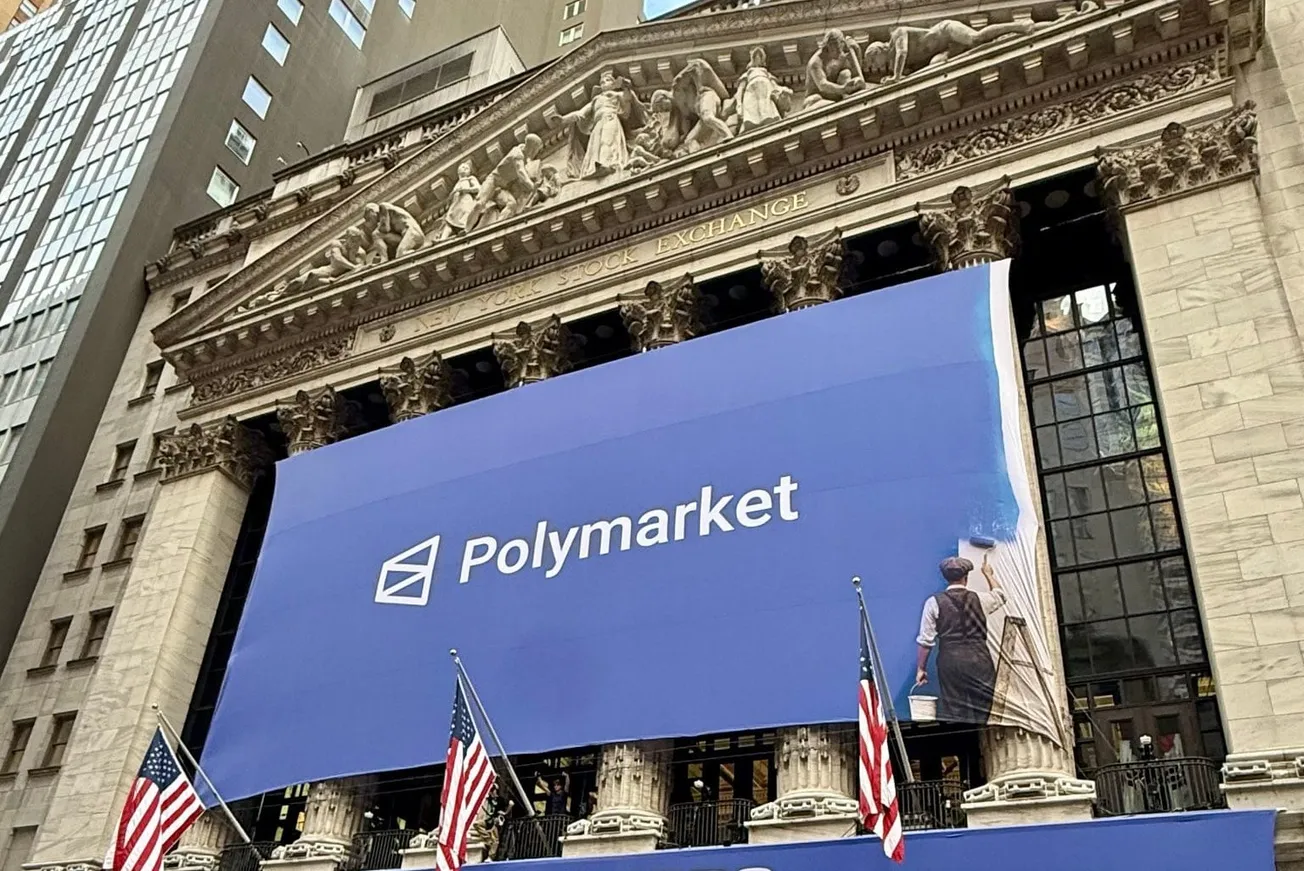
Intercontinental Exchange, which owns the New York Stock Exchange, is committing up to $2 billion in Polymarket, valuing the event-prediction platform at about $8 billion before the investment. ICE will serve as a global distributor of Polymarket’s event-driven data and will collaborate on tokenisation and related infrastructure.

Polymarket is gearing up for its return to U. S. markets following a multi-year regulatory hiatus. The firm acquired QCEX, a derivatives exchange and clearinghouse with CFTC licensure, for $112 million, enabling it to operate under U. S. regulation. The Commodity Futures Trading Commission has granted a no-action letter for event contracts, clearing a path for U. S. users to trade again.

Born in 2020 under the leadership of CEO Shayne Coplan, Polymarket permits users to wager on outcomes by purchasing “Yes” or “No” tokens. The market price implies a probability. Winning tokens settle at $1, while losing ones expire worthless. All trades occur via peer-to-peer smart contracts built on the Polygon blockchain.

Polymarket saw a surge in profile during the 2024 U. S. presidential campaign, when trading volume on election markets surpassed $3 billion. Its probability signals have since been picked up by mainstream outlets and financial analysts as indicators of public sentiment and forecasting.

ICE’s strategic investment reflects growing institutional interest in prediction markets. With control over NYSE infrastructure and deep data capabilities, ICE aims to monetise sentiment analytics and integrate such signals alongside traditional financial indicators. ICE has maintained that the investment will not materially affect its 2025 financials.

Coplan has acknowledged the significance of the tie-up, saying the partnership “marks a major step in bringing prediction markets into the financial mainstream.” Jeffrey Sprecher, ICE’s CEO, praised the union as an alignment between legacy market infrastructure and next-generation decentralised finance innovation.

Observers suggest that navigating regulatory risk is central to Polymarket’s success. Its three-year exit from U. S. users followed a 2022 settlement with the CFTC over unregistered derivatives operations. That settlement barred U. S. users from accessing the platform, and investigations into U. S. usage had been a cloud over the company. With the regulatory clearance and ICE backing, Polymarket is now executing a comeback in the U. S. domain.

Polymarket also attracted backing from 1789 Capital, a venture fund backed by Donald Trump Jr., which joined its advisory board earlier this year. Kalshi, a peer prediction market, won a favorable court ruling against the CFTC last year, setting precedents that influence Polymarket’s legal and operational landscape. The broader industry is watching closely, as the success or failure of this bet by ICE may signal whether prediction markets can transition from niche crypto tools to mainstream financial instruments.

Shayne Coplan, born in 1998 and a former dropout from New York University, is now recognised as the youngest self-made billionaire under the Bloomberg index following the deal. His trajectory illustrates the accelerating nexus among finance, tech and speculative market platforms.

A newly observed wave of attacks is using the cutting-edge Single Executable Application capability in Node. js to deliver the Stealit malware to Windows systems, marking a strategic shift by threat actors to evade detection. Security analysts say the move underscores how attackers are co-opting development frameworks to bypass conventional defences. FortiGuard Labs security researchers discovered that this campaign packages malicious payloads using Node. js SEA, an […]

Archaeologists have uncovered over 170 monumental rock engravings in northern Saudi Arabia that date to between 12,800 and 11,400 years ago, rewriting the timeline of human adaptation in the Arabian Desert. The images—of camels, ibex, gazelles, aurochs and equids—appear in dramatic, life-size scale on high cliff faces along the southern fringe of the Nefud. Beyond their sheer artistry, experts say the carvings likely functioned as visual markers […]

A total of 23 game development firms were honoured at the UK Best Places to Work Awards 2025, held at the Royal Institution in London on 2 October. Among the winners were Playground Games, Behaviour Interactive, NaturalMotion, Rare and Fireshine Games, which were recognised across categories including diversity, environmental impact and corporate social responsibility. Playground Games secured the top spot in the large-company category. In the mid-tier […]

Gold-backed digital tokens such as Paxos’s PAXG and Tether’s XAUT have shown greater resilience than much of the crypto market during a sweeping $19 billion liquidation event that struck major cryptocurrencies. While Bitcoin and Ether tumbling inflicted heavy losses across leveraged positions, these gold-pegged tokens either held value or gained modestly, driven by the ongoing rally in physical gold.

Bitcoin dropped about 8.5 per cent over 24 hours, and the broader crypto index fell roughly 12.75 per cent, but PAXG dropped a mere 0.23 per cent to around $3,998, while XAUT rose by 0.2 per cent to $4,010. That divergence reflects gold’s strength: the metal closed near $4,018 per troy ounce, bolstered by safe-haven demand in volatile markets.

The combined market capitalisation of gold-pegged tokens has now crossed $3 billion, with PAXG, XAUT and KAU as leading issuers. Trading volumes also surged, reaching about $640 million in a single day, reflecting investor flight into more stable digital assets. These tokens have returned over 50 per cent year to date, mirroring gold’s gain in 2025.

Gold’s atmosphere of strength rests on several pillars: strong inflows into physically backed gold ETFs, weakening U. S. dollar dynamics, inflation hedge demand and rising geopolitical fragility. The World Gold Council reports that global ETF holdings have now reached $472 billion, marking one of the strongest quarters ever in gold history.

Yet caution signs are mounting. Analysts and the World Gold Council warn the gold market may be entering overextended territory. With gold having risen across multiple weeks, technical indicators suggest the metal might be overbought and primed for a pullback. In particular, extreme deviation above its 40-week average raises the prospect of a reversal.

Adding fuel to this narrative is the entry of tokenisation infrastructure and institutional backing. Nasdaq-listed Prestige Wealth has raised $150 million to create a treasury vehicle for Tether’s gold reserves, aiming to layer blockchain transparency onto gold ownership. Meanwhile, the World Gold Council has floated a “Pooled Gold Interests” initiative in partnership with Linklaters and Hilltop Walk to democratise fractional ownership and tradability of vault-backed bullion.

Dubai — The Syrian Pavilion will make its first appearance at GITEX Expand North Star 2025, opening from 12 to 15 October, under the banner “Syria is Online.” This marks a milestone in Syria’s efforts to reconnect with the international innovation community and attract investment for its fledgling tech ecosystem.

The pavilion is being organised by SYNC, the Syria-Next Conference network, and backed by the Syrian Business Council and the U. S.–Syria Business Council. It aims to provide Syrian startups a platform to showcase digital solutions, engage in pitching sessions, facilitate panel discussions, and establish connections with global investors and industry partners.

Bassel Yassine Ojjeh, Chairman of SYNC and project lead for the pavilion, stated that the initiative intends to generate 25,000 tech-related jobs over five years through strengthened collaboration and external funding. He emphasised that GITEX offers “a vital step … to showcase Syrian talent and build partnerships that open doors for a new generation shaping the digital future.”

The pavilion will include startup pitch showcases, interactive tech talks, and networking forums. It plans to highlight projects in sectors such as fintech, AI, e-commerce, digital health and creative tech. Several Syrian entrepreneurs have already submitted entries, and a curated selection will present on the main stages of Expand North Star.

The move aligns with a broader expansion of national pavilions in this year’s GITEX edition. Brazil is participating as the Country Partner, and new delegations from Serbia, Hong Kong, Canada and Ecuador are set to join the global tech showcase. The event is expected to host over 1,800 startups and 1,000 investors managing over USD 1 trillion AUM, turning Dubai into a tech capital for dealflow.

Despite decades of conflict and economic sanctions, Syria retains a reservoir of technical talent across its population, especially among youth and diaspora communities. SYNC was founded with the objective of bridging Syrian innovators in Silicon Valley and the diaspora with on-ground talent, thereby facilitating collaboration, mentorship, and capital flows. The 2025 edition of SYNC was held in Damascus earlier this year, bringing together local technologists and overseas experts to discuss ecosystem development.

Still, Syrian tech ambitions face significant headwinds. Infrastructure deficits, internet connectivity constraints, regulatory uncertainties, difficulties in accessing cross-border payment systems, and war-induced economic fragmentation continue to challenge the sector’s scalability. International sanctions and distrust around financial compliance also complicate foreign investment.

To mitigate these risks, the pavilion’s backers aim to frame Syria’s entry into the tech market as more than symbolic. Organisers say they are structuring due diligence frameworks, matchmaking with vetted investors, and post-event follow-up mechanisms to sustain momentum beyond the exhibition.

South East Asia, with its vibrant tapestry of cultures, landscapes, and histories, boasts a myriad of must-see attractions that captivate travelers from around the world. From the awe-inspiring ancient temples of Angkor Wat in Cambodia to the stunning limestone karsts of Halong Bay in Vietnam, the region offers a rich array of experiences. In Thailand, the bustling streets of Bangkok and the serene beauty of Phuket’s beaches […]

BEIJING, CHINA – Media OutReach Newswire – 11 October 2025 – An article published by CGTN highlights China’s upcoming Global Leaders’ Meeting on Women in Beijing, marking 30 years since the 1995 Beijing Declaration. It reviews China’s progress in women’s empowerment under Xi Jinping’s leadership and its global contributions to gender equality, while noting persistent worldwide challenges to achieving women’s full advancement. Thirty years ago, the Beijing […]

VISHNU RAJA
RYO YAMADA
HITORI GOTOH
IKUYO KITA
Just in:
UK air traffic outage inflicted £33m financial losses // Fast Just Got Fastest: STING Energy Boost™ Celebrates Kimi Antonelli’s Formula 1® World Championship and the Fan Energy Behind It // Emirates Group records AED 4.1 billion half-year profit // The “1st Greater Bay Area Health and Longevity Summit & Awards Ceremony” concludes successfully in Macao // Oil and chip shares retreat after Democratic victories // APT29-linked campaign exploits outdated Apple and Android software // Pinarayi faults UDF over mounting road crashes // Asia Left Behind: Ten international companies have yet to report delivering on their cage-free egg pledges across the region // e-Crime Bureau Signs Cybersecurity Partnership With Smart Africa, Reinforcing Its Global Expansion // Ta’ziz finalises $1.39bn funding for Ruwais industrial facilities // ADIA and partners establish $1.4 billion aviation venture // Cyberport Venture & Capital Forum 2026 Grand Opening // Meraas showcases five residential zones at Dubai Design Week // Hong Kong mandates crypto transaction disclosures to tax authorities // After Reaching 7 Million Users in the Philippines, Skyro Launches Transparent Cash Loans in Malaysia // As AI Reshapes Education, Singapore Convenes Global Dialogue on the Future of Early Childhood Education // SC to examine students’ exam plea today // Utilities pursue ₹1,992 cr in unpaid bills // Vance attributes Republican midterm defeats to Iran conflict // xCube Access Welcomes Entrust Capital Limited  Expanding Access to Professional Portfolio Management //