Just in:
UK air traffic outage inflicted £33m financial losses // e-Crime Bureau Signs Cybersecurity Partnership With Smart Africa, Reinforcing Its Global Expansion // APT29-linked campaign exploits outdated Apple and Android software // Oil and chip shares retreat after Democratic victories // OpenAI identifies 948 Linux privilege escalation flaws using AI // ADIA and partners establish $1.4 billion aviation venture // Emirates Group records AED 4.1 billion half-year profit // Xi Jinping Preparing For A Trilateral Summit With Trump And Putin At APEC Summit On Nov 18-19 // After Reaching 7 Million Users in the Philippines, Skyro Launches Transparent Cash Loans in Malaysia // CR Longdation Aethereal Cybersecurity × Global Cybersecurity Alliance (GCSA) Join Hands to Establish the “AI and Cybersecurity Research Centre” // Millions Of Indians May Soon Be Deprived Of Government Assistance // Fast Just Got Fastest: STING Energy Boost™ Celebrates Kimi Antonelli’s Formula 1® World Championship and the Fan Energy Behind It // Utilities pursue ₹1,992 cr in unpaid bills // Hong Kong mandates crypto transaction disclosures to tax authorities // Cloudflare unveils Zero Wire vulnerability intelligence service // SC to examine students’ exam plea today // Ousted top Kochi cop gets IG post // The “1st Greater Bay Area Health and Longevity Summit & Awards Ceremony” concludes successfully in Macao // Kochi police detain two actors over bid to honey trap doctor // Meraas showcases five residential zones at Dubai Design Week //

News related to
work

Dubai’s booming real estate sector continues to attract global investors with promises of tax-free gains, high rental yields, and luxury living. However, behind the glossy brochures and aggressive marketing campaigns lie significant risks that could catch unprepared buyers off guard—particularly those unfamiliar with the city’s legal, financial, and regulatory landscape.

Property prices in Dubai have surged by 75% since early 2021, nearing levels last seen before the 2008 crash. This growth is fuelled by foreign capital, liberalised visa policies, and a construction spree that includes nearly 76,000 new units slated for completion in 2025. Yet, this rapid expansion raises concerns about potential oversupply, especially in mid-range and off-plan segments, which could suppress future returns.

Off-plan properties, often sold with enticing payment plans requiring just 10–20% upfront, dominate the market. These schemes, while attractive, carry risks such as construction delays, quality issues, and even project cancellations. Despite regulatory measures like escrow accounts, buyers may still face financial losses if developers fail to deliver as promised.

The legal framework in Dubai presents challenges for foreign investors. While freehold zones permit full ownership, navigating the complexities of property inheritance, dispute resolution, and contract enforcement can be daunting. The legal system, influenced by Sharia law, may not align with the expectations of buyers from other jurisdictions, making professional legal advice essential.

Financially, the costs associated with purchasing property extend beyond the advertised price. Buyers must account for a 4% Dubai Land Department transfer fee, a 2% agent commission, and additional expenses such as title deed issuance, mortgage registration, and maintenance fees. Notably, banks no longer finance these ancillary costs, requiring buyers to have substantial liquidity upfront.

Currency exchange fluctuations pose another risk for international investors. Since the UAE dirham is pegged to the US dollar, buyers dealing in other currencies may find their investments affected by exchange rate movements, potentially eroding returns when converting profits back to their home currency.

Regulatory changes can also impact the real estate landscape. Adjustments to visa policies, property ownership laws, or mortgage regulations could alter the investment climate. For instance, while long-term residency visas have bolstered investor confidence, any future policy shifts could affect property values and rental demand.

The influx of wealthy individuals into Dubai has driven up property prices, particularly in luxury segments. However, this trend has also led to increased living costs, making affordability a growing concern for middle-income residents. Rising service charges and maintenance fees in upscale communities can further strain budgets, affecting the overall return on investment.

Saudi Basic Industries Corporation is advancing plans to list its gas subsidiary, National Industrial Gases Company , potentially within the current year. The Riyadh-based industrial giant is in early-stage talks with major financial advisers, including Lazard Inc., HSBC Holdings, JPMorgan Chase & Co., and Morgan Stanley, aiming to navigate the initial public offering process. This move reflects SABIC’s strategic intent to unlock value from its non-core assets […]

Abu Dhabi National Oil Company has granted contracts totaling Dh65.7 billion to nearly 400 local suppliers, contractors, and service providers during the first half of 2025. This extensive award reflects ADNOC’s ongoing commitment to strengthening the United Arab Emirates’ economy through its In-Country Value programme, which aims to bolster domestic industries and national supply chains. The contracts cover a diverse range of sectors vital to ADNOC’s operations, […]

Dubai’s real estate sector, having witnessed a remarkable 70 percent surge in property values over four years, is increasingly attracting the attention of major Wall Street investors, signalling a fresh wave of international capital flowing into the market. Among those showing strong interest is Brookfield Corp., a prominent global asset manager, which is reportedly considering a significant residential project in the Dubai Hills district. This potential move marks Brookfield’s first foray into the region’s residential property market, highlighting confidence in Dubai’s continued urban growth and economic resilience.

The Dubai Hills area, known for its integrated community developments blending residential, commercial, and leisure spaces, has become a prime target for investors aiming to capitalise on the emirate’s strategic location and expanding infrastructure. Brookfield’s plans reportedly focus on creating a mixed-use community, aligning with the city’s broader vision of enhancing livability and attracting diverse demographics including expatriates, business professionals, and families. This development would add to the already dynamic residential landscape that has benefitted from Dubai’s liberal property ownership laws and tax-friendly environment.

Singapore-based Temasek Holdings Pte., through one of its property management subsidiaries, is also actively scouting investment opportunities in Dubai, reflecting growing confidence from Asian institutional investors. Temasek’s involvement would bring considerable financial firepower and experience in managing large-scale real estate assets, further validating Dubai’s position as a regional hub for property investment. The company is reportedly assessing a range of options from commercial towers to high-end residential complexes, keen on leveraging Dubai’s status as a global financial and tourism centre.

The surge in property values has been driven by a confluence of factors including Dubai’s rapid economic diversification away from oil dependence, the government’s successful rollout of major infrastructure projects, and the city’s appeal as a safe haven for wealth amid geopolitical uncertainties. The Expo 2020 event, although delayed to 2021 due to the pandemic, had a notable impact in energising the real estate market, with sustained interest seen in areas like Dubai Marina, Downtown Dubai, and Palm Jumeirah.

Experts suggest that Dubai’s regulatory framework, which includes long-term visas for property investors and entrepreneurs, has created an inviting climate for foreign capital. This has been complemented by a steady increase in expatriate population, fostering demand for rental properties and driving rental yields. The UAE’s ongoing focus on enhancing its financial services sector and promoting innovation and technology hubs further supports long-term real estate demand.

Despite the enthusiasm, the market is not without challenges. Some analysts caution that the sharp rise in prices over a short period raises concerns about affordability and potential market overheating. The post-pandemic recovery phase has also exposed vulnerabilities such as fluctuating oil prices and shifting global economic conditions, which could affect investor sentiment. Additionally, the emergence of remote working trends may reshape residential preferences, potentially influencing demand patterns in Dubai’s real estate sector.

Brookfield’s possible entry into the residential segment is seen as a strategic bet that reflects confidence in Dubai’s ability to maintain its growth trajectory. The company’s expertise in infrastructure and real estate investment positions it well to navigate the complex regulatory and operational landscape of the region. Industry insiders point out that such high-profile involvement could encourage further inflows of private equity and institutional capital, contributing to market stability and innovation in property development.

Temasek’s active exploration in Dubai also underscores the emirate’s rising prominence on the Asian investment radar. The city’s connectivity, free-trade zones, and business-friendly policies make it an attractive gateway for investors seeking exposure to the Middle East, Africa, and South Asia markets. Temasek’s investment approach, typically characterised by long-term value creation and active asset management, may influence the development of more sustainable and diversified real estate offerings in Dubai.

Market observers note that while the residential sector is gaining momentum, commercial real estate remains a vital pillar of Dubai’s property market. The growth of co-working spaces, logistics hubs, and retail developments reflects the changing nature of work and consumption in the post-pandemic world. These trends complement residential growth by fostering integrated urban environments that cater to evolving lifestyles.

Cryptocurrency mining companies have registered a notable surge following the announcement of a strategic partnership between OpenAI and CoreWeave, a leading cloud computing provider. This alliance signals a growing intersection between artificial intelligence infrastructure and blockchain technology, propelling mining stocks higher and generating renewed investor interest in the sector.

CoreWeave, known for its specialised GPU-powered cloud services tailored to AI workloads, has struck a deal to supply critical computational capacity for OpenAI’s expanding suite of applications. This development positions CoreWeave as a vital player in supporting the back-end infrastructure of AI innovation. The company’s move has rippled through the crypto mining ecosystem, where hardware capable of efficiently processing complex algorithms is central to mining operations.

Investors responded positively to CoreWeave’s enhanced profile, with shares of prominent crypto mining firms climbing on various exchanges. The broader cryptocurrency market, however, displayed a more cautious stance, maintaining a consolidation phase despite escalating inflation expectations that often trigger volatility. This divergence highlights the nuanced market dynamics where infrastructure providers linked to AI growth are gaining momentum independent of general crypto price trends.

The launch of Galaxy Digital on the Nasdaq exchange further accentuated market activity around crypto-related firms. Galaxy Digital, a diversified financial services and investment management firm focusing on digital assets and blockchain technology, made a striking debut with its share price surging significantly on the first day of trading. The successful Nasdaq listing underscores growing institutional interest in the crypto and blockchain sectors, affirming confidence in their long-term viability despite fluctuating asset prices.

Market analysts note that the OpenAI-CoreWeave partnership exemplifies the convergence of artificial intelligence and blockchain technology, two sectors undergoing rapid expansion. This synergy offers mining companies an avenue to diversify and stabilise revenues by capitalising on increased demand for computational power beyond traditional cryptocurrency mining. As AI applications become more sophisticated and resource-intensive, providers like CoreWeave stand to benefit from expanded contracts and elevated valuations.

The partnership also sheds light on evolving mining operations, which now encompass hybrid models combining cryptocurrency validation with AI data processing tasks. This integration potentially improves profitability and operational resilience amid regulatory uncertainties and market fluctuations in the crypto domain. Mining firms that embrace such technological advancements may position themselves ahead of competitors relying solely on conventional blockchain mining.

Despite these promising developments, the crypto market continues to face challenges from macroeconomic factors, notably inflation expectations that often influence investor behaviour. Although asset prices across major markets, including cryptocurrencies, largely shrugged off these concerns, some volatility is expected as central banks adjust monetary policies. Cryptocurrency’s inherent volatility remains a consideration for both retail and institutional investors, who must weigh technological advancements against broader economic risks.

CoreWeave’s strategic positioning within this ecosystem is particularly significant given the rising demand for GPU-intensive workloads. The company’s infrastructure supports not only OpenAI’s needs but also a wide array of AI-driven enterprises, creating a robust client base and diversified revenue streams. This diversification contrasts with many mining firms whose fortunes are tightly correlated to cryptocurrency price cycles, adding an element of stability that appeals to investors.

Galaxy Digital’s Nasdaq listing is emblematic of the maturing crypto investment landscape. Founded by industry veteran Michael Novogratz, the firm has established itself as a critical bridge between traditional financial markets and the digital asset space. Its successful public offering reflects growing acceptance and integration of digital assets within mainstream finance, an important milestone for the sector.

Market watchers observe that while the immediate reaction favours companies linked to AI and cloud computing, the broader cryptocurrency market is navigating a complex environment marked by geopolitical tensions, regulatory scrutiny, and shifting monetary policies. These factors contribute to a cautious sentiment among traders, with prices consolidating rather than surging dramatically.

Nonetheless, the interplay between AI infrastructure providers and crypto mining firms represents a promising frontier. This convergence may drive innovation in both fields, fostering new business models and operational efficiencies. Companies that adapt to this trend could harness the dual momentum of AI growth and blockchain technology to sustain competitive advantages.

Marking its 14th global market entry spanning Asia, Latin America to spur further growth in EMEA region HONG KONG SAR – Media OutReach Newswire – 19 May 2025 – Lalamove, the leading on-demand delivery platform, has officially launched operations in the United Arab Emirates (UAE), marking a strategic entry into its 14th global market and a significant expansion within the EMEA (Europe, the Middle East, and Africa) […]

Open source software has received a significant injection of support from leading companies such as Canonical, Zerodha, and other major industry players, marking a pivotal moment for the global development community. This wave of generous contributions comes as open source projects continue to underpin vast segments of the digital infrastructure powering everything from cloud computing to fintech applications. Canonical, known globally as the company behind the Ubuntu […]

Advertisements

PepsiCo has embarked on a significant multi-year partnership with Amazon Web Services to boost its digital and cloud transformation initiatives. The agreement positions PepsiCo to harness AWS’s comprehensive infrastructure and advanced artificial intelligence tools, aiming to streamline operations, enhance data analytics, and drive innovation across its global business. This strategic collaboration reflects PepsiCo’s commitment to embedding technology deeply within its operations. By migrating critical workloads to the […]

Dogecoin has witnessed significant accumulation by large holders, with so-called whales amassing more than one billion DOGE tokens amid key technical support forming near the $0.21 price level. This activity underscores a notable resilience in the meme-inspired cryptocurrency despite volatile price swings exceeding 4%, signaling potential upward momentum within the market.

Market data reveals that addresses holding between 100,000 and 10 million DOGE have collectively increased their holdings in recent weeks. This behaviour contrasts with retail investors who have shown more erratic trading patterns, pointing to growing confidence among institutional or high-net-worth participants. These larger players typically exert considerable influence on price dynamics, and their accumulation suggests an expectation of future gains.

Dogecoin’s price has stabilised around the $0.212 mark, a level identified by technical analysts as a critical support zone. This threshold has historically acted as a buffer preventing further declines during downward market pressures. Despite the broader cryptocurrency market experiencing turbulence, DOGE’s ability to hold this support hints at underlying strength in demand and investor interest.

Volatility remains a defining feature of Dogecoin’s market movements. Price fluctuations of over 4% within short timeframes have created a challenging environment for traders but have not deterred whale investors. Their continued accumulation during such swings points to a strategic long-term outlook rather than short-term speculative trading.

Experts highlight that the unique cultural and community-driven aspects of Dogecoin contribute to its enduring popularity. Unlike many cryptocurrencies built solely for utility or investment, DOGE benefits from a robust online community and high-profile endorsements, which can act as catalysts during market dips. This social factor often translates into tangible market activity, especially among larger holders who gauge community sentiment as part of their investment calculus.

The increasing concentration of DOGE among whale addresses also raises questions about liquidity and potential price manipulation risks. When a small number of holders control a significant portion of a token’s supply, market swings can be amplified. However, analysts note that the current accumulation patterns appear more aligned with organic positioning rather than coordinated efforts to influence prices artificially.

Further, Dogecoin’s integration in various payment systems and its acceptance among select merchants contribute to its utility value. This adoption enhances the token’s attractiveness beyond speculative appeal, supporting demand from users who transact regularly with DOGE. The presence of large holders accumulating during periods of price weakness could indicate confidence in the token’s sustained relevance in payments and microtransactions.

Technological developments within the Dogecoin ecosystem remain modest compared to other projects but continue to evolve. Ongoing discussions around potential protocol upgrades and partnerships seek to enhance scalability and transaction efficiency. While these improvements are incremental, they add to the positive sentiment surrounding DOGE’s future prospects.

Market watchers are also closely monitoring the broader macroeconomic environment influencing cryptocurrencies. Factors such as regulatory scrutiny, interest rate policies, and global economic trends have a direct impact on investor behaviour across digital assets. Dogecoin’s ability to maintain a firm support level amid these conditions suggests it may be carving out a distinct niche in an increasingly crowded market.

Despite the meme coin’s history of sharp rallies and corrections, the current whale-driven accumulation phase points to a shift toward more sustained price stability. This could create a foundation for renewed upward trends if buying pressure continues to outweigh selling activity.

HONG KONG SAR – Media OutReach Newswire – 17 May 2025 – Invest Hong Kong (InvestHK), the Hong Kong government’s investment promotion arm, announced today (17 May 2025) that Ms Alpha Lau, Director-General of Investment Promotion at InvestHK, visited Cairo, Egypt, to engage with Egyptian businesses eager to establish operations in Hong Kong and capitalise on Asia-Pacific opportunities. During her visit, Ms Lau will attend the Guangdong–Hong […]

Sequoia Capital’s managing partner, Roelof Botha, has been identified among the victims of a significant data breach at Coinbase Global Inc., the largest cryptocurrency exchange in the United States. The breach, which affected approximately 97,000 users, involved the theft of personal information, including names, contact details, government-issued identification images, and account histories. Coinbase disclosed that cybercriminals bribed overseas customer support agents to gain unauthorized access to sensitive […]

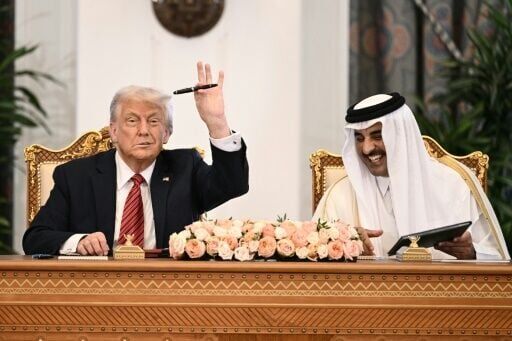
By K Raveendran Donald Trump’s Gulf tour has marked a defining chapter in his post-presidential brand of deal diplomacy, delivering a staggering $2 trillion in agreements that stretch across Saudi Arabia, the United Arab Emirates, and Qatar. This campaign stands in sharp contrast to the flagging results of his so-called trade mark tariff war, which—despite […]

Greenlogue/AP Enel, Italy’s largest utility, and Abu Dhabi-based renewable energy firm Masdar are in preliminary discussions to jointly develop battery storage capacity within Italy. The announcement was made by Enel CEO Flavio Cattaneo during a business conference in Milan. The companies, already partners in renewable energy ventures in Spain, are considering expanding their collaboration to include energy storage systems in Italy. Cattaneo highlighted a shared vision with […]

The United Arab Emirates has committed to increasing its energy sector investments in the United States to $440 billion over the next decade, a significant expansion from the current $70 billion. This strategic move was announced by Sultan Al Jaber, chief executive of Abu Dhabi National Oil Company , during a high-profile meeting with US President Donald Trump amid his Gulf tour aimed at fostering major business […]

Qualcomm Technologies has revealed plans to establish a global engineering centre in Abu Dhabi, marking a significant expansion of its research and development footprint. The new facility will concentrate on cutting-edge technologies such as artificial intelligence, the industrial internet of things, and advanced data centre solutions, positioning Abu Dhabi as a pivotal node within Qualcomm’s worldwide network of engineering operations. This engineering centre is set to bolster […]

The United Arab Emirates has finalised a significant agreement with the United States to import advanced American-made artificial intelligence semiconductors, marking a pivotal step in Abu Dhabi’s ambition to become a global AI hub. The deal, announced during President Donald Trump’s Gulf tour, permits the UAE to import 500,000 Nvidia H100 chips annually, facilitating the development of large-scale data centres in the region.

This agreement coincides with the UAE’s broader commitment to invest $1.4 trillion in the U.S. over the next decade, focusing on sectors such as AI infrastructure, semiconductors, energy, and manufacturing. The investment framework includes partnerships with major U.S. companies like BlackRock, Microsoft, and Global Infrastructure Partners, aiming to mobilise up to $100 billion for next-generation data centres and energy infrastructure.

A key component of the deal is the construction of a 10-square-mile, 5-gigawatt data centre in Abu Dhabi, led by Emirati firm G42 and involving several U.S. tech companies. This facility is set to be the largest of its kind outside the United States, significantly enhancing the UAE’s data processing capabilities and supporting its AI initiatives.

The agreement also includes substantial U.S. investments in the UAE, with American energy companies expected to invest in upstream oil and gas and unconventional energy projects. Top U.S. firms such as ExxonMobil, Oxy, and EOG Resources are involved in these initiatives, reflecting a deepening of bilateral energy ties.

President Trump’s Gulf tour, which included visits to Saudi Arabia, Qatar, and the UAE, focused on securing financial commitments from wealthy energy producers to boost the U.S. economy and create jobs. The UAE’s pledge to increase its energy sector investments in the United States to $440 billion by 2035, up from the current $70 billion, underscores the success of this diplomatic effort.

The UAE’s strategic shift towards the U.S. in technology and energy sectors is seen as a move to decouple from Chinese influence, particularly in AI. Emirati officials have explicitly pursued this realignment to secure U.S. technology transfers, including advanced semiconductors like Nvidia’s H100 GPUs. This pivot follows U.S. pressure to remove Chinese equipment from critical infrastructure, exemplified by G42’s removal of Huawei technology from its data centres.

The $1.4 trillion investment framework also encompasses initiatives in critical minerals and industrial capacity. The UAE’s $1.2 billion mining partnership with Orion Resource Partners targets lithium, cobalt, and rare earth metals essential for AI hardware and renewable energy systems. Additionally, Emirates Global Aluminum plans to build the first new aluminum smelter in the U.S. in 35 years, aiming to nearly double the country’s domestic production.

Dunamu, the parent company of South Korea’s largest cryptocurrency exchange Upbit, concluded 2024 with a substantial Bitcoin reserve of 16,839 BTC, valued at approximately $1.1 billion based on year-end prices. This accumulation primarily stems from trading and withdrawal fees collected over the years, reflecting the firm’s dominant position in the domestic digital asset market.

The disclosure of these holdings coincides with Dunamu’s announcement of an 85.1% year-over-year increase in operating profit, reaching 1.18 trillion Korean won , and a 22.2% rise in net profit to 983.8 billion won for 2024. The company attributes this financial upswing to heightened trading activity following Bitcoin’s halving event in April, which reduced mining rewards and historically leads to increased market volatility and investor interest.

Contributing to the favorable market conditions were global macroeconomic factors, including expectations of U.S. interest rate cuts and a pro-cryptocurrency stance from the administration of President Donald Trump. These elements fostered increased liquidity and investor confidence, benefiting platforms like Upbit.

In response to its robust financial performance, Dunamu announced a tripling of shareholder dividends, distributing 8,777 Korean won per common share, up from 2,937 won the previous year. The total dividend payout amounts to nearly 300 billion won , signaling the company’s confidence in its sustained growth trajectory.

Despite these achievements, Dunamu faces significant regulatory challenges. South Korea’s Financial Intelligence Unit imposed a three-month suspension on Upbit, citing violations related to transactions with unregistered virtual asset operators and deficiencies in Know Your Customer protocols. The suspension specifically targeted new customer registrations and their ability to transfer virtual assets.

Dunamu contested the FIU’s decision, arguing that the sanctions were disproportionate and did not consider the company’s compliance efforts. A Seoul court temporarily lifted the suspension, granting Dunamu a 30-day injunction to challenge the regulatory action. This legal reprieve allows Upbit to continue operations while the dispute is adjudicated.

The regulatory scrutiny has had a tangible impact on Dunamu’s market valuation. Reports indicate that the company’s unlisted stock price declined by nearly 30% amid the ongoing investigations and enforcement actions. Analysts suggest that the outcome of the legal proceedings and Dunamu’s ability to address compliance concerns will be critical in restoring investor confidence.

Upbit maintains a commanding presence in South Korea’s cryptocurrency market, accounting for over 70% of domestic trading volume. In February 2024, the exchange reported a monthly trading volume of $101 billion, underscoring its significance in the country’s digital asset ecosystem.

FTX, the defunct cryptocurrency exchange that filed for bankruptcy in November 2022, is poised to commence payouts exceeding $5 billion to its creditors starting May 30, 2025. This marks a significant milestone in one of the most complex bankruptcy proceedings in the crypto industry.

Under the court-approved reorganization plan, approximately 98% of FTX’s creditors are expected to recover 119% of their allowed claims, which includes the principal amount plus accrued interest. This repayment strategy is based on the valuation of crypto assets as of the bankruptcy filing date in November 2022, a point of contention given the substantial appreciation of cryptocurrencies since then.

The initial phase of repayments will prioritize creditors with claims of $50,000 or less, often referred to as the “convenience class.” This group is slated to receive their full repayments within 60 days of the plan’s effective date, amounting to approximately $1.2 billion in total. To facilitate these distributions, FTX has partnered with cryptocurrency platforms Kraken and BitGo, requiring creditors to complete Know Your Customer verifications and submit necessary tax documentation through the FTX Debtors’ Customer Portal.

The substantial funds available for distribution, estimated between $14.7 billion and $16.5 billion, have been amassed through the liquidation of FTX’s investments and the appreciation of certain assets. Notably, the estate’s stake in the AI startup Anthropic contributed significantly to the recovery pool. Despite these efforts, equity holders and investors in FTX’s proprietary token are not expected to receive any compensation.

While the repayment plan has been lauded for its unprecedented recovery rate in bankruptcy proceedings, it has also faced criticism. Some creditors argue that calculating repayments based on the 2022 valuations fails to account for the dramatic rise in cryptocurrency prices, particularly Bitcoin, which has surged from around $16,000 at the time of FTX’s collapse to over $105,000. This discrepancy has led to legal challenges and dissatisfaction among certain creditor groups.

FTX’s current CEO, John J. Ray III, who took over following the company’s collapse, has emphasized the importance of adhering to legal standards in the distribution process. He has also highlighted the challenges in balancing the interests of various stakeholders while navigating the complexities of the bankruptcy estate.

By Dr. Nilanjan Banik Renowned Nobel laureate economist Robert Solow was once asked if having a trade deficit is bad for any economy. He answered by saying he would always have a trade deficit with his barber and would always run a trade surplus with his students. Such is the nature of the game in […]


Grand Prize Trip to Korea, New Speed Building Finale, and Unforgettable Prizes Await Young Builders! JOHOR BAHRU, MALAYSIA – Media OutReach Newswire – 16 May 2025 – Ready, set, build! The most anticipated LEGO® school event in Asia is back—and it’s bigger, bolder, and more inspiring than ever. The LEGOLAND® Malaysia School Challenge 2025, organized in partnership with the Ministry of Education, kicks off its fourth edition […]

President Donald Trump’s strategic tour across the Middle East has ignited internal discord within his administration, as China-focused officials express concern over expansive artificial intelligence agreements with Saudi Arabia and the United Arab Emirates . These deals, involving the acquisition of advanced semiconductors from U.S. firms Nvidia and Advanced Micro Devices , are perceived by some as potential threats to national security and economic interests. During his […]

Greenlogue/AP Abu Dhabi Future Energy Company PJSC – Masdar has successfully raised $1 billion through its latest green bond issuance, marking a significant step in its commitment to expanding renewable energy initiatives globally. The issuance, structured in two equal tranches of $500 million with maturities of five and ten years, attracted substantial investor interest, culminating in an order book that peaked at $4.6 billion, reflecting an oversubscription […]

Arabian Post Staff -Dubai The United States has pledged a $60 billion investment in the United Arab Emirates’ energy sector, as part of a broader $440 billion joint initiative extending through 2035. This commitment was announced during President Donald Trump’s visit to the Gulf, underscoring a significant deepening of economic relations between the two nations. Sultan al-Jaber, chief executive of the Abu Dhabi National Oil Company , […]

A U.S. federal judge has rejected a joint motion by the Securities and Exchange Commission and Ripple Labs to reduce the company’s penalty from $125 million to $50 million, labelling the request as “procedurally improper” and failing to meet the standards set by Rule 60 of the Federal Rules of Civil Procedure.

Judge Analisa Torres of the Southern District of New York, who has presided over the case since its inception in 2020, stated that while the parties may refile the motion, such relief is rarely granted and must serve the public interest. The court emphasized that any modification to a final judgment requires a compelling justification, which was not adequately presented in the joint motion.

The original penalty stemmed from Ripple’s sale of XRP tokens to institutional investors, which the court determined violated federal securities laws. The SEC had initially sought a $2 billion penalty, but Judge Torres imposed a significantly lower fine of $125 million, citing the absence of fraud or intentional misconduct in Ripple’s actions.

Ripple and the SEC had reached a settlement agreement in March 2025, wherein Ripple would pay $50 million, and the remaining $75 million held in escrow would be returned to the company. Both parties agreed to drop their respective appeals, and the SEC indicated its intention to request the lifting of the injunction previously imposed on Ripple.

However, the court’s recent decision underscores the importance of adhering to procedural rules when seeking to alter a final judgment. Rule 60 allows for relief from a final judgment under specific circumstances, such as newly discovered evidence or fraud, none of which were convincingly demonstrated in the joint motion.

The ruling also highlights the judiciary’s role in maintaining the integrity of legal proceedings and ensuring that any modifications to court orders are justified and in the public interest. The court’s insistence on procedural compliance serves as a reminder that settlements and agreements between parties must still align with legal standards and protocols.

As the case continues to unfold, the crypto industry watches closely, recognizing the broader implications for regulatory clarity and the enforcement of securities laws in the rapidly evolving digital asset landscape. The outcome of this case may set precedents for how similar cases are handled in the future, particularly concerning the classification and sale of digital assets.

VISHNU RAJA
RYO YAMADA
HITORI GOTOH
IKUYO KITA
Just in:
Oil and chip shares retreat after Democratic victories // Meraas showcases five residential zones at Dubai Design Week // CR Longdation Aethereal Cybersecurity × Global Cybersecurity Alliance (GCSA) Join Hands to Establish the “AI and Cybersecurity Research Centre” // Trump’s Iran War Has A Share Of Contribution To His Midterm Debacle // Hong Kong mandates crypto transaction disclosures to tax authorities // The “1st Greater Bay Area Health and Longevity Summit & Awards Ceremony” concludes successfully in Macao // After Reaching 7 Million Users in the Philippines, Skyro Launches Transparent Cash Loans in Malaysia // UK air traffic outage inflicted £33m financial losses // e-Crime Bureau Signs Cybersecurity Partnership With Smart Africa, Reinforcing Its Global Expansion // Ta’ziz finalises $1.39bn funding for Ruwais industrial facilities // Fast Just Got Fastest: STING Energy Boost™ Celebrates Kimi Antonelli’s Formula 1® World Championship and the Fan Energy Behind It // Private varsities bill all set to face the axe // Cloudflare unveils Zero Wire vulnerability intelligence service // OpenAI identifies 948 Linux privilege escalation flaws using AI // Miss Universe Hong Kong Jen Zhou Departs for Puerto Rico to Compete in the 75th Miss Universe World Final // ADIA and partners establish $1.4 billion aviation venture // Utilities pursue ₹1,992 cr in unpaid bills // Xi Jinping Preparing For A Trilateral Summit With Trump And Putin At APEC Summit On Nov 18-19 // APT29-linked campaign exploits outdated Apple and Android software // SC to examine students’ exam plea today //