


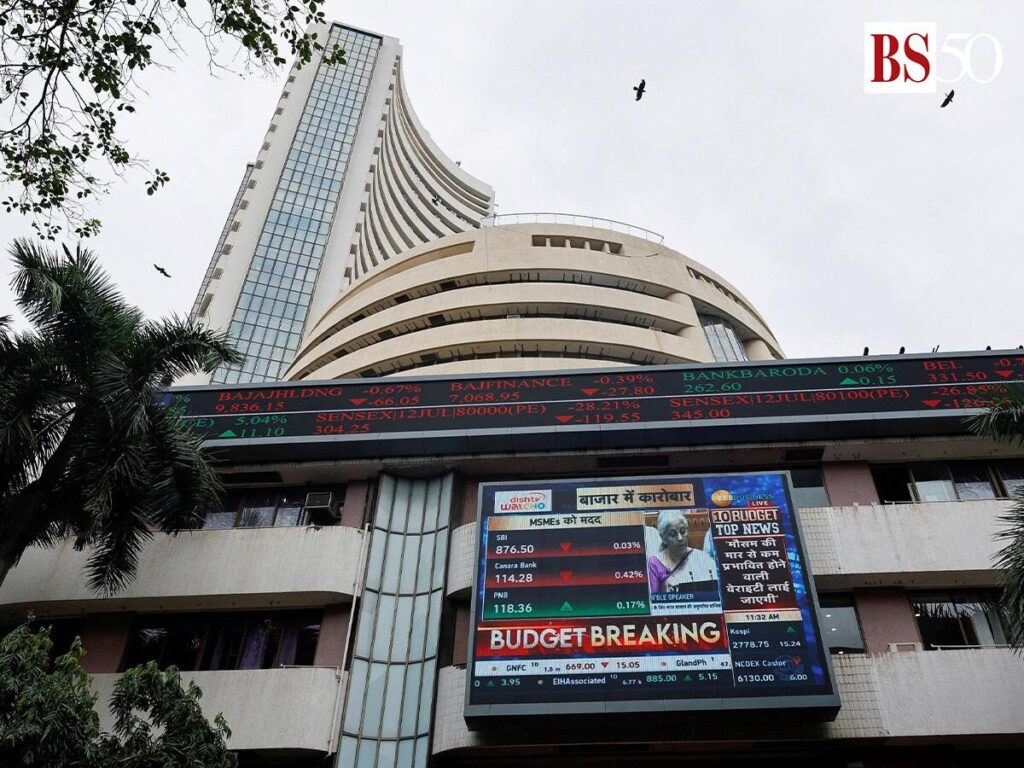
It would be wrong to underplay the impact of rising foreign disinvestments from the country’s secondary market on the economy and the very stability of Indian Rupee (INR). Both the domestic economy and INR have been constantly under pressure from large deficit trade balances year after year, external borrowings, loan servicing, very low levels of fresh foreign direct investment (FDI) and high real-time inflation rate. Some foreign portfolio investors (FPIs) seem to find the country’s secondary market no longer attractive. According to the Reserve Bank of India (RBI), it sold $50 billion from the central bank’s foreign exchange reserves during this fiscal as FPIs sold large rupee stocks to pull back investment. The sum is quite big by any standard. Never before had FPIs exited from the Indian market in such a fashion just before the country’s annual budget presentation. It would have been nice if the RBI clearly mentioned the periods involved in such transactions and the net currency outflow from its forex reserves on account of FPI investments and disinvestments.
In contrast, the central bank is seemingly taking credit for deploying or injecting the collection in tranches of Rs.1.5 lakh crore from FPI sale proceeds into the money markets. It is also somewhat mischievous to suggest that the action may lead to a possible repo rate cut by the central bank in February. The repo rate is the rate at which a country’s central bank lends money to commercial banks in the event of any shortfall of funds. Repo rate is used by monetary authorities to control inflation. India’s inflation rate continues to be high. As of last December, India’s inflation rate was 5.22 percent year-on-year, based on the Consumer Price Index (CPI) data released by the Ministry of Statistics and Programme Implementation. The rural inflation rate was higher at 5.76 percent. The food inflation rate was in excess of eight percent. The inflation rate may go up further during the coming economic slack season, beginning April. Normally, the release of such large funds into the market would call for fixation of higher interest rates to control inflation.
Interestingly, one of the three measures of the RBI’s liquidity infusion plan is to conduct a government bond buyback worth Rs.60,000 crore in three tranches till February 20. This will certainly help the government to cover part of the budget deficit for the current fiscal. Currently, there seems to be no liquidity shortfall in the market as it is indicated by the call money rate. As of last month, India’s call money rates have remained constant, with the current rate being around 6.5 percent as the RBI repo rate remained unchanged at 6.5 percent for the seventh consecutive time. This means the call money rate is largely stable at this level. A high call money rate is directly connected with a liquidity shortfall. When there is a scarcity of available funds, the rate at which banks lend to each other (call money rate) tends to rise; conversely, a low call money rate indicates surplus liquidity.
Therefore, the RBI’s liquidity injection into the money market has little link with liquidity shortfall. Flush with rupee funds, the country’s rich and the upper middle class are spending big on gold purchase and foreign travel like never before. Forex is under constant demand. Its supply being limited, INR’s exchange value on a daily basis is almost constantly dwindling. Large withdrawals by FPIs from the secondary market may further complicate the situation. In the first 11 months of last year, India’s gold import created an all-time record of $47 billion although the November import number was revised downward due to a “reporting error,” apparently for “double counting” of gold shipments. On the other hand, Indians spent a record $17 billion on international travel in the last fiscal showing a 25 percent increase over the previous year. Considering such lavish spending by Indians on gold and foreign travel, few will buy the argument that the RBI is injecting Rs. 1.5 lakh crore in the market to ease the liquidity crunch. Also, there is no guarantee that a total Rs.100,000 crore income tax concession to the middle-income group in the 2025-26 budget will generally boost domestic consumption.
Large hot money exchange in the weak Indian market should be a matter of serious concern. It has made investment in high-rise stocks by ordinary mid-term investors very volatile. Few can trust investments in mutual funds, which traditionally come out with NFOs in skyrocketing market situations, for good gains in the short or medium term. It may take years for those initial investors in such funds to realise their basic investment amounts before they start growing. During last month alone, FPIs withdrew nearly Rs.70,000 crore in Indian equities in an unabated exodus amid Rupee depreciation, rise in United States bond yields and expectations of an overall tepid earnings season. In October, last, FPIs withdrew Rs.94,000 crore from the Indian equity market reportedly on attractive Chinese valuations.
As long as the US dollar index remains at the current level and the 10-year US bond yield stays above 4.5 percent, the FPI selling operation in India may continue to gain ground. The continuous depreciation in the value of INR seems to exert significant pressure on FPIs leading them to pull the investment out of the Indian equity and debt markets. With US bond yields becoming attractive, FPIs have turned sellers in the Indian debt market too. They withdrew Rs. 4,399 crore from debt general limit and Rs.5,124 crore debt voluntary retention route.
The recent FPI withdrawals, forcing the RBI to swallow large chunks of INR stocks in exchange of US$, is expected to bring the value of INR further down in due course. It would not be right to interpret the situation to the advantage of India or the RBI, which does not regulate the market sentiments of FPIs. This is delivering a wrong message, instead. The government should seriously pay attention to revisit the country’s import policy to reduce the trade gap, raise the interest rate to control inflation, help stabilise INR and take strong measures to make foreign investors both in the primary and secondary markets truly attracted to the country. The stability of INR is the most important aspect of the management of the economy. Unfortunately, the budget seems to have missed the point. (IPA Service)
Follow Arabian Post
Select Arabian Post as your preferred source on Google and MSN News for trusted business news and Arab politics and updates.



