France has moved to sharply restrict children’s access to social media after lawmakers approved legislation that would bar users under 15 from creating or holding accounts without verified parental consent, marking the most far-reaching national intervention of its kind in Europe. The bill, passed by the National Assembly after months of debate over online harms, places legal obligations on major platforms to prevent under-age access and to […]
Dollar-pegged digital tokens are moving from trading desks into everyday payments, payrolls and cross-border transfers as financial institutions and consumer apps expand support for stablecoins, reshaping how value is stored and moved in the crypto economy. Stablecoins now account for a growing share of on-chain activity, reflecting demand for price stability amid swings in other digital assets. Market capitalisation has climbed sharply over the past year, crossing […]
Negotiators from India and the European Union have moved into the final stretch of talks on a long-pending free trade agreement that both sides now describe as a strategic necessity, as uncertainty over United States trade policy reshapes global supply chains and export strategies. Officials involved in the discussions say most market-access chapters are broadly settled, with remaining work focused on sensitive tariff lines, regulatory safeguards and timelines for implementation.
The proposed pact, under negotiation for more than a decade with several pauses, has regained momentum over the past two years as Brussels and New Delhi seek to reduce exposure to external shocks. For the European Union, diversifying trade ties beyond the US and China has become an explicit policy goal. For India, securing preferential access to one of the world’s largest consumer markets offers a counterweight to potential tariff pressures elsewhere.
Trade specialists say the structure of the deal reflects this shared urgency. India is expected to secure phased tariff reductions on a wide range of labour-intensive exports, including textiles, apparel, leather goods, footwear, gems and jewellery, and certain engineering products. These sectors employ millions and are among the most exposed to changes in external demand. Ajay Srivastava, a former trade official, has said that improved access to the EU market would help exporters partly offset the impact of higher duties or restrictive measures imposed by the US on selected product categories.
European manufacturers, in turn, are seeking lower tariffs and clearer rules for automobiles, high-end machinery, wines and spirits, medical devices and chemicals. Current import duties on some of these products remain among the highest faced by EU exporters in major economies. Brussels has also pressed for stronger commitments on intellectual property protection, government procurement and regulatory transparency, areas that have historically slowed progress.
People familiar with the talks say negotiators have narrowed differences on goods tariffs by agreeing to longer transition periods for politically sensitive items, allowing domestic industries time to adjust. Agriculture remains a delicate chapter, with India resisting broad concessions on dairy and certain farm products, while offering limited quotas and safeguards to protect small producers. The EU has signalled flexibility, recognising the social and political weight of agriculture in India’s economy.
Beyond goods, services and investment provisions are central to the pact’s commercial value. India is pushing for easier movement of professionals in information technology, engineering and healthcare, alongside mutual recognition of qualifications. European counterparts are cautious, balancing labour-market concerns with industry demands for skilled talent. Investment protection rules are also under discussion, with both sides aiming to avoid disputes that have characterised earlier bilateral treaties.
Geopolitics has added another layer to the negotiations. Heightened trade frictions involving the US have reinforced the case for dependable partners and rules-based commerce. European policymakers increasingly view India as a key pillar in their Indo-Pacific strategy, while New Delhi sees the EU as a stable market that complements its manufacturing and export ambitions. The alignment is evident in parallel talks on a separate investment protection agreement and a framework for cooperation on sustainable development.
Environmental and labour standards have emerged as important, though contentious, elements. The EU has sought binding commitments linked to climate goals and workers’ rights, consistent with its newer trade agreements. India has pushed back against provisions it views as intrusive or misaligned with domestic development priorities, arguing for cooperation rather than enforcement-driven clauses. Compromise language is being explored to bridge these positions without derailing the broader deal.
Economists note that the scale of potential gains is significant, though uneven across sectors. The EU is already one of India’s largest trading partners, with bilateral goods trade running into tens of billions of euros annually. A comprehensive agreement could lift trade volumes further by lowering costs, improving predictability and encouraging investment flows. Export-oriented clusters in states with strong manufacturing bases are expected to be among the main beneficiaries.
Industry groups on both sides have stepped up engagement, urging negotiators to maintain momentum. Indian exporters highlight the risk of losing market share to competitors that already enjoy preferential access to the EU. European businesses argue that delayed agreement leaves them at a disadvantage in a fast-growing market with rising consumer demand and infrastructure spending.
By Asad Mirza In today’s fractured world, fissures caused mostly by the ongoing Trumpomania, every nation is working post haste to forge new alliances particularly focussed on trade. The best example of this is the India-EU partnership FTA, to be formalized on January 27.. The enhanced partnership is going to eliminate tariffs on more than […]
HONG KONG SAR – Media OutReach Newswire – 26 January 2026 – The 19th Asian Financial Forum (AFF), opened this morning (January 26) at the Hong Kong Convention and Exhibition Centre with more than 3,600 influential leaders from over 60 countries and regions joining the two-day summit, the region’s first major international financial event of 2026.
Co-organised by the Hong Kong Special Administrative Region (HKSAR) Government and the Hong Kong Trade Development Council (HKTDC), this year’s AFF, themed “Co-creating New Horizons Amid an Evolving Landscape”, takes on added significance being the first such event of China’s 15th Five-Year Plan period (2026-2030).
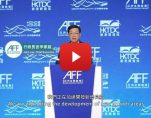
“Featuring more than 150 prominent speakers, from Hong Kong, throughout the Asian region and around the world, the Forum will inspire insight and innovation, create partnerships and explore fresh business opportunities,” John Lee, Chief Executive of the HKSAR, said in his opening remarks at the Forum.
Mr Lee also spoke of the boundless opportunities for Hong Kong under the unique principle of “one country, two systems”, that assures Hong Kong of the unwavering support of China, while continuing to expand its global markets and reach.
“This unparalleled positioning solidifies our institutional strengths: the rule of law, a judiciary that exercises its power independently, an open and transparent market, the free flow of capital and a low and simple tax regime,” Mr Lee said.
Mr Lee later witnessed the signing of a co-operation agreement between the Financial Services and the Treasury Bureau and the Shanghai Gold Exchange, marking a new milestone in deepening co-operation between the gold markets of Hong Kong and Shanghai.
The agreement was signed by the Secretary for Financial Services and the Treasury, Christopher Hui, and the Chairman of the Shanghai Gold Exchange, Yu Wenjian.
“The agreement just now signed is far more than a formal document,” said Mr Hui.
“It represents a resolute commitment to advancing the synergistic development of Hong Kong and Shanghai as premier international financial and gold markets. It reflects our joint determination to deepen the integration and complementary strengths of Hong Kong and Shanghai, so that together we can expand our share and influence in the global gold market, and better support Renminbi internationalisation.”
Mr Hui outlined the strategic significance of the agreement and the overall development blueprint for Hong Kong’s gold market.
“In recent years, amid heightened geopolitical uncertainty, inflationary pressures, and ongoing restructuring of the international monetary system, the strategic importance of gold has become even more pronounced,” Mr Hui said.
The agreement covers two major forward-looking areas of co-operation: establishing a high-level, collaborative governance structure for Hong Kong’s new gold central clearing system; and opening new avenues for physical infrastructure synergy and market interconnectivity.
“The signing of this agreement with the Shanghai Gold Exchange marks the dawn of a new chapter—one in which Hong Kong and Shanghai join forces to shape the future of global gold markets,” Mr Hui said.
A discussion session on gold trading themed “Global Spectrum – Gold Exchange” features expert panelists invited to examine recent market developments and share insights on Hong Kong’s role, potential and opportunity as a world-class gold trading centre. Speakers include overseas experts James Emmett, Chief Executive Officer, MKS PAMP SA and David Tait, Chief Executive Officer, World Gold Council.
Other highlights on day one of the AFF include a keynote luncheon speech by Dr José Manuel Barroso, former President of the European Commission, former Prime Minister of Portugal, and current Chairman of Goldman Sachs International Advisory Board, to share his insights on the current global landscape and macro‑level challenges.
Other notable speakers today include Zou Jiayi, President of Asian Infrastructure Investment Bank; Scott Morris, Vice-President (East and Southeast Asia, and the Pacific) of the Asian Development Bank; Mehmet Şimşek, Minister of Treasury and Finance of Türkiye; Klemen Boštjančič, Deputy Prime Minister and Minister of Finance of Slovenia; H.E. Waleed Saeed Abdul Salam Al Awadhi, Chief Executive Officer of Securities and Commodities Authority of United Arab Emirates; Burkhard Balz, Member of the Executive Board of the Deutsche Bundesbank; Rhee Chang-yong, Governor of the Bank of Korea; and Gokul Laroia, Chief Executive Officer Asia of Morgan Stanley.
The AFF serves as the opening event of the International Financial Week in Hong Kong, featuring over 10 partner activities covering a range of global financial and business topics, including ASEAN opportunities, asset and wealth management, and artificial intelligence.
Arabian Post Staff -Dubai The United Arab Emirates is set to make its first appearance at the Winter Olympic Games, marking a significant expansion of the country’s sporting footprint beyond its traditional strengths in summer and indoor disciplines. The UAE has qualified to compete at the Milano Cortina 2026 Winter Olympics, scheduled for February 2026 in Italy, becoming the first Gulf nation to debut at the Winter […]
Arabian Post Staff -Dubai GivTrade has rolled out a major regional brand campaign in collaboration with Spain’s top professional league, LaLiga, designed to amplify its visibility across the Middle East and North Africa during key league fixtures featuring marquee clubs such as Real Madrid, FC Barcelona and Atlético Madrid. The marketing drive places GivTrade prominently on broadcast screens and digital channels during match coverage, giving the trading […]
Severe weather across large parts of the United States and planned airport infrastructure works in Europe have forced major Gulf carriers to cancel and suspend flights, highlighting how environmental shocks and logistical constraints can ripple through tightly connected aviation networks. Emirates, Etihad Airways, flydubai and Qatar Airways have issued a series of travel advisories as winter storms in North America disrupted air traffic control operations and ground […]
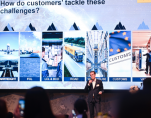
HONG KONG SAR – Media OutReach Newswire – 26 January 2026 – Dachser, a global logistics provider with over 90 years of experience, recently hosted a customer event in Bangkok, Thailand, bringing together customers and industry stakeholders to discuss the 2026 air and sea freight market outlook and the role of Supply Chain Optimization in navigating a challenging global trade environment.
Philipp Ramsbacher, Team Leader Supply Chain Optimization at Dachser, says today’s supply chains are too complex to rely on assumptions or past patterns. Data-driven simulation, rather than guesswork, helps create transparency, align expectations, and design logistics networks.
The event highlighted key developments shaping international trade flows, including geopolitical tensions, evolving sourcing strategies, capacity dynamics, and cost developments across air and sea freight markets. The discussions also underscored the growing importance of structured Supply Chain Optimization as companies adapt their logistics networks to changing market conditions.
“After several years of volatility, the air freight market is gradually moving toward a more balanced environment,” said Daniel Chua, Head of Air Freight, Air & Sea Logistics Asia Pacific at Dachser. “While demand fundamentals remain positive, careful capacity planning and realistic forecasting will be increasingly important as the market continues to normalize.”
In air freight, Dachser expects demand in 2026 to grow at a single-digit rate, supported by moderate capacity expansion and a normalization of rate patterns. While stable yields are anticipated, growth will continue to be driven by e-commerce, electronics – particularly AI-related components – and pharmaceuticals, alongside a structural shift of trade lanes toward Southeast Asia.
In sea freight, Dachser forecasts global demand growth to slow below three percent in 2026, despite continued strength in intra-Asia trade and Asia-Europe volumes. While fleet growth remains significant, supply and demand are relatively balanced, supported by blank sailings and vessel scrapping. Freight rates are expected to stabilize into early 2026, although uncertainty remains due to high operating costs and ongoing geopolitical developments.
“Even as rates soften, the market remains far from predictable,” said Eunice Yu, Head of Ocean Freight, Air & Sea Logistics Asia Pacific at Dachser. “Flexibility, diversified routing options, and realistic lead-time planning are essential for building resilient supply chains in the year ahead.”
Beyond outlooks: enabling resilience through Supply Chain Optimization
Beyond market analysis, Dachser sees that supply chains increasingly depend on structured, data-driven planning by taking a Supply Chain Optimization approach, which supports customers in analyzing, modeling, and redesigning logistics networks based on real operational data.
Philipp Ramsbacher, Team Leader of Supply Chain Optimization at Dachser says, “By applying Supply Chain Optimization with data-driven simulation, Dachser enables customers to evaluate scenarios, align stakeholders, and develop optimized and implementable supply chain solutions. These solutions help design logistics networks that are robust, efficient, and sustainable.”
Projects showcased during the event demonstrated measurable improvements, including cost savings, reduced CO₂ emissions, and enhanced delivery performance, underscoring the value of a structured Supply Chain Optimization approach.
With integrated air, sea, and contract logistics solutions and its strong presence across Asia Pacific as well as a well-established European road logistics backbone, Dachser continues to support customers navigate changing market conditions while strengthening long-term supply chain performance.
Hashtag: #Dachser
The issuer is solely responsible for the content of this announcement.
About Dachser
Dachser, a family-owned company headquartered in Kempten, Germany, provides transport logistics, warehousing, and customized services in two business fields: Dachser Air & Sea Logistics and Dachser Road Logistics. The latter consists of two business lines: Dachser European Logistics and Dachser Food Logistics. Comprehensive contract logistics services and industry-specific solutions round out the company’s range. A seamless shipping network—both in Europe and overseas—and fully integrated IT systems ensure intelligent logistics solutions worldwide.
Thanks to some 37,300 employees at 433 locations all over the globe, Dachser generated consolidated net revenue of approximately EUR 8 billion in 2024. The same year, the logistics provider handled a total of 83.2 million shipments with a tonnage of 44.1 million metric tons. Country organizations represent Dachser in 43 countries. For more information about Dachser, please visit dachser.com
In the DACHSER magazine, you will regularly find up-to-date reports, articles, and interviews on topics that concern us today and tomorrow: magazine.dachser.com
Arabian Post Staff -Dubai The United Arab Emirates’ hospitality sector has posted a substantial rise in hotel revenues in 2025, with total takings reaching around AED 44.4 billion for the period from January to November, marking an 8.8 per cent uplift compared with the same span a year earlier, driven by stronger average daily rates and robust demand across key markets. This performance underscores the UAE’s ongoing […]
Revolut has shelved plans to buy a United States bank and is instead pursuing a fresh regulatory pathway as it recalibrates its long-delayed push into the world’s largest retail finance market. The London-based digital banking group has begun laying the groundwork for an application to the Office of the Comptroller of the Currency for a national banking licence, according to people familiar with the company’s strategy, marking […]
Strong international validation for India’s ambitions in semiconductors and artificial intelligence has emerged during Union minister Ashwini Vaishnaw’s visit to Veldhoven, the Netherlands, where he held discussions centred on advanced manufacturing technologies and long-term collaboration. Vaishnaw described the engagement as a major opportunity to understand cutting-edge systems and align partnerships that could accelerate India’s high-technology ecosystem.
The visit to Veldhoven, home to the world’s most sophisticated chipmaking equipment capabilities, comes at a time when New Delhi is pushing to anchor itself more firmly in global semiconductor supply chains while building domestic capacity. Vaishnaw indicated that interlocutors acknowledged India’s policy direction and scale as compelling factors for deeper cooperation across semiconductors and artificial intelligence, two areas that are increasingly intertwined in next-generation computing and industrial automation.
Discussions during the trip focused on lithography technologies, supply-chain resilience and skills development, according to people familiar with the engagements. India’s pitch rests on a combination of policy incentives, a large engineering workforce and expanding demand from electronics, automotive and data-driven sectors. Officials accompanying the minister underlined that partners in Europe see India as a credible long-term manufacturing and innovation base rather than merely a consumption market.
The Netherlands occupies a critical position in the global chip industry because of its dominance in extreme ultraviolet lithography, a technology essential for producing advanced semiconductors. India’s engagement with Dutch stakeholders is therefore viewed as strategically important, particularly as countries and companies diversify supply chains amid geopolitical and commercial pressures. Vaishnaw’s meetings sought to map pathways for collaboration spanning equipment ecosystems, materials, precision engineering and research linkages.
Artificial intelligence featured prominently in the conversations, reflecting the convergence between advanced chips and AI workloads. Executives and policymakers discussed how specialised processors, high-performance computing and data infrastructure underpin AI deployment across sectors such as healthcare, mobility, energy management and public services. Indian officials emphasised the country’s growing base of AI startups, public digital platforms and applied research, arguing that closer alignment with global technology leaders would strengthen both sides.
The endorsement referenced by Vaishnaw also reflects broader international assessments of India’s semiconductor strategy, which combines fiscal incentives with infrastructure support and regulatory facilitation. Several fabrication and assembly projects have been announced across different states, while partnerships with global firms aim to address gaps in design, packaging and testing. Industry analysts note that execution risks remain, including timelines, talent depth in specialised manufacturing and integration into mature supply networks, yet acknowledge that momentum has improved.
From the Dutch perspective, collaboration with India offers access to a fast-growing market and diversification beyond traditional hubs. European technology firms have been recalibrating their engagement with Asia, balancing commercial interests with strategic considerations. India’s emphasis on trusted partnerships and standards-based cooperation resonates in this context, particularly in areas linked to critical technologies.
Vaishnaw’s visit also included interactions with research institutions and industry representatives to understand best practices in precision manufacturing and workforce training. Officials highlighted the importance of skilling programmes that align academic curricula with industry needs, a factor seen as decisive for sustaining semiconductor operations. India has been expanding such initiatives, including specialised training for chip design and manufacturing processes.
The talks in Veldhoven are part of a broader diplomatic and industrial outreach aimed at positioning India within high-value segments of global technology chains. Previous engagements with partners in East Asia and North America have similarly stressed co-development, supply assurance and innovation partnerships rather than transactional sourcing. The Netherlands visit adds a European dimension to that strategy.
Jewellery manufacturers, designers and traders from across three continents are set to converge in Sharjah as the Jewels of Emirates Show 2026 opens on 28 January at the Expo Centre Sharjah, positioning the emirate as a key meeting point for the regional and global jewellery trade at the start of the year. Organisers say the four-day exhibition will feature about 180 exhibitors representing the Middle East, Asia […]
BirdsEyeView, a London-based insurtech specialising in satellite-driven climate risk analytics, has secured a seven-figure investment to accelerate the development of its artificial intelligence models and support international expansion, as demand grows for more precise tools to assess natural catastrophe exposure. The funding round was led by 24 Haymarket, a London-headquartered venture capital firm known for backing early-stage technology companies, with participation from all existing investors. Financial terms […]
Arabian Post Staff -Dubai Russian President Vladimir Putin and envoys of the United States wrapped up around four hours of negotiations in the Kremlin on Thursday night, with Moscow underscoring that any peace settlement to end the war in Ukraine hinges on agreement over territorial control. The talks, which included Steve Witkoff, Jared Kushner and White House adviser Josh Gruenbaum, were described by the Kremlin as […]
Mistral AI, the French artificial intelligence company behind a fast-growing portfolio of large language models, is in discussions to establish a Global Capability Centre in Bengaluru, a move that would place advanced engineering and research operations in one of Asia’s most competitive technology hubs. People familiar with the matter say the plan, still under evaluation, reflects the company’s need to scale product development while drawing on […]
Pressure is building on developers and corporate users of generative AI as “hallucinations” — confident statements that are wrong — continue to surface in customer service chats, legal filings, coding assistants and financial research notes, exposing organisations to reputational harm, regulatory scrutiny and operational risk. The problem has become harder to dismiss as adoption accelerates, because the errors often arrive wrapped in fluent prose, invented citations and […]
SHANGHAI, CHINA – Media OutReach Newswire – 22 January 2026 –DHL Global Forwarding, the air and ocean freight specialist of DHL Group, has recently launched TRUCKAIR, a new cost-efficient multimodal service designed to support large-volume and bulky shipments moving between China and Europe. This new service meets the growing demand for flexible and reliable logistics amid evolving global trade dynamics.
Connecting China and Europe-DHL’s TRUCKAIR offers speed and cost efficiency
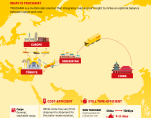
The TRUCKAIR solution integrates road and air freight to strike an optimal balance between cost and speed. Following inland pickup in China, the goods are transported via truck to Tashkent, Uzbekistan, where they are transferred via air freight for onward delivery to Istanbul, and thereafter onwards to other European destinations via various modes of transport. While costs may vary from shipment to shipment for this tailor-made solution, customers have reported six-digit figures in savings over the two months of adopting TRUCKAIR multimodal solution over airfreight solution. Additionally, with the TRUCKAIR multimodal service, the total transit time from China to Türkiye is approximately 9 to 11 days, only 4 to 5 days longer than usual transit time of 4 to 7 days by only air freight, making this service a prime choice for companies seeking a reliable and cost-effective solution for high-volume shipments.
“Demand for agile and cost-efficient logistics solutions continues to rise, backed by sustained growth in China–Europe and broader Asia–Europe trade. DHL’s latest market update points to tight capacity and rate increases into Chinese New Year, with a demand peak expected in early February 2026; TRUCKAIR helps customers avoid short term volatility while maintaining predictable lead times. China’s total imports and exports of goods grew 3.6% in the first eleven months of 2025, signaling a steady recovery in trade momentum. The European Union was also China’s second-largest trading partner in 2025, with bilateral trade up 5.4% year-on-year to RMB 5.37 trillion,” said Aditi Rasquinha, CEO of DHL Global Forwarding Greater China. “TRUCKAIR was developed to meet this growing demand for greater flexibility and predictability in cross-border shipments, enabling businesses to control costs without compromising speed.”
Designed for high-volume, general cargo shipments, the TRUCKAIR solution offers customers a cost-effective alternative to traditional air freight while maintaining delivery timelines suitable for retail and other time-sensitive and high-volume industries. Customers may also integrate TRUCKAIR with DHL’s broader portfolio of forwarding services to build customized, end-to-end supply chain solutions.
“The strategic design of the TRUCKAIR route reflects China’s pivotal role as a global trade hub,” Aditi added. “With its vast network, well-developed logistics infrastructure and rapid adoption of smart technologies and automation, the country is uniquely positioned to maintain strong connectivity with international markets. Leveraging these strengths, TRUCKAIR helps businesses to navigate supply chain challenges amid evolving global trade patterns and serves as a gateway for other Asia-Pacific markets to access Europe efficiently.
Hashtag: #DHL
The issuer is solely responsible for the content of this announcement.
DHL – The logistics company for the world
DHL is the leading global brand in the logistics industry. Our DHL divisions offer an unrivalled portfolio of logistics services ranging from national and international parcel delivery, e-commerce shipping and fulfillment solutions, international express, road, air and ocean transport to industrial supply chain management. With approximately 400,000 employees in more than 220 countries and territories worldwide, DHL connects people and businesses securely and reliably, enabling global sustainable trade flows. With specialized solutions for growth markets and industries including technology, life sciences and healthcare, engineering, manufacturing & energy, auto-mobility and retail, DHL is decisively positioned as “The logistics company for the world”.
DHL is part of DHL Group. The Group generated revenues of approximately 84.2 billion euros in 2024. With sustainable business practices and a commitment to society and the environment, the Group makes a positive contribution to the world. DHL Group aims to achieve net-zero emissions logistics by 2050.
Founded in the Lviv region in 2020, EcoEnergySol unites specialists and partner companies connected to renewable energy projects and solar generation initiatives. The organization focuses on strengthening the role of clean energy in Ukraine through educational outreach, information initiatives, and the promotion of environmentally responsible solutions. Its long-term mission supports broader national priorities such as energy security, gradual decarbonization, and the expansion of local renewable generation capacity. Within EcoEnergySol, […]
AD Ports Group has agreed to acquire full ownership of Balenciaga Astilleros Shipyard, one of Spain’s long-established shipbuilding and repair facilities, for a total consideration of €11.2 million, extending the Abu Dhabi-based group’s industrial footprint across the Mediterranean and reinforcing its push into offshore wind support services. The transaction is being executed through SAFEEN Drydocks, a subsidiary within Noatum Maritime, marking a further step in AD Ports […]
Revolut has moved to position itself at the centre of the next phase of digital payments after confirming that its Revolut Pay service will support Google’s Agent Payments Protocol, a framework designed to allow artificial intelligence agents to complete transactions on behalf of users. The integration is expected to extend one-tap checkout functionality across the UK and the wider European Economic Area, signalling a shift in how […]
Portugal’s gambling regulator has instructed crypto-based prediction market Polymarket to cease offering its services in the country within 48 hours, intensifying scrutiny of online platforms that allow users to wager on political and real-world outcomes without national authorisation. The Serviço de Regulação e Inspeção de Jogos, which oversees gambling activity under Portugal’s Tourism Authority, said the platform was operating illegally by facilitating bets without a licence and […]
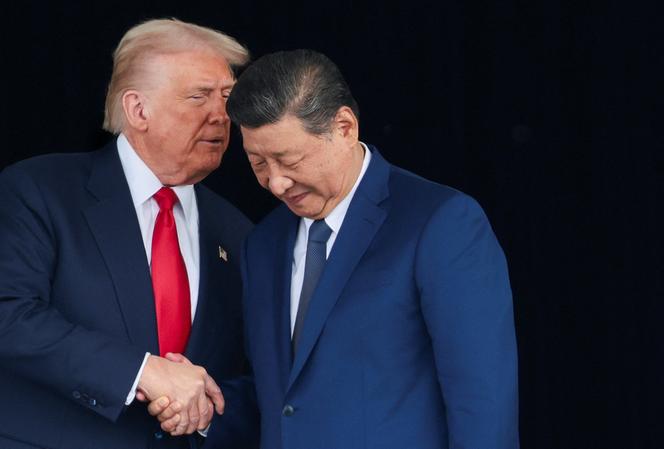
The sharp fall in the dollar and the sudden sell-off in US equity futures this week are early signals of a deeper problem with President Donald Trump’s escalating confrontation over Greenland. What’s being framed by the White House as a strategic gambit risks becoming an economic and financial self-own, with consequences that undermine the very US interests the policy claims to defend. Markets react first not to […]
By Nitya Chakraborty 2025 was the year of the maverick U.S. President Donald Trump. The developments during the year beginning January 20 evolved around Trump. He was the key decision-maker, irrespective of what other countries leaders felt. He cared little for the United Nations, WTO, WHO and all other multilateral bodies. He openly said ‘I […]




 https://www.brandhk.gov.hk/
 https://www.linkedin.com/company/brand-hong-kong/
 https://x.com/Brand_HK/
 https://www.facebook.com/brandhk.isd
 https://www.instagram.com/brandhongkong