Open-source maintainers and software manufacturers are heading towards the European Union’s first Cyber Resilience Act enforcement milestone with deep gaps in awareness, preparedness and legal clarity, after new OpenSSF research found that about two-thirds of practitioners remain unready or unaware of the compliance timetable. The finding has sharpened concern across the software supply chain because the CRA’s vulnerability and incident reporting duties begin on 11 September 2026, […]
Spearheads Cross-border Tech Collaboration Leveraging Hong Kong’s Role as Superconnector
HONG KONG SAR – Media OutReach Newswire – 8 June 2026 – The Hong Kong Polytechnic University (PolyU) is set to make its debut at Paris-based Viva Technology 2026 (VivaTech), Europe’s flagship premier event dedicated to technological innovation and startup collaboration. PolyU’s first-ever participation at the prestigious tech summit which is composed of a startup exhibition and two insight-packed seminars, will be led by Prof. Christopher CHAO, PolyU’s Senior Vice President (Research and Innovation), and Prof. Zijian ZHENG, Vice President (Knowledge Transfer). This milestone underscores the University’s expanded global outreach and strengthened engagement with European markets.
The Hong Kong Polytechnic University will showcase five promising PolyU startups at Paris-based VivaTech 2026. Visitors are welcome to interact with these innovative ventures and join its insight-packed seminars.
During this year’s event scheduled from 17 to 20 June 2026 at Paris Expo Porte de Versailles, PolyU will showcase its achievements at the Hong Kong Tech Pavilion organised by the Hong Kong Trade Development Council (HKTDC). Located at Booth 1C11, Hall 7.1, the University will present five outstanding PolyU-nurtured startups across high-growth tech domains, including AI and Robotics, Health Tech, Sustainable and Climate Tech, and FinTech. For more information about these innovative ventures, please check out the event’s online leaflet.
As Europe’s most influential innovation gathering, VivaTech brings together global visionaries, startup founders, industry leaders, investors and corporate innovators, providing as a pivotal platform for cross-border collaboration and technological knowledge exchange. PolyU’s participation at VivaTech further extends its global innovation footprint into Europe, and connects the University and its startups with international investment and market resources.
In addition to the exhibition, PolyU will host an exclusive thematic session on-site and engage in high-level industry dialogues to deepen collaboration between Europe and Hong Kong. On 18 June, PolyU will stage a dedicated seminar titled “Breaking Barriers with Autonomous Systems: Transforming Industries with AI Innovation”, where Prof. Chao will deliver the opening remarks, and Prof. Zheng will share his insight on how Hong Kong is scaling innovation as a leading AI hub, driving technological advancement and fostering global collaboration. Meanwhile, the five PolyU startups will share about their journeys in innovation and entrepreneurial endeavours.
On 19 June, Prof. Chao will participate as a distinguished speaker in the Executive Dialogue during the HKTDC-hosted Hong Kong Seminar-cum-Networking Reception. Centred on the theme “Talent & Infrastructure Powering the Hong Kong Tech Leadership and Global Collaboration”, the high-level seminar also features distinguished leaders representing the forefront of Hong Kong’s innovation and technology ecosystem. Prof. Chao will engage in in-depth topics such as how to attract and nurture global talent, and how academia-driven initiatives can drive technological synergies between Hong Kong and Europe.
For full details of PolyU’s participation at VivaTech 2026, please visit the webpage of PolyU’s Knowledge Transfer and Entrepreneurship Office.
Hashtag: #PolyU
The issuer is solely responsible for the content of this announcement.
Air France-KLM has left open the possibility of taking a role in any takeover approach for easyJet, adding a strategic airline dimension to Castlelake’s early-stage interest in the Luton-based low-cost carrier. Chief Executive Ben Smith indicated that the Franco-Dutch airline group would consider contact from Castlelake if the investment firm sought a partner for a possible offer. His comments come as the US-based asset manager studies whether […]
Arabian Post Staff -Dubai Saudi Arabia has opened talks with Russia’s Sistema investment group in St Petersburg as Riyadh seeks to deepen industrial partnerships, localise advanced technologies and strengthen supply chains under its wider economic diversification programme. Minister of Industry and Mineral Resources Bandar Alkhorayef met senior Sistema executives during a visit to the Russian city, with discussions centred on cooperation in high-priority industrial sectors and the […]
Elon Musk’s reaction to a viral post on India’s falling fertility rate has pushed the country’s demographic transition into a wider global debate, as official data show the national total fertility rate at 1.9 children per woman, below the replacement benchmark of 2.1.
Musk responded on X to a post claiming that India’s birth rate had fallen below replacement level, writing that the trend had appeared “among those most educated” many years earlier. His comment drew attention because the Tesla and SpaceX chief has repeatedly argued that declining birth rates pose a long-term risk to economies, innovation and social stability.
The viral post said India’s fertility rate had fallen from 2.3 to 1.9 over a decade and cited Delhi’s rate at 1.2, among the lowest in the country. Official demographic data broadly support the decline, though the claim that the fall below replacement level has happened for the first time needs qualification. India’s total fertility rate stood at 1.9 in 2024, the same level recorded for 2023, meaning the country has already been below the conventional replacement threshold.
The latest figures mark a sharp departure from long-running anxieties about population growth. India, with an estimated population of more than 1.4 billion, overtook China as the world’s most populous country in 2023. Yet the fertility trend now points to a slower population expansion in the coming decades, with regional variation likely to shape labour supply, welfare planning and state-level fiscal priorities.
Delhi’s total fertility rate of 1.2 highlights the depth of the shift in urban centres, where higher education levels, later marriage, higher housing costs, career pressures and rising aspirations have contributed to smaller families. Several southern and western states have also remained below replacement level for years, while parts of northern and central India continue to record comparatively higher fertility.
Only a small group of states remains above the replacement threshold. Bihar, Uttar Pradesh, Madhya Pradesh, Rajasthan, Chhattisgarh and Jharkhand continue to report fertility levels above 2.1, keeping national population momentum alive even as most states move towards smaller family norms. The divergence has implications for political representation, public finance and migration, particularly as lower-fertility states age faster while higher-fertility states continue to add younger workers.
Demographers distinguish between a falling fertility rate and immediate population decline. India’s population will continue to grow for some time because of demographic momentum: a large base of people in reproductive age groups will keep births high even when the average number of children per woman falls. The larger policy issue is not a sudden fall in population, but the speed at which the age structure changes.
Musk’s intervention reflects a view he has voiced across countries, including Japan, South Korea, China and several European economies, where low fertility has triggered concerns about shrinking workforces and mounting pressure on pension and health systems. His comment on India stands out because the country has long been seen as a counterweight to ageing economies, with a large young population expected to support growth.
India’s demographic advantage remains substantial, but the window is not permanent. A lower fertility rate can help families invest more in each child’s education and health, while also reducing pressure on land, housing and public services. At the same time, it places greater urgency on job creation, women’s workforce participation, skilling, healthcare and pension coverage before the population ages more visibly.
Education plays a central role in the fertility shift. Women with greater access to schooling and employment tend to marry later and have fewer children. Urbanisation has reinforced the trend by raising the cost of child-rearing and changing family expectations. The pattern is not unique to India, but its scale is significant because of the country’s population size and uneven development across regions.
The decline also complicates older political narratives around population control. States that achieved lower fertility earlier have argued that they should not be penalised in future federal arrangements, while states with higher fertility still face pressure to improve education, healthcare and women’s economic participation. Any future delimitation of parliamentary seats is likely to bring these tensions into sharper focus.
Public health indicators add another layer to the debate. Lower fertility often accompanies improvements in child survival, maternal health and access to contraception. However, uneven access to quality healthcare, nutrition and education means the benefits are not distributed equally. Rural families, poorer households and marginalised communities may face different constraints from urban professional families choosing to have fewer children.
India’s policy challenge is therefore more complex than simply reversing a fertility decline or celebrating it. The country must prepare for a future in which some regions face ageing and labour shortages while others continue to supply young workers. That will require better migration planning, stronger urban infrastructure, more reliable social security and greater investment in human capital.
Iran’s World Cup players have been granted visas to enter the United States, easing a major logistical and diplomatic obstacle 10 days before their opening match against New Zealand in Los Angeles. A White House official said the players’ entry documents had been approved overnight after Iran’s ambassador to Mexico, Abolfazl Pasandideh, said the squad was still waiting for US visas. The clearance removes the most immediate […]
Amazon has unveiled an upgraded version of its Proteus warehouse robot that can take plain-language instructions from workers, marking a major step in the company’s push to automate heavier tasks across its European fulfilment network. The next-generation Proteus was shown at Amazon’s Dartford fulfilment centre east of London as part of a wider investment programme of more than €10 billion, equal to about $11.6 billion, aimed at […]
Jersey is facing a defining test over whether its finance-led prosperity can keep pace with faster, technology-driven rivals without eroding the small-island character that has long set it apart. The British Crown Dependency, once widely labelled a tax haven, has spent decades recasting itself as a regulated international financial centre. That shift has helped turn a 45-square-mile island of just over 100,000 people into one of the […]
ChangeNOW has been named Best Digital Assets Fintech at the BeInCrypto x Proof of Talk Institutional 100 Awards 2026, giving the non-custodial crypto platform fresh visibility as financial institutions deepen their involvement in blockchain-based services, tokenised payments and regulated digital asset infrastructure. The award was presented at a live ceremony at the Louvre Palace in Paris during Proof of Talk 2026, a two-day Web3 and digital finance […]
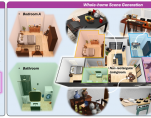
Kairos-HomeWorld is purpose built for embodied intelligence and represents the first unified framework capable of generating a complete, fully interactive home environment from a single text prompt. Extending indoor scene generation beyond individual rooms, it enables whole-home simulation in which every object is fully manipulable within an integrated simulation engine.
Kairos-HomeWorld employs a four-stage hierarchical architecture encompassing floorplan generation, 2D-to-3D lifting, recursive refinement, and manipulable object placement. This approach enables the production of globally coherent, physically accurate, and simulation-ready scenes. Each environment contains more than 15 manipulable objects and achieves a Footprint Object Density of 4.16, the highest among compared methods.
The accompanying open-source dataset is purpose-built for Chinese households, pairing 300,000 real residential floor plans with 5,000 fully furnished, simulation-ready homes and 50,000 physics-enabled interactive object assets. Already deployed in ACE ROBOTICS’ daily robot training, it significantly accelerates the simulation-to-reality transfer cycle.
SHANGHAI, CHINA – Media OutReach Newswire – 5 June 2026 – ACE ROBOTICS, in collaboration with the Multimedia Laboratory at The Chinese University of Hong Kong (CUHK) and Shenzhen Loop Area Institute, today announced the open-source release of Kairos-HomeWorld, the industry’s first unified World Model framework capable of generating full home-scale, object-level interactive 3D environments from a single text prompt. The solution addresses longstanding limitations in indoor scene generation, which has typically been restricted to single-room outputs with weak global consistency and limited interactivity. Kairos-HomeWorld overcomes these constraints by delivering structurally coherent, physically plausible, and functionally complete residential environments. These high-fidelity, large-scale simulations provide a robust foundation for advancing embodied intelligence applications and accelerating real-world robot training.
The long-term vision for embodied intelligence is the home environment. However, residential settings are inherently diverse and highly personalized, requiring robots to be trained across a broad range of realistic and differentiated scenarios before they can reliably operate in even a single household. High-fidelity simulation offers the most practical pathway to achieving this at scale, yet existing approaches typically involve a trade-off: synthetic environments lack realism, while scanned real-world scenes offer limited interactivity. Kairos-HomeWorld, together with its accompanying dataset, is designed to bridge this gap, delivering both realistic and interactive environments within a unified framework.
A four-stage architecture for whole-home, object-level generation Conventional approaches to indoor scene generation remain constrained to single-room outputs, often exhibiting weak global consistency, frequent physical inaccuracies, and limited or no interactivity. Kairos-HomeWorld takes a fundamentally different approach. It decomposes whole-home generation into a structured, four-stage process, redefining the underlying architectural paradigm from the ground up.
Stage 1 — Floor Plan Generation. A K-D tree-based approach translates real-world floor plans into a hierarchical text representation that can be efficiently processed by large language models (LLMs). This method mitigates common issues in conventional layout generation, including room overlaps and fragmented topologies, resulting in more coherent and structurally consistent spatial configurations.
Stage 2 — 2D-to-3D Lifting & Furniture Layout Generation. A “top-down global initialization combined with a first-person detail walkthrough” approach anchors the process to the 3D building shell generated in Stage 1. This methodology mitigates the geometric drift commonly associated with conventional 2D-to-3D lifting techniques, enabling more stable and spatially consistent scene generation.
Stage 3 — Recursive Refinement. A fine-tuned vision-language model performs iterative validation and correction, automatically identifying and resolving physical inconsistencies, such as obstructed doorways or object collisions. This recursive process materially reduces spatial errors, achieving among the lowest reported furniture-collision rates in the industry.
Stage 4 — Manipulable Object Placement. A surface-centric placement algorithm assigns each object detailed physical properties, including material composition, density, friction, and structural support relationships. Each generated scene incorporates an average of more than 15 manipulable objects and achieves a Footprint Object Density (FOD) of 4.16, a metric reflecting the concentration of items across furniture surfaces. All objects are natively compatible with simulation engines, enabling direct interaction for tasks such as grasping, movement, and stacking.
The resulting environments move beyond “viewable but not actionable” outputs. Their coherent spatial structure enables seamless, continuous navigation across multiple rooms, while objects embedded with realistic physical properties allow robots to simulate complex household tasks end-to-end. Taken together, this approach addresses key limitations in existing data pipelines, resolving the scarcity of high-quality 3D simulation data, the lack of realism in synthetic environments, and the limited interactivity of scanned scenes within a single unified framework.
The dataset: 300,000 real floor plans, 5,000 fully interactive homes, built for Chinese households ACE ROBOTICS and CUHK are open-sourcing a dataset of 300,000 structurally annotated residential floor plans, sourced from real-world listings and processed through a multi-stage automated pipeline. The pipeline vectorizes and labels key spatial elements, including door and window positions, room geometry, functional zoning, and connectivity. By comparison, widely used benchmarks such as RPLAN and ResPlan contain approximately 80,000 and 17,000 floor plans, respectively, underscoring the scale and comprehensiveness of the Kairos-HomeWorld dataset.
Building on this foundation, the dataset also includes 5,000 fully furnished residential environments, each featuring a complete furniture layout and an average of more than 15 physics-enabled, manipulable objects, powered by the PhysX-Omni model. All assets are sim-ready and can be directly imported into a simulation engine, enabling immediate use in interactive training scenarios.
Most existing open indoor-scene datasets are centered on North American and European residential formats, typically featuring open-plan kitchens, the absence of service balconies, and layouts and design elements that capture only a narrow segment of global housing. As a result, robots trained on these datasets often exhibit limited transferability when deployed in environments outside their scope. Kairos-HomeWorld ‘s dataset is purpose-built for Chinese households, with deliberate coverage of historically under-represented housing typologies. It spans a wide range of unit sizes, from approximately 30 m² (around 320 sq ft) studio apartments to residences exceeding 200 m² (approximately 2,150 sq ft). The dataset accurately reflects key architectural features common in these settings, including north-south cross-ventilated layouts, enclosed kitchens, dedicated service balconies, wet-and-dry-separated bathrooms, and entryway storage, as well as the irregular room configurations often found in older housing stock.
The dataset is being openly released to both academic and industry communities. Going forward, the team plans to expand its scope to include additional regions, interior styles, and interaction scenarios, further lowering barriers to real-world-ready training for embodied intelligence.
See it in action: one prompt to a fully interactive home Kairos-HomeWorld runs the full end-to-end pipeline, from initial text input to a fully interactive home environment, delivering global spatial consistency, physical realism, and seamless interactivity from a single prompt.
The system begins with a single-line prompt: “Generate a 90 m² (approximately 970 sq ft) two-bedroom apartment in neo-Chinese style.” Leveraging real floor plan data and its K-D tree representation, Kairos-HomeWorld first constructs an empty spatial layout aligned with real-world living patterns, incorporating cross-ventilation and well-defined functional zoning. Building on this foundation, a hierarchical “global layout plus first-person detail” approach furnishes the environment with stylistic coherence, while a PhysX-Omni rendering pass assigns full physical properties to all surfaces and objects, including articulated behavior, ensuring the scene is fully interactive and sim-ready.
A single natural-language instruction, “tidy the whole home”, is decomposed by the robot into a variety of discrete sub-tasks, executed sequentially along a complete navigation path spanning the living room, bedrooms, kitchen, bathroom, and dining area. The robot recognizes objects, plans efficient routes, and performs precise manipulation tasks, including articulated-object interactions for opening refrigerator and cabinet doors, fluid interactions for pouring laundry detergent, soft-body interactions for drawing curtains, irregular-object interactions for grasping apples, and gravity-based physical interactions for placing snacks.
Conventional simulation environments typically support navigation-focused training in isolation. By contrast, Kairos-HomeWorld integrates globally consistent spatial structures with objects that embody realistic physical properties. This enables robots to interact naturally with more than 15 object types, accurately modeling real-world dynamics such as collision, gravity, and friction, and to rehearse the full lifecycle of complex household tasks entirely within a virtual environment.
Across the industry, the same structural bottleneck, the scarcity of home-scale training data, is being addressed through multiple approaches. For example, Figure AI’s collaboration with Brookfield focuses on collecting human activity data across more than 100,000 residential units. Kairos-HomeWorld addresses this challenge through on-demand synthetic generation, delivering scalable training environments enhanced with object-level physical realism, capabilities that real-world data capture alone cannot fully provide.
In contrast, Kairos-HomeWorld delivers significantly lower costs and higher efficiency for household robot training. Powered by its world model, it can programmatically generate diverse Chinese home simulation scenes and physics-enabled interactive objects at scale.
Robots can complete a full range of household tasks training entirely within the virtual environment. New scene generation incurs near-zero marginal cost, eliminating substantial real-world testing expenses such as site operation and maintenance and furniture damage. Meanwhile, unconstrained by the limited stock of physical residential properties, it outperforms real-world data collection approaches in both training efficiency and scalable expansion.
Kairos-HomeWorld is already deployed in ACE ROBOTICS’ embodied intelligence training workflows, enabling full-pipeline simulation of long-horizon household tasks, including cross-room navigation and multi-room tidying. By allowing robots to rehearse complete task sequences in a virtual environment, the platform significantly shortens the simulation-to-reality transfer cycle. This approach lowers barriers to developing embodied intelligence systems and supports the accelerated, large-scale deployment of home robotics, particularly within the Chinese market. Kairos-HomeWorld is now available on GitHub.Hashtag: #ACEROBOTICS
The issuer is solely responsible for the content of this announcement.
About ACE ROBOTICS
Equipping robots with intelligent “brains” and engaging “souls”.
ACE ROBOTICS is a pioneering robotics company dedicated to advancing the field of embodied intelligence. Through breakthrough technological innovations and deep insights into embodied intelligence scenarios, we aim to empower robots with the ability to autonomously understand and explore the physical world, thereby accelerating their commercial implementation.
The company pioneered the ACE R&D paradigm and built a vision-based “environmental data engine, real-world cognition, embodied interaction generalization” technology chain. Using full spatiotemporal and multi-perspective environmental capture as its engine, along with Kairos 3.0 – China’s first open-source and commercially applicable world model – plus the Embodied Foundation Model as its technical backbone, ACE ROBOTICS addresses core industry challenges such as data scarcity, common sense gaps, poor generalization, and limited versatility. Simultaneously, the company unveiled its flagship A1 Embodied Super Brain Module, accelerating the large-scale commercial deployment of embodied intelligence across diverse scenarios.
ACE ROBOTICS is both a technology pioneer and an ecosystem builder. Through strategic cooperation with top hardware manufacturers, cloud service providers, and vertical scenario partners, we have broken through the “model-hardware-scenario” industrial deadlock, providing standardized and customized solutions that are driving the development of China’s embodied intelligence industry.
Hackers are using large-scale online advertising campaigns to deliver FlutterShell, a newly identified macOS backdoor that marks a sharper turn in financially motivated malware operations targeting Apple users. The campaign, tracked as Operation FlutterBridge, is linked to a broader cybercrime cluster known as CL-CRI-1089, which has operated since at least 2023. The group has used paid advertisements, verified advertiser accounts and shell companies to place malicious promotions […]
Romanian President Nicușor Dan is preparing to nominate Eugen Tomac as prime minister, seeking to break a month-long political deadlock and restore fiscal direction in one of the European Union’s most strained economies. Tomac, a member of the European Parliament and leader of the People’s Movement Party, has emerged as the presidency’s preferred option after talks among mainstream parties failed to produce a stable governing formula. His […]
Bull and Hon Hai Technology Group, better known as Foxconn, will manufacture artificial intelligence and cloud infrastructure in Europe under a strategic partnership designed to strengthen the region’s computing supply chain and reduce dependence on external technology providers. The project will use Foxconn’s manufacturing base in Pardubice in the Czech Republic and Bull’s factory in Angers, France, to produce AI systems and related components for European AI […]
FIFA has confirmed the final squad lists for the 2026 World Cup, naming a record 1,248 players across 48 national teams for the expanded tournament in Canada, Mexico and the United States. The lists mark the last major administrative step before the competition opens on 11 June, with the final scheduled for 19 July after 104 matches across the three host countries. Each participating association has submitted […]
Snowflake has placed Anthropic’s Claude at the centre of its enterprise artificial intelligence push, using Summit 26 to show rising customer uptake inside Cortex AI while a $6 billion infrastructure commitment to Amazon Web Services reshapes the economics behind its expansion. The data cloud company said enterprises are increasingly deploying Claude through Snowflake Cortex AI to run governed AI agents on business data without moving sensitive information […]
Persistent dollar strength pushed the yen back towards 160 per US dollar on Wednesday, reviving concern that Tokyo may step into the foreign exchange market as renewed Gulf hostilities drove investors towards the US currency.
The yen traded near 159.92 per dollar in Asian dealings, close to the level widely viewed by traders as a possible trigger for official action. The move erased much of the currency’s rebound after Japan’s ¥11.7 trillion intervention campaign earlier this year, leaving markets alert to fresh warnings from the Ministry of Finance.
Dollar demand strengthened after renewed fighting in the Gulf raised fears of wider disruption to energy supplies and trade routes. The US currency benefited from its reserve status, while risk-sensitive currencies came under pressure. The dollar index held around 99.27, supported by geopolitical uncertainty and firm US labour indicators that have reduced expectations of near-term monetary easing by the Federal Reserve.
Japan’s authorities have intensified verbal warnings as the yen weakens. Finance Minister Satsuki Katayama has said the government is ready to respond appropriately to excessive currency moves, language that traders typically read as a signal that intervention remains on the table. Officials have also stressed coordination with the United States, a politically sensitive point because unilateral currency action can draw scrutiny from trading partners.
The yen’s slide reflects a combination of external pressure and domestic policy constraints. Japan remains heavily dependent on imported energy, much of it priced in dollars. Higher oil prices therefore worsen the trade position and add pressure to household costs, while a weaker yen raises import bills further. Brent crude climbed towards $95 a barrel as Gulf tensions fed concerns over supplies, adding another layer of strain for Japan’s economy.
Attention is now focused on Bank of Japan Governor Kazuo Ueda, whose next policy signals will be watched closely ahead of the June 15-16 policy meeting. Markets have increased bets that the central bank could raise interest rates from 0.75% to 1%, especially as imported inflation pressures build. Any move would mark a further step away from the ultra-loose policy framework that kept Japan’s rates far below those of other major economies for years.
Still, the Bank of Japan faces a difficult balance. A rate increase could support the yen and help restrain inflation expectations, but policymakers remain cautious about tightening too sharply while domestic demand stays uneven. Wage growth has improved, yet household purchasing power remains vulnerable to higher energy and food costs. A premature tightening cycle could hurt consumption just as companies pass on higher input costs.
The interest-rate gap with the United States remains central to the yen’s weakness. US policy rates are still high by comparison, keeping dollar assets attractive to global investors. Stronger US jobs data has strengthened the argument that the Federal Reserve may keep policy restrictive for longer, or even consider further tightening if inflation risks intensify. That has limited any relief for currencies trading against the dollar.
Other major currencies also softened. The euro slipped as investors assessed rising energy-driven inflation in the eurozone and the possibility of a European Central Bank rate increase at its June 11 meeting. Sterling edged lower, while the Australian and New Zealand dollars were weighed down by weaker risk appetite. Cryptocurrency markets also came under pressure as investors moved away from volatile assets.
For Japan, the 160 level carries market and political significance. Authorities intervened when the yen breached similar levels in 2024 and again used large-scale buying this year to slow the currency’s decline. The effectiveness of intervention, however, depends on whether monetary policy and global market conditions move in the same direction. Without a narrower yield gap or a broader fall in the dollar, direct yen purchases can lose impact quickly.
Gold has overtaken US Treasuries as the world’s largest reserve asset by market value, marking a significant change in the composition of official reserves and underlining how central banks are adjusting to geopolitical risk, high debt levels and uncertainty over the dollar-based financial system. The European Central Bank’s latest review of the international monetary system shows gold accounted for 27 per cent of total official foreign reserves […]
UAE motorists are paying more for petrol in June, but pump prices remain below many major global markets, cushioning households and businesses from the full impact of higher international energy costs. The latest monthly adjustment raised Super 98 petrol to Dh3.95 a litre from Dh3.66 in May, while Special 95 increased to Dh3.83 from Dh3.55. E-Plus 91 moved up to Dh3.76 from Dh3.48. Diesel, however, fell to […]
Mette Frederiksen has secured a third consecutive term as Denmark’s prime minister after reaching a coalition agreement that ends nearly 10 weeks of political deadlock following the March 24 parliamentary election. The Social Democratic leader will head a centre-left minority administration made up of the Social Democrats, the Moderates, the Green Left and the Social Liberal Party. The deal keeps Frederiksen in power despite a weakened election […]
Johannesburg has become the opening stage for a European Union push to turn a pledged €12 billion investment package for South Africa into bankable projects, with about 200 companies joining the bloc’s first investment roadshow in the country as competition intensifies over critical minerals. The event, hosted at the Johannesburg Stock Exchange on Monday, marked the first major effort to mobilise private capital under the EU-South Africa […]
Hackers are using targeted spearphishing emails to deploy AZUREVEIL, an Adaptix-based command-and-control agent, against government and enterprise-linked targets in the Czech Republic and Taiwan, underscoring the growing use of trusted cloud services to mask cyber-espionage activity. The campaign, tracked as Operation Dragon Weave, begins with a malicious ZIP archive carrying files designed to appear as official documents. Once opened, the archive can trigger a multi-stage infection chain […]
Parcel-locker group InPost will invest a further €500 million in France by 2030, strengthening its out-of-home delivery network as e-commerce growth and consumer demand for flexible collection points reshape Europe’s parcel market. The commitment adds fresh weight to the expansion strategy of the Poland-based logistics company, which has been building France into one of its most important markets outside its home base. The investment is intended to […]
French police detained 780 people after celebrations over Paris Saint-Germain’s Champions League triumph turned violent across Paris and several other cities, leaving officers injured, shops damaged and vehicles set on fire during a night of disorder that overshadowed the club’s second successive European title. The unrest broke out after PSG defeated Arsenal 4-3 on penalties following a 1-1 draw at the Puskás Aréna in Budapest on Saturday, […]
Arabian Post Staff -Dubai UAE regulators have approved the oral form of Wegovy for weight management and cardiovascular risk reduction, expanding access to one of the world’s most closely watched obesity treatments beyond weekly injections. Emirates Drug Establishment cleared Wegovy, the semaglutide medicine developed by Novo Nordisk, as a once-daily tablet for adults living with obesity or overweight linked to weight-related health conditions. The approval makes the […]