News related to
European

Dubai Chamber of Commerce has launched the Bulgarian Business Council, marking a new institutional step aimed at expanding bilateral trade, strengthening commercial partnerships and encouraging mutual investment between Dubai and Bulgaria.

The council has been established under the umbrella of Dubai Chambers and is intended to serve as a structured platform for companies from both markets to collaborate, exchange market intelligence and identify joint opportunities. Officials involved in the initiative said the move reflects growing interest among Bulgarian firms in using Dubai as a regional base, while Dubai-based businesses increasingly view Bulgaria as a gateway to the European Union and South-Eastern Europe.

The new body brings together representatives from key sectors including manufacturing, logistics, food and agriculture, information technology, tourism, construction and renewable energy. Its mandate includes organising business delegations, facilitating B2B meetings, supporting regulatory understanding and helping members navigate investment frameworks in both jurisdictions. Dubai Chamber of Commerce indicated that the council will also work closely with public institutions and trade promotion agencies in Bulgaria to ensure alignment with national economic priorities.

Speaking at the launch, Dubai Chambers officials said the council was designed to “build stronger partnerships between business communities and unlock new opportunities for joint investment”, highlighting a shared interest in diversifying trade flows and deepening private-sector engagement. Bulgarian representatives echoed that view, noting that Dubai’s position as a global trade and logistics hub offers Bulgarian exporters and investors access to markets across the Middle East, Africa and Asia.

Trade ties between Dubai and Bulgaria have been expanding steadily, supported by improved logistics links and a broader push by Dubai to strengthen economic relations with European economies. Non-oil trade between the UAE and Bulgaria has grown over the past decade, driven by machinery, metals, chemicals, food products and pharmaceuticals, according to publicly available trade data. Dubai’s role as a re-export centre has also helped Bulgarian firms reach third markets more efficiently.

The launch of the Bulgarian Business Council fits into Dubai Chamber of Commerce’s wider strategy of establishing country-specific business councils to institutionalise trade relations and provide structured support to foreign investors. Dubai Chambers now hosts dozens of such councils, covering markets across Europe, Asia, Africa and the Americas. These councils have become a central tool in Dubai’s efforts to attract foreign direct investment, promote cross-border partnerships and reinforce the emirate’s status as a preferred base for international companies.

Analysts note that Bulgaria’s competitive advantages include its EU membership, relatively low operating costs, skilled workforce and strategic location linking Europe, the Balkans and the Black Sea region. For Dubai-based companies, these factors make Bulgaria an attractive destination for manufacturing, near-shoring, logistics and technology development. At the same time, Bulgarian companies see Dubai as a stable business environment with advanced infrastructure, business-friendly regulations and strong connectivity.

Investment interest between the two sides has been widening beyond traditional trade. Sectors such as renewable energy, agri-tech, fintech, health care and tourism development have emerged as areas of mutual focus. Bulgarian technology firms have shown growing interest in Dubai’s innovation ecosystem, while companies from Dubai are exploring opportunities in Bulgaria’s industrial zones, real estate and tourism assets.

The Bulgarian Business Council is expected to play a coordinating role in these areas by aligning private-sector initiatives with broader economic strategies. Its agenda includes promoting joint ventures, supporting start-ups seeking cross-border expansion and encouraging knowledge exchange in areas such as digitalisation and sustainability. Council members will also work to address practical barriers faced by businesses, including regulatory clarity, market entry requirements and partner identification.

Diplomatic and business officials involved in the initiative stressed that the council is intended to complement, rather than replace, existing government-to-government frameworks. By focusing on commercial engagement, it aims to translate high-level economic cooperation into tangible outcomes for companies operating on the ground. Similar councils under Dubai Chambers have previously been credited with accelerating deal-making and improving investor confidence by providing direct access to market insights and decision-makers.

By Nitya Chakraborty For rich European nations, especially the troika Germany, France and Britain, the geopolitical situation that is unfolding in the year 2026 has enough elements of an existential crisis as a result of the announcement of the US policy on global security which marginalizes the role of European nations and NATO in the […]

The article Where Is Europe Placed In The Emerging Global Geopolitics? appeared first on Latest India news, analysis and reports on Newspack by India Press Agency).

SINGAPORE – Media OutReach Newswire – 11 December 2025 – Credo Assurance, an ACRA-registered audit firm in Singapore, has obtained the ISCA Professional Certification in Sustainability Assurance. The recognition has reflected its readiness to conduct independent reviews of environmental, social and governance (ESG) reporting in accordance with established standards. Credo Assurance Earns ESG Certification to Support Sustainability Reporting A Response to a Changing Regulatory Environment Singapore’s corporate […]

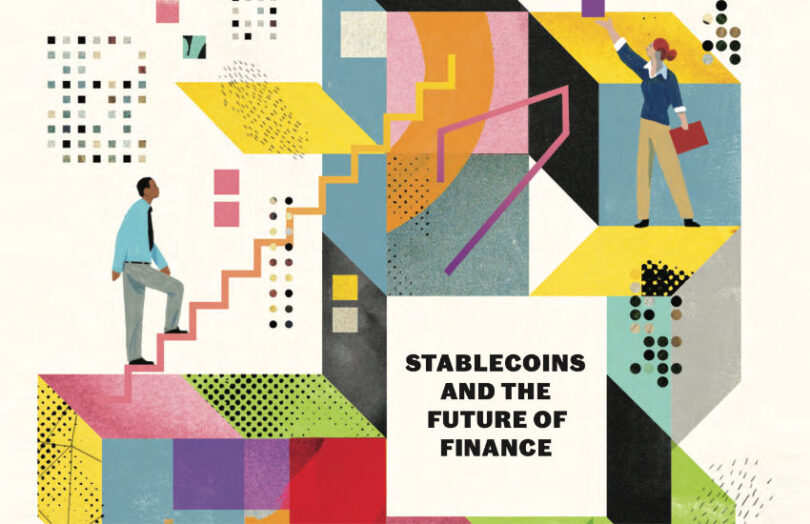
Growing concerns over the expansion of dollar-linked digital tokens have prompted the International Monetary Fund to issue a caution over the strain stablecoins could place on emerging markets, with the institution arguing that widespread use of these instruments risks weakening domestic monetary frameworks. The warning centres on the potential for currency substitution and accelerated outflows should stablecoins gain traction in jurisdictions where confidence in local units is fragile. This caution mirrors the broader message conveyed in IMF warns of stablecoin strain on emerging economies, underscoring the possibility of digital tokens amplifying financial vulnerabilities.

The Fund’s latest assessment highlights the challenge posed by USD-pegged tokens such as USDT and USDC, which together dominate the global stablecoin market. Analysts tracking flows note that these instruments have evolved into widely used vehicles for cross-border transfers, digital asset trading and store-of-value purposes in countries with volatile currencies. The IMF argues that their adoption can reduce the capacity of central banks to manage liquidity conditions, especially in economies where monetary authorities already contend with limited tools to stabilise inflation and anchor expectations. The institution has urged regulators to assume a proactive posture, particularly in markets where capital controls or shallow financial systems heighten the risk of abrupt movements.

The concerns reflect a shift from earlier phases of the digital asset cycle, when stablecoins attracted regulatory scrutiny largely due to their reserve backing and operational transparency. With greater clarity emerging around reserve audits and redemption mechanisms, policymakers are now looking beyond technical design and towards systemic implications. Economic experts cautioned that dollar-denominated tokens might evolve into parallel settlement channels, enabling households and corporates to bypass domestic banking systems during periods of stress. For countries with restricted foreign exchange markets, that pattern could complicate monetary management and accelerate the erosion of trust in local units.

Despite these warnings, several analysts point out that the scale of stablecoin adoption across developing economies remains uneven. Data from blockchain analytics firms suggests that while usage has grown in parts of Latin America, Africa, Eastern Europe and South Asia, activity is still far from the threshold that would trigger systemic currency substitution. Experts add that stablecoins often function as short-term hedging tools rather than long-term savings instruments, meaning their impact on monetary sovereignty is not yet of the magnitude implied by more pessimistic scenarios. Many economists argue that structural weaknesses in local economies, such as persistent inflation or fiscal imbalances, are more significant drivers of currency instability than the availability of digital dollar substitutes.

Regulators in several markets have already begun drafting frameworks to govern stablecoin issuance and use. Authorities in regions including the Gulf, the European Union, Singapore and parts of East Asia have introduced licensing requirements and reserve rules to ensure issuers maintain high-quality backing assets. These frameworks emphasise transparency and redemption at par, which policymakers view as essential to preventing destabilising runs. Some central banks are also exploring bilateral agreements to manage cross-border flows facilitated by stablecoins, particularly where local banks have limited capacity to monitor or report such transactions.

Several financial commentators suggest that concerns over capital flight through stablecoins stem from gaps in existing capital control regimes rather than from the forms of technology used to move funds. They argue that digital tokens merely enhance the speed and efficiency of transfers that might otherwise occur through informal channels. Nonetheless, the IMF stresses that the visibility and liquidity offered by stablecoins could encourage larger volumes to exit strained economies during periods of uncertainty. The institution asserts that emerging markets could face amplified volatility if households and corporates shift towards digital dollars at scale.

The rise of stablecoins has also coincided with broader experimentation in monetary innovation, with more than one hundred central banks evaluating options for digital currencies. Some economists view central bank digital currencies as a potential counterbalance to dollar-pegged private tokens, offering residents a regulated alternative for digital payments while preserving oversight. Others note that CBDCs alone will not offset the appeal of USD-linked tokens in countries where macroeconomic fundamentals drive demand for safer units. Policymakers face the challenge of building credibility, strengthening reserves and reinforcing inflation-targeting regimes while managing digital asset adoption.

While a number of market strategists acknowledge the IMF’s concerns, they contend that fears of widespread dominance of dollar-linked tokens may be overstated at the current stage of development. Adoption depends heavily on access to smartphones, internet connectivity, financial literacy and the availability of compliant service providers. These conditions vary widely across emerging economies, limiting the capacity of stablecoins to displace formal banking for now. Yet industry participants agree that the trajectory of digital finance warrants close oversight as stablecoin issuers expand their footprint and integration with payment networks.

A coalition of six major video-game unions from across Western Europe has come together to condemn widespread layoffs, growing use of generative AI and persistent toxic workplace conditions across the industry. The group includes France’s STJV, the UK’s IWGB Game Workers, Spain’s CGT, Italy’s FIOM-CGIL, Germany’s ver. di, and Game Workers Unite Ireland. Their joint move signals one of the strongest cross-border union alliances the gaming sector […]

A newly announced strategic alliance between Ford and Renault will yield two new affordable Ford-badged electric vehicles for the European market, with the first expected to arrive in early 2028. The announcement marks a decisive move by both automakers to regain competitiveness amid mounting pressure from lower-cost electric vehicles flooding in from Chinese manufacturers. Under the agreement, Renault will provide its Ampere EV platform — already used […]

Crowds are heading to Fort Island at Madinat Jumeirah as one of Dubai’s most anticipated seasonal attractions opens its doors for the Christmas Market 2025, offering a mix of entertainment, dining and festive installations through December. The annual celebration has grown into a prominent feature of the city’s winter calendar, drawing families, tourists and residents to its waterfront setting with activities designed to appeal to a wide […]

Advertisements

Shareholders of Tesla, Inc. have backed what may become the largest pay-out ever awarded to a corporate chief executive. On 6 November 2025, more than 75 per cent of voters approved a compensation package for Elon Musk — structured around 12 tranches of restricted stock — that could yield up to $1 trillion over the next decade, contingent on an array of steep performance and valuation targets. […]

By Satyaki Chakraborty After a gap of 80 years since the fall of fascism in 1945, Germany is once again agog with the militarization of the society in the name of fighting against the possible aggression by Russia. The ground has been laid by the continuing war in Ukraine. German Chancellor Merz along with other […]

The article German Coalition Led By Friedrich Merz Arouses War Mentality Once Again appeared first on Latest India news, analysis and reports on Newspack by India Press Agency).

Abu Dhabi’s ascent as a core pillar of Alan Howard’s hedge fund strategy gained fresh momentum as the billionaire founder detailed how the emirate has rapidly become one of his firm’s most influential trading and investment hubs. The expansion, initiated when Howard established a permanent base in the city in 2023, has evolved into a defining feature of the firm’s global footprint, positioning Abu Dhabi alongside London […]

Abu Dhabi has unveiled a $16.3 billion plan to expand Abu Dhabi Global Market ’s footprint on Al Maryah Island and its adjacent land, aiming to nearly double the availability of Grade-A office space while adding residential, retail and hospitality infrastructure. The expansion is being driven by a surge of international hedge funds and asset managers making fresh commitments to the emirate. Among the latest arrivals, Man […]

Trailblazed Hong Kong-EU opportunities across AI, life and health, and smart city technologies HONG KONG SAR – Media OutReach Newswire – 8 December 2025 – Hong Kong Science and Technology Parks Corporation (HKSTP) showcased a dynamic presence at the “Think Business, Think Hong Kong” (TBTHK) symposium organised by the Hong Kong Trade Development Council (HKTDC) held in Milan on 27 November 2025, spotlighting Hong Kong’s strategic role […]

Arabian Post Staff -Dubai Asia Pacific borrowers have significantly increased euro-denominated bond issuance this year, signalling a notable shift away from reliance on the US dollar as a financing standard. According to data compiled this year, euro-denominated issuance accounted for a record 23 per cent of all hard-currency bonds from Asia Pacific borrowers — up six percentage points compared with 2024. The total volume of euro-note sales […]

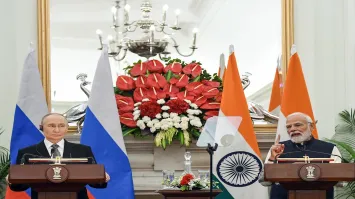
By Nitya Chakraborty The India-Russia joint statement issued on December 5 after two days of talks between President Vladimir Putin and the Indian Prime Minister Narendra Modi is more a vindication of India’s renewed exercise of its geopolitical status defying the pressure from the USA and the other western powers rather than a document on […]

The article Modi-Putin Summit Reinforces India’s Geopolitical Identity Amidst Headwinds appeared first on Latest India news, analysis and reports on Newspack by India Press Agency).

Greenlogue/AP Backed by British International Investment, Egypt’s first utility-scale hybrid solar and battery development has taken a decisive step forward as the country works to accelerate its transition towards a more resilient renewable power system. The 1.1-gigawatt Obelisk project, led by Norway’s Scatec, is positioned to become one of the largest integrated solar and battery energy storage schemes in Africa, strengthening prospects for grid stability and long-term […]

By T N Ashok NEW DELHI: Russian President Vladimir Putin arrived in India Thursday evening for a two-day state visit that has become a diplomatic flashpoint, testing New Delhi’s ability to maintain strategic independence amid mounting pressure from Washington and European capitals. The arrival marks Putin’s first trip to India since the Ukraine war began […]

The article Putin’s India Visit: A Stress Test Of Strategic Autonomy Amid Global Pressure appeared first on Latest India news, analysis and reports on Newspack by India Press Agency).

The United States Department of State reaffirmed a Level 4 “Do Not Travel” advisory against travel to or remaining in Venezuela, citing grave concerns over crime, civil unrest, deteriorating public services and very limited consular support. The announcement cautioned Americans that acts such as kidnapping, arbitrary detention, torture, terrorism, and violent crime are widespread — and that shortages of fuel, electricity, water, medicines and medical supplies make […]

The European Commission imposed a €120 million penalty on X, formerly known as Twitter, citing multiple violations of the Digital Services Act — the bloc’s landmark digital marketplace and content-governance regulation. The penalty covers three specific breaches: the platform’s so-called “blue check” verification system, insufficient transparency in advertisements, and failure to provide adequate public data access for researchers. Brussels flagged the blue-tick verification change under Elon Musk […]

A sanctioned spyware vendor’s capability to view government surveillance feeds through its own platform has intensified global scrutiny over the boundaries of state monitoring and private-sector intrusion. Researchers examining Intellexa’s Predator spyware found that the firm had the technical capacity to access data streams from government clients in real time, raising alarm among security experts and rights groups about the scale of oversight failures. The findings emerged […]

Arabian Post Staff -Dubai Users of watchOS 26.2 will notice an adjustment in how nightly sleep is assessed and improvements to device connectivity for users in the European Union, among other performance enhancements. The Sleep Score feature has been recalibrated: the top classification is now “Very High” and the thresholds for all bands have been shifted to better reflect typical sleep experiences. This recalibration stems from new […]

Seamless Access Across Time Zones with Preferential Brokerage Fee HONG KONG SAR – Media OutReach Newswire – 4 December 2025 – Dah Sing Bank, Limited (“the Bank”) announced the extension of its US stock trading service to 24 hours*, offering investors round-the-clock trading experience. The US equity market remains the largest globally by market capitalisation and continues to be a key focus for investors. In recent years, […]

Belgium has rejected a proposal by the European Union to channel frozen Russian assets toward a major financial aid package for Ukraine, dealing a blow to efforts aimed at sustaining Kyiv’s war-time finances. The plan envisioned a €140 billion “reparations loan,” backed by immobilised Russian central-bank reserves held largely in Belgium’s Euroclear, but Belgian leaders argued the risks are too high—legal, financial and reputational.

The opposition centres on statements from Bart De Wever, Belgium’s prime minister, who described the plan as “fundamentally flawed”. He warned that using the frozen assets at this stage could trigger lawsuits, force Belgium to shoulder massive liabilities, and destabilise confidence in the euro. De Wever rejected broad incentives offered by the European Commission and demanded legally binding guarantees from other EU member states before any commitment.

Backing Ukraine with frozen Russian funds had gained traction as European leaders scrambled to meet Kyiv’s projected needs through 2026–2027. Analysts estimate that Ukraine faces a budget shortfall of more than €135 billion over the next two years, with defence expenditures alone ballooning. The EU had considered not just using interest on the frozen assets — which has supported a G7-backed aid programme so far — but deploying the assets themselves as collateral to unlock large-scale funding.

Yet the European Central Bank has refused to provide emergency liquidity for the proposed loan, citing its mandate forbidding direct monetary financing to governments under EU treaties. The refusal undermines the viability of the scheme, especially since liquidity back-stops were meant to reassure markets and protect institutions like Euroclear from sudden liability.

Some EU member states and financial experts contended that employing frozen assets would free up taxpayer money and symbolically re-affirm Europe’s stance that Russia must pay for its aggression. Academics have pointed out how using immobilised reserves could offer Ukraine immediate relief without expanding EU sovereign debt. The Commission is reportedly exploring fallback options, such as joint borrowing backed by the EU budget or bilateral loans, but those alternatives are expected to carry higher costs and slower disbursement timelines.

Opposing countries argue the plan violates property rights, jeopardises investor confidence and could provoke Russian retaliation, both legally and economically. Euroclear itself has warned of potential lawsuits and damage to its reputation as a global securities depository if assets are re-purposed in this way.

With less than three weeks remaining before a planned EU summit, Belgium’s refusal complicates efforts to finalise a unified approach. Brussels appears unlikely to shift position without assurances that risks will be shared evenly — a prospect many member states view as tantamount to signing a blank cheque.

At the third edition of the Saudi International Handicrafts Week, held at Princess Nourah bint Abdulrahman University in Riyadh, veteran craftsperson Wu Jianmei rose to the spotlight as exhibitors and visitors gathered to experience global artistry. Wu Jianmei took a seat in the bright red-themed China pavilion, her fingers deftly guiding a needle in a demonstration of Xiang embroidery — a traditional art form that has earned her acclaim over a career spanning more than four decades. Her calm poise and meticulous stitching drew a steady stream of visitors who paused to watch each slender thread breathe life into the fabric.

Organised by Heritage Commission, Banan has brought together over 400 artisans representing more than 40 countries for 2025. China holds the title of Guest of Honour, a symbolic showcase of its cultural heritage in a pavilion designed to present more than a thousand handmade pieces alongside live craft demonstrations. The pavilion features lacquerware, fan-making, batik techniques and complex embroidery — each presented by skilled heritage bearers chosen to represent China’s rich craft traditions.

China’s role this year coincides with the 35th anniversary of formal diplomatic relations with Saudi Arabia, as well as the designation of 2025 as the Year of Handicrafts in the Kingdom. Officials accompanying the Chinese delegation underscored the ambition to promote cross-cultural understanding and elevate artisanal craftsmanship within a broader creative economy. Among those present was the Chinese ambassador, who visited the China pavilion and praised the global scope of the event and the Kingdom’s support for heritage-driven cultural exchange.

Visitors to Banan were drawn not only to the China pavilion but to a wider tapestry of worldwide craftsmanship. Traditional techniques from Syria, the United Arab Emirates, Egypt, Oman, Bahrain and Jordan featured prominently, alongside booths from European, African, Asian, and Middle Eastern artisans. Demonstrations ranged across wood carving, clay pottery, metalwork, weaving and shadow-puppet craft.

A special interactive zone called “Banan Story” offered families and children an opportunity to engage hands-on with materials and tools under guided supervision, helping younger attendees connect playfully with global craft techniques. This initiative reflects a broader strategy by the Heritage Commission to foster intergenerational appreciation of handcrafts, encouraging younger audiences to explore cultural diversity through creativity.

For many, Wu Jianmei’s presence at Banan served as a powerful cultural bridge. Her Xiang embroidery pieces — delicate and intricate — symbolised a living history: patterns and stitches that carried stories of generations. Locals and expatriates alike watched in quiet admiration as the needle moved, building intricate motifs destined for display or sale. Her work has previously been exhibited in major institutions, a testament to her stature in the heritage-arts community.

European banking regulators are intensifying warnings that widespread use of artificial intelligence across the financial sector could expose the banking system to new, systemic vulnerabilities. The chair of supervision at the central bank of the Netherlands, Steven Maijoor, stated that the increasing reliance on AI tools supplied by non-European tech firms is creating a structural threat to financial stability. He urged swift action to reduce dependence on […]

VISHNU RAJA
RYO YAMADA
HITORI GOTOH
IKUYO KITA