Just in:
HKUST President and Chinese Academy of Sciences Academician Prof. Nancy Ip Receives UNESCO Honor for a Second Time // CM disputes Vijayan’s claims // Beyond the exhibition floor: How robots, AI and networks are moving into the real world // Oil advances towards $100 as tanker attacks persist // India Under Pressure To Join RCEP On The Eve Of ASEAN Summit In Manila On Nov 15-17 // The “1st Greater Bay Area Health and Longevity Summit & Awards Ceremony” concludes successfully in Macao // Geely’s i-HEV Intelligent Hybrid Technology Offers a New Direction for Gasoline-Powered Vehicles // Democrats Gearing Up For 2028 Presidential Elections To Gain Full Power // Geely’s i-HEV Intelligent Hybrid Technology Offers a New Direction Vision for Gasoline-Powered Vehicles // Technology shares plunge as Nasdaq enters correction // Excise chief shunted out in bar licence dispute // Ningbo Consensus on Collaborative Development released at 2026 Global Mayors Dialogue · Ningbo // Trump’s Iran War Has A Share Of Contribution To His Midterm Debacle // OpenAI abandons secrecy agreements for future data centres // Private varsities bill all set to face the axe // HKUST President Prof. Nancy IP Receives UNESCO–Equatorial Guinea International Prize for Research in Life Sciences // Emaar approves Development buyout ahead of planned delisting // Ousted top Kochi cop gets IG post // ADIA subsidiary seeks $7.5 billion private investment financing // Microfinance case trouble for Vellappally //

News related to
European

Greenlogue/AP The 28th edition of the trade-fair and conference platform Ecomondo 2025 will convene from 4 to 7 November at the Rimini Expo Centre, Italy, with a reinforced international agenda that organisers expect will draw more than 1,000 exhibitors and upwards of 100,000 visitors. This year’s event is emphasising several strategic growth areas: climate-tech innovation, digitalisation in resource management, blue economy and Mediterranean-Africa partnerships. The organising body, […]

HONG KONG SAR – Media OutReach Newswire – 20 October 2025 – The CEIBS Global EMBA (GEMBA) programme has been ranked No. 2 in the world in the Financial Times 2025 Executive MBA Ranking, marking its sixth consecutive year among the global top two and its fourth consecutive year as the world’s highest-ranked stand-alone EMBA programme. As China’s first English-language Executive MBA, established in 1995, this milestone […]

HONG KONG SAR – Media OutReach Newswire – 17 October 2025 – The Mineral Boutique Spa, a new luxury wellness destination located on the 36th floor of WWTTC Mall in Causeway Bay, officially opened in August 2025. Overlooking panoramic sea views and the city skyline, the spa introduces a new era of mineral-based skincare and personalized wellness experiences in Hong Kong. Positioned between a spa and a […]

By Girish Linganna The prisoner-hostage exchange between Israel and Hamas has been completed successfully, and many are calling it a major victory for peace. Twenty Israeli hostages returned home in exchange for about 2,000 Palestinian prisoners, aid started flowing back into Gaza, and guns fell silent after months of devastating conflict. But anyone familiar with […]

The article A House Built On Sand: The Fault Lines In Trump’s 20 Point Gaza Peace Plan appeared first on Latest India news, analysis and reports on Newspack by India Press Agency).

ASML’s blowout third-quarter orders tell the real story of the global economy right now. The world is not slowing down — it’s retooling itself for the AI age. The Dutch company, which makes the advanced lithography machines needed to produce the most powerful AI chips, reported €5.4 billion in new bookings for the quarter, well above forecasts. This figure matters far beyond Europe’s borders. It signals that […]

Europe’s industrial firms are expected to outperform across corporate sectors in the coming earnings cycle, as sharp increases in artificial intelligence investment and defence procurement drive demand for advanced machinery, components and systems. Industrial-sector earnings per share for the MSCI Europe Industrials Index are projected to rise by about 4.9 percent year-on-year, reflecting the strength of capital goods manufacturers amid surging AI and defence spending. Analysts attribute […]

Volkswagen’s truck arm Scania has inaugurated its first wholly-owned manufacturing facility in China, signalling a bold push to deepen its footprint in Asia and buffer against global trade risks. The plant, built at Rugao in Jiangsu province, commands an investment of €2 billion and is designed to produce both for the domestic Chinese market and export destinations across Asia and Oceania. CEO Christian Levin said the facility […]

Advertisements

BANGKOK, THAILAND – Media OutReach Newswire – 15 October 2025 – Proud Real Estate Public Company Limited (PROUD) announces the launch of The Residences at InterContinental Phuket Resort, a prestigious development with an investment exceeding THB 2.5 billion (around $77 million USD). This is the company’s second Branded Residences project in Thailand under the globally renowned InterContinental brand, introducing a transformative concept of residential living themed ‘Live […]

Greenlogue/AP The global green hydrogen market, valued at roughly USD 7.98 billion in 2024, is on track to grow to about USD 60.6 billion by 2030, propelled by steep declines in renewable energy costs, advances in electrolysis technologies and intensifying decarbonisation efforts across industry and transport. Projections indicate a compound annual growth rate of approximately 38.5 percent through 2030. This forecast assumes that many announced projects will […]

European Commission officials are poised to grant approval to Abu Dhabi’s state oil company for its €14.7 billion acquisition of Germany’s Covestro, conditional on minor adjustments to compliance measures, according to sources familiar with the process. The decision could mark one of the most significant Gulf-to-EU corporate takeovers to date.

Brussels opened a detailed investigation into the deal earlier this year under its Foreign Subsidies Regulation, citing concerns that the United Arab Emirates might have leveraged state-backed advantages—such as an unlimited state guarantee and pledged capital injections—to win the bid. The Commission’s probe, initially suspended in September pending additional information, has now resumed as ADNOC submits remedial proposals.

In its revised remedy package, ADNOC has committed to removing language referencing the unlimited guarantee from Covestro’s articles of association and to preserving Covestro’s intellectual property within Europe. Sources suggest the Commission may insist on further tweaks before final clearance, but no major restructuring is expected.

ADNOC’s international investment arm, XRG, has framed the concessions as reflective of its long-term investor stance and asserted confidence that the proposals are “robust and proportionate.” The supreme size of the deal amplifies scrutiny—a deal described by analysts as ADNOC’s largest ever and among the biggest foreign acquisitions of a European company by a Gulf state.

Opponents and industry peers have raised flags about the competitive effects of the transaction. Critics argue that ADNOC’s state backing might have deterred rival bidders, distorting the playing field in Europe’s chemicals sector. Regulators collected feedback from market participants as part of the remedy review, a standard stage in EU merger oversight.

In September, the EU paused its review, citing gaps in the information submitted by the parties. ADNOC responded by accusing the Commission of issuing “disproportionate and invasive” demands. It warned such tactics jeopardised the deal’s viability. Brussels has indicated it will reset its decision deadline after receiving all necessary material. Its previous deadline had been 2 December.

Analysts suggest that the minimal expected adjustments reflect the Commission’s confidence that the core concerns have been addressed. Some believe that failure to clear the deal now would signal strained investment relations between EU institutions and sovereign-backed acquirers. Others caution that even small remedial changes—especially on governance rights or intellectual property handling—could materially alter deal returns.

Covestro, a leader in polymer materials, chemicals, coatings and adhesives, stands to bolster its growth potential under ADNOC’s ownership. The acquisition aligns with ADNOC’s drive to diversify beyond hydrocarbons toward higher-value downstream chemical operations. Yet the deal also pits strategic ambition against regulatory sensitivity—a balancing act now unfolding in the corridors of Brussels.

BERLIN, GERMANY – Newsaktuell – 14 October 2025 – Global leaders reaffirmed their commitment to health as a political priority and a cornerstone of peace and resilience on day 2 of the World Health Summit, the leading platform for global health. Against the backdrop of geopolitical crises, global leaders called for shared responsibility in shaping a healthier, more resilient world on the World Health Summit stage. World […]

Crude futures are signaling a shift towards contango as market participants brace for an oversupply wave in 2026, driven by aggressive production from OPEC+ and non-OPEC players and uncertain demand growth. U. S. oil futures are showing the narrowest backwardation since early 2024, with the November 2025 WTI contract trading at a slim premium over May 2026—a structure ill-suited to limits on physical demand. This flattening of […]

The French presidency announced that President Emmanuel Macron has reappointed Sébastien Lecornu as prime minister, tasking him with forming a viable government and shepherding a 2026 budget through a fragmented parliament. The move follows the abrupt collapse of Lecornu’s earlier cabinet, which lasted scarcely hours. Lecornu’s renewed mandate comes after he resigned on 6 October, mere hours after unveiling a cabinet, citing opposition across ideological lines to […]

China’s expanded export controls on rare-earth materials have jolted global semiconductor supply chains, with firms scrambling to assess vulnerabilities while the United States countered by threatening a sweeping 100 % tariff and new software export curbs. The Chinese Ministry of Commerce broadened restrictions to 12 elements and extended licensing requirements to include mining, refining and recycling equipment—pressing that any dual-use or defence-tied requests will be denied. Foreign […]

A coalition of leading banks including Bank of America, Goldman Sachs, Deutsche Bank, BNP Paribas, Santander, Barclays, TD Bank, MUFG, UBS and Citi has unveiled a joint exploratory effort to design a blockchain-based stablecoin pegged to G7 currencies. The banks say the asset would maintain a fixed 1:1 value relative to existing fiat currencies, issued on public blockchains.

The initiative enters a financial landscape intensely focused on regulation, institutional adoption, and the evolving dynamics between corporate and sovereign digital currencies. According to statements from the banks, the plan is still in its early phase, focused on technical design and governance frameworks before market launch.

Under the plan, participating banks would cooperate on shared standards for transparency, reserve backing, compliance, and interoperability across financial systems. The banks emphasise that regulatory alignment will be central, particularly given heightened scrutiny in major jurisdictions. Some participants have intimated that this consortium initiative is intended to forestall fragmentation in the stablecoin space and ensure that banks maintain influence over the structure of digital money networks.

Sources familiar with the project note that discussions centre on multiple core challenges: how to segregate reserves to maintain full backing, how to deal with liquidity and redemption demands, how to interface with central bank digital currencies without cannibalising them, and how to meet anti-money laundering and know-your-customer mandates.

This bank-led initiative aligns with a broader pattern: European banks recently formed a consortium to launch a euro-denominated stablecoin under MiCAR compliance, aiming to counter the dominance of U. S. dollar–based tokens. That project includes ING, UniCredit, CaixaBank, and others.

Analysts say the involvement of global banks is a signal that stablecoins are no longer confined to fintechs or crypto firms. Goldman Sachs has forecast that the stablecoin market could expand into the trillions of dollars over time. Banks are increasingly seeing stablecoins as tools to support liquidity management, payments, and tokenised financial infrastructure.

The dominance of U. S. dollar–backed stablecoins is also one driver of such moves. A Standard Chartered forecast predicts that the total stablecoin savings held globally could climb to $1.22 trillion by 2028, a shift that could disintermediate banks in emerging markets.

Critics caution that bank-issued stablecoins must avoid replicating past financial crises: if redemption runs occur, banks issuers must be prepared to redeem at par value in all circumstances, including stress periods. Proper separation of reserves, legal structuring to prevent creditor claims on reserve pools, and independent auditing will be crucial. Regulatory authorities will need to decide whether bank-issued stablecoins should be treated as depository liabilities or securities.

Some central banks may view such bank initiatives as competitive to their CBDC ambitions. Others in regulation may welcome the partnership as allowing private-sector innovation within compliant guardrails. The outcome could reshape how payments and money move across borders.

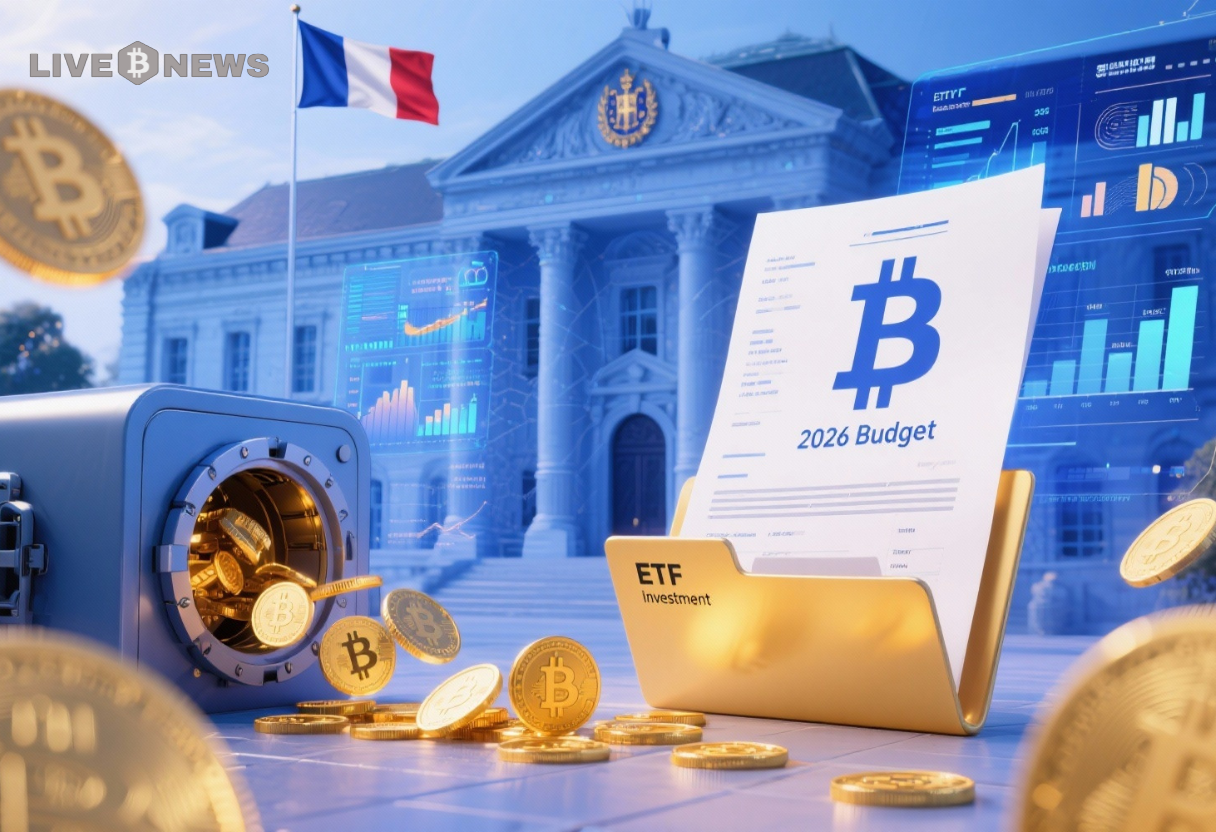
Luxembourg’s Intergenerational Sovereign Wealth Fund has placed 1 per cent of its assets into Bitcoin exchange-traded funds, making it the first sovereign fund in the Eurozone to adopt such exposure. The move was unveiled during the presentation of the 2026 national budget by Finance Minister Gilles Roth.

Under a new investment mandate approved in July 2025, the FSIL is authorised to allocate up to 15 per cent of its portfolio into alternative investments, including private equity, real estate, and digital assets. The 1 per cent allocation to Bitcoin ETFs reflects a cautious approach: the fund avoids direct crypto holdings to limit custody and operational risk.

At present, the fund’s total assets are estimated between €700–900 million, with the Bitcoin allocation amounting to about €7–9 million. Bob Kieffer, Director of the Treasury, described the sum as a symbolic yet measured step. He noted that given FSIL’s mission and structure, the 1 per cent level “strikes the right balance while sending a clear message about Bitcoin’s long-term potential.”

Advocates argue the allocation signals growing institutional acceptance of digital assets within sovereign portfolios. Critics caution that Bitcoin’s volatility may be ill-suited for public-sector funds. Some observers contend that 1 per cent is negligible in impact yet potent in signalling. The fund’s leadership anticipates that monitoring performance will shape future adjustments within the 15 per cent limit.

Luxembourg’s decision departs from the pattern of European states owning Bitcoin only through seizure or law-enforcement action; here, the allocation is proactive and policy-based. Analysts place the development in the context of Luxembourg’s ambition to serve as a crypto and fintech hub under the European Union’s Markets in Crypto-Assets regime. Already hosting numerous crypto firms, Luxembourg aims to reinforce credibility by integrating digital assets into sovereign investment strategy.

Other European institutions have taken indirect exposure paths. Norway’s sovereign fund has gained crypto-linked exposure through equities, while some central banks in Finland and the Czech Republic have expressed interest in digital assets. The Luxembourg move may prompt broader rethinking of asset allocation norms among state funds.

FSIL’s strategy places the Bitcoin position in ETFs rather than direct holdings, a choice intended to manage custody risk and improve regulatory oversight. The law permitting cryptocurrency exposure came amid internal policy debates, with critics warning of reputational and financial risk in volatile markets. Kieffer acknowledged that “some may argue that we’re committing too little too late; others will point to the volatility and speculative nature of the investment.”

Luxembourg’s financial regulator, the Commission de Surveillance du Secteur Financier, has adapted rules governing virtual assets and alternative funds, creating a regulatory backdrop conducive to this experiment. The fund will continue to invest primarily in bonds and equities, with the digital assets portion complementing a diversified portfolio.

Matein Khalid Gold is in its most spectacular bull run since 1976-1980, when prices rocketed from $91 to over $800 an ounce. The current cycle found its floor near $1,800 in late 2022, as the Powell Fed’s rate-hike campaign peaked and Washington froze $300 billion in Russian reserves in response to the invasion of Ukraine. “Dr Auric” now trades at just over $4,000 an ounce – a perfect vindication of […]

Abu Dhabi’s sovereign wealth fund ADQ has shown preliminary interest in acquiring a majority stake in SAC, the operator of Catania Airport in Sicily, sources said, as investor focus intensifies on Italy’s regional infrastructure.

The sale process is not yet formally launched; however, ENAC is evaluating a draft tender expected to receive approval by late October to set the transaction in motion. Under the plan, between 51 % and 66 % of SAC would be sold. The asset is valued at between €500 million and €600 million, underpinned by projected core earnings in excess of €30 million.

SAC, controlled by local authorities and chambers of commerce, manages both Catania–Fontanarossa—Italy’s fifth busiest airport by traffic—and Comiso Airport in southern Sicily. The operating concession runs through 2049. The Sicilian airport served over 12.3 million passengers in 2024.

Privatisation of Sicily’s airports has been under discussion since 2022, when SAC appointed Mediobanca to advise on structuring the deal. Local shareholders have recently approved calls for an international tender and adopted updated industrial plans to attract private capital, while pledging to retain a qualified minority stake.

Antonino Belcuore, special commissioner of the Chamber of Commerce of South and East Sicily, welcomed ADQ’s interest, stating that it underscores the strategic importance of the asset and aligns with the broader push for privatisation in Sicily. ADQ declined to comment; SAC and ENAC have not issued responses.

ADQ currently holds investments spanning transport and logistics, including interests in Abu Dhabi Airports and Etihad Airways, and manages a portfolio worth approximately US$251 billion. Analysts say its appearance among suitors signals growing appetite from Gulf-based capital for stable, long-term infrastructure assets in Europe.

Observers flag that the EU and Italy are increasingly receptive to foreign capital inflows into infrastructure, particularly where public budgets remain constrained. The potential deal dovetails with Prime Minister Giorgia Meloni’s agenda to deepen ties with Gulf states, exemplified by agreements under which the UAE committed to invest US$40 billion across strategic sectors in Italy.

Should ADQ or another bidder proceed to formal offers, the Catania sale could set benchmarks for airport privatisations in southern Europe. Authorities will need to balance investor returns with preserving public oversight, territorial interests, and aviation safety standards.

Local stakeholders—including regional governments and municipalities—are expected to negotiate protections within the concession framework to safeguard continuity of services, employment, and regional development. Meanwhile, potential bidders are assessing traffic trends, inflation, regulatory risk, and concession duration as they size their offers.

The sale of SAC would open a new chapter in Italy’s ongoing wave of airport privatisations, which has involved assets in the UK and across European markets. That backdrop provides precedent and comparators for valuation, regulatory design, and deal structures.


OpenAI has raised alarms with European Union antitrust regulators, warning that the growing dominance of major technology firms such as Google, Microsoft, and Apple poses a threat to competition within the sector. The company’s concerns centre around the increasing control these companies hold over vast amounts of data, which it claims could stifle innovation and lead to unfair market advantages. In a detailed submission to the European […]

The cryptocurrency market has experienced a sharp downturn, with over $100 million worth of positions liquidated in the past 60 minutes. This sudden plunge has sent shockwaves through the sector, with both retail and institutional investors facing severe losses. The volatility underscores the unpredictable nature of the crypto landscape, where prices can fluctuate wildly, often within short time frames.

At the heart of the market’s rapid decline is a combination of factors that have rattled traders. A significant sell-off in major cryptocurrencies, including Bitcoin and Ethereum, has triggered a cascade of liquidations. This activity typically occurs when leveraged traders are forced to sell off their positions to meet margin calls, further driving down prices. The market has seen a surge in such sell-offs following a series of adverse market signals, including regulatory concerns, broader economic factors, and macroeconomic events affecting global financial markets.

The recent downturn comes at a time when cryptocurrency markets have already been under pressure from tightening financial conditions across the globe. Inflation concerns and rising interest rates have led to reduced liquidity in many sectors, including digital assets. Cryptocurrency, which is often seen as a high-risk investment, has been particularly vulnerable to these shifts. With investors pulling back and re-evaluating their portfolios, volatility has surged, and cryptocurrencies have taken a substantial hit.

Market analysts have pointed to several factors contributing to the liquidity crisis. Firstly, the ongoing regulatory scrutiny in key jurisdictions has heightened concerns over the long-term viability of certain digital assets. In the United States, lawmakers have continued to debate how to regulate cryptocurrencies, with some seeking stricter oversight, which could have a dampening effect on investment. Meanwhile, in Europe, the regulatory landscape has been evolving, with the European Union moving forward with legislation designed to increase transparency in the crypto sector. These developments have raised uncertainty about the future of cryptocurrencies as a legitimate financial asset.

Bitcoin, the largest cryptocurrency by market capitalisation, has been trading below key support levels, which has triggered massive sell-offs. Technical analysis indicates that the price has dipped significantly, prompting traders to take precautionary measures and close their leveraged positions to avoid further losses. Ethereum, the second-largest cryptocurrency, has followed suit, showing similar signs of weakness. The price action of both major coins has been exacerbated by the liquidations themselves, creating a feedback loop that deepens the market’s downward spiral.

Traders in the cryptocurrency space are no strangers to high volatility, but such rapid and significant liquidations highlight the risks of excessive leverage. Leverage, which allows traders to borrow funds to increase their exposure to a particular asset, can amplify both gains and losses. While it has the potential to increase returns during a rally, it can be equally damaging in a downturn, leading to forced liquidations when assets fall below a certain threshold.

The crisis in the cryptocurrency market also serves as a reminder of the growing role of institutional investors, who are increasingly active in the space. While their presence has brought more legitimacy to the market, it has also introduced new dynamics. Many institutional investors now utilise leverage and sophisticated trading strategies, contributing to the market’s overall volatility. The presence of institutional money means that market movements can be magnified, especially when large positions are liquidated in a short time frame.

FRANKFURT, GERMANY – Media OutReach Newswire – 9 October 2025 – allnex is taking a bold leap forward with the launch of its European Defense Materials Program. This initiative is designed to accelerate innovation and support Europe’s ambition for greater strategic autonomy in defense. Europe’s defense sector is facing urgent challenges. New solutions must be developed faster, built to last longer, and perform reliably in the harshest […]

Phuket’s great weather, safe tropical environment and world-class infrastructure offers Europeans an unrivalled escape from cold winters and political tensions PHUKET, THAILAND – Media OutReach Newswire – 9 October 2025 – Phuket, Thailand’s largest island is now a top destination for European families, retirees and investors seeking property abroad. Known for its pristine beaches, vibrant culture, warm year-round climate and the equally warm Thai hospitality, Phuket is […]

Greenlogue/AP A global analysis commissioned by Transport & Environment and conducted by Cerulogy reveals that biofuels now generate 16 percent more carbon dioxide emissions than the fossil fuels they are intended to replace. The finding throws into sharp relief the risks of scaling up crop-based biofuel programmes ahead of the COP30 climate summit in Belém, Brazil. The study includes emissions not only from cultivation, harvesting and processing, […]

Wizz Air Hungary is reopening bookings for flights from Abu Dhabi to several European destinations, with services beginning in October and November 2025. Flight schedules show routes from Katowice and Krakow in Poland launching on 10 October. The carrier plans to resume Larnaca services from 15 November, operating four times weekly on Tuesdays, Thursdays, Saturdays and Sundays, and Sofia flights from 17 November on Mondays, Wednesdays and […]

VISHNU RAJA
RYO YAMADA
HITORI GOTOH
IKUYO KITA