Investcorp Capital has deployed $200 million into a three-asset US residential real estate portfolio, betting that demand for senior living and rental housing in supply-constrained metropolitan markets will stay firm as demographic pressure builds. The Abu Dhabi-listed alternative investment company said the portfolio spans nearly 500 units and includes two senior housing properties in the Los Angeles and New York metropolitan areas, alongside a multifamily community […]
Arjavi Indraneesh While demand for shisha smoking is steadily going up, air quality regulations, fire safety concerns and the operational burden of managing charcoal-based systems have historically presented challenges to hospitality venues. Ronan Barry, Chief Legal and Corporate Affairs at AIR, the global leader in hookah and pioneer in advanced inhalation technologies, spoke to the Arabian Post on the emerging shisha trends and the company’s future plans. […]
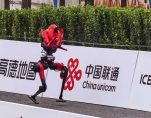
BEIJING, CHINA – Media OutReach Newswire – 20 April 2026 – China Unicom and Huawei capped off a series of successful 5G-A GigaUplink deployments by guaranteeing the premium connectivity at the Beijing E-Town Half-Marathon and Humanoid Robot Half-Marathon, where human and robot runners competed alongside through the E-Town in Daxing District. This marks the two companies’ latest landmark showcase for sports events, combining 5G-A and AI to provide fast uplink with huge capacity and low latency for event organization and media services, digital engagement, and humanoid participation.
China Unicom 5G-A empowering robots to sprint across the finish line
China Unicom Delivered a Masterclass in Connected Marathon Events
Marathon events typically feature high-density crowds with an extensive demand for uploads. China Unicom and Huawei turned to 5G-A 3CC on 3.5 GHz and 2.1 GHz for the event, ensuring an uplink fulfillment at 20 Mbps surpassing 99.6%, along with a peak speed of field-tested 677 Mbps. This impressive uplink performance provided consistent and reliable support for 4K/8K broadcasting and real-time collection and editing while also enabling fans to share and stream smoothly.
Such unrivalled experience is underpinned not only by high-quality networks but also flexible operations. China Unicom and Huawei used intelligent base stations to build 5G-A intelligent, elastic channels for the event. This facilitated differentiated scheduling for livestreaming, voice and video calling, and short videos to ensure smooth experiences for fans even at heavy-traffic moments.
China Unicom 5G-A GigaUplink networks integral to the success of E-Town Humanoid Robot Half-Marathon
5G-A GigaUplink Takes Embodied AI to New Heights
In a global first, the E-Town half-marathon features a pioneering format that sees human and robot runners compete simultaneously. The humanoid robots were divided into an autonomous navigation group and a remote-control group, running on the same course and evaluated using mixed timing methods. Each humanoid robot requires approximately 10 Mbps uplink for video uploads, environment sensing, gait control, and autonomous navigation. Dedicated uplink slices were reserved to ensure a positioning accuracy of up to sub-decimeter level and an average end-to-end latency of less than 30 ms throughout the racing course, which provided strong support for the video uploads, obstacle avoidance, cornering, and sprinting of humanoid robots. While offering technical upgrades to sports events, this promoted the adoption of humanoid robots on a large scale.
Qin Yang, Deputy General Manager of China Unicom in Beijing spoke proudly of the excellent connections his company provided for the 2025 World Humanoid Robot Games as a global strategic partner and the 2026 Beijing E-Town Half-Marathon event as the exclusive official communications sponsor. “5G-A and AI are essential digital infrastructure, enabling us to bring embodied AI to sports. Given the new dynamics of AI development, we will double down on our priorities over connectivity, computing power, services, and security to sharpen our competitive edges as a preferred telecom partner for intelligent sports and a core enabler for intelligent industry transformation. Moving forward, we will accelerate our innovation-driven push to strengthen our digital infrastructure and drive the high-quality growth of embodied AI in China and beyond.”
Samuel Chen, Vice President of Huawei’s Wireless Network Business Marketing, said this humanoid robot half-marathon offers a good example of deepening integration between mobile technology and embodied intelligence. “Beyond redefining connectivity for sports, it has shown us what intelligent production and life will look like in future. We are always dedicated to building excellent 5G-A networks together with operators based on user-centered innovation to ensure GigaUplink, low latency, and high reliability for differentiated mobile AI services. This will enable us to continuously drive the high-quality growth of the digital economy.” Hashtag: #Huawei #ChinaUnicom
The issuer is solely responsible for the content of this announcement.
Greenlogue/AP Dahbashi Engineering has moved its headquarters in Dubai Industrial City onto on-grid solar power, marking a sustainability push by a company better known in the Gulf for heavy machinery spare parts, service operations and industrial battery solutions. The company said the installation is expected to meet about half of the site’s annual electricity demand and cut operating costs by roughly 30 per cent under Dubai’s Shams […]
Jagex is preparing to take RuneScape: Dragonwilds into the Asia-Pacific market later this summer, extending the survival-crafting spin-off beyond its existing footprint and giving the long-running franchise a new test of international reach as it marks its 25th year. The Cambridge-based developer said the game will launch in Simplified Chinese, Japanese and Korean, a move it described as the most significant international expansion in its history. Dragonwilds […]
Payward, the parent of crypto exchange Kraken, has agreed to buy Chicago-based derivatives venue Bitnomial for up to $550 million in cash and stock, a deal that would hand the group a full set of US licences for trading, clearing and broking digital-asset derivatives under Commodity Futures Trading Commission oversight. Announced on April 17, the transaction is expected to close in the first half of 2026, subject […]
Commercial artificial intelligence models are advancing quickly in vulnerability research and exploit development, sharpening concern across the cybersecurity industry that tools built for productivity and defence could also lower the barrier for offensive misuse. A study by Forescout’s Vedere Labs found that commercial systems now outperform open-source and underground alternatives in identifying software flaws, while more than half of the models tested were able to generate exploits […]
A sweeping international law-enforcement campaign has disrupted one of the cybercrime market’s most accessible attack models, with authorities saying Operation PowerOFF warned more than 75,000 suspected users of distributed denial-of-service-for-hire services, took down 53 domains, issued 25 search warrants and made four arrests during a coordinated action week on 13 April. The effort, backed by Europol and involving agencies from 21 countries, targeted both the operators and […]
By Dr. Gyan Pathak Showing its impatience, PM Narendra Modi led government, has notified the Nari Shakti Vandan Adhiniyam 2023. The government implemented it from April 16, 2026, the same day after it introduced an amendment to the Act in the Lok Sabha, after convening a three-day special session of the parliament on April 16-18. […]
Nissan’s vehicle sales across the Middle East fell sharply in March as the war centred on Iran hit consumer demand, disrupted travel and darkened business sentiment across one of the carmaker’s stronger overseas markets. A report published on April 15 said Nissan’s sales in the region dropped to about half of pre-war levels, while overall regional sales were down 40 per cent for the month, according to […]
Arabian Post Staff -Dubai Parkin Company has teamed up with SP Corporation Car Parking Management, which operates as Secure Parking, in a deal aimed at speeding the spread of barrierless parking across the UAE after the two companies brought a fully integrated system into operation at City Walk in Dubai. The partners say they have identified a pipeline of more than 60,000 parking spaces for possible future […]
Arabian Post Staff -Dubai Aldar Properties has closed an AED 5 billion five-year syndicated sustainability-linked revolving credit facility, giving Abu Dhabi’s biggest listed developer a fresh layer of financial flexibility as it pushes ahead with expansion across development, investment properties and strategic capital partnerships. The senior unsecured facility, structured across conventional and Islamic tranches in dirhams and US dollars, lifts Aldar’s total available liquidity to AED 38.2 […]
JAKARTA, INDONESIA – Media OutReach Newswire – 15 April 2026 – Huawei Cloud AI Boost Day, themed “Agentic AI Practice”, was successfully held in Jakarta. At the event, Huawei Cloud announced the official launch of its MaaS service in Asia Pacific.
Huawei Cloud MaaS grand launch across Asia Pacific
Following the rollout of AI Compute Service in Hong Kong (China), Thailand, Indonesia, and Singapore in 2025, Huawei Cloud MaaS (Model-as-a-Service) is now available, leveraging Huawei’s in-house acceleration engine to support mainstream models and provide customers with stable and high-quality token services.
Huawei Cloud continues to strengthen its collaboration with high-quality open-source models in the industry. Six models from three categories—GLM, DeepSeek, and Qwen—are the first to be supported by MaaS. These models are designed for two major application scenarios: intelligent Q&A and AI coding. They offer one-click access and out-of-the-box model hosting services, covering the entire lifecycle of model management from deployment to inference, fine-tuning, and evaluation. With elastic compute and pay-per-use billing, enterprises and developers can quickly integrate AI capabilities into their service systems without having to worry about the underlying infrastructure. This makes AI accessible to everyone.
Notably, this release includes support for the latest GLM-5 model. GLM-5 has attained state-of-the-art (SOTA) performance in coding and agent capabilities, making it an ideal general-purpose agent foundation for complex system engineering and long-text agent tasks in enterprise environments.
Huawei Cloud’s long-term strategic investment in AI has resulted in a comprehensive suite of AI solutions, including CloudMatrix AI Infra, MaaS, ModelArts (a model training and inference platform), CodeArts (a coding agent), AgentArts (an agent platform), and DataArts (a data agent).
CodeArts and AgentArts will be launched outside the Chinese mainland in the second half of 2026.
Huawei Cloud has established an optimized cloud infrastructure network in the Asia Pacific region. This network comprises five Regions and 18 availability zones (AZs) located in Singapore, Thailand, Hong Kong (China), Indonesia, and the Philippines, ensuring a 50 ms access latency. Additionally, in Malaysia, Huawei Cloud and partners have jointly built a local cloud.
Huawei Cloud AI Compute Service have helped many Asia Pacific customers elevate their cloud journey from simply migrating to the cloud to using AI well. They have benefited from improved productivity and better adaptation to changing environments.
iFLYTEK, a leading intelligent voice and AI company, selected Singapore as the first destination for its global expansion strategy in 2023, naturally extending its collaboration with Huawei Cloud from China to a global scale. Huawei Cloud AI Compute Service helped iFLYTEK quickly deploy their large language model training resources within two weeks. The training remained stable for 60 days without interruption, ensuring zero faults during the release of major versions.
In Vietnam, Green and Smart Mobility (GSM), an emerging green mobility platform, migrated its core operations platform to Huawei Cloud to reduce costs, enhance efficiency, and achieve multi-cloud flexibility. GSM has developed a comprehensive fleet management platform using AI and IoT. By utilizing Huawei Cloud IoTDA and ModelArts AI technologies, GSM analyzes violations and generates risk alerts to ensure driver and passenger safety, thereby fulfilling its mission of promoting green and safe transportation.
Huawei Cloud will continue to invest in AI innovation and provide a secure, stable, and intelligent cloud foundation to help enterprises in Asia Pacific achieve sustainable business growth in the AI era.
The issuer is solely responsible for the content of this announcement.
About Huawei
Founded in 1987, Huawei is a leading global provider of information and communications technology (ICT) infrastructure and smart devices. We have 207,000 employees and we operate in more than 170 countries and regions, serving more than three billion people around the world.
Our vision and mission is to bring digital to every person, home and organisation for a fully connected, intelligent world. To this end, we will work towards ubiquitous connectivity and inclusive network access, laying the foundation for an intelligent world; providing diversified computing power where you need it, when you need it, to bring cloud and intelligence to all four corners of the earth; build digital platforms to help all industries and organisations become more agile, efficient, and dynamic; and redefine user experience with AI, making it smarter and more personalised for people in all aspects of their life, whether they’re at home, on the go, in the office, having fun, or working out. For more information, please visit Huawei online at www.huawei.com
Pupils across the UAE will return to classrooms from Monday, April 20, after the Ministry of Education said all nurseries, kindergartens, and public and private schools are cleared to resume full in-person learning for students, teachers and administrative staff nationwide. The move ends more than six weeks of distance learning and signals that authorities believe campuses have completed the safety, staffing and facility checks needed for […]
A sharp jump in brute-force attacks against SonicWall and Fortinet devices has put security teams on alert, after Barracuda said such activity made up more than half of the confirmed incidents its SOC tracked during February and March, with about 88% of the attacking IP addresses geolocated to the Middle East. The company said most attempts failed because they were blocked or aimed at invalid usernames, but […]
By Nitya Chakraborty President Donald Trump as usual has been talking in conflicting voices on his immediate stand on Iran war. The U.S. President ordered naval blockade of Iranian ports after the failure of the Islamabad peace talks on Sunday but on Tuesday, he indicated that another round of talks would be held in the […]
Arabian Post Staff -Dubai Apple is testing four design directions for smart glasses as it weighs a more fashion-led push into wearable computing, with premium materials and a 2027 target emerging as central themes in the company’s plans to challenge Meta in a market that is moving from novelty towards a more serious consumer category. The designs under consideration are said to include two rectangular frames and […]
BEIJING, CHINA – Media OutReach Newswire – 14 April 2026 – The 2026 Beijing E-Town Half-Marathon and Humanoid Robot Half-Marathon is scheduled to kick off on April 19. To ensure better preparation for the event, the Beijing Economic-Technological Development Area (BDA), also known as Beijing E-Town, organized a full-process, all-element test run for the 2026 Humanoid Robot Half-Marathon from the night of April 11 to the early hours of April 12. The drill comprehensively simulated core scenarios such as track passage, process scheduling, equipment coordination, and emergency support, serving as a combat-ready exercise to safeguard the official race. Of the registered teams, more than 70 participated in this test, including four international teams, with both autonomous navigation and remote-controlled teams conducting night trials on the course together.
From the night of April 11 to the early hours of April 12, the full-process, all-element test event for the 2026 Beijing E-Town Humanoid Robot Half-Marathon was held in Beijing E-Town. Pictured is a robot running during the test.
As the world’s first humanoid robot marathon event brand, this competition has reached new heights in terms of scale, technological innovation, and organizational requirements. Therefore, the drill was conducted to drive a further upgrade in the quality of event preparations.
In terms of scale, the number of participating teams for this year has grown by nearly five times compared to last year, exceeding 100 teams. Covering two major categories—autonomous navigation and remote control—with autonomous teams accounting for nearly 40%, the number of participants, types of technology, and scope of testing have all reached historic highs. Consequently, full-process drills are required to solidify operational links, hone team coordination, and ensure the efficient operation of the event.
Regarding technological innovation, the first large-scale application of autonomous navigation technology has become a major highlight and challenge. In complex and changing environments, robots face difficulties in perceiving and making decisions within intricate surroundings, posing huge challenges to their computing power. At the same time, long-distance running places severe tests on the robots’ endurance, specifically examining their long-range stamina and energy management capabilities. Furthermore, dynamic balance and gait control capabilities are put to the test; robots must maintain dynamic balance at all times. Especially during high-speed running or sharp turns, the requirements for adaptive gait and millisecond-level posture correction are extremely high to prevent falls caused by shifts in the center of gravity.
In terms of regulations, this year’s event has also seen systematic upgrades in five areas: stricter rules on human intervention, more scientific start and movement protocols, clearer scoring and penalty criteria, more standardized supply and equipment management, and tighter safety and emergency procedures.
Facing these numerous challenges, the main purpose of this full-process, all-element test is to conduct technical validation, process refinement, risk prevention, and standard consolidation, ensuring the official race proceeds safely, smoothly, efficiently, and in an orderly manner. This drill, adhering to the standards of “full-process, all-scenarios, and all-elements,” followed the complete official race route of 21.0975 kilometers for the first time. It followed official race timelines, track rules, and support systems, covering two categories of teams (autonomous and remote-controlled), two types of scenarios (urban main roads and eco-parks), and two major segments (technical competition and service support). Through full-chain stress testing, the organizers carried out targeted breakthrough verifications to precisely identify potential issues and optimize procedural details.
The entire event involves a full chain of operations including start-line assembly, track control, battery swapping and resupply, finish-line diversion, emergency containment, vehicle dispatch, timing and judging, and security and medical services. All these must undergo practical drills to identify risks, optimize movement lines, and unify standards. This test comprehensively inspects the stability and reliability of humanoid robot technology, laying a solid foundation for the successful hosting of the official event.
During this test, team positioning was strictly verified and orderly arranged based on technical data submitted by each team, ensuring the process was open, standardized, fair, and orderly. As a realistic pre-race simulation drill, the test focused on process refinement, problem identification, and detail optimization. Test results were for reference only and did not count towards official rankings or race results. At the same time, speed performance and operational data of the teams during the test were within the scope of verification and do not represent their level in the official competition.
Currently, the short-distance speed of robots has improved significantly, and some teams predict that their half-marathon results may approach the level of elite human athletes. As a competition that serves as an extreme test of comprehensive performance and adaptability to complex terrain, the final results are worth looking forward to. On April 19, this human-robot co-running half-marathon will officially kick off, providing more impetus for the development of the robotics industry and accelerating the transition of humanoid robots from the laboratory to real-world applications.
South Korea’s exports rose 36.7 per cent from a year earlier in the first 10 days of April, extending a powerful trade run driven by semiconductor demand and offering fresh evidence that the country’s technology cycle remains firmly supported by global spending on artificial intelligence infrastructure. Outbound shipments reached $25.2 billion in the April 1-10 period, the highest ever recorded for the opening 10 days of a month, according to Korea Customs Service data carried by Yonhap on Monday.
The early-April figures reinforce a broader pattern already visible through the first quarter. South Korea, one of the world’s most closely watched export economies because of its central role in memory chips, displays and consumer electronics, has been benefiting from a steep recovery in semiconductor sales after a prolonged industry downturn. Reuters reported at the end of February that the country’s chip exports had jumped 160.9 per cent in that month alone, passing $20 billion for a third straight month as AI investment and stronger memory prices lifted demand.
Semiconductors were again the main engine in the latest 10-day release. Chip exports surged 152 per cent from a year earlier, underscoring how heavily South Korea’s trade performance is now tied to data-centre investment, high-bandwidth memory demand and the wider AI build-out led by large technology firms. That strength has helped offset a less even backdrop in other parts of the economy, where investment, household demand and external policy risks remain more mixed.
The export rebound matters well beyond monthly trade headlines. South Korea’s central bank raised its 2026 growth forecast to 2.0 per cent in February and signalled that a chip-led upswing was giving policymakers more room to hold interest rates steady while watching inflation and financial stability risks. Reuters also reported this month that central bank officials see strong semiconductor exports and an extra budget as factors easing downward pressure on growth, even as won weakness and higher energy costs complicate the inflation outlook.
Factory data has pointed in the same direction. A Reuters report on S&P Global survey findings showed South Korea’s manufacturing activity expanded in January at the fastest pace in nearly a year and a half, helped by stronger export orders from China, North America and Europe. Manufacturers reported improving optimism as orders strengthened in sectors such as autos and semiconductors, indicating that the recovery is not only statistical but also visible in production and order books.
Still, the trade picture is not free of risk. South Korea remains highly exposed to swings in global demand, to US trade policy and to supply disruptions linked to tensions in the Middle East. Reuters polling before the March trade data showed imports rising sharply as higher oil prices pushed up the energy bill, even while exports surged on semiconductor strength. That combination can support headline trade values, but it also leaves the economy vulnerable to a renewed squeeze from commodity inflation and currency volatility.
Another uncertainty lies in concentration. The same chip boom that is lifting exports also raises dependence on a narrow cluster of products and companies. South Korea’s trade resilience is being powered largely by memory and advanced semiconductor demand, especially products linked to AI servers. Investment plans such as SK Hynix’s announcement in February of 21.6 trillion won in new facilities show confidence in long-term demand, but they also underline how central the semiconductor cycle has become to the country’s broader growth model.
For now, the momentum remains hard to ignore. Reuters polling ahead of the March data had already pointed to the fastest export growth in nearly five years, with shipments to the United States and China both showing strong gains alongside the semiconductor surge. Monday’s early-April figures suggest that pace has carried into the second quarter, strengthening the case that South Korea’s exporters are entering another period of outsized performance after a weak stretch in 2025.
Japan will release an additional 20 days’ worth of oil reserves from May as Tokyo tries to shield domestic fuel supplies from continued disruption in the Middle East and reduce its exposure to shipments that pass through the Strait of Hormuz. Prime Minister Sanae Takaichi told a cabinet meeting on April 10 that the move would come from the public stockpile, adding to emergency releases already under way since mid-March.
The decision marks a further escalation in Japan’s energy contingency response at a time when the Strait of Hormuz remains under severe strain despite a two-week ceasefire between the United States and Iran. The waterway is one of the world’s most important oil chokepoints, and its disruption has hit Japan especially hard because the country depends on the Middle East for about 95% of its oil imports. Takaichi’s government has been racing to prevent shortages, stabilise prices and reassure refiners, transport operators and households that fuel will continue to flow.
Tokyo had already moved ahead on March 16 with the release of reserves equivalent to 50 days of consumption, combining privately held stocks with state reserves and supplies jointly held with producing nations. That initial step was announced before a formal coordinated action by the International Energy Agency, underscoring the urgency felt by Japanese officials as tanker traffic through Hormuz became severely constrained. The new plan adds another layer of insurance rather than replacing the earlier programme, signalling that authorities believe the market shock may last longer than first expected.
Officials say Japan still has considerable room to act. As of April 7, the country held reserves covering 228 days, including 143 days in the public stockpile. That buffer gives policymakers flexibility, but it also reflects the scale of the threat they see. Refiners have already been forced to adjust operations as crude availability tightens, and the government is attempting to manage not only total supply but also how fuel is distributed across the country. Concerns have centred on keeping essential sectors supplied first, particularly healthcare, transport, agriculture, fisheries and livestock production.
Japan’s strategy goes beyond drawing down reserves. Takaichi said the government expects that by May more than half of oil imports will be secured through routes that do not involve the Strait of Hormuz. That shift is central to Tokyo’s effort to avoid becoming hostage to a single maritime corridor while conflict risk remains elevated. Officials have not identified every supplier publicly, but the Ministry of Economy, Trade and Industry has indicated that Japan is seeking alternative barrels from a wide range of countries, including Malaysia, Azerbaijan, Brazil, Nigeria and Angola.
The United States is set to play a larger role in that reshaping of supply. A ministry document cited by Reuters said oil imports from the US in May would be four times higher than a year earlier. Japan imported about 189,000 barrels a day from the US in May last year, equal to roughly 8% of total crude purchases for that month. Tokyo is also drawing on Middle East supplies that can bypass Hormuz, including shipments from Saudi Arabia’s Red Sea outlet at Yanbu and from Fujairah in the United Arab Emirates. Those routes do not eliminate vulnerability, but they reduce reliance on the narrow strait at the centre of the crisis.
Domestic politics and inflation pressures are also shaping the response. Takaichi has paired the reserve releases with fuel price measures meant to keep retail gasoline around a nationwide average of ¥170 a litre, even if crude prices remain elevated. Officials have warned that a prolonged supply shock could otherwise push pump prices much higher and strain households as well as businesses already dealing with cost pressures. Finance Minister Satsuki Katayama has also flagged the fiscal burden of existing subsidy measures, suggesting that energy security is becoming not only a supply issue but a budgetary one.
A frantic hunt for oil cargoes that can be delivered at once has tightened the global crude market, even as headline prices have swung with every turn in the fragile ceasefire around Iran and the Strait of Hormuz. Behind the moves in futures, traders, refiners and state buyers have been competing for physical barrels from the North Sea, West Africa, the United States and anywhere else supplies […]
Hackers posing as trusted messaging and communications services have mounted a sustained surveillance campaign across the Middle East and North Africa, using fake app pages, phishing domains and a custom Android spyware known as ProSpy to target journalists, activists and political figures, according to a joint body of research published this week by Lookout, Access Now and SMEX. The operation, active since at least 2022 and documented […]
Service My Car and PlusX Electric have formed a partnership aimed at making life easier for households in the UAE that own both petrol-powered vehicles and electric cars, as mobility providers race to adapt to a market that is adding EVs faster than the after-sales ecosystem has traditionally been built to handle. The agreement links a mainstream digital servicing platform with an EV-focused charging and support business, […]
RAVE has staged one of crypto’s sharpest April breakouts, vaulting from roughly $0.25 at the start of the month to above $2 at its peak within days, a move that pushed the token into the market’s top tier by capitalisation and drew a surge of speculative trading across spot and derivatives venues. The question now is less about how fast the token climbed than whether that ascent […]








 https://www.huaweicloud.com
 https://www.linkedin.com/company/huaweicloudapac
 https://x.com/huaweicloudapac
 https://www.facebook.com/HuaweiCloudAPAC