News related to
First Half

AMD signed a long-term agreement with OpenAI to supply six gigawatts of AI chips over multiple years, with the first delivery of its Instinct MI450 GPUs slated for the second half of 2026. In tandem, OpenAI will have the right to acquire up to 160 million AMD shares—roughly 10 percent of the company—subject to performance and stock-price milestones. Under the pact, AMD will act as a core […]

Greenlogue/AP Saudi Arabia’s Public Investment Fund has mandated Crédit Agricole CIB, JPMorgan and Société Générale to arrange a dual-tranche, euro-denominated green bond issue in three- and seven-year maturities, sources close to the matter said. This marks the fund’s inaugural euro green bond issuance and appears set to be its only green debt deal of the year. By pursuing this move, the sovereign wealth fund signals a further […]

Michael Brown Political instability in France, and a surprise in Japan’s LDP leadership election made for a spicy start to the week yesterday, though stocks rallied regardless. Today, a barren docket awaits, as participants continue to headline-watch. A penny for the thoughts of G4 central bankers right now, as none of them appear to have particularly easy jobs. First, Fed Chair Powell, who recently resumed the journey […]

Grayscale Investments has enabled staking on its Grayscale Ethereum Trust and Grayscale Ethereum Mini Trust, making them the first U. S.-listed spot exchange-traded products to support native staking functions. In tandem, its Solana trust has also activated staking, pending regulatory approval for an exchange listing.

The introduction means investors in ETHE and ETH can now earn staking rewards while retaining exposure to Ether’s spot price. Grayscale says staking operations will be managed via institutional custodians and a distributed network of validator providers. The firm emphasises that staking is passive, intending to support protocol security while offering additional yield.

ETHE and ETH are not registered under the Investment Company Act of 1940, placing them outside the conventional ETF regulatory regime. That structure allows flexibility but also exposes investors to different oversight and risk frameworks. GSOL, currently quoted over the counter, must undergo a formal uplisting process to align with exchange-traded product standards.

The regulatory environment has posed ongoing challenges for staking-enabled products. Earlier in 2025, the U. S. Securities and Exchange Commission delayed decisions on staking features in ether ETFs proposed by major issuers. The SEC has articulated concerns that staking may constitute an offer of securities, complicating how such products can be structured under existing law. Grayscale’s new move comes amid evolving guidance around liquid staking receipts and the broader regulatory calibration of crypto ETPs.

Grayscale currently controls approximately half of U. S. ETP-held Ethereum, and as of the end of September 2025, the firm reported around $35 billion in assets under management. The firm has already staked tens of thousands of ETH, deploying mechanisms to balance liquidity demands with staking commitments. It uses what it calls a “liquidity sleeve”—a pool of unstaked tokens and short-term financing—to meet redemption requests without forcing premature withdrawals from staking pools.

Analysts note that Ethereum staking yields in the market range around 2 per cent annually, while Solana’s higher inflation and protocol incentives can push staking returns to double digits. For yield-seeking investors, a staking-enabled ETP structure promises a more seamless way to tap into rewards without managing validator nodes or staking accounts directly.

Yet the innovation also carries risks: validator slashing penalties, network downtime, and the volatility of token prices remain material. Because Grayscale’s staking is passive, investors’ rewards reflect aggregated validator performance. The firm has committed to transparency through regular reports disclosing validator partnerships, staking activity, and operational metrics.

A GoMining-commissioned survey of over 700 Bitcoin holders across North America and Europe reveals that 77 percent of respondents have never engaged with any BTCFi platform. Only around 8 percent say they actively use BTCFi services for lending, staking or yield generation.

The data exposes a striking contradiction: while the BTCFi sector is receiving strong investment and attention, its reach among actual Bitcoin holders remains minimal. Over 65 percent of those surveyed could not name a single BTCFi protocol, pointing to a significant awareness gap in the industry. Roughly 40 percent of respondents say they would allocate less than 20 percent of their Bitcoin to DeFi products—underscoring cautious attitudes steeped in mistrust or lack of comprehension.

GoMining CEO Mark Zalan argues the survey reflects a mismatch in product design: “There’s an enormous appetite for these opportunities, but the industry has built products for crypto natives, not for everyday Bitcoin holders.” He cautions that BTCFi platforms must prioritise simplicity, trust and education over technical sophistication if they are to attract a broader base.

Despite limited adoption, interest in BTCFi is not absent. Some 73 percent of respondents express a desire to earn yield on their Bitcoin through lending or staking, while 42 percent would like access to liquidity without selling. Yet for now those desires largely remain theoretical.

The survey publication coincides with a sharp rise in BTCFi venture capital activity. Data from industry trackers show that in the first half of 2025, funding to Bitcoin-related infrastructure, custody, and DeFi projects reached US$175 million, spread across 32 funding rounds—20 of which targeted consumer-facing applications. Total value locked in BTCFi has also climbed, hitting US$6.6 billion by mid-2025, up from modest levels just a year earlier.

Industry analysts see this as a pivotal moment. BTCFi is theoretically well-positioned: Bitcoin holders collectively control over US$1 trillion in assets, and unlocking even a small portion into yield markets would shift capital flows substantially. But bridging the adoption chasm requires more than protocol robustness—it demands user trust, transparent security models, and intuitive onboarding.

Several projects are experimenting with custodial BTCFi models that reduce user friction, essentially merging decentralised finance with familiar wallet experiences. These hybrids aim to lower the barrier to entry for mainstream holders who are wary of self-custody risks. Others are focusing on streamlined education and marketing campaigns to bring awareness of BTCFi’s value proposition to non-tech audiences, rather than relying exclusively on high-end technical features.

Skeptics argue the reliance on Ethereum’s DeFi archetype may be a poor fit for Bitcoin’s more conservative base. BTCFi protocols often demand bridging, wrapping or interacting with smart contracts—actions that alienate users comfortable with simpler vehicles like ETFs and custodial wallets. A portion of Bitcoin holders remain risk-averse by nature, preferring regulated, custodial holdings and avoiding experimental protocols.

Some in the industry suggest a phased approach: target early adopters first, establish trust metrics, then gradually roll out to mainstream holders. Others urge a revisit to design philosophy itself: ensuring BTCFi can deliver yield, liquidity and composability while behaving in a way Bitcoin users find intuitive and safe.

Abu Dhabi’s economy expanded 3.8 percent in the second quarter of 2025, with non-oil activity growing by 6.6 percent and, for the first time in a second quarter, making up 56.8 percent of total GDP, according to figures released by the Statistics Centre – Abu Dhabi. The emirate’s real gross domestic product reached AED 306.3 billion in Q2, rising from the corresponding period in 2024. The non-oil […]

A plunge of nearly 90 percent in blockchain-related job postings across Europe underscores a stark contraction in the sector, even as industry leaders plan to rally through the 11th European Blockchain Convention in Barcelona. By one estimate, Europe went from over 100,000 jobs referencing “blockchain” in 2022 to roughly 10,000 in 2025, representing the dramatic erosion in demand. Analysts cite regulatory complexity, high energy costs, and capital […]

Advertisements

Dubai’s ride-hailing landscape has shifted dramatically as the UAE-based Zed app now encompasses 10,764 taxis across the emirate—equivalent to more than four in five licensed cabs. The move was enabled through strategic partnerships with Dubai Taxi Corporation and National Taxi, folding in the fleets of three major operators.

Under the new arrangement, DTC’s entire fleet and those of National Taxi and Kabi by Al Ghurair become bookable via the Zed platform, effectively making Zed the host of Dubai’s second-largest taxi fleet. Zed executives describe the expansion as a means of enhancing coverage, cutting cancellations, and lowering wait times, especially across areas traditionally underserved.

Badr Al Ghurair, Zed’s Chief Executive, emphasised the home-grown nature of the platform and its deep knowledge of Dubai’s commuting patterns: “this collaboration … further strengthens Dubai’s mobility ecosystem while ensuring that our communities have access to reliable, everyday transport solutions” he said. Abhinav Patwa, Zed’s EVP and Head, added that the alliances provide scale and reliability without losing sight of a customer-first approach.

The accord comes amid Dubai’s broader ambition of converting 80 per cent of taxi bookings to digital platforms—a target within reach through the emirate’s Smart City 2025 programme. The integrated fleet also introduces more electric and hybrid taxis into Zed’s pool, aligning with the city’s sustainability goals.

This consolidation represents a notable realignment in Dubai’s mobility market. For years, taxis and e-hailing apps operated largely in parallel, with limited overlap in booking channels. The new model bridges that divide, bringing traditional operators into the digital fold via a single platform. Analysts say the move may accelerate the decline in usage of standalone taxi apps and push rivals to forge similar alliances or risk falling behind.

Dubai Taxi Company, now a public joint stock firm under Law No. 21 of 2023, operates more than 10,000 vehicles, of which 6,200 taxis were folded into the agreement. Kabi by Al Ghurair contributed another 3,680 vehicles under the tie-up. According to RTA data, Dubai’s taxi sector expanded by 7 per cent in the first half of 2025 compared with the same period in 2024, signalling growing demand for urban mobility services.

Through the arrangement, newly commissioned taxis across the partner fleets will automatically integrate into Zed’s system—making service expansion incremental and scalable. Several of the added vehicles are electric or hybrid, helping Zed accelerate its greening efforts.

Passengers can now access all these taxis via Zed’s iOS and Android apps, with the platform continuing to offer features such as guaranteed on-time pickups for pre-booked premium rides. The enhanced capacity is expected to reduce wait times during peak hours, improve service in remote zones, and lower the incidence of ride cancellations.

OpenAI has surged past its prior valuation to reach an estimated $500 billion after current and former employees sold approximately $6.6 billion worth of shares to a consortium of investors. The deal, structured as a secondary share transaction, elevates OpenAI to the top of private tech valuations globally. Buyers in the transaction include Thrive Capital, SoftBank, Dragoneer Investment Group, Abu Dhabi’s MGX and T. Rowe Price. Although […]

By Anjan Roy Donald Trump’s high fees for H1B visas are a serious headache for India, not just for the sake of its impact on India’s IT sector and services exports to USA. This is a huge worry for the overall security environment and strategic- diplomatic scenario for India. Among others, if China is able […]

The article China Is Making Every Effort To Attract Talent Thrown Out By America appeared first on Latest India news, analysis and reports on Newspack by India Press Agency).

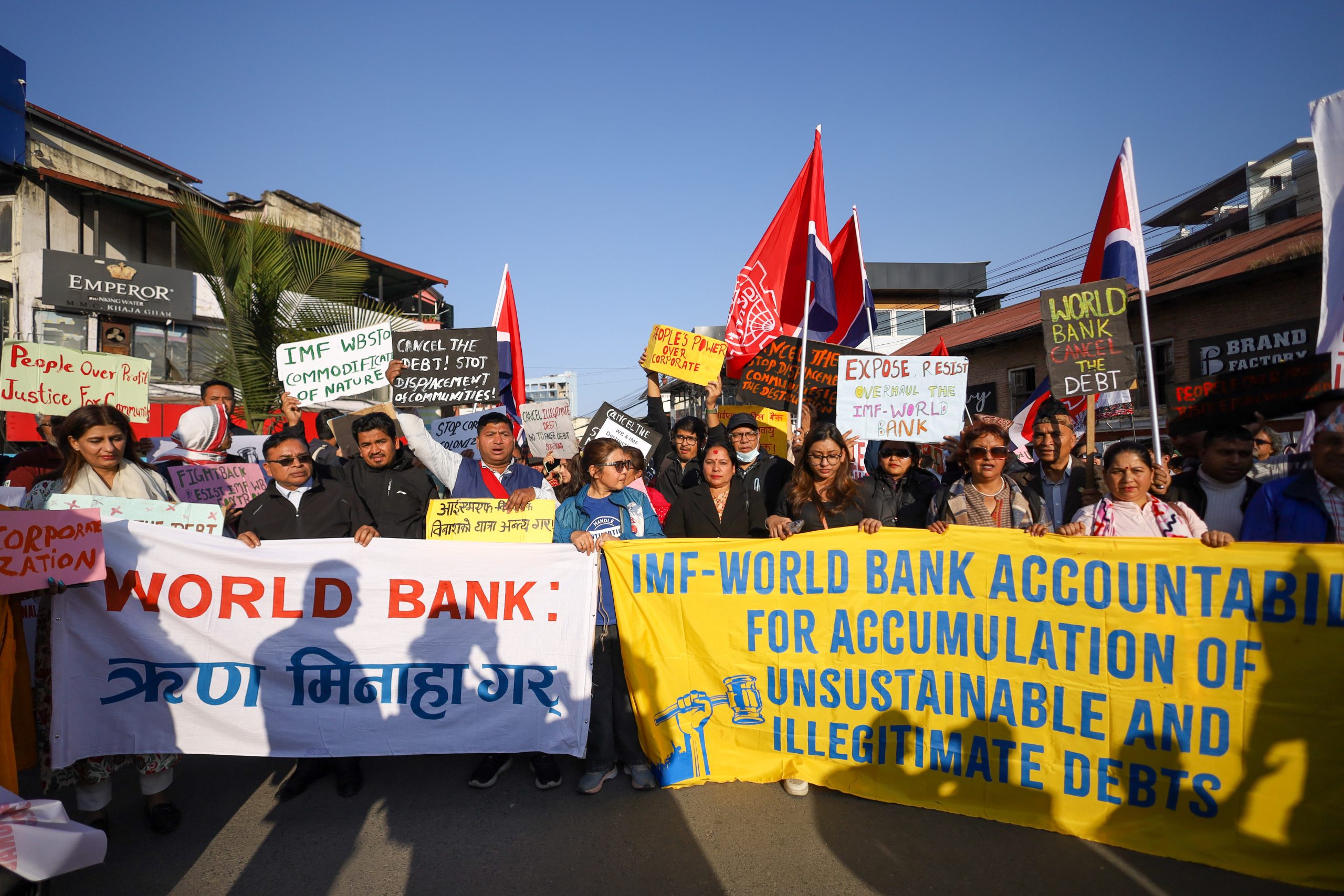
By Nitya Chakraborty In Nepal, following the tumultuous developments on September 8, 9 and 10 as a result of Generation Z uprising, the 2.9 crore nation is crawling back to normalcy . Under the leadership of interim Prime Minister Sushila Karki, the new administration is making sincere efforts to ensure law and order to prepare […]

The article Nepal’s Political Course Till March 5 Elections Gripped In Uncertainties appeared first on Latest India news, analysis and reports on Newspack by India Press Agency).

HONG KONG SAR – Media OutReach Newswire – 29 September 2025 – Cushman & Wakefield, a leading global real estate services firm, today released its annual Greater China Retail Supply/Demand Trends report. According to the report, by Q2 2025, the total prime retail property stock in the core markets of the 15 major cities we track in Greater China reached 116.7 million sq m. During the past […]

BEIJING, CHINA – Media OutReach Newswire – 28 September 2025 – As the Xinjiang Uygur Autonomous Region marks its 70th founding anniversary, a special report titled “Great Love for My Land Xinjiang” highlights the region’s transformation through groundbreaking projects and ecological perseverance. The Tianshan Mountains, which span across one-third of Xinjiang, long stood as a natural barrier between north and south. The completion of the Tianshan Shengli […]

Fortescue has sealed a flurry of contracts to deploy 300 to 400 zero-emission haul trucks at its Pilbara operations and to bolster its renewable energy capacity with the full acquisition of a Spanish wind tech company. The shifts represent a decisive scaling of its “Real Zero by 2030” ambition.

Under the new agreements, Chinese manufacturer XCMG will supply up to half of the electric 240-tonne haul truck fleet, with deliveries phased between 2028 and 2030. The remaining trucks will be produced by Liebherr, under an amended version of an earlier deal. The contracts build on an earlier framework signed in 2024 for battery-electric ancillary mining equipment.
XCMG itself refers to the Fortescue order as the largest export order for green mining equipment from China to date. The trucks may include autonomous features and use advanced software, similar to those operating in China’s open-pit mines.
Fortescue is also finalising its full takeover of Nabrawind, a Spanish wind tower and turbine technology company in which it held a minority stake since 2023. With full ownership, Fortescue plans to integrate Nabrawind’s self-lifting tower designs with turbines supplied by Envision Energy, aiming to deploy up to 2.1 GW of installed wind capacity in its Pilbara “East Pilbara generation hub.” The first wind energy is expected online by 2028, pending regulatory approval.

To support its Decarbonisation roadmap, Fortescue has signed supply agreements with several other Chinese clean-tech firms: BYD will supply energy storage systems; LONGi will provide photovoltaic modules; and Envision will deliver turbines and smart energy solutions. Fortescue describes the partnerships as a “multilateral collaboration” to access the best manufacturing capacity globally.
Andrew Forrest, the company’s Executive Chairman, emphasised that China’s ability to scale green technologies rapidly makes it a key partner in Fortescue’s strategy. He remarked that industry should “glue back” international cooperation through practical alliances rather than mere rhetoric. The company also continues to operate its R&D arm, Fortescue Zero, which is tasked with integrating and optimising power systems across its fleet and operations.

However, the pivot towards Chinese suppliers has already prompted adjustments to the Liebherr arrangement. Fortescue has scaled back Liebherr’s role to supplying at minimum half the haul trucks, down from its originally envisaged share, reallocating greater share to XCMG. Analyses suggest the move is intended to diversify risk, ensure supply chain resilience, and meet aggressive deployment timelines.
The decision also appears to reflect broader challenges in the green hydrogen sector: Fortescue has walked away from planned hydrogen projects in Arizona and Queensland, absorbing write-downs, and is now emphasizing electrification and green iron production instead. Internal restructuring and leadership turnover at Fortescue Zero have raised questions about execution, but the company underscores that the new strategy remains intact.

Arabian Post Staff -Dubai Dubai-based lifestyle and hospitality conglomerate FIVE Holdings has secured a $460 million revolving credit facility that will be used to repay its $350 million green bond ahead of schedule and free up capital for further growth. The facility, arranged with Commercial Bank of Dubai, AAIB and Santander, enables the group to retire its green bond three years before it matures, leaving it with […]

The Export-Import Bank of the United States has authorised over $100 million in financing guarantees to support two flagship digital infrastructure projects in Côte d’Ivoire. The package includes a $66 million guarantee for a national data centre and $47 million for technology exports intended to digitalise the Ministry of Commerce and Industry. The deals, approved in August under EXIM’s China and Transformational Exports Program, were formally unveiled […]

Abu Dhabi’s real-estate sector recorded its most powerful half-year showing to date, with transaction values climbing sharply to AED 54 billion. The newly published inaugural market report by the Abu Dhabi Real Estate Centre signals a turning point in transparency and market discipline in the emirate. The ADREC report shows residential unit sales reached AED 25 billion in the first six months, marking a 38 per cent […]

Arada has acquired a 75 percent stake in London-based residential developer Regal as part of a Dhs 2.5 billion investment that marks its first UK foray and second international expansion after Australia. The UK business will be rebranded as Arada London, with an ambition to turbocharge Regal’s pipeline from 10,000 units across 11 projects to over 30,000 within three years.

The acquisition was formalised in a ceremony attended by Sheikh Sultan bin Ahmed bin Sultan Al Qasimi, Chairman of Arada. Arada’s Group CEO, Ahmed Alkhoshaibi, said that more than half of the capital will be channelled into accelerating development and securing new land parcels. He described the London market environment as one presenting “right opportunities to acquire the right sites at the right price”.

Regal’s chief executive, Jonathan Seal, and the existing executive team will remain in post after the transaction. Seal remarked that Arada’s alignment with Regal’s strategic values and long-term vision made it a fitting partner to lead the next phase of growth.

The deal gives Arada an immediate platform in London, tapping into Regal’s diversified portfolio, which spans for-sale residential units, purpose-built student accommodation, and mixed-use regeneration schemes. Among ongoing developments is the Fulton & Fifth project in Wembley, comprising 876 homes of which 40 percent are designated as affordable housing, and Orchard Wharf in Tower Hamlets, which recently secured approval for 1,365 student beds and 200 homes.

Analysts see strategic logic in entering London via acquisition rather than greenfield development, citing the complexities and regulatory friction in the UK housing sector. Arada’s move follows a wave of Gulf-based developers expanding into London, including Damac, Aldar, and Modon, often via partnerships or subsidiaries.

However, entering the London residential market is not without risk. Regal’s 2024 accounts showed £252 million in short-term debt, contrasted against £196 million of investment property, reflecting potential balance-sheet stress. The UK housing sector continues to face headwinds from construction inflation, planning delays, and demand volatility.

Arada has defended the timing. Alkhoshaibi stated that entering markets when sentiment is subdued allows for acquiring desirable assets at lower cost, positioning for upside when conditions recover. He noted that Arada’s approach is to maintain momentum in its UAE operations while layering growth abroad.

Beyond the UK, Arada is also contemplating further regional expansion. The company is reportedly in discussions with Saudi Arabia’s Public Investment Fund about a large mixed-use project in the kingdom. In the UAE itself, Arada plans a Dhs 3 billion development project in Ras Al Khaimah next year, reinforcing its domestic footprint.


Electric vehicle insurance policies in the UAE are commanding about 72 per cent higher premiums than those for comparable petrol or diesel cars, largely because of elevated repair costs, limited workshop capacity, and parts supply chain challenges. Such figures, derived from data compiled by leading insurance and automotive analysts, shed light on systemic pressures across the market. Average comprehensive EV insurance is being priced at approximately AED […]

Abu Dhabi’s real estate market posted a 42 percent leap in value of property deals during the first half of 2025, with total transaction values reaching AED 54 billion. Residential unit sales were a major contributor, rising by 38 percent to AED 25 billion. The number of transactions climbed 25 percent to 15,578 deals over the same period.

Population growth in the emirate—specifically crossing four million residents in 2024—has intensified demand for housing, boosting both apartment and villa/town-house sectors. Apartment prices jumped 14 percent year-on-year in Q2, while villa and townhouse prices rose by 11 percent. Premium properties now account for 57 percent of apartment sales value, more than double their share last year. Saadiyat Island saw the highest apartment values per square metre, while Ramhan Island led villa/town house prices.

Economic expansion has underpinned the property market upswing. The non-oil sector increased by 6.2 percent, making up 54.7 percent of Abu Dhabi’s gross domestic product, which grew 3.8 percent to about AED 1.2 trillion. Real estate development continues apace, with master-planned communities like Al Hudayriat, Balghailyam in Yas Island, Mamsha Gardens and Saadiyat Lagoons fuelling supply.

Supply still trails demand. Existing residential inventory stood at approximately 400,000 units at mid-2025, while projections suggest that by 2028, the supply will grow by 4.6 percent annually, adding roughly 64,000 new units. Developers such as Aldar have released a number of high-value projects: town houses at Al Deem, Fahid Beach Residences, The Beach House, and the Waldorf Astoria Residences on Yas Island together pulling in billions of dirhams in sales.

We’ve all done it, started strong with our fitness routine and felt like we were really getting somewhere, then boom, life happened. Maybe work got crazy, your family needed you, or honestly, you just got bored of the same old routine. Whatever knocked you off course, the important thing is getting back up and dusting yourself off. Take It Easy at First Your body remembers what you […]

UAE’s construction sector is projected to reach US$ 130.8 billion by 2029, up from US$ 107.2 billion in 2024, as government-led projects and developmental pipelines drive a sustained growth trajectory of about 4% annually. Construction makes up 62% of all future pipeline projects across the Emirates, dwarfing the contribution from transport, power and water. Among construction subsectors, mixed-use projects lead the pipeline with about 42%, followed by […]

HONG KONG SAR – Media OutReach Newswire – 22 September 2025 – In his fourth Policy Address (September 17), John Lee, Chief Executive of the Hong Kong Special Administrative Region (HKSAR), set out strategies to advance the integrated development of culture, sports and tourism, creating a robust self-reinforcing cycle to generate fresh economic momentum and raise Hong Kong’s global appeal. The Government will consolidate Hong Kong’s position […]

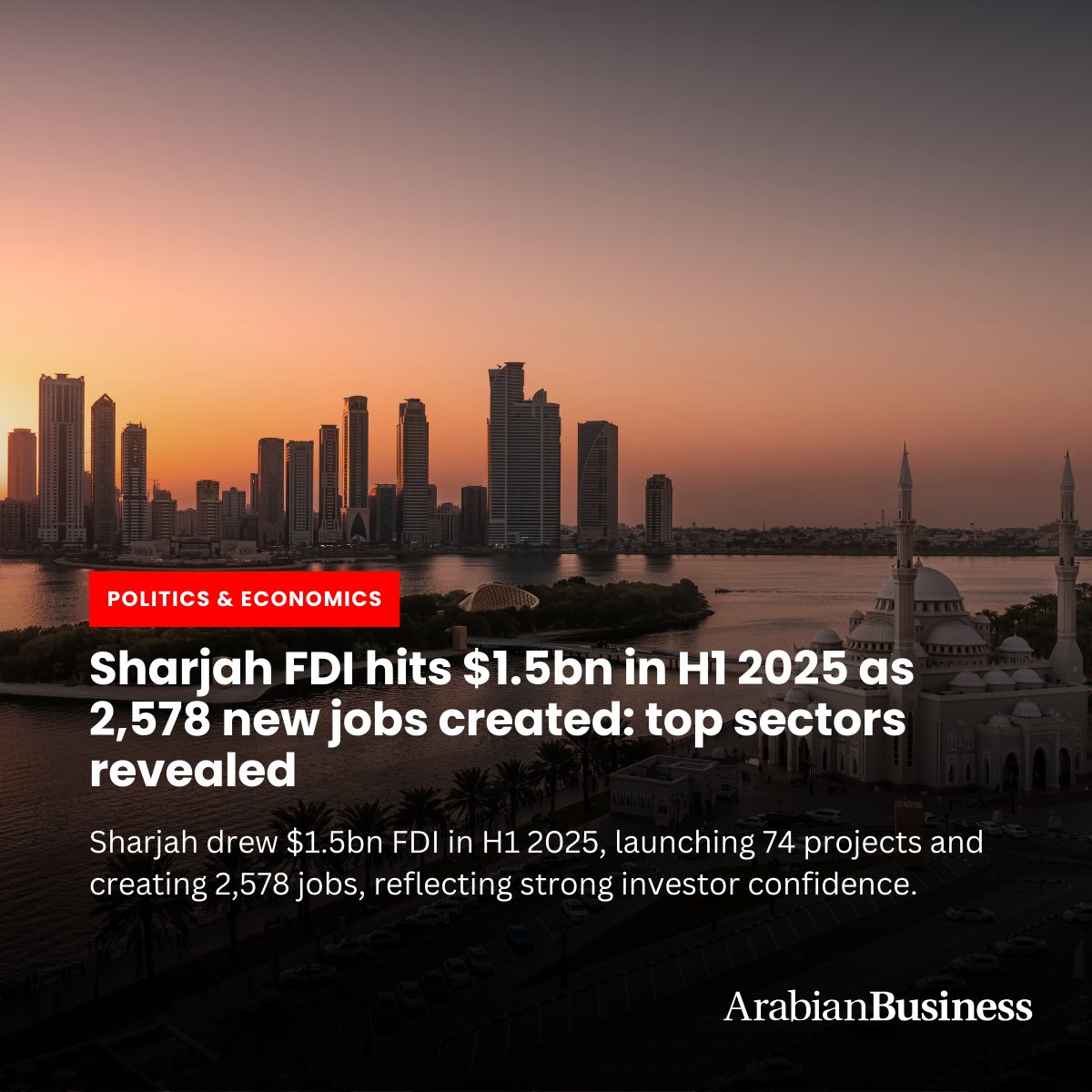
Sharjah has recorded capital inflows of $1.5 billion in foreign direct investment during the first half of 2025, marking a 361 percent rise compared to $325 million in the same period last year. The emirate also saw 74 new FDI projects, and 2,578 jobs created, a 45 percent increase from H1 2024.

Growth has been strongest in consumer products, food & beverage, business services, and industrial equipment. The consumer products sector led in investment, with project numbers rising by 53 percent and capital spend increasing by 188 percent. Food & beverage saw project volume more than double, while job creation in that sector rose by about 25 percent. Business services posted the biggest leap in employment—about 1,100 percent—alongside a 500 percent jump in project activity. Industrial equipment saw a 100 percent increase in projects and a 45 percent rise in capital investment.

Officials attribute the surge to government strategy that emphasises strong infrastructure, regulatory flexibility, and investment in human capital. Sheikha Bodour bint Sultan Al Qasimi, Chairperson of the Sharjah Investment and Development Authority, said the figures represent more than statistics—they mark improved livelihoods and sustainable value for the community. Mohamed Juma Al Musharrkh, CEO of Invest in Sharjah, pointed to Sharjah’s integrated policy framework and robust investment climate as central to building investor trust.

VISHNU RAJA
RYO YAMADA
HITORI GOTOH
IKUYO KITA