News related to
First

Seventeen years after the publication of the nine-page document titled “Bitcoin: A Peer-to-Peer Electronic Cash System,” authored under the pseudonym Satoshi Nakamoto on 31 October 2008, the digital asset known as Bitcoin has evolved from an experimental peer-to-peer payment proposal into a multi-trillion-dollar fixture of global finance.

At its launch, the paper proposed a decentralised network free of financial-institution intermediaries, aiming to avoid double-spending through a proof-of-work mechanism. Over the years the network has grown into a dominant cryptocurrency, and observers say that Bitcoin’s role in financial markets has shifted markedly. A study examining institutional adoption found that Bitcoin’s correlation with major equity indices — once low — rose to as high as 0.87 in 2024, signalling growing integration with mainstream markets.

Institutional interest forms a central pillar of this transformation. Following the approval of spot Bitcoin exchange-traded funds in the United States in January 2024, which drew in more than $50 billion in inflows, traditional asset managers such as BlackRock and Fidelity Investments gained routes for mainstream investors to access Bitcoin. Some corporations have adopted Bitcoin as part of corporate treasury strategy: around 80 companies now hold approximately 3.4 per cent of total Bitcoin supply.

Despite this ascent, some early proponents of Bitcoin’s original vision — that of a decentralised digital cash usable for everyday transactions — argue that the current model leans more toward its status as “digital gold” than as peer-to-peer money. Payment-system advances like the Lightning Network seek to restore that vision, enabling faster and cheaper transactions on-chain. Meanwhile, critics highlight that energy consumption and regulatory uncertainty continue to pose risks to Bitcoin’s wider adoption.

Regulatory momentum also remains uneven. While the United States moves closer to clearer rules through legislation such as the proposed Clarity Act — which analysts estimate has an 80 per cent chance of passing by early 2026 — global approaches vary significantly. Some jurisdictions have embraced crypto frameworks, while others maintain prohibitive stances. The potential for banks and custodial institutions to operate more directly with digital assets is gaining attention.

Technologically, Bitcoin remains foundational. The original protocol, unchanged at its core since its launch, still underpins a thriving ecosystem of wallets, exchanges and blockchain analytics. That continuity has contributed to its brand as the ‘first mover’ in the cryptocurrency space. At the same time, ecosystem participants are attending to scalability challenges, security risks tied to quantum computing and ecosystem fragmentation through forks.

On the macro-economic front, Bitcoin is increasingly viewed as a hedge or alternative asset, though its extreme price volatility continues to limit its suitability for everyday payments for most users. A survey found 63 per cent of Americans did not feel confident investing in or using cryptoassets, and among adults aged 50 or over that figure rose to 71 per cent. At the same time, the asset’s market cap has situationally breached the $2 trillion mark, reflecting its material scale within finance.

The evolution of Bitcoin also reflects a broader shift in financial architecture: decentralised networks and tokenised assets are increasingly challenging traditional models of money, payment and settlement. Analysts argue that the next phase of Bitcoin’s maturation will hinge on regulatory clarity, technological scalability and an enhanced role in everyday commerce, rather than only institutional accumulation.
Fintech firm Afriex has announced a strategic collaboration with payments giant Visa to deliver real-time cross-border transfers to over 160 markets, marking a significant expansion of its global payments network. The platform will integrate with Visa’s “Visa Direct” service through Afriex’s financial institution partner, enabling eligible Visa endpoints to receive funds instantaneously, according to the announcement. Afriex’s chief executive, Tope Alabi, emphasised that “for the millions of […]

A new initiative unveiled by the Dubai Future Foundation in collaboration with the MIT Senseable City Lab presents a data-intensive approach to urban greenery by applying artificial intelligence to evaluate the cooling effect of trees in multiple global cities. The project, named “Re-Leaf”, harnesses satellite imagery, street-level visuals and thermal data across locations such as Dubai, Amsterdam, Los Angeles and Rome to measure how trees can function as natural cooling infrastructure.

Re-Leaf reveals that shade and evapotranspiration from trees can reduce local surface temperatures by up to 15 °C compared with surrounding paved or built areas. One key finding is that drought-resistant species such as neem trees outperform more commonly planted palms in arid urban environments. DFF described the work as a shift in treating urban vegetation “as essential infrastructure for the cities of tomorrow”.

The initiative emerges under the banner of the 19th International Architecture Exhibition in Venice, curated by Carlo Ratti, in which Re-Leaf features as a special project. The exhibit presents city-scale “skyscraper-like” visualisations that depict greenery levels across the participating cities, with taller towers indicating higher vegetation cover.

Dubai’s establishment of the first Middle East-based Senseable City Lab via DFF provides a focal point for this research. The lab, working in partnership with MIT, developed the algorithms and datasets behind the project. From a strategic perspective, the work aligns with Dubai’s ambition to be an innovation hub and to address the demands of climate-resilient urban planning.

Beyond the headline figure of 15 °C cooling, the dataset comprises more than 2,000 trees across the four cities, allowing comparative analysis of species performance in different climates and urban morphologies. The research team emphasises that while the act of planting trees is well-known, the novelty lies in quantifying their impact using high-resolution AI tools and translating the results into actionable urban design decisions. “In a hotter world, trees must be seen as essential infrastructure, not just decoration,” Ratti said.

Urban planners and environmental scientists are responding to the project by pointing out its potential to shift policy focus from reactive mitigations—such as heavy air-conditioning—to proactive green infrastructure deployment. According to one expert, tree shading and transpiration “are vital for climate-responsive urban design”. For cities in arid or semi-arid zones—where energy use for cooling is high and water scarcity is acute—the findings are particularly relevant. The identification of species that deliver stronger cooling while requiring less water offers practical guidance for future planting strategies.

However, the project also faces scepticism around questions of scalability and implementation cost. Critics ask whether data-rich analyses can translate into large-scale urban forestry programmes in dense built environments, and note that factors such as soil depth, maintenance regimes and tree lifespan require further study. One architecture-critique article raised a broader question: “Do we need AI to confirm that trees cool cities?” highlighting the risk of attending to measurement rather than action.

The choice of cities for analysis – Dubai, Los Angeles, Amsterdam and Rome – reflects a mix of climatic zones and urban typologies, offering the chance to test how vegetation behaves across contexts. Amsterdam, with a temperate maritime climate, provides contrast to Dubai’s arid conditions, while Rome offers a dense historical fabric and Los Angeles a sprawling low-rise geography. Re-Leaf’s catalogue of thousands of tree species and urban cooling maps explicitly aims to support urban designers and policymakers.

For DFF and its partners, integrating tree-cooling metrics into master-planning holds promise beyond aesthetics. The project’s immersive display at Venice functions not only to showcase technology but to prompt debate on how cities invest in nature-based solutions. DFF Director of Dubai Future Labs, Khalifa Al Qama, described the work as generating insights with global value.

US retail giant Walmart has chosen the upper-level of Clearwater Mall in the Strubens Valley area of Roodepoort, Johannesburg, as the site for its first branded store on the African continent. The cornerstone agreement was confirmed by mall owner Hyprop Investments and partner retailer Massmart, signalling a strategic push by Walmart into the broader Africa market. The move brings the hallmark “Every Day Low Prices” shopping model […]

By K Raveendran The narrative circulating among professionals in high-performing technology firms is increasingly marked by anxiety. Reports of employees receiving lay-off notifications at 3 a.m. are emblematic of a culture in which even top-paid staff feel tethered to the abyss of “you may not be here tomorrow”. The juxtaposition of lucrative compensation and precarious […]


The article Big Tech’s Brutal Culture Pushes Employees Down An Abyss Of Anxiety appeared first on Latest India news, analysis and reports on Newspack by India Press Agency).

On the morning of November 1, 2025, Sun PhuQuoc Airways officially takes off with its first flights to Phu Quoc, marking the beginning of Vietnam’s first leisure airline. PHU QUOC, VIETNAM – Media OutReach Newswire – 1 November 2025 – The sky over Vietnam welcomes a new pair of wings today as Sun PhuQuoc Airways (SPA), a member of Sun Group, officially begins commercial operations. From November […]

European data-centre operator AtlasEdge has secured a €253 million green financing package to scale up its campus in Lisbon, Portugal. The facility, split into two tranches, is respectively earmarked for the first building and the second of the site, with the company also acquiring land to host a third phase, LIS003, drawing on Portugal’s renewable-energy credentials. The financing comprises a seven-year senior-secured term-bond arrangement. The first tranche, […]

Advertisements

The White House announced a policy that prohibits credentialed reporters from freely entering Room 140, a section of the West Wing known as “Upper Press” housing senior communications staff, unless they first secure an appointment. The directive originates from the National Security Council, which cited the protection of “sensitive material” now routinely handled in that zone. Press Secretary Karoline Leavitt and her deputy Steven Cheung are among […]

SHENZHEN, CHINA – Media OutReach Newswire – 31 October 2025 – In recent days, the Model (Aviation) Sport of the Mass Participation Events of the 15th National Games (NG) of China has held its finals in Longhua District, Shenzhen, which attracted aviation model enthusiasts from across the country. At the competition venue, players skillfully maneuvered their models between the sky and the ground, setting off a wave […]

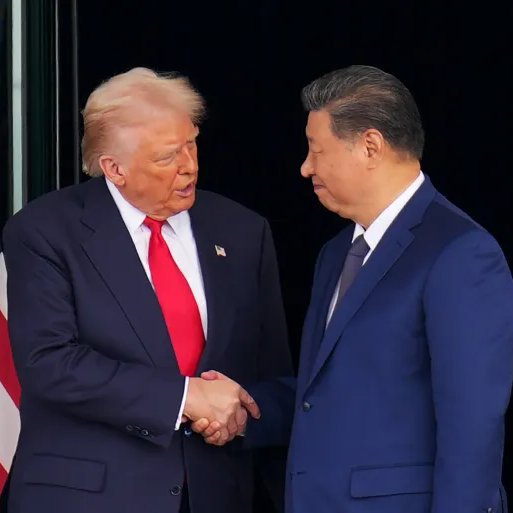
By Nitya Chakraborty In the last 24 hours since the holding of the historic summit between President Donald Trump and Chinese President Xi Jinping, a large number of commentaries in the American media as also in other western papers have been written. While in US, the assessment of the outcome of talks is on expected […]

The article Trump-Xi Summit At Busan Is A Game Changer Within China’s Us Policy appeared first on Latest India news, analysis and reports on Newspack by India Press Agency).

The multimedia framework FFmpeg has been awarded a $100,000 grant by the FLOSS/fund initiative, marking a significant injection of resources into a project that underpins video and audio processing worldwide. The grant is part of the organisation’s second tranche for 2025, delivered by FLOSS/fund—a programme launched by the brokerage firm Zerodha to bolster Free and Open Source Software projects globally.

FFmpeg, which is instrumental in powering platforms from online streaming services to editing suites, has long faced sustainability challenges despite its ubiquity in digital infrastructure. The project’s official handle confirmed receipt of the donation, describing it as “a step forward to a sustainable future for Open Source Software.” Meanwhile, FLOSS/fund’s blog revealed that the second tranche totals $675,000, bringing its total disbursement for the year to $1 million including the $325,000 committed earlier. Among the recipients alongside FFmpeg are notable projects such as Blender, OpenStreetMap and Wireshark.

The decision signals a wider trend in which tech-sovereignty and infrastructure resilience are being framed as strategic priorities. In its anniversary post, FLOSS/fund’s leadership emphasised that the typology of “Mutual Assured Sustenance” will—unlike traditional arms-race logic—apply in software ecosystems: interdependence rather than deterrence. With this context, the fund sees itself as a “global initiative with Indian roots”, citing India’s growing role in open source ecosystems.

Behind the scenes, the mechanics of funding remain complex. The blog post acknowledged that although the full amount has been committed, only $195,000 of the first tranche has been disbursed due to cross-border regulatory and tax paperwork. The timetable from announcement to actual transfer spans four to sixteen weeks, driven by varying jurisdictional requirements. The fund is working on a partnership with GitHub Sponsors to simplify payment flows.

The selection process for recipients is also non-traditional: rather than a formal application, projects publish a “funding. json” manifest detailing their finances and needs. The fund curators review the open-directory listings and pick recipients based on criteria such as “critical technical infrastructure”, adoption, and uniqueness of the project. It noted that diversity of projects—from developer libraries to humanitarian-tech tools—makes comparison difficult but unavoidable.

FFmpeg now joins a cohort of 29 projects selected in this tranche. The fund’s leadership stated that the grant does not “solve the funding problems behind FFmpeg and open source in general”, but underlined its symbolic and practical value. Analysts note that while a single donation will not fundamentally shift open-source economics, the move may prompt other large-scale users of open-source components to follow suit.

Industry observers credit the decision in part to shifting attitudes within the enterprise and government sectors. As digital dependency deepens, the risk of under-funded foundational tools becomes more visible. FLOSS/fund’s commentary suggested that countries such as India would benefit from a sovereign open-source fund administered in collaboration with the community—a concept that remains aspirational but gaining traction.

Corporations that derive value from open-source software may face increasing moral and strategic pressure to contribute back. Zerodha founder Nithin Kamath has publicly stated that “without open source software, there would be no Zerodha” and that supporting open-source infrastructure is in the best interests of both companies and states. That statement underscores the larger narrative at work: that critical digital infrastructure must be supported not just by users, but by the ecosystem as a whole.

The blockchain platform admittedly known as Qtum has rolled out a new desktop artificial-intelligence agent called “Ally”, aiming to shift the landscape of AI productivity from cloud-only assistants to desktop-native, multi-model orchestration. The launch positions Qtum as a player in both blockchain and artificial-intelligence domains as users increasingly demand local control, privacy and advanced automation beyond chat-based tools. Ally can run on both Windows and macOS platforms […]

The Washington-based media outlet Radio Free Asia announced that it will suspend all editorial content production from Friday, citing critical funding shortfalls triggered by the federal government shutdown and delays in appropriations. The decision marks the first full shutdown of its news services since the broadcaster’s founding in 1996.

Chief Executive Bay Fang explained that the organisation is “forced to suspend all remaining news content production … for the first time in its 29 years of existence” and that operations in several overseas bureaus across Asia will close while staff are formally laid off and severance paid. The organisation reported that many employees have been on unpaid leave since March owing to previous funding cuts.

Analysts say the board’s move underscores a precarious moment for U. S.-backed international broadcasting. Radio Free Asia, which has delivered news in Mandarin, Burmese, Khmer, Korean, Vietnamese and Uyghur since the mid-1990s, has come under mounting pressure from a combination of political directives and fiscal constraints. In March the United States Agency for Global Media terminated its grant under a presidential executive order, prompting legal challenges. Over the following months the service slashed language operations, placed staff on extended leave and shrank its footprint.

The trigger for the complete pause is the failure of Congress to pass a full-year funding resolution, resulting in the federal shutdown beginning October 1 and the impasse over the 2026 fiscal year budget. The shutdown left USAGM unable to disburse new funding, forcing Radio Free Asia to exhaust reserves. The suspension leaves fewer than 30 employees in place, according to internal documents.

Supporters of the broadcaster warn that the shutdown of its services will leave a significant information gap in parts of Asia where independent media are scarce and press freedom is under threat. The outlet has been credited with investigative reporting on China’s Uyghur population, coverage of North Korean defectors and analysis of the 2021 Myanmar coup. Its multilingual services have made it one of the few external voices operating inside closed societies.

Critics of U. S. international broadcasting say that the funding model, which ties outlets to federal grants, is inherently unstable when funding is politicised. They argue that the reliance on appropriations makes such organisations vulnerable to shifts in administration priorities and partisan standoffs. The halt in operations at Radio Free Asia has already been welcomed by governments it has criticised, including Cambodia and China, which view the move as a blow to U. S. soft-power broadcasting efforts.

Industry observers note that other USAGM-funded broadcasters are also under strain. The Radio Free Europe/Radio Liberty has retained legal protection via a court injunction but still faces cash-flow challenges. The broader trend suggests that U. S. international media assets may have thoroughly entered a phase of retreat just as global information competition—particularly from China and Russia—is intensifying.

The implications of the suspension extend beyond media-industry metrics. Some Asian governments that had viewed the broadcaster’s presence as adversarial are already reclaiming influence. Beijing had added state-run radio frequencies in regions formerly served by Radio Free Asia’s Mandarin service, and Phnom Penh’s leadership publicly thanked Washington in March for the cuts, calling them “a major contribution to eliminating fake news” in the region.

A new wave of digital activity has shifted the balance of the internet as automated bots now account for over half of global web traffic. Cybersecurity data shows that traffic from non-human sources rose to 51 per cent in 2024, overtaking human‐generated traffic for the first time. Behind this shift lies a complex web of generative-AI, automated crawlers and malicious botnets, raising questions about the role of […]

Allianz Trade extends geographical footprint to new location Vietnam HONG KONG SAR – Media OutReach Newswire – 22 October 2025 – Allianz Trade in Asia Pacific is pleased to announce the opening of its first office in Vietnam. Headquartered in Ho Chi Minh City, the new office will provide comprehensive trade credit solutions to local exporters, catering to their increasing demand resulting from the country’s outperforming exports […]

Net Profit Surges over 25%, Proposed an Interim Dividend of HK 1.0 cent per share Financial Highlights For the six months ended 31 Aug HK$’000 2025 2024 Change Profit before taxation 44,696 35,962 +24.3% Profit for the period attributable to shareholders 38,381 30,535 +25.7% Net profit margin 46.8% 35.1% +11.7 p.p Basic earnings per share (HK cents) 2.0 1.6 +25.0% HONG KONG SAR – Media OutReach Newswire […]

By Nitya Chakraborty   The much-awaited meeting between US President Donald Trump and the Chinese President Xi Jinping ended on Thursday morning at Busan in South Korea with both expressing high optimism at the outcome of the talks. Trump described the talks as “amazing” saying that their dispute over the supply of rare earths had […]

The article Is Xi Jinping Working For A Bipolar World Along With Donald Trump? appeared first on Latest India news, analysis and reports on Newspack by India Press Agency).

HONG KONG SAR – Media OutReach Newswire – 30 October 2025 – Hotel Artz Fair is proud to announce the artist and program highlights for its much-anticipated second edition, taking place from 21–23 November 2025 at Conrad Hong Kong. This boutique Fair offers a uniquely intimate experience, transforming hotel rooms into warm, homelike art spaces where works by over 40 artists from 12 countries and regions will […]

Dubai-listed developer Emaar Properties is sharpening its global expansion strategy by placing a stronger emphasis on India while exercising caution over entry into China’s troubled housing market, according to chief executive and founder Mohamed Alabbar.

Alabbar told the Future Investment Initiative conference in Riyadh that India would be “our next big step,” citing two decades of operations in the country and significant growth potential. He emphasised that, while Emaar remains “very interested in China,” it is holding off until the market shows clear signs of recovery, noting that “it is a different world. Let them recover.”

The directive comes after Emaar posted strong financial results: net profit jumped 25 per cent to AED 18.9 billion last year and rose a further 34 per cent in the first half of 2025, conditions that Alabbar says position the firm to target large market acquisitions rather than start-ups abroad. Emaar’s land-bank footprint already spans more than 1.87 billion sq ft globally, including a 122 million sq ft stake in India and around 175 million sq ft outside the UAE.

In India the driver is rising urbanisation, youthful demographics and a housing deficit that Emaar believes it is well placed to address. Alabbar signalled that the company is pursuing joint-venture partnerships with local groups rather than divesting its Indian operations, dismissing reports of a sale to one of the country’s major conglomerates. By contrast, China presents multiple headwinds including a pronounced housing market slump: new-home prices in 63 out of 70 major Chinese cities fell in September, reflecting a 0.4 per cent month-on-month drop and a 2.2 per cent year-on-year fall.

Analysts say Emaar’s bifurcated strategy makes sense in the context of broader market dynamics. India’s economy is forecast to grow about 6.7 per cent in fiscal 2025-26, according to a Reuters poll, while China is projected to expand by roughly 4.8 per cent amid real-estate weakness. Alabbar noted that the company sees China’s environment as “still suffering with their housing problem, but they’ll come up with it,” stating that Emaar wants to be ready rather than reactive.

Emaar’s preferred mode of overseas expansion appears to be acquiring significant stakes in existing developers, upgrading business models and rolling out its integrated real-estate offering rather than green-field launches. “Maybe you go and buy a majority stake in a developer and then change the way they do business … or maybe they already do good business and we learn from them,” Alabbar explained. That approach aligns with Emaar’s low net debt, elevated cash position and willingness to invest in large markets such as the US, Europe and China.

Critics caution that while India holds promise, foreign developers often face regulatory, land-title and partner-alignment risks. Emaar’s long-standing Indian venture, launched in 2005, endured partner disputes and execution delays, a history that Alabbar acknowledged when he said “we’ve been there 20 years. That’s big for us.” He further noted that successful growth in India depends on selecting the proper location and product mix. Meanwhile, China’s structural property problems are deep-rooted: unsold inventory and falling valuations continue to impair home­buyer confidence, raising questions about the timing of any major developer expansion into the market.

All-New Cardo BEYOND Helmet Represents Two Decades of Innovation Culminating in a Groundbreaking Fusion of Safety, Sound & Intuitive Technology SYDNEY, AUSTRALIA & WILLINGTON, NEW ZEALAND – Media OutReach Newswire – 30 October 2025 – Cardo Systems, the leader in wireless communication solutions for powersports riders, proudly introduces BEYOND GTS and BEYOND GT, the brand’s first-ever fully integrated sport-touring motorcycle helmets. The BEYOND line of helmets deliver […]

President Donald Trump is advancing plans to nominate Ryan Baasch, a senior aide within the White House’s economic policy team, for a commissioner seat at the Federal Trade Commission. Sources familiar with the matter say the 37-year-old special assistant at the National Economic Council would step into the post vacated by Commissioner Melissa Holyoak, who is expected to be tapped for the role of U. S. Attorney […]

Greenlogue/AP Abu Dhabi Future Energy Company PJSC – Masdar has secured two large-scale solar photovoltaic projects in Saudi Arabia, with a combined capacity of 2 gigawatts, under the country’s sixth round of the National Renewable Energy Programme. One facility, located in Najran Province, will deliver 1,400 megawatts, and the other, in Jizan Province, will provide 600 MW. Both projects will operate on a build-own-operate basis and are […]

Thrifty Car Rental UAE has introduced the region’s first self-service digital car rental kiosk, a move aimed at transforming how vehicles are rented across the Emirates. The kiosk, unveiled at the lobby of Novotel and Ibis Deira Creekside Dubai, allows customers to browse available vehicles, complete identity verification and make payment entirely digitally — the car can then be delivered within one to three hours. The launch signals a clear shift toward technology-led mobility solutions in the car rental industry.

The kiosk offering is part of Thrifty’s broader strategy to engage customers seeking convenience, speed and flexibility. At the Arabian Travel Market 2025 the firm outlined its ambition to expand this self-service model across high-traffic zones, including residential areas, shopping centres and transit hubs. The head of retail at Thrifty, Chand Soni, said the company was “building more than a rental network; we’re building a connected experience.”

Industry data suggest that the regional car rental market is undergoing a fundamental digital transformation, driven by customer demand for contactless service and the tourism sector’s push for smarter mobility. A market research report covering Oman values the digitisation of car rental — including self-service kiosks and app-based models — at US$150 million and growing, citing rising smartphone penetration and government digital-economy initiatives.

Thrifty’s kiosk system employs a touchscreen interface, secure identity verification and live payment integration. Users select vehicle type, rental duration and location via the kiosk, triggering delivery logistics in what the company promises as “minutes, not hours”. The vehicle is dropped off at a location of the renter’s choice. The system is designed to address both leisure travellers and residents who may need a flexible vehicle-rental alternative without the usual counter-based rental process.

The shift comes as car rental players in the region face increased competition not just from traditional rivals but from app-based mobility services and subscription models. For example, Thrifty itself is rolling out flexible rental plans — including monthly specials and lease-to-own options — to attract customers who prefer longer-term flexibility over ownership. The kiosk adds another layer of convenience for shorter-term rentals or spontaneous plans.

The move may also help Thrifty scale more efficiently. By deploying kiosks in multiple locations, the company can reduce staffing and branch-infrastructure costs, optimise fleet utilisation and meet spontaneous demand without needing multiple full‐service outlets. Soni noted the goal of doubling the network of touchpoints in the period ahead.

However, executing this strategy will bring challenges. The initial investment in digital kiosks and supporting IT infrastructure is substantial, and the process requires robust identity verification, payment security and logistics coordination. According to regional research, smaller operators may struggle to deploy such tech due to cost constraints and customer inertia — in some markets a majority of users remain more comfortable engaging via staffed counters.

Another risk lies in customer adoption. While younger and tech-savvy users may welcome the kiosk format, others may prefer the human interaction offered by traditional rental counters. Thrifty will need to ensure service reliability, vehicle availability and customer support — especially if rentals are completed entirely digitally and delivery timelines become core customer expectations.

Regional mobility trends underscore the importance of innovation. With the UAE emphasising tourism growth, smart infrastructure and digital transformation, the launch aligns with broader national strategies. Thrifty’s positioning at the intersection of mobility, digital convenience and customer experience may help meet evolving consumer behaviour, but sustaining value will depend on execution across logistics, fleet management and customer service.

For business travel, hotel partnerships and leisure rentals, the kiosk offers a compelling convenience proposition. At the same time, Thrifty must manage fleet availability, delivery logistics and system uptime to avoid service disruptions. Monitoring how customers adopt the kiosks, how much rental behaviour changes and how much cost or revenue upside emerges will be key to assessing whether this innovation delivers long-term competitive advantage.

Arabian Post Staff -Dubai CASIO this week introduced two high-end additions to its G-SHOCK collection, launching the new MTG-B4000 and GBM-2100A models that aim to combine cutting-edge materials, advanced design and smart features. The company describes the MTG-B4000 as the first G-SHOCK timepiece with frame design co-created by human designers and generative artificial intelligence, while the GBM-2100A re-imagines the popular 2100 line with metal-clad build, Bluetooth connectivity […]

VISHNU RAJA
RYO YAMADA
HITORI GOTOH
IKUYO KITA