News related to
First

Centrus Energy Corp has delivered 900 kilograms of high‑assay low‑enriched uranium to the Department of Energy, marking the completion of its second phase under a demonstration contract and validating the United States’ ability to produce this critical fuel domestically. This achievement opens the path for expanded reactor fuel supply amid growing demand for advanced nuclear technologies. The enrichment took place at Centrus’s American Centrifuge Plant in Piketon, Ohio, […]

Turkey’s sovereign wealth fund is pressing ahead with a planned sale of dollar‑denominated bonds on Wednesday after weighing a delay during a sharp stock‑market sell‑off triggered by a court decision affecting the main opposition party’s leadership. The Turkiye Wealth Fund is poised to issue both five‑year and ten‑year notes, guided initially at yields of approximately 7.625 per cent and 8.375 per cent, respectively. The decision to proceed […]

JIAXING, CHINA – Media OutReach Newswire – 2 September 2025 – On the evening of August 28, 2025, the Berlin Women’s Choir from Germany gave a concert at the Yanguan Theatre, conducted by renowned maestro Sabine Wuesthoff. This concert marked the ensemble’s debut performance in China. More than twenty members of the choir performed entirely a cappella, featuring works from composers including Beethoven and Schumann. Their harmonious […]

By Nitya Chakraborty After successfully passing the test of strategic autonomy for India at the just concluded summit of the Shanghai Cooperation Organisation (SCO) at Tianjin in China on August 31 and September 1, Prime Minister Narendra Modi faces another test on Monday September 8 at the virtual meeting of the BRICS nations convened by […]

Growth in the United Arab Emirates’ non‑oil private sector held above the threshold indicating expansion in August, buoyed by stronger output, even as sales registered their weakest performance in more than four years. The S&P Global UAE Purchasing Managers’ Index edged up to 53.3 from July’s reading of 52.9, affirming ongoing growth but reflecting persistent underlying challenges. Despite the headline PMI maintaining expansionary territory, new orders – […]

Greenlogue/AP SOHAR Port and Freezone has inked an agreement with MoonRock and the Danish firm PowerCon to install shore power infrastructure at its container terminal, enabling berthed vessels to plug into onshore electricity and switch off their auxiliary engines—cutting emissions, fuel use and noise pollution while enhancing efficiency. The ceremony took place during the Gulf Green Mobility Forum, with MoonRock as lead investor and PowerCon providing technical […]

Sobha Realty, the Dubai-based luxury developer rated Ba2 by Moody’s and BB by S&P, is advancing plans to issue its inaugural green, US dollar‑denominated, Regulation S benchmark sukuk under its established USD 1.5 billion trust issuance programme. The five‑year, fixed‑rate, senior unsecured sukuk offering carries a stable outlook from both agencies. The firm has shifted from tapping into conventional capital markets toward the growing sustainable finance segment. Preparing to launch […]

Advertisements

TransBnk has raised $25 million in its Series B funding round, led by Bessemer Venture Partners with support from Arkam Ventures, Fundamentum Partnership as well as existing backers 8i Ventures, Accion Venture Lab, and GMO Venture Partners. The Mumbai‑based transaction banking platform will channel the funds into geographic expansion across Southeast Asia and the Middle East, while strengthening its technology and product development teams. Vaibhav Tambe, co‑founder and chief executive, highlighted a sevenfold increase in the company’s valuation following […]

HONG KONG SAR – Media OutReach Newswire – 3 September 2025 – Luxshare Precision (002475.SZ) released its 2025 Interim Report at the end of last month. Under the complex and ever-changing global economic environment, the company still maintained a steady growth. The report shows that the company achieved growth in both revenue and profit in the first half of the year: operating income reached RMB 124.503 billion, […]

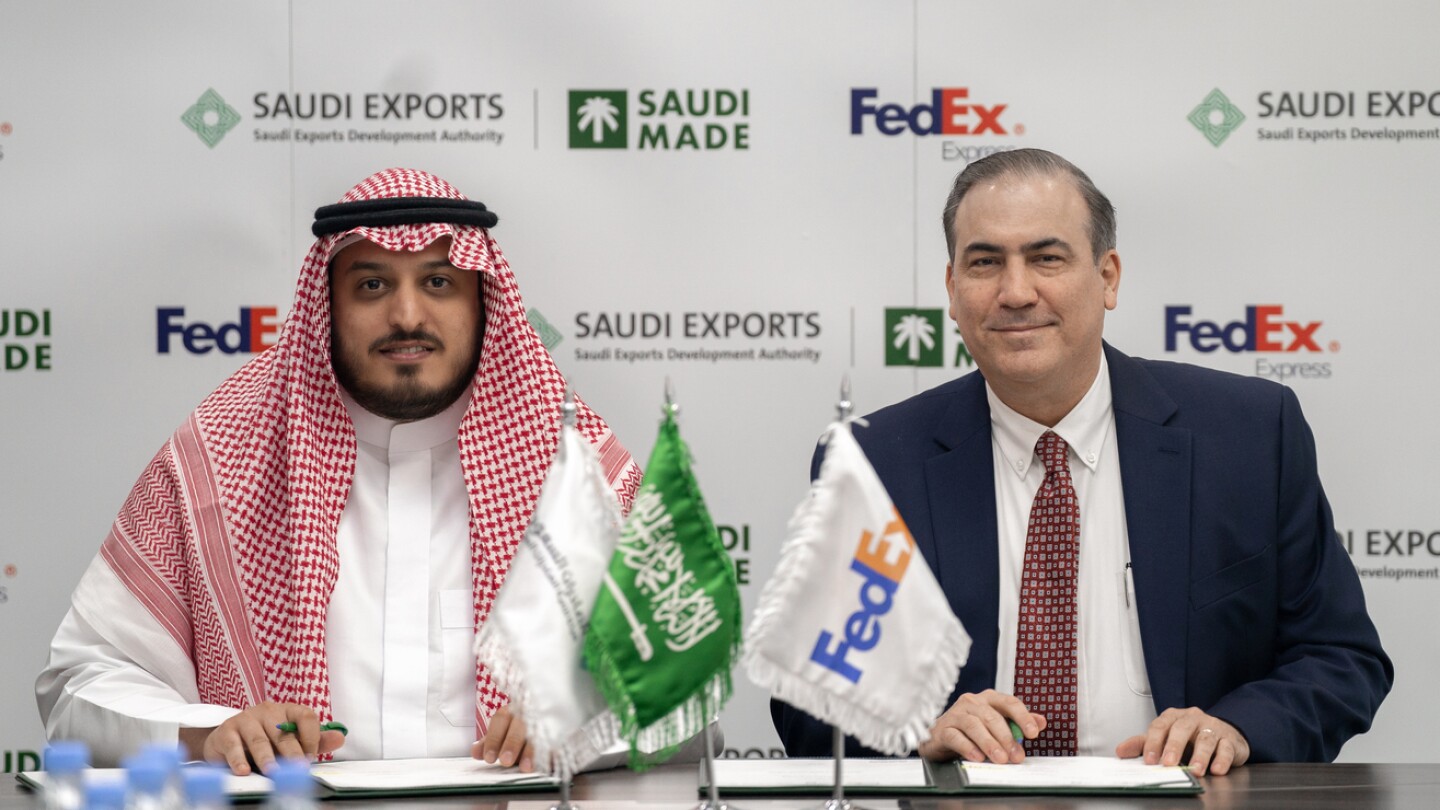
FedEx has gained an economic licence from Saudi Arabia’s General Authority of Civil Aviation to operate as a foreign air carrier, marking a significant expansion of its logistics footprint in the Kingdom. The move equips FedEx to conduct scheduled cargo services via King Khalid International Airport in Riyadh, with plans to operate 24 flights per month from early September 2025, establishing Riyadh as its regional hub linking continents.

The licence, granted on 2 September 2025, grants FedEx the ability to fly directly and to integrate air and ground operations across the Gulf Cooperation Council states. The announcement was made during a ceremony in Diriyah, attended by senior officials including Saleh Al‑Jasser, Minister of Transport and Logistics Services and Chairman of GACA; Abdulaziz Al‑Duailej, GACA President; and Dr Rumaih Al‑Rumaih, Acting President of the Transport General Authority, alongside FedEx executives.

FedEx introduced its first nonstop freighter service from the United States and Europe into Riyadh, operating six times a week with Boeing 777 aircraft. This route is the only express logistics connection offered by FedEx that bypasses other hubs, and continues onward to Guangzhou and Shanghai.

This direct link strengthens trade routes, particularly for high-priority sectors like energy, manufacturing, mining, healthcare and automotive, enabling temperature‑controlled, heavy, oversized or hazardous shipments. FedEx complements this airlift with its FedEx Logistics suite—air, road and sea freight forwarding, customs brokerage, and transit cargo support—aimed at enhancing supply chain resilience across the GCC, South Asia and Africa.

The company has developed end‑to‑end capabilities in the Kingdom, directly managing pickup, delivery and customs clearance through four gateways and four stations, supplemented by digital tools for shipping visibility and efficiency.

FedEx leadership emphasises Saudi Arabia’s role as a strategic logistics hub connecting Asia, Europe and the Americas. Richard Smith, Chief Operating Officer, International and CEO of the Airline at FedEx, cited the Kingdom’s infrastructure as a vital link in their global network. Kami Viswanathan, President of FedEx Middle East, Indian Subcontinent and Africa, underlined the integration of infrastructure, digital innovation and integrated solutions to aid Saudi businesses in competing globally.

These moves align closely with Saudi Vision 2030. The Aviation Programme aims to elevate Saudi Arabia’s aviation sector to the highest regional standards, targeting 330 million passengers, 4.5 million tonnes of air cargo, and air connectivity to 250 destinations by 2030. FedEx’s operations support these objectives by advancing industry capacity and reinforcing Riyadh’s prominence in logistics.

The expansion follows challenges earlier this year, when FedEx suspended economy parcel and freight services to the Kingdom from countries including India, Japan and the UK in March 2025. Service was halted temporarily, with FedEx noting it would resume “as soon as possible.”

Trade levels in Saudi Arabia have surged. The Kingdom posted a trade surplus of US$ 16.8 billion in Q1 2025, up 52 percent on the prior quarter, reflecting strong exports and demand for logistics infrastructure that FedEx is now well‑positioned to serve.

With strategic investments—including the creation of a global head office in Riyadh to oversee operations across Saudi Arabia, Bahrain, Kuwait and Qatar—FedEx reinforces its long‑term commitment to the region.

This expansion signals a departure from reliance on intermediaries or regional hubs outside the Kingdom; FedEx now controls its entire customs-to-delivery chain in Riyadh, laying the groundwork for faster transit, improved service reliability and deeper integration into global trade networks.

Emerging trends include rising demand for integrated logistics services, investment in digital tools for customs and tracking, and regional consolidation of supply chain operations. Key players alongside FedEx include Saudi authorities driving Vision 2030’s transport strategy, while GCC markets and commercial sectors increasingly rely on swift, dependable global connectivity.


Etihad Airways has stressed it has no set timetable for a public listing, affirming that its $20 billion expansion over the coming decade can be financed from within.

The airline’s chief executive, Antonoaldo Neves, confirmed it is prepared for an initial public offering, yet the decision remains with its shareholder—Abu Dhabi’s sovereign wealth fund, ADQ. He stated that “the time has not come yet”, emphasising that Etihad can self‑fund its next phase of growth.

Neves traced the shift in strategy to ADQ’s acquisition of Etihad in October 2022, which ushered in a focus on organic growth and strengthened regional connectivity through Abu Dhabi, rather than continuing merger or acquisition activity.

Passenger demand continues to rise, with traffic up 17 percent year‑on‑year and load factors climbing to 88 percent—up from 86 percent a year earlier. Despite a slowdown during the Israel-Iran conflict, bookings rebounded fully by the end of July, demonstrating robust consumer interest.

Etihad’s fleet exceeds 100 aircraft, spanning both Airbus and Boeing models. In May, the airline placed a major order with Boeing for 28 wide‑body jets—including 777X aircraft destined to replace its Airbus A380s after 2030. Neves also revealed plans to supplement fleet expansion via secondhand aircraft and lessor sourcing.

This public statement builds upon a broader narrative unfolding over the past year. Etihad reported profitability in 2022 and 2023—92 million dirhams and 525 million dirhams respectively—after years of losses. The airline has been enhancing transparency, governance, and operational efficiency, eliminating underperforming routes and returning grounded aircraft to service.

Earlier projections had flagged a possible IPO no earlier than 2025, allowing Etihad to bolster its financials before a listing. Speculative growth targets under its “Journey 2030” strategy include expanding to over 125 destinations and substantially growing its fleet.

Other commentary from February 2025 suggested Neves intended to float a stake of up to 20 percent on the Abu Dhabi stock exchange, possibly valuing the airline at $5 billion, and underscored his readiness for a float—though final approval again resides with ADQ.

Throughout this period, Etihad has forged strategic alliances. A landmark joint venture with China Eastern Airlines will coordinate schedules and revenues on selected routes from 2025, the first such pact between Middle East and Chinese carriers. Additionally, the airline has broadened its network through expanded service offerings to emerging and mid‑distance markets, positioning Abu Dhabi as a strategic travel hub.

Toyota and BYD have formalised a watershed collaboration anchoring future battery‑electric vehicle innovation. The joint venture, BYD Toyota EV Technology Co., Ltd., began operations in Shenzhen in 2020, equally owned by Toyota Motor Corporation and BYD Company Ltd. Their combined expertise aims to reshape BEV design, performance, comfort and intelligence for discerning Chinese consumers—and potentially beyond. BTET emerged from a partnership agreement signed in November 2019, with formal registration […]

Pharmaceutical developers are making headway with artificial intelligence tools to model drug absorption, distribution, and toxicity in human-relevant systems. This shift supports the U. S. Food and Drug Administration’s initiative to make animal testing an exception rather than a rule, particularly in pre‑clinical safety assessments for monoclonal antibody therapies and other drugs.

Regulatory authorities expect New Approach Methodologies—including AI-driven computational models, human-cell‑based systems like organs‑on‑chips, and organoids—to halve both development time and costs within the next three to five years. Recursion Pharmaceuticals recently advanced a cancer drug candidate to clinical trials in just 18 months, markedly faster than the 42‑month industry average.

The FDA’s April roadmap encourages drug developers to submit safety data from NAMs in Investigational New Drug applications. Firms providing robust NAM evidence may receive streamlined review processes—a concrete incentive to adopt these modern methods. A pilot programme allows select monoclonal antibody developers to use primarily non‑animal testing strategies, with results shaping future guidance.

Industry leaders at Charles River, Certara, Schrodinger, Recursion and InSphero are investing heavily in these emerging tools. Charles River’s NAM portfolio now generates roughly US $200 million annually. Certara’s president, Patrick Smith, stated the company is reaching a point where animal testing may no longer be necessary. Schrodinger utilises physics‑based simulations with AI to predict potential toxicity, while InSphero tests safety and efficacy using 3D liver microtissue models.

This transition builds on milestones such as the FDA Modernization Act 2.0, which removed the default requirement for animal data in drug development and formally recognised in vitro, in silico, and organ‑based methods as valid non‑clinical evidence. The Act is part of a broader regulatory overhaul that began with the ISTAND programme—for qualifying organ-on-chip tools—and continued with acceptance of the first liver‑chip into that pathway in 2024. Additional momentum comes from shifts in funding and policy: the NIH now prioritises human‑based models and no longer supports animal‑only proposals; the U. S. Navy has ended cat and dog experiments; and a federal push is underway to align academic and industry research with NAMs adoption.

Beyond regulation, academic research underscores the promise of computational approaches. A June 2025 study highlights AI and deep learning as enablers of predictive frameworks for vaccine and immunotherapeutic design—pointing toward a future where animal testing is replaced by computational models that refine vaccine targets and immune response predictions.

In parallel, the FDA is advancing its broader modernisation agenda through pilot programmes aimed at accelerating drug review timelines. Commissioner Marty Makary has proposed a split‑submission process that allows early review of key data during clinical trials. Coupled with AI tools such as Elsa—used daily within the FDA to expedite data review—this approach is projected to compress approval times from 10–12 months to as little as one to two months in eligible cases.

Ethically, these developments carry weight. Animal testing has repeatedly fallen short in predicting human outcomes—about 90 per cent of drugs deemed safe in animals fail in humans. New methods rooted in human biology promise not just faster, cost‑efficient drug pipelines, but also greater relevance and reliability in safety assessments, while reducing ethical concerns.

Though a complete end to animal testing is not expected immediately, experts anticipate a hybrid landscape in the short term, with animal studies still used where necessary but significantly reduced in favour of AI and human‑based alternatives.

JIAXING, CHINA – Media OutReach Newswire – 1 September 2025 – On the morning of August 26, at the Tide-Watching Resort Park in Yanguan Ancient City – also known as the “Tides and Music Resort” – a large number of participants gathered to play African drums as they welcomed the surging Qiantang River tide. The event successfully set a new Guinness World Record for the “Most People […]

Greenlogue/AP Dubai is gearing up to host the 11th World Green Economy Summit on 1–2 October 2025 at the Dubai World Trade Centre, where green finance will sit at the forefront of global climate discussions. Under the theme ‘Innovating for Impact: Accelerating the Future of the Green Economy’, the summit will convene policymakers, investors, business leaders, academics and innovators to mobilise capital toward equitable, sustainable growth. Organised […]

HONG KONG SAR – Media OutReach Newswire – 2 September 2025 – ZHUOYU Technology (ZYT), a leading advanced driver-assistance systems (ADAS) brand, officially announced its European debut at the (IAA Mobility 2025), opening on September 8, 2025. As a crucial step in its global strategy, ZYT will showcase its full-stack integrated hardware-software proprietary technologies, unveil business plans in Europe, and host technical salons under the theme “Intelligence […]

Linkin Park have confirmed their return to Abu Dhabi with a performance at Etihad Arena, Yas Island, on Tuesday 20 January 2026—tickets open for Live Nation’s general sale at 12 pm Gulf Standard Time that day. Presales for Linkin Park Underground community members, including Legacy and Passport Plus members, begin on Monday 1 September, with Live Nation presales running from 2–4 September, ahead of the general public sale […]

The mortgage market in Dubai and the wider UAE has entered a new stage of maturity. Once dominated almost entirely by cash buyers, today’s property landscape is increasingly shaped by mortgage financing. The first quarter of 2025 recorded AED 33 billion in cash transactions versus AED 21 billion in financed purchases. This indicates a clear rise in mortgage penetration as more residents, families, and long-term investors choose […]

By T N Ashok NEW YORK: For the first time since 2018, Indian Prime Minister Narendra Modi landed in China in late August 2025, greeted warmly by President Xi Jinping for the annual Shanghai Cooperation Organisation (SCO) Summit. Alongside Russian President Vladimir Putin, the trio projected a striking image of solidarity—three leaders from the world’s […]

A succinct pledge to resolve their border differences and reinvigorate cooperation was exchanged between Chinese President Xi Jinping and Prime Minister Narendra Modi during a summit in Tianjin. The meeting, marking Modi’s first visit to China since the border clashes of 2020, signals a strategic effort to steady bilateral ties ahead of the meeting of regional leaders.

At the outset, Modi acknowledged that disengagement along the Line of Actual Control has created a peaceful environment, underlining that tranquility along the border is essential for bilateral development. He emphasised that relations have moved in “a meaningful direction” and stressed that both countries should pursue strategic autonomy without being viewed through the lens of a third country. Xi mirrored that sentiment, contending that border issues should not define China‑India relations. He urged a focus on economic growth and expressed a hope that their meeting would “further elevate” bilateral relations to a stable trajectory.

This diplomatic retreat from escalating tensions emerges amid broader geopolitical recalibrations. The summit, bringing together more than 20 non‑Western leaders, offered a stage for Xi to advocate a new global order more favourable to the Global South, challenging Western dominance. He proposed the creation of a SCO development bank, new financial mechanisms to reduce dependence on the US dollar, AI cooperation, and a lunar research partnership.

For his part, Putin welcomed the revival of “genuine multilateralism” through the SCO framework and lauded efforts toward building alternative Eurasian security structures. The visual solidarity among the three —occasionally dubbed the “anti‑Western bloc”— underscores their shared interest in countering US influence and economic pressure, including US‑imposed tariffs on India.

India’s engagement at Tianjin reflects a broader wave of diplomatic stepping stones: direct flights have resumed, the Kailash Mansarovar Yatra has been revived, and Indian pilgrims are again welcome in Tibet. These developments follow mutual agreements on border patrolling mechanisms and a gradual easing of visa and tourism restrictions.

While the tone between Xi and Modi was markedly conciliatory, analysts caution that underlying issues persist. The legacy of the 2020 deadly Galwan clash remains a psychological and strategic fault line. Mistrust endures, and there is no immediate indication of a comprehensive border settlement or legally binding roadmap toward de‑escalation.

The SCO’s Tianjin gathering is the largest of its kind in the organisation’s history, with Xi presiding and an array of Eurasian leaders in attendance. The event signifies a collective push toward regional cooperation and institutional alternatives to Western‑led institutions.

Google has eliminated around 35 percent of managers overseeing small teams, opting to shift many into individual contributor roles in a decisive drive to flatten its organisational structure. Brian Welle, vice president of People Analytics and Performance, revealed during an all‑hands meeting that the company now has substantially fewer managers and direct reports compared to this time last year. The aim is to reduce bureaucracy and accelerate decision‑making […]

McLaren Racing is set to be valued at in excess of £3 billion as its Middle Eastern backers move to acquire the remaining minority stake in the team. Bahrain’s Mumtalakat sovereign wealth fund and Abu Dhabi’s CYVN Holdings are preparing to buy out the 30 per cent share previously held by investors such as MSP Sports Capital, UBS O’Connor and Ares Management in a deal expected to be confirmed imminently.

This valuation marks a substantial leap from its December 2020 valuation of approximately £560 million, when MSP Sports Capital entered the picture during a fundraising round. The outcome promises significant returns for the minority investors who backed McLaren during its earlier financial challenges.

McLaren’s resurgence under chief executive Zak Brown and team principal Andrea Stella has helped propel the team back to the forefront of Formula One. Following years overshadowed by dominant rivals, McLaren clinched its first constructors’ championship in 2024, and in the current season its drivers—Oscar Piastri and Lando Norris—are locked in a fierce duel at the top of the drivers’ standings.

The sport’s expanding global appeal, driven by Liberty Media’s strategic digital outreach and the cultural phenomenon of the Netflix series Drive to Survive, has magnified team valuations across the grid. McLaren’s rise is emblematic of that broader trend.

Alongside on-track performance, McLaren has diversified into other motorsport arenas. It competes in IndyCar and has confirmed plans to enter the World Endurance Championship, notably the 24 Hours of Le Mans, beginning in 2027. Mastercard has also joined as the team’s title sponsor, in a deal slated to begin in 2026.

The Gulf investors, Mumtalakat and CYVN, currently hold control of McLaren Group Limited, the parent entity of McLaren Racing. With this deal, they will consolidate full ownership of the racing arm.

Beyond this deal, McLaren’s broader corporate structure has undergone notable change. In March 2024, Mumtalakat completed a full takeover of McLaren Group. Later, in December 2024, CYVN acquired McLaren Automotive along with a non‑controlling interest in the racing division. These moves underscore a strategic integration under Gulf ownership, spanning both competition and high-performance automotive manufacturing.

The proposed stake sale is set to be formally announced in the coming days—and might already be public by the time this report is published.

Further context: Aston Martin, another Formula One team, recently sold a minority stake in its racing operation for approximately $147 million, valuing that team at around $3.2 billion.

A colossal leap in infrastructure development is underway as OpenAI pursues the establishment of a data centre in India with a striking capacity of at least one gigawatt. The project, integral to its Stargate initiative, ushers in a new era of AI infrastructure expansion across Asia.

OpenAI is actively exploring partnerships with Indian firms to bring this gigawatt-scale facility to life, though the precise location and timeline remain unspecified. The effort aligns with its Stargate programme—an expansive, multibillion-dollar venture in collaboration with SoftBank, Oracle and MGX to develop next-generation AI infrastructure.

The planned facility stands among the largest of its kind in the region and may be formally introduced by OpenAI’s chief executive, Sam Altman, during his anticipated visit to India in September. OpenAI has already gained legal footing by registering as an entity in India and is gearing up to open its first office in New Delhi later in the year, reflecting the nation’s importance as the company’s second-largest market by user base.

Financial implications of such mega‑scale AI infrastructure are enormous. According to Jensen Huang, chief executive of Nvidia, constructing a singular gigawatt-class facility could cost around $50 billion—$35 billion directed towards Nvidia’s hardware and $15 billion for supplementary systems. OpenAI’s ambitions also include similar “AI super‑factories” in Abu Dhabi and across the United States, all under the banner of Stargate.

This enormous investment is forecast to have ripple effects across the global AI ecosystem. With Stargate estimated at up to $500 billion, it underscores OpenAI’s strategic ambition to lead in AI infrastructure and the mounting demand for AI-optimised processing capabilities. Nvidia, for example, projects AI infrastructure spending could soar to the $3‑4 trillion mark annually by 2030, bolstered by commitments like those under Stargate.

Locally, establishing such a facility in India can offer tangible advantages. A dedicated data centre promises to reduce latency for Indian users while satisfying regulatory demands for local data storage, a critical consideration for enterprise clients and government services. The endeavour complements OpenAI’s earlier move to enable local data residency for services such as ChatGPT Enterprise and its API offerings, aligning with India’s regulatory framework.

India’s data centre ecosystem is expanding rapidly. From an installed capacity of approximately 950 megawatts in 2024, projections currently estimate that figure to nearly double—approaching 2 gigawatts by 2026. However, even with such growth, the nation still accounts for just a fraction of global data centre capacity despite generating a significant portion of worldwide data streams. The arrival of a gigawatt-scale project like OpenAI’s would mark a profound increase in both capacity and technological capability.

Environmental sustainability and energy demands also emerge as critical considerations. Hyperscale data infrastructure requires vast power and cooling resources, raising pressing questions about energy sourcing, water usage, and ecological impact—matters India is progressively addressing through green data centre policies and incentives.

OpenAI’s move echoes broader trends among global tech giants expanding their Indian footprints. For instance, Reliance Industries is planning a three‑gigawatt data centre in Jamnagar; Microsoft, Amazon, and Google are investing heavily in cloud infrastructure; and India’s government continues to support initiatives through Digital India and localisation mandates.

A new digital platform, the Flight Operations Centralised Unified System, has been unveiled by the General Civil Aviation Authority to drastically streamline how both foreign and national air operators seek operational approvals across the UAE. The system consolidates key regulatory links and information into a single, user‑friendly gateway, promising faster processing, greater transparency, and reduced bureaucracy. Saif Mohammed Al Suwaidi, Director‑General of the GCAA, described F. O. C. U. S. […]

VISHNU RAJA
RYO YAMADA
HITORI GOTOH
IKUYO KITA