News related to
ISIS

Growing sophistication in artificial-intelligence driven video and audio forgery has sent shockwaves through financial systems and public trust alike, with 2025 emerging as a watershed year in deepfake-enabled fraud. Losses tied to deepfake scams are widely estimated at over $50 billion annually — a stark indicator of how rapidly cybercrime is evolving. Fake videos that convincingly mimic celebrities, corporate executives or even family members are now being […]

Regulators at the Federal Reserve are moving to formalise rules for stablecoins, signalling a shift in how banks may soon treat these digital assets under supervision. The Vice Chair for Supervision at the Fed, Michelle Bowman, emphasised that banks should be able to engage with digital currencies — including stablecoins — under new regulatory guardrails. She argued that existing regulations, many crafted in the aftermath of the 2008 financial crisis, may no longer be appropriate given how much the economy and technology have evolved. Her remarks came against the backdrop of recent legislation that lays the groundwork for stablecoin regulation, prompting an overhaul of existing frameworks to encourage innovation while managing risk.

The regulatory momentum follows the passage of the Guiding and Establishing National Innovation for U. S. Stablecoins Act — known as the GENIUS Act — which establishes a comprehensive legal framework for payment stablecoins. Under the law, issuers of stablecoins must back tokens on a one-to-one basis with U. S. dollars or other low-risk assets, provide regular disclosure of reserves, and maintain transparent redemption processes. This marks a turning point: stablecoins officially enter the regulated financial system, opening the door for banks and other financial institutions to participate under defined standards.

Bowman has signalled that the Federal Reserve, alongside agencies such as the Office of the Comptroller of the Currency and the FDIC, intends to craft tailored supervisory guidelines rather than impose a one-size-fits-all regulatory model. She has called for regulators to abandon what she described as an “overly cautious mindset” that has slowed the banking sector’s ability to embrace digital innovation. According to her, banks seeking to engage in stablecoin activities must separate those assets from their traditional banking operations. This segregation, she said, is necessary to preserve the safety and soundness of the banking system even as banks expand into digital asset services.

The move has drawn cautious optimism from some quarters of the financial world, particularly among proponents of digital assets and stablecoin issuers, who view increased regulatory clarity as critical for broader adoption. They argue that a well-designed framework will enable mainstream financial institutions to offer digital asset services, increasing legitimacy and liquidity in the stablecoin market. Analysts point to academic research suggesting stablecoins have evolved from niche cryptocurrency experiments to integral components of payments infrastructure worldwide — with stablecoins’ market capitalisation estimated to exceed several hundred billion dollars. Some experts have proposed hybrid models that combine fiat-backed stablecoins with central-bank anchored systems to mitigate liquidity risks and improve stability, particularly in volatile market conditions.

At the same time, concerns remain about potential threats to financial stability. Regulators such as the Fed must weigh the risk of deposit outflows, competition between banks and non-bank issuers, and the challenge of preventing money-laundering or illicit finance through digital assets. Financial supervisors globally are wrestling with how to calibrate capital requirements and risk-weighting rules for banks engaging with stablecoins and digital tokens — taking into account factors like volatility, liquidity stress, and redemption risk.

Mounting evidence from across the technology sector shows that some of the world’s largest platforms continue to struggle with code quality, raising questions about long-term sustainability as companies balance rapid feature deployment with structural reliability. The growing reliance on AI-assisted development tools and accelerated shipping cycles is fuelling technical debt across major firms, prompting calls from engineers, analysts, and former executives for a recalibration of priorities. The […]

Gold futures and spot prices slipped as the US dollar held near six-month highs and investors reconsidered expectations for interest-rate cuts by the Federal Reserve. Spot gold was trading around $4,055.73 per ounce and US futures for December delivery fell to approximately $4,052.40 per ounce. The dollar index rose above 100, a level that poses headwinds for gold since a stronger dollar makes the non-yielding metal more […]

By R. Suryamurthy India’s student mobility crisis is no longer a question of data, it is an indictment of a system that has refused to reform while the world moved on. The new NITI Aayog paper does not so much analyse this imbalance as expose it. The numbers are brutal: for every foreign student who […]

The article India’s Higher-Education System Is Driving Students Out — Not Bringing The World In appeared first on Latest India news, analysis and reports on Newspack by India Press Agency).

By Nitya Chakraborty Prime Minister Narendra Modi will be attending G20 summit at Johannesburg on November 22 and 23 amidst the diplomatic crisis for India over the Bangladesh demand for deportation of the ousted Prime Minister Sheikh Hasina from her shelter in India. On November 17, the International Crimes Tribunal of Bangladesh indicted Hasina on […]

The article Winning Perception Battle Against Bangladesh Is The Main Task Of Narendra Modi At G-20 Summit appeared first on Latest India news, analysis and reports on Newspack by India Press Agency).

BEIJING, CHINA – Media OutReach Newswire – 20 November 2025 – China showcased its environmental achievements at a side session during the 30th UN Climate Change Conference (COP30) in Belém, Brazil, on November 10, underscoring its broader vision of ecological civilization and its ongoing efforts to address climate change. The event, held at the China Pavilion under the theme on ecological civilization and the practice of building […]

Advertisements

Global markets are showing the strain after an extended period of exuberance, and the sudden shift in mood has unsettled investors who had come to expect uninterrupted gains across AI and tech, gold, cryptocurrencies, and equities. The turn has been swift. Gold has given back a meaningful portion of its late-October surge, bitcoin has slipped under $90,000, and equity markets worldwide have recorded several sessions of broad […]

Iran has launched an ambitious cloud-seeding operation as its water crisis intensifies, with authorities warning that the capital may face rationing or even evacuation if supplies cannot be sustained. The move comes against a backdrop of six years of dwindling rainfall and widespread depletion of reservoirs, particularly around Tehran, where dam-levels are at historic lows and domestic pressure on water supplies has escalated. A specialised aircraft under […]

Saudi Crown Prince Mohammed bin Salman arrived in Washington on Tuesday for his first official visit since 2018, marking a significant milestone in US-Saudi relations. The visit is set against the backdrop of a complex diplomatic landscape, one that has seen fluctuating ties between the two nations in recent years. The Crown Prince’s return to the White House follows a period of tension under President Joe Biden’s administration, which had openly criticised the Kingdom’s human rights record and distanced the US from the Saudi leadership.

Under Biden’s presidency, relations between Washington and Riyadh reached a nadir, especially after the murder of journalist Jamal Khashoggi in 2018, a crime widely attributed to the Crown Prince, though he denies any personal involvement. Biden’s stance was clear: he aimed to reassess US relations with Saudi Arabia, placing emphasis on human rights and security policies. However, the trajectory of US-Saudi relations changed dramatically with the arrival of President Donald Trump in 2017.

During Trump’s tenure, the US-Saudi relationship experienced a marked shift, primarily driven by shared strategic and economic interests. In 2018, Trump’s visit to Riyadh helped to reset relations, with the Kingdom committing to invest $600 billion in the US over a four-year period. This pledge included investments in infrastructure, technology, and energy projects, bolstering the economic ties between the two nations and reaffirming the strength of their partnership.

The current visit by the Crown Prince is seen as a continuation of this reset, highlighting the importance of economic collaboration and security coordination between the US and Saudi Arabia. In particular, the two countries share key interests in the Middle East, such as counterterrorism efforts and stability in the region, particularly concerning Iran’s increasing influence and its nuclear ambitions.

During his visit, Crown Prince Mohammed is expected to meet with President Joe Biden, along with other senior officials, to discuss a range of issues. While human rights will likely remain a topic of conversation, the focus of the visit is expected to be on strategic cooperation in areas such as energy, defence, and regional security. A key part of the talks is likely to centre around energy policy, particularly as the world grapples with rising oil prices and energy security concerns exacerbated by the war in Ukraine.

Energy is a central pillar of the relationship between the two countries. Saudi Arabia, as one of the world’s largest oil producers, has long played a crucial role in global energy markets. The Kingdom’s ability to influence oil production levels has made it an indispensable partner for the US, which continues to rely on energy imports and stability in the oil market. As the world moves toward cleaner energy solutions, Saudi Arabia has also signalled its intention to diversify its economy and reduce its dependence on oil exports. In this context, discussions about investment in renewable energy projects and technological partnerships are likely to be on the agenda.

Security cooperation, too, will be high on the list of priorities during the Crown Prince’s visit. Saudi Arabia’s security concerns, particularly regarding Iran’s nuclear ambitions and the ongoing conflict in Yemen, are central to the Kingdom’s foreign policy. The US has been a key ally in providing military support, including arms sales and joint military exercises. However, the Biden administration has expressed concerns about the scale of arms deals with Saudi Arabia, especially in light of the war in Yemen and the humanitarian crisis it has caused. Despite these concerns, the strategic necessity of maintaining a strong defence relationship remains a key point of discussion.

The meeting comes at a pivotal moment in global geopolitics. The US and Saudi Arabia are both facing the challenge of navigating a shifting world order, characterised by growing tensions with China and Russia, and increasing instability in the Middle East. While Biden’s administration has sought to balance human rights with strategic concerns, the importance of the US-Saudi relationship cannot be overlooked. The outcome of this visit could lay the foundation for the future of US-Saudi ties, particularly as the global energy landscape continues to evolve and new geopolitical challenges emerge.


Between 1991 and 2023, catastrophic events have left an indelible mark on global agriculture, causing losses exceeding $3.26 trillion, a report from the Food and Agriculture Organization reveals. These disasters have not only disrupted food systems but also devastated the livelihoods of farmers and communities dependent on agricultural output. The FAO’s findings highlight that over the past three decades, agriculture has borne the brunt of a changing […]

Manish Rai The Patriotic Union of Kurdistan (PUK) has once again established itself as a significant player in the Iraqi political landscape. In the recently concluded Iraqi legislative elections, it became the sole Kurdish party to increase its seats and secure seats in nine provinces of Iraq. PUK has historically been a proponent of cordial relations between Kurdistan and Baghdad. However, the PUK chose to remain cautious […]

By Nitya Chakraborty The NDA led by the BJP has swept the assembly polls in Bihar stunning the RJD and the other constituents of the INDIA Bloc by the extent of the win of the NDA constituents in the 243 member state assembly. The initial results till this afternoon indicate that the NDA has got […]

The article INDIA Bloc Must Take Proper Lessons From Big Jolt In Bihar Assembly Polls appeared first on Latest India news, analysis and reports on Newspack by India Press Agency).

The ongoing government shutdown has forced airlines to cancel hundreds of flights, deepening travel chaos across the United States. Major airports in New York City, along with others nationwide, have been hit with severe delays and cancellations, as air traffic controllers and federal aviation staff are affected by the furloughs. The Federal Aviation Administration has significantly reduced staffing levels in several air traffic control centres, leading to […]

By Nitya Chakraborty US President Donald Trump’s favourite grouping Quadrilateral Security Dialogue (QUAD) is in deep crisis due to the strain in India-US relations in 2025 covering both trade and political issues and also a dip in personal ties between Trump and the Indian Prime Minister Narendra Modi over the role of the US President […]

The article Future Of Trump’s Favourite Grouping QUAD Is At Stake Due To India-US Schism appeared first on Latest India news, analysis and reports on Newspack by India Press Agency).

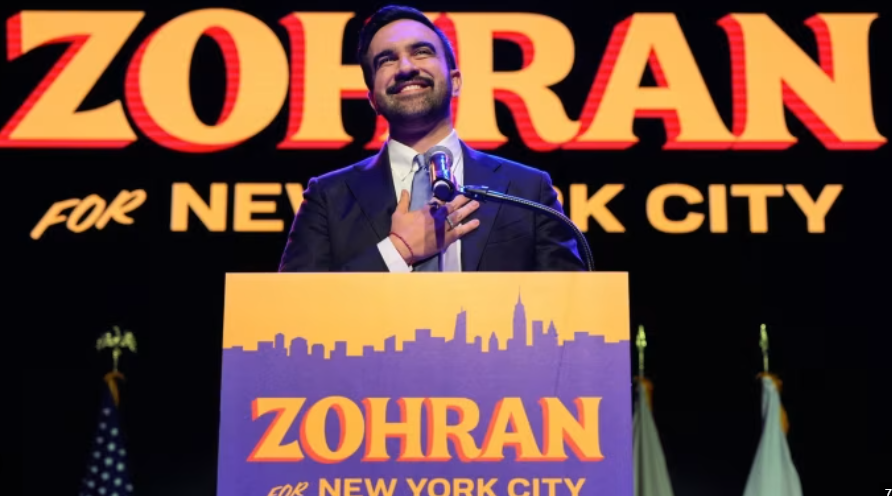
By TN Ashok NEW  YORK:When the polls closed at 9 p.m. on Tuesday, November 4, 2025, it took less than 40 minutes for the Associated Press to call the race. Zohran Mamdani, a 34-year-old democratic socialist and state assemblyman from Queens, had accomplished what many considered impossible just a year earlier: he defeated Andrew Cuomo—twice—to […]

The article The Mamdani Moment: A Political Earthquake In America’s Largest City appeared first on Latest India news, analysis and reports on Newspack by India Press Agency).

A peculiar and uncontrollable mass movement gripped the city of Strasbourg in the summer of 1518 when dozens of residents began dancing in the streets without any apparent reason or music. Historians estimate that by the peak of the episode between July and September, anywhere from 50 to 400 individuals were participating in this phenomenon known as the “dancing plague”. The event reportedly began when a woman […]

By K Raveendran The narrative circulating among professionals in high-performing technology firms is increasingly marked by anxiety. Reports of employees receiving lay-off notifications at 3 a.m. are emblematic of a culture in which even top-paid staff feel tethered to the abyss of “you may not be here tomorrow”. The juxtaposition of lucrative compensation and precarious […]
The article Big Tech’s Brutal Culture Pushes Employees Down An Abyss Of Anxiety appeared first on Latest India news, analysis and reports on Newspack by India Press Agency).

By R. Suryamurthy As Bihar heads to the polls on November 6 and 11, the contest is being pitched as a battle for identity, justice, and governance. But no matter which side wins—the NDA led by the BJP–JD(U) combine, the opposition Mahagathbandhan under the RJD-Congress, or the insurgent Jan Suraaj of Prashant Kishor—the victor will […]

The article The Battle For The Ballot Cannot Hide Bihar’s Bitter Economic Truth appeared first on Latest India news, analysis and reports on Newspack by India Press Agency).

Matein Khalid The supply glut in crude oil, the fragile geopolitics of the Levant, the Gaza wars, the thinnest sovereign credit spreads since the summer of 2006 have not ended the scramble to pick up MENA credit when the issuer is not a serial borrower/distressed credit and the bonds issue reflects improving political/economic fundamentals. The year ago, Oman and Bahrain provided some amazing opportunities for capital gains […]

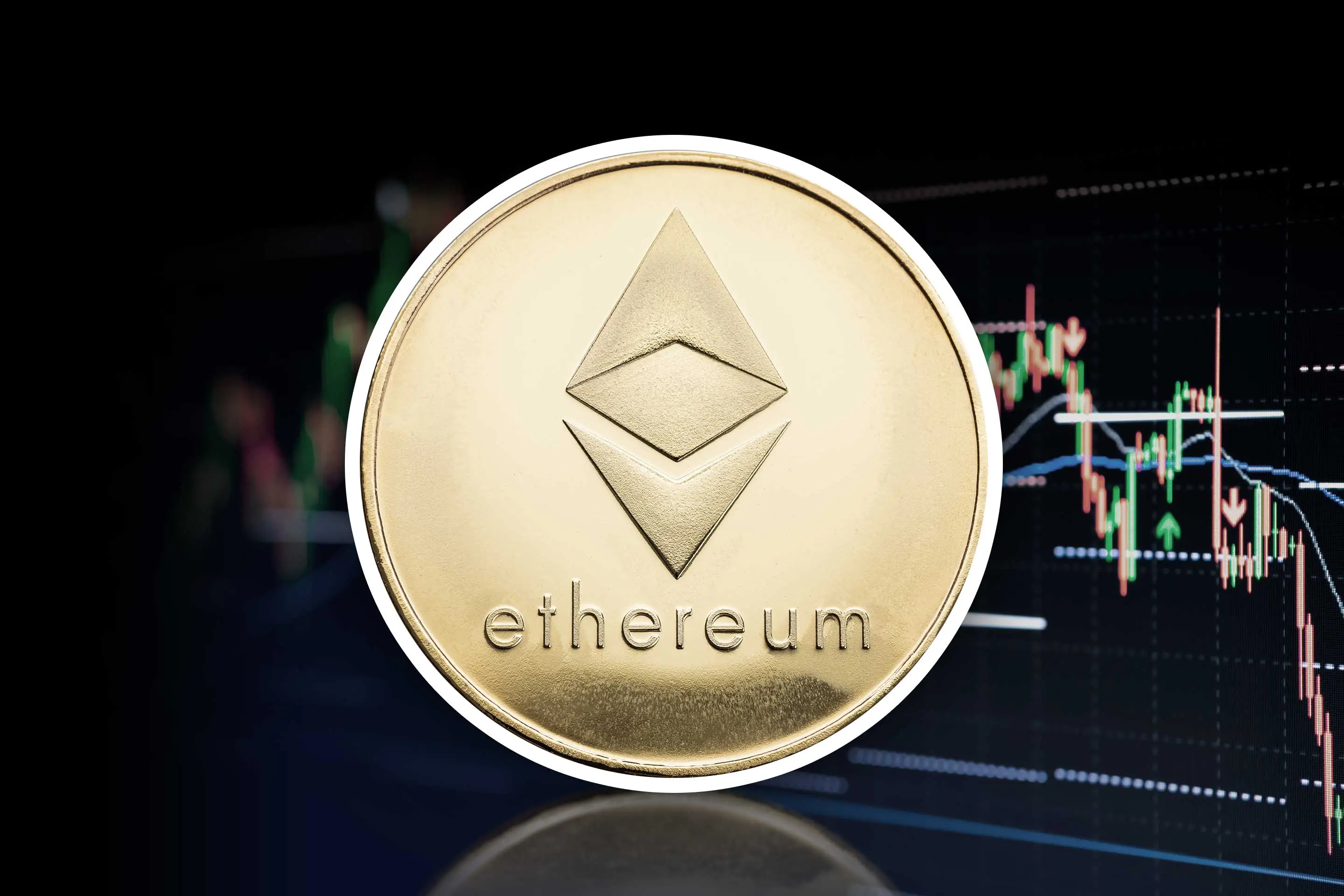
A governance storm has erupted within the Ethereum ecosystem after long-serving core developer Péter Szilágyi accused the Ethereum Foundation of operating a tightly-controlled “Vitalik-centric” inner circle that dictates project success and sidelines contributors. His public letter places co-founder Vitalik Buterin at the centre of decision-making, raising fresh concerns about decentralisation, compensation and the future of Ethereum’s governance.

Szilágyi, who led the development of the “Geth” client for nearly a decade, claims that only five to ten individuals—alongside one to three venture-capital firms—consistently influence which projects flourish within the ecosystem. He wrote: “Ethereum may be decentralised, but Vitalik absolutely has complete indirect control over it.” According to his account, the public image of his leadership role masked a reality in which he had little real influence and often found himself excluded when he challenged insiders. His letter also revealed that over six years he earned approximately US $625,000—despite Ethereum’s market capitalisation reaching US $450 billion in the same timeframe—highlighting concerns about remuneration for key infrastructure developers.

The Ethereum Foundation now finds itself under scrutiny. Critics say its funding and rewards mechanisms favour a narrow elite and neglect the broader developer community. Analysts point to the letter as sparking a wider debate about whether Ethereum’s governance is diverging from its founding ethos of open participation and merit-based outcomes.

The reaction from the ecosystem has been swift. Sandeep Nailwal, co-founder of Polygon Technology and previously closely aligned with Ethereum, echoed frustrations that “major contributors regularly face public questioning of their allegiance” and receive scant support. He questioned his own loyalty to Ethereum, citing neglect of Polygon’s contributions and reflecting broader unease among Layer-2 project leaders.

Meanwhile, Vitalik Buterin issued a public statement emphasising gratitude for Polygon’s work and the role of the broader community, but stopped short of addressing Szilágyi’s specific claims about governance and compensation. His comments were interpreted by some observers as an attempt to defuse the tension while preserving the Foundation’s preferred narrative.

The governance crisis arrives at a delicate moment for Ethereum. With the ecosystem navigating a complex architecture of Layer-2 scaling, data-availability upgrades and broader institutional adoption, questions of control, reward and direction carry more weight than ever. Governance practitioner Andre Cronje also warned that Ethereum risks losing technological and social cohesion if contributors feel disenfranchised or opt out of aligned development.

The implied volatility of Bitcoin has remained unusually elevated even as the equity-market gauge of fear, the S&P 500 Volatility Index, has receded to its usual levels. Data show Bitcoin’s 30-day implied volatility hovering above 50 % after the October 10 market shake-up, while the VIX slipped back below 20 %. This divergence signals a significant recalibration of risk within crypto markets.

Analysts point to a cluster of structural pressures within the crypto ecosystem that are now being priced in: chief among them are auto-deleveraging mechanisms on exchanges, thinning liquidity depth, and offshore funding stress. According to Wintermute co-founder Yoann Turpin, “Bitcoin volatility was subdued earlier… It has now become clear that new risks … such as ADL were underestimated and are now being fully priced in.” In practice, when an exchange triggers ADL it forces closure of profitable offsetting positions when an insurance fund is depleted—this introduces an additional risk vector not present in the mainstream equity markets. The residual impact of a major liquidation event on October 10–11, estimated at over billion, has sharpened market caution.

Liquidity concerns are compounded by the behaviour of market-makers during the crash. According to a recent study, market makers withdrew roughly million from key order-books within hours of the triggering event, creating a vacuum in bid-ask depth and amplifying price moves. Participants say that while the VIX drop reflects a return of calm to equity markets after the shock, Bitcoin’s elevated IV suggests the market is in a higher-volatility regime rather than merely bouncing back. Liquidity in offshore markets, which heavily influences Bitcoin trading, appears particularly tight: for example, the Hong Kong Interbank Offered Rate has returned to pre-May levels even as the U. S. dollar index has risen, signalling funding stress that tends to feed into crypto volatility.

Another factor cited is the rapid growth of exchange-traded funds and over-the-counter desks absorbing Bitcoin supply, creating a supply-shock risk for derivatives and making hedging more expensive. A report warned of a potential “liquidity crisis” within six months for Bitcoin ETF structures unless infrastructure adapts. Meanwhile, the macro backdrop of easing interest-rates and previously abundant liquidity has given way to tighter conditions, which amplify volatility across leveraged assets.

Institutional interest in hedging Bitcoin risk has surged. Following the liquidation that knocked Bitcoin from about to roughly, investors rushed into options contracts that bet on further price drops—put-buying spiked as a hedge against renewed turbulence. Such demand for protection keeps implied volatility elevated even if spot prices settle. At the same time, the VIX’s retreat suggests equity investors believe the shock has passed; crypto markets apparently disagree.

The divergence is significant because implied volatility represents the market’s expectation of future price swings. A 50 % annualised IV for Bitcoin implies expected one-month moves of roughly; by contrast, a 20 % IV for the S&P 500 implies one-month moves of around. Such a gap underscores the unique risk environment in which crypto operates—where leverage, thin liquidity and exchange-specific infrastructure risk matter significantly. Academic research supports this: a recent study found Bitcoin’s risk-premia vary across volatility regimes, and that downside risk is significantly more priced in than with equities.

Market makers and trading desks are adapting. Some are widening spreads, reducing inventory and limiting exposure during volatile episodes—actions that in effect undermine liquidity further and contribute to the “sticky” implied volatility. One trader said that “no one slept” during the weekend of October 10–11, as the cascade of liquidations forced hedge funds and desks to scramble for cover amid evaporating depth.

  K Raveendran   The very idea of a Lokpal riding in a BMW, reeks of irony so strong that it almost feels like satire. The institution that stands as the sentinel of public probity, the watchdog against corruption, has managed to draw ridicule upon itself by its desire for luxury wheels. A BMW-driven Lokpal […]

The article Lokpal’s BMW Fixation Is Outright Corruption, If Not Vulgar appeared first on Latest India news, analysis and reports on Newspack by India Press Agency).

Travel Influencers Christy Leung and “African Prince” Kunbi Journey into the Heart of Childhood HONG KONG SAR – Media OutReach Newswire – 22 October 2025 – Hongkongers love to travel, and in recent years, more people are seeking in-depth experiences, venturing into local communities to feel the cultural pulse. Travel enables us to experience diverse traditions and build genuine connections with people. Similarly, helping to improve the […]

VISHNU RAJA
RYO YAMADA
HITORI GOTOH
IKUYO KITA