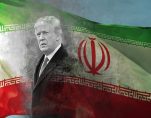
Arabian Post Staff -Dubai Fresh instability swept across the Middle East on Saturday after Iran reimposed restrictions on vessel traffic through the Strait of Hormuz and Israeli forces struck targets in Lebanon, denting market optimism that a broader easing of tensions was close at hand. The renewed disruption came less than a day after signs of limited progress had lifted hopes for safer shipping through the narrow […]
Iran has tightened its grip on the Strait of Hormuz, warning that vessels seeking passage will face military control after Tehran linked the waterway’s closure to a United States blockade of its ports, a move that has sharply escalated a confrontation already straining global energy markets and regional diplomacy. Reports of gunfire at commercial ships, including two India-flagged vessels, have turned a political standoff into a direct […]
Dubai will resume private school bus services from Monday, April 20, after education and emergency authorities cleared a return to operations under tightened safety procedures aimed at protecting pupils as campuses reopen. The move aligns Dubai with a nationwide decision to restart school transport across public and private institutions after a period of distance learning and transport disruption. The decision for Dubai’s private education sector was announced […]
Air passengers face a tougher booking season as airlines trim connections, suspend weaker routes and ground aircraft to absorb a jet-fuel shock that has spread from energy markets into ticket prices and network planning. Industry officials are warning that the disruption could deepen through the northern summer, especially on thinner international and regional links where carriers have little room to absorb higher costs. Jet fuel prices have […]
Arabian Post Staff -Dubai President Donald Trump said Iran had agreed to suspend its nuclear programme without a fixed end date, lifting market hopes that a broader settlement could be close after Tehran declared the Strait of Hormuz open again to commercial shipping during the ceasefire period. Trump said in a phone interview on Friday that the halt would be “unlimited”, while also projecting confidence that […]
Arabian Post Staff -Dubai UAE equities closed higher on Friday, extending a second straight week of gains as traders responded to signs that Washington and Tehran may keep diplomatic channels open, lifting sentiment across Gulf markets and pushing Dubai to its highest level in about six weeks. Dubai outpaced Abu Dhabi, with buying concentrated in banking and property names as investors weighed the prospect of lower geopolitical […]
More than half of Israelis do not want Benjamin Netanyahu to continue as prime minister, according to a Channel 12 poll that has added fresh weight to a long-running pattern in domestic surveys showing a battered leader still in office but struggling to rebuild broad public confidence ahead of a national election due by October. The finding, circulated widely in Israeli media, lands at a moment when […]
Oman and Thailand moved to deepen economic and diplomatic engagement during a high-level meeting in Muscat, with both sides focusing on trade, investment, tourism and institutional cooperation as they seek to turn cordial political ties into broader commercial gains. Sayyid Badr bin Hamad Al Busaidi, Foreign Minister of the Sultanate of Oman, received Sihasak Phuangketkeow, Thailand’s Deputy Prime Minister and Minister of Foreign Affairs, during an official visit that also included a meeting with His Majesty Sultan Haitham bin Tarik.
The talks reflected a clear attempt by both governments to give sharper economic content to a relationship that has long been friendly but comparatively understated when measured against each country’s larger Asian and Gulf partnerships. Official statements from Muscat said the two sides reviewed bilateral relations and discussed the growing pace of cooperation in trade and investment, while also exploring tourism and opportunities in diplomatic training. That mix of subjects points to a partnership being built not only around commerce, but also around government-to-government capacity building and softer channels of engagement.
A parallel audience with Sultan Haitham added political weight to the visit. During that meeting, the Thai side expressed appreciation for Oman’s humanitarian cooperation in evacuating the crew of a Thai vessel in the Strait of Hormuz, a detail that underscored how bilateral ties have also been shaped by practical crisis support in a strategically sensitive waterway. Beyond symbolism, such exchanges matter because they build trust at a time when Gulf-Asia relations are being redrawn by energy security concerns, shifting supply chains and the search for new tourism and logistics corridors.
For Oman, the push fits neatly with Vision 2040, the state’s long-term strategy to diversify beyond hydrocarbons by expanding tourism, logistics, manufacturing and foreign investment. For Thailand, the outreach aligns with a wider diplomatic and commercial effort to strengthen links with Gulf economies that can offer energy cooperation, investment capital and access to markets stretching across the Arabian Peninsula and East Africa. The Muscat discussions suggest both sides see room to connect these ambitions in practical sectors rather than leaving the relationship at the level of protocol.
Business engagement has already been gaining momentum. In August 2025, Omani and Thai business leaders held bilateral meetings focused on food security, healthcare, perfumes and cosmetics, showing that commercial interest has been widening beyond headline sectors. Another official report from Oman highlighted agriculture, health and beauty, textiles, food processing and jewellery as promising areas for deeper cooperation. That matters because it shows the latest ministerial meeting did not emerge in isolation; it builds on groundwork already laid by chambers, officials and private-sector representatives looking for sector-specific deals.
Tourism stands out as one of the most immediate areas for expansion. Oman’s diplomatic mission in Thailand lists tourism, education and culture among its key priorities, while the latest ministerial readout in Muscat specifically identified tourism as an area of joint interest. Thailand remains one of Asia’s strongest leisure brands, while Oman has been working to market itself as a premium destination blending heritage, coastline and mountain landscapes with higher-end hospitality. Better institutional coordination, easier travel processes and stronger airline and tour partnerships could all flow from this kind of diplomatic push, particularly as both countries try to capture more affluent long-haul travellers.
The inclusion of diplomatic training in the talks may appear secondary, yet it offers an important clue about how the relationship could evolve. Training cooperation typically creates durable bureaucratic links, shared expertise and more frequent official contact, all of which help sustain commercial and political initiatives over time. In a period marked by regional volatility and growing competition for investment, countries are placing greater value on institutional familiarity and faster communication between ministries, embassies and trade-promotion bodies.
Arabian Post Staff -Dubai Oil prices fell sharply on Friday after Iran’s foreign minister said the Strait of Hormuz would remain open to commercial shipping during a ceasefire, easing immediate fears of a prolonged choke on one of the world’s most important energy routes. Brent crude and US West Texas Intermediate both tumbled by more than 11% at one stage of trading, as investors unwound risk premiums […]
AD Ports Group says it has kept operations running normally through the Gulf supply chain disruption that began at the end of February, using its integrated network to reroute cargo across land, rail, sea and air as traffic through the Strait of Hormuz remained severely constrained. The Abu Dhabi-based operator said on April 16 that it had shifted volumes through Fujairah Terminals and Khor Fakkan Port, activated […]
Alarm over the Strait of Hormuz is spilling far beyond the Gulf, sharpening attention on the Malacca Strait near Singapore as traders, shipowners and Asian governments weigh what a prolonged disruption in West Asian energy flows could mean for the region’s busiest maritime corridor. The immediate military confrontation is centred on Hormuz, where Iran has tightened restrictions and the United States has imposed a blockade on Iranian […]
Cookeville Regional Medical Center has begun notifying 337,917 people that personal and medical information was exposed after a ransomware attack discovered on 14 July 2025, a breach that has taken about nine months to fully assess and disclose at scale. The Tennessee hospital said an unauthorised third party accessed or acquired files between 11 July and 14 July 2025, with the compromised data varying by individual and […]
United Arab Emirates has won a seat on the World Food Programme’s Executive Board for the 2026–2028 term, giving it a direct role in shaping policy at the UN’s main food assistance agency as conflict, supply disruption and funding pressure deepen the global hunger crisis. The appointment places the country inside the WFP’s top governing structure at a moment when aid agencies are being forced to balance […]
Iran has floated a proposal that could allow ships to use the Omani side of the Strait of Hormuz without facing attack, according to a person briefed on Tehran’s negotiating position, offering a possible path to ease one of the biggest shocks to global energy trade in modern times if talks with the United States produce a wider settlement. The idea has emerged as the U. […]
Arabian Post Staff -Dubai Qatar’s finance minister has warned that the world economy faces a far sharper hit from the Middle East conflict than markets have yet absorbed, saying the oil-price surge seen so far is only an early sign of wider damage that could spread through energy, food and industrial supply chains by May or June. Speaking at the IMF and World Bank spring meetings […]
More than 30 WordPress plugins tied to the developer Essential Plugin were taken offline after a hidden backdoor was found in code distributed to live websites, exposing site owners to unauthorised access, malware installation and search-spam abuse. The campaign, traced by security researchers to code inserted in August 2025 and activated in April 2026, is being treated as a serious software supply-chain breach rather than an ordinary […]
Arabian Post Staff -Dubai Marine fuel sales at Fujairah fell to a record low in March as the US-Iran conflict upended shipping patterns, strained fuel supply chains and pushed vessels to avoid one of the Gulf’s most important refuelling hubs. Data cited by traders and market reports showed sales at the port dropped to 158,852 cubic metres, down more than 70 per cent from February and from […]
By Nitya Chakraborty President Donald Trump as usual has been talking in conflicting voices on his immediate stand on Iran war. The U.S. President ordered naval blockade of Iranian ports after the failure of the Islamabad peace talks on Sunday but on Tuesday, he indicated that another round of talks would be held in the […]
Saudi Arabia has pledged an additional $3 billion in support for Pakistan and agreed to extend a $5 billion deposit for a longer period, giving Islamabad fresh breathing space as it works to manage external financing pressures and a looming $3.5 billion repayment obligation to the United Arab Emirates this month. Pakistan’s finance minister, Muhammad Aurangzeb, disclosed the support in Washington, and the arrangement was confirmed by […]
The International Monetary Fund, World Bank and International Energy Agency are moving towards scheduled calls every two weeks as they deepen coordination over the economic and energy fallout from the war in the Middle East, with officials warning that prolonged disruption could sharpen inflation, weaken growth and hit poorer energy-importing countries hardest. The three bodies first set up a joint coordination group at the start of April […]
Arabian Post Staff -Dubai Gold prices steadied on Wednesday after touching a one-month high earlier in the session, with traders weighing the pull of geopolitical risk against tentative signs that Washington and Tehran could return to the negotiating table within days. The metal’s pause came as broader markets turned cautious, reflecting uncertainty over whether diplomacy will gain traction or merely offer a brief respite in a […]
TURIN, ITALY – Media OutReach Newswire – 14 April 2026 – The traditional automotive model is obsolete. It is rigid, capital-heavy, and dependent on massive dealership inventories that drive up costs for the consumer. XEV is now challenging that legacy structure with the rollout of its Customer-to-Manufacturer (C2M) ecosystem. By launching the world’s first mass-customization project for micro electric vehicles, including the flagship XEV YOYO, the company allows European drivers to order personalized vehicles directly. This approach eliminates the inventory burden and introduces a “Battery-as-a-Service” model that removes the two biggest barriers to EV adoption. Those barriers are high upfront costs and residual value risk.
XEV
Decoupling the Battery from the Price Tag
For decades, the battery has been the most expensive single component of an electric car. It is also the component most likely to depreciate. XEV’s innovative business model fundamentally alters this equation by separating the vehicle (hardware) from the battery (service).
Customers purchase the car but lease the energy capacity. This strategy significantly lowers the initial purchase price. It makes premium urban mobility accessible to a broader demographic. This ranges from young professionals seeking their first vehicle to fleet operators managing tight margins.
“We are not just manufacturing cars. We are redefining vehicle ownership,” says the XEV leadership team. “Our goal is to make car production as flexible as smartphone manufacturing. We give users exactly what they need for city living without the financial weight of traditional ownership.”
3 Minutes to Full Power: Solving the Charging Crisis
Range anxiety remains a critical hurdle for European EVs. This is particularly true for drivers without private home charging infrastructure. XEV addresses this with its proprietary battery swapping network.
The XEV YOYO and the upcoming XEV XPRESSION are engineered with a modular battery system. Instead of waiting hours at a charging point, drivers pull into a dedicated station. They complete a fully automated battery replacement in approximately three minutes.
This “SWAPPING” technology does more than save time. It improves operational efficiency for commercial users and ensures the vehicle is immune to battery degradation. Since the driver does not own the battery, they never have to worry about the cell’s lifespan affecting the car’s resale value. This creates a “Zero Usage Anxiety” experience for the owner.
Data-Driven Customization: The End of “One Size Fits All”
The XEV lineup is purpose-built for the narrow streets and high congestion of European cities. With a compact footprint of roughly 2.5 meters, the YOYO navigates historic city centers with ease. However, small size does not mean limited options.
Unlike legacy automakers that push stock inventory, XEV utilizes a data-driven C2M model. Users configure their vehicles via an online platform. They select distinct exterior colors, interior materials, wheel designs, and specific features. This user input triggers a flexible production process that creates a customizable car tailored to specific tastes. XEV uses the massive data generated from these customization choices to refine future designs and forecast market trends with precision.
Commercial Application: Powering the Last-Mile Economy
The flexibility of the XEV platform extends well beyond personal commuting. It is designed to serve the booming last-mile economy. The platform supports last-mile delivery vehicles and shared mobility fleets.
XEV provides specialized enclosed cargo options for logistics companies. The vehicle can even be customized for small business applications, such as mobile coffee carts or retail trucks. For small business owners, the vehicle serves as a mobile asset that can be configured for specific trades, effectively lowering the barrier to entry for entrepreneurs.
XEV has already initiated pilot projects with major European logistics firms to prove the model’s viability for high-frequency urban commuting and commercial delivery. For car-sharing services, the high utilization rates and low maintenance needs of the YOYO make it an ideal asset for time-based rental fleets. The modular design further supports this eco-friendly lifecycle by facilitating easy repair and part upgrades. This extends the product lifespan and reduces waste compared to traditional vehicles that are often scrapped when a single major system fails.
A Strategic Supply Chain for a New Era
XEV achieves this level of flexibility through a strategic manufacturing model. The company adopts a capital-light approach that relies on deep collaboration with mature Asian automotive supply chains. This ensures rigorous quality control and cost efficiency without the bloating of traditional manufacturing.
Simultaneously, XEV is committed to European localization. The company is currently establishing assembly hubs and battery swapping networks across Europe to better serve local demand. This dual approach allows XEV to combine global manufacturing power with local market responsiveness. It ensures that while the technology is global, the support and infrastructure are local.
Availability
Sales and deliveries of the XEV YOYO have commenced in selected European markets, including Italy and Germany. The company continues to expand its infrastructure to support the growing network of users who demand a smarter and cleaner way to move through their cities.
The issuer is solely responsible for the content of this announcement.
About XEV
XEV is an innovative electric vehicle company committed to transforming the way cars are designed, built, and owned. Through its direct-to-consumer (DTC) online customization platform and a flexible production system, XEV integrates personalized user demand with modular smart manufacturing. The company’s mission is to make electric vehicles accessible and lifestyle-aligned for everyone. It drives the transition toward sustainable and personalized mobility. XEV positions itself not just as a manufacturer but as a global leader in urban electric mobility solutions.
China’s export growth lost momentum sharply in March, offering the clearest sign yet that the war centred on Iran is beginning to weigh on the world’s second-largest economy through higher energy costs, disrupted shipping patterns and weaker overseas demand. Official trade data showed exports rose 2.5 per cent from a year earlier, far below market expectations and down from the 21.8 per cent jump recorded in the combined January-February period.
The slowdown matters because overseas sales have been doing much of the heavy lifting for China while the property downturn and soft household spending continue to restrain growth at home. Economists surveyed by Reuters expect the economy to have expanded 4.8 per cent in the first quarter, up from 4.5 per cent in the previous three months, but they also see the outlook dimming as the Middle East conflict pushes up input costs and clouds demand in key markets.
March’s figures suggest that what had looked like a strong start to the year is becoming harder to sustain. Earlier gains had been supported by front-loaded shipments, strong demand for artificial intelligence-linked electronics and a rebound in some advanced manufacturing exports. That mix is now facing a harsher external backdrop. The conflict involving Iran has disturbed energy markets, with the Strait of Hormuz under severe strain and oil prices climbing towards the $100 a barrel mark, a level that raises transport, production and logistics costs across Asia and Europe.
Imports into China, by contrast, jumped 27.8 per cent in March, the strongest increase since late 2021. Part of that rise reflected demand tied to semiconductors, components and technology supply chains, but it also pointed to stockpiling and shifting trade flows as businesses prepared for a more volatile energy and freight environment. The divergence between softer export growth and surging imports may complicate Beijing’s effort to keep its large trade surplus intact through 2026.
Pressure from the Iran conflict is being transmitted through more than one channel. China remains heavily exposed to imported energy, and although it has reserves and a diversified supply base, higher crude and gas costs squeeze manufacturers’ margins and can erode the price competitiveness that has underpinned the country’s export machine. Reuters reported that March also brought the first rise in factory-gate prices in more than three years, indicating that cost pressures are building just as external demand becomes less predictable.
There are also direct trade effects. Reuters reported that crude and natural gas imports fell as the regional conflict disrupted flows. OPEC, in its first formal assessment of the war’s economic effect, cut its forecast for second-quarter global oil demand by 500,000 barrels a day, saying the conflict had become a meaningful drag on consumption and trade. For export-oriented economies such as China, that points to a tougher environment in which customers abroad may curb discretionary spending while producers face steeper energy bills.
Yet the picture is not uniformly bleak. China’s technology and clean-energy manufacturers still have areas of strength that could cushion the blow. Overseas demand for electric vehicles, batteries and solar equipment has been supported by the same oil shock that is hurting traditional exporters. Associated Press reported that Chinese new-energy vehicle exports continued to surge in March, while another AP analysis said the energy crisis was sharpening global interest in Chinese clean-tech supply chains. Those sectors are unlikely to offset every weakness, but they do show that the country’s export story is becoming more uneven rather than simply weaker across the board.
That unevenness is visible across product categories. Lower-value consumer goods such as clothing, furniture and other labour-intensive shipments were hit by seasonal factors and softer foreign demand, while higher-end electrical and AI-linked exports remained more resilient. South Korea’s sharp rise in exports to China, driven by chip demand, underlined the point that advanced technology supply chains are still expanding even as broader goods trade loses pace.
Beijing now faces a familiar policy dilemma made more acute by war. It wants to preserve growth without adding excessive leverage, support exporters without worsening trade tensions, and stabilise domestic demand while avoiding another debt-fuelled property cycle. Current forecasts still place full-year growth within the official 4.5 to 5 per cent target range, but many analysts now expect a weaker second quarter than they did before the Iran crisis deepened. Fiscal support, bond issuance and selective easing remain on the table, though officials appear cautious about deploying a large stimulus immediately.
Arabian Post Staff -Dubai Countries should avoid hoarding fuel supplies and imposing export controls that deepen shortages, the International Monetary Fund, World Bank and International Energy Agency said in Washington on Monday, as war-linked disruption in the Middle East drove oil back above $100 a barrel and sharpened fears over inflation, growth and food security. The three institutions issued the warning while opening a coordinated response aimed […]