News related to
Immediate

Arabian Post Staff -Dubai Donald Trump has said a Tuesday deadline for Iran to accept a deal remains final, sharpening a crisis that has already pushed energy markets higher, intensified diplomatic pressure and raised fresh concern over the risk of a broader Middle East conflict. Speaking on April 6 at the White House, the US president said Tehran had made what he described as a significant move […]

Singapore’s parliament is set to turn its attention on Tuesday to the economic and security consequences of the war involving Iran, with lawmakers filing 62 questions and three ministers due to deliver statements on how the conflict could affect energy supplies, inflation, transport costs and broader national resilience. The questions, lodged by 32 members from both the ruling People’s Action Party and the opposition, underline growing concern in the trade-dependent city-state over the fallout from turmoil in the Middle East.

The scale of parliamentary scrutiny is notable even by Singapore’s standards. According to the order paper for the 7 April sitting, Deputy Prime Minister and Minister for Trade and Industry Gan Kim Yong, Coordinating Minister for National Security K. Shanmugam, and Acting Transport Minister and Senior Minister of State for Finance Jeffrey Siow are scheduled to address the chamber. The questions range from the immediate effect of higher oil and gas prices to the security of liquefied natural gas supplies and the government’s plans to shield households and businesses from a prolonged external shock.

At the centre of concern is Singapore’s dependence on imported energy and its exposure to global shipping routes. The order paper shows MPs asking whether damage to Qatar’s Ras Laffan LNG facilities could materially affect short- and medium-term supply, whether alternative procurement arrangements would be enough to offset any shortfall, and whether disruption in the Middle East might accelerate efforts to diversify the energy mix, including greater investment in alternatives such as nuclear power. That line of questioning reflects a deeper vulnerability: Singapore generates most of its electricity from natural gas and has little room to escape sudden swings in international fuel markets.

Cost pressures are another major theme. Lawmakers have asked how rising fuel and electricity prices may feed through to household expenditure, transport operators and the wider cost of living. For a government already balancing inflation management with fiscal prudence, the debate offers an opportunity to show whether existing buffers are sufficient or whether targeted support may be needed if the conflict persists. Prime Minister Lawrence Wong, in a video message on 2 April, had already warned Singaporeans that instability in the Middle East could affect the economy through higher energy prices, supply chain disruption and weaker global confidence, signalling that the government was preparing the public for a potentially difficult external environment.

Singapore’s predicament is shaped by geography as much as policy. The republic sits far from the conflict zone, yet its economy is tied tightly to global trade, imported food and imported fuel. Any threat to Gulf energy production or maritime passage through strategic chokepoints can ripple quickly into Asian benchmark prices, freight costs and business sentiment. Questions filed for parliament suggest MPs are not only concerned about immediate supply disruption, but also about second-round effects on manufacturers, logistics firms, electricity generation and consumers already sensitive to living costs.

The breadth of the questions also points to a broader political calculation. Singapore’s leaders have long framed resilience as a whole-of-government and whole-of-society effort, particularly when external shocks threaten domestic stability. The debate now unfolding in parliament is likely to test how far that framework can stretch in the face of a conflict whose trajectory remains uncertain. Opposition members, including Workers’ Party figures, have pressed for details on fuel reserves, assistance for workers dependent on transport and the likely effect on household budgets, while ruling-party MPs have focused heavily on energy security, diversification and inflation spillovers.

Beyond energy, the parliamentary discussion may widen into questions of diplomacy, national security and public confidence. K. Shanmugam’s planned statement suggests the government sees the crisis as more than a commodity shock. Singapore has consistently sought to position itself as stable, rules-based and open to commerce, which means geopolitical conflict in a key producing region carries implications not only for prices but also for investor confidence and regional security calculations. Ministers will face pressure to reassure the public that contingency planning is in place, even as they acknowledge that a small open economy cannot fully insulate itself from a major war-driven disruption.

Arabian Post Staff -Dubai AirAsia X has raised ticket prices by between 31% and 40% and lifted fuel surcharges by as much as 20% after jet fuel costs surged following the Iran war, according to Group Chief Executive Officer Bo Lingam, underscoring how quickly conflict in the Middle East is feeding into Asian aviation costs and passenger fares. The Malaysia-based low-cost carrier said average jet fuel prices […]

A Python package presented as a privacy-first shortcut to AI models has been unmasked as a supply-chain threat that quietly captures user prompts, leans on a private university service without authorisation and repurposes proprietary Claude material to make the deception look convincing. Security researchers said the package, hermes-px, was uploaded to PyPI as a supposed “Secure AI Inference Proxy” offering OpenAI-compatible access over Tor and claiming users […]

Google has expanded Chrome’s native lazy-loading system to cover audio and video elements, extending a browser feature once centred on images and iframes into richer media formats that often consume far more data and trigger earlier connections to outside servers. The change allows developers to use the loading=”lazy” attribute on ` and so that files outside the visible viewport can be deferred until a user is closer […]

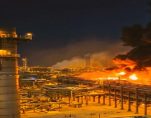
Arabian Post Staff -Dubai ADNOC Gas said its domestic supply chain remains intact after damage at part of the Habshan complex on April 3, with gas demand inside the UAE being met through other facilities and no disruption to customer supply. The company told the Abu Dhabi Securities Exchange that the affected area had been isolated and that a full assessment of damage to the Habshan train […]

Greenlogue/AP Solar power capacity across the Gulf Cooperation Council has expanded at an exceptional rate, with a new GCC-Stat report showing average annual growth of 88.1 per cent between 2013 and 2024, underscoring how one of the world’s leading hydrocarbon-producing regions is accelerating investment in cleaner energy while also strengthening climate resilience measures. The same report said electricity generated from solar energy climbed from 0.13 thousand gigawatt-hours […]

Advertisements

Gold prices extended their retreat as investors recalibrated expectations for US interest rates after stronger labour-market signals collided with a worsening conflict in the Middle East, a combination that lifted the dollar, pushed oil higher and revived concerns that inflation could stay stubborn for longer. Spot bullion has come under pressure even as geopolitical risk remains elevated, an unusual pattern that reflects how sharply energy costs and […]

Solana’s effort to prepare for a future quantum-computing threat is exposing a basic tension for high-speed blockchains: the safer the signature system becomes, the heavier and slower it is likely to be. That trade-off has moved into sharper focus as Bitcoin developers debate draft quantum-safe address proposals, Ethereum’s post-quantum team lays out a multi-year migration plan, and new research from Google and outside experts brings forward the […]

Dentsu has appointed Yusuke Kagohara as chief financial officer for Southeast Asia, handing him a mandate that goes beyond traditional finance oversight as the advertising and marketing group tightens governance and prepares for a more disciplined phase of expansion across one of Asia’s most competitive markets. The appointment took effect immediately, and Kagohara will report to Sanjay Bhasin, chief executive for Southeast Asia.

The move lands at a sensitive point for global agency networks. Growth remains available across Southeast Asia, but margins, client expectations and regulatory scrutiny are all sharpening. Dentsu’s own framing makes clear that this is not merely a replacement hire. Company statements and industry reports describe the post as part of a wider effort to deepen strategic and financial discipline and strengthen governance across the regional cluster, which covers Indonesia, Malaysia, the Philippines, Singapore, Thailand and Vietnam. The business employs more than 4,000 people in the region under what Dentsu describes as a borderless operating model formed in 2023.

Kagohara arrives with a profile that fits that brief. Before this appointment, he served as group head of risks and controls at Dentsu Group Inc., where he worked on internal controls, enterprise risk management and broader governance and remediation efforts. Earlier assignments included chief financial officer and deputy chief financial officer roles in Beijing and at Dentsu Creative China, experience that gave him exposure to large and complex operating environments in Asia. Industry coverage of the appointment has also highlighted his background in corporate strategy, transformation and all-round finance, suggesting the company wanted someone comfortable with both compliance architecture and commercial execution.

That background matters because agency finance chiefs are no longer judged only on forecasting, cost control and reporting. They are increasingly central to how networks integrate acquisitions, police internal controls, price AI-enabled services and defend profitability while clients demand more measurable returns. Dentsu has been signalling this shift at group level for months. Its global management overhaul announced in February was pitched around stronger execution, while its 2025 integrated report and governance materials emphasised capital discipline, internal investment, productivity and the strengthening of leadership and controls.

Southeast Asia gives that challenge extra complexity. The cluster spans fast-growing but highly uneven markets, each with different media structures, regulatory standards, client mixes and digital maturity. Dentsu has described the region as one of the world’s fastest-growing, and its own ad spend outlook has projected Asia Pacific growth ahead of the wider global economy. In December, the company forecast that global advertising spend would rise 5.1 per cent in 2026 to more than $1 trillion, with Asia Pacific remaining the fastest-growing region. For a network trying to convert that momentum into durable earnings, stronger financial control becomes a strategic tool rather than a back-office function.

Bhasin’s comments underline that point. In remarks carried by multiple reports and company-linked posts, he said growth on its own was not enough and that the business needed expansion that was “accountable, resilient, and built to last”. He described Kagohara’s experience in governance, transformation and complex markets as critical to the next stage of Southeast Asia’s development. Kagohara, for his part, said the region stood out for its scale, complexity and ambition, adding that strong fundamentals were universal even when market conditions varied widely. Those comments indicate a leadership view that the next test for Dentsu is not whether Southeast Asia can grow, but whether it can do so with tighter controls and greater consistency across markets.

The timing also follows a change in the seat Kagohara is filling. Trade reports late last month said Bharti Agrawal, who had served as CFO for Southeast Asia at Dentsu, had moved to Monks as chief financial officer for APAC marketing services. That succession gives the new appointment a sharper operational significance, because it suggests Dentsu moved quickly to avoid drift in a role that sits at the centre of planning, compliance and regional coordination.


Italy has introduced temporary jet fuel limits at four airports as supply strains tied to the Middle East conflict begin to hit European aviation, raising the prospect of operational disruption just as airlines prepare for heavier spring and summer traffic. Notices to airmen issued for Bologna, Milan Linate, Venice and Treviso said Jet A1 availability from Air BP Italia was limited, with restrictions running between April 2 […]

Cash briefly replaced cards and QR payments across parts of Russia on April 3 after a widespread disruption hit banking and payment services, an outage that Telegram founder Pavel Durov said was triggered by Moscow’s efforts to block virtual private networks as part of a broader clampdown on online communications. The disruption affected shoppers, commuters and businesses, and has sharpened scrutiny of how far the Kremlin’s drive […]

Coffee Stain has shut its mobile-focused Malmö studio, ending a unit that was set up to bring the company’s irreverent game brands to phones and tablets and leaving fresh questions over how the newly listed Swedish group intends to handle mobile development. The closure was disclosed by Daniel Persson, the company’s vice-president of mobile, who said Coffee Stain had decided to close the office in Malmö and […]

Attackers behind the compromise of the widely used Axios package have widened their campaign, turning from code repositories to the people who maintain them and exposing how a single deceptive approach can threaten vast stretches of the software supply chain. Security researchers and the Axios maintainer’s own post-mortem show the March 31 breach was not an isolated package hijack but part of a co-ordinated social-engineering operation aimed […]

Tata Steel has been served with a demand notice of ₹17.55 billion by the District Mining Office in Ramgarh, Jharkhand, over alleged excess coal extraction at its West Bokaro Colliery, adding another legal challenge to the steelmaker’s long-running mining disputes in eastern India. The company said it received the notice on April 3, a day after the end of the financial year, and would contest it through judicial or quasi-judicial forums.

In its stock exchange disclosure dated April 4, Tata Steel said the notice, dated March 30, alleges extraction of about 162.4 million tonnes of mineral coal beyond permissible limits during the period from FY2000-01 to FY2006-07. The company said the demand had been framed on grounds similar to those examined by the Supreme Court in the Common Cause versus Union of India litigation, a landmark case that hardened official scrutiny of mining done beyond environmental or statutory limits.

The scale and vintage of the claim are striking. By reaching back more than two decades, the notice underscores how historical mining records, clearances and production caps remain exposed to reinterpretation by regulators long after the ore or coal has been extracted. For Tata Steel, which has spent years simplifying its structure and strengthening its balance sheet while managing volatile steel demand, the notice also revives a regulatory risk investors know well: mining-linked liabilities that can surface suddenly and run into hundreds or thousands of crores.

Tata Steel has taken a firm line in response. In its filing, management said the claim “lacks justification and substantive basis” and indicated it would pursue legal remedies. That wording suggests the company does not see the notice as an immediately payable liability, but as a disputed demand that will have to be tested through litigation or administrative review. Bloomberg, citing the company statement, reported the amount at about $189 million.

The case fits into a wider pattern. Tata Steel’s annual reports already describe other significant Jharkhand mining disputes, including older claims tied to alleged unlawful iron ore extraction after the expiry of lease renewals. In those disclosures, the company said a demand of ₹3,568.31 crore had been challenged before the Jharkhand High Court, while another ₹421.83 crore notice had also been disputed and partly paid under protest after transit permits were halted. Tata Steel said in that filing that it believed it was remote the state’s demand would ultimately survive.

That history matters because it shows the latest notice is not an isolated compliance issue but part of a broader tension between mining companies and state authorities over how production limits, lease terms and environmental permissions should be interpreted. The Common Cause rulings sharpened the legal and financial consequences of excess extraction, especially where production outstripped environmental clearance or statutory approvals. Courts and regulators have since shown a greater willingness to revisit older conduct and calculate compensation on a far more punitive basis than companies had anticipated years ago.

For Jharkhand, one of the country’s key mining belts, such claims carry a dual message. They show the state remains determined to pursue compensation linked to alleged over-extraction, while also signalling to miners that legacy operations are not beyond review. For the industry, the episode is another reminder that captive mines, often central to cost control for steelmakers, bring legal and policy exposure alongside raw material security. The business logic of owning mineral assets remains strong, but it comes with increasingly intense compliance scrutiny.

The timing is also notable. Tata Steel has faced other mining-related claims over the past year, including a demand from Odisha in July 2025 linked to mineral dispatch issues at the Sukinda Chromite Block. While the factual basis of that case differs from the West Bokaro matter, the accumulation of notices across jurisdictions suggests large resource companies remain under close watch from state mining departments even as policymakers push for higher domestic output of minerals and metals.

Ethereum’s main non-profit steward has moved sharply deeper into staking, depositing 45,034 ether worth about $93 million in a single day and taking its cumulative staked holdings to roughly 67,500 ETH, or about $143 million at current prices. The move leaves the Ethereum Foundation just short of the 70,000 ETH level it set out in February as part of a broader treasury strategy intended to generate on-chain […]

Arabian Post Staff -Dubai Iran’s downing of a US F-15E Strike Eagle and the loss of another American combat aircraft in the Gulf theatre have pushed Washington’s war with Tehran into a more dangerous phase, exposing the risks of a campaign that has already rattled oil markets and widened instability across the Middle East. US officials said one member of the F-15E crew was rescued while another […]

Arabian Post Staff -Dubai Dubai authorities said on Saturday that no fire or injuries were reported after debris from an aerial interception struck the façade of a building in the Marina district, an incident that briefly pushed one of the emirate’s best-known residential and leisure zones into the expanding shadow of regional conflict. The update came through the Dubai Media Office, which said emergency teams responded after […]

Arabian Post Staff -Dubai Dubai has rolled out a Dhs1 billion economic incentives package aimed at easing pressure on businesses and households, with the measures taking effect from April 1 for a period of three to six months as the emirate seeks to cushion the fallout from regional instability and protect economic momentum. The package, approved by Sheikh Hamdan bin Mohammed bin Rashid Al Maktoum in his […]

Wall Street’s rush to treat hyperscalers as the safest way to profit from artificial intelligence is running into a harder question: whether all that spending will generate returns fast enough to justify the cost. Microsoft, Amazon, Alphabet and Meta are pushing capital expenditure to extraordinary levels as they race to build data centres, secure chips and expand cloud capacity, but investors are facing a business model that […]

America’s labour market delivered a stronger headline performance in March, but the underlying picture still points to a jobs backdrop that remains exposed to shocks. Nonfarm payrolls rose by 178,000 and the unemployment rate edged down to 4.3 per cent, according to the Bureau of Labor Statistics, offering relief after February’s revised loss of 133,000 jobs. Yet the rebound was flattered by temporary factors, including the return […]

Arabian Post Staff -Dubai UAE equities ended Friday on a divided note as investors weighed the prospect of a wider Middle East conflict after U. S. President Donald Trump signalled that Washington could intensify attacks on Iranian infrastructure, a message that added to concern over energy supplies, shipping routes and regional risk appetite. Dubai’s main index fell, while Abu Dhabi’s benchmark edged higher, reflecting a market torn […]

A newly disclosed exploit chain in Progress ShareFile has raised fresh concern over the security of enterprise file-transfer systems after researchers showed that two critical flaws can be combined to seize control of vulnerable customer-managed servers without prior authentication. The vulnerabilities, tracked as CVE-2026-2699 and CVE-2026-2701, affect ShareFile Storage Zones Controller, the on-premises component used by organisations that keep files in their own infrastructure while relying on […]

A Japanese-owned liquefied natural gas tanker has crossed the Strait of Hormuz, offering the clearest sign yet that tightly controlled commercial traffic may be resuming through one of the world’s most sensitive energy corridors after weeks of disruption linked to the war involving Iran. The vessel, SOHAR LNG, is the first Japan-linked LNG carrier confirmed to have made the passage since the conflict began on 28 February, […]

VISHNU RAJA
RYO YAMADA
HITORI GOTOH
IKUYO KITA