News related to
Immediate

Rania Gule Over the past few months, silver prices have witnessed a strong rally — not only as a safe-haven asset alongside gold, but also due to fundamental factors rooted in industrial supply and demand dynamics. As of early October 2025, silver is trading around $48.65 per ounce in spot market data, while ETFs such as iShares SLV show a slightly lower net asset value (NAV), reflecting […]

HONG KONG SAR – Media OutReach Newswire – 6 October 2025 – The anime IP “BUCKET MAN”, created by filmmaker Stephen Fung, has been awarded the Rising IP Award at DesignerCon 2025, held at AsiaWorld-Expo, in recognition of its outstanding potential in creativity, technology, and cultural development. “BUCKET MAN”, created by filmmaker Stephen Fung DesignerCon (DCon) first launched in California in 2005 as a gathering for toy […]

HANOI, VIETNAM – Media OutReach Newswire – 6 October 2025 – This November, for the very first time, Vietnamese audiences will be immersed in an unprecedented music event: the global superstar G-DRAGON’s world tour, landing right on the Eastern bank of Hanoi. Few realize that securing the nod from G-DRAGON required 8Wonder, the mega-festival brand of Vingroup, to overcome the incredibly stringent standards set by this S-tier […]

WhatsApp is rolling out a mechanism that allows users to reserve their preferred handles ahead of its planned shift to username-based identities. The feature was uncovered in the Android beta version 2.25.28.12, which includes settings linking to “username reservation” in preparation for the broader username rollout. The reservation system acts as a precursor to a full username feature that is still under development. It aims to mitigate […]

Hamas has announced that it will free the final Israeli hostages taken in its October 2023 assault on Israel, but insisted that other elements of a U. S.-backed 20-point peace plan remain subject to negotiation, leaving the path ahead fraught with uncertainty. President Donald Trump welcomed the announcement, calling for an immediate halt to Israeli bombardment and offering indications that he might allow flexibility on the broader proposal.

Under the deal endorsed by Israel, all hostages—alive and deceased—are to be returned within 72 hours of Israel’s public acceptance, in exchange for the release of around 1,950 Palestinian detainees. The agreement envisages a phased Israeli withdrawal, transfer of Gaza’s administrative functions to apolitical technocrats, and demilitarization of Hamas. But Hamas has declined to commit to disarmament, signalling that parts of the plan will undergo further negotiation.

Trump, in a public message, said Israel “must immediately stop” its bombing of Gaza and asserted that he believed Hamas was “ready for lasting peace.” He also warned that failure to accept the terms by the deadline—Sunday at 6 p. m. Eastern Time—would provoke severe consequences. Israel has given tentative backing to the first phase of the plan, though it maintains reservation about Hamas’s retention of weapons.

Israeli Prime Minister Benjamin Netanyahu has accepted the peace initiative in principle but imposed caveats: Israel’s withdrawal will be partial, and Gaza will remain under strong security oversight. Netanyahu rejected formation of a Palestinian state under this framework, warning that such a move would reward terrorism. He has also suggested that Hamas participants who commit to peaceful transition could be granted amnesty.

Egypt, Qatar and other regional powers are acting as intermediaries to push Hamas toward acceptance. Israeli officials have reportedly reduced ground operations in Gaza City following U. S. pressure, instructing troops to limit activities to defensive operations even as the air campaign continues. Meanwhile, humanitarian groups warn that any ceasefire in name must be accompanied by unimpeded aid delivery and infrastructure repairs.

Some opposition voices in Israel—particularly among far-right coalition partners—view the latest developments as insufficient, demanding continued military pressure. Families of hostages have expressed cautious optimism, although they remain sceptical of open-ended guarantees.

In Hamas’s statement, the group claimed that the hostage release marks a gesture of “good faith,” but stressed that Israel’s withdrawal, guarantees on the safety of Gaza’s population, and the future role of Palestinian governance must be negotiated further. It described disarmament as “off the negotiating table” and refused to accept unconditional terms.

Analysts caution that the hostages’ release, while important, does not resolve deep structural issues: the role of Hamas in governance, security guarantees for Israel, and Gaza’s long-term reconstruction remain unresolved. Regional watchers view the moment as the most significant opening for a potential ceasefire in years—but one that may collapse without strict adherence to implementation timelines and third-party oversight.

International leaders have responded with varying tones. Some support the deal as a rare breakthrough, while others urge caution, calling for clear mechanisms to enforce demilitarization and civilian protections. The United Nations has reiterated its demand for accountability under international law and its role in aid operations.

OpenAI has surged past its prior valuation to reach an estimated $500 billion after current and former employees sold approximately $6.6 billion worth of shares to a consortium of investors. The deal, structured as a secondary share transaction, elevates OpenAI to the top of private tech valuations globally. Buyers in the transaction include Thrive Capital, SoftBank, Dragoneer Investment Group, Abu Dhabi’s MGX and T. Rowe Price. Although […]

HONG KONG SAR – Media OutReach Newswire – 2 October 2025 – In 2025, Hong Kong has already issued 51 rainstorm warnings, including four top-tier black rainstorm signals, highlighting the city’s increasing vulnerability to extreme weather. These severe weather events have not only disrupted daily life but also significantly impacted travel plans for many residents. As a leading travel insurance provider, Chubb Insurance Hong Kong (“Chubb Insurance”) […]

Advertisements

A U. S. government shutdown commenced at 00:01 EDT after Congress failed to enact the necessary funding bills, placing an estimated 750,000 federal employees at risk of furlough or unpaid work, according to Congressional Budget Office projections. The Transportation Department has announced that more than 11,000 employees of the Federal Aviation Administration will be furloughed, even as over 13,000 air traffic controllers remain mandated to continue working […]

Vanguard, the formidable asset manager overseeing over $9 trillion in assets, is reported to be preparing to permit its U. S. brokerage clients access to crypto exchange-traded funds offered by third parties, marking a notable departure from its previously cautious stance.

According to insiders, the firm has initiated internal evaluations and external consultations as demand from clients for exposure to digital assets has intensified. The move would not involve Vanguard issuing its own crypto products, but rather offering access to selected ETFs managed by external providers.

Vanguard’s transformation of its policy comes amid evolving regulatory signals. The Securities and Exchange Commission has recently approved a generic listing standard designed to streamline the approval process for new ETFs, including those that track cryptocurrencies. That change is credited with spurring wider institutional interest in crypto products.

At the centre of speculation is Vanguard’s CEO, Salim Ramji, who played a pivotal role in the development of BlackRock’s Bitcoin ETF. While Ramji has publicly reiterated that Vanguard has no immediate plans to launch proprietary crypto products, his background has heightened expectations that the firm’s strategic direction may be shifting.

Industry observers note that Vanguard’s entry into the crypto ETF space could provoke competitive pressures. Firms such as BlackRock and Fidelity have already embraced digital asset offerings; BlackRock’s Bitcoin ETF has attracted substantial inflows since its launch. This push by Vanguard suggests it is seeking to retain client engagement and not fall behind in the financial innovation race.

Despite momentum, significant uncertainties remain about the roadmap. There is currently no public timeline for the rollout, no confirmation on which crypto ETFs may be made available, and little clarity on eligibility criteria or platform integration. Some sources caution that regulatory, operational and compliance hurdles could delay or scale back the plans.

Sceptics argue that Vanguard’s caution is warranted. The inherent volatility of crypto markets, ongoing regulatory scrutiny, and custody risks for digital assets represent real challenges. For clients accustomed to Vanguard’s historically conservative and low-cost approach, the shift may raise questions about risk exposure and fee structures.

Still, proponents contend that the move is a logical evolution. With growing client appetite for digital exposure and a maturing ecosystem of regulated crypto products, access via established financial infrastructure may help reduce barriers and integrate crypto more deeply into mainstream investing.

By Anjan Roy Donald Trump’s high fees for H1B visas are a serious headache for India, not just for the sake of its impact on India’s IT sector and services exports to USA. This is a huge worry for the overall security environment and strategic- diplomatic scenario for India. Among others, if China is able […]

The article China Is Making Every Effort To Attract Talent Thrown Out By America appeared first on Latest India news, analysis and reports on Newspack by India Press Agency).

India defeated Pakistan in the Asia Cup final in Dubai, but it was the trophy presentation that has reverberated across cricketing circles. Indian players refused to accept the trophy or medals from Mohsin Naqvi, the head of the Pakistan Cricket Board and President of the Asian Cricket Council, turning what should have been a moment of celebration into a publicly charged standoff.

Tensions ripple beyond the pitch because of this act. Through the refusal, both nations have set what analysts say is a dangerous template where political grievances eclipse sport itself. The decision to rebuff a symbolic handover, traditionally steeped in sporting civility, signals that future India-Pakistan fixtures may be shaped less by cricketing merit than by national narratives.

The refusal drew immediate attention. India’s captain, Suryakumar Yadav, lamented that his team was denied the rightful moment of recognition. Across national media, voices questioned the boundaries between patriotism and play. In Pakistan, captain Salman Ali Agha accused India of disrespecting the spirit of cricket, while insisting that gestures made behind closed doors had been misrepresented.

For India, the refusal came after repeated snubs in the tournament — players declined to shake hands with their Pakistani counterparts. The Board of Control for Cricket in India confirmed that the team had resolved not to accept the trophy from Naqvi. The BCCI plans to lodge a formal protest at the upcoming ICC meeting.

Observers see this as the collapse of the practice known as “cricket diplomacy” — the idea that cricketing encounters might ease broader geopolitical tensions. Analysts warn that once such norms crumble, they are difficult to resurrect. The absence of handshakes, the broken presentation protocol, and accusations of politicisation all feed into a narrative that cricket is simply another front in the bilateral rivalry.

This is not the first time politics has shadowed India-Pakistan cricket, but few moments match the clarity of this rupture. Political polarisation in both countries has long influenced bilateral relations, and the 2025 military flare-ups between them have deepened fissures. Some critics argue that the match-day conduct was unavoidable given the broader climate of hostility. Others contend that the sanctity of the game deserves insulation from statecraft.

Stakeholders are now walking a tightrope. The ACC must decide whether to uphold its leadership’s neutrality or face accusations of bias. The ICC will be pressured to weigh in — either by endorsing standards that separate sport from politics or by allowing countries to redefine the conduct of play. Grassroots cricket lovers, meanwhile, worry that the spectacle of national identities may overshadow the joy of the game itself.

U. S. securities regulators have delivered a rare favourable response to a crypto infrastructure startup, granting a “no-action” letter to DoubleZero that clears its 2Z token from immediate enforcement risk under securities laws. The Division of Corporation Finance stated that, based on the facts presented, it would not recommend enforcement action and that the 2Z token need not be registered as a class of equity securities.

The letter, dated 29 September 2025, indicates that the Division accepted the argument that DoubleZero’s programmatic transfers of 2Z tokens—automatic distributions tied to network contribution—fall outside the classic securities framework if conducted as specified. The Division emphasised that its position is fact-sensitive: any deviation from the described token model could alter the assessment.

SEC Chief Counsel Michael Seaman signed the response, and the Division’s stance affirms that, under the conditions laid out by DoubleZero and its counsel, compliance with Sections 5 and 12 of U. S. securities law is not required for this token model. The decision does not amount to a general opt-out for all tokens, but offers a regulatory precedent for projects structured similarly.

Commissioner Hester Peirce, in a public statement accompanying the action, framed the move as a model for how the SEC might engage with innovation without expanding its reach beyond mandates set by Congress. She observed that Decentralized Physical Infrastructure Network projects like DoubleZero differ fundamentally from capital-raising schemes: tokens issued in DePIN networks are intended to incentivise contributors rather than to deliver profits derived from managerial efforts. Peirce argued that applying securities laws to such tokens risks stifling infrastructure growth rather than protecting investors.

DoubleZero’s model reconstructs how blockchain systems interact with underutilised physical fibre infrastructure. Contributors supplying fibre bandwidth or network connectivity can earn 2Z tokens as compensation. The company asserts that these tokens function primarily as utility instruments—facilitating access and rewarding service—not as speculative investments. The SEC’s letter affirms that under its described assumptions, Howey-style securities analysis does not capture this design.

Market response was muted. Tokens in the DePIN ecosystem dipped by around 2 % in the 24 hours following the announcement—suggesting that while the regulatory clarity is a positive signal for builders, traders may be cautious about immediate upside.

Industry stakeholders view this as a potentially transformative moment. Legal and crypto analysts argue that the DoubleZero relief may embolden other infrastructure-oriented projects to seek direct regulatory engagement, rather than assuming hostile enforcement. The letter gives craftable guardrails for teams to align token economic models with functional incentives.

Nevertheless, the relief comes with caveats. The Division reserves the right to reconsider if conditions change. As critics note, this decision does not immunise DePIN tokens universally—each must be evaluated on whether token distribution is truly non-speculative, decentralised, and aligned with service contribution. Projects must maintain transparent, algorithmic issuance plans and avoid marketing that emphasises profits or speculation.

By Nitya Chakraborty In Nepal, following the tumultuous developments on September 8, 9 and 10 as a result of Generation Z uprising, the 2.9 crore nation is crawling back to normalcy . Under the leadership of interim Prime Minister Sushila Karki, the new administration is making sincere efforts to ensure law and order to prepare […]

The article Nepal’s Political Course Till March 5 Elections Gripped In Uncertainties appeared first on Latest India news, analysis and reports on Newspack by India Press Agency).

A shareholder meeting of Kuwait Airways authorised an accounting manoeuvre to eliminate 300 million dinars in accumulated losses by reducing its paid-up capital, the official gazette confirmed. The extraordinary general assembly, convened on 2 September, approved a cut in paid-up capital from 977.7 million dinars to 683.7 million dinars, and a 6 million dinar diminution of its legal reserve. Simultaneously, issued capital will be increased by 300 […]

Air raid sirens blared across Ukraine before dawn on 28 September as waves of Russian drones and missiles struck Kyiv and multiple regions, leaving fatalities and dozens of injuries while the assault continued into the morning, according to officials. Authorities in the capital reported deaths and widespread damage across more than 20 sites, including homes, a medical facility and a kindergarten; emergency services worked through debris as […]

Bitcoin nudged higher overnight, trading around $109,448, as markets showed signs of stabilisation following a wave of forced liquidations across crypto derivatives.

Stock market information for Bitcoin
Bitcoin is a crypto in the CRYPTO market.
The price is 109448.0 USD currently with a change of 30.00 USD from the previous close.
The intraday high is 110305.0 USD and the intraday low is 108741.0 USD.

Ethereum outperformed, crossing the $4,000 threshold, while broader sentiment remains under strain amid macro uncertainty.

Crypto markets endured brutal deleveraging earlier in the week, with more than $1.5 billion in long positions wiped from derivatives across major tokens. Analysts report that Ether accounted for a significant share of that, prompting cascade liquidations in leveraged positions. Some firms with heavy Bitcoin exposure have seen their stock valuations collapse below the value of token holdings.

Investors tagged this as the sharpest deleveraging event of 2025, emphasising how excess leverage built up in recent months is being violently unwound. That same vulnerability leaves markets sensitive to any surprise in macro data or central bank commentary.

The immediate bounce in Bitcoin and Ether is viewed as corrective rather than structural—several traders suggest the market may trade sideways or drift lower unless fresh catalysts emerge. The rebound succeeded in erasing some losses, but resistance above $110,000 for Bitcoin and around $4,200 for Ether remained challenging.

The U. S. personal consumption expenditures index for August showed year-on-year inflation of 2.7%, broadly in line with expectations. That alignment suggests policymakers are threading a narrow path between supporting growth and avoiding inflation surprises. Some strategists believe the muted inflation reading reduces pressure on central banks to delay easing; others caution that sticky core inflation still leaves room for hawkish surprises.

Crypto sentiment has weakened sharply. The Fear & Greed Index plunged to levels last seen in mid-April, underscoring elevated trader anxiety. According to strategists, over $3 billion of leveraged long positions have been liquidated in the past few sessions, pushing the long-to-short ratio in many tokens toward one-to-nine. That extreme positioning could set the stage for short squeezes—but not without attendant risk.

On-chain flows hint at institutional accumulation, a counterpoint to retail panic. Ethereum has seen meaningful inflows tied to existing ETH ETFs, while some large wallets have made ETH-to-BTC swaps. That movement could reflect growing conviction in Ethereum as a structural play for DeFi and smart contract demand, rather than a pure speculative asset. But challenges remain: Ethereum’s fee-based economics have softened, and alternative chains are gaining traction in niche sectors.

Seasonal models bolster optimism toward the year-end. Historically, Bitcoin has delivered an average return of over 80 per cent in the final quarter, with November being the strongest month on record. Ether, though more volatile, also has a track record of strong Q4 performance. These patterns are not guarantees, but they influence positioning among quantitative funds.

Arabian Post Staff -Dubai Google has begun deploying firmware version 4.467 to Pixel Buds Pro 2 units, introducing several enhancements designed to make the earbuds more context-aware, safer, and easier to control without touching your phone. The most significant addition, Adaptive Audio, lets the device adjust noise cancellation in real time rather than forcing users to pick between full ANC, transparency mode or off. The system analyses […]

Kuwait Petroleum International and payments provider WEX have launched a joint fuel card in Italy, called CartissimaQ8-WEX, offering business customers access to a network of more than 3,400 service stations, including Q8, Q8easy, and authorised partners.

Under the partnership, WEX cardholders will be able to refuel across Italy’s Q8 network and partner sites, gaining visibility over fuel consumption and simplified billing. KPI said the initiative is part of its strategy to deepen its footprint in the Italian market by introducing a new sales channel in collaboration with a payments specialist.

The agreement provides WEX customers access to a broad distribution system spanning Q8, Q8easy and authorised stations across Italy. KPI’s network in the country already includes several hundred stations, and this card linkage aims to consolidate its reach by leveraging WEX’s fleet and payments infrastructure.

WEX has been actively expanding its European fuel network via partnerships in countries such as France and the Netherlands, tying up with Carrefour and Sakko to broaden its acceptance footprint. That expansion effort dovetails with this new agreement, enabling cross-market leverage.

While KPI is the local operating arm of Kuwait Petroleum Corporation, WEX is a US-based payments and fleet services firm. The alliance represents a fusion of upstream fuel retailing and downstream payments infrastructure. It also reflects a broader trend in the energy sector: fuel retailers seeking to strengthen customer retention through integrated payment and fleet management services.

Stakeholders in the Italian fuel and mobility markets view the move as a response to intensifying competition from independent fleet card providers and mobility fintechs. By embedding payments into its fuel ecosystem, KPI hopes to capture a larger share of corporate fleet spend and lock in recurring usage.

Industry analysts note that acceptance scale is key to fleet card uptake; the more stations that accept a given card, the more attractive it becomes for fleet operators. With 3,400 stations accessible under CartissimaQ8-WEX, the offering is immediately competitive.

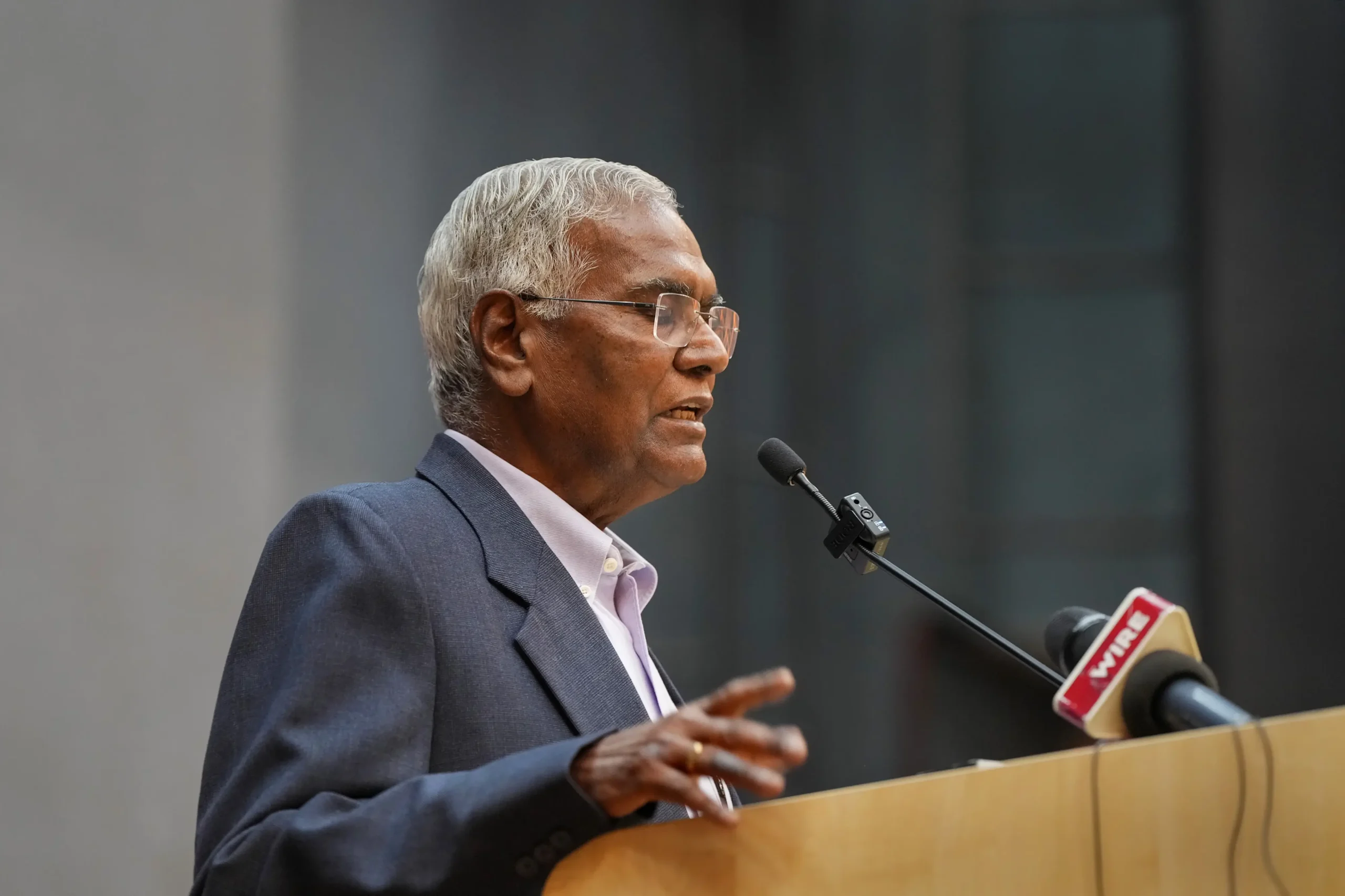
By Satyaki Chakraborty The Communist Party of India(CPI) concluded its five day Party Congress at Chandigarh on September 25 reelecting D. Raja as the general secretary of the CPI for another three year term. Raja is the first dalit leader to head the CPI in 2019 after the then party secretary S Sudhakar Reddy sought […]

The article CPI’s 25th Party Congress Elects D Raja As The General Secretary For The Third Time appeared first on Latest India news, analysis and reports on Newspack by India Press Agency).

A critical security flaw in NVIDIA’s Merlin Transformers4Rec framework allows threat actors to execute code remotely with root-level access, raising alarm across the AI ecosystem. The vulnerability, tracked as CVE-2025-23298, stems from unsafe deserialization in the model checkpoint loading routine. Attackers exploiting this flaw can submit crafted model files that, when deserialized via Python’s built-in mechanisms, trigger arbitrary command execution within the process’s context. Given that AI […]

Luma Protocol, incubated by PopChain and Nivex, officially entered the market on 20 September 2025, positioning itself as a new architecture in decentralized finance that anchors value in computing power rather than speculative token mechanics. At midday UTC+8 the project launched its pre-sale and, within hours, issued the first mining rewards — signalling a shift from purely token-based incentives toward infrastructure-backed models.

The project’s core proposition is that “Hash Power” — the computational capacity underlying blockchains — becomes a tangible, tradeable asset integrated into DeFi systems. Luma’s model seeks to counterbalance what its promoters describe as the unsustainable cycles of token subsidies that have affected prior generations of DeFi protocols. Underpinning the system, Luma plans to merge capital, computational resource markets, and application layers in a closed-loop infrastructure.

PopChain contributes its identity and settlement capabilities, while Nivex offers liquidity, exchange infrastructure, and compliance support. This strategic alignment aims to deliver an ecosystem where value issuance, transaction execution, and mining resource distribution interlock. According to the announcement, the first mining rewards were disbursed at midnight UTC+8, immediately after launching the pre-sale.

Market reaction to the LUMA token has been volatile. On the MEXC exchange, LUMA traded with a 24-hour jump of 26 per cent, reflecting speculative interest. Yet the token’s 7-day price variance is extremely steep, plunging nearly 99.97 per cent over the week, pointing to high risk and low liquidity stability. The circulating supply and full market capitalisation currently remain opaque.

Critics caution that the concept of tokenizing hash power is not without inherent risk. In the realm of blockchain security, high concentration of mining capacity has historically exposed smaller networks to attacks. The accessibility of mining power through services like NiceHash demonstrates how hash power can be rented and concentrated, creating vulnerability, especially for new entrants. At the same time, mainstream DeFi research underscores systemic risks emerging from leverage, protocol interdependence, and opacity in governance.

Luma’s governance architecture is not fully detailed in public documentation, but the model will need to grapple with decentralised decision-making, hardware centralisation, and incentives for fair participation. Without sufficient safeguards, the protocol may face the same challenges of centralisation, collusion, or exploitability that have troubled other DeFi platforms.

For its part, Nivex has been scaling its ecosystem prior to Luma’s debut. It recently launched a Web3 wallet integrated with PopChain, with plans to embed users into a flow from wallet to liquidity operations to settlement. This vertical integration may benefit Luma by driving demand for the infrastructure stack. Nivex also recently listed the POP/USDT trading pair, anchoring the POP ecosystem that underlies PopChain’s social finance ambitions.

On the supply side, the broader mining industry’s economics are under strain. Electricity, hardware depreciation, and operational costs continue to restrict profitable deployment of hash power. The Cambridge Digital Mining Report underscores that energy cost variance across geographies is a major barrier for expansion. Projects that seek to monetise compute power must navigate this cost differential.


Arada has acquired a 75 percent stake in London-based residential developer Regal as part of a Dhs 2.5 billion investment that marks its first UK foray and second international expansion after Australia. The UK business will be rebranded as Arada London, with an ambition to turbocharge Regal’s pipeline from 10,000 units across 11 projects to over 30,000 within three years.

The acquisition was formalised in a ceremony attended by Sheikh Sultan bin Ahmed bin Sultan Al Qasimi, Chairman of Arada. Arada’s Group CEO, Ahmed Alkhoshaibi, said that more than half of the capital will be channelled into accelerating development and securing new land parcels. He described the London market environment as one presenting “right opportunities to acquire the right sites at the right price”.

Regal’s chief executive, Jonathan Seal, and the existing executive team will remain in post after the transaction. Seal remarked that Arada’s alignment with Regal’s strategic values and long-term vision made it a fitting partner to lead the next phase of growth.

The deal gives Arada an immediate platform in London, tapping into Regal’s diversified portfolio, which spans for-sale residential units, purpose-built student accommodation, and mixed-use regeneration schemes. Among ongoing developments is the Fulton & Fifth project in Wembley, comprising 876 homes of which 40 percent are designated as affordable housing, and Orchard Wharf in Tower Hamlets, which recently secured approval for 1,365 student beds and 200 homes.

Analysts see strategic logic in entering London via acquisition rather than greenfield development, citing the complexities and regulatory friction in the UK housing sector. Arada’s move follows a wave of Gulf-based developers expanding into London, including Damac, Aldar, and Modon, often via partnerships or subsidiaries.

However, entering the London residential market is not without risk. Regal’s 2024 accounts showed £252 million in short-term debt, contrasted against £196 million of investment property, reflecting potential balance-sheet stress. The UK housing sector continues to face headwinds from construction inflation, planning delays, and demand volatility.

Arada has defended the timing. Alkhoshaibi stated that entering markets when sentiment is subdued allows for acquiring desirable assets at lower cost, positioning for upside when conditions recover. He noted that Arada’s approach is to maintain momentum in its UAE operations while layering growth abroad.

Beyond the UK, Arada is also contemplating further regional expansion. The company is reportedly in discussions with Saudi Arabia’s Public Investment Fund about a large mixed-use project in the kingdom. In the UAE itself, Arada plans a Dhs 3 billion development project in Ras Al Khaimah next year, reinforcing its domestic footprint.

The Indian rupee plunged to a lifetime low of ₹88.7975 per US dollar, sliding about 0.5 per cent on the day as fears over a sharp hike in U. S. H-1B visa fees rallied selling pressure across foreign exchange markets. Intervention by the Reserve Bank of India failed to staunch the slide fully, leaving the currency exposed amid faltering capital inflows and heightened external risks.

Markets pointed to the visa fee jump as a critical trigger. The Trump administration’s new proclamation imposes a $100,000 application cost on fresh H-1B visa petitions, vastly above its prior range, and is widely seen as a threat to remittance flows and the earnings outlook for India’s technology exporters. Meanwhile, persistent foreign portfolio outflows and U. S. tariff tensions on Indian goods compounded downward pressure.

Analysts estimate that remittances from the U. S. account for roughly 3.4 per cent of India’s GDP, making any disruption in the flow of workers and repatriated funds significant for the external balance. The visa change, if sustained, could erode that buffer. Traders now widely expect the rupee’s trajectory to remain weak in the coming weeks unless policy tailwinds emerge.

Speculation is building that the RBI sold dollars via state banks in the ₹88.50 zone to support the rupee, but the support was limited. While intervention took multiple forms—spot market, non-deliverable forwards and futures—the central bank appears to be managing volatility more than defending a fixed exchange rate. Some market participants view the decline as partly calibrated and allowable, until macro fundamentals justify a reversal.

Data from the RBI’s monthly bulletin show that in July alone, the central bank sold a net $2.54 billion in the spot foreign exchange market. It held forward dollar sales of about $57.85 billion at the end of July—suggesting pre-emptive hedging and reserve deployment to offset pressure. The use of forward sales is a tool to mitigate speculative demand and signal resolve.

U. S. rate expectations and the global dollar trajectory also weigh heavily. The U. S. dollar index remains firm, underpinning strength in emerging market currency pairs’ downside. Weakness in India’s export performance and looming protectionist measures add to caution. In September to date, foreign investors withdrew over $1 billion from Indian equities, pushing year-to-date outflows to roughly $16 billion.

Technology stocks bore the brunt of the rupee stress. With margins threatened by the visa fee shock, several large IT firms are already budgeting for higher immigration costs. Estimates place incremental fee burdens between $150 million and $550 million for major firms, depending on visa volumes and contract structures.

The Indian government mounted a diplomatic push in response, deploying a high-level delegation to Washington to discuss the visa fee policy and broader trade concerns. Delhi has warned of “humanitarian consequences,” arguing that abrupt changes in visa costs risk disrupting families and the livelihood of highly skilled professionals. In public remarks, Commerce Minister Piyush Goyal and other officials have insisted that they will press for reversals or carveouts.

White House sources clarified that the $100,000 fee will apply only to new applications, not renewals or current visa holders—a move that soothed some immediate concerns in the IT industry. That assurance has allowed short-term relief in some quarters, though uncertainty lingers over enforcement guidelines and compliance timelines.

Defence stocks will rally and global investors will be paying attention, I believe. The reason the bullish analysis is a catalyst came the moment President Donald Trump, after meeting Ukraine’s President Volodymyr Zelenskyy at the UN General Assembly, declared that Kyiv can reclaim all territory seized by Russia, an abrupt and market-moving pivot from his earlier calls for compromise. In a single statement, the world’s largest economy […]

VISHNU RAJA
RYO YAMADA
HITORI GOTOH
IKUYO KITA