Just in:
US resumes flights after nationwide air traffic shutdown // Hackers falsify NVIDIA GPU readings to mask cryptomining // China Reconciled To U.S. Curbs On Chips Exports, Woos South Korea For Supply // Microsoft apologises as Outlook services recover after outage // Microsoft outage leaves Outlook and Teams users disconnected // TORRAS Launches Two New iPhone Duo Cases from Its Popular Ostand Series, Addressing Foldable Phone Users’ Concerns About Difficult Stand Positioning and Scratches // Sun World Ba Den Mountain marks Vietnam Culture Day, welcoming Cambodian visitors over Bon Om Touk // Saudi fund assets forecast to cross $400 billion // L’OCCITANE Celebrates 50 Years Of Provençal Craftsmanship With Holiday 2026 Collection // Inpex reaffirms Gulf oil strategy despite shipping constraints // From Dubai to the EU: how UAE-based crypto firms can expand under MiCA // Rooftop solar planning gaps behind power shortages // Lego restores BrickLink marketplace after security investigation // Yicura BioMed Advances Dual Capital and Industrial Strategy: Completes First Closing of Series B Financing Led by Gobi Partners // Microsoft restores services gradually but gives no recovery deadline // Nvidia appoints Colette Kress interim chief after Huang departure // EBANX and Eneba strengthen partnership in Latin America with 138% YoY growth in payment volume // UAE crews sustain coastal oil removal as beaches reopen // OpenAI unveils ChatGPT Wallet for agent-led purchases // 11 Boutique Xinjiang Wineries to Debut in Singapore //

News related to
Immediate

Negotiations to address the ongoing conflict between Israel and Gaza are gaining momentum as high-level talks are scheduled to commence in Doha. The planned discussions, involving representatives from the United Nations, the United States, and Qatar, aim to broker a ceasefire agreement to halt the escalating violence in the region. The announcement comes amidst mounting international pressure for a resolution to the hostilities that have resulted in […]

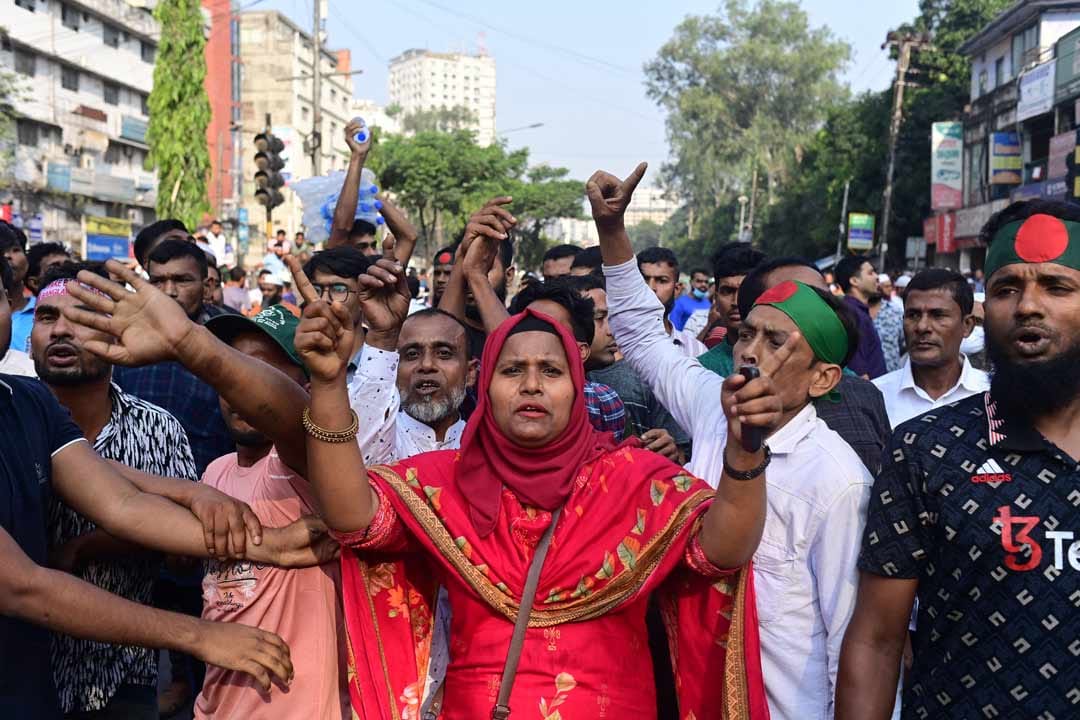
By Nitya Chakraborty Eight days have passed since the ouster of   from power in Bangladesh on August 5 following the mass upsurge led by the students and other opposition parties against the 15 year rule of the Awami League Government led by her. Much has been written about the developments that led to her fall […]

Cleveland Clinic Abu Dhabi has reached a significant milestone with 664 organ transplants performed since the inception of its organ transplant program in 2017. The program, which has rapidly expanded since its launch, has established itself as a leading center for advanced organ transplantation in the region. The transplant program at Cleveland Clinic Abu Dhabi is notable for its comprehensive approach and advanced medical technology. The facility […]

Tensions in Lebanon have escalated, posing significant obstacles for the United States envoy tasked with preventing further conflict. Amidst heightened concerns of an impending war, Western nations are intensifying their diplomatic engagement to de-escalate the situation. Several senior officials from the Biden administration are slated to visit the Middle East this week as part of a broader strategy to address the crisis.

Lebanon is experiencing a period of increased instability, marked by political and economic strife, alongside frequent clashes between various factions. The United Nations and various international organizations have voiced alarm over the potential for broader regional conflict if these issues are not addressed swiftly and effectively. The US envoy, aiming to mitigate these risks, faces a complex landscape fraught with deep-seated tensions and a volatile political environment.

Efforts by the United States to stabilize the region include high-level discussions with key Lebanese political figures and other stakeholders. The envoy’s role is critical in navigating the intricate web of alliances and conflicts that characterize Lebanon’s current situation. The US is seeking to leverage its influence to foster dialogue and reduce hostilities, with a focus on preventing the escalation of violence that could have far-reaching consequences for the region.

The Biden administration’s approach involves coordinated diplomatic efforts with allied nations and regional partners. The upcoming visits by senior officials are part of a concerted strategy to demonstrate solidarity with Lebanon and to push for immediate actions that could ease tensions. These visits are expected to involve discussions on economic support, security cooperation, and political reforms aimed at stabilizing the country.

The situation in Lebanon is complicated by the involvement of various regional powers and non-state actors, each with their own interests and agendas. This complexity makes the envoy’s task particularly challenging, as they must navigate a multifaceted conflict environment while attempting to build consensus among diverse and often conflicting parties.

Recent developments have underscored the urgency of the situation. Reports indicate increasing skirmishes and a deterioration in humanitarian conditions, which further complicate efforts to negotiate a peaceful resolution. The international community is closely monitoring the situation, with many expressing support for diplomatic solutions while emphasizing the need for timely and effective intervention.

The US diplomatic push is also supported by broader Western efforts to address the crisis. European nations, alongside the US, are working on various fronts to provide humanitarian aid and support peacekeeping initiatives. These actions reflect a unified stance on the need to prevent further escalation and to support Lebanon in its path towards stability and recovery.

As the envoy continues their mission, the effectiveness of their efforts will likely hinge on the ability to address both immediate concerns and long-term structural issues contributing to Lebanon’s instability. The international community remains hopeful that with sustained diplomatic engagement and support, it will be possible to avert a full-scale conflict and foster a more stable and peaceful environment in Lebanon.

The evolving situation in Lebanon highlights the complex interplay of regional dynamics and the critical importance of international diplomatic efforts in addressing such crises. The coming weeks will be crucial in determining the trajectory of the conflict and the potential for a peaceful resolution.

Arabian Post Staff Tether and Circle, two of the most prominent stablecoin issuers in the digital currency market, injected nearly $2.8 billion in fresh capital earlier last week. This move signals renewed interest from institutional investors, reflecting the evolving landscape of digital finance. Tether, the largest stablecoin by market capitalization, and Circle, the issuer of USD Coin (USDC), are crucial players in the cryptocurrency ecosystem. Their issuance […]

Palestinian President Mahmoud Abbas met with Russian President Vladimir Putin in Moscow to address the ongoing conflict in Gaza and broader issues affecting the Palestinian territories. The meeting highlighted Abbas’s call for increased international support for Palestinian statehood and urgent action to alleviate the humanitarian crisis in Gaza.

The discussion comes amid escalating violence in Gaza and the West Bank, with significant casualties reported in recent weeks. Abbas and Putin explored various measures to de-escalate the situation and pave the way for renewed peace efforts. Abbas emphasized the dire humanitarian conditions in Gaza, where continuous airstrikes and blockades have exacerbated the suffering of civilians.

During the meeting, Abbas reiterated his call for the establishment of an independent Palestinian state, asserting that a two-state solution remains the most viable path to peace. He also voiced concerns about ongoing violence in East Jerusalem and the West Bank, which has further complicated efforts to achieve stability and security in the region.

Putin’s response to Abbas’s proposals was notably diplomatic. He reaffirmed Russia’s support for a two-state solution and expressed concern over the humanitarian situation in Gaza. However, he also stressed the need for a balanced approach to addressing both Palestinian and Israeli concerns. The Russian leader emphasized the importance of direct negotiations between the conflicting parties, highlighting Russia’s role in facilitating dialogue.

The meeting also touched upon the international community’s role in resolving the conflict. Abbas urged greater involvement from global powers and regional stakeholders to pressure Israel into halting its military operations and committing to peace talks. He specifically called for the lifting of the blockade on Gaza, which he argued is a significant barrier to alleviating the humanitarian crisis.

The discussion on Gaza coincides with a broader international discourse on the conflict. Various international organizations and governments have expressed growing alarm over the situation, with some calling for sanctions or other measures against Israel to pressure it into compliance with international law.

In addition to discussing the immediate conflict, Abbas and Putin addressed the ongoing international legal efforts concerning allegations of genocide and war crimes. Abbas has been vocal about the need for accountability and justice, advocating for international legal bodies to address alleged violations by Israel. This aspect of the discussion underscores the broader context of the conflict, where legal and humanitarian concerns intertwine with geopolitical considerations.

Abbas’s visit to Moscow also serves as a strategic move to bolster Palestinian diplomatic efforts. By engaging with major international players like Russia, Abbas aims to garner broader support and exert pressure on other key actors to address the Palestinian cause. The interaction with Putin represents an attempt to leverage Russia’s position in the global arena to further the Palestinian agenda.

The meeting between Abbas and Putin reflects ongoing international efforts to address the complexities of the Israeli-Palestinian conflict. As the situation in Gaza remains dire and violence continues in the West Bank and East Jerusalem, the international community remains divided on the most effective strategies to achieve a lasting resolution. The discussions between Abbas and Putin highlight the urgent need for comprehensive and sustained diplomatic efforts to address the myriad issues at the heart of the conflict.

Core Scientific, one of the largest Bitcoin miners in the U.S., has announced plans to raise up to $350 million through the issuance of convertible notes. The move is aimed at repaying existing loans and funding general corporate operations, as the company seeks to strengthen its position in the increasingly competitive cryptocurrency mining industry. The announcement highlights Core Scientific’s efforts to maintain financial stability while continuing to […]

Advertisements

Arabian Post Staff Ford and Mazda have issued an urgent warning to owners of more than 475,000 older vehicles in the U.S., advising them not to drive due to the presence of dangerous Takata air bag inflators that have yet to be replaced. This critical advisory affects over 374,000 Ford, Lincoln, and Mercury vehicles from model years 2004 through 2014, along with nearly 83,000 Mazda vehicles from […]

A devastating Israeli airstrike in Gaza has resulted in the tragic death of twin newborns, while their father was away retrieving their birth certificates. The attack, which occurred in the densely populated area of Gaza City, highlights the ongoing humanitarian crisis in the region amidst the prolonged conflict between Israel and Palestinian factions.

The father, identified as Ahmed Abu Taha, had left his home to complete the paperwork for his newborn twins, who had just been born a few days prior. The airstrike hit the family’s residence, obliterating it and killing the infants. The attack has drawn widespread condemnation from humanitarian organizations and international observers, who have expressed deep concern over the escalating violence and its impact on civilians.

According to local reports, the airstrike was part of a broader military campaign targeting alleged militant positions in Gaza. However, the dense urban environment often results in significant collateral damage, with residential areas frequently being affected. The loss of life in this instance underscores the severe humanitarian toll on non-combatants, including children, who are increasingly becoming victims of the ongoing conflict.

The incident has sparked outrage and calls for a reassessment of military strategies to minimize civilian casualties. International bodies, including the United Nations, have urged all parties to adhere to international humanitarian laws and take measures to protect innocent lives. The Gaza Strip, a region already struggling with severe shortages of medical supplies, electricity, and basic necessities, faces exacerbated challenges as a result of the continuous conflict.

Witnesses to the bombing described scenes of chaos and devastation, with emergency responders scrambling to provide aid amidst the wreckage. The loss of the twins has deeply affected the local community, which is grappling with the emotional and psychological impact of the violence. The father, who has been described as distraught, faces the additional burden of grieving his children while dealing with the loss of his home.

The international community’s reaction to this tragedy has been swift, with numerous calls for an immediate cessation of hostilities and a renewed focus on diplomatic efforts to resolve the underlying issues. Human rights organizations have emphasized the need for accountability and greater protections for civilians caught in conflict zones.

As the situation in Gaza remains dire, efforts are being made to address the urgent needs of affected families and to provide humanitarian assistance. However, the continuing conflict poses significant challenges to these efforts, as access to aid and resources remains limited.

The death of these newborn twins serves as a stark reminder of the urgent need for a comprehensive and lasting resolution to the Israeli-Palestinian conflict. The international community faces the critical task of addressing both the immediate humanitarian needs and the broader political issues that contribute to the cycle of violence in the region.

The incident underscores the high human cost of the conflict and the imperative for all stakeholders to work towards a peaceful and sustainable solution that protects innocent lives and upholds human dignity.


A magnitude 5.0 earthquake struck Syria on August 12, reigniting anxieties in a region still scarred by the devastating earthquake that rocked the area last year. The tremor, originally reported as a 5.5 magnitude quake, was later downgraded by the U.S. Geological Survey. The earthquake was felt across multiple cities, including Damascus and Hama, prompting residents to evacuate buildings and spend the night outdoors, fearing potential aftershocks.

The quake’s impact extended beyond Syria’s borders, with tremors felt in neighboring Lebanon and as far as northern Israel. Despite widespread panic, there were no immediate reports of casualties or significant damage, although around 25 people were admitted to hospitals due to anxiety-related issues.

The timing of the earthquake added to the region’s already high levels of tension, with ongoing conflicts and political instability exacerbating fears. Syrian state media quickly disseminated safety guidelines, urging the public to remain vigilant in the face of possible aftershocks. This event brought back haunting memories of the catastrophic 7.8 magnitude earthquake in 2023, which claimed over 59,000 lives in Syria and Turkey, leaving many in the region with lingering trauma.

Experts have expressed concerns that this earthquake might be a precursor to more severe seismic activity. The Syrian National Earthquake Centre has issued warnings for residents to stay alert, emphasizing the importance of preparedness in a region where the ground remains perilously unstable. As authorities and communities brace for the possibility of further quakes, the emotional scars from past disasters continue to weigh heavily on the population, underscoring the fragility of life in this volatile part of the world.

While the immediate physical damage from the latest quake appears minimal, the psychological impact is profound, as residents struggle with the fear and uncertainty that these natural disasters bring. The resilience of the Syrian people is once again being tested, as they navigate the ongoing challenges of rebuilding their lives amidst constant threats, both natural and man-made .

Aiming to provide more tailored and clinically effective solutions, Spectrum Vascular & General Surgery’s dedicated approach ensures the highest level of care and patient satisfaction. SINGAPORE – Media OutReach Newswire – 12 August 2024 – Spectrum Vascular & General Surgery announces the grand opening of its state-of-the-art clinic, poised to revolutionize the landscape of vascular and general surgery. Led by esteemed specialist surgeon Dr. Tay Jia Sheng, […]

Evacuation orders have been issued for approximately 84% of the Gaza Strip as the conflict between Israeli forces and Palestinian groups intensifies, according to the United Nations. The situation in Gaza has deteriorated sharply with ongoing ground incursions and heavy fighting reported throughout the region. The Israeli military’s extensive evacuation directive impacts nearly all of Gaza’s densely populated areas. This move is part of a broader strategy […]

Employers in the UAE who infringe on labor rights will face fines up to Dh1 million under a new regulatory initiative aimed at reinforcing labor law compliance. The new measures, effective immediately, are part of a broader effort to address and rectify abuses in the workplace, ensuring fair treatment and adherence to legal standards.

This legislation targets companies that exploit workers through practices such as non-payment of wages, poor working conditions, and unlawful deductions. The fines will apply to employers found guilty of serious breaches, including forced labor, wage theft, and unjust dismissal. This substantial penalty underscores the UAE’s commitment to enhancing labor standards and protecting workers’ rights.

The move comes in response to increasing scrutiny from international human rights organizations and labor advocates. The UAE government has been under pressure to improve labor conditions, particularly in sectors heavily reliant on foreign labor, such as construction and domestic work. This regulatory change is seen as a significant step in addressing concerns about worker exploitation and ensuring compliance with global labor standards.

The new fines are part of a comprehensive strategy that includes stricter enforcement of labor laws, more rigorous inspections, and enhanced reporting mechanisms. The Ministry of Human Resources and Emiratisation (MOHRE) will oversee the implementation of these penalties, ensuring that companies adhere to the updated regulations. The MOHRE is also tasked with providing resources and support for both employers and employees to facilitate a smooth transition to these new standards.

In addition to financial penalties, the UAE is introducing measures to improve transparency and accountability within companies. This includes mandatory audits, regular inspections, and the establishment of a dedicated helpline for workers to report grievances confidentially. These initiatives aim to create a more equitable work environment and mitigate instances of abuse.

The introduction of such stringent fines reflects a broader trend in the UAE’s labor reform efforts. Over the past few years, the country has implemented various reforms to enhance worker protections and align with international labor practices. These changes are part of the UAE’s Vision 2030, which seeks to modernize the labor market and ensure a fair and transparent employment framework.

Employers are advised to review and update their labor practices to ensure compliance with the new regulations. This includes revising employment contracts, enhancing workplace safety, and ensuring timely payment of wages. Companies found in violation of these new rules will face not only substantial fines but also potential damage to their reputation and operational licenses.

The introduction of these fines marks a critical development in the UAE’s labor policy landscape. It highlights the government’s commitment to upholding workers’ rights and improving overall labor conditions in the country. As the new regulations come into effect, both employers and employees will need to adapt to these changes, which are expected to foster a more equitable and compliant working environment.

Ukrainian forces have launched a surprise offensive into Russia’s Kursk region, heightening geopolitical tensions and prompting immediate evacuations. This move, confirmed by Ukrainian President Volodymyr Zelenskyy, marks a significant escalation in the conflict between the two nations. The attack on Kursk, a key border area in Russia, has been described by Zelenskyy as a strategic action designed to apply “necessary pressure” on Russia. This development follows a […]

The United Arab Emirates’ In-Country Value (ICV) program has significantly bolstered the national economy, channeling $13 billion within the first half of 2024. This substantial redirection of funds underscores the UAE’s commitment to enhancing local industry capabilities and reducing dependence on foreign goods and services. The ICV program, introduced to stimulate economic growth and enhance the contribution of local companies to government contracts, has made notable strides. […]

A groundbreaking discovery at Göbekli Tepe, an archaeological site in Turkey, has unveiled what may be the world’s oldest known lunisolar calendar. This finding, credited to researcher Martin Sweatman from the University of Edinburgh, offers tantalizing evidence that ancient civilizations were not only adept astronomers but may have also documented a catastrophic event from over 13,000 years ago. Göbekli Tepe, often regarded as one of the most […]

By K Raveendran When the Supreme Court Chief Justice of Supreme Chandrachud says people are fed up with the way our courts function, there cannot be a more serious indictment of the judicial system. His assertion that the judiciary should not be an institution run solely by judges for judges is a significant critique that […]
By Dr. Gyan Pathak The Artificial Intelligence revolution could further widen the gap between high and low-income countries, a new joint report from International Labour Organization (ILO) and the UN Office of the Secretary General’s Envoy on Technology has warned, unless cooperative international action is taken to address uneven and low level of investment in […]

Arabian Post Staff Panic has spread across Wayanad as unexplained noises disturb residents in the aftermath of a devastating landslide. The unusual sounds, reported as rumbling and groaning, have heightened fears of further geological disturbances in the area. Authorities and experts are investigating the origins of these noises, which have been described as unsettling and persistent. The disturbances come on the heels of a significant landslide that […]

PetroRabigh’s shares have surged to their highest level in nearly three years following the announcement of a significant partnership with Saudi Aramco. The dramatic increase in PetroRabigh’s stock price reflects strong investor confidence in the future of the joint venture. The deal, unveiled earlier this week, marks a pivotal moment for PetroRabigh as it involves a substantial investment from Saudi Aramco. The collaboration is set to enhance […]

By P. Sudhir The mass revolt against the authoritarian government of Sheikh Hasina Wazed has had a dramatic outcome with the fall of the government and Sheikh Hasina fleeing the country. On Monday (August 5), the `March to Dhaka’ called by the student protestors saw tens of thousands of people reaching the city and marching […]

The recent death of a prominent Hamas leader has ignited concerns about potential escalation in the Israeli-Palestinian conflict. The Organization of Islamic Cooperation (OIC) has raised alarms about the possibility of a broader conflict emerging from this incident, which has already stirred significant regional tensions. Reports confirm that the leader, a key figure within Hamas, was killed under circumstances that have not yet been fully clarified. This […]

Tensions between Israel and Hezbollah have reached a critical point, significantly affecting daily life in Lebanon. Over the past few days, Israeli airstrikes targeted multiple Hezbollah positions in southern Lebanon, including the villages of Maifadoun and Khiam. These strikes have resulted in the deaths of several Hezbollah members and disrupted the lives of civilians living nearby.

On Tuesday, Israeli warplanes carried out strikes on Hezbollah military bases in Yaroun and Kfarkela, which the Israeli Defense Forces (IDF) stated were used for terrorist activities. This response came after Hezbollah launched a series of drone and rocket attacks into northern Israel, injuring 19 Israelis in the city of Nahariya and causing substantial property damage. The IDF intercepted several of these drones and rockets, but not all, leading to civilian casualties and heightened fear among residents.

The current wave of violence was triggered by the assassination of Ismail Haniyeh, a prominent Hamas leader, in Tehran. This event, coupled with the killing of Hezbollah’s military commander Fuad Shukr in Beirut, has escalated the conflict. Iran has vowed retaliation, increasing the regional stakes and bringing more uncertainty to Lebanon’s already fragile state.

Hezbollah has been conducting regular attacks on Israeli border communities and military posts, citing support for Gaza amid the ongoing conflict with Hamas. These skirmishes have resulted in significant casualties on both sides. The IDF has reported the deaths of 25 civilians and 18 soldiers, while Hezbollah has acknowledged the loss of 399 members, mostly in Lebanon. Additionally, numerous civilians and operatives from other militant groups have also been killed.

Lebanon’s infrastructure and economy, already struggling, are further strained by this ongoing conflict. The continuous airstrikes and retaliatory attacks have disrupted daily activities, causing fear and uncertainty among the Lebanese population. The border regions are particularly affected, with residents facing constant threats to their safety and livelihoods.

The international community has expressed concern over the escalating violence, urging both sides to seek diplomatic solutions. However, with the cycle of retaliation and defense firmly in place, achieving peace remains a challenging prospect. The potential for a broader regional conflict looms large, with implications that could extend far beyond the immediate area.

In light of these developments, Lebanon finds itself at a crossroads, grappling with the immediate consequences of the conflict while seeking a path towards stability. The resilience of its people and the effectiveness of international diplomatic efforts will be crucial in navigating this tumultuous period.

The situation remains fluid, with new developments occurring rapidly, and the region bracing for further escalations. The impact on Lebanon’s socio-economic fabric is profound, with the specter of war casting a long shadow over its future.

Law enforcement agencies are increasingly adopting artificial intelligence (AI) technologies to enhance their capabilities, improve efficiency, and ensure public safety. AI applications in policing range from predictive analytics to real-time crime detection, significantly impacting how crimes are investigated and prevented. One of the key areas where AI is making a substantial difference is in predictive policing. AI algorithms analyze vast amounts of data to identify patterns and […]

VISHNU RAJA
RYO YAMADA
HITORI GOTOH
IKUYO KITA